Election Administration In Nevada
 From Ballotpedia
  |
Nevada 2025 elections All local elections by county • How to run for office |
 |
|
|
 |
| Select a state from the menu below to learn more about its election administration. |
Election administration encompasses a state's voting policies, procedures, and enforcement. These include voter identification requirements, early and absentee/mail-in voting provisions, voter list maintenance methods, and more. Each state's voting policies dictate who can vote and under what conditions.
Below, you will find details on the following election administration topics in Nevada:
- Poll times
- Voter registration
- Early and absentee/mail-in voting policy[1]
- Voter identification requirements
- Provisional ballot rules
- Primary election type
- Time off work for voting
- Electioneering
- Voting rules for people convicted of a felony
- Voter list maintenance
- Post-election auditing
- Election administration authorities
- Noteworthy events
- Election policy ballot measures
- Election policy legislation
- Ballot access
- Redistricting
- Contact information
Poll times[edit]
- See also: State poll opening and closing times
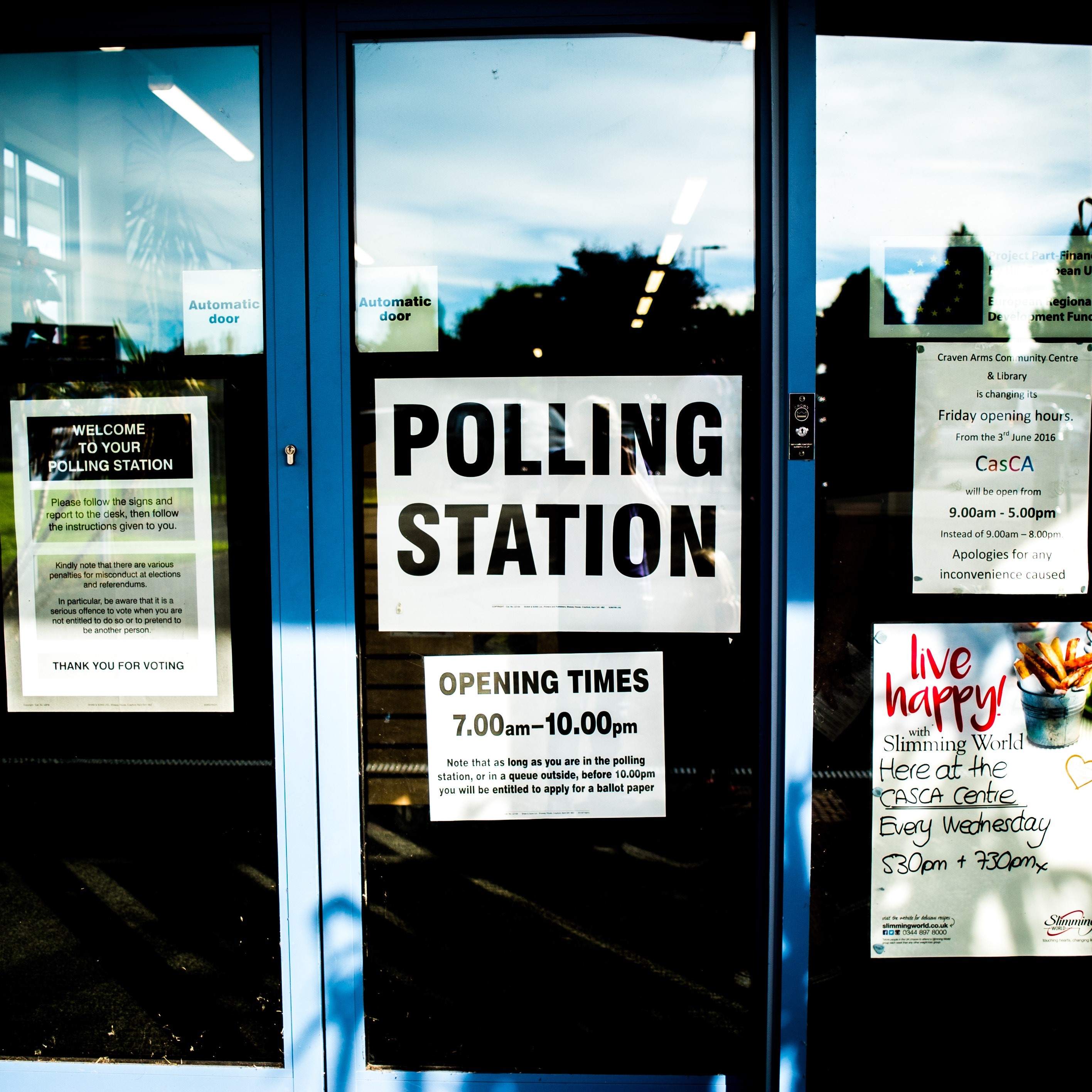
All polling places in Nevada are open from 7:00 a.m. to 7:00 p.m. local time. An individual who is in line at the time polls close must be allowed to vote.[2][3]
Voter registration[edit]
- Check your voter registration status here.
To register to vote in Nevada, each applicant must be must a citizen of the United States, a resident of Nevada for at least 30 days before the election, and at least 18 years old by the day of the election.
Seventeen-year-olds can preregister to vote. Anyone who has been declared mentally incompetent by a court may not register to vote.[4]
A voter registration application can be completed in person at the county clerk’s office, the Department of Motor Vehicles, other social service agencies, or college campuses. In-person registration must be completed 28 days before regular elections; registration forms submitted by mail must be postmarked by the same day. Online applications must be submitted by the Thursday before regular elections.[5][4]
Nevada also allows same-day registration.
Automatic registration[edit]
- See also: Automatic voter registration
Nevada automatically registers eligible individuals to vote through the Department of Motor Vehicles.[6]
Online registration[edit]
- See also: Online voter registration
Nevada has implemented an online voter registration system. Residents can register to vote by visiting this website.
Same-day registration[edit]
- See also: Same-day voter registration
Nevada allows same-day voter registration at polling places during early voting and on election day.[4]
Residency requirements[edit]
In order to register to vote in Nevada, applicants must be a resident of the state for at least 30 days prior to the election.[4]
Verification of citizenship[edit]
- See also: Laws permitting noncitizens to vote in the United States
Nevada does not require proof of citizenship for voter registration. An individual applying to register to vote must attest that they are a U.S. citizen under penalty of perjury.[7]
All 49 states with voter registration systems require applicants to declare that they are U.S. citizens in order to register to vote in state and federal elections, under penalty of perjury or other punishment.[8] Seven states — Alabama, Arizona, Georgia, Kansas, Louisiana, New Hampshire, and Wyoming — have laws requiring verification of citizenship at the time of voter registration, whether in effect or not. One state, Ohio, requires proof of citizenship only when registering to vote at a Bureau of Motor Vehicles facility. In three states — California, Maryland, and Vermont — at least one local jurisdiction allows noncitizens to vote in some local elections. Noncitizens registering to vote in those elections must complete a voter registration application provided by the local jurisdiction and are not eligible to register as state or federal voters.
Verifying your registration[edit]
The Nevada Secretary of State’s office allows residents to check their voter registration status online by visiting this website.
Early and absentee/mail-in voting policy[edit]
Early voting[edit]
- See also: Early voting
Nevada permits early voting. Learn more by visiting this website. Early voting permits citizens to cast ballots in person at a polling place prior to an election. In states that permit no-excuse early voting, a voter does not have to provide an excuse for being unable to vote on Election Day. States that allow voters to cast no-excuse absentee/mail-in ballots in person are counted as no-excuse early voting states.
Forty-seven states and the District of Columbia permit no-excuse early voting.
Absentee/mail-in voting[edit]
- See also: Absentee/mail-in voting
Nevada is an all-mail voting state. County and city clerks deliver absentee/mail-in ballots automatically to all active registered voters in every election. Voters can opt out of receiving a mail-in ballot.[9]
Returning absentee/mail-in ballots[edit]
- See also: Mail ballot collection and return laws by state
Completed absentee/mail-in ballots submitted by mail must be postmarked on or before Election Day and received by 5 p.m. on the fourth day following an election. Completed absentee/mail-in ballots can also be returned via drop boxes, which county and city clerks must install at every polling location in the county or city. According to state law, " If a mail ballot is received by mail not later than 5 p.m. on the third day following the election and the date of the postmark cannot be determined, the mail ballot shall be deemed to have been postmarked on or before the day of the election."[9][10] State law allows a voter to authorize another person to return their ballot for them.[11]
Twenty states allow anyone chosen by the voter to return a ballot on the voter's behalf, with certain exceptions, while 16 states allow anyone with certain relationships to the voter to return the voter's ballot. Four states allow only the voter to return the voter's ballot, with certain exceptions, and two states required voters to return their ballots by mail. Eight states and D.C. do not specify who may return ballots.
Drop box availability[edit]
Nevada law requires count election officials to establish drop boxes where a voter can return their ballot. State law says:[10]
| “ | Each county clerk must establish a ballot drop box at every polling place in the county, including, without limitation, a polling place for early voting. A county clerk may establish a ballot drop box at any other location in the county where mail ballots can be delivered by hand and collected during the period for early voting and on election day. No person other than a clerk may establish a drop box for mail ballots. 4. A ballot drop box must be:
5. A ballot drop box must be:
|
” |
Signature requirements and cure provisions[edit]
Absentee/mail-in ballots in Nevada include a return envelope printed with an affidavit that must be signed by the voter. Unsigned ballots will not be counted. Election officials compare the signature on an absentee/mail-in ballot affidavit to the voter’s signature on file; if officials determine that the signatures do not match, the ballot will not be counted. Nevada law does include a cure provision, or a law allowing voters to correct an issue with the signature on their absentee/mail-in ballot.[13]
Thirty-three states have laws that include cure provisions, while 17 states do not. One state, Pennsylvania, allows counties to establish a cure process.
Was your absentee/mail-in ballot counted?[edit]
Nevada voters can use the BallotTrax tool by the Nevada Secretary of State to check the status of their absentee/mail-in ballot.
Voter identification requirements[edit]
- See also: Voter ID in Nevada
- See also: Voter identification laws by state
Nevada does not require voters to present identification while voting, in most cases. A voter in Nevada must sign their name in the election board register at his or her polling place. The signature is compared with the signature on the voter's original application to vote or another form of identification, such as a driver's license, a state identification card, military identification, or another government-issued ID.[14]
The federal Help America Vote Act requires that individuals in all 50 states who register to vote by mail and who have not voted previously in a federal election in their state must provide either their driver's license or a paycheck, bank statement, current utility bill, or government document showing their name and address. Individuals voting by mail must include a copy of one of those documents with their absentee/mail-in ballot.[15]
These requirements do not apply if an individual submitted a copy of their identification, their driver's license number or the last four digits of their Social Security number when registering to vote.
Thirty-six states require voters to present identification in order to vote at the polls on Election Day. Of these states, 24 require voters to present identification containing a photograph, and 12 accept other forms of identification. The remaining 14 states do not require voters to present identification in order to vote at the polls on Election Day.
Valid forms of identification differ by state. In certain states that require voters to provide identification, there may be exceptions that allow some voters to cast a ballot without providing an ID. To see more about these exceptions, see details by state. Commonly accepted forms of ID include driver's licenses, state-issued identification cards, and military identification cards.
Provisional ballot rules[edit]
Voters in Nevada are given provisional ballots, or ballots requiring additional steps or information before they can be counted, under the following circumstances.[16][17]
- If the voter’s name does not appear on the voter registration list, the voter has the right to cast a provisional ballot.
- If it is the voter’s first time voting in a federal election and is unable to provide proper identification, the voter has the right to cast a provisional ballot.
- If the voter "[d]eclares that he or she is entitled to vote after the polling place would normally close as a result of a court order or other order extending the time established for the closing of polls pursuant to a law of this State in effect 10 days before the date of the election," the voter has the right to cast a provisional ballot.
A provisional ballot is rejected if the voter cast the wrong ballot for his or her residence.[18]
Was your provisional ballot counted?[edit]
Voters can call (877) 766-8683 to check the status of their provisional ballot. This information is available beginning on the eighth day after the election and is available for 30 days.[16]
Primary election type[edit]
- See also: Primary elections in Nevada
A primary election is an election in which registered voters select a candidate that they believe should be a political party's candidate for elected office to run in the general election. They are also used to choose convention delegates and party leaders. Primaries are state-level and local-level elections that take place prior to a general election. Nevada has a closed primary system where a voter must be affiliated with a party to vote in that party's primary. A voter may be able to affiliate or change their affiliation on the day of the primary.[19][20][21]
Time off work for voting[edit]
In Nevada, if employees cannot cast their vote during non-work hours, employers must allow one, two, or three hours of paid time off, depending on employees' distance from the nearest polling place. Employees must request time off, employers may specify the hours employees receive off, and violations of these provisions by the employer is a misdemeanor:[22]
| “ |
1. Any registered voter may be absent from his or her place of employment at a time to be designated by the employer for a sufficient time to vote, if it is impracticable for the voter to vote before or after his or her hours of employment. A sufficient time to vote shall be determined as follows:
2. Such voter may not, because of such absence, be discharged, disciplined or penalized, nor shall any deduction be made from his or her usual salary or wages by reason of such absence. 3. Application for leave of absence to vote shall be made to the employer or person authorized to grant such leave prior to the day of the election. 4. Any employer or person authorized to grant the leave of absence provided for in subsection 1, who denies any registered voter any right granted under this section, or who otherwise violates the provisions of this section, is guilty of a misdemeanor.[12] |
” |
Twenty-eight states require employers to grant employees time off to vote. Within these 28 states, policies vary as to whether that time off must be paid and how much notice must be given.
Electioneering[edit]
Nevada state law restrict prohibits electioneering activities within 100 feet of any voting area, with certain exceptions. State law defines electioneering as:[23]
| “ |
|
” |
See Nev. Rev. Stat. § 293.361 and § 293.740 for more information.
Voting rules for people convicted of a felony[edit]
- See also: Voting rights for people convicted of a felony
In Nevada, voting rights are restored to people convicted of a felony immediately upon completion of their prison sentence.[24][25]
Voting rights for people convicted of a felony vary from state to state. In the majority of states, people convicted of a felony cannot vote while they are incarcerated but may regain the right to vote upon release from prison or at some point thereafter.[26]
Voter list maintenance[edit]
All states have rules under which they maintain voter rolls—or, check and remove certain names from their lists of registered voters. Most states are subject to the parameters set by The National Voter Registration Act (NVRA).[27] The NVRA requires states to make efforts to remove deceased individuals and individuals who have become ineligible due to a change of address. It prohibits removing registrants from voter lists within 90 days of a federal election due to change of address unless a registrant has requested to be removed, or from removing people from voter lists solely because they have not voted. The NVRA says that states may remove names from their registration lists under certain other circumstances and that their methods for removing names must be uniform and nondiscriminatory.[28]
When names can be removed from the voter list[edit]
Nevada law authorizes election officials to remove the names of voters from the registered voting list if an individual:[29][30][31]
- dies
- is convicted of a felony
- is adjudicated mentally incompetent
- confirms in writing that they have moved outside of their voting jurisdiction
- remains in inactive status through two federal general elections.
Inactive voter list rules[edit]
If a voter is determined to have moved outside of their voting jurisdiction or to need to update their registration status, county clerks are to send them an address confirmation notice. If the voter does not respond within 30 days, they are listed as inactive. If an inactive voter fails to respond to the notice and fails to vote in two consecutive general elections, they are fully removed from the list of registered voters.[32]
The Electronic Registration Information Center (ERIC)[edit]
- See also: Electronic Registration Information Center (ERIC)
According to its website, ERIC is a nonprofit corporation that is governed by a board of member-states. These member states submit voter registration and motor vehicle registration information to ERIC. ERIC uses this information, as well as Social Security death records and other sources, to provide member states with reports showing voters who have moved within their state, moved out of their state, died, have duplicate registrations in their state, or are potentially eligible to vote but are not yet registered. ERIC's website describes its funding as follows: "Members fund ERIC. New members pay a one-time membership fee of $25,000, which is reserved for technology upgrades and other unanticipated expenses. Members also pay annual dues. Annual dues cover operating costs and are based, in part, on the citizen voting age population in each state."[33]
Twenty-five states are participating members in the ERIC program. Thirty-four states and the District of Columbia have joined and participated in ERIC at some point.[34]
As of September 2025, Nevada was participating in the ERIC program.
Post-election auditing[edit]
Nevada state law requires post-election audits. The secretary of state adopts regulations for a risk-limiting audit that "(a) Makes use of statistical principles and methods; and (b) Is designed to limit the risk of certifying an incorrect election outcome."[35] The audit must be completed before a county clerk certified the abstract of election results.[36][37]
Post-election audits check that election results tallied by a state's voting system match results from paper records, such as paper ballots filled out by voters or the paper records produced by electronic voting machines. Post-election audits are classified into two categories: audits of election results—which include traditional post-election audits as well as risk-limiting audits—and procedural audits.[38][39]
Typically, traditional post-election audits are done by recounting a portion of ballots, either electronically or by hand, and comparing the results to those produced by the state's voting system. In contrast, risk-limiting audits use statistical methods to compare a random sample of votes cast to election results instead of reviewing every ballot. The scope of procedural audits varies by state, but they typically include a systematic review of voting equipment, performance of the voting system, vote totals, duties of election officials and workers, ballot chain of custody, and more.
Forty-six states and the District of Columbia require some form of post-election audit by law, excluding states with pilot programs. Of these, 39 states and the District of Columbia require traditional post-election audits, while three states require risk-limiting post-election audits, and three states require some other form of post-election audit, including procedural post-election audits.[40][38]
Election administration authorities[edit]
State election officials[edit]
In Nevada, the secretary of state is the chief election official.[41] There is no state board of elections or equivalent authority. The lieutenant governor is elected by popular vote every four years and is limited to two terms.
Click here to access the secretary of state's elections page.
Local election officials[edit]
Do you need information about elections in your area? Are you looking for your local election official? Click here to visit the U.S. Vote Foundation and use their election official lookup tool. |
Noteworthy events[edit]
Gov. Sisolak signs Assembly Bill 321 (2021)[edit]
On June 2, 2021, Governor Steve Sisolak (D) signed Assembly Bill 321, enacting a series of changes to the state's election administration laws, including:[42]
- Requiring county and city clerks to deliver absentee/mail-in ballots automatically to all active registered voters in all elections.
- Requiring that completed absentee/mail-in ballots submitted by mail be received by 5 p.m. on the fourth day following an election (previously, state law required that absentee/mail-in ballots returned by mail be postmarked on or before Election Day and received by 5 p.m. on the seventh day following the election).
- Requiring county and city clerks to install ballot drop boxes at every polling location in the county or city.
On May 26, 2021, the Nevada Assembly voted 26-16 to approve AB321, with all Democrats present voting in favor of the bill and all Republicans voting against it. On May 31, 2021, the Nevada State Senate voted 12-9 in favor of the bill, also along partisan lines.[42]
Voters approve automatic voter registration initiative (2018)[edit]
- See also: Nevada Question 5, Automatic Voter Registration via DMV Initiative (2018)
In 2016, supporters collected petition signatures for an indirect ballot initiative providing for the automatic voter registration of eligible citizens when receiving select services from the Nevada Department of Motor Vehicles (DMV). Supporters of the ballot initiative were required to submit 55,234 total petition signatures in order to put the measure to a vote in the state legislature. On December 2, 2016, the secretary of state confirmed that enough valid signatures had been collected. On February 22, 2017, the Nevada State Assembly approved the initiative by a vote of 27-15 (with 27 Democrats voting in favor of the initiative and 15 Republicans voting against it). The Nevada State Senate followed suit on March 13, 2017, approving the initiative by a vote of 12-9 (with 11 Democrats and one independent voting in favor of the initiative and nine Republicans voting against it). On March 21, 2017, Governor Brian Sandoval (R) vetoed the initiative, sending the issue to a public vote.[43] Nevada Question 5, the Automatic Voter Registration via DMV Initiative, was on the ballot in Nevada as an indirect initiated state statute on November 6, 2018.[44] The measure was approved.
To learn more about this ballot initiative, click here.
Election policy ballot measures[edit]
- See also: Elections and campaigns on the ballot and List of Nevada ballot measures
Ballotpedia has tracked the following ballot measures relating to election and campaign policy in Nevada.
- Nevada Question 10, Campaign Contribution Limits Initiative (1996)
- Nevada Question 10, Campaign Contribution Limits Initiative (1994)
- Nevada Question 3, Top-Five Ranked-Choice Voting Initiative (2024)
- Nevada Question 3, Top-Five Ranked-Choice Voting Initiative (2022)
- Nevada Question 7, Require Voter Identification Initiative (2024)
[edit]
The table below lists bills related to election administration that have been introduced during (or carried over to) the current legislative session in Nevada. The following information is included for each bill:
- State
- Bill number
- Official bill name or caption
- Most recent action date
- Legislative status
- Sponsor party
- Topics dealt with by the bill
Bills are organized by most recent action. The table displays up to 100 results. To view more bills, use the arrows in the upper-right corner. Clicking on a bill will open its page on Ballotpedia's Election Administration Legislation Tracker, which includes bill details and a summary.
Explore election legislation with Ballotpedia[edit]
 Try Ballotpedia's Election Administration Legislation TrackerBallotpedia's Election Administration Legislation Tracker provides daily updates on legislative activity related to election policy in all 50 states.
Our election policy experts translate complex bill text into easy-to-understand summaries. And because it's from Ballotpedia, our legislation tracker is guaranteed to be neutral, unbiased, and nonpartisan.Search bills Read Ballotpedia's State of Election Administration Legislation ReportsBallotpedia publishes regular analysis of election administration legislation, including three full reports per year, providing ongoing coverage of legislative activity affecting election policy in each state.
These reports deliver insights into partisan priorities, dive deep into notable trends, and highlight activity in key states.Read the latest report
Subscribe to The Ballot BulletinThe Ballot Bulletin is a weekly email that delivers the latest updates on election policy.
The newsletter tracks developments in election policy around the country, including legislative activity, big-picture trends, and recent news. Each email contains in-depth data from our Election Administration Legislation Tracker.Subscribe
Ballot access[edit]
- See also: Ballot access requirements for political candidates in Nevada
In order to get on the ballot in Nevada, a candidate for state or federal office must meet a variety of state-specific filing requirements and deadlines. These regulations, known as ballot access laws, determine whether a candidate or party will appear on an election ballot. These laws are set at the state level. A candidate must prepare to meet ballot access requirements well in advance of primaries, caucuses, and the general election.
There are three basic methods by which an individual may become a candidate for office in a state.
- An individual can seek the nomination of a state-recognized political party.
- An individual can run as an independent. Independent candidates often must petition in order to have their names printed on the general election ballot.
- An individual can run as a write-in candidate.
This article outlines the steps that prospective candidates for state-level and congressional office must take in order to run for office in Nevada. For information about filing requirements for presidential candidates, click here. Information about filing requirements for local-level offices is not available in this article (contact state election agencies for information about local candidate filing processes).
Redistricting[edit]
- See also: Redistricting in Nevada
Redistricting is the process by which new congressional and state legislative district boundaries are drawn. Each of Nevada's four United States Representatives and 63 state legislators are elected from political divisions called districts. United States Senators are not elected by districts, but by the states at large. District lines are redrawn every 10 years following completion of the United States census. The federal government stipulates that districts must have nearly equal populations and must not discriminate on the basis of race or ethnicity.[45][46][47][48]
Nevada was apportioned 4 seats in the U.S. House of Representatives after the 2020 census, the same number it received after the 2010 census.
State process[edit]
- See also: State-by-state redistricting procedures
In Nevada, both congressional and state legislative district boundaries are drawn by the state legislature. The lines are subject to veto by the governor.[49]
Under a state law enacted in 2019, state prison inmates are counted as residents of their home addresses for redistricting purposes.[50]
Contact information[edit]
Election agencies[edit]
- See also: State election agencies
Individuals seeking additional information about election administration in Nevada can contact the following local, state, and federal agencies.
Nevada County Clerks and Voter Registrars
- Click here for a list
Nevada Secretary of State, Elections Division
- 101 North Carson Street, Suite 3
- Carson City, Nevada 89701-3714
- Phone: 775-684-5705
- Fax: 775-684-5718
- Email: nvelect@sos.nv.gov
- Website: https://www.nvsos.gov/sos
U.S. Election Assistance Commission
- 633 3rd Street NW, Suite 200
- Washington, DC 20001
- Phone: 301-563-3919
- Toll free: 1-866-747-1471
- Email: clearinghouse@eac.gov
- Website: https://www.eac.gov
Ballotpedia's election coverage[edit]



- United States Senate Democratic Party primaries, 2026
- United States House Democratic Party primaries, 2026
- Democratic Party gubernatorial primaries, 2026
- Democratic Party Secretary of State primaries, 2026
- Democratic Party Attorney General primaries, 2026
- State legislative Democratic primaries, 2026
- United States Senate Republican Party primaries, 2026
- United States House Republican Party primaries, 2026
- Republican Party gubernatorial primaries, 2026
- Republican Party Secretary of State primaries, 2026
- Republican Party Attorney General primaries, 2026
- State legislative Republican primaries, 2026
See also[edit]
- Election laws and legislation in Nevada
- State of Election Administration Legislation Reports
- Factors affecting the speed of ballot counting and delivery of unofficial election results
- Voting in Nevada
- Ballot access requirements for political candidates in Nevada
- Redistricting in Nevada
Elections in Nevada[edit]
- Nevada elections, 2025
- Nevada elections, 2024
- Nevada elections, 2023
- Nevada elections, 2022
- Nevada elections, 2021
- Nevada elections, 2020
- Nevada elections, 2019
- Nevada elections, 2018
- Nevada elections, 2017
- Nevada elections, 2016
- Nevada elections, 2015
- Nevada elections, 2014
External links[edit]
- Nevada Secretary of State - Elections
Footnotes[edit]
- ↑ We use the term "absentee/mail-in voting" to describe systems in which requests or applications are required. We use the term "all-mail voting" to denote systems where the ballots themselves are sent automatically to all voters. We use the hyphenate term for absentee voting because some states use “mail voting” (or a similar alternative) to describe what has traditionally been called "absentee voting."
- ↑ Nevada Legislatures, "Nev. Rev. Stat. § 293.273," accessed September 18, 2025
- ↑ Clark County, Nevada, "Election Day Voting," accessed September 18, 2025
- ↑ 4.0 4.1 4.2 4.3 Nevada Secretary of State, “Elections,” accessed September 18, 2025
- ↑ Nevada Secretary of State, “Registering to Vote,” accessed September 18, 2025
- ↑ Nevada Department of Motor Vehicles, “Voter Registration,” accessed September 18, 2025
- ↑ Nevada Secretary of State, “Voter Registration Form,” accessed September 18, 2025
- ↑ Under federal law, the national mail voter registration application (a version of which is in use in all states with voter registration systems) requires applicants to indicate that they are U.S. citizens in order to complete an application to vote in state or federal elections, but does not require voters to provide documentary proof of citizenship. According to the U.S. Department of Justice, the application "may require only the minimum amount of information necessary to prevent duplicate voter registrations and permit State officials both to determine the eligibility of the applicant to vote and to administer the voting process."
- ↑ 9.0 9.1 Nevada Secretary of State, “Mail Ballot Voting,” accessed September 18, 2025
- ↑ 10.0 10.1 Nevada Legislatures, "Nev. Rev. Stat. § 293.269921," accessed September 18, 2025
- ↑ Nevada Legislatures, "Nev. Rev. Stat. § 293.269923," accessed September 18, 2025
- ↑ 12.0 12.1 12.2 Note: This text is quoted verbatim from the original source. Any inconsistencies are attributable to the original source.
- ↑ Nevada Legislature, "Nev. Rev. Stat. § 293.269927," accessed September 18, 2025
- ↑ Nevada Legislatures, "Nev. Rev. Stat. § 293.277," accessed October 7, 2025
- ↑ Congress, "H.R.3295 - Help America Vote Act of 2002," accessed September 30, 2025
- ↑ 16.0 16.1 Nevada Secretary of State, "Provisional Voting," accessed September 18, 2025
- ↑ Nevada Legislature, "Nev. Rev. Stat. § 293.3085," accessed September 18, 2025
- ↑ National Conference of State Legislatures, "Provisional Ballots," accessed October 7, 2025
- ↑ Nevada Legislature, "Nev. Rev. Stat. § 293.287," accessed September 12, 2025
- ↑ Nevada Legislature, "Nev. Rev. Stat. § 293.5847," accessed September 12, 2025
- ↑ Nevada Legislature, "Nev. Rev. Stat. § 293.560," accessed September 12, 2025
- ↑ Nevada Legislature, "Nev. Rev. Stat. § 293.463," accessed September 18, 2025
- ↑ Nevada Legislature, "Nev. Rev. Stat. § 293.740," accessed September 18, 2025
- ↑ Nevada Legislature, "Nev. Rev. Stat. § 293.543," accessed September 18, 2025
- ↑ Nevada Secretary of State, "Restoration of Voting Rights in Nevada," accessed September 18, 2025
- ↑ National Conference of State Legislatures, "Felon Voting Rights," April 6, 2023
- ↑ As of May 2024, the Justice Department notes, "Six States (Idaho, Minnesota, New Hampshire, North Dakota, Wisconsin, and Wyoming) are exempt from the NVRA because, on and after August 1, 1994, they either had no voter-registration requirements or had election-day voter registration at polling places with respect to elections for federal office."
- ↑ The United States Department of Justice, "The National Voter Registration Act of 1993," accessed May 29, 2024
- ↑ Nevada Legislatures, "Nev. Rev. Stat. § 293.530," accessed September 18, 2025
- ↑ Nevada Legislatures, "Nev. Rev. Stat. § 293.535," accessed September 18, 2025
- ↑ Nevada Legislatures, "Nev. Rev. Stat. § 293.540," accessed September 18, 2025
- ↑ Nevada Legislatures, "Nev. Rev. Stat. § 293.530," accessed September 18, 2025
- ↑ ERIC, "FAQ," accessed May 29, 2024
- ↑ ERIC, "Who We Are," accessed May 29, 2024
- ↑ Nevada Legislatures, "Nev. Rev. Stat. § 293.394," accessed September 18, 2025
- ↑ National Conference of State Legislatures, "Post-Election Audits," accessed September 18, 2025
- ↑ Nevada Legislatures, "Nev. Rev. Stat. § 293.247," accessed September 18, 2025
- ↑ 38.0 38.1 National Conference of State Legislatures, "Post-Election Audits," accessed July 2, 2025
- ↑ Election Assistance Commission, "Election Audits Across the United States," accessed July 2, 2025
- ↑ Ballotpedia research conducted in October 2024, researching and analyzing various state websites and codes.
- ↑ Nevada Legislatures, "Nev. Rev. Stat. § 293.124," accessed September 18, 2025
- ↑ 42.0 42.1 BillTrack50, "NV AB321," accessed June 15, 2021
- ↑ Las Vegas Review-Journal, "Sandoval’s first veto of 2017 session rejects voter registration initiative," March 21, 2017
- ↑ Nevada Legislature, "Initiative Petition 1," accessed February 6, 2017
- ↑ All About Redistricting, "Why does it matter?" accessed April 8, 2015
- ↑ Indy Week, "Cracked, stacked and packed: Initial redistricting maps met with skepticism and dismay," June 29, 2011
- ↑ The Atlantic, "How the Voting Rights Act Hurts Democrats and Minorities," June 17, 2013
- ↑ Redrawing the Lines, "The Role of Section 2 - Majority Minority Districts," accessed April 6, 2015
- ↑ All About Redistricting, "Nevada," accessed May 5, 2015
- ↑ Prison Policy Initiative, "Nevada Governor Steve Sisolak signs law ending prison gerrymandering," May 31, 2019
| |||||||||||||||||||||||||||||||
 |
State of Nevada Carson City (capital) |
|---|---|
| Elections |
What's on my ballot? | Elections in 2025 | How to vote | How to run for office | Ballot measures |
| Government |
Who represents me? | U.S. President | U.S. Congress | Federal courts | State executives | State legislature | State and local courts | Counties | Cities | School districts | Public policy |
Categories: [Nevada] [Voting laws by state] [Election governance] [Election policy tracking]
↧ Download as ZWI file | Last modified: 11/04/2025 19:56:14 | 4 views
☰ Source: https://ballotpedia.org/Election_administration_in_Nevada | License: CC BY-SA 3.0
 KSF
KSF