Ballotpedia's 2021 Recall Analysis
 From Ballotpedia - Reading time: 4 min
 |
Year-end report |
357 recall efforts |
San Francisco District Attorney Loudoun County Public Schools, Virginia Mequon-Thiensville School District, Wisconsin San Francisco Unified School District, California Seattle City Councilmember |
December 22, 2021 (updated September 17, 2024)
By Ballotpedia staff
Ballotpedia’s coverage of recalls in 2021 showed more recall efforts this year than any other year since we started compiling data on recalls in 2012. Despite the increase in recall efforts, there were fewer officials successfully removed from office in 2021 than any other year since 2012.
- There were 545 officials targeted for recall in 2021, compared to 301 in 2020 and 234 in 2019. The year with the second-most recalls was 2014 with 386 officials targeted for recall.
- There were 25 successful recall efforts in 2021, compared to 35 in 2020 and 38 in 2019.
- In 2021, California again claimed the top spot for the number of officials targeted for recall with 131. Michigan came in second with 60. California led the field for the number of officials targeted in 2021, 2020, 2019, 2017, and 2016. The exception was 2018 when Michigan had 67 officials targeted for recall to California’s 64.
Notable recalls across the second half of 2021 included the following:
- California Governor Gavin Newsom (D) was retained in a recall election held in September 2021. Recall supporters criticized Newsom's handling of the coronavirus pandemic and homelessness in the state as well as his support for sanctuary city policies and water rationing. Newsom stated that the recall was a "Republican recall — backed by the RNC, anti-mask and anti-vax extremists, and pro-Trump forces."
- San Francisco District Attorney Chesa Boudin faced two recall efforts, and one of them successfully made the ballot. The recall election is taking place in June 2022. Supporters of both recalls alleged that Boudin's approach had led to increased crime rates. Boudin argued that he was reforming the criminal justice system and that the recalls were politically motivated.
- An effort to recall six of the nine members of the Loudoun County Public Schools school board in Virginia began in 2021. Petitions against two members were filed in November 2021, with pre-trial hearings scheduled to take place in early 2022. Petitions against two other members have not been filed yet. One effort ended when the member resigned, and another ended after a member's death. Recall supporters alleged that the district was using critical race theory in its employee training and student curriculum. The district denied the allegation.
- Recall elections seeking to remove four of the seven members of the Mequon-Thiensville School District Board of Education in Wisconsin were held in November 2021. All four members retained their seats in the recall election. Recall supporters said they started the recall due to concerns about the school district's response to the COVID-19 pandemic, critical race theory, a decline in academic performance metrics, and an inability to get answers from board members.
- Recall elections against three of the seven members of the San Francisco Unified School District Board of Education in California are on the ballot in February 2022. The other four members of the board were not eligible for recall because they had not served six months into their current terms. Recall supporters said they were frustrated that schools in the district remained closed for nearly a year in reaction to the COVID-19 pandemic. They also said they were upset that the board had spent time voting to rename 44 buildings in the district rather than focusing on opening schools.
- Voters rejected the recall of Seattle City Councilmember Kshama Sawant by a margin of 50.4% to 49.6% in an election on December 7, 2021. Recall supporters alleged that Sawant had violated pandemic-related restrictions and had illegally used city funds in support of a ballot measure campaign. Sawant said about the recall, “Big business and the right wing want to remove Kshama because she’s such an effective fighter for working people.”[1]
Statistics[edit]
Ballotpedia covers recall efforts across the country for all state and local elected offices.
In 2021, Ballotpedia covered 357 recall efforts against 545 officials. Twenty-five officials were removed from office via a recall election. Nineteen officials resigned after recall efforts were started against them, 42 were put on the ballot but defeated the recall to stay in office, and the recall efforts against 367 officials failed to make the ballot. Recall elections for another 15 officials were scheduled but not held as of the end of 2021, and 139 officials faced recall efforts that remained underway at the end of the year.
The chart below details the results of recall efforts that have been resolved, either by reaching the ballot, failing to reach the ballot, or due to a resignation.
The chart below compares how many officials were included in recall efforts as well as how many were removed from office in recall elections in 2021 with the same counts from prior years.
School board members drew more recall petitions than any other group in 2021. A total of 237 school board members faced recall campaigns, while city council members faced the second-most with 155. City council members drew the most recall petitions from 2016 to 2020. Recalls were also sought for 53 mayors and vice mayors. In state government, 13 state executives and eight state legislators faced recall efforts. A breakdown of the various recall targets is displayed in the chart below:
Targets by state[edit]
Ballotpedia covered a total of 357 recall efforts against 545 officials in 30 states. California led the way in officials targeted for recall with 131 in 2021. Michigan followed with 60 officials, and Arizona came in third with 51 officials. From 2016 to 2020, California had the most officials targeted in four of the five years. To view the number of recall targets in a particular state, hover your mouse cursor over that state below. Ballotpedia did not track recall efforts in the states shown in gray.
When adjusted for state population using the U.S. Census Bureau's April 2020 population estimates, Nebraska emerges as the recall leader with 1.33 officials included in recall efforts per 100,000 residents. It is followed by Alaska (1.23 recalls per 100,000 residents) and North Dakota (1.16 per 100,000 residents). From 2017 to 2020, Idaho led the country in the number of officials included in recall efforts per 100,000 residents in three of the four years. In 2017, Alaska also had the most.
Notable recalls[edit]
Gavin Newsom recall, Governor of California[edit]

California Gov. Gavin Newsom (D) was retained in a recall election on September 14, 2021. Newsom was retained 61.9% to 38.1%.[2] The recall election presented voters with two questions. The first asked whether Newsom should be recalled from the office of governor. The second asked who should replace him. A majority vote was required on the first question for the governor to be recalled. If Newsom had been recalled, the candidate with the most votes on the second question would have won the election, no majority required.[3]
Forty-six candidates, including nine Democrats and 24 Republicans, ran in the election. Nearly 7.4 million voters selected a candidate on the second question. The five candidates to receive the most votes were: radio host Larry Elder (R) with 48.4%, YouTuber Kevin Paffrath (D) with 9.6%, former San Diego Mayor Kevin Faulconer (R) with 8.0%, doctor Brandon Ross (D) with 5.3%, and 2018 gubernatorial candidate John Cox (R) with 4.1%. Eight other candidates received at least 1% of the vote.
Orrin Heatlie, who worked in the Yolo County Sheriff's Office for 25 years, began this recall campaign on June 10, 2020. It was the fifth of six recall petitions filed against Newsom since 2019. Organizers of the recall campaign submitted 2.1 million signatures by the March 17 deadline and 1,719,900 were valid - more than the 1,495,970 necessary to trigger a recall election.[4]
Recall supporters said Newsom mishandled the state's response to the coronavirus pandemic, did not do enough to address the state's homelessness rate, and supported sanctuary city policies and water rationing.[5] Newsom called the effort a "Republican recall — backed by the RNC, anti-mask and anti-vax extremists, and pro-Trump forces who want to overturn the last election and have opposed much of what we have done to fight the pandemic."[6]
Newsom was elected as California's governor in 2018 with 61.9% of the vote. There have been 55 attempts to recall a governor since California adopted the process in 1911. The only successful recall campaign was in 2003 when voters recalled then-Gov. Gray Davis (D). Arnold Schwarzenegger (R) was chosen as Davis' replacement.[7][8]
Chesa Boudin recall, San Francisco District Attorney[edit]

Two efforts to recall San Francisco District Attorney Chesa Boudin were initiated in 2021. Petitioners in the second recall effort submitted enough valid signatures to put the recall on the ballot. The recall election is taking place on June 7, 2022.[9]
The first recall effort, organized under the group called The Committee Supporting the Recall of District Attorney Chesa Boudin, was approved for circulation on March 4, 2021.[10] Recall organizers had until August 11, 2021, to submit at least 51,325 valid signatures to put the recall election on the ballot.[11][12] There were about 49,600 signatures gathered at the time of the deadline.[13]
A second recall effort was started on April 28, 2021, by a group called the San Franciscans for Public Safety.[14] Organizers had until October 25, 2021, to gather the same number of signatures in order to move the recall forward.[15] There were about 83,000 signatures submitted at the time of the deadline.[16] Director of Elections John Arntz announced on November 9, 2021, that there were enough valid signatures to put the recall election on the ballot.[9]
Supporters of both recalls alleged that Boudin's approach led to increased crime rates. The first recall effort was started by Richie Greenberg, who previously ran for mayor of San Francisco as a Republican. The second recall effort was led by a pair of Democratic activists "seeking to prevent the recall effort against District Attorney Chesa Boudin from being framed as a conservative power grab," according to The San Francisco Examiner.[14]
Boudin argued that his goal was to reform the criminal justice system and that the recalls were politically motivated. Both statements of defense provided by Boudin said reform was needed because "the old approaches did not make us safer; they ignored root causes of crime and perpetuated mass incarceration."[17][18]
Boudin was elected to a four-year term as district attorney in 2019. He received 50.8% of the vote in the final round of ranked-choice voting in that election.
Loudoun County Public Schools recall, Virginia[edit]
Recall petitions against two Loudoun County Public Schools school board members were submitted to the Loudoun County Circuit Court in Virginia in November 2021. Algonkian District representative Atoosa Reaser and Sterling District representative Brenda Sheridan were named in the recall petitions. A total of 803 signatures were required to move the recall against Sheridan forward, and 1,213 signatures were required for the recall against Reaser. Recall supporters said they filed more than 1,800 signatures for each member.[19][20][21]
Recalls in Virginia are determined by the circuit courts. Once petitions are submitted, a trial is held. At the trial, recall supporters must "demonstrate the officer engaged in neglect of duty, misuse of office, or incompetence in the performance."[22] The cases against both Reaser and Sheridan scheduled pre-trial hearings on January 5, 2022, and February 23, 2022. Sheridan's case also scheduled a three-day jury trial starting on March 21, 2022. [23][24]
Recall supporters also started efforts against four other members of the nine-member board: At-large representative Denise Corbo, Blue Ridge District representative Ian Serotkin, Broad Run District representative Leslee King, and Leesburg District representative Beth Barts.[25] The effort against King ended after her death on August 31, 2021, and the effort against Barts ended with her resignation effective November 2, 2021.[26][27] Petitions against Corbo and Serotkin have not been filed.[21]
Recall supporters said they launched the effort due to school board members' involvement in a private Facebook group. They said the board members' involvement in the group was a violation of Virginia’s Freedom of Information Act as well as the school board’s Code of Conduct because the members discussed public matters in a private setting. Recall supporters also alleged that the district was using critical race theory in its employee training and student curriculum, which they opposed. The district denied using critical race theory.[25][28][29]
Sheridan said the voters had repeatedly supported her and that she intended to finish her term on the board.[30] Reaser said the recall was not about removing her as an official. She said it was about taking rights away from the thousands of citizens who voted her into office. She said the process should be used to remove officials for neglect of duty, misuse of office, conviction of crimes, or incompetence. “None of which are remotely applicable to me,” Reaser said.[24]
Corbo, Reaser, Serotkin, King, and Barts were first elected to four-year terms on the board on November 5, 2019. Sheridan was re-elected to the board in the same election. She assumed office in 2011.
Mequon-Thiensville School District recall, Wisconsin[edit]
Recall elections seeking to remove four of the seven members of the Mequon-Thiensville School District Board of Education in Wisconsin were held on November 2, 2021. A majority of voters cast ballots in favor of keeping board members Wendy Francour, Erik Hollander, Akram Khan, and Chris Schultz in office, defeating all four recalls.[31][32][33] Cheryle Rebholtz ran against Francour, Charles Lorenz ran against Hollander, Kristopher Kittell ran against Khan, and Scarlett Johnson ran against Schultz.[34]
Recall supporters said they started the recall due to concerns about the school district's response to the COVID-19 pandemic, critical race theory, a decline in academic performance metrics, and an inability to get answers from board members. The other three members of the board were not eligible for recall as they had not served in the office for at least one year.[35]
A group supporting the board members called the Coalition to Support MTSD was formed in response to the recall effort. Nancy Urbani, a member of the coalition and a district parent, said, "Most of the city is okay with COVID mitigations. I believe this [group] is a small, but very vocal minority."[36]
To get the recall on the ballot, recall supporters had to collect approximately 4,200 signatures per board member in 60 days. The number of signatures was equal to 25% of the votes cast in the 2018 gubernatorial election in the school district.[35]
San Francisco Unified School District recall, California[edit]
Recall elections against three of the seven members of the San Francisco Unified School District Board of Education in California were on the ballot on February 15, 2022. Petitions to recall board members Gabriela López, Alison Collins, and Faauuga Moliga were certified in October 2021.[37]
Recall supporters said they were frustrated that schools in the district remained closed for nearly a year in reaction to the COVID-19 pandemic. They also said they were upset that the board had spent time voting to rename 44 buildings in the district rather than focusing on opening schools.[38] “From day one, the campaign was a campaign to get politics out of education,” Siva Raj, a leader of the recall effort and a district parent, said. “What we saw consistently was a pattern where the school board leadership focused on a lot of political stunts and symbolic gestures like trying to rename schools, and doing that ultimately badly.”[39]
At a board meeting on April 6, 2021, members unanimously voted to rescind the approval of the renaming process. At the same meeting, they voted to return students to full-time in-person instruction at the start of the 2021-2022 school year.[40]
San Francisco Mayor London Breed announced her endorsement of the recall on November 9, 2021. “Sadly, our school board’s priorities have often been severely misplaced,” Breed said in a statement. “During such a difficult time, the decisions we make for our children will have long term impacts. Which is why it is so important to have leadership that will tackle these challenges head on. … Our kids must come first.”[41]
In reaction to the recall effort, Moliga said he stood behind his record. “The recall effort shows there is a group of parents that are frustrated with the school board,” Moliga said. “I am the first Pacific Islander ever elected in office in San Francisco, giving my marginalized community a voice in local government for the first time.”[42]
Collins said, “When I see certain people getting upset, I know I’m doing the right thing. If it’s people that have power and don’t want to share it, there’s people who want to make decisions without being inclusive, of course they are going to get upset.”[39]
López characterized the recall against her as sexist, ageist, and racist. “The people who are behind this don’t know us, they don’t know our work, they don’t know what we’ve been doing, they don’t know what we are dedicated to,” Lopez said. “They hear what’s out there and they recognize this is an opportunity to bring down someone who is me.”[39]
To get the recall on the ballot, recall supporters had 160 days to collect signatures from 10% of registered voters in the city. The total number of signatures needed was 51,325 per board member, and the deadline to submit them was September 7, 2021.[38][42][43]
All three board members named in the recall petitions were first elected to the board on November 6, 2018. They received the most votes in an at-large election, defeating 16 other candidates.[44] The other four members of the board were not eligible for recall at the same time as López, Collins, and Moliga as they had not served in their current terms for six months. They were elected or re-elected to the board on November 3, 2020.[38]
Kshama Sawant, Seattle City Councilmember[edit]
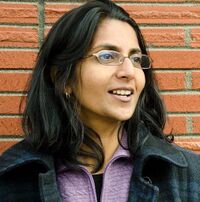


Voters rejected an attempt to recall District 3 City Councilmember Kshama Sawant in Seattle, Washington. The election took place on December 7, 2021. On election night, recall supporters led the vote count by a margin of 53.1% to 46.9%, but by the time results were certified on December 17, recall opponents had won the race 50.4% to 49.6%.[1]
Recall supporters alleged that Sawant broke the law by using city funds to support a ballot initiative that would have raised payroll taxes on big businesses. They also alleged that she violated state coronavirus orders by opening City Hall to protesters on June 9, 2020, and that she led a protest to Seattle Mayor Jenny Durkan’s home in 2020, knowing that its location was protected by law.[1]
In a statement on the recall, Sawant said, “Big business and the right wing want to remove Kshama because she’s such an effective fighter for working people.” Sawant denied that she led the march to Durkan’s home. She acknowledged opening City Hall to protesters but denied that doing so violated the state’s coronavirus order. She also acknowledged using city funds to support the ballot initiative, reaching a settlement with the Seattle Ethics and Elections Commission in May 2021.[1]
Though the office of city council is officially nonpartisan, Sawant is a member of the Socialist Alternative Party and was the first socialist elected to Seattle city government in 97 years.[45] Sawant was first elected to the council as an at-large member in 2013, when she defeated four-term Democratic incumbent Richard Conlin 50.9% to 49.1%.
See also[edit]
- Recall overview
- Political recall efforts
- Political recall efforts, 2021
- Laws governing recall
- Ballotpedia's 2020 Recall Analysis
- Ballotpedia's Mid-Year Recall Report (2021)
Footnotes[edit]
- ↑ 1.0 1.1 1.2 1.3 The Seattle Times, "Seattle City Councilmember Kshama Sawant defeats recall effort," December 16, 2021
- ↑ California Secretary of State, "Statement of Vote: California Gubernatorial Recall Election," accessed December 17, 2021
- ↑ Cal Matters, "Recalling a California governor, explained," January 27, 2021
- ↑ California Secretary of State's office, "Recall of Governor Gavin Newsom, Cumulative Statewide Summary as of 04/19/21," accessed April 26, 2021
- ↑ NBC News, "Recall effort against California governor an attempt to 'destabilize the political system,' analysts say," December 20, 2020
- ↑ Los Angeles Times, "Gavin Newsom and Democrats are dragging Donald Trump into the recall fight," March 16, 2021
- ↑ California Secretary of State, "Complete List of Recall Attempts," accessed November 16, 2020
- ↑ San Francisco Chronicle, "Recall Gavin Newsom? The time is right, GOP activists say," November 26, 2019
- ↑ 9.0 9.1 NBC, "SF District Attorney Chesa Boudin Officially Forced Into Recall Election Next June," November 9, 2021
- ↑ Recall Chesa Boudin, "Approval Letter, SF Dept. of Elections 3/4," accessed March 15, 2021
- ↑ The Bay Area Reporter, "Effort underway to recall SF DA Boudin," February 23, 2021
- ↑ San Francisco News, "Recall Campaign Against Boudin Approved," March 12, 2021
- ↑ SFist, "Original Recall Chesa Boudin Effort Fails To Get Enough Signatures," August 11, 2021
- ↑ 14.0 14.1 San Francisco Examiner, "New Boudin recall effort seeks to reframe narrative," April 19, 2021
- ↑ Ballotpedia staff, "Phone communication with the San Francisco Department of Elections," June 4, 2021
- ↑ San Francisco Chronicle, "Recall of S.F. D.A. Chesa Boudin likely to head to voters, with many more signatures submitted than needed," October 24, 2021
- ↑ Recall Chesa Boudin, "PETITION FOR RECALL," accessed March 15, 2021
- ↑ San Francisco Department of Elections, "Response from Elected Official," accessed June 4, 2021
- ↑ Loudon Now, "Removal Petition Filed Against School Board Chairwoman," November 9, 2021
- ↑ Fight for Schools, "Petition Information," accessed May 24, 2021
- ↑ 21.0 21.1 Loudoun Now, "Third School Board Member Recall Petition Filed," November 18, 2021
- ↑ Loudoun Now, "Loudoun School Critics Target ‘Dirty’ Books as Recall Petitions Circulate," May 13, 2021
- ↑ Loudoun Times-Mirror, "Judge to hear motions on recall of school board chairwoman Jan. 5, sets trial for March 21," December 6, 2021
- ↑ 24.0 24.1 Loudoun Times Mirror, "Judge to hear motions on recalls of school board vice chair Jan. 5," December 14, 2021
- ↑ 25.0 25.1 News Nation USA, "Loudoun County parents try to recall school board over critical race theory," May 10, 2021
- ↑ Loudoun Times-Mirror, "Updated: Loudoun School Board member Leslee King dies at 74," August 31, 2021
- ↑ Loudoun Times-Mirror, "Updated: Beth Barts resigns from Loudoun County Public School Board," October 15, 2021
- ↑ Loudoun Times-Mirror, "Teacher accuses parent group of 'racism' after group criticizes LCPS equity efforts," April 16, 2021
- ↑ Loudoun Now, "Barts’ Recall Case Set for Monday Court Hearing," September 7, 2021
- ↑ WTOP News, "Prosecutor seeks verification of signatures in Loudoun Co. school board recall," November 23, 2021
- ↑ Mequon-Thiensville School District, "2021 Special Election," accessed September 24, 2021
- ↑ Mequon-Thiensville School District, "Board of Education," accessed June 28, 2021
- ↑ Mequon-Thiensville School District, "2021 Special Election: Unofficial Election Results - 11 of 11 Units Reporting (9:46 p.m.)," accessed November 2, 2021
- ↑ Mequon-Thiensville School District, "Candidate Tracking: Mequon-Thiensville School District November 2, 2021 Recall Elections," accessed October 6, 2021
- ↑ 35.0 35.1 Milwaukee Journal Sentinel, "Parent group seeks recall of four Mequon-Thiensville School Board members," June 25, 2021
- ↑ CBS 58, "Petition reaches enough signatures to recall some Mequon-Thiensville School Board members," August 23, 2021
- ↑ San Francisco CBS Local, "San Francisco School Board Recall Petitions Certified; Collins, Lopez, Moliga Face Vote In February," October 18, 2021
- ↑ 38.0 38.1 38.2 San Francisco Chronicle, "San Francisco school board members are facing a recall effort. What's the chance it'll work?" February 24, 2021
- ↑ 39.0 39.1 39.2 San Francisco Examiner, "SF school board members break silence as recalls ramp up," August 20, 2021
- ↑ San Francisco Examiner, "School board votes to rescind renaming resolution," April 7, 2021
- ↑ San Francisco Chronicle, "Mayor Breed backs recall of three San Francisco school board members: 'Our kids must come first,'" November 9, 2021
- ↑ 42.0 42.1 San Francisco Examiner, "School board recall effort begins gathering signatures," April 1, 2021
- ↑ San Francisco Chronicle, "S.F. school board recall effort takes a step forward: 'We really want a boring school board again,'" April 1, 2021
- ↑ San Francisco Department of Elections, "November 6, 2018 Election Results - Summary," accessed March 2, 2021
 EncycloReader
is supported by the
EncycloReader
is supported by the  KSF
KSF