Joe Biden presidential administration
 From Ballotpedia - Reading time: 20 min


President Joe Biden (D) held office as the 46th president of the United States from January 20, 2021 to January 20, 2025. He served with Vice President Kamala Harris (D), a former senator from California.
This page provides an overview of Biden's administration, including top officials and personnel and key executive and legislative actions.
It features the following sections:
- Joe Biden's Cabinet
- Key legislation
- Biden's executive orders and actions
- Federal judges nominated by Joe Biden
- Presidential and congressional approval ratings
- Multistate lawsuits against the federal government
- Vetoed legislation
- Tie-breaking votes cast by Kamala Harris in the U.S. Senate
- News coverage of the Biden transition and first 100 days
Joe Biden's Cabinet[edit]
President Joe Biden (D) identified candidates for 15 executive agency positions that comprise the president's Cabinet. This tradition is rooted in Article II, Section 2, Clause 1 of the Constitution, which states that the president "may require the Opinion, in writing, of the principal Officer in each of the executive Departments, upon any Subject relating to the Duties of their respective Offices."[1]
The vice president and several other administrators, directors, and representatives were also part of the Cabinet. Click here for an overview of Biden's Cabinet members.
The following individuals were members of Biden's Cabinet. They were either confirmed by the U.S. Senate or held a position that did not require Senate confirmation.
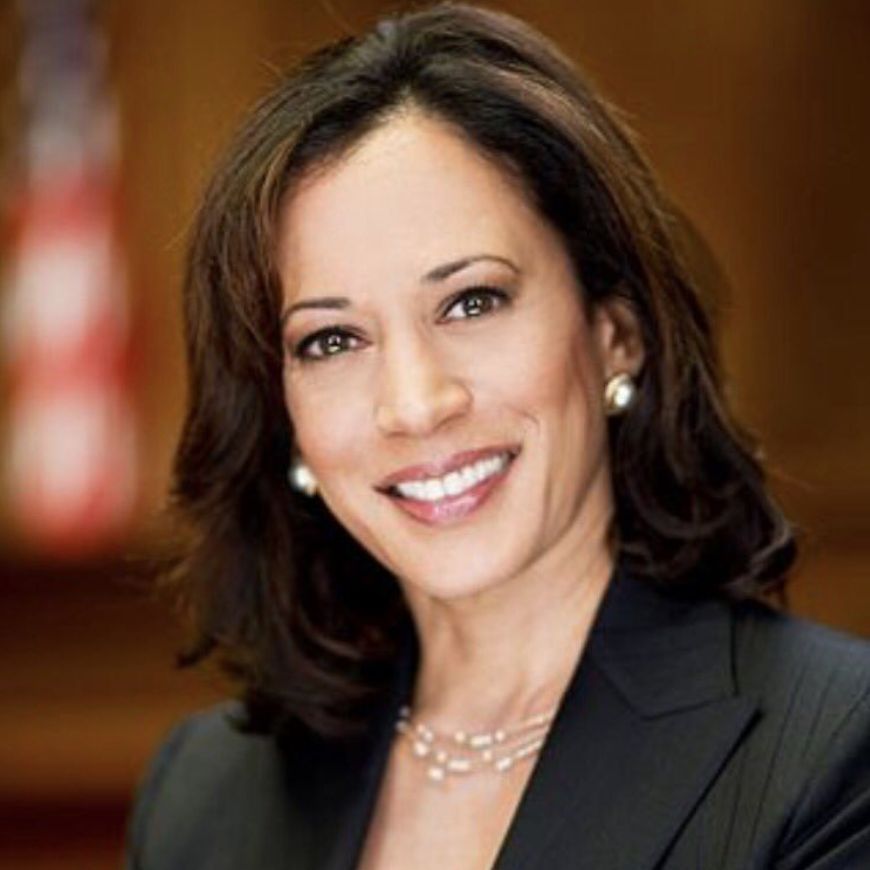 Kamala Harris Vice President |
 Tony Blinken Secretary of State |
 Lloyd Austin Secretary of Defense |
 Janet Yellen Secretary of the Treasury |
|---|
 Merrick Garland Attorney General |
 Gina Raimondo Secretary of Commerce |
 Pete Buttigieg Secretary of Transportation |
 Alejandro Mayorkas Secretary of Homeland Security |
|---|
 Jennifer Granholm Secretary of Energy |
 Miguel Cardona Secretary of Education |
 Tom Vilsack Secretary of Agriculture |
 Debra Haaland Secretary of the Interior |
|---|
 Xavier Becerra Secretary of Health and Human Services |
 Julie Su Acting Secretary of Labor |
 Denis McDonough Secretary of Veterans Affairs |
 Adrianne Todman Acting Secretary of Housing and Urban Development |
|---|
 Avril Haines Director of National Intelligence |
 Linda Thomas-Greenfield U.S. Ambassador to the United Nations |
 Katherine Tai U.S. Trade Representative |
 Isabel Guzman Administrator of the Small Business Administration |
|---|
 Jared Bernstein Council of Economic Advisers Chair |
 Michael Regan Administrator of the Environmental Protection Agency |
 Shalanda Young Director of the Office of Management and Budget |
 Arati Prabhakar Director of the Office of Science and Technology Policy |
|---|
 William J. Burns Director of the Central Intelligence Agency |
 Jeff Zients White House Chief of Staff |
|---|
House vote in favor of articles of impeachment against Alejandro Mayorkas (2024)[edit]
- See also: Impeachment of Alejandro Mayorkas, 2024
On April 17, 2024, the U.S. Senate dismissed two articles of impeachment against U.S. Secretary of Homeland Security Alejandro Mayorkas. In two votes along party lines, with Democrats supporting and Republicans opposing the motions, the Senate voted that the allegations in the articles of impeachment did not meet the definition of high crimes and misdemeanors.[2]
The U.S. House of Representatives voted to approve two articles of impeachment against Mayorkas on February 13, 2024. The vote was 214-213, with 214 Republicans voting in favor. Three Republicans, Reps. Michael Gallagher (R-Wis.), Ken Buck (R-Colo.), Tom McClintock (R-Calif.), and 210 Democrats voted against impeachment. This was the second time the articles of impeachment were put up for a vote, following a failed vote on February 6, 2024. The House transmitted the articles of impeachment to the U.S. Senate on April 16, 2024.
The articles of impeachment alleged that Mayorkas "willfully and systemically refused to comply with the immigration laws, failed to control the border to the detriment of national security, compromised public safety, and violated the rule of law and separation of powers in the Constitution" and breached the public trust "by knowingly making false statements to Congress and the American people and avoiding lawful oversight in order to obscure the devastating consequences of his willful and systemic refusal to comply with the law and carry out his statutory duties."[3]
Mayorkas responded to the House Committee on Homeland Security's vote to approve the impeachment articles, saying, "I assure you that your false accusations do not rattle me and do not divert me from the law enforcement and broader public service mission to which I have devoted most of my career and to which I remain devoted."[4]
Rep. Marjorie Taylor Greene (R-Ga.) introduced the articles of impeachment on November 13, 2023. The articles were amended by the House Committee on Homeland Security, and passed the committee in a vote along party lines, with all Republicans voting in favor, on January 31, 2024.[3]
This was the first time the House voted on articles of impeachment against a Cabinet secretary since 1876. In 1876, Secretary of War William Belknap was impeached for "criminally disregarding his duty as Secretary of War and basely prostituting his high office to his lust for private gain."[5][6]
Key legislation[edit]
This section provides overviews of key federal legislation considered during the Biden administration. To be included, the bill must have met several of the following qualifying factors:
- Collaboration between the president and congressional leadership on the bill
- Use of the reconciliation process to pass the bill
- Changes to the congressional procedure to pass the bill
- Estimated cost of the bill as evaluated by the Congressional Budget Office
- Extent of public relations campaign to promote the bill
- Domestic and international policy ramifications
H.R.815: Making emergency supplemental appropriations for the fiscal year ending September 30, 2024, and for other purposes.[edit]
President Joe Biden (D) signed H.R.815 into law on April 24, 2024. The bill provided for $95 billion in foreign aid, primarily in the form of weapons, equipment, and supplies, and new sanctions against "individuals and entities engaged in trafficking of fentanyl and other opioids."[7] The U.S. Senate approved the bill in a 79-18 vote on April 23, and the House of Representatives approved the bill in a 316-94 vote on April 19.[7]
Key features of the bill included:[8][9][7]
- Almost $61 billion in war aid for Ukraine
- Over $26 billion in military assistance for Israel and humanitarian assistance for Gaza
- $8 billion in military aid to Taiwan and the Indo-Pacific
- A requirement that the Chinese company ByteDance divest from their app TikTok by January 19, 2025.[10] If that requirement was not met, the app would be shut down in the U.S.
On December 18, 2024, the Supreme Court said it would hear a case challenging the requirement for ByteDance to divest from TikTok. The court held a hearing on January 10, 2025.[11] On January 17, 2025, the court ruled to uphold the ban.[12] TikTok shut down for about 14 hours on January 19. Upon taking office on January 20, 2025, President Donald Trump (R) issued an executive order extending the divestment deadline by 75 days.[13] On April 5, Trump extended the divestment deadline by an additional 75 days, and on June 19, Trump further extended the deadline to September 17, 2025.[14][15]
On September 16, 2025, Trump announced he had made a deal to allow TikTok to continue operating in the United States.[16] Trump issued an executive order that day to further extend the deadline to December 16, 2025. On January 19, 2026, a group of investors including Oracle, MGX, Silver Lake, and many other investment firms finalized a deal to purchase TikTok in the United States.[17]
Fiscal Responsibility Act of 2023[edit]
- See also: Fiscal Responsibility Act of 2023
President Joe Biden (D) signed the Fiscal Responsibility Act of 2023 into law on June 3, 2023. This bill raised the debt ceiling.[18][7] The House voted 314-117 to approve the bill on May 31, 2023, and the Senate voted 63-36 to approve the bill on June 1.[7] Treasury Secretary Janet Yellen estimated that the government would shut down if the debt ceiling was not raised by June 5, 2023.[19]
According to the Congressional Research Service, "When total federal spending exceeds total federal revenue, it produces a budget deficit. When faced with a deficit, the Department of the Treasury typically issues debt in order to obtain the funds necessary to finance current federal obligations. The amount of money that Treasury may borrow, however, is restricted by a statutory limit on the debt (referred to as the debt limit or debt ceiling)." In the last 40 years, Congress has passed 48 laws related to the debt ceiling. About 40% of these bills were stand-alone legislation that only contained provisions to raise or suspend the debt ceiling, while the other 60% were attached to a bill with provisions addressing other subjects.[20]
The Fiscal Responsibility Act of 2023 fell into the latter category. Key measures of the bill included:[21]
- Suspending the debt ceiling until January 2025.
- Capping non-defense spending at $704 billion for fiscal year 2024. Veterans Affairs (VA) healthcare spending would be excluded from this cap. Defense spending would be capped at $886 billion in fiscal year 2024.
- Rescinding about $30 billion of unspent coronavirus relief funding.
- Rescinding $1.4 billion of Internal Revenue Service (IRS) funding. It would also move $20 billion of the $80 billion allocated to the agency in the Inflation Reduction Act of 2022 to non-defense funds.
- Enhancing work requirements for the Supplemental Nutrition Assistance Program (SNAP) and the Temporary Assistance to Needy Families program (TANF).
- Simplifying environmental reviews for energy projects.
- Ending the student loan debt repayment pause in August 2023.
H.J.Res.7: Relating to a national emergency declared by the President on March 13, 2020.[edit]
President Joe Biden (D) signed H.J.Res.7 into law on April 10, 2023. The resolution ended the national coronavirus state of emergency.[7]
The state of emergency began during the Donald Trump (R) administration when Trump signed a proclamation on March 13, 2020, retroactively beginning the state of emergency on March 1, 2020.[22] The state of emergency ended on April 10, 2023, when Biden signed H.J.Res.7 into law. Biden had previously said he planned to end the state of emergency in May 2023.[23]
The House of Representatives voted 229-197 to approve the resolution on February 1, and the Senate voted 68-23 to approve the resolution on March 29.[7] The resolution was introduced by Rep. Paul Gosar (R-Ariz.) on January 9, under the title "Relating to a national emergency declared by the President on March 13, 2020."[7]
The president has the authority to issue a state of national emergency under the National Emergencies Act. During a national state of emergency, additional powers and authorities are granted to the executive branch, often through the provisions of other laws.[24]
[edit]
H.J.Res. 30 was a joint resolution of disapproval under the terms of the Congressional Review Act (CRA) passed by the 118th Congress. President Joe Biden (D) vetoed the bill on March 20, 2023, marking the first veto of his presidency.[7]
The resolution sought to void a Department of Labor rule that amended the Employee Retirement Income Security Act of 1974 (ERISA) to allow retirement plans to consider certain environmental, social, and corporate governance (ESG) factors in investment-related decisions.[25][26] To read more about the rule, click here.
The House of Representatives voted 216-204 to approve the resolution on February 28, and the Senate voted 50-46 to approve the resolution on March 1.[7] The resolution was introduced by Rep. Andy Barr (R-Ky.) on February 7, under the full title "Providing for congressional disapproval under chapter 8 of title 5, United States Code, of the rule submitted by the Department of Labor relating to 'Prudence and Loyalty in Selecting Plan Investments and Exercising Shareholder Rights'".
The CRA is a federal law that affords Congress a check on the rulemaking activities of federal agencies. The law creates a review period during which Congress, by passing a joint resolution of disapproval later signed by the president, can overturn a new federal agency rule and block the issuing agency from creating a similar rule in the future.[27][28][29]
Respect for Marriage Act of 2022[edit]
- See also: Respect for Marriage Act of 2022
The Respect for Marriage Act of 2022 was a bill codifying the recognition of marriages between individuals of the same sex and of different races, ethnicities, or national origins. It was passed by the 117th Congress and signed into law by President Joe Biden (D) on December 13, 2022.[30]
The United States Senate voted 61-36 to approve an amended version of the bill on November 29, 2022. The House approved the amended bill in a 258-169 vote on December 8.[31]
Noteworthy elements of the law include:[32]
- Removing the definition, established in the Defense of Marriage Act of 1996 (DOMA), of marriage as between a man and a woman and spouse as a person of the opposite sex for the purposes of federal law, and replacing it with "an individual shall be considered married if that individual’s marriage is valid in the State where the marriage was entered into."
- Amending the provision in DOMA that allowed states not to recognize same-sex marriages entered into in other states, and replacing it with a requirement that states not deny any rights or claims pertaining to marriages entered into in other states regardless of the married individuals' sex, race, ethnicity, or national origin.
- Providing that the bill would not impact religious liberty or conscience protections, or provide grounds to compel nonprofit religious organizations to recognize same-sex marriages.
Rep. Jerry Nadler (D-N.Y.) was this bill's lead sponsor in the House.[31] In the Senate, the bill was amended to include proposed provisions regarding religious liberty and nonprofit religious organizations. Negotiations on the amendment were led by Sens. Tammy Baldwin (D-Wis.), Susan Collins (R-Maine), Rob Portman (R-Ohio), Kyrsten Sinema (D-Ariz.), and Thom Tillis (R-N.C.).[33]
Electoral Count Reform and Presidential Transition Improvement Act of 2022[edit]
The Electoral Count Reform and Presidential Transition Improvement Act of 2022 was a bill signed into law by President Joe Biden (D) on December 23, 2022.[7] The Senate approved the bill, which was attached to a year-end omnibus funding bill, in a 68-29 vote on December 22, 2022.[34] The House approved the bill in a 225-201 vote the following day.[35]
Sen. Susan Collins (R-Maine) introduced the bill on July 20, 2022. Collins and Sen. Joe Manchin (D-W.Va.) led negotiations on the bill.[36] When Collins introduced the bill, the following senators signed on as co-sponsors: Manchin, Rob Portman (R-Ohio), Kyrsten Sinema (D-Ariz.), Mitt Romney (R-Utah), Jeanne Shaheen (D-N.H.), Lisa Murkowski (R-Alaska), Mark Warner (D-Va.), Thom Tillis (R-N.C.), Chris Murphy (D-Conn.), Shelley Moore Capito (R-W.Va.), Ben Cardin (D-Md.), Todd Young (R-Ind.), Chris Coons (D-Del.), Ben Sasse (R-Neb.), and Lindsey Graham (R-S.C.).
This bill changed the procedure for counting electoral votes outlined in the Electoral Count Act of 1887. Click here to read more about the Electoral Count Act.
Elements of the bill included:[37][7]
- Specifying that the vice president's role at the joint session of congress to count electoral votes is ministerial and that he or she cannot solely adjudicate disputes over electors.
- Raising the objection threshold at the joint session of congress to count electoral votes to one-fifth of the members of both the House of Representatives and the Senate. Under the 1887 Electoral Count Act, the threshold was one member from each chamber of Congress.
- Identifying governors as the single official responsible for submitting the certificate of ascertainment identifying that state’s electors, unless that official is otherwise identified in the state's law or constitution.
- Providing for expedited judicial review of certain claims about states' certificates identifying their electors.
Since the 1887 passage of the Electoral Count Act, there have been three joint sessions of congress to count electoral votes where members were able to advance an objection by meeting the Electoral Count Act's threshold of one U.S. House member and one U.S. Senate member submitting written objections. These objections were raised in 1969, 2005, and 2021. After an objection to Arizona's electoral votes was raised in 2021, the last time congress met in a joint session to count electoral votes before the introduction of this bill, the proceedings were interrupted due to a breach of the U.S. Capitol. Click here to read more.
Bipartisan Safer Communities Act of 2022[edit]
- See also: Bipartisan Safer Communities Act of 2022
The Bipartisan Safer Communities Act of 2022 was a firearm regulation and mental health bill passed by the 117th Congress and signed into law by President Joe Biden (D) on June 25, 2022.[38].
The United States Senate voted 64-34 to approve a motion to proceed on June 21.[31] The Senate voted 65-34 to invoke cloture on the bill on June 23, and approved the bill in a 65-33 vote on the same day.[39][40] The House approved the bill in a 234-193 vote on June 24.[41]
Sen. Chris Murphy (D-Conn.) released the bill in the form of an amendment to S. 2938 on June 21, 2022.[31] Features of the bill included:[42][43][44][45]
- Expanded background checks for individuals under the age of 21 purchasing firearms.
- Providing $11 billion for mental health services, including increased funding for the Medicaid Certified Community Behavioral Health Clinic program, increased funding for school-based mental health programs, and investments in pediatric mental healthcare services.
- Preventing individuals who have been convicted of a domestic violence misdemeanor or felony in dating relationships from purchasing firearms for five years.
- Providing $750 million for state grants to implement crisis intervention order programs, also referred to as red-flag laws, that would allow authorities to confiscate firearms from individuals who have been determined by a court to be a significant danger to themselves or others. The grants could also be used to support mental health courts, drug courts, veterans courts, and extreme risk protection orders.
- Providing $2 billion for community-based violence prevention initiatives.
Negotiations on the bill began after a school shooting in Uvalde, Texas, on May 24, 2022. On June 12, a working group of senators announced they had reached an agreement on the bill's framework.
Inflation Reduction Act of 2022[edit]
- See also: Inflation Reduction Act of 2022
The Inflation Reduction Act of 2022 was a federal budget reconciliation bill signed into law by President Joe Biden (D) on August 16, 2022, addressing climate change, healthcare costs, and tax enforcement.[46] To read a summary of the bill prepared by the Congressional Research Service, click here.
The United States Senate voted 51-50 to pass the bill on August 7, 2022, and the United States House of Representatives voted 220-207 to pass the bill on August 12.[7] Senate Majority Leader Chuck Schumer (D-N.Y.) released legislative text for the bill on July 27.[47]
Features of the bill included:[48][49]
- A $369 billion investment to address energy security and climate change
- An extension of Affordable Care Act subsidies
- Allowing Medicare to negotiate certain drug prices
- A 15% corporate minimum tax, a 1% stock buyback fee, and enhanced Internal Revenue Service (IRS) enforcement
- An estimated $300 billion deficit reduction from 2022-2031[50][51]
The bill was passed through the budget reconciliation process, which provides a procedural path around the supermajority requirement in the Senate. It was created by the Congressional Budget and Impoundment Control Act of 1974 to facilitate a quicker process for reviewing and passing certain bills related to spending, revenues, and debt. This process is not subject to the filibuster and only requires a simple majority vote.[52] At the time of the Inflation Reduction Act's passage, the 117th Congress had passed one other reconciliation bill (American Rescue Plan Act of 2021) and proposed one other reconciliation bill (Build Back Better Act).
Freedom to Vote: John R. Lewis Act (amendment to H.R. 5746: NASA Enhanced Use Leasing Extension Act of 2021)[edit]
The Freedom to Vote: John R. Lewis Act was a voting bill presented in the form of an amendment to the NASA Enhanced Use Leasing Extension Act of 2021 (H. R. 5746).
The House Rules Committee added the amendment to the NASA Enhanced Use Leasing Extension Act of 2021 in order to allow for debate on the bill in the Senate without having to meet the 60-vote filibuster threshold.[53] To read more, click here.
The U.S. Senate voted down the bill on January 19, 2022. The U.S. House of Representatives approved the bill on January 13, 2022. To read the full text of the amendment, click here.
Proposals in the Freedom to Vote: John R. Lewis Act included:[54][55]
- Making Election Day a public holiday
- Allowing for same-day voter registration, establishing minimum early voting periods, and allowing absentee voting for any reason
- Restrictions on the removal of local election administrators in federal elections
- Regulations on congressional redistricting
- Expanding campaign finance disclosure rules for some organizations
- Amending the Voting Rights Act to require some states to obtain clearance from the U.S. Department of Justice before implementing new election laws
The amendment's provisions were based on two previously proposed bills: the Freedom to Vote Act and the John R. Lewis Voting Rights Advancement Act of 2021.
American Rescue Plan Act of 2021[edit]
- See also: American Rescue Plan Act of 2021
The American Rescue Plan Act of 2021 was a federal budget reconciliation bill passed by the 117th Congress and signed into law by President Joe Biden (D) on March 11, 2021, to provide economic relief in response to the COVID-19 pandemic. To read the full text of the bill, click here.
According to the White House, the key features of the law included the following government initiatives and investments:[56]
- Spend approximately $160 billion on national vaccination program and response
- Spend approximately $130 billion to safely reopen schools
- Distribute $1,400 per person in relief payments
- Extend unemployment benefits to September 6, 2021
- Increase Supplemental Nutrition Assistance Program (SNAP) benefits by 15 percent through September 2021
- Increase the Child Tax Credit from $2,000 to $3,000 per child over age 6 and $3,600 per child under age 6
- Increase the Earned Income Tax Credit
- Expand childcare assistance and provide an additional tax credit for childcare costs
- Provide $1 billion to states for Temporary Assistance for Needy Families (TANF) recipients
- Lower health insurance premiums
The bill was passed through the budget reconciliation process, which provides a procedural path around the supermajority requirement in the Senate. It was created by the Congressional Budget and Impoundment Control Act of 1974 to facilitate a quicker process for reviewing and passing certain bills related to spending, revenues, and debt. This process is not subject to the filibuster and only requires a simple majority vote.[52] No Republican House or Senate member supported the bill.
For the People Act of 2021[edit]
- See also: For the People Act of 2021
HR1, also known as the "For the People Act of 2021," was a federal election law and government ethics bill before the 117th United States Congress. It cleared the United States House of Representatives on March 3, 2021. It did not receive a vote in the Senate and did not become law.
Infrastructure Investment and Jobs Act of 2021[edit]
The Infrastructure Investment and Jobs Act of 2021 (IIJA) was a federal bill passed by the 117th Congress and signed into law by President Joe Biden (D) on November 15, 2021. To read the full text of the bill, click here.
According to the White House, the key features of the bill included:[57]
- $89.9 billion in new infrastructure funding and reauthorizations
- $66 billion in funding for Amtrak maintenance and development
- $40 billion in new funding for bridge repair, replacement, and rehabilitation
- $55 billion in funding for clean drinking water
- $65 billion in funding to create universal access to reliable high-speed internet
- $65 billion in funding for clean energy transmission and power infrastructure upgrades
The original Democratic infrastructure proposal had outlined $2.6 trillion in spending, including on additional sectors such as public housing and research and development. The $1.2 trillion Senate bill allocated $550 billion in new spending on transportation, water and power infrastructure, and pollution cleanup, in addition to regular annual spending on infrastructure projects.[58][59][60]
The Senate passed the bill on August 10, 2021, with bipartisan support by a vote of 69-30.[61] The House passed the bill in a 228-206 vote on November 5, 2021, with 215 Democrats and 13 Republicans voting in favor of the bill and six Democrats and 200 Republicans voting against it.[62][63]
House Speaker Nancy Pelosi (D-Calif.) initially said in August that she would not take up the bill in the House until the Senate also passed a $3.5 trillion budget resolution.[64] The House had been expected to vote on the bill by September 27 as part of a nonbinding commitment in the budget resolution, but Pelosi deferred the vote to September 30.[65][66] No floor vote was held, and Pelosi deferred the vote twice more to October 1 and then October 31.[67][68][69] The House voted to approve the bill on November 5, 2021.
Build Back Better Act of 2021[edit]
- See also: Build Back Better Act
The Build Back Better Act (H.R. 5376) was a bill pending before the 117th Congress. It cleared the United States House of Representatives on November 19, 2021. The United States Senate did not take up the bill and it did not become law. To read the full text of the bill, click here.
House Democrats released a $1.75 trillion budget framework on October 28, 2021, for spending on climate change, childcare, and healthcare.[70][71] President Joe Biden (D) announced his support for the framework the same day.[72] Key spending included the following initiatives:[73][74]
- $555 billion aiming to address climate change and renewable energy investment
- $400 billion aiming to address childcare, childcare costs, and universal pre-K
- $165 billion aiming to address healthcare and Medicare hearing expansion
- $150 billion aiming to address public housing and affordability issues
- $150 billion aiming to address home care
A second draft of the framework was presented in a November 3 meeting of the House Committee on Rules, which added provisions related to paid leave and Medicare prescription drug pricing.[75] Democrats introduced a $3.5 trillion version of the bill on August 11. To read about the initial $3.5 trillion budget proposal, click here.
The House passed the bill on November 19, 2021, in a 220-213 vote. One Democrat and 212 Republicans voted against the bill, and 220 Democrats voted in favor of the bill.
House Speaker Nancy Pelosi (D-Calif.) initially said in August that she would not take up the Infrastructure Investment and Jobs Act of 2021 in the House until the budget resolution was adopted.[76] The infrastructure bill was passed by the Senate on August 10.[77] Pelosi later scheduled and deferred several votes on the infrastructure bill at the end of September and October as Congress debated the content of both measures. Click here to read more about the dual track for the budget and infrastructure bills.
Biden's executive orders and actions[edit]
- See also: Joe Biden's executive orders and actions
President Joe Biden (D) signed 162 executive orders, 242 presidential memoranda, 725 proclamations, and 152 notices.
Each of these presidential documents is different in authority and implementation. Executive orders are directives written by the president to officials within the executive branch requiring them to take or stop some action related to policy or management. They are numbered, published in the Federal Register, and cite the authority by which the president is making the order.[78][79]
Presidential memoranda and notices also include instructions directed at executive officials, but they are neither numbered nor have the same publication requirements. The Office of Management and Budget is also not required to issue a budgetary impact statement on the subject of the memoranda or notices.[80][81]
In his 2014 book, By Order of the President: The Use and Abuse of Executive Direct Action, Phillip J. Cooper, a professor of public administration at Portland State University, wrote, "As a practical matter, the memorandum is now being used as the equivalent of an executive order, but without meeting the legal requirements for an executive order."[82]
Proclamations are a third type of executive directive that typically relate to private individuals or ceremonial events, such as holidays and commemorations.[80][83]
Click here for a complete list of Biden's executive actions.
Biden Administration Student Loan Debt Relief Plan (2022)[edit]
On June 30, 2023, the United States Supreme Court struck down the Biden administration's student loan debt relief plan. In a 6-3 decision, the court ruled in Biden v. Nebraska that the 2003 HEROES Act did not provide the U.S. Department of Education with the authority to cancel parts of student loans on a large scale.[84] Click here to read more about the lawsuit, and click here to read more about the 2003 HEROES Act.
After the Supreme Court struck down Biden's 2022 student debt cancellation plan, the Biden administration announced several other student loan debt cancellation plans with more limited scopes. Click here to read more.
President Joe Biden (D) announced the three-part student loan debt relief plan, which aimed to offer "targeted debt relief as part of a comprehensive effort to address the burden of growing college costs and make the student loan system more manageable for working families," on August 25, 2022. The administration intended that the plan take effect before borrowers were required to resume payments on their student loans, which were first paused in response to the coronavirus in March 2020 by the Trump administration.[85] On June 3, 2023, Biden signed into law the Fiscal Responsibility Act of 2023, which raised the debt ceiling and contained a provision ending the repayment pause 60 days after June 30, 2023.[86] On June 12, 2023, a representative for the U.S. Department of Education clarified the timeline for the resumption of student loan repayments, stating, "Student loan interest will resume starting on September 1, 2023, and payments will be due starting in October. ... We will notify borrowers well before payments restart."[87]
Noteworthy elements of the plan included:[85]
- Cancellation of up to $20,000 of student loan debt for Pell Grant recipients and $10,000 for other borrowers making under $125,000
- A final student loan repayment pause through December 31, 2022[88]
- A reduction in monthly payment amounts and the coverage of unpaid monthly interest when a borrower makes monthly payments
- Expansion of employment types that qualify for the Public Service Loan Forgiveness (PSLF) program
- Increased oversight of higher education programs with high debt levels
- Only federal student loans held by the Department of Education would be eligible for debt cancellation.[89]
On June 7, 2023, Biden vetoed a joint resolution of disapproval passed by Congress that sought to void the student loan plan. Click here to read more about the resolution.
Presidential Commission on the Supreme Court of the United States[edit]
On April 9, 2021, President Joe Biden (D) signed an executive order establishing the Presidential Commission on the Supreme Court of the United States.
The commission was tasked with evaluating the merits and legality of proposed changes to the Supreme Court's structure and operation, including the Supreme Court's constitutional role, the tenure of justices, the membership of the court, and selection methods and rules for cases. The commission was required to submit a report to Biden within 180 days of the group's first public meeting.[90][91]
On December 7, the commission submitted its final report to Biden, which can be read here.[92]
Federal judges nominated by Joe Biden[edit]
- See also: Federal judges nominated by Joe Biden
During his one term in office, President Joe Biden (D) nominated 252 individuals to federal judgeships on Article III courts. Biden made 241 judicial appointments.[93] Of those appointments, 235 were Article III judges.[94]
On February 28, 2022, President Joe Biden (D) nominated Ketanji Brown Jackson to the United States Supreme Court to replace Justice Stephen Breyer, who announced his intent to retire at the start of the court's summer recess, which typically takes place in late June or early July.[95] The U.S. Senate confirmed Jackson on April 7, 2022, by a vote of 53-47.[96] Click here to read more.
Presidential and congressional approval ratings[edit]
- See also: Ballotpedia's Polling Indexes
Multistate lawsuits against the federal government[edit]
Multistate lawsuits are legal actions involving two or more state attorneys general. By the end of his term in office, 133 multistate lawsuits were filed against the Biden administration.[97][98]
Vetoed legislation[edit]
- See also: Joe Biden: Vetoed legislation
President Joe Biden (D) issued 13 vetoes during his presidency.
Article I, Section 7 of the Constitution of the United States gives the president of the United States the ability to veto a bill passed by Congress. A veto prevents a bill from being enacted into law. A presidential veto can be overridden by a two-thirds vote in both the Senate and the House of Representatives. When Congress overrides a veto, the bill becomes law without the president's approval.
Click here for an overview of vetoed legislation during the Biden administration.
Tie-breaking votes cast by Kamala Harris in the U.S. Senate[edit]
Vice President Kamala Harris (D) cast 33 tie-breaking votes in the U.S. Senate. The majority of Harris' tie-breaking votes, 26, were cast during the 117th Congress, when the U.S. Senate had a 50-50 partisan makeup. The rest of her votes were cast during the 118th Congress, when the U.S. Senate had a 51-49 Democratic majority.
Under Article I, Section 3, Clause 4 of the U.S. Constitution, the vice president of the United States also serves as the president of the Senate. In this capacity, he or she may cast the deciding vote when there is a tie in the Senate.
John Adams cast the first tie-breaking vote on July 18, 1789. As of January 21, 2026, there were 309 tie-breaking votes from 38 vice presidents. Kamala Harris (D) (2021-2025) cast the most tie-breaking votes (33) during her tenure as vice president, John C. Calhoun (1825 - 1832) cast the second most (31), and Adams (1789 - 1797) cast the third most (29).
Twelve vice presidents, including Joe Biden and Dan Quayle, never cast a tie-breaking vote during their time in office.[99]
For an overview of tie-breaking votes cast by previous vice presidents, click here.
Click here for an overview of tie-breaking votes cast by Harris.
Transition Tracker[edit]
- See also: Ballotpedia's Daily Transition Tracker
This section provides an archive of news stories related to the Biden presidential transition, as curated in Ballotpedia's Daily Transition Tracker.
2021[edit]
2020[edit]
See also[edit]
- Joe Biden
- Joe Biden presidential transition
- Kamala Harris
- Confirmation process for Joe Biden's Cabinet nominees
- Presidential election, 2020
Footnotes[edit]
- ↑ Constitution Center, "Presidential Advisors," accessed November 18, 2020
- ↑ Cite error: Invalid
<ref>tag; no text was provided for refs namedsenate41724 - ↑ 3.0 3.1 Congress.gov, "H.Res.863 - Impeaching Alejandro Nicholas Mayorkas, Secretary of Homeland Security, for high crimes and misdemeanors." accessed February 6, 2024
- ↑ Axios, "Mayorkas mounts 11th-hour defense against GOP impeachment effort," January 30, 2024
- ↑ Associated Press, "House Republicans are ready to impeach Homeland Security Secretary Mayorkas. Vote will be close," February 6, 2024
- ↑ Senate.gov, "Impeachment Trial of Secretary of War William Belknap, 1876," accessed February 6, 2024
- ↑ 7.00 7.01 7.02 7.03 7.04 7.05 7.06 7.07 7.08 7.09 7.10 7.11 7.12 Congress.gov, "H.R.815 - Making emergency supplemental appropriations for the fiscal year ending September 30, 2024, and for other purposes." accessed Apri 24, 2024 Cite error: Invalid
<ref>tag; name "billpage" defined multiple times with different content Cite error: Invalid<ref>tag; name "billpage" defined multiple times with different content Cite error: Invalid<ref>tag; name "billpage" defined multiple times with different content Cite error: Invalid<ref>tag; name "billpage" defined multiple times with different content Cite error: Invalid<ref>tag; name "billpage" defined multiple times with different content - ↑ NPR, "Senate overwhelmingly passes aid for Ukraine, Israel and Taiwan with bipartisan vote," April 23, 2024
- ↑ Wall Street Journal, "Biden Signs Foreign Aid Bill, Clearing Way for More Military Gear for Ukraine," April 24, 2024
- ↑ The law said Biden could extend the deadline by 90 days if progress was made towards a sale.
- ↑ SCOTUSblog, "Supreme Court skeptical of ban on TikTok," January 10, 2025
- ↑ SCOTUSBlog, "Supreme Court upholds TikTok ban," January 17, 2025
- ↑ CNN, "Trump signs promised executive action to delay TikTok ban for 75 days," January 20, 2025
- ↑ the New York Times, "Trump Extends Deadline for a TikTok Deal," April 5, 2025
- ↑ White House, "FURTHER EXTENDING THE TIKTOK ENFORCEMENT DELAY," June 19, 2025
- ↑ BBC, "Deal is done to keep TikTok in the US, says Trump," September 16, 2025
- ↑ The New York Times, "Who Owns TikTok in the U.S. Now?" January 22, 2026
- ↑ The New York Times, "Biden Signs Fiscal Responsibility Act in End to Debt Limit Crisis," June 3, 2023
- ↑ U.S. Department of the Treasury, "Secretary of the Treasury Janet L. Yellen Sends Letter to Congressional Leadership on the Debt Limit," May 26, 2023
- ↑ Congressional Research Service, "2023 Debt Limit: Congressional Consideration of Debt Limit Legislation," March 30, 2023
- ↑ Associated Press, "Debt ceiling deal: What’s in, what’s out of the bill to avert US default," May 29, 2023
- ↑ Federal Register, "Declaring a National Emergency Concerning the Novel Coronavirus Disease (COVID-19) Outbreak," March 13, 2023
- ↑ Politico, "Biden signs bill ending Covid-19 national emergency," April 10, 2023
- ↑ [https://crsreports.congress.gov/product/pdf/LSB/LSB10267 Congressional Research Service, "Definition of National Emergency under the National Emergencies Act," March 1, 2019]
- ↑ Federal Register, "Prudence and Loyalty in Selecting Plan Investments and Exercising Shareholder Rights," December 1, 2022
- ↑ Congressional Budget Office, "H.J. Res. 30, Providing for Congressional disapproval under chapter 8 of title 5, United States Code, of the rule submitted by the Department of Labor relating to "Prudence and Loyalty in Selecting Plan Investments and Exercising Shareholder Rights"," February 27, 2023
- ↑ U.S. News, "Democrats Push to Repeal Congressional Review Act," June 1, 2017
- ↑ The Hill, "The Congressional Review Act and a deregulatory agenda for Trump's second year," March 31, 2017
- ↑ Smithsonian Magazine, "What Is the Congressional Review Act?" February 10, 2017
- ↑ YouTube, "President Biden Hosts a Ceremony on the South Lawn to Sign the Respect for Marriage Act," December 13, 2022
- ↑ 31.0 31.1 31.2 31.3 Congress.gov, "Respect for Marriage Act," accessed December 8, 2022 Cite error: Invalid
<ref>tag; name "bill" defined multiple times with different content - ↑ Office of Tammy Baldwin, "H. R. 8404," accessed November 17, 2022
- ↑ Office of Tammy Baldwin, "Senators Move Forward on Bipartisan Respect for Marriage Act With Protections For Religious Liberties," November 14, 2022
- ↑ Twitter, "Senate Press Gallery on December 22, 2022," accessed December 22, 2022
- ↑ The Washington Post, "House approves $1.7 trillion omnibus bill amid GOP objections, sending it to Biden," December 23, 2022
- ↑ Office of Susan Collins, "Senators Introduce Reforms to the Electoral Count Act of 1887," July 20, 2022
- ↑ Office of Senator Susan Collins, "One Pager on Electoral Count Reform Act of 2022," accessed September 30, 2022
- ↑ CBS, "Biden signs bipartisan gun control bill into law," June 25, 2022
- ↑ Cite error: Invalid
<ref>tag; no text was provided for refs namedcloture - ↑ Axios, "Senate passes bipartisan gun safety bill," June 23, 2022
- ↑ Cite error: Invalid
<ref>tag; no text was provided for refs namedhouseyes - ↑ Fox News, "Senate votes to advance bipartisan gun control legislation," June 22, 2022
- ↑ The New York Times, "Bipartisan Gun Bill Clears Initial Vote in Senate," June 21, 2022
- ↑ The Texas Tribune, "U.S. Senate, in 64-34 vote, advances bipartisan gun legislation backed by Cornyn," June 21, 2022
- ↑ Office of Senator Chris Murphy, "Bipartisan Safer Communities Act One Pager," accessed June 22, 2022
- ↑ ABC 7 News, "Biden signs landmark Inflation Reduction Act at White House," August 16, 2022
- ↑ Cite error: Invalid
<ref>tag; no text was provided for refs namedtext - ↑ Senate Democrats, "Summary: The Inflation Reduction Act of 2022," August 11, 2022
- ↑ Committee for a Responsible Budget, "What's In the Inflation Reduction Act?" July 28, 2022
- ↑ On August 5, the Congressional Budget Office (CBO) released a report on the bill, estimating a deficit decrease of about $100 billion. The report did not include certain tax provisions in the analysis. The CBO noted in its report, "CBO estimates that as a result of those increases in outlays, revenues would increase by $204 billion over the 2022-2031 period."
- ↑ Congressional Budget Office, "Estimated Budgetary Effects of H.R. 5376, the Inflation Reduction Act of 2022, as Amended in the Nature of a Substitute (ERN22335) and Posted on the Website of the Senate Majority Leader on July 27, 2022," August 5, 2022
- ↑ 52.0 52.1 Center on Budget and Policy Priorities, "Introduction to Budget Reconciliation," November 19, 2016
- ↑ Cite error: Invalid
<ref>tag; no text was provided for refs namedrc - ↑ House Rules Committee, "Freedom to Vote: John R. Lewis Act," accessed January 13, 2022
- ↑ The Hill, "House passes voting rights package, setting up Senate filibuster showdown," January 13, 2022
- ↑ White House, "American Rescue Plan Fact Sheet," accessed March 31, 2021
- ↑ White House, "UPDATED FACT SHEET: Bipartisan Infrastructure and Investment Jobs Act," accessed August 2, 2021
- ↑ The New York Times, "The Infrastructure Plan: What’s In and What’s Out," July 28, 2021
- ↑ CNBC, "Here’s what comes next for the $1 trillion bipartisan infrastructure bill," August 2, 2021
- ↑ Reuters, "Factbox: What's in the U.S. Senate's bipartisan $1.2 tln infrastructure plan?" July 28, 2021
- ↑ Washington Examiner, "Senate passes bipartisan infrastructure bill ahead of battle over budget," August 10, 2021
- ↑ The New York Times, "House Passes $1 Trillion Infrastructure Bill, Putting Social Policy Bill on Hold," November 5, 2021
- ↑ Fox News, "Biden hails ‘long overdue’ infrastructure bill after it passes House with GOP votes: ‘Just getting started'," November 6, 2021
- ↑ The New York Times, "House progressives won’t vote for the infrastructure bill unless the Senate approves $3.5 trillion in other spending," August 10, 2021
- ↑ CNBC, "House Democrats clear path toward passing $3.5 trillion budget bill and infrastructure plan after breaking stalemate," updated August 25, 2021
- ↑ The New York Times, "Pelosi Announces Vote on $1 Trillion Bipartisan Infrastructure Bill," September 26, 2021
- ↑ Politico, "Another big day for Biden’s presidency: What to watch," October 1, 2021
- ↑ The Hill, "Pelosi sets end-of-October deadline for infrastructure vote," October 2, 2021
- ↑ Fox News, "Pelosi delays vote on infrastructure bill as Dems fail to reach deal: LIVE UPDATES," October 1, 2021
- ↑ The White House, "The Build Back Better Framework," accessed October 29, 2021
- ↑ CBS News, "What's in Democrats' new $1.75 trillion social spending and climate bill?" October 28, 2021
- ↑ The White House, "President Biden Announces the Build Back Better Framework," October 28, 2021
- ↑ Yahoo News, "Biden Releases Trimmed Down ‘Build Back Better’ Framework — What’s Been Cut and How Revisions Will Offset Cost," October 28, 2021
- ↑ NPR, "What stays and what's gone from Biden's spending bill (so far)," October 29, 2021
- ↑ Associated Press, "Paid leave, immigration, tax changes added to Biden bill," November 4, 2021
- ↑ The New York Times, "House progressives won’t vote for the infrastructure bill unless the Senate approves $3.5 trillion in other spending," August 10, 2021
- ↑ Congress.gov, "H.R.3684 - INVEST in America Act," accessed August 3, 2021
- ↑ Cooper, Phillip. (2014). By Order of the President: The Use and Abuse of Executive Direct Action. Lawrence, KS: University Press of Kansas. (pgs. 21-22)
- ↑ USA Today, "Presidential memoranda vs. executive orders. What's the difference?" January 24, 2017
- ↑ 80.0 80.1 Executive Order, "Executive Order, Proclamation, or Executive Memorandum?" accessed January 28, 2021
- ↑ National Archives, "Presidential Documents Guide," accessed December 16, 2024
- ↑ Cooper, Phillip. (2014). By Order of the President: The Use and Abuse of Executive Direct Action. Lawrence, KS: University Press of Kansas. (pg. 120)
- ↑ American Bar Association, "What Is an Executive Order?" January 25, 2021
- ↑ SCOTUSBlog, "Announcement of opinions for Friday, June 30," June 30, 2023
- ↑ 85.0 85.1 White House, "FACT SHEET: President Biden Announces Student Loan Relief for Borrowers Who Need It Most," August 24, 2022
- ↑ Marketplace, "What the debt ceiling deal means for your student loans," June 2, 2023
- ↑ Politico, "Biden admin will resume interest on federal student loans Sept. 1; monthly payments due in October," June 12, 2023
- ↑ The White House extended the repayment pause beyond this date.
- ↑ The Hill, "Lawsuits, shrunk eligibility take the shine off Biden’s student debt relief," October 2, 2022
- ↑ White House, "Executive Order on the Establishment of the Presidential Commission on the Supreme Court of the United States," April 9, 2021
- ↑ White House, "President Biden to Sign Executive Order Creating the Presidential Commission on the Supreme Court of the United States," April 9, 2021
- ↑ The Hill, "Biden Supreme Court study panel unanimously approves final report," December 7, 2021
- ↑ United States Courts, "Judgeship Appointments by President," accessed January 20, 2025
- ↑ Article III judges are appointed by the president and confirmed by the U.S. Senate in accordance with Article III of the United States Constitution. They serve for life.
- ↑ The White House, "Press Release: Nominations Sent to the Senate," February 28, 2022
- ↑ Congress.gov, "PN1783 — Ketanji Brown Jackson — Supreme Court of the United States," accessed April 7, 2022
- ↑ State Litigation and AG Activity Database," accessed December 6, 2024
- ↑ USA Today, "12 Republican state attorneys general sue President Biden over climate change order," March 8, 2021
- ↑ Senate.gov, "Occasions When Vice Presidents Have Voted to Break Tie Votes in the Senate," accessed March 30, 2017
- ↑ Twitter, "Biden-Harris Presidential Transition," December 10, 2020
| ||||||||
 EncycloReader
is supported by the
EncycloReader
is supported by the  KSF
KSF