Oklahoma House of Representatives District 56
 From Ballotpedia - Reading time: 13 min

| Census Topic | Value |
|---|---|
| Population | 33,551 |
| Gender |
50% Male 50% Female |
| Race |
66% White 4.2% Black 0.3% Asian 16% Native American 0.1% Pacific Islander |
| Ethnicity | 8.7% Hispanic |
| Median household income | $49,066 |
| High school graduation rate | 87.1% |
| College graduation rate | 17.4% |
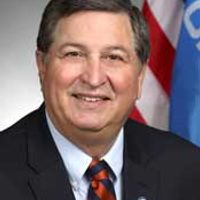
Oklahoma House of Representatives District 56 is represented by Dick Lowe (R).
As of the 2020 Census, Oklahoma state representatives represented an average of 39,201 residents. After the 2010 Census, each member represented 37,142 residents.
About the chamber[edit]
Members of the Oklahoma House of Representatives serve two-year terms with term limits.[1] Representatives may not serve more than 12 consecutive years between both chambers of the Oklahoma State Legislature. Oklahoma legislators assume office 15 days following the general election.[2][3]
Qualifications[edit]
Article 5, Section 17 of the Oklahoma Constitution states: "Members of the Senate shall be at least twenty-five years of age, and members of the House of Representatives twenty-one years of age at the time of their election. They shall be qualified electors in their respective counties or districts and shall reside in their respective counties or districts during their term of office."
Salaries[edit]
- See also: Comparison of state legislative salaries
| State legislative salaries, 2022 | |
|---|---|
| Salary | Per diem |
| $47,500/year | $168/day. Tied to federal rate. Unvouchered. $25/day for 20 days during non-session months. |
Term limits[edit]
- See also: State legislatures with term limits
The Oklahoma legislature is one of 15 state legislatures with term limits. Voters enacted the Oklahoma Term Limits Act in 1990. That initiative limits Oklahoma state legislators to no more than twelve years in the Oklahoma State Legislature. These 12 years can be served in any combination of the Oklahoma State Senate and the Oklahoma House of Representatives.[4]
The first year that the term limits enacted in 1990 impacted the ability of incumbents to run for office was in 2004.
Vacancies[edit]
If there is a vacancy in the Oklahoma State Legislature, the governor must call a special election no later than 30 days after the vacancy occurs. No special election can be called if the vacancy occurs in an even-numbered year and if the term of office will expire in that year. This second provision allows special elections to be held for outgoing senators with two or more years left in their terms.[5]
If a senator announces his or her resignation before March 1st but the effective date lies between the general election and the new session, a special election can be held on the general election dates. The winner of this election will take office upon the senator's official resignation. This only applies to senators with two or more years remaining in their terms.[6]
Oklahoma's special election process was modified in 2012 by Senate Bill 91. The bill was intended to avert a special election for Al McAffrey's (D) vacated seat. McAffrey resigned in February of an election year. The text above reflects the modification approved in SB 91.[7]
 See sources: Oklahoma Stat. Ann. tit. 26, § 12-106
District map[edit]
Redistricting[edit]
2020-2022[edit]
Gov. Kevin Stitt (R) signed new legislative maps into law on November 22, 2021.[8] The Senate approved the Senate map in a 46-1 vote on November 17, 2021, and the House approved the Senate map 95-1 on November 19, 2021.[9] The House approved the House map 88-3 on November 17, 2021, and the Senate approved the House map 44-2 on November 19, 2021.[10]These maps take effect for Oklahoma's 2022 legislative elections.
How does redistricting in Oklahoma work? In Oklahoma, both congressional and state legislative district boundaries are drawn by the Oklahoma State Legislature. These lines may be vetoed by the governor.[11]
If the legislature is unable to approve a state legislative redistricting plan, a backup commission must draw the lines. The commission comprises the following seven members:[11]
- The governor appoints one Republican and one Democrat.
- The majority leader of the Oklahoma State Senate appoints one Republican and one Democrat.
- The majority leader of the Oklahoma House of Representatives appoints one Republican and one Democrat.
- The lieutenant governor serves as the non-voting chair of the commission.
The Oklahoma Constitution requires that state Senate district boundaries take into account "population, compactness, area, political units, historical precedents, economic and political interests, contiguous territory, and other major factors."[11]
The redistricting committee of the state House adopted redistricting guidelines similar to the senatorial district requirements described above. These guidelines apply to state House and congressional districts, as well. These guidelines may be amended by the state legislature at its discretion.[11]
Oklahoma House of Representatives District 56
before 2020 redistricting cycle
Click a district to compare boundaries.
Oklahoma House of Representatives District 56
after 2020 redistricting cycle
Click a district to compare boundaries.
Elections[edit]
2022[edit]
The primary election was canceled. Dick Lowe (R) won the election without appearing on the ballot.
2020[edit]
General election for Oklahoma House of Representatives District 56
Dick Lowe defeated Craig Parham in the general election for Oklahoma House of Representatives District 56 on November 3, 2020.
Candidate |
% |
Votes |
||
| ✔ |
|
Dick Lowe (R) |
67.0
|
8,680 |
|
|
Craig Parham (D) |
33.0
|
4,270 | |

|
Total votes: 12,950 | |||
 = candidate completed the Ballotpedia Candidate Connection survey. = candidate completed the Ballotpedia Candidate Connection survey. | ||||
Do you want a spreadsheet of this type of data? Contact our sales team. |
||||

The Democratic primary election was canceled. Craig Parham advanced from the Democratic primary for Oklahoma House of Representatives District 56.
Republican primary for Oklahoma House of Representatives District 56
Dick Lowe defeated Randy Talley in the Republican primary for Oklahoma House of Representatives District 56 on June 30, 2020.
Candidate |
% |
Votes |
||
| ✔ |
|
Dick Lowe |
53.5
|
1,803 |
|
|
Randy Talley
|
46.5
|
1,569 | |

|
Total votes: 3,372 | |||
| = candidate completed the Ballotpedia Candidate Connection survey. | ||||
Do you want a spreadsheet of this type of data? Contact our sales team. |
||||
2018[edit]
General election for Oklahoma House of Representatives District 56
Incumbent David Perryman defeated Charles Wells in the general election for Oklahoma House of Representatives District 56 on November 6, 2018.
Candidate |
% |
Votes |
||
| ✔ |
|
David Perryman (D) |
60.6
|
5,875 |
|
|
Charles Wells (R) |
39.4
|
3,812 | |


|
Total votes: 9,687 | |||
| = candidate completed the Ballotpedia Candidate Connection survey. | ||||
Do you want a spreadsheet of this type of data? Contact our sales team. |
||||
Democratic primary for Oklahoma House of Representatives District 56
Incumbent David Perryman advanced from the Democratic primary for Oklahoma House of Representatives District 56 on June 26, 2018.
Candidate |
||
| ✔ |
|
David Perryman |
|
||||
| = candidate completed the Ballotpedia Candidate Connection survey. | ||||
Do you want a spreadsheet of this type of data? Contact our sales team. |
||||
Republican primary for Oklahoma House of Representatives District 56
Charles Wells advanced from the Republican primary for Oklahoma House of Representatives District 56 on June 26, 2018.
Candidate |
||
| ✔ |
|
Charles Wells |
|
||||
| = candidate completed the Ballotpedia Candidate Connection survey. | ||||
Do you want a spreadsheet of this type of data? Contact our sales team. |
||||
2016[edit]
Elections for the Oklahoma House of Representatives took place in 2016. The primary election took place on June 28, 2016, and the general election was held on November 8, 2016. The candidate filing deadline was April 15, 2016.
Incumbent David Perryman defeated Chris Verser in the Oklahoma House of Representatives District 56 general election.[12]
| Oklahoma House of Representatives, District 56 General Election, 2016 | ||||
|---|---|---|---|---|
| Party | Candidate | Vote % | Votes | |
| Democratic |  David Perryman Incumbent David Perryman Incumbent |
65.66% | 8,270 | |
| Republican | Chris Verser | 34.34% | 4,325 | |
| Total Votes | 12,595 | |||
| Source: Oklahoma State Election Board | ||||
Incumbent David Perryman ran unopposed in the Oklahoma House of Representatives District 56 Democratic primary.[13][14]
| Oklahoma House of Representatives, District 56 Democratic Primary, 2016 | ||
|---|---|---|
| Party | Candidate | |
| Democratic | David Perryman Incumbent (unopposed) | |
Chris Verser ran unopposed in the Oklahoma House of Representatives District 56 Republican primary.[13][14]
| Oklahoma House of Representatives, District 56 Republican Primary, 2016 | ||
|---|---|---|
| Party | Candidate | |
| Republican | Chris Verser (unopposed) | |
2014[edit]
Elections for the Oklahoma House of Representatives took place in 2014. A primary election took place on June 24, 2014. The general election was held on November 4, 2014. The signature filing deadline for candidates wishing to run in this election was April 11, 2014. Incumbent David Perryman was unopposed in the Democratic primary, while Chuck Utsler was unopposed in the Republican primary. Perryman defeated Utsler in the general election.[15][16][17]
| Party | Candidate | Vote % | Votes | |
|---|---|---|---|---|
| Democratic | David Perryman Incumbent |
57.6% | 4,593 | |
| Republican | Chuck Utsler | 42.4% | 3,385 | |
| Total Votes | 7,978 | |||
2012[edit]
Elections for the office of Oklahoma House of Representatives consisted of a primary election on June 26, 2012, and a general election on November 6, 2012. The signature filing deadline for candidates wishing to run in this election was April 13, 2011. David Perryman (D) defeated Chuck Utsler (R) in the general election. Neither candidate faced opposition in their primary.[18][19]
| Party | Candidate | Vote % | Votes | |
|---|---|---|---|---|
| Democratic | David L Perryman |
50.5% | 6,098 | |
| Republican | Chuck Utsler | 49.5% | 5,966 | |
| Total Votes | 12,064 | |||
Campaign contributions[edit]
From 2000 to 2018, candidates for Oklahoma House of Representatives District 56 raised a total of $922,915. Candidates who raised money in contributions earned $43,948 on average. All figures come from Follow the Money
| Campaign contributions, Oklahoma House of Representatives District 56 | |||
|---|---|---|---|
| Year | Amount | Candidates | Average |
| 2018 | $109,651 | 2 | $54,825 |
| 2016 | $39,994 | 2 | $19,997 |
| 2014 | $199,153 | 2 | $99,577 |
| 2012 | $188,091 | 2 | $94,046 |
| 2010 | $79,897 | 2 | $39,949 |
| 2008 | $15,867 | 1 | $15,867 |
| 2006 | $42,231 | 2 | $21,116 |
| 2004 | $132,146 | 3 | $44,049 |
| 2002 | $83,479 | 2 | $41,740 |
| 2000 | $32,406 | 3 | $10,802 |
| Total | $922,915 | 21 | $43,948 |
See also[edit]

- Oklahoma State Legislature
- Oklahoma State Senate
- Oklahoma House of Representatives
- Oklahoma state legislative districts
External links[edit]
Footnotes[edit]
- ↑ termlimits.org, "State legislative term limits," accessed December 18, 2013
- ↑ Oklahoma State Courts Network, "Oklahoma Statutes Citationized 14 O.S. § 80.35.14," accessed November 2, 2021
- ↑ Oklahoma State Courts Network, "Oklahoma Statutes Citationized 14 O.S. § 141 ," accessed November 2, 2021
- ↑ Cite error: Invalid
<ref>tag; no text was provided for refs namedlimits - ↑ Justia US Law, "2014 Oklahoma Statutes Title 26. Elections §26-12-106. Vacancies in the Legislature.," accessed February 15, 2021 (Statute 26-12-106(A), Oklahoma Statutes)
- ↑ Justia US Law, "2014 Oklahoma Statutes Title 26. Elections §26-12-106. Vacancies in the Legislature.," accessed February 15, 2021 (Statute 26-12-106(B), Oklahoma Statutes)
- ↑ NewsOK, "Open Oklahoma City seat in state House will not be filled by special election," March 20, 2012
- ↑ Oklahoma Office of the Governor, "Governor Kevin Stitt Signs Six Redistricting Bills into Law," November 22, 2021
- ↑ Oklahoma Legislature, "SB 1," accessed November 23, 2021
- ↑ Oklahoma Legislature, "HB 1001," accessed November 23, 2021
- ↑ 11.0 11.1 11.2 11.3 All About Redistricting, "Oklahoma," accessed May 6, 2015
- ↑ Oklahoma State Election Board, "Federal, State, Legislative and Judicial Races General Election — November 8, 2016," accessed November 28, 2016
- ↑ 13.0 13.1 Oklahoma State Election Board, "2016 Candidate List Book (Official List of Candidates)," accessed April 18, 2016
- ↑ 14.0 14.1 Oklahoma State Election Board, "Official Results - Primary Election," accessed August 2, 2016
- ↑ Oklahoma State Election Board, "Candidates for State Elective Officials 2014," accessed April 15, 2014
- ↑ Oklahoma State Election Board, "Official Results Statewide Primary Election — June 24, 2014," accessed July 10, 2014
- ↑ Oklahoma State Election Board, "Official General Election Results, Federal, State, Legislative and Judicial Races — November 4, 2014," accessed November 5, 2014
- ↑ Oklahoma State Election Board, "Official General Election Results," accessed October 28, 2013
- ↑ Oklahoma State Election Board, "Official Primary Election Results," accessed October 28, 2013

 EncycloReader
is supported by the
EncycloReader
is supported by the  KSF
KSF