Rhode Island state legislative Democratic primaries, 2018
 From Ballotpedia - Reading time: 29 min
- General election: Nov. 6
- Voter registration deadline: Oct. 7
- Early voting: N/A
- Absentee voting deadline: Nov. 6
- Online registration: Yes
- Same-day registration: No
- Voter ID: Photo ID required
- Poll times: 7:00 a.m. to 8:00 p.m.
| 2018 Rhode Island General Assembly elections | |
|---|---|
 | |
| General | November 6, 2018 |
| Primary | September 12, 2018 |
| 2018 elections | |
|---|---|
| Choose a chamber below: | |
In the September 12, 2018, state legislative primaries, the Democratic Party of Rhode Island and some local committees opposed incumbents supportive of legalized abortion.
State Sen. Jeanine Calkin lost to a state party-backed challenger, while state Rep. Marcia Ranglin-Vassell, who defeated House Majority Leader John DeSimone in the 2016 primaries, beat back a local party-endorsed challenger. State Rep. Moira Walsh defeated a challenger who the state party endorsed but then later withdrew support from when it was revealed he supported Donald Trump.[1] Other incumbents defeated were state Rep. Ramon Perez, who missed out on the state party's endorsement, and state Sen. Paul Jabour, who lost to progressive activist Samuel Bell.
The conflict between party leaders, including state party chairman Joe McNamara and House Speaker Nicholas Mattiello, and the incumbents reflected a wider struggle among Rhode Island Democrats over social issues. At a May meeting of the state party’s platform committee, state Rep. Stephen Ucci said, “[w]e need to concentrate on the things that we do agree about because the gun and abortion issues break us apart.”[2]
Incidents involving the Rhode Island Democratic Party Women’s Caucus also displayed the political tensions inside the party.
In October 2017, the Caucus tried to expel state party official Joe DeLorenzo from his position after he suggested he did not believe state Rep. Teresa Tanzi’s (D) claims of sexual harassment. DeLorenzo resigned and said in his departing statement, "No longer does the Democratic Party welcome all Democrats. Instead, it has become a party where members of its far-left wing actively work to exclude anyone who does not, without question or dissent, follow and further their agenda.”[3]
The Women’s Caucus clashed with the state party in December when some of the Women’s Caucus' members objected to a Democratic Party official attending their meeting.[4]
As of September 2018, the Women's Caucus had five state senators and 15 state representatives among its members including Calkin and Ranglin-Vassell. Caucus Vice Chairwoman Bridget Valverde won the primary for the open Senate District 35. The state party originally endorsed former state Sen. Gregory Acciardo over her, but it later rescinded its endorsement due to Acciardo's criminal record.[5][1]
The Democratic primaries for the seats in the Rhode Island State Senate and the Rhode Island House of Representatives were on September 12, 2018. For information about the Republican primary elections in Rhode Island, click here.
The general election was on November 6, 2018. The candidate filing deadline was June 27, 2018. In the state Senate, all 38 seats were up for election. In the state House, all 75 seats were up for election.
As of September 2018, Rhode Island was one of eight Democratic trifectas. A state government trifecta is a term used to describe a single-party government where one political party holds the governor's office and a majority in both chambers of the state legislature. To find out more about state government trifectas, click here.
Contents
- 1 Incumbents who did not advance to the general election
- 2 Competitiveness
- 3 Battleground races
- 4 Factional conflict
- 5 Media coverage
- 6 Partisan control
- 7 Voter information
- 7.1 How the primary works
- 7.2 Poll times
- 7.3 Registration requirements
- 7.4 Automatic registration
- 7.5 Online registration
- 7.6 Same-day registration
- 7.7 Residency requirements
- 7.8 Verification of citizenship
- 7.9 Verifying your registration
- 7.10 Voter ID requirements
- 7.11 Early voting
- 7.12 Absentee voting
- 8 See also
- 9 Footnotes
Incumbents who did not advance to the general election[edit]
Retiring incumbents[edit]
Eight state House Democrats did not seek re-election in 2018.
- J. Aaron Regunberg (District 4)
- Jared Nunes (District 25)
- Jeremiah O'Grady (District 46)
- Thomas Winfield (District 53)
- David Coughlin, Jr. (District 60)
- Helder Cunha (District 64)
- Joy Hearn (District 66)
- Kenneth Marshall (District 68)
Three state Senate Democrats did not seek re-election in 2018.
- Daniel DaPonte (District 14)
- Paul Fogarty (District 23)
- Marc Cote (District 24)
Incumbents defeated[edit]
One state House Democrat was defeated in the primaries.
- Ramon Perez (District 13)
Two state Senate Democrats were defeated in the primaries.
- Samuel Bell (District 5)
- Jeanine Calkin (District 30)
Competitiveness[edit]
| Year | Total seats | Open seats | Total candidates | Democratic primaries contested | Republican primaries contested | Total contested | Incumbents contested in primaries | Total incumbents contested in primaries |
|---|---|---|---|---|---|---|---|---|
| 2018 | 113 | 15 | 192 | 30 | 3 | 14.6% | 18 | 18.4% |
| 2016 | 113 | 7 | 180 | 29 | 6 | 15.5% | 18 | 17.0% |
| 2014 | 113 | 7 | 171 | 23 | 3 | 11.5% | 17 | 16.0% |
Battleground races[edit]
Ballotpedia identified battleground races in the 2018 Rhode Island state legislative Democratic primary elections. These primaries had the potential to be more competitive than other races and could have led to changes in the membership of the Republican caucus or had an impact on general election races.
To determine the Rhode Island state legislative Democratic primary battleground races in 2018, Ballotpedia examined races that fit one or more of the three factors listed below:
- Identified by the media as a notable primary election.
- One or more of the candidates received a notable endorsement.
- The primary was known to be competitive based on past results or because it was a rematch of a primary that was competitive in the past.
State Senate battlegrounds[edit]
Senate District 30[edit]
Did the incumbent file to run for re-election?
| Yes |
What made this a race to watch?
| The state party endorsed Mark McKenney over incumbent Jeanine Calkin, who WPRI referred to as a "progressive lawmaker in her first term."[5] |
Democratic primary for Rhode Island State Senate District 30
Candidate |
% |
Votes |
||
| ✔ |
|
Mark McKenney |
54.3
|
1,857 |
|
|
Jeanine Calkin |
45.7
|
1,566 | |


|
Total votes: 3,423 | |||
Do you want a spreadsheet of this type of data? Contact our sales team. |
||||

Senate District 35[edit]
Did the incumbent file to run for re-election?
| No |
What made this a race to watch?
| Gregory Acciardo and Bridget Valverde faced off for the seat held by retiring state Sen. Mark Gee (R). The state party originally endorsed Acciardo, a former state senator, which led to criticism by state Rep. and lieutenant gubernatorial candidate Aaron Regunberg, who said the party establishment backed conservative candidates over more liberal candidates. Valverde said, "Since Mr. Acciardo hasn’t been involved in our community, the only thing we really knew about him is that he’s part of the same old boys’ network that has blocked so much progress for Rhode Island."[5] Valverde was elected as vice chair of the Rhode Island Democratic Party Women's Caucus in January 2018.[6] Kevin Olasanoye, the state party executive director, said Acciardo was endorsed because he previously served in the state Senate and the party believed he was better positioned to win the general election.[7] The state party later withdrew its endorsement of Acciardo, citing his criminal record.[1] |
Democratic primary for Rhode Island State Senate District 35
Candidate |
% |
Votes |
||
| ✔ |
|
Bridget Valverde |
84.4
|
2,737 |
|
|
Gregory Acciardo |
15.6
|
507 | |

|
Total votes: 3,244 | |||
Do you want a spreadsheet of this type of data? Contact our sales team. |
||||
State House battlegrounds[edit]
House District 3[edit]
Did the incumbent file to run for re-election?
| Yes |
What made this a race to watch?
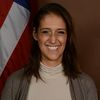
| The state Democratic Party endorsed challenger Michael Earnheart over incumbent Moira Walsh, who had opposed House Speaker Nicholas Mattiello on some issues, including abortion. Earnhart voted for Donald Trump in the 2016 presidential election, leading U.S. Rep. David Cicilline (D-R.I.) to endorse her and say, "Rep. Walsh has consistently stood up for Democratic values. Something that clearly cannot be said for her opponent."[5] Earnhart called himself a moderate Democrat and said he supported increased access to firearms. Walsh told Slate that Mattielo was behind the endorsement and said, “[t]his is all very expected with the way our political machine is run in Rhode Island."[8] The state Democratic later withdrew its endorsement of Earnheart. In response, he said, “With a strong focus on improving the economy and the business climate of our state, I feel strongly that I am the most qualified candidate to represent the people of District 3 in Providence. However, I do not wish to be a distraction.” Walsh said, "The party does not earn any brownie points from me. The only reason that I believe they rescinded the endorsement is probably because of the amount of national outrage that followed it. This is something that the party does pretty regularly.”[9] |
Democratic primary for Rhode Island House of Representatives District 3
Candidate |
% |
Votes |
||
| ✔ |
|
Moira Walsh |
55.1
|
646 |
|
|
Michael Earnheart |
44.9
|
526 | |
|
Total votes: 1,172 | |||
Do you want a spreadsheet of this type of data? Contact our sales team. |
||||
House District 5[edit]
Did the incumbent file to run for re-election?
| Yes |
What made this a race to watch?
| The local Democratic committee’s leaders endorsed Holly Coolman, an abortion opponent, over incumbent Marcia Ranglin-Vassell, a supporter of legalized abortion. After state Rep. Aaron Regunberg criticized Cooley's endorsement over her position on abortion, she said she was "committed to core Democratic principles, including protecting workers' rights, protecting immigrants' rights, common sense gun control, environmental sustainability and access to health care for all."[5] |
Democratic primary for Rhode Island House of Representatives District 5
Candidate |
% |
Votes |
||
| ✔ |
|
Marcia Ranglin-Vassell |
62.3
|
1,027 |
|
|
Holly Coolman |
37.7
|
622 | |

|
Total votes: 1,649 | |||
Do you want a spreadsheet of this type of data? Contact our sales team. |
||||
House District 13[edit]
Did the incumbent file to run for re-election?
| Yes |
What made this a race to watch?
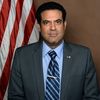
| The local Democratic committee’s leaders endorsed former state Rep. John Carnevale over incumbent Ramon Perez and challenger Mario Mendez. Carnevale was previously indicted for sexual assault and making false statements. He denied the false statements charge. The sexual assault charges were dropped after the accuser died.[5] Carnevale was removed from the ballot after he pleaded guilty to perjury on August 8, 2018.[10] |
Democratic primary for Rhode Island House of Representatives District 13
Candidate |
% |
Votes |
||
| ✔ |
|
Mario Mendez |
52.8
|
688 |
|
|
Ramon Perez |
47.2
|
616 | |

|
Total votes: 1,304 | |||
Do you want a spreadsheet of this type of data? Contact our sales team. |
||||
Withdrawn or disqualified candidates
- John Carnevale (D)
Factional conflict[edit]
The following events show conflict between members of the Rhode Island Democratic Party that falls along a number of dimensions, including gender and beliefs about gun and abortion policy.
Rhode Island Democratic Party endorsements, 2018[edit]
The Rhode Island Democratic Party originally endorsed Mark McKenney and Michael Earnheart, challengers to state Sen. Jeanine Calkin and state Rep. Moira Walsh, respectively. In an open primary for Senate District 35, it endorsed Gregory Acciardo over Bridget Valverde, the vice chair of the Rhode Island Democratic Women's Caucus.
State Rep. Aaron Regunberg, a 2018 lieutenant gubernatorial candidate, criticized the endorsements. He said, “It is absolutely shameful that the establishment machine is lining up behind conservative, unethical and anti-woman candidates to run against real Democrats in races across Rhode Island.”[1]
An unnamed party official told Rhode Island Public Radio that Earnheart was endorsed over Walsh because he sought the endorsement while she did not.[1] Kevin Olasanoye, the state party executive director, said Acciardo was endorsed because he previously served in the state Senate and the party believed he was better positioned to win the general election.[7]
In early July, state Rep. Joe McNamara, the state party chairman, rescinded the endorsements of Earnheart and Acciardo. Earnheart's endorsement, in particular, had drawn criticism after it was discovered that he supported Donald Trump (R) in the 2016 presidential election. It also came to light that Acciardo had a criminal history. Democratic officials said they not aware of Earnheart's support for Trump or Acciardo's criminal history before making the endorsements.[1]
McNamara said in a statement: “Over the last four years as chair, I’ve worked really hard to make sure our party is more open and transparent and is a place where all Democrats can feel they can have a voice and make a difference. I regret that these endorsements are inconsistent with that work and believe the actions we have taken today brings us closer to where we aspire to be."[1]
Rhode Island Democratic Party Platform Committee meeting, 2018[edit]
According to UpRise RI, a meeting of the Rhode Island Democratic Party Platform Committee in May 2018 "highlighted the divisions between conservative and progressive Democrats that exist beneath the RIDP’s 'big tent.'"
UpRise RI reported that Johnston Mayor Joseph Polisena and Arthur Corvese spoke in favor of "core party values that are 'traditional,' conservative, and Catholic," and said that increased influence of the party's progressive wing could push more conservative voters in the state toward the Republican Party. State Rep. Stephen Ucci “We need to concentrate on the things that we do agree about because the gun and abortion issues break us apart.”
Committee member Lauren Niedel-Gresh, a self-identified progressive, said, “Mayor Polisena’s comments were divisive and struck a negative chord. At an event that was supposed to unite Democrats for a common cause his messaging was one of negativity and showed a lack of respect for party members who consider themselves to be progressive or liberal.”
Later in the committee meeting, members of the separate party wings made suggestions for the party platform and often opposed each other on gun policy and abortion.
Frank Saccocio, president of the Rhode Island 2nd Amendment Coalition, said, "This is the kind of thing that actually fractured the Republican Party when the Tea Party got in there. Now we have a Democratic Party that is fracturing even more, because of the progressivisms on this. We need to become more toward the middle. What’s happening is we’re going to be looking at this and its more and more progressives. This is why we lost the race for the White House."
State Rep. Kathleen Fogarty spoke in favor of legalized abortion.[2]
Rhode Island Democratic Party Women's Caucus[edit]
According to its website, the Rhode Island Democratic Party Women's Caucus "is guided by the platforms and policies of the RIDP and also the Democratic National Committee" and "advocates for women's equality within and through the Democratic Party of Rhode Island."[11]
The following women were members of the caucus as of July 2018.[12]
| Rhode Island Democratic Party Women's Caucus, State Senate members | ||||||||||||
|---|---|---|---|---|---|---|---|---|---|---|---|---|
| District | Incumbent | faced a challenger? | ||||||||||
| District 2 | Ana Quezada | No | ||||||||||
| District 3 | Gayle Goldin | No | ||||||||||
| District 15 | Donna Nesselbush | No | ||||||||||
| District 30 | Jeanine Calkin | Yes | ||||||||||
| District 37 | V. Susan Sosnowski | No | ||||||||||
| Rhode Island Democratic Party Women's Caucus, State House members | ||||||||||||
|---|---|---|---|---|---|---|---|---|---|---|---|---|
| District | Incumbent | faced a challenger? | ||||||||||
| District 1 | Edith Ajello | No | ||||||||||
| District 9 | Anastasia Williams | Yes | ||||||||||
| District 5 | Marcia Ranglin-Vassell | Yes | ||||||||||
| District 11 | Grace Diaz | Yes | ||||||||||
| District 21 | Camille Vella-Wilkinson | No | ||||||||||
| District 27 | Patricia Serpa | No | ||||||||||
| District 31 | Julie Casimiro | No | ||||||||||
| District 34 | Teresa Tanzi | No | ||||||||||
| District 35 | Kathleen Fogarty | No | ||||||||||
| District 56 | Shelby Maldonado | No | ||||||||||
| District 62 | Mary Messier | No | ||||||||||
| District 63 | Katherine Kazarian | Yes | ||||||||||
| District 69 | Susan Donovan | Yes | ||||||||||
| District 74 | Deborah Ruggiero | No | ||||||||||
| District 75 | Lauren Carson | No | ||||||||||
December 2017 meeting[edit]
In December 2017, the Rhode Island Democratic Party Women's Caucus was asked to leave Democratic Party headquarters during a meeting to select its first executive board. According to its members, the caucus was asked to leave the building after some of its members opposed a Democratic Party official's request to be in the meeting when the board was chosen.
Democratic Party officials criticized the caucus for excluding the official, with a spokeswoman saying, “The Democratic Party remains steadfast in believing the process should be open, fair and transparent. It’s our responsibility to ensure that our party – in all its caucuses – remains that way.”
Gov. Gina Raimondo (D) criticized the state party for asking the caucus to leave, saying, "The party needs to be a big tent and women and the Women's Caucus need to feel welcomed and respected in the party. That's the future of the party. And so the way this was handled was the women felt, justifiably, disrespected. Patronized, too. And that's a problem."[4]
Joe DeLorenzo leaves Rhode Island Democratic Party[edit]
Joe DeLorenzo, the 2nd vice-chair of the Rhode Island Democratic Party, vacated the position on October 26, 2017. In a statement announcing his departure, he said, "No longer does the Democratic Party welcome all Democrats. Instead, it has become a party where members of its far-left wing actively work to exclude anyone who does not, without question or dissent, follow and further their agenda. The fact that more Rhode Island citizens now list themselves as independent or unaffiliated rather than as Democrat is a reflection of these changes."
DeLorenzo faced criticism from the Rhode Island Democratic Party Women's Caucus after he questioned whether state Rep. Teresa Tanzi's (D) claims that she was sexually harassed at the state capitol were true. Before he resigned, the Women's Caucus had collected enough signatures to force a vote on removing him from the position.
State Rep. Joe McNamara, the state Democratic Party chairman, and House Speaker Nicholas Mattiello (D), did not call for DeLorenzo to resign. McNamara released a statement that said, "This has been a difficult time in state party politics, when one of our leaders made unacceptably insensitive statements about sexual harassment, dismissing a state representative's experience and that of many women in our society; this is an issue Democratic leaders have fought to combat."[3]
Abortion[edit]
2018 legislative session[edit]
- See also: 2018 Rhode Island legislative session
At the beginning of the 2018 legislative session, a number of Democratic women in the legislature—including state Reps. Edith Ajello, Moira Walsh, Julie Casimiro, Susan Donovan, Teresa Tanzi, and Marcia Ranglin-Vassell and state Sens. V. Susan Sosnowski, Jeanine Calkin, and Donna Nesselbush—introduced the Reproductive Health Care Act, legislation that would repeal some state laws that limited legalized abortion but were rendered moot by the 1973 Supreme Court case Roe v. Wade. The bill would have also prohibited the state and its political subdivisions from restricting legalized abortion prior to fetal viability. It was introduced in 2017 as well.[13]
Ajello released a statement that said, “[w]e have anti-choice leaders in both chambers of Congress, and a Supreme Court whose balance could help the other two branches destroy the protections provided by Roe v. Wade. Unless we erase these unconstitutional laws, it is feasible that the women of Rhode Island could be knocked back a half-century to the days of secret, dangerous back-room abortions.″
In response, Barth Bracy of Rhode Island Right to Life said the legislation "goes way beyond that and would make Rhode Island a haven for abortionists with virtually unrestricted and unregulated taxpayer-funded abortion-on-demand right up to the moment of birth — including partial-birth abortions and late-term dismemberment abortions on pain-capable unborn children whose organs and body parts might then be harvested and sold as is presently being investigated by the Justice Department.”[14]
The Reproductive Health Care Act did not make it out of the committee in the House or the Senate.[15] In an interview with Rhode Island Public Radio, Mattiello said he did not bring the bill forth because he saw "no effort nationally to change the Roe v. Wade standard."[16]
In an interview with Mother Jones, state Rep. Teresa Tanzi, one of the bill's co-sponsors, said Mattiello "is a man of a certain age and a certain upbringing who does not understand women’s issues.” She also said, “[w]e have these Church-based opinions dominating what medical experts have told us. There’s been very little support for any reproductive health care in the General Assembly, even when it’s shown to prevent unintended pregnancies and abortions.”[13]
Rhode Island Right to Life endorsements in 2016[edit]
Ahead of the 2016 primaries, Rhode Island Right to Life endorsed 48 Democratic state legislators, including all six Democratic state legislative leaders: House Speaker Nicholas Mattiello, House Majority Leader John DeSimone, House Majority Whip Jay Edwards, Senate President M. Teresa Paiva Weed, Senate Majority Leader Dominick Ruggerio, and Senate Majority Whip Maryellen Goodwin.[13] DeSimone was defeated in his primary by Marcia Ranglin-Vassell.
Before the primaries, Barth Bracy, the group's executive director said, "[t]hough we are a nonpartisan organization, we do indeed take pride in both the number and the percentage of pro-life Democrats in the R.I. General Assembly."[17]
Media coverage[edit]
This section provides an overview of media reactions to the Rhode Island state legislative Democratic primaries.[18] Selected articles are presented as a jumping-off point for deeper exploration of media coverage and as an overview of narratives that have emerged surrounding the elections.
- Osita Nwanevu, Slate (July 2, 2018): "Moira Jayne Walsh, a 27-year-old former waitress and labor organizer, captured a bit of national attention after she won a seat in the Rhode Island House in 2016. “I decided that I wasn’t just going to work on legislation, because there has been so much neglect in my neighborhood for so many years that I wanted to make sure that people felt that they had a sense of community,” she told The Atlantic that November.
- Walsh has since been a progressive voice in the legislature and supports increasing the minimum wage and marijuana legalization. She also caused a stir in March when she said in a radio interview that there was an “insane amount of drinking” among legislators at the statehouse. All this might go some way towards explaining why the state Democratic Party has endorsed her opponent in the upcoming primaries—a man who appears to have once been a vocal supporter of Donald Trump and alt-right figures.
- On June 28, the Rhode Island Democratic Party endorsed challenger Michael Earnheart in a handwritten addition to a printed endorsement sheet submitted to Rhode Island’s Secretary of State. On his Facebook page, Earnheart describes himself as a “moderate” and responded to queries about his political positions in late May with statements of support for the “Second Amendment” and a promise to “defend against legislation that attempts to stop or interfere with lawful gun ownership.”
- Some angry Democrats have been circulating screenshots from a Twitter user also named Michael Earnheart, who closely resembles the picture on Michael Earnheart’s Facebook page. In one exchange on May 26, whose authenticity was verified by Slate, Earnheart wrote on Twitter that undocumented immigrants are “self-entitled lawbreakers and thieves,” in response to a tweet from the Washington Post’s Radley Balko criticizing the Trump administration’s child-separation policy. In this thread, Earnheart also alleged that many liberal and left opponents of the Trump administration’s immigration policies “don’t believe in God.”
- An archived version of Earnheart’s Twitter page accessible on the Wayback Machine and surfaced by the group Organize Rhode Island also features retweets of posts by Roseanne Barr, Donald Trump Jr., Pizzagate conspiracy theorist Mike Cernovich, and alt-right journalist Laura Loomer. Earnheart also made Islamophobic comments over a retweet of a post by alt-right figure Gavin McInnes about “Muslim pedophiles.” “We are normalizing grooming gangs and creating and lending legitimacy to rape culture by allowing these garbage human beings to live in civilized society,” he wrote. “Is the UK government actually stupid?”
- Public records show that a Michael Earnheart, of the same age and location, registered as a Republican in 2014 and voted as one in the 2016 election. Earnheart and the Rhode Island Democratic Party did not respond to requests for comment.
- Walsh told Slate that the state party’s endorsement is “punishment” for her opposition to the positions of Rhode Island’s House Speaker Nicholas Mattiello, a pro-life Democrat who had an A+ rating from the NRA in 2016. “This is all very expected with the way our political machine is run in Rhode Island,” she said. “It only took two years to piss off the speaker this thoroughly. I’m pretty impressed with myself.”
- The state Democratic Party also declined to endorse progressive Rep. Marcia Ranglin-Vassell, who won in an upset primary victory against House Majority Leader John DeSimone in 2016, and progressive state senator Jeanine Calkin. State GOP Chairman Brandon Bell gloated over the situation on Twitter with a post featuring an image of the Democratic Party’s endorsement filing. The primary will be held on Sept. 12."
Partisan control[edit]
The tables below show the partisan breakdowns of the Rhode Island House of Representatives and the Rhode Island State Senate as of September 2018:
Rhode Island House of Representatives[edit]
| Party | As of September 2018 | |
|---|---|---|
| Democratic Party | 64 | |
| Republican Party | 11 | |
| Independent | 0 | |
| Vacancies | 0 | |
| Total | 75 | |
Rhode Island State Senate[edit]
| Party | As of September 2018 | |
|---|---|---|
| Democratic Party | 33 | |
| Republican Party | 4 | |
| Vacancies | 1 | |
| Total | 38 | |
Voter information[edit]
How the primary works[edit]
A primary election is an election in which registered voters select a candidate that they believe should be a political party's candidate for elected office to run in the general election. They are also used to choose convention delegates and party leaders. Primaries are state-level and local-level elections that take place prior to a general election. Rhode Island utilizes a semi-closed primary system. Unaffiliated voters may vote in a party's primary, but they will then be considered affiliated with that party. In order to disaffiliate, they must file a "Change of Party Designation" form.[19][20][21][22]
Poll times[edit]
In Rhode Island, most polls open at 7 a.m. Eastern Time and all polls close at 8 p.m. Eastern Time. An individual who is in line at the time polls close must be allowed to vote. While polls across Rhode Island open at 7 a.m. Eastern Time during a general election, polls in certain municipalities open earlier or later for primary or special elections. All polls statewide close at 8 p.m. Eastern Time.[23]
Registration requirements[edit]
To register to vote in Rhode Island, an applicant must be a citizen of the United States, a resident of Rhode Island, and at least 16 years old. Prospective voters must be at least 18 years old by the day of the election to vote.[24] The deadline to register to vote is 30 days prior to an election. Applicants can register online, by mailing in a voter registration form, or in person at the local board of canvassers, the board of elections, or other state agencies such as the Department of Motor Vehicles, the Department of Human Services, and the Department of Mental Health.[25]
Automatic registration[edit]
Rhode Island enacted automatic voter registration in 2017.[26]
Online registration[edit]
- See also: Online voter registration
Rhode Island has implemented an online voter registration system. Residents can register to vote by visiting this website.
Same-day registration[edit]
Rhode Island only allows same-day voter registration for voting in presidential elections.[25]
Residency requirements[edit]
To register to vote in Rhode Island, you must be a resident of the state.
Verification of citizenship[edit]
Rhode Island does not require proof of citizenship for voter registration.
Verifying your registration[edit]
The Rhode Island Department of State allows residents to check their voter registration status online by visiting this website.
Voter ID requirements[edit]
Rhode Island requires voters to present photo identification while voting.[27]
Voters can present the following forms of identification:
- Rhode Island driver's license/permit
- U.S. passport
- ID card issued by any federally recognized tribal government
- ID card issued by an educational institution in the United States
- U.S. military identification card
- ID card issued by the U.S. government or State of Rhode Island (RIPTA bus pass, etc.)
- Government-issued medical card
- Rhode Island Voter ID card
Voters without a photo ID can obtain one for free from the Rhode Island Department of State. In order to receive a voter ID card, the voter must provide one of the following proofs of identity:
- Employee ID card
- ID card provided by a commercial establishment
- Credit or debit card
- Military ID card
- Student ID card
- Health Club ID card
- Insurance Plan ID card
- Public Housing ID card
Voters without one of the above documents must bring one of the following documents that include the voter’s name and a date:
| Click [show] to view a full list of other acceptable documents to obtain a Rhode Island Voter ID | ||||||
|---|---|---|---|---|---|---|
| ||||||
To apply for a Rhode Island Voter ID, visit the Rhode Island Department of State’s Elections Division Monday through Friday between 8:30 a.m. and 4:30 p.m. at 148 W. River St. in Providence.
Background[edit]
As of April 2021, 35 states enforced (or were scheduled to begin enforcing) voter identification requirements. A total of 21 states required voters to present photo identification at the polls; the remainder accepted other forms of identification. Valid forms of identification differ by state. Commonly accepted forms of ID include driver's licenses, state-issued identification cards, and military identification cards.[29][30]
Early voting[edit]
Rhode Island permits early voting. Learn more by visiting this website.
As of April 2021, 38 states and the District of Columbia permitted early voting. Early voting permits citizens to cast ballots in person at a polling place prior to an election. In states that permit early voting, a voter does not have to provide an excuse for being unable to vote on election day. States that do not permit early voting still permit some or all citizens to vote early by mail—often known as absentee voting. Some states allow no-excuse absentee voting, while others require an excuse. States that allow in-person absentee voting without an excuse are counted among early voting states. Click here for early voting laws by state.[31]
Absentee voting[edit]
Only certain voters are eligible to vote absentee in Rhode Island:
| “ |
|
” |
Absentee ballot applications must be received by local election officials at least 21 days prior to an election. A completed absentee ballot must then be received by the state board of elections by 8 p.m. on Election Day. Should circumstances arise within 20 days of an election that will prevent a voter from making it to the polls on Election Day, he or she can apply for an emergency mail ballot. More information regarding the emergency mail ballot process can be found here.[32][33][34]
See also[edit]
- Rhode Island state legislative Republican primaries, 2018
- Rhode Island House of Representatives elections, 2018
- Rhode Island State Senate elections, 2018
- Rhode Island State Legislature
- Rhode Island elections, 2018
Footnotes[edit]
- ↑ 1.0 1.1 1.2 1.3 1.4 1.5 1.6 Rhode Island Public Radio, "After Backlash, RI Democratic Party Withdraws Two Controversial Endorsements," July 5, 2018
- ↑ 2.0 2.1 UpRise RI, "Democratic platform committee meeting highlights divisions amid calls for unity," May 8, 2018
- ↑ 3.0 3.1 WPRI, "Joe DeLorenzo, under pressure, quits RI Democratic Party," October 26, 2017
- ↑ 4.0 4.1 Rhode Island Public Radio, "Raimondo Joins Women’s Caucus In Criticizing Treatment By RI Democratic Party," December 15, 2017
- ↑ 5.0 5.1 5.2 5.3 5.4 5.5 WPRI, "Progressive RI Dems assail old guard over Assembly endorsements," July 3, 2018
- ↑ Rhode Island Democratic Party, "RI Democratic Party Women's Caucus," accessed July 12, 2018
- ↑ 7.0 7.1 Rhode Island Public Radio, "Democratic Legislative Endorsements Upset RI Progressives," July 2, 2018
- ↑ Slate, "Why Did the Rhode Island Democratic Party Endorse an Alt-Right Supporter Over a Progressive Incumbent?" July 2, 2018
- ↑ PJ Media, "Rhode Island Progressive Democrats Threaten to Topple Party Leadership," July 14, 2018
- ↑ Johnston Sunrise, "Former State Representative John Carnevale pleads guilty to perjury," August 9, 2018
- ↑ Facebook, "Rhode Island Democratic Party Women's Caucus," accessed July 27, 2018
- ↑ Communication with Ballotpedia staff on July 27, 2018
- ↑ 13.0 13.1 13.2 Mother Jones, "Inside the Surprisingly Difficult Fight for Reproductive Rights in One of the Bluest States," July 20, 2018
- ↑ Providence Journal, "R.I. lawmakers push to wipe out outdated abortion laws," February 3, 2018
- ↑ The Rhode Island Catholic, "Legislative session delivers victories on abortion and other issues," July 12, 2018
- ↑ Rhode Island Public Radio, "Bonus Q&A: Mattiello On PawSox, Guns, Incentives, Abortion & More," May 4, 2018
- ↑ WPRI, "Pro-life group backs top RI Dems for re-election," August 31, 2016
- ↑ In selecting articles for inclusion in this section, Ballotpedia has drawn from a variety of sources and viewpoints to identify articles that are representative of broader trends in media coverage.
- ↑ National Conference of State Legislatures, "State Primary Election Types," accessed October 25, 2019
- ↑ FairVote, "Primaries," accessed October 25, 2019
- ↑ Ballotpedia research conducted December 26, 2013, through January 3, 2014, researching and analyzing various state websites and codes.
- ↑ Rhode Island Board of Elections Website, "Frequently Asked Questions," accessed November 14, 2019
- ↑ Rhode Island Board of Elections, "General Election Polling Place Hours," accessed October 17, 2019
- ↑ Rhode Island Department of State, "Register to Vote," accessed October 5, 2019
- ↑ 25.0 25.1 State of Rhode Island Board of Elections, “Frequently Asked Questions,” accessed October 5, 2019
- ↑ Providence Journal, “Raimondo signs automatic voter registration bill into law,” August 1, 2017
- ↑ 27.0 27.1 Rhode Island Secretary of State, "Vote at the Polls," accessed October 7, 2019
- ↑ 28.0 28.1 Note: This text is quoted verbatim from the original source. Any inconsistencies are attributable to the original source.
- ↑ National Conference of State Legislatures, "Voter Identification Requirements|Voter ID Laws," June 5, 2017
- ↑ The Washington Post, "Do I need an ID to vote? A look at the laws in all 50 states," October 27, 2014
- ↑ National Conference of State Legislatures, "State Laws Governing Early Voting," August 2, 2019
- ↑ 32.0 32.1 Rhode Island Department of State, "Vote by mail," accessed October 15, 2019
- ↑ Rhode Island Board of Elections, "How do I apply for a Mail Ballot?" accessed October 15, 2019
- ↑ Rhode Island Department of State, "Vote by Emergency Mail Ballot," accessed May 10, 2019

 EncycloReader
is supported by the
EncycloReader
is supported by the  KSF
KSF