South Carolina State Legislature
 From Ballotpedia - Reading time: 21 min
| South Carolina State Legislature | |
 | |
| General information | |
| Type: | State legislature |
| Term limits: | None |
| Session start: | January 14, 2025 |
| Website: | Official Legislature Page |
| Leadership | |
| Senate President: | Thomas Alexander (R) |
| House Speaker: | G. Murrell Smith Jr. (R) |
| Majority Leader: | Senate: Shane Massey (R) House: Davey Hiott (R) |
| Minority Leader: | Senate: Brad Hutto (D) House: James Rutherford (D) |
| Structure | |
| Members: | 46 (Senate), 124 (House) |
| Length of term: | 4 years (Senate), 2 years (House) |
| Authority: | Art III, South Carolina Constitution |
| Salary: | $10,400/year + per diem |
| Elections | |
| Last election: | November 5, 2024 |
| Next election: | November 3, 2026 |
| Redistricting: | South Carolina Legislature has control |
The South Carolina General Assembly, also called the South Carolina Legislature, is the state legislature of South Carolina. It consists of the lower House of Representatives and the upper State Senate. Prior to Reynolds v. Sims, the House of Representatives was apportioned so that each county had a number of representatives based on population, with each county guaranteed at least one Representative, while each county had one Senator. Moreover, each county's General Assembly delegation also doubled as its county council.
Reynolds v. Sims caused district lines to cross county lines, causing legislators to be on multiple county councils. This led to the passage of the Home Rule Act of 1975, which created county councils that were independent of the General Assembly. However, some functions that in many other states are performed by county governments are still handled by county legislative delegations in South Carolina.
The General Assembly meets in joint session to elect judges, with all 170 members having an equal vote in such elections.
South Carolina has a Republican trifecta. The Republican Party controls the office of governor and both chambers of the state legislature.
Senate[edit]
The South Carolina Senate is the upper house of the South Carolina General Assembly. It consists of 46 senators elected from single member districts for four-year terms at the same time as United States Presidential elections.
As of the 2020 Census, South Carolina state senators represented an average of 111,407 residents. After the 2010 Census, each member represented 100,999 residents.
The South Carolina Constitution of 1895 provided for each county to elect one senator for a four-year term. The election of senators was staggered so that half of the state Senate was elected every two years. After the U.S. Supreme Court ruled in 1964 for the case Reynolds v. Sims, the state Senate was reapportioned in 1966 as a temporary measure into 27 districts with 50 members for two-year terms. In 1967, the state Senate was again reapportioned, this time into 20 districts with 46 members for four-year terms. The number of districts was reduced to 16 in 1972 and in 1984, they were eliminated with the creation of single member districts.
Senators serve without term limits.
| Party | As of August 2025 | |
|---|---|---|
| Democratic Party | 12 | |
| Republican Party | 33 | |
| Other | 0 | |
| Vacancies | 1 | |
| Total | 46 | |
Click here for a list of members of this chamber.
Republicans won control of the South Carolina State Senate in 2000. In 2024, they won a 34-12 majority.
The table below shows the partisan history of the South Carolina Senate following every general election from 1992 to 2024. All data from 2006 or earlier comes from Michael Dubin's Party Affiliations in the State Legislatures (McFarland Press, 2007). Data after 2006 was compiled by Ballotpedia staff.
South Carolina State Senate election results: 1992-2024
| Party | '92 | '96 | '00 | '04 | '08 | '12 | '16 | '20 | '24 |
|---|---|---|---|---|---|---|---|---|---|
| Democrats | 30 | 26 | 22 | 19 | 19 | 18 | 18 | 16 | 12 |
| Republicans | 16 | 20 | 24 | 27 | 27 | 28 | 28 | 30 | 34 |
House of Representatives[edit]
The South Carolina House of Representatives is the lower house of the South Carolina General Assembly. It consists of 124 Representatives elected to two year terms at the same time US Congressional elections. Unlike many legislatures, seating on the floor is not divided by party, but is arranged by county delegation.
As of the 2020 Census, South Carolina state representatives represented an average of 41,328 residents. After the 2010 Census, each member represented 37,468 residents.
Representatives serve without term limits.
| Party | As of August 2025 | |
|---|---|---|
| Democratic Party | 36 | |
| Republican Party | 86 | |
| Other | 0 | |
| Vacancies | 2 | |
| Total | 124 | |
Click here for a list of members of this chamber.
Republicans won control of the South Carolina House of Representatives in 1994. In 2024, they won an 88-35 majority with one vacancy.
The table below shows the partisan history of the South Carolina House following every general election from 1992 to 2024. All data from 2006 or earlier comes from Michael Dubin's Party Affiliations in the State Legislatures (McFarland Press, 2007). Data after 2006 was compiled by Ballotpedia staff.
South Carolina House of Representatives election results: 1992-2024
| Year | '92 | '94 | '96 | '98 | '00 | '02 | '04 | '06 | '08 | '10 | '12 | '14 | '16 | '18 | '20 | '22 | '24 |
|---|---|---|---|---|---|---|---|---|---|---|---|---|---|---|---|---|---|
| Democrats | 73 | 58 | 53 | 59 | 54 | 51 | 50 | 51 | 53 | 48 | 46 | 47 | 44 | 44 | 43 | 36 | 35 |
| Republicans | 50 | 62 | 70 | 64 | 70 | 73 | 74 | 73 | 71 | 75 | 78 | 77 | 80 | 80 | 81 | 88 | 88 |
Elections[edit]
2026[edit]
Elections for the South Carolina House of Representatives will take place in 2026. The general election is on November 3, 2026.
2024[edit]
Elections for the South Carolina State Senate took place in 2024. The general election was on November 5, 2024. The primary was June 11, 2024, and the primary runoff was June 25, 2024. The filing deadline was April 1, 2024.
Elections for the South Carolina House of Representatives took place in 2024. The general election was on November 5, 2024. The primary was June 11, 2024, and the primary runoff was June 25, 2024. The filing deadline was April 1, 2024.
2022[edit]
Elections for the South Carolina House of Representatives took place in 2022. The general election was on November 8, 2022. A primary was scheduled for June 14, 2022, and a primary runoff was scheduled for June 28, 2022. The filing deadline was March 30, 2022.
2020[edit]
Elections for the office of South Carolina State Senate took place in 2020. The general election was held on November 3, 2020. A primary was scheduled for June 9, 2020, and a primary runoff was scheduled for June 23, 2020. The filing deadline was March 30, 2020.
Elections for the office of South Carolina House of Representatives took place in 2020. The general election was held on November 3, 2020. A primary was scheduled for June 9, 2020, and a primary runoff was scheduled for June 23, 2020. The filing deadline was March 30, 2020.
2018[edit]
Elections for the South Carolina House of Representatives took place in 2018. The primary election took place on June 12, 2018, and the general election was held on November 6, 2018. A primary runoff election took place on June 26, 2018. The candidate filing deadline was March 30, 2018.[1]
2016[edit]
Elections for the South Carolina State Senate took place in 2016. The primary election took place on June 14, 2016, and the general election was held on November 8, 2016. The primary runoff election was held on June 28, 2016. The candidate filing deadline was March 30, 2016.
Elections for the South Carolina House of Representatives took place in 2016. The primary election took place on June 14, 2016, and the general election was held on November 8, 2016. The primary runoff election was held on June 28, 2016. The candidate filing deadline was March 30, 2016.
2014[edit]
Elections for all 124 seats in the South Carolina House of Representatives took place in 2014. A primary election took place on June 10, 2014. The general election was held on November 4, 2014. The signature filing deadline for candidates wishing to run in this election was March 30, 2014.
2012[edit]
Elections for the office of South Carolina State Senate took place in 2012. The primary election was held on June 12, 2012, and the general election was held on November 6, 2012. The candidate filing deadline was March 30, 2012.
Elections for the office of South Carolina House of Representatives took place in 2012. The primary election was held on June 12, 2012, and the general election was held on November 6, 2012. The candidate filing deadline was March 30, 2012.
2010[edit]
Elections for the office of South Carolina House of Representatives took place in 2010. The primary election was held on June 8, 2010, and the general election was held on November 2, 2010. The candidate filing deadline was March 30, 2010.
Sessions[edit]
Article III of the South Carolina Constitution establishes when the Legislature is to be in session. Section 9 of Article III states that the Legislature is to convene on the second Tuesday of January each year. Section 9 allows the General Assembly to recede from session for up to thirty days by a majority vote of the legislative house seeking to recede. Furthermore, one or both houses can recede from session for more than thirty days if that action is approved by two-thirds of the members.
2025[edit]
In 2025, the legislature was scheduled to convene on January 14, 2025, and adjourn on May 28, 2025.
| Click [show] for past years' session dates. | |||
|---|---|---|---|
2024[edit]In 2024, the legislature was scheduled to convene on January 9, 2024, and adjourn on May 9, 2024. 2023[edit]In 2023, the legislature was scheduled to convene on January 10, 2023, and adjourn on May 11, 2023. 2022[edit]In 2022, the legislature was scheduled to convene on January 11, 2022, and adjourn on May 12, 2022. 2021[edit]In 2021, the legislature was scheduled to convene on January 12, 2021, and adjourn on May 13, 2021. 2020[edit]In 2020, the legislature was scheduled to convene on January 14, 2020, and adjourn on June 25, 2020. [edit]
Several state legislatures had their sessions impacted as a result of the 2020 coronavirus pandemic. 2019[edit]In 2019, the legislature was in session from January 8, 2019, through May 21, 2019. 2018[edit]In 2018, the legislature was in session from January 9, 2018, through May 10, 2018. To read about notable events and legislation from this session, click here. 2017[edit]
In 2017, the legislature was in session from January 10, 2017, through May 11, 2017. The legislature held a special session on June 6, 2017. 2016[edit]
In 2016, the legislature was in session from January 12 through June 2. 2015[edit]
In 2015, the legislature was in session from January 13 through June 4. The legislature had a veto session from June 16 to July 9.[2] Major issues in 2015[edit]Major issues during the 2015 session included the South Carolina Supreme Court ruling on rural school equity, roads, gas prices, and criminal domestic violence. The court issued a ruling in a 21-year-old funding lawsuit and directed the legislature to provide a solution to inequity for rural schools in the state. However, lawmakers were given no direction by the state's highest court, and were forced to develop a plan on their own.[3] 2014[edit]
In 2014, the legislature was in session from January 14 through June 6. Major issues in 2014[edit]Major issues during the 2014 legislative session included ethics reform and government restructuring.[4] 2013[edit]
In 2013, the legislature was in session from January 8 to June 20. Major issues in 2013[edit]Major issues in the 2013 legislative session included computer security, improving the state's roads and bridges, and addressing healthcare.[5] 2012[edit]
In 2012, the legislature was in session from January 11 through June 7. Major issues in 2012[edit]Legislators addressed a budget surplus of $900 million. Major agenda issues included tax reform, job security measures, reforming the state retirement system, and creating a new school funding formula.[6] 2011[edit]
In 2011, the legislature was in regular session from January 11 through June 2.[7] On June 2, 2011, Governor Nikki Haley (R) attempted to call the legislature into an "emergency" special session to begin on June 7 to create the new South Carolina Department of Administration. A lawsuit was filed by Senate President Pro Tem Glenn McConnell (R), in which he contended that Haley's call for a special session was unconstitutional, and that it violated the state Constitution's requirement of separation of powers among the governor, legislature and courts.[8] On June 6, 2011, the South Carolina Supreme Court ruled 3-2 against Governor Haley, stating that her order violated the legislature's ability to set its calendar and agenda.[9] The legislature met in a special redistricting session from June 14 to July 1.[10] The legislature re-convened July 26.[11] 2010[edit]
In 2010, the legislature was in session from January 12 to June 3. |

Role in state budget[edit]
- See also: South Carolina state budget and finances
South Carolina on 
|
The state operates on an annual budget cycle. The sequence of key events in the budget process is as follows[12]
- In August of the year preceding the start of the new fiscal year, the governor sends budget instructions to state agencies.
- Between September and October, agencies submit their budget requests to the governor.
- Budget hearings are held with state agencies in October.
- In January, the governor submits his or her proposed budget to the state legislature.
- Both the House and the Senate pass a budget. If these versions do not match, a conference committee consisting of both House and Senate members is assembled to reconcile the differences.[13]
- The legislature adopts a budget in May. The fiscal year begins July 1.
South Carolina is one of 44 states in which the governor has line item veto authority.[12][14]
The governor is constitutionally required to submit a balanced budget to the legislature. In turn, the legislature must pass a balanced budget, and any budget signed into law by the governor must be balanced.[12]
District maps[edit]
State Senate[edit]
State House[edit]
Veto overrides[edit]

- See also: Veto overrides in state legislatures
State legislatures can override governors' vetoes. Depending on the state, this can be done during the regular legislative session, in a special session following the adjournment of the regular session, or during the next legislative session. The rules for legislative overrides of gubernatorial vetoes in South Carolina are listed below.
How many legislators are required to vote for an override? Two-thirds of members present in both chambers.
| Two-thirds of members present in both chambers must vote to override a veto. If all members are in attendance, this is 83 of the 124 members in the South Carolina House of Representatives and 31 of the 46 members in the South Carolina State Senate. South Carolina is one of 36 states that requires a two-thirds vote from both of its legislative chambers to override a veto. |
How can vetoes be overridden after the legislature has adjourned?
| Vetoes can be overridden in a special session or when the next regular session convenes.[15] |
Authority: Article IV, Section 21 of the South Carolina Constitution.
| "Every bill or joint resolution which shall have passed the General Assembly, except on a question of adjournment, shall, before it becomes a law, be presented to the Governor, and if he approves he shall sign it; if not, he shall return it, with his objections, to the house in which it originated, which shall enter the objections at large on its Journal and proceed to reconsider it. If after such reconsideration two-thirds of that house shall agree to pass it, it shall be sent, together with the objections, to the other house, by which it shall be reconsidered, and if approved by two-thirds of that house it shall have the same effect as if it had been signed by the Governor; but in all such cases the vote of both houses shall be taken by yeas and nays, and the names of the persons voting for and against the bill or joint resolution shall be entered on the Journals of both houses respectively." |
Redistricting[edit]
- See also: Redistricting in South Carolina
In South Carolina, congressional and state legislative district boundaries are drawn by the state legislature. These lines are subject to veto by the governor.[16]
South Carolina's legislative redistricting committees adopted redistricting guidelines in 2011. These guidelines recommend that all congressional and state legislative districts be contiguous and "attempt to preserve communities of interest and cores of incumbents' existing districts." Further, the guidelines suggest that districts should "adhere to county, municipal, and voting precinct boundary lines." These guidelines may modified by the legislature at its discretion.[16]
2020[edit]
South Carolina enacted new state legislative district maps on December 10, 2021, when Gov. McMaster signed a proposal approved by the South Carolina House and Senate into law. The South Carolina Senate approved House and Senate map proposals in a 43-1 vote on December 7, 2021, and the House approved the new districts in a 75-27 vote on December 9, 2021. Gov. McMaster signed the bill into law the next day.[17]
The House maps were updated on June 28, 2022, by Senate Bill 1024. The updated maps became effective for the 2024 elections.[18][19]
2010[edit]
On June 15, 2011 the Senate approved its new maps by a unanimous 33-0 vote with little debate.[20] The same day, House representatives also approved their redistricting plan. [21]
History[edit]
Confederate flag removed[edit]
On July 9, 2015, the South Carolina State Legislature passed Senate Bill 897, which removed the Confederate battle flag from the grounds of the State House. Senate Bill 897 had to be passed twice in each chamber by a two-thirds majority before it could be sent to the governor.[22] The Senate passed Senate Bill 897 by a vote of 37 to 3 on July 6, and by a vote of 36 to 3 on July 7.[22][23] The House of Representatives passed the bill by a vote of 93 to 27 on June 8, and by a vote of 94 to 20 on July 9.[24] The final vote on the bill came in the early morning of July 9 after a 13-hour debate over the flag's removal.[25]
The newly reignited debate surrounding the Confederate flag began in South Carolina after the late Democratic Senator Clementa Pinckney and eight others were killed in a mass shooting at an African Methodist Episcopal church in Charleston, S.C. on June 17, 2015.[26] After the shooting, the police determined that the shooter was motivated by racial hatred, and had posed in pictures with the Confederate flag.[27] The massacre reignited a debate about the meaning of the Confederate flag and its symbol to different people.[28] Gov. Nikki Haley (R) used 13 pens to sign the bill on July 9, nine of which were given to the families of the nine victims who were killed in the mass shooting.[25][29]
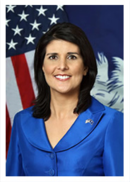
After the state House passed the bill, Gov. Haley made the following statement on her Facebook page:
| “ | Today, as the Senate did before them, the House of Representatives has served the State of South Carolina and her people with great dignity. I'm grateful for their service and their compassion. It is a new day in South Carolina, a day we can all be proud of, a day that truly brings us all together as we continue to heal, as one people and one state.[30] | ” |
| —Gov. Nikki Haley (R)[31] | ||
The flag was removed from the State House grounds in a ceremony on the morning of July 10.[28] After flying for 54 years at the State House, the Confederate flag will now be on exhibit at the South Carolina Confederate Relic Room and Military Museum.[28]
Partisan balance 1992-2013[edit]


South Carolina State Senate: From 1992-2013, the Democratic Party was the majority in the South Carolina State Senate for the first nine years while the Republicans were the majority for the last 13 years. South Carolina was under Republican trifectas for the final 11 years of the study.
Across the country, there were 541 Democratic and 517 Republican state senates from 1992 to 2013.
South Carolina State House of Representatives: From 1992-2013, the Democratic Party was the majority in the South Carolina State House of Representatives for the first three years while the Republicans were the majority for the last 19 years. The South Carolina House of Representatives is one of nine state Houses that was Republican for more than 80 percent of the years between 1992-2013. South Carolina was under Republican trifectas for the final 11 years of the study.
Across the country, there were 577 Democratic and 483 Republican State Houses of Representatives from 1992 to 2013.
Over the course of the 22-year study, state governments became increasingly more partisan. At the outset of the study period (1992), 18 of the 49 states with partisan legislatures had single-party trifectas and 31 states had divided governments. In 2013, only 13 states had divided governments, while single-party trifectas held sway in 36 states, the most in the 22 years studied.
The chart below shows the partisan composition of the Office of the Governor of South Carolina, the South Carolina State Senate and the South Carolina House of Representatives from 1992 to 2013.
.PNG)
SQLI and partisanship[edit]
- To read the full report on the State Quality of Life Index (SQLI) in PDF form, click here.
South Carolina was one of eight states to demonstrate a dramatic partisan shift in the 22 years studied. A dramatic shift was defined by a movement of 40 percent or more toward one party over the course of the study period. South Carolina was Republican-dominated during the years of the study but experienced a shift toward much stronger Republican control, resulting in Republican trifectas from 2003-2013.
The chart below depicts the partisanship of the South Carolina state government and the state's SQLI ranking for the years studied. For the SQLI, the states were ranked from 1-50, with 1 being the best and 50 the worst. South Carolina ranked in the bottom-10 during every year of the study except the most recent. In 2012 it improved, finishing at 38th. The state's worst ranking, finishing 47th, occurred during both divided government and Republican trifectas.
- SQLI average with Democratic trifecta: N/A
- SQLI average with Republican trifecta: 44.30
- SQLI average with divided government: 45.00

Legislators[edit]
Salaries[edit]
- See also: Comparison of state legislative salaries
| State legislative salaries, 2024[32] | |
|---|---|
| Salary | Per diem |
| $10,400/year | $231/day |
Salary controversy[edit]
An October 2010 report by The Nerve showed that S.C. lawmakers receive, on average, about $32,000 per year in combined salary, reimbursements and expenses for serving in the Legislature and performing duties and tasks related to their legislative posts, according to an examination of legislative compensation for a recent two-and-a-half-year period.[33]
In all, S.C. taxpayers shelled out at least $14.8 million to cover salaries and expenses for 202 current or former House and Senate members from Jan. 1, 2008, through July 31, 2010, The Nerve reported.[34]
That works out to an average of more than $73,000 per legislator for the 2.5-year period.[34]
Total salary and expenses for individual lawmakers in The Nerve’s analysis ranged from a high of $133,529 for the 2.5-year period for Senate President Pro Tempore Glenn McConnell, R-Charleston, to a one-year low of $14,287 for former Rep. Bessie Moody-Lawrence, D-York.[34]
Salaries for other key S.C. legislators during the 30-month period include:
- Speaker of the House Bobby Harrell, Jr., R-Charleston – $128,406;
- Sen. Thomas Alexander, R-Oconee – $109,505;
- House Speaker Pro Tempore Harry Cato, R-Greenville – $105,304; and
- Rep. Bill Sandifer III, R-Oconee – $102,226.[34]
The Nerve reported that in terms of lawmakers’ taxable legislative income, legislators most often earn at least $22,400 per year – more than two times their $10,400 salary, and in some cases much higher – when other types of compensation legislators receive are added to their base pay.[33] The Nerve obtained the financial data for the period from January 2008 through mid-2010 using the S.C. Freedom of Information Act.
The $32,000 average annual total amount of lawmakers’ salary and expenses didn’t include legislators’ pensions and health care benefits, the investigative website added.[33]
While the S.C. General Assembly has not increased legislators’ salaries in 20 years, The Nerve’s investigation revealed an opaque system of legislative compensation that masks the true costs of lawmakers.
The fogginess shows up in the other types of remuneration to legislators, the website reported. In dollar amounts from most to least, the three largest supplemental payments to lawmakers are for “in-district expenses,” “subsistence” and mileage.[33]
All three categories have caps, sort of:
- In-district: $1,000 per month, or $12,000 annually.
- Subsistence: $131 per legislative meeting day, whether in or out of session, for lodging and meals.
- Mileage: 50 cents per mile for senators; 44.5 cents for House members.
Lawmakers also can claim a $35 per-diem for attending a legislative-related meeting on a non-session day, and they are provided allocations for postage and flags, too.
The vast majority of South Carolina lawmakers claimed the annual maximum for in-district expenses during the 2.5-year review period. Thus, at $12,000, that alone more than doubled their annual salaries – from $10,400 to $22,400.[33]
Reinforcing the point, legislators’ in-district payments are treated as income for tax and pension purposes. For lawmakers who live within 50 miles of the State House, their subsistence also is equated as income under the tax code.
The Nerve also reported that S.C. lawmakers are not required to document their actual in-district and subsistence expenses.
Mileage is the one category with a built-in accountability feature. But when it comes to in-district and subsistence expenses, legislators file vouchers – not receipts – to claim those payments, filling in the amounts as they wish, up to the caps.[33]
When sworn in[edit]
South Carolina legislators assume office the Monday after the election.[35]
Joint legislative committees[edit]
The South Carolina State Legislature has one joint standing committee:
Constitutional amendments[edit]
In every state but Delaware, voter approval is required to enact a constitutional amendment. In each state, the legislature has a process for referring constitutional amendments before voters. In 18 states, initiated constitutional amendments can be put on the ballot through a signature petition drive. There are also many other types of statewide measures.
The methods in which the South Carolina Constitution can be amended:
The South Carolina Constitution provides two mechanisms for amending the state's constitution— a legislative process and a state constitutional convention. South Carolina requires a simple majority vote (50% plus 1) for voters to approve constitutional amendments.
Legislature[edit]
A two-thirds (66.67%) vote is required during one legislative session for the South Carolina State Legislature to place a constitutional amendment on the ballot. That amounts to a minimum of 82 votes in the South Carolina House of Representatives and 30 votes in the South Carolina State Senate, assuming no vacancies. Amendments do not require the governor's signature to be referred to the ballot.
In South Carolina, the Legislature needs to approve a constitutional amendment for a second time after voters approve the amendment. This second vote requires a simple majority in the House and Senate.
Convention[edit]
According to Section 3 of Article XVI of the South Carolina Constitution, a constitutional convention can be held if two-thirds of the members of both houses of the South Carolina State Legislature vote to put the question on the ballot.
See also[edit]
| Elections | South Carolina State Government | State Legislatures | State Politics |
|---|---|---|---|
 |
 |
 |
 |
External links[edit]
Footnotes[edit]
- ↑ South Carolina Election Commission, "Nomination by Political Party," accessed September 4, 2017
- ↑ Multi State, "2015 State Legislative Session Dates," accessed June 30, 2015
- ↑ Laura McKenzie, The People Sentinel, "S.C. legislators begin debate on 2015 issues," January 15, 2015
- ↑ wspa.com, "Legislature Kicks Off With Old Issues On Agenda," January 14, 2014
- ↑ WJBF, "South Carolina Lawmakers Start Legislative Session Vowing To Protect Your Information And Improve Roads," January 8, 2013
- ↑ The State, "Legislative key issues," January 8, 2012
- ↑ National Conference of State Legislatures, "2011 Legislative Sessions Calendar," accessed June 6, 2014(Archived)
- ↑ The State, "Haley tells court she has right to call special session," June 6, 2011
- ↑ Wltx.com, "SC Supreme Court Rules Against Nikki Haley's Extra Session," June 6, 2011
- ↑ TheSunNews.com, "S.C. House to have special session in June," May 6, 2011
- ↑ The Island Packet, "S.C. Senate OKs new congressional districted anchored in Beaufort County," June 29, 2011
- ↑ 12.0 12.1 12.2 National Association of State Budget Officers, "Budget Processes in the States, Spring 2021," accessed January 24, 2023
- ↑ WLTX, "Where key bills stand as 2019 session ends," May 9, 2019
- ↑ National Conference of State Legislatures, "Separation of Powers: Executive Veto Powers," accessed January 26, 2024
- ↑ The News & Observer "Special veto session unlikely for South Carolina Legislature," July 1, 2017
- ↑ 16.0 16.1 All About Redistricting, "South Carolina," accessed May 8, 2015
- ↑ LegiScan, "South Carolina House Bill 4493," accessed December 14, 2021
- ↑ South Carolina Revenue and Fiscal Affairs Office, "SC General Assembly," accessed March 17, 2025
- ↑ LegiScan, "South Carolina Senate Bill 1024," accessed March 17, 2025
- ↑ The State, "SC Senate OKs new lines, tackles Congressional lines next," June 15, 2011
- ↑ The State, "House approves redistricting plans, Dems plan to sue," June 15, 2011
- ↑ 22.0 22.1 usatoday.com, "S.C. Senate votes to remove Confederate flag," accessed July 6, 2015
- ↑ npr.org, "In Final Vote, South Carolina Senate Moves To Take Down Confederate Flag," July 7, 2015
- ↑ USA Today, "S.C. Statehouse will take down Confederate flag Friday," accessed July 9, 2015
- ↑ 25.0 25.1 NY Times, "South Carolina Governor Signs Law Removing Confederate Flag From Capitol," July 9, 2015
- ↑ NBC News, "'This Is a Hate Crime Nine People Killed at Historic South Carolina Church," June 18, 2015
- ↑ ABC News, "South Carolina Lawmakers Begin Debate Over Confederate Flag," July 6, 2015
- ↑ 28.0 28.1 28.2 CNN, "South Carolina lawmakers to debate Confederate flag on Monday," accessed July 6, 2015 Cite error: Invalid
<ref>tag; name "cnn" defined multiple times with different content - ↑ postandcourier.com, "Gov. Nikki Haley signs bill, Confederate flag to come down," accessed July 9, 2015
- ↑ Note: This text is quoted verbatim from the original source. Any inconsistencies are attributable to the original source.
- ↑ Facebook, "Nikki Haley," July 9, 2015
- ↑ National Conference of State Legislatures, "2024 Legislator Compensation," August 21, 2024
- ↑ 33.0 33.1 33.2 33.3 33.4 33.5 The Nerve, "Legislators Get an Average 32K Per Year," October 6, 2010
- ↑ 34.0 34.1 34.2 34.3 The Nerve, "Lawmakers Cost Taxpayers Millions," October 5, 2010
- ↑ South Carolina Legislature, "Article III - Legislative Department," accessed October 4, 2021


 |
State of South Carolina Columbia (capital) |
|---|---|
| Elections |
What's on my ballot? | Elections in 2025 | How to vote | How to run for office | Ballot measures |
| Government |
Who represents me? | U.S. President | U.S. Congress | Federal courts | State executives | State legislature | State and local courts | Counties | Cities | School districts | Public policy |
 EncycloReader
is supported by the
EncycloReader
is supported by the  KSF
KSF