Aiwa
Topic: Company
 From HandWiki - Reading time: 21 min
Aiwa (eye-WAH, stylised aiwa) is a Japanese consumer electronics brand of Aiwa Co. Ltd., a subsidiary of Towada Audio holdings. The current company was established in 2017 and creates mainly audio products; the brand is also licensed to or owned by other companies in different regions of the world, producing various electronics.[1]
The original Aiwa company was founded in 1951 and was one of the leading creators of audio products such as speakers, boomboxes and stereo systems.[2] After stagnating in the latter half of the 1990s, Aiwa was merged into Sony in 2002 and then unsuccessfully relaunched as a low-cost brand until discontinuation by 2008. Aiwa was relaunched as an independent company in Japan in 2017 by Towada, two years after it was first revived by an American firm.
Name and logo history
In Japanese the Aiwa name is a combination of 愛 (ai) and 環 (wa), roughly meaning "circle of love".
-
 AIWA logo (1959-1991)
 -
 Aiwa logo and the last of the original company (1991-2003)
 -
 Aiwa logo under Sony (2003-2008)
 -
Logo (same as 1991) in use for all Aiwa products presently in all regions (2015–present)


Original Aiwa company (1951-2002)
| TYO: 6761 | |
| Founded | June 20, 1951 |
| Defunct | December 1, 2002 |
| Headquarters | Taito, Tokyo, Japan |
Number of employees | 10,000 (as of March 2001)[3] |
| Parent | Sony Corporation (52% (1969–1982), 54.6% (1982–2002))[4] |
| Website | - |
The company was founded on June 20, 1951, as AIKO Denki Sangyo Co., Ltd., manufacturing microphones, and changed its name to Aiwa Co., Ltd. (アイワ株式会社), on March 10, 1959.[5] The founder Mitsuo Ikejiri served as president until 1969 when Sony purchased a majority share in Aiwa.[6] By 1982, the electronics giant had a 54.6% stake in the company, effectively giving it a majority control.[7] Aiwa was listed on the Tokyo Stock Exchange from October 1961 until September 2002.
The company was a leading manufacturer of audio products, including headphone stereos, mini-component stereo systems, portable stereo systems, minidisc players, CD and cassette players, and car stereo systems throughout the 1970s, 1980s, and 1990s.[8][9] Despite not having the brand recognition of Sony, Aiwa products were popular due to their more affordable cost, while still providing good quality.[10][11]
_Radio,_Model_AR-127._Made_In_Japan,_Circa_1964_(12887691514).jpg)
Aiwa created the first Japanese cassette tape recorder in 1964.[12] Aiwa marketed Japan's first boombox, the TPR-101, in 1968, as well as the first cassette deck, TP-1009. In 1980, Aiwa created the world's first personal stereo recorder, TP-S30 (marketed as CassetteBoy in Japan). Despite Sony being the major shareholder, healthy competition between the two brands was believed to be profitable.[13] It had also released the first cassette deck with Dolby C in its home country.[10] In 1990, Aiwa created the HP-J7 earbuds, designed to be vertically inserted into the ear. In 1993, the first CD+G-compatible portable CD player, the XP-80G, was made. Aiwa home audio products incorporating BBE signal-processing technology were launched in about 1989, after the company signed a licensing deal with BBE Sound.[14] Also around this time, some Aiwa products were briefly being sold in Japan under the Excelia and Strasser sub-brands.[15]

With growing competition throughout the late 1990s from cheaper Asian manufacturers, and shrinking demand for its products, the company slid towards bankruptcy.[16] In March 2001, the company's president, Masayoshi Morimoto, announced a major restructuring, including the halving of its workforce, following a second consecutive loss–making year. It also announced the closure of all but one of its manufacturing plants, including all in its home country.[17]
Other products
Apart from audio products, Aiwa also has been present in other industries. The company also made and sold video products such as VCRs, color televisions, DVD players, and digital satellite television tuners. Aiwa was also involved in the production of computer peripheral devices, such as modems, terminal adapters, and speakers, and what the company termed "life amenity products," such as air cleaners and humidifiers. In 1995, it released a PHS mobile phone, called the PT-H50, which was made for the DDI Pocket network in Japan.[18] That same year, an electric toothbrush, the HA-C10, was released.
Sales and manufacturing

Acquisition by Sony
Financially-troubled Aiwa was fully purchased by the Sony Corporation,[19] becoming a wholly owned subsidiary effective as of December 1, 2002.[20][21] On January 8, 2003,[22] Sony announced the rebranding and relaunch of Aiwa as a "youth focused, PC-centric" electronics brand.[23] A new logo was presented to the world's media along with a statement of Sony's intention to invest in and "revitalize" the Aiwa brand. The direction proposed was to capitalize on the growing trend among personal-computer-literate teenagers and young adults to use their PCs for all forms of entertainment (television, films, music, chat). It was also used to expand in markets where Sony is not as strong.[24]

Aiwa introduced its first digital audio players at CES 2004, including both flash players and a 2GB hard disk player. They notably supported MP3 format while Sony's own branded players only played ATRAC.[25] Aiwa's portable CD players were equipped with a so-called E.A.S.S. G.P. (Electronic Anti-Shock System) feature with the aim of allowing smooth, skip-free Audio CD playback despite damaged media and external shaking.[26]
However the new direction of Aiwa under Sony did not meet consumer and sales expectations. On January 21, 2005, new product development ended, and by 2007, Aiwa products were discontinued and no longer sold in the market outside its home market. Sony announced the termination of the brand entirely on May 14, 2008[27][28] but continued to provide support for existing products.
Revival of Aiwa
Aiwa returned as a brand in 2015 and has since been used by various companies globally. It is mostly owned by Towada Audio since 2017.
Aiwa Corp (Chicago) and Sakar International
An American audio company known as Hale Devices, Inc. were granted the rights to the brand name from Sony in the US market and abroad. The Chicago based company, which was headed by Joe Born,[29] also then renamed itself to Aiwa Corporation.[30] In April 2015 it launched its first Aiwa product, the Exos-9 speaker.[30] The company launched a number of Aiwa branded products in the following years, including the Prodigy and Arc-1 headphones.

In September 2020, Aiwa Corporation and Aiwa Co., Ltd. of Japan announced that their businesses had unified, with a vision to rebuild Aiwa as a single global brand.[31] The two companies had previously fought court cases over Aiwa trademarks in Illinois[32] as well as in the United Kingdom and Ireland.[33]
It was reported in August 2021 that Aiwa Corporation filed for Chapter 11 bankruptcy.[34][35] Following bankruptcy proceedings, the assets were sold to a new company (Aiwa Acquisitions LLC) affiliated with Sakar International, Inc. in November 2021,[36][clarification needed] with Sakar being a licensee to Infinity Lifestyle Brands, thus making Aiwa a sister brand of Altec Lansing in the North American market.[clarification needed] This new Aiwa showcased a number of new products at the Consumer Electronics Show 2023.[37]
Aiwa Co., Ltd. (2017–Present)
On April 11, 2017, Towada Audio, a contract manufacturer of Sony radios, acquired the Aiwa brand rights from Sony (globally, except the Americas)[38][39] and created a subsidiary called Aiwa Co. Ltd. like the original Aiwa, with its director Kazuomi Nakamura being someone who joined the original Aiwa in 1989. The news of the Aiwa brand's revival was met highly positively in Japan, which showed its brand recognition.[40]
The company launched the first Aiwa products at the end of the year, including radio cassette players, LCD televisions and record players.[41][42] For global expansion, it established Aiwa Electronics International Co., Ltd., headquartered in Taipei, Taiwan. Towada Audio also appointed Gando Holding as the official Middle East representative, including Iran.[43] From a public statement released by Aiwa Co., Ltd (Tokyo, Japan), "Aiwa Corporation (Chicago, USA) are in not in any way related to us, Aiwa Co., Ltd (Tokyo, Japan) or Aiwa Japan since 1951 to date".[44]
In 2020, Aiwa launched the HPB-SW40 ("ButterflyAudio") through crowdsourcing in Japan, a wearable headphone with a unique design that sits on the shoulders.[45] Also in 2020 it launched a record player style Bluetooth speaker and radio (SB-LFS30), a radio cassette recorder (TR-A30) and pocket analogue radio (AR-AP35).
Aiwa Vietnam was formed in 2020 and debuted with the release of smart TVs in the country.[46][47] In 2021, Aiwa partnered with 5,000 retailers in India to relaunch in the country.[48] Aiwa India launched a new series of smart TVs, the Magnifiq series, in July 2022.[49] The regional headquarters of Aiwa in India, which serves the South Asia region, is currently headed by Ajay Mehta.[50]
Other Aiwa companies
- Latin America
In Mexico and other countries in Latin America, the Aiwa rights are owned by Audio Mobile Americas, S.A. based in Panama which relaunched the brand in 2017. This company sells products such as smart TVs, headphones, speakers and others.[51]
- Brazil
The Aiwa brand relaunched in Brazil in 2022 after being licensed by MK Group, owner of Mondial. It started with producing new televisions at a former Sony manufacturing plant in Manaus.[1][52]
- Aiwa Digital
In June 2022, Aiwa Co., Ltd. announced that it granted the use of its trademark in the digital field to a Japanese contract manufacturer named JENESIS.[53] JENESIS then announced its first smartphone, tablet and smartwatch products under its aiwa digital series. It also sells musical instruments.[54] New subsidiary Aiwa Marketing Japan Co., Ltd. (joint venture with Aiwa Co., Ltd.) was established in 2023.[55]
- Aiwa Home
Since 2023, the New Jersey, USA based company Xtreme Connected Home, a part of JEM Accessories, has licensed the Aiwa brand from its North American owner and released home and kitchen appliances domestically.[56]
Iran
In Iran, Aiwa products are officially distributed by Gando Holding through its subsidiary Gando Service. The company operates the official Aiwa Iran website (iranaiwa.com) and provides after-sales service and distribution nationwide.[57][58][59]
Gallery
-
 AIWA CA-W30 dual cassette boombox
 -
 Aiwa AM-XH55 MiniDisc player
 -
 AIWA AR-888 AM receiver
 -
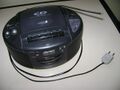 Aiwa CSD-ES100 compact CD/radio/cassette recorder
 -
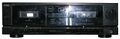 AIWA AD WX 333 cassette deck
 -
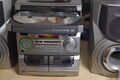 Aiwa XR-H330 MD micro system (1999)
 -
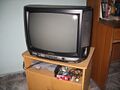 Aiwa TV-A2017S 21" television
 -
 Aiwa S7000 cassette recorder (1992)
 -
 Aiwa CM-S32 microphone
 -
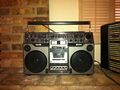 AIWA TPR-950 boombox
 -
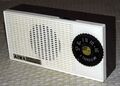 AIWA AR-852 8-transistor radio
 -
 AIWA AR-123 10-transistor triple band radio
 -
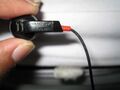 AIWA Sound GT earphone (c. 1990)
 -
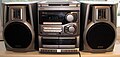 Aiwa stereo system
 -
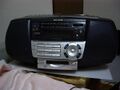 Aiwa CSD-MD3 compact CD/cassette/radio/MiniDisc player
 -
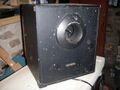 Aiwa loudspeaker enclosure
 -
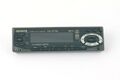 Aiwa CDC-R176M car CD/radio receiver (c. mid-1990s)
 -
 Aiwa XR-V10MD micro system with MD/DVD support
 -
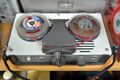 Aiwa TP-32A, c. 1960
 -
 Aiwa Micro Cassette Recorder, ca. 1990s (video)


.jpg)


.jpg)
,_Made_In_Japan_(May_Be_Model_AR-123)_(12886883044).jpg)
.jpg)


See also
- List of companies of Japan
- List of defunct consumer brands
- List of electronics brands
- List of electronics companies
- Sony Corporation shareholders and subsidiaries
- Akai
External links
- Aiwa Co., Ltd. (Japan)
- Aiwa USA
- Aiwa Digital (Japan)
- Aiwa Home (USA)
- Aiwa Latino America
- Aiwa Brasil
References
- ↑ 1.0 1.1 "Aiwa volta ao Brasil: vendia som, agora vende TV? O que aconteceu?" (in pt-br). https://economia.uol.com.br/noticias/redacao/2023/04/10/aiwa-volta-ao-brasil-vendia-som-agora-vende-tv-o-que-aconteceu.htm.
- ↑ "Aiwa: The Almost Great Audio Company". Gizmodo.com. 2011-09-16. https://gizmodo.com/5841631/aiwa-the-almost-great-audio-company.
- ↑ "CNN.com - Aiwa slashes workforce in half - March 26, 2001". https://edition.cnn.com/2001/BUSINESS/asia/03/26/tokyo.aiwajobcuts/index.html.
- ↑ Dahl, Axel. "Aiwa Aiwa 22 on thevintageknob.org". http://www.thevintageknob.org/aiwa-Aiwa_22.html.
- ↑ "Aiwa Co., Ltd. History". FundingUniverse.com. http://www.fundinguniverse.com/company-histories/aiwa-co-ltd-history/.
- ↑ "How Aiwa missed out on digital's golden age" (in en). 2002-10-02. https://www.afr.com/politics/how-aiwa-missed-out-on-digitals-golden-age-20021002-k1wet.
- ↑ "The giants in Japanese electronics". The Economist. February 20, 1982. https://www.economist.com/blogs/schumpeter/2014/07/archive.
- ↑ Andy Madden (March 18, 2015). "Aiwa returns with the Exos-9 Bluetooth speaker". What Hi-Fi? Sound and Vision. Haymarket Media Group. http://www.whathifi.com/news/aiwa-returns-exos-9-bluetooth-speaker.
- ↑ "Aiwa". HomeTheaterReview.com. Luxury Publishing Group Inc.. http://hometheaterreview.com/aiwa/.
- ↑ 10.0 10.1 "中高年は懐かしい 10年ぶり復活の「aiwa」は売れるのか?|話題の焦点". 2017-06-23. http://www.nikkan-gendai.com/articles/view/life/207937.
- ↑ "大河原克行の「パソコン業界、東奔西走」". https://pc.watch.impress.co.jp/docs/2004/0106/gyokai82.htm.
- ↑ "History of Aiwa Co., Ltd. – FundingUniverse". Fundinguniverse.com. http://www.fundinguniverse.com/company-histories/aiwa-co-ltd-history/.
- ↑ "Aiwa | Vintage Electronics Have Soul – The Pocket Calculator Show Website". Pocketcalculatorshow.com. February 16, 2004. http://pocketcalculatorshow.com/walkman/aiwa/.
- ↑ McCULLOM, R. O. D. (1988-08-19). "BBE Sound Signs Licensing Pact With AIWA for Signal-Processing Technology" (in en-US). https://www.latimes.com/archives/la-xpm-1988-08-19-fi-599-story.html.
- ↑ "AIWA・EXCELIA・アイワ・エクセリア XC-003 B級オーディオ・ファン". https://audiof.zouri.jp/xc-003.htm.
- ↑ "Forbes.com: Aiwa Joins The Layoff Club". 2001-04-17. https://www.forbes.com/2001/03/27/0327global.html.
- ↑ "CNN.com - Aiwa slashes workforce in half - March 26, 2001". CNN. 2001-03-26. http://edition.cnn.com/2001/BUSINESS/asia/03/26/tokyo.aiwajobcuts/index.html.
- ↑ "Aiwa PT-H50". Mobilecollectors.net. http://www.mobilecollectors.net/phone/2689/Aiwa-PT-H50.
- ↑ Adrian Covert (September 16, 2011). "Aiwa: The Almost Great Audio Company". Gizmodo. Gawker Media. https://gizmodo.com/5841631/aiwa-the-almost-great-audio-company.
- ↑ "Sony Global - Press Release - Announcement of Merger". https://www.sony.com/en/SonyInfo/News/Press_Archive/200209/02-0927E/.
- ↑ "Sony leverages Aiwa to compete against Chinese suppliers". EE Times. 2020-08-14. http://www.eetimes.com/document.asp?doc_id=1226843.
- ↑ "ソニー、吸収合併したアイワの新ロゴデザインを発表". https://av.watch.impress.co.jp/docs/20030108/aiwa.htm.
- ↑ Mark Sweney (February 14, 2004). "Sony in talks with London shops about global Aiwa creative brief". Brand Republic (Haymarket Media Group). http://www.brandrepublic.com/article/170510/sony-talks-london-shops-global-aiwa-creative-brief.
- ↑ "News:残るのはブランドだけか?──ソニーがアイワを完全子会社化". https://www.itmedia.co.jp/news/0202/28/sony_aiwa.html.
- ↑ set), (Display Name not (2004-02-25). "Aiwa (Sony) MP3 players hit Europe" (in en-GB). https://www.techdigest.tv/2004/02/aiwa_sony_mp3_p.html.
- ↑ XP-ZV610/ZV616 Portable CD Player Operating Instructions, Aiwa, p. 23
- ↑ "Aiwa Boomboxes |". http://www.stereo80s.com/mfg.cfm?id=1.
- ↑ "ソニー、2007年通期決算は売上/純利益とも過去最高に". https://av.watch.impress.co.jp/docs/20080514/sony.htm.
- ↑ "How Aiwa, a former global stereo brand, is getting resurrected in Chicago". 2015-03-11. https://www.chicagotribune.com/business/blue-sky/chi-aiwa-joe-born-bsi-20150310-story.html.
- ↑ 30.0 30.1 "Can the guy who hit it with an Android alarm dock do it again with stereo speakers?" (in en-US). 2015-04-22. https://www.chicagobusiness.com/article/20150423/ISSUE01/150429976/hale-devices-rebrands-as-aiwa-and-introduces-bluetooth-retro-speaker.
- ↑ "Agreement between US and Japan Unites Aiwa | Aiwa". 2020-09-30. https://aiwa.co/blogs/blog/agreement-between-us-and-japan-unites-aiwa.
- ↑ Court document justia.com
- ↑ MR JUSTICE MANN (13 December 2019), Aiwa Co. Ltd v Aiwa Corporation [2019 EWHC 3468 (Ch)], https://www.bailii.org/ew/cases/EWHC/Ch/2019/3468.html, retrieved 2023-08-15
- ↑ Stockdill, Robert (2021-08-31). "Aiwa brand up for auction, its parent bankrupt" (in en-US). https://insideretail.asia/2021/08/31/aiwa-brand-up-for-auction-its-parent-bankrupt/.
- ↑ "Public Statement – Aiwa Corporation (Chicago, USA) files for Chapter 11 bankruptcy | aiwa". https://www.int-aiwa.com/news_detail.php?id=49.
- ↑ "Aiwa" (in en-US). https://hilcoglobal.com/services/intellectual-property/for-sale/aiwa/.
- ↑ "Iconic Audio Brand AIWA Announces Its Relaunch at CES 2023" (in en). https://www.prweb.com/releases/Iconic_Audio_Brand_AIWA_Announces_Its_Relaunch_at_CES_2023/prweb19097119.htm.
- ↑ "Aiwa Co., Ltd". Jp-aiwa.com. http://www.jp-aiwa.com/.
- ↑ "Electronics makers revive classic brands to boost sales" (in en). 2017-07-31. https://www.waterloochronicle.ca/business/electronics-makers-revive-classic-brands-to-boost-sales/article_7bcedb03-90fe-5f49-ad06-7b9990fe0d4a.html.
- ↑ "新生「aiwa」ブランドで変わること、変わらないもの - アイワ三井社長・中村取締役インタビュー (1/4)" (in ja). https://www.phileweb.com/interview/article/201706/29/468.html.
- ↑ "ソニーが手放したaiwa、再生目指す地方企業" (in ja). 2018-01-12. https://www.yomiuri.co.jp/fukayomi/20180111-OYT8T50031/.
- ↑ "「アイワ」約10年ぶり復活 昨年末からラジカセ、液晶テレビなど順次発売 海外展開、白物家電も視野(1/2ページ)" (in ja). 2018-01-29. https://www.sankei.com/article/20180128-KYR2TDSDP5L6VOMPJYG2UGQWOI/.
- ↑ "About Us - Gando Service". https://iranaiwa.com/about-us.
- ↑ Aiwa Co., Ltd 2021.
- ↑ 株式会社インプレス (2022-02-16). "これは、良いものだ。新生aiwaが放つ新体感スピーカー「ButterflyAudio」【小寺信良の週刊 Electric Zooma!】" (in ja). https://av.watch.impress.co.jp/docs/series/zooma/1388514.html.
- ↑ "Smart TV AIWA "đổ bộ" tại Việt Nam: Lựa chọn "quốc dân" cho trải nghiệm màn ảnh rộng" (in vi). 2020-08-07. https://dep.com.vn/smart-tv-aiwa-do-bo-tai-viet-nam-lua-chon-quoc-dan-cho-trai-nghiem-man-anh-rong/.
- ↑ "AIWA Việt Nam – Thương hiệu chất lượng Nhật Bản". https://aiwavietnam.vn/gioi-thieu.
- ↑ "AIWA eyes partnership with 5,000 retailers by December". October 6, 2021. https://www.newindianexpress.com/business/2021/oct/06/aiwa-eyes-partnership-with-5000-retailers-by-december-2368185.html.
- ↑ "Aiwa India Expects To Clock Rs 8,000 Crore Revenue In 5 Years; Plans Rs 160 Crore Initial Investment". July 6, 2022. https://www.outlookindia.com/business/aiwa-india-expects-to-clock-rs-8-000-crore-revenue-in-5-years-plans-rs-160-crore-initial-investment-news-207190.
- ↑ "Aiwa's second coming" (in en). November 8, 2022. https://businessindia.co/magazine/aiwas-second-coming.
- ↑ "AIWA se empodera de nuevo en América Latina". www.prnewswire.com (Press release). Retrieved 2023-08-15.
- ↑ "Aiwa is back with TVs made by Mondial's owner" (in pt-br). 2022-07-10. https://valorinternational.globo.com/business/news/2022/07/10/aiwa-is-back-with-tvs-made-by-mondials-owner.ghtml.
- ↑ "JENESISが「aiwa」ブランドの商標使用権を取得!新生アイワデジタルとしてAndroidスマホ・タブレットなどを8月より順次発売へ - S-MAX" (in ja). https://s-max.jp/archives/1816773.html,%20//s-max.jp/.
- ↑ 日経ビジネス電子版 (June 16, 2023). "aiwa復活で湧き上がる日本への思い JENESIS藤岡社長兼CEO" (in ja). https://business.nikkei.com/atcl/NBD/19/00129/061300114/.
- ↑ "「アイワマーケティングジャパン株式会社」設立に関するお知らせ | アイワ". https://www.jp-aiwa.com/2023/06/2938/.
- ↑ "AIWA's Brand Expansion into the Home Category Introduced at The Inspired Home Show 2023". www.prnewswire.com (Press release). Retrieved 2023-08-15.
- ↑ https://iranaiwa.com/
- ↑ https://gandoservice.com/
- ↑ https://gandoservice.com/%d9%85%d8%b9%d8%b1%d9%81%db%8c-%da%af%d8%a7%d9%86%d8%af%d9%88-%d8%b3%d8%b1%d9%88%db%8c%d8%b3/
- Aiwa Co., Ltd (2021-09-07). "Public Statement - Aiwa Corporation (Chicago, USA) files for Chapter 11 bankruptcy" (Press release). Tokyo, Japan. Archived from the original on 2022-03-08. Retrieved 2022-03-08.
| Founders |  | |||||||||||||||||||||||||||||||||||||||||||||||||||||||||||||||||||||||||||||||||||||||||||||||||||||||||||||||||||||||||||||||||||||||||||||||||||||||||||||||||||||||||||||||||||||||||||||||||||||||||||||||||||||||||
|---|---|---|---|---|---|---|---|---|---|---|---|---|---|---|---|---|---|---|---|---|---|---|---|---|---|---|---|---|---|---|---|---|---|---|---|---|---|---|---|---|---|---|---|---|---|---|---|---|---|---|---|---|---|---|---|---|---|---|---|---|---|---|---|---|---|---|---|---|---|---|---|---|---|---|---|---|---|---|---|---|---|---|---|---|---|---|---|---|---|---|---|---|---|---|---|---|---|---|---|---|---|---|---|---|---|---|---|---|---|---|---|---|---|---|---|---|---|---|---|---|---|---|---|---|---|---|---|---|---|---|---|---|---|---|---|---|---|---|---|---|---|---|---|---|---|---|---|---|---|---|---|---|---|---|---|---|---|---|---|---|---|---|---|---|---|---|---|---|---|---|---|---|---|---|---|---|---|---|---|---|---|---|---|---|---|---|---|---|---|---|---|---|---|---|---|---|---|---|---|---|---|---|---|---|---|---|---|---|---|---|---|---|---|---|---|---|---|---|
| Key personnel |
| |||||||||||||||||||||||||||||||||||||||||||||||||||||||||||||||||||||||||||||||||||||||||||||||||||||||||||||||||||||||||||||||||||||||||||||||||||||||||||||||||||||||||||||||||||||||||||||||||||||||||||||||||||||||||
| Primary businesses | ||||||||||||||||||||||||||||||||||||||||||||||||||||||||||||||||||||||||||||||||||||||||||||||||||||||||||||||||||||||||||||||||||||||||||||||||||||||||||||||||||||||||||||||||||||||||||||||||||||||||||||||||||||||||||
| Technologies and brands |
| |||||||||||||||||||||||||||||||||||||||||||||||||||||||||||||||||||||||||||||||||||||||||||||||||||||||||||||||||||||||||||||||||||||||||||||||||||||||||||||||||||||||||||||||||||||||||||||||||||||||||||||||||||||||||
| Historical products | ||||||||||||||||||||||||||||||||||||||||||||||||||||||||||||||||||||||||||||||||||||||||||||||||||||||||||||||||||||||||||||||||||||||||||||||||||||||||||||||||||||||||||||||||||||||||||||||||||||||||||||||||||||||||||
| Electronics |
| |||||||||||||||||||||||||||||||||||||||||||||||||||||||||||||||||||||||||||||||||||||||||||||||||||||||||||||||||||||||||||||||||||||||||||||||||||||||||||||||||||||||||||||||||||||||||||||||||||||||||||||||||||||||||
| ||||||||||||||||||||||||||||||||||||||||||||||||||||||||||||||||||||||||||||||||||||||||||||||||||||||||||||||||||||||||||||||||||||||||||||||||||||||||||||||||||||||||||||||||||||||||||||||||||||||||||||||||||||||||||
| ||||||||||||||||||||||||||||||||||||||||||||||||||||||||||||||||||||||||||||||||||||||||||||||||||||||||||||||||||||||||||||||||||||||||||||||||||||||||||||||||||||||||||||||||||||||||||||||||||||||||||||||||||||||||||
| ||||||||||||||||||||||||||||||||||||||||||||||||||||||||||||||||||||||||||||||||||||||||||||||||||||||||||||||||||||||||||||||||||||||||||||||||||||||||||||||||||||||||||||||||||||||||||||||||||||||||||||||||||||||||||
| Online distribution platforms | ||||||||||||||||||||||||||||||||||||||||||||||||||||||||||||||||||||||||||||||||||||||||||||||||||||||||||||||||||||||||||||||||||||||||||||||||||||||||||||||||||||||||||||||||||||||||||||||||||||||||||||||||||||||||||
| Other businesses | ||||||||||||||||||||||||||||||||||||||||||||||||||||||||||||||||||||||||||||||||||||||||||||||||||||||||||||||||||||||||||||||||||||||||||||||||||||||||||||||||||||||||||||||||||||||||||||||||||||||||||||||||||||||||||
| Other assets |
| |||||||||||||||||||||||||||||||||||||||||||||||||||||||||||||||||||||||||||||||||||||||||||||||||||||||||||||||||||||||||||||||||||||||||||||||||||||||||||||||||||||||||||||||||||||||||||||||||||||||||||||||||||||||||
| Nonprofit organizations | ||||||||||||||||||||||||||||||||||||||||||||||||||||||||||||||||||||||||||||||||||||||||||||||||||||||||||||||||||||||||||||||||||||||||||||||||||||||||||||||||||||||||||||||||||||||||||||||||||||||||||||||||||||||||||
| Other | ||||||||||||||||||||||||||||||||||||||||||||||||||||||||||||||||||||||||||||||||||||||||||||||||||||||||||||||||||||||||||||||||||||||||||||||||||||||||||||||||||||||||||||||||||||||||||||||||||||||||||||||||||||||||||


 |  |
 EncycloReader
is supported by the
EncycloReader
is supported by the  KSF
KSF