Table of Contents Categories
Lenco BearCat
Topic: Engineering
 From HandWiki - Reading time: 14 min
| BearCat | |
|---|---|
 A Lenco BearCat G2 operated by the Serbian Armed Forces military police | |
| Type | Non-military armored vehicle |
| Place of origin | United States |
| Service history | |
| In service | 2001–present |
| Used by | See § Operators |
| Production history | |
| Designed | 2001 |
| Manufacturer | Lenco Industries |
| Unit cost | US$188,793–300,000[1][2] |
| Produced | 2001–present |
| Variants | See § Variants |
| Specifications | |
| Mass | 17,550 lb (7,961 kg) |
| Length | 240 in (6,096 mm) |
| Width | 120 in (3,048 mm) |
| Height | 144 in (3,658 mm) |
| Crew | 2 + 10 passengers |
| Armour | 0.5–1.5 in (13–38 mm) steel plate (NIJ Type IV+)[2][3] |
Main armament | Weapon mountable rotating roof hatch |
Secondary armament | Multiple side gun ports |
| Engine | 6.7 L Ford Power Stroke turbo-diesel V8 440 hp (328 kW) @ 2,800 rpm |
| Transmission | Ford 6R140 6-speed automatic |
| Suspension | Live axle |
| Speed | 90 mph (145 km/h)[4] |
The Lenco BearCat is a wheeled internal security vehicle designed for law enforcement, military, and paramilitary use, produced by Lenco Industries. Introduced in 2001 as an offshoot of (and later successor to) the larger Lenco BEAR, the BearCat is used by numerous law enforcement agencies and military units across the world.
History

Lenco Industries, doing business as Lenco Armored Vehicles, is an American armored vehicle manufacturer based in Pittsfield, Massachusetts, established in 1981.[5] As of the early 2010s, Lenco has produced more than 5,000 armored vehicles for use in more than 40 countries worldwide.[6][7]
Prior to the introduction of the Lenco BEAR and BearCat, dedicated police armored vehicles did not exist; most tactical units in the late 20th century used unarmored vans and multi-stop trucks, repurposed armored transport trucks, or armored personnel carriers and armored cars acquired from military surplus, none of which were specifically designed and equipped for law enforcement applications. One of the closest analogues to the BearCat at the time was the Cadillac Gage Ranger, a small internal security vehicle designed for military police that was sold to civilian police through surplus sales and the Law Enforcement Support Office. While the BEAR was released in 2000 to address this niche, it was based on a Freightliner truck chassis and was rather large.
The first BearCat was designed and completed in August 2001 as a smaller spin-off of the BEAR, with input from the Los Angeles County Sheriff's Department's Special Enforcement Bureau as an updated and improved version of their military surplus Cadillac Gage Rangers.[6]
Usage
In law enforcement use, BearCats are generally considered "armored rescue vehicles",[8] with their primary use being to transport police tactical unit officers to and from hostile situations and to help extract civilians, officers, and casualties who may be stuck in the area.[9][10] To suit this purpose, the BearCat is designed to protect its occupants from a variety of small arms and explosive weapons.[9] The BearCat can also be fitted with aftermarket tactical equipment such as a battering ram, an armored turret, or CS gas dispensers to be used for offensive purposes (i.e. to provide moving cover during a shootout or breach a building during a raid or standoff).
Since their introduction, BearCats have been credited with saving lives in armed confrontations on numerous occasions, including by stopping 7.62 mm caliber rounds fired at officers during a shootout in Athens, Texas in 2010;[11] blocking "high-powered rifle" fire that penetrated regular police cars in Bucks County, Pennsylvania in 2012;[12] protecting sheriff's deputies from rifle fire during a shootout in Oklahoma County, Oklahoma in 2015;[13] being used as a weapon during a shootout in Kern County, California in 2026;[14] and assisting intervention operations during mass shootings such as the 2015 Colorado Springs Planned Parenthood shooting[15] and the 2016 Pulse nightclub shooting.
Lenco had the largest contract with U.S. Immigration and Customs Enforcement (ICE) in Massachusetts in 2025.[16] According to Boston.com, Lenco Industries is "scored $5.2 million in contracts since last year, and its BearCat's 'militarized aesthetic' has been a visual centerpiece in some ICE operations".[17] The Berkshire Eagle reported that demonstrators[18] as well as local and state officials have called on Lenco Industries to refuse future contracts with ICE.[19]
Design

The BearCat is based on a Ford F-550 Super Duty commercial truck chassis with two available engines (the V10 Triton Gasoline and the 6.7L Turbo Diesel) and a six-speed automatic transmission.[20] The BearCat features 0.5–1.5-inch-thick armored steel bodywork, completed with .50 BMG-rated[21] bulletproof glass capable of surviving multiple hits, and blast-resistant flooring.[22]
The BearCat is designed to be customizable with a variety of non-standard features and aftermarket equipment depending on the customer's requirements, including:
- Emergency vehicle lighting
- Emergency vehicle equipment
- A roof hatch for a man-operated gun turret, a CROWS turret, or an unarmed elevated lookout point, with or without bulletproof glass panels and blast shields
- A Mobile Adjustable Ramp System (MARS), an adjustable and retractable top-mounted platform that effectively transforms the vehicle into a modernized siege tower[23][24][3]
- A bullbar-mounted battering ram
- Gun ports
- Running boards
- Electric winches
- Protection against chemical, biological, radiological, nuclear and explosive threats
- CS gas deployment nozzles
- Radiation detection systems
- A backup camera
- Thermographic camera systems
- Floodlights and spotlights
Variants
.jpg)
There are numerous variants of the BearCat designed for specific purposes or customers.[25][26][27] As of 2025, these are the:[28]
- G2 – Base variant for law enforcement
- G3 – Off-road variant for law enforcement
- G4 M-ATV – Armored military-oriented all-terrain vehicle
- G5 – Improved all-terrain variant for law enforcement
- X3 – Double-cab pickup variant of the G3
- BombCat/EOD – Bomb disposal variant designed to accommodate a remote-control vehicle[29][30]
- MedCat/Medevac – Medical evacuation variant equipped with medical litters, oxygen tanks, a lighted work station, and dedicated compartments for medical supplies, akin to an armored ambulance[31]
- FireCat – Firefighting variant of the X3, featuring an armored water tank and a roof-mounted fire hose similar to a water cannon
- SUV – Lower-profile security version designed to be similar to an SUV or passenger van, featuring bulletproof glass windows and removing overt features such as the roof hatch and bullbar
- Elevated Tactics – BearCat with a MARS system installed
- LandCat – A slightly taller and slimmer variant built on a Toyota Land Cruiser 70 series chassis designed for confined urban areas or off-road responses, with a smaller capacity (8 occupants as opposed to 12 for most other variants)
- Rail Rescue Vehicle – Road-rail variant operated by the MARTA Police Department[32]
Operators

 Australia
- Australian Federal Police – Australian National Counter Terrorism Committee[33] and Specialist Response Group[8]
- New South Wales Police Force – In 2025, five new BearCats were acquired bringing the fleet to six BearCats; the full-time Tactical Operations Unit (TOU) has x2 including 1 with an extendable ramp; x4 are based around the state of NSW for use by the TOU and the part-time Tactical Operations Regional Support (TORS).[34][35]
- Northern Territory Police – Territory Response Group[36][37]
- Queensland Police Service – The state has 3 active-use BearCats with an additional announced in 2023,[38] 2 are operated by the Special Emergency Response Team (SERT) with one in Brisbane and one in Cairns[39] along with an EOD variant (BombCat) used by the Explosive Ordnance Response Team (EORT)[40] in brisbane.[41]
- South Australia Police – Special Tasks and Rescue Group[42]
- Tasmania Police – Special Operations Group[43][44][45][46]
- Victoria Police – Special Operations Group ×2 (2018 variant) and Critical Incident Response Team x1 (2013 variant)[47][48]
- Western Australia Police – Tactical Response Group ×2[49][50]
 Belgium
 Brazil
- Military Police of Goiás State – Batalhão de Operações Especiais[53]

 Canada
 Denmark
- Politiets Aktionsstyrke[56]
 Hungary
- Counter Terrorism Centre[57]
 Jamaica
- Jamaica Constabulary Force - Two units in need of repair as of 2026.[58]
 Morocco
- Moroccan Auxiliary Forces – 88 BearCat armored vehicles in riot control, troop transport, communications, convoy protection, and SWAT variants.[59]
- BCIJ (Bureau Central d'Investigations Judiciaires), Moroccan Domestic Intelligence Unit & Special Forces.
 Netherlands
- National Police Corps - Multiple Lenco BEARs and Lenco BearCats in service with the Dienst Speciale Interventies (Special Intervention Service). A police service consisting of both military and police personnel, specialized in counter-terrorism ops, apprehension of high-value or high-risk individuals, aircraft hijackings and hostage situations. Also includes operators belonging to M-Squadron of NLMARSOF, special operations forces of the Netherlands Marine Corps, under DSI command for domestic counter-terrorism operations on Dutch soil, specialized in large-scale and complex interventions.[60]
 Pakistan
- Balochistan Police[61]
 Serbia
- Serbian Armed Forces - Military Police[62]
 South Korea
- National Police Agency (South Korea) - Korea National Police Special Operation Unit[63]

 Taiwan
- National Police Agency (Taiwan) - National Police Agency Special Operations Group[64]
 United Kingdom
 United States
.jpg)
Federal[6]
- Federal Bureau of Investigation – Special Weapons and Tactics Teams[67]
- United States Department of Energy Over 80 Lenco BearCats on (8) DoE Sites[6][68]
- United States Immigration and Customs Enforcement[69]
- Enforcement Removal Operations (ERO) – Special Response Teams
- Homeland Security Investigations (HSI) – Special Response Teams
- United States Park Police[70]
- Kennedy Space Center – Emergency Response Team[71]
State/Local
A considerable number of state police, sheriff's offices, and municipal police agencies in the United States operate BearCats for their tactical units, with over 500 BearCats in use across the country in 2013.[72] These agencies include:
- Alaska State Troopers[73]
- Chicago Police Department[74][better source needed][needs update]
- Cleveland Division of Police[75][needs update]
- Dallas Police Department[76][needs update]
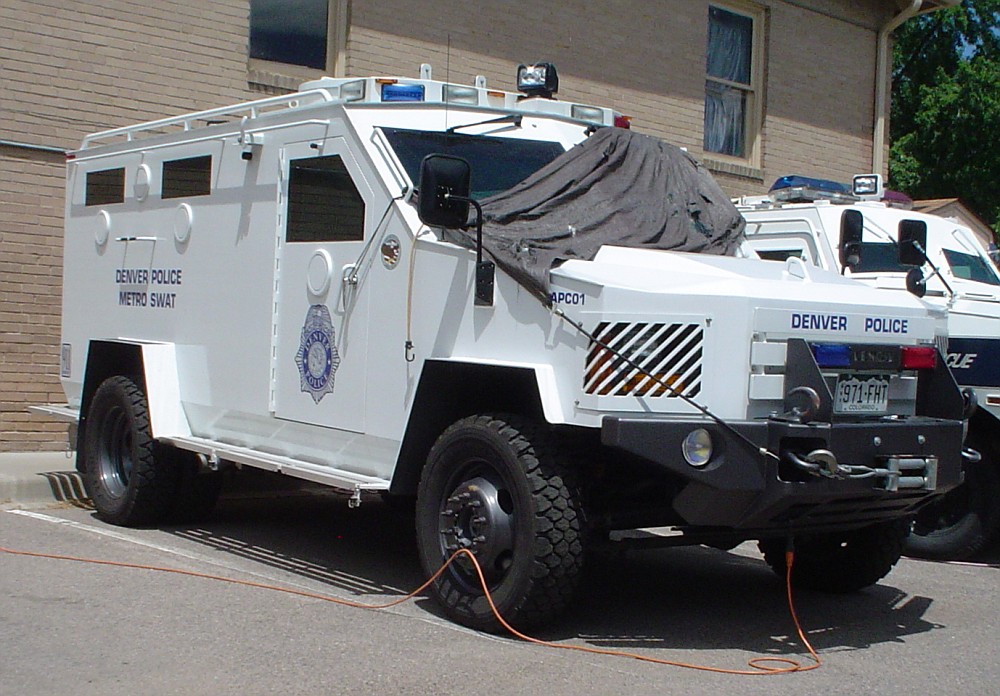
- Denver Police Department[77][better source needed]
- Des Moines Police Department[78][failed verification]
- Honolulu Police Department[79]
- Kansas Highway Patrol[80]
- Louisiana State Police[81][needs update]
- Los Angeles County Sheriff's Department[82]
- Los Angeles Police Department[83][needs update]
- Miami-Dade Sheriff's Office[84][needs update]
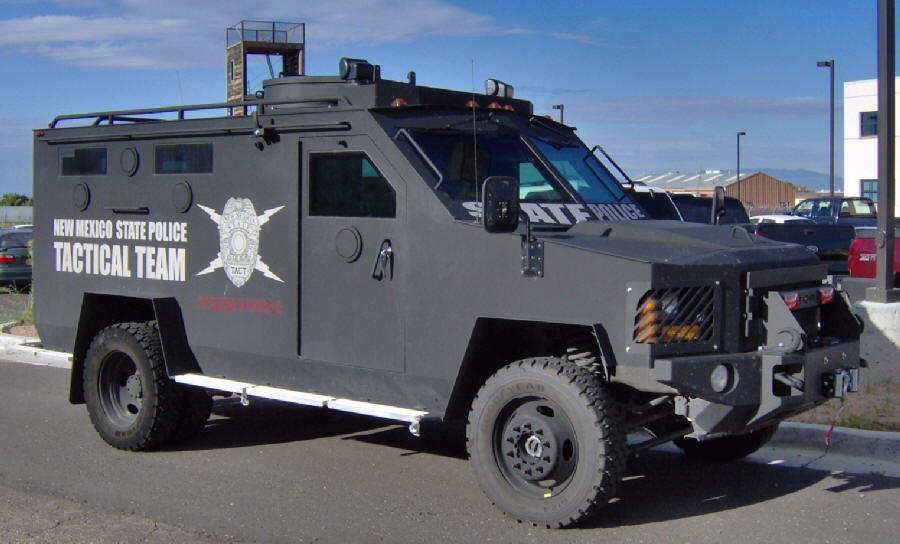
- New Mexico State Police[85][better source needed]
- New York City Police Department[86][needs update][87][better source needed]
- Pasadena Police Department[88]
- Portland Police Bureau[89][failed verification]
- Prince George's County Sheriff's Office[90]
- Prince William County Police Department[91][failed verification]
- Unified Police Department of Greater Salt Lake[92][better source needed]
- San Diego Police Department[93]
- San Francisco Police Department[94]
- Santa Barbara Police Department[95]
- St. Louis Metropolitan Police Department[96]
- St. Petersburg Police Department[97][98]
Military
- United States Air Force – Air Force Security Forces[99]
- United States Air Force – 60 BearCats for convoy protection[6]
- United States Marine Corps – Marine Corps Security Force Regiment[100][needs update]
- United States Army – Military Police Corps Special Reaction Teams[6]
- Fort Carson
- Fort Hood
- Fort Riley
- Fort Bragg
- Camp Carroll
- United States Navy Strategic Weapons Facilities Pacific/Atlantic – Over 100[6]
Non-state actors
 Syrian Democratic Forces[101]
Gallery
-
 A BearCat used by the Stockton Police Department in the 2014 Stockton bank robbery
 -
 A BearCat Elevated Tactics variant used by the NYPD Emergency Service Unit at the Gaza Solidarity Encampment at Columbia University
 -
 A BearCat used by United States Immigration and Customs Enforcement during protests against Operation Metro Surge
 -
 A BearCat with a long-range acoustic device mounted in the turret during the 2014 Ferguson unrest
 -
 Georgia State Patrol troopers mounting a BearCat using its side handles and running boards
 -
 A BEAR and BearCat both operated by the LAPD


.jpg)


References
- ↑ https://www.azcentral.com/community/westvalley/articles/0311gl-armored11Z1.html
- ↑ 2.0 2.1 "Archived copy". http://www.dailyinterlake.com/articles/2007/12/19/news/news01.txt.
- ↑ 3.0 3.1 "Patriot 3 – Elevated Tactics Systems – LIBERATOR – Lenco Bearcat G2". Patriot 3. http://www.patriot3.com/liberator-vehicles/bearcat-g2/.
- ↑ "SOR Magazine: Lenco BearCat G4 is "security big wheel"". PoliceOne.com. http://www.policeone.com/police-products/vehicles/specialty/articles/1793574-SOR-Magazine-Lenco-BearCat-G4-is-security-big-wheel/.
- ↑ http://securitydriver.com/09/a-strategic-alliance-with-lenco-bearcat/
- ↑ 6.0 6.1 6.2 6.3 6.4 6.5 6.6 [1] {{dead link|date=December 2014| >"Article Archive – Law and Order, Police Fleet Manager, Tactical Response, Public Safety IT – Hendon Publishing". Hendonpub.com. http://www.hendonpub.com/resources/articlearchive/details.aspx?ID=207782.
- ↑ "Lenco Industries Inc". YP.com. http://www.yellowpages.com/pittsfield-ma/mip/lenco-industries-inc-2017661.
- ↑ 8.0 8.1 "Canberra gets a beast! Behold the Lenco Engineering Armoured Rescue Vehicle.". The-riotact.com. https://the-riotact.com/canberra-gets-a-beast-behold-the-lenco-engineering-armoured-rescue-vehicle/44778.
- ↑ 9.0 9.1 "Lenco Armored Vehicles". PoliceOne.com. http://www.policeone.com/manufacturers/Lenco-Armored-Vehicles/.
- ↑ "Armoured vehicle for sieges". 2011-05-19. http://www.adelaidenow.com.au/news/south-australia/armoured-vehicle-for-sieges/story-e6frea83-1226059133084.
- ↑ "Texas man kills ex-governor's son, fires AK-47 at cops". http://www.swattrucks.com/news/TylerPDNewsArticle.pdf.
- ↑ "Bearcat Survived Standoff; Police Cars Did Not". Doylestown-buckingham-new Britain, Pennsylvania Patch. 2012-06-21. http://doylestown.patch.com/articles/bearcat-survived-standoff-police-cars-did-not#photo-10359721.
- ↑ Kristen Shanahan (2016-01-07). "Oklahoma County Sheriff's Office BearCat shot at during standoff". http://kfor.com/2016/01/07/oklahoma-county-sheriffs-office-bearcat-shot-at-during-standoff/.
- ↑ "Central CA detective shot and killed while serving eviction notice at Porterville home, sheriff says". ABC 7. April 10, 2026. https://abc7news.com/post/tulare-county-sheriffs-detective-shot-killed-serving-eviction-notice-porterville-home-sheriff-says/18862761/.
- ↑ "Planned Parenthood shooting: 3 killed, including 1 police officer in Colorado Springs". 2015-11-27. http://www.denverpost.com/news/ci_29172660/colorado-springs-firefighters-respond-active-shooter-at-planned.
- ↑ "Massachusetts news: Local ICE contracts, Hampshire College's future and 20 years of Romneycare" (in en). 2026-03-27. https://www.wgbh.org/news/local/2026-03-27/massachusetts-news-local-ice-contracts-hampshire-colleges-future-and-20-years-of-romneycare.
- ↑ Farrar, Molly (2026-02-19). "Pittsfield armored vehicle company is largest ICE contract in Mass." (in en-US). https://www.boston.com/news/local-news/2026/02/18/pittsfield-armored-vehicle-company-is-largest-ice-contract-in-mass/.
- ↑ Monastesse, Tara (2026-04-23). "Demonstrators call on Lenco Industries in Pittsfield to decline further ICE contracts" (in en). https://www.berkshireeagle.com/news/central_berkshires/lenco-demonstration-ice-contracts-manufacturing/article_3f60c385-ef28-4f75-80df-e09e0245fef6.html.
- ↑ Monastesse, Tara (2026-03-16). "Local and state officials call on Lenco Industries to reconsider future contracts with ICE" (in en). https://www.berkshireeagle.com/news/local/local-and-state-officials-call-on-lenco-industries-to-reconsider-future-contracts-with-ice/article_45a6da17-f3da-4777-8582-47303f00103b.html.
- ↑ "Loaded For Bear: Lenco's Bearcat Is Ready For Duty". Autoweek.com. http://www.autoweek.com/article/20050509/FREE/505090718#ixzz1X3TApGxc.
- ↑ Geoghegan, Susan. "Lenco's BearCat Refurbishment Program". http://www.hendonpub.com/resources/article_archive/results/details?id=4862.
- ↑ "Beyond the Patrol Car". Policemag.com. 24 February 2010. http://www.policemag.com/Channel/Vehicles/Articles/2010/02/Beyond-the-Patrol-Car.aspx.
- ↑ "Patriot 3 – MARS – Mobile Adjustable Ramp System". Patriot 3. http://www.patriot3.com/mars-tactical-platform/.
- ↑ "03212010-StB-LAPD-SWAT-R3-024". Flickr. 2010-03-21. https://www.flickr.com/photos/mikesphotos_us/4453130998/.
- ↑ Cite error: Invalid
<ref>tag; no text was provided for refs namedhendonpub.com - ↑ "Lenco BearCat specifications". http://www.armoredtrucks.com/products-bearcat.aspx.
- ↑ "Lenco BearCat Family" (in en). 2024-12-15. https://militaryvehiclesdata.com/specsheets/land-vehicles/wheeled-armored/4-wheel-armored-vehicles/lenco-bearcat-family/.
- ↑ "New Armored Trucks & SUVs | Lenco Armored Vehicles" (in en-US). 2024-01-26. https://www.lencoarmor.com/all-armored-vehicles/.
- ↑ "Lenco Bearcat - EOD". http://www.swattrucks.com/bcat-eod.aspx.
- ↑ "Lenco Industries introduces the BearCat EOD BombCat armoured vehicle for EOD and IEDD team.". Armyrecognition.com. August 2013. http://www.armyrecognition.com/august_2013_defense_industry_military_army_news_uk/lenco_industries_introduces_the_bearcat_eod_bombcat_armoured_vehicle_for_eod_and_iedd_team_0108133.html.
- ↑ "Lenco Industries introduces the BearCat® MedEvac LE and MIL 4x4 tactical armoured vehicle.". Armyrecognition.com. http://www.armyrecognition.com/august_2013_defense_industry_military_army_news_uk/lenco_industries_introduces_the_bearcat_medevac_le_and_mil_4x4_tactical_armoured_vehicle_1108132.html.
- ↑ "MARTA, City of Decatur to bring back popular Touch-A-Truck event for kids" (in en-US). 2022-03-16. https://ocgnews.com/marta-city-of-decatur-to-bring-back-popular-touch-a-truck-event-for-kids/.
- ↑ "Lenco Supplies BearCat Armored Vehicles to Australian National Counter Terrorism Committee". Lenco Armored Vehicles (Press release). 9 April 2014. Archived from the original on 14 July 2020. Retrieved 21 November 2019.
- ↑ "NSW Police unveils latest defence for tactical operations". NSW Police Force (Press release). 17 March 2025. Archived from the original on 16 March 2025.
- ↑ NSW Police Force (18 March 2025). Police unveil $3.5M armoured American "BearCats" to tackle high-risk threats. Australian Community Media (Youtube production). ACM. Retrieved 21 May 2025.
- ↑ "High-Tech Armoured Rescue Vehicle now part of the NT Police arsenal". Facebook.com. http://www.facebook.com/note.php?note_id=145690685502936.
- ↑ "High-Tech Armoured Rescue Vehicle now part of the NT Police Arsenal". Pfes.nt.gov.au. http://www.pfes.nt.gov.au/Media-Centre/Media-releases/2011/May/16/HighTech-Armoured-Rescue-Vehicle-now-part-of-the-NT-Police-Arsenal.aspx.
- ↑ "Boost to Queensland Police Service armoured vehicle fleet" (in en). https://statements.qld.gov.au/statements/97780.
- ↑ "Armoured Rescue Vehicle launched in Cairns - Far North" (in en-US). Far North. 2012-07-25. https://mypolice.qld.gov.au/farnorth/2012/07/25/armoured-rescue-vehicle-launched-in-cairns/.
- ↑ Media, Q. P. S. (2017-03-22). "QPS launch new EORT armoured vehicle" (in en-AU). https://mypolice.qld.gov.au/news/2017/03/22/qps-launch-new-eort-armoured-vehicle/.
- ↑ "Police to roll out BearCat in new heavy-duty fleet to take on armed criminals". 25 May 2023. https://www.brisbanetimes.com.au/national/queensland/police-to-roll-out-bearcat-in-new-heavy-duty-fleet-to-take-on-armed-criminals-20230525-p5db5f.html.
- ↑ "New high-tech armoured rescue vehicle for South Australia". http://www.attorneygeneral.gov.au/www/ministers/mcclelland.nsf/page/MediaReleases_2011_SecondQuarter_19May2011-Newhigh-techarmouredrescuevehicleforSouthAustralia.
- ↑ "Australian and World News – ninemsn, Nine News". news. http://news.ninemsn.com.au/article.aspx?id=8435486.
- ↑ "Tasmania Police". Police.tas.gov.au. http://www.police.tas.gov.au/news/posts/view/3049/armoured-rescue-vehicle/.
- ↑ "BearCat to the rescue Tasmania News - The Mercury - The Voice of Tasm…". 31 December 2012. http://www.themercury.com.au/article/2012/07/27/349645_tasmania-news.html.
- ↑ https://www.police.tas.gov.au/news-events/media-releases/armoured-bearcat-strengthens-tasmania-police-specialist-capability/
- ↑ Hosking, Wes (28 July 2018). "Victoria Police Special Operations Group gets new BearCat armoured vehicles". Sunday Herald Sun. https://www.heraldsun.com.au/news/law-order/victoria-police-special-operations-group-gets-new-bearcat-armoured-vehicles/news-story/21325f268c77733bbe42ac4dd6de2710.
- ↑ "'BearCat' to assist police in hostile situations". ABC News. 2013-04-12. https://www.abc.net.au/news/2013-04-12/27bearcat27-to-assist-police-in-hostile-situations/4625256?section=vic.
- ↑ "western australia BEARCAT ARMORED – Google Search". http://www.google.com.au/search?q=western+australia+BEARCAT+ARMORED&ie=utf-8&oe=utf-8&aq=t&rls=org.mozilla:en-GB:official&client=firefox-a.
- ↑ "Bearcat' joins WA anti-terror fighting force". 2013-05-06. https://www.perthnow.com.au/news/western-australia/bearcat-joins-wa-anti-terror-fighting-force/story-fnhocxo3-1226635973176.
- ↑ Moorkens, Peter (2017-12-16). "Bijzondere lading politievoertuigen in Antwerpen aangekomen" (in nl). http://www.112antwerpen.com/2017/12/16/bijzondere-lading-politievoertuigen-aangekomen/.
- ↑ "Bearcats enforce Antwerp police". 2017-12-28. https://www.vrt.be/vrtnws/nl/2017/12/28/_bearcats_versterkenantwerpsepolitie/.
- ↑ Vitor, Frederico (2014-12-23). "Bope de Goiás será equipado com veículo blindado usado pela SWAT americana" (in pt). https://www.jornalopcao.com.br/ultimas-noticias/bope-de-goias-sera-equipado-com-veiculo-blindado-usado-pela-swat-americana-24349/.
- ↑ "Ottawa police add armoured truck". Cbc.ca. 24 March 2010. https://www.cbc.ca/news/canada/ottawa/ottawa-police-add-armoured-truck-1.973516.
- ↑ "Saskatoon police unveil new armoured vehicle". Newstalk650.com. http://www.newstalk650.com/story/saskatoon-police-unveil-new-armoured-vehicle/58784.
- ↑ Søgaard, Af Jan (2022-09-30). "Anholdt af Aktionsstyrken: Tiltalt for uhyrligheder mod sin kæreste" (in da). https://ekstrabladet.dk/krimi/anholdt-af-aktionsstyrken-tiltalt-for-uhyrligheder-mod-sin-kaereste/9446668.
- ↑ "Hétfőn is a TEK páncélozott járműve óvta a Szegedi Karácsonyi Hetek látogatóit" (in hu). https://webradio.hu/hirek/belfold/hetfon-is-a-tek-pancelozott-jarmuve-ovta-a-szegedi-karacsonyi-hetek-latogatoit.
- ↑ "Sam Acquisition 360". https://sam.gov/workspace/contract/opp/6c17175b60b643d0ace1ec2f4247b214/view.
- ↑ "Morocco has take delivery 88 BearCat 4x4 armoured vehicles for Moroccan Auxiliary Forces 0108132 – Army Recognition". Armyrecognition.com. http://www.armyrecognition.com/august_2013_defense_industry_military_army_news_uk/morocco_has_take_delivery_88_bearcat_4x4_armoured_vehicles_for_moroccan_auxiliary_forces_0108132.html.
- ↑ "Bunker op wielen in Arnhem: maak kennis met de Lenco Bear". 5 May 2017. https://www.omroepgelderland.nl/nieuws/2133760/Bunker-op-wielen-in-Arnhem-maak-kennis-met-de-Lenco-Bear.
- ↑ "U.S. provides six Lenco Bearcat armoured to Pakistani police.". 2017-12-11. https://armyrecognition.com/archives/archives-land-defense/land-defense-2017/u-s-provides-six-lenco-bearcat-armoured-to-pakistani-police.
- ↑ "Vojska Srbije nabavila američka oklopna vozila" (in sr-RS). 2022-05-01. https://rs.n1info.com/vesti/vojska-srbije-nabavila-americka-oklopna-vozila/.
- ↑ "Lenco Bearcat used by Korea National Police Special Operation Unit". http://www.ohmynews.com/NWS_Web/View/img_pg.aspx?CNTN_CD=IE002984441.
- ↑ "反恐輪式裝甲車,重磅登場!". Ministry of the Interior R.O.C.(Taiwan). https://www.moi.gov.tw/chi/chi_news/news_detail.aspx?src=news&sn=18159&type_code=.
- ↑ McCarthy, James (1 May 2024). "We go behind the scenes with the PSNI's Hostage Rescue Vehicles". Belfast Live. https://www.belfastlive.co.uk/news/go-behind-scenes-psnis-hostage-29094451.
- ↑ McManus, Frank. "Question to the Chief Constable: Armoured Tactical Vehicles". Belfast: Northern Ireland Policing Board. https://www.nipolicingboard.org.uk/questions/armoured-tactical-vehicles.
- ↑ "FBI tactical response teams ready for Inauguration Day" (in en-US). 2017-01-09. https://federalnewsnetwork.com/facilities-construction/2017/01/fbi-gallery/.
- ↑ "U.S. Department of Energy/National Nuclear Security Administration/Y-12 National Security Complex – Security Police". Flickr. 2009-07-31. https://www.flickr.com/photos/policecararchives/3804812316/.
- ↑ Farrar, Molly (2026-02-19). "Pittsfield armored vehicle company is largest ICE contract in Mass." (in en-US). https://www.boston.com/news/local-news/2026/02/18/pittsfield-armored-vehicle-company-is-largest-ice-contract-in-mass/.
- ↑ "United States Park Police". Flickr. 2009-05-13. https://www.flickr.com/photos/policecararchives/3531432080/in/pool-981712@N23.
- ↑ "sts51f". Ktb.net. http://www.ktb.net/~billmeco/sts114pre.html.
- ↑ "Is Homeland Security spending paying off?". The Global Realm. http://theglobalrealm.com/2011/08/29/is-homeland-security-spending-paying-off/.
- ↑ "Alaska State Troopers purchase three Lenco BearCats 4x4 armoured vehicles 2203132 – Army Recognition". Armyrecognition.com. http://www.armyrecognition.com/march_2013_news_defence_army_military_industry_uk/alaska_state_troopers_purchase_three_lenco_bearcats_4x4_armoured_vehicles_2203132.html.
- ↑ "Photograph" (JPG). Images31.fotki.com. https://images31.fotki.com/v1097/photos/4/49373/5836648/cnpca9719-vi.jpg.
- ↑ O'Brien, Robert (2008-02-01). "War Wagons". https://www.policemag.com/special-units/article/15348868/war-wagons.
- ↑ "Dallas PD_011". Flickr. 2009-10-23. https://www.flickr.com/photos/pluto665/4502014554/.
- ↑ "Photograph" (JPG). Images12.fotki.com. https://images12.fotki.com/v203/photos/3/49373/8932149/cnpca15762-vi.jpg.
- ↑ Elmer, McKenzie. "Three in custody after overnight standoff". Gannett. https://www.desmoinesregister.com/story/news/crime-and-courts/2015/07/01/east-des-moines-standoff/29553493/.
- ↑ "LENCO's LE BearCat". Tactical Life. 2008-12-03. http://www.tactical-life.com/online/products/lencos-le-bearcat/.
- ↑ Budget analysis. Kansas Highway Patrol kslegresearch.org
- ↑ "Louisiana State Police_102". Flickr. 2008-07-22. https://www.flickr.com/photos/pluto665/2692352073/.
- ↑ "LOS ANGELES COUNTY SHERIFF'S DEPARTMENT (LASD)". Flickr. 2013-09-02. https://www.flickr.com/photos/68446122@N06/9867044343/in/pool-1035028@N21.
- ↑ "081609-WilshireDiv-LAPD-SWAT-038". Flickr. 2009-08-16. https://www.flickr.com/photos/mikesphotos_us/3840717382/.
- ↑ "SPECIAL THREAT RESPONSE". Miami-police.org. http://www.miami-police.org/special_threat_response.html.
- ↑ "Photographic image of BearCat" (JPG). http://policecarwebsite.net/fc/statepdcars/newmex160.jpg.
- ↑ "P013s NYPD Emergency Service Unit Police Vehicle, Lower Midtown, New York City". Flickr. 2008-07-13. https://www.flickr.com/photos/jag9889/2672319911/.
- ↑ "Photographic image of NYPD BearCat" (JPG). http://members.fortunecity.com/nypolicecars/nypd/nypd1349.jpg.
- ↑ "Pasadena rolls out armored Lenco BearCat". http://www.swattrucks.com/news/Pasadena%20CA_9-10.pdf.
- ↑ Portland City Audit shows police bureau still years behind on improvement plans, 15 May 2012, https://www.oregonlive.com/portland/2012/05/portland_city_audit_shows_poli.html?outputType=amp, retrieved 7 June 2019
- ↑ "The Sum of the Choices We Make". http://www.princegeorgescountymd.gov/sites/default/files/media-document/dcv16584.pdf.
- ↑ "Prince William County Police SWAT Unit". Flickr. 2006-08-27. https://www.flickr.com/photos/25052520@N03/3142704434/in/pool-981712@N23.
- ↑ "Photograph" (JPG). Updsl.org. http://updsl.org/images/galleries/2012/millcreek_venture_outdoor_festival/Venture%20Outdoor%20Festival%202012%20042.jpg.
- ↑ "SanDiegoPoliceDepartmentSWAT". Sdpdswat.net. http://sdpdswat.net/.
- ↑ "Patriot 3 – Testimonials". Patriot 3. https://www.patriot3.com/testimonials/.
- ↑ Jenna Tico (15 July 2010). "Unleash the Beast". Independent.com. https://www.independent.com/news/2010/jul/15/unleash-beast/.
- ↑ "St Louis Metropolitan Missouri Police Lenco Bear SWAT truck". flickr.comPHOTOS. https://www.flickr.com/photos/30470640@N08/30976565558/in/photostream/.
- ↑ Jamie Garcia. "St. Petersburg police unveil a new armored vehicle". WFTS. http://www.abcactionnews.com/dpp/news/region_south_pinellas/st_pete_beach/st-petersburg-police-unveil-a-new-armored-vehicle.
- ↑ "Product Details : Lenco BearCat". https://www.rkb.us/contentdetail.cfm?content_id=157103.
- ↑ "Airmen test new security forces vehicle". Archive.is. https://www.af.mil/News/story/storyID/123009663/.
- ↑ "Sailors Gather with Community for Military Appreciation Day". http://www.navy.mil/search/print.asp?story_id=28657&VIRIN=&imagetype=0&page=1.
- ↑ Nash, Ed; Searle, Alaric (2021) (in English). Kurdish Armour Against ISIS. Great Britain: Osprey Publishing. p. 28. ISBN 9781472847584.



External links
 |
Wikimedia Commons has media related to Lenco BearCat. |
- Lenco Bearcat official site
- Just the Facts!: The BearCat: What it is and what it is not!
- Leno's Garage: Lenco BearCat
 |  |
 EncycloReader
is supported by the
EncycloReader
is supported by the  KSF
KSF