Table of Contents Categories
Lymphoma
Topic: Medicine
 From HandWiki - Reading time: 27 min
Lymphoma is a group of blood and lymph tumors that develop from lymphocytes (a type of white blood cell).[1] The name typically refers to just the cancerous versions rather than all such tumors.[1] Signs and symptoms may include enlarged lymph nodes, fever, drenching sweats, unintended weight loss, itching, and constantly feeling tired.[2][3] The enlarged lymph nodes are usually painless.[2] The sweats are most common at night.[2][3]
The two main categories of lymphomas are the non-Hodgkin lymphoma (NHL) (90% of cases)[4][5] and Hodgkin lymphoma (HL) (10%).[4] Lymphomas, leukemias and myelomas are a part of the broader group of tumors of the hematopoietic and lymphoid tissues.[6]
Risk factors for Hodgkin lymphoma include infection with Epstein–Barr virus and a history of the disease in the family.[2] Risk factors for common types of non-Hodgkin lymphomas include autoimmune diseases, HIV/AIDS, infection with human T-lymphotropic virus, immunosuppressant medications, and some pesticides.[3][7] Eating large amounts of red meat and tobacco smoking may also increase the risk.[8][9][10] Diagnosis, if enlarged lymph nodes are present, is usually by lymph node biopsy.[2][3] Blood, urine, and bone marrow testing may also be useful in the diagnosis.[3] Medical imaging may then be done to determine if and where the cancer has spread.[2][3] Lymphoma most often spreads to the lungs, liver, and brain.[2][3]
Treatment may involve one or more of the following: chemotherapy, radiation therapy, proton therapy, targeted therapy, and surgery.[2][3] In some non-Hodgkin lymphomas, an increased amount of protein produced by the lymphoma cells causes the blood to become so thick that plasmapheresis is performed to remove the protein.[3] Watchful waiting may be appropriate for certain types.[3] The outcome depends on the subtype, with some being curable and treatment prolonging survival in most.[4] The five-year survival rate in the United States for all Hodgkin lymphoma subtypes is 89%,[11] while that for non-Hodgkin lymphomas is 74%.[12] Worldwide, lymphomas developed in 566,000 people in 2012 and caused 305,000 deaths.[13] They make up 3–4% of all cancers, making them as a group the seventh-most-common form.[13][14] In children, they are the third-most-common cancer.[15] They occur more often in the developed world than in the developing world.[13]
Signs and symptoms

Lymphoma commonly presents with painless, persistent lymphadenopathy[16] (swelling of the lymph nodes) and can vary from rapidly enlarging lymph nodes in aggressive lymphomas to fluctuating lymphadenopathy in slow-growing subtypes.[17]
B symptoms are set of symptoms consisting of fever, night sweats, and unintended weight loss associated with Hodgkin and non-Hodgkin lymphomas.[16] Patients with high histological grade lymphoma are more likely to be affected by these symptoms.[17]
The presence of lymphoma outside the lymph nodes can cause a variety of symptoms depending on the affected organ.[18] These symptoms are common in non-Hodgkin lymphoma, with 40% of patients expressing it.[19] Aggressive non-Hodgkin lymphomas make systemic symptoms more likely.[19]
Mediastinal lymphadenopathy, and less commonly pulmonary lymphoma, may cause cough, dyspnea, chest pain, or superior vena cava syndrome, due to compression of the windpipe, the superior vena cava vein, or nerves in the chest.[20][21]
Lymphoma in bone marrow can cause anemia, thrombocytopenia, and fatigue.[22][23] This is most common in low-grade, non-Hodgkin lymphomas, and especially in follicular, mantle cell, and small B-cell lymphomas (40-90% of cases depending on subtype).[24][25][26]
Chronic pain, fullness, early satiety, and gastrointestinal bleeding are symptoms associated with gastrointestinal lymphoma.[19] The gastrointestinal tract is the most common location for extranodal involvement with non-Hodgkin lymphomas, accounting for 30-40% of extranodal lymphomas in general,[27] while in Hodgkin lymphomas, it is rare, accounting for less than 1% of cases.[28]
Although uncommon, involvement with the central nervous system can cause symptoms including confusion, double vision, headaches, nausea, and hearing loss.[29] It is rare in Hodgkin lymphomas, with only 0.2% to 0.5% of patients experiencing it,[30][31] but occurs more often in non-Hodgkin lymphoma, from 2.8% in indolent forms to 24.4% in high-grade lymphoblastic and Burkitt lymphoma.[32]
Paraneoplastic syndromes are rare in lymphoma.[33] Paraneoplastic cerebellar degeneration is most strongly associated with Hodgkin lymphomas, while polymyositis and dermatomyositis are associated with both Hodgkin and non-Hodgkin lymphomas.[33][17]
Diagnosis
 | This section includes a list of general references, but it remains largely unverified because it lacks sufficient corresponding inline citations. (July 2026) (Learn how and when to remove this template message) |

Lymphoma is definitively diagnosed by a lymph-node biopsy, meaning a partial or total excision of a lymph node examined under the microscope.[34] This examination reveals histopathological features that may indicate lymphoma. After lymphoma is diagnosed, a variety of tests may be carried out to look for specific features characteristic of different types of lymphoma. These include:[35]
Classification

According to the World Health Organization (WHO), lymphoma classification should reflect in which lymphocyte population the neoplasm arises.[36] Thus, neoplasms that arise from precursor lymphoid cells are distinguished from those that arise from mature lymphoid cells.[36] Most mature lymphoid neoplasms comprise the non-Hodgkin lymphomas.[36] Historically, mature histiocytic and dendritic cell (HDC) neoplasms have been considered[by whom?] mature lymphoid neoplasms, since these often involve lymphoid tissue.[36]
Lymphoma can also spread to the central nervous system, often around the brain in the meninges, known as lymphomatous meningitis (LM).[37]
Hodgkin lymphoma
Hodgkin lymphoma accounts for about 10% of lymphomas.[4] It differs from other forms of lymphomas in its prognosis and several pathological characteristics. A division into Hodgkin and non-Hodgkin lymphomas is used in several of the older classification systems. A Hodgkin lymphoma is marked by the presence of a type of cell called the Reed–Sternberg cell.[38][39]
Non-Hodgkin lymphomas
Non-Hodgkin lymphomas, which are defined as all lymphomas except Hodgkin lymphoma, are more common than Hodgkin lymphoma. A wide variety of lymphomas are in this class, and the causes, the types of cells involved, and the prognoses vary by type. The number of cases annually of non-Hodgkin lymphoma increases with age. It is further divided into several subtypes.[40]
Epstein–Barr virus-associated lymphoproliferative diseases

Epstein–Barr virus-associated lymphoproliferative diseases are a group of benign, premalignant, and malignant diseases of lymphoid cells (i.e., B cells, T cells, NK cells, and histiocytic-dendritic cells) in which one or more of these cell types is infected with the Epstein–Barr virus (EBV). The virus may be responsible for the development and/or progression of these diseases. In addition to EBV-positive Hodgkin lymphomas, the World Health Organization (2016) includes the following lymphomas, when associated with EBV infection, in this group of diseases: Burkitt lymphoma; large B cell lymphoma, not otherwise specified; diffuse large B cell lymphoma associated with chronic inflammation; fibrin-associated diffuse large B cell lymphoma; primary effusion lymphoma; plasmablastic lymphoma; extranodal NK/T cell lymphoma, nasal type; peripheral T cell lymphoma, not otherwise specified; angioimmunoblastic T-cell lymphoma; follicular T cell lymphoma; and systemic T cell lymphoma of childhood.[41]
WHO classification
 | This section's accessibility is in question. The specific issue is: screen readers can not read content that is hidden. Relevant discussion may be found on the talk page. Information on making articles more accessible can be found at WikiProject Accessibility. |
The WHO classification, published in 2001 and updated in 2008, 2017, and 2022,[42] is based upon the foundations laid within the "revised European–American lymphoma classification" (REAL). This system groups lymphomas by cell type (i.e., the normal cell type that most resembles the tumor) and defines phenotypic, molecular, or cytogenetic characteristics. The five groups are shown in the table. Hodgkin lymphoma is considered separately within the WHO and preceding classifications, although it is recognized as being a tumor, albeit markedly abnormal, of lymphocytes of mature B cell lineage.[40]
Of the many forms of lymphoma, some are categorized as indolent (e.g., small lymphocytic lymphoma), compatible with a long life even without treatment. Other forms are aggressive (e.g., Burkitt's lymphoma), causing rapid deterioration and death. However, most of the aggressive lymphomas respond well to treatment and are curable. The prognosis, therefore, depends on the correct diagnosis and classification of the disease, which is established after examination of a biopsy by a pathologist (usually a hematopathologist).[43]

- B-cell chronic lymphocytic leukemia/small cell lymphoma
- 3–4% of lymphomas in adults
- Small resting lymphocytes mixed with variable numbers of large activated cells, lymph nodes diffusely effaced
- CD5, surface immunoglobulin
- 5-year survival rate 50%.[44]
- Occurs in older adults, usually involves lymph nodes, bone marrow, and spleen; most patients have peripheral blood involvement, indolent
- B-cell prolymphocytic leukemia
- Lymphoplasmacytic lymphoma (such as Waldenström macroglobulinemia)
- Splenic marginal zone lymphoma
- Hairy cell leukemia
- Plasma cell neoplasms:
- Plasma cell myeloma (also known as multiple myeloma)
- Plasmacytoma
- Monoclonal immunoglobulin deposition diseases
- Heavy chain diseases
- Extranodal marginal zone B cell lymphoma, also called MALT lymphoma
- About 5% of lymphomas in adults
- Variable cell size and differentiation, 40% show plasma cell differentiation, homing of B cells to epithelium creates lymphoepithelial lesions.
- CD5, CD10, surface Ig
- Frequently occurs outside lymph nodes, very indolent, may be cured by local excision
- Nodal marginal zone B cell lymphoma
- Follicular lymphoma
- About 40% of lymphomas in adults
- Small "cleaved" [cleft] cells (centrocytes) mixed with large activated cells (centroblasts), usually nodular ("follicular") growth pattern
- CD10, surface Ig
- About 72–77%[45]
- Occurs in older adults, usually involves lymph nodes, bone marrow, and spleen, associated with t(14;18) translocation overexpressing Bcl-2, indolent
- Primary cutaneous follicle center lymphoma
- Mantle cell lymphoma
- About 3–4% of lymphomas in adults
- Lymphocytes of small to intermediate size growing in a diffuse pattern
- CD5
- About 50[46] to 70%[46]
- Occurs mainly in adult males, usually involves lymph nodes, bone marrow, spleen, and GI tract, associated with t(11;14) translocation overexpressing cyclin D1, moderately aggressive
- Diffuse large B-cell lymphoma, not otherwise specified
- About 40–50% of lymphomas in adults
- Variable, most resemble B cells of large germinal centers, diffuse growth pattern
- Variable expression of CD10 and surface Ig
- Five-year survival rate 60%[47]
- Occurs in all ages, but most commonly in older adults, may occur outside lymph nodes, aggressive
- Diffuse large B-cell lymphoma associated with chronic inflammation
- Epstein–Barr virus positive diffuse large B-cell lymphoma, not otherwise specified
- Lymphomatoid granulomatosis
- Primary mediastinal (thymic) large B-cell lymphoma
- Intravascular large B-cell lymphoma
- ALK+ large B-cell lymphoma
- Plasmablastic lymphoma
- Primary effusion lymphoma
- Large B-cell lymphoma arising in HHV8-associated multicentric Castleman's disease
- Burkitt lymphoma/leukemia
- < 1% of lymphomas in the United States
- Round lymphoid cells of intermediate size with several nucleoli, starry-sky appearance by diffuse spread with interspersed apoptosis
- CD10, surface Ig
- Five-year survival rate 50%[48]
- Endemic in Africa, sporadic elsewhere, more common in immunocompromised and children, often visceral involvement, highly aggressive
- T-cell prolymphocytic leukemia
- T-cell large granular lymphocyte leukemia
- Aggressive NK cell leukemia
- Adult T-cell leukemia/lymphoma
- Extranodal NK/T-cell lymphoma, nasal type
- Enteropathy-associated T-cell lymphoma
- Hepatosplenic T-cell lymphoma
- Blastic NK cell lymphoma
- Mycosis fungoides/Sézary syndrome
- Most common cutaneous lymphoid malignancy
- Usually small lymphoid cells with convoluted nuclei that often infiltrate the epidermis, creating Pautrier microabscesseses
- CD4
- 5-year survival 75%[49]
- Localized or more generalized skin symptoms, generally indolent, in a more aggressive variant, Sézary's disease, skin erythema and peripheral blood involvement
- Primary cutaneous CD30-positive T-cell lymphoproliferative disorders
- Primary cutaneous anaplastic large cell lymphoma
- Lymphomatoid papulosis
- Peripheral T-cell lymphoma not otherwise specified
- Most common T cell lymphoma
- Variable, usually a mix of small to large lymphoid cells with irregular nuclear contours
- CD3
- Probably consists of several rare tumor types, often disseminated and generally aggressive
- Angioimmunoblastic T-cell lymphoma
- Anaplastic large cell lymphoma: ALK-positive and ALK-negative types
- Breast plant-associated anaplastic large cell lymphoma
- B-lymphoblastic leukemia/lymphoma not otherwise specified
- B-lymphoblastic leukemia/lymphoma with recurrent genetic abnormalities
- T-lymphoblastic leukemia/lymphoma
- 15% of childhood acute lymphoblastic leukemia and 90% of lymphoblastic lymphoma.[50]: 635
- Lymphoblasts with irregular nuclear contours, condensed chromatin, small nucleoli, and scant cytoplasm without granules
- TdT, CD2, CD7
- It often presents as a mediastinal mass because of involvement of the thymus. It is highly associated with NOTCH1 mutations, and is most common in adolescent males.
- Classical Hodgkin lymphomas:
- Nodular sclerosis form of Hodgkin lymphoma
- Most common type of Hodgkin lymphoma
- Reed–Sternberg cell variants and inflammation, usually broad sclerotic bands that consist of collagen
- CD15, CD30
- Most common in young adults, often arises in the mediastinum or cervical lymph nodes
- Mixed cellularity Hodgkin lymphoma
- Second-most common form of Hodgkin lymphoma
- Many classic Reed–Sternberg cells and inflammation
- CD15, CD30
- Most common in men, more likely to be diagnosed at advanced stages than the nodular sclerosis form Epstein–Barr virus involved in 70% of cases
- Lymphocyte-rich
- Lymphocyte-depleted or not-depleted
- Nodular lymphocyte-predominant Hodgkin lymphoma
- Associated with a primary immune disorder
- Associated with the human immunodeficiency virus (HIV)
- Post-transplant
- Associated with methotrexate therapy
- Primary central nervous system lymphoma occurs most often in immunocompromised patients, in particular those with AIDS, but it can occur in the immunocompetent, as well. It has a poor prognosis, particularly in those with AIDS. Treatment can consist of corticosteroids, radiotherapy, and chemotherapy, often with methotrexate.
Previous classifications
Several previous classifications have been used, including Rappaport, Lennert/Kiel, BNLI, Working Formulation, and REAL.[51]
The Working Formulation of 1982 was a classification of non-Hodgkin lymphoma. It excluded the Hodgkin lymphomas and divided the remaining lymphomas into four grades (low, intermediate, high, and miscellaneous) related to prognosis, with some further subdivisions based on the size and shape of affected cells. This purely histological classification included no information about cell surface markers or genetics and made no distinction between T-cell lymphomas and B-cell lymphomas. It was widely accepted at the time of its publication, but by 2004, it was obsolete.[52]
In 1994, the Revised European-American Lymphoma (REAL) classification applied immunophenotypic and genetic features to identify distinct clinicopathologic entities among all the lymphomas except Hodgkin lymphoma.[23] For coding purposes, the ICD-O (codes 9590–9999)[53] and ICD-10 (codes C81-C96)[54] are available.
Staging

After a diagnosis and before treatment, cancer is staged. This refers to determining if the cancer has spread, and if so, whether locally or to distant sites. Staging is reported as a grade from I (confined) to IV (spread). The stage of a lymphoma helps predict a patient's prognosis and is used to help select the appropriate therapy.[55]
The Ann Arbor staging system is routinely used for staging of both HL and NHL. In this staging system, stage I represents localized disease contained within a lymph node group, II represents the presence of lymphoma in two or more lymph node groups, III represents spread of the lymphoma to lymph node groups on both sides of the diaphragm, and IV indicates spread to tissue outside the lymphatic system. Different suffixes imply the involvement of different organs, for example, S for the spleen and H for the liver. Extra-lymphatic involvement is expressed with the letter E. In addition, the presence of B symptoms (one or more of the following: unintentional loss of 10% body weight in the last 6 months, night sweats, or persistent fever of 38 °C or more) or their absence is expressed with B or A, respectively.[56]
CT scan or PET scan imaging modalities are used to stage cancer. PET scanning is advised for fluorodeoxyglucose-avid lymphomas, such as Hodgkin lymphoma, as a staging tool that can even replace bone marrow biopsy. For other lymphomas, CT scanning is recommended for staging.[55]
Age and poor performance status are other established poor prognostic factors.[57] This means that people who are elderly or too sick to take care of themselves are more likely to be killed by lymphoma than others.
-
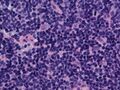 Mantle cell lymphoma: Notice the irregular nuclear contours of the medium-sized lymphoma cells and the presence of a pink histiocyte. By immunohistochemistry, the lymphoma cells expressed CD20, CD5, and Cyclin D1 (high-power view, H&E).
 -
 Hodgkin lymphoma, nodular lymphocyte predominant (low-power view): Notice the nodular architecture and the areas of "mottling" (H&E).
 -
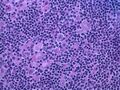 Hodgkin lymphoma, nodular lymphocyte predominant (high-power view): Notice the presence of L&H cells, also known as "popcorn cells" (H&E).


Differential diagnosis
Certain lymphomas (extranodal NK/T-cell lymphoma, nasal type and type II enteropathy-associated T-cell lymphoma) can be mimicked by two benign diseases that involve the excessive proliferation of nonmalignant NK cells in the GI tract, natural killer cell enteropathy, a disease wherein NK cell infiltrative lesions occur in the intestine, colon, stomach, or esophagus, and lymphomatoid gastropathy, a disease wherein these cells' infiltrative lesions are limited to the stomach. These diseases do not progress to cancer, may regress spontaneously, and do not respond to or require chemotherapy or other lymphoma treatments.[58]
Treatment
The treatment of lymphoma changes according to disease subtype, Ann Arbor staging, anatomical distribution, and patient factors like age, symptoms, and performance status.[59] For aggressive Hodgkin and non-Hodgkin lymphomas, treatment is often administered with the intent to cure,[60] while treatment for slow-growing non-Hodgkin lymphomas involve more watchful waiting and symptom alleviation.[61]
Treatment may involve a combination of methods, including chemotherapy, radiation therapy, immunotherapy, targeted therapy, hematopoietic stem-cell transplants, or simply watchful waiting.[62][63][64] Advancements in diagnostics have allowed more individual treatment based on lymphoma subtype and patient circumstances.[64]
Hodgkin lymphoma
The management of Hodgkin lymphoma differs from non-Hodgkin subtypes due to its predictable pattern of spreading through the lymphatic system and the presence of Reed-Sternberg cells.[65][66] The disease is responsive to treatment, with 5-year survival rates exceeding 80% across all stages.[67][68][69]
Early-stage disease
Early-stage (I-II) classical Hodgkin lymphoma is generally treated with chemotherapy, the standard regimen being ABVD, paired with involved-site radiotherapy,[64][70] a radiotherapy technique where only areas directly affected by disease are targeted instead of entire anatomical regions.[71] Increasingly, PET imaging has been used to adapt regimens based on the patient's response to treatment, allowing for a transition to BEACOPP or other treatments in unfavourable progression.[72] Classifying patients based on initial risk has also been used to make modifications in treatment.[73]
Late-stage disease
Treatments for advanced-stage (III-IV) Hodgkin lymphoma have gone through significant development since the late 2010s, with the standard of care expanding from ABVD to include therapies incorporating brentuximab vedotin, an antibody-drug conjugate that targets CD30 proteins expressed on Reed-Sternberg cells,[74] combined with doxorubicin, vinblastine, and dacarbazine (BV-AVD).[64][75] More recently, nivolumab, an immune checkpoint inhibitor that promotes T-cell anti-tumor activity by targeting the PD-1 receptor,[76][77] has been used in first-line treatment with the same chemotherapy regimen (N-AVD).[78]
Refractory or relapsed disease
Patients with refractory or relapsed Hodgkin lymphoma are often treated with salvage chemotherapy followed by hematopoietic stem-cell transplantation, with around 50% of relapsed patients being cured.[79][80] In patients where relapse occurs after stem-cell transplantation, brentuximab vedotin and PD-1 inhibitors are viable options for treatment, and have been shown to reduce relapse risk.[81][82]
Non-Hodgkin lymphoma
Non-Hodgkin lymphoma encompasses over 80 distinct diseases,[83][84] with treatments varying according to subtype and clinical behaviour, broadly divided into indolent and aggressive lymphomas.[85] Outcomes of treatment are varied, with 5-year overall survival ranging from 60-90% depending on patient risk and subtype of lymphoma.[86][87]
Aggressive disease
Aggressive B-cell lymphomas, like diffuse large B-cell lymphoma (DLBCL) and high-grade B-cell lymphoma, are typically treated with combination chemotherapy, with the goal of complete cure.[60] The most common regimen is rituximab, an immunotherapy that targets the CD20 protein expressed on B-cells, combined with CHOP chemotherapy (R-CHOP),[59] which has been the first-line standard for over 20 years.[60]
Polatuzumab vedotin, an antibody-drug conjugate that targets the CD79b protein on B-cells to deliver monomethyl auristatin E, has been recently introduced as an alternative to R-CHOP in the Pola-R-CHP regimen, where it replaces the mitotic inhibitor vincristine (Oncovin).[88][89]
Indolent disease
Localised indolent lymphomas, especially stage I follicular lymphoma, may be treated with involved-site radiotherapy, with the intent to cure.[90] 5-year overall survival for both early-stage follicular and marginal zone lymphoma treated with radiotherapy have been reported to exceed 85%.[91] Rituximab, both with and without chemotherapy, is also an accepted alternative for patients where radiotherapy is unavailable as a treatment.[92]
Contrary to localised disease, advanced-stage indolent lymphomas are often treated with watchful waiting when patients are asymptomatic and have a low tumour burden, as early treatment has not been shown to improve overall survival.[93][94][95] Treatment is indicated following development of symptoms or high tumor burden.[96][97]
When initiated, standard treatment includes rituximab with bendamustine, an alkylating chemotherapeutic agent with DNA-damaging properties,[98] however, combinations of rituximab and other chemotherapies are used as well.[90]
In other lymphomas, like chronic lymphocytic leukemia/small lymphocytic lymphoma (CLL/SLL), Bruton's tyrosine kinase (BTK) inhibitors, a targeted therapy that prevents B-cells from growing by blocking B-cell receptor signalling, are widely used as standard chemotherapy-free treatments.[99]
Relapsed or refractory disease
With the advent of targeted therapy and immunotherapy-based treatments, treatment of relapsed and refractory non-Hodgkin lymphoma has increasingly incorporated modalities beyond salvage chemotherapy and stem-cell transplantation.[100][101]
Chimeric antigen receptor-modified (CAR) T-cell therapy has become part of the standard of care in refractory B-cell lymphomas,[101] where, through the genetic modification of patient T-cells, CD19 proteins on B cells are targeted to release cytotoxins in tumor cells.[102][103] Remission rates have improved with the introduction of CAR T-cell therapy, with 31% of patients remaining progression-free at 5 years[104] and a complete remission rate of 59%[105] in comparison to 40% complete remission and 25% progression-free survival with prior treatments.[106]
Bispecific antibodies, an immunotherapy that binds to two proteins simultaneously (CD20 on lymphoma cells, CD3 on T-cells) to direct T cells to target B cells, have also demonstrated efficacy in relapsed diffuse large B-cell lymphoma and follicular lymphoma and provided alternative treatment options for patients ineligible for CAR-T therapy.[107] Response rates range from 25-40% in diffuse large B-cell lymphoma, and 60-75% in follicular lymphoma.[108]
For refractory or relapsed mantle cell lymphoma, BCL-2 inhibitors, like venetoclax, and BTK inhibitors block signalling pathways, inducing apoptosis with a 21% complete response rate.[109]
Palliative care
Palliative care, a specialized medical care focused on the symptoms, pain, and stress of a serious illness, is recommended by multiple national cancer treatment guidelines as an accompaniment to curative treatments for people with lymphoma.[110][111] It is used to address both the direct symptoms of lymphoma and many unwanted side effects that arise from treatments.[112][113] Palliative care can be especially helpful for children who develop lymphoma, helping both children and their families deal with the physical and emotional symptoms of the disease.[112][114][115][116] For these reasons, palliative care is especially important for people requiring bone marrow transplants.[117][118]
Supportive treatment
Adding physical exercises to the standard treatment for adult patients with haematological malignancies like lymphomas may result in little to no difference in mortality, quality of life, and physical functioning. These exercises may result in a slight reduction in depression. Furthermore, aerobic physical exercises probably reduce fatigue. The evidence is very uncertain about the effect on anxiety and serious adverse events.[119]
Prognosis
| Five-year relative survival by stage at diagnosis[120] | ||
| Stage at diagnosis | Five-year relative survival (%) |
Percentage of cases (%) |
| Localized (confined to primary site) | 82.3 | 26 |
| Regional (spread to regional lymph nodes) | 78.3 | 19 |
| Distant (cancer has metastasized) | 62.7 | 47 |
| Unknown (unstaged) | 68.6 | 8 |
Epidemiology

Between 1990 and 2021, Lymphoma was the most common form of hematological malignancy, or "blood cancer", in the developed world.[121]
Taken together, lymphomas represent 5.3% of all cancers (excluding simple basal cell and squamous cell skin cancers) in the United States and 55.6% of all blood cancers.[122]
According to the U.S. National Institutes of Health, lymphomas account for about 5%, and Hodgkin lymphoma in particular accounts for less than 1% of all cases of cancer in the United States.[123]
Because the whole lymphatic system is part of the body's immune system, people with a weakened immune system, such as from HIV infection or certain drugs or medications, also have a higher number of cases of lymphoma.[124]
History

Thomas Hodgkin published the first description of lymphoma in 1832, specifically of the form named after him.[125] Since then, many other forms of lymphoma have been described.[weasel words]
The term "lymphoma" is from Latin lympha ("water") and from Greek -oma ("morbid growth, tumor").[126]
Research
The two types of lymphoma research are clinical or translational research and basic research. Clinical/translational research focuses on studying the disease in a defined and generally immediately applicable way, such as testing a new drug in people. Studies may focus on effective means of treatment, better ways of treating the disease, improving the quality of life for people, or appropriate care in remission or after cures. Hundreds of clinical trials are being planned or conducted at any given time.[127]
Basic science research studies the disease process at a distance, such as seeing whether a suspected carcinogen can cause healthy cells to turn into lymphoma cells in the laboratory or how the DNA changes inside lymphoma cells as the disease progresses. The results from basic research studies are generally less immediately useful to people with the disease,[128] but can improve scientists' understanding of lymphoma and form the foundation for future, more effective treatments.
Other animals
References
- ↑ 1.0 1.1 Taylor, Elizabeth J. (2000). Dorland's Illustrated medical dictionary. (29th ed.). Philadelphia: Saunders. p. 1038. ISBN 0-7216-6254-4. https://archive.org/details/trent_0116404640520/page/1038.
- ↑ 2.0 2.1 2.2 2.3 2.4 2.5 2.6 2.7 "General Information About Adult Hodgkin Lymphoma". 2014-04-23. http://www.cancer.gov/cancertopics/pdq/treatment/adulthodgkins/Patient/page1/AllPages.
- ↑ 3.00 3.01 3.02 3.03 3.04 3.05 3.06 3.07 3.08 3.09 "General Information About Adult Non-Hodgkin Lymphoma". 2014-04-25. http://www.cancer.gov/cancertopics/pdq/treatment/adult-non-hodgkins/Patient/page1/AllPages.
- ↑ 4.0 4.1 4.2 4.3 "The Lymphoma Guide Information for Patients and Caregivers". 2013. http://www.lls.org/content/nationalcontent/resourcecenter/freeeducationmaterials/lymphoma/pdf/lymphomaguide.pdf.
- ↑ "Lymphoma". 2011-02-02. http://www.cancer.gov/dictionary?cdrid=45368.
- ↑ "The 2008 revision of the World Health Organization (WHO) classification of myeloid neoplasms and acute leukemia: rationale and important changes". Blood 114 (5): 937–951. July 2009. doi:10.1182/blood-2009-03-209262. PMID 19357394.
- ↑ "The association between non-Hodgkin lymphoma and organophosphate pesticides exposure: A meta-analysis". Environmental Pollution 231 (Pt 1): 319–328. December 2017. doi:10.1016/j.envpol.2017.08.028. PMID 28810201. Bibcode: 2017EPoll.231..319H.
- ↑ "Cigarette smoking and risk of Hodgkin lymphoma and its subtypes: a pooled analysis from the International Lymphoma Epidemiology Consortium (InterLymph)". Annals of Oncology 24 (9): 2245–2255. September 2013. doi:10.1093/annonc/mdt218. PMID 23788758.
- ↑ "Red and Processed Meat Consumption Increases Risk for Non-Hodgkin Lymphoma: A PRISMA-Compliant Meta-Analysis of Observational Studies". Medicine 94 (45). November 2015. doi:10.1097/MD.0000000000001729. PMID 26559248.
- ↑ "Meat intake and non-Hodgkin lymphoma: a meta-analysis of observational studies". Cancer Causes & Control 27 (5): 595–606. May 2016. doi:10.1007/s10552-016-0745-2. PMID 27076059.
- ↑ "Hodgkin Lymphoma—SEER Stat Fact Sheets". Seer.cancer.gov. http://seer.cancer.gov/statfacts/html/hodg.html.
- ↑ "SEER Stat Fact Sheets: Non-Hodgkin Lymphoma". http://seer.cancer.gov/statfacts/html/nhl.html.
- ↑ 13.0 13.1 13.2 World Cancer Report 2014.. World Health Organization. 2014. pp. Chapter 5.13. ISBN 978-92-832-0429-9.
- ↑ Marcus, Robert (2013). Lymphoma: pathology, diagnosis and treatment (Second ed.). Cambridge University Press. p. 1. ISBN 978-1-107-01059-8. https://books.google.com/books?id=SX0LAgAAQBAJ&pg=PP1.
- ↑ Tepper, Joel E.; Kastan, Michael B.; Doroshow, James H.; Armitage, James O.; Niederhuber, John E. (2014). "Childhood lymphoma". Abeloff's clinical oncology (Fifth ed.). Elsevier. p. Chapter 97. ISBN 978-1-4557-2865-7.
- ↑ 16.0 16.1 "About Lymphoma". Lymphoma Research Foundation. http://www.lymphoma.org/site/pp.asp?c=bkLTKaOQLmK8E&b=6299689.
- ↑ 17.0 17.1 17.2 Lewis, William D.; Lilly, Seth; Jones, Kristin L. (2020-01-01). "Lymphoma: Diagnosis and Treatment". American Family Physician 101 (1): 34–41. ISSN 1532-0650. PMID 31894937.
- ↑ Ansell, Stephen M. (2015-08-01). "Non-Hodgkin Lymphoma: Diagnosis and Treatment" (in English). Mayo Clinic Proceedings 90 (8): 1152–1163. doi:10.1016/j.mayocp.2015.04.025. ISSN 0025-6196. PMID 26250731. https://www.mayoclinicproceedings.org/article/S0025-6196(15)00429-2/fulltext.
- ↑ 19.0 19.1 19.2 Freedman, Arnold S.; Nadler, Lee M. (2003), "Differential diagnosis and sites of disease at presentation" (in en), Holland-Frei Cancer Medicine. 6th edition (BC Decker), https://www.ncbi.nlm.nih.gov/books/NBK13973/, retrieved 2026-06-28
- ↑ Higdon, Mark L.; Atkinson, Charles J.; Lawrence, Kelley V. (2018-06-01). "Oncologic Emergencies: Recognition and Initial Management" (in en). American Family Physician 97 (11): 741–748. ISSN 1532-0650. PMID 30215936. https://www.aafp.org/afp/2018/0601/p741.
- ↑ Vadde, Rakesh; Pastores, Stephen M. (December 2016). "Management of Acute Respiratory Failure in Patients With Hematological Malignancy". Journal of Intensive Care Medicine 31 (10): 627–641. doi:10.1177/0885066615601046. ISSN 1525-1489. PMID 26283185.
- ↑ Paquin, Ashley R.; Oyogoa, Emmanuella; McMurry, Hannah Stowe; Kartika, Thomas; West, Malinda; Shatzel, Joseph J. (January 2023). "The diagnosis and management of suspected lymphoma in general practice". European Journal of Haematology 110 (1): 3–13. doi:10.1111/ejh.13863. ISSN 1600-0609. PMID 36093749.
- ↑ 23.0 23.1 Non-Hodgkin Lymphoma at eMedicine
- ↑ Kato, Daisuke; Yoshioka, Satoshi; Yabushita, Tomohiro; Shimomura, Yoshimitsu; Ono, Yuichiro; Hiramoto, Nobuhiro; Yonetani, Noboru; Matsushita, Akiko et al. (2016-12-02). "The Clinical Impact of Minimal Bone Marrow Involvement on the Outcome of Patients with Follicular Lymphoma" (in en). Blood 128 (22): 2966. doi:10.1182/blood.V128.22.2966.2966. ISSN 0006-4971. https://ashpublications.org/blood/article/128/22/2966/114151/The-Clinical-Impact-of-Minimal-Bone-Marrow.
- ↑ Sachanas, Sotirios; Pangalis, Gerassimos A.; Fink, Anna-Maria; Bahlo, Jasmin; Fischer, Kirsten; Levidou, Georgia; Kyrtsonis, Marie-Christine; Bartzi, Vassiliki et al. (2019-05-01). "Small Lymphocytic Lymphoma: Analysis of Two Cohorts Including Patients in Clinical Trials of the German Chronic Lymphocytic Leukemia Study Group (GCLLSG) or in "Real-Life" Outside of Clinical Trials" (in en). Anticancer Research 39 (5): 2591–2598. doi:10.21873/anticanres.13382. ISSN 0250-7005. PMID 31092457. https://ar.iiarjournals.org/content/39/5/2591.
- ↑ Park, Yong; Park, Byung Bae; Jeong, Ji Yun; Kim, Wook Youn; Jang, Seongsoo; Shin, Bong Kyung; Lee, Dong Soon; Han, Jae Ho et al. (November 2016). "Assessment of bone marrow involvement in patients with lymphoma: report on a consensus meeting of the Korean Society of Hematology Lymphoma Working Party". The Korean Journal of Internal Medicine 31 (6): 1030–1041. doi:10.3904/kjim.2015.006. ISSN 2005-6648. PMID 27809449.
- ↑ Shirwaikar Thomas, Anusha; Schwartz, Mary; Quigley, Eamonn (2019). "Gastrointestinal lymphoma: the new mimic". BMJ Open Gastroenterology 6 (1). doi:10.1136/bmjgast-2019-000320. ISSN 2054-4774. PMID 31645987.
- ↑ "aplm". https://aplm.kglmeridian.com/view/journals/arpa/145/12/article-p1585.xml.
- ↑ "Lymphoma - Symptoms and causes" (in en). Mayo Clinic. https://www.mayoclinic.org/diseases-conditions/lymphoma/symptoms-causes/syc-20352638.
- ↑ Gerstner, Elizabeth R.; Abrey, Lauren E.; Schiff, David; Ferreri, Andrés J. M.; Lister, Andrew; Montoto, Silvia; Tsang, Richard; Thiel, Eckhard et al. (2008-09-01). "CNS Hodgkin lymphoma". Blood 112 (5): 1658–1661. doi:10.1182/blood-2008-04-151563. ISSN 1528-0020. PMID 18591379.
- ↑ Ahmed, Shanila; Irfan, Babar; Raza, Muhammad; Haider, Ghulam (2021-10-29). "Atypical involvement of central nervous system in classic Hodgkin lymphoma: a case report" (in en). Journal of Medical Case Reports 15 (1): 532. doi:10.1186/s13256-021-03118-4. ISSN 1752-1947. PMID 34711281.
- ↑ Hollender, A.; Kvaloy, S.; Nome, O.; Skovlund, E.; Lote, K.; Holte, H. (July 2002). "Central nervous system involvement following diagnosis ofnon-Hodgkin's lymphoma: a risk model". Annals of Oncology 13 (7): 1099–1107. doi:10.1093/annonc/mdf175. PMID 12176790.
- ↑ 33.0 33.1 Graus, Francesc; Ariño, Helena; Dalmau, Josep (2014-05-22). "Paraneoplastic neurological syndromes in Hodgkin and non-Hodgkin lymphomas". Blood 123 (21): 3230–3238. doi:10.1182/blood-2014-03-537506. ISSN 1528-0020. PMID 24705493.
- ↑ "Types of Biopsies" (in en-US). https://lymphoma.org/understanding-lymphoma/diagnosing-lymphoma/diagnostic-tests-for-lymphoma/types-of-biopsies-for-lymphoma/.
- ↑ "Understanding Your Lymphoma Diagnosis: Making Sense of Over 100 Different Types" (in en-US). https://lymphoma.org/news/understanding-your-lymphoma-diagnosis-making-sense-of-over-100-different-types/.
- ↑ 36.0 36.1 36.2 36.3 Manli Jiang, N. Nora Bennani, and Andrew L. Feldman. Lymphoma classification update: T-cell lymphomas, Hodgkin lymphoma, and histiocytic/dendritic cell neoplasms. Expert Rev Hematol. 2017 Mar; 10(3): 239–249. Author Manuscript.
- ↑ "Intrathecal chemotherapy in lymphomatous meningitis". Critical Reviews in Oncology/Hematology 79 (2): 127–134. August 2011. doi:10.1016/j.critrevonc.2010.07.005. PMID 20696592.
- ↑ National Cancer Institute, "Hodgkin Lymphoma", "Lymphoma—Patient Version". http://www.cancer.gov/cancertopics/types/hodgkin., accessed on 2013-08-05
- ↑ National Cancer Institute. "What You Need To Know About Hodgkin Lymphoma". U.S. Dept of Health and Human Services, (online at "Archived copy". http://www.cancer.gov/cancertopics/wyntk/hodgkin.pdf.), pg 4.
- ↑ 40.0 40.1 Britto, Tanzir Islam; Fattah, Shaikh Abdul; Rahman, Mohammad Arif Ur; Chowdhury, Mohammad Ashraf Uddin; Britto, Tanzir Islam; Fattah, Sk Abdul; Rahman, Md Arif Ur; Chowdhury, Md Ashraf Uddin (2023-09-25). "A Systematic Review on Childhood Non-Hodgkin Lymphoma: An Overlooked Phenomenon in the Health and Research Sector of Bangladesh" (in en). Cureus 15 (9). doi:10.7759/cureus.45937. ISSN 2168-8184. PMID 37900448.
- ↑ "Epstein-Barr virus (EBV)-associated lymphoid proliferations, a 2018 update". Human Pathology 79: 18–41. September 2018. doi:10.1016/j.humpath.2018.05.020. PMID 29885408.
- ↑ Naresh, Kikkeri N.; Medeiros, L. Jeffrey (December 2023). "Introduction to the Fifth Edition of the World Health Organization Classification of Tumors of Hematopoietic and Lymphoid Tissues". Modern Pathology 36 (12). doi:10.1016/j.modpat.2023.100330. PMID 37716508.
- ↑ Wagman LD. (2008). "Principles of Surgical Oncology". Cancer Management: A Multidisciplinary Approach (11th ed.). CMPMedica. ISBN 978-1-891483-62-2. http://www.cancernetwork.com/cancer-management-11/chapter01/article/10165/1399286.
- ↑ "Chronic Leukemias". The Merck Manual of Geriatrics. http://www.merck.com/mkgr/mmg/sec9/ch73/ch73b.jsp.
- ↑ Lymphoma, Follicular at eMedicine
- ↑ 46.0 46.1
- 50% for limited stage: "Limited-stage mantle-cell lymphoma". Annals of Oncology 14 (10): 1555–1561. October 2003. doi:10.1093/annonc/mdg414. PMID 14504058.
- 70% for advanced stage: "Improvement of overall survival in advanced stage mantle cell lymphoma". Journal of Clinical Oncology 27 (4): 511–518. February 2009. doi:10.1200/JCO.2008.16.8435. PMID 19075279.
- ↑ Turgeon, Mary Louise (2005). Clinical Hematology: Theory and Procedures. 936 (4 ed.). Lippincott Williams & Wilkins. pp. 285–6. ISBN 978-0-7817-5007-3. https://books.google.com/books?id=cHAjsUgegpQC.
- ↑ "Burkitt lymphoma in adults: a prospective study of 72 patients treated with an adapted pediatric LMB protocol". Annals of Oncology 16 (12): 1928–1935. December 2005. doi:10.1093/annonc/mdi403. PMID 16284057.
- ↑ "Radiotherapy in the management of mycosis fungoides: indications, results, prognosis. Twenty years experience". Radiotherapy and Oncology 51 (2): 147–151. May 1999. doi:10.1016/S0167-8140(99)00050-X. PMID 10435806.
- ↑ Jaffe, ES; Harris, NL; Vardiman, JW; Campo, E; Arber, DA. (2011). Hematopathology (1st ed.). Elsevier Saunders. ISBN 978-0-7216-0040-6.
- ↑ Piccaluga, Pier Paolo (2024-12-11), "Introductory Chapter: Lymphoma Classification – A Long Route to Precision Medicine" (in en), Advances in Hematological Malignancies, IntechOpen, ISBN 978-1-83768-299-7, https://www.intechopen.com/chapters/89334, retrieved 2026-07-01
- ↑ "Expert review of non-Hodgkin's lymphomas in a population-based cancer registry: reliability of diagnosis and subtype classifications". Cancer Epidemiology, Biomarkers & Prevention 13 (1): 138–143. January 2004. doi:10.1158/1055-9965.EPI-03-0250. PMID 14744745.
- ↑ Percy, Constance; Holten, Valerie van; Muir, Calum S. (1990). International classification of diseases for oncology. World Health Organization. ISBN 978-92-4-154414-6.
- ↑ "2022 ICD-10-CM Codes C81-C96: Malignant neoplasms of lymphoid, hematopoietic and related tissue". https://www.icd10data.com/ICD10CM/Codes/C00-D49/C81-C96.
- ↑ 55.0 55.1 "Recommendations for initial evaluation, staging, and response assessment of Hodgkin and non-Hodgkin lymphoma: the Lugano classification". Journal of Clinical Oncology 32 (27): 3059–3068. September 2014. doi:10.1200/JCO.2013.54.8800. PMID 25113753.
- ↑ "Report of the Committee on Hodgkin's Disease Staging Classification". Cancer Research 31 (11): 1860–1861. November 1971. PMID 5121694.
- ↑ International Non-Hodgkin's Lymphoma Prognostic Factors Project (September 1993). "A predictive model for aggressive non-Hodgkin's lymphoma". The New England Journal of Medicine 329 (14): 987–994. doi:10.1056/NEJM199309303291402. PMID 8141877.
- ↑ "NK-Cell Enteropathy and Similar Indolent Lymphoproliferative Disorders: A Case Series With Literature Review". American Journal of Clinical Pathology 151 (1): 75–85. January 2019. doi:10.1093/ajcp/aqy108. PMID 30212873.
- ↑ 59.0 59.1 Sapkota, Sumina; Shaikh, Hira (2026), "Non-Hodgkin Lymphoma", StatPearls (Treasure Island (FL): StatPearls Publishing), PMID 32644754, http://www.ncbi.nlm.nih.gov/books/NBK559328/, retrieved 2026-06-29
- ↑ 60.0 60.1 60.2 Ansell, Stephen M.; Nowakowski, Grzegorz S. (2026-03-10). "Current treatment algorithm: diffuse large B cell lymphoma" (in en). Blood Cancer Journal 16 (1): 32. doi:10.1038/s41408-026-01458-2. ISSN 2044-5385. PMID 41803085.
- ↑ Jeong, Seong Hyun (2022-04-30). "Treatment of indolent lymphoma". Blood Research 57 (S1): 120–129. doi:10.5045/br.2022.2022054. ISSN 2287-979X. PMID 35483936.
- ↑ Ngu, Henry; Takiar, Radhika; Phillips, Tycel; Okosun, Jessica; Sehn, Laurie H. (April 2022). "Revising the Treatment Pathways in Lymphoma: New Standards of Care-How Do We Choose?". American Society of Clinical Oncology Educational Book. American Society of Clinical Oncology. Annual Meeting 42 (42): 629–642. doi:10.1200/EDBK_349307. ISSN 1548-8756. PMID 35594501.
- ↑ Bröckelmann, Paul J.; Eichenauer, Dennis A.; Jakob, Tina; Follmann, Markus; Engert, Andreas; Skoetz, Nicole (2018-08-06). "Hodgkin Lymphoma in Adults". Deutsches Arzteblatt International 115 (31–32): 535–540. doi:10.3238/arztebl.2018.0535. ISSN 1866-0452. PMID 30149835.
- ↑ 64.0 64.1 64.2 64.3 "Hodgkin Lymphoma Treatment & Management: Approach Considerations, Goals of Therapy and Response Assessment, Radiation Therapy". Medscape. 2026-03-31. https://emedicine.medscape.com/article/201886-treatment?scode=msp&st=fpf&socialSite=google&form=login.
- ↑ Yadav, Geeta; Singh, Anurag; Jain, Mili; Kushwaha, Rashmi; Verma, Shailendra Prasad (2022). "Reed Sternberg-Like Cells in Non-Hodgkin Lymphoma: A Diagnostic Challenge". Discoveries (Craiova, Romania) 10 (3): e155. doi:10.15190/d.2022.14. ISSN 2359-7232. PMID 36540090.
- ↑ Constine, Louis S.; Yahalom, Joachim; Ng, Andrea K.; Hodgson, David C.; Wirth, Andrew; Milgrom, Sarah A.; Mikhaeel, N. George; Eich, Hans Theodor et al. (2018-04-01). "The Role of Radiation Therapy in Patients With Relapsed or Refractory Hodgkin Lymphoma: Guidelines From the International Lymphoma Radiation Oncology Group". International Journal of Radiation Oncology, Biology, Physics 100 (5): 1100–1118. doi:10.1016/j.ijrobp.2018.01.011. ISSN 1879-355X. PMID 29722655.
- ↑ Johnson, Peter W. M. (2023). "Are we reaching the maximum cure rate for Hodgkin lymphoma?" (in en). Hematological Oncology 41 (S1): 57–61. doi:10.1002/hon.3140. ISSN 1099-1069. PMID 37294968. https://onlinelibrary.wiley.com/doi/abs/10.1002/hon.3140.
- ↑ "Hodgkin Lymphoma - Cancer Stat Facts" (in en). https://seer.cancer.gov/statfacts/html/hodg.html.
- ↑ Bhurani, Dinesh; Nair, Reena; Rajappa, Senthil; Rao, Suparna Ajit; Sridharan, Nithya; Boya, Rakesh Reddy; Raman, Ganapathi S.; Menon, Hari et al. (2021). "Real-World Outcomes of Hodgkin Lymphoma: A Multi-Centric Registry From India". Frontiers in Oncology 11. doi:10.3389/fonc.2021.799948. ISSN 2234-943X. PMID 35223455.
- ↑ Mohty, Razan; Dulery, Rémy; Bazarbachi, Abdul Hamid; Savani, Malvi; Hamed, Rama Al; Bazarbachi, Ali; Mohty, Mohamad (2021-07-09). "Latest advances in the management of classical Hodgkin lymphoma: the era of novel therapies" (in en). Blood Cancer Journal 11 (7): 126. doi:10.1038/s41408-021-00518-z. ISSN 2044-5385. PMID 34244478.
- ↑ Eich, Hans Theodor; Pepper, Niklas Benedikt; Oertel, Michael (December 2023). "Evolution of Radiation Fields from Involved Field to Involved Site A Summary of the Current Guidelines by the International Lymphoma Radiation Oncology Group" (in en). Lymphatics 1 (3): 262–272. doi:10.3390/lymphatics1030017. ISSN 2813-3307.
- ↑ Ansell, Stephen M. (2024). "Hodgkin lymphoma: 2025 update on diagnosis, risk-stratification, and management" (in en). American Journal of Hematology 99 (12): 2367–2378. doi:10.1002/ajh.27470. ISSN 1096-8652. PMID 39239794. https://onlinelibrary.wiley.com/doi/abs/10.1002/ajh.27470.
- ↑ Keller, Frank G.; Kahl, Brad; Friedberg, Jonathan W. (November 2023). "Current directions in the treatment of classical Hodgkin lymphoma". eJHaem 4 (4): 908–911. doi:10.1002/jha2.784. ISSN 2688-6146. PMID 38024613.
- ↑ van de Donk, Niels W. C. J.; Dhimolea, Eugen (2012). "Brentuximab vedotin". mAbs 4 (4): 458–465. doi:10.4161/mabs.20230. ISSN 1942-0870. PMID 22684302.
- ↑ Connors, Joseph M.; Jurczak, Wojciech; Straus, David J.; Ansell, Stephen M.; Kim, Won S.; Gallamini, Andrea; Younes, Anas; Alekseev, Sergey et al. (2018-01-25). "Brentuximab Vedotin with Chemotherapy for Stage III or IV Hodgkin's Lymphoma". The New England Journal of Medicine 378 (4): 331–344. doi:10.1056/NEJMoa1708984. ISSN 1533-4406. PMID 29224502.
- ↑ Guo, Liting; Zhang, Haijun; Chen, Baoan (2017). "Nivolumab as Programmed Death-1 (PD-1) Inhibitor for Targeted Immunotherapy in Tumor". Journal of Cancer 8 (3): 410–416. doi:10.7150/jca.17144. ISSN 1837-9664. PMID 28261342.
- ↑ Rendon, Adriana; Rayi, Appaji (2026), "Nivolumab", StatPearls (Treasure Island (FL): StatPearls Publishing), PMID 33620870, http://www.ncbi.nlm.nih.gov/books/NBK567801/, retrieved 2026-07-02
- ↑ PDQ Adult Treatment Editorial Board (2002), "Hodgkin Lymphoma Treatment (PDQ®): Health Professional Version", PDQ Cancer Information Summaries (Bethesda (MD): National Cancer Institute (US)), PMID 26389473, http://www.ncbi.nlm.nih.gov/books/NBK66038/, retrieved 2026-07-02
- ↑ Shanbhag, Satish; Ambinder, Richard F. (March 2018). "Hodgkin lymphoma: A review and update on recent progress". CA: A Cancer Journal for Clinicians 68 (2): 116–132. doi:10.3322/caac.21438. ISSN 1542-4863. PMID 29194581.
- ↑ Varma, Gaurav; Diefenbach, Catherine (2024-08-01). "The role of autologous stem-cell transplantation in classical Hodgkin lymphoma in the modern era". Seminars in Hematology 61 (4): 253–262. doi:10.1053/j.seminhematol.2024.06.003. ISSN 0037-1963. PMID 39039012. https://www.sciencedirect.com/science/article/pii/S0037196324000805.
- ↑ Sureda, Anna; Pavlovsky, Astrid; Haidar, Dalah; Kristo, Fjoralba; Stache, Vanessa; Zomas, Athanasios (June 2025). "Real-world outcomes of brentuximab vedotin as consolidation therapy after autologous stem cell transplantation in relapsed/refractory Hodgkin lymphoma: A systematic review and meta-analysis" (in en). Bone Marrow Transplantation 60 (6): 820–831. doi:10.1038/s41409-025-02557-7. ISSN 1476-5365. PMID 40200006.
- ↑ Carlo-Stella, Carmelo; Ricci, Francesca; Dalto, Serena; Mazza, Rita; Malagola, Michele; Patriarca, Francesca; Viviani, Simonetta; Russo, Domenico et al. (March 2015). "Brentuximab vedotin in patients with Hodgkin lymphoma and a failed allogeneic stem cell transplantation: results from a named patient program at four Italian centers". The Oncologist 20 (3): 323–328. doi:10.1634/theoncologist.2014-0420. ISSN 1549-490X. PMID 25669663.
- ↑ Li, Weijie (2022), "The 5th Edition of the World Health Organization Classification of Hematolymphoid Tumors", in Li, Weijie, Leukemia, Brisbane (AU): Exon Publications, ISBN 978-0-6453320-7-0, PMID 36395314, http://www.ncbi.nlm.nih.gov/books/NBK586208/, retrieved 2026-07-03
- ↑ "Non-Hodgkin Lymphoma" (in en-US). 2026-07-02. https://lymphoma.org/understanding-lymphoma/aboutlymphoma/nhl/.
- ↑ Ansell, Stephen M.; Armitage, James (August 2005). "Non-Hodgkin lymphoma: diagnosis and treatment". Mayo Clinic Proceedings 80 (8): 1087–1097. doi:10.4065/80.8.1087. ISSN 0025-6196. PMID 16092591.
- ↑ Garg, Mahek; Takyar, Jitender; Dhawan, Arju; Saggu, Gurkiran; Agrawal, Neha; Hall, Adam; Raut, Monika; Ryland, Katherine Elizabeth (2022-11-15). "Diffuse Large B-Cell Lymphoma (DLBCL): A Structured Literature Review of the Epidemiology, Treatment Guidelines, and Real-World Treatment Patterns". Blood 140 (Supplement 1): 12106–12107. doi:10.1182/blood-2022-169045. ISSN 0006-4971.
- ↑ "Non-Hodgkin Lymphoma - Cancer Stat Facts" (in en). https://seer.cancer.gov/statfacts/html/nhl.html.
- ↑ "Clinical Review" (in en), Polatuzumab Vedotin (Polivy): CADTH Reimbursement Review: Therapeutic area: Large B-cell lymphoma [Internet] (Canadian Agency for Drugs and Technologies in Health), February 2024, https://www.ncbi.nlm.nih.gov/books/NBK602516/, retrieved 2026-07-03
- ↑ Tilly, Hervé; Morschhauser, Franck; Sehn, Laurie H.; Friedberg, Jonathan W.; Trněný, Marek; Sharman, Jeff P.; Herbaux, Charles; Burke, John M. et al. (2022-01-26). "Polatuzumab Vedotin in Previously Untreated Diffuse Large B-Cell Lymphoma". New England Journal of Medicine 386 (4): 351–363. doi:10.1056/NEJMoa2115304. ISSN 0028-4793. PMID 34904799.
- ↑ 90.0 90.1 PDQ Adult Treatment Editorial Board (2002), "Indolent B-Cell Non-Hodgkin Lymphoma Treatment (PDQ®): Health Professional Version", PDQ Cancer Information Summaries (Bethesda (MD): National Cancer Institute (US)), PMID 37437080, http://www.ncbi.nlm.nih.gov/books/NBK592890/, retrieved 2026-07-04
- ↑ Hadi, I.; Schummer, A.; Dreyling, M.; Eze, C.; Bodensohn, R.; Roengvoraphoj, O.; Belka, C.; Li, M. (2021-11-19). "Effectiveness and tolerability of radiotherapy for patients with indolent non-Hodgkin's lymphoma: a monocenter analysis" (in en). Scientific Reports 11 (1): 22586. doi:10.1038/s41598-021-01851-w. ISSN 2045-2322. PMID 34799601. Bibcode: 2021NatSR..1122586H.
- ↑ Cartron, Guillaume; Bachy, Emmanuel; Tilly, Hervé; Daguindau, Nicolas; Pica, Gian-Matteo; Bijou, Fontanet; Mounier, Christiane; Clavert, Aline et al. (2023-07-01). "Randomized Phase III Trial Evaluating Subcutaneous Rituximab for the First-Line Treatment of Low-Tumor Burden Follicular Lymphoma: Results of a LYSA Study". Journal of Clinical Oncology: Official Journal of the American Society of Clinical Oncology 41 (19): 3523–3533. doi:10.1200/JCO.22.02327. ISSN 1527-7755. PMID 37071836. https://hal.science/hal-04212199.
- ↑ Nastoupil, Loretta J.; Sinha, Rajni; Byrtek, Michelle; Ziemiecki, Ryan; Zhou, Xiaolei; Taylor, Michael; Friedberg, Jonathan W.; Link, Brian K. et al. (March 2016). "Outcomes following watchful waiting for stage II-IV follicular lymphoma patients in the modern era". British Journal of Haematology 172 (5): 724–734. doi:10.1111/bjh.13895. ISSN 1365-2141. PMID 26729445.
- ↑ Solal-Céligny, Philippe; Bellei, Monica; Marcheselli, Luigi; Pesce, Emanuela Anna; Pileri, Stefano; McLaughlin, Peter; Luminari, Stefano; Pro, Barbara et al. (2012-11-01). "Watchful waiting in low-tumor burden follicular lymphoma in the rituximab era: results of an F2-study database". Journal of Clinical Oncology: Official Journal of the American Society of Clinical Oncology 30 (31): 3848–3853. doi:10.1200/JCO.2010.33.4474. ISSN 1527-7755. PMID 23008294.
- ↑ Ardeshna, Kirit M.; Qian, Wendi; Smith, Paul; Braganca, Nivette; Lowry, Lisa; Patrick, Pip; Warden, June; Stevens, Lindsey et al. (April 2014). "Rituximab versus a watch-and-wait approach in patients with advanced-stage, asymptomatic, non-bulky follicular lymphoma: an open-label randomised phase 3 trial". The Lancet. Oncology 15 (4): 424–435. doi:10.1016/S1470-2045(14)70027-0. ISSN 1474-5488. PMID 24602760.
- ↑ Barraclough, Allison; Agrawal, Shivam; Talaulikar, Dipti; Chong, Geoffrey; Yoo, Edward; Cheah, Chan Y.; Franco, Nunzio; Nguyen, Bianca et al. (2024-10-01). "Impact and utility of follicular lymphoma GELF criteria in routine care: an Australasian Lymphoma Alliance study". Haematologica 109 (10): 3338–3345. doi:10.3324/haematol.2023.284538. ISSN 1592-8721. PMID 38450504.
- ↑ Rueda, Antonio; Casanova, María; Redondo, Maximino; Pérez-Ruiz, Elisabeth; Medina-Pérez, Angeles (2012-05-31). "Has the time to come leave the "watch-and-wait" strategy in newly diagnosed asymptomatic follicular lymphoma patients?". BMC Cancer 12. doi:10.1186/1471-2407-12-210. ISSN 1471-2407. PMID 22650448.
- ↑ Cheson, Bruce D.; Leoni, Lorenzo (August 2011). "Bendamustine: mechanism of action and clinical data". Clinical Advances in Hematology & Oncology: H&O 9 (8 Suppl 19): 1–11. ISSN 1543-0790. PMID 22362008.
- ↑ Small, Sara; Ma, Shuo (August 2021). "Frontline Treatment for Chronic Lymphocytic Leukemia/Small Lymphocytic Lymphoma (CLL/SLL): Targeted Therapy vs. Chemoimmunotherapy". Current Hematologic Malignancy Reports 16 (4): 325–335. doi:10.1007/s11899-021-00637-1. ISSN 1558-822X. PMID 34021874.
- ↑ Strüßmann, Tim; Marks, Reinhard; Wäsch, Ralph (2024-05-23). "Relapsed/Refractory Diffuse Large B-Cell Lymphoma: Is There Still a Role for Autologous Stem Cell Transplantation in the CAR T-Cell Era?". Cancers 16 (11): 1987. doi:10.3390/cancers16111987. ISSN 2072-6694. PMID 38893108.
- ↑ 101.0 101.1 Denlinger, Nathan; Bond, David; Jaglowski, Samantha (February 2022). "CAR T-cell therapy for B-cell lymphoma". Current Problems in Cancer 46 (1). doi:10.1016/j.currproblcancer.2021.100826. ISSN 1535-6345. PMID 35012754.
- ↑ Althaus, Jonas; Nilius-Eliliwi, Verena; Maghnouj, Abdelouahid; Döring, Sascha; Schroers, Roland; Hudecek, Michael; Hahn, Stephan A.; Mika, Thomas (2023-08-01). "Cytotoxicity of CD19-CAR-NK92 cells is primarily mediated via perforin/granzyme pathway" (in en). Cancer Immunology, Immunotherapy 72 (8): 2573–2583. doi:10.1007/s00262-023-03443-1. ISSN 1432-0851. PMID 37052701.
- ↑ Kalim, Muhammad; Jing, Rui; Li, Xin; Jiang, Zhiwu; Zheng, Ningbo; Wang, Ziyu; Wei, Guo; Lu, Yong (2024-04-12). "Essentials of CAR-T Therapy and Associated Microbial Challenges in Long Run Immunotherapy" (in en). Journal of Cellular Immunology 6 (1): 25–50. doi:10.33696/immunology.6.189. ISSN 2689-2812. PMID 38883270. PMC 11172397. https://www.scientificarchives.com/article/essentials-of-car-t-therapy-and-associated-microbial-challenges-in-long-run-immunotherapy.
- ↑ Chong, Elise A.; Ruella, Marco; Schuster, Stephen J. (2021-02-17). "Five-Year Outcomes for Refractory B-Cell Lymphomas with CAR T-Cell Therapy". New England Journal of Medicine 384 (7): 673–674. doi:10.1056/NEJMc2030164. ISSN 0028-4793. PMID 33596362. https://www.nejm.org/doi/full/10.1056/NEJMc2030164.
- ↑ (in en) ASCO Publications. doi:10.1200/JCO.2025.43.16_suppl.e19004. https://ascopubs.org/action/cookieAbsent. Retrieved 2026-07-05.
- ↑ García-Sancho, Alejandro Martín; Cabero, Almudena; Gutiérrez, Norma C. (2023-12-22). "Treatment of Relapsed or Refractory Diffuse Large B-Cell Lymphoma: New Approved Options". Journal of Clinical Medicine 13 (1): 70. doi:10.3390/jcm13010070. ISSN 2077-0383. PMID 38202077.
- ↑ Mihaila, Romeo Gabriel; Todor, Samuel B. (2025-08-06). "Bispecific Antibodies-A New Hope for Patients with Diffuse Large B-Cell Lymphoma". Journal of Clinical Medicine 14 (15): 5534. doi:10.3390/jcm14155534. ISSN 2077-0383. PMID 40807154.
- ↑ Falchi, Lorenzo; Vardhana, Santosha A.; Salles, Gilles A. (2023-02-02). "Bispecific antibodies for the treatment of B-cell lymphoma: promises, unknowns, and opportunities". Blood 141 (5): 467–480. doi:10.1182/blood.2021011994. ISSN 0006-4971. PMID 36322929.
- ↑ Tam, Constantine S.; Anderson, Mary Ann; Pott, Christiane; Agarwal, Rishu; Handunnetti, Sasanka; Hicks, Rodney J.; Burbury, Kate; Turner, Gillian et al. (2018-03-29). "Ibrutinib plus Venetoclax for the Treatment of Mantle-Cell Lymphoma". New England Journal of Medicine 378 (13): 1211–1223. doi:10.1056/NEJMoa1715519. ISSN 0028-4793. PMID 29590547. https://www.nejm.org/doi/full/10.1056/NEJMoa1715519.
- ↑ "The national agenda for quality palliative care: the National Consensus Project and the National Quality Forum". Journal of Pain and Symptom Management 33 (6): 737–744. June 2007. doi:10.1016/j.jpainsymman.2007.02.024. PMID 17531914.
- ↑ The American Society of Clinical Oncology made this recommendation based on various cancers. See American Society of Clinical Oncology, "Five Things Physicians and Patients Should Question", Choosing Wisely: an initiative of the ABIM Foundation (American Society of Clinical Oncology), http://choosingwisely.org/wp-content/uploads/2012/04/5things_12_factsheet_Amer_Soc_Clin_Onc.pdf, retrieved August 14, 2012
- ↑ 112.0 112.1 "What is the evidence that palliative care teams improve outcomes for cancer patients and their families?". Cancer Journal 16 (5): 423–435. 2010. doi:10.1097/PPO.0b013e3181f684e5. PMID 20890138.
- ↑ "Palliative Care: It's for Caregivers Too, Says Study". http://www.medscape.com/viewarticle/826011.
- ↑ "Symptoms and suffering at the end of life in children with cancer: an Australian perspective". The Medical Journal of Australia 192 (2): 71–75. January 2010. doi:10.5694/j.1326-5377.2010.tb03420.x. PMID 20078405.
- ↑ "Did increased availability of pediatric palliative care lead to improved palliative care outcomes in children with cancer?". Journal of Palliative Medicine 16 (9): 1034–1039. September 2013. doi:10.1089/jpm.2013.0014. PMID 23901834.
- ↑ "Course and predictors of depressive symptoms among family caregivers of terminally ill cancer patients until their death". Psycho-Oncology 22 (6): 1312–1318. June 2013. doi:10.1002/pon.3141. PMID 22836818.
- ↑ "Palliative care in BMT". Bone Marrow Transplantation 43 (4): 265–273. February 2009. doi:10.1038/bmt.2008.436. PMID 19151797.
- ↑ "Providing Palliative Care to Family Caregivers Throughout the Bone Marrow Transplantation Trajectory". http://www.medscape.com/viewarticle/735542_4.
- ↑ Cochrane Haematological Malignancies Group, ed (January 2019). "Aerobic physical exercise for adult patients with haematological malignancies". The Cochrane Database of Systematic Reviews 1 (1). doi:10.1002/14651858.CD009075.pub3. PMID 30702150.
- ↑ "SEER Stat Fact Sheets: Lymphoma". http://seer.cancer.gov/statfacts/html/lymph.html.
- ↑ Zhou, Li; Shan, Dongyong; Zhang, Yingzhe; Li, Jiwei; Deng, RenFang (2025). "Global, regional, and national disease burden of lymphoma and leukemia attributable to high body mass index: from 1990 to 2021". Frontiers in Nutrition 12. doi:10.3389/fnut.2025.1592443. ISSN 2296-861X. PMID 40777176.
- ↑ "SEER Cancer Statistics Review, 1975–2006". Surveillance Epidemiology and End Results (SEER). Bethesda, MD: National Cancer Institute. http://seer.cancer.gov/csr/1975_2006/. "Table 1.4: Age-Adjusted SEER Incidence and U.S. Death Rates and 5-Year Relative Survival Rates By Primary Cancer Site, Sex and Time Period"
- ↑ "Hodgkin Lymphoma" (in en-US). https://cancerstatisticscenter.cancer.org/types/hodgkin-lymphoma.
- ↑ "Immunodeficiency-associated lymphomas". Blood Reviews 22 (5): 261–281. September 2008. doi:10.1016/j.blre.2008.03.009. PMID 18456377.
- ↑ Hellman, Samuel; Mauch, P.M. Ed. (1999). "Chapter 1". Hodgkin's Disease. Lippincott Williams & Wilkins. p. 5. ISBN 0-7817-1502-4.
- ↑ "-oma". https://www.etymonline.com/word/-oma?ref=etymonline_crossreference.
- ↑ "Search of: Lymphoma – List Results – ClinicalTrials.gov". http://www.clinicaltrials.gov/ct2/results?term=lymphoma.
- ↑ "Understanding Clinical Trials for Blood Cancers". Leukemia and Lymphoma Society. http://www.leukemia-lymphoma.org/attachments/National/br_1162487596.pdf.
External links
 |
Wikimedia Commons has media related to Lymphoma. |
| Classification | |
|---|---|
| External resources |
 |  |
 EncycloReader
is supported by the
EncycloReader
is supported by the  KSF
KSF