Veganism
Topic: Philosophy
 From HandWiki - Reading time: 80 min
| Veganism | |
|---|---|
 The symbol widely used to denote a vegan-friendly product | |
| Pronunciation | Veganism /ˈviːɡənɪzəm/ VEE-gə-niz-əm Vegan /ˈviːɡən/ VEE-gən[lower-alpha 1] |
| Description | Avoiding the use of animal products, particularly in diet |
| Earliest proponents |
|
| Term coined by | Dorothy Morgan and Donald Watson (November 1944)[3][4] |
| Notable vegans | List of vegans |
| Notable publications | List of vegan media |
Veganism is the practice of abstaining from the use of animal products, particularly in diet, and an associated philosophy that rejects the commodity status of animals.[lower-alpha 3] An individual who follows the diet or philosophy is known as a vegan. Distinctions may be made between several categories of veganism. Dietary vegans, also known as "strict vegetarians", refrain from consuming meat, eggs, dairy products, and any other animal-derived substances.[lower-alpha 4] An ethical vegan is someone who not only follows a plant-based diet but extends the philosophy into other areas of their lives, opposes the use of animals for any purpose,[lower-alpha 5] and tries to avoid any cruelty and exploitation of all animals including humans.[21] Another term is "environmental veganism", which refers to the avoidance of animal products on the premise that the industrial farming of animals is environmentally damaging and unsustainable.[22]
Well-planned vegan diets are regarded as appropriate for all stages of life, including infancy and pregnancy, as said by the American Academy of Nutrition and Dietetics,[lower-alpha 6] the Australian National Health and Medical Research Council,[24] the British Dietetic Association,[25] Dietitians of Canada,[26] the New Zealand Ministry of Health,[27] and the Italian Society of Human Nutrition.[28] The German Society for Nutrition—which is a non-profit organisation and not an official health agency—does not recommend vegan diets for children or adolescents, or during pregnancy and breastfeeding.[lower-alpha 7] There is inconsistent evidence for vegan diets providing a protective effect against metabolic syndrome; some evidence suggests that a vegan diet can help with weight loss, especially in the short term.[30][31] Vegan diets tend to be higher in dietary fiber, magnesium, folic acid, vitamin C, vitamin E, iron, and phytochemicals, and lower in dietary energy, saturated fat, cholesterol, omega-3 fatty acid, vitamin D, calcium, zinc, and vitamin B12.[lower-alpha 8] A poorly-planned vegan diet may lead to nutritional deficiencies that nullify any beneficial effects and may cause serious health issues,[32][33][34] some of which can only be prevented with fortified foods or dietary supplements.[32][35] Vitamin B12 supplementation is important because its deficiency can cause blood disorders and potentially irreversible neurological damage; this danger is also one of the most common in poorly-planned non-vegan diets.[34][36][37]
The word vegan was coined by Donald Watson and his then-future wife Dorothy Morgan in 1944.[38][39] Interest in veganism increased significantly in the 2010s.
Origins
Vegetarian etymology
The term "vegetarian" has been in use since around 1839 to refer to what was previously described as a vegetable regimen or diet.[40] Its origin is an irregular compound of vegetable[41] and the suffix -arian (in the sense of "supporter, believer" as in humanitarian).[42] The earliest known written use is attributed to actress, writer and abolitionist Fanny Kemble, in her Journal of a Residence on a Georgian plantation in 1838–1839.[lower-alpha 9]
History
Vegetarianism can be traced to Indus Valley civilization in 3300–1300 BCE in the Indian subcontinent,[45][46][47] particularly in northern and western ancient India.[48] Early vegetarians included Indian philosophers such as Parshavnatha, Mahavira, Acharya Kundakunda, Umaswati, Samantabhadra, and the Tamil poet Valluvar; the Indian emperors Chandragupta Maurya and Ashoka; Greek philosophers such as Empedocles, Theophrastus, Plutarch, Plotinus, and Porphyry; and the Roman poet Ovid and the playwright Seneca the Younger.[49][50] The Greek sage Pythagoras may have advocated an early form of strict vegetarianism,[51][52] but his life is so obscure that it is disputed whether he ever advocated any form of vegetarianism at all.[53] He almost certainly prohibited his followers from eating beans[53] and from wearing woolen garments.[53] Eudoxus of Cnidus, a student of Archytas and Plato, writes that "Pythagoras was distinguished by such purity and so avoided killing and killers that he not only abstained from animal foods, but even kept his distance from cooks and hunters".[53] One of the earliest known vegans was the Arab poet al-Maʿarri (
CA|other uses of "Cca"|CCA (disambiguation)|CCA|other uses of "Circa"|Circa (disambiguation)}}Template:TWCleanup2Circa (from la 'around, about, roughly, approximately') – frequently abbreviated ca. or c. and less frequently circ., cca. or cc. – signifies "approximately" in several European languages and is used as a loanword in English, usually in reference to a date.[54] Circa is widely used in historical writing when the dates of events are not accurately known.
When used in date ranges, circa is applied before each approximate date, while dates without circa immediately preceding them are generally assumed to be known with certainty.
Examples
- 1732–1799: Both years are known precisely.
- c. 1732 – 1799: The beginning year is approximate; the end year is known precisely.
- 1732 – c. 1799: The beginning year is known precisely; the end year is approximate.
- c. 1732 – c. 1799: Both years are approximate.
See also
- Floruit
References
- ↑ "Definition of VEGANISM". https://www.merriam-webster.com/dictionary/veganism.
- ↑ "the definition of veganism". http://www.dictionary.com/browse/veganism.
- ↑ 3.0 3.1 Cite error: Invalid
<ref>tag; no text was provided for refs namedVeganSociety2014 - ↑ 4.0 4.1 Adams, Carol J. (2014). Never too late to go vegan: the over-50 guide to adopting and thriving on a plant-based diet. Patti Breitman, Virginia Messina. New York. pp. 8. ISBN 978-1-61519-098-0. OCLC 864299353. "In 1944, the word vegan (pronounced VEEgan) was coined. A group was forming and needed a name. Donald Watson and Dorothy Morgan, members of the group, were at a dance, discussing the need for a word that denoted the kind of vegetarian who used no animal products. What if the first three and last two letters of the word vegetarian were taken to describe people who at the time were called nondairy vegetarians? Morgan proposed the name; Watson liked it, as did the other members. Morgan and Watson married, and along with twenty-three other people, they founded the Vegan Society in England."
- ↑ "Meaning of vegan – Infoplease". https://www.infoplease.com/dictionary/vegan.
- ↑ Records of Buckinghamshire, Volume 3, BPC Letterpress, 1870, 68.
- ↑ Karen Iacobbo, Michael Iacobbo, Vegetarian America: A History, Greenwood Publishing Group, 2004, 3. ISBN 9780275975197
- ↑ Cite error: Invalid
<ref>tag; no text was provided for refs namedLatham1999p168 - ↑ Renier, Hannah (March 2012). "An Early Vegan: Lewis Gompertz". https://www.londonhistorians.org/index.php?s=file_download&id=55.
- ↑ Richard Francis, Fruitlands: The Alcott Family and their Search for Utopia, New Haven: Yale University Press, 2010, 11. ISBN 9780300177909
- ↑ Cite error: Invalid
<ref>tag; no text was provided for refs namedWatsonInterviews - ↑ Pedersen, Helena; Staescu, Vasile (2014). "Conclusion: Future Directions for Critical Animal Studies". in Taylor, Nik; Twine, Richard. The Rise of Critical Animal Studies: From the Margins to the Centre. Routledge. pp. 262–276. ISBN 978-1-135-10087-2. https://books.google.com/books?id=vQNgAwAAQBAJ&pg=PA262.
- ↑ Gary Steiner, 206 Animals and the Limits of Postmodernism, Columbia University Press, 2013.
- ↑ Gary Francione, "Animal Welfare, Happy Meat and Veganism as the Moral Baseline", in David M. Kaplan, The Philosophy of Food, University of California Press, 2012 (169–189) 182. ISBN 9780231167901
- ↑ Laura Wright, The Vegan Studies Project: Food, Animals, and Gender in the Age of Terror, University of Georgia Press, 2015, 2. ISBN 9780820348568
- ↑ Brenda Davis, Vesanto Melina, Becoming Vegan: Express Edition, Summertown: Book Publishing Company, 2013, 3. ISBN 9781459696259
- ↑ Laura H. Kahn, Michael S. Bruner, "Politics on Your Plate: Building and Burning Bridges across Organics, Vegetarian, and Vegan Discourse", in Joshua Frye (ed.), The Rhetoric of Food: Discourse, Materiality, and Power, Routledge, 2012, 46. ISBN 9780203113455
- ↑ Tuso, P. J.; Ismail, M. H.; Ha, B. P.; Bartolotto, C (2013). "Nutritional Update for Physicians: Plant-Based Diets". The Permanente Journal 17 (2): 61–66. doi:10.7812/TPP/12-085. PMID 23704846.
- ↑ Francione, Gary Lawrence; Garner, Robert (2010). "The Abolition of Animal Exploitation". The Animal Rights Debate: Abolition Or Regulation? (Paperback). Critical Perspectives on Animals: Theory, Culture, Science, and Law. New York: Columbia University Press (published 26 October 2010). ISBN 9780231149556. OCLC 705765194. https://cup.columbia.edu/book/the-animal-rights-debate/9780231149556. Retrieved 20 April 2018.
- ↑ Greenebaum, Jessica (29 April 2015). "Veganism, Identity and the Quest for Authenticity". Food, Culture & Society 15 (1): 129–144. doi:10.2752/175174412x13190510222101.
- ↑ "Indian Vegan Society". Indian Vegan Society. 27 November 2014. https://ivu.org/members/IndianVeganSociety.doc. "A vegan always tries to avoid any cruelty and undue exploitation of all animals including humans and protect the environment."
- ↑ Watson, Paul (21 September 2010). "Sea Shepherd's Paul Watson: 'You don't watch whales die and hold signs and do nothing'". The Guardian (Interview). Interviewed by Michael Shapiro. Archived from the original on 1 March 2018. Retrieved 1 March 2018.
Stop eating the ocean. Don't eat anything out of the ocean – there is no such thing as a sustainable fishery. If people eat meat, make sure it's organic and isn't contributing to the destruction of the ocean because 40 percent of all the fish that's caught out of the ocean is fed to livestock – chickens on factory farms are fed fish meal. And be cognizant of the fact that if the oceans die, we die. Therefore our ultimate responsibility is to protect biodiversity in our world's oceans.
{{cite interview}}: External link in|work=Matthew Cole, "Veganism", in Margaret Puskar-Pasewicz (ed.), Cultural Encyclopedia of Vegetarianism, ABC-Clio, 2010 (239–241), 241.
- ↑ Craig, WJ; Mangels, AR; American Dietetic, Association. (July 2009). "Position of the American Dietetic Association: Vegetarian Diets". Journal of the American Dietetic Association 109 (7): 1266–1282. doi:10.1016/j.jada.2009.05.027. PMID 19562864. https://digitalcommons.andrews.edu/cgi/viewcontent.cgi?article=2985&context=pubs.
- ↑ "Government recognises vegan diet as viable option for all Australians" (Press release). Vegan Australia. 12 July 2013. Archived from the original on 22 September 2013 – via News International.
- ↑ Garton, Lynne (October 2017). "Food Fact Sheet (Vegetarian Diets)". British Dietetic Association. https://www.bda.uk.com/foodfacts/vegetarianfoodfacts.pdf. "Well-planned vegetarian diets are appropriate for all stages of life and have many benefits."
- ↑ "Healthy Eating Guidelines for Vegans". Dietitians of Canada. 27 November 2014. https://www.dietitians.ca/Your-Health/Nutrition-A-Z/Vegetarian-Diets/Eating-Guidelines-for-Vegans.aspx. "A healthy vegan diet can meet all your nutrient needs at any stage of life including when you are pregnant, breastfeeding or for older adults."
- ↑ "Eating for Healthy Vegetarians". The New Zealand Ministry of Health. https://www.healthed.govt.nz/system/files/resource-files/HE1519_Eating-for-healthy-vegetarians.pdf.
- ↑ Agnoli, C.; Baroni, L.; Bertini, I.; Ciappellano, S.; Fabbri, A.; Papa, M.; Pellegrini, N.; Sbarbati, R. et al. (2017-12-01). "Position paper on vegetarian diets from the working group of the Italian Society of Human Nutrition" (in English). Nutrition, Metabolism and Cardiovascular Diseases 27 (12): 1037–1052. doi:10.1016/j.numecd.2017.10.020. ISSN 0939-4753. PMID 29174030. https://www.nmcd-journal.com/article/S0939-4753(17)30260-0/abstract.
- ↑ Cite error: Invalid
<ref>tag; no text was provided for refs namedGermanyDGE - ↑ Turner-McGrievy, Gabrielle; Harris, Metria (2 August 2014). "Key Elements of Plant-Based Diets Associated with Reduced Risk of Metabolic Syndrome". Current Diabetes Reports 14 (9): 524. doi:10.1007/s11892-014-0524-y. PMID 25084991.
- ↑ Huang, Ru-Yi; Huang, Chuan-Chin; Hu, Frank B.; Chavarro, Jorge E. (3 July 2015). "Vegetarian Diets and Weight Reduction: a Meta-Analysis of Randomized Controlled Trials". Journal of General Internal Medicine 31 (1): 109–116. doi:10.1007/s11606-015-3390-7. PMID 26138004.
- ↑ 32.0 32.1 32.2 Craig, Winston J (May 2009). "Health effects of vegan diets". The American Journal of Clinical Nutrition 89 (5): 1627S–1633S. doi:10.3945/ajcn.2009.26736N. PMID 19279075. ""However, eliminating all animal products from the diet increases the risk of certain nutritional deficiencies. "".
- ↑ Di Genova, Tanya; Guyda, Harvey (March 2007). "Infants and children consuming atypical diets: Vegetarianism and macrobiotics". Paediatrics & Child Health 12 (3): 185–188. doi:10.1093/pch/12.3.185. PMID 19030357.
- ↑ 34.0 34.1 "Vitamin B12 among Vegetarians: Status, Assessment and Supplementation". Nutrients 8 (12): 767. 2016. doi:10.3390/nu8120767. PMID 27916823.
- ↑ Melina, Vesanto; Craig, Winston; Levin, Susan (December 2016). "Position of the Academy of Nutrition and Dietetics: Vegetarian Diets". Journal of the Academy of Nutrition and Dietetics 116 (12): 1970–1980. doi:10.1016/j.jand.2016.09.025. PMID 27886704. https://www.eatrightpro.org/~/media/eatrightpro%20files/practice/position%20and%20practice%20papers/position%20papers/vegetarian-diet.ashx.
- ↑ Hannibal, L; Lysne, V; Bjørke-Monsen, A. L.; Behringer, S; Grünert, S. C.; Spiekerkoetter, U; Jacobsen, D. W.; Blom, H. J. (2016). "Biomarkers and Algorithms for the Diagnosis of Vitamin B12 Deficiency". Frontiers in Molecular Biosciences 3: 27. doi:10.3389/fmolb.2016.00027. PMID 27446930.
- ↑ Gille, D; Schmid, A (February 2015). "Vitamin B12 in meat and dairy products". Nutrition Reviews 73 (2): 106–15. doi:10.1093/nutrit/nuu011. PMID 26024497.
- ↑ Davis, John (2016). "The Origins of the Vegans: 1944-46". pp. 8, 12. https://vegsoc.org/wp-content/uploads/2019/03/Origins-of-the-vegans.pdf. "Dorothy, nee Morgan, had passed away about ten years before Donald, having long since retired as head of a small village primary school. ... The Vegan Society AGM on Sunday November 10, 1946, at Friends House, Euston, London (TV Spring 1947 pp.4-5) was reminded that Donald Watson had already said he could not continue running everything himself (He had married Dorothy two weeks earlier)."
- ↑ "Ripened by human determination. 70 years of The Vegan Society". 2014. https://www.vegansociety.com/sites/default/files/uploads/Ripened%20by%20human%20determination.pdf.
- ↑ Rod Preece, Sins of the Flesh: A History of Ethical Vegetarian Thought, Vancouver: University of British Columbia Press, 2008, 12 ISBN 9780774815109
- ↑ "Definition of VEGETABLE". https://www.merriam-webster.com/dictionary/vegetable.
- ↑ Davis, John (1 June 2011). "The Vegetus Myth". https://www.vegsource.com/john-davis/the-vegetus-myth.html. "Vegetarian can equally be seen as derived from the late Latin 'vegetabile' – meaning plant – as in Regnum Vegetabile / Plant Kingdom. Hence vegetable, vegetation – and vegetarian. Though others suggest that 'vegetable' itself is derived from 'vegetus'. But it's very unlikely that the originators went through all that either – they really did just join 'vegetable+arian', as the dictionaries have said all along."
- ↑ Fanny Kemble, Journal of a Residence on a Georgian Plantation in 1838–1839, Harper and Brothers, New York, 1863, 197–198.
- ↑ The Healthian, 1(5), April 1842, 34–35.
Davis, John. "History of Vegetarianism: Extracts from some journals 1842–48 – the earliest known uses of the word 'vegetarian'". International Vegetarian Union. https://ivu.org/history/vegetarian.html.Davis, John. "History of Vegetarianism: Extracts from some journals 1842–48 – the earliest known uses of the word 'vegetarian' (Appendix 2 – The 1839 journal of Fanny Kemble)". International Vegetarian Union. https://ivu.org/history/kemble.html.
John Davis, "Prototype Vegans", The Vegan, Winter 2010, 22–23 (also here).
- ↑ Bajpai, Shiva (2011). The History of India – From Ancient to Modern Times. Himalayan Academy Publications (Hawaii, USA). ISBN 978-1-934145-38-8.
- ↑ Spencer, Colin (1996). The Heretic's Feast: A History of Vegetarianism. Fourth Estate Classic House. pp. 33–68, 69–84. ISBN 978-0874517606.
- ↑ Tähtinen, Unto (1976). Ahimsa: Non-violence in Indian tradition. London: [1976], Rider and Company. ISBN 9780091233402.
- ↑ Singh, Upinder (2008). A History of Ancient and Early medieval India: from the Stone Age to the 12th century. New Delhi: Pearson Education. p. 137. ISBN 9788131711200. https://books.google.com/books?id=H3lUIIYxWkEC.
- ↑ Dombrowski, Daniel A. (January 1984). "Vegetarianism and the Argument from Marginal Cases in Porphyry". Journal of the History of Ideas 45 (1): 141–143. doi:10.2307/2709335. PMID 11611354.
Daniel A. Dombrowski, The Philosophy of Vegetarianism, University of Massachusetts Press, 1984, 2.
- ↑ For Valluvar, see Kamil Zvelebil, The Smile of Murugan: On Tamil Literature of South India ISBN 9789004035911, E. J. Brill, 1973, pp. 156–171.P. S. Sundaram, Tiruvalluvar Kural, Penguin, 1990, p. 13. ISBN 9780144000098A. A. Manavalan, Essays and Tributes on Tirukkural (1886–1986 AD) (1 ed.). Chennai: International Institute of Tamil Studies, 2009, pp. 127–129.
- ↑ Kahn, Charles H. (2001). Pythagoras and the Pythagoreans: A Brief History. Indianapolis, Indiana and Cambridge, England: Hackett Publishing Company. p. 9. ISBN 978-0-87220-575-8. https://books.google.com/books?id=GKUtAwAAQBAJ&q=Pythagoreanism&pg=PA72.
- ↑ Cornelli, Gabriele; McKirahan, Richard (2013). In Search of Pythagoreanism: Pythagoreanism as an Historiographical Category. Berlin, Germany: Walter de Gruyter. p. 168. ISBN 978-3-11-030650-7. https://books.google.com/books?id=p0ihjZufKncC&q=Pythagoreanism&pg=PA50.
- ↑ 53.0 53.1 53.2 53.3 Zhmud, Leonid (2012). Pythagoras and the Early Pythagoreans. Oxford, England: Oxford University Press. pp. 200, 235. ISBN 978-0-19-928931-8. https://books.google.com/books?id=of-ghBD9q1QC&q=Pythagoras.
- ↑ "circa". Dictionary.com. http://dictionary.reference.com/browse/circa.
External links
 |
).[1][lower-alpha 2] Their arguments were based on health, the transmigration of souls, animal welfare, and the view—espoused by Porphyry in De Abstinentia ab Esu Animalium ("On Abstinence from Animal Food",
CA|other uses of "Cca"|CCA (disambiguation)|CCA|other uses of "Circa"|Circa (disambiguation)}}Template:TWCleanup2Circa (from la 'around, about, roughly, approximately') – frequently abbreviated ca. or c. and less frequently circ., cca. or cc. – signifies "approximately" in several European languages and is used as a loanword in English, usually in reference to a date.[3] Circa is widely used in historical writing when the dates of events are not accurately known.
When used in date ranges, circa is applied before each approximate date, while dates without circa immediately preceding them are generally assumed to be known with certainty.
Examples
- 1732–1799: Both years are known precisely.
- c. 1732 – 1799: The beginning year is approximate; the end year is known precisely.
- 1732 – c. 1799: The beginning year is known precisely; the end year is approximate.
- c. 1732 – c. 1799: Both years are approximate.
See also
- Floruit
References
- ↑ Margoliouth, D. S. (15 March 2011). "Art. XI.—Abu'l-'Alā al- Ma'arrī's Correspondence on Vegetarianism". Journal of the Royal Asiatic Society of Great Britain & Ireland 34 (2): 289–332. doi:10.1017/s0035869x0002921x. https://zenodo.org/record/1428642.
- ↑ Geert Jan van Gelder, Gregor Schoeler, "Introduction", in Abu l-Ala al-Maarri, The Epistle of Forgiveness Or A Pardon to Enter the Garden, Volume 2, New York and London: New York University Press, 2016, xxvii. 9781479834945
- ↑ "circa". Dictionary.com. http://dictionary.reference.com/browse/circa.
External links
| |
)—that if humans deserve justice, then so do animals.[1]
Vegetarianism established itself as a significant movement in 19th-century Britain and the United States.[2] A minority of vegetarians avoided animal food entirely.[3] In 1813, the poet Percy Bysshe Shelley published A Vindication of Natural Diet, advocating "abstinence from animal food and spirituous liquors", and in 1815, William Lambe, a London physician, stated that his "water and vegetable diet" could cure anything from tuberculosis to acne.[4] Lambe called animal food a "habitual irritation", and argued that "milk eating and flesh-eating are but branches of a common system and they must stand or fall together".[5] Sylvester Graham's meatless Graham diet—mostly fruit, vegetables, water, and bread made at home with stoneground flour—became popular as a health remedy in the 1830s in the United States.[6] Several vegan communities were established around this time. In Massachusetts, Amos Bronson Alcott, father of the novelist Louisa May Alcott, opened the Temple School in 1834 and Fruitlands in 1844,[7][lower-alpha 10] and in England, James Pierrepont Greaves founded the Concordium, a vegan community at Alcott House on Ham Common, in 1838.[9][10]
Vegetarian Society


In 1843, members of Alcott House created the British and Foreign Society for the Promotion of Humanity and Abstinence from Animal Food,[12] led by Sophia Chichester, a wealthy benefactor of Alcott House.[13] Alcott House also helped to establish the UK Vegetarian Society, which held its first meeting in 1847 in Ramsgate, Kent.[14] The Medical Times and Gazette in London reported in 1884:
There are two kinds of Vegetarians—one an extreme form, the members of which eat no animal food products what-so-ever; and a less extreme sect, who do not object to eggs, milk, or fish. The Vegetarian Society ... belongs to the latter more moderate division.[3]
An article in the Society's magazine, the Vegetarian Messenger, in 1851 discussed alternatives to shoe leather, which suggests the presence of vegans within the membership who rejected animal use entirely, not only in diet.[15] By the 1886 publication of Henry S. Salt's A Plea for Vegetarianism and Other Essays, he asserts that, "It is quite true that most—not all—Food Reformers admit into their diet such animal food as milk, butter, cheese, and eggs..."[16] Russell Thacher Trall's The Hygeian Home Cook-Book published in 1874 is the first known vegan cookbook in America.[17] The book contains recipes "without the employment of milk, sugar, salt, yeast, acids, alkalies, grease, or condiments of any kind."[17] An early vegan cookbook, Rupert H. Wheldon's No Animal Food: Two Essays and 100 Recipes, was published by C. W. Daniel in 1910.[18] The consumption of milk and eggs became a battleground over the following decades. There were regular discussions about it in the Vegetarian Messenger; it appears from the correspondence pages that many opponents of veganism came from vegetarians.[18][19]
During a visit to London in 1931, Mahatma Gandhi—who had joined the Vegetarian Society's executive committee when he lived in London from 1888 to 1891—gave a speech to the Society arguing that it ought to promote a meat-free diet as a matter of morality, not health.[11][20] Lacto-vegetarians acknowledged the ethical consistency of the vegan position but regarded a vegan diet as impracticable and were concerned that it might be an impediment to spreading vegetarianism if vegans found themselves unable to participate in social circles where no non-animal food was available. This became the predominant view of the Vegetarian Society, which in 1935 stated: "The lacto-vegetarians, on the whole, do not defend the practice of consuming the dairy products except on the ground of expediency."[18]
Vegan etymology
 The Vegan News, first edition, 1944 The Vegan News, first edition, 1944 | |
| Donald Watson, front row, fourth left, 1947[21] |

In August 1944, several members of the Vegetarian Society asked that a section of its newsletter be devoted to non-dairy vegetarianism. When the request was turned down, Donald Watson, secretary of the Leicester branch, set up a new quarterly newsletter in November 1944, priced tuppence.[22] He called it The Vegan News. The word vegan was invented by Watson and Dorothy Morgan, a schoolteacher he would later marry.[23][24] The word is based on "the first three and last two letters of 'vegetarian'" because it marked, in Mr Watson's words, "the beginning and end of vegetarian".[25][26] The Vegan News asked its readers if they could think of anything better than vegan to stand for "non-dairy vegetarian". They suggested allvega, neo-vegetarian, dairyban, vitan, benevore, sanivores, and beaumangeur.[22][27]
The first edition attracted more than 100 letters, including from George Bernard Shaw, who resolved to give up eggs and dairy.[19] The new Vegan Society held its first meeting in early November at the Attic Club, 144 High Holborn, London. Those in attendance were Donald Watson, Elsie B. Shrigley, Fay K. Henderson, Alfred Hy Haffenden, Paul Spencer and Bernard Drake, with Mme Pataleewa (Barbara Moore, a Russian-British engineer) observing.[28] World Vegan Day is held every 1 November to mark the founding of the Society and the month of November is considered by the Society to be World Vegan Month.[29][30]
.jpg)
The Vegan News changed its name to The Vegan in November 1945, by which time it had 500 subscribers.[31] It published recipes and a "vegan trade list" of animal-free products, such as toothpastes, shoe polishes, stationery and glue.[32] Vegan books appeared, including Vegan Recipes by Fay K. Henderson (1946) [33][34] and Aids to a Vegan Diet for Children by Kathleen V. Mayo (1948).[35][36]
The Vegan Society soon made clear that it rejected the use of animals for any purpose, not only in diet. In 1947, Watson wrote: "The vegan renounces it as superstitious that human life depends upon the exploitation of these creatures whose feelings are much the same as our own ...".[37] From 1948, The Vegan's front page read: "Advocating living without exploitation", and in 1951, the Society published its definition of veganism as "the doctrine that man should live without exploiting animals".[37][38] In 1956, its vice-president, Leslie Cross, founded the Plantmilk Society; and in 1965, as Plantmilk Ltd and later Plamil Foods, it began production of one of the first widely distributed soy milks in the Western world.[39]
The first vegan society in the United States was founded in 1948 by Catherine Nimmo and Rubin Abramowitz in California, who distributed Watson's newsletter.[40][41] In 1960, H. Jay Dinshah founded the American Vegan Society (AVS), linking veganism to the concept of ahimsa, "non-harming" in Sanskrit.[41][42][43] According to Joanne Stepaniak, the word vegan was first published independently in 1962 by the Oxford Illustrated Dictionary, defined as "a vegetarian who eats no butter, eggs, cheese, or milk".[44]
Definition
Since 1988 The Vegan Society defines veganism as follows:
Veganism is a philosophy and way of living which seeks to exclude—as far as is possible and practicable—all forms of exploitation of, and cruelty to, animals for food, clothing or any other purpose; and by extension, promotes the development and use of animal-free alternatives for the benefit of animals, humans and the environment. In dietary terms it denotes the practice of dispensing with all products derived wholly or partly from animals.
— The Vegan Society, Definition of veganism, https://www.vegansociety.com/go-vegan/definition-veganism
The European Commission was granted the power to adopt an implementing act on food information related to suitability of a food for vegans by the European Parliament and the Council of the European Union in article 36 of Regulation (EU) No 1169/2011.[45] The German consumer protection minister conference approved a definition for food suitable for vegans on 22 April 2016.[46] The European Vegetarian Union adopted this text for a proposal for a legally binding definition based on Regulation (EU) No 1169/2011 in July 2019.[47]
In 2021, the International Organization for Standardization published standard ISO 23662 on "definitions and technical criteria for foods and food ingredients suitable for vegetarians or vegans and for labelling and claims".[48]
Increasing interest
Alternative food movements
In the 1960s and 1970s, a vegetarian food movement emerged as part of the counterculture in the United States that focused on concerns about diet, the environment, and a distrust of food producers, leading to increasing interest in organic gardening.[49][50] One of the most influential vegetarian books of that time was Frances Moore Lappé's 1971 text, Diet for a Small Planet.[51] It sold more than three million copies and suggested "getting off the top of the food chain".[52]
The following decades saw research by a group of scientists and doctors in the United States, including physicians Dean Ornish, Caldwell Esselstyn, Neal D. Barnard, John A. McDougall, Michael Greger, and biochemist T. Colin Campbell, who argued that diets based on animal fat and animal protein, such as the Western pattern diet, were detrimental to health.[53] They produced a series of books that recommend vegan or vegetarian diets, including McDougall's The McDougall Plan (1983), John Robbins's Diet for a New America (1987), which associated meat eating with environmental damage, and Dr. Dean Ornish's Program for Reversing Heart Disease (1990).[54] In 2003 two major North American dietitians' associations indicated that well-planned vegan diets were suitable for all life stages.[55][56] This was followed by the film Earthlings (2005), Campbell's The China Study (2005), Rory Freedman and Kim Barnouin's Skinny Bitch (2005), Jonathan Safran Foer's Eating Animals (2009), and the film Forks over Knives (2011).[57]
In the 1980s, veganism became associated with punk subculture and ideologies, particularly straight edge hardcore punk in the United States;[58] and anarcho-punk in the United Kingdom.[59] This association continues on into the 21st century, as evinced by the prominence of vegan punk events such as Fluff Fest in Europe.[60][61]
Into the mainstream
The vegan diet became increasingly mainstream in the 2010s,[62][63][64] especially in the latter half.[63][65] The Economist declared 2019 "the year of the vegan".[66] Chain restaurants began marking vegan items on their menus and supermarkets improved their selection of vegan-processed food.[67]
The global mock-meat market increased by 18 percent between 2005 and 2010,[68] and in the United States by eight percent between 2012 and 2015, to $553 million a year.[69] The Vegetarian Butcher (De Vegetarische Slager), the first known vegetarian butcher shop, selling mock meats, opened in the Netherlands in 2010,[68][70] while America's first vegan butcher, the Herbivorous Butcher, opened in Minneapolis in 2016.[69][71] Since 2017, more than 12,500 chain restaurant locations have begun offering Beyond Meat and Impossible Foods products including Carl's Jr. outlets offering Beyond Burgers and Burger King outlets serving Impossible Whoppers. Plant-based meat sales in the U.S grew 37% between 2017 and 2019.[72]

In 2011, Europe's first vegan supermarkets appeared in Germany: Veganz in Berlin and Vegilicious in Dortmund.[73][74] In 2013, the Oktoberfest in Munich (traditionally a meat-heavy event) offered vegan dishes for the first time in its 200-year history.[75]
By 2016, 49% of Americans were drinking plant milk, and 91% still drank dairy milk.[76] In the United Kingdom, the plant milk market increased by 155 percent in two years, from 36 million litres (63 million imperial pints) in 2011 to 92 million (162 million imperial pints) in 2013.[77] There was a 185% increase in new vegan products between 2012 and 2016 in the UK.[65] In 2017, the United States School Nutrition Association found 14% of school districts across the country were serving vegan school meals compared to 11.5% of schools offering vegan lunch in 2016,[78] reflecting a change happening in many parts of the world, including Brazil and England.[citation needed]
In total, as of 2016[update], the largest share of vegan consumers globally currently reside in Asia Pacific with nine percent of people following a vegan diet.[79] In 2017, veganism rose in popularity in Hong Kong and China, particularly among millennials.[80] China's vegan market was estimated to rise by more than 17% between 2015 and 2020,[80][79] which is expected to be "the fastest growth rate internationally in that period".[80] This exceeds the projected growth in the second and third fastest-growing vegan markets internationally in the same period, the United Arab Emirates (10.6%) and Australia (9.6%) respectively.[79][81]
In 2018, the book The End of Animal Farming by Jacy Reese Anthis argued that veganism will completely replace animal-based food by 2100.[82] The book was featured in The Guardian ,[83] The New Republic,[84] and Forbes , among other newspapers and magazines.[85]
The growth of schools serving vegan school meals has increased in recent years with the lunches added by Los Angeles , California in 2018, Portland, Maine in 2019, and New York City in 2022.[86]
In January 2021, 582,538 people from 209 countries and territories signed up for Veganuary, breaking the previous year's record of 400,000.[87] That same month, ONA in France became the first vegan restaurant in the country to receive a Michelin star.[88] Throughout the year, a further 79 plant-based restaurants around the world received Michelin stars.[89] At the end of the year, a poll conducted by The Guardian showed that a new high of 36% of the British public were interested in veganism.[90]
Prevalence by country
 Australia: Australians topped Google's worldwide searches for the word "vegan" between mid-2015 and mid-2016.[91] A Euromonitor International study concluded the market for packaged vegan food in Australia would rise 9.6% per year between 2015 and 2020, making Australia the third-fastest growing vegan market behind China and the United Arab Emirates.[79][81]
 Austria: In 2013,[update] Kurier estimated that 0.5 percent of Austrians practised veganism, and in the capital, Vienna, 0.7 percent.[92]
 Belgium: A 2016 iVOX online study found that out of 1000 Dutch-speaking residents of Flanders and Brussels of 18 years and over, 0.3 percent were vegan.[93]
 Brazil: According to research by IBOPE Inteligência published in April 2018, 14% of Brazilians, or about 30 million people, considered themselves vegetarians, 7 million of them vegans.[94][95]
 Canada: In 2018, one survey estimated that 2.1 percent of adult Canadians considered themselves as vegans.[96]
 Germany: A government-commissioned survey indicates that as of 2021[update], 2% of German residents follow a vegan diet, with higher incidence rates among the younger, the less educated (people who ended their formal education with Hauptschule graduation), and residents of former West Germany.[97]
 India: In the 2005–06 National Health Survey, 1.6% of the surveyed population reported never consuming animal products. Veganism was most common in the states of Gujarat (4.9%) and Maharashtra (4.0%).[98]
 Israel: Five percent (approx. 300,000) in Israel said they were vegan in 2014, making it the highest per capita vegan population in the world.[99] A 2015 survey by Globes and Israel's Channel 2 News similarly found 5% of Israelis were vegan.[100] Veganism increased among Israeli Arabs.[101] The Israeli army made special provision for vegan soldiers in 2015, which included providing non-leather boots and wool-free berets.[102] Veganism also simplifies adherence to the Judaic prohibition on combining meat and milk in meals.
 Italy: Between 0.6 and 3 percent of Italians were reported to be vegan as of 2015[update].[103]
 Netherlands: In 2018, the Dutch Society for Veganism (Nederlandse Vereniging voor Veganisme, NVV) estimated there were more than 100,000 Dutch vegans (0.59 percent), based on their membership growth.[104] In July 2020 the NVV estimated the number of vegans in the Netherlands at 150,000. That is approximately 0.9% of the Dutch population.[105]
 Romania: Followers of the Romanian Orthodox Church keep fast during several periods throughout the ecclesiastical calendar amounting to a majority of the year. In the Romanian Orthodox tradition, devotees abstain from eating any animal products during these times. As a result, vegan foods are abundant in stores and restaurants; however, Romanians may not be familiar with a vegan diet as a full-time lifestyle choice.[106]
 Sweden: Four percent said they were vegan in a 2014 Demoskop poll.[107]
 Switzerland: Market research company DemoSCOPE estimated in 2017 that three percent of the population was vegan.[108]
 United Kingdom: A 2016 Ipsos MORI study commissioned by the Vegan Society, surveying almost 10,000 people aged 15 or over across England, Scotland, and Wales, found that 1.05 percent were vegan; the Vegan Society estimates that 542,000 in the UK follow a vegan diet.[109] According to a 2018 survey by Comparethemarket.com, the number of people who identify as vegans in the United Kingdom has risen to over 3.5 million, which is approximately seven percent of the population, and environmental concerns were a major factor in this development.[110] However, doubt was cast on this inflated figure by the UK-based Vegan Society, who perform their own regular survey: the Vegan Society themselves found in 2018 that there were 600,000 vegans in Great Britain (1.16%), which was seen as a dramatic increase on previous figures.[111][112] YouGov reported 3% vegans in 2021.[113]
 United States: Estimates of vegans in the U.S. in past varied from 2% (Gallup, 2012)[114] to 0.5% (Faunalytics, 2014).[115] According to the latter, 70% of those who adopted a vegan diet abandoned it.[115] However, Top Trends in Prepared Foods 2017, a report by GlobalData, estimated that "6% of US consumers now claim to be vegan, up from just 1% in 2014."[116] In 2020, YouGov published results of 2019 research which showed only 2.26% reported being vegan. Nearly 59% of the vegan respondents were female.[117] According to Gallup, black Americans are three times as likely to be vegan and vegetarian as whites as of July 2018 (9% compared to 3%).[118][119][120]
The city with the most vegan restaurants per resident in 2021 according to data collected from HappyCow was Chiang Mai (Thailand), followed by Ubud (Bali, Indonesia), Phuket (Thailand), Tel Aviv (Israel), and Lisbon (Portugal).[121]
Animal products

General

certified vegan, no animal testing
PETA bunny:
certified vegan, no animal testing
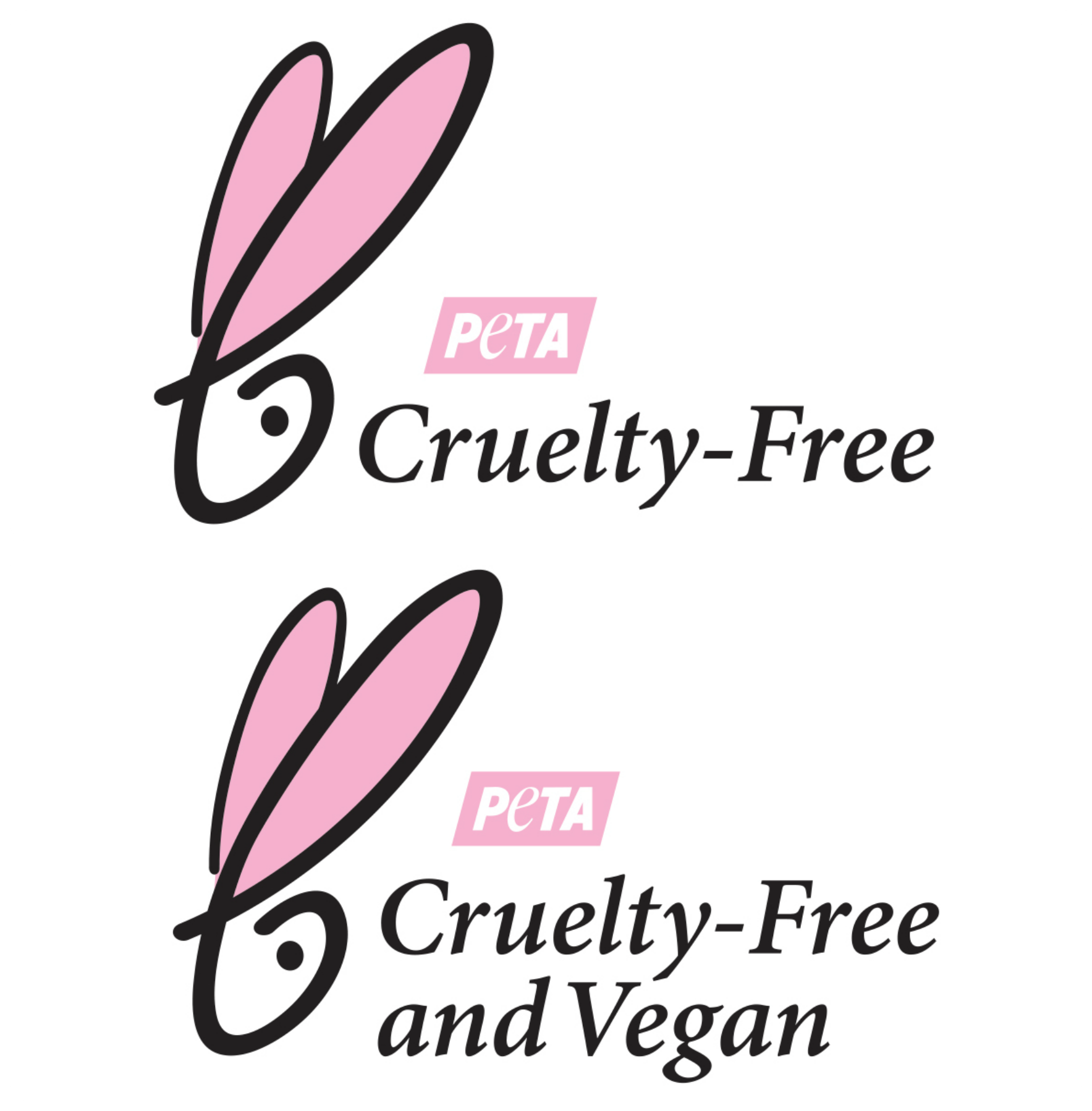

no animal testing, might not be vegan
While vegans broadly abstain from animal products, there are many ways in which animal products are used, and different individuals and organizations that identify with the practice of veganism may use some limited animal products based on philosophy, means or other concerns. Philosopher Gary Steiner argues that it is not possible to be entirely vegan, because animal use and products are "deeply and imperceptibly woven into the fabric of human society".[122]
Animal Ingredients A to Z (2004) and Veganissimo A to Z (2013) list which ingredients might be animal-derived. The British Vegan Society's sunflower logo and PETA's bunny logo mean the product is certified vegan, which includes no animal testing. The Leaping Bunny logo signals no animal testing, but it might not be vegan.[123][124] The Vegan Society criteria for vegan certification are that the product contain no animal products, and that neither the finished item nor its ingredients have been tested on animals by, or on behalf of, the manufacturer or by anyone over whom the manufacturer has control. Its website contains a list of certified products,[125][126] as does Australia's Choose Cruelty Free (CCF).[127] The British Vegan Society will certify a product only if it is free of animal involvement as far as possible and practical, including animal testing,[125][128][129] but "recognises that it is not always possible to make a choice that avoids the use of animals",[130] an issue that was highlighted in 2016 when it became known that the UK's newly introduced £5 note contained tallow.[131][132]
Meat, eggs and dairy

Like vegetarians, vegans do not eat meat (including beef, pork, poultry, fowl, game, animal seafood). The main difference between a vegan and vegetarian diet is that vegans exclude dairy products and eggs. Ethical vegans avoid them on the premise that their production causes animal suffering and premature death.
In egg production, most male chicks are culled because they do not lay eggs.[133] Egg laying hens also suffer from keel bone fractures due to being bred to produce disproportionately large eggs, with the largest study of its kind showing that 85% of Danish egg laying hens suffer from keel bone fractures.[134]
To obtain milk from dairy cattle, cows are made pregnant to induce lactation; they are kept lactating for three to seven years, then slaughtered. Female calves can be separated from their mothers within 24 hours of birth, and fed milk replacer to retain the cow's milk for human consumption. Most male calves are slaughtered at birth, sent for veal production, or reared for beef.[135][136]
Clothing
Many clothing products may be made of animal products such as silk, wool (including lambswool, shearling, cashmere, angora, mohair, and a number of other fine wools), fur, feathers, pearls, animal-derived dyes, leather, snakeskin, or other kinds of skin or animal product. While dietary vegans might use animal products in clothing, toiletries, and similar, ethical veganism extends not only to matters of food but also to the wearing or use of animal products, and rejects the commodification of animals altogether.[137]: 62 Most leather clothing is made from cow skins. Some vegans regard the purchase of leather, particularly from cows, as financial support for the meat industry.[138]: 115 Vegans may wear clothing items and accessories made of non-animal-derived materials such as hemp, linen, cotton, canvas, polyester, artificial leather (pleather), rubber, and vinyl.[138]: 16 Leather alternatives can come from materials such as cork, piña (from pineapples), cactus, and mushroom leather.[139][140][141] Some vegan clothes, in particular leather alternatives, are made of petroleum-based products, which has triggered criticism because of the environmental damage involved in their production.[142]
Toiletries

Vegans replace personal care products and household cleaners containing animal products with products that are vegan. Animal ingredients are ubiquitous because they are relatively inexpensive. After animals are slaughtered for meat, the leftovers are put through a rendering process and some of that material, particularly the fat, is used in toiletries.
Common animal-derived ingredients include: tallow in soap; collagen-derived glycerine, which used as a lubricant and humectant in many haircare products, moisturizers, shaving foams, soaps and toothpastes;[143] lanolin from sheep's wool is often found in lip balm and moisturizers; stearic acid is a common ingredient in face creams, shaving foam and shampoos, (as with glycerine, it can be plant-based, but is usually animal-derived); Lactic acid, an alpha-hydroxy acid derived from animal milk, is used in moisturizers; allantoin— from the comfrey plant or cows' urine —is found in shampoos, moisturizers and toothpaste;[143] and carmine from scale insects, such as the female cochineal, is used in food and cosmetics to produce red and pink shades;[144][145]
Beauty Without Cruelty, founded as a charity in 1959, was one of the earliest manufacturers and certifiers of animal-free personal care products.[146]
Insect products
Vegan groups disagree about insect products.[147] Neither the Vegan Society nor the American Vegan Society considers honey, silk, and other insect products as suitable for vegans.[129][148] Some vegans believe that exploiting the labor of bees and harvesting their energy source is immoral, and that commercial beekeeping operations can harm and even kill bees.[149] Insect products can be defined much more widely, as commercial bees are used to pollinate about 100 different food crops.[147]
Pet food
 | This section's factual accuracy is disputed. (August 2020) (Learn how and when to remove this template message) |
 | This section may contain an excessive number of citations. (August 2020) (Learn how and when to remove this template message) |
Due to the environmental impact of meat-based pet food[150][151] and the ethical problems it poses for vegans,[158] some vegans extend their philosophy to include the diets of pets.[162] This is particularly true for domesticated cats[163] and dogs,[164] for which vegan pet food is both available and nutritionally complete,[151][159][160] such as Vegepet. This practice has been met with caution and criticism,[159][165] especially regarding vegan cat diets because felids are obligate carnivores.[157][159][165] Nutritionally complete vegan pet diets are comparable to meat-based ones for cats and dogs.[166] A 2015 study found that 6 out of 24 commercial vegan pet food brands do not meet the Association of American Feed Control Officials (AAFCO) labeling regulations for amino acid adequacy.[167]
Other products and farming practices
A concern is the case of medications, which are routinely tested on animals to ensure they are effective and safe,[168] and may also contain animal ingredients, such as lactose, gelatine, or stearates.[130] There may be no alternatives to prescribed medication or these alternatives may be unsuitable, less effective, or have more adverse side effects.[130] Experimentation with laboratory animals is also used for evaluating the safety of vaccines, food additives, cosmetics, household products, workplace chemicals, and many other substances.[169] Vegans may avoid certain vaccines, such as the flu vaccine, which is commonly produced in chicken eggs.[170] An effective alternative, Flublok, is widely available in the United States.[170]
Farming of fruits and vegetables may include fertilizing the soil with animal manure – even on organic farms,[171] possibly causing a concern to vegans for ethical or environmental reasons.[172] "Vegan" (or "animal-free") farming uses plant compost only.[172]
Vegan diets, substitutions, and meat analogues
Vegan diets are based on grains and other seeds, legumes (particularly beans), fruits, vegetables, edible mushrooms, and nuts.[173]

Meat substitutes
Vegan meat alternatives are commonly sold in the form of vegetarian sausage, mince, and veggie burgers.[174] They are often made from soybeans, seitan (wheat gluten), beans, lentils, rice, mushrooms or vegetables.[175] Meat substitutes have been made in China since at least the Tang dynasty (618 to 907 common era), including mock duck made from seitan. They are much newer to Western countries.[176] Some famous Western producers of vegan meat alternatives include Impossible Foods and Beyond Meat. However, in the late 2010s many meat producers and supermarkets also started making their own brands of vegan meat substitutes.[177]
Plant milk and dairy product alternatives
Plant milks—such as soy milk, almond milk, cashew milk, grain milks (oat milk, flax milk and rice milk), hemp milk, and coconut milk—are used in place of cows' or goats' milk.[lower-alpha 12] Soy milk provides around 7 g (1⁄4oz) of protein per cup (240 mL or 8 fl oz), compared with 8 g (2/7oz) of protein per cup of cow's milk. Almond milk is lower in dietary energy, carbohydrates, and protein.[179] Soy milk should not be used as a replacement for breast milk for babies. Babies who are not breastfed may be fed commercial infant formula, normally based on cows' milk or soy. The latter is known as soy-based infant formula or SBIF.[180][181]
Butter and margarine can be replaced with alternate vegan products.[182] Vegan cheeses are made from seeds, such as sesame and sunflower; nuts, such as cashew,[183] pine nut, and almond;[184] and soybeans, coconut oil, nutritional yeast, tapioca,[185] and rice, among other ingredients; and can replicate the meltability of dairy cheese.[186] Nutritional yeast is a common substitute for the taste of cheese in vegan recipes.[182] Cheese substitutes can be made at home, including from nuts, such as cashews.[183] Yoghurt and cream products can be replaced with plant-based products such as soy yoghurt.[187][188]
Various types of plant cream have been created to replace dairy cream, and some types of imitation whipped cream are non-dairy.
In the 2010s and 2020s, a number of companies have genetically engineered yeast to produce cow milk proteins, whey, or fat, without the use of cows. These include Perfect Day, Novacca, Motif FoodWorks, Remilk, Final Foods, Imagindairy, Nourish Ingredients, and Circe.[189]
| Nutritional content of cows', soy, and almond milk | |||
|---|---|---|---|
| Cows' milk (whole, vitamin D added)[190] |
Soy milk (unsweetened; fortified)[191] |
Silk almond milk (unsweetened original; fortified)[192] | |
| Dietary energy per 240 mL cup | 620 kJ (149 kcal) | 330 kJ (80 kcal) | 120 kJ (29 kcal) |
| Protein (g) | 7.69 | 6.95 | 1 |
| Fat (g) | 7.93 | 3.91 | 2.5 |
| Saturated fat (g) | 4.55 | 0.5 | 0 |
| Carbohydrate (g) | 11.71 | 4.23 | 1 |
| Fibre (g) | 0 | 1.2 | 1 |
| Sugars (g) | 12.32 | 1 | 0 |
| Calcium (mg) | 276 | 301 | 451 |
| Potassium (mg) | 322 | 292 | 36 |
| Sodium (mg) | 105 | 90 | 170 |
| Vitamin B12 (µg) | 1.10 | 2.70 | 3 |
| Vitamin A (IU) | 395 | 503 | 499 |
| Vitamin D (IU) | 124 | 119 | 101 |
| Cholesterol (mg) | 24 | 0 | 0 |
Egg replacements
As of 2019 in the United States, there were numerous vegan egg substitutes available, including products used for "scrambled" eggs, cakes, cookies, and doughnuts.[193][194] Baking powder, silken (soft) tofu, mashed potato, bananas, flaxseeds, and aquafaba from chickpeas can also be used as egg substitutes. Which one of these works depends on the egg property the replacement is meant to emulate. Scrambled tofu for instance replaces scrambled eggs, but tofu does not act as a binding agent for cakes like raw eggs, flaxseeds or bananas do.[182][194][195][196]
Raw veganism
Raw veganism, combining veganism and raw foodism, excludes all animal products and food cooked above 48 °C (118 °F). A raw vegan diet includes vegetables, fruits, nuts, grain and legume sprouts, seeds, and sea vegetables. There are many variations of the diet, including fruitarianism.[197]
Research and guidance
.jpg)
A 2022 review indicated that a vegan diet may be effective for reducing body weight, lowering the risk of cancer, and providing a lower risk of all-cause mortality. People on a vegan diet with diabetes or cardiovascular diseases may have lower levels of disease biomarkers.[198]
A 2022 meta-analysis found moderate evidence that adhering to a vegan diet for at least 12 weeks may be effective in individuals with overweight or type 2 diabetes to induce a meaningful decrease in body weight and improve glycemia.[199]
A 2021 Cochrane review of randomized controlled trials found that there is "currently insufficient information to draw conclusions about the effects of vegan dietary interventions on cardiovascular disease risk factors".[200] A 2018 meta-analysis of observational studies concluded that "In most countries, a vegan diet is associated with a more favourable cardio-metabolic profile compared to an omnivorous diet".[201] A 2022 meta-analysis of prospective cohort studies concluded that vegan diets are associated with reduced risk of Ischemic Heart Disease, but no clear association was found for cardiovascular disease and stroke.[202]
A 2020 review of inflammation biomarkers found that a vegan diet was associated with lower levels of C-reactive protein compared to omnivores.[203] There is inconsistent evidence for vegan diets providing an effect on metabolic syndrome.[204] There is tentative evidence of an association between vegan diets and a reduced risk of cancer.[205] A vegan diet without caloric restriction may reduce high blood pressure similarly to diets recommended by medical societies and portion-controlled diets.[206][207] Vegans may be at risk of low bone mineral density.[208][209]
Positions of dietetic and government associations

The Academy of Nutrition and Dietetics and Dietitians of Canada state that properly planned vegetarian or vegan diets are appropriate for all life stages, including pregnancy and lactation.[210] The Australian National Health and Medical Research Council similarly recognizes a well-planned vegan diet as viable for any age,[211] as does the British Dietetic Association,[212] British National Health Service[213] and the Canadian Pediatric Society.[214]
The German Society for Nutrition (de) does not recommend a vegan diet for babies, children and adolescents, or for pregnancy or breastfeeding.[215]
Pregnancy, infants and children
The Academy of Nutrition and Dietetics and Dietitians of Canada consider well-planned vegetarian and vegan diets "appropriate for individuals during all stages of the lifecycle, including pregnancy, lactation, infancy, childhood, and adolescence, and for athletes".[216] The German Society for Nutrition cautioned against a vegan diet for pregnant women, breastfeeding women, babies, children, and adolescents.[217] The position of the Canadian Pediatric Society is that "well-planned vegetarian and vegan diets with appropriate attention to specific nutrient components can provide a healthy alternative lifestyle at all stages of fetal, infant, child and adolescent growth. It is recommended that attention should be given to nutrient intake, particularly protein, vitamins B12 and D, essential fatty acids, iron, zinc, and calcium.[214]
Nutrients and potential deficiencies

Vegan diets tend to be high in dietary fiber, folate, vitamins C and E, potassium, magnesium, and unsaturated fats.[208] However, consuming no animal products increases the risk of deficiencies of vitamins B12 and D, calcium, iron, and omega-3 fatty acids.[208][218]
The American Academy of Nutrition and Dietetics states that special attention may be necessary to ensure that a vegan diet will provide adequate amounts of vitamin B12, omega-3 fatty acids, vitamin D, calcium, iodine, iron, and zinc. It also states that concern that vegans and vegan athletes may not consume an adequate amount and quality of protein is unsubstantiated.[219]
These nutrients are available in plant foods, with the exception of vitamin B12, which can be obtained only from B12-fortified vegan foods or supplements. Iodine may also require supplementation, such as using iodized salt.[219] Vitamin B12 deficiency occurs in up to 80% of vegans that do not supplement with vitamin B12.[220]
Philosophy
Ethical veganism

Ethical veganism is based on opposition to speciesism, the assignment of value to individuals based on (animal) species membership alone. Divisions within animal rights theory include the utilitarian, protectionist approach, which pursues improved conditions for animals. It also pertains to the rights-based abolitionism, which seeks to end human ownership of non-humans, including as pets. Abolitionists argue that protectionism serves only to make the public feel that animal use can be morally unproblematic (the "happy meat" position).[137]: 62–63
Donald Watson, co-founder of The Vegan Society, stated in response to a question on why he was an ethical vegan, "If an open-minded, honest person pursues a course long enough, and listens to all the criticisms, and in one's own mind can satisfactorily meet all the criticisms against that idea, sooner or later one's resistance against what one sees as evil tradition has to be discarded."[221] On bloodsports, he has said that "to kill creatures for fun must be the very dregs," and that vivisection and animal experimentation "is probably the cruelest of all Man's attack on the rest of Creation." He has also stated that "vegetarianism, whilst being a necessary stepping-stone, between meat eating and veganism, is only a stepping stone."[221]
Alex Hershaft, co-founder of the Farm Animal Rights Movement and Holocaust survivor, states he "was always bothered by the idea of hitting a beautiful, living, innocent animal over the head, cutting him up into pieces, then shoving the pieces into [his] mouth," and that his experiences in the Nazi Holocaust allowed him "to empathize with the conditions of animals in factory farms, auction yards, and slaughterhouses" because he "knows firsthand what it's like to be treated like a worthless object."[222] Several animal rights activists including Isaac Bashevis Singer, Gary Yourofsky and Karen Davis have compared the cruel treatment of animals in CAFOs and abattoirs to the Nazi Holocaust.[223][224][225]
Law professor Gary Francione, an abolitionist, argues that all sentient beings should have the right not to be treated as property, and that adopting veganism must be the baseline for anyone who believes that non-humans have intrinsic moral value.[lower-alpha 13][137]: 62 Philosopher Tom Regan, also a rights theorist, argues that animals possess value as "subjects-of-a-life", because they have beliefs, desires, memory and the ability to initiate action in pursuit of goals. The right of subjects-of-a-life not to be harmed can be overridden by other moral principles, but Regan argues that pleasure, convenience and the economic interests of farmers are not weighty enough.[227] Philosopher Peter Singer, a protectionist and utilitarian, argues that there is no moral or logical justification for failing to count animal suffering as a consequence when making decisions, and that killing animals should be rejected unless necessary for survival.[228] Despite this, he writes that "ethical thinking can be sensitive to circumstances", and that he is "not too concerned about trivial infractions".[229]
An argument proposed by Bruce Friedrich, also a protectionist, holds that strict adherence to veganism harms animals, because it focuses on personal purity, rather than encouraging people to give up whatever animal products they can.[230] For Francione, this is similar to arguing that, because human-rights abuses can never be eliminated, we should not defend human rights in situations we control. By failing to ask a server whether something contains animal products, we reinforce that the moral rights of animals are a matter of convenience, he argues. He concludes from this that the protectionist position fails on its own consequentialist terms.[137]: 72–73
Philosopher Val Plumwood maintained that ethical veganism is "subtly human-centred", an example of what she called "human/nature dualism" because it views humanity as separate from the rest of nature. Ethical vegans want to admit non-humans into the category that deserves special protection, rather than recognize the "ecological embeddedness" of all.[231] Plumwood wrote that animal food may be an "unnecessary evil" from the perspective of the consumer who "draws on the whole planet for nutritional needs"—and she strongly opposed factory farming—but for anyone relying on a much smaller ecosystem, it is very difficult or impossible to be vegan.[232]
Bioethicist Ben Mepham,[233] in his review of Francione and Garner's book The Animal Rights Debate: Abolition or Regulation?, concludes that "if the aim of ethics is to choose the right, or best, course of action in specific circumstances 'all things considered', it is arguable that adherence to such an absolutist agenda is simplistic and open to serious self-contradictions. Or, as Farlie puts it, with characteristic panache: 'to conclude that veganism is the "only ethical response" is to take a big leap into a very muddy pond'."[234] He cites as examples the adverse effects on animal wildlife derived from the agricultural practices necessary to sustain most vegan diets and the ethical contradiction of favoring the welfare of domesticated animals but not that of wild animals; the imbalance between the resources that are used to promote the welfare of animals as opposed to those destined to alleviate the suffering of the approximately one billion human beings who undergo malnutrition, abuse, and exploitation; the focus on attitudes and conditions in western developed countries, leaving out the rights and interests of societies whose economy, culture and, in some cases, survival rely on a symbiotic relationship with animals.[234]
David Pearce, a transhumanist philosopher, has argued that humanity has a "hedonistic imperative" to not merely avoid cruelty to animals or abolish the ownership of non-human animals, but also to redesign the global ecosystem such that wild animal suffering ceases to exist.[235] In the pursuit of abolishing suffering itself, Pearce promotes predation elimination among animals and the "cross-species global analogue of the welfare state". Fertility regulation could maintain herbivore populations at sustainable levels, "a more civilised and compassionate policy option than famine, predation, and disease".[236] The increasing number of vegans and vegetarians in the transhumanism movement has been attributed in part to Pearce's influence.[237]
A growing political philosophy that incorporates veganism as part of its revolutionary praxis is veganarchism, which seeks "total abolition" or "total liberation" for all animals, including humans. Veganarchists identify the state as unnecessary and harmful to animals, both human and non-human, and advocate for the adoption of a vegan lifestyle within a stateless society. The term was popularized in 1995 with Brian A. Dominick's pamphlet Animal Liberation and Social Revolution, described as "a vegan perspective on anarchism or an anarchist perspective on veganism".[238]
Direct action is a common practice among veganarchists (and anarchists generally) with groups like the Animal Liberation Front (ALF), the Animal Rights Militia (ARM), the Justice Department (JD) and Revolutionary Cells – Animal Liberation Brigade (RCALB) often engaging in such activities, sometimes criminally, to further their goals.[239] Steven Best, animal rights activist and professor of philosophy at the University of Texas at El Paso, is an advocate of this approach, and has been critical of vegan activists like Francione for supporting animal liberation, but not total liberation, which would include not only opposition to "the property status of animals", but also "a serious critique of capitalism, the state, property relations, and commodification dynamics in general." In particular, he criticizes the focus on the simplistic and apolitical "Go Vegan" message directed mainly at wealthy Western audiences, while ignoring people of color, the working class and the poor, especially in the developing world, noting that "for every person who becomes vegan, a thousand flesh eaters arise in China, India and Indonesia." The "faith in the singular efficacy of conjectural education and moral persuasion," Best writes, is no substitute for "direct action, mass confrontation, civil disobedience, alliance politics, and struggle for radical change."[240] Donald Watson has stated that he "respects the people enormously who do it, believing that it's the most direct and quick way to achieve their ends."[221] Sociologist David Nibert of Wittenberg University posits that any movement towards global justice would necessitate not only the abolition of animal exploitation, particularly as a food source for humans, but also transitioning towards a socioeconomic alternative to the capitalist system, both of which dovetail into what he refers to as the animal–industrial complex.[241]
Some vegans also embrace the philosophy of anti-natalism, as they see the two as complementary in terms of "harm reduction" to animals and the environment.[242]
Vegan social psychologist Melanie Joy described the ideology in which people support the use and consumption of animal products as carnism,[243] as a sort of opposite to veganism.[244]
Exploitation concerns
The Vegan Society has written, "by extension, [veganism] promotes the development and use of animal-free alternatives for the benefit of humans."[245] Many ethical vegans and vegan organizations cite the poor working conditions of slaughterhouse workers as a reason to reject animal products.[246] The first vegan activist, Donald Watson, has stated, "If these butchers and vivisectors weren't there, could we perform the acts that they are doing? And, if we couldn't, we have no right to expect them to do it on our behalf. Full stop! That simply compounds the issue. It means that we're not just exploiting animals; we're exploiting human beings."[221]
Environmental veganism

Environmental vegans focus on conservation, rejecting the use of animal products on the premise that fishing, hunting, trapping and farming, particularly factory farming, are environmentally unsustainable.
According to a 2006 United Nations Food and Agriculture Organization report, Livestock's Long Shadow, around 26% of the planet's terrestrial surface is devoted to livestock grazing.[248] The UN report also concluded that livestock farming (mostly of cows, chickens and pigs) affects the air, land, soil, water, biodiversity and climate change.[249] Livestock consumed 1,174 million tonnes of food in 2002—including 7.6 million tonnes of fishmeal and 670 million tonnes of cereals, one-third of the global cereal harvest.[250] Paul Watson of the Sea Shepherd Conservation Society called pigs and chicken "major aquatic predators", because livestock eat 40 percent of the fish that are caught.[251]
A 2010 UN report, Assessing the Environmental Impacts of Consumption and Production, argued that animal products "in general require more resources and cause higher emissions than plant-based alternatives".[252]: 80 It proposed a move away from animal products to reduce environmental damage.[lower-alpha 14][253]

A 2015 study determined that significant biodiversity loss can be attributed to the growing demand for meat, which is a significant driver of deforestation and habitat destruction, with species-rich habitats being converted to agriculture for livestock production.[255][256][257] A 2017 study by the World Wildlife Fund found that 60% of biodiversity loss can be attributed to the vast scale of feed crop cultivation needed to rear tens of billions of farm animals, which puts an enormous strain on natural resources resulting in an extensive loss of lands and species.[258] In November 2017, 15,364 world scientists signed a warning to humanity calling for, among other things, "promoting dietary shifts towards mostly plant-based foods".[259]
A 2018 study found that global adoption of plant-based diets would reduce agricultural land use by 76% (3.1 billion hectares, an area the size of Africa) and cut total global greenhouse gas emissions by 28%. Half of this emissions reduction came from avoided emissions from animal production including methane and nitrous oxide, and half came from trees re-growing on abandoned farmland which remove carbon dioxide from the air.[260][247] The authors conclude that avoiding meat and diary is the "single biggest way" to reduce one's impact on Earth.[261]
The 2019 IPBES Global Assessment Report on Biodiversity and Ecosystem Services found that industrial agriculture and overfishing are the primary drivers of the extinction crisis, with the meat and dairy industries having a substantial impact.[262][263] On 8 August 2019, the IPCC released a summary of the 2019 special report which asserted that a shift towards plant-based diets would help to mitigate and adapt to climate change.[264]
A 2022 study found that for high-income nations alone 100 billion tons of carbon dioxide could be removed from the air by the end of the century through a shift to plant-based diets and re-wilding of farmland. The researchers coined the term double climate dividend to describe the effect that re-wilding after a diet shift can have.[265][266] However, the researchers note that "We don't have to be purist about this, even just cutting animal intake would be helpful. If half of the public in richer regions cut half the animal products in their diets, you're still talking about a massive opportunity in environmental outcomes and public health".[267]
Feminist veganism
Pioneers
One of the leading activists and scholars of feminist animal rights is Carol J. Adams. Her premier work, The Sexual Politics of Meat: A Feminist-Vegetarian Critical Theory (1990), noted the relationship between feminism and meat consumption. Since the release of The Sexual Politics of Meat, Adams has published several other works, including essays, books, and keynote addresses. In one of her speeches, "Why feminist-vegan now?"[268]—adapted from her original address at the "Minding Animals" conference in Newcastle, Australia (2009)—Adams stated that "the idea that there was a connection between feminism and vegetarianism came to [her] in October 1974", illustrating that the concept of feminist veganism has been around for nearly half a century. Other authors have echoed Adams' ideas while also expanding on them. Feminist scholar Angella Duvnjak stated in "Joining the Dots: Some Reflections on Feminist-Vegan Political Practice and Choice" that she was met with opposition when she pointed out the connection between feminist and vegan ideals, even though the connection seemed more than obvious to her and other scholars (2011).[269]
Animal and human abuse parallels
One of the central concepts that animates feminist veganism is the idea that there is a connection between the oppression of women and the oppression of animals. For example, Marjorie Spiegal compared the consumption or servitude of animals for human gain to slavery.[269] This connection is further mirrored by feminist vegan writers like Carrie Hamilton, who pointed out that violent "rapists sometimes exhibit behavior that seems to be patterned on the mutilation of animals" suggesting there is a parallel between the violence of rape and animal cruelty.[270]
Capitalism and feminist veganism
Feminist veganism also relates to feminist thought through the common critique of the capitalist means of production. In an interview with Carol J. Adams, she highlighted "meat eating as the ultimate capitalist product, because it takes so much to make the product, it uses up so many resources".[271] This extensive use of resources for meat production is discouraged in favor of using that productive capacity for other food products that have a less detrimental impact on the environment.
Religious veganism
Donald Watson argued, "If Jesus were alive today, he'd be an itinerant vegan propagandist instead of an itinerant preacher of those days, spreading the message of compassion, which, as I see it, is the only useful part of what religion has to offer and, sad as it seems, I doubt if we have to enroll our priest as a member of the Vegan Society."[221]
Black veganism
In the US, Black veganism is a social and political philosophy as well as a diet.[272] It connects the use of non-human animals with other social justice concerns such as racism, and with the lasting effects of slavery, such as the subsistence diets of enslaved people enduring as familial and cultural food traditions.[272][273][274][275] Dietary changes caused by the Great Migration also meant former farmers, who had previously been able to grow or forage their own vegetables, became reliant on processed foods.[276][275]
According to AshEL Eldridge, an Oakland activist, the movement is about the Black community reclaiming its food sovereignty and "decolonizing" the diet of Black Americans.[277] According to Shah, the area where most vegans of color feel the greatest rift with mainstream veganism is in mainstream veganism's failure to recognize the intersectionality with other social justice issues such as food access.[276]
PETA columnist Zachary Tolivar noted he had often heard Black veganism called "a revolutionary act" because it often involves rejecting both family tradition and systemic oppression.[276][273] Amirah Mercer described it as "revoking my own Black card" and said that for US Blacks, choosing veganism was an act of protest against disenfranchisement by governmental health care and food policy.[275]
Politics and activism

In 2021, vegan climate activist Greta Thunberg called for more vegan food production and consumption worldwide.[278] Parties like Tierschutzpartei in Germany and PACMA in Spain have pro-vegan agendas. They cooperate via Animal Politics EU.[279] In the European Union, meat producers and vegans argue whether vegan food products should be allowed to use labels like "sausages" or "burgers" for vegan food.[280] The EU currently bans labeling with dairy-related words like "almond milk", a rule instated in 2017.[281] As of 2019[update], six countries in Europe apply higher value-added tax (VAT) rates to vegan plant milk than to cows' milk, which pro-vegan activists have called discrimination.[282]
Demographics
In the United States, vegans (making up 2% of the population) tend to be middle-class, white, female-identified, educated, agnostic or atheist, and urban-dwelling.[283]
In the below chart, polls with larger sample sizes are preferred over those with smaller sample size.
| Subgroup | Sample size | Ref | ||||||
|---|---|---|---|---|---|---|---|---|
| Gender | Male | Female | Over 8000 | [284][285] | ||||
| 21% | 79% | |||||||
| Religion (general) | Atheist or Agnostic | Spiritual but not religious | Major religion | Over 8000 | [284] | |||
| 43% | 45% | 11% | ||||||
| Religion (specific) | Christianity | Judaism | Other religion | 287, American | [283] | |||
| 8% | 7% | 12% | ||||||
| Political orientation | Liberal | Apolitical | Conservative | Over 8000 | [284] | |||
| 62% | 33% | 5% | ||||||
| Motivation | Animal rights | Other | Over 8000 | [284] | ||||
| 69% | 31% | |||||||
| Parenting | Don't want or have children | Might have children | Is raising vegan children | Over 8000 | [284] | |||
| 39% | 33% | 10% | ||||||
| Age | 18 to 25 | 24 to 35 | 35 to 44 | 45 to 54 | 287, American | [283] | ||
| 22% | 35% | 21% | 14% | |||||
| How long vegan | Five years or more | One to five years | Less than one year | 287, American | [283] | |||
| 49% | 42% | 8% | ||||||
| Sexual orientation | Heterosexual | Bisexual | Homosexual | Queer/other | 287, American | [283] | ||
| 65% | 13% | 7% | 15% | |||||
| Race (United States) | White | Hispanic | Black | Asian | Native American | Mixed | 287, American | [283] |
| 79% | 5% | 2.5% | 6% | 1% | 5% | |||
| Area type | Urban | Suburban | Rural | 287, American | [283] | |||
| 52% | 40% | 8% | ||||||
| Income | Under $35,000 | $35,000 to $55,000 | $56,000 to $75,000 | $76,000 to $100,000 | over $100,000 | 287, American | [283] | |
| 29% | 18% | 13% | 14% | 25% |
Prejudice against vegans
Vegan rights
In some countries, vegans have some rights to meals and legal protections against discrimination.
- The German police sometimes provides on-duty staff with food. After not being provided a vegan option in this context, a vegan employee has been granted an additional food allowance.[286]
- In Portugal, starting in 2017, public administration canteens and cafeterias such as schools, prisons and social services must offer at least one vegan option at every meal.[287]
- In Ontario, a province of Canada , there were reports[288] that ethical veganism became protected under the Ontario Human Rights Code, following a 2015 update to legal guidance by the Ontario Human Rights Commission. However, said body later issued a statement that this question is for a judge or tribunal to decide on a case-by-case basis.[289]
- In the United Kingdom , an employment tribunal ruled in 2020 that the Equality Act 2010 protects "ethical veganism", a belief it defined as veganism that extends beyond diet to all areas of life and is motivated by a concern for animals.[290][291]
Symbols
.jpg)
Multiple symbols have been developed to represent veganism. Several are used on consumer packaging, including the Vegan Society trademark[125] and the Vegan Action logo,[123] to indicate products without animal-derived ingredients.[292][293] Various symbols may also be used by members of the vegan community to represent their identity and in the course of animal rights activism,[citation needed] such as a vegan flag.[294]
Economics of veganism
The 2014 documentary film Cowspiracy estimates that a vegan, over the course of one year, will save 1.5 million litres of water, 6,607 kg of grain, 1,022 square metres of forest cover, 3,322 kg of CO
2, and 365 animal lives compared to the average U.S. diet.[295][scholarly source needed] According to a 2016 study, if everyone in the U.S. switched to a vegan diet, the country would save $208.2 billion in direct health-care savings, $40.5 billion in indirect health-care savings, $40.5 billion in environmental savings, and $289.1 billion in total savings by 2050. The study also found that if everybody in the world switched to a vegan diet, the global economy would save $684.4 billion in direct health-care savings, $382.6 billion in indirect health-care savings, $569.5 billion in environmental savings, and $1.63 trillion in total savings by 2050.[296]
In his 2015 book Doing Good Better, William MacAskill stated the following (citing numbers from a 2011 book, Compassion by the pound[297]):
Economists have worked out how, on average, a consumer affects the number of animal products supplied by declining to buy that product. They estimate that, on average, if you give up one egg, total production ultimately falls by 0.91 eggs; if you give up one gallon of milk, total production falls by 0.56 gallons. Other products are somewhere in between: economists estimate that if you give up one pound of beef, beef production falls by 0.68 pounds; if you give up one pound of pork, production ultimately falls by 0.74 pounds; if you give up one pound of chicken, production ultimately falls by 0.76 pounds.[298]
See also
- Buddhist cuisine
- List of diets
- List of vegan media
- Raw veganism
- Vegan nutrition
- Vegan school meal
Notes
- ↑ Other common but less frequent pronunciations recorded by the Merriam-Webster Online Dictionary and the Random House Dictionary are /ˈveɪɡən/ VAY-gən and /ˈvɛdʒən/ VEJ-ən.[1][2] The word was coined in Britain by Dorothy Morgan and Donald Watson,[3][4] who preferred the pronunciation /ˈviːɡən/ VEE-gən, and the 1997 edition of the Random House Dictionary reported that this pronunciation was considered "especially British" and that /ˈvɛdʒən/ VEJ-ən was the most frequent and only other common American pronunciation.[5]
- ↑ 2.0 2.1 "[Al-Maʿarri's] diet was extremely frugal, consisting chiefly of lentils, with figs for sweet; and, very unusually for a Muslim, he was not only a vegetarian, but a vegan who abstained from meat, fish, dairy products, eggs, and honey, because he did not want to kill or hurt animals, or deprive them of their food."[2]
- ↑ For veganism and animals as commodities:
Helena Pedersen, Vasile Staescu (The Rise of Critical Animal Studies, 2014): "[W]e are vegan because we are ethically opposed to the notion that life (human or otherwise) can, or should, ever be rendered as a buyable or sellable commodity."[12]
Gary Steiner (Animals and the Limits of Postmodernism, 2013): " ... ethical veganism, the principle that we ought as far as possible to eschew the use of animals as sources of food, labour, entertainment and the like ... [This means that animals] ... are entitled not to be eaten, used as forced field labor, experimented upon, killed for materials to make clothing and other commodities of use to human beings, or held captive as entertainment."[13]
Gary Francione ("Animal Welfare, Happy Meat and Veganism as the Moral Baseline", 2012): "Ethical veganism is the personal rejection of the commodity status of nonhuman animals ..."[14]
- ↑ Laura Wright (The Vegan Studies Project, 2015): "[The Vegan Society] definition simplifies the concept of veganism in that it assumes that all vegans choose to be vegan for ethical reasons, which may be the case for the majority, but there are other reasons, including health and religious mandates, people choose to be vegan. Veganism exists as a dietary and lifestyle choice with regard to what one consumes, but making this choice also constitutes participation in the identity category of 'vegan'."[15]
Brenda Davis, Vesanto Melina (Becoming Vegan, 2013): "There are degrees of veganism. A pure vegetarian or dietary vegan is someone who consumes a vegan diet but doesn't lead a vegan lifestyle. Pure vegetarians may use animal products, support the use of animals in research, wear leather clothing, or have no objection to the exploitation of animals for entertainment. They are mostly motivated by personal health concerns rather than by ethical objections. Some may adopt a more vegan lifestyle as they are exposed to vegan philosophy."[16]
Laura H. Kahn, Michael S. Bruner ("Politics on Your Plate", 2012): "A vegetarian is a person who abstains from eating NHA [non-human animal] flesh of any kind. A vegan goes further, abstaining from eating anything made from NHA. Thus, a vegan does not consume eggs and dairy foods. Going beyond dietary veganism, 'lifestyle' vegans also refrain from using leather, wool or any NHA-derived ingredient."[17]
Vegetarian and vegan diets may be referred to as plant-based and vegan diets as entirely plant-based.[18]
- ↑ Gary Francione (The Animal Rights Debate, 2010): "Although veganism may represent a matter of diet or lifestyle for some, ethical veganism is a profound moral and political commitment to abolition on the individual level and extends not only to matters of food but also to the wearing or using of animal products."[19]: 62 This terminology is controversial within the vegan community. While some vegan leaders, such as Karen Dawn, endorse efforts to avoid animal consumption for any reason; others, including Francione, believe that veganism must be part of an holistic ethical and political movement in order to support animal liberation. Accordingly, the latter group rejects the label "dietary vegan", referring instead to "strict vegetarians", "pure vegetarians", or followers of a plant-based diet.[20]
- ↑ Academy of Nutrition and Dietetics (2009): "It is the position of the American Dietetic Association that appropriately planned vegetarian diets, including total vegetarian or vegan diets, are healthful, nutritionally adequate, and may provide health benefits in the prevention and treatment of certain diseases. Well-planned vegetarian diets are appropriate for individuals during all stages of the life cycle, including pregnancy, lactation, infancy, childhood, and adolescence, and for athletes."[23]
- ↑ The Deutsche Gesellschaft für Ernährung, 2016: "The DGE does not recommend a vegan diet for pregnant women, lactating women, infants, children or adolescents."[29]
- ↑ Winston J. Craig (The American Journal of Clinical Nutrition, 2009): "Vegan diets are usually higher in dietary fiber, magnesium, folic acid, vitamins C and E, iron, and phytochemicals, and they tend to be lower in calories, saturated fat and cholesterol, long-chain n–3 (omega-3) fatty acids, vitamin D, calcium, zinc, and vitamin B-12. ... A vegan diet appears to be useful for increasing the intake of protective nutrients and phytochemicals and for minimizing the intake of dietary factors implicated in several chronic diseases."[32]
- ↑ Fanny Kemble (Journal of a Residence on a Georgian Plantation in 1838–1839, 1839): "The sight and smell of raw meat are especially odious to me, and I have often thought that if I had had to be my own cook, I should inevitably become a vegetarian, probably, indeed, return entirely to my green and salad days."[43]
Another early use was by the editor of The Healthian, a journal published by Alcott House, in April 1942: "To tell a man, who is in the stocks for a given fault, that he cannot be so confined for such an offence, is ridiculous enough; but not more so than to tell a healthy vegetarian that his diet is very uncongenial with the wants of his nature, and contrary to reason."[44]
- ↑ In 1838 William Alcott, Amos's cousin, published Vegetable Diet: As Sanctioned by Medical Men and By Experience in All Ages (1838).[8] The word vegetarian appears in the second edition but not the first.
- ↑ Mahatma Gandhi, address to the Vegetarian Society, 20 November 1931: "I feel especially honoured to find on my right, Mr. Henry Salt. It was Mr. Salt's book 'A Plea for Vegetarianism', which showed me why apart from a hereditary habit, and apart from my adherence to a vow administered to me by my mother, it was right to be a vegetarian. He showed me why it was a moral duty incumbent on vegetarians not to live upon fellow-animals. It is, therefore, a matter of additional pleasure to me that I find Mr. Salt in our midst."[11]
- ↑ Plant-milk brands include Dean Foods' Silk soy milk and almond milk; Blue Diamond's Almond Breeze, Taste the Dream's Almond Dream, and Rice Dream; and Plamil Foods' Organic Soya and Alpro's Soya. Vegan ice-creams include Swedish Glace, Food Heaven, Tofutti, Turtle Mountain's So Delicious and Luna & Larry's Coconut Bliss.[178]
- ↑ Gary Francione (2009): "We all believe it's wrong to inflict unnecessary suffering and death on animals. ... So now the next question becomes 'what do we mean by necessity?' Well, whatever it means, whatever abstract meaning it has, if it has any meaning whatsoever, its minimal meaning has to be that it's wrong to inflict suffering and death on animals for reasons of pleasure, amusement or convenience ... Problem is 99.9999999 percent of our animal use can only be justified by reasons of pleasure, amusement or convenience."[226]
- ↑ United Nations Environment Programme (2010): "Impacts from agriculture are expected to increase substantially due to population growth, increasing consumption of animal products. Unlike fossil fuels, it is difficult to look for alternatives: people have to eat. A substantial reduction of impacts would only be possible with a substantial worldwide diet change, away from animal products."[252]: 82
References
- ↑ Cite error: Invalid
<ref>tag; no text was provided for refs namedDombrowski1984 - ↑ James Gregory, Of Victorians and Vegetarians, I. B. Tauris, 2007. 9781845113797
- ↑ 3.0 3.1 "International Health Exhibition", The Medical Times and Gazette, 24 May 1884, 712.
- ↑ James C. Whorton, Crusaders for Fitness: The History of American Health Reformers, Princeton: Princeton University Press, 2014, 69–70: "Word of these cures of pimples, consumption, and virtually all ailments in between was widely distributed by his several publications ..."
Percy Bysshe Shelley, A Vindication of Natural Diet, London: F. Pitman, 1884 [1813]; William Lambe, Joel Shew, Water and Vegetable Diet, New York: Fowler's and Wells, 1854 [London, 1815].
- ↑ Lambe 1854, 55, 94.
- ↑ Andrew F. Smith, Eating History, New York: Columbia University Press, 2013, 29–35 (33 for popularity); Whorton 2014, 38ff.
- ↑ Hart 1995, 14; Francis, Fruitlands: The Alcott Family and their Search for Utopia, 2010.
- ↑ William A. Alcott, Vegetable Diet: As Sanctioned by Medical Men and By Experience in All Ages, Boston: Marsh, Capen & Lyon, 1838; Vegetable Diet, New York: Fowlers and Wells, 1851.
- ↑ J. E. M. Latham, Search for a New Eden, Madison: Fairleigh Dickinson University Press, 1999, 168.
- ↑ Gregory 2007, 22.
- ↑ 11.0 11.1 Gandhi, Mahatma (20 November 1931). "The Moral Basis of Vegetarianism". EVU News (London, England) 1998 (1): 11–14. 1998. https://ivu.org/news/evu/other/gandhi2.html. Retrieved 9 March 2018.
- ↑ Axon, William E. A. (December 1893). "A Forerunner of the Vegetarian Society". Vegetarian Messenger (Manchester, England: Vegetarian Society): 453–55. https://ivu.org/history/societies/britfor.html. Retrieved 24 February 2018.
- ↑ Latham, Jackie (September 1999). "The political and the personal: the radicalism of Sophia Chichester and Georgiana Fletcher Welch". Women's History Review 8 (3): 469–487. doi:10.1080/09612029900200216. PMID 22619793.
- ↑ Grumett, David; Muers, Rachel (2010). Theology on the Menu: Asceticism, Meat and Christian Diet. Routledge. p. 64. ISBN 978-1-135-18832-0.
- ↑ "History of Vegetarianism: The Origin of Some Words", International Vegetarian Union, 6 April 2010.
- ↑ Stephens, Henry Salt (1886). "5: Sir Henry Thompson on "Diet."". A Plea for Vegetarianism and Other Essays. p. 57.
- ↑ 17.0 17.1 Smith, Andrew F. (2015). Savoring Gotham: A Food Lover's Companion to New York City. Oxford University Press. p. 617. ISBN 978-0-19-939702-0
- ↑ 18.0 18.1 18.2 Leneman, Leah (1999). "No Animal Food: The Road to Veganism in Britain, 1909-1944". Society & Animals 7 (3): 219–228. doi:10.1163/156853099X00095.
- ↑ 19.0 19.1 Donald Watson, "The Early History of the Vegan Movement", The Vegan, Autumn 1965, 5–7; Donald Watson, Vegan News, first issue, November 1944.
- ↑ Wolpert, Stanley (2002). Gandhi's Passion: The Life and Legacy of Mahatma Gandhi. Oxford University Press. pp. 21–22, 161. ISBN 978-0-19-515634-8.
- ↑ "11th IVU World Vegetarian Congress 1947", Stonehouse, Gloucestershire, International Vegetarian Union.
- ↑ 22.0 22.1 Watson, Donald (15 December 2002). "Interview with Donald Watson" (PDF) (Transcript). Interviewed by George D. Rodger. The Vegan Society. Archived (PDF) from the original on 13 March 2018. Retrieved 13 March 2018.
{{cite interview}}:|archive-date=/|archive-url=timestamp mismatch; 14 March 2018 suggested (help)Watson, Donald (11 August 2004). "24 Carrot Award: Donald Watson". Vegetarians in Paradise (e-Zine). Vol. 6, no. 10. Interviewed by George D. Rodger. Archived from the original on 14 March 2018. Retrieved 13 March 2018.I invited my early readers to suggest a more concise word to replace 'non-dairy vegetarian.' Some bizarre suggestions were made like 'dairyban, vitan, benevore, sanivore, beaumangeur', et cetera. I settled for my own word, 'vegan', containing the first three and last two letters of 'vegetarian'—'the beginning and end of vegetarian.' The word was accepted by the Oxford English Dictionary and no one has tried to improve it.
- ↑ "Ripened by human determination. 70 years of The Vegan Society". p. 3. https://www.vegansociety.com/sites/default/files/uploads/Ripened%20by%20human%20determination.pdf. "Watson and his wife Dorothy came up with the word 'vegan'"
- ↑ Cite error: Invalid
<ref>tag; no text was provided for refs namedDavis2016 - ↑ Watson, Donald (15 December 2002). "Interview with Donald Watson" (PDF) (Transcript). Interviewed by George D. Rodger. The Vegan Society. Archived (PDF) from the original on 13 March 2018. Retrieved 13 March 2018.
{{cite interview}}:|archive-date=/|archive-url=timestamp mismatch; 14 March 2018 suggested (help)Watson, Donald (11 August 2004). "24 Carrot Award: Donald Watson". Vegetarians in Paradise (e-Zine). Vol. 6, no. 10. Interviewed by George D. Rodger. Archived from the original on 14 March 2018. Retrieved 13 March 2018.I invited my early readers to suggest a more concise word to replace 'non-dairy vegetarian.' Some bizarre suggestions were made like 'dairyban, vitan, benevore, sanivore, beaumangeur', et cetera. I settled for my own word, 'vegan', containing the first three and last two letters of 'vegetarian'—'the beginning and end of vegetarian.' The word was accepted by the Oxford English Dictionary and no one has tried to improve it.
- ↑ Lowbridge, Caroline (30 December 2017). "Veganism: How a maligned movement went mainstream". BBC News. https://www.bbc.co.uk/news/uk-england-leicestershire-40722965.
- ↑ Donald Watson, Vegan News, February 1945, 2–3.
- ↑ 28.0 28.1 Richard Farhall, "The First Fifty Years: 1944–1994", iii (full names of members on following pages), published with The Vegan, 10(3), Autumn 1994, between pp. 12 and 13.
- ↑ "World Vegan Month". The Vegan Society. https://www.vegansociety.com/take-action/campaigns/world-vegan-month. "Every November we celebrate World Vegan Day and World Vegan Month, as well as the formation of The Vegan Society."
- ↑ "advertising framework for featured article, cites all of November as World Vegan Month. The Vegconomist. Accessed 11/1/2021.". 29 October 2021. https://vegconomist.com/fairs-and-events/sponsored-post-plant-based-alternatives-take-centre-stage-at-fffhi-returning-to-amsterdam-nov-23-24/.
- ↑ The Vegan, 1(5), November 1945; for 500, The Vegan, 10(3), Autumn 1994, iv.
- ↑ For an example of the vegan trade list, The Vegan, 2(2), Summer 1946, 6–7.
- ↑ "Vegan Recipes by Fay K. Henderson". https://www.happycow.net/blog/vegan-recipes/.
- ↑ HENDERSON, Fay Keeling (1946) (in English). Vegan Recipes, etc.. H.H. Greaves: London. OCLC 559462905. https://www.worldcat.org/title/vegan-recipes-etc/oclc/559462905.
- ↑ Joanne Stepaniak, The Vegan Sourcebook, McGraw Hill Professional, 2000, 5; The Vegan, Autumn 1949, 22.
- ↑ "Formats and Editions of Aids to a vegan diet for children. [WorldCat.org"] (in en). https://www.worldcat.org/title/aids-to-a-vegan-diet-for-children/oclc/14663134/editions?referer=di&editionsView=true.
- ↑ 37.0 37.1 Cole, Matthew (2014). "'The greatest cause on earth': The historical formation of veganism as an ethical practice". in Taylor, Nik; Twine, Richard. The Rise of Critical Animal Studies: From the Margins to the Centre. Routledge. pp. 203–224. ISBN 978-1-135-10087-2. https://books.google.com/books?id=vQNgAwAAQBAJ&pg=PA203.
- ↑ Cross, Leslie (1951). "Veganism Defined". The Vegetarian World Forum 5 (1): 6–7. https://www.ivu.org/history/world-forum/1951vegan.html.
- ↑ Ling, Arthur (Autumn 1986). "The Milk of Human Kindness". Vegan Views (Interview). Vol. 37, no. Autumn 1986. Interviewed by Harry Mather. Archived from the original on 14 March 2018. Retrieved 14 March 2018."Arthur Ling, Plamil". Plamil Foods. https://www.plamilfoods.co.uk/news/arthurling."The Plantmilk Society", The Vegan, X(3), Winter 1956, 14–16.
- ↑ Stepaniak 2000, 6–7; Linda Austin and Norm Hammond, Oceano, Arcadia Publishing, 2010, 39.
- ↑ 41.0 41.1 Dinshah, Freya (2010). "American Vegan Society: 50 Years". American Vegan. 2 (Vineland, NJ: American Vegan Society) 10 (1 (Summer 2010)): 31. ISSN 1536-3767. http://www.americanvegan.org/AV1001.pdf. Retrieved 14 March 2018.
- ↑ Stepaniak 2000, 6–7; Preece 2008, 323.
- ↑ "History". American Vegan Society. http://www.americanvegan.org/history.htm.
- ↑ Stepaniak 2000, 3.
- ↑ "Regulation (EU) No 1169/2011 of the European Parliament and of the Council of 25 October 2011 on the provision of food information to consumers". Official Journal of the European Union. 2011-11-22. https://eur-lex.europa.eu/eli/reg/2011/1169/oj.
- ↑ "Definitionen sowie Gründe und Ziele der Definitionen "vegan" und "vegetarisch"" (in de). Thüringer Ministerium für Migration, Justiz und Verbraucherschutz. 2016-04-22. https://www.verbraucherschutzministerkonferenz.de/VSMK-Dokumente.html.
- ↑ "Vegan and Vegetarian Definitions". European Vegetarian Union e.V.. July 2019. https://www.euroveg.eu/vegan-and-vegetarian-definitions/.
- ↑ "ISO 23662:2021". ISO. 2021-03-09. https://www.iso.org/standard/76574.html.
- ↑ Iacobbo, Karen and Michael Iacobbo. "Chapter 9: Peace, Love, and Vegetarianism: The Counterculture of the 1960s and 1970s", In Vegetarian America: A History. Westport: Praeger, 2004.
- ↑ Andrew F. Smith, Eating History, New York: Columbia University Press, 2013, 197; Wright 2015, 34.
- ↑ Aubrey, Allison (22 September 2016). "If You Think Eating Is A Political Act, Say Thanks To Frances Moore Lappe". NPR. https://www.npr.org/sections/thesalt/2016/09/22/494984095/70s-food-movement-promoted-benefits-of-plant-based-diet.
- ↑ Frances Moore Lappé, Diet for a Small Planet: How to Enjoy a Rich Protein Harvest by Getting Off the Top of the Food Chain, Friends of the Earth/Ballantine, 1971; Smith 2013, 197.
- ↑ For health professionals' interest in vegetarian diets in the last quarter of the 20th century: Donna Maurer, Vegetarianism: Movement or Moment?, Temple University Press, 2002, 23; for Ornish and Barnard, 99–101.
For McDougall: Karen Iacobbo, Michael Iacobbo, Vegetarians and Vegans in America Today, Greenwood Publishing Group, 2006, 75.
For Ornish, Campbell, Esselstyn, Barnard, and Greger: Kathy Freston, Veganist, Weinstein Publishing, 2011. Ornish, from 21; Campbell, 41; Esselstyn, 57; Barnard, 73; Greger, 109.
- ↑ For McDougall Plan: Iacobbo and Iacobbo 2006, 75; for Robbins: Wright 2015, 35, and Preece 2008, 327; for Ornish: Maurer 2002, 99–101.
- ↑ Sabaté, Joan (September 2003). "The contribution of vegetarian diets to health and disease: a paradigm shift?". The American Journal of Clinical Nutrition 78 (3): 502S–507S. doi:10.1093/ajcn/78.3.502S. PMID 12936940.
- ↑ American Dietetic Association; Dietitians of Canada (June 2003). "Position of the American Dietetic Association and Dietitians of Canada: Vegetarian diets". Journal of the American Dietetic Association 103 (6): 748–765. doi:10.1053/jada.2003.50142. PMID 12778049.
- ↑ For Freedman and Barnouin: Wright 2015, 104; for Earthlings: Wright 2015, 149.
For Campbell and Esselstyn: Gupta, Sanjay (25 August 2011). "Gupta: Becoming heart attack proof". CNN. http://thechart.blogs.cnn.com/2011/08/25/becoming-heart-attack-proof/.
For Eating Animals: Yonan, Joe (22 November 2009). "Book Review: Eating Animals by Jonathan Safran Foer". The Washington Post. https://www.washingtonpost.com/wp-dyn/content/article/2009/11/20/AR2009112001684.html.
For Esselystyn and Forks over Knives: Martin, David S. (25 November 2011). "The 'heart attack proof' diet?". CNN. http://www.cnn.com/2011/HEALTH/08/19/heart.attack.proof.diet/.
- ↑ Haenfler, Ross (2006). Straight Edge: Hardcore Punk, Clean Living Youth, and Social Change. Rutgers University Press. pp. 53, 427–8. ISBN 978-0-8135-3851-8. https://archive.org/details/straightedgeclea00haen_179.
- ↑ Tilbürger, Len; Kale, Chris P. (2014). 'Nailing Descartes to the Wall': animal rights, veganism and punk culture (Zine). Active Distribution. https://theanarchistlibrary.org/library/len-tilburger-and-chris-p-kale-nailing-descartes-to-the-wall-animal-rights-veganism-and-punk-cu. Retrieved 12 March 2018.
- ↑ Kuhn, Gabriel (2010). Sober Living for the Revolution: Hardcore Punk, Straight Edge, and Radical Politics. PM Press. p. 137. ISBN 978-1604860511. https://books.google.com/books?id=YWb7BgAAQBAJ&pg=PA137. Retrieved 7 October 2017.
- ↑ Sanna, Jacopo (20 September 2017). "The Sincere and Vibrant World of the Czech DIY Scene". Bandcamp. https://daily.bandcamp.com/2017/09/20/czech-diy-list/. "Every year, at the end of July, the small and grassy airport of Rokycany, a small Czech town a few miles east of Plzeň, fills with people for a gathering called Fluff Fest. Attendance is a summer ritual for many European fans of punk, hardcore, crust, and screamo. Featuring more than a hundred bands, tons of vegan food, a fanzine library, and various workshops, Fluff Fest has established itself as the main DIY hardcore punk event in Europe, growing every year since its inaugural edition in 2000."
- ↑ "Vegan Diets Become More Popular, More Mainstream". CBS News. 5 January 2011. https://www.cbsnews.com/news/vegan-diets-become-more-popular-more-mainstream/.Nijjar, Raman (4 June 2011). "From pro athletes to CEOs and doughnut cravers, the rise of the vegan diet". CBC News. http://www.cbc.ca/news/canada/from-pro-athletes-to-ceos-and-doughnut-cravers-the-rise-of-the-vegan-diet-1.1049116.Molloy, Antonia (31 December 2013). "No meat, no dairy, no problem: is 2014 the year vegans become mainstream?". https://www.independent.co.uk/life-style/food-and-drink/features/no-meat-no-dairy-no-problem-is-2014-the-year-vegans-become-mainstream-9032064.html.
- ↑ 63.0 63.1 Tancock, Kat (13 January 2015). "Vegan cuisine moves into the mainstream – and it's actually delicious". https://www.theglobeandmail.com/life/food-and-wine/food-trends/vegan-cuisine-moves-into-the-mainstream/article22430440/.Crawford, Elizabeth (17 March 2015). "Vegan is going mainstream, trend data suggests". William Reed Business Media. https://www.foodnavigator-usa.com/Article/2015/03/17/Vegan-is-going-mainstream-trend-data-suggests.Oberst, Lindsay (18 January 2018). "Why the Global Rise in Vegan and Plant-Based Eating Isn't A Fad (600% Increase in U.S. Vegans + Other Astounding Stats)". https://foodrevolution.org/blog/vegan-statistics-global/.Jones-Evans, Dylan (24 January 2018). "The rise and rise of veganism and a global market worth billions". Media Wales. https://www.walesonline.co.uk/business/business-opinion/rise-rise-veganism-global-market-14199168.
- ↑ Nick Pendergrast, "Environmental Concerns and the Mainstreaming of Veganism", in T. Raphaely (ed.), Impact of Meat Consumption on Health and Environmental Sustainability, IGI Global, 2015, 106.
- ↑ 65.0 65.1 Hancox, Dan (1 April 2018). "The unstoppable rise of veganism: how a fringe movement went mainstream". The Guardian. https://www.theguardian.com/lifeandstyle/2018/apr/01/vegans-are-coming-millennials-health-climate-change-animal-welfare.
- ↑ Parker, John. "The year of the vegan". The Economist. https://worldin2019.economist.com/theyearofthevegan.
- ↑ Rynn Berry, "Veganism", The Oxford Companion to American Food and Drink, Oxford University Press, 2007, 604–605
- ↑ 68.0 68.1 Burt, Kate (18 May 2012). "Is this the end of meat?". https://www.independent.co.uk/life-style/food-and-drink/features/is-this-the-end-of-meat-7765871.html.
- ↑ 69.0 69.1 Shah, Allie (8 January 2016). "Nation's first vegan butcher shop to open in Minneapolis Jan. 23". Star Tribune. http://www.startribune.com/nation-s-first-vegan-butcher-shop-to-open-in-minneapolis-jan-23/364641531/. "The Herbivorous Butcher is scheduled to open on Jan. 23 [2016] in northeast Minneapolis. [...] The opening of a vegan butcher shop is yet another sign of the rise of fake meat in American diets. Since 2012, sales of plant-based meat alternatives have grown 8 percent, to $553 million annually, according to the market research firm, Mintel."
- ↑ Walraven, Michel (14 September 2011). "Vegetarian butchers make a killing". Radio Netherlands Worldwide. https://www.rnw.nl/english/article/vegetarian-butchers-make-a-killing. "The first Vegetarian Butcher shop opened its doors in October 2010 in The Hague. Now, less than a year later, there are 30 spread all over the country. The display counter of these shops challenges even a staunchly carnivorous stomach not to rumble; the fake meat products are almost indistinguishable from the real thing."
- ↑ Locker, Melissa (7 January 2016). "A Vegan 'Butcher Shop' Is Opening in Minnesota". Time (magazine). http://time.com/4171727/a-vegan-butcher-shop-is-opening-in-minnesota/.Gajanan, Mahita (29 January 2016). "The Herbivorous Butcher: sausage and steak – but hold the slaughter". The Guardian. https://www.theguardian.com/lifeandstyle/2016/jan/29/the-herbivorous-butcher-minneapolis-minnesota-vegan-meats. "The Walches soon took their products on the road, selling them at farmers' markets and breweries across the midwest, before returning to Minneapolis and opening the Herbivorous Butcher on 23 January [2016]. More than 5,000 patrons visited the shop on its opening weekend."
- ↑ "Think fake burgers are just for vegetarians? 95% of Impossible Foods' customers are meat eaters". 18 September 2019. https://www.fastcompany.com/90396177/think-fake-burgers-are-just-for-vegetarians-95-of-impossible-foods-customers-are-meat-eaters. "Since 2017, more than 12,500 chain restaurant locations have begun offering Beyond Meat and Impossible Foods products. Carl's Jr. outlets offer Beyond Burgers. Burger King outlets begin serving Impossible Whoppers. 37% The amount plant-based meat sales in the U.S. grew in the past two years."
- ↑ Wandel, Hannah (10 March 2011). "Europe's first vegan supermarket opens in Dortmund". Deutsche Welle. http://www.dw.com/en/europes-first-vegan-supermarket-opens-in-dortmund/a-14903137.
- ↑ Mesure, Susie (8 December 2013). "Veganism 2.0: Let them eat kale". The Independent. https://www.independent.co.uk/life-style/food-and-drink/news/veganism-20-let-them-eat-kale-8990874.html. "One further example of how plant-based diets are becoming mainstream will arrive in Britain next year, when a German-owned chain of vegan supermarkets opens its first outlet in London. Veganz, which is a European first in offering a full range of vegan grocery products, opened its first store in Berlin in 2011. It is expanding fast and aims to have 21 outlets across Europe by the end of 2015."
- ↑ Guttman, Amy (4 October 2013). "Meat-Drenched Oktoberfest Warms To Vegans". NPR. https://www.npr.org/sections/thesalt/2013/10/04/229181556/meat-drenched-oktoberfest-warms-to-vegans. "The culinary cornerstones of the Munich festival, which runs this year from Sept. 21 to Oct. 6, include roast pork, ham hock, and weisswurst—a white sausage that complements the 40 different types of local beer. But this year, breaking with a 200-year-old tradition, Oktoberfest is catering to vegans. Claudia Bauer of the Munich City Council, which organizes the festival, says the move is a sign of the times."
- ↑ "US sales of dairy milk turn sour as non-dairy milk sales grow 9% in 2015". Mintel. April 2016. https://www.mintel.com/press-centre/food-and-drink/us-sales-of-dairy-milk-turn-sour-as-non-dairy-milk-sales-grow-9-in-2015. "The continued popularity of non-dairy milk is troubling for the dairy milk category with Mintel research revealing that half (49 percent) of Americans consume non-dairy milk, including 68 percent of parents and 54 percent of children under age 18. What's more, seven in 10 (69 percent) consumers agree that non-dairy milk is healthy for kids compared to 62 percent who agree that dairy milk is healthy for kids. [...] While an overwhelming majority of Americans consume dairy milk (91 percent), it is most commonly used as an addition to other food (69 percent), such as cereal, or as an ingredient (61 percent). Just 57 percent of consumers drink dairy milk by itself."
- ↑ Khomami, Nadia (8 February 2015). "From Beyoncé to the Baftas, vegan culture gets star status". The Guardian. https://www.theguardian.com/lifeandstyle/2015/feb/08/veganism-celebrities-baftas-beyonce-health-animal-welfare. "In 2012 there were an estimated 150,000 vegans in the UK, a number thought to have increased dramatically. Mintel's 2014 report on the market for dairy drinks, milk and cream, showed the non-dairy market jumping from 36m litres in 2011 to 92m litres in 2013, an increase of 155%. Plant-based, non-dairy foods are worth £150.6m a year and sales of soya-based alternatives to yoghurt are rising by 8% year on year."
- ↑ Povich, Elaine S. (30 September 2019). "Vegan School Lunches Expand Despite Opposition From Meat Industry". https://pew.org/2nUhsvx.
- ↑ 79.0 79.1 79.2 79.3 White, Victoria (24 May 2016). "Euromonitor launches new Ethical Labels database". New Food (Russell Publishing). https://www.newfoodmagazine.com/news/24639/euromonitor-ethical-labels-database/. "The top three fastest growing vegan markets between 2015 and 2020 are China at 17.2 percent, United Arab Emirates at 10.6 percent, and Australia at 9.6 percent.""Sales growth of the vegan market between 2015 and 2020 worldwide, by country". Euromonitor International. May 2016. https://www.statista.com/statistics/562911/global-sales-growth-of-the-vegan-market-by-country/. "According to the report, China was projected to be the fastest growing market for vegan products between 2015 and 2020, with a growth rate of 17.2 percent. As of 2016, Asia Pacific held the largest share of vegan consumers globally, with approximately nine percent of people following a vegan diet in this area. [...] China, the United Arab Emirates and Australia were forecast to be the fastest growing markets for vegan products between 2015 and 2020. Australia's vegan market was projected to have a growth rate of 9.6 percent during the period considered."
- ↑ 80.0 80.1 80.2 Moon, Louise (28 October 2017). "Inside Hong Kong's growing appetite for veganism". South China Morning Post (Alibaba Group). http://www.scmp.com/news/hong-kong/health-environment/article/2117326/inside-hong-kongs-growing-appetite-veganism. "In contrast, Hong Kong residents in 2015 consumed the highest amount of meat and seafood in the world, at 140 kg per capita, a study by global market research company Euromonitor found. Yet in the five years from 2015 to 2020, China's vegan market is expected to rise by more than 17 per cent – marking the fastest growth rate internationally in that period and offering proof the trend has filtered into the region in recent years."
- ↑ 81.0 81.1 Cormack, Lucy (4 June 2016). "Australia is the third-fastest growing vegan market in the world". The Sydney Morning Herald. https://www.smh.com.au/business/consumer-affairs/australia-is-the-thirdfastest-growing-vegan-market-in-the-world-20160601-gp972u.html. "The Brewers are an example of the increasing move towards veganism in Australia, now the third-fastest growing vegan market in the world, after the United Arab Emirates and China. Data from market researcher Euromonitor International has shown Australia's packaged vegan food market is currently worth almost $136 million, set to reach $215 million by 2020."
- ↑ Reese, Jacy (6 November 2018). The End of Animal Farming: How Scientists, Entrepreneurs, and Activists are Building an Animal-Free Food System. Boston: Beacon Press. ISBN 9780807039878. https://www.penguinrandomhouse.com/books/567165/the-end-of-animal-farming-by-jacy-reese/.
- ↑ Reese, Jacy (16 November 2018). "There's no such thing as humane meat or eggs. Stop kidding yourself". The Guardian. https://www.theguardian.com/food/2018/nov/16/theres-no-such-thing-as-humane-meat-or-eggs-stop-kidding-yourself.
- ↑ Riederer, Rachel (13 February 2019). "The Future of Meat Is Vegan". The New Republic. https://newrepublic.com/article/153048/vegan-future-meat-end-animal-farming-book-review. Retrieved 17 May 2020.
- ↑ Banis, Davide (27 November 2018). "New Book Draws Detailed Roadmap Of How We Can End Animal Farming". Forbes. https://www.forbes.com/sites/davidebanis/2018/11/27/new-book-draws-detailed-roadmap-of-how-we-can-end-animal-farming/.
- ↑ "New York City's "Vegan Fridays" school-food program is as vegan as its mayor—that is, not entirely" (in en-US). 2022-02-09. https://thecounter.org/new-york-city-vegan-fridays-school-lunch-food-program-eric-adams/.
- ↑ Vernelli, Toni (1 February 2021). "Veganuary's Rise is Unstoppable as 2021 Becomes Biggest Year Yet". Veganuary. https://veganuary.com/veganuary-2021-becomes-biggest-year-yet/.
- ↑ "ONA: Vegan restaurant becomes first in France to get Michelin star" (in en-GB). BBC News. 2021-01-19. https://www.bbc.com/news/world-europe-55717253.
- ↑ "80 Plant-Based Restaurants Have Received Michelin Stars in 2021". https://thebeet.com/80-vegan-and-vegetarian-restaurants-have-received-michelin-stars-in-2021/.
- ↑ "No meat please, we're British: now a third of us approve of vegan diet" (in en). 2021-12-25. https://www.theguardian.com/lifeandstyle/2021/dec/25/no-meat-please-were-british-now-a-third-of-us-approve-of-vegan-diet.
- ↑ "Why 'Vegan' Is THE Word of 2016". PETA Australia. 12 April 2016. https://www.peta.org.au/news/vegan-google-searches-australia-2016/.
- ↑ Barbara Reiter, Anita Kattinger, "Total Vegan", Kurier, 28 May 2013.
- ↑ (in Dutch) "Minder vlees eten steeds meer ingeburgerd", Vilt, 16 February 2016.
- ↑ "Vegan and Vegetarian Market in Brazil". https://www.svb.org.br/vegetarianismo1/mercado-vegetariano.
- ↑ "2018 Study". https://www.anutecbrazil.com.br/en/2019/07/18/veganos-um-mercado-de-futuro-no-brasil/#:~:text=According%20to%20a%20previous%20study,study%20published%20by%20Harris%20Interactive.
- ↑ "Most vegans, vegetarians in Canada are under 35: Survey". https://www.theglobeandmail.com/canada/article-most-vegans-vegetarians-in-canada-are-under-35-survey/.
- ↑ "Ernährungsreport 2021: Ergebnisse einer repräsentativen Bevölkerungsbefragung" (in de). p. 24. https://www.bmel.de/SharedDocs/Downloads/DE/_Ernaehrung/forsa-ernaehrungsreport-2021-tabellen.pdf?__blob=publicationFile&v=2.
- ↑ Agrawal, Sutapa; Millett, Christopher J; Dhillon, Preet K; Subramanian, SV; Ebrahim, Shah (2014). "Type of vegetarian diet, obesity and diabetes in adult Indian population". Nutrition Journal 13 (1): 89. doi:10.1186/1475-2891-13-89. PMID 25192735.
- ↑ Sales, Ben (17 October 2014). "Israelis growing hungry for vegan diet". Tel Aviv: Jewish Telegraphic Agency. https://www.timesofisrael.com/israelis-growing-hungry-for-vegan-diet/.Avivi, Yuval (6 March 2014). "Is Tel Aviv's vegan craze here to stay?". Al-Monitor. https://www.al-monitor.com/pulse/originals/2014/03/vegetarians-vegans-israel-trend-tel-aviv-meat-violence.html. "Another poll, published by the Panels Institute in advance of the new season of the reality cooking show 'Master Chef' in January 2014 found that 8% of Israelis define themselves as vegetarians and 5% as vegans. In that same poll, 13% of the respondents said that they are considering adopting a vegan or vegetarian lifestyle in the near future, while almost 25% said that they had reduced their meat consumption in the last year."
Cohen, Tova (21 July 2015). "In the land of milk and honey, Israelis turn vegan". Reuters (Tel Aviv). https://www.reuters.com/article/us-israel-food-vegan-idUSKCN0PV1H020150721. "A study prepared for the Globes newspaper and Israel's Channel Two found 5 percent of Israelis identify as vegan and 8 percent as vegetarian while 13 percent are weighing going vegan or vegetarian. In 2010 just 2.6 percent were vegetarian or vegan."
- ↑ "Veganism in Israel (Society & Culture: Veganism)". The Jewish Virtual Library. AICE. February 2016. https://www.jewishvirtuallibrary.org/veganism-in-israel. Retrieved 4 March 2018. "Israel is home to the largest percentage of vegans per capita in the world. Approximately 5 percent of Israelis (approximately 300,000) are vegans according to a 2015 survey by Globes and Israel's Channel 2 News, compared to 2 percent of U.S. and U.K. citizens and only 1 percent of Germans. Hence, it's not surprising that more than 400 certified vegan restaurants can be found in Tel Aviv alone.".
- ↑ Shpigel, Noa (13 September 2015). "Veganism on the Rise Among Israeli Arabs". Haaretz. https://www.haaretz.com/.premium-veganism-on-the-rise-among-israeli-arabs-1.5397532.
- ↑ Kamin, Debra (December 2015). "Big in Israel: Vegan Soldiers". The Atlantic. https://www.theatlantic.com/magazine/archive/2015/12/big-in-israel-vegan-warriors/413149/. Retrieved 4 March 2018. "The IDF is also issuing leather-free combat boots and wool-free berets to soldiers who register as vegan, so they can march into battle knowing that no living creature has been harmed in their provisioning. (What happens during battle is, of course, harder to control.)".
Cheslow, Daniella (10 December 2015). "As More Israelis Go Vegan, Their Military Adjusts Its Menu". NPR. https://www.npr.org/sections/thesalt/2015/12/10/459212839/why-so-many-israeli-soldiers-are-going-vegan. "The Israeli military, it turns out, was surprisingly eager to help. A military spokesman tells The Salt that vegans serve in all capacities, including as combat soldiers. Vegan soldiers wear wool-free berets and leather-free boots, and they get an additional stipend to supplement their food, the military says."
- ↑ (in Italian) Vera Schiavazzi, "Addio carne e pesce: in aumento il popolo dei vegetariani e vegani in Italia", La Repubblica, 2 October 2015.
- ↑ (in Dutch) NVV, "Vegan jaaroverzicht 2017" , 2018.
- ↑ Hoeveel veganisten zijn er (in Dutch), Nederlandse Vereniging voor Veganisme
- ↑ "What Vegan Travelers Need to Know about Dining in Romania". Huffington Post. 14 February 2017. https://www.huffingtonpost.com/entry/what-vegan-travelers-need-to-know-about-dining-in-romania_us_58a368c2e4b0e172783aa180?guccounter=1.
- ↑ Molloy, Antonia (24 March 2014). "One in ten Swedes is vegetarian or vegan, according to study". The Independent. https://www.independent.co.uk/news/world/europe/one-in-ten-swedes-is-vegetarian-or-vegan-according-to-study-9212176.html. "In the poll conducted by Demoskop, six per cent of respondents said they were vegetarians, while four per cent said they were vegans. The highest prevalence was seen among 15–34 year-olds, with 17 per cent describing themselves as vegetarian or vegan."
- ↑ "Veg-Umfrage 2017" (in de). swissveg. https://www.swissveg.ch/veg-umfrage.
- ↑ "Find out how many vegans are in Great Britain". The Vegan Society. 17 May 2016. https://www.vegansociety.com/whats-new/news/find-out-how-many-vegans-are-great-britain. "There are over half a million vegans in Britain—at least 1.05% of the 15 and over population*—new research commissioned by The Vegan Society in partnership with Vegan Life magazine, has found. At least 542,000 people in Britain are now following a vegan diet and never consume any animal products including meat, fish, milk, cheese, eggs and honey. This is a whopping increase since the last estimate of 150,000 ten years ago, making veganism one of Britain's fastest growing lifestyle movements. [...] *There are 51 million people in England, Scotland and Wales aged 15 and over."
- ↑ Petter, Olivia (3 April 2018). "Number of vegans in UK soars to 3.5 million, survey finds". The Independent. https://www.independent.co.uk/life-style/food-and-drink/vegans-uk-rise-popularity-plant-based-diets-veganism-figures-survey-compare-the-market-a8286471.html. "[A]ccording to a new survey by comparethemarket.com, there has been a significant spike in the number of people going vegan in the UK since 2016, with more than 3.5 million Brits now identifying as such. The research means that seven per cent of Great Britain's population are now shunning animal products altogether for life less meaty—and cheesy. [...] Supported by Gresham College professor Carolyn Roberts, the research suggests that environmental concerns are largely responsible for edging people towards a vegan diet, as Brits strive to reduce their carbon footprint."
- ↑ "Veganism Skyrockets To 7% Of UK Population, Says New Survey". 2 April 2018. https://www.plantbasednews.org/post/veganism-skyrockets-to-7-of-uk-population-says-new-survey.
- ↑ "Statistics". https://www.vegansociety.com/news/media/statistics.
- ↑ "Dietery choices of Brits (e.g. vegeterian, flexitarian, meat-eater etc)?" (in en-gb). https://yougov.co.uk/topics/food/trackers/dietery-choices-of-brits-eg-vegeterian-flexitarian-meat-eater-etc.
- ↑ Newport, Frank (26 July 2012). "In U.S., 5% Consider Themselves Vegetarians". Gallup. http://news.gallup.com/poll/156215/consider-themselves-vegetarians.aspx. "Vegetarianism in the U.S. remains quite uncommon and a lifestyle that is neither growing nor waning in popularity. The 5% of the adult population who consider themselves to be vegetarians is no larger than it was in previous Gallup surveys conducted in 1999 and 2001. The incidence of veganism is even smaller, at a scant 2% of the adult population."
- ↑ 115.0 115.1 "Study of Current and Former Vegetarians and Vegans", Faunalytics, December 2014, 4; "How Many Former Vegetarians and Vegans Are There?", Faunalytics, 2 December 2014.
- ↑ Neff, Michelle (27 June 2017). "6 Percent of Americans Now Identify as Vegan – Why This Is a Huge Deal for the Planet". One Green Planet. https://www.onegreenplanet.org/news/six-percent-of-americans-identify-as-vegan/."Top Trends in Prepared Foods 2017: Exploring trends in meat, fish and seafood; pasta, noodles and rice; prepared meals; savory deli food; soup; and meat substitutes". Research and Markets. June 2017. https://www.reportbuyer.com/product/4959853/top-trends-in-prepared-foods-2017-exploring-trends-in-meat-fish-and-seafood-pasta-noodles-and-rice-prepared-meals-savory-deli-food-soup-and-meat-substitutes.html. "Consumers' diets are diverse, and while most claim not to follow a specific diet, there is a gradual shift occurring in response to health trends. Interestingly, 44% of consumers in Germany follow a low-meat diet, which is a significant increase from 2014 (26%). Similarly, 6% of US consumers now claim to be vegan, up from just 1% in 2014."

- ↑ Frankovic, Kathy (January 21, 2020). "Interactive Data Visualization". https://app.crunch.io/api/public/crunchbox/share/?data=%2F%2Fs.crunch.io%2Fwidget%2Findex.html%23%2Fds%2F6c56c201c71b41f2978e49e0d757987a%2Frow%2F1BeGMCuZkvbMkLdtGXaUog000054%3Fviz%3Ddonut%26cp%3Dpercent%26dp%3D2%26grp%3Dstack.
- ↑ "Why black Americans are more likely to be vegan". BBC News. 10 September 2020. https://www.bbc.com/news/amp/world-us-canada-53787329.
- ↑ "What Percentage of Americans Are Vegetarian?" (in en). 2019-09-27. https://news.gallup.com/poll/267074/percentage-americans-vegetarian.aspx.
- ↑ "Why black Americans are more likely to be vegan" (in en-GB). BBC News. 2020-09-11. https://www.bbc.com/news/world-us-canada-53787329.
- ↑ "Most Vegan Friendly Cities in the World in 2022" (in en-US). 2021-12-17. https://theveganword.com/vegan-friendly-cities/.
- ↑ Gary Steiner, Animals and the Limits of Postmodernism, New York: Columbia University Press, 2013, 127–128.
- ↑ 123.0 123.1 "Certification". Vegan Awareness Foundation. https://vegan.org/certification/.
- ↑ Croswell, Alexis (5 February 2014). "How to Read a Cruelty-Free Cosmetics Label". One Green Planet. https://www.onegreenplanet.org/lifestyle/how-to-read-a-cruelty-free-cosmetics-label/."FAQ: Are all Leaping Bunny companies vegan (i.e., manufactured without animal by-products)?". Leaping Bunny. 27 February 2014. http://www.leapingbunny.org/about/faq#answer-7. "The Leaping Bunny list does not provide information about the composition of ingredients. Because ingredient information is available—and required by law—we know that conscientious consumers can read labels to discover whether products are vegan or not. For this reason, Leaping Bunny chooses to focus its resources on validating information that is not readily available to consumers, such as animal testing claims. Many Leaping Bunny companies are committed to manufacturing natural and vegan products; however, the Leaping Bunny Program can only certify the animal testing component of this process."
- ↑ 125.0 125.1 125.2 "Vegan Trademark standards". The Vegan Society. https://vegansociety.com/your-business/vegan-trademark-standards.
- ↑ "Trademark search". The Vegan Society. https://vegansociety.com/resources/lifestyle/shopping/trademark-search.
- ↑ "Choose Cruelty Free list (vegan) Archives". Choose Cruelty Free. https://choosecrueltyfree.org.au/lists/vegan/.
- ↑ "Criteria for Vegan Food". The Vegan Society. https://vegansociety.com/Lifestyle-And-Nutrition/Food/Criteria-for-Vegan-Food.aspx.
- ↑ 129.0 129.1 "What is Vegan?". American Vegan Society. http://www.americanvegan.org/vegan.htm.
- ↑ 130.0 130.1 130.2 "Medications". The Vegan Society. https://www.vegansociety.com/resources/nutrition-and-health/medications. "Vegans avoid using animals 'as far as is practicable and possible'. This definition recognises that it is not always possible to make a choice that avoids the use of animals. Sometimes, you may have no alternative to taking prescribed medication."
- ↑ Kollewe, Julia (29 November 2016). "Bank of England urged to make new £5 note vegan-friendly". The Guardian (London). https://www.theguardian.com/business/2016/nov/29/bank-of-england-urged-to-make-new-5-note-vegan-friendly.
- ↑ Halford, Jodie (8 December 2016). "How difficult is it to avoid animal products in everyday life?". https://www.bbc.co.uk/news/uk-england-38205600.
- ↑ Aerts, S.; Boonen, R.; Bruggeman, V.; De Tavernier, J.; Decuypere, E. (2009). "Culling of day-old chicks: opening the debates of Moria". in Millar, Kate; West, Pru Hobson; Nerlich, Brigitte. Ethical futures: bioscience and food horizons: Bioscience and Food Horizons: EurSafe 2009, Nottingham, United Kingdom, 2-4 July 2009. Wageningen Academic Publishers. pp. 117–122. ISBN 978-90-8686-115-6. https://books.google.com/books?id=cFwbq035LsQC&pg=PA117.
- ↑ "Painful fractures: Large eggs push small hens to the breaking point, study finds" (in en). https://www.sciencedaily.com/releases/2021/09/210902124929.htm.
- ↑ Lori Gruen, Ethics and Animals, Cambridge University Press, 2011, 85–86.
- ↑ Erik Marcus, Veganism: The New Ethics of Eating, McBooks Press, 2000, 128–129.
- ↑ 137.0 137.1 137.2 137.3 Cite error: Invalid
<ref>tag; no text was provided for refs namedFrancione2010 - ↑ 138.0 138.1 Joanne Stepaniak (2000). The Vegan Sourcebook. ISBN 9780071392211. https://books.google.com/books?id=6Ia5eZIlgLUC&pg=PA115.
- ↑ Phloem (29 June 2017). "These are the five most innovative materials being used in vegan fashion". The Flaming Vegan. https://www.theflamingvegan.com/view-post/These-are-the-five-most-innovative-materials-being-used-in-vegan-fashion-1.
- ↑ Hickey, Shane (21 December 2014). "Wearable pineapple fibres could prove sustainable alternative to leather". The Guardian. https://www.theguardian.com/business/2014/dec/21/wearable-pineapple-leather-alternative.
- ↑ Sophie Hirsh. "Cactus Leather Is the Newest Eco-Friendly Fabric". Green Matters. https://www.greenmatters.com/p/vegan-cactus-leather-desserto.
- ↑ Stepaniak 2000, 20, 115–118, 154.
- ↑ 143.0 143.1 Animal Ingredients A to Z, E. G. Smith Collective, 2004, 3rd edition; Lars Thomsen and Reuben Proctor, Veganissimo A to Z, The Experiment, 2013 (first published in Germany, 1996)."Animal-Derived Ingredients Resource". PETA. 18 April 2012. https://www.peta.org/living/food/animal-ingredients-list/.
- ↑ Mestel, Rosie (20 April 2012). "Cochineal and Starbucks: Actually, this dye is everywhere". Los Angeles Times. https://articles.latimes.com/2012/apr/20/news/la-heb-cochineal-starbucks-20120420.
- ↑ Raymond Eller Kirk, Donald Frederick Othmer, Kirk-Othmer Chemical Technology of Cosmetics, John Wiley & Sons, 2012, 535.
- ↑ Linzey, Andrew. "Dowding, Lady Muriel", Encyclopedia of Animal Rights and Animal Welfare. Greenwood, 1998, 139"About Beauty Without Cruelty (The History of Beauty Without Cruelty)". Beauty Without Cruelty. https://www.beautywithoutcruelty.com/about-us.
- ↑ 147.0 147.1 Engber, Daniel (30 July 2008). "The Great Vegan Honey Debate: Is honey the dairy of the insect world?". Slate. https://www.slate.com/articles/life/food/2008/07/the_great_vegan_honey_debate.html. Retrieved 9 March 2018.
- ↑ "The honey industry". The Vegan Society. https://www.vegansociety.com/go-vegan/honey-industry.
- ↑ "Sorry, vegans. If you don't eat honey, avocados might be off-limits, too.". Washington Post. https://www.washingtonpost.com/news/voraciously/wp/2018/10/17/sorry-vegans-if-you-dont-eat-honey-avocados-might-be-off-limits-too/.
- ↑ Heinze, Cailin (15 March 2017). "A big pawprint: The environmental impact of pet food". The Conversation. https://theconversation.com/a-big-pawprint-the-environmental-impact-of-pet-food-74004.Hewitt, Alison (4 August 2017). "The truth about cats' and dogs' environmental impact". University of California, Los Angeles. https://newsroom.ucla.edu/releases/the-truth-about-cats-and-dogs-environmental-impact.
- ↑ 151.0 151.1 151.2 Rastogi, Nina (23 February 2010). "The Trouble With Kibbles". Slate. https://www.slate.com/articles/health_and_science/the_green_lantern/2010/02/the_trouble_with_kibbles.html. Retrieved 12 April 2018.
- ↑ Wakefield, Lorelei A.; Shofer, Frances S.; Michel, Kathryn E. (July 2006). "Evaluation of cats fed vegetarian diets and attitudes of their caregivers". Journal of the American Veterinary Medical Association 229 (1): 70–73. doi:10.2460/javma.229.1.70. PMID 16817716.
- ↑ Rothgerber, Hank (September 2013). "A meaty matter. Pet diet and the vegetarian's dilemma". Appetite 68: 76–82. doi:10.1016/j.appet.2013.04.012. PMID 23619313.
- ↑ Welch, Dan; Brown, Katy (24 May 2010). "The ethics of veggie cats and dogs". The Guardian. https://www.theguardian.com/environment/blog/2010/may/24/vegetarianism-pets-national-vegetarian-week-cats-dogs.
- ↑ Gonzalez, Robbie (31 July 2015). "The Animal-Lover's Dilemma: I Don't Eat Meat, but My Pet Does". https://io9.gizmodo.com/the-animal-lovers-dilemma-i-dont-eat-meat-but-my-pet-1717715778.
- ↑ "Should we feed cats and dogs a vegan diet?". 15 November 2017. https://www.veganfoodandliving.com/features/should-we-feed-cats-and-dogs-a-vegan-diet/.
- ↑ 157.0 157.1 Capps, Ashley (15 June 2015). "Should Vegans Have Vegan Dogs and Cats?". Free From Harm. https://freefromharm.org/common-justifications-for-eating-animals/vegan-dogs-and-cats/.
- ↑ [152][153][154][155][156][157]
- ↑ 159.0 159.1 159.2 159.3 Gabardi, Chiara Spagnoli (7 April 2016). "Can Dogs & Cats Eat a Vegan Diet?". https://eluxemagazine.com/magazine/cats-eat-a-vegan-diet/.
- ↑ 160.0 160.1 Knight, Andrew (20 March 2015). "Vegan animal diets: facts and myths". The Vegan Society. https://www.vegansociety.com/whats-new/blog/vegan-animal-diets-facts-and-myths.
- ↑ James, Lauren (7 October 2017). "Vegan dogs and cats in Hong Kong – how diet lowers pets' carbon footprint and improves their health, according to owners". South China Morning Post (Alibaba Group). 6 October 2017. http://www.scmp.com/lifestyle/health-beauty/article/2114234/vegan-pets-hong-kong-how-diet-lowers-carbon-footprint-dogs.Solon, Olivia (2 February 2018). "The owners putting pets on vegan diets: 'We feed our animals without exploiting others'". The Guardian. https://www.theguardian.com/lifeandstyle/2018/feb/02/the-owners-putting-pets-on-vegan-diets-we-feed-our-animals-without-exploiting-others.
- ↑ [151][159][160][161]
- ↑ "Veggie Cat Food? Why Not All Cats Need Meat". Scientific American. 12 March 2009. https://www.scientificamerican.com/article/veggie-cat-food/. Retrieved 12 April 2018.
- ↑ McDermott, Marie Tae (6 June 2017). "The Vegan Dog". The New York Times. https://www.nytimes.com/2017/06/06/well/family/the-vegan-dog.html.
- ↑ 165.0 165.1 Heussner, Ki Mae; Berman, John (8 April 2009). "Can My Pet Be a Vegan Like Me?". ABC News. https://abcnews.go.com/Technology/story?id=7154396.Hawn, Roxanne (19 May 2011). "Should Your Pet Go on a Vegetarian Diet?". https://pets.webmd.com/features/vegetarian-diet-dogs-cats.Nancarrow, Dan (2 May 2012). "Vegan pet food triggers meaty debate". Fairfax Digital. https://www.brisbanetimes.com.au/national/queensland/vegan-pet-food-triggers-meaty-debate-20120501-1xx3l.html.Lee, Justine A. (25 September 2013). "Is It Possible (Or Safe) to Make Your Pet a Vegetarian?". IDEXX Laboratories. https://www.pethealthnetwork.com/cat-health/cat-diet-nutrition/it-possible-or-safe-make-your-pet-a-vegetarian.Whigham, Nick (10 April 2018). "Is it a terrible idea to make your pet a vegan?". News Corp Australia. http://www.news.com.au/technology/science/animals/is-it-a-terrible-idea-to-make-your-pet-a-vegan/news-story/cfe7f7bd4015b946c73d4e9071d7ccb8.
- ↑ Knight, Andrew; Leitsberger, Madelaine (21 September 2016). "Vegetarian versus Meat-Based Diets for Companion Animals". Animals 6 (9): 57. doi:10.3390/ani6090057. PMID 27657139.
- ↑ Kanakubo, Kayo; Fascetti, Andrea J.; Larsen, Jennifer A. (15 August 2015). "Assessment of protein and amino acid concentrations and labeling adequacy of commercial vegetarian diets formulated for dogs and cats". Journal of the American Veterinary Medical Association 247 (4): 385–392. doi:10.2460/javma.247.4.385. PMID 26225610.
- ↑ "The FDA's Drug Review Process: Ensuring Drugs Are Safe and Effective". Food and Drug Administration. 24 November 2017. https://www.fda.gov/drugs/resourcesforyou/consumers/ucm143534.htm.
- ↑ Science, Medicine, and Animals. Safety Testing. Washington (DC): National Academies Press (US): National Research Council (US) Committee to Update Science, Medicine, and Animals. 2004. https://www.ncbi.nlm.nih.gov/books/NBK24645/.
- ↑ 170.0 170.1 "Flublok Seasonal Influenza (Flu) Vaccine". Centers for Disease Control and Prevention. 14 December 2017. https://www.cdc.gov/flu/protect/vaccine/qa_flublok-vaccine.htm.
- ↑ "Organic farmers bash FDA restrictions on manure use". NPR. 21 November 2013. https://www.npr.org/sections/thesalt/2013/11/21/246386290/organic-farmers-bash-fda-restrictions-on-manure-use.
- ↑ 172.0 172.1 Barkham, Patrick (12 January 2019). "'We're humus sapiens': the farmers who shun animal manure". The Guardian. https://www.theguardian.com/lifeandstyle/2019/jan/12/were-humus-sapiens-the-farmers-who-shun-animal-manure.
- ↑ Reed Mangels, Virginia Messina and Mark Messina, The Dietitian's Guide to Vegetarian Diets, Jones & Bartlett Learning, 2011, 7.
- ↑ Berkeley Wellness (2 December 2014). "Fake Meat Gets Real". Berkeley University of California. http://www.berkeleywellness.com/healthy-eating/food/article/fake-meat-gets-real. "Made from such ingredients as soy, beans, lentils, wheat gluten, rolled oats, brown rice, nuts, sunflower seeds, and vegetables (like mushrooms, onions, peas, peppers, and carrots), fake meats are also being embraced by some hard-core meat eaters. And you won't find just faux burgers, sausages, hot dogs, and breakfast patties anymore. Now there is everything from chicken-less strips and beef-less tips to pulled 'pork' and 'fish' fillets, all ready to heat and eat. Faux prawns are not only vegetarian, but kosher to boot."
- ↑ Proctor, Anika Nayak, Kailey. "Why plant-based meats are healthier than regular meats, according to dietitians" (in en-US). https://www.insider.com/plant-based-meat.
- ↑ "The Origins of Fake Meat Are Rooted in Chinese Cooking" (in en). https://www.vice.com/en/article/8xyqqz/the-origins-of-fake-meat-are-rooted-in-chinese-cooking.
- ↑ Yaffe-Bellany, David (2019-10-14). "The New Makers of Plant-Based Meat? Big Meat Companies" (in en-US). The New York Times. ISSN 0362-4331. https://www.nytimes.com/2019/10/14/business/the-new-makers-of-plant-based-meat-big-meat-companies.html.
- ↑ Krule, Miriam (15 August 2012). "Two Scoops, Hold the Dairy: What's the best vegan ice cream? We taste-tested six dairy-free brands". Slate. https://www.slate.com/articles/life/shopping/2012/08/what_s_the_best_vegan_ice_cream_we_taste_tested_six_dairy_free_brands_.single.html. Retrieved 3 March 2018.
- ↑ Monica Reinagel, Nutrition Diva's Secrets for a Healthy Diet, Macmillan 2011, 20–21.
- ↑ Reed Mangels, The Everything Vegan Pregnancy Book, Adams Media, 2011, 174.
- ↑ Merritt, Russell J.; Jenks, Belinda H. (May 2004). "Safety of Soy-Based Infant Formulas Containing Isoflavones: The Clinical Evidence". The Journal of Nutrition 134 (5): 1220S–1224S. doi:10.1093/jn/134.5.1220S. PMID 15113975.
- ↑ 182.0 182.1 182.2 Coscarelli, Chloe (2012). Chloe's Kitchen: 125 Easy, Delicious Recipes for Making the Food You Love the Vegan Way. Simon and Schuster. ISBN 978-1451636758. https://books.google.com/books?id=grRQZ7yHvq4C&pg=PA12.
- ↑ 183.0 183.1 Stepkin, Kay (16 January 2013). "Vegan cheese replaces lingering brie craving: Vegan brie takes just minutes of actual work". http://articles.chicagotribune.com/2013-01-16/features/sc-food-0111-veggie-cheese-20130116_1_coconut-oil-brie-vegetarian.
- ↑ Buren, Alex Van (29 March 2018). "What Is Vegan Cheese Exactly—and Should You Be Eating It?". Yahoo!. https://www.yahoo.com/news/vegan-cheese-exactly-eating-220539964.html. "Those looking to emulate the creamy texture and saltiness of real cheese tend to find themselves reaching for cashews, both at restaurants and at home. [...] But several other nuts can be transformed into vegan 'cheese'—what Keenan calls 'nutcheese'—such as almonds and pine nuts, among others."
- ↑ Moreau, Elise (23 December 2015). "What in the World is Vegan Cheese, Anyway? Can it Actually Replace 'Real' Cheese?". Organic Authority. https://www.organicauthority.com/foodie-buzz/what-is-vegan-cheese-made-of.html. "Depending on the brand and recipe that's used, vegan cheese can be made from soy protein (used in shiny, slick, rubbery varieties), solidified vegetable oil (like coconut, palm, or safflower) nutritional yeast, thickening agar flakes, nuts (including cashews, macadamias, and almonds), tapioca flour, natural enzymes, vegetable glycerin, assorted bacterial cultures, arrowroot, and even pea protein."
- ↑ "Which Vegan Cheeses Melts The Best | VeganCheese.co". https://www.vegancheese.co/discover/article/which-vegan-cheeses-melts-best.
- ↑ "How to Substitute Yogurt: For Dairy-Free and Vegans" (in en-US). 2012-07-02. https://www.godairyfree.org/dairy-substitutes/how-to-substitute-yogurt.
- ↑ "How to Substitute Cream for Dairy-Free and Vegan" (in en-US). 2012-07-02. https://www.godairyfree.org/dairy-substitutes/how-to-substitute-cream.
- ↑ Melody Bomgardner (5 October 2020). "Can Start-Ups Make Us Love Animal-Free Dairy?". C&E News: p. 29.
- ↑ "Basic Report: 01077, Milk, whole, 3.25% milkfat, with added vitamin D". United States Department of Agriculture. May 2016. https://ndb.nal.usda.gov/ndb/foods/show/70.
- ↑ "Basic Report: 16222, Soymilk (all flavors), unsweetened, with added calcium, vitamins A and D". United States Department of Agriculture. May 2016. https://ndb.nal.usda.gov/ndb/foods/show/4913.
- ↑ "Full Report (All Nutrients): 45179305, Silk, almondmilk, unsweetened original, UPC: 025293001701". Label Insight. 25 June 2017. https://ndb.nal.usda.gov/ndb/foods/show/137361.
- ↑ Zimberoff, Larissa (17 May 2019). "There's a multibillion-dollar race on to replace the egg. Good luck with that". https://www.latimes.com/business/la-fi-egg-replacement-20190517-story.html.
- ↑ 194.0 194.1 Thomson, Julie (12 June 2017). "8 Genius Egg Substitutes For Baking". https://www.huffpost.com/entry/vegan-egg-baking-substitutes_n_59356b56e4b02478cb9d5d0c.
- ↑ Ryland, Ali (22 May 2015). "20 amazing things you can do with aquafaba". The Vegan Society. https://www.vegansociety.com/whats-new/blog/20-amazing-things-you-can-do-aquafaba.
- ↑ "16 Egg Substitutes You Won't Believe! How to Cook Without Eggs | Organic Authority". https://www.organicauthority.com/.amp/organic-food-recipes/egg-substitutes-vegan-baking.
- ↑ Brenda Davis and Vesanto Melina, Becoming Raw: The Essential Guide to Raw Vegan Diets, Summertown: Book Publishing Company, 2010, 4.
- ↑ Selinger, Eliška; Neuenschwander, Manuela; Koller, Alina et al. (2022-05-16). "Evidence of a vegan diet for health benefits and risks – an umbrella review of meta-analyses of observational and clinical studies". Critical Reviews in Food Science and Nutrition: 1–11. doi:10.1080/10408398.2022.2075311. ISSN 1040-8398.
- ↑ Termannsen, Anne-Ditte; Clemmensen, Kim Katrine Bjerring; Thomsen, Jonas Mark; Nørgaard, Ole; Díaz, Lars Jorge; Torekov, Signe Sørensen; Quist, Jonas Salling; Faerch, Kristine (2022-06-07). "Effects of vegan diets on cardiometabolic health: A systematic review and meta-analysis of randomized controlled trials". Obesity Reviews 23 (9): e13462. doi:10.1111/obr.13462. ISSN 1467-789X. PMID 35672940. https://pubmed.ncbi.nlm.nih.gov/35672940/.
- ↑ Rees, Karen; Al-Khudairy, Lena; Takeda, Andrea; Stranges, Saverio (2021-02-25). "Vegan dietary pattern for the primary and secondary prevention of cardiovascular diseases". The Cochrane Database of Systematic Reviews 2021 (2): CD013501. doi:10.1002/14651858.CD013501.pub2. ISSN 1469-493X. PMID 33629376.
- ↑ Benatar, Jocelyne R.; Stewart, Ralph A. H. (2018). "Cardiometabolic risk factors in vegans; A meta-analysis of observational studies". PLOS ONE 13 (12): e0209086. doi:10.1371/journal.pone.0209086. ISSN 1932-6203. PMID 30571724. Bibcode: 2018PLoSO..1309086B.
- ↑ Dybvik, Jarle Sæby; Svendsen, Mette; Aune, Dagfinn (2022-08-27). "Vegetarian and vegan diets and the risk of cardiovascular disease, ischemic heart disease and stroke: a systematic review and meta-analysis of prospective cohort studies". European Journal of Nutrition. doi:10.1007/s00394-022-02942-8. ISSN 1436-6215. PMID 36030329. https://pubmed.ncbi.nlm.nih.gov/36030329/.
- ↑ Menzel, Juliane; Jabakhanji, Afraa; Biemann, Ronald; Mai, Knut; Abraham, Klaus; Weikert, Cornelia (2020-12-10). "Systematic review and meta-analysis of the associations of vegan and vegetarian diets with inflammatory biomarkers" (in en). Scientific Reports 10 (1): 21736. doi:10.1038/s41598-020-78426-8. ISSN 2045-2322. PMID 33303765. Bibcode: 2020NatSR..1021736M.
- ↑ Cite error: Invalid
<ref>tag; no text was provided for refs namedReferenceA - ↑ "Vegetarian, vegan diets and multiple health outcomes: A systematic review with meta-analysis of observational studies". Crit Rev Food Sci Nutr 57 (17): 3640–3649. November 2017. doi:10.1080/10408398.2016.1138447. PMID 26853923. "vegan diet seems to be associated with a lower rate of cancer incidence, but this result must be interpreted with caution, because of the very small sample size and the low number of studies evaluating this aspect.".
- ↑ "The Effect of Vegan Diets on Blood Pressure in Adults: A Meta-Analysis of Randomized Controlled Trials". Am. J. Med. 132 (7): 875–883.e7. July 2019. doi:10.1016/j.amjmed.2019.01.044. PMID 30851264. "a vegan diet is not associated with lower blood pressure measurements than omnivorous alternatives; its effect is comparable with the effect of society-recommended and portion-controlled diets.".
- ↑ Lee, Kai Wei; Loh, Hong Chuan; Ching, Siew Mooi; Devaraj, Navin Kumar; Hoo, Fan Kee (2020-05-29). "Effects of Vegetarian Diets on Blood Pressure Lowering: A Systematic Review with Meta-Analysis and Trial Sequential Analysis". Nutrients 12 (6): 1604. doi:10.3390/nu12061604. ISSN 2072-6643. PMID 32486102.
- ↑ 208.0 208.1 208.2 Cite error: Invalid
<ref>tag; no text was provided for refs namedCraigMay2009 - ↑ Iguacel, Isabel; Miguel-Berges, María L; Gómez-Bruton, Alejandro; Moreno, Luis A; Julián, Cristina (January 2019). "Veganism, vegetarianism, bone mineral density, and fracture risk: a systematic review and meta-analysis". Nutrition Reviews 77 (1): 1–18. doi:10.1093/nutrit/nuy045. PMID 30376075. http://zaguan.unizar.es/record/84310.
- ↑ American Dietetic Association (2003). "Position of the American Dietetic Association and Dietitians of Canada: Vegetarian diets". Journal of the American Dietetic Association 103 (6): 748–765. doi:10.1053/jada.2003.50142. PMID 12778049. http://www.andjrnl.org/article/S0002-8223%2803%2900294-3/fulltext.
- ↑ Cite error: Invalid
<ref>tag; no text was provided for refs namedVegan Australia2 - ↑ "British Dietetic Association confirms well-planned vegan diets can support healthy living in people of all ages". bda.uk.com. Retrieved 22 November 2021.
- ↑ "The vegan diet". The British National Health Service. 3 September 2018. https://www.nhs.uk/live-well/eat-well/the-vegan-diet/.
- ↑ 214.0 214.1 Amit, M (May 2010). "Vegetarian diets in children and adolescents". Paediatrics & Child Health 15 (5): 303–14. PMID 21532796.
- ↑ Richter, Margrit; Kroke, Anja; Grünewald-Funk, Dorle; Heseker, Helmut; Virmani, Kiran; Watzl, Bernhard (September 2020). "Update to the position of the German Nutrition Society on vegan diets in population groups with special nutritional requirements". Deutsche Gesellschaft für Ernährung e. V. (DGE). doi:10.4455/eu.2020.044. https://www.ernaehrungs-umschau.de/fileadmin/Ernaehrungs-Umschau/pdfs/pdf_2021/03_21/64_72_Sonderheft_2020_DGE_Vegane_Position_eng.pdf.
- ↑ Cite error: Invalid
<ref>tag; no text was provided for refs namedpmid19562864 - ↑ Richter M; Boeing H; Grünewald-Funk D; Heseker H; Kroke A; Leschik-Bonnet E; Oberritter H; Strohm D et al. (12 April 2016). "Vegan diet. Position of the German Nutrition Society (DGE)". Ernahrungs Umschau 63 (4): 92–102. Erratum in: 63(05): M262. doi:10.4455/eu.2016.021. https://www.ernaehrungs-umschau.de/fileadmin/Ernaehrungs-Umschau/pdfs/pdf_2016/04_16/EU04_2016_Special_DGE_eng_final.pdf.
- ↑ Eveleigh, Elizabeth R.; Coneyworth, Lisa J.; Avery, Amanda; Welham, Simon J. M. (2020-05-29). "Vegans, Vegetarians, and Omnivores: How Does Dietary Choice Influence Iodine Intake? A Systematic Review". Nutrients 12 (6): E1606. doi:10.3390/nu12061606. ISSN 2072-6643. PMID 32486114.
- ↑ 219.0 219.1 Melina, Vesanto; Craig, Winston; Levin, Susan (1 May 2015). "Position of the Academy of Nutrition and Dietetics: Vegetarian Diets". Journal of the Academy of Nutrition and Dietetics 115 (5): 1970–1980. doi:10.1016/j.jand.2016.09.025. ISSN 2212-2672. PMID 27886704. https://vegstudies.univie.ac.at/fileadmin/user_upload/inst_ethik_wiss_dialog/JAND_2015.05_Position_of_the_academy_of_nutrition_and_dietetics_vegetarian_diets..pdf. Retrieved 26 January 2019.
- ↑ Woo, Kam; Kwok, Timothy; Celermajer, David (19 August 2014). "Vegan Diet, Subnormal Vitamin B-12 Status and Cardiovascular Health". Nutrients 6 (8): 3259–3273. doi:10.3390/nu6083259. PMID 25195560.
- ↑ 221.0 221.1 221.2 221.3 221.4 George, Roger. "Donald Watson 2002 Unabridged Interview". https://www.vegansociety.com/sites/default/files/DW_Interview_2002_Unabridged_Transcript.pdf.
- ↑ Kistler, John M. (2002) (in en). People Promoting and People Opposing Animal Rights: In Their Own Words. Greenwood Publishing Group. pp. 145–146. ISBN 9780313313226. https://books.google.com/books?id=kIgAi6k69IQC&pg=PA145.
- ↑ Patterson, Charles. Eternal Treblinka, Lantern Books, 2002.
- ↑ Harari, Yuval Noah (October 25, 2013). "Gary Yourofsky to Haaretz: 'Animal Holocaust' Isn't Over". Haaretz. https://www.haaretz.com/.premium-animal-holocaust-goes-on-says-vegan-guru-1.5278995.
- ↑ Davis, Karen (2005). The Holocaust and the Henmaid's Tale: A Case for Comparing Atrocities. Lantern Publishing & Media. pp. 1–5. ISBN 978-1590560914.
- ↑ Eric Prescott, "I'm Vegan: Gary Francione, Vimeo, 2009, from 00:13:53.
- ↑ Tom Regan, The Case for Animal Rights, University of California Press, 1983, 243, 333–339.
- ↑ Peter Singer, Practical Ethics, Cambridge University Press, 1999, 50; Singer 1999, 60–61.
- ↑ Peter Singer and Jim Mason, The Way We Eat, Rodale, 2006, 281–282.
- ↑ Bruce Friedrich, "Personal Purity vs. Effective Advocacy", PETA, 2006.
- ↑ Val Plumwood, "Gender, Eco-Feminism and the Environment", in Robert White (ed.), Controversies in Environmental Sociology, Cambridge University Press, 2004, 52–53.
- ↑ Val Plumwood, The Eye of the Crocodile, edited by Lorraine Shannon, Canberra: Australian National University E Press, 2012, 87.
- ↑ "Professor Ben Mepham – Founder Director of the Food Ethics Council". Food Ethics Council. https://www.foodethicscouncil.org/about-us/whoweare/professor-ben-mepham-founder-director-of-the-food-ethics-council.html.
- ↑ 234.0 234.1 Mepham, B (Mar 2011). "The Animal Rights Debate: Abolition or Regulation?". Animals 1 (4): 200–204. doi:10.3390/ani1010200.
- ↑ Thweatt-Bates, Jeanine (2016). Cyborg Selves: A Theological Anthropology of the Posthuman. London: Routledge, 100–101 (first published 2012).
- ↑ Pearce, David (30 July 2014). "The Radical Plan to Phase Out Earth's Predatory Species" (Interview). Interviewed by George Dvorsky. io9. Archived from the original on 4 March 2018. Retrieved 4 March 2018.
Carnivorous predators keep populations of herbivores in check. Plasmodium-carrying species of the Anopheles mosquito keep human populations in check. In each case, a valuable ecological role is achieved at the price of immense suffering and the loss of hundreds of millions of lives. What's in question isn't the value of the parasite or predator's ecological role, but whether intelligent moral agents can perform that role better. On some fairly modest assumptions, fertility regulation via family planning or cross-species immunocontraception is a more civilised and compassionate policy option than famine, predation and disease. The biggest obstacle to a future of compassionate ecosystems is the ideology of traditional conservation biology—and unreflective status quo bias.
- ↑ Fairlie, Simon (2010). Meat: A Benign Extravagance. Chelsea Green Publishing. 230–231. ISBN 978-1603583251.
- ↑ Dominick, Brian. Animal Liberation and Social Revolution: A vegan perspective on anarchism or an anarchist perspective on veganism, third edition, Firestarter Press, 1997, pp. 5–6.
- ↑ Best, Steven; Nocella II, Anthony J., eds (2004). Terrorists or Freedom Fighters? Reflections on the Liberation of Animals. Lantern Books. p. 301. ISBN 978-1590560549.
- ↑ Best, Steven (2014). "The New Abolitionism: Capitalism, Slavery, and Animal Liberation". The Politics of Total Liberation. pp. 21–49. doi:10.1057/9781137440723_2. ISBN 978-1-349-50086-4.
- ↑ Nibert, David (2011). "Origins and Consequences of the Animal Industrial Complex". The Global Industrial Complex: Systems of Domination. Rowman & Littlefield. pp. 208–209. ISBN 978-0739136980. https://rowman.com/ISBN/9780739136973/The-Global-Industrial-Complex-Systems-of-Domination.
- ↑ Pelley, Virginia (29 January 2018). "This Extreme Sect of Vegans Thinks Your Baby Will Destroy the Planet". Marie Claire. https://www.marieclaire.com/culture/a14751412/antinatalism/. Retrieved 30 July 2018.
- ↑ Joy, Melanie (2010). Why we love dogs, eat pigs, and wear cows : an introduction to carnism: the belief system that enables us to eat some animals and not others. San Francisco: Conari Press. pp. 9. ISBN 978-1-57324-461-9. OCLC 316832932.
- ↑ Gibert, Martin; Desaulniers, Élise (2014), Thompson, Paul B.; Kaplan, David M., eds. (in en), Carnism, Dordrecht: Springer Netherlands, pp. 292–298, doi:10.1007/978-94-007-0929-4_83, ISBN 978-94-007-0928-7, http://link.springer.com/10.1007/978-94-007-0929-4_83, retrieved 2021-04-03, "Carnism refers to the ideology conditioning people to consume certain animal products. It is essentially the opposite of veganism"
- ↑ "Definition of veganism". https://www.vegansociety.com/go-vegan/definition-veganism.
- ↑ Sareen, Anjaji (15 August 2012). "Why Don't Vegans Care About People?". The Huffington Post. https://www.huffpost.com/entry/vegan-lifestyle_n_1771404.
- ↑ 247.0 247.1 Carrington, Damian (31 May 2018). "Avoiding meat and dairy is 'single biggest way' to reduce your impact on Earth". The Guardian. https://www.theguardian.com/environment/2018/may/31/avoiding-meat-and-dairy-is-single-biggest-way-to-reduce-your-impact-on-earth. "A vegan diet is probably the single biggest way to reduce your impact on planet Earth, not just greenhouse gases, but global acidification, eutrophication, land use and water use. It is far bigger than cutting down on your flights or buying an electric car"
- ↑ Bland, Alastair (1 August 2012). "Is the Livestock Industry Destroying the Planet?". https://www.smithsonianmag.com/travel/is-the-livestock-industry-destroying-the-planet-11308007/. "The global scope of the livestock issue is huge. A 212-page online report published by the United Nations Food and Agriculture Organization says 26 percent of the earth's terrestrial surface is used for livestock grazing."
- ↑ Steinfeld et al. 2006, 3, 74.
- ↑ Steinfeld et al. 2006, 12, 42. The roots, vegetables and pulses are mostly cassava, potatoes, sweet potatoes, cabbage, plantain, peas, and beans.
- ↑ Cite error: Invalid
<ref>tag; no text was provided for refs namedenvironmental - ↑ 252.0 252.1 Assessing the Environmental Impacts of Consumption and Production, International Panel for Resource Management, United Nations Environment Programme, June 2010.
- ↑ Carus, Felicity (2 June 2010). "UN urges global move to meat and dairy-free diet". The Guardian. https://www.theguardian.com/environment/2010/jun/02/un-report-meat-free-diet."Energy and Agriculture Top Resource Panel's Priority List for Sustainable 21st Century" , United Nations Environment Programme (UNEP), Brussels, 2 June 2010.For an opposing position, Simon Fairlie, Meat: A Benign Extravagance, Chelsea Green Publishing, 2010.
- ↑ Scarborough, Peter; Appleby, Paul N.; Mizdrak, Anja; Briggs, Adam D. M.; Travis, Ruth C.; Bradbury, Kathryn E.; Key, Timothy J. (11 June 2014). "Dietary greenhouse gas emissions of meat-eaters, fish-eaters, vegetarians and vegans in the UK". Climatic Change 125 (2): 179–192. doi:10.1007/s10584-014-1169-1. PMID 25834298. Bibcode: 2014ClCh..125..179S.
- ↑ Machovina, Brian; Feeley, Kenneth J.; Ripple, William J. (December 2015). "Biodiversity conservation: The key is reducing meat consumption". Science of the Total Environment 536: 419–431. doi:10.1016/j.scitotenv.2015.07.022. PMID 26231772. Bibcode: 2015ScTEn.536..419M.
- ↑ Morell, Virginia (11 August 2015). "Meat-eaters may speed worldwide species extinction, study warns". Science. doi:10.1126/science.aad1607. https://www.science.org/content/article/meat-eaters-may-speed-worldwide-species-extinction-study-warns.
- ↑ Woodyatt, Amy (26 May 2020). "Human activity threatens billions of years of evolutionary history, researchers warn". CNN. https://www.cnn.com/2020/05/26/world/species-loss-evolution-climate-scn-intl-scli/index.html. "Research showed that among the biggest threats to threatened species was eating meat, Gumbs said."
- ↑ Smithers, Rebecca (5 October 2017). "Vast animal-feed crops to satisfy our meat needs are destroying planet". The Guardian. https://www.theguardian.com/environment/2017/oct/05/vast-animal-feed-crops-meat-needs-destroying-planet.
- ↑ Ripple, William J.; Wolf, Christopher; Newsome, Thomas M.; Galetti, Mauro; Alamgir, Mohammed; Crist, Eileen; Mahmoud, Mahmoud I.; Laurance, William F. (December 2017). "World Scientists' Warning to Humanity: A Second Notice". BioScience 67 (12): 1026–1028. doi:10.1093/biosci/bix125.
- ↑ Poore, J.; Nemecek, T. (1 June 2018). "Reducing food's environmental impacts through producers and consumers". Science 360 (6392): 987–992. doi:10.1126/science.aaq0216. PMID 29853680. Bibcode: 2018Sci...360..987P.
- ↑ Cite error: Invalid
<ref>tag; no text was provided for refs named:4 - ↑ McGrath, Matt (6 May 2019). "Humans 'threaten 1m species with extinction'". BBC. https://www.bbc.com/news/science-environment-48169783. "Pushing all this forward, though, are increased demands for food from a growing global population and specifically our growing appetite for meat and fish."
- ↑ Watts, Jonathan (6 May 2019). "Human society under urgent threat from loss of Earth's natural life". The Guardian. https://www.theguardian.com/environment/2019/may/06/human-society-under-urgent-threat-loss-earth-natural-life-un-report. "Agriculture and fishing are the primary causes of the deterioration. Food production has increased dramatically since the 1970s, which has helped feed a growing global population and generated jobs and economic growth. But this has come at a high cost. The meat industry has a particularly heavy impact. Grazing areas for cattle account for about 25% of the world's ice-free land and more than 18% of global greenhouse gas emissions."
- ↑ Schiermeier, Quirin (8 August 2019). "Eat less meat: UN climate-change report calls for change to human diet". Nature 572 (7769): 291–292. doi:10.1038/d41586-019-02409-7. PMID 31409926. Bibcode: 2019Natur.572..291S.
- ↑ "Veg diet plus re-wilding gives 'double climate dividend'" (in en-GB). BBC News. 2022-01-10. https://www.bbc.com/news/science-environment-59941016.
- ↑ Sun, Zhongxiao; Scherer, Laura; Tukker, Arnold; Spawn-Lee, Seth A.; Bruckner, Martin; Gibbs, Holly K.; Behrens, Paul (January 2022). "Dietary change in high-income nations alone can lead to substantial double climate dividend" (in en). Nature Food 3 (1): 29–37. doi:10.1038/s43016-021-00431-5. ISSN 2662-1355. https://www.nature.com/articles/s43016-021-00431-5.
- ↑ "How plant-based diets not only reduce our carbon footprint, but also increase carbon capture" (in en). https://www.universiteitleiden.nl/en/news/2022/01/how-plant-based-diets-not-only-reduce-our-carbon-footprint-but-also-increase-carbon-capture.
- ↑ Adams, Carol J (August 2010). "Why feminist-vegan now?". Feminism & Psychology 20 (3): 302–317. doi:10.1177/0959353510368038.
- ↑ 269.0 269.1 Duvnjak, Angella (1 May 2011). "Joining the dots: some reflections on feminist-Vegan political practice and choice". Outskirts: Feminisms Along the Edge 24. Gale A257766055 ProQuest 885358265.
- ↑ Hamilton, Carrie (2017). "sex, work, meat: the feminist politics of veganism" (in en). Feminist Review 114 (1): 112–129. doi:10.1057/s41305-016-0011-1.
- ↑ Steffen, H. (1 September 2009). "Vegan Feminist: An Interview with Carol J. Adams". Minnesota Review 2010 (73–74): 109–131. doi:10.1215/00265667-2010-73-74-109.
- ↑ 272.0 272.1 Severson, Kim (2017-11-28). "Black Vegans Step Out, for Their Health and Other Causes" (in en-US). The New York Times. ISSN 0362-4331. https://www.nytimes.com/2017/11/28/dining/black-vegan-cooking.html.
- ↑ 273.0 273.1 Toliver, Zachary (2017-08-16). "11 Things to Expect When You're Being Vegan While Black" (in en-US). https://www.peta.org/living/food/black-vegans/.
- ↑ "Why black Americans are more likely to be vegan" (in en-GB). BBC News. 2020-09-11. https://www.bbc.com/news/world-us-canada-53787329.
- ↑ 275.0 275.1 275.2 Mercer, Amirah (2021-01-14). "How I Found Empowerment in the History of Black Veganism" (in en). https://www.eater.com/22229322/black-veganism-history-black-panthers-dick-gregory-nation-of-islam-alvenia-fulton.
- ↑ 276.0 276.1 276.2 Shah, Khushbu (26 January 2018). "The Secret Vegan War You Didn't Know Existed" (in en). https://www.thrillist.com/eat/nation/vegan-race-wars-white-veganism.
- ↑ Reiley, Laura (24 January 2020). "The fastest-growing vegan demographic is African Americans. Wu-Tang Clan and other hip-hop acts paved the way." (in en-US). Washington Post. ISSN 0190-8286. https://www.washingtonpost.com/business/2020/01/24/fastest-growing-vegan-demographic-is-african-americans-wu-tang-clan-other-hip-hop-acts-paved-way/.
- ↑ "Climate activist Greta Thunberg takes on food industry | DW | 23.05.2021" (in en-GB). https://www.dw.com/en/climate-activist-greta-thunberg-takes-on-food-industry/a-57633673.
- ↑ Morini, Marco (2018-08-08). "'Animals first!' The rise of animal advocacy parties in the EU: a new party family". Contemporary Politics 24 (4): 418–435. doi:10.1080/13569775.2018.1434450. ISSN 1356-9775.
- ↑ Kwai, Isabella (2020-10-23). "E.U. Says Veggie Burgers Can Keep Their Name" (in en-US). The New York Times. ISSN 0362-4331. https://www.nytimes.com/2020/10/23/world/europe/eu-plant-based-labeling.html.
- ↑ "European farmers lose attempt to ban terms such as veggie burger" (in en). 2020-10-23. http://www.theguardian.com/world/2020/oct/23/european-farmers-lose-attempt-to-ban-terms-such-veggie-burger.
- ↑ foodnavigator.com. "Member States urged to amend milk VAT 'discrimination': 'The tax rate for plant milks should at least be the same for cow's milk – or even lower'" (in en-GB). https://www.foodnavigator.com/Article/2019/10/30/ProVeg-urges-Member-States-to-amend-milk-VAT-discrimination.
- ↑ 283.0 283.1 283.2 283.3 283.4 283.5 283.6 283.7 Wrenn, Corey (2017). "Trump Veganism: A Political Survey of American Vegans in the Era of Identity Politics". Societies 7 (4): 32. doi:10.3390/soc7040032. https://www.researchgate.net/publication/321142376.
- ↑ 284.0 284.1 284.2 284.3 284.4 "The Rise of Veganism: Start a Revolution! > Top RN to BSN" (in en-US). 2014-02-21. https://www.toprntobsn.com/veganism/.
- ↑ "Veganism Is A Woman's Lifestyle" (in en). 2014-04-01. https://www.huffpost.com/entry/vegan-woman-lifestyle_n_5063565.
- ↑ "Vegan bei der Polizei" (in de-DE). 10 January 2018. https://veganes-recht.de/vegan-bei-der-polizei.
- ↑ "Lei n.º 11/2017 (Law No. 11/2017)" (in pt). 2017. Note that the law means vegan, not what is commonly understood as vegetarian: Art. 3-2 specifies that "Para efeitos do número anterior, entende-se por «opção vegetariana» a que assenta em refeições que não contenham quaisquer produtos de origem animal." ("For the purposes of the preceding paragraph, «vegetarian option» is understood to be based on meals that do not contain any products of animal origin."). https://dre.pt/pesquisa/-/search/106886578/details/maximized.
- ↑ "Ethical Veganism Now Legally Recognized in Ontario, Canada" (in en-US). https://vegnews.com/2016/1/ethical-veganism-now-legally-recognized-in-ontario-canada.
- ↑ "In response to claims that ethical veganism is now a creed". 25 February 2016. http://www.ohrc.on.ca/en/news_centre/response-claims-ethical-veganism-now-creed.
- ↑ "Mr J Casamitjana Costa v The League Against Cruel Sports: 3331129/2018" (in en). https://www.gov.uk/employment-tribunal-decisions/mr-j-casamitjana-costa-v-the-league-against-cruel-sports-3331129-2018. "Ethical veganism is a philosophical belief which qualifies as a protected belief within the meaning of Section 10 of the Equal Act 2010"
- ↑ Heil, Emily (3 January 2020). "'Ethical veganism' is a protected class akin to religion in the U.K. after a landmark ruling". The Washington Post. https://www.washingtonpost.com/news/voraciously/wp/2020/01/03/ethical-veganism-is-a-protected-class-akin-to-religion-in-the-u-k-after-a-landmark-ruling/.
- ↑ Yacoubou, Jeanne (2006). "Vegetarian Certifications on Food Labels: What Do They Mean?". Vegetarian Journal 17 (3): 25. http://www.vrg.org/journal/vj2006issue3/2006_issue3_labels.php. Retrieved 6 August 2017.
- ↑ Basas, Carrie Griffin (2010). "'V' is for Vegetarian: FDA-Mandated Vegetarian Food Labeling". Utah Law Review 4: 1275–1307. doi:10.2139/ssrn.1434040.
- ↑ Starostinetskaya, Anna (17 July 2017). "New Flag Launches to Unite Vegans Across the Globe". VegNews. http://vegnews.com/articles/page.do?pageId=9771&catId=1.
- ↑ "Vegan Calculator - the Vegan Web Designer". https://thevegancalculator.com/#calculator.
- ↑ Springmann, Marco; Godfray, H. Charles J.; Rayner, Mike; Scarborough, Peter (12 April 2016). "Analysis and valuation of the health and climate change cobenefits of dietary change". Proceedings of the National Academy of Sciences 113 (15): 4146–4151. doi:10.1073/pnas.1523119113. PMID 27001851. Bibcode: 2016PNAS..113.4146S.
- ↑ Norwood, F. Bailey; Lusk, Jayson (2011). Compassion, by the pound: the economics of farm animal welfare. Oxford: Oxford University Press. ISBN 978-0-19-180859-3. OCLC 911195148.
- ↑ MacAskill, William (28 July 2015). Doing Good Better: How Effective Altruism Can Help You Help Others, Do Work that Matters, and Make Smarter Choices about Giving Back. Random House. p. 88.
External links
Bibliography
- Monbiot, George. Regenesis: Feeding the World without Devouring the Planet. London, Penguin Books, 2022.
- Williams, Howard. The Ethics of Diet: A Catena of Authorities Deprecatory of the Practice of Flesh Eating. Czechia, Good Press, 2019.
| |
 EncycloReader
is supported by the
EncycloReader
is supported by the  KSF
KSF