Emirate
Topic: Social
 From HandWiki - Reading time: 5 min
An emirate is a political territory that is ruled by a dynastic Arabic or Islamic monarch-styled emir.[1]
Etymology
Etymologically emirate or amirate (Arabic: إمارة imārah, plural: إمارات imārāt) is the quality, dignity, office, or territorial competence of any emir (prince, commander, governor, etc.). In English, the term is pronounced /ˈɛmərət, -ɪər-, -ɪt, -eɪt/ or /ɛˈmɪərət, -ɪt, -eɪt, iˈ-/ in British English and /ˈɛmərət/ or /ɪˈmɪərət/ in American English.[2]
As monarchies
The United Arab Emirates is a federal state that comprises seven federal emirates, each administered by a hereditary emir, these seven forming the electoral college for the federation's President and Prime Minister. As most emirates have either disappeared, been integrated in a larger modern state or changed their rulers' styles, e.g. to malik (Arabic for king) or sultan, such true emirate-states have become rare.
As provinces
Furthermore, in Arabic the term can be generalized to mean any province of a country that is administered by a member of the ruling class, especially of a member (usually styled emir) of the royal family, as in Saudi Arabian governorates.
List of present emirates

A list of present independent emirates.
 Kuwait (also called State of Kuwait), emirate since 1961
 Qatar (also called State of Qatar), emirate since 1971
 United Arab Emirates, united since 1971-
 Emirate of Abu Dhabi
- Template:Country data Ajman Emirate of Ajman
 Emirate of Dubai
- Template:Country data Fujairah Emirate of Fujairah
 Emirate of Ras al-Khaimah (joined February 1972)
- Template:Country data Sharjah Emirate of Sharjah
- Template:Country data Umm al-Quwain Emirate of Umm al-Quwain
List of former and integrated emirates
A list of emirates that have either ceased to exist, are not recognized and hold no real power, or were integrated into another country and preserved as "traditional states" arranged by location and in order of the date of the first leader styled "emir."
Europe
Iberia
- Emirate of Córdoba, modern Spain and Portugal 756-929 (title changed to caliph in 929)
- Emirate of Badajoz, modern Portugal and western Spain 1009-1151
- Emirate of Almería, region of Almería and Cartagena in modern Spain off and on 1013-1091
- Emirate of Jerez, towns of Jerez de la Frontera and Arcos de la Frontera in modern southern Spain 1145-1147
- Emirate of Granada, modern southern Spain 1228-1492
-
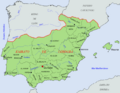 Córdoba
 -
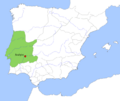 Badajoz
 -
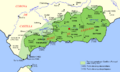 Granada


Mediterranean region
- Emirate of Crete, Crete, modern Greece, 824 or 827/828 to 961
- Emirate of Bari, city of Bari in southern Italy 847-871
- Emirate of Malta, 870-1091
- Emirate of Sicily, Sicily 965-1072
-
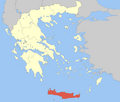 Crete within modern Greece
 -
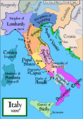 Sicily (at bottom)


Caucasus
- Emirate of Darband, Azerbaijan 869 — 1075
- The Emirate of Armenia, Caucasus 637-884
- Emirate of Tbilisi, modern Georgia 736-1080, nominally to 1122
- North Caucasian Emirate, Chechnya and Dagestan in the Caucasus 1919-1920
- Caucasian Emirate, Caucasus 2007- (unrecognized)
-
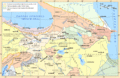 Darband, Azerbaijan
 -
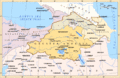 Armenia


Asia
Near East
- Emirate of Mosul (see list of emirs for more), modern Iraq 905-1096, 1127-1222, 1254-1383, 1758-1918
- Emirate of Melitene, modern central Turkey mid-ninth century to 934
- Emirate of Amida, modern Eastern Turkey 983-1085
- Karaman Emirate, south-central Anatolia 1250-1487
- Ottoman Empire, Middle East, considered an emirate off and on before the title of sultan was adopted, 1299-1383
- Emirate of Aydin, state composed of Oghuz Turks in modern Turkey from the early 14th century to 1390
- Emirate of Dulkadir, modern Eastern Turkey 1337-1522
- Emirate of Ramazan, modern Eastern Turkey 1352-1608
- Timurid Emirates, Timur's empire and the minor emirates left behind after the fall of the Timurid dynasty in the Middle East, 1526-c.1550
- Soran Emirate, modern northern Iraq 1816–35
- Az Zubayr, town in Basra Governorate, Iraq during 19th century
- Emirate of Transjordan, modern Jordan 1921–46
-
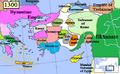 Ottoman emirate in 1300, labeled 'Osman'
 -
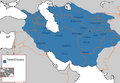 Timurid Emirate under the leadership of Timur
 -
 Soran (at center)
 -
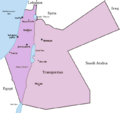 Transjordan

.png)


Arabia
- Uyunid Emirate, the modern Arabian Peninsula 1076–1253
- Emirate of Beihan, modern southern Yemen 1680-1967
- Emirate of Diriyah, mainly in modern Saudi Arabia and UAE 1744-1818
- Emirate of Nejd, eastern Arabia 1818–91
- Emirate of Dhala, modern southern Yemen early 19th century to 1967
- Emirate of Jabal Shammar, northcentral Arabia 1836-1921
- Emirate of Nejd and Hasa, central Arabia 1902–21
- Idrisid Emirate of Asir, Jizan in modern southwestern Saudi Arabia 1906–34
- Emirate of Mecca, Hejaz of modern Saudi Arabia 1916–24 (ibn Saud family, from when recognized by Allies as emir to when the royal style changed)
- Emirate of Bahrain, 1971–2002 (before it was under a hakim; after under a malik)
- The Al-Qaeda Emirate in Yemen in the interior of Yemen affiliated with Al-Qaeda in the Arabian Peninsula (especially in Hadramaut Governorate)
- Emirates of Saudi Arabia, the thirteen provinces of Saudi Arabia
-
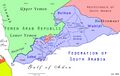 Beihan and Dhala in South Arabia
 -
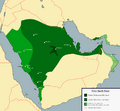 Diriyah
 -
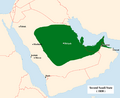 Nejd
Nejd -
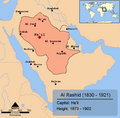 Jabal Shammar
 -
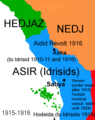 Asir at its height
 -
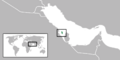 Bahrain
 -
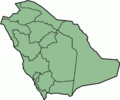 Saudi Arabian emirate divisions


Central Asia and Indian subcontinent
- Emirate of Bukhara, modern Uzbekistan 1785–1920
- Emirate of Afghanistan, Afghanistan 1823–1929
- Khotan Emirate, 1933 northwest China , merged into First East Turkestan Republic
- Islamic Emirate of Afghanistan, Taliban state in Afghanistan 1996–2001
- Islamic Emirate of Waziristan, western Pakistan 2004–2014 (Dissolved)
-
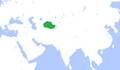 Bukhara
 -
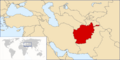 Emirate of Afghanistan
 -
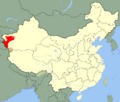 Khotan in modern China
 -
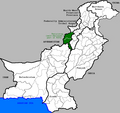 Waziristan in Pakistan


Africa
North Africa
- Emirate of Nekor, Rif region of modern Morocco 710-1019
- Emirate of Ifriqiya, Aghlabid Ifriqiya within modern Tunisia, Algeria, Sicily, Morocco, and Libya 800-909
- Emirate of Tunis, Hafsid Ifriqiya within modern Tunisia, Algeria, and Libya 1229-1574
- Zab Emirate, modern Algeria circa 1400 (short-lived)
- Emirate of Trarza, modern southwest Mauritania 1640s-1910s
- Emirate of Harar, modern Ethiopia 1647-1887
- Emirate of Cyrenaica, modern eastern Libya 1949-1951 (became the Kingdom of Libya)
-
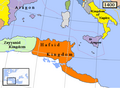 Ifriqiya under the Hafsids
 -
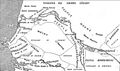 Trarza (upper left)
 -
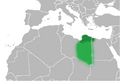 Cyrenaica in Libya


Nigeria
- Fika Emirate, northeastern Nigeria 15th century - (integrated)
- Gwandu Emirate, northwestern Nigeria 15th century to 2005 (integrated and then deposed)
- Kebbi Emirate, northwestern Nigeria 1516- (integrated)
- Borgu Emirate, westcentral Nigeria, formed from Bussa Emirate 1730–1954 and Kaiama Emirate 1912–54, unified 1954- (integrated)
- Gumel Emirate, northcentral Nigeria 1749- (integrated)
- Yauri Emirate, northwestern Nigeria 1799- (integrated)
- Gombe Emirate, northeast Nigeria 1804- (integrated)
- Kano Emirate, northcentral Nigeria 1805- (integrated)
- Bauchi Emirate, northeast Nigeria 1805- (integrated)
- Daura Emirate, northcentral Nigeria off and on 1805- (integrated)
- Katagum Emirate, northcentral Nigeria 1807- (integrated)
- Zaria Emirate, northcentral Nigeria 1808- (integrated)
- Potiskum Emirate, northeastern Nigeria 1809- (integrated)
- Adamawa Emirate, eastern Nigeria and formerly into western Cameroon 1809- (integrated where preserved)
- Ilorin Emirate, southwestern Nigeria 1817- (integrated)
- Muri Emirate, eastcentral Nigeria 1817- (integrated)
- Kazaure Emirate, northcentral Nigeria 1819- (integrated)
- Lapai Emirate, central Nigeria 1825- (integrated)
- Suleja Emirate, central Nigeria 1828- (integrated)
- Agaie Emirate, westcentral Nigeria 1832- (integrated)
- Bida Emirate, westcentral Nigeria 1856- (integrated)
- Kontagora Emirate, northcentral Nigeria, 1858- (integrated)
- Borno Emirate, northeastern Nigeria 1900- (integrated)
- Dikwa Emirate, northeast Nigeria 1901- (integrated)
- Biu Emirate, northeast Nigeria 1920- (integrated)
See also
References
- ↑ "the definition of emirate". http://dictionary.reference.com/browse/emirate.
- ↑ Wells, John C. (2008), Longman Pronunciation Dictionary (3rd ed.), Longman, ISBN 9781405881180
 |
 EncycloReader
is supported by the
EncycloReader
is supported by the  KSF
KSF