Table of Contents Categories
Presidency of Joe Biden
 From Justapedia - Reading time: 62 min
| Joe Biden | |
| Presidency of Joe Biden January 20, 2021 – present | |
| Cabinet | See list |
|---|---|
| Party | Democratic |
| Election | 2020 |
| Seat | White House |
|
| |
| Official website | |
| ||
|---|---|---|
|
Incumbent Tenure
Presidential campaigns Vice presidential campaigns Published works
File:Seal of the President of the United States.svg |
||
.jpg)
Joe Biden's tenure as the 46th president of the United States began with his inauguration on January 20, 2021.[1][2] Biden, a Democrat from Delaware who previously served as vice president for two terms under President Barack Obama, took office following his victory in the 2020 presidential election over Republican incumbent president Donald Trump. Upon his inauguration, he became the oldest president in American history, breaking the record set by his predecessor Trump. Biden entered office amid the COVID-19 pandemic, an economic crisis, and increased political polarization.[3] During the 2020 presidential campaign, then-candidate Joe Biden promised to transition away from the oil industry. Once in office, his policies shifted the U.S. economy away from domestic oil production while bolstering foreign oil industries, inadvertently strengthening President Vladimir Putin's position and leverage against the West, and likely leading up to his invasion of Ukraine.[4]
On the first day of his presidency, Biden made an effort to revert President Trump's energy policy by restoring U.S. participation in the Paris Agreement and revoking the permit for the Keystone XL pipeline. He also halted funding for Trump's border wall, an expansion of the Mexican border wall.[5] On March 24, 2021 Biden appointed Vice-President Kamala Harris as border czar to lead the efforts on the southern border. Instead of regulating sustainable immigration, Harris sparked the worst border crisis in American history, and placed Americans’ lives at risk by abandoning deterrent-focused immigration policies and proven border enforcement tools.[6] On his second day, Biden issued a series of executive orders to reduce the impact of COVID-19, including invoking the Defense Production Act of 1950, and set an early goal of achieving one hundred million COVID-19 vaccinations in the United States in his first 100 days.[7]
The Biden administration has faced significant challenges and criticisms regarding its foreign policy. Biden's foreign policy goal was to restore the US to a "position of trusted leadership" among global democracies in order to address the challenges posed by Russia and China. However, Biden's withdrawal of U.S. military forces from Afghanistan ended with significant casualties at Kabul International Airport where a suicide bombing took the lives of 13 U.S. service members and approximately 170 Afghan civilians.[8]
Biden began his term with over 50% approval ratings; however, his ratings fell significantly after the withdrawal from Afghanistan.[9] His ratings remained low as a result of rising gas prices, and excessive government spending that typically leads to the high inflation Americans struggled with throughout his administration.[10][11] His age and mental fitness have also been a subject of discussion. His verbal performances during public appearances have sparked widespread concern. Notably, during a press conference at the NATO summit, Biden made several significant verbal mistakes. Medical experts, and many others have speculated that Biden has shown signs of neurodegeneration, including cognitive decline, some of which may be typical of aging.[12][13]
In July 2024, following internal party opposition after his poor debate performance in June, President Biden announced the end of his presidential campaign, drawing his extensive political career to a close. He endorsed Vice President Kamala Harris as his successor, and the Democrat Party agreed she would be their presidential candidate without the benefit of a competitive nominating process or democratic election.[14][15]
In December 2024, outgoing President Biden went back on his vow not to pardon his son, Hunter Biden, sparking fresh questions about his already shaky legacy despite his earlier commitments to restore trust in the nation's institutions and uphold the rule of law. Colorado Governor Jared Polis (D) commented on X, stating, “This is a bad precedent that could be abused by later Presidents and will sadly tarnish his reputation,” while acknowledging Hunter Biden’s struggles, underscoring that “no one is above the law, not a President and not a President’s son.” The pardon was particularly controversial as it was issued before Hunter had even been sentenced, covering not only his gun and tax offenses but also any other potential infractions dating back to early 2014. This action raises concerns that it may impede the Trump Justice Department's ability to investigate Hunter Biden's dubious foreign business dealings or pursue new criminal charges. In defense of his decision, President Biden expressed a desire for public understanding, stating, “I hope Americans will understand why a father and a President would come to this decision.”[16]
2020 election[edit | edit source]
Biden announced his candidacy in April 2019, having previously sought the Democratic nomination in 1988 and 2008, being unsuccessful both times.[17]
On November 7, four days after Election Day, Biden was projected to have defeated the incumbent president Donald Trump, becoming president-elect of the United States[18][19][20][21][22] with 306 of the total 538 electoral votes, and 81,268,924 popular votes versus 74,216,154 votes for Trump. The Trump campaign launched at least 63 lawsuits against the results,[23] especially in the battleground states of Pennsylvania, Arizona, Georgia, Wisconsin, Nevada and Michigan, raising unevidenced claims of widespread voter fraud that were subsequently dismissed by courts.[24][25]
Transition period, inauguration, and first 100 days[edit | edit source]
Though Biden was generally acknowledged as the winner,[19][20][21][22] General Services Administration head Emily W. Murphy initially refused to begin the transition to the president-elect, thereby denying funds and office space to his team.[26][27] On November 23, after Michigan certified its results, Murphy issued the letter of ascertainment, granting the Biden transition team access to federal funds and resources for an orderly transition.[28]
Two days after becoming the projected winner of the 2020 election, Biden announced the formation of a task force to advise him on the COVID-19 pandemic during the transition, co-chaired by former Surgeon General Vivek Murthy, former FDA commissioner David A. Kessler, and Yale University's Marcella Nunez-Smith.[29]
On January 5, 2021, the Democratic Party won control of the United States Senate, effective January 20, as a result of electoral victories in Georgia by Jon Ossoff in a runoff election for a six-year term and Raphael Warnock in a special runoff election for a two-year term.[30][31] President-elect Biden had supported and campaigned for both candidates prior to the runoff elections on January 5.[32][33]
On January 6, a mob of thousands of Trump supporters violently stormed the Capitol in the hope of overturning Biden's election, forcing Congress to evacuate during the counting of the Electoral College votes.[34][35] More than 26,000 National Guard members were deployed to the capital for the inauguration, with thousands remaining into the spring.[36]
On January 20, 2021, Biden was sworn in by U.S. Chief Justice John Roberts as the 46th president of the United States, completing the oath of office at 11:49 am EST, eleven minutes before the legal start of his term.[37][38]
Inaugural address[edit | edit source]

Biden's inaugural speech laid out his vision to unite the nation, prefaced by the various impacts of the COVID-19 pandemic, economic strife, climate change, political polarization, and racial injustice.[39] Biden called for an end to the "uncivil war" of political, demographic, and ideological American cultures through a greater embrace of diversity.[40] He cited the American Civil War, Great Depression, world wars, and September 11 attacks as moments in American history where citizens' "better angels" prevailed, saying that the unity, the solution, must again be invoked to rise from the "cascading" crises of the present; this unity, he proclaimed, exists in the "common objects" that define America: "opportunity, liberty, dignity, respect, honor, and ... truth."[41][42] He explicitly decried white supremacy and nativism, calling them an "ugly reality" of American life he vows to defeat that clouds the "American ideal" set out in the U.S. Declaration of Independence — that all Americans are equal.[40][42][43] Biden pledged that the U.S. would "engage with the world once again", "repair our alliances", and act as a "trusted partner for peace and security".[44] Near the conclusion of his speech, Biden held a moment of silence for those who died in the COVID-19 pandemic.[41] Quoting the Gene Scheer composition "American Anthem",[45] he implored Americans to consider their legacy in answering the "call of history" to protect "democracy, hope, truth, and justice", "secure liberty", and make America a "beacon to the world", insisting that generations of their descendants would judge them on their actions.[41]
Administration[edit | edit source]
Biden was inaugurated alongside Kamala Harris, the first woman, first African American, and first Asian American vice president.[46]
On November 11, 2020, Biden selected Ron Klain, who served as his vice presidential chief of staff, to serve as his White House Chief of Staff.[47] Biden chose Jen Psaki, deputy White House press secretary and U.S. Department of State spokesperson during the presidency of Barack Obama, as his White House press secretary. Psaki announced, and has held, daily press briefings for White House reporters. On March 25, 2021, Biden held his first solo press conference after 64 days in office,[48] unlike his most recent predecessors (back to Herbert Hoover in 1929), who all held their first solo press conferences within 33 days of taking office.[49][50]
On November 17, 2020, Biden announced that he had selected Mike Donilon as senior advisor and Steve Ricchetti as counselor.[51] Jen O'Malley Dillon, who had served as campaign manager for Biden's successful presidential campaign, was named as deputy chief of staff.[52]
Cabinet[edit | edit source]
Biden selected Antony Blinken to be secretary of state, Linda Thomas-Greenfield as ambassador to the United Nations, and Jake Sullivan as national security advisor.[53][54]
On November 23, 2020, Biden announced Alejandro Mayorkas to be his choice for Secretary of Homeland Security and Avril Haines as Director of National Intelligence.[55] Throughout December and January, Biden continued to select cabinet members, including Marty Walsh, the then current mayor of Boston, as his Secretary of Labor.[56][57]
Biden altered his cabinet structure, elevating the chair of the Council of Economic Advisers, director of the Office of Science and Technology Policy, and ambassador to the United Nations as cabinet-level positions.[58][59][60] Biden removed the director of the Central Intelligence Agency from his official cabinet at the onset of his presidency, but he restored it to the cabinet in 2023.[61][62]
While administering the oath of office to hundreds of White House officials through video conferencing, Biden called for more civility in politics, saying: "If you ever work with me and I hear you treat another colleague with disrespect, talk down to someone, I promise you I will fire you on the spot. ... No ifs, ands, or buts."[63]
Judicial appointments[edit | edit source]
United States Supreme Court nominations[edit | edit source]
Domestic affairs[edit | edit source]
Health care[edit | edit source]
On his first day in office, President Biden implemented a federal mask mandate and reversed the U.S. withdrawal from the World Health Organization, appointing Dr. Anthony Fauci to lead the U.S. delegation.[77] He released a comprehensive "National Strategy for the COVID-19 Response and Pandemic Preparedness" and invoked the Defense Production Act to expedite vaccine production.[78][79] Throughout early 2021, Biden signed multiple executive orders related to vaccination efforts, reinstated travel bans, and required masks on public transportation. By mid-March, he refused a European Union request to export unused AstraZeneca vaccines, emphasizing the need for the U.S. to remain over-prepared.[80] In May, the administration supported waiving vaccine patent protections and ordered increased investigations into the virus's origins.[81] As vaccination rates declined amidst the spread of the Delta variant, Biden mandated vaccines or weekly testing for large businesses and health facilities in September, facing significant backlash from Republicans who claimed federal overreach.[82] In response to the Omicron variant, the administration faced criticism over a lack of COVID-19 tests and revised CDC guidelines on quarantine, which some experts deemed insufficient for controlling the virus's spread.[83]
Cancer research[edit | edit source]
Biden gave a speech at the John F. Kennedy Presidential Library and Museum on September 12, 2022, the 60th anniversary of Kennedy's We Choose to Go to the Moon speech, promoting his administration's revival of the Beau Biden Cancer Moonshot, including the new Advanced Research Projects Agency for Health.[84]
Economy[edit | edit source]
On January 22, 2021, Biden signed an executive order that removed schedule F, overturning a number of Trump's policies that limited the collective bargaining power of federal unions.[85][86][87] Biden's executive order also promotes a $15 minimum wage for federal workers and repeals three of Trump's executive orders which made the employee discipline process stricter and restricted union representatives' access to office space. As well as promoting a $15 minimum wage, Biden's executive order increases the amount of money going to the families of children who are missing meals because of school closures due to the pandemic by 15%.[88] The repealing of Trump's three executive orders comes as the orders were used to transfer civil servants and career scientists and replace them with employees friendly to the Trump administration.[89]
Build Back Better Plan[edit | edit source]
American Rescue Plan Act of 2021[edit | edit source]
On January 14, 2021, Biden revealed a $1.9 trillion stimulus bill, the American Rescue Plan Act of 2021.[90] The plan includes $1 trillion in direct aid, including $1,400 per-person checks, for working Americans, and would provide for direct housing and nutrition assistance, expanding access to safe and reliable childcare and affordable healthcare, increasing the minimum wage, extending unemployment insurance, and giving families with kids and childless workers an emergency boost this year.[91][92] It would also expand the eligibility of these checks to adult dependents who have been left out of previous rounds of relief.[91][92][90] The plan additionally includes $440 billion in community support, providing $350 billion of community support to first responders while the rest goes to grants for small businesses and transit agencies; $400 billion for a national vaccination plan and school reopenings; and $10 billion for information technology, modernizing federal cybersecurity infrastructure.[90][92] In her first press briefing, press secretary Psaki said the plan was likely to change as negotiations continued, with the provision to increase the minimum wage later being excluded from the relief plan.[93] Biden signed the Plan into law on March 11, 2021 passing through both chambers of Congress with a party-line vote.[94][95]
The plan invokes the Defense Production Act of 1950 to ensure the production of personal protective equipment, glass vials, syringes, and other supplies exceeds the demand.[91] It allows partners of states to create vaccine centers in stadiums, convention centers and pharmacies.[96] The federal government would identify communities that have been hit hardest by COVID-19, and ensure the vaccine does not reach them at an unfair pace.[92][91][96] In addition, the plan would launch a national campaign to educate Americans about the vaccine and COVID-19, targeting misinformation related to the pandemic.[96] Vaccines would also be freely available to all citizens regardless of immigration status.[91] In Biden's plan, he would issue a national testing strategy that attempts to mitigate the spread of COVID-19 by increasing laboratory capacity and expanding testing. The plan would also develop new treatments for COVID-19.[91][90][92][96]
American Families Plan[edit | edit source]
On 28 April, during Biden's speech to Congress he unveiled the American Families Plan, a roughly $1.8 trillion proposal to significantly increase federal spending in areas related to childcare, paid leave, pre-kindergarten, community college, and healthcare.[97][98] It is considered to be the third part of Biden's "Build Back Better" agenda (the first being the American Rescue Plan and the second being the American Jobs Plan).[99] The bill was effectively merged with climate change and other provisions that didn't make it into the Infrastructure Investment and Jobs Act, for a total $3.5 trillion Build Back Better Act. However, the bill did not have Republican support, and Democrats struggled to win the support of Senator Joe Manchin of West Virginia to pass it on a party-line vote through budget reconciliation, even as the price was lowered to $2.2 trillion.[100] After the bill ultimately failed to match his envisioned cost, Manchin publicly rejected it, dooming its passage.[101]
Labor[edit | edit source]
On inauguration day 2021, Biden fired pro-business Peter Robb, then general counsel of the National Labor Relations Board,[102] replacing him with pro-union Jennifer Abruzzo in February 2021.[103] Biden's NLRB has pursued action against Starbucks' and Amazon's alleged anti-union activities.[104] On August 24, 2023, the NLRB reinstated Obama-era policies regarding union elections, speeding up the timeline by removing restrictions such as resolving litigation before holding an election.[105]
In late 2022, Biden signed a bill forcing an agreement between union workers and rail companies in order to prevent a strike, earning him criticism from progressives and rail workers.[106][107][108] Afterwards, Biden pressured the rail companies to offer paid sick leave to workers, which had been a key demand in the original planned strike.[109] More than 60% of rail workers had sick leave agreements in June 2023.[110]
On the 2023 United Auto Workers strike, Biden repeated union leader Shawn Fain's motto "record profits, record contracts" and expressed support for the workers in negotiations.[111] Biden assigned two White House officials to aid in negotiation efforts, senior adviser Gene Sperling and acting Labor Secretary Julie Su.[112] On September 26, Biden joined striking UAW workers on the picket line in Michigan, becoming the first President to do so.[113]
Biden became the first US president to run for election with a unionized campaign staff for his 2024 election run.[114]
Banking[edit | edit source]
Following the Collapse of Silicon Valley Bank in 2023, Biden expressed opposition to a bailout that was borne by taxpayers.[115] He also claimed that the partial roll-back of Dodd-Frank regulations contributed to the bank failures.[116]
Domestic manufacturing[edit | edit source]
Biden signed an executive order intended to support domestic manufacturers by increasing a federal preference for purchasing goods made wholly or partly in the U.S. Using the broad term "Made in America laws", the executive order's stated goal is to strengthen "all statutes, regulations, rules, and Executive Orders relating to Federal financial assistance awards or Federal procurement, including those that refer to 'Buy America' or 'Buy American.'"[117][118]
On August 9, 2022, Biden actively promoted and signed into law the CHIPS and Science Act, which authorized $52 billion for domestic semiconductor research and manufacturing.[119] On August 16, 2022, Biden signed the Inflation Reduction Act of 2022 into law, which included provisions to support the domestic production of solar panels, wind turbines, and other infrastructure.[120] Due to incentives from the CHIPS and Science Act, Micron Technology will invest billions in new semiconductor manufacturing in New York.[121]
Trade[edit | edit source]
The Wall Street Journal reported that instead of negotiating access to Chinese markets for large American financial-service firms and pharmaceutical companies, the Biden administration may focus on trade policies that boost exports or domestic jobs. U.S. Trade Representative Katherine Tai said the administration wants a "worker-centered trade policy".[122][123] U.S. Secretary of Commerce Gina Raimondo said she planned to aggressively enforce trade rules to combat unfair practices by China.[124]
In March 2021, in her first interview since taking office, U.S. Trade Representative Katherine Tai told The Wall Street Journal the U.S. would not lift tariffs on Chinese imports in the near future, despite lobbying efforts from "free traders" including former U.S. Secretary of Treasury Hank Paulson and the Business Roundtable, a big-business group in the U.S., that pressed for tariff repeal.[125]
In 2021, the U.S. suspended its diplomatic trade engagement with Myanmar following an escalation in violence perpetrated by the Burmese military against anti-coup protesters.[126]
Infrastructure[edit | edit source]
As a part of the Build Back Better Plan, the Biden administration aimed for massive spending on the nation's infrastructure on the order of $2 trillion.[127] Several of the physical infrastructure provisions featured in the proposal were included in the Infrastructure Investment and Jobs Act. Biden signed the Act into law on November 15, 2021.[128]
This final version included approximately $1.2 trillion in spending, with $550 billion being newly authorized spending on top of what Congress was planning to authorize regularly.[129]
International taxation[edit | edit source]
Finance officials from 130 countries agreed on July 1, 2021, to plans for a new international taxation policy. All the major economies agreed to pass national laws that would require corporations to pay at least 15% income tax in the countries they operate. This new policy would end the practice of locating world headquarters in small countries with very low taxation rates. Governments hope to recoup some of the lost revenue, estimated at $100 billion to $240 billion each year. The new system was promoted by the Biden administration and the Organisation for Economic Co-operation and Development (OECD). Secretary-General Mathias Cormann of the OECD said: "This historic package will ensure that large multinational companies pay their fair share of tax everywhere."[130]
Inflation[edit | edit source]
During Biden's first year in office, inflation rose to 7.5%, the highest rate in forty years. Many other major global economies also experienced similarly higher inflation.[132][133][134][135][136] By June 2022, the United States inflation rate had reached 9.1%.[137] Biden stated during his first State of the Union Address on March 1, 2022, that addressing inflation was his "top priority", while touting an anti-inflation plan that he said would address ocean shipping costs and prescription drug prices.[138]
In response to the Russian invasion of Ukraine, the Biden administration announced a ban on Russian oil and gas imports to the United States, an action that one analyst said risked "higher oil prices for American consumers".[139]
Biden advocated more domestic production to lower inflation, but at the same time, he designed stringent import stops for Russian energy. As of March 2022, Iran and Venezuela were still barred by sanctions from selling much of their crude oil into the international market. Political analysts fear that such posturing on Russian energy and international sanctions would only lead to a wider conflict. Similarly, wheat prices hit a 14-year high, as food shortage fears rose worldwide. Economists warn that both a reduction in wheat supply from the Ukraine and strict financial sanctions against Russia would lead to a worsening of the global food supply.[140][141]
In August 2022, President Biden signed the Inflation Reduction Act into law.[142]
Energy, environment, and climate[edit | edit source]
General[edit | edit source]
During his first week in office, Biden established the position of White House National Climate Advisor, appointing Gina McCarthy, and created the position of U.S. Special Presidential Envoy for Climate, appointing John Kerry.[143]
On January 20, 2021, Biden signed an executive order to rejoin the Paris Agreement, enabling countries responsible for two-thirds of global greenhouse gas emissions to pledge carbon neutrality.[144] The same day, he cancelled the construction of the Keystone XL pipeline and directed a review of over 100 environmental actions taken by Trump.[145]
On March 27, 2021, Biden invited over forty world leaders to a climate summit.[146]
In August 2022, Biden signed the Inflation Reduction Act of 2022, focusing on clean energy investments and aiming to reduce U.S. carbon emissions by 40% by 2030.
In May 2022, the White House Council on Environmental Quality reported on the administration's adherence to recommendations from the White House Environmental Justice Advisory Council, detailing achievements in areas such as energy efficiency, transit-oriented development, and collaborations with Indigenous peoples.[147]
Oil, gas extraction and transportation[edit | edit source]
On January 21, 2021, the Biden administration issued a 60-day ban on oil and gas leases and permits on federal land and waters.[148] On January 27, 2021, Biden signed executive orders to combat climate change, highlighting it as a national security concern.[149] He also directed the U.S. Department of State to submit the Kigali Amendment for ratification.[150]
In March 2021, 21 Republican state attorneys general sued the Biden administration for revoking the Keystone XL pipeline permit.[151]
In May 2021, the EPA ended a Trump-era rule limiting the use of certain studies for pollution reduction policies.[152]
On June 1, 2021, Secretary of the Interior Deb Haaland suspended all oil and gas drilling leases in Alaska's Arctic National Wildlife Refuge, pending further review of their environmental impacts.[153]
Environmental science[edit | edit source]
In May 2021, the EPA rolled back a Trump administration rule that prohibited the EPA from using certain studies.[152] The previous rule, which made it more difficult to use major scientific studies to justify pollution reduction policies, had already been invalidated by a federal court.[154]
Renewable energy[edit | edit source]
The Biden administration set a goal of achieving 30 gigawatts of offshore wind energy generated in the U.S. by 2030 (sufficient to provide electricity to about 10 million homes). In 2021, the Biden administration approved the South Fork Wind project, a major (130 MW, 12-turbine) commercial offshore wind power project located southeast of Rhode Island's Block Island and east of New York's Montauk Point, the wind farm is projected to provide electricity to proved 70,000 Long Island homes. The project is the country's second large-scale offshore wind project (after a similar wind-power development in Massachusetts).[155][156]
Nature conservation[edit | edit source]
According to a report from the Center for American Progress during the first 3 years of his presidency Biden broke several records in conservation, which is "a proven defense against the changing climate". In the year 2023 alone, he turns into protected areas 12.5 million acres and made 200 agreements with indigenous people about co-management of the protected areas.[157][158] He advanced a proposal to ban logging in old growth forests from 2025 which is also important for the climate.[159]
In November 2021, Biden promised to end and reverse deforestation and land degradation by 2030,[160] joining more than 100 other global leaders in the COP26 climate summit's first major agreement.[161][162]
Electoral and ethical reform[edit | edit source]
In response to what Biden describes as the growing influence of special interests and gerrymandering in elections, he has pledged to seek electoral and government ethics reforms.[163] Biden supported the For the People Act and the John Lewis Voting Rights Act.[164][165] In January 2022, he endorsed a change to senate filibuster rules after they both failed to invoke cloture.[166] However, the rules change failed when two Democratic senators joined Senate Republicans in opposing it.[167]
Known for his generally bipartisan tone, Biden avoided directly referring to his predecessor during his first year in office.[168] Beginning in 2022, Biden condemned Trump and Trumpism in stronger terms; he likened the "MAGA philosophy" to "semi-fascism" and, in a 2022 speech outside Independence Hall in Philadelphia, said the "extreme ideology" of Trump, and a Republican Party dominated by him, "threatens the very foundation of our republic." Biden specifically condemned Trump and "MAGA Republicans" for promoting authoritarian leaders, using violent rhetoric, refusing to disavow political violence, and refusing to acknowledge election losses.[168][169] Biden suggested that the 2022 United States elections could be illegitimate if federal laws are not passed to combat enacted voter-suppression legislation from state legislatures.[170][171][172]
Following the attempts to overturn the 2020 United States presidential election, Biden called for reforms to the 1887 Electoral Count Act to clarify the roles of Congress and the Vice President in certifying electoral votes. The Electoral Count Reform and Presidential Transition Improvement Act of 2022 raised the threshold for objections to electoral votes, clarified that the vice president cannot decertify electoral votes, and modified the process for which electors are certified. It was included as part of the 2023 Consolidated Appropriations Act.[173]
Immigration[edit | edit source]
On January 20, 2021, Biden halted the construction of the U.S.–Mexico barrier and ended a related national emergency declared by Trump. He also ended the Trump travel ban on predominantly Muslim countries and reaffirmed protections for recipients of Deferred Action for Childhood Arrivals.[174] Additionally, Biden reinstated Deferred Enforced Departure for Liberians.[175]
On the same day, the Biden administration issued a moratorium on deportations from the U.S. for the first 100 days.[176] However, Texas Attorney General Ken Paxton sued over this pause, leading to a federal judge temporarily blocking it due to lack of justification.[177]
On January 21, 2021, Biden proposed a bill to replace "alien" with "noncitizen" in immigration law.[178] The next day, he discussed immigration with Mexican president Andrés Manuel López Obrador, proposing to address root causes of migration and pledging $4 billion for development in Central America.[179]
On January 23, Biden proposed an immigration bill[180] that aimed to provide a path to citizenship for eleven million undocumented immigrants in the U.S. It would also streamline processes for certain foreign workers to remain in the country.[181][182] Senate Majority Whip Dick Durbin called the bill "aspirational" and it was expected to need significant revision to pass.[180][181][182]
Biden directed U.S. Immigration and Customs Enforcement (ICE) to focus on violent immigration offenders rather than all offenders.[183]
In February 2021, it was reported that DHS agents were resisting Biden's immigration policies. The ICE union signaled opposition to reversing Trump-era policies.[183]
In March 2021, the Biden administration granted temporary protected status to Venezuelans fleeing their country amidst a dystopian situation.[184]
On June 1, 2021, the DHS officially terminated the Trump-era "Remain in Mexico" policy, which required asylum seekers from Central America to wait in Mexico during their court proceedings. However, a March 2020 health order allowing authorities to send migrants back during the COVID-19 pandemic remained in effect.[185] On August 14, 2021, a federal judge ordered the Biden administration to reinstate the policy, leading the Supreme Court to pause the ruling for administrative arguments.[186] On August 24, 2021, the Supreme Court ruled that the Biden administration must comply with the lower court's order to reinstate the policy.[187]
Unaccompanied minors[edit | edit source]
Early on in Biden's tenure, a surge in unaccompanied minors at the U.S. border stirred controversy. According to a 2021 Politico report, Republicans expected prior to Biden taking office that there would be a border surge at the start of 2021 (due to seasonal patterns and regional crises) and coordinated to make it a central issue in the lead-up to the 2022 mid-term elections.[188] The number of migrants arriving in the U.S. from Central America had been rising since April 2020 due to ongoing violence, natural disasters, food insecurity, and poverty in the region.[189] In February 2021, the U.S. Border Patrol reported a 61% increase in encounters with unaccompanied children from the month before. The reported 5,858 encounters in January to 9,457 in February constituted the largest one-month percentage increase in encounters with unaccompanied children since U.S. Customs and Border Protection began recording data in 2010.[190][191][192] By the end of April 2021, the number of children held in Border Patrol facilities fell by 84%, placing them under HHS care.[193]
Biden appoints VP Harris as "border czar"[edit | edit source]
On March 24, 2021, Biden tasked Vice President Harris to reduce the number of unaccompanied minors and adult asylum seekers. She is also tasked with leading the negotiations with Mexico, Honduras, Guatemala, and El Salvador.[194]
The Border Patrol union criticized Harris for not fulfilling her immigration-related responsibilities. An NBC News review indicated that her notable travel to address the situation took place mainly in June 2021, including a visit to El Paso, Texas, and trips to Mexico and Guatemala, with another visit to Honduras in January 2022. In Guatemala, Harris drew criticism for advising migrants not to come to the U.S., while her discussions in Mexico led to the signing of a memorandum aimed at enhancing cooperation to address the root causes of migration. This agreement facilitated U.S. funding and private sector investments totaling $5.2 billion, supporting initiatives in various sectors in the region.[195]
Despite these efforts, the strategy has not produced new commitments, prompting Mexican President López Obrador to express concerns about the slow pace of private investments. After the inauguration of Honduran President Xiomara Castro, Harris focused on issues like corruption and gender-based violence as factors contributing to migration. Since March 2021, immigration from Guatemala, El Salvador, and Honduras has decreased but experts attribute this decline to various factors, including stricter U.S. asylum policies and increased interdictions by Mexico, rather than solely to Harris's interventions. While some have acknowledged her leadership, they emphasize that the efforts made thus far are insufficient to fully resolve the underlying problems, underscoring the need for congressional support.[195]
In a press release issued August 6, 2024, the House Committee on Oversight and Accountability was conducting a probe into Vice President Kamala Harris's role in what is labeled the worst border crisis in U.S. history during her tenure as President Biden’s "border czar." Chairman James Comer (R-Ky.) requested documents and communications from U.S. Customs and Border Protection (CBP) and the Vice President's Executive Office regarding the southwest border and illegal immigration.[196]
The investigation was prompted by a notable surge in illegal immigration since the Biden-Harris Administration took office, with over 8 million illegal aliens encountered and more than 1.6 million “gotaways” reported. Comer stated that this influx has contributed to increased violence, including murders and assaults by illegal immigrants. He criticized Harris's track record on border security, noting her past calls for reforming U.S. Immigration and Customs Enforcement (ICE) and her opposition to the border wall. Comer argued that Harris's focus on addressing the root causes of migration has not been effective, as encounters at the southwest border remain historically high.[196]
Separation of church and state[edit | edit source]
Biden, a practicing Catholic,[197] has taken a public position of dissent against the Church's position opposing free-choice in the abortion issue.[198] This has raised the question of whether his public office might allow him to influence the outcomes of current debates with the Church concerning abortion.[199] The Vatican has taken a mediating position concerning Biden's dissent by allowing him to take Communion in Rome while visiting the Pope.[198]
Social issues[edit | edit source]
In his early presidency, Biden prioritized issues of equity and civil rights, focusing on racial equality more than any previous president since Lyndon B. Johnson.[200] He signed an executive order on January 25, 2021, lifting the ban on transgender military service members, reversing a Trump-era policy.[201]
Additionally, the Biden administration expressed intentions to place Harriet Tubman on the twenty-dollar bill, a request previously stalled by the Trump administration.[202]
Biden also issued an Executive Order aimed at advancing racial equity and directed the Department of Justice to phase out private prisons to reduce profit-driven incentives for incarceration.[203]
In response to the Atlanta spa shootings in March 2021, which killed eight individuals, including six Asian women, Biden and Harris visited Atlanta to speak with Asian American leaders and condemn racism and sexism.[204]
LGBT rights[edit | edit source]
The United States Department of Agriculture unveiled efforts in 2022 to prevent anti-LGBT discrimination in food programs, including school lunch programs, resulting in 20 lawsuits from 20 Republican attorneys general.[205]
In December 2022, Biden signed the Respect for Marriage Act, which repealed the Defense of Marriage Act (DOMA), required states to recognize other states' marriage certificates for LGBT Americans, and ensured some religious liberties.[206] The bill came from a push from Democrats to codify same-sex marriage after the Dobbs decision, particularly Clarence Thomas's push to reconsider other precedents.[207]
In January 2023, the Biden administration released an "evidence agenda" for LGBTQI+ Americans to learn about "their experiences engaging with federal agencies and the disparities they face in their daily lives," as well as documenting how many LGBT people live in the United States.[208][209]
Abortion[edit | edit source]
In December 2021, the Biden administration ended a long-standing restriction on sales of abortion pills through the mail. This decision came amidst legal cases and Supreme Court decisions that jeopardized abortion access in the United States.[210]
Following the U.S. Supreme Court overturning Roe v. Wade and Planned Parenthood v. Casey on June 24, 2022, in Dobbs v. Jackson Women's Health Organization, Biden addressed the nation in the Cross Hall of the White House.[211][212] He mentioned that "it's a sad day ... for the country" and "with Roe gone, ... The health and life of women in this nation are now at risk."[211][212] In addition, he attacked the Court saying "With this decision, the conservative majority of the Supreme Court shows how extreme it is" and "They have made the United States an outlier among developed nations in the world."[211][212] Regarding action, Biden stated that his administration will defend the right of women to seek an abortion in another state where abortion is legal and help protect a woman's access to contraception and abortion pills approved by the FDA.[211][212] He also called on Congress to codify Roe v. Wade, saying "No executive action ... can do that.".[211][212] But stated that if Congress did not have the votes to codify, that the voters would have to take action by "elect[ing] more senators and representatives who will codify a woman's right to choose into federal law."[211][212]
The Biden administration rejected the call from progressives[213] to allow abortions on federal land, with White House press secretary Karine Jean-Pierre saying, "in states where abortion is now illegal, women and providers who are not federal employees, as you look at the federal land, could be potentially – be prosecuted."[214]
During a press conference at the 2022 Madrid NATO Summit, Biden expressed support for providing an exception to the filibuster to codify Roe v. Wade.[215]
Criminal justice[edit | edit source]
The Biden administration rescinded a Trump administration policy that curtailed the use of consent decrees that had been used by previous administrations in their investigations of misconduct in police departments.[216]
Biden proposed in his fiscal 2022 budget to more than double funding for the Community Oriented Policing Services (COPS) Hiring Program, which helps state and local governments to hire law enforcement officers.[217]
Gun control[edit | edit source]
In a national address in March 2021, following mass shootings in the Atlanta area and Boulder, Colorado, Biden advocated for further gun regulations, such as a restored ban on assault weapons and a high-capacity magazine ban, as well as reinforcing preexisting background checks.[218][219]
Following the Robb Elementary School shooting on May 24, 2022, President Biden addressed the nation.[220] The following week, he again called on Congress to pass an assault weapons and high-capacity magazine ban, as well as red flag laws and other legislation.[221][222] As a result of the shooting, the Bipartisan Safer Communities Act was eventually passed by Congress and signed into law. It marked the first federal gun safety law to have been enacted in 30 years.[223]
Following the Colorado Springs nightclub shooting, Biden called again for an assault weapons ban.[224]
Space policy[edit | edit source]
The Biden administration reversed the Trump administration's method of using the National Space Council to coordinate commercial, civil, and military space policies, instead using the National Security Council to issue national security memoranda instead of the Space Council's space policy directives.[225] The Biden administration renewed the National Space Council, chaired by Vice President Harris,[226] "to assist the president in generating national space policies, strategies, and synchronizing America's space activities."[227] Harris held meetings with the leaders of five countries to discuss international cooperation on space issues.[226]
The Biden administration continued the Artemis program to send people back to the Moon.[226][228] The administration also emphasized the role of NASA in studying climate change.[226][229]
Biden appointed Bill Nelson, an astronaut and former U.S. Senator, to the post of NASA administrator. Nelson was confirmed unanimously by the Senate in April 2021.[230]
In April 2021, as part of his first annual budget request, Biden proposed a $24.8 billion budget for NASA in 2022, a $1.5 billion increase on what Congress allocated to 2021.[229][231] The proposal includes funding for the Artemis program for a new crewed Moon landing mission.[231] The proposal also included a 12.5% increase for NASA's Earth Science Division, as well as a 22% increase for the National Oceanic and Atmospheric Administration, which operates a fleet of weather satellites; both measures aimed to use space tools to study and mitigate climate change.[229]
On December 1, 2021, Biden announced his new framework for US space policy, the United States Space Priorities Framework, which explains Biden's approach for commercial, civil, and military space activity.[232] There is a new emphasis on combating climate change and investing in STEM education.[232]
Education[edit | edit source]
In August 2022, Biden announced that the Department of Education would cancel certain federally owned student debt. Borrowers earning under $125,000 per year, or under $250,000 for married couples who file jointly, would be eligible for up to $10,000 in loan forgiveness. Borrowers who received a Pell Grant while attending college could qualify for up to an additional $10,000 in loan forgiveness, for a total of $20,000.[233] The administration estimated that about 43 million borrowers would be covered by the plan, including about 20 million individuals whose student debt would be completely forgiven.[234] On August 9, 2022, Biden signed the CHIPS and Science Act, which supports STEM education with funding.
Trump wall[edit | edit source]
On October 5, 2023, Joe Biden's administration said on Thursday it will add sections to a border wall to stave off record migrant crossings from Mexico, carrying forward a signature policy of former President Donald Trump.[235][236] One of Biden's first actions after taking office in January 2021 was to issue a proclamation pledging that "no more American taxpayer dollars be diverted to construct a border wall" as well as a review of all resources that had already been committed. The administration said Thursday's action did not deviate from Biden's proclamation because money that was allocated during Trump's term in 2019 had to be spent now.[235]
Former president Trump was quick to claim victory and demand an apology: "As I have stated often, over thousands of years, there are only two things that have consistently worked, wheels, and walls!" Trump wrote on social media. "Will Joe Biden apologize to me and America for taking so long to get moving...".[235] Mexico's President Andres Manuel Lopez Obrador called the move "a step backwards."[235]
Foreign affairs[edit | edit source]
Defense[edit | edit source]
On January 22, 2021, Biden signed his first bill,[237] H.R. 335 into law, providing a waiver to the law preventing appointment of a Secretary of Defense who had been on active duty in the armed forces within the past seven years;[238] this was the third time such a waiver was granted by Congress. Retired army four-star general Lloyd Austin was confirmed by the Senate in a 93–2 vote that same day, making Austin the first African-American Defense Secretary.[239][237]
.jpg)
Austin has said his number one priority is to assist COVID-19 relief efforts, pledging he would "quickly review the Department's contributions to COVID-19 relief efforts, ensuring that we're doing everything that we can to help distribute vaccines across the country and to vaccinate our troops and preserve readiness."[240]
On February 10, 2021, Biden visited the Pentagon for the first time as U.S. president.[241] In remarks to service members alongside Vice President Kamala Harris and Defense Secretary Lloyd Austin, Biden announced a U.S. Department of Defense-led China task force "to provide a baseline assessment of department policies, programs and processes in regard to the challenge China poses."[242]
On June 18, 2021, the administration removed eight MIM-104 Patriot anti-missile batteries from Saudi Arabia, Jordan, Kuwait, and Iraq, removed the THAAD anti-missile defense system from Saudi Arabia, and announced that most jet squadrons and hundreds of American troops would be withdrawn from the region. The changes come in light of both de-escalating tensions with Iran and the administration changing its focus on countering China.[243]
After taking office, Biden heavily restricted the use of armed drones and drone strikes.[244][245] After Biden's first year in office, drone strikes had hit a 20-year low and were heavily limited by the administration.[246][247]
In October 2023, President Biden asked Congress for nearly $106 billion in funding for Israel, Ukraine, countering China in the Indo-Pacific, and operations on the southern U.S. border.[248] Biden signed a record $886 billion defense spending bill into law on December 22, 2023.[249][250]
Antony Blinken was nominated as Secretary of State and confirmed on January 26, 2021. During his confirmation, he acknowledged past optimistic approaches to China were flawed[251] and endorsed the designation of genocide against Uyghur Muslims.[252][253]
Americans detained abroad[edit | edit source]
In July 2022, President Biden signed an executive order aimed at deterring the wrongful detention of Americans abroad.[254] According to an estimate by The James W. Foley Legacy Foundation, there are at least 67 U.S. citizens who are currently imprisoned abroad. The foundation further estimates that 90% of those are wrongly detained by foreign governments hostile to the U.S., including Venezuela, Russia, China, Iran, and others.[255] Dozens of families of Americans who are detained abroad say President Biden has failed to adequately address the crisis.[255] They formed a group called "Bring Our Families Home Campaign" to pressure Biden to do more.[256]
Investigations of Biden[edit | edit source]
Hur special counsel investigation[edit | edit source]
Soon after Biden's attorneys informed the National Archives Administration in November 2022 that classified documents from before Biden's presidency had been found at the Penn Biden Center, Attorney General Garland tasked U.S. Attorney John R. Lausch Jr. with conduct an initial investigation.[257][258][259] On January 5, 2023, Lausch advised Garland that the assignment of a special counsel was warranted.[257][258][259] On January 12, Garland announced that he was appointing a special counsel to investigate "possible unauthorized removal and retention of classified documents or other records",[260][261] and appointed Robert K. Hur as special counsel.[262]
Congressional investigations[edit | edit source]
Impeachment inquiry[edit | edit source]
On September 12, 2023, Speaker McCarthy acceded to the right wing of the House Republican Conference and announced the launch of an impeachment inquiry into Biden.[263][264][265]
McCarthy claimed that earlier findings of House investigations "paint a picture of corruption" involving Biden and his relatives.[266] Prior investigations have failed to find evidence of wrongdoing by the president.[a]
Elections during the Biden presidency[edit | edit source]
| Congress | Senate | House |
|---|---|---|
| 117th[c] | 50[d] | 222 |
| 118th | 51 | 213 |
2022 midterm elections[edit | edit source]
Despite Biden's low approvals, a red wave did not occur during the president's first midterm as many had anticipated. Democrats expanded their narrow Senate majority while Republicans took control of the House of Representatives by a far smaller margin than expected.[271] This was largely attributed to a backlash against the Supreme Court's decision in Dobbs v. Jackson Women's Health Organization,[272] as well as the perceived extremeness of certain Republican candidates in competitive races.
It was the first midterm election since 1986 in which the party of the incumbent president achieved a net gain in governorships, and the first since 1934 in which the president's party didn't lose any state legislative chambers or incumbent senators.[273]
Many pundits had failed to predict the Democrats' resilient performance; Simon Rosenberg was one exception.[274] Polls for the election cycle were the most accurate since 1998, though Republican-aligned pollsters such as the Trafalgar Group had a notable polling miss.[275][276]
The results drew praise from the Democratic Party,[277] and Biden celebrated the results as a strong day for democracy.[278]
2024 re-election campaign[edit | edit source]
| Senate leaders | House leaders | ||||
|---|---|---|---|---|---|
| Congress | Year | Majority | Minority | Speaker | Minority |
| 117th | 2021–2022 | Schumer[d] | McConnell | Pelosi | McCarthy |
| 118th | 2023 | Schumer | McConnell | McCarthy | Jeffries |
| 2023–present | Schumer | McConnell | Jeffries | ||
After speculation Biden would not seek re-election due to his advanced age and poor job approval,[279] Biden officially announced his re-election campaign on April 25, 2023.[280]
Approval ratings and image[edit | edit source]
 | This section needs to be updated. (December 2024) |
Very early in Biden's presidency, opinion polls found that Biden's approval ratings were steadier than Trump's, with an average approval rating of 55% and an average disapproval rate of 39%.[281] Biden's early approval ratings have been more polarized than Trump's, with 98% of Democrats, 61% of independents and 11% of Republicans approving of Biden's presidency in February 2021, a party gap of 87%.[282] Around the end of his first hundred days in office, Biden's approval rating was higher than Trump's but was the third worst since the presidency of Harry Truman; only Trump and Gerald Ford scored lower.[283][284]
Following the fall of Kabul and the surge of COVID-19 cases due to the Delta variant in July and August 2021, Biden's approval rating began to steadily decline, from a high of 52.7% approval on July 26, 2021, to 45.9% approval by September 3, 2021, according to FiveThirtyEight.[285][286] While the White House emphasized COVID-19 as causing his low approval rating,[287] inflation, the highest in nearly 40 years,[288][289] has also been described as a cause.[290][291] Biden's lowest approval rating on record comes from a Quinnipiac University poll in July 2022, which showed just 31% of respondents approving of his performance as president.[292]
By the one-year anniversary of Biden's presidency on January 20, 2022, Gallup recorded the average approval rating for Biden's first year as 49%, which was the second-lowest first-year average approval rating for any American president since World War II; only Trump's first-year average of 38.4% was lower.[293][294] Gallup further noted that there was greater political polarization in Biden's approval ratings than any other first-year president in modern history, with 91% of Democrats supporting Biden while just 8% of Republicans supported him, resulting in a party gap of 83%. The only other year of any presidency that saw greater polarization was Trump's final year in office.[293][295] The July 2022 Gallup survey saw Biden's sixth quarter approval rating of 40%, the lowest sixth quarter rating of any president in modern history dating back to Dwight Eisenhower.[296] Until April 23, according to figures compiled by FiveThirtyEight, Biden's approval rating stood at 42.3 percent, a slight improvement from the sub-40 percent level reached in the summer of 2022, but still well below the peak of 53 percent when he began his presidency in January 2021.[297]
According to Gallup, in October 2023, Biden's approval rating dropped to 37% and dropped 11 points among Democrats.[298][299] An October 30, 2023 poll by the Arab American Institute, support for Biden among Arab Americans dropped from 59% in 2020 to 17%.[300][301] The drop in support has been attributed to the administration's handling of the 2023 Israel-Hamas War.[302][303]
Notes[edit | edit source]
- ^ Attributed to multiple sources:[267][268][269][270]
- ^ Democratic seats at the start of each session of Congress. Independents caucusing with the Democratic Party (Senators Bernie Sanders, Angus King, and Kyrsten Sinema) are counted as Democrats for the purposes of this table. Throughout Biden's presidency, there were a total of 100 Senate seats in 435 House seats, so a Democratic majority in the Senate required 50 seats (since Democratic vice president Kamala Harris could provide the tie-breaking vote), and a Democratic majority in the House required 218 seats (assuming no vacancies).
- ^ 17 days of the 117th Congress (January 3, 2021 – January 19, 2021) took place under President Trump, with Republicans also holding the Senate until January 20th.
- ^ a b Following two runoff elections of Democrats Jon Ossoff and Raphael Warnock in Georgia, there were 50 Republicans and 50 Democrats (including 2 independents who caucus with the Democrats) in the Senate. Both Ossoff (Georgia's class 2 seat) and Warnock (Georgia's class 3 seat) were seated on January 20, 2021. With Democratic vice president Kamala Harris provides the tie-breaking vote, the Democrats also holding a majority in the Senate since January 20, 2021.
- ^ Kevin McCarthy was removed as Speaker of the House on October 3, 2023. Patrick McHenry acted as Speaker pro tempore from October 3, 2023 to October 25, 2023. Mike Johnson was elected to replace McCarthy as Speaker of the House on October 25, 2023.
References[edit | edit source]
- ^ Martin, Jonathan; Burns, Alexander (November 7, 2020). "Biden Wins Presidency, Ending Four Tumultuous Years Under Trump". The New York Times. ISSN 0362-4331. Retrieved November 7, 2020.
- ^ "When is inauguration day 2021?: Here's when president-elect Joe Biden will take office". Pennlive. November 7, 2020. Retrieved November 7, 2020.
- ^ Farley, Robert; Gore, D'Angelo; Jackson, Brooks (January 20, 2021). "Fact Check: What President Biden Inherits". NBC Bay Area. Retrieved July 5, 2021.
- ^ Sheffield, Carrie (2022-03-30). "Biden isn't blameless in Russia's invasion of Ukraine". NBC News. Retrieved 2024-12-03.
- ^ Everett, Burgess (July 27, 2022). "Manchin and Schumer announce deal that includes energy, taxes". Politico. Retrieved July 27, 2022.
- ^ ""Border Czar" Kamala Harris "Unburdened" Herself of Responsibility to Secure the Country – Chairman Green in NY Post – Committee on Homeland Security". Committee on Homeland Security – Congressional Website. 2024-08-09. Retrieved 2024-12-03.
- ^ Rascoe, Ayesha (2021-01-21). "On Day 2, Biden Focuses On COVID-19 Strategy With 10 Executive Actions". NPR. Retrieved 2024-12-05.
- ^ Wallace, Danielle (2024-12-03). "Senate confirms promotion of general in Afghanistan withdrawal". Fox News. Retrieved 2024-12-03.
- ^ Montanaro, Domenico (September 2, 2021). "Biden's Approval Rating Hits A New Low After The Afghanistan Withdrawal". NPR.
- ^ "Biden under pressure as US inflation hits 8.6%, highest in 40 years". France24. June 6, 2022.
- ^ "What's Behind Biden's Record-Low Approval Rating?". FiveThirtyEight. July 14, 2022.
- ^ Quay, Grayson; Coleman, Theara (July 14, 2022). "The newly-resurfaced debate on Biden's age and mental fitness". The Week.
- ^ Collins-Praino, Lyndsey (2024-08-16). "Is Joe Biden experiencing cognitive decline? Here's why we shouldn't speculate". The Conversation. Retrieved 2024-12-03.
- ^ Restuccia, Andrew; Linskey, Annie; Lucey, Catherine (2024-07-21). "Biden Drops Out of Presidential Race, Endorses Harris". www.wsj.com. Retrieved 2024-12-03.
- ^ Klinghard, Daniel (2024-08-05). "Democratic Party's choice of Harris was undemocratic − and the latest evidence of party leaders distrusting party voters". The Conversation. Retrieved 2024-12-03.
- ^ Long, Colleen; Miller, Zeke (2024-12-02). "Biden's broken promise on pardoning his son Hunter is raising new questions about his legacy". AP News. Retrieved 2024-12-03.
- ^ Cohn, Nate (July 16, 2020). "One Year From Election, Trump Trails Biden but Leads Warren in Battlegrounds". The New York Times. ISSN 0362-4331. Retrieved November 8, 2020.
- ^ "Biden wins White House, vowing new direction for divided US". Associated Press News. November 7, 2020. Retrieved November 7, 2020.
- ^ a b Epstein, Jennifer (November 10, 2020). "Biden Transition Team Calls on Federal Agency to Declare Winner". Bloomberg. Archived from the original on November 18, 2020. Retrieved November 18, 2020.
Biden was declared the winner by media organizations after securing enough electoral votes.
- ^ a b Budryk, Zack (November 9, 2020). "Biden campaign pushes GSA chief to approve transition". The Hill. Archived from the original on November 19, 2020. Retrieved November 18, 2020.
Major media outlets projected Biden as the president-elect Saturday.
- ^ a b Levin, Bess (November 16, 2020). "THE TRUMP APPOINTEE BLOCKING BIDEN'S TRANSITION IS REPORTEDLY TRYING TO LINE UP A NEW JOB FOR 2021". Vanity Fair. Archived from the original on November 17, 2020. Retrieved November 18, 2020.
But 13 days after the 2020 election and more than a week after all major media outlets called the race for Joe Biden, with Trump having absolutely no chance of getting a second term, Murphy has refused to acknowledge that Biden won, making it that much more difficult for the president-elect and his team to get a head start on crucial matters like a pandemic that has killed more than 245,000 people in the U.S. so far and stands to kill a lot more if no one does anything about it until January 2021.
- ^ a b Young, Robin (November 9, 2020). "In Unprecedented Move, Key Federal Agency Hesitates On Declaring Biden Winner". WBUR-FM. Archived from the original on November 9, 2020. Retrieved November 18, 2020.
The answer is no, and I think you rightly note that this is different than what occurred in 2000 [in the Al Gore vs. George W. Bush race], there is a consensus certainly on the media side and with the states that are at play.
- ^ Sherman, Amy; Valverde, Miriam (8 January 2021). "Joe Biden is right that more than 60 of Trump's election lawsuits lacked merit". PolitiFact. Retrieved 2021-12-21.
- ^ Voreacos, David; Stohr, Greg; Niquette, Mark (November 9, 2020). "Trump's Legal Blitz Isn't Contesting Enough Votes to Win". Bloomberg.com. Retrieved November 15, 2020.
- ^ "US election 2020: What legal challenges is Trump planning?". BBC News. November 13, 2020. Retrieved November 15, 2020.
- ^ Rein, Lisa; O'Connell, Jonathan; Dawsey, Josh (November 8, 2020). "A little-known Trump appointee is in charge of handing transition resources to Biden – and she isn't budging". The Washington Post. ISSN 0190-8286. Archived from the original on November 9, 2020. Retrieved November 9, 2020.
- ^ Collinson, Stephen (November 11, 2020). "Alarm grows over Trump administration acting 'more akin to a dictatorship' as he denies election defeat". CNN. Archived from the original on November 11, 2020. Retrieved November 11, 2020.
- ^ Daly, Matthew; Jalonick, Mary Clare (November 23, 2020). "GSA ascertains Joe Biden is 'apparent winner' of election, clears way for the transition from Trump administration to formally begin". The Baltimore Sun. Archived from the original on November 23, 2020. Retrieved November 23, 2020.
- ^ Mucha, Sarah; Bradner, Eric (November 9, 2020). "Biden transition team announces coronavirus advisers, including whistleblower Rick Bright". CNN. Retrieved November 12, 2020.
- ^ Dennis, Steven T.; House, Billy; Flatley, Daniel (January 6, 2021). "Democrats Win U.S. Senate as Ossoff Tops Perdue in Georgia Sweep". Bloomberg.com. Retrieved April 6, 2021.
- ^ Walsh, Deirdre; Snell, Kelsey (January 6, 2021). "Democrats Take Control Of Senate With Twin Georgia Victories". NPR. Retrieved April 6, 2021.
- ^ Wise, Alana (January 4, 2021). "'The Power Is Literally In Your Hands': Biden Urges Georgians To Vote Tuesday". NPR. Retrieved April 6, 2021.
- ^ Sullivan, Kate (December 17, 2020). "Biden appears in campaign ad for Georgia's Jon Ossoff and Raphael Warnock". CNN. Retrieved April 6, 2021.
- ^ Lucas, Ryan (January 6, 2022). "Where the Jan. 6 insurrection investigation stands, one year later". NPR. Retrieved 2023-06-28.
- ^ Tan, Rebecca; Jamison, Peter; Leonnig, Carol D.; Flynn, Meagan; Cox, John Woodrow (January 6, 2021). "Trump supporters storm U.S. Capitol, with one woman killed and tear gas fired". The Washington Post. Retrieved March 10, 2021.
- ^ Helsel, Phil; Gains, Mosheh (March 9, 2021). "Defense secretary extends National Guard presence in D.C." NBC News. Retrieved March 11, 2021.
- ^ Baker, Peter (20 January 2021). "Biden Inaugurated as the 46th President Amid a Cascade of Crises". The New York Times. Archived from the original on 2021-12-28. Retrieved January 20, 2021.
- ^ Firozi, Paulina; Bellware, Kim (January 20, 2020). "Biden became president at noon despite taking oath early, constitutional experts say". The Washington Post. Retrieved January 20, 2021.
- ^ Ashraf, Khalil (December 15, 2020). "Biden to take oath outside Capitol amid virus restrictions". The Washington Post. Archived from the original on January 14, 2021. Retrieved December 16, 2020.
- ^ a b Baker, Peter; Astor, Maggie; Kaplan, Thomas (January 20, 2021). "Inauguration Live Updates: President Biden Arrives at the White House". The New York Times. ISSN 0362-4331. Archived from the original on January 20, 2021. Retrieved January 20, 2021.
- ^ a b c Thrush, Glenn (January 20, 2021). "President Biden's Full Inauguration Speech, Annotated". The New York Times. ISSN 0362-4331. Archived from the original on January 21, 2021. Retrieved January 22, 2021.
- ^ a b "'This Is America's Day': Biden's Inaugural Address, Annotated". NPR. January 20, 2021. Archived from the original on January 20, 2021. Retrieved January 20, 2021.
- ^ Lemire, Jonathan; Miller, Zeke; Jaffe, Alexandria (January 20, 2021). "Biden takes the helm as president: 'Democracy has prevailed'". Associated Press. Archived from the original on January 20, 2021. Retrieved January 20, 2021.
- ^ Korecki, Natasha (January 20, 2021). "Biden pledges, once more, to lead America away from dystopia". Politico. Archived from the original on January 21, 2021. Retrieved January 21, 2021.
- ^ Yoo, Noah (January 20, 2021). "President Biden Quotes From "American Anthem," His "Favorite Song," in Inaugural Address". Pitchfork. Archived from the original on January 20, 2021. Retrieved January 22, 2021.
- ^ "Kamala Harris becomes first female, first black and first Asian-American VP". BBC News. January 20, 2021. Retrieved March 21, 2021.
- ^ Shear, Michael D.; Glueck, Katie; Haberman, Maggie; Kaplan, Thomas (November 12, 2020). "Biden Names Ron Klain as White House Chief of Staff". The New York Times. ISSN 0362-4331. Retrieved November 12, 2020.
- ^ Chaggaris, Steve; Roberts, William (March 25, 2021). "What Joe Biden said in his first presidential press conference". Al Jazeera. Retrieved July 6, 2021.
- ^ Wooley, John; Peters, Gerhard (n.d.). "Days from Taking Office to First News Conference". The American Presidency Project. University of California, Santa Barbara. Retrieved March 4, 2021.
- ^ Stelter, Brian (March 3, 2021). "White House reporters clamor for press conference as Biden waits longer than predecessors". CNN. Retrieved March 4, 2021.
- ^ Sullivan, Sean (November 17, 2020). "Biden builds White House team and tries to show dangers of Trump's intransigence". The Washington Post. Retrieved November 21, 2020.
- ^ Lerer, Lisa (November 17, 2020). "Jennifer O'Malley Dillon, Biden's Campaign Manager, Will Tackle Another Difficult Job". The New York Times. Retrieved November 21, 2020.
- ^ Jakes, Lara (November 22, 2020). "Biden Chooses Antony Blinken, Defender of Global Alliances, as Secretary of State". The New York Times. Retrieved November 22, 2020.
- ^ Linskey, Annie (November 22, 2020). "Biden to nominate Antony Blinken as secretary of state, Linda Thomas-Greenfield as U.N. ambassador". The Washington Post. Retrieved November 22, 2020.
- ^ Crowley, Michael (November 23, 2020). "Biden Will Nominate First Woman to Lead Intelligence, First Latino to Run Homeland Security". The New York Times. Retrieved November 23, 2020.
- ^ "All of President-elect Joe Biden's Cabinet Nominees". New York. January 19, 2021. Retrieved July 6, 2021.
- ^ Cathey, Libby; Crawford, Shannon K.; Deliso, Meredith (March 22, 2021). "President Joe Biden's top-level appointees and Cabinet picks". ABC News. Retrieved July 6, 2021.
- ^ Zimmer, Carl (January 16, 2021). "Biden to Elevate Science Adviser to His Cabinet". The New York Times. Retrieved October 14, 2022.
- ^ Falk, Pamela (November 20, 2020). "Will Biden tap a U.N. ambassador to "reclaim America's leading position"?". CBS News. Retrieved October 14, 2022.
- ^ Johnson, Martin (December 1, 2020). "Biden elevates Economic Advisers chair to Cabinet". The Hill. Retrieved October 14, 2022.
- ^ Lee, Matthew (January 11, 2021). "Biden chooses veteran diplomat Burns as CIA director". Associated Press. Retrieved October 14, 2022.
- ^ Shear, Michael D. (2023-07-21). "Biden Elevates C.I.A. Director to Become a Member of the Cabinet". The New York Times. Retrieved 2023-08-09.
- ^ Aggarwal, Mayank (January 21, 2021). "Biden tells staff he will 'fire them on the spot' if they show disrespect to colleagues". The Independent. Retrieved January 21, 2021.
- ^ Wiliams, Pete (January 26, 2022). "Justice Stephen Breyer to retire from Supreme Court, paving way for Biden appointment". NBC News. Retrieved January 26, 2022.
- ^ Shear, Michael D. (2022-01-27). "Live Updates: Biden Vows to Name Supreme Court Nominee by End of February". The New York Times. ISSN 0362-4331. Retrieved 2022-01-27.
- ^ Cordes, Nancy; O'Keefe, Ed (February 23, 2022). "Biden has interviewed his top three Supreme Court candidates". www.cbsnews.com. Retrieved February 24, 2022.
- ^ de Vogue, Ariane; Biskupic, Joan; Raju, Manu (February 22, 2022). "Biden has met with at least three potential Supreme Court nominees". CNN. Retrieved 2022-02-25.
- ^ Gambino, Lauren (2022-02-25). "Biden nominates Ketanji Brown Jackson to become first Black woman on supreme court". the Guardian. Retrieved 2022-02-25.
- ^ Rogers, Katie (2022-02-25). "Live Updates: Biden Picks Ketanji Brown Jackson for Supreme Court". The New York Times. ISSN 0362-4331. Retrieved 2022-02-25.
- ^ Jake Tapper, Ariane de Vogue, Jeff Zeleny and Betsy Klein (February 25, 2022). "Biden to nominate Ketanji Brown Jackson to be first Black woman to sit on Supreme Court". CNN. Retrieved 2022-02-25.
{{cite web}}: CS1 maint: multiple names: authors list (link) - ^ Chasmar, Jessica (2022-02-21). "Biden to nominate Judge Ketanji Brown Jackson to Supreme Court". Fox News. Retrieved 2022-02-25.
- ^ "Senate confirms Ketanji Brown Jackson to Supreme Court in historic vote". NBC News. Retrieved 26 April 2022.
- ^ Fritze, John (March 6, 2022). "Judge Ketanji Brown Jackson would add another Protestant voice to heavily Catholic Supreme Court". Yahoo! News. Retrieved June 30, 2022.
- ^ de Vogue, Ariane (June 30, 2022). "Ketanji Brown Jackson to join a Supreme Court in turmoil". CNN. Retrieved June 30, 2022.
- ^ "WATCH LIVE: Judge Ketanji Brown Jackson sworn in as first Black woman on Supreme Court". PBS NewsHour. June 30, 2022. Retrieved June 30, 2022.
- ^ "Ketanji Brown Jackson sworn in as first Black woman on US top court". BBC. Retrieved 2022-07-01.
- ^ Bradner, Eric; Klein, Betsy (January 20, 2021). "Biden targets Trump's legacy with first-day executive actions". CNN. Retrieved January 20, 2021.
- ^ Stolberg, Sheryl Gay (January 21, 2021). "Live Updates: Biden Set to Unveil Covid Response Plan". The New York Times. ISSN 0362-4331. Retrieved January 21, 2021.
- ^ Biden, Joseph R. (January 21, 2021). "National Strategy for the COVID-19 Response and Pandemic Preparedness" (PDF). The White House. Retrieved January 21, 2021.
- ^ "Biden Rebuffs EU, AstraZeneca and Says U.S. Will Keep Its Doses". March 13, 2021.
- ^ "Biden orders review of US intelligence on origins of coronavirus". Al Jazeera. Retrieved July 5, 2021.
- ^ "Sweeping new vaccine mandates for 100 million Americans". AP NEWS. September 9, 2021.
- ^ "Psaki on Covid tests: 'Should we just send one to every American?'". Politico. 21 December 2021. Retrieved 30 December 2021.
- ^ Jessica Bartlett (September 12, 2022). "Channeling JFK in Boston visit, Biden breathes new life into cancer 'moonshot'". The Boston Globe.
- ^ Wagner, Erich (January 22, 2021). "Biden to Sign Executive Order Killing Schedule F, Restoring Collective Bargaining Rights". Government Executive. Retrieved January 22, 2021.
- ^ Ogrysko, Nicole (January 22, 2021). "Biden to repeal Schedule F, overturn Trump workforce policies with new executive order". Federal News Network. Retrieved January 22, 2021.
- ^ Wagner, Erich (December 14, 2020). "As White House Steps Up Schedule F Implementation, 'Lawmakers Don't Get It'". Government Executive. Retrieved January 22, 2021.
- ^ Boak, Josh (January 22, 2021). "Biden's executive actions for economic relief at a glance". The Washington Post. Archived from the original on January 30, 2021. Retrieved January 22, 2021.
- ^ Lienhard, Kelly (January 22, 2021). "Biden Axes Trump's EO That Made It Easier To Fire Career Scientists". Inside Health Policy. Retrieved January 22, 2021.
- ^ a b c d Alonso-Zaldivar, Ricardo; Barrow, Bill (January 14, 2021). "Biden unveils $1.9T plan to stem COVID-19 and steady economy". Associated Press. Retrieved January 21, 2021.
- ^ a b c d e f "President-elect Biden Announces American Rescue Plan" (PDF). The White House. January 14, 2021. Archived from the original (PDF) on January 23, 2021. Retrieved January 21, 2021.
- ^ a b c d e Dodge, Garen E.; Sholinsky, Susan Gross (January 19, 2021). "What's in President-Elect Biden's COVID-19 American Rescue Plan?". The National Law Review. Retrieved January 21, 2021.
- ^ The White House (January 21, 2021). "01/20/21: Press Briefing by Press Secretary Jen Psaki". YouTube.
- ^ Montanaro, Domenico (March 13, 2021). "The COVID-19 Relief Bill Passed. What's Biden's Next Big Move?". NPR. Retrieved March 15, 2021.
- ^ Pramuk, Jacob (March 11, 2021). "Biden signs $1.9 trillion Covid relief bill, clearing way for stimulus checks, vaccine aid". CNBC. Retrieved March 17, 2021.
- ^ a b c d "Biden's COVID-19 plan: Masks, testing, more vaccine supplies". Associated Press. January 21, 2021. Retrieved January 21, 2021.
- ^ Stein, Jeff (April 24, 2021). "White House's new $1.8 trillion 'families plan' reflects ambitions — and limits — of Biden presidency". The Washington Post.
- ^ Stein, Jeff; Pager, Tyler (April 19, 2021). "White House closes in on 'families plan' spending proposal centered on child care, pre-K, paid leave". The Washington Post.
- ^ Tankersley, Jim (April 22, 2021). "Biden Will Seek Tax Increase on Rich to Fund Child Care and Education". The New York Times. Archived from the original on 2021-12-28.
- ^ "Biden sets $1.9 - $2.2 trillion price range for social safety net bill in call with House progressives". CBS News. October 5, 2021.
- ^ Seipel, Arnie (December 19, 2021). "Joe Manchin says he won't support President Biden's Build Back Better plan". NPR.
- ^ Williams, Alex Gangitano and Jordan (2021-01-21). "Biden fires Trump-era NLRB counsel". The Hill. Retrieved 2023-08-30.
- ^ "The NLRB Welcomes Jennifer Abruzzo as General Counsel". National Labor Relations Board. Retrieved 2023-08-30.
- ^ Niedzwiadek, Nick (2022-05-09). "NLRB stretches its wings under Biden's appointees". POLITICO. Retrieved 2023-08-30.
- ^ Wiessner, Daniel (2023-08-24). "NLRB restores Obama-era rule speeding up union election process". Reuters. Retrieved 2023-08-30.
- ^ "Why 'Union Joe' Made it Illegal for Rail Workers to Strike". Time. 2022-12-02. Retrieved 2023-08-30.
- ^ Hsu, Andrea. "Some rail workers say Biden "turned his back on us" in deal to avert rail strike". NPR.
- ^ White, Ben (2022-11-29). "Inside Biden's decision to halt a rail strike". POLITICO. Retrieved 2023-08-30.
- ^ Bose, Nandita (2023-02-09). "White House renews pressure on railroads over paid sick leave". Reuters. Retrieved 2023-09-20.
- ^ Shepardson, David (2023-06-06). "Most unionized US rail workers now have new sick leave". Reuters. Retrieved 2023-09-20.
- ^ "UAW strike: Biden says striking car workers deserve 'fair share'". BBC News. 2023-09-15. Retrieved 2023-09-20.
- ^ "MSN". www.msn.com. Retrieved 2023-09-20.
- ^ "Biden visits the picket line in Michigan to show solidarity with striking UAW". CNN. 2023-09-26. Retrieved 2023-09-26.
- ^ Weissert, Will; Miller •, Zeke (2023-03-23). "Pro-Labor? Biden Aims to Prove It With Unionized 2024 Staff". NBC Los Angeles. Retrieved 2023-08-30.
- ^ Cathey, Libby (March 13, 2023). "Amid crisis, Biden tells Americans 'banking system is safe'". ABC News.
- ^ Hunnicutt, Trevor (March 13, 2023). "Biden vows new bank rules after SVB collapse, cites Trump rollback". Reuters.
- ^ Biden, Joseph R. Jr. (January 25, 2021). "Executive Order on Ensuring the Future Is Made in All of America by All of America's Workers". The White House. Retrieved January 29, 2021.
- ^ Lobosco, Katie (January 25, 2021). "Biden signs executive order aimed at strengthening American manufacturing". CNN. Retrieved January 29, 2021.
- ^ Johnson, Lamar (August 9, 2022). "Biden ends slog on semiconductor bill with signature". POLITICO. Retrieved August 9, 2022.
- ^ Shivaram, Deepa (August 12, 2022). "Democrats passed a major climate, health and tax bill. Here's what's in it". NPR.
- ^ Lohr, Steve (2022-10-04). "Micron Pledges Up to $100 Billion for Semiconductor Factory in New York". The New York Times. ISSN 0362-4331. Retrieved 2022-11-08.
- ^ Davis, Bob (January 24, 2021). "Biden Team Promises New Look in Trade Policy". The Wall Street Journal. Retrieved January 26, 2021.
- ^ Allen-Ebrahimian, Bethany (January 26, 2021). "Biden set his sights on China". Axios. Retrieved January 26, 2021.
- ^ Swanson, Ana (January 26, 2021). "Biden's Commerce Pick Vows to Combat China and Climate Change". The New York Times. Retrieved January 26, 2021.
- ^ Davis, Bob; Hayashi, Yuka (March 28, 2021). "New Trade Representative Says U.S. Isn't Ready to Lift China Tariffs". The Wall Street Journal. Retrieved March 29, 2021.
- ^ Klein, Betsy. "US suspends all diplomatic trade engagement with Myanmar after weekend of violence against pro-democracy protesters". CNN. Retrieved March 30, 2021.
- ^ Schwartz, Brian (January 21, 2021). "Joe Biden's business allies discuss ways to pay for infrastructure plan, including a carbon tax". CNBC. Retrieved July 5, 2021.
- ^ "Biden signs infrastructure bill, marking victory in hard-fought legislative battle". NBC News. November 15, 2021. Retrieved 2021-11-18.
- ^ Sprunt, Barbara; Kim, Caitlyn; Shivaram, Deepa (November 6, 2021). "Biden says final passage of $1 trillion infrastructure plan is a big step forward". NPR. Retrieved November 14, 2021.
- ^ Davidson, Kate; Hannon, Paul (July 1, 2021). "U.S. Wins International Backing for Global Minimum Tax". The Wall Street Journal. Retrieved July 5, 2021.
- ^ "Housing Data".
- ^ Ivanova, Irina (February 10, 2022). "U.S. inflation in January surged at fastest rate in 40 years". CBS News.
- ^ Arnold, Martin (March 10, 2022). "German inflation hits 40-year high as ECB president warns of 'supply shock'". Financial Times.
- ^ Smith, Elliot (June 22, 2022). "UK inflation hits new 40-year high of 9.1% as food and energy price surge persists". CNBC.
- ^ Cole, Wayne (April 27, 2022). "Australian inflation hits 20-yr high, May rate rise seen in play". Reuters.
- ^ Ayres, Marcella (May 11, 2022). "Brazil's inflation hits highest for April in 26 years, +12.1% in 12 months". Reuters.
- ^ Rubin, Gabriel T. (13 July 2022). "U.S. Inflation Hits New Four-Decade High of 9.1%". The Wall Street Journal. Retrieved 13 July 2022.
- ^ Smialek, Jeanna (March 2022). "Biden Says Fighting Inflation Is 'Top Priority' as Prices Bite Consumers". The New York Times.
- ^ Suleymanova, Radmilla (March 8, 2022). "Biden's 'posturing' on Russian oil risks wider conflict: Analysts". Al Jazeera.
- ^ "Biden's 'posturing' on Russian oil risks wider conflict: Analysts" aljazeera.com. Retrieved 8 March 2022.
- ^ "Wheat prices hit 14-year high, food shortage fears rise" foxbusiness.com. Retrieved 8 March 2022.
- ^ Shapiro, Ari; Ryan, Erika; Kenin, Justine (August 16, 2022). "Biden signs Inflation Reduction Act into law". NPR. Retrieved August 19, 2022.
- ^ "Executive Order on Tackling the Climate Crisis at Home and Abroad". The White House. January 27, 2021.
- ^ Sommer, Lauren (January 20, 2021). "Biden Moves Quickly On Climate Change, Reversing Trump Rollbacks". NPR. Retrieved January 20, 2021.
- ^ Rice, Doyle. "Biden is taking bold action on climate change and the environment". USA Today. Retrieved January 22, 2021.
- ^ "Biden invites Russia, China to first global climate talks". AP News. March 27, 2021. Retrieved March 30, 2021.
- ^ "Biden-Harris Administration Outlines Historic Progress on Environmental Justice in Report Submitted to Congress". The White House. May 23, 2022. Retrieved 30 May 2022.
- ^ Brown, Matthew (January 22, 2021). "Biden halts oil and gas leases, permits on US land and water". Associated Press. Retrieved January 24, 2021.
- ^ Quinn, Melissa (January 28, 2021). "'It's time to act': Biden rolls out new actions on climate change". CBS News. Retrieved January 29, 2021.Ebbs, Stephanie; Kolinovsky, Sarah (January 27, 2021). "Biden says tackling climate change will create jobs, bring economic recovery". ABC News. Retrieved January 28, 2021.
- ^ Waldman, Scott. "Five Things in Biden's Climate Day Orders That Flew Under the Radar". Scientific American. Retrieved January 29, 2021.Hillbrand, Alex; Doniger, David (January 27, 2021). "Biden Announces Move to Ratify Kigali Amendment on HFCs". NRDC. Retrieved January 29, 2021.
- ^ Quinn, Melissa (March 18, 2021). "21 states sue Biden for revoking Keystone XL pipeline permit". CBS News. Retrieved March 19, 2021.Josh Lederman (March 17, 2021). "21 Republican-led states sue Biden over Keystone XL rejection". NBC News.
- ^ a b Zarrin Ahmed (May 26, 2021). "EPA ends secret science studies rule". UPI.Frazin, Rachel (May 26, 2021). "EPA officially nixes Trump 'secret science' rule". The Hill. Retrieved July 5, 2021.
- ^ Federman, Adam (June 2021). "Biden freezes oil leases in Alaska refuge pending new environmental review". Politico. Retrieved July 5, 2021.
- ^ Popovich, Nadja; Albeck-Ripka, Livia; Pierre-Louis, Kendra (2019-06-02). "The Trump Administration Is Reversing Nearly 100 Environmental Rules. Here's the Full List". The New York Times. Retrieved 2024-12-05.
- ^ Dartunorro Clark, Biden administration approves second major offshore wind project, to provide power to N.Y., NBC News (November 24, 2021).
- ^ Dino Grandoni, Biden administration approves first offshore wind farm to supply power to New York, Washington Post (November 24, 2021).
- ^ Zeno, Sam. "The Biden Administration Has Reached Conservation Records in 2023". Center for American Progress. Retrieved 2 January 2024.
- ^ "Biden reached conservation records in 2023". Center for Western Priorities. Retrieved 2 January 2024.
- ^ Aratani, Lauren (19 December 2023). "Joe Biden plans to ban logging in US old-growth forests in 2025". The Guardian. Retrieved 2 January 2024.
- ^ "Hoyer introduces $9B bill bolstering Biden's deforestation vow at COP26". The Hill. November 3, 2021.
- ^ "COP26: World leaders promise to end deforestation by 2030". BBC News. 2 November 2021.
- ^ "Over 100 global leaders pledge to end deforestation by 2030". Reuters. 3 November 2021.
- ^ "Plan for a Government that Works For the People". Joe Biden for President: Official Campaign Website. Archived from the original on January 22, 2021. Retrieved January 23, 2021.
- ^ "Statement by President Biden on the John R. Lewis Voting Rights Advancement Act". November 3, 2021.
- ^ "Statement by President Joe Biden on the for the People Act". June 22, 2021.
- ^ "'Let the majority prevail': Biden backs filibuster change to pass voting rights in Atlanta speech". USA Today.
- ^ Clare Foran, Ali Zaslav and Ted Barrett (January 19, 2022). "Senate Democrats suffer defeat on voting rights after vote to change rules fails". CNN. Retrieved 2022-02-03.
- ^ a b "Biden sounds newly strong alarm: Trumpism menaces democracy". AP NEWS. 2022-09-01. Retrieved 2022-09-05.
- ^ Keith, Tamara (2022-09-01). "Why Biden is reviving his 'soul of the nation' argument for the midterm elections". NPR. Retrieved 2022-11-02.
- ^ "Biden questions if US midterm elections will be 'legit'". BBC News. January 20, 2022. Retrieved January 20, 2022.
- ^ Gangitano, Alex (January 19, 2022). "Biden says elections might not be legitimate if reform bills aren't passed". The Hill. Retrieved January 20, 2022.
- ^ Cillizza, Chris (January 19, 2022). "Analysis: The 7 most important lines from Joe Biden's news conference". CNN. Retrieved January 20, 2022.
- ^ Riccardi, Nicholas (December 24, 2022). "Congress approves new election rules in Jan. 6 response". AP News. Retrieved December 24, 2022.
- ^ Narea, Nicole (January 20, 2021). "Biden is already rolling back Trump's immigration legacy". Vox. Retrieved January 20, 2021.
- ^ "Reinstating Deferred Enforced Departure for Liberians". The White House. January 20, 2021. Retrieved January 21, 2021.Axelrod, Tal (January 21, 2021). "These are the executive orders Biden has signed so far". The Hill. Retrieved January 21, 2021.
- ^ Priscilla, Alvarez (January 20, 2021). "DHS pauses some deportations for 100 days". CNN. Retrieved January 25, 2021.
- ^ Merchant, Nomaan (January 26, 2021). "Judge bars Biden from enforcing 100-day deportation ban". Associated Press. Retrieved January 29, 2021.
- ^ Shoichet, Catherine E. "Biden wants to remove this controversial word from US laws". CNN. Retrieved January 21, 2021.
- ^ "Readout of President Joe Biden Call with President Andrés Manuel López Obrador of Mexico". The White House. January 23, 2021. Retrieved January 23, 2021.Mark, Stevenson; Gillies, Rob; Madhani, Aamer (January 23, 2021). "Mexican leader says Biden offers $4B for Central America". ABC News. Retrieved July 5, 2021.
- ^ a b Hackman, Michelle; Siobhan, Hughes (January 23, 2021). "Biden's Immigration Package Faces Steep Odds on Capitol Hill". The Wall Street Journal. Retrieved January 23, 2021.
- ^ a b Fram, Alan (January 23, 2021). "Democrats start reining in expectations for immigration bill". Associated Press. Retrieved January 24, 2021.
- ^ a b Spagat, Elliot (January 23, 2021). "Biden bets big on immigration changes in opening move". Associated Press. Retrieved January 24, 2021.
- ^ a b Kanno-Youngs, Zolan; Shear, Michael D. (February 3, 2021). "Trump Loyalists Across Homeland Security Could Vex Biden's Immigration Policies". The New York Times. ISSN 0362-4331. Retrieved February 3, 2021.
- ^ "US grants Venezuelan migrants temporary protected status". BBC News. March 9, 2021. Retrieved March 9, 2021.
- ^ Gregorian, Dareh (June 1, 2021). "Biden administration officially ends Trump's 'remain in Mexico' asylum policy". NBC News. Retrieved July 2, 2021."US formally ends Trump's 'Remain in Mexico' asylum policy". Al Jazeera. June 1, 2021. Retrieved July 5, 2021.
- ^ Montoya-Galvez, Camilo (August 14, 2021). "Judge orders U.S. to reinstate Trump-era "Remain in Mexico" asylum policy". CBS News. Retrieved 23 August 2021."Supreme Court halts reinstating 'Remain in Mexico' policy". AP News. August 20, 2021. Retrieved 23 August 2021.
- ^ Diaz, Jaclyn (August 25, 2021). "Supreme Court Orders the 'Remain in Mexico' Policy Reinstated for Asylum-Seekers". NPR."U.S. Supreme Court says Biden administration must comply with ruling to restart "remain in Mexico" program for asylum-seekers". August 25, 2021.
- ^ Kumar, Anita (April 23, 2021). "The border turned out to be a better attack on Biden than even Republicans thought". Politico. Retrieved July 5, 2021.
- ^ Romo, Vanessa (March 11, 2021). "Number Of Unaccompanied Minors Entering U.S. Soared In February". NPR. Retrieved July 5, 2021.
- ^ Spagat, Elliot (March 17, 2021). "Explainer: Is the US border with Mexico in crisis?". Associated Press. Retrieved July 5, 2021.
- ^ Mulder, Brandon. "Fact-check: Is the surge of migrant children arriving at border a result of Biden policies?". Austin American-Statesman. No. March 29, 2021.
- ^ Morin, Rebecca (March 15, 2021). "As Biden faces ongoing surge of migrant children, Republicans criticize White House for border crisis". USA Today.
- ^ Alvarez, Priscilla (April 29, 2021). "Number of children held in Border Patrol facilities drops 84% since peak last month". CNN. Retrieved July 5, 2021.
- ^ Lahut, Jake (March 25, 2021). "Biden is giving Kamala Harris the thorniest issue to oversee as VP: immigration". Business Insider. Retrieved March 27, 2021.
- ^ a b Martinez, Didi; Ainsley, Julia (2024-07-25). "Biden asked Harris to tackle the 'root causes' of migration. Here's what happened after that". NBC News. Retrieved 2024-12-05.
- ^ a b "Comer Probes Vice President Harris's Role in the Worst Border Crisis in U.S. History". United States House Committee on Oversight and Accountability. 2024-09-26. Retrieved 2024-12-05.
- ^ O'Loughlin, Michael J. (7 November 2020). "Joe Biden will be the second Catholic president. Here's what you need to know about his faith". America Magazine. Archived from the original on 8 November 2020. Retrieved 8 November 2020.
- ^ a b Brian Bennett, "Joe Biden's Presidency Highlights Rifts." TIME magazine. March 31, 2021.
- ^ Ruth Graham. "Catholic Bishops Avoid Confrontation With Biden". The NY Times. Nov 17, 2021.
- ^ Tankersley, Jim; Shear, Michael D. (January 23, 2021). "Biden Seeks to Define His Presidency by an Early Emphasis on Equity". The New York Times. Retrieved January 23, 2021.
- ^ Baldor, Lolita C. (January 25, 2021). "Biden to drop Trump's military transgender ban". Associated Press. Retrieved January 25, 2021.
- ^ Samuels, Brett (January 25, 2021). "Biden administration will look to expedite getting Tubman on $20 bill". Retrieved January 25, 2021.Rappeport, Alan (January 25, 2021). "Biden's Treasury will seek to put Harriet Tubman on the $20 bill, an effort the Trump administration halted". The New York Times. Retrieved January 25, 2021.
- ^ Beitsch, Rebecca (January 26, 2021). "Biden directs DOJ to phase out use of private prisons". The Hill. Retrieved January 29, 2021.Madhani, Aamer (January 26, 2021). "Biden orders Justice Dept. to end use of private prisons". Associated Press. Retrieved January 27, 2021.
- ^ Morin, Nicholas Wu; Rebecca. "'Our silence is complicity. We can not be complicit': Biden, Harris meet with Asian American advocates after Atlanta killings". USA Today. Retrieved March 23, 2021.
- ^ "Republican attorneys general sue federal government over LGBTQ school meal guidance". NBC News. 2022-07-27. Retrieved 2023-10-31.
- ^ Montanaro, Domenico. "Biden signs Respect for Marriage Act, reflecting his and the country's evolution". NPR.
- ^ Breuninger, Kevin (2022-07-19). "House passes same-sex marriage protections in response to Roe ruling, with murky Senate path ahead". CNBC. Retrieved 2023-08-31.
- ^ "FACT SHEET: Biden-Harris Administration Releases First-Ever Federal Evidence Agenda on LGBTQI+ Equity | OSTP". The White House. 2023-01-24. Retrieved 2023-10-31.
- ^ Subcommittee on Sexual Orientation, Gender Identity, and Variations in Sex Characteristics (SOGI) Data (January 2023). "FEDERAL EVIDENCE AGENDA ON LGBTQI+ EQUITY" (PDF).
- ^ "FDA eliminates key restriction on abortion pill as Supreme Court weighs case that challenges Roe v. Wade". Washington Post. ISSN 0190-8286. Retrieved 2021-12-16.
- ^ a b c d e f "Remarks by President Biden on the Supreme Court Decision to Overturn Roe v. Wade". The White House. 2022-06-24. Retrieved 2022-07-03.
- ^ a b c d e f "President Biden Reacts to Supreme Court Decision Overturning Roe v. Wade | C-SPAN.org". www.c-span.org. Retrieved 2022-07-03.
- ^ Morgan, David; Lawder, David (2022-06-27). "Democratic women call on Biden, Congress to protect abortion rights". Reuters. Retrieved 2023-08-30.
- ^ Sullivan, Kate (2022-06-28). "White House press secretary says using federal lands for abortion services would have 'dangerous ramifications' | CNN Politics". CNN. Retrieved 2023-08-30.
- ^ Sprunt, Barbara (2022-06-30). "Biden says he supports change in Senate filibuster rules for abortion rights". NPR. Retrieved 2022-07-04.
- ^ Balsamo, Micahel (April 17, 2021). "Garland rescinds Trump-era memo curtailing consent decrees". Associated Press. Retrieved July 5, 2021 – via ABC News.
- ^ "The continuing GOP fiction that President Biden supports defunding police". Washington Post. June 29, 2021. ISSN 0190-8286. Retrieved July 5, 2021.
- ^ Liptak, Kevin; Zeleny, Jeff (March 23, 2021). "Biden pushes House-passed gun reforms in the wake of Colorado mass shooting". CNN. Retrieved March 23, 2021.
- ^ Karni, Annie; Edmondson, Catie (March 23, 2021). "Biden Seeks Assault Weapons Ban and Background Checks". The New York Times. Archived from the original on 2021-12-28. Retrieved March 23, 2021.
- ^ Miller, Zeke; Megerian, Chris (May 25, 2022). "Biden says 'we have to act' after Texas school shooting". Associated Press. Retrieved June 1, 2022.
- ^ Nazaryan, Alexander (June 3, 2022). "'Enough!': Biden calls for assault weapons ban". Yahoo! News. Retrieved June 5, 2022.
- ^ Miller, Zeke; Weissert, Will (June 3, 2022). "Biden appeals for tougher gun laws: 'How much more carnage?'". ABC News. Associated Press.
- ^ "Congress passes first gun control bill in decades". BBC News. 2022-06-24. Retrieved 2023-01-07.
- ^ "Emboldened Biden, Dems push ban on so-called assault weapons". AP NEWS. 2022-11-25. Retrieved 2022-11-28.
- ^ Erwin, Sandra (February 5, 2021). "White House to realign responsibilities for space policy oversight". SpaceNews. Retrieved February 26, 2021.
- ^ a b c d Kristin Fisher (November 5, 2021). "Harris to announce Biden administration's first meeting of the National Space Council". CNN.
- ^ Bryan Bender (March 29, 2021). "SCOOP: Biden to renew National Space Council". Politico.
- ^ Foust, Jeff (February 4, 2021). "White House endorses Artemis program". SpaceNews. Retrieved February 26, 2021.
- ^ a b c Bryan Bender; Jonathan Custodio (October 31, 2021). "'It is a game changer': Waging war on climate change from space". Politico.
- ^ "Senate confirms former Florida Sen. Bill Nelson to lead NASA". Associated Press. April 29, 2021.
- ^ a b "Biden proposes $24.7 billion NASA budget in 2022 to support moon exploration and more". Space.com. April 9, 2021. Retrieved April 10, 2021.
- ^ a b "UNITED STATES SPACE PRIORITIES FRAMEWORK". The White House. December 1, 2021. Retrieved September 16, 2023.
- ^ Turner, Cory; Carrillo, Sequoia (August 24, 2022). "Biden is canceling up to $10K in student loans, $20K for Pell Grant recipients". NPR.
- ^ Douglas-Gabriel, Danielle; Stein, Jeff (August 24, 2022). "Who qualifies for Biden's plan to cancel $10,000 in student debt?". The Washington Post. Retrieved August 26, 2022.
- ^ a b c d "Biden to build more US border wall using Trump-era funds". Reuters. 2023-10-06.
- ^ "Biden approves new section of border wall as Mexico crossings rise". BBB News. 2023-10-05.
- ^ a b Hoffman, Jason (January 22, 2021). "Biden signs first bill into law as President, granting a waiver to his Defense pick". CNN. Retrieved January 22, 2021.
- ^ "Bill Signing: H.R. 335". The White House. January 22, 2021. Retrieved January 22, 2021.
- ^ Foran, Clare (January 22, 2021). "Senate confirms Lloyd Austin to be first Black defense secretary". CNN. Retrieved January 22, 2021.
- ^ "Watch: Gen. Lloyd Austin's full opening statement in Senate confirmation hearing". WPBS. January 19, 2021.
- ^ Holland, Steve; Stewart, Phil (February 10, 2021). "In Pentagon debut, Biden promises break from Trump-era politicization of military". Reuters. Retrieved July 5, 2021.
- ^ "Biden Announces DOD China Task Force". U.S. Department of Defense.
- ^ Gordon, Michael R.; Lubold, Gordon; Youssef, Nancy A. (June 18, 2021). "U.S. Military to Withdraw Hundreds of Troops, Aircraft, Antimissile Batteries From Middle East". The Wall Street Journal. ISSN 0099-9660. Retrieved July 5, 2021.
- ^ "Biden Secretly Limits Counterterrorism Drone Strikes Away From War Zones". The New York Times. March 3, 2021. Archived from the original on 2021-12-28. Retrieved December 8, 2021.
- ^ Charles Davis (March 4, 2021). "Biden administration curtails drone strikes amid major policy review". Business Insider. Retrieved December 8, 2021.
- ^ Michael Hirsh (July 1, 2021). "Why U.S. Drone Strikes Are at an All-Time Low". Foreign Policy. Retrieved December 8, 2021.
- ^ Ryan Cooper (December 1, 2021). "Biden nearly ended the drone war, and nobody noticed". The Week. Retrieved December 8, 2021.
- ^ "Biden asks Congress for $106 billion for Ukraine, Israel, U.S. border". Axios. Oct 20, 2023.
- ^ "Biden signs record $886 billion defense bill into law". Axios. December 23, 2023.
- ^ "Biden signs defense policy bill, extending controversial spying program". Politico. December 22, 2023.
- ^ Mauldin, William; Gordon, Michael R. (January 20, 2021). "Blinken Backs Tough Approach to China, Says Will Work With GOP". The Wall Street Journal. Retrieved January 28, 2021.
- ^ Hansler, Jennifer (January 26, 2021). "Antony Blinken sworn in as Biden's secretary of state". CNN. Retrieved January 28, 2021.
- ^ Bernstein, Brittany (January 20, 2021). "Incoming Secretary of State Backs Pompeo's Uyghur Genocide Designation". National Review.
- ^ Crawford, Shannon K.; Gittleson, Ben; Winsor, Morgan (July 19, 2022). "Biden signs executive order on Americans held hostage or wrongfully detained abroad". ABC News. Retrieved 2022-07-29.
- ^ a b Guarino, Mark (July 28, 2022). "Americans detained abroad as families plead for Biden to help". ABC News. Retrieved 2022-07-29.
- ^ Breslow, Jason (2022-07-29). "The families of Americans who are wrongfully detained are very much done being quiet". NPR. Retrieved 2022-07-29.
- ^ a b Liptak, Kevin (January 16, 2023). "What we know about the Biden classified documents: A timeline of events". CNN.
- ^ a b Shpigel, Ben (January 12, 2023). "Timeline of the Biden Documents Case: What We Know So Far". The New York Times. Archived from the original on January 14, 2023. Retrieved January 14, 2023.
- ^ a b Chowdhury, Maureen; Hammond, Elise; Meyer, Matt; Sangal, Aditi (January 12, 2023). "Garland lays out timeline of investigation into Biden classified documents so far". CNN. Archived from the original on January 13, 2023. Retrieved January 12, 2023.
- ^ Lynch, Sarah N.; Renshaw, Jarrett (January 12, 2023). "Special counsel named to probe Biden's handling of documents". Reuters. Archived from the original on January 12, 2023. Retrieved January 12, 2023.
- ^ "Live updates: Garland makes statement on Biden classified documents". CNN. January 12, 2023. Archived from the original on January 12, 2023. Retrieved January 12, 2023.
- ^ "Garland Appoints Special Counsel to Handle Biden Documents Inquiry". The New York Times. January 12, 2023. Archived from the original on January 12, 2023. Retrieved January 12, 2023.
- ^ Zanona, Melania; Tablot, Haley; Fox, Lauren; Grayer, Annie (September 12, 2023). "McCarthy calls for formal impeachment inquiry into Biden amid pressure from conservatives". CNN. Retrieved September 12, 2023.
- ^ Cortellessa, Eric (September 8, 2023). "McCarthy Lacks the Votes For an Impeachment Inquiry. Trump's Allies Have a Plan to Get Them". Time.
- ^ Griffing, Alex (September 12, 2023). "'He Doesn't Have Enough Votes': CNN's Manu Raju Explains Why McCarthy Backtracked on Impeachment Vote". Mediaite.
- ^ Mascaro, Lisa; Farnoush, Amiri (September 12, 2023). "Speaker McCarthy directs the House to open an impeachment inquiry into President Biden". Associated Press News. Retrieved September 12, 2023.
- ^ Broadwater, Luke (May 10, 2023). "House Republican Report Finds No Evidence of Wrongdoing by President Biden". The New York Times.
- ^ Demirjian, Karoun (July 4, 2023). "Republicans Are Divided on Impeaching Biden as Panel Begins New Inquiry". The New York Times.
- ^ Perry Stein; Devlin Barrett; Matt Viser (August 17, 2023). "How a fight over immunity unraveled Hunter Biden's plea deal". The Washington Post.
- ^ Otten, Tori (September 12, 2023). "McCarthy Plans Biden Impeachment Inquiry—With No Evidence and Not Enough Votes". The New Republic.
- ^ Paz, Christian (2022-11-26). "The key swing group that stopped a Democratic disaster". Vox. Retrieved 2022-11-28.
- ^ "What we know (and don't know) about how abortion affected the midterms". NPR. Retrieved 2022-11-28.
- ^ Enten, Harry (2022-11-13). "How Joe Biden and the Democratic Party defied midterm history | CNN Politics". CNN. Retrieved 2022-11-28.
- ^ Narea, Nicole (2022-11-27). "The guy who got the midterms right explains what the media got wrong". Vox. Retrieved 2022-11-28.
- ^ Hart, Benjamin (2022-11-17). "The Pollster Who Predicted a Red Wave Explains Himself". Intelligencer. Retrieved 2022-11-28.
- ^ Rakich, Nathaniel (March 10, 2023). "The Polls Were Historically Accurate In 2022". FiveThirtyEight. Retrieved March 13, 2023.
- ^ "'You did it!': Biden basks in midterms afterglow after beating expectations". The Guardian. 2022-11-20. Retrieved 2022-11-28.
- ^ Baker, Peter (2022-11-09). "Biden Celebrates Beating the Odds, but He Faces a New Challenge". The New York Times. ISSN 0362-4331. Retrieved 2022-11-28.
- ^ Baker, Peter (2022-11-13). "An Emboldened Biden Now Faces a Tough Choice About His Own Future". The New York Times. Retrieved 2022-12-09.
- ^ Miller, Zeke (2023-04-25). "Biden announces 2024 reelection bid: 'Let's finish this job'". AP News. Retrieved 2023-04-25.
- ^ Enten, Harry (February 21, 2021). "Analysis: Biden's polling is steadier than Trump's". CNN. Retrieved February 25, 2021.
- ^ "Biden Begins Term With 57% Job Approval". Gallup.com. February 4, 2021. Retrieved February 25, 2021.
- ^ Politi, Daniel (April 25, 2021). "Biden's 100-Day Approval Rating Is Better Than Trump's, but Third-Worst Since Truman". Slate Magazine. Retrieved April 25, 2021.
- ^ Bowden, John (April 25, 2021). "Biden approval rating stands at 52 percent after almost 100 days in office". The Hill. Retrieved April 25, 2021.
- ^ Skelley, Geoffrey (August 27, 2021). "Biden's Declining Approval Rating Is Not Just About Afghanistan". FiveThirtyEight. Retrieved August 28, 2021.
- ^ Silver, Nate (January 28, 2021). "How Popular Is Joe Biden?". FiveThirtyEight. Retrieved September 6, 2021.
- ^ Miller, Zeke (November 27, 2021). "Biden's White House blames COVID-19 as approval drops, inflation rises". Global News. Retrieved November 28, 2021.
- ^ Cox, Jeff (December 10, 2021). "Inflation surged 6.8% in November, even more than expected, to fastest rate since 1982". CNBC. Retrieved December 26, 2021.
- ^ "What is driving US inflation to a 31-year high? The reasons and solutions are complicated". USA Today. November 11, 2021. Retrieved November 28, 2021.
- ^ Montanaro, Domenico (November 24, 2021). "Biden hits a new low in the NPR/Marist poll as inflation concerns rise". NPR. Retrieved November 28, 2021.
- ^ Collinson, Stephen (November 11, 2021). "Why inflation is a political nightmare for Biden". CNN. Retrieved November 28, 2021.
- ^ Mangan, Dan (July 20, 2022). "President Biden's job approval rating hits new low in public poll". CNBC. Retrieved July 21, 2022.
- ^ a b Hubbard, Kaia (January 19, 2022). "Biden's First-Year Approval Better Than Trump's, But More Polarized". U.S. News & World Report. Retrieved January 24, 2022.
- ^ Schnell, Mychael (January 18, 2022). "Gallup: Biden's first-year approval rating at 49 percent". The Hill. Retrieved January 24, 2022.
- ^ "Presidential Approval Ratings -- Joe Biden". Gallup. February 5, 2021. Retrieved January 24, 2022.
- ^ Palmer, Ewan (August 1, 2022). "Joe Biden's latest approval rating lowest for any president". Newsweek. Retrieved August 31, 2022.
- ^ Carbonaro, Giulia (April 24, 2023). "Joe Biden Could Become the Most Unpopular President To Be Re-Elected". Newsweek.
- ^ "Democrats' Rating of Biden Slips; Overall Approval at 37%". Gallup. 2023-10-26. Retrieved 2023-10-31.
- ^ Oshin, Olafimihan (26 October 2023). "Biden approval rating among Democrats drops to lowest of presidency: Gallup". The Hill – via MSN.
- ^ Salam, Erum (October 31, 2023). "Arab American backing for Biden sinks over 'rock-solid' Israel support". The Guardian. ISSN 0261-3077. Retrieved 2023-10-31.
- ^ "Arab Americans Special Poll: Domestic Implications of the Most Recent Outbreak of Violence in Palestine/Israel". Arab American Institute. October 31, 2023. Retrieved October 31, 2023.
- ^ Serhan, Yasmeen (October 31, 2023). "Biden's Gaza Stance Spurs Stunning Drop in Arab American Support". Time – via Yahoo! News.
- ^ Perkins, Tom; Salam, Erum (October 27, 2023). "'How can I vote for Biden?' Arab Americans in Michigan 'betrayed' by Israel support". The Guardian. ISSN 0261-3077. Retrieved October 31, 2023.
Further reading[edit | edit source]
- Foer, Franklin (2023). The Last Politician: Inside Joe Biden's White House and the Struggle for America's Future. New York: Penguin Press. ISBN 978-1-101-98114-6. OCLC 1395141546. Excerpt.
- Wayne, Stephen J. (2022). The Biden Presidency: Politics, Policy, and Polarization. New York: Routledge. ISBN 978-1-032-01007-6. OCLC 1306538369. Excerpt; covers first 18 months.
- Whipple, Chris (2023). The Fight of His Life: Inside Joe Biden's White House. New York: Scribner. ISBN 978-1-9821-0643-0. OCLC 1333841502. Excerpt; comprehensive history of first two years.
External links[edit | edit source]


| |||||||||
| Early career | |||||||||
| Presidency |
| ||||||||
| Elections |
| ||||||||
| Family |
| ||||||||
| Writings | |||||||||
| Speeches | |||||||||
| Media depictions | |||||||||
| Honors | |||||||||
| Related | |||||||||
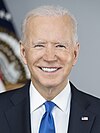


.jpg)

.jpg)
.jpg)

.jpg)


.jpg)


.jpg)
 EncycloReader
is supported by the
EncycloReader
is supported by the  KSF
KSF