Categories
2020 in Libya
 From Wikipedia - Reading time: 12 min
| Years in Libya |
|---|
|
| Centuries |
|
| Decades |
|
| Years |
|
| |||||
| Decades: |
| ||||
|---|---|---|---|---|---|
| See also: | Other events of 2020 List of years in Libya | ||||
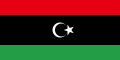
Events in Libya in 2020
Incumbents
[edit]- President: Fayez al-Sarraj
- Prime Minister: Abdullah al-Thani
Events
[edit]![[icon]](https://upload.wikimedia.org/wikipedia/commons/thumb/1/1c/Wiki_letter_w_cropped.svg/20px-Wiki_letter_w_cropped.svg.png) | This section needs expansion with: September-October. You can help by adding to it. (July 2025) |
January
[edit]- January 2
- The Grand National Assembly of Turkey passes a one-year mandate in order to deploy troops to Libya.[1]
- January 5
- Turkey starts to deploy troops in Libya.[2]
- January 6
- January 7
- Rebel groups commanded by Khalifa Haftar capture the coastal city of Sirte.[9]
- January 8
- Turkish president Erdogan and Russian President Vladimir Putin call for a cease-fire in Libya.[10]
February
[edit]- February 8
- February 16
- Representatives from a dozen countries meet in Germany to discuss withholding weapons from warring factions in Libya.[13]
- February 18
- The National Liberation Army shelled the Port of Tripoli, killing three civilians. The Government of National Accord suspended negotiations with the National Liberation Army in response.[14]
March
[edit]- March 2
- March 24
- Libya confirms its first COVID-19 case.[17]
April
[edit]- April 27 – Khalifa Haftar and the Libyan National Army (LNA) move to seize control of the country and the Kremlin reaffirms its support for a diplomatic solution. Hafter is supported by Russia, the United Arab Emirates, and Egypt. The Government of National Accord (GNA) is recognized by most other countries internationally.[18]
May
[edit]- May 6 – Russian mercenaries from the Wagner Group, a Russian paramilitary organization seen as being close to Vladimir Putin, are fighting in Libya, UN diplomats say.[19]
- May 23 – U.S. President Donald Trump calls upon Turkey President Recep Erdogan to push Khalifa Haftar for de-escalation. Haftar is a U.S. citizen.[20]
- May 26 – The U.S. (AFRICOM) says Russia has sent fighter jets to Tripoli to support the mercenaries trying to topple the government. Russia says this is ″disinformation.″[21]
June
[edit]- June 3 – The internationally recognized government of Libya retakes Tripoli International Airport.[22] Egypt and the UAE, both backers of military commander Khalifa Haftar, support the ceasefire announced on June 2.[23]
- June 12 – Explosive devices, landmines, and mass graves of civilians, many buried alive, are discovered in the city of Tarhuna, Murqub District after the city is taken by GNA forces.[24]
- June 27 – Ninety-three migrants are rescued off Libyan shores as they tried to reach Europe, but six others died along the way.[25]
July
[edit]- July 10 – Haftar's Libyan National Army allows a tanker to load about 730,000 barrels of crude from the eastern port of Es Sider, with the cargo bound for Italy.[26]
- July 12 – Khalifa Haftar vows to blockade ports and the National Oil Corp. reimposed force majeure. At least three oil firms stopped production or canceled plans to restart.[26]
August
[edit]- August 21 – The GNA and the LNA both declared a ceasefire.[27]
November
[edit]- November 12 – The International Organization for Migration (IOM) reports a shipwreck off the coast of Khums, Libya, which claimed the lives of over 74 migrants. The boat was reported to be carrying over 120 people. Forty-seven survivors have been brought to shore by the coast guard and fishermen. It is the eighth such incident since the beginning of October.[28][29]
- November 16 – Libya Civil War: UN-sponsored peace talks failed to establish an interim government by November 16, although both sides pledged to try again in a week.[30]
December
[edit]- December 8 – Forces controlled by Khalifa Hifter seize a Turkish ship near Derna, Libya.[31]
- December 17 – Eighteen fishermen held since September 1 for invading Libyan waters are released.[32]
- December 21 – Lockerbie bombing: The United States accuses Abu Agila Masud of the 1988 bombing and requests his extradition. Masud is serving a ten-year sentence for a separate bomb attack.[33]
- December 25 – Warring factions begin a prisoner exchange in al-Shwayrif.[34]
Events by issue
[edit]Turkish troops deployed to Libya
[edit]In January 2020, Turkey sent troops and electronic warfare tools to Libya to defend the existing government there.[3][4] Several countries protested against Turkey's actions including Greece, France, Egypt, and the United States.[35][7][8]
In July, the United States said it had verifiable photographs showing Russia has sent weapons, air defense systems, and mercenaries to Libya. Russia, the United Arab Emirates, Egypt, and France support Khalifa Hifter's forces. Turkey has sent arms and Syrian mercenaries to back the government of Tripoli.[36]
Khalifa Hifter threatened to use force against Turkish troops after the Turkish parliament extended authorization that allows the deployment of Turkish troops to Libya for another 18 months starting December 2020.[37]
Deaths
[edit]- 5 April – Mahmoud Jibril, 67, politician, Minister of Foreign Affairs and Prime Minister (2011); COVID-19[38]
- 21 April – Abdurrahim El-Keib, 70, politician, acting Prime Minister (2011–2012); heart attack[39]
- 6 October – Suleiman Mahmoud, 71, military officer, Chief of Staff of the National Liberation Army (2011); COVID-19.[40]
- 10 November – Hanane Al-Barassi, activist; gunshot.[41]
See also
[edit]


- 2020 in North Africa
- 2020s in political history
- Libya
- History of Libya
- Outline of Libya
- Government of Libya
- Politics of Libya
Specific issues
[edit]- Libyan Civil War
- al-Qaeda in the Islamic Maghreb
- Ansar al-Sharia (Libya)
- Second Libyan Civil War
- Turkish military intervention in the Second Libyan Civil War
- Slavery in Libya
- COVID-19 pandemic in Libya
External links
[edit]References
[edit]- ^ Cupolo, Diego (January 2, 2020). "Turkish parliament approves troop deployment to Libya". Al-Monitor.
- ^ Wintour, Patrick (January 5, 2020). "Turkish troops deploy to Libya to prop up embattled government". The Guardian – via www.theguardian.com.
- ^ a b "Libya conflict: Turkey sends troops to shore up UN-backed government". BBC News. 2020-01-05. Retrieved 2023-03-03.
- ^ a b Turkey sends troops and electronic warfare tools to Libya in challenge to rogue general and UAE. Sophisticated radar-jamming system meant to render precision weapons useless. UK Independent, January 6, 2020.
- ^ "Libya conflict: Opposition forces 'seize strategic city Sirte'". BBC News. 6 January 2020.
- ^ Trump joins Greece, Israel and Cyprus in warning Turkey against sending army to Libya.
- ^ a b Greece, Israel and Cyprus call Turkey's planned Libya deployment 'dangerous escalation', reuters, January 6, 2020.
- ^ a b "Egypt talks Turkey's intervention in Libya with US, EU ambassadors". EgyptToday. 2020-01-05. Retrieved 2023-03-03.
- ^ Libya: Haftar's forces capture strategic Sirte. Eastern forces, led by Khalifa Haftar, have announced the capture of the coastal city of Sirte, previously controlled by the Tripoli government. The news comes a day after Turkey deployed troops in support of Tripoli. dw.com, Jan 7, 2020.
- ^ Libya conflict: Turkey and Russia call for ceasefire, January 8, 2020, BBC.
- ^ "UNSMIL Statement on the first round of Talks of Libyan 5+5 Joint Military Commission in Geneva". UNSMIL. 2020-02-08. Retrieved 2020-02-11.
- ^ "Lasting Libya ceasefire: Some consensus, but further talks needed - UN Mission". UN News. 2020-02-08. Retrieved 2020-02-11.
- ^ Powers renew pledge to uphold Libya arms embargo AP, 16 Feb 2020
- ^ Elumami, Ahmed; Farge, Emma; Laessing, Ulf; Amara, Hani; al-Warfalli, Ayman; Khalek, Hesham Abdul; Laessing, Ulf (February 18, 2020). Heinrich, Mark; Elgood, Giles; Shumaker, Lisa (eds.). "Tripoli government suspends Libya talks after Haftar attacks Tripoli port". Reuters.
Libya's internationally recognized government on Tuesday suspended talks hosted by the United Nations to halt warfare over the capital after eastern forces shelled Tripoli's port, killing three people and almost hitting a highly explosive gas tanker.
- ^ UN envoy for Libya resigns as truce appears to crumble AP, 2 Mar 2020
- ^ Libya peace efforts thrown further into chaos as UN envoy quits The Guardian, 2 March 2020
- ^ "Libya confirms first coronavirus case amid fear over readiness". Reuters. 24 March 2020. Retrieved 30 March 2020.
- ^ "Russia still committed to diplomatic process in Libya after Haftar power grab". news.yahoo.com. 28 April 2020. Retrieved Apr 28, 2020.
- ^ "Russian mercenaries are fighting in Libya, UN diplomats confirm". news.yahoo.com. Retrieved May 7, 2020.
- ^ Friedman, Dan. "What the hell is going on between Donald Trump and an alleged war criminal in Libya?". Mother Jones. Retrieved May 23, 2020.
- ^ "US military says Russia deployed fighter jets to Libya". ABC News. Retrieved May 26, 2020.
- ^ "Libya's GNA retakes Tripoli airport from Haftar's forces". www.aljazeera.com. Retrieved June 3, 2020.
- ^ "Egypt, UAE welcome resumption of Libya ceasefire talks". www.aljazeera.com. Retrieved June 3, 2020.
- ^ "UN chief shocked at Libya mass graves in recently freed town". news.yahoo.com. 12 June 2020. Retrieved June 13, 2020.
- ^ "UN says six migrants dead, dozens rescued off Libya coast". news.yahoo.com. Retrieved June 27, 2020.
- ^ a b Salma El Wardany; Samer Al-Atrush (11 July 2020). "Libyan Oil Industry Thrown Into More Chaos as Haftar Digs In". Bloomberg.com. Retrieved July 12, 2020.
- ^ "Libya's Tripoli-based government and a rival parliament take steps to end hostilities". Reuters. 21 August 2020.
- ^ "More tragedy on the Mediterranean as 74 migrants reportedly drown off Libya coast". UN News. 2020-11-12. Retrieved 2020-11-27.
- ^ "Devastating Shipwreck Off Libya Claims More than 70 Lives: IOM". International Organization for Migration. 2020-11-12. Retrieved 2020-11-27.
- ^ BEN BOUAZZA, BOUAZZA; MAGDY, SAMY (November 16, 2020). "UN-led Libya talks end without naming interim government". yahoo.com. AP. Retrieved November 17, 2020.
- ^ MAGDY, Samy (December 8, 2020). "Libya's east-based forces seize Turkish-owned vessel". news.yahoo.com. AP. Retrieved December 9, 2020.
- ^ "Libyan eastern forces free 18 fishermen detained since September". aljazeera.com. Al Jazeera English. December 17, 2020. Retrieved December 17, 2020.
- ^ "Barr announces new charges 32 years after Lockerbie bombing". cbsnews.com. CBS News. December 21, 2020. Retrieved December 21, 2020.
- ^ "Libya's warring sides begin prisoner exchange". aljazeera.com. Al Jazeera English. December 26, 2020. Retrieved December 26, 2020.
- ^ https://greekcitytimes.com/2020/01/03/trump-joins-greece-israel-and-cyprus-in-warning-turkey-against-sending-army-to-libya/ Trump joins Greece, Israel and Cyprus in warning Turkey against sending army to Libya.
- ^ "US military: Russia ships more military supplies to Libya". AP NEWS. 24 July 2020. Retrieved July 27, 2020.
- ^ ELHENNAWY, NOHA. "Commander threatens to target Turkish forces in Libya". Yahoo News. Retrieved December 24, 2020.
- ^ Former Libyan PM Mahmoud Jibril has died from complications related to coronavirus
- ^ Former Libyan Interim Prime Minister Keib Dies Aged 70 - Reports
- ^ "Head of Presidential Council offers condolences for death of MG Sulaiman Al-Abedi". Archived from the original on 2020-10-08. Retrieved 2020-11-11.
- ^ ‘Death-squad style’: Daylight murder of Libyan activist sends shock waves
 Years in Libya (1943–present) Years in Libya (1943–present) | |
|---|---|
|
Original source: https://en.wikipedia.org/wiki/2020 in Libya
Status: article is cached
 EncycloReader
is supported by the
EncycloReader
is supported by the  KSF
KSF