Anthony Adverse, Dodsworth and The Great Ziegfeld (7)
← 8th
Academy Awards
10th →
The 9th Academy Awards were held on March 4, 1937, at the Biltmore Hotel in Los Angeles, California[1] to honor films released in 1936. They were hosted by George Jessel, with music by the Victor Young Orchestra, with Spike Jones on drums. This year marked the introduction of the Best Supporting Actor and Best Supporting Actress categories, and was the first year that the awards for directing and acting were fixed at five nominees per category.
Jessel assigned the wrong awards to the right winners of the newly-introduced supporting categories. The Great Ziegfeld was not a popular choice for Best Picture among members of the press, who felt that voters had been brainwashed by its lush gaudiness; they also felt that Luise Rainer's win of Best Actress for her performance was unjustified due to the short length of her role in the film.[2]
My Man Godfrey became the first film to receive nominations in all four acting categories, but did not win in any category. It is the only such film to not receive a nomination for Best Picture, and was the only one to lose all of its nominations until Sunset Boulevard at the 23rd Academy Awards and American Hustle at the 86th. It was also the first of four films to receive four acting nominations without one for Best Picture, followed by I Remember Mama (1948), Othello (1965), and Doubt (2008).
Winners and nominees
[edit]
Frank Capra; Best Director winner
Paul Muni; Best Actor winner
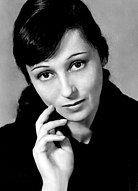
Luise Rainer; Best Actress winner
Walter Brennan; Best Supporting Actor winner
Gale Sondergaard; Best Supporting Actress winner
Pierre Collings; Best Original Story and Best Screenplay co-winner
Hal Roach; Best Live Action Short Subject, One-Reel co-winner
Jerome Kern; Best Song co-winner
Awards
[edit]
Nominees were announced on February 7, 1937. Winners are listed first and highlighted in boldface.[1]
Outstanding Production
The Great Ziegfeld– Hunt Stromberg for Metro-Goldwyn-Mayer‡
Anthony Adverse – Henry Blanke for Warner Bros.
Dodsworth – Samuel Goldwyn and Merritt Hulbert for Samuel Goldwyn Prod. and United Artists
Libeled Lady – Lawrence Weingarten for Metro-Goldwyn-Mayer
Mr. Deeds Goes to Town – Frank Capra for Columbia
Romeo and Juliet – Irving Thalberg for Metro-Goldwyn-Mayer
San Francisco – John Emerson and Bernard H. Hyman for Metro-Goldwyn-Mayer
The Story of Louis Pasteur – Henry Blanke for Warner Bros.
A Tale of Two Cities – David O. Selznick for Metro-Goldwyn-Mayer
Three Smart Girls – Joe Pasternak and Charles R. Rogers for Universal
Best Director
Frank Capra – Mr. Deeds Goes to Town‡
William Wyler – Dodsworth
Robert Z. Leonard – The Great Ziegfeld
Gregory La Cava – My Man Godfrey
W. S. Van Dyke – San Francisco
Best Actor
Paul Muni – The Story of Louis Pasteur as Louis Pasteur‡
Gary Cooper – Mr. Deeds Goes to Town as Longfellow Deeds
Walter Huston – Dodsworth as Sam Dodsworth
William Powell – My Man Godfrey as Godfrey
Spencer Tracy – San Francisco as Father Tim Mullin
Best Actress
Luise Rainer – The Great Ziegfeld as Anna Held‡
Irene Dunne – Theodora Goes Wild as Theodora Lynn/"Caroline Adams"
Gladys George – Valiant Is the Word for Carrie as Carrie Snyder
Carole Lombard – My Man Godfrey as Irene Bullock
Norma Shearer – Romeo and Juliet as Juliet
Best Supporting Actor
Walter Brennan – Come and Get It as Swan Bostrom‡
Mischa Auer – My Man Godfrey as Carlo
Stuart Erwin – Pigskin Parade as Amos
Basil Rathbone – Romeo and Juliet as Tybalt
Akim Tamiroff – The General Died at Dawn as General Yang
Best Supporting Actress
Gale Sondergaard – Anthony Adverse as Faith Paleologus‡
Beulah Bondi – The Gorgeous Hussy as Rachel Jackson
Alice Brady – My Man Godfrey as Angelica Bullock
Bonita Granville – These Three as Mary Tilford
Maria Ouspenskaya – Dodsworth as Baroness Von Obersdorf
Best Original Story
The Story of Louis Pasteur – Pierre Collings and Sheridan Gibney‡
Fury – Norman Krasna
The Great Ziegfeld – William Anthony McGuire
San Francisco – Robert Hopkins
Three Smart Girls – Adele Comandini
Best Screenplay
The Story of Louis Pasteur – Pierre Collings and Sheridan Gibney‡
After the Thin Man – Frances Goodrich and Albert Hackett, based on a story by Dashiell Hammett
Dodsworth – Sidney Howard, based on the play by Howard and the novel by Sinclair Lewis
Mr. Deeds Goes to Town – Robert Riskin, based on the story "Opera Hat" by Clarence Budington Kelland
My Man Godfrey – Eric Hatch and Morris Ryskind, based on the story "1101 Park Avenue" by Hatch
Best Live Action Short Subject, One-Reel
Bored of Education – Hal Roach and MGM‡
Moscow Moods – Paramount
Wanted – A Master – Pete Smith and MGM
Best Live Action Short Subject, Two-Reel
The Public Pays – MGM‡
Double or Nothing – Warner Bros.
Dummy Ache – RKO Radio
Best Live Action Short Subject, Color
Give Me Liberty – Warner Bros.‡
La Fiesta de Santa Barbara – Louis Lewyn and MGM
Popular Science J-6-2 – Paramount
Best Short Subject, Cartoon
The Country Cousin – Walt Disney Productions and United Artists‡
The Old Mill Pond – Harman-Ising and MGM
Popeye the Sailor Meets Sindbad the Sailor – Fleischer Studios and Paramount
Best Scoring
Anthony Adverse – Warner Bros. Studio Music Department‡
The Charge of the Light Brigade – Warner Bros. Studio Music Department
The Garden of Allah – Selznick International Pictures Music Department
The General Died at Dawn – Paramount Studio Music Department
Winterset – RKO Radio Studio Music Department
Best Song
"The Way You Look Tonight" from Swing Time – Music by Jerome Kern; Lyrics by Dorothy Fields‡
"Did I Remember" from Suzy – Music by Walter Donaldson; Lyrics by Harold Adamson
"I've Got You Under My Skin" from Born to Dance – Music and Lyrics by Cole Porter
"A Melody From the Sky" from Trail of the Lonesome Pine – Music by Louis Alter; Lyrics by Sidney Mitchell
"Pennies from Heaven" from Pennies from Heaven – Music by Arthur Johnston; Lyrics by Johnny Burke
"When Did You Leave Heaven" from Sing, Baby, Sing – Music by Richard A. Whiting; Lyrics by Walter Bullock
Best Sound Recording
San Francisco – Douglas Shearer‡
Banjo on My Knee – Edmund H. Hansen
The Charge of the Light Brigade – Nathan Levinson
Dodsworth – Thomas T. Moulton
General Spanky – Elmer A. Raguse
Mr. Deeds Goes to Town – John P. Livadary
The Texas Rangers – Franklin Hansen
That Girl from Paris – John Aalberg
Three Smart Girls – Homer G. Tasker
Best Art Direction
Dodsworth – Richard Day‡
Anthony Adverse – Anton Grot
The Great Ziegfeld – Cedric Gibbons, Eddie Imazu, and Edwin B. Willis
Lloyd's of London – William S. Darling
The Magnificent Brute – Albert S. D'Agostino and Jack Otterson
Romeo and Juliet – Cedric Gibbons, Fredric Hope, and Edwin B. Willis
Winterset – Perry Ferguson
Best Cinematography
Anthony Adverse – Tony Gaudio‡
The General Died at Dawn – Victor Milner
The Gorgeous Hussy – George J. Folsey
Best Film Editing
Anthony Adverse – Ralph Dawson‡
Come and Get It – Edward Curtiss
The Great Ziegfeld – William S. Gray
Lloyd's of London – Barbara McLean
A Tale of Two Cities – Conrad A. Nervig
Theodora Goes Wild – Otto Meyer
Best Dance Direction
The Great Ziegfeld – Seymour Felix‡
Born to Dance – Dave Gould
Cain and Mabel – Bobby Connolly
Dancing Pirate – Russell Lewis
Gold Diggers of 1937 – Busby Berkeley
One in a Million – Jack Haskell
Swing Time – Hermes Pan
Best Assistant Director
The Charge of the Light Brigade – Jack Sullivan‡
Anthony Adverse – William Cannon
Garden of Allah – Eric G. Stacey
The Last of the Mohicans – Clem Beauchamp
San Francisco – Joseph M. Newman
Academy Honorary Awards
[edit]
W. Howard Greene and Harold Rosson "for the color cinematography of the Selznick International Production, The Garden of Allah".
The March of Time "for its significance to motion pictures and for having revolutionized one of the most important branches of the industry – the newsreel".
Multiple nominations and awards
[edit]
Films with multiple nominations
Nominations
Film
7
Anthony Adverse
Dodsworth
The Great Ziegfeld
6
My Man Godfrey
San Francisco
5
Mr. Deeds Goes to Town
4
Romeo and Juliet
The Story of Louis Pasteur
3
The Charge of the Light Brigade
The General Died at Dawn
Three Smart Girls
2
Born to Dance
Come and Get It
The Garden of Allah
The Gorgeous Hussy
Lloyd's of London
Swing Time
A Tale of Two Cities
Theodora Goes Wild
Winterset
Films with multiple awards
Awards
Film
4
Anthony Adverse
3
The Great Ziegfeld
The Story of Louis Pasteur
See also
[edit]
1936 in film
List of films with all four Academy Award acting nominations
 From Wikipedia - Reading time: 9 min



 EncycloReader
is supported by the
EncycloReader
is supported by the  KSF
KSF