Categories
Butler B. Hare
 From Wikipedia - Reading time: 5 min
Butler B. Hare | |
|---|---|
 | |
| Member of the U.S. House of Representatives from South Carolina's 3rd district | |
| In office January 3, 1939 – January 3, 1947 | |
| Preceded by | John C. Taylor |
| Succeeded by | William Jennings Bryan Dorn |
| Member of the U.S. House of Representatives from South Carolina's 2nd district | |
| In office March 4, 1925 – March 3, 1933 | |
| Preceded by | James F. Byrnes |
| Succeeded by | Hampton P. Fulmer |
| Personal details | |
| Born | November 25, 1875 Edgefield County, South Carolina |
| Died | December 30, 1967 (aged 92) Saluda, South Carolina |
| Political party | Democratic |
| Spouse | Kate Etheridge |
| Alma mater | Newberry College (1899) George Washington University Law School (1910) |
| Profession | Attorney |
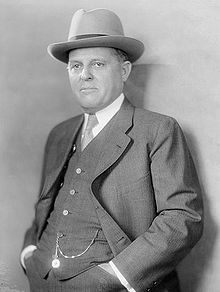
Butler Black Hare (November 25, 1875 – December 30, 1967) was an American politician who represented the state of South Carolina in the U.S. House of Representatives.
Born to James and Elizabeth Hare (née Black), he was one of nine sons born to the Civil War Confederate veteran. He graduated from Newberry College and earned his law degree from George Washington University. He served his first term in the U.S. House of Representatives in 1924, representing the 2nd district of South Carolina. He served from 1925 to 1933, and then did not run again after redistricting eliminated a seat from South Carolina's congressional delegation.[1]
He returned to the House in 1939 after defeating incumbent John Taylor. He served from 1939 to 1947 as the representative from the 3rd District.[2] His main accomplishment as a Representative was authoring the Hare–Hawes–Cutting Act, which grants a 10-year Commonwealth status and proposed that the former US Territory of the Philippines become an independent nation. It was later rejected by the Philippine Senate.[3] The Act was later replaced with the Tydings–McDuffie Act in 1934.[3]
His son James Butler Hare, whom he outlived by a year, served a single term from 1949 to 1951 in South Carolina's 3rd district.[4]
References[edit]
- ^ "Congressmen". The State. August 26, 1948.
- ^ "Hare, Butler Black (1875-1967)". Biographical Directory of the United States Congress. Retrieved 2020-04-30.
- ^ a b Baldoz, Rick (2011). The third Asiatic invasion : empire and migration in Filipino America, 1898-1946. New York: New York University Press. pp. 179–180. ISBN 978-0-8147-9108-0. OCLC 630468381.
- ^ "Two Men of Mark". The State. January 7, 1968.
External links[edit]

- Butler B. Hare at Find a Grave
- United States Congress. "Butler B. Hare (id: H000200)". Biographical Directory of the United States Congress.
- Butler Black Hare Papers at South Carolina Political Collections, University of South Carolina
Authority control | |
|---|---|
| General | |
| National libraries | |
| Other | |

  | This article about a South Carolina politician is a stub. You can help Wikipedia by expanding it. |
Original source: https://en.wikipedia.org/wiki/Butler B. Hare
Status: article is cached
 EncycloReader
is supported by the
EncycloReader
is supported by the  KSF
KSF