Crumbs homolog 1 is a protein that in humans is encoded by the CRB1 gene.[5][6][7]
This gene encodes a protein which is similar to the Drosophila crumbs protein and localizes to the inner segment of mammalian photoreceptors. In Drosophila, crumbs localizes to the stalk of the fly photoreceptor and may be a component of the molecular scaffold that controls proper development of polarity in the eye. Mutations in this gene are associated with a severe form of retinitis pigmentosa, RP12, and with Leber congenital amaurosis. Alternatively spliced transcript variants have been observed but their full-length nature has yet to be determined.[7] One small study suggests that mutations in this gene are associated with keratoconus in patients that already have Leber's congenital amaurosis.[8]
^"Human PubMed Reference:". National Center for Biotechnology Information, U.S. National Library of Medicine.
^"Mouse PubMed Reference:". National Center for Biotechnology Information, U.S. National Library of Medicine.
^den Hollander AI, van Driel MA, de Kok YJ, van de Pol DJ, Hoyng CB, Brunner HG, et al. (Jul 1999). "Isolation and mapping of novel candidate genes for retinal disorders using suppression subtractive hybridization". Genomics. 58 (3): 240–9. doi:10.1006/geno.1999.5823. PMID 10373321.
^den Hollander AI, ten Brink JB, de Kok YJ, van Soest S, van den Born LI, van Driel MA, et al. (Oct 1999). "Mutations in a human homologue of Drosophila crumbs cause retinitis pigmentosa (RP12)". Nat Genet. 23 (2): 217–21. doi:10.1038/13848. PMID 10508521. S2CID 11578020.
van Soest S, Ingeborgh van den Born L, Gal A, Farrar GJ, Bleeker-Wagemakers LM, Westerveld A, et al. (1995). "Assignment of a gene for autosomal recessive retinitis pigmentosa (RP12) to chromosome 1q31-q32.1 in an inbred and genetically heterogeneous disease population". Genomics. 22 (3): 499–504. doi:10.1006/geno.1994.1422. PMID 8001962.
van Soest S, te Nijenhuis S, van den Born LI, Bleeker-Wagemakers E, Sharp E, Sandkuijl L, et al. (1996). "Fine mapping of the autosomal recessive retinitis pigmentosa locus (RP12) on chromosome 1q; exclusion of the phosducin gene (PDC)". Cytogenet. Cell Genet. 73 (1–2): 81–5. doi:10.1159/000134313. PMID 8646891.
Lotery AJ, Malik A, Shami SA, Sindhi M, Chohan B, Maqbool C, et al. (2001). "CRB1 mutations may result in retinitis pigmentosa without para-arteriolar RPE preservation". Ophthalmic Genet. 22 (3): 163–9. doi:10.1076/opge.22.3.163.2222. PMID 11559858. S2CID 38623616.
Gerber S, Perrault I, Hanein S, Shalev S, Zlotogora J, Barbet F, et al. (2003). "A novel mutation disrupting the cytoplasmic domain of CRB1 in a large consanguineous family of Palestinian origin affected with Leber congenital amaurosis". Ophthalmic Genet. 23 (4): 225–35. doi:10.1076/opge.23.4.225.13879. PMID 12567265. S2CID 25525786.
Khaliq S, Abid A, Hameed A, Anwar K, Mohyuddin A, Azmat Z, et al. (2003). "Mutation screening of Pakistani families with congenital eye disorders". Exp. Eye Res. 76 (3): 343–8. doi:10.1016/S0014-4835(02)00304-4. PMID 12573663.
McKay GJ, Clarke S, Davis JA, Simpson DA, Silvestri G (2005). "Pigmented paravenous chorioretinal atrophy is associated with a mutation within the crumbs homolog 1 (CRB1) gene". Invest. Ophthalmol. Vis. Sci. 46 (1): 322–8. doi:10.1167/iovs.04-0734. PMID 15623792.
Kantardzhieva A, Gosens I, Alexeeva S, Punte IM, Versteeg I, Krieger E, et al. (2005). "MPP5 recruits MPP4 to the CRB1 complex in photoreceptors". Invest. Ophthalmol. Vis. Sci. 46 (6): 2192–201. doi:10.1167/iovs.04-1417. PMID 15914641.
 From Wikipedia - Reading time: 6 min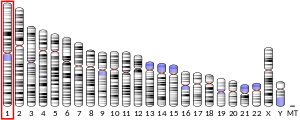





 EncycloReader
is supported by the
EncycloReader
is supported by the  KSF
KSF