Categories
Dopamine receptor D3
 From Wikipedia - Reading time: 15 min
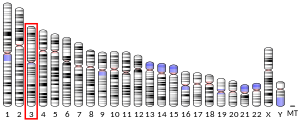


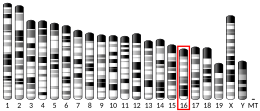



Dopamine receptor D3 is a protein that in humans is encoded by the DRD3 gene.[5][6]
This gene encodes the D3 subtype of the dopamine receptor. The D3 subtype inhibits adenylyl cyclase through inhibitory G-proteins. This receptor is expressed in phylogenetically older regions of the brain, suggesting that this receptor plays a role in cognitive and emotional functions.[citation needed] It is a target for drugs which treat schizophrenia, drug addiction, and Parkinson's disease.[7] Alternative splicing of this gene results in multiple transcript variants that would encode different isoforms, although some variants may be subject to nonsense-mediated decay (NMD).[6]
Function
[edit]Alpha-synuclein (α-Syn) aggregation via Lewy bodies inclusion, a pathogenic signature exclusively present in PD patients, is decreased by D3 agonists while DA content is elevated by inhibiting DA reuptake and breakdown. The regulation of α-Syn aggregation and clearance enhances brain-derived neurotrophic factor (BDNF) secretion, which ultimately ameliorates neuroinflammation and oxidative stress while promoting neurogenesis and interacting with other DA receptors.[8][9]
D3 agonists like 7-OH-DPAT, pramipexole, and rotigotine, among others, display antidepressant effects in rodent models of depression.[10][11] Apomorphine has the ability to help PD patients with their cognition awareness.[12] In addition to having antidepressant properties such as regulating the depression-like behaviors and depression development, pramipexole has the capability to prevent and slow down cell apoptosis as well as to restore damaged neural networks and connections while rotigotine help PD patients to attenuates hyperpyrexia syndrome and schizophrenia.[13][14]
Animal studies
[edit]D3 agonists have been shown to disrupt prepulse inhibition of startle (PPI), a cross-species measure that recapitulates deficits in sensorimotor gating in neuropsychiatric disorders such as schizophrenia.[15][16][17] In contrast, D3-preferring antagonists have antipsychotic-like profiles in measures of PPI in rats.[18]
Ligands
[edit]Agonists
[edit]- trans-N-{4-[4-(2,3-Dichlorophenyl)-1-piperazinyl]cyclohexyl}-3-methoxybenzamide, full agonist, > 200-fold binding selectivity over D4, D2, 5-HT1A, and α1-receptors[19]
- (-)-7-{[2-(4-Phenylpiperazin-1-yl)ethyl]propylamino}-5,6,7,8-tetrahydronaphthalen-2-ol[20]
- 5-OH-DPAT
- 7-OH-DPAT
- Pergolide[21]
- 8-OH-PBZI (cis-8-Hydroxy-3-(n-propyl)-1,2,3a,4,5,9b-hexahydro-1H-benz[e]indole)
- Apomorphine (non-selective dopamine agonist)
- Bromocriptine (non-selective dopamine agonist)
- Captodiame
- Aripiprazole (non-selective full agonist)
- CJ-1639[22]
- compound R,R-16: 250x binding selectivity over D2[23]
- Dopamine (endogenous agonist)
- ES609
- FAUC 54
- FAUC 73
- PD-128,907
- PF-219,061 (extremely selective) [24]
- PF-592,379[25]
- Piribedil[26] (non-selective dopamine agonist)
- Pramipexole (non-selective dopamine agonist)
- Quinelorane (also D2 agonist)
- Quinpirole (also D2 agonist)
- Ropinirole (non-selective dopamine agonist)
- Rotigotine (non-selective dopamine agonist)
Partial agonists
[edit]- BP-897[27]
- Brexpiprazole (non-selective)
- Buspirone (non-selective)
- Cariprazine
- CJB 090
- CJ-1037 (extremely selective) [28]
- FAUC 460 (highly selective) [29]
- FAUC 346 (highly selective)[30]
- Pardoprunox (non-selective)
- Roxindole (possibly a partial agonist at the D3 autoreceptors, non-selective)
- OS-3-106
- UH-232
- WW-III-55
Antagonists
[edit]- Most Antipsychotics
- Amisulpride (non-selective)
- Buspirone
- Cyproheptadine (non-selective)
- PG 01037 [31][32]
- Domperidone (peripheral D2 and D3 antagonist)
- FAUC 365, silent antagonist, subtype selective[30]
- GR-103,691
- GSK598809 (highly selective)
- Haloperidol (non-selective, blocks all dopamine receptor subtypes, though D3 with the strongest affinity)
- N-(4-(4-(2,3-Dichloro- or 2-methoxyphenyl)piperazin-1-yl)butyl)heterobiarylcarboxamides[33]
- Nafadotride
- NGB-2904[34]
- PNU-99,194 (moderately selective over D2)
- Raclopride (also D2 antagonist)
- S-14,297 (selective)
- S33084
- SB-277011-A, selective D3 antagonist, 80x selectivity over D2 with no partial agonist effects, used in drug addiction research as a potential therapy for addiction to several different drugs
- SR 21502 (highly selective)
- Sulpiride (also D2 antagonist)
- U99194
- YQA14 (high affinity and selectivity)
- Risperidone
Interactions
[edit]Dopamine receptor D3 has been shown to interact with CLIC6[35] and EPB41L1.[36]
DRD3 Ser9Gly polymorphism(rs6280), which is a single nucleotide polymorphism (SNP) with variant base C/T is linked to variation in PD such as depression severity, impulse control disorders, behavioral addiction and aberrant decision-making.[37][38][39][40]
See also
[edit]- Dopamine receptor
References
[edit]- ^ a b c GRCh38: Ensembl release 89: ENSG00000151577 – Ensembl, May 2017
- ^ a b c GRCm38: Ensembl release 89: ENSMUSG00000022705 – Ensembl, May 2017
- ^ "Human PubMed Reference:". National Center for Biotechnology Information, U.S. National Library of Medicine.
- ^ "Mouse PubMed Reference:". National Center for Biotechnology Information, U.S. National Library of Medicine.
- ^ Le Coniat M, Sokoloff P, Hillion J, Martres MP, Giros B, Pilon C, et al. (September 1991). "Chromosomal localization of the human D3 dopamine receptor gene". Human Genetics. 87 (5): 618–620. doi:10.1007/bf00209024. PMID 1916765. S2CID 28411786.
- ^ a b "Entrez Gene: DRD3 dopamine receptor D3".
- ^ Joyce JN, Millan MJ (February 2007). "Dopamine D3 receptor agonists for protection and repair in Parkinson's disease". Current Opinion in Pharmacology. 7 (1): 100–105. doi:10.1016/j.coph.2006.11.004. PMID 17174156.
- ^ Favier M, Carcenac C, Savasta M, Carnicella S (2022). "Dopamine D3 Receptors: A Potential Target to Treat Motivational Deficits in Parkinson's Disease". Current Topics in Behavioral Neurosciences. Vol. 60. Berlin, Heidelberg: Springer Berlin Heidelberg. pp. 109–132. doi:10.1007/7854_2022_316. ISBN 978-3-031-23057-8. PMID 35469394.
- ^ Yang P, Perlmutter JS, Benzinger TL, Morris JC, Xu J (January 2020). "Dopamine D3 receptor: A neglected participant in Parkinson Disease pathogenesis and treatment?". Ageing Research Reviews. 57: 100994. doi:10.1016/j.arr.2019.100994. PMC 6939386. PMID 31765822.
- ^ Breuer ME, Groenink L, Oosting RS, Buerger E, Korte M, Ferger B, Olivier B (August 2009). "Antidepressant effects of pramipexole, a dopamine D3/D2 receptor agonist, and 7-OH-DPAT, a dopamine D3 receptor agonist, in olfactory bulbectomized rats". European Journal of Pharmacology. 616 (1–3): 134–140. doi:10.1016/j.ejphar.2009.06.029. PMID 19549514.
- ^ Bertaina-Anglade V, La Rochelle CD, Scheller DK (October 2006). "Antidepressant properties of rotigotine in experimental models of depression". European Journal of Pharmacology. 548 (1–3): 106–114. doi:10.1016/j.ejphar.2006.07.022. PMID 16959244.
- ^ Oliveira V, Videira G, Mendes A (July 2020). "Loss of Awareness after Continuous Apomorphine Infusion Withdrawal in Parkinson's Disease". The Canadian Journal of Neurological Sciences. Le Journal Canadien des Sciences Neurologiques. 47 (4): 576–577. doi:10.1017/cjn.2020.43. hdl:10400.16/2536. PMID 32122433. S2CID 211831700.
- ^ Sun Y, Cui B, Ye L, Hu Y, Pan Y (2022). "Pramipexole Inhibits Neuronal Apoptosis in Rats with Parkinson's Disease". Journal of Healthcare Engineering. 2022: 7002630. doi:10.1155/2022/7002630. PMC 9020956. PMID 35463692.
- ^ Mooney E, Smith MD, Henderson EJ (August 2022). "An unwell patient with Parkinson's disease: Hyperpyrexia syndrome in a heatwave". JRSM Open. 13 (8): 20542704221086162. doi:10.1177/20542704221086162. PMC 9373140. PMID 35965941.
- ^ Weber M, Chang WL, Breier M, Ko D, Swerdlow NR (December 2008). "Heritable strain differences in sensitivity to the startle gating-disruptive effects of D2 but not D3 receptor stimulation". Behavioural Pharmacology. 19 (8): 786–795. doi:10.1097/FBP.0b013e32831c3b2b. PMC 3255557. PMID 19020413.
- ^ Chang WL, Swerdlow NR, Breier MR, Thangaraj N, Weber M (June 2010). "Parametric approaches towards understanding the effects of the preferential D3 receptor agonist pramipexole on prepulse inhibition in rats". Pharmacology, Biochemistry, and Behavior. 95 (4): 473–478. doi:10.1016/j.pbb.2010.04.001. PMC 2889248. PMID 20385162.
- ^ Chang WL, Weber M, Breier MR, Saint Marie RL, Hines SR, Swerdlow NR (February 2012). "Stereochemical and neuroanatomical selectivity of pramipexole effects on sensorimotor gating in rats". Brain Research. 1437: 69–76. doi:10.1016/j.brainres.2011.12.007. PMC 3268831. PMID 22227455.
- ^ Weber M, Chang WL, Durbin JP, Park PE, Luedtke RR, Mach RH, Swerdlow NR (August 2009). "Using prepulse inhibition to detect functional D3 receptor antagonism: effects of WC10 and WC44". Pharmacology, Biochemistry, and Behavior. 93 (2): 141–147. doi:10.1016/j.pbb.2009.04.022. PMC 2720754. PMID 19426754.
- ^ Leopoldo M, Lacivita E, Colabufo NA, Berardi F, Perrone R (February 2006). "Synthesis and binding profile of constrained analogues of N-[4-(4-arylpiperazin-1-yl)butyl]-3-methoxybenzamides, a class of potent dopamine D3 receptor ligands". The Journal of Pharmacy and Pharmacology. 58 (2): 209–218. doi:10.1211/jpp.58.2.0008. PMID 16451749. S2CID 42910160.
- ^ Biswas S, Zhang S, Fernandez F, Ghosh B, Zhen J, Kuzhikandathil E, et al. (January 2008). "Further structure-activity relationships study of hybrid 7-{[2-(4-phenylpiperazin-1-yl)ethyl]propylamino}-5,6,7,8-tetrahydronaphthalen-2-ol analogues: identification of a high-affinity D3-preferring agonist with potent in vivo activity with long duration of action". Journal of Medicinal Chemistry. 51 (1): 101–117. doi:10.1021/jm070860r. PMID 18072730.
- ^ Perachon S, Schwartz JC, Sokoloff P (February 1999). "Functional potencies of new antiparkinsonian drugs at recombinant human dopamine D1, D2 and D3 receptors". European Journal of Pharmacology. 366 (2–3): 293–300. doi:10.1016/S0014-2999(98)00896-6. PMID 10082211.
- ^ Chen J, Collins GT, Levant B, Woods J, Deschamps JR, Wang S (August 2011). "CJ-1639: A Potent and Highly Selective Dopamine D3 Receptor Full Agonist". ACS Medicinal Chemistry Letters. 2 (8): 620–625. doi:10.1021/ml200100t. PMC 3224040. PMID 22125662.
- ^ Peglion JL, Poitevin C, Mannoury La Cour C, Dupuis D, Millan MJ (April 2009). "Modulations of the amide function of the preferential dopamine D3 agonist (R,R)-S32504: improvements of affinity and selectivity for D3 versus D2 receptors". Bioorganic & Medicinal Chemistry Letters. 19 (8): 2133–2138. doi:10.1016/j.bmcl.2009.03.015. PMID 19324548.
- ^ Blagg J, Allerton CM, Batchelor DV, Baxter AD, Burring DJ, Carr CL, et al. (December 2007). "Design and synthesis of a functionally selective D3 agonist and its in vivo delivery via the intranasal route". Bioorganic & Medicinal Chemistry Letters. 17 (24): 6691–6696. doi:10.1016/j.bmcl.2007.10.059. PMID 17976986.
- ^ Collins GT, Butler P, Wayman C, Ratcliffe S, Gupta P, Oberhofer G, Caine SB (June 2012). "Lack of abuse potential in a highly selective dopamine D3 agonist, PF-592,379, in drug self-administration and drug discrimination in rats". Behavioural Pharmacology. 23 (3): 280–291. doi:10.1097/FBP.0b013e3283536d21. PMC 3365486. PMID 22470105.
- ^ Cagnotto A, Parotti L, Mennini T (October 1996). "In vitro affinity of piribedil for dopamine D3 receptor subtypes, an autoradiographic study". European Journal of Pharmacology. 313 (1–2): 63–67. doi:10.1016/0014-2999(96)00503-1. PMID 8905329.
- ^ Spiller K, Xi ZX, Peng XQ, Newman AH, Ashby CR, Heidbreder C, et al. (March 2008). "The selective dopamine D3 receptor antagonists SB-277011A and NGB 2904 and the putative partial D3 receptor agonist BP-897 attenuate methamphetamine-enhanced brain stimulation reward in rats". Psychopharmacology. 196 (4): 533–542. doi:10.1007/s00213-007-0986-6. PMC 3713235. PMID 17985117.
- ^ Chen J, Collins GT, Zhang J, Yang CY, Levant B, Woods J, Wang S (October 2008). "Design, synthesis, and evaluation of potent and selective ligands for the dopamine 3 (D3) receptor with a novel in vivo behavioral profile". Journal of Medicinal Chemistry. 51 (19): 5905–5908. doi:10.1021/jm800471h. PMC 2662387. PMID 18785726.
- ^ Dörfler M, Tschammer N, Hamperl K, Hübner H, Gmeiner P (November 2008). "Novel D3 selective dopaminergics incorporating enyne units as nonaromatic catechol bioisosteres: synthesis, bioactivity, and mutagenesis studies". Journal of Medicinal Chemistry. 51 (21): 6829–6838. doi:10.1021/jm800895v. PMID 18834111.
- ^ a b Bettinetti L, Schlotter K, Hübner H, Gmeiner P (October 2002). "Interactive SAR studies: rational discovery of super-potent and highly selective dopamine D3 receptor antagonists and partial agonists". Journal of Medicinal Chemistry. 45 (21): 4594–4597. doi:10.1021/jm025558r. PMID 12361386.
- ^ {{cite journal | vauthors = Grundt P, Carlson EE, Cao J, Bennett CJ, McElveen E, Taylor M, Luedtke RR, Newman AH | display-authors = 6 | title = Novel heterocyclic trans olefin analogues of N-{4-[4-(2,3-dichlorophenyl)piperazin-1-yl]butyl}arylcarboxamides as selective probes with high affinity for the dopamine D3 receptor | journal = Journal of Medicinal Chemistry | volume = 48 | issue = 3 | pages = 839–848 | date = February 2005 | pmid = 15689168 | doi = 10.1021/jm049465g }}
- ^ Mason CW, Hassan HE, Kim KP, Cao J, Eddington ND, Newman AH, Voulalas PJ (June 2010). "Characterization of the transport, metabolism, and pharmacokinetics of the dopamine D3 receptor-selective fluorenyl- and 2-pyridylphenyl amides developed for treatment of psychostimulant abuse". The Journal of Pharmacology and Experimental Therapeutics. 333 (3): 854–864. doi:10.1124/jpet.109.165084. PMC 2879935. PMID 20228156.
- ^ Newman AH, Grundt P, Cyriac G, Deschamps JR, Taylor M, Kumar R, et al. (April 2009). "N-(4-(4-(2,3-dichloro- or 2-methoxyphenyl)piperazin-1-yl)butyl)heterobiarylcarboxamides with functionalized linking chains as high affinity and enantioselective D3 receptor antagonists". Journal of Medicinal Chemistry. 52 (8): 2559–2570. doi:10.1021/jm900095y. PMC 2760932. PMID 19331412.
- ^ Xi ZX, Gardner EL (2007). "Pharmacological actions of NGB 2904, a selective dopamine D3 receptor antagonist, in animal models of drug addiction". CNS Drug Reviews. 13 (2): 240–259. doi:10.1111/j.1527-3458.2007.00013.x. PMC 3771110. PMID 17627675.
- ^ Griffon N, Jeanneteau F, Prieur F, Diaz J, Sokoloff P (September 2003). "CLIC6, a member of the intracellular chloride channel family, interacts with dopamine D(2)-like receptors". Brain Research. Molecular Brain Research. 117 (1): 47–57. doi:10.1016/S0169-328X(03)00283-3. PMID 14499480.
- ^ Binda AV, Kabbani N, Lin R, Levenson R (September 2002). "D2 and D3 dopamine receptor cell surface localization mediated by interaction with protein 4.1N". Molecular Pharmacology. 62 (3): 507–513. doi:10.1124/mol.62.3.507. PMID 12181426. S2CID 19901660.
- ^ Krishnamoorthy S, Rajan R, Banerjee M, Kumar H, Sarma G, Krishnan S, et al. (September 2016). "Dopamine D3 receptor Ser9Gly variant is associated with impulse control disorders in Parkinson's disease patients". Parkinsonism & Related Disorders. 30: 13–17. doi:10.1016/j.parkreldis.2016.06.005. PMID 27325396.
- ^ Zhi Y, Yuan Y, Si Q, Wang M, Shen Y, Wang L, et al. (2019-04-15). "The Association between DRD3 Ser9Gly Polymorphism and Depression Severity in Parkinson's Disease". Parkinson's Disease. 2019: 1642087. doi:10.1155/2019/1642087. PMC 6501220. PMID 31143436.
- ^ Castro-Martínez XH, García-Ruiz PJ, Martínez-García C, Martínez-Castrillo JC, Vela L, Mata M, et al. (April 2018). "Behavioral addictions in early-onset Parkinson disease are associated with DRD3 variants". Parkinsonism & Related Disorders. 49: 100–103. doi:10.1016/j.parkreldis.2018.01.010. PMID 29361389.
- ^ Rajan R, Krishnan S, Sarma G, Sarma SP, Kishore A (2018). "Dopamine Receptor D3 rs6280 is Associated with Aberrant Decision-Making in Parkinson's Disease". Movement Disorders Clinical Practice. 5 (4): 413–416. doi:10.1002/mdc3.12631. PMC 6174438. PMID 30363458.
Further reading
[edit]- Missale C, Nash SR, Robinson SW, Jaber M, Caron MG (January 1998). "Dopamine receptors: from structure to function". Physiological Reviews. 78 (1): 189–225. doi:10.1152/physrev.1998.78.1.189. PMID 9457173.
- Sidhu A, Niznik HB (November 2000). "Coupling of dopamine receptor subtypes to multiple and diverse G proteins". International Journal of Developmental Neuroscience. 18 (7): 669–677. doi:10.1016/S0736-5748(00)00033-2. PMID 10978845. S2CID 21002590.
- Sokoloff P, Giros B, Martres MP, Bouthenet ML, Schwartz JC (September 1990). "Molecular cloning and characterization of a novel dopamine receptor (D3) as a target for neuroleptics". Nature. 347 (6289): 146–151. Bibcode:1990Natur.347..146S. doi:10.1038/347146a0. PMID 1975644. S2CID 4284114.
- Giros B, Martres MP, Sokoloff P, Schwartz JC (1991). "[Gene cloning of human dopaminergic D3 receptor and identification of its chromosome]". Comptes Rendus de l'Académie des Sciences, Série III. 311 (13): 501–508. PMID 2129115.
- Liu K, Bergson C, Levenson R, Schmauss C (November 1994). "On the origin of mRNA encoding the truncated dopamine D3-type receptor D3nf and detection of D3nf-like immunoreactivity in human brain". The Journal of Biological Chemistry. 269 (46): 29220–29226. doi:10.1016/S0021-9258(19)62033-8. PMID 7961889.
- Schmauss C, Haroutunian V, Davis KL, Davidson M (October 1993). "Selective loss of dopamine D3-type receptor mRNA expression in parietal and motor cortices of patients with chronic schizophrenia". Proceedings of the National Academy of Sciences of the United States of America. 90 (19): 8942–8946. Bibcode:1993PNAS...90.8942S. doi:10.1073/pnas.90.19.8942. PMC 47477. PMID 8415635.
- Griffon N, Crocq MA, Pilon C, Martres MP, Mayerova A, Uyanik G, et al. (February 1996). "Dopamine D3 receptor gene: organization, transcript variants, and polymorphism associated with schizophrenia". American Journal of Medical Genetics. 67 (1): 63–70. doi:10.1002/(SICI)1096-8628(19960216)67:1<63::AID-AJMG11>3.0.CO;2-N. PMID 8678117.
- Staley JK, Mash DC (October 1996). "Adaptive increase in D3 dopamine receptors in the brain reward circuits of human cocaine fatalities". The Journal of Neuroscience. 16 (19): 6100–6106. doi:10.1523/JNEUROSCI.16-19-06100.1996. PMC 6579196. PMID 8815892.
- Chen CH, Liu MY, Wei FC, Koong FJ, Hwu HG, Hsiao KJ (February 1997). "Further evidence of no association between Ser9Gly polymorphism of dopamine D3 receptor gene and schizophrenia". American Journal of Medical Genetics. 74 (1): 40–43. doi:10.1002/(SICI)1096-8628(19970221)74:1<40::AID-AJMG9>3.0.CO;2-Z. PMID 9034004.
- Gulcher JR, Jónsson P, Kong A, Kristjánsson K, Frigge ML, Kárason A, et al. (September 1997). "Mapping of a familial essential tremor gene, FET1, to chromosome 3q13". Nature Genetics. 17 (1): 84–87. doi:10.1038/ng0997-84. PMID 9288103. S2CID 1506516.
- Oldenhof J, Vickery R, Anafi M, Oak J, Ray A, Schoots O, et al. (November 1998). "SH3 binding domains in the dopamine D4 receptor" (PDF). Biochemistry. 37 (45): 15726–15736. doi:10.1021/bi981634+. PMID 9843378.
- Cargill M, Altshuler D, Ireland J, Sklar P, Ardlie K, Patil N, et al. (July 1999). "Characterization of single-nucleotide polymorphisms in coding regions of human genes". Nature Genetics. 22 (3): 231–238. doi:10.1038/10290. PMID 10391209. S2CID 195213008.
- Pilla M, Perachon S, Sautel F, Garrido F, Mann A, Wermuth CG, et al. (July 1999). "Selective inhibition of cocaine-seeking behaviour by a partial dopamine D3 receptor agonist". Nature. 400 (6742): 371–375. Bibcode:1999Natur.400..371P. doi:10.1038/22560. PMID 10432116. S2CID 4351316.
- Ilani T, Ben-Shachar D, Strous RD, Mazor M, Sheinkman A, Kotler M, Fuchs S (January 2001). "A peripheral marker for schizophrenia: Increased levels of D3 dopamine receptor mRNA in blood lymphocytes". Proceedings of the National Academy of Sciences of the United States of America. 98 (2): 625–628. doi:10.1073/pnas.021535398. PMC 14638. PMID 11149951.
- Lin R, Karpa K, Kabbani N, Goldman-Rakic P, Levenson R (April 2001). "Dopamine D2 and D3 receptors are linked to the actin cytoskeleton via interaction with filamin A". Proceedings of the National Academy of Sciences of the United States of America. 98 (9): 5258–5263. Bibcode:2001PNAS...98.5258L. doi:10.1073/pnas.011538198. PMC 33197. PMID 11320256.
- Oldenhof J, Ray A, Vickery R, Van Tol HH (June 2001). "SH3 ligands in the dopamine D3 receptor". Cellular Signalling. 13 (6): 411–416. doi:10.1016/S0898-6568(01)00157-7. PMID 11384839.
- Soma M, Nakayama K, Rahmutula D, Uwabo J, Sato M, Kunimoto M, et al. (January 2002). "Ser9Gly polymorphism in the dopamine D3 receptor gene is not associated with essential hypertension in the Japanese". Medical Science Monitor. 8 (1): CR1–CR4. PMID 11796958.
External links
[edit]- "Dopamine Receptors: D3". IUPHAR Database of Receptors and Ion Channels. International Union of Basic and Clinical Pharmacology.
- Receptors,+Dopamine+D3 at the U.S. National Library of Medicine Medical Subject Headings (MeSH)
This article incorporates text from the United States National Library of Medicine, which is in the public domain.
Original source: https://en.wikipedia.org/wiki/Dopamine receptor D3
Status: article is cached
 EncycloReader
is supported by the
EncycloReader
is supported by the  KSF
KSF