Categories
Leader of the House of Commons
 From Wikipedia - Reading time: 16 min
| United Kingdom Leader of the House of Commons | |
|---|---|
 | |
 Incumbent since 5 July 2024Lucy Powell | |
| Cabinet Office Office of the Leader of the House of Commons | |
| Style | The Right Honourable |
| Formation | 4 April 1721 |
| First holder | Sir Robert Walpole |
| Salary | £159,038 per annum (2022)[1] (including £86,584 MP salary)[2] |
| Website | gov |
| Political offices in the UK government |
|---|
 |
|
| List of political offices |
The Leader of the House of Commons is a minister of the Crown of the Government of the United Kingdom whose main role is organising government business in the House of Commons. ("Government" here means the controlling faction of the parliament, headed by the Prime Minister.) The Leader is always a member or attendee of the cabinet of the United Kingdom.
The House of Commons devotes approximately three-quarters of its time to debating and explaining government business, such as bills introduced by the government and ministerial statements.[citation needed] The Leader of the House of Commons, with the parties' chief whips ("the usual channels"), is responsible for organising government business and providing time for non-government (backbench) business to be put before the House of Commons.[3]
The position of leader of the House of Commons is currently held by Lucy Powell, who was appointed on 5 July 2024 by Keir Starmer.
Responsibilities
[edit]The current responsibilities of the Leader of the House of Commons are as follows:
- Planning and supervising the Government's Legislative Programme;
- Chairing the Cabinet Committee on Parliamentary Business and Legislation;
- Managing the business of the House of Commons and preparing weekly statements on upcoming business;
- Facilitating motions and debate in the Chamber;
- Serving as the Government's representative in the House, namely as a voting member of the House of Commons Commission, the Public Accounts Commission, the Members Estimate Committee, and the Speaker's Committee for the Independent Parliamentary Standards Authority;
- Reforming parliamentary procedure and operations;
- Representing the House of Commons within Government, be it contributing to the Civil Service's efforts to build parliamentary capability or receiving MPs' requests for assistance on ministerial correspondence and questions; and
- Ministerial responsibility for the Privy Council Office.[4]
The Osmotherly Rules, which set out guidance on how civil servants should respond to parliamentary select committees, are jointly updated by the Office of the Leader of the House of Commons and the Cabinet Office.[5]
History
[edit]The title was not established until about the middle of the 19th century, although the institution is much older.[6]
Until 1942, the title was usually held by the prime minister if he sat in the House of Commons, however, in more recent years, the title has been held by a separate politician.[6]
The title holder is not formally appointed by the Crown[clarification needed] and the title alone does not attract a salary,[6] so is now usually held in addition to a sinecure, currently Lord President of the Council.
List of Leaders of the House of Commons (1721–present)
[edit]| Leader Constituency |
Term of office | Other ministerial offices held as Leader | Party | Ministry | ||||
|---|---|---|---|---|---|---|---|---|

|
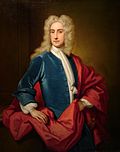
Robert Walpole MP for King's Lynn |
4 April 1721 |
6 February 1742 |
|
Whig | Walpole–Townshend | ||
| Walpole | ||||||||
|
Samuel Sandys MP for Worcester |
12 February 1742 |
27 August 1743 |
|
Carteret | |||

|
Henry Pelham MP for Sussex |
27 August 1743 |
6 March 1754 |
| ||||
| Broad Bottom (I & II) | ||||||||

|
Thomas Robinson MP for Christchurch |
23 March 1754 |
October 1755 |
|
Newcastle I | |||

|
Henry Fox MP for Windsor |
14 November 1755 |
13 November 1756 | |||||
|
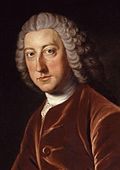
William Pitt 'the Elder' MP for Okehampton |
4 December 1756 |
6 April 1757 |
Pitt–Devonshire | ||||
| Vacant | April 1757 |
June 1757 |
1757 Caretaker | |||||
|
|
William Pitt 'the Elder' MP for Bath |
27 June 1757 |
6 October 1761 |
|
Whig | Pitt–Newcastle | ||

|
George Grenville MP for Buckingham |
October 1761 |
May 1762 |
| ||||
|
|
Henry Fox MP for Dunwich |
May 1762 |
April 1763 |
|
Bute (Tory–Whig) | |||
|
|
George Grenville MP for Buckingham |
16 April 1763 |
13 July 1765 |
|
Grenville | |||

|
Henry Seymour Conway MP for Thetford |
July 1765 |
20 October 1768 |
|
Rockingham I | |||
| Chatham (Whig–Tory) | ||||||||
|
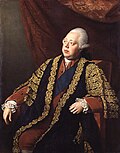
Frederick North Lord North MP for Banbury |
October 1768 |
22 March 1782 |
|
Tory | Grafton (Whig–Tory) | ||
| North | ||||||||

|
Charles James Fox MP for Westminster |
27 March 1782 |
July 1782 |
|
Whig | Rockingham II | ||
|
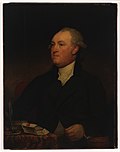
Thomas Townshend MP for Whitchurch |
10 July 1782 |
6 March 1783 |
|
Shelburne (Whig–Tory) | |||
|
|
Charles James Fox MP for Westminster |
2 April 1783 |
19 December 1783 |
|
Fox–North | |||
|
|
Frederick North Lord North MP for Banbury |
|
Tory | |||||

|
William Pitt 'the Younger' MP for Appleby until 1784 MP for Cambridge University from 1784 |
19 December 1783 |
14 March 1801 |
|
Pitt I | |||

|
Henry Addington MP for Devizes |
17 March 1801 |
10 May 1804 |
Addington | ||||
|
|
William Pitt 'the Younger' MP for Cambridge University |
10 May 1804 |
23 January 1806† |
Pitt II | ||||
|
|
Charles James Fox MP for Westminster |
February 1806 |
13 September 1806† |
|
Whig | All the Talents | ||

|
Charles Grey Viscount Howick MP for Northumberland |
September 1806 |
31 March 1807 | |||||
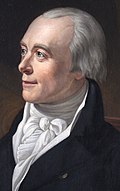
|
Spencer Perceval MP for Northampton |
April 1807 |
11 May 1812† |
|
Tory | Portland II | ||
| Perceval | ||||||||
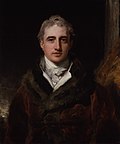
|
Robert Stewart Viscount Castlereagh MP for Down until 1821 MP for Orford from 1821 The Marquess of Londonderry from 1821 |
June 1812 |
12 August 1822† |
|
Liverpool | |||

|
George Canning MP for Liverpool until 1823 MP for Harwich 1823–1826 MP for Newport 1826–1827 MP for Seaford from 1827 |
16 September 1822 |
8 August 1827† |
| ||||
| Canning (Canningite–Whig) | ||||||||

|
William Huskisson MP for Liverpool |
3 September 1827 |
21 January 1828 |
|
Goderich (Canningite–Whig) | |||

|
Robert Peel MP for Oxford University until 1829 MP for Westbury from 1829 |
26 January 1828 |
16 November 1830 |
|
Wellington–Peel | |||

|
John Spencer Viscount Althorp MP for Northamptonshire until 1832 MP for South Northamptonshire from 1832 |
22 November 1830 |
14 November 1834 |
|
Whig | Grey | ||
| Melbourne I | ||||||||
| Vacant | 14 November 1834 |
10 December 1834 |
Wellington Caretaker | |||||
|
|
Robert Peel MP for Tamworth |
10 December 1834 |
8 April 1835 |
|
Conservative | Peel I | ||

|
Lord John Russell MP for Stroud |
18 April 1835 |
30 August 1841 |
|
Whig | Melbourne II | ||
|
|
Robert Peel MP for Tamworth |
30 August 1841 |
29 June 1846 |
|
Conservative | Peel II | ||
|
|
Lord John Russell MP for City of London |
30 June 1846 |
21 February 1852 |
|
Whig | Russell I | ||

|
Benjamin Disraeli MP for Buckinghamshire |
27 February 1852 |
17 December 1852 |
|
Conservative | Who? Who? | ||
|
|
Lord John Russell MP for City of London |
28 December 1852 |
30 January 1855 |
|
Whig | Aberdeen (Peelite–Whig) | ||

|
Henry John Temple The Viscount Palmerston MP for Tiverton |
6 February 1855 |
19 February 1858 |
|
Palmerston I | |||
|
|
Benjamin Disraeli MP for Buckinghamshire |
26 February 1858 |
11 June 1859 |
|
Conservative | Derby–Disraeli II | ||
|
|
Henry John Temple The Viscount Palmerston MP for Tiverton |
12 June 1859 |
18 October 1865† |
|
Liberal | Palmerston II | ||

|
William Ewart Gladstone MP for South Lancashire |
October 1865 |
26 June 1866 |
|
Russell II | |||
|
|
Benjamin Disraeli MP for Buckinghamshire |
6 July 1866 |
1 December 1868 |
|
Conservative | Derby–Disraeli III | ||
|
|
William Ewart Gladstone MP for Greenwich |
3 December 1868 |
17 February 1874 |
|
Liberal | Gladstone I | ||
|
|
Benjamin Disraeli MP for Buckinghamshire |
20 February 1874 |
21 August 1876 |
|
Conservative | Disraeli II | ||
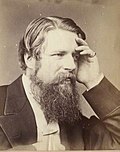
|
Stafford Northcote MP for Devonshire North |
21 August 1876 |
21 April 1880 |
| ||||
|
|
William Ewart Gladstone MP for Midlothian |
23 April 1880 |
9 June 1885 |
|
Liberal | Gladstone II | ||

|
Michael Hicks-Beach MP for Bristol West |
24 June 1885 |
28 January 1886 |
|
Conservative | Salisbury I | ||
|
|
William Ewart Gladstone MP for Midlothian |
1 February 1886 |
2 July 1886 |
|
Liberal | Gladstone III | ||
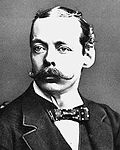
|
Lord Randolph Churchill MP for Paddington South |
3 August 1886 |
14 January 1887 |
|
Conservative | Salisbury II | ||

|
W. H. Smith MP for Strand |
17 January 1887 |
October 1891 |
| ||||

|
Arthur Balfour MP for Manchester East |
October 1891 |
11 August 1892 | |||||
|
|
William Ewart Gladstone MP for Midlothian |
15 August 1892 |
2 March 1894 |
|
Liberal | Gladstone IV | ||

|
William Harcourt MP for Derby |
2 March 1894 |
21 June 1895 |
|
Rosebery | |||
|
|
Arthur Balfour[7] MP for Manchester East |
29 June 1895 |
4 December 1905 |
|
Conservative | Salisbury (III & IV) (Con.–Lib.U.) | ||
| Balfour (Con.–Lib.U.) | ||||||||
|
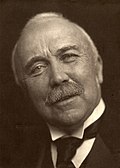
Henry Campbell-Bannerman[7] MP for Stirling Burghs |
5 December 1905 |
5 April 1908 |
|
Liberal | Campbell-Bannerman | ||

|
H. H. Asquith[7] MP for East Fife |
5 April 1908 |
5 December 1916 |
|
Asquith (I–III) | |||
| Asquith Coalition (Lib.–Con.–Lab.) | ||||||||

|
Bonar Law[7] MP for Bootle until 1918 MP for Glasgow Central from 1918 |
10 December 1916 |
23 March 1921 |
|
Conservative | Lloyd George (I & II) (Lib.–Con.–Lab.) | ||

|
Austen Chamberlain[7] MP for Birmingham West |
23 March 1921 |
19 October 1922 |
| ||||
|
|
Bonar Law[7] MP for Glasgow Central |
23 October 1922 |
20 May 1923 |
|
Law | |||

|
Stanley Baldwin[7] MP for Bewdley |
22 May 1923 |
22 January 1924 |
|
Baldwin I | |||

|
Ramsay MacDonald[7] MP for Aberavon |
22 January 1924 |
3 November 1924 |
|
Labour | MacDonald I | ||
|
|
Stanley Baldwin[7] MP for Bewdley |
4 November 1924 |
4 June 1929 |
|
Conservative | Baldwin II | ||
|
|
Ramsay MacDonald[7] MP for Seaham |
5 June 1929 |
7 June 1935 |
Labour | MacDonald II | |||
| National Labour | National I (N.Lab.–Con.–Lib.N. –Lib.) | |||||||
| National II (N.Lab.–Con.–Lib.N. –Lib. until 1932) | ||||||||
|
|
Stanley Baldwin[7] MP for Bewdley |
7 June 1935 |
28 May 1937 |
Conservative | National III (Con.–N.Lab.–Lib.N.) | |||
| Neville Chamberlain[7] MP for Birmingham Edgbaston |
28 May 1937 |
10 May 1940 |
National IV (Con.–N.Lab.–Lib.N.) | |||||
| Chamberlain War (Con.–N.Lab.–Lib.N.) | ||||||||

|
Winston Churchill[7] MP for Epping |
10 May 1940 |
19 February 1942 |
|
Churchill War (All parties) | |||
|
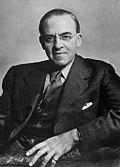
Stafford Cripps[7] MP for Bristol East |
19 February 1942 |
22 November 1942 |
|
Independent | |||

|
Anthony Eden[7] MP for Warwick and Leamington |
22 November 1942 |
26 July 1945 |
|
Conservative | |||
| Churchill Caretaker (Con.–N.Lib.) | ||||||||
| Herbert Morrison[7] MP for Lewisham East until 1950 MP for Lewisham South from 1950 |
27 July 1945 |
9 March 1951 |
|
Labour | Attlee (I & II) | |||

|
James Chuter Ede[7] MP for South Shields |
9 March 1951 |
26 October 1951 |
| ||||
|
Harry Crookshank[7] MP for Gainsborough |
28 October 1951 |
20 December 1955 |
|
Conservative | Churchill III | ||
| Eden | ||||||||
|
R. A. Butler[7] MP for Saffron Walden |
20 December 1955 |
9 October 1961 |
| ||||
| Macmillan (I & II) | ||||||||

|
Iain Macleod[7] MP for Enfield West |
9 October 1961 |
20 October 1963 |
| ||||
|
Selwyn Lloyd[7] MP for Wirral |
20 October 1963 |
16 October 1964 |
|
Douglas-Home | |||
| Herbert Bowden[7] MP for Leicester South West |
16 October 1964 |
11 August 1966 |
|
Labour | Wilson (I & II) | |||

|
Richard Crossman[7] MP for Coventry East |
11 August 1966 |
18 October 1968 | |||||
| Fred Peart[7] MP for Workington |
18 October 1968 |
19 June 1970 | ||||||
| William Whitelaw[7] MP for Penrith and The Border |
20 June 1970 |
7 April 1972 |
Conservative | Heath | ||||
| Robert Carr[7] MP for Mitcham |
7 April 1972 |
5 November 1972 | ||||||
| Jim Prior[7] MP for Lowestoft |
5 November 1972 |
4 March 1974 | ||||||

|
Edward Short[7] MP for Newcastle upon Tyne Central |
5 March 1974 |
8 April 1976 |
Labour | Wilson (III & IV) | |||
|
Michael Foot[7] MP for Ebbw Vale |
8 April 1976 |
4 May 1979 |
Callaghan | ||||
| Norman St John-Stevas[7] MP for Chelmsford |
5 May 1979 |
5 January 1981 |
|
Conservative | Thatcher I | |||
|
Francis Pym[7] MP for Cambridgeshire |
5 January 1981 |
5 April 1982 |
| ||||
| John Biffen[7] MP for Oswestry until 1983 MP for Shropshire North from 1983 |
5 April 1982 |
13 June 1987 |
| |||||
| Thatcher II | ||||||||

|
John Wakeham[7] MP for South Colchester and Maldon |
13 June 1987 |
24 July 1989 |
|
Thatcher III | |||

|
Geoffrey Howe[7] MP for East Surrey |
24 July 1989 |
2 November 1990 |
| ||||

|
John MacGregor[7] MP for South Norfolk |
2 November 1990 |
10 April 1992 |
| ||||
| Major I | ||||||||

|
Tony Newton[8] MP for Braintree |
10 April 1992 |
2 May 1997 |
Major II | ||||

|
Ann Taylor[9] MP for Dewsbury |
2 May 1997 |
27 July 1998 |
Labour | Blair I | |||
|
Margaret Beckett[10] MP for Derby South |
27 July 1998 |
8 June 2001 | |||||
|
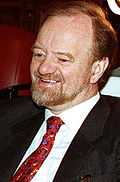
Robin Cook[11] MP for Livingston |
8 June 2001 |
17 March 2003 |
Blair II | ||||

|
John Reid[12] MP for Hamilton North and Bellshill |
4 April 2003 |
13 June 2003 | |||||

|
Peter Hain[13] MP for Neath |
11 June 2003 |
6 May 2005 |
| ||||
|
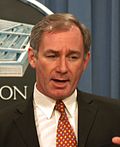
Geoff Hoon[14] MP for Ashfield |
6 May 2005 |
5 May 2006 |
|
Blair III | |||

|
Jack Straw[15] MP for Blackburn |
5 May 2006 |
27 June 2007 | |||||

|
Harriet Harman[16] MP for Camberwell and Peckham |
28 June 2007 |
11 May 2010 |
|
Brown | |||
|
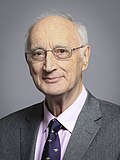
George Young[17] MP for North West Hampshire |
12 May 2010 |
3 September 2012 |
|
Conservative | Cameron–Clegg (Con.–L.D.) | ||

|
Andrew Lansley[18] MP for South Cambridgeshire |
4 September 2012 |
14 July 2014 | |||||

|
William Hague[19] MP for Richmond (Yorks) |
14 July 2014 |
8 May 2015 |
| ||||

|
Chris Grayling[20] MP for Epsom and Ewell |
9 May 2015 |
14 July 2016 |
|
Cameron II | |||

|
David Lidington[21] MP for Aylesbury |
14 July 2016 |
11 June 2017 |
May I | ||||

|
Andrea Leadsom[22] MP for South Northamptonshire |
11 June 2017 |
22 May 2019 |
May II | ||||

|
Mel Stride[23] MP for Central Devon |
23 May 2019 |
24 July 2019 | |||||
|
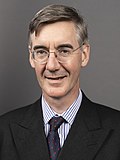
Jacob Rees-Mogg[24] MP for North East Somerset |
24 July 2019 |
8 February 2022 |
Johnson I | ||||
| Johnson II | ||||||||
 |
Mark Spencer[25] MP for Sherwood |
8 February 2022 |
6 September 2022 |
|||||
 |
Penny Mordaunt[26] MP for Portsmouth North |
6 September 2022 |
5 July 2024 |
Truss | ||||
| Sunak | ||||||||
 |
Lucy Powell MP for Manchester Central |
5 July 2024 |
Incumbent | Labour | Starmer | |||
Timeline
[edit]
Deputy Leader of the House of Commons
[edit]From 1922, when the prime minister was also Leader of the House of Commons, day-to-day duties were frequently carried out by a Deputy Leader of the House of Commons.[6] At other times, a Deputy Leader of the House of Commons was appointed merely to enhance an individual politician's standing within the government.[citation needed]
The title has been in use since 1942, but was not used from the 2019 dissolution of the Second May ministry to 2022, when it was revived by Boris Johnson.[27] This was shortlived however, as it was abolished by Liz Truss after she became Prime Minister a few months later.[28]
List of Deputy Leaders of the House of Commons
[edit]| Deputy Leader | Term Start | Term End |
|---|---|---|
| Paddy Tipping | 23 December 1998 | 11 June 2001 |
| Stephen Twigg | 11 June 2001 | 29 May 2002 |
| Ben Bradshaw | 29 May 2002 | 13 June 2003 |
| Phil Woolas | 13 June 2003 | 9 May 2005 |
| Nigel Griffiths | 10 May 2005 | 13 March 2007 |
| Paddy Tipping | 28 March 2007 | 27 June 2007 |
| Helen Goodman | 28 June 2007 | 5 October 2008 |
| Chris Bryant | 5 October 2008 | 9 June 2009 |
| Barbara Keeley | 9 June 2009 | 11 May 2010 |
| David Heath | 14 May 2010 | 4 September 2012 |
| Tom Brake | 4 September 2012 | 8 May 2015 |
| Thérèse Coffey | 11 May 2015 | 17 July 2016 |
| Michael Ellis | 17 July 2016 | 9 January 2018 |
| Chris Heaton-Harris | 9 January 2018 | 9 July 2018 |
| Mark Spencer | 15 July 2018 | 24 July 2019 |
| Peter Bone | 8 July 2022 | 27 September 2022 |
See also
[edit]- Leader of the House of Lords
- Speaker of the House of Commons
- Shadow Leader of the House of Commons
- Minister for Parliamentary Business, the equivalent cabinet post in the Scottish Government
References
[edit]- ^ "Salaries of Members of His Majesty's Government – Financial Year 2022–23" (PDF). 15 December 2022.
- ^ "Pay and expenses for MPs". parliament.uk. Retrieved 15 December 2022.
- ^ "Leader of the House of Commons – GOV.UK". www.gov.uk. Retrieved 2 January 2021.
- ^ "Leader of the House of Commons". Government of the United Kingdom. Retrieved 22 January 2023.
- ^ Gay, Oonagh (4 August 2005). "The Osmotherly Rules (Standard Note: SN/PC/2671)" (PDF). Parliament and Constitution Centre, House of Commons Library. Archived from the original (PDF) on 30 May 2009. Retrieved 22 May 2009.
- ^ a b c d "Leader of the House of Commons". www.parliament.uk. Retrieved 28 September 2020.
- ^ a b c d e f g h i j k l m n o p q r s t u v w x y z aa ab ac ad ae af ag ah ai David Butler and Gareth Butler, British Political Facts 1900–1994 (7th edn, Macmillan 1994) 65.
- ^ "Lord Newton of Braintree". UK Parliament. Retrieved 10 December 2017.
- ^ "Baroness Taylor of Bolton". UK Parliament. Retrieved 10 December 2017.
- ^ "Rt Hon Margaret Beckett MP". UK Parliament. Retrieved 10 December 2017.
- ^ "Rt Hon Robin Cook". UK Parliament. Retrieved 10 December 2017.
- ^ "Lord Reid of Cardowan". UK Parliament. Retrieved 10 December 2017.
- ^ "Lord Hain". UK Parliament. Retrieved 10 December 2017.
- ^ "Mr Geoffrey Hoon". UK Parliament. Retrieved 10 December 2017.
- ^ "Rt Hon Jack Straw". UK Parliament. Retrieved 10 December 2017.
- ^ "Rt Hon Harriet Harman QC MP". UK Parliament. Retrieved 10 December 2017.
- ^ "Lord Young of Cookham". UK Parliament. Retrieved 10 December 2017.
- ^ "Lord Lansley". UK Parliament. Retrieved 10 December 2017.
- ^ "Lord Hague of Richmond". UK Parliament. Retrieved 10 December 2017.
- ^ "Rt Hon Chris Grayling MP". UK Parliament. Retrieved 10 December 2017.
- ^ "Rt Hon David Lidington MP". UK Parliament. Retrieved 10 December 2017.
- ^ "Rt Hon Andrea Leadsom MP". UK Parliament. Retrieved 10 December 2017.
- ^ "Rt Hon Mel Stride MP". UK Parliament. Retrieved 23 May 2019.
- ^ "Rt Hon Jacob Rees-Mogg MP". UK Parliament. Retrieved 29 July 2019.
- ^ "Rt Hon Mark Spencer MP". UK Parliament. Retrieved 5 July 2022.
- ^ "Penny Mordaunt". UK Parliament. Retrieved 6 September 2022.
- ^ "Parliamentary Secretary of State (Deputy Leader of the House of Commons) – GOV.UK". www.gov.uk.
- ^ Commentator, Tim Shipman, Chief Political. "The rebels' smartphone spreadsheet that means Liz Truss is still in deep trouble". The Times. ISSN 0140-0460. Retrieved 8 October 2022.
{{cite news}}: CS1 maint: multiple names: authors list (link)
External links
[edit]
Cabinet Office | |
|---|---|
| Ministers |
|
| Civil Service |
|
| Ministerial departments |
|
| Non-ministerial department |
|
| Executive agencies |
|
| Non-departmental public bodies |
|
| Other organisations |
|
| Secretariats |
|
 Category Category | |
UK cabinet portfolios | ||
|---|---|---|
Cabinet of the United Kingdom | ||
| Cabinet ministers |
|  |
| Also attending Cabinet |
| |
Original source: https://en.wikipedia.org/wiki/Leader of the House of Commons
Status: article is cached
 EncycloReader
is supported by the
EncycloReader
is supported by the  KSF
KSF