Lipoprotein-associated phospholipase A2
 From Wikipedia - Reading time: 8 min
| PLA2G7 | |||||||||||||||||||||||||||||||||||||||||||||||||||
|---|---|---|---|---|---|---|---|---|---|---|---|---|---|---|---|---|---|---|---|---|---|---|---|---|---|---|---|---|---|---|---|---|---|---|---|---|---|---|---|---|---|---|---|---|---|---|---|---|---|---|---|
 | |||||||||||||||||||||||||||||||||||||||||||||||||||
| Identifiers | |||||||||||||||||||||||||||||||||||||||||||||||||||
| Aliases | PLA2G7, LDL-PLA2, LP-PLA2, PAFAD, PAFAH, Lipoprotein-associated phospholipase A2, phospholipase A2 group VII | ||||||||||||||||||||||||||||||||||||||||||||||||||
| External IDs | OMIM: 601690 MGI: 1351327 HomoloGene: 3725 GeneCards: PLA2G7 | ||||||||||||||||||||||||||||||||||||||||||||||||||
| |||||||||||||||||||||||||||||||||||||||||||||||||||
| |||||||||||||||||||||||||||||||||||||||||||||||||||
| |||||||||||||||||||||||||||||||||||||||||||||||||||
| |||||||||||||||||||||||||||||||||||||||||||||||||||
| |||||||||||||||||||||||||||||||||||||||||||||||||||
| Wikidata | |||||||||||||||||||||||||||||||||||||||||||||||||||
| |||||||||||||||||||||||||||||||||||||||||||||||||||
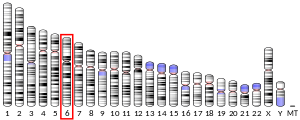



Lipoprotein-associated phospholipase A2 (Lp-PLA2) also known as platelet-activating factor acetylhydrolase (PAF-AH) is a phospholipase A2 enzyme that in humans is encoded by the PLA2G7 gene.[5][6] Lp-PLA2 is a 45-kDa protein of 441 amino acids.[7] It is one of several PAF acetylhydrolases.
Function[edit]
In the blood Lp-PLA2 travels mainly with low-density lipoprotein (LDL). Less than 20% is associated with high-density lipoprotein HDL. Several lines of evidence suggest that HDL-associated Lp-PLA2 may substantially contribute to the HDL antiatherogenic activities.[8] It is an enzyme produced by inflammatory cells and hydrolyzes oxidized phospholipids in LDL.
Lp-PLA2 is platelet-activating factor (PAF) acetylhydrolase (EC 3.1.1.47), a secreted enzyme that catalyzes the degradation of PAF to inactive products by hydrolysis of the acetyl group at the sn-2 position, producing the biologically inactive products LYSO-PAF and acetate.[9]
Clinical significance[edit]
Lp-PLA2 is involved in the development of atherosclerosis,[7] an observation that has prompted interest as a possible therapeutic target (see, e.g. the investigational drug Darapladib). In human atherosclerotic lesions, 2 main sources of Lp-PLA2 can be identified, including that which is brought into the intima bound to LDL (from the circulation), and that which is synthesized de novo by plaque inflammatory cells (macrophages, T cells, mast cells)."
It is used as a marker for cardiac disease.[10]
A meta-analysis involving a total of 79,036 participants in 32 prospective studies found that Lp-PLA2 levels are positively correlated with increased risk of developing coronary heart disease and stroke.[11]
See also[edit]
- Darapladib
References[edit]
- ^ a b c GRCh38: Ensembl release 89: ENSG00000146070 – Ensembl, May 2017
- ^ a b c GRCm38: Ensembl release 89: ENSMUSG00000023913 – Ensembl, May 2017
- ^ "Human PubMed Reference:". National Center for Biotechnology Information, U.S. National Library of Medicine.
- ^ "Mouse PubMed Reference:". National Center for Biotechnology Information, U.S. National Library of Medicine.
- ^ Tjoelker LW, Wilder C, Eberhardt C, Stafforini DM, Dietsch G, Schimpf B, et al. (April 1995). "Anti-inflammatory properties of a platelet-activating factor acetylhydrolase". Nature. 374 (6522): 549–53. Bibcode:1995Natur.374..549T. doi:10.1038/374549a0. PMID 7700381. S2CID 4338858.
- ^ Tew DG, Southan C, Rice SQ, Lawrence MP, Li H, Boyd HF, et al. (April 1996). "Purification, properties, sequencing, and cloning of a lipoprotein-associated, serine-dependent phospholipase involved in the oxidative modification of low-density lipoproteins". Arteriosclerosis, Thrombosis, and Vascular Biology. 16 (4): 591–9. doi:10.1161/01.ATV.16.4.591. PMID 8624782.
- ^ a b Zalewski A, Macphee C (May 2005). "Role of lipoprotein-associated phospholipase A2 in atherosclerosis: biology, epidemiology, and possible therapeutic target". Arteriosclerosis, Thrombosis, and Vascular Biology. 25 (5): 923–31. doi:10.1161/01.ATV.0000160551.21962.a7. PMID 15731492. S2CID 5778538.
- ^ Tellis CC, Tselepis AD (May 2009). "The role of lipoprotein-associated phospholipase A2 in atherosclerosis may depend on its lipoprotein carrier in plasma". Biochimica et Biophysica Acta. 1791 (5): 327–38. doi:10.1016/j.bbalip.2009.02.015. PMID 19272461.
- ^ "Entrez Gene: PLA2G7 phospholipase A2, group VII (platelet-activating factor acetylhydrolase, plasma)".
- ^ Mohler ER, Ballantyne CM, Davidson MH, Hanefeld M, Ruilope LM, Johnson JL, Zalewski A (April 2008). "The effect of darapladib on plasma lipoprotein-associated phospholipase A2 activity and cardiovascular biomarkers in patients with stable coronary heart disease or coronary heart disease risk equivalent: the results of a multicenter, randomized, double-blind, placebo-controlled study". Journal of the American College of Cardiology. 51 (17): 1632–41. doi:10.1016/j.jacc.2007.11.079. PMID 18436114.
- ^ Thompson A, Gao P, Orfei L, Watson S, Di Angelantonio E, Kaptoge S, et al. (May 2010). "Lipoprotein-associated phospholipase A(2) and risk of coronary disease, stroke, and mortality: collaborative analysis of 32 prospective studies". Lancet. 375 (9725): 1536–44. doi:10.1016/S0140-6736(10)60319-4. PMC 2864403. PMID 20435228.
- "Blood protein increases heart disease risk". BBC News. 29 April 2010.
Further reading[edit]
- Schröder HC, Perovic S, Kavsan V, Ushijima H, Müller WE (1998). "Mechanisms of prionSc- and HIV-1 gp120 induced neuronal cell death". Neurotoxicology. 19 (4–5): 683–8. PMID 9745929.
- Feng Y, Walsh CA (June 2001). "Protein-protein interactions, cytoskeletal regulation and neuronal migration". Nature Reviews. Neuroscience. 2 (6): 408–16. doi:10.1038/35077559. PMID 11389474. S2CID 14717115.
- Tjoelker LW, Eberhardt C, Unger J, Trong HL, Zimmerman GA, McIntyre TM, et al. (October 1995). "Plasma platelet-activating factor acetylhydrolase is a secreted phospholipase A2 with a catalytic triad". The Journal of Biological Chemistry. 270 (43): 25481–7. doi:10.1074/jbc.270.43.25481. PMID 7592717.
- Stafforini DM, Satoh K, Atkinson DL, Tjoelker LW, Eberhardt C, Yoshida H, et al. (June 1996). "Platelet-activating factor acetylhydrolase deficiency. A missense mutation near the active site of an anti-inflammatory phospholipase". The Journal of Clinical Investigation. 97 (12): 2784–91. doi:10.1172/JCI118733. PMC 507371. PMID 8675689.
- Yamada Y, Yokota M (July 1997). "Loss of activity of plasma platelet-activating factor acetylhydrolase due to a novel Gln281-->Arg mutation". Biochemical and Biophysical Research Communications. 236 (3): 772–5. doi:10.1006/bbrc.1997.7047. PMID 9245731.
- Mavoungou E, Georges-Courbot MC, Poaty-Mavoungou V, Nguyen HT, Yaba P, Delicat A, et al. (September 1997). "HIV and SIV envelope glycoproteins induce phospholipase A2 activation in human and macaque lymphocytes". Journal of Acquired Immune Deficiency Syndromes and Human Retrovirology. 16 (1): 1–9. doi:10.1097/00042560-199709010-00001. PMID 9377118.
- Sapir T, Elbaum M, Reiner O (December 1997). "Reduction of microtubule catastrophe events by LIS1, platelet-activating factor acetylhydrolase subunit". The EMBO Journal. 16 (23): 6977–84. doi:10.1093/emboj/16.23.6977. PMC 1170301. PMID 9384577.
- Hiramoto M, Yoshida H, Imaizumi T, Yoshimizu N, Satoh K (December 1997). "A mutation in plasma platelet-activating factor acetylhydrolase (Val279-->Phe) is a genetic risk factor for stroke". Stroke. 28 (12): 2417–20. doi:10.1161/01.str.28.12.2417. PMID 9412624.
- Yamada Y, Ichihara S, Fujimura T, Yokota M (February 1998). "Identification of the G994--> T missense in exon 9 of the plasma platelet-activating factor acetylhydrolase gene as an independent risk factor for coronary artery disease in Japanese men". Metabolism. 47 (2): 177–81. doi:10.1016/S0026-0495(98)90216-5. PMID 9472966.
- Yoshida H, Imaizumi T, Fujimoto K, Itaya H, Hiramoto M, Yoshimizu N, et al. (September 1998). "A mutation in plasma platelet-activating factor acetylhydrolase (Val279Phe) is a genetic risk factor for cerebral hemorrhage but not for hypertension". Thrombosis and Haemostasis. 80 (3): 372–5. doi:10.1055/s-0037-1615214. PMID 9759612. S2CID 23924021.
- Lecointe N, Meerabux J, Ebihara M, Hill A, Young BD (May 1999). "Molecular analysis of an unstable genomic region at chromosome band 11q23 reveals a disruption of the gene encoding the alpha2 subunit of platelet-activating factor acetylhydrolase (Pafah1a2) in human lymphoma". Oncogene. 18 (18): 2852–9. doi:10.1038/sj.onc.1202645. PMID 10362256.
- Kruse S, Mao XQ, Heinzmann A, Blattmann S, Roberts MH, Braun S, et al. (May 2000). "The Ile198Thr and Ala379Val variants of plasmatic PAF-acetylhydrolase impair catalytical activities and are associated with atopy and asthma". American Journal of Human Genetics. 66 (5): 1522–30. doi:10.1086/302901. PMC 1378003. PMID 10733466.
- Howard KM, Olson MS (June 2000). "The expression and localization of plasma platelet-activating factor acetylhydrolase in endotoxemic rats". The Journal of Biological Chemistry. 275 (26): 19891–6. doi:10.1074/jbc.M001462200. PMID 10748027.
- Min JH, Wilder C, Aoki J, Arai H, Inoue K, Paul L, Gelb MH (April 2001). "Platelet-activating factor acetylhydrolases: broad substrate specificity and lipoprotein binding does not modulate the catalytic properties of the plasma enzyme". Biochemistry. 40 (15): 4539–49. CiteSeerX 10.1.1.549.9621. doi:10.1021/bi002600g. PMID 11294621.
- Quarck R, De Geest B, Stengel D, Mertens A, Lox M, Theilmeier G, et al. (May 2001). "Adenovirus-mediated gene transfer of human platelet-activating factor-acetylhydrolase prevents injury-induced neointima formation and reduces spontaneous atherosclerosis in apolipoprotein E-deficient mice". Circulation. 103 (20): 2495–500. doi:10.1161/01.cir.103.20.2495. PMID 11369691.
- Unno N, Nakamura T, Mitsuoka H, Uchiyama T, Yamamoto N, Saito T, et al. (February 2002). "Association of a G994 -->T missense mutation in the plasma platelet-activating factor acetylhydrolase gene with risk of abdominal aortic aneurysm in Japanese". Annals of Surgery. 235 (2): 297–302. doi:10.1097/00000658-200202000-00020. PMC 1422429. PMID 11807372.
Original source: https://en.wikipedia.org/wiki/Lipoprotein-associated phospholipase A2
Status: article is cached
 EncycloReader
is supported by the
EncycloReader
is supported by the  KSF
KSF