Table of Contents Categories
List of Chinese monarchs
 From Wikipedia - Reading time: 87 min
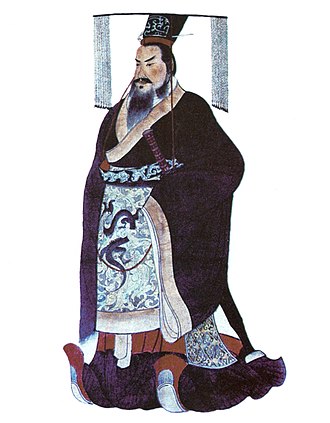
The Chinese monarchs were the rulers of China during Ancient and Imperial periods.[a] The earliest rulers in traditional Chinese historiography are of mythological origin, and followed by the Xia dynasty of highly uncertain and contested historicity. During the subsequent Shang (c. 1600–1046 BCE) and Zhou (1046–256 BCE) dynasties, rulers were referred to as Wang 王, meaning king.[4] China was fully united for the first time by Qin Shi Huang (r. 259–210 BCE), who established the first Imperial dynasty, adopting the title Huangdi (皇帝), meaning Emperor, which remained in use until the Imperial system's fall in 1912.[4]
At no point during Ancient or Imperial China was there a formalized means to confer legitimate succession between rulers.[5] From the Zhou dynasty onwards, monarchs justified their reigns by claiming the Mandate of Heaven (天命; Tiānmìng).[6][b] The mandate held that a ruler and their successors had permission from the heavens to rule as long as they did so effectively.[6] It also declared a ruler the Son of Heaven (天子; Tiānzǐ), giving them the right to rule "all under heaven" (天下; Tiānxià).[10] Given the Mandate's subjective nature, rulers also utilized a variety of methods to retain support and justify their accession.[6] This ranged from military enforcement, political patronage, establishing peace and solidity, institutional reform, and historical revisionism to legitimize the dissolution of previous dynasties and their own succession.[11] For most of Imperial China, the wuxing (五行; "Five Elements") philosophical scheme was also central to justify dynastic succession.[12]
Most Chinese monarchs had many names. They were given a personal name (名字; Míngzi) at birth, but later referred to by a posthumous name (謚號; Shìhào)—which memorialized their accomplishments or character—due to a cultural naming taboo.[13] Most emperors of the Imperial period also received a temple name (廟號; Miàohào), used to venerate them in ancestor worship.[14] From the rule of Emperor Wu of Han (r. 141–87 BCE) onwards,[c] emperors also adopted one or several era names (年號; Niánhào), or "reign mottos",[17] to divide their rule by important events or accomplishments.[18] Ming (1368–1644) and Qing (1644–1912) rulers are referred to solely by their era names, of which they only had one.[19]
Apart from ethnic Han rulers, China was also ruled by various non-Han monarchs, including Jurchen, Khitan, Manchu, Mongol and Tangut and many others.[20] To justify their reign, non-Han rulers sometimes aligned themselves with the Confucian sages or the Chakravarti of Chinese Buddhism.[5] There are numerous lengthy periods where many competing kingdoms claimed the throne, many of whose legitimacy are still debated by scholars.[20]
Ancient China
[edit]Mythological rulers
[edit]In traditional Chinese historiography, various models of mythological founding rulers exist.[21] The relevancy of these figures to the earliest Chinese people is unknown, since most accounts of them were written from the Warring States period (c. 475–221 BCE) onwards.[22] The sinologist Kwang-chih Chang has generalized the typical stages: "the first period was populated by gods, the second by demigods/culture hero, and the third by the legendary kings."[23] The primordial god Pangu is given by many texts as the earliest figure and is credited with forming the world by separating heaven and earth.[24] Other gods include Nüwa, who repaired heaven; Hou Yi, a mythical archer; and Gonggong, a serpent-like water deity.[25]
Demigod and hero rulers from hero myths—the largest group Chinese myths—are attributed the invention of specific items, practices or traditions.[26] Among the more important of them are Fuxi, the inventor of hunting; Suiren, who invented fire; and Shennong, who invented both agriculture and medicine.[27] The subsequent legendary kings began with the Yellow Emperor (黃帝), known as Huangdi, a major culture hero of Chinese civilization whose reign was considered exemplary.[27] Succeeding rulers include some combination of Shaohao, Zhuanxu, Emperor Ku, Emperor Yao and Emperor Shun.[28] Since the late Warring States onwards, early Chinese monarchs have traditionally been ground into the concept of the Three Sovereigns and Five Emperors;[28] however, the chosen figures of this grouping varies considerably between sources.[27] Generally, most accounts include at least Fuxi and Shennong among the Three Sovereigns as well as the Yellow Emperor, Yao and Shun among the Five Emperors.[28]
Xia dynasty
[edit]The Three Sovereigns and Five Emperors period was followed by the Xia dynasty in traditional historiography.[29] Founded by Yu the Great, both the dynasty and its rulers are of highly uncertain and controversial historicity.[29][30]
| Name | Speculative reign length[d] | Traditional succession | Capital[31] | Purported life details | |
|---|---|---|---|---|---|
| ZTW | Trad[32] | ||||
| Yu 禹 |
45 | 7 | Chosen by the mythical Emperor Shun | Ji | Awarded the throne after his institution of flood control. He is often known as "Yu the Great" and his passing of the throne to his son marked the beginning of China's hereditary succession[33] |
| Qi 啟 |
10 | 8 | Son of Yu | Xiayi | Prevented a rebellion led by his son Wuguan[34] |
| (Tai) Kang (太)康 |
29 | 28 | Son of Qi | Zhenxun | Traditionally considered an ineffective king, either due to tyranny or incompetence. May have been briefly dethroned by the mythical hero Han Zhuo and later murdered by Han's son Ao[35] |
| (Zhong) Kang (#) (仲)康 |
13 | 13 | Son of Qi | Zhenxun | May not have ruled as his existence is sometimes absent from Xia king lists[36] |
| Xiang 相 |
28 | 28 | Son of (Zhong) Kang | Shang, then Zhenxun | Killed by a son of Han Zhuo[37] |
| Interregnum, ruled by Han Zhuo | |||||
| (Shao) Kang (少)康 |
21 | 21 | Son of Xiang | Yuan | Restored the dynasty after killing Han Zhuo and his sons[38] |
| Zhu 杼 |
17 | 16 | Son of (Shao) Kang | Yuan, then Laoqiu | Little is known of his reign[39] |
| Huai 槐 |
26 | 25 | Son of Zhu | – | Little is known of his reign; may have ruled up to 40 years[40] |
| Mang 芒 |
18 | 17 | Son of Huai | – | Little is known of his reign[40] |
| Xie 泄 |
16 | 15 | Son of Mang | – | Little is known of his reign[41] |
| (Bu) Jiang (不)降 |
59 | 58 | Son of Xie | – | Little is known of his reign; campaigned against the northwestern Jiuyuan peoples[40] |
| Jiong 扃 |
21 | 20 | Son of Xie | – | Little is known of his reign[40] |
| Jin 廑 |
21 | 20 | Son of Jiong | Xihe | Little is known of his reign[40] |
| Kong Jia 孔甲 |
31 | 30 | Son of (Bu) Jiang | Xihe | His reign inaugurated the Xia's gradual decline[40] |
| Gao 皋 |
11 | 10 | Son of Kong Jia | – | Little is known of his reign[40] |
| Fa 發 |
11 | 20? | Son of Gao | – | May have only reigned 7 years. His reign saw the earliest recorded earthquake, identified with the Mount Tai earthquake.[40] |
| Jie 桀 |
52 | 52 | Son of Fa | Zhenxun, then Henan | Traditionally considered a cruel and oppressive ruler. Fled the empire after losing the Battle of Mingtiao to the state of Shang[42] |
Shang dynasty (c. 1600–1046 BCE)
[edit]Unlike the Xia, the Shang dynasty's historicity is firmly established, due to written records on divination objects known as Oracle bones. The oldest such oracle bones date to the Late Shang (c. 1250—1046 BCE), during the reign of Wu Ding (1250–1192), putting the exact details of earlier rulers into doubt.[43][44]
| Posthumous name[45] | Personal name[45] | Tentative reign (BCE)[e] | Traditional succession[46][47] | Residence[48] | Purported life details | |||
|---|---|---|---|---|---|---|---|---|
| XSZ Project[49][50] | CHAC[51] | |||||||
Early Shang[edit] | ||||||||
| Tang 汤 Da Yi 大乙 |
Zi Lü 子履 |
fl. c. 1600 | fl. c. 1570[52] | Defeated the purportedly tyrannous Jie of Xia at the Battle of Mingtiao and established the Shang dynasty | Bo, then Shangyi | Traditionally considered a noble and virtuous ruler[53] | ||
| Da Ding (#) 大丁 Tai Ding (#) 太丁 |
unknown | – | – | Son of Tang | – | Uncertain whether he was ever enthroned; may have died before succeeding his father[54][53] | ||
| Wai Bing 外丙 |
Zi Sheng 子勝 |
— | — | Son of Tang | Bo | —[53] | ||
| Zhong Ren (#) 中壬 |
Zi Yong 子庸 |
— | — | Son of Tang | Bo | Not listed in the oracle bones inscriptions[53] | ||
| Tai Jia 太甲 |
Zi Zhi 子至 |
— | — | Son of Da Ding | Bo | Traditionally considered an autocratic and cruel ruler[53] | ||
| Wo Ding (#) 沃丁 Qiang Ding 羌丁 |
Zi Xuan 子絢 |
— | — | Son of Tai Jia | Bo | His name is not found in oracle bone inscriptions, making his certainty as a ruler less secure.[54][53] | ||
| Tai Geng 太庚 Da Geng 大庚 |
Zi Bian 子辯 |
— | — | Son of Tai Jia | Bo | –[55] | ||
| Xiao Jia 小甲 |
Zi Gao 子高 |
— | — | Son of Tai Geng | Bo | –[55] | ||
| Yong Ji 雍己 |
Zi Zhou 子伷 |
— | — | Son of Tai Geng | Bo | May have reigned after Tai Wu[55] | ||
| Tai Wu 太戊 Da Wu 大戊 |
Zi Mi 子密 |
— | — | Son of Tai Geng | Bo | Said to have had a particularly long reign; one source records 75 years. The astronomer Wuxian was active under him[55] | ||
| Zhong Ding 仲丁 |
Zi Zhung 子莊 |
— | — | Son of Tai Wu | Ao | May have succeeded Yong Ji[55] | ||
| Wai Ren 外壬 |
Zi Fā 子發 |
— | — | Son of Tai Wu | Ao | –[55] | ||
| He Dan Jia 河亶甲 |
Zi Zheng 子整 |
— | — | Son of Tai Wu | Xiang | Moved the capital to Xiang (相) and engaged in military campaigns[55] | ||
| Zu Yi 祖己 |
Zi Teng 子滕 |
— | — | Son of Zhong Ding | Geng | The dynasty flourished particularly during his reign[55] | ||
| Zu Xin 祖辛 |
Zi Dan 子旦 |
— | — | Son of Zu Yi | Bi | –[55] | ||
| Wo Jia 沃甲 Qiang Jia 羌甲 |
Zi Yu 子踰 |
— | — | Son of Zu Yi | Bi | –[55] | ||
| Zu Ding 祖丁 |
Zi Xin 子新 |
— | — | Son of Zu Xin | Bi | –[55] | ||
| Nan Geng 南庚 |
Zi Geng 子更 |
— | — | Son of Wo Jia | Bi, then Yan | Moved the capital from Bi (庇) to Yan (奄)[55] | ||
| Yang Jia 陽甲 |
Zi He 子和 |
— | — | Son of Zu Ding | Yan | His reign marked the decline of the Shang[56] | ||
| Pan Geng 盤庚 |
Zi Xun 子旬 |
1300–1251 (48–49 years) |
— | Son of Zu Ding | Yan, then Yin | Traditionally said to have moved the dynasty's capital from Yan (奄) to Yin (殷)[57] Led a prosperous reign[56] | ||
| Xiao Xin 小辛 |
Zi Song 子颂 |
— | Son of Zu Ding | Yin | His reign saw the continuation of the Shang's decline[56] | |||
| Xiao Yi 小乙 |
Zi Lian 子敛 |
— | Son of Zu Ding | Yin | –[56] | |||
Late Shang[edit] | ||||||||
| Wu Ding 武丁 |
Zi Zhao 子昭 |
1250–1192 (57–58 years) |
?–1189 | Son of Xiao Yi | Yin | A powerful king with a lengthy reign. Made his wife Fu Hao the a military general and is purportedly defeated the mostly-unknown Guifang people.[58] The first ruler whose name is included in oracle bones which date to his reign.[59][56] | ||
| Zu Geng 祖庚 |
Zi Yue 子躍 |
1191–1148 (42–43 years) |
1188–1178 (9–10 years) |
Son of Wu Ding | Yin | Possibly commissioned the Houmuwu ding in memory of his mother Fu Jing[60][56][f] | ||
| Zu Jia 祖甲 |
Zi Zai 子載 |
1177–1158 (18–19 years) |
Son of Wu Ding | Yin | Reformed the ritual and calendar systems, as recording in the Book of Documents[56] | |||
| Lin Xin (#) 廩辛 |
Zi Xian 子先 |
1157–1149 (7–8 years) |
Son of Zu Jia | Yin | Due to inconsistencies in the oracle bone inscriptions, it is possible he did not reign.[62][63] | |||
| Geng Ding 庚丁 Kang Ding 康丁 |
Zi Xiao 子囂 |
1148–1132 (15–16 years) |
Son of Zu Jia | Yin | His reign accelerated the dynasty's decline[64] | |||
| Wu Yi 武乙 |
Zi Qu 子瞿 |
1147–1131 (15–16 years) |
1131–1117 (13–14 years) |
Son of Geng Ding | Yin, Hebei, then Mo | Engaged in numerous military campaigns, including against the state of Yiqu. Traditionally held to have been killed by a lightning strike, considered a bad omen[64] | ||
| Wen Wu Ding 文武丁 Wen Ding 文丁 |
Zi Tuo 子托 |
1112–1102 (9–10 years) |
1116–1106 (9–10 years) |
Son of Wu Yi | Yin | The Predynastic Zhou rose in power during his reign, led by Ji, King of Zhou[64] | ||
| Di Yi 帝乙 |
Zi Xian 子羡 |
1101–1076 (24–25 years) |
1105–1087 (17–18 years) |
Son of Wen Wu Ding | Yin | Supposedly married his daughter to King Wen of Zhou,[65][66] or married his sister to Ji, King of Zhou[67] | ||
| Di Xin 帝辛 (紂) |
Zi Shou 子受 |
1075–1046 (28–29 years) |
1086–1045 (40–41 years) |
Son of Di Yi | Yin | Killed by Ji Fa during the Battle of Muye[68][64] | ||
Zhou dynasty (1046–256 BCE)
[edit]| Posthumous name[69] | Personal name | Tentative reign (BCE) | Traditional succession[70] | Purported life details | ||
|---|---|---|---|---|---|---|
| XSZ Project[49][50] | CHAC[69] | |||||
Western Zhou[edit] | ||||||
| Wu 武 |
Ji Fa 姬發 |
1046–1043 (2–3 years) |
1049–1043 (5–6 years) |
Son of King Wen | Defeated the tyrannical King Zhou of Shang in the Battle of Muye[71] | |
| Cheng 成 |
Ji Song 姬誦 |
1042–1021 (20–21 years) |
1042–1006 (35–36 years) |
Son of Wu | Most of his reign was controlled by the Duke of Zhou, who suppressed the Rebellion of the Three Guards[71] | |
| Kang 康 |
Ji Zhao 姬釗 |
1020–996 (23–24 years) |
1005–978 (26–27 years) |
Son of Cheng | His accession established Zhou primogeniture. A largely peaceful reign[71] | |
| Zhao 昭 |
Ji Xia 姬瑕 |
995–977 (17–18 years) |
977–957 (19–20 years) |
Son of Kang | Lost the Zhou–Chu War, during which he died. His reign marked the Zhou's gradual decline[72] | |
| Mu 穆 |
Ji Man 姬滿 |
976–922 (53–54 years) |
956–918 (39–40 years) |
Son of Zhao | Engaged in many destabilizing territory conflicts[73] | |
| Gong 共 |
Ji Yihu 姬繄扈 |
922–900 (21–22 years) |
917–900 (16–17 years) |
Son of Mu | Little is known of his reign[73] | |
| Yih 懿 |
Ji Jian 姬囏 |
899–892 (6–7 years) |
899–873 (25–26 years) |
Son of Gong | Little is known of his reign; may have been removed from power by Xiao[73] | |
| Xiao 孝 |
Ji Pifang 姬辟方 |
891–886 (4–5 years) |
872–866 (5–6 years) |
Son of Mu | Little is known of his reign[73] | |
| Yí 夷 |
Ji Xie 姬燮 |
885–878 (6–7 years) |
865–858 (6–7 years) |
Son of Yih | Continued decline of the Zhou[73] | |
| Li 厲 |
Ji Hu 姬胡 |
877–841 (35–36 years) |
857–842 (14–15 years) |
Son of Yí | Traditionally considered a corrupt and cruel ruler. Exiled amid a peasant rebellion[74] | |
| Gonghe Regency (共和; 841–828)[75] | ||||||
| Xuan 宣 |
Ji Jing 姬靜 |
827–782 | Son of Li | Had military successes, aiming to restore Zhou authority[75] | ||
| You 幽 |
Ji Gongnie 姬宮涅 |
781–771 (9–10 years) |
782–771 (10–11 years) |
Son of Xuan | Numerous natural disasters occurred, after which Quanrong him and overran the capital[75] | |
Eastern Zhou[edit] | ||||||
| Spring and Autumn period (春秋時代; 770–476 BCE) | ||||||
| Ping 平 |
Ji Yijiu 姬宜臼 |
770–720 (49–50 years) |
Son of You | Moved the capital to Luoyang[76] | ||
| Huan 桓 |
Ji Lin 姬林 |
719–697 (21–22 years) |
Grandson of Ping | Defeated by the Duke of Zheng at the Battle of Xuge, accelerating the Zhou dynasty's decline in power[76] | ||
| Zhuang 莊 |
Ji Tuo 姬佗 |
696–682 (13–14 years) |
Son of Huan | Royal court's authority began declining[76] | ||
| Xi 釐 |
Ji Huqi 姬胡齊 |
681–677 (3–4 years) |
Son of Zhuang | Briefly reigned as the Duke Huan led the Qi to surpass the Zhou in power[76] | ||
| Hui 惠 |
Ji Lang 姬閬 |
676–652 (23–24 years) |
Son of Xi | Slowed the Chu state's rise[76] | ||
| Xiang 襄 |
Ji Zheng 姬鄭 |
651–619 (31–32 years) |
Son of Hui | Briefly deposed by his brother, but reinstated by Duke Wen[76] | ||
| Qing 頃 |
Ji Renchen 姬壬臣 |
618–613 (4–5 years) |
Son of Xiang | Briefly reigned[76] | ||
| Kuang 匡 |
Ji Ban 姬班 |
612–607 (4–5 years) |
Son of Qing | Increasing fighting between surrounding kingdoms[76] | ||
| Ding 定 |
Ji Yu 姬瑜 |
606–586 (19–20 years) |
Son of Qing | Continued fighting of surrounding kingdoms[77] | ||
| Jian 簡 |
Ji Yi 姬夷 |
585–572 (12–13 years) |
Son of Ding | Continued fighting of surrounding kingdoms[77] | ||
| Ling 靈 |
Ji Xiexin 姬泄心 |
571–545 (25–26 years) |
Son of Jian | Weakened relations with surrounding kingdoms[77] | ||
| Jing 景 |
Ji Gui 姬貴 |
544–521 (22–23 years) |
Son of Ling | Died without an heir, causing a power struggle and rebellion[77] | ||
| Dao 悼 |
Ji Meng 姬猛 |
520 (less than a year) |
Son of Jing (544–521) | Briefly ruled before being murdered by his brother[77] | ||
| Jing 敬 |
Ji Gai 姬丐 |
519–476 (42–43 years) |
Son of Jing (544–521) | Briefly exiled during a revolt. Ruled during the lifetime of Confucius[77] | ||
| Warring States period (戰國時代; 475–221 BCE) | ||||||
| Yuan 元 |
Ji Ren 姬仁 |
475–469 (5–6 years) |
Son of Jing (519–476) | Decline in Zhou's power[77] | ||
| Zhending 貞定 |
Ji Jie 姬介 |
468–442 (25–26 years) |
Son of Yuan | Continued decline of Zhou[78] | ||
| Ai 哀 |
Ji Quji 姬去疾 |
441 (less than a year) |
Son of Zhending | Continued decline of Zhou. Killed by Si[79] | ||
| Si 思 |
Ji Shu 姬叔 |
441 (less than a year) |
Son of Zhending | Continued decline of Zhou. Killed by Kao[79] | ||
| Kao 考 |
Ji Wei 姬嵬 |
440–426 (13–14 years) |
Son of Zhending | –[79] | ||
| Weilie 威烈 |
Ji Wu 姬午 |
425–402 (22–23 years) |
Son of Kao | –[79] | ||
| An 安 |
Ji Jiao 姬驕 |
401–376 (24–25 years) |
Son of Weilie | Wei increased in power[79] | ||
| Lie 烈 |
Ji Xi 姬喜 |
375–369 (5–6 years) |
Son of An | –[79] | ||
| Xian 顯 |
Ji Bian 姬扁 |
368–321 (46–47 years) |
Son of An | Qin began to rise in power[79] | ||
| Shenjing 慎靚 |
Ji Ding 姬定 |
320–315 (5–6 years) |
Son of Xian | Qin's power grew significantly during his reign[79] | ||
| Nan 赧 |
Ji Yan 姬延 |
314–256 (57–58 years) |
Son of Shenjing | Longest reigning Zhou ruler, though held little power amid the divided kingdom. Conquered and deposed by King Zhaoxiang of Qin[79] | ||
Early imperial China
[edit]Qin dynasty (221–207 BCE)
[edit]| Dynastic name | Personal name | Reign | Succession | Life details |
|---|---|---|---|---|
| Qin Shi Huang[g] 秦始皇 |
Ying Zheng 嬴政 Zhao Zheng 趙政 |
221[h] – July 210 BCE[i] (11 years) |
Son of King Zhuangxiang of Qin. As King Zheng of Qin, he conquered the six other states during the Warring States period and proclaimed himself Emperor (皇帝; Huangdi).[84] | 259 – July 210 BCE (48–49 years) Instilled a Legalist philosophy, combined preexisting walls into the Great Wall of China, and built the Lingqu canal and the Terracotta Army. Died of sudden illness,[85] possibly alchemical elixir poisoning[86] |
| Qin Er Shi[j] 秦二世 |
Ying Huhai 嬴胡亥 |
210[k] – October 207 BCE (3 years) |
Second son of Qin Shi Huang. Put on the throne by Li Si and Zhao Gao, who forced the appointed heir Fusu to commit suicide.[87] | 231/222 – October 207 BCE (23–24/14–15 years) His reign was completely dominated by Zhao Gao. Forced by Zhao to commit suicide[88] |
| As the Qin dynasty greatly weakened in power, the Chu–Han Contention began in 206 BCE and ended with Liu Bang inaugurating the Han dynasty in 202 BCE[l] | ||||
Han and Xin dynasties (202 BCE – 220 CE)
[edit]| Posthumous name | Personal name | Reign[92] | Succession | Life details |
|---|---|---|---|---|
Western Han (202 BCE – 9 CE)[edit] | ||||
| Gaozu 高祖 Gao 高帝 |
Liu Bang 劉邦 |
28 February 202[m]– 1 June 195 BCE (7 years, 3 months and 4 days) |
Unified China and proclaimed himself Emperor after victory in the Chu–Han Contention | 256 – 1 June 195 BCE (aged 61) Among the most revered Chinese emperors. Died from an arrow injury in a campaign against Ying Bu[94] |
| Hui 惠帝 |
Liu Ying 劉盈 |
23 June 195 – 26 September 188 BCE (7 years, 3 months and 3 days) |
Son of Gao | 210 – 26 September 188 BCE (aged 22) His reign was largely dominated by his mother Empress Lü. Died from an unknown illness[95] |
| Qianshao[n] (#) 前少帝 |
Liu Gong 劉恭 |
19 October 188 – 15 June 184 BCE (3 years, 7 months and 27 days) |
Purportedly a son of Hui[o] | ? – after 184 BCE
An infant emperor whose reign was completely dominated by Empress Lü. Deposed and put under house arrest; unknown date of death after 184[98] |
| Houshao[p] (#) 後少帝 |
Liu Yi 劉盈 Liu Hong 劉弘 |
15 June 184 – 15 August 180 BCE (4 years and 2 months) |
Purportedly a son of Hui[o] | ? – 14 November 180
An infant emperor whose reign was completely dominated by Empress Lü. Put to death by the House of Lü[100] |
| Wen 文帝 |
Liu Heng 劉恆 |
14 November 180 – 6 July 157 BCE (22 years, 5 months and 23 days) Era(s)
|
Son of Gao | 203/202 – 6 July 157 BCE (aged 46) Died of natural causes[101] |
| Jing 景帝 |
Liu Qi 劉啟 |
14 July 157 – 10 March 141 BCE (15 years, 7 months and 24 days) Era(s)
|
Son of Wen | 188 – 10 March 141 BCE (aged 47) Died of natural causes[102] |
| Wu 武帝 |
Liu Che 劉徹 |
10 March 141 – 29 March 87 BCE[q] (54 years and 19 days) Era(s)
|
Son of Jing | 157/156 – 29 March 87 BCE[q] (aged 69) Among the longest reigning and highly regarded Chinese emperors. Expanded the Han dynasty considerably. Died from an unknown illness[103] |
| Zhao 昭帝 |
Liu Fuling 劉弗陵 |
30 March 87 – 5 June 74 BCE (13 years, 2 months and 6 days) Era(s)
|
Son of Wu | 94 – 5 June 74 BCE (aged 20) Died from natural causes[104] |
| None, known as Marquis of Haihun (#) 海昏侯 |
Liu He 劉賀 |
18 July – 14 August 74 BCE (27 days) |
Grandson of Wu | 92–59 BCE (aged 32–33) Briefly installed by Huo Guang and not often considered legitimate. Died from natural causes[105] |
| Xuan 宣帝 |
Liu Bingyi 劉病已 Liu Xun 劉詢 |
10 September 74 – 10 January 48 BCE (25 years and 4 months) Era(s)
|
Great-grandson Wu | 91 – 10 January 48 BCE (aged 43) His reign is sometimes considered a cultural and political 'renaissance'. Died from natural causes[106] |
| Yuan 元帝 |
Liu Shi 劉奭 |
29 January 48 – 3 July 33 BCE (15 years, 5 months and 4 days) Era(s)
|
Son of Xuan | 75 – 8 July 33 BCE (aged 42) Died from an unknown illness[107] |
| Cheng 成帝 |
Liu Ao 劉驁 |
4 August 33 – 17 April 7 BCE (25 years, 8 months and 13 days) Era(s)
|
Son of Yuan | 51 – 17 April 7 BCE (aged 44) Died from a stroke or possibly complications from an aphrodisiac overdose[108] |
| Ai 哀帝 |
Liu Xin 劉欣 |
7 May 7 – 15 August 1 BCE (6 years, 3 months and 8 days) Era(s)
|
Grandson of Yuan | 27 – 15 August 1 BCE (aged 26) Died from an unknown illness[109] |
| Ping 平帝 |
Liu Kan 劉衎 |
17 October 1 BCE – 3 February 6 CE (6 years, 3 months and 17 days) Era(s)
|
Grandson of Yuan | 9 BCE – 3 February 6 CE (aged 14) His reign was dominated by Wang Zhengjun and Wang Mang. He was murdered, possibly by orders from the latter.[110] |
| None, known as Ruzi Ying (#) 孺子嬰 |
Liu Ying 劉嬰 |
17 April 6 – 10 January 9 CE (2 years, 8 months and 24 days) Era(s)
|
Cousin-once-removed of Ping | 5 – 25 CE (aged 20) A child puppet of Wang Mang; often not considered legitimate. He later attempted to succeed the Gengshi Emperor, but was killed by him[111] |
Xin dynasty (9–23 CE)[edit] | ||||
| — | Wang Mang 王莽 |
10 January 9 – 6 October 23 CE (14 years, 8 months and 26 days) Era(s)
|
After dominating the reign of Emperor Ping, Wang Mang overthrew him and established the short-lived Xin dynasty | 46 BCE – 6 October 23 CE (aged 68) Established the Xin dynasty, but his drastic reforms incited the Red Eyebrows and Lulin peasant rebellions which collapsed the dynasty.[112] |
Gengshi Emperor (23–25 CE)[edit] | ||||
| None, known by his era: Gengshi (#) 更始帝 |
Liu Xuan 劉玄 |
11 March 23 – November 25 CE (2 years and 8 months) Era(s)
|
Descendant of Jing | ? – November 25 CE
Strangled on the orders of Xie Lu, a leader of the Red Eyebrows. Sometimes considered a pretender and illegitimate[113] |
Eastern Han (25–220 CE)[edit] | ||||
| Guangwu 光武帝 |
Liu Xiu 劉秀 |
5 August 25 – 29 March 57 CE (31 years, 7 months and 24 days) Era(s)
|
Descendant of Jing | 15 January 5 BCE – 29 March 57 CE (aged 62) Died of natural causes[114] |
| Ming 明帝 |
Liu Yang 劉陽 Liu Zhuang 劉莊 |
29 March 57 – 5 September 75 CE (18 years, 5 months and 7 days) Era(s)
|
Son of Guangwu | 28 – 5 September 75 CE (aged 48) Died of natural causes[115] |
| Zhang 章帝 |
Liu Da 劉炟 |
5 September 75 – 9 April 88 CE (12 years, 7 months and 4 days) Era(s)
|
Son of Ming | 56 – 9 April 88 CE (aged 32) His reign marked the beginning of the Han's decline. Died of natural causes[116] |
| He 和帝 |
Liu Zhao 劉肇 |
9 April 88 – 13 February 106 CE (17 years, 10 months and 4 days) Era(s)
|
Son of Zhang | 79 – 13 February 106 (aged 27) Died of natural causes[117] |
| Shang 殤帝 |
Liu Long 劉隆 |
13 February – 21 September 106 CE (7 months and 8 days) Era(s)
|
Son of He | 105 – 21 September 106 (aged 4) Died of natural causes[118] |
| An 安帝 |
Liu Hu 劉祜 Liu You 劉友 |
23 September 106 – 30 April 125 CE (18 years, 7 months and 7 days) Era(s)
|
Grandson of Zhang | 94 – 30 April 125 (aged 32) Died of natural causes[119] |
| None, known as Marquess of Beixiang (#) 北鄉侯 |
Liu Yi 劉懿 |
18 May – 10 December 125 CE[r] (6 months and 22 days) |
Grandson of Emperor Zhang | ?–125 CE
Briefly reigned, probably as a child; often not considered legitimate. Died of natural causes[120] |
| Shun 順帝 |
Liu Bao 劉保 |
16 December 125 – 20 September 144 (18 years, 9 months and 4 days) Era(s)
|
Son of An | 115 – 20 September 144 CE (aged 29) Died of natural causes[121] |
| Chong 沖帝 |
Liu Bing 劉炳 |
20 September 144 – 15 February 145 (4 months and 26 days) Era(s)
|
Son of Shun | 143 – 15 February 145 CE (aged 2) Died of natural causes[122] |
| Zhi 質帝 |
Liu Zuan 劉纘 |
6 March 145 – 26 July 146 (1 year, 4 months and 20 days) Era(s)
|
Cousin of Chong and great-grandson of Emperor Zhang | 138 – 26 July 146 CE (aged 7–8) His reign was dominated by Liang Ji, who may have poisoned him. Otherwise he died from food poisoning[123] |
| Huan 桓帝 |
Liu Zhi 劉志 |
1 August 146 – 25 January 168 (21 years, 5 months and 24 days) Era(s)
|
Great-grandson of Zhang | 132 – 25 January 168 CE (aged 36) Died of natural causes[124] |
| Ling 靈帝 |
Liu Hong 劉宏 |
17 February 168 – 13 May 189 (21 years and 24 days) Era(s)
|
Great-great-grandson of Zhang | 156 – 13 May 189 CE (aged 32–33) Died of an unknown illness[125] |
| Prince of Hongnong (#) 弘農王 |
Liu Bian 劉辯 |
15 May – 28 September 189 CE (6 months and 13 days) Era(s)
|
Son of Ling | 173/176 – 22 March 190 CE (aged 13–14) Briefly reigned as a child; often not considered legitimate. Poisoned by Dong Zhuo[126] |
| Xian 獻帝 |
Liu Xie 劉協 |
28 September 189 – 11 December 220[s] (31 years, 2 months and 23 days) Era(s)
|
Son of Ling | 2 April 181 – 21 April 234 (aged 53) A puppet of Dong Zhuo and later Cao Cao. Forced to abdicate by Cao Pi, but spared. Died of natural causes[127] |
| Cao Cao is defeated at the Battle of Red Cliffs by Sun Quan and Liu Bei, preventing him from uniting seceded southern Han territory. The region becomes split into three competing powers: Cao Wei, Eastern Wu, and Shu Han.[128] | ||||
Six Dynasties
[edit]Three Kingdoms (220–280)
[edit]Cao Wei (220–266)
[edit]| Personal name | Posthumous name | Reign | Succession | Life details |
|---|---|---|---|---|
| Cao Pi 曹丕 |
Emperor Wen 文帝 |
11 December 220 – 29 June 226 (5 years, 6 months and 18 days) Era(s)
|
The eldest surviving son of Cao Cao. Inherited what lands the Eastern Han dynasty still controlled to found the Cao Wei state | 187 – 29 June 226 (aged 38–39) Died of natural causes[129] |
| Cao Rui 曹叡 |
Emperor Ming 明帝 |
29 June 226 – 22 January 239 (12 years, 6 months and 24 days) Era(s)
|
Son of Cao Pi and grandson of Cao Cao | c. 206 – 22 January 239 (aged 34–35) Died of natural causes[130] |
| Cao Fang 曹芳 |
Emperor Shao 少帝 Emperor Fei 廢帝 |
22 January 239 – 16 October 254 (15 years, 8 months and 24 days) Era(s)
|
Adopted heir by Cao Rui, who had no sons of his own. He was presumably related to the imperial family in some way | 231–274 (aged 42–43) His reign was completely dominated by Cao Shuang, Sima Yi and Sima Shi, the latter of which eventually deposed Cao Fang. Died of natural causes[131] |
| Cao Mao 曹髦 |
Duke of Gaogui District 高貴鄉公 |
2 November 254 – 2 June 260 (5 years and 7 months) Era(s)
|
The cousin of Cao Fang and grandson of Cao Pi. Put on the throne by Sima Shi | c. 241 – 9 July 260 (aged 18–19) His reign was completely dominated by Sima Shi and Sima Zhao. Died in a failed coup to regain power from Sima Zhao[132] |
| Cao Huan 曹奐 |
Emperor Yuan 元皇帝 |
27 July 260 – 4 February 266 (5 years, 6 months and 8 days) Era(s)
|
Grandson of Cao Cao and the first cousin once-removed of Cao Mao | 245–302 (aged 56–57) His reign was completely dominated by Sima Zhao and Sima Yan. Died of natural causes[133] |
Shu Han (221–263)
[edit]| Personal name | Posthumous name | Reign | Succession | Life details |
|---|---|---|---|---|
| Liu Bei 劉備 |
Emperor Zhaolie 昭烈皇帝 |
15 May 221 – 10 June 223 (2 years and 26 days) Era(s)
|
Claimed to descend from Emperor Jing of Han. Conquered the Yi Province to found the Shu Han state | 161 – 10 June 223 (aged 61–62) Died of natural causes[134] |
| Liu Shan 劉禪 |
Emperor Xiaohuai 孝懷皇帝 |
June 223 – December 263 (40 years and 6 months) Era(s)
|
The son of Liu Bei | 207–271 (aged 63–64) Abdicated after the fall on the Shu capital of Chengdu in 263.[135] |
Eastern Wu (222–280)
[edit]| Personal name | Posthumous name | Reign | Succession | Life details |
|---|---|---|---|---|
| Sun Quan 孫權 |
Emperor Da 大皇帝 |
23 May 229 – May 252 (22 years, 11 months and 8 days) Era(s)
|
The son of Sun Jian; inherited the conquests of his brother Sun Ce. Proclaimed "King of Wu" in 221 and later "Emperor" in 229 | 182–252 (aged 69–70) Died of natural causes[136] |
| Sun Liang 孫亮 |
Emperor Fei 吳廢帝 |
May 252 – 9 November 258 (6 years, 6 months and 8 days) Era(s)
|
Son of Sun Quan | 243–260 (aged 16–17) His reign was completely dominated by three successive regents: Zhuge Ke, Sun Jun and Sun Chen. He was later deposed and died of natural causes[137] |
| Sun Xiu 孫休 |
Emperor Jing 景皇帝 |
30 November 258 – 3 September 264 (5 years, 11 months and 4 days) Era(s)
|
Son of Sun Quan | 235–264 (aged 28–29) Died of natural causes[137] |
| Sun Hao 孫皓 |
Emperor Mo 末帝 |
3 September 264 – 1 May 280 (15 years, 5 months and 28 days) Era(s)
|
Son of Sun He, former heir apparent to Sun Quan | 241–283 (aged 41–42) Eastern Wu was conquered by Sima Yan in 280. Died of natural causes[138] |
Jin dynasty (266–420)
[edit]| Posthumous name | Personal name | Reign | Succession | Life details |
|---|---|---|---|---|
Western Jin (266–316)[edit] | ||||
| Emperor Wu 晉武帝 |
Sima Yan 司馬炎 |
8 February 266 – 16 May 290 (24 years, 4 months and 8 days) Era(s)
|
Son of Prince Sima Zhao, proclaimed emperor after the abdication of Cao Huan of Wei. He unified China after conquering Eastern Wu in 280 | 236–290 (aged 53–54) Died of natural causes[140] |
| Emperor Hui 晉惠帝 |
Sima Zhong 司馬衷 |
16 May 290 – 8 January 307 (16 years, 7 months and 23 days) Era(s)
|
Son of Emperor Wu, ruled under the regency of his wife, Jia Nanfeng, until her death in 300 CE | 259–307 (aged 47–48) Possibly mentally unstable, his reign was marked by the disastrous War of the Eight Princes. He was poisoned by Sima Yue[141] |
| — | Sima Lun 司馬倫 |
3 February – 30 May 301 (3 months and 27 days) Era(s)
|
Prince of Zhao and son of Sima Yi, briefly usurped power from Emperor Hu | One of the infamous Eight Princes; often seen as an usurper. He was forced to commit suicide by Princes Jiong, Ying and Yong[142] |
| Emperor Huai 晉懷帝 |
Sima Chi 司馬熾 |
8 January 307 – 14 March 311 (4 years, 2 months and 6 days) Era(s)
|
Younger brother of Emperor Hui | 284–313 (aged 30–31) His reign, dominated by Sima Yue, saw widespread ethnic rebellions. He was deposed and killed by the Han-Zhao[143] |
| Emperor Min 晉愍帝 |
Sima Ye 司馬鄴 |
14 March 313 – 7 February 316 (2 years, 10 months and 24 days) Era(s)
|
Nephew of Emperor Huai, proclaimed emperor in Chang'an after the fall of Luoyang to the Five Barbarians. | 300 – 7 February 316 (aged 15–16) Killed by Liu Cong of Han-Zhao[144] |
Eastern Jin (318–420)[edit] | ||||
| Emperor Yuan 晉元帝 |
Sima Rui 司馬睿 |
26 April 318 – 3 January 323 (4 years, 8 months and 8 days) Era(s)
|
Great-grandson of Sima Yi, proclaimed himself emperor with the help of Wang Dun in Jiankang after the fall of Chang'an. | 276 – 323 (aged 47) Died of natural causes[145] |
| Emperor Ming 晉明帝 |
Sima Shao 司馬紹 |
3 January 323 – 18 October 325 (2 years, 9 months and 15 days) Era(s)
|
Son of Emperor Yuan | 299 – 325 (aged 26) His reign was dominated by Wang Dao and antagonized by Wang Dun. Died of natural causes[146] |
| Emperor Cheng 晉成帝 |
Sima Yan 司馬衍 |
19 October 325 – 26 July 342 (16 years, 9 months and 7 days) Era(s)
|
Son of Emperor Ming, ruled initially under the regency of Yu Wenjun | 321 – 342 (aged 21) Dominated by Yu Liang, he was briefly deposed in 328 by rebel Su Jun. Died of natural causes[147] |
| Emperor Kang 晉康帝 |
Sima Yue 司馬岳 |
27 July 342 – 17 November 344 (2 years, 3 months and 21 days) Era(s)
|
Son of Emperor Ming | 322 – 344 (aged 22) Died of natural causes[148] |
| Emperor Mu 晉穆帝 |
Sima Dan 司馬聃 |
18 November 344 – 10 July 361 (16 years, 7 months and 22 days) Era(s)
|
Son of Emperor Kang, "ruled" under the regency of Empress Dowager Chu until 357 | 343 – 361 (aged 18) The youngest Chinese emperor.[t] Died of natural causes[149] |
| Emperor Ai 晉哀帝 |
Sima Pi 司馬丕 |
13 July 361 – 30 March 365 (3 years, 8 months and 17 days) Era(s)
|
Son of Emperor Cheng, reigned alongside Empress Dowager Chu | 341 – 365 (aged 24) Died of drug poisoning[150] |
| none, known as: Emperor Fei[u] 晉廢帝 |
Sima Yi 司馬奕 |
31 March 365 – 6 January 372 (6 years, 9 months and 6 days) Era(s)
|
Son of Emperor Cheng | 342 – 386 (aged 44) Deposed by Huan Wen, later dying of natural causes[152] |
| Emperor Jianwen 晉簡文帝 |
Sima Yu 司馬昱 |
6 January – 19 August 372 (7 months and 13 days) Era(s)
|
Son of Emperor Yuan and great-great-grandson of Sima Yi, enthroned by Huan Wen | 320 – 372 (aged 52) Died of natural causes[153] |
| Emperor Xiaowu 晉孝武帝 |
Sima Yao 司馬曜 |
19 August 372 – 6 November 396 (24 years, 2 months and 18 days) Era(s)
|
Son of Emperor Jianwen | 362 – 396 (aged 34) His army's defeat of the Former Qin army at the Battle of Fei River led to the eventual collapse of the Former Qin. Killed by a jealous concubine[154] |
| Emperor An 晉安帝 |
Sima Dezong 司馬德宗 |
7 November 396 – 28 January 419 (22 years, 2 months and 21 days) Era(s)
|
Son of Emperor Xiaowu | 382/3 – 419 (aged 36–37) Dominated by Sima Daozi, Huan Xuan and Liu Yu, he was killed by the latter[155] |
| Emperor Gong 晉恭帝 |
Sima Dewen 司馬德文 |
28 January 419 – 5 July 420 (1 year, 5 months and 7 days) Era(s)
|
Son of Emperor Xiaowu | 386 – 12 November 421 (aged 35) Abdicated in favor of Liu Yu (Emperor Wu of Song), later assassinated[156] |
Sixteen Kingdoms (304–439)
[edit]| Personal name | Posthumous name | Reign | Succession | Life details |
|---|---|---|---|---|
| Li Xiong 李雄 |
Emperor Wu 武皇帝 |
304–334 (29–30 years) Era(s)
|
Son of rebel Li Te, proclaimed himself King in 304 and then Emperor in 306 | 274–334 (aged 59–60) Died of disease[158] |
| Li Ban 李班 |
Emperor Ai 哀皇帝 |
334 (less than a year) |
Nephew of Li Xiong | 274–334 (aged 59–60) Killed by Li Qi[159] |
| Li Qi 李期 |
Duke You 幽公 |
334–338 (3–4 years) Era(s)
|
Son of Li Xiong | 314–338 (aged 23–24) Committed suicide[160] |
| Li Shou 李壽 |
Emperor Xiaowen 昭文皇帝 |
338–343 (4–5 years) Era(s)
|
Nephew of Li Te, usurped power from Li Qi and renamed the state from "Cheng” to “Han” | 300–343 (aged 42–43) Died of natural causes[160] |
| Li Shi 李勢 |
Marquess of Guiyi 歸義侯 |
343–347 (3–4 years) Era(s)
|
Son of Li Shou | Abdicated to Huan Wen after the fall of Cheng in 347. Died of natural causes in 361 in the Eastern Jin capital[160] |
| Personal name | Posthumous name | Reign | Succession | Life details |
|---|---|---|---|---|
| Liu Yuan 劉淵 |
Emperor Guangwen 光文皇帝 |
304–310 (5–6 years) Era(s)
|
Rebelled against the Jin dynasty. Proclaimed himself King of Han in 304 and Emperor in 308 | c. 250–310 (aged approx. 60) Died of natural causes[162] |
| Liu He 劉和 |
– | 310 (less than a year) |
Son of Liu Yuan | Killed by his brother Liu Cong[163] |
| Liu Cong 劉聰 |
Emperor Zhaowu 昭武皇帝 |
310–318 (7–8 years) Era(s)
|
Son of Liu Yuan | Died of natural causes in 318[163] |
| Liu Can 劉粲 |
Emperor Yin 隱皇帝 |
318 (less than a year) |
Son of Liu Cong | Killed by officer Jin Zhun in 318[163] |
| Liu Yao 劉曜 |
– | 318–329 (10–11 years) Era(s)
|
Nephew of Liu Yuan, changed the dynastic title from "Han" to "Zhao" | Ended the Western Jin in 316. Captured and killed by Shi Le of Later Zhao[162] |
| Personal name | Posthumous name | Reign | Succession | Life details |
|---|---|---|---|---|
| Shi Le 石勒 |
Emperor Ming 明皇帝 |
319–333 (13–14 years) Era(s)
|
Rebelled with Ji Sang during the War of the Eight Princes. Proclaimed himself King of Zhao in 319 and then Emperor in 330 | 374–333 (aged 58–59) Ended the Former Zhao in 329. Died of natural causes[164] |
| Shi Hong 石弘 |
– | 333–334 (0–1 years) Era(s)
|
Son of Shi Le | 313–334 (aged 20–21) Deposed and killed by Shi Hu[164] |
| Shi Hu 石虎 |
Emperor Wu 武皇帝 |
334–349 (14–15 years) Era(s)
|
Nephew of Shi Le, usurped power from Shi Hong in 334. Ruled as Heavenly King until 349 | 295–349 (aged 53–54) Died of natural causes[164] |
| Shi Shi 石世 |
– | 349 (less than a year) |
Son of Shi Hu | 339–349 (aged 9–10) Murdered[164] |
| Shi Zun 石遵 |
– | 349 (less than a year) |
Son of Shi Hu | Killed by Ran Min[164] |
| Shi Jian 石鑒 |
– | 349–350 (0–1 years) Era(s)
|
Son of Shi Hu, enthroned by Ran Min | Killed by Ran Min[164] |
| Shi Zhi 石祇 |
– | 350–351 (0–1 years) Era(s)
|
Son of Shi Hu | Gave up the imperial title in 351, later killed by a subordinate officer[164] |
| Personal name | Posthumous name | Reign | Succession | Life details |
|---|---|---|---|---|
| Zhang Mao 張茂 |
Duke Cheng 成公 |
320–324 (3–4 years) |
Son of governor Zhang Gui | 377–324 (aged 52–53) Made vassal of Former Zhao in 323. Died of natural causes[166] |
| Zhang Jun 張駿 |
Duke Zhongcheng 忠成公 |
324–346 (21–22 years) |
Son of governor Zhang Shi | 307–346 (aged 38–39) Died of natural causes[167] |
| Zhang Chonghua 張重華 |
Duke Huan 桓公 |
346–353 (6–7 years) |
Son of Zhang Jun, didn't assume the dynastic title until 349 | 327–353 (aged 25–26) Died of natural causes[168] |
| Zhang Yaoling 張曜靈 |
Duke Ai 哀公 |
353 (less than a year) |
Son of Zhang Chonghua | 344–355 (aged 25–26) Killed by Zhang Zuo[167] |
| Zhang Zuo 張祚 |
King Wei 威王 |
354–355 (0–1 years) Era(s)
|
Son of Zhang Jun | Discontinued the use of Western Jin era names before being killed in 355[167] |
| Zhang Xuanjing 張玄靚 |
Duke Chong 沖公 |
355–363 (7–8 years) Era(s)
|
Son of Zhang Chonghua | 350–363 (aged 12–13) Killed by Zhang Tianxi[167] |
| Zhang Tianxi 張天錫 |
Duke Dao 悼公 |
363–376 (12–13 years) Era(s)
|
Son of Zhang Jun | 346–406 (aged 59–60) Surrendered to the Former Qin, later dying of natural causes in Eastern Jin[167] |
| Personal name | Posthumous name | Reign | Succession | Life details |
|---|---|---|---|---|
| Murong Huang 慕容皝 |
Emperor Wenming 文明皇帝 |
337–348 (10–11 years) |
Son of governor Murong Hui, proclaimed himself Prince of Yan in 337. Remained loyal to the Jin | 297–348 (aged 50–51) Died of natural causes[170] |
| Murong Jun 慕容儁 |
Emperor Jingzhao 景昭皇帝 |
348–360 (11–12 years) Era(s)
|
Son of Murong Huang, proclaimed himself Emperor in 352 | 319–360 (aged 38–39) Died of natural causes[167] |
| Murong Wei 慕容暐 |
Emperor You 幽皇帝 |
360–370 (9–10 years) Era(s)
|
Son of Murong Jun, ruled under the regency of Murong Ping | 350–384 (aged 33–34) Captured by Former Qin in 370, executed by Fu Jiān in 384 after a failed coup[168] |
| Personal name | Posthumous name | Reign | Succession | Life details |
|---|---|---|---|---|
| Fu Jiàn 苻健 |
Emperor Jingming 景明皇帝 |
351–355 (3–4 years) Era(s)
|
Son of Prince Hong, leader of the Di. Proclaimed Heavenly King and Great Chanyu after Hong's murder in 351, became Emperor in 352 | 307 or 317–355 (aged 48 or 38) Died of natural causes[172] |
| Fu Sheng 苻生 |
Prince Li 厲王 |
355–357 (1–2 years) Era(s)
|
Son of Fu Jiàn | 335–357 (aged 22) Killed by his cousin[172] |
| Fu Jiān 苻堅 |
Emperor Xuanzhao 宣昭皇帝 |
357–385 (27–28 years) Era(s)
|
Grandson of Fu Hong, ruled as Heavenly King | 338–385 (aged 47) Conquered Former Yan, Former Liang, and Dai. Killed by Yao Chang.[172] |
| Fu Pi 苻丕 |
Emperor Aiping 哀平皇帝 |
385–386 (0–1 years) Era(s)
|
Son of Fu Jiān | Defeated by Murong Yong of Western Yan, later killed by the Eastern Jin army[172] |
| Fu Deng 苻登 |
Emperor Gao 高皇帝 |
386–394 (7–8 years) Era(s)
|
Grandnephew of Fu Jiān | 343–394 (aged 51) Killed by Yao Xing of Later Qin[172] |
| Fu Chong 苻崇 |
– | 394 (less than a year) Era(s)
|
Son of Fu Deng | Killed by Qifu Qiangui of Western Qin[172] |
| Personal name | Posthumous name | Reign | Succession | Life details |
|---|---|---|---|---|
| Murong Chui 慕容垂 |
Emperor Wucheng 成武皇帝 |
384–396 (11–12 years) Era(s)
|
Son of Prince Murong Huang of Former Yan, reestablished his kingdom after the Battle of Fei River | 326–396 (aged 70) Conquered Western Yan in 394[173] |
| Murong Bao 慕容寶 |
Emperor Huimin 惠愍皇帝 |
396–398 (1–2 years) Era(s)
|
Son of Murong Chui | 355–398 (aged 43) Killed by the usurper Lan Han[173] |
| Murong Sheng 慕容盛 |
Emperor Zhaowu 昭武皇帝 |
398–401 (2–3 years) Era(s)
|
Son of Murong Bao, came to power after killing Lan Han | 373–401 (aged 28) Killed by general Duan Ji[173] |
| Murong Xi 慕容熙 |
Emperor Zhaowen 昭文皇帝 |
401–407 (5–6 years) Era(s)
|
Son of Murong Chui | 385–407 (aged 22) Killed by Feng Ba[173] |
| Personal name | Posthumous name | Reign | Succession | Life details |
|---|---|---|---|---|
| Yao Chang 姚萇 |
Emperor Wuzhao 武昭皇帝 |
384–393 (8–9 years) Era(s)
|
Proclaimed King after the Battle of Fei River, then Emperor after killing Fu Jiān of Former Qin | 343–394 (aged 51) Died of natural causes[174] |
| Yao Xing 姚興 |
Emperor Wenhuan 文桓皇帝 |
394–416 (21–22 years) Era(s)
|
Son of Yao Chang | 366–416 (aged 50) Conquered Former Qin and Later Liang. Favored Buddhism and Taoism.[174] |
| Yao Hong 姚泓 |
– | 416–417 (0–1 years) Era(s)
|
Son of Yao Xing | 388–417 (aged 29) Executed by the Eastern Jin[174] |
| Personal name | Posthumous name | Reign | Succession | Life details |
|---|---|---|---|---|
| Qifu Guoren 乞伏國仁 |
Prince Xuanlie 宣烈王 |
385–388 (2–3 years) Era(s)
|
Former general of Former Qin | Died of natural causes[175] |
| Qifu Gangui 乞伏乾歸 |
Prince Wuyuan 武元王 |
388–412 (23–24 years) Era(s)
|
Younger brother of Qifu Guoren | Surrendered to Later Qin in 400, reclaimed the throne in 409. Killed by his nephew[175] |
| Qifu Chipan 乞伏熾磐 |
Prince Wenzhao 文昭王 |
412–428 (15–16 years) Era(s)
|
Son of Qifu Gangui | Conquered Southern Liang in 414[175] |
| Qifu Mumo 乞伏暮末 |
– | 428–431 (2–3 years) Era(s)
|
Son of Qifu Chipan | Killed by the Xia[175] |
| Personal name | Posthumous name | Reign | Succession | Life details |
|---|---|---|---|---|
| Lü Guang 呂光 |
Emperor Yiwu 懿武皇帝 |
386–399 (12–13 years) Era(s)
|
Former general of Former Qin, proclaimed himself Duke of Jiuquan in 386 and Heavenly King in 396 | 337–399 (aged 19) Abdicated in favor of his son[177] |
| Lü Shao 呂紹 |
Prince Yin 隱王 |
399 (less than a year) |
Son of Lü Guang | Forced to commit suicide by his brother[177] |
| Lü Zuan 呂纂 |
Emperor Ling 靈皇帝 |
399–401 (1–2 years) Era(s)
|
Son of Lü Guang | Killed by Lü Chao, Guang's nephew[177] |
| Lü Long 呂隆 |
– | 401–403 (1–2 years) Era(s)
|
Nephew of Lü Guang | Killed by Yao Hong of Later Qin[177] |
| Personal name | Posthumous name | Reign | Succession | Life details |
|---|---|---|---|---|
| Tufa Wugu 禿髮烏孤 |
Prince Wu 武王 |
397–399 (1–2 years) Era(s)
|
Proclaimed himself Great Chanyu | Died of natural causes[179] |
| Tufa Lilugu 禿髮利鹿孤 |
Prince Kang 康王 |
399–402 (2–3 years) Era(s)
|
Elder brother of Tufa Wugu | Died of natural causes[179] |
| Tufa Rutan 禿髮傉檀 |
Prince Jing 景王 |
402–414 (11–12 years) Era(s)
|
Elder brother Tufa Lilugu | 364–415 (aged 51) Captured and killed by Western Qin[179] |
| Personal name | Posthumous name | Reign | Succession | Life details |
|---|---|---|---|---|
| Duan Ye 段業 |
– | 397–401 (3–4 years) Era(s)
|
Governor of Later Liang, proclaimed himself Prince of Liang in 397 | Killed by Juqu Mengxun[180] |
| Juqu Mengxun 沮渠蒙遜 |
– | 401–433 (31–32 years) Era(s)
|
Former ally of Duan Ye, proclaimed himself Duke of Zhangye | Conquered Western Liang in 421[181] |
| Juqu Mujian 沮渠牧犍 |
Prince Ai 哀王 |
433–439 (5–6 years) Era(s)
|
Son of Juqu Mengxun | Defeated by Northern Wei, later forced to commit suicide in 449 for sedition[181] |
| Personal name | Posthumous name | Reign | Succession | Life details |
|---|---|---|---|---|
| Murong De 慕容德 |
Emperor Xianwu 獻武皇帝 |
398–405 (6–7 years) Era(s)
|
Younger brother of Murong Chui of Later Yan, declared himself Prince in 398 and then Emperor in 400 | 336–405 (aged 69) Captured and killed by Western Qin[182] |
| Murong Chao 慕容超 |
– | 405–410 (4–5 years) Era(s)
|
Uncertain succession | 385–410 (aged 25) Captured and killed by Eastern Jin[182] |
| Personal name | Posthumous name | Reign | Succession | Life details |
|---|---|---|---|---|
| Li Gao 李暠 |
Prince Wuzhao 武昭王 |
400–417 (16–17 years) Era(s)
|
Governor of Dunhuang under Duan Ye of Northern Liang, declared himself Duke | 351–417 (aged 66) Died of natural causes[183] |
| Li Xin 李歆 |
– | 417–420 (2–3 years) Era(s)
|
Son of Li Gao | Killed by Juqu Mengxun of Northern Liang[184] |
| Li Xun 李恂 |
– | 420–421 (0–1 years) Era(s)
|
Son of Li Gao | Committed suicide after the fall of Dunhuang[184] |
| Personal name | Posthumous name | Reign | Succession | Life details |
|---|---|---|---|---|
| Helian Bobo 赫連勃勃 |
Emperor Wulie 武烈皇帝 |
407–425 (17–18 years) Era(s)
|
Subordinate of Yao Xing of Later Qin, declared himself Heavenly King in 407 and then Emperor at Chang'an in 418 | 381–425 (aged 44) Died of natural causes[185] |
| Helian Chang 赫連昌 |
– | 425–428 (2–3 years) Era(s)
|
Son of Helian Bobo | Executed by Northern Wei in 434[185] |
| Helian Ding 赫連定 |
– | 428–431 (2–3 years) Era(s)
|
Son of Helian Bobo | Executed by Tuyuhun in 432[185] |
| Personal name | Posthumous name | Reign | Succession | Life details |
|---|---|---|---|---|
| Gao Yun 高雲 |
Emperor Huiyi 惠懿皇帝 |
407–409 (1–2 years) Era(s)
|
Adopted son of Murong Bao or Later Yan, proclaimed Heavenly King by Feng Ba | Killed by his underlings[185] |
| Feng Ba 馮跋 |
Emperor Wencheng 文成皇帝 |
409–430 (20–21 years) Era(s)
|
Seized power after Yun's death | Died of natural causes[186] |
| Feng Hong 馮弘 |
Emperor Zhaocheng 昭成皇帝 |
430–436 (5–6 years) Era(s)
|
Younger brother of Feng Ba | Defeated by Northern Wei, later murdered in Goguryeo[185] |
Northern and Southern Dynasties (420–589)
[edit]Northern Dynasties (420–581)
[edit]| Posthumous name | Personal name | Reign | Succession | Life details |
|---|---|---|---|---|
| Emperor Daowu 道武皇帝 |
Tuoba Gui 拓拔珪 |
20 February 386 – 409 Era(s)
|
Leader of the Tuoba, refounded the Dai State as Wei | 371–409 (aged 39) Killed by his son Tuoba Shao[188] |
| Emperor Mingyuan 明元皇帝 |
Tuoba Si 拓拔嗣 |
409–423 Era(s)
|
Son of Emperor Daowu | 392–423 (aged 31) Died of disease[188] |
| Emperor Taiwu 太武皇帝 |
Tuoba Tao 拓拔燾 |
423–452 Era(s)
|
Son of Emperor Mingyuan | 408–452 (aged 43–44) Conquered Xia, Northern Yan and Liang. Killed by eunuch Zong Ai[188] |
| Tuoba Yu 拓拔余 |
Tuoba Yu 拓拔余 |
452 Era(s)
|
Son of Taiwu. Put on the throne by eunuch Zong Ai | Killed by Zong Ai[189] |
| Emperor Wencheng 文成皇帝 |
Tuoba Jun 拓拔濬 |
452–465 Era(s)
|
Grandson of Taiwu. Ascended to the throne after the murder of Zong. | 440–465 (aged 24–25) Died of natural causes[190] |
| Emperor Xianwen 獻文皇帝 |
Tuoba Hong 拓拔弘 |
465–471 Era(s)
|
Son of Wencheng | 454–476 (aged 21–22) Abdicated in favor of his son Yuan Hong, later dying of natural causes[191] |
| Emperor Xiaowen 孝文皇帝 |
Tuoba Hong 拓拔宏 Yuan Hong 元宏 |
471–499 Era(s)
|
Son of Xianwen, ruled under the regency of Empress Dowager Feng until 470. | 467–499 (aged 31–32) One of the most significant reformers in medieval China. Died of natural causes[192] |
| Emperor Xuanwu 宣武皇帝 |
Yuan Ke 元恪 |
499–515 Era(s)
|
Son of Xiaowen | 483–515 (aged 31–32) His reign marked the decline of Wei[193] |
| Emperor Xiaoming 孝明皇帝 |
Yuan Xu 元詡 |
515–528 Era(s)
|
Son of Xuanwu | 510–528 (aged 17–18) Killed in a power struggle against Empress Dowager Hu[194] |
| None, known as Youzhu of Northern Wei 北魏幼主 |
Yuan Zhao 元釗 |
528 | Enthroned by Empress Dowager Hu | 526–528 (aged 2) Killed by general Erzhu Rong[195] |
| Emperor Xiaozhuang 孝莊皇帝 |
Yuan Ziyou 元子攸 |
528–530 Era(s)
|
Enthroned by Erzhu Rong | 507–early 531 (aged 24) Killed by general Erzhu Zhao[196] |
| Yuan Ye 元曄 |
Yuan Ye 元曄 |
530–531 Era(s)
|
Enthroned by the Erzhu Clan in opposition to Xiaozhuang | Executed in 532[197] |
| Emperor Jiemin 節閔皇帝 |
Yuan Gong 元恭 |
531–532 Era(s)
|
Enthroned by Erzhu Shilong | 498–532 (aged 33–34) Deposed and executed by Gao Huan[198] |
| Yuan Lang 元朗 |
Yuan Lang 元朗 |
531–532 Era(s)
|
Enthroned by Gao Huan | 513–532 (aged 19–18) Deposed and executed by Gao Huan[198] |
| Emperor Xiaowu 孝武皇帝 |
Yuan Xiu 元脩 |
532–535 Era(s)
|
Enthroned by Gao Huan | 510–early 535 (aged 25) Fled to Chang’an, where he was poisoned by Yuwen Tai of Northern Zhou[199] |
| Posthumous name | Personal name | Reign | Succession | Life details |
|---|---|---|---|---|
| Emperor Xiaojing 孝靜皇帝 |
Yuan Shanjian 元善見 |
534–550 Era(s)
|
Enthroned by Gao Huan | 524–552 (aged 27–28) Forced to abdicate and later poisoned by Gao Yang[201] |
| Posthumous name | Personal name | Reign | Succession | Life details |
|---|---|---|---|---|
| Emperor Wenxuan 文宣皇帝 |
Gao Yang 高洋 |
550–559 Era(s)
|
Regent of Eastern Wei, proclaimed himself emperor after deposing Emperor Xiaojing | 529–559 (aged 29–30) Supposedly suffered insanity in his late reign. Died of natural causes[202] |
| Emperor Fei 廢皇帝 |
Gao Yin 高殷 |
559–560 Era(s)
|
Son of Emperor Wenxuan, enthroned by official Yang Yin | 545–561 (aged 15–16) Forced to abdicate by his uncles Gao Yan and Gao Zhan, later executed[202] |
| Emperor Xiaozhao 孝昭皇帝 |
Gao Yan 高演 |
560–561 Era(s)
|
Son of Gao Huan, seized power through a palace coup | 535–559 (aged 25–26) Died of natural causes[202] |
| Emperor Wucheng 武成皇帝 |
Gao Zhan 高湛 |
561–565 Era(s)
|
Brother of Xiaozhao | 537–569 (aged 31–32) Abdicated in favor of his son, later dying of natural causes[203] |
| Gao Wei 高緯 |
Gao Wei 高緯 |
565–577 Era(s)
|
Son of Wucheng, ruled under his father's regency until 569 | 557–577 (aged 19–20) Abdicated in favor of his son, later killed by Northern Zhou[204] |
| Gao Heng 高恆 |
Gao Heng 高恆 |
577 Era(s)
|
Son of Gao Wei | 557–577 (aged 19–20) Abdicated in favor of his uncle Gao Jie, but was soon killed alongside him[205] |
| Posthumous name | Personal name | Reign | Succession | Life details |
|---|---|---|---|---|
| Emperor Wen 文皇帝 |
Yuan Baoyu 元寶炬 |
535–551 Era(s)
|
Grandson of Emperor Xiaowen of Northern Wei | 507–551 (aged 43–44) Killed by Yuwen Tai of Northern Zhou[206] |
| Emperor Fei 廢帝 |
Yuan Qin 元欽 |
551–554 | Son of Emperor Wen, enthroned by Yuwen Tai | Poisoned to death by Yuwen Tai[206] |
| Emperor Gong 恭皇帝 |
Yuan Kuo 元廓 |
554–556 | Son of Emperor Wen, enthroned by Yuwen Tai | 537–557 (aged 19–20) Abdicated in favor of Yuwen Jue, Tai's son. Killed shortly after[206] |
| Posthumous name | Personal name | Reign | Succession | Life details |
|---|---|---|---|---|
| Emperor Xiaomin 孝閔皇帝 |
Yuwen Jue 宇文覺 |
557 | Son of Yuwen Tai, proclaimed himself Heavenly King under Yuwen Hu's patronage and refounded the Northern Wei State as Zhou | 542–557 (aged 14–15) Poisoned to death after a failed coup against Yuwen Hu[208] |
| Emperor Ming 明皇帝 |
Yuwen Yu 宇文毓 |
557–560 Era(s)
|
Son of Yuwen Tai, ruled alongside Yuwen Hu | 534–560 (aged 25–26) Poisoned to death by Yuwen Hu[209] |
| Emperor Wu 武皇帝 |
Yuwen Yong 宇文邕 |
561–578 Era(s)
|
Son of Yuwen Tai, sole ruler after deposing Yuwen Hu in 572 | 543–578 (aged 34–35) Died of natural causes[209] |
| Emperor Xuan 宣皇帝 |
Yuwen Yun 宇文贇 |
578–579 Era(s)
|
Son of Yuwen Yong | 559–580 (aged 34–35) He neglected government and abdicated in favor of his son[209] |
| Emperor Jing 靜皇帝 |
Yuwen Yan 宇文衍 Yuwen Chan 宇文闡 |
579–581 Era(s)
|
Son of Yuwen Yun | 573–581 (aged 7–8) Killed by officer Yang Jian, the future Emperor Wen of Sui[209] |
Southern Dynasties (420–589)
[edit]| Posthumous name | Personal name | Reign | Succession | Life details |
|---|---|---|---|---|
| Emperor Wu 武皇帝 |
Liu Yu 劉裕 |
420–422 (1–2 years) Era(s)
|
Proclaimed himself emperor after defeating Huan Xuan of Jin in 404, conquering Southern Yan in 410 and taking Later Qin in 417. | 363–422 (aged 58–59) Died of natural causes[211] |
| Emperor Shao 少帝 |
Liu Yifu 劉義符 |
422–424 (1–2 years) Era(s)
|
Son of Emperor Wu | 406–424 (aged 17–18) Killed by officer Xu Xianzhi[212] |
| Emperor Wen 文皇帝 |
Liu Yilong 劉義隆 |
424–453 (28–29 years) Era(s)
|
Son of Emperor Wu | 407–453 (aged 45–46) Killed by his son[213] |
| Liu Shao 劉劭 |
Liu Shao 劉劭 |
453 (less than a year) Era(s)
|
Son of Emperor Wen | c. 426–453 (aged c. 27) Killed by his brother[214] |
| Emperor Xiaowu 孝武皇帝 |
Liu Jun 劉駿 |
453–464 (10–11 years) Era(s)
|
Son of Emperor Wen | 430–464 (aged 13–14) Died of natural causes[215] |
| Emperor Qianfei 前廢帝 |
Liu Ziye 劉子業 |
464–465 (0–1 years) Era(s)
|
Son of Emperor Xiaowu | 449–465 (aged 15–16) Killed in a conspiracy[216] |
| Emperor Ming 明皇帝 |
Liu Yu 劉彧 |
466–472 (5–6 years) Era(s)
|
Son of Emperor Wen | 439–472 (aged 15–16) Died of natural causes[217] |
| Emperor Houfei 後廢帝 |
Liu Yu 劉昱 |
472–477 (4–5 years) Era(s)
|
Son of Emperor Ming | 463–477 (aged 13–14) Killed by Xiao Daocheng[218] |
| Emperor Shun 順皇帝 |
Liu Zhun 劉準 |
477–479 (1–2 years) Era(s)
|
Son of Emperor Ming, enthroned by Xiao Daocheng, the future Emperor Gao of Southern Qi | 467–479 (aged 13–14) Killed by Xiao Daocheng[219] |
| Posthumous name | Personal name | Reign | Succession | Life details |
|---|---|---|---|---|
| Emperor Gao 高皇帝 |
Xiao Daocheng 蕭道成 |
479–482 (2–3 years) Era(s)
|
Proclaimed himself emperor after overthrowing the Liu Song dynasty | 427–482 (aged 54–55) Died of natural causes[220] |
| Emperor Wu 武皇帝 |
Xiao Ze 蕭賾 |
482–493 (10–11 years) Era(s)
|
Son of Emperor Gao | 440–493 (aged 54–55) Died of natural causes[221] |
| Prince of Yulin 鬱林王 |
Xiao Zhaoye 蕭昭業 |
493–494 (0–1 years) Era(s)
|
Grandson of Emperor Wu | 473–494 (aged 20–21) Killed by Xiao Luan[221] |
| Xiao Zhaowen 蕭昭文 |
Xiao Zhaowen 蕭昭文 |
494 (less than a year) Era(s)
|
Younger brother of Xiao Zhaoye | 480–494 (aged 13–14) Killed by Xiao Luan[222] |
| Emperor Ming 明皇帝 |
Xiao Luan 蕭鸞 |
494–498 (3–4 years) Era(s)
|
Nephew of Emperor Gao | 452–498 (aged 45–46) Died of natural causes[223] |
| Marquess of Donghun 東昏侯 |
Xiao Baojuan 蕭寶卷 |
498–501 (2–3 years) Era(s)
|
Son of Xiao Luan | 483–501 (aged 17–18) Killed by his underlings[224] |
| Emperor He 和皇帝 |
Xiao Baorong 蕭寶融 |
501–502 (0–1 years) Era(s)
|
Son of Xiao Luan, set up in Jiangling in opposition to his brother | 488–502 (aged 13–14) Deposed and killed by Xiao Yan[225] |
| Posthumous name | Personal name | Reign | Succession | Life details |
|---|---|---|---|---|
| Emperor Wu 武皇帝 |
Xiao Yan 蕭衍 |
502–549 (46–47 years) Era(s)
|
Overthrew the Southern Qi | 464–549 (aged 85) Imprisoned during the rebellion of Hou Jing, died of hunger[226] |
| Emperor Jianwen 簡文皇帝 |
Xiao Gang 蕭綱 |
549–551 (1–2 years) Era(s)
|
Son of Emperor Wu, enthroned by Hou Jing | 503–551 (aged 47–48) Deposed and killed by Hou Jing[227] |
| None, known by his personal name | Xiao Dong 蕭棟 |
551 (less than a year) Era(s)
|
Grandson of Xiao Tong and great-grandson of Emperor Wu, enthroned by Hou Jing | 503–551 (aged 47–48) Deposed by Hou Jing and killed by Xiao Yi[227] |
| Emperor Yuan 元皇帝 |
Xiao Yi 蕭繹 |
552–555 (2–3 years) Era(s)
|
Son of Wu. Sole ruler after defeating Hou Jing in 552 and Xiao Ji in 553. | 508–555 (aged 46–47) Captured and killed by Western Wei[227] |
| Emperor Min 閔皇帝 |
Xiao Yuanming 蕭淵明 |
555 (less than a year) Era(s)
|
Nephew of Wu, enthroned by official Wang Sengbian | Deposed by Chen Baxian, died of natural causes in 556[228] |
| Emperor Jin 敬皇帝 |
Xiao Fangzhi 蕭方智 |
555–557 (1–2 years) Era(s)
|
Son of Yuan, enthroned by Chen Baxian | 543–558 (aged 14–15) Deposed and killed by Chen Baxian[229] |
| Posthumous name | Personal name | Reign | Succession | Life details |
|---|---|---|---|---|
| Emperor Xuan 宣皇帝 |
Xiao Cha 蕭詧 |
555–562 (6–7 years) Era(s)
|
Son of Xiao Tong and grandson of Emperor Wu, enthroned by Western Wei | 519–562 (aged 42–43) Died of natural causes[231] |
| Emperor Ming 明皇帝 |
Xiao Kui 蕭巋 |
562–585 (22–23 years) Era(s)
|
Son of Xiao Cha | 542–585 (aged 42–43) Died of natural causes[232] |
| Emperor Jing 靖皇帝 |
Xiao Cong 蕭琮 |
585–587 (1–2 years) Era(s)
|
Son of Xiao Kui | Deposed by Emperor Wen of Sui in 587, died of natural causes c. 607[231] |
| Posthumous name | Personal name | Reign | Succession | Life details |
|---|---|---|---|---|
| Emperor Wu 武皇帝 |
Chen Baxian 陳霸先 |
557–559 (1–2 years) Era(s)
|
Overthrew the Liang Dynasty | 503–559 (aged 55–56) Died of natural causes[233] |
| Emperor Wen 文皇帝 |
Chen Qian 陳蒨 |
559–566 (6–7 years) Era(s)
|
Nephew of Chen Baxian | 522–566 (aged 43–44) Died of natural causes[234] |
| Emperor Fei 廢帝 |
Chen Bozong 陳伯宗 |
566–568 (1–2 years) Era(s)
|
Son of Emperor Wen | 554–570 (aged 15–16) Deposed by his uncle[235] |
| Emperor Xuan 宣皇帝 |
Chen Xu 陳頊 |
569–582 (12–13 years) Era(s)
|
Younger brother of Emperor Wen | 528–582 (aged 59–60) Died of natural causes[236] |
| Chen Houzhu 陳後主 |
Chen Shubao 陳叔寶 |
582–589 (6–7 years) |
Son of Emperor Xuan | 553–604 (aged 50–51) Neglect of government, he was captured by the Sui army. Died of natural causes[237] |
Mid-imperial China
[edit]Sui dynasty (581–619)
[edit]| Portrait | Posthumous name | Personal name | Reign | Succession | Life details |
|---|---|---|---|---|---|

|
Wen 文 |
Yang Jian 楊堅 |
4 March 581 – 13 August 604 (23 years, 5 months and 9 days) Era(s)
|
Son of Yang Zhong, Duke of Sui. Overthrew the Northern Zhou and conquered the other Chinese states | 21 July 541 – 13 August 604 (aged 63) Instituted several institutional reforms and promoted Buddhism. Murdered by his son[238] |

|
Yang 煬 |
Yang Guang 楊廣 |
21 August 604 – 11 April 618 (13 years, 7 months and 21 days) Era(s)
|
Son of Wen | 569 – 11 April 618 (aged 51) Led several construction projects and military campaigns. Overthrown in a rebellion and killed by his underlings[239] |
| Gong 恭 |
Yang You 楊侑 |
18 December 617 – 12 June 618[v] (5 months and 25 days) Era(s)
|
Grandson of Wen | 605 – 619 (aged 14) A puppet of Li Yuan. Deposed and later executed[241] | |
Tang and Zhou dynasties (618–907)
[edit]| Portrait | Temple name | Personal name | Reign | Succession | Life details |
|---|---|---|---|---|---|
Early Tang (618–690)[edit] | |||||

|
Gaozu 高祖 Other names
|
Li Yuan 李淵 |
18 June 618 – 4 September 626 (8 years, 2 months and 17 days) Era(s)
|
Son of Li Bing, Duke of Tang and officer of Northern Zhou. Claimed descent from Li Gao, founder of Western Liang | 566 – 25 June 635 (aged 69) Abdicated in favor of his son following the Xuanwu Gate Incident. A fair and capable ruler, his reign is said to have started a golden age in Chinese history, although imperial propaganda often underestimated his reign to exalt that of his son[242] |

|
Taizong 太宗 Other names
|
Li Shimin 李世民 |
4 September 626 – 10 July 649 (23 years, 10 months and 6 days) Era(s)
|
Son of Gaozu; named heir after the murder of Crown Prince Li Jiancheng in the Xuanwu Gate Incident | 23 January 597/99 – 10 July 649 (aged 50–52) Considered one of the greatest emperors in Chinese history, both as a conqueror and administrator. His reign saw a territorial expansion and economic growth not seen since the Han dynasty. Died after a period of prolonged illness, possibly due to alchemical elixir poisoning[243] |
 (non-contemporary) |
Gaozong 高宗 Other names
|
Li Zhi 李治 |
15 July 649 – 27 December 683 (34 years, 5 months and 12 days) Era(s)
|
Son of Taizong | 20 July 628 – 27 December 683 (aged 55) A well-meaning but ineffectual ruler, his reign was dominated by several successive regencies. Suffered a serious stroke in late 660, whereafter the government was run by his wife, the future Empress Wu Zetian. Died after several years of illness[244] |
 (non-contemporary) |
Zhongzong 中宗 Other names
|
Li Xian 李顯 |
3 January 684 – 26 February 684 (1 month and 23 days) Era(s)
|
Son of Gaozong and Wu Zetian | 26 November 656 – 3 July 710 (aged 53) Deposed by his mother after challenging her authority[245] |

|
Ruizong 睿宗 Other names
|
Li Dan 李旦 |
27 February 684 – 16 October 690 (6 years, 7 months and 19 days) Era(s)
|
Son of Gaozong and Wu Zetian | 22 June 662 – 13 July 716 (aged 54) A complete puppet of his mother; forced to abdicate[246] |
Wu Zhou (690–705)[edit] | |||||

|
none, known as Wu Zetian 武則天[w] Other names
|
Wu Zhao 武曌 |
16 October 690 – 21 February 705 (14 years, 4 months and 5 days) Era(s)
|
Former consort of emperors Taizong and Gaozong; regent since November 660, de facto ruler since January 683 | 623/625 – 16 December 705 (aged 81–83) Only female sovereign in Chinese history. Notable for her contribution to the Imperial examination system and her support for Buddhism, but also for her violent methods of enforcement. Deposed by Zhang Jianzhi; died of natural causes[248] |
Tang restoration (705–907)[edit] | |||||
(non-contemporary) |
Zhongzong (second reign) |
Li Xian 李顯 |
23 February 705 – 3 July 710 (5 years, 4 months and 10 days) Era(s)
|
Restored to the throne by Tang loyalists | 26 November 656 – 3 July 710 (aged 53) A weak ruler; he died after eating a poisoned cake delivered by his wife, Empress Wei[249] |
| none, known as Emperor Shang 唐殤帝[x] |
Li Chongmao 李重茂 |
8 July 710 – 25 July 710 (17 days) Era(s)
|
Son of Zhongzong; installed by Empress Wei | 698–714 (aged 16)
Second shortest-reigning emperor; deposed in a palace coup[250] | |
(non-contemporary) |
Ruizong (second reign) |
Li Dan 李旦 |
25 July 710 – 8 September 712 (2 years, 1 month and 14 days) Era(s)
|
Restored to the throne by detractors of Empress Wei | 22 June 662 – 13 July 716 (aged 54) Spent his reign in a constant power struggle with his sister, Princess Taiping. Abdicated in favor of his son to undermine her influence[251] |
 (non-contemporary) |
Xuanzong 玄宗 Other names
|
Li Longji 李隆基 |
8 September 712 – 12 August 756 (43 years, 11 months and 4 days) Era(s)
|
Son of Ruizong | 8 September 685 – 3 May 762 (aged 76) One of the greatest and longest reigning Chinese emperors. The Tang empire reached its peak during his early reign, but fell of grace at the end as a result of the disastrous An Lushan Rebellion. Abdicated in favor of his son[252] |

|
Suzong 肅宗 Other names
|
Li Jun 李浚 |
12 August 756 – 16 May 762 (5 years, 9 months and 4 days) Era(s)
|
Son of Xuanzong; proclaimed emperor in Lingwu | 711 – 16 May 762 (aged 51) Recaptured Chang'an in November 757. During his reign the eunuchs grew increasingly powerful.[253] |
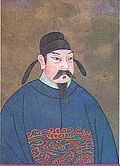
|
Daizong 代宗 Other names
|
Li Chu 李俶 |
18 May 762 – 10 June 779 (17 years and 23 days) Era(s)
|
Son of Suzong; proclaimed emperor in Chang'an | 9 January 727 – 10 June 779 (aged 52) Ended the An–Shi Rebellion, but failed to maintain control over the far provinces[254] |

|
Dezong 德宗 Other names
|
Li Kuo 李适 |
12 June 779 – 25 February 805 (25 years, 8 months and 13 days) Era(s)
|
Son of Daizong | 27 May 742 – 25 February 805 (aged 62) Notable for his tax reforms, he also attempted to control regional jiedushi, but this backfired and caused a military mutiny in 783[255] |
| Shunzong 順宗 Other names
|
Li Song 李誦 |
28 February – 28 August 805 (6 months) Era(s)
|
Son of Dezong | February 761 – 11 February 806 (aged 45) Aphasic, weak and ill, he was urged to abdicate by the court eunuchs[256] | |
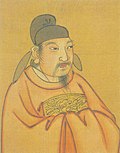 (non-contemporary) |
Xianzong 憲宗 Other names
|
Li Chun 李純 |
5 September 805 – 14 February 820 (14 years, 5 months and 9 days) Era(s)
|
Son of Shunzong | March 778 – 14 February 820 (aged 41) Ended the warlord threat, but ended up becoming a puppet of the eunuchs. A drug addict, he was poisoned to death by eunuch Chen Hongzhi[257] |
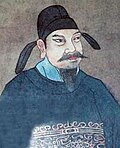
|
Muzong 穆宗 Other names
|
Li Heng 李恆 |
20 February 820 – 25 February 824 (4 years and 5 days) Era(s)
|
Son of Xianzong | July 795 – 25 February 824 (aged 28) Suffered a serious stroke in 822 (while playing polo), whereafter the government was run by eunuchs Wang Shoucheng and Li Fengji.[258] |
 (non-contemporary) |
Jingzong 敬宗 Other names
|
Li Zhan 李湛 |
29 February 824 – 9 January 827 (2 years, 10 months and 11 days) Era(s)
|
Son of Muzong | 22 July 809 – 9 January 827 (aged 17) A reckless player of football; he was killed by eunuchs[259] |

|
Wenzong 文宗 Other names
|
Li Ang 李昂 |
13 January 827 – 10 February 840 (13 years lacking 3 days) Era(s)
|
Son of Muzong | 20 November 809 – 10 February 840 (aged 30) Attempted to eradicate the eunuchs in the Sweet Dew incident (835), but ended up making them stronger. Died of natural causes[260] |
 (non-contemporary) |
Wuzong 武宗 Other names
|
Li Yan 李炎 |
20 February 840 – 22 April 846 (6 years, 2 months and 2 days) Era(s)
|
Son of Muzong | 2 July 814 – 22 April 846 (aged 31) Notable for his persecution of Buddhism. Died of drug overdose[261] |
| Xuanzong 宣宗 Other names
|
Li Chen 李忱 |
25 April 846 – 7 September 859 (13 years, 4 months and 13 days) Era(s)
|
Son of Xianzong | 27 July 810 – 7 September 859 (aged 49) Arguably the last capable Tang emperor. Notable for his campaigns against the Tibetan Empire. Died of drug overdose[262] | |
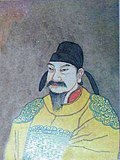
|
Yizong 懿宗 Other names
|
Li Cui 李漼 |
13 September 859 – 15 August 873 (13 years, 11 months and 2 days) Era(s)
|
Son of Xuanzong | 28 December 833 – 15 August 873 (aged 39) A devout Buddhist, but also a cruel and unstable ruler. His reign, which was dominated by eunuchs, saw various revolts that severely weakened imperial power[263] |
 (non-contemporary) |
Xizong 僖宗 Other names
|
Li Xuan 李儇 |
16 August 873 – 20 April 888 (14 years, 8 months and 4 days) Era(s)
|
Son of Yizong | 8 June 862 – 20 April 888 (aged 25) A puppet of Tian Lingzi, had to flee Chang'an twice due to internal strife[264] |
| None, known by his personal name | Li Yun 李熅 |
31 October 886 – January 887 (3 months) Era(s)
|
Great-grandson of Suzong, took power in Chang'an | Died in 887
Killed by Xizong's forces; often seen as an usurper[265] | |
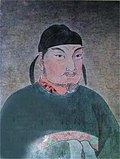
|
Zhaozong 昭宗 Other names
|
Li Ye 李曄 |
20 April 888 – 22 September 904 (12 years, 7 months and 11 days)[y] Era(s)
|
Son of Yizong | 31 March 867 – 22 September 904 (aged 37) His reign saw the final collapse of imperial authority and the rise of new powerful warlords. He was killed by rebel Zhu Wen[267] |
| better known as Emperor Ai 唐哀帝 Other names
|
Li Zhu 李柷 |
26 September 904 – 1 June 907 (2 years, 8 months and 6 days)[z] |
Son of Zhaozong, proclaimed emperor in Luoyang | 27 October 892 – 25 March 908 (aged 15) Installed, deposed, and later killed by Zhu Wen[268] | |
Five Dynasties and Ten Kingdoms
[edit]Five Dynasties (907–912)
[edit]| Personal name | Temple name | Reign | Succession | Life details |
|---|---|---|---|---|
| Zhu Wen 朱溫 |
Taizu 太祖 |
907–912 (4–5 years) Eras
|
Former ally of rebel Huang Chao, defected to the Imperial army in 882 but later betrayed the Tang and proclaimed himself Emperor in Kaifeng | 852–912 (aged 60) Killed by his son[269] |
| Zhu Yougui 朱友珪 |
— | 912–913 (0–1 years) Eras
|
Son of Zhu Wen, usurped power after learning of his father's intentions of adopting Zhu Youwen as heir | Died in 913
Described as murderous and lustful, he was killed by his brother[269] |
| Zhu Youzhen 朱瑱 |
— | 913–923 (9–10 years) Eras
|
Son of Zhu Wen | 888–923 (aged 35) Killed by the forces of Li Cunxu[269] |
| Personal name | Temple name | Reign | Succession | Life details |
|---|---|---|---|---|
| Li Cunxu 李存勗 |
Zhuangzong 莊宗 |
923–926 (2–3 years) Eras
|
Proclaimed himself Emperor after conquering Later Liang | 885–926 (aged 41) Killed in a coup[270] |
| Li Siyuan 李嗣源 |
Mingzong 明宗 |
926–933 (6–7 years) Eras
|
Adopted son of Li Keyong, took Luoyang and proclaimed himself Emperor after the murder of Li Cunxu | 867–933 (aged 66) Died of natural causes[271] |
| Li Conghou 李從厚 |
— | 934 (less than a year) Eras
|
Son of Li Siyuan | 914–early 934 (aged 20) Killed by Li Congke[272] |
| Li Congke 李從珂 |
— | 934–937 (2–3 years) Eras
|
Adopted son of Li Siyuan, he usurped power from Li Conghou | 884/6–936 (aged 50–52) Defeated by Shi Jingtang of Later Jin, he burned himself to death[272] |
| Personal name | Temple name | Reign | Succession | Life details |
|---|---|---|---|---|
| Shi Jingtang 石敬瑭 |
Gaozu 高祖 |
936–942 (5–6 years) Eras
|
Proclaimed himself emperor with the help of the Shatuo and Khitan people | 892–942 (aged 50) Died of natural causes[273] |
| Shi Chonggui 石重貴 |
— | 942–947 (4–5 years) Eras
|
Nephew of Shi Jingtang | 914–947 (aged 33) Captured by Emperor Taizong of Liao but spared; died of natural causes[273] |
| Personal name | Temple name | Reign | Succession | Life details |
|---|---|---|---|---|
| Liu Zhiyuan 劉知遠 |
Gaozu 高祖 |
947–948 (0–1 years) Eras
|
Jiedushi under the Later Jin, proclaimed himself emperor after the capture of Shi Chonggui by the Khitan | 895–948 (aged 53) Died of natural causes[274] |
| Liu Chengyou 劉承祐 |
— | 948–951 (2–3 years) Eras
|
Son of Liu Zhiyuan | 931–951 (aged 20) Killed by the forces of Guo Wei[275] |
| Personal name | Temple name | Reign | Succession | Life details |
|---|---|---|---|---|
| Guo Wei 郭威 |
Taizu 太祖 |
951–954 (2–3 years) Eras
|
Officer of Later Han, proclaimed himself emperor and dethroned Liu Chengyou | 904–954 (aged 50) Died of natural causes; introduced reforms that greatly benefited farming[276] |
| Chai Rong 柴榮 |
Shizong 世宗 |
954–959 (4–5 years) Eras
|
Adopted son of Guo Wei | 921–959 (aged 38) Conquered Eastern and Southwest China; died of natural causes[277] |
| Chai Zongxun 柴宗訓 |
— | 959–960 (0–1 years) Eras
|
Son of Chai Rong | 953–973 (aged 20) Deposed by Emperor Taizu of Song[278] |
Ten Kingdoms (907–979)
[edit]| Personal name | Temple name | Reign | Succession | Life details |
|---|---|---|---|---|
| Wang Jian 王建 |
Gaozu 高祖 |
907–918 (10–11 years) |
Rebelled against the Tang in 891, named Prince in 903 and later proclaimed himself emperor in 907 | 847–918 (aged 69) Died of natural causes; known for his great tomb and stone statues[279] |
| Wang Zongyan 王宗衍 |
— | 918–925 (6–7 years) |
Son of Wang Jian | 899–926 (aged 27) Lustful and neglected of government, he was killed by Li Cunxu[280] |
| Personal name | Temple name | Reign | Succession | Life details |
|---|---|---|---|---|
| Yang Xingmi 楊行密 |
Taizu 太祖 |
902–905 (2–3 years) |
Took over Yangzhou in 892 and was named "Prince of Wu" in 902, became independent after the fall of the Tang | 852–905 (aged 53) Died of natural causes[281] |
| Yang Wo 楊渥 |
— | 905–908 (2–3 years) |
Son of Yang Xingmi | 886–908 (aged 22) Killed by Zhang Hao and Xu Wen[282] |
| Yang Longyan 楊隆演 |
— | 908–920 (11–12 years) |
Son of Yang Xingmi, enthroned by Xu Wen | 897–920 (aged 23) Died of natural causes[282] |
| Yang Pu 楊溥 |
— | 920–937 (16–17 years) |
Son of Yang Xingmi and enthroned by Xu Zhigao (Li Bian), declared himself Emperor in 927 | 901–938 (aged 37) Forced to abdicate to Li Bian of Southern Tang; died of natural causes[283] |
| Personal name | Posthumous name | Reign | Succession | Life details |
|---|---|---|---|---|
| Ma Yin 馬殷 |
Prince Wumu 武穆王 |
907–930 (22–23 years) |
A carpenter who rose from the ranks to become prefect of Tanzhou in 896, he was named Prince in 927 by Li Siyuan | 852–930 (aged 78) Died of natural causes[284] |
| Ma Xisheng 馬希聲 |
Prince of Hengyang 衡陽王 |
930–932 (1–2 years) |
Son of Ma Yin | 899–932 (aged 33) An admirer of Zhu Wen, he cooked 50 chickens a day; died of natural causes[284] |
| Ma Xifan 馬希範 |
Prince Wenzhao 文昭王 |
932–947 (14–15 years) |
Son of Ma Yin, didn't assume his title until later in his reign | 899–947 (aged 48) Known for his extravagance and his building projects; died of natural causes[285] |
| Ma Xiguang 馬希廣 |
— | 947–951 (3–4 years) |
Son of Ma Yin | Died in 951
Deposed and later killed by his brother[286] |
| Ma Xi'e 馬希萼 |
— | 951 (less than a year) |
Son of Ma Yin | Deposed by his brother, fate unknown[286] |
| Ma Xichong 馬希崇 |
— | 951 (less than a year) |
Son of Ma Yin | Deposed by the Southern Tang with the help of Xi’e's supporters, fate unknown[286] |
| Personal name | Posthumous name | Reign | Succession | Life details |
|---|---|---|---|---|
| Qian Liu 錢鏐 |
Prince Wusu 武肅王 |
907–932 (24–25 years) |
Named "Prince of Wuyue" by Later Liang | 852–932 (aged 80) Died of natural causes[287] |
| Qian Yuanguan 錢元瓘 |
Prince Wensu 文肅王 |
932–941 (8–9 years) |
Son of Qian Liu | 887–941 (aged 54) Died of natural causes[287] |
| Qian Hongzuo 錢弘佐 |
Prince Zhongxian 忠獻王 |
941–947 (5–6 years) |
Son of Qian Yuanguan | 928–947 (aged 69) Died of natural causes[288] |
| Qian Hongzong 錢弘倧 |
Prince Zhongxun 忠遜王 |
947–early 948 (0–1 years) |
Son of Qian Yuanguan | c. 929–c. 971 (aged approx. 42) Deposed by general Hu Jinsi, fate unknown[289] |
| Qian Chu 錢俶 |
Prince Zhongyi 忠懿王 |
978 (less than a year) |
Son of Qian Yuanguan | 929–988 (aged 59) Surrendered to the Song dynasty, died of sudden illness or poisoning[290] |
| Personal name | Temple name | Reign | Succession | Life details |
|---|---|---|---|---|
| Wang Shenzhi 王審知 |
Taizu 太祖 |
909–925 (15–16 years) |
Younger brother of warlord Wang Chao, named wang of Min by Later Liang | 862–925 (aged 63) One of the most peaceful reign periods of the period; died of natural causes[291] |
| Wang Yanhan 王延翰 |
— | 926–927 (0–1 years) |
Son of Wang Shenzhi | Died in 927
Killed by his brother[292] |
| Wang Yanjun 王延鈞 |
Huizong 惠宗 |
927–935 (7–8 years) |
Son of Wang Shenzhi, proclaimed Prince in 928 and later Emperor in 933 | Died in 935
Killed by his son[292] |
| Wang Jipeng 王繼鵬 Wang Chang 王昶 |
Kangzong 康宗 |
935–939 (3–4 years) |
Son of Wang Yanjun | Died in 939
A devout Taoist, he was killed in a coup[293] |
| Wang Yanxi 王延羲 |
Jingzong 景宗 |
939–944 (4–5 years) |
Son of Wang Shenzhi | Died in 944
A despotic ruler, he was killed by Lian Chongyu and his associates[294] |
| Wang Yanzheng 王延政 |
Gongyi 恭懿王 |
945 (less than a year) |
Proclaimed himself "Prince of Yin" to rival his brother Wang Yanxi | Died in 945
Defeated by Southern Tang, died of natural causes in captivity[294] |
| Personal name | Temple name | Reign | Succession | Life details |
|---|---|---|---|---|
| Liu Yan 劉巖 |
Gaozu 高祖 |
917–942 (24–25 years) |
Took over of Guangzhou in 911, proclaimed himself Emperor of Yue (renamed "Han" in 918) | 889–942 (aged 63) A despotic and extravagant ruler; died of natural causes[295] |
| Liu Bin 劉玢 |
— | 942–943 (0–1 years) |
Son of Liu Yan | 920–943 (aged 63) An hedonistic ruler; he was killed by his brother[296] |
| Liu Sheng 劉晟 |
Zhongzong 中宗 |
943–958 (14–15 years) |
Son of Liu Yan | 920–958 (aged 38) Died of natural causes[297] |
| Liu Chang 劉鋹 |
— | 958–971 (12–13 years) |
Son of Liu Sheng | 943–980 (aged 37) Another hedonistic ruler, he surrendered to the Song army and was spared[296] |
| Personal Name | Temple name | Reign | Succession | Life details |
|---|---|---|---|---|
| Gao Jixing 高季興 |
— | 924–early 929 (4–5 years) |
Named King of Nanping by Later Tang in 924, ruled under the vassalage of Wu | 858–929 (aged 71) Died of natural causes[298] |
| Gao Conghui 高從誨 |
— | 929–948 (18–19 years) |
Son of Gao Jixing | 891–948 (aged 57) A weak ruler, he was nicknamed "Gao the Jerk" (高賴子); died of natural causes[298] |
| Gao Baorong 高寶融 |
— | 948–960 (11–12 years) |
Son of Gao Conghui | 920–960 (aged 40) Died of natural causes[298] |
| Gao Baoxu 高寶勗 |
— | 960–962 (1–2 years) |
Son of Gao Conghui, effective ruler during the reign of his brother | 924–962 (aged 38) Died of natural causes[298] |
| Gao Jichong 高繼沖 |
— | 962–963 (0–1 years) |
Son of Gao Baorong | 943–973 (aged 30) Surrendered to the Song but spared[298] |
| Personal Name | Temple name | Reign | Succession | Life details |
|---|---|---|---|---|
| Meng Zhixiang 孟知祥 |
Gaozu 高祖 |
934 (less than a year) |
Later Tang governor from 926, proclaimed King in 933 and later Emperor in 93 | 874–934 (aged 60) Died of natural causes[299] |
| Meng Chang 孟昶 |
— | 934–965 (30–31 years) |
Son of Meng Zhixiang | 919–965 (aged 60) Defeated by the Song dynasty, died of natural causes[299] |
| Personal Name | Temple name | Reign | Succession | Life details |
|---|---|---|---|---|
| Li Bian 李昪 |
Liezu 烈祖 |
937–943 (5–6 years) |
Adopted son of Xu Wen, proclaimed himself Emperor after overthrowing the Yang Wu | 888–943 (aged 55) Died of natural causes[300] |
| Li Jing 李璟 |
Yuanzong 元宗 |
943–961 (17–18 years) |
Son of Li Bian | 888–943 (aged 55) Conquered Min and Chu, but failed to ward the attacks of Later Zhou. A distinguished poet, he died of natural causes[301] |
| Li Yu 李煜 |
— | 961–976 (14–15 years) |
Son of Li Jing | 937–978 (aged 41) A master of the ci poetry, he surrendered to the Song dynasty but was spared[302] |
| Personal Name | Temple name | Reign | Succession | Life details |
|---|---|---|---|---|
| Liu Chong 劉崇 |
Shizu 世祖 |
951–954 (2–3 years) |
Cousin of Liu Zhiyuan of Later Tang, proclaimed himself Emperor | 895–954 (aged 59) Died of natural causes[303] |
| Liu Jun 劉鈞 |
Ruizong 睿宗 |
954–968 (13–14 years) |
Son of Liu Chong | 926–968 (aged 42) Died of natural causes[304] |
| Liu Ji'en 劉繼恩 |
– | 968 (less than a year) |
Adopted son of Liu Jun | 935–968 (aged 33) Killed by Hou Barong[305] |
| Liu Jiyuan 劉繼元 |
Yingwu 英武 |
968–979 (10–11 years) |
Adopted son of Liu Jun | 956–991 (aged 35) Surrendered to the Song and spared[305] |
Late imperial China
[edit]Song dynasty (960–1279)
[edit]| Portrait | Temple name | Personal name | Reign | Succession | Life details |
|---|---|---|---|---|---|
Northern Song (960–1127)[edit] | |||||

|
Taizu 太祖 Other names
|
Zhao Kuangyin 趙匡胤 |
4 February 960 – 14 November 976 (16 years, 9 months and 10 days) Era(s)
|
Proclaimed emperor after deposing Chai Zongxun of Later Zhou. Unified most of China under his rule | 21 March 927 – 14 November 976 (aged 49) Significantly reduced the power of the military in favor of civilian officers. Died in uncertain circumstances, probably illness[306] |

|
Taizong 太宗 Other names
|
Zhao Jiong 趙炅 |
14 November 976 – 8 May 997 (20 years, 5 months and 24 days) Era(s)
|
Younger brother of Taizu | 20 November 939 – 8 May 997 (aged 57) Conquered the last remaining Chinese state in 978, but failed the reconquer former Tang territories, like Vietnam. Died of natural causes[307] |

|
Zhenzong 真宗 Other names
|
Zhao Heng 趙恆 |
8 May 997 – 23 March 1022 (24 years, 10 months and 15 days) Era(s)
|
Son of Taizong | 23 December 968 – 23 March 1022 (aged 53) Suffered significant defeats to the northern Liao dynasty, leading to the Chanyuan Treaty. Died after a prolonged period of illness[308] |
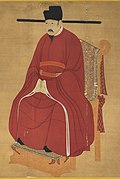
|
Renzong 仁宗 Other names
|
Zhao Zhen 趙禎 |
23 March 1022 – 30 April 1063 (41 years, 1 month and 7 days) Era(s)
|
Son of Zhenzong | 30 May 1010 – 30 April 1063 (aged 52) Ruled under the regency of Empress Liu until 1033. His long reign, the longest of the Song dynasty, saw several developments in culture, philosophy and arts[309] |

|
Yingzong 英宗 Other names
|
Zhao Shu 趙曙 |
1 May 1063 – 25 January 1067 (3 years, 8 months and 24 days) Era(s)
|
Son of Zhao Yunrang, a grandson of Emperor Taizong, and adopted son of Emperor Renzong | 16 February 1032 – 25 January 1067 (aged 34) Ruled initially under the regency of Empress Dowager Cao. Died after several years of illness[310] |

|
Shenzong 神宗 Other names
|
Zhao Xu 趙頊 |
25 January 1067 – 1 April 1085 (18 years, 2 months and 7 days) Era(s)
|
Son of Yingzong | 25 May 1048 – 1 April 1085 (aged 36) Best known by the implementation of the "New Policies". Died of illness[311] |
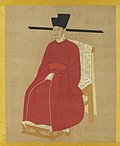
|
Zhezong 哲宗 Other names
|
Zhao Xu 趙煦 |
1 April 1085 – 23 February 1100 (14 years, 6 months and 25 days) Era(s)
|
Son of Shenzong | 4 January 1077 – 23 February 1100 (aged 23) Ruled under the regency of Empress Dowager Gao until 1093. Died of illness[312] |
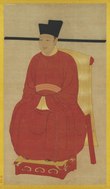
|
Huizong 徽宗 Other names
|
Zhao Ji 趙佶 |
23 February 1100 – 18 January 1126 (25 years, 10 months and 26 days) Era(s)
|
Son of Shenzong | 7 June 1082 – 4 June 1135 (aged 52) A remarkable patron of the arts and an artist himself, but a weak ruler and politician. Abdicated during the Jurchen Jin siege of Kaifeng. Captured by the Jin shortly after; died in captivity[313] |

|
Qinzong 欽宗 Other names
|
Zhao Huan 趙桓 |
19 January 1126 – 25 March 1127 (1 year, 2 months and 6 days) Era(s)
|
Son of Huizong | 23 May 1100 – 14 June 1161 (aged 62) Refused to negotiate with the Jin, which led to a second invasion. Captured alongside his father during the Jingkang incident; died in captivity[314] |
Southern Song (1127–1279)[edit] | |||||
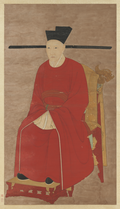
|
Gaozong 高宗 Other names
|
Zhao Gou 趙構 |
12 June 1127 – 24 July 1162 (35 years, 1 month and 12 days)[aa] Era(s)
|
Son of Huizong, proclaimed emperor in Jiankang after fleeing the Jurchen invasion of the North | 12 June 1107 – 9 November 1187 (aged 80) A competent ruler that managed to preserve the Song dynasty, but often criticized for his military defeats and political failures. Abdicated in favor of his adopted son, later dying of natural causes[316] |
| None, known by his personal name | Zhao Fu 趙旉 |
March – April 1129 (1 month or less) Era(s)
|
Son of Gaozong, proclaimed emperor during a mutiny | An infant installed by officers Miao Fu and Liu Zhengyan. They lost power within a month[315] | |

|
Xiaozong 孝宗 Other names
|
Zhao Shen[ab] 趙眘 |
24 July 1162 – 18 February 1189 (26 years, 6 months and 25 days) Era(s)
|
Son of Zhao Zicheng, a descendant of the first Song Emperor, and adopted son of Gaozong | 27 November 1127 – 28 June 1194 (aged 66) Often regarded as the most peaceful and stable ruler of the Southern Song. Abdicated in favour of his son, later dying of natural causes[318] |

|
Guangzong 光宗 Other names
|
Zhao Dun 趙惇 |
18 February 1189 – 24 July 1194 (5 years, 5 months and 6 days) Era(s)
|
Son of Xiaozong | 30 September 1147 – 17 September 1200 (aged 53) Forced to abdicate in favor of his son, allegedly because of his mental instability. Died of natural causes[319] |

|
Ningzong 寧宗 Other names
|
Zhao Kuo 趙擴 |
24 July 1194 – 17 September 1224 (30 years, 1 month and 24 days) Era(s)
|
Son of Guangzong | 19 November 1168 – 17 September 1224 (aged 55) A weak and indecisive ruler who spent most of his life in isolation at the palace. Died of illness[320] |

|
Lizong 理宗 Other names
|
Zhao Yun 趙昀 |
17 September 1224 – 16 November 1264 (40 years, 1 month and 30 days) Era(s)
|
Son of Zhao Xilu, a descendant of the first Song Emperor, Taizu | 26 January 1205 – 16 November 1264 (aged 59) An emperor devoted to philosophy and the arts, he had to face the first Mongol incursions following the fall of the Jin. Died of illness[321] |

|
Duzong 度宗 Other names
|
Zhao Qi 趙禥 |
16 November 1264 – 12 August 1274 (9 years, 8 months and 27 days) Era(s)
|
Son of Zhao Yurui, a brother of Lizong | 2 May 1240 – 12 August 1274 (aged 34) Relegated most imperial duties to his officers. Died of sudden illness[322] |

|
Gongzong 恭宗 Other names
|
Zhao Xian 趙㬎 |
12 August 1274 – 21 February 1276 (1 year, 6 months and 5 days) Era(s)
|
Son of Duzong | 2 November 1270 – 1323
Ruled under the regency of Empress Xie, who was forced to surrender to the Mongols. Became a monk in Tibet, but was later executed of forced to commit suicide; died in Gansu[323] |

|
Duanzong 端宗 Other names
|
Zhao Shi 趙昰 |
14 June 1276 – 8 May 1278 (1 year and 11 months) Era(s)
|
Son of Duzong, proclaimed emperor in Fuzhou after the fall of the capital | 1268 – 8 May 1278 (aged 10) Spent most of his life fleeing from the Mongols by sea. Died of illness after barely surviving the sinking of his ship[324] |

|
None, known by his personal name | Zhao Bing 趙昺 |
10 May 1278 – 19 March 1279 (10 months and 9 days) Era(s)
|
Son of Duzong | 1271 – 19 March 1279 (aged 8) Thrown into the Xi River during the Battle of Yamen alongside several soldiers and officers as part of a mass suicide[325] |
Northern regimes (916–1234)
[edit]Liao dynasty (916–1125)
[edit]| Temple name | Personal name | Reign | Succession | Life details |
|---|---|---|---|---|
| Taizu 太祖 Other names
|
Yelü Abaoji 耶律阿保机 |
27 February 907 – 6 September 926 (19 years, 6 months and 10 days) Era(s)
|
Led the Yelü clan as Khagan to unite the Khitan people | 872 – 6 September 926 (aged 53–54) Died of natural causes[326] |
| Taizong 太宗 Other names
|
Yelü Deguang 耶律德光 |
11 December 927 – 15 May 947 (19 years, 4 months and 23 days) Era(s)
|
Son of Taizu | 902 – 15 May 947 (aged 44–45) Died from a sudden illness[328] |
| Shizong 世宗 Other names
|
Yelü Ruan 耶律阮 |
16 May 947 – 7 October 951 (4 years, 4 months and 21 days) Era(s)
|
Grandson of Taizu | 918 – 7 October 951 (aged 32–33) Murdered by his cousin in a coup d'état[329] |
| Muzong 穆宗 Other names
|
Yelü Jing 耶律璟 |
11 October 951 – 12 March 969 (17 years, 5 months and 1 day) Era(s)
|
Son of Taizong | 931 – 12 March 969 (aged 37–38) Killed by his personal attendants[330] |
| Jingzong 景宗 Other names
|
Yelü Xian 耶律贤 |
13 May 969 – 13 October 982 (13 years and 5 months) Era(s)
|
Son of Shizong | 948 – 13 October 982 (aged 33–34) Died of illness on a hunting trip[331] |
| Shengzong 聖宗 Other names
|
Yelü Longxu 耶律隆绪 |
14 October 982 – 25 June 1031 (48 years, 8 months and 11 days) Era(s)
|
Son of Jingzong | 971 – 25 June 1031 (aged 59–60) Longest reigning Liao ruler, though he was controlled by his mother Xiao Yanyan until 1009. Died of natural causes[332] |
| Xingzong 興宗 Other names
|
Yelü Zongzhen 耶律宗真 |
25 June 1031 – 28 August 1055 (24 years, 2 months and 3 days) Era(s)
|
Son of Shengzong | 1016 – 28 August 1055 (aged 38–39) Died of natural causes[333] |
| Daozong 道宗 Other names
|
Yelü Hongji 耶律洪基 |
28 August 1055 – 12 February 1101 (45 years, 5 months and 15 days) Era(s)
|
Son of Xingzong | 1032 – 12 February 1101 (aged 68–69) Died of natural causes[334] |
| None, known by his posthumous name: Tianzuo 天祚帝 |
Yelü Yanxi 耶律延禧 |
12 February 1101 – 6 September 1125 (24 years, 6 months and 25 days) Era(s)
|
Grandson of Daozong | 1075 – after 6 September 1125 (aged 49–50) Died in captivity from natural causes[335] |
Western Xia (1038–1227)
[edit]| Temple name[ah] | Personal name | Reign | Succession | Life details |
|---|---|---|---|---|
| Jingzong 景宗 Other names
|
Li Yuanhao 李元昊 |
1038 – 1048[ai] (9–10 years) Era(s)
|
Son of the Tangut leader Li Deming | 1003–1048[ai] (aged 44–45) Assassinated by his son, Ningling Ge[337] |
| Yizong 毅宗 Other names
|
Li Liangzuo 李諒祚 |
1048 – January 1068 (19–20 years) Era(s)
|
Son of Jingzong | 1047 – January 1068 (aged 20–21) Infant emperor whose reign was controlled by Lady Mozang and later Mozang Epang. Died of natural causes[338] |
| Huizong 惠宗 Other names
|
Li Bingchang 李秉常 |
January 1068 – 21 August 1086 (17–18 years) Era(s)
|
Son of Yizong | 1061 – 21 August 1086 (aged 24–25) Struggled with his mother for power throughout his reign. Died of natural causes[339] |
| Chongzong 崇宗 Other names
|
Li Qianshun 李乾順 |
11 November 1086 – 1 July 1139 (52–53 years) Era(s)
|
Son of Huizong | 1084 – 1 July 1139 (aged 54–55) Died of natural causes[340] |
| Renzong 仁宗 Other names
|
Li Renxiao 李仁孝 |
July 1139 – 16 October 1193 (53–54 years) Era(s)
|
Son of Chongzong | 1124 – 16 October 1193 (aged 68–69) Longest ruling ruler of the dynasty. Died of natural causes[340] |
| Huanzong 桓宗 Other names
|
Li Chunyou 李純佑 |
1193 – 1 March 1206 (12–13 years) Era(s)
|
Son of Renzong | 1177 – 1 March 1206 (aged 28–29) Overthrown in a coup d'état led by Xiangzong. Died of natural causes[341] |
| Xiangzong 襄宗 Other names
|
Li Anquan 李安全 |
March 1206 – 13 September 1211 (4–5 years) Era(s)
|
Grandson of Renzong | 1170 – 13 September 1211 (aged 40–41) Suffered many losses from the Mongols. Died of natural causes[341] |
| Shenzong 神宗 Other names
|
Li Zunxu 李遵頊 |
12 August 1211 – 1223 (14–15 years) Era(s)
|
Descendant of Jingzong | 1163 – 1226 (aged 62–63) Abdicated amid Mongol invasions. Died of natural causes[341] |
| Xianzong 獻宗 |
Li Dewang 李德旺 |
1223 – August 1226 (2–3 years) Era(s)
|
Son of Shenzong | 1181 – August 1226 (aged 44–45) Died of natural causes[341] |
| None, known by his personal name | Li Xian 李晛 |
1226 – 1227 (1 year or less) Era(s)
|
Grandson of Shenzong | ? – 1227 (aged ?) Killed by the Mongols[341] |
Jin dynasty (1115–1234)
[edit]| Temple name | Personal name | Reign | Succession | Life details |
|---|---|---|---|---|
| Taizu 太祖 Other names
|
Wanyan Min 完顏旻 |
28 January 1115 – 19 September 1123 (8 years, 7 months and 22 days) Era(s)
|
Son of Helibo from the Wanyan tribe | 1 August 1068 – 19 September 1123 (aged 55) Conquered the Liao dynasty[343] |
| Taizong 太宗 Other names
|
Wanyan Sheng 完顏晟 |
27 September 1123 – 7 February 1135 (11 years, 4 months and 11 days) Era(s)
|
Brother of Taizu | 1075 – 7 February 1135 (aged 59–60) Sacked the North Song dynasty's capital. Died of natural causes[343] |
| Xizong 熙宗 Other names
|
Wanyan Dan 完顏亶 |
8 February 1135 – 9 January 1150 (14 years, 11 months and 1 day) Era(s)
|
Grandson of Taizu | 1119 – 9 January 1150 (aged 30–31) Assassinated by his chancellor and successor Wanyan Liang[343] |
| None, informally known as Prince of Hailing 海陵王 |
Wanyan Liang 完顏亮 |
9 January 1150 – 15 December 1161 (11 years, 11 months and 6 days) Era(s)
|
Grandson of Taizu | 1122 – 15 December 1161 (aged 38–39) Assassinated by his military commanders after losing the Battle of Caishi[344] |
| Shizong 世宗 Other names
|
Wanyan Yong 完顏雍 |
27 October 1161 – 20 January 1189 (27 years, 2 months and 24 days) Era(s)
|
Grandson of Taizu | 1123 – 20 January 1189 (aged 65–66) Had the longest and most stable reign of the dynasty[345] |
| Zhangzong 章宗 Other names
|
Wanyan Jing 完顏璟 |
20 January 1189 – 29 December 1208 (19 years, 11 months and 9 days) Era(s)
|
Grandson of Shizong | 31 August 1168 – 29 December 1208 (aged 40) Died of natural causes[346] |
| None, informally known as Prince Shao of Wei 衛紹王 |
Wanyan Yongji 完顏永濟 |
29 December 1208 – 11 September 1213 (4 years, 8 months and 13 days) Era(s)
|
Son of Shizong | ? – 11 September 1213[aj] (aged ?) Assassinated under the orders of the general Hushahu[346] |
| Xuanzong 宣宗 Other names
|
Wanyan Xun 完顏珣 |
22 September 1213 – 14 January 1224 (10 years, 3 months and 23 days) Era(s)
|
Grandson of Shizong | 1163 – 14 January 1224 (aged 60–61) Suffered heavy losses from the Mongols. Died of natural causes[346] |
| Aizong 哀宗 |
Wanyan Shouxu 完顏守緒 |
15 January 1224 – 8 February 1234 (10 years and 24 days) Era(s)
|
Son of Xuanzong | 25 September 1198 – 9 February 1234 (aged 35) Committed suicide amid Mongol invasions[346] |
| Mo 末 |
Wanyan Chenglin 完顏承麟 |
9 February 1234 (less than a day) |
Descendant of Helibo | ? – 9 February 1234 (aged ?) The shortest reigning Chinese monarch, ruled for less than a day. Died during the Mongol conquest of the Jin[346] |
Yuan dynasty (1271–1368)
[edit]| Portrait | Khan name | Personal name | Reign | Succession | Life details |
|---|---|---|---|---|---|
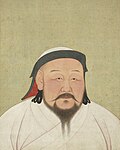
|
Setsen Khan 薛禪汗 better known as Kublai Khan Other names
|
Borjigin Kublai 孛兒只斤忽必烈 |
18 December 1271 – 18 February 1294 (22 years and 2 months) Era(s)
|
Grandson of Genghis Khan; declared emperor after defeating the Song in the Battle of Yamen | 23 September 1215 – 18 February 1294 (aged 78) Fully conquered the Song dynasty, won the Toluid Civil War, moved the capital to Khanbaliq and employed Marco Polo[347] |

|
Öljeytü Khan 完澤篤汗 Other names
|
Borjigin Temür 孛兒只斤鐵穆耳 |
10 May 1294 – 10 February 1307 (12 years and 9 months) Era(s)
|
Grandson of Kublai | 15 October 1265 – 10 February 1307 (aged 41) Died of natural causes[348] |

|
Külüg Khan 曲律汗 Other names
|
Borjigin Haishan 孛兒只斤海山 |
21 June 1307 – 27 January 1311 (3 years, 7 months and 6 days) Era(s)
|
Great-grandson of Kublai | 4 August 1281 – 27 January 1311 (aged 29) Died of natural causes[349] |

|
Buyantu Khan 普顏篤汗 Other names
|
Borjigin Ayurbarwada 孛兒只斤愛育黎拔力八達 |
7 April 1311 – 1 March 1320 (8 years, 10 months and 23 days) Era(s)
|
Great-grandson of Kublai | 9 April 1285 – 1 March 1320 (aged 34) Died of natural causes[350] |
| Gegeen Khan 格堅汗 Other names
|
Borjigin Shidibala 孛兒只斤硕德八剌 |
19 April 1320 – 4 September 1323 (3 years, 4 months and 16 days) Era(s)
|
Son of Ayurbarwada | 22 February 1302 – 4 September 1323 (aged 21) Killed in a coup led by Temuder[351] | |
| None, known either by his personal or era name | Borjigin Yesün Temür 孛兒只斤也孫鐵木兒 |
4 October 1323 – 15 August 1328 (4 years, 10 months and 11 days) Era(s)
|
Great-Grandson of Kublai | 28 November 1293 – 15 August 1328[ak] (aged 34) Died of natural causes[352] | |
| None, known either by his personal or era name | Borjigin Ragibagh 孛兒只斤阿剌吉八 |
October 1328 – 14 November 1328 (1 month) Era(s)
|
Son of Yesün | 1320 – 14 November 1328 (aged 8) Child emperor; probably murdered amid the War of the Two Capitals[353] | |
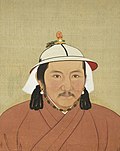
|
Jayaatu Khan 札牙篤汗 Other names
|
Borjigin Tugh Temür 孛兒只斤圖帖睦爾 |
16 October 1328 – 26 February 1329 (4 months and 10 days) Era(s)
|
Son of Külüg | 16 February 1304 – 2 September 1332 (aged 28) Abdicated in favor of his brother Khutughtu Khan[354] |

|
Khutughtu Khan 忽都篤汗 Other names
|
Borjigin Kusala 孛兒只斤和世剌 |
27 February 1329 – 30 August 1329 (6 months and 3 days) Era(s)
|
Son of Külüg | 22 December 1300 – 30 August 1329 (aged 28) Briefly ruled before killed by El Temür[353] |
|
|
Jayaatu Khan 札牙篤汗 (second reign) |
Borjigin Tugh Temür 孛兒只斤圖帖睦爾 |
8 September 1329 – 2 September 1332 (2 years, 11 months and 25 days) Era(s)
|
Son of Külüg | 16 February 1304 – 2 September 1332 (aged 28) A patron of the arts and scholarship, his reign was dominated by the ministers El Temür and Bayan of the Merkid. Died of natural causes[354] |
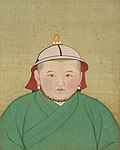
|
None, known by his personal name
Other names
|
Borjigin Rinchinbal 孛兒只斤懿璘質班 |
23 October 1332 – 14 December 1332 (1 month and 21 days) Era(s)
|
Son of Khutughtu | 1 May 1326 – 14 December 1332 (aged 6) Child emperor; died of sudden illness[355] |
| Ukhaghatu Khan 烏哈噶圖汗 Other names
|
Borjigin Toghon Temür 孛兒只斤妥懽帖睦爾 |
19 July 1333 – 10 September 1368 (35 years, 2 months and 22 days) Era(s)
|
Son of Khutughtu | 25 May 1320 – 23 May 1370 (aged 49) Died of natural causes[357] |
Ming dynasty (1368–1644)
[edit]| Portrait | Era name | Personal name | Reign[am] | Succession | Life details |
|---|---|---|---|---|---|

|
Hongwu 洪武 Other names
|
Zhu Yuanzhang 朱元璋 |
23 January 1368 – 24 June 1398 (30 years, 5 months and 1 day) Era(s)
|
Born into poverty, he led the Red Turban Rebellions to establish the Ming dynasty | 21 October 1328 – 24 June 1398 (aged 69) Initiated cultural reconstruction and political reform, also noted for his extreme and violent methods of enforcement. Died of natural causes[359] |
| Jianwen 建文 |
Zhu Yunwen 朱允炆 |
30 June 1398 – 13 July 1402 (4 years and 13 days) Era(s)
|
Grandson of Hongwu | 5 December 1377 – 13 July 1402 (aged 24) Overthrown by the future Yongle Emperor, his uncle. Either died in or disappeared after the fires in the Ming Palace.[361] | |
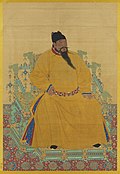
|
Yongle 永樂 Other names
|
Zhu Di 朱棣 |
17 July 1402 – 12 August 1424 (22 years and 26 days) Era(s)
|
Son of Hongwu | 2 May 1360 – 12 August 1424 (aged 64) Raised the Ming to its highest power. Patron of many projects, including the Porcelain Tower of Nanjing, Yongle Encyclopedia and the Ming treasure voyages. Died of natural causes.[362] |

|
Hongxi 洪熙 Other names
|
Zhu Gaochi 朱高熾 |
7 September 1424 – 29 May 1425 (8 months and 22 days) Era(s)
|
Son of Yongle | 16 August 1378 – 29 May 1425 (aged 46) Focused primarily on domestic affairs. Died of natural causes[363] |

|
Xuande 宣德 Other names
|
Zhu Zhanji 朱瞻基 |
27 June 1425 – 31 January 1435 (9 years, 7 months and 4 days) Era(s)
|
Son of Hongxi | 16 March 1399 – 31 January 1435 (aged 35) A noted painter. Died of natural causes[364] |

|
known by his temple: Yingzong 英宗 Other names
|
Zhu Qizhen 朱祁镇 |
7 February 1435 – 1 September 1449 (14 years, 6 months and 25 days)[aq] Era(s)
|
Son of Xuande | 29 November 1427 – 23 February 1464 (aged 36) His reign was dominated by eunuchs, particularly Wang Zhen, which led to growing instability. Captured by the Northern Yuan dynasty during the Tumu Crisis.[366] |
| Jingtai 景泰 Other names
|
Zhu Qiyu 朱祁鈺 |
22 September 1449 – 24 February 1457 (7 years, 5 months and 2 days) Era(s)
|
Son of Xuande | 11 September 1428 – 14 March 1457 (aged 28) Briefly ruled while his brother was held captive; deposed soon after. Died a month later, possibly from murder.[367] | |
|
|
Yingzong 英宗 (second reign) |
Zhu Qizhen 朱祁镇 |
11 February 1457 – 23 February 1464 (7 years and 12 days)[aq] Era(s)
|
Son of Xuande | 29 November 1427 – 23 February 1464 (aged 36) Restored to power after his release. Died of natural causes[368] |

|
Chenghua 成化 Other names
|
Zhu Jianshen 朱見濡 |
28 February 1464 – 9 September 1487 (23 years, 6 months and 12 days) Era(s)
|
Son of Yingzong | 9 December 1447 – 9 September 1487 (aged 39) Died of natural causes[369] |

|
Hongzhi 弘治 Other names
|
Zhu Youcheng 朱祐樘 |
22 September 1487 – 8 June 1505 (17 years, 8 months and 17 days) Era(s)
|
Son of Chenghua | 30 July 1470 – 9 June 1505 (aged 34) Died of natural causes[370] |

|
Zhengde 正德 Other names
|
Zhu Houzhao 朱厚㷖 |
19 June 1505 – 20 April 1521 (15 years, 10 months and 1 day) Era(s)
|
Son of Hongzhi | 14 November 1491 – 20 April 1521 (aged 29) His reign saw the rise of influence from eunuchs, particularly Liu Jin. Probably drowned after his boat sank.[371] |
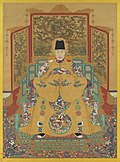
|
Jiajing 嘉靖 Other names
|
Zhu Houcong 朱厚熜 |
27 May 1521 – 23 January 1567 (45 years, 7 months and 26 days) Era(s)
|
Grandson of Chenghua, brother of Zhengde | 16 September 1507 – 23 January 1567 (aged 59) Died of natural causes[372] |

|
Longqing 隆慶 Other names
|
Zhu Zaiji 朱載坖 |
4 February 1567 – 5 July 1572 (5 years, 5 months and 1 day) Era(s)
|
Son of Jiajing | 4 March 1537 – 5 July 1572 (aged 35) Died of natural causes[373] |

|
Wanli 萬曆 Other names
|
Zhu Yijun 朱翊鈞 |
19 July 1572 – 18 August 1620 (48 years and 30 days) Era(s)
|
Son of Longqing | 4 September 1563 – 18 August 1620 (aged 56) Despite early successes, the gradual decline of Ming began towards the end of his reign. Died of natural causes[374] |

|
Taichang 泰昌 Other names
|
Zhu Changluo 朱常洛 |
28 August – 26 September 1620 (29 days) Era(s)
|
Son of Wanli | 28 August 1582 – 26 September 1620 (aged 38) Died suddenly after a reign of around a month, possibly murdered by poison[375] |

|
Tianqi 天啓 Other names
|
Zhu Youjiao 朱由校 |
1 October 1620 – 30 September 1627 (6 years, 11 months and 29 days) Era(s)
|
Son of Taichang | 23 December 1605 – 30 September 1627 (aged 21) A weak ruler, his reign was dominated by the eunuch Wei Zhongxian. Died from an unknown illness[376] |
| Chongzhen 崇禎 Other names
|
Zhu Youjian 朱由檢 |
2 October 1627 – 25 April 1644 (16 years, 6 months and 23 days) Era(s)
|
Son of Taichang, brother of Tianqi | 6 February 1611 – 25 April 1644 (aged 33) Committed suicide, possibly by hanging himself on a tree.[377] | |
Qing dynasty (1644–1912)
[edit]| Portrait | Era name | Personal name | Reign[ar] | Succession | Life details |
|---|---|---|---|---|---|

|
Shunzhi 順治 Other names
|
Aisin-Gioro Fulin 愛新覺羅福臨 |
8 November 1644 – 5 February 1661 (16 years, 2 months and 28 days) Era(s)
|
Son of Hong Taiji; chosen by a council of Manchu princes | 15 March 1638 – 5 February 1661 (aged 22) Finished the Manchu conquest of the Ming, pushing the remaining Ming sympathizers to the South. Died suddenly of smallpox[379] |

|
Kangxi 康熙 Other names
|
Aisin-Gioro Xuanye 愛新覺羅玄燁 |
5 February 1661 – 20 December 1722 (61 years, 10 months and 15 days) Era(s)
|
Son of Shunzhi | 4 May 1654 – 20 December 1722 (aged 68) Longest ruling Chinese emperor. Expanded the empire's territory, and commissioned both the Kangxi Dictionary and Complete Tang Poems. Died of natural causes[380] |
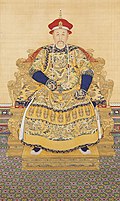
|
Yongzheng 雍正 Other names
|
Aisin-Gioro Yinzhen 愛新覺羅胤禛 |
27 December 1722 – 8 October 1735 (12 years, 9 months and 11 days) Era(s)
|
Son of Kangxi | 13 December 1678 – 8 October 1735 (aged 56) Ruled for a relatively short period, establishing the Grand Council. Probably died of alchemical elixir poisoning; death officially recorded as natural causes.[381][as] |
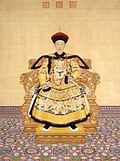
|
Qianlong 乾隆 Other names
|
Aisin-Gioro Hongli 愛新覺羅弘曆 |
18 October 1735 – 9 February 1796 (60 years, 3 months and 22 days) Era(s)
|
Son of Yongzheng | 25 September 1711 – 7 February 1799 (aged 87) Brought the empire to its height. Died of natural causes[383] |

|
Jiaqing 嘉慶 Other names
|
Aisin-Gioro Yongyan 愛新覺羅顒琰 |
9 February 1796 – 2 September 1820 (24 years, 6 months and 24 days) Era(s)
|
Son of Qianlong | 13 November 1760 – 2 September 1820 (aged 59) Died suddenly from apoplexy[384] |

|
Daoguang 道光 Other names
|
Aisin-Gioro Minning 愛新覺羅旻寧 |
3 October 1820 – 26 February 1850 (29 years, 4 months and 23 days) Era(s)
|
Son of Jiaqing | 16 September 1782 – 25 February 1850 (aged 67) An ineffective ruler who led a highly unstable reign, marked by the First Opium War and the early Taiping Rebellion. Probably died from a stroke[385] |
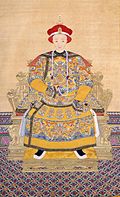
|
Xianfeng 咸豐 Other names
|
Aisin-Gioro Yizhu 愛新覺羅奕詝 |
9 March 1850 – 22 August 1861 (11 years, 5 months and 13 days) Era(s)
|
Son of Daoguang | 17 July 1831 – 22 August 1861 (aged 30) The last Chinese emperor to have personal power for the entirety of his reign, which was unstable after the Taiping Rebellion, Nian Rebellion and Second Opium War. Died of natural causes[386] |

|
Tongzhi 同治 Other names
|
Aisin-Gioro Zaichun 愛新覺羅載淳 |
11 November 1861 – 12 January 1875 (13 years, 2 months and 1 day) Era(s)
|
Son of Xianfeng | 27 April 1856 – 12 January 1875 (aged 18) Reign was completely dominated by Empress Dowager Cixi, who initiated the Tongzhi Restoration. Died suddenly, under suspicious circumstances[388] |

|
Guangxu 光緒 Other names
|
Aisin-Gioro Zaitian 愛新覺羅載湉 |
25 February 1875 – 14 November 1908 (33 years, 8 months and 20 days) Era(s)
|
Cousin of Tongzhi | 14 August 1871 – 14 November 1908 (aged 37) Initiated the failed Hundred Days' Reform, and from 1898 on, his reign was completely dominated by Empress Dowager Cixi. Died of poisoning, possibly from Cixi.[389] |

|
Xuantong 宣統 |
Aisin-Gioro Puyi 愛新覺羅溥儀 |
2 December 1908 – 12 February 1912 (3 years, 2 months and 10 days) Era(s)
|
Nephew of Guangxu | 7 February 1906 – 17 October 1967 (aged 61) Reigned as a young child, but was forced to abdicate in 1912 amid the 1911 Revolution, ending the 2,000-year monarchial system of Imperial China. Died of natural causes.[390] |
| For the subsequent heads of state of China, see List of presidents of the Republic of China and List of state representatives of the People's Republic of China | |||||
References
[edit]Notes
[edit]- ^ Contemporary scholars often split Chinese history into three periods: Ancient, Imperial and Modern, based on the Ancient, Medieval and Modern scheme developed by Liang Qichao.[1] In Chinese history, "Medieval"—originally defined as from the Qin to Qing dynasties—has since been replaced by "Imperial".[2] "Medieval" now refers to the more specific period from the End of the Han dynasty through the Five Dynasties and Ten Kingdoms.[3]
- ^ The Mandate of Heaven is essentially equivalent to the European divine right of kings.[7] It was first formally introduced by the Duke of Zhou to justify his house's overthrow of the Shang.[7] Prior to this, the Shang kings justified their rule by being claiming descent from a "divine ancestor",[8] and being able to interpret, manipulate and maintain cosmic relations between humans and heaven (天; Tiān).[9]
- ^ Although era names originated in the reign of Emperor Wu of Han (r. 141–87 BCE),[15] his two immediate predecessors Emperor Wen of Han (r. 180–157) and Emperor Jing of Han (r. 157–141) were also given era names later.[16]
- ^ All reign dates for the Xia rulers are excluded. They are highly speculative, due to their dependence on the already uncertain beginning and ending dates of the dynasty
- ^ The traditional dating method (beginning the Shang in 1766) is not included in this table. See Liu et al. 2021, pp. 165, 169 for another, more recent, method of dating
- ^ Zu Ji, another son of Wu Ding is given a kingly title in some oracle bone texts, but did probably not reign.[61]
- ^ In his lifetime, Ying Zheng would have been known as simply "Shi Huangdi", but after the Qin's fall it became standard practice to include the dynasty's name when referring to him. His dynastic name is commonly abbreviated to 'Qin Shi Huang'. In its fullest form, it would be: Qin Shi Huangdi (秦始皇帝)[4]
- ^ Qin Shi Huang began his reign as king of Qin in 246 BCE, but did not unite China and proclaim himself Emperor (皇帝 Huangdi) until 221 BCE.[81]
- ^ Moule 1957, p. 3 gives 18 July 210 BCE as the exact date for the end of Qin Shi Huang's reign, but also notes the issues surrounding this chronology. The date is accepted by Vervoorn 1990, p. 311, but it's not used by modern scholars.[82][83] Hymes 2000, p. 8 gives July–August 210 BCE, the seventh lunar month.
- ^ In its fullest form, Ying Huhai's dynastic name would be Qin Er Shi Huangdi (秦二世皇帝)[4]
- ^ Sources vary on the exact month of Qin Er Shi's accession, though they agree it was in late 210. Vervoorn 1990, p. 311 gives August 210 while Barbieri-Low & Yates 2015, p. xix and Moule 1957, p. 3 give September–October 210
- ^ After Qin Er Shi's death the Qin dynasty became increasingly weaker in power, so Zhao Gao proclaimed the state was once again a kingdom, not an empire. Thus when Ziying (子嬰) ascended to the throne, he only ruled as a King of Qin.[89] After ruling for 46 days in late 207 BCE, Ziying surrendered to Liu Bang and was later killed by Xiang Yu during the Chu–Han Contention.[90][91]
- ^ Liu Bang began his peasant revolt in 209 BCE, during the collapse of the Qin dynasty. He assumed the title "King of Han" (漢王) in 206 BCE, referencing his dominions near the Han river. He only assumed the title of Emperor (皇帝; Huangdi) in 202 BCE after his victory in the Chu–Han Contention.[93]
- ^ Also known as:
Shaodi Gong
少帝恭[96] - ^ a b In order to justify Emperor Wen of Han's overthrow of the House of Lü's puppets, Houshao and Qianshao, both of the dynasty's official histories—the Shiji and Hanshu—assert that neither was actually a son of Hui.[97]
- ^ Also known as:
Shaodi Hong
少帝弘[99] - ^ a b Though most modern sources agree that Emperor Wu died on 29 March 87 BCE, Vervoorn 1990, p. 312 gives 2 March; Moule 1957, p. 5 gives 27 March.
- ^ Liu Yi reigned for less than a year, so thus did not live long enough to receive an era name[120]
- ^ de Crespigny 2010, p. 450 notes that "On 11 December [...] Cao Cao's son and successor Cao Pi received the abdication of the last emperor of Han. [...] Some authorities give the date of abdication as 25 November [...] This is the date upon which Emperor Xian issued an edict calling upon Cao Pi to take the throne, but the ceremonial transfer of sovereignty was carried out two weeks later"
- ^ Not counting Ruzi Ying, who never officially ascended to the throne.
- ^ Also known as:
Duke of Haixi
海西公[151] - ^ Moule 1957, p. 34 gives 30 May 618 as the date for the end of Yang You's reign, but modern sources usually give 12 June.[240]
- ^ Also known as "Wu Hou" (武后). The title Huanghou (皇后) given to consorts it's often translated as "Empress consort" in English. Though often translated as "Emperor" in this context, the title Huangdi, as well as many other Chinese words, has no assigned gender.[247]
- ^ Li Chongmao is often referred by his posthumous name; he's also known as "Emperor Shao" (少皇帝), referencing his brief reign.
- ^ Emperor Zhaozong was briefly deposed in December 900 by eunuch Liu Jishu, but he regained the throne just a month later.[266]
- ^ Moule 1957, p. 62 gives 1 June 907 as the date for the end of Emperor Ai's reign, but Kroll 2019, p. 1 gives 5 June. Other sources give 12 May.
- ^ Emperor Gaozong was briefly deposed between March and April 1129. He was forced to abdicate in favor of his infant son Zhao Fu.[315]
- ^ Born as Zhao Bocong (趙伯琮), later changed to Zhao Wei (趙瑋) in 1160.[317]
- ^ For Taizu's alternate posthumous names, see Moule 1957, p. 94
- ^ In 1008, Taizong was originally given the posthumous name Emperor Xiaowu (孝武). This was changed in 1052 to Emperor Xiaowu Huiwen (孝武惠文皇帝).[327]
- ^ Some sources differ over the dates for Taizong's Datong era, see Moule 1957, p. 95
- ^ In 952, Shizong was originally given the posthumous name Emperor Xiaohe (孝和) this was changed in 1008 to Emperor Xiaohe Zhuangxian (孝和莊憲皇帝).[327]
- ^ In 983, Jingzong was originally given the posthumous name Emperor Xiaocheng (孝成) this was changed in 1052 to Emperor Xiaocheng Kangjing (孝成康靖皇帝).[327]
- ^ See Cui & Wen 2007 for further information on the complexities surrounding the names of the Western Xia rulers
- ^ a b The death of Jingzong is uncertain and contradictory in many records. He may have died in late 1047 or early 1048.[336]
- ^ Moule 1957, p. 101 notes that there is uncertainty concerning Wanyan Yongji's death date
- ^ Some uncertainty surrounds his birth and death dates, see Ch'i-Ch'ing 1994, p. 353
- ^ Ukhaghatu Khan's posthumous name was given by the Ming court[356]
- ^ In the Ming dynasty, a few days usually separate each emperor's reign. When a Ming emperor died there was a period of mourning, after which their successor was crowned as soon a "propitious" day was chosen. Emperors reigned in their predecessor's era name until a new era name was declared at the beginning of the next year. Thus, the Hongwu (洪武) era did not technically end with the Hongwu Emperor's death on 24 June 1398, but ended on 5 February 1399 when the subsequent Jianwen Emperor began a new era on 6 February 1399.[358]
- ^ The temple name Huizong was given to the Jianwen Emperor long after his reign by Zhu Yousong, the Prince of Fu, in 1644.[360]
- ^ The posthumous name Emperor Gongmin Hui was given to the Jianwen Emperor long after his reign by the Qianlong Emperor in 1736.[360]
- ^ Following his death, the Yongle Emperor was given the temple name Taizong (太宗) by his successor the Hongxi Emperor, but this was changed on 3 October 1538 to Chengzu (成祖) by the Jiajing Emperor. The latter has been used since its bestowment[360]
- ^ a b From 1 September 1449 to 20 September 1450, Emperor Yingzong was a captive of the Northern Yuan dynasty during the Tumu Crisis. He was restored to power on 11 February 1457.[365]
- ^ In the Qing dynasty, a few days usually separate each emperor's reign. When a Qing emperor died there was a period of mourning, after which the successor was crowned as soon a "propitious" day was chosen. Emperors reigned in their predecessor's era name until a new era name was declared at the beginning of the next year. Thus, the Shunzhi (順治) era did not technically end with the Shunzhi Emperor's death on 5 February 1661, but ended on 17 February 1662 when the subsequent Kangxi Emperor began a new era on 18 February 1662.[378]
- ^ There are popular, though unsubstantiated, rumors that the Yongzheng Emperor was killed by the daughter of Lü Liuliang, whom he had executed.[382]
- ^ a b The Xuantong Emperor was only given posthumous and temple names in 2004 when the Qing family's descendants bestowed him with them.[378]
Citations
[edit]- ^ Wilkinson 2018, p. 1.
- ^ Wilkinson 2018, pp. 1, 5.
- ^ Xiong 2009, pp. 1–32.
- ^ a b c d Wilkinson 2018, p. 287.
- ^ a b Wilkinson 2018, p. 8.
- ^ a b c Wilkinson 2018, p. 7.
- ^ a b Wechsler 1985, p. 12.
- ^ Wilkinson 2018, p. 9.
- ^ Wang 2000, p. 193.
- ^ Paludan 1998, pp. 6–7.
- ^ Wilkinson 2018, pp. 7–8.
- ^ Chen 2014, pp. 325–326.
- ^ Wilkinson 2018, pp. 288, 290–291.
- ^ Wilkinson 2018, p. 288.
- ^ Wright & Fagan 1951, p. 113.
- ^ Moule 1957, pp. 4–5.
- ^ Theobald 2011a.
- ^ Wright & Fagan 1951, pp. 113–114.
- ^ Wilkinson 2018, pp. 294–295.
- ^ a b Biran 2017, p. 130.
- ^ Chang 1999, pp. 65–66.
- ^ Chang 1999, p. 67; Wilkinson 2018, p. 746.
- ^ Chang 1999, p. 66.
- ^ Wilkinson 2018, p. 746; Chang 1999, pp. 66–67.
- ^ Chang 1999, pp. 66–68.
- ^ Chang 1999, pp. 68–69.
- ^ a b c Chang 1999, p. 70.
- ^ a b c Wilkinson 2018, p. 747.
- ^ a b Morton & Lewis 2004, p. 14.
- ^ Chang 1999, pp. 71–73.
- ^ Theobald 2018a.
- ^ Imperial China 2020, pp. 314–316.
- ^ Wu 1982, pp. 110–117; Imperial China 2020, pp. 30, 314.
- ^ Wu 1982, pp. 117–119; Imperial China 2020, p. 314.
- ^ Wu 1982, pp. 119–121; Imperial China 2020, p. 314.
- ^ Wu 1982, pp. 121–122; Imperial China 2020, p. 314.
- ^ Wu 1982, pp. 122–123; Imperial China 2020, p. 315.
- ^ Wu 1982, pp. 123–125; Imperial China 2020, p. 315.
- ^ Wu 1982, pp. 125–126; Imperial China 2020, p. 315.
- ^ a b c d e f g h Imperial China 2020, p. 315.
- ^ Wu 1982, pp. 126–127; Imperial China 2020, p. 315.
- ^ Wu 1982, pp. 129–143; Imperial China 2020, p. 315.
- ^ Keightley 1999, p. 232.
- ^ Wilkinson 2018, p. 1277.
- ^ a b Keightley 1985, pp. 204–207.
- ^ Moule 1957, p. xiv.
- ^ Indiana University 2006, pp. 2–3.
- ^ Theobald 2018b.
- ^ a b Lee 2002, p. 18.
- ^ a b XSZCP Group 2000, pp. 86–88.
- ^ Loewe & Shaughnessy 1999, p. 25.
- ^ Loewe & Shaughnessy 1999, p. 2.
- ^ a b c d e f Imperial China 2020, p. 316.
- ^ a b Indiana University 2006.
- ^ a b c d e f g h i j k l Imperial China 2020, p. 317.
- ^ a b c d e f g Imperial China 2020, p. 318.
- ^ Keightley 1985, pp. xiii–xiv.
- ^ Shaughnessy 1997, pp. 13–14.
- ^ Keightley 1985, p. xiii.
- ^ Li (2012), p. 13.
- ^ Indiana University 2006, p. 3; Theobald 2018b.
- ^ Keightley 1985, p. 187.
- ^ Imperial China 2020, pp. 318–319.
- ^ a b c d Imperial China 2020, p. 319.
- ^ Shaughnessy 1997, p. 14.
- ^ Marshall 2001, p. 157.
- ^ Marshall 2001, pp. 157–158.
- ^ Lee 2002, pp. 31–32.
- ^ a b Loewe & Shaughnessy 1999, pp. 25–28.
- ^ Moule 1957, pp. xvii–xviii.
- ^ a b c Imperial China 2020, p. 320.
- ^ Imperial China 2020, pp. 320–321.
- ^ a b c d e Imperial China 2020, p. 321.
- ^ Imperial China 2020, pp. 321–322.
- ^ a b c Imperial China 2020, p. 322.
- ^ a b c d e f g h Imperial China 2020, p. 323.
- ^ a b c d e f g Imperial China 2020, p. 324.
- ^ Imperial China 2020, pp. 324–325.
- ^ a b c d e f g h i Imperial China 2020, p. 325.
- ^ Loewe 2000, p. 823; Barbieri-Low & Yates 2015, pp. XIX–XX.
- ^ Vervoorn 1990, p. 311.
- ^ Loewe 2000, p. 823.
- ^ Barbieri-Low & Yates 2015, p. xix.
- ^ Paludan 1998, pp. 16–17.
- ^ Loewe 2000, pp. 654–655.
- ^ Wright 2001, p. 49.
- ^ Loewe 2004, p. 575.
- ^ Loewe 2000, pp. 652–653.
- ^ Xiong & Hammond 2019, p. 23.
- ^ Loewe 2000, p. 752.
- ^ Xiong & Hammond 2019, p. 24.
- ^ Barbieri-Low & Yates 2015, pp. xix–xx; Vervoorn 1990, pp. 311–315; Twitchett & Loewe 1986, pp. xxxix–xli; Moule 1957, pp. 4–11.
- ^ Loewe 1986, pp. 111–116.
- ^ Paludan 1998, pp. 28–31; Loewe 2000, pp. 253–259.
- ^ Paludan 1998, p. 31; Loewe 2000, pp. 397–399.
- ^ Loewe 2000, p. 468.
- ^ Theobald 2011b.
- ^ Loewe 2000, p. 468; Paludan 1998, p. 31.
- ^ Loewe 2000, p. 394.
- ^ Loewe 2000, p. 394; Paludan 1998, p. 31.
- ^ Paludan 1998, p. 33; Loewe 2004.
- ^ Paludan 1998, p. 33; Loewe 2004, pp. 338–344.
- ^ Paludan 1998, pp. 36–39; Loewe 2004, pp. 273–282; Hymes 2000, p. 11.
- ^ Paludan 1998, p. 40; Loewe 2004, pp. 298–301.
- ^ Paludan 1998, p. 40; Loewe 2004, pp. 305–306.
- ^ Paludan 1998, p. 40; Loewe 2004, pp. 260–267.
- ^ Paludan 1998, p. 42; Loewe 2004, pp. 355–360.
- ^ Paludan 1998, p. 42; Loewe 2004, pp. 245–252.
- ^ Paludan 1998, p. 42; Loewe 2004, pp. 378–383.
- ^ Paludan 1998, p. 42; Loewe 2004, pp. 322–326.
- ^ Paludan 1998, p. 42; Loewe 2004, pp. 396–397.
- ^ Paludan 1998, pp. 42–43; Loewe 2000, pp. 536–545.
- ^ de Crespigny 2007, pp. 567–569.
- ^ Paludan 1998, pp. 44–45; Loewe 2004, p. 389; de Crespigny 2007, pp. 557–569.
- ^ Paludan 1998, pp. 48–49; de Crespigny 2007, pp. 604–609.
- ^ Paludan 1998, pp. 48–49; de Crespigny 2007, pp. 495–500.
- ^ Paludan 1998, pp. 50–51; de Crespigny 2007, pp. 588–593.
- ^ Paludan 1998, pp. 50–51; de Crespigny 2007, p. 531.
- ^ Paludan 1998, pp. 50–51; de Crespigny 2007, pp. 580–583.
- ^ a b de Crespigny 2007, p. 576.
- ^ Paludan 1998, p. 51; de Crespigny 2007, pp. 473–478.
- ^ Paludan 1998, p. 51; de Crespigny 2007, pp. 486–487.
- ^ Paludan 1998, p. 51; de Crespigny 2007, pp. 610–611.
- ^ Paludan 1998, p. 51; de Crespigny 2007, pp. 595–603.
- ^ Paludan 1998, p. 52, 54–55; de Crespigny 2007, pp. 510–517.
- ^ de Crespigny 2007, pp. 484–485.
- ^ Paludan 1998, p. 55; de Crespigny 2007, pp. 554–556.
- ^ Beck 1986, p. 352; de Crespigny 2007, p. 37.
- ^ de Crespigny 2007, p. 452; Moule 1957, p. 12.
- ^ de Crespigny 2007, p. 47; Moule 1957, p. 13.
- ^ de Crespigny 1991, p. 33; Moule 1957, p. 13.
- ^ de Crespigny 1991, pp. 34–35; Moule 1957, p. 13.
- ^ de Crespigny 1991, p. 35; Moule 1957, p. 13.
- ^ de Crespigny 2007, pp. 478–483; Moule 1957, p. 14.
- ^ de Crespigny 2007, pp. 541–542; Moule 1957, p. 14.
- ^ de Crespigny 2007, pp. 772–774; Dien & Knapp 2019, p. 52; Moule 1957, p. 15.
- ^ a b de Crespigny 1991, p. 17; Moule 1957, p. 15.
- ^ de Crespigny 1991, pp. 17–18.
- ^ Hong Lee 2015, p. xix.
- ^ Xiong 2009, p. 554; Dien & Knapp 2019, pp. 79–92.
- ^ Xiong 2009, p. 232; Dien & Knapp 2019, pp. 92–93.
- ^ Xiong 2009, p. 466.
- ^ Xiong 2009, p. 222; Dien & Knapp 2019, pp. 92–93.
- ^ Xiong 2009, p. 362; Dien & Knapp 2019, pp. 92–93.
- ^ Xiong 2009, p. 645; Dien & Knapp 2019, pp. 93–104; Moule 1957, p. 18.
- ^ Xiong 2009, p. 362; Dien & Knapp 2019, pp. 104–105; Moule 1957, p. 18.
- ^ Xiong 2009, p. 87; Dien & Knapp 2019, pp. 105–106; Moule 1957, p. 18.
- ^ Xiong 2009, p. 276; Moule 1957, p. 18.
- ^ Xiong 2009, p. 367; Moule 1957, p. 18.
- ^ Xiong 2009, p. 38; Moule 1957, p. 18.
- ^ Xiong 2009, p. 199.
- ^ Xiong 2009, p. 199; Dien & Knapp 2019, p. 111; Moule 1957, p. 18.
- ^ Xiong 2009, p. 248; Dien & Knapp 2019, p. 111; Moule 1957, p. 19.
- ^ Xiong 2009, p. 575; Dien & Knapp 2019, pp. 111–114; Moule 1957, p. 19.
- ^ Xiong 2009, p. 42; Dien & Knapp 2019, pp. 114–117; Moule 1957, p. 19.
- ^ Xiong 2009, p. 181.
- ^ Adamek 2017, p. 341.
- ^ Xiong 2009, p. 309; Dien & Knapp 2019, pp. 150–153.
- ^ Xiong 2009, p. 292; Dien & Knapp 2019, p. 153.
- ^ a b c Xiong 2009, pp. 301–302; Dien & Knapp 2019, pp. 153–154.
- ^ Adamek 2017, p. 341; Dien & Knapp 2019, p. xix.
- ^ a b Xiong 2009, pp. 328–330.
- ^ a b c Xiong 2009, pp. 322–324.
- ^ a b c d e f g Xiong 2009, pp. 449–452; Dien & Knapp 2019, pp. 127–130.
- ^ Adamek 2017, pp. 342–343.
- ^ Xiong 2009, pp. 663–668; Dien & Knapp 2019, p. 133.
- ^ a b c d e f Xiong 2009, pp. 663–668.
- ^ a b Xiong 2009, p. 661.
- ^ a b c d e Adamek 2017, p. 342.
- ^ Xiong 2009, pp. 368–369; Dien & Knapp 2019, p. 130–133.
- ^ a b c d Adamek 2017, p. 344.
- ^ a b c d e f Xiong 2009, pp. 163–164; Dien & Knapp 2019, p. 134–137.
- ^ a b c d Xiong 2009, pp. 367–369.
- ^ a b c Xiong 2009, pp. 617–618; Dien & Knapp 2019, p. 137–138.
- ^ a b c d Xiong 2009, p. 406.
- ^ Adamek 2017, p. 343; Dien & Knapp 2019, p. xix.
- ^ a b c d Xiong 2009, pp. 350–351.
- ^ a b Adamek 2017, p. 343.
- ^ a b c Xiong 2009, pp. 511.
- ^ Xiong 2009, pp. 136.
- ^ a b Xiong 2009, pp. 273.
- ^ a b Xiong 2009, pp. 367–368.
- ^ Xiong 2009, p. 296.
- ^ a b Xiong 2009, pp. 304–305.
- ^ a b c d e Xiong 2009, p. 210.
- ^ Xiong 2009, pp. 153–154.
- ^ Adamek 2017, pp. 346–347.
- ^ a b c Xiong 2009, pp. 514–515; Imperial China 2020, p. 340; Liu 2020, pp. 26–28.
- ^ Xiong 2009, p. 516; Imperial China 2020, p. 340.
- ^ Xiong 2009, p. 542; Imperial China 2020, pp. 340–341.
- ^ Xiong 2009, p. 569; Imperial China 2020, p. 341.
- ^ Xiong 2009, p. 575; Imperial China 2020, p. 341.
- ^ Xiong 2009, p. 595; Imperial China 2020, p. 341.
- ^ Xiong 2009, p. 574; Imperial China 2020, p. 341.
- ^ Xiong 2009, pp. 644–645.
- ^ Xiong 2009, p. 576; Imperial China 2020, pp. 341–342.
- ^ Xiong 2009, pp. 644–645; Imperial China 2020, p. 342.
- ^ a b Xiong 2009, pp. 642–643; Imperial China 2020, p. 342.
- ^ Xiong 2009, pp. 642–643; Imperial China 2020, pp. 342–343.
- ^ a b c Adamek 2017, p. 347.
- ^ Xiong 2009, p. 574; Imperial China 2020, p. 343.
- ^ a b c Xiong 2009, pp. 173–174; Imperial China 2020, p. 344.
- ^ Xiong 2009, pp. 173–174; Imperial China 2020, pp. 344–345.
- ^ Xiong 2009, pp. 173–174; Imperial China 2020, p. 345.
- ^ Xiong 2009, p. 171; Imperial China 2020, pp. 345–346.
- ^ a b c Xiong 2009, pp. 642–643; Imperial China 2020, p. 344.
- ^ Adamek 2017, p. 348.
- ^ Xiong 2009, pp. 654–656; Imperial China 2020, pp. 346–347.
- ^ a b c d Xiong 2009, pp. 654–656; Imperial China 2020, p. 347.
- ^ a b c Adamek 2017, p. 345.
- ^ Xiong 2009, p. 329; Imperial China 2020, p. 336.
- ^ Xiong 2009, p. 442; Imperial China 2020, p. 336.
- ^ Xiong 2009, p. 542; Imperial China 2020, p. 336.
- ^ Xiong 2009, p. 326; Imperial China 2020, p. 336.
- ^ Xiong 2009, p. 575; Imperial China 2020, p. 336.
- ^ Xiong 2009, p. 401; Imperial China 2020, p. 336.
- ^ Xiong 2009, p. 362; Imperial China 2020, pp. 336–337.
- ^ Xiong 2009, p. 220; Imperial China 2020, p. 337.
- ^ Xiong 2009, p. 461; Imperial China 2020, p. 337.
- ^ Xiong 2009, p. 570; Imperial China 2020, p. 337.
- ^ a b Xiong 2009, p. 554; Imperial China 2020, p. 337.
- ^ Xiong 2009, p. 573; Imperial China 2020, p. 337.
- ^ Xiong 2009, p. 572; Imperial China 2020, p. 338.
- ^ Xiong 2009, p. 126; Imperial China 2020, p. 338.
- ^ Xiong 2009, p. 208; Imperial China 2020, p. 338.
- ^ Xiong 2009, p. 554; Imperial China 2020, p. 338.
- ^ a b c Xiong 2009, p. 248; Imperial China 2020, p. 338.
- ^ Xiong 2009, p. 573; Imperial China 2020, p. 339.
- ^ Xiong 2009, p. 571; Imperial China 2020, p. 339.
- ^ a b Adamek 2017, p. 346.
- ^ a b Xiong 2009, p. 570.
- ^ Xiong 2009, p. 571.
- ^ Xiong 2009, p. 84; Imperial China 2020, p. 339.
- ^ Xiong 2009, p. 542; Imperial China 2020, p. 339.
- ^ Xiong 2009, p. 152; Imperial China 2020, p. 339.
- ^ Xiong 2009, p. 594; Imperial China 2020, p. 339.
- ^ Xiong 2009, p. 221; Imperial China 2020, p. 339.
- ^ Moule 1957, p. 34; Wright 1979, pp. 57–114; Xiong 2009, pp. 652–653.
- ^ Moule 1957, p. 34; Wright 1979, pp. 115–149; Xiong 2009, pp. 612–613.
- ^ San 2014, p. 172.
- ^ Moule 1957, p. 34; Xiong 2009, p. 611.
- ^ Wechsler 1979a, pp. 150–187; Paludan 1998, pp. 88–89; Xiong 2009, p. 177; Moule 1957, p. 54.
- ^ Wechsler 1979b, pp. 188–241; Paludan 1998, pp. 89–93; Xiong 2009, p. 492; Moule 1957, p. 54.
- ^ Twitchett & Wechsler 1979, pp. 242–290; Paludan 1998, pp. 96–97; Xiong 2009, pp. 177–178; Moule 1957, pp. 54–55.
- ^ Guisso 1979, pp. 290; Paludan 1998, p. 98; Xiong 2009, p. 686; Moule 1957, p. 55.
- ^ Guisso 1979, p. 291ff; Paludan 1998, p. 98; Xiong 2009, p. 243; Moule 1957, p. 56.
- ^ Moule 1957, p. 656.
- ^ Guisso 1979, pp. 306–321ff; Paludan 1998, pp. 98–101; Xiong 2009, pp. 551–552; Moule 1957, p. 56.
- ^ Guisso 1979, pp. 321–326; Paludan 1998, p. 101; Xiong 2009, p. 686; Moule 1957, pp. 55, 57.
- ^ Xiong 2009, p. 436; Moule 1957, p. 57.
- ^ Guisso 1979, pp. 326–328; Paludan 1998, p. 101; Xiong 2009, pp. 56–57; Moule 1957, pp. 56–57.
- ^ Twitchett 1979, pp. 333–463; Paludan 1998, pp. 104–109; Xiong 2009, pp. 56–57; Moule 1957, p. 58.
- ^ Paludan 1998, p. 112; Xiong 2009, p. 485; Moule 1957, p. 58.
- ^ Paludan 1998, pp. 112–113; Xiong 2009, p. 106; Moule 1957, p. 59.
- ^ Peterson 1979, pp. 497–512; Paludan 1998, p. 113; Xiong 2009, p. 59; Moule 1957, p. 59.
- ^ Paludan 1998, p. 113; Xiong 2009, p. 462; Moule 1957, p. 59.
- ^ Dalby 1979, pp. 611–635; Xiong 2009, p. 570; Moule 1957, p. 59.
- ^ Dalby 1979, pp. 635–639; Xiong 2009, p. 370; Moule 1957, p. 59.
- ^ Dalby 1979, pp. 645–646; Xiong 2009, p. 262; Moule 1957, p. 60.
- ^ Dalby 1979, pp. 646–659; Xiong 2009, p. 546; Moule 1957, p. 60.
- ^ Dalby 1979, pp. 659–669; Xiong 2009, p. 562; Moule 1957, p. 60.
- ^ Dalby 1979, pp. 670–681; Somers 1979, pp. 682–702; Xiong 2009, p. 597; Moule 1957, p. 61.
- ^ Twitchett 1979, pp. 702–714; Paludan 1998, p. 116; Xiong 2009, p. 633; Moule 1957, p. 61.
- ^ Somers 1979, pp. 714–720, 773; Paludan 1998, pp. 116–117; Xiong 2009, p. 591; Moule 1957, p. 61.
- ^ Somers 1979, pp. 771–772; Moule 1957, p. 62.
- ^ Somers 1979, p. 780.
- ^ Somers 1979, pp. 773–781; Xiong 2009, p. 674; Moule 1957, p. 62.
- ^ Somers 1979, p. 781; Xiong 2009, p. 38; Moule 1957, p. 62.
- ^ a b c Xiong 2009, pp. 690–691; Imperial China 2020, p. 354.
- ^ Xiong 2009, p. 294; Imperial China 2020, pp. 354–355.
- ^ Xiong 2009, pp. 302–303; Imperial China 2020, p. 355.
- ^ a b Xiong 2009, p. 294; Imperial China 2020, p. 355.
- ^ a b Xiong 2009, pp. 449–450; Imperial China 2020, p. 356.
- ^ Xiong 2009, p. 311; Imperial China 2020, p. 356.
- ^ Xiong 2009, p. 322; Imperial China 2020, p. 356.
- ^ Xiong 2009, p. 195; Imperial China 2020, p. 357.
- ^ Xiong 2009, p. 458; Imperial China 2020, p. 357.
- ^ Xiong 2009, p. 76; Imperial China 2020, p. 357.
- ^ Xiong 2009, p. 524; Imperial China 2020, p. 358.
- ^ Xiong 2009, p. 531; Imperial China 2020, p. 358.
- ^ Xiong 2009, pp. 608–610; Imperial China 2020, p. 357.
- ^ a b Xiong 2009, p. 531; Imperial China 2020, p. 357.
- ^ Xiong 2009, p. 531; Imperial China 2020, pp. 357–358.
- ^ a b Xiong 2009, pp. 352–353; Imperial China 2020, p. 361.
- ^ Xiong 2009, pp. 352–353; Imperial China 2020, pp. 361–362.
- ^ a b c Xiong 2009, pp. 352–353; Imperial China 2020, p. 362.
- ^ a b Xiong 2009, pp. 400–401; Imperial China 2020, p. 358.
- ^ Xiong 2009, pp. 400–401; Imperial China 2020, pp. 358–359.
- ^ Xiong 2009, pp. 400–401; Imperial China 2020, p. 359.
- ^ Davis 2004, pp. 570–573; Imperial China 2020, p. 358.
- ^ Xiong 2009, p. 527; Imperial China 2020, p. 359.
- ^ a b Xiong 2009, p. 531; Imperial China 2020, p. 359.
- ^ Xiong 2009, p. 522; Imperial China 2020, p. 359.
- ^ a b Xiong 2009, p. 532; Imperial China 2020, p. 359.
- ^ Xiong 2009, p. 328; Imperial China 2020, p. 360.
- ^ a b Xiong 2009, p. 322; Imperial China 2020, p. 360.
- ^ Xiong 2009, p. 326; Imperial China 2020, p. 360.
- ^ a b c d e Xiong 2009, pp. 170–172; Imperial China 2020, p. 361.
- ^ a b Xiong 2009, pp. 358–359; Imperial China 2020, p. 362.
- ^ Xiong 2009, p. 292; Imperial China 2020, p. 362.
- ^ Xiong 2009, p. 299; Imperial China 2020, pp. 362–263.
- ^ Xiong 2009, p. 306; Imperial China 2020, p. 363.
- ^ Xiong 2009, p. 322; Imperial China 2020, p. 363.
- ^ Xiong 2009, p. 325.
- ^ a b Xiong 2009, p. 324; Imperial China 2020, p. 363.
- ^ Lau & Huang 2009, pp. 213–243; Paludan 1998, pp. 122–125; Moule 1957, p. 84.
- ^ Lau & Huang 2009, pp. 242–258; Paludan 1998, pp. 125–126; Moule 1957, p. 85.
- ^ Lau & Huang 2009, pp. 258–278; Paludan 1998, p. 128; Moule 1957, p. 85.
- ^ Paludan 1998, pp. 129–130; Moule 1957, p. 85.
- ^ McGrath 2009, pp. 338–346; Paludan 1998, p. 130; Moule 1957, p. 86.
- ^ Smith 2009, pp. 347ff; Paludan 1998, p. 130; Moule 1957, p. 86.
- ^ Levine 2009a, p. 484, 553ff; Paludan 1998, pp. 130–132; Moule 1957, p. 86.
- ^ Levine 2009b, p. 555ff, 633–643; Paludan 1998, pp. 132–136; Moule 1957, p. 87.
- ^ Levine 2009b, p. 639–643; Paludan 1998, p. 136; Moule 1957, p. 87.
- ^ a b Moule 1957, pp. 84–90; Tao 2009, pp. 650–652.
- ^ Tao 2009, p. 644ff; Paludan 1998, pp. 136–138; Moule 1957, p. 88.
- ^ Moule 1957, pp. 84–90.
- ^ Gong 2009, p. 710ff; Paludan 1998, pp. 138–143; Moule 1957, p. 88.
- ^ Davis 2009a, pp. 758–773; Paludan 1998, pp. 138–143; Moule 1957, p. 89.
- ^ Levine 2009a, p. 773ff; Paludan 1998, p. 144; Moule 1957, p. 89.
- ^ Davis 2009b, pp. 840, 872–875ff; Paludan 1998, pp. 144–145; Moule 1957, p. 89.
- ^ Davis 2009c, pp. 913–929; Paludan 1998, pp. 144–145; Moule 1957, p. 89.
- ^ Davis 2009c, pp. 929–946; Paludan 1998, pp. 146–147; Heirman, Meinert & Anderl 2018, p. 208; Moule 1957, p. 89.
- ^ Davis 2009c, pp. 946–952; Paludan 1998, p. 147; Moule 1957, p. 90.
- ^ Davis 2009c, pp. 952–958; Paludan 1998, p. 147; Moule 1957, p. 90.
- ^ Twitchett & Tietze 1994, pp. 53–67; Imperial China 2020, p. 368; Moule 1957, p. 94.
- ^ a b c Moule 1957, p. 95.
- ^ Twitchett & Tietze 1994, pp. 68–74; Imperial China 2020, p. 368; Moule 1957, p. 95.
- ^ Twitchett & Tietze 1994, pp. 75–80; Imperial China 2020, pp. 368–369; Moule 1957, p. 95.
- ^ Twitchett & Tietze 1994, pp. 81–83; Imperial China 2020, p. 369; Moule 1957, p. 95.
- ^ Twitchett & Tietze 1994, pp. 84–86; Imperial China 2020, p. 369; Moule 1957, p. 95.
- ^ Twitchett & Tietze 1994, pp. 87–113; Imperial China 2020, p. 370; Moule 1957, p. 95.
- ^ Twitchett & Tietze 1994, pp. 114–122; Imperial China 2020, p. 370; Moule 1957, p. 95.
- ^ Twitchett & Tietze 1994, pp. 123–138; Imperial China 2020, p. 370; Moule 1957, p. 96.
- ^ Twitchett & Tietze 1994, pp. 139–148; Imperial China 2020, p. 370; Moule 1957, p. 96.
- ^ Dunnell 1994, pp. 189–191.
- ^ Dunnell 1994, pp. 180–188; Imperial China 2020, p. 372; Moule 1957, p. 80.
- ^ Dunnell 1994, pp. 191–192; Imperial China 2020, p. 372; Moule 1957, p. 81.
- ^ Dunnell 1994, pp. 191–196; Imperial China 2020, pp. 372–373; Moule 1957, p. 81.
- ^ a b Dunnell 1994, pp. 197–204; Imperial China 2020, p. 373; Moule 1957, p. 82.
- ^ a b c d e Dunnell 1994, pp. 205–214; Imperial China 2020, p. 373; Moule 1957, p. 83.
- ^ Schneider 2011, p. 403.
- ^ a b c Moule 1957, p. 100; Imperial China 2020, p. 374.
- ^ Moule 1957, p. 100; Imperial China 2020, pp. 374–375.
- ^ Moule 1957, p. 100; Imperial China 2020, p. 375.
- ^ a b c d e Moule 1957, p. 101; Imperial China 2020, p. 375.
- ^ Paludan 1998, p. 148–153; Rossabi 1994, pp. 454–489; Moule 1957, p. 103.
- ^ Paludan 1998, pp. 156–158; Ch'i-Ch'ing 1994, pp. 492–503; Moule 1957, p. 103.
- ^ Paludan 1998, p. 156; Ch'i-Ch'ing 1994, pp. 505–512; Moule 1957, p. 103.
- ^ Paludan 1998, p. 156; Ch'i-Ch'ing 1994, pp. 513–526; Moule 1957, p. 103.
- ^ Paludan 1998, p. 156; Ch'i-Ch'ing 1994, pp. 527–531; Moule 1957, p. 103.
- ^ Paludan 1998, p. 156; Ch'i-Ch'ing 1994, pp. 535–540; Moule 1957, p. 104.
- ^ a b Paludan 1998, p. 156; Ch'i-Ch'ing 1994, pp. 541–557; Moule 1957, p. 104.
- ^ a b Paludan 1998, pp. 156–157; Ch'i-Ch'ing 1994, pp. 541–557; Moule 1957, p. 104.
- ^ Paludan 1998, p. 157; Moule 1957, p. 104.
- ^ Dardess 1994, p. 561.
- ^ Goodrich & Fang 1976b, pp. 1290–1293; Paludan 1998, p. 157; Dardess 1994, pp. 566–583; Moule 1957, p. 104.
- ^ Wilkinson 2018, pp. 885–886.
- ^ Goodrich & Fang 1976a, pp. 381–392; Paludan 1998; Langlois 1988, pp. 107–181; Moule 1957, p. 106; Wilkinson 2018, p. 885.
- ^ a b c Wilkinson 2018, p. 885.
- ^ Goodrich & Fang 1976a, pp. 397–404; Paludan 1998, p. 163; Chan 1988, pp. 184–204; Moule 1957, p. 106; Wilkinson 2018, p. 885.
- ^ Goodrich & Fang 1976a, pp. 355–364; Paludan 1998, pp. 163–167; Chan 1988, pp. 205–275; Moule 1957, p. 107; Wilkinson 2018, p. 885.
- ^ Goodrich & Fang 1976a, pp. 338–340; Paludan 1998, pp. 167–169; Chan 1988, pp. 276–283; Moule 1957, p. 107; Wilkinson 2018, p. 885.
- ^ Goodrich & Fang 1976a, pp. 279–289; Paludan 1998, p. 169; Chan 1988, pp. 284–304; Moule 1957, p. 107; Wilkinson 2018, p. 885.
- ^ Goodrich & Fang 1976a, p. xxi.
- ^ Goodrich & Fang 1976a, pp. 289–294; Paludan 1998, pp. 170–171; Twitchett & Grimm 1988, pp. 305–324; Moule 1957, p. 107; Wilkinson 2018, p. 885.
- ^ Goodrich & Fang 1976a; Paludan 1998, p. 171; Twitchett & Grimm 1988, pp. 325–338; Moule 1957, p. 108; Wilkinson 2018, p. 885.
- ^ Goodrich & Fang 1976a, pp. 289–294; Paludan 1998, pp. 171–172; Twitchett & Grimm 1988, pp. 339–342; Moule 1957, p. 107; Wilkinson 2018, p. 885.
- ^ Goodrich & Fang 1976a, pp. 298–304; Paludan 1998, pp. 173–174; Mote 1988, pp. 343–369; Moule 1957, p. 108; Wilkinson 2018, p. 885.
- ^ Goodrich & Fang 1976a, pp. 375–380; Paludan 1998, p. 174; Mote 1988, pp. 343–369; Moule 1957, p. 108; Wilkinson 2018, p. 885.
- ^ Goodrich & Fang 1976a, pp. 307–315; Paludan 1998, pp. 176–178; Geiss 1988a, pp. 403–439; Moule 1957, p. 108; Wilkinson 2018, p. 885.
- ^ Goodrich & Fang 1976a, pp. 315–322; Paludan 1998, pp. 178–180; Geiss 1988b, pp. 440–510; Moule 1957, p. 108; Wilkinson 2018, p. 885.
- ^ Goodrich & Fang 1976a, pp. 365–367; Paludan 1998, p. 180; Huang 1988, pp. 511–513; Moule 1957, p. 108; Wilkinson 2018, p. 885.
- ^ Goodrich & Fang 1976a, pp. 324–338; Paludan 1998, pp. 180–183; Huang 1988, pp. 511–517; Moule 1957, p. 109; Wilkinson 2018, p. 885.
- ^ Kennedy 1943a, pp. 176–177; Paludan 1998, p. 183; Atwell 1988, pp. 590–594; Moule 1957, p. 109; Wilkinson 2018, p. 885.
- ^ Kennedy 1943b, p. 190; Paludan 1998, pp. 183, 187; Atwell 1988, pp. 595–610; Moule 1957, p. 109; Wilkinson 2018, p. 886.
- ^ Kennedy 1943c, pp. 191–192; Paludan 1998, p. 187; Atwell 1988, pp. 611–636; Moule 1957, p. 109; Wilkinson 2018, p. 886.
- ^ a b Wilkinson 2018, p. 907.
- ^ Fang 1943a, pp. 255–259; Paludan 1998, pp. 190–191; Dennerline 2002, pp. 73–119; Moule 1957, p. 111; Wilkinson 2018, p. 907.
- ^ Fang 1943b, pp. 327–331; Paludan 1998, pp. 191–194; Spence 2002, pp. 120–182; Moule 1957, p. 111; Wilkinson 2018, p. 907.
- ^ Fang 1943c, pp. 915–920; Paludan 1998, p. 195; Zelin 2002, pp. 183–229; Moule 1957, p. 111; Wilkinson 2018, p. 907.
- ^ Fang 1943c, pp. 915–920.
- ^ Fang 1943d, pp. 369–373; Paludan 1998, pp. 196–203; Woodside 2002, pp. 230–309; Moule 1957, p. 111; Wilkinson 2018, p. 907.
- ^ Fang 1943e, pp. 965–969; Paludan 1998, pp. 204–205; Moule 1957, p. 111; Wilkinson 2018, p. 907.
- ^ Fang 1943f, pp. 574–576; Paludan 1998, pp. 205–207; Moule 1957, p. 112; Wilkinson 2018, p. 907.
- ^ Fang 1943g, pp. 378–380; Paludan 1998, pp. 208–209; Moule 1957, p. 112; Wilkinson 2018, p. 907.
- ^ Wilkinson 2018, p. 567.
- ^ Fang 1943h, pp. 729–731; Paludan 1998, pp. 210–213; Moule 1957, p. 112; Wilkinson 2018, p. 907.
- ^ Fang 1943i, pp. 731–734; Paludan 1998, pp. 213–216; Moule 1957, p. 112; Wilkinson 2018, p. 907.
- ^ Fang 1943i, pp. 733–734; Paludan 1998, pp. 213, 216–217; Moule 1957, p. 112; Wilkinson 2018, p. 907.
Sources
[edit]- Ancient Era
- Lee, Yun Kuen (2002). "Building the Chronology of Early Chinese History". Asian Perspectives. 41 (1): 15–42. doi:10.1353/asi.2002.0006. hdl:10125/17161. S2CID 67818363.
- Li, Xueqin (2012). "谈新出现的妇妌爵" [On the newly discovered jue of Fu Jing]. Wenbo (3): 13–14.
- Liu, Kexin; Wu, Xiaohong; Guo, Zhiyu; Yuan, Sixun; Ding, Xingfang; Fu, Dongpo; Pan, Yan (2021). "Radiocarbon Dating of Oracle Bones of Late Shang Period in Ancient China". Radiocarbon. 63 (1): 155–175. Bibcode:2021Radcb..63..155L. doi:10.1017/RDC.2020.90.
- Loewe, Michael; Shaughnessy, Edward L., eds. (1999). The Cambridge History of Ancient China: From the Origins of Civilization to 221 BC. Cambridge: Cambridge University Press. ISBN 978-0-521-47030-8.
- Chang, Kwang-chih (1999). "China on the Eve of the Historical Period". In Loewe, Michael; Shaughnessy, Edward L. (eds.). The Cambridge History of Ancient China: From the Origins of Civilization to 221 BC. Cambridge: Cambridge University Press. pp. 37–73. doi:10.1017/CHOL9780521470308.003. ISBN 978-0-521-47030-8.
- Keightley, David N. (1999). "The Shang: China's First Historical Dynasty". In Loewe, Michael; Shaughnessy, Edward L. (eds.). The Cambridge History of Ancient China: From the Origins of Civilization to 221 BC. Cambridge: Cambridge University Press. pp. 232–291. doi:10.1017/CHOL9780521470308.006. ISBN 978-0-521-47030-8.
- Keightley, David N. (1985) [1978]. Sources of Shang History: The Oracle-Bone Inscriptions of Bronze Age China (2nd ed.). Berkeley: University of California Press. ISBN 978-0-520-05455-4.
- Marshall, S.J. (2001). The Mandate of Heaven: Hidden History in the I Ching. New York: Columbia University Press. ISBN 978-0-231-12299-3.
- Shaughnessy, Edward L. (1997). Before Confucius: Studies in the Creation of the Chinese Classics. SUNY Series in Chinese Philosophy and Culture. Albany: State University of New York Press. ISBN 978-0-7914-3378-2.
- Theobald, Ulrich (2018a). "Xia Dynasty Rulers". Chinaknowledge.
- Theobald, Ulrich (2018b). "Shang Dynasty Rulers". Chinaknowledge.
- Wu Kuo-Chen (1982). The Chinese Heritage. New York: Crown Publishers, Inc. pp. 125–126. ISBN 978-0-517-54475-4.
- XSZCP Group (2000). 夏商周断代工程1996—2000年阶段成果报告: 简本 [The Xia-Shang-Zhou Chronology Project Report for the years 1996–2000 (abridged)]. Beijing: 世界图书出版公司. ISBN 978-7-5062-4138-0.
- Eno, Robert (2006). "Shang Kingship and Shang Kinship" (PDF). Indiana University. Archived from the original (PDF) on 9 April 2008.
- Early Imperial Era
- Barbieri-Low, Anthony J.; Yates, Robin D.S. (2015). "Recognized Rulers of the Qin and Han Dynasties and the Xin Period". Law, State, and Society in Early Imperial China, vol. 1. Sinica Leidensia. Vol. 126. Leiden: Brill Publishers. pp. xix–xx. doi:10.1163/9789004300538_001. ISBN 978-90-04-30053-8.
- de Crespigny, Rafe (2007). A Biographical Dictionary of Later Han to the Three Kingdoms. Handbook of Oriental Studies, section four: China. Vol. 19. Leiden: Brill Publishers. doi:10.1163/ej.9789004156050.i-1311.7. ISBN 978-90-474-1184-0.
- Twitchett, Dennis; Loewe, Michael, eds. (1986). The Cambridge History of China, Volume 1: The Ch'in and Han Empires, 221 BC–AD 220. Cambridge: Cambridge University Press. ISBN 978-0-521-24327-8.
- Loewe, Michael (1986). "The Former Han dynasty". In Twitchett, Dennis; Loewe, Michael (eds.). The Cambridge History of China, Volume 1: The Ch'in and Han Empires, 221 BC–AD 220. Cambridge: Cambridge University Press. pp. 103–222. doi:10.1017/CHOL9780521243278.004. ISBN 978-0-521-24327-8.
- Beck, B.J. Mansvelt (1986). "The fall of Han". In Twitchett, Dennis; Loewe, Michael (eds.). The Cambridge History of China, Volume 1: The Ch'in and Han Empires, 221 BC–AD 220. Cambridge: Cambridge University Press. pp. 317–376. doi:10.1017/CHOL9780521243278.007. ISBN 978-0-521-24327-8.
- de Crespigny, Rafe (2010). Imperial Warlord: A Biography of Cao Cao 155–220 AD. Sinica Leidensia. Vol. 99. Leiden: Brill Publishers. doi:10.1163/ej.9789004185227.i-554. ISBN 978-90-04-18830-3.
- Loewe, Michael (2000). A Biographical Dictionary of the Qin, Former Han and Xin Periods (221 BC – AD 24). Handbook of Oriental Studies, section four: China. Vol. 16. Leiden: Brill Publishers. doi:10.1163/9789004490253. ISBN 978-90-04-10364-1.
- Loewe, Michael (2004). The Men Who Governed Han China: Companion to a Biographical Dictionary of the Qin, Former Han and Xin Periods. Handbook of Oriental Studies, section four: China. Vol. 17. Leiden: Brill Publishers. doi:10.1163/9789047413363. ISBN 978-90-04-13845-2.
- Theobald, Ulrich (8 March 2011b). "Empress Lü 呂后 or Empress Dowager Lü 呂太后". Chinaknowledge.
- Vervoorn, Aat Emile (1990). "Chronology of Dynasties and Reign Periods". Men of the Cliffs and Caves: The Development of the Chinese Eremitic Tradition to the End of the Han Dynasty. Hong Kong: Chinese University Press. pp. 311–316. ISBN 978-962-201-415-2.
Six Dynasties & Mid Imperial Era
- de Crespigny, Rafe (1991). "The Three Kingdoms and Western Jin: A History of China in the Third Century AD ~ I" (PDF). East Asian History. 1 (1): 1–36.
- Dien, Alfred E.; Knapp, Keith N., eds. (2019). The Cambridge History of China, Volume 2: The Six Dynasties, 220–589. Cambridge: Cambridge University Press. doi:10.1017/9781139107334. ISBN 978-1-107-02077-1.
- Twitchett, Dennis, ed. (1979). The Cambridge History of China, Volume 3: Sui and T'ang China, 589–906 AD, Part 1. Cambridge: Cambridge University Press. ISBN 978-0-521-21446-9.
- Wright, Arthur F. (1979). "The Sui dynasty (581–617)". In Twitchett, Dennis (ed.). The Cambridge History of China, Volume 3: Sui and T'ang China, 589–906 AD, Part 1. Cambridge: Cambridge University Press. pp. 48–149. doi:10.1017/CHOL9780521214469.003. ISBN 978-0-521-21446-9.
- Wechsler, Howard J. (1979). "The founding of the T'ang dynasty: Kao-tsu (reign 618–26)". In Twitchett, Dennis (ed.). The Cambridge History of China, Volume 3: Sui and T'ang China, 589–906 AD, Part 1. Cambridge: Cambridge University Press. pp. 150–187. doi:10.1017/CHOL9780521214469.004. ISBN 978-0-521-21446-9.
- Wechsler, Howard J. (1979). "T'ai-tsung (reign 626–49) the consolidator". In Twitchett, Dennis (ed.). The Cambridge History of China, Volume 3: Sui and T'ang China, 589–906 AD, Part 1. Cambridge: Cambridge University Press. pp. 188–241. doi:10.1017/CHOL9780521214469.005. ISBN 978-0-521-21446-9.
- Twitchett, Denis; Wechsler, Howard J. (1979). "Kao-tsung (reign 649–83) and the empress Wu: the inheritor and the usurper". In Twitchett, Dennis (ed.). The Cambridge History of China, Volume 3: Sui and T'ang China, 589–906 AD, Part 1. Cambridge: Cambridge University Press. pp. 242–289. doi:10.1017/CHOL9780521214469.006. ISBN 978-0-521-21446-9.
- Guisso, Richard W. L. (1979). "The reigns of the empress Wu, Chung-tsung and Jui-tsung". In Twitchett, Dennis (ed.). The Cambridge History of China, Volume 3: Sui and T'ang China, 589–906 AD, Part 1. Cambridge: Cambridge University Press. pp. 290–332. doi:10.1017/CHOL9780521214469.007. ISBN 978-0-521-21446-9.
- Twitchett, Denis (1979). "Hsüan-tsung (reign 712–56)". In Twitchett, Dennis (ed.). The Cambridge History of China, Volume 3: Sui and T'ang China, 589–906 AD, Part 1. Cambridge: Cambridge University Press. pp. 333–463. doi:10.1017/CHOL9780521214469.008. ISBN 978-0-521-21446-9.
- Peterson, C. A. (1979). "Court and province in mid- and late T'ang". In Twitchett, Dennis (ed.). The Cambridge History of China, Volume 3: Sui and T'ang China, 589–906 AD, Part 1. Cambridge: Cambridge University Press. pp. 464–560. doi:10.1017/CHOL9780521214469.009. ISBN 978-0-521-21446-9.
- Dalby, Michael T. (1979). "Court politics in late T'ang times". In Twitchett, Dennis (ed.). The Cambridge History of China, Volume 3: Sui and T'ang China, 589–906 AD, Part 1. Cambridge: Cambridge University Press. pp. 561–681. doi:10.1017/CHOL9780521214469.010. ISBN 978-0-521-21446-9.
- Somers, Robert M. (1979). "The end of the T'ang". In Twitchett, Dennis (ed.). The Cambridge History of China, Volume 3: Sui and T'ang China, 589–906 AD, Part 1. Cambridge: Cambridge University Press. pp. 682–789. doi:10.1017/CHOL9780521214469.011. ISBN 978-0-521-21446-9.
- Hong Lee, Lily Xiao, ed. (2015). "Chronology of Dynasties". Biographical Dictionary of Chinese Women. Vol. 1. London: Routledge. pp. xvii–xxii. ISBN 978-1-317-47591-0.
- Kroll, Paul W. (2019). "Tang Emperors' Accession Dates and Reign Titles". Critical Readings on Tang China. Vol. 1. Leiden: Brill Publishers. pp. xi–xiii. ISBN 978-90-04-38015-8.
- Liu, Puning (2020). China's Northern Wei Dynasty, 386-535. London: Routledge. ISBN 978-1-000-28322-8.
- Ouyang Xiu (2004) [1073]. "Qian Chu". Historical Records of the Five Dynasties. Translated by Davis, Richard L. New York: Columbia University Press. ISBN 978-0-231-50228-3.
- Xiong, Victor Cunrui (2009). Historical Dictionary of Medieval China. Lanham: Scarecrow Press. ISBN 978-0-8108-6053-7.
- Late Imperial Era
- Cui, Hongfen; Wen, Zhiyong (2007). "Xixia huangdi zunhao kao lue" 西夏皇帝尊号考略 [A Brief Study on the Titles of the Western Xia Emperors]. 宁夏大学学报 [Journal of Ningxia University] (1).
- Goodrich, Luther Carrington; Fang Chaoying, eds. (1976a). Dictionary of Ming Biography, 1368–1644. Vol. 1. New York: Columbia University Press. ISBN 978-0-231-03801-0.
- Goodrich, Luther Carrington; Fang Chaoying, eds. (1976b). Dictionary of Ming Biography, 1368–1644. Vol. 2. New York: Columbia University Press. ISBN 978-0-231-03833-1.
- Heirman, Ann; Meinert, Carmen; Anderl, Christoph (2018). Buddhist Encounters and Identities Across East Asia. Brill. p. 208. ISBN 978-90-04-36615-2.
- Hummel, Arthur W., ed. (1943). Eminent Chinese of the Ch'ing Period. Vol. 2 volumes. Washington: US Government Printing Office. OCLC 3443954.
- Fang, Chao-ying (1943). . In Hummel, Arthur W. Sr. (ed.). Eminent Chinese of the Ch'ing Period. Vol. 1. United States Government Printing Office. pp. 255–259.
- Fang, Chao-ying (1943). . In Hummel, Arthur W. Sr. (ed.). Eminent Chinese of the Ch'ing Period. Vol. 1. United States Government Printing Office. pp. 327–331.
- Fang, Chao-ying (1943). . In Hummel, Arthur W. Sr. (ed.). Eminent Chinese of the Ch'ing Period. Vol. 2. United States Government Printing Office. pp. 915–920.
- Fang, Chao-ying (1943). . In Hummel, Arthur W. Sr. (ed.). Eminent Chinese of the Ch'ing Period. Vol. 1. United States Government Printing Office. pp. 369–373.
- Fang, Chao-ying (1943). . In Hummel, Arthur W. Sr. (ed.). Eminent Chinese of the Ch'ing Period. Vol. 2. United States Government Printing Office. pp. 965–969.
- Fang, Chao-ying (1943). . In Hummel, Arthur W. Sr. (ed.). Eminent Chinese of the Ch'ing Period. Vol. 1. United States Government Printing Office. pp. 574–576.
- Fang, Chao-ying (1943). . In Hummel, Arthur W. Sr. (ed.). Eminent Chinese of the Ch'ing Period. Vol. 1. United States Government Printing Office. pp. 378–380.
- Fang, Chao-ying (1943). . In Hummel, Arthur W. Sr. (ed.). Eminent Chinese of the Ch'ing Period. Vol. 2. United States Government Printing Office. pp. 729–731.
- Fang, Chao-ying (1943). . In Hummel, Arthur W. Sr. (ed.). Eminent Chinese of the Ch'ing Period. Vol. 2. United States Government Printing Office. pp. 731–734.
- Kennedy, George A. (1943). . In Hummel, Arthur W. Sr. (ed.). Eminent Chinese of the Ch'ing Period. Vol. 1. United States Government Printing Office. pp. 176–177.
- Kennedy, George A. (1943). . In Hummel, Arthur W. Sr. (ed.). Eminent Chinese of the Ch'ing Period. Vol. 1. United States Government Printing Office. p. 190.
- Kennedy, George A. (1943). . In Hummel, Arthur W. Sr. (ed.). Eminent Chinese of the Ch'ing Period. Vol. 1. United States Government Printing Office. pp. 191–192.
- Mote, Frederick W.; Twitchett, Denis, eds. (1988). The Cambridge History of China, Volume 7: The Ming Dynasty, 1368–1644, Part 1. Cambridge: Cambridge University Press. ISBN 978-0-521-24332-2.
- Langlois, John D. (1988). "The Hung-wu reign, 1368–1398". In Mote, Frederick W.; Twitchett, Denis (eds.). The Cambridge History of China, Volume 7: The Ming Dynasty, 1368–1644, Part 1. Cambridge: Cambridge University Press. ISBN 978-0-521-24332-2.
- Chan, Hok-lam (1988). "The Chien-wen, Yung-lo, Hung-hsi, and Hsüan-te reigns, 1399–1435". In Mote, Frederick W.; Twitchett, Denis (eds.). The Cambridge History of China, Volume 7: The Ming Dynasty, 1368–1644, Part 1. Cambridge: Cambridge University Press. ISBN 978-0-521-24332-2.
- Twitchett, Denis; Grimm, Tilemann (1988). "The Cheng-t'ung, Ching-t'ai, and T'ien-shun reigns, 1436—1464". In Mote, Frederick W.; Twitchett, Denis (eds.). The Cambridge History of China, Volume 7: The Ming Dynasty, 1368–1644, Part 1. Cambridge: Cambridge University Press. ISBN 978-0-521-24332-2.
- Mote, Frederick W. (1988). "The Ch'eng-hua and Hung-chih reigns, 1465—1505". In Mote, Frederick W.; Twitchett, Denis (eds.). The Cambridge History of China, Volume 7: The Ming Dynasty, 1368–1644, Part 1. Cambridge: Cambridge University Press. ISBN 978-0-521-24332-2.
- Geiss, James (1988). "The Cheng-te reign, 1506–1521". In Mote, Frederick W.; Twitchett, Denis (eds.). The Cambridge History of China, Volume 7: The Ming Dynasty, 1368–1644, Part 1. Cambridge: Cambridge University Press. ISBN 978-0-521-24332-2.
- Geiss, James (1988). "The Chia-ching reign, 1522–1566". In Mote, Frederick W.; Twitchett, Denis (eds.). The Cambridge History of China, Volume 7: The Ming Dynasty, 1368–1644, Part 1. Cambridge: Cambridge University Press. ISBN 978-0-521-24332-2.
- Huang, Ray (1988). "The Lung-ch'ing and Wan-li reigns, 1567—1620". In Mote, Frederick W.; Twitchett, Denis (eds.). The Cambridge History of China, Volume 7: The Ming Dynasty, 1368–1644, Part 1. Cambridge: Cambridge University Press. ISBN 978-0-521-24332-2.
- Atwell, William (1988). "The T'ai-ch'ang, T'ien-ch'i, and Ch'ung-chen reigns, 1620–1644". In Mote, Frederick W.; Twitchett, Denis (eds.). The Cambridge History of China, Volume 7: The Ming Dynasty, 1368–1644, Part 1. Cambridge: Cambridge University Press. ISBN 978-0-521-24332-2.
- Peterson, Willard J., ed. (2002). The Cambridge History of China, Volume 9: The Ch'ing Empire to 1800, Part One. Cambridge: Cambridge University Press. ISBN 978-0-521-24334-6.
- Dennerline, Jerry (2002). "The Shun-chih Reign". In Peterson, Willard J. (ed.). The Cambridge History of China, Volume 9: The Ch'ing Empire to 1800, Part One. Cambridge: Cambridge University Press. ISBN 978-0-521-24334-6.
- Spence, Jonathan (2002). "The K'ang-hsi Reign". In Peterson, Willard J. (ed.). The Cambridge History of China, Volume 9: The Ch'ing Empire to 1800, Part One. Cambridge: Cambridge University Press. ISBN 978-0-521-24334-6.
- Zelin, Madeleine (2002). "The Yung-cheng Reign". In Peterson, Willard J. (ed.). The Cambridge History of China, Volume 9: The Ch'ing Empire to 1800, Part One. Cambridge: Cambridge University Press. ISBN 978-0-521-24334-6.
- Woodside, Alexander (2002). "The Ch'ien-lung Reign". In Peterson, Willard J. (ed.). The Cambridge History of China, Volume 9: The Ch'ing Empire to 1800, Part One. Cambridge: Cambridge University Press. ISBN 978-0-521-24334-6.
- Schneider, Julia (2011). "The Jin Revisited: New Assessment of Jurchen Emperors". Journal of Song-Yuan Studies. 41 (41): 343–404. doi:10.1353/sys.2011.0030. hdl:1854/LU-2045182. JSTOR 23496214. S2CID 162237648.
- Twitchett, Dennis; Smith, Paul Jakov, eds. (2009). The Cambridge History of China, Volume 5: The Sung Dynasty and its Precursors, 907–1279, Part 1. Cambridge: Cambridge University Press. ISBN 978-0-521-81248-1.
- Lau, Nap-yin; Huang, K'uan-chung (2009). "Founding and Consolidation of the Sung Dynasty under T'ai-tsu (960–976), T'ai-tsung (976–997), and Chen-tsung (997–1022)". In Twitchett, Dennis; Smith, Paul Jakov (eds.). The Cambridge History of China, Volume 5: The Sung Dynasty and its Precursors, 907–1279, Part 1. Cambridge: Cambridge University Press. ISBN 978-0-521-81248-1.
- McGrath, Michael (2009). "The Reigns of Jen-tsung (1022–1063) and Ying-tsung (1063–1067)". In Twitchett, Dennis; Smith, Paul Jakov (eds.). The Cambridge History of China, Volume 5: The Sung Dynasty and its Precursors, 907–1279, Part 1. Cambridge: Cambridge University Press. ISBN 978-0-521-81248-1.
- Smith, Paul Jakov (2009). "Shen-tsung's Reign and the New Policies of Wang An-shih, 1067–1085". In Twitchett, Dennis; Smith, Paul Jakov (eds.). The Cambridge History of China, Volume 5: The Sung Dynasty and its Precursors, 907–1279, Part 1. Cambridge: Cambridge University Press. ISBN 978-0-521-81248-1.
- Levine, Ari Daniel (2009). "Che-tsung's Reign (1085–1100) and the Age of Faction". In Twitchett, Dennis; Smith, Paul Jakov (eds.). The Cambridge History of China, Volume 5: The Sung Dynasty and its Precursors, 907–1279, Part 1. Cambridge: Cambridge University Press. ISBN 978-0-521-81248-1.
- Levine, Ari Daniel (2009). "The Reigns of Hui-tsung (1100–1126) and Ch'in-tsung". In Twitchett, Dennis; Smith, Paul Jakov (eds.). The Cambridge History of China, Volume 5: The Sung Dynasty and its Precursors, 907–1279, Part 1. Cambridge: Cambridge University Press. ISBN 978-0-521-81248-1.
- Tao, Jing-Shen (2009). "The Move to the South and the Reign of Kao-tsung (1127–1162)". In Twitchett, Dennis; Smith, Paul Jakov (eds.). The Cambridge History of China, Volume 5: The Sung Dynasty and its Precursors, 907–1279, Part 1. Cambridge: Cambridge University Press. ISBN 978-0-521-81248-1.
- Gong, Wei Ai (2009). "The Reign of Hsiao-tsung (1162–1189)". In Twitchett, Dennis; Smith, Paul Jakov (eds.). The Cambridge History of China, Volume 5: The Sung Dynasty and its Precursors, 907–1279, Part 1. Cambridge: Cambridge University Press. ISBN 978-0-521-81248-1.
- Davis, Richard L. (2009). "The Reigns of Kuang-tsung (1189–1194) and Ning-tsung (1194–1224)". In Twitchett, Dennis; Smith, Paul Jakov (eds.). The Cambridge History of China, Volume 5: The Sung Dynasty and its Precursors, 907–1279, Part 1. Cambridge: Cambridge University Press. ISBN 978-0-521-81248-1.
- Davis, Richard L. (2009). "The Reign of Li-tsung (1224–1264)". In Twitchett, Dennis; Smith, Paul Jakov (eds.). The Cambridge History of China, Volume 5: The Sung Dynasty and its Precursors, 907–1279, Part 1. Cambridge: Cambridge University Press. ISBN 978-0-521-81248-1.
- Davis, Richard L. (2009). "The Reign of Tu-tsung (1264–1274) and His Successors to 1279". In Twitchett, Dennis; Smith, Paul Jakov (eds.). The Cambridge History of China, Volume 5: The Sung Dynasty and its Precursors, 907–1279, Part 1. Cambridge: Cambridge University Press. ISBN 978-0-521-81248-1.
- Twitchett, Dennis; Franke, Herbert, eds. (1994). The Cambridge History of China, Volume 6: Alien Regimes and Border States, 907–1368. Cambridge: Cambridge University Press. ISBN 978-0-521-24331-5.
- Ch'i-Ch'ing, Hsiao (1994). "Mid-Yüan politics". In Twitchett, Dennis; Franke, Herbert (eds.). The Cambridge History of China, Volume 6: Alien Regimes and Border States, 907–1368. Cambridge: Cambridge University Press. ISBN 978-0-521-24331-5.
- Dardess, John (1994). "Shun-ti and the end of Yüan rule in China". In Twitchett, Dennis; Franke, Herbert (eds.). The Cambridge History of China, Volume 6: Alien Regimes and Border States, 907–1368. Cambridge: Cambridge University Press. ISBN 978-0-521-24331-5.
- Dunnell, Ruth (1994). "The Hsi Hsia". In Twitchett, Dennis; Franke, Herbert (eds.). The Cambridge History of China, Volume 6: Alien Regimes and Border States, 907–1368. Cambridge: Cambridge University Press. ISBN 978-0-521-24331-5.
- Twitchett, Denis; Tietze, Klaus-Peter (1994). "The Liao". In Twitchett, Dennis; Franke, Herbert (eds.). The Cambridge History of China, Volume 6: Alien Regimes and Border States, 907–1368. Cambridge: Cambridge University Press. ISBN 978-0-521-24331-5.
- Rossabi, Morris (1994). "The reign of Khubilai khan". In Twitchett, Dennis; Franke, Herbert (eds.). The Cambridge History of China, Volume 6: Alien Regimes and Border States, 907–1368. Cambridge: Cambridge University Press. ISBN 978-0-521-24331-5.
- General
- Adamek, Piotr (2017). "Chronological Index". Good Son is Sad If He Hears the Name of His Father: The Tabooing of Names in China as a Way of Implementing Social Values. Monumenta Serica Monograph Series. Vol. LXVI. London: Routledge. pp. 337–359. ISBN 978-1-351-56521-9.
- Biran, Michal (2017). "Periods of Non-Han Rule". In Szonyi, Michael (ed.). A Companion to Chinese History. Hoboken: Wiley. ISBN 978-1-118-62460-9.
- Chen, Yuan (2014). "Legitimation Discourse and the Theory of the Five Elements in Imperial China". Journal of Song-Yuan Studies. 44: 325–364. doi:10.1353/sys.2014.0000. JSTOR 44511246.
- Hymes, Robert (2000). Columbia Chronologies of Asian History and Culture. Columbia: Columbia University Press. ISBN 978-0-231-11004-4.
- Morton, W. Scott; Lewis, Charlton M. (2004). China: Its History and Culture. New York: McGraw-Hill. ISBN 978-0-07-146526-7.
- Moule, Arthur C. (1957). The Rulers of China, 221 BC-AD 1949. London: Routledge. OCLC 223359908.
- Paludan, Ann (1998). Chronicle of the Chinese Emperors: The Reign-by-Reign Record of the Rulers of Imperial China. London: Thames & Hudson. ISBN 978-0-500-05090-3.
- San, Tan Koon (2014). Dynastic China: An Elementary History. New York: Other Press. ISBN 978-983-9541-88-5.
- Theobald, Ulrich (23 September 2011a). "Names of Persons and Titles of Rulers". Chinaknowledge.
- Wilkinson, Endymion (2018). Chinese History: A New Manual (5th ed.). Cambridge: Harvard University Asia Center. ISBN 978-0-9988883-0-9.
- Wright, David Curtis (2001). The History of China. Santa Barbara: Greenwood Publishing Group. ISBN 978-0-313-30940-3.
- Xiong, Victor Cunrui; Hammond, Kenneth J. (2019). Routledge Handbook of Imperial Chinese History. London: Routledge. ISBN 978-0-367-58051-3.
- Wang, Aihe (2000). Cosmology and Political Culture in Early China. Cambridge: Cambridge University Press. ISBN 978-0-521-62420-6.
- Wechsler, Howard J. (1985). Offerings of Jade and Silk: Ritual and Symbol in the Legitimation of the T'ang Dynasty. New Haven: Yale University Press. ISBN 978-0-300-03191-1.
- Wright, Arthur F.; Fagan, Edward (1951). "Era names and Zeitgeist". Asiatische Studien. 5: 131–121. doi:10.5169/seals-145321.
- Imperial China: The Definitive Visual History. New York: DK and Encyclopedia of China Publishing House. 2020. ISBN 978-0-7440-2047-2.
Further reading
[edit]- Du Jianmin (1995). Zhongguo lidai diwang shixi nianbiao 中国历代帝王世系年表 [Genealogical Tables of Chinese Emperors and Kings in Successive Dynasties] (in Chinese). Jinan: Qi-Lu. ISBN 978-7-5333-0422-5. OCLC 646288082.
- Khmaladze, Estate V.; Brownrigg, Ray; Haywood, John (December 2010). "Memoryless Reigns of the "Sons of Heaven"". International Statistical Review. 78 (3): 348–362. doi:10.1111/j.1751-5823.2010.00119.x. JSTOR 27919858. S2CID 118023202.
- Yu Baolin (于宝林) (2010). Zhonghua lishi jinian zongbiao 中华历史纪年总表 [General Chronological Table of Chinese History] (in Chinese). Beijing: She hui ke xue wen xian chu ban she. ISBN 978-7-5097-1088-3. OCLC 500980080.
External links
[edit]
- Rulers of China List at the Metropolitan Museum of Art
- Table of Chinese Imperial Reigns at David K. Jordan's website
- Guide to Names and Titles of Rulers at Chinaknowledge


Original source: https://en.wikipedia.org/wiki/List of Chinese monarchs
Status: article is cached
 EncycloReader
is supported by the
EncycloReader
is supported by the  KSF
KSF