Categories
Morovis, Puerto Rico
 From Wikipedia - Reading time: 17 min
Morovis
Municipio Autónomo de Morovis | |
|---|---|
Town and Municipality | |
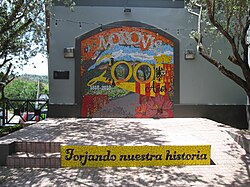 A small plaza in Morovis barrio-pueblo | |
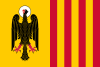 Flag 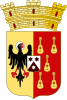 Coat of arms | |
| Nickname: "La Isla Menos Morovis" ("The island but Morovis") | |
| Anthem: "Oh Morovis, tu vives latente" | |
 Map of Puerto Rico highlighting Morovis Municipality | |
| Coordinates: 18°20′00″N 66°25′00″W / 18.33333°N 66.41667°W | |
| Sovereign state |  United States United States |
| Commonwealth |  Puerto Rico Puerto Rico |
| Settled | 1815 |
| Founded | January 24, 1818 |
| Founded by | Don Juan José de la Torre |
| Barrios | 14 barrios
|
| Government | |
| • Mayor | Carmen Maldonado González (PPD) |
| • Senatorial dist. | 3 - Arecibo |
| • Representative dist. | 28 |
| Area | |
• Total | 38.7 sq mi (100.3 km2) |
| Elevation | 1,230 ft (375 m) |
| Population (2020)[2] | |
• Total | 28,727 |
| • Rank | 43rd in Puerto Rico |
| • Density | 740/sq mi (290/km2) |
| Demonym | Moroveños |
| Time zone | UTC−4 (AST) |
| ZIP Code | 00687 |
| Area code | 787/939 |
| Major routes |      |
Morovis (Spanish pronunciation: [moˈɾoβis], locally [moˈɾoβiʔ]) is a town and municipality of Puerto Rico located in the central region of the island, north of Orocovis, south of Manatí, Vega Baja and Vega Alta; east of Ciales, and west of Corozal. Morovis is spread over 13 barrios and Morovis Pueblo (the downtown area and the administrative center of the city).[3] It is part of the San Juan-Caguas-Guaynabo Metropolitan Statistical Area.
History
[edit]
In 1815, a group of residents, under the leadership of Don Juan José de la Torre, began the process to separate Morovis from Manatí. In 1817, the government of Puerto Rico approved the separation, but it was not until 1818 that the requirements of a population of one thousand residents and the construction of a church and several other public buildings was fulfilled, that the municipality of Morovis was officially founded. In 1822, the mayorship was constructed and in 1823, the new church was built, dedicated to Nuestra Señora del Carmen on lands donated by Don Juan Evangelista Rivera. Its first mayor was Don Juan José de la Torre, with its second mayor being Don Juan Evangelista Rivera.[4] Morovis has a particular nickname. It was the only municipality in Puerto Rico that did not suffer from a cholera epidemic in 1853; as a result, a common phrase, "la isla menos Morovis" ("(all of) the island but Morovis") was coined. The phrase is believed by Puerto Ricans from outside of the town to have a negative connotation against moroveños, while, in reality, it is considered a positive motto.[citation needed]
In 1875, Abino Casellas was mayor of Morovis and in 1879, Cruz Maria Castro was mayor.[5]
Puerto Rico was ceded by Spain in the aftermath of the Spanish–American War under the terms of the Treaty of Paris of 1898 and became a territory of the United States. In 1899, the United States Department of War conducted a census of Puerto Rico finding that the population of Morovis was 11,309.[6]
Morovis is a mountainous municipality with an area of approximately 100.3 square kilometres (38.7 sq mi), located slightly north of the center of the island,[7] which was hit particularly hard by Hurricane Maria on September 20, 2017. With a 2016 estimate of 31,603 residents at the time, 1500 to 2000 homes lost their roof and 500 wooden homes were completed destroyed. Roads and bridges were impacted by landslides and flooding, and residents were left without access to electrical power, telecommunication services and basic necessities for many months.[8]
The community in San Lorenzo, a barrio of Morovis with about 1,000 people, was left isolated when the bridge into the barrio was washed away by the Morovis River.[9][10][11]
Then mayor of Morovis, Carmen Maldonado delivered food to residents, the municipal town hall became a food distribution center and she arranged for the purchase and delivery of a water truck to provide clean water daily to the residents who did not have access to clean water.[12][13][14]
Maldonado spoke to New York governor Andrew Cuomo, requesting his help and Cuomo responded by contacting H.e.a.r.t. 9/11, a non-profit organization. In early 2019, Maldonado received and thanked volunteers from H.e.a.r.t. 9/11, mostly carpenters who came to Morovis to repair and rebuild homes damaged by the hurricane.[15] In late 2019, H.e.a.r.t. 9/11 was still rebuilding roofs in Morovis.[16][17]
Geography
[edit]Barrios
[edit]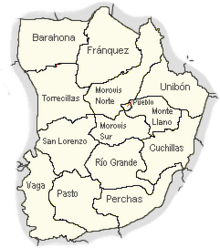
Like all municipalities of Puerto Rico, Morovis is subdivided into barrios. The municipal buildings, central square and large Catholic church are located near the center of the municipality, in a small barrio referred to as "Pueblo".[18][19][20]
- Barahona
- Cuchillas
- Fránquez
- Monte Llano
- Morovis barrio-pueblo
- Morovis Norte
- Morovis Sud
- Pasto
- Perchas
- Río Grande
- San Lorenzo
- Torrecillas
- Unibón
- Vaga
Sectors
[edit]Barrios (which are like minor civil divisions)[21] are further subdivided into smaller areas called sectores (sectors in English). The types of sectores may vary, from normally sector to urbanización to reparto to barriada to residencial, among others.[22][23][24][25]
Special Communities
[edit]Comunidades Especiales de Puerto Rico (Special Communities of Puerto Rico) are marginalized communities whose citizens are experiencing social exclusion. A map shows these communities occur in nearly every municipality of the commonwealth. Of the 742 places that were on the list in 2014, the following entire barrios, communities, sectors, or neighborhoods were in Morovis: Barrio Vaga, Santo Domingo-Pellejas, Ensanche, Parcelas Cuchillas, Comunidad José Otero Claverol, Parcelas San Lorenzo, Parcelas Torrecillas, Patrón, Sector Invasiones de Torrecillas, Sector Jobos, Sector Riachuelo, Sector Rosado, Barrio Unibón, Sector Vietnam, and Villa Roca.[26]
Morovis National (Veterans) Cemetery
[edit]
The Morovis National Cemetery, a US veterans cemetery, was built in Morovis within a 247.5-acre parcel of land that can be accessed from Highway 137 at Km. 11.2. It was built to replace the existing Puerto Rico National Cemetery located in Bayamón which reached capacity.[27][28] Construction was underway in 2019[29][30] with interments slated to begin in 2021.[31]
Economy
[edit]An Energy Consortium was signed in late February, 2019 by the mayors of Villalba, Orocovis, Morovis, Ciales and Barranquitas municipalities. The consortium is the first of its kind for Puerto Rico. It is intended to have those municipalities work together to safeguard and create resilient, and efficient energy networks, with backups for their communities. This is part of the hurricane preparedness plan of these municipalities, which were hit particularly hard by Hurricane Maria on September 20, 2017.[32]
Tourism
[edit]Landmarks and places of interest
[edit]
A well-known landmark in Morovis is The Red Bridge (Puente Colorao). It's an iron bridge which was built in 1912 and is located on PR-155 in barrio Morovis Norte. Cuevas Las Cabachuelas (Cabachuelas Caves) is a cave system in Puerto Rico which opened for tourism in 2019. It is located between the municipalities of Morovis and Ciales, Puerto Rico[33] in the Cabachuelas Natural Reserve, established in 2012[34] and is of cultural, archaeological, hydrological and geomorphological importance to Puerto Rico.[35] Guided tours are offered by the Diógenes Colón Gómez Cultural Center in Morovis, by reservation only.[33][36]
La Patria Bakery, home of the Pan de La Patita Echa', is a bakery established in 1862 in Morovis, that uses a brick oven for making bread. The bread has a curious name and look, resembling crossed legs.[37][38]
The Julia M. Cheverez Electronic Library is located in the main square in Morovis barrio-pueblo also referred to as the pueblo.[39]
Each barrio had a mural painted by a group of local artists and ValorArte and the mural images depict values such as honor, peace, responsibility, leadership and culture.[40][41][42]
Bavarian cuisine
[edit]
Casa Bavaria restaurant located in the central mountain range (Cordillera Central) in Morovis, has become a gathering place for Puerto Rico's German community and was visited in 2009 by President Bill Clinton.[44][45]
Culture
[edit]Festivals and events
[edit]Morovis celebrates its patron saint festival in July. The Fiestas Patronales de Nuestra Señora del Carmen in honor of Our Lady of Mount Carmel is a religious and cultural celebration that generally features parades, games, artisans, amusement rides, regional food, and live entertainment.[46][1][7]
Other festivals and events include:
- Tribute to Don Felo - May
- Maratón del jíbaro (transl. The Peasant's Marathon) - June
- Cuatro Festival - July
- The Island Except Morovis - December
- Innocents' Day - December
Demographics
[edit]| Census | Pop. | Note | %± |
|---|---|---|---|
| 1900 | 11,309 | — | |
| 1910 | 12,446 | 10.1% | |
| 1920 | 14,660 | 17.8% | |
| 1930 | 17,332 | 18.2% | |
| 1940 | 19,167 | 10.6% | |
| 1950 | 19,291 | 0.6% | |
| 1960 | 18,094 | −6.2% | |
| 1970 | 19,059 | 5.3% | |
| 1980 | 21,142 | 10.9% | |
| 1990 | 25,288 | 19.6% | |
| 2000 | 29,965 | 18.5% | |
| 2010 | 32,610 | 8.8% | |
| 2020 | 28,727 | −11.9% | |
| U.S. Decennial Census[47] 1899 (shown as 1900)[48] 1910-1930[49] 1930-1950[50] 1960-2000[51] 2010[19] 2020[52] | |||
| Race - Morovis, Puerto Rico - 2000 Census[54] | ||
|---|---|---|
| Race | Population | % of Total |
| White | 27,917 | 93.2% |
| Black/African American | 894 | 3.0% |
| American Indian and Alaska Native | 61 | 0.2% |
| Asian | 21 | 0.1% |
| Native Hawaiian/Pacific Islander | 0 | 0% |
| Some other race | 643 | 2.1% |
| Two or more races | 422 | 1.4% |
Government
[edit]
Carmen Maldonado González, has been the elected mayor of Morovis since 2017 and managed the devastation in Morovis caused by Hurricane Maria on September 20, 2017. The bridge collapse in Morovis' San Lorenzo barrio was one of the challenges faced by Maldonado.[55] Maldonado was reelected in 2020.[56]
Transportation
[edit]
There are 15 bridges in Morovis.[57] Major routes that go through Morovis include PR-137, PR-145, PR-155, PR-159, and PR-160.
Symbols
[edit]The municipio has an official flag and coat of arms.[58]
Flag
[edit]The flag of Morovis is divided vertically in two equal parts. The immediate one to the mast is yellow and has the eagle of the coat of arms, in this case with the head facing left, toward the flagpole. The other half is divided in seven vertical stripes of equal width, four red ones alternated with three yellow ones.[59]
Coat of arms
[edit]The coat of arms of the Municipality of Morovis is formed by an eagle in the left partition, which symbolizes Saint John the Evangelist and sings in honor of the founder of the town, Don Juan Evangelista Rivera. The five cuatros observable in the right partition symbolize the fact that the town of Morovis is the main center of production of such typical Puerto Rican musical instruments. The shield in the center represents the Order of the Carmelite Nuns, and symbolizes as well the Our Lady of the Carmen, matron of the town. The left half is a field of yellow color (yellow for gold) in which resides a saber (black) eagle, beak and claws in red, its head enclosed with a halo.[59]
Notable moroveños
[edit]- Wesley Correa, basketball player, played for the local team 16 years
- Iluminado Davila Medina, cuatro musician
- Julio Negrón Rivera, master craftsman who makes the Puerto Rican cuatro, a musical instrument of Puerto Rico[60][61]
Gallery
[edit]-
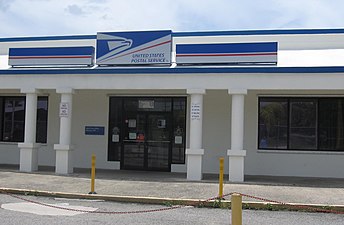 USPS in Morovis
 -
 La Patria, bakery established in 1862
 -
 Red Bridge (Puente Colorao) in Morovis Norte
 -
 Symbols painted on wall in downtown Morovis
 -
 Signs for routes in Morovis
 -
 Part of the Complejo Deportivo Gerardo “Gerry” Torres, a sports complex in Morovis Pueblo
See also
[edit]
- List of Puerto Ricans
- History of Puerto Rico
- Did you know-Puerto Rico?
References
[edit]- ^ a b "Información del municipio". www2.pr.gov (in Spanish). June 19, 2020. Retrieved June 19, 2020.
- ^ Bureau, US Census. "PUERTO RICO: 2020 Census". The United States Census Bureau. Retrieved August 25, 2021.
{{cite web}}:|last=has generic name (help) - ^ "MUNICIPIO AUTÓNOMO DE MOROVIS REVISIÓN PARCIAL AL PLAN TERRITORIAL" (PDF). Gobierno PR. Junta de Comunidad. Archived (PDF) from the original on December 2, 2018. Retrieved December 2, 2018.
- ^ Tamacas, Carmen Molina (June 7, 2018). "Morovis abraza la esperanza" (in Spanish). El Diario NY. Archived from the original on June 1, 2019. Retrieved June 1, 2019.
- ^ Tesauro de datos historicos: indice compendioso de la literatura histórica de Puerto Rico, incluyendo algunos datos inéditos, periodísticos y cartográficos. Tesauro de datos historicos: indice compendioso de la literatura histórica de Puerto Rico, incluyendo algunos datos inéditos, periodísticos y cartográficos (in Spanish). Impr. del Gobierno de Puerto Rico. 1949. p. 252. Retrieved January 4, 2020.
- ^ Joseph Prentiss Sanger; Henry Gannett; Walter Francis Willcox (1900). Informe sobre el censo de Puerto Rico, 1899, United States. War Dept. Porto Rico Census Office (in Spanish). Imprenta del gobierno. p. 161.
- ^ a b "Morovis Municipality". enciclopediapr.org. Fundación Puertorriqueña de las Humanidades (FPH). Archived from the original on June 21, 2019. Retrieved March 20, 2019.
- ^ "María, un nombre que no vamos a olvidar. [Maria, a name we'll never forget.]". El Nuevo Día (in Spanish).
- ^ García, Lyanne Meléndez. "Municipio anuncia reparación de puente afectado por huracán". Metro (in Spanish).
- ^ "Con cuerda cruzan río peligroso en Puerto Rico" (in Spanish). CNN. September 28, 2017.
- ^ "Bridge collapse strands Puerto Ricans - CNN Video" – via edition.cnn.com.
- ^ "Lo que María se llevó en Morovis". Primera Hora (in Spanish).
- ^ "Frustration Mounts Over Puerto Rico's 'New Normal' As Federal Troops Leave The Island". NPR.org.
- ^ "María, un nombre que no vamos a olvidar.Incomunicación y falta de agua aflige a Morovis" [Maria, a name we won't forget. No communication and no drinking water aflicts Morovis]. El Nuevo Día (in Spanish). June 13, 2019. Retrieved September 12, 2022.
- ^ "Llegan desde Nueva York para reconstruir casas en Morovis". Primera Hora (in Spanish). January 2, 2019.
- ^ "Facebook". www.facebook.com. Archived from the original on February 26, 2022.
- ^ "Hurricane Maria Puerto Rico Response". HEART 9/11. September 6, 2017. Retrieved February 21, 2022.
- ^ Gwillim Law (May 20, 2015). Administrative Subdivisions of Countries: A Comprehensive World Reference, 1900 through 1998. McFarland. p. 300. ISBN 978-1-4766-0447-3. Retrieved December 25, 2018.
- ^ a b Puerto Rico:2010:population and housing unit counts.pdf (PDF). U.S. Dept. of Commerce Economics and Statistics Administration U.S. Census Bureau. 2010. Archived (PDF) from the original on February 20, 2017. Retrieved August 2, 2019.
- ^ "Map of Morovis at the Wayback Machine" (PDF). Archived from the original (PDF) on March 24, 2018. Retrieved December 29, 2018.
- ^ "US Census Barrio-Pueblo definition". factfinder.com. US Census. Archived from the original on May 13, 2017. Retrieved January 5, 2019.
- ^ "Agencia: Oficina del Coordinador General para el Financiamiento Socioeconómico y la Autogestión (Proposed 2016 Budget)". Puerto Rico Budgets (in Spanish). Retrieved June 28, 2019.
- ^ Rivera Quintero, Marcia (2014), El vuelo de la esperanza: Proyecto de las Comunidades Especiales Puerto Rico, 1997-2004 (first ed.), San Juan, Puerto Rico Fundación Sila M. Calderón, ISBN 978-0-9820806-1-0
- ^ "Leyes del 2001". Lex Juris Puerto Rico (in Spanish). Retrieved June 24, 2020.
- ^ "PRECINTO ELECTORAL MOROVIS 020" (PDF). Comisión Estatal de Elecciones (in Spanish). PR Government. October 8, 2019. Archived (PDF) from the original on June 15, 2020. Retrieved June 24, 2020.
- ^ Rivera Quintero, Marcia (2014), El vuelo de la esperanza:Proyecto de las Comunidades Especiales Puerto Rico, 1997-2004 (First ed.), San Juan, Puerto Rico Fundación Sila M. Calderón, p. 273, ISBN 978-0-9820806-1-0
- ^ "Puerto Rico National Cemetery Replacement Morovis, Puerto Rico" (PDF). U.S. Dept. of Veterans Affairs. U.S. Dept. of Veterans Affairs. Archived (PDF) from the original on May 13, 2017. Retrieved June 13, 2019.
- ^ "A claim for better health services". El Nuevo Dia. May 28, 2019. Archived from the original on June 25, 2019. Retrieved June 13, 2019.
- ^ "Comienza construcción nuevo cementerio nacional de Puerto Rico en Morovis". www.efe.com (in Spanish). January 25, 2019. Retrieved June 26, 2020.
- ^ "Quality Control (QC) system management for Veterans Affairs (VA)". San Diego Project Management, PSC. October 29, 2018. Retrieved August 22, 2020.
- ^ "VA dedicates Morovis National Cemetery". Office of Public and Intergovernmental Affairs. September 1, 2016. Retrieved July 28, 2021.
- ^ Vazquez, Priscilla. "Asociación de Industriales de Puerto Rico". Industriales Puerto Rico. Archived from the original on March 12, 2019. Retrieved March 16, 2019.
- ^ a b "Nueva opción al turismo para explorar cuevas en la isla" [New option for cave exploration tourism on the island] (in Spanish). Primera Hora. January 25, 2019. Archived from the original on May 7, 2019. Retrieved May 11, 2019.
- ^ "Nuestras áreas naturales protegidas: tesoro ecológico de Puerto Rico" (in Spanish). DRNA. June 13, 2017. Archived from the original on May 7, 2019. Retrieved May 11, 2019.
- ^ "Atractivo de clase mundial la Reserva Natural Las Cabachuelas" (in Spanish). September 26, 2013. Archived from the original on May 7, 2019. Retrieved May 11, 2019.
- ^ Ríos, Melissa Cruz. "Morovis apuesta al ecoturismo". El Vocero de Puerto Rico (in Spanish). Archived from the original on June 1, 2019. Retrieved June 1, 2019.
- ^ "La tradición de La Patita Echá" (in Spanish). Archived from the original on May 11, 2019. Retrieved May 11, 2019.
- ^ "El pan de la "pata echa" de Morovis". El Nuevo Dia. July 14, 2011. Archived from the original on May 11, 2019. Retrieved May 11, 2019.
- ^ "Morovis Municipality - Municipalities". EnciclopediaPR. Archived from the original on June 21, 2019. Retrieved March 20, 2019.
- ^ Maldonado Feliciano, Brian A. (July 31, 2019). "Realizarán 15 murales simultáneamente en Morovis [15 murals will be simultaneously completed in Morovis ]". El Foro de Puerto Rico (in Spanish). Retrieved June 20, 2020.
- ^ "Video of murals in Morovis' barrios". Official Morovis Municipality on FB. Morovis Municipality. August 20, 2019. Retrieved June 20, 2020.
- ^ "Morovis estrena 15 murales en proyecto cultural". Latina Travellina (in Spanish). July 1, 2019. Retrieved June 20, 2020.
- ^ "Get a Taste of the Island: Food Tours in Puerto Rico". Discover Puerto Rico. Retrieved August 13, 2021.
- ^ "Casa Bavaria". Condé Nast Traveler. December 1, 2022. Retrieved December 30, 2023.
- ^ "The German Beach in Puerto Rico You Need to Visit". Condé Nast Traveler.
- ^ "Puerto Rico Festivales, Eventos y Actividades en Puerto Rico". Puerto Rico Hoteles y Paradores (in Spanish). Retrieved July 17, 2020.
- ^ "U.S. Decennial Census". United States Census Bureau. Archived from the original on February 13, 2020. Retrieved September 21, 2017.
- ^ "Report of the Census of Porto Rico 1899". War Department Office Director Census of Porto Rico. Archived from the original on July 16, 2017. Retrieved September 21, 2017.
- ^ "Table 3-Population of Municipalities: 1930 1920 and 1910" (PDF). United States Census Bureau. Archived (PDF) from the original on August 17, 2017. Retrieved September 21, 2017.
- ^ "Table 4-Area and Population of Municipalities Urban and Rural: 1930 to 1950" (PDF). United States Census Bureau. Archived (PDF) from the original on August 30, 2015. Retrieved September 21, 2014.
- ^ "Table 2 Population and Housing Units: 1960 to 2000" (PDF). United States Census Bureau. Archived (PDF) from the original on July 24, 2017. Retrieved September 21, 2017.
- ^ Bureau, US Census. "PUERTO RICO: 2020 Census". The United States Census Bureau. Retrieved August 25, 2021.
{{cite web}}:|last=has generic name (help) - ^ "Population and Housing Unit Estimates". United States Census Bureau. Retrieved September 21, 2017.
- ^ "Ethnic/Racial demographics, 2000 census" (PDF). Archived (PDF) from the original on February 16, 2008. Retrieved May 27, 2008.
- ^ "Iniciativa Hecho en Morovis para mercadear producción agrícola". El Vocero de Puerto Rico. Archived from the original on May 13, 2019. Retrieved May 13, 2019.
- ^ "Alcaldesa de Morovis traza la agenda para su segundo cuatrienio". El Vocero de Puerto Rico (in Spanish). Retrieved June 19, 2021.
- ^ "Morovis Bridges". National Bridge Inventory Data. US Dept. of Transportation. Archived from the original on February 20, 2019. Retrieved February 19, 2019.
- ^ "Ley Núm. 70 de 2006 -Ley para disponer la oficialidad de la bandera y el escudo de los setenta y ocho (78) municipios". LexJuris de Puerto Rico (in Spanish). Retrieved June 15, 2021.
- ^ a b "Morovis". LexJuris (Leyes y Jurisprudencia) de Puerto Rico (in Spanish). February 19, 2020. Archived from the original on February 19, 2020. Retrieved September 17, 2020.
- ^ "Julio Negrón-Rivera". NEA. January 24, 2013. Archived from the original on April 26, 2019. Retrieved March 10, 2019.
- ^ "Puerto Rican; Julio Negron Rivera- Traditional Rosario from Area, Other Traditional Jibaro Music [sound recording]". Smithsonian Institution.
Further reading
[edit]- Mapa de municipios y barrios - Morovis - Memoria Núm. 65 (PDF). University of Puerto Rico: Estado Libre Asociado de Puerto Rico, Oficina del Gobernador, Junta de Planificacion, Santurce, Puerto Rico. 1955.
External links
[edit]Places adjacent to Morovis, Puerto Rico | ||||||||||||||||
|---|---|---|---|---|---|---|---|---|---|---|---|---|---|---|---|---|
| ||||||||||||||||


Commonwealth of Puerto Rico | |
|---|---|
San Juan (capital) | |
| Metropolitan areas |
|
| Municipalities |
|
| Islands |
|
| Geography |
|
| Topics |
|
 Puerto Rico portal Puerto Rico portal | |


Original source: https://en.wikipedia.org/wiki/Morovis, Puerto Rico
Status: article is cached
 EncycloReader
is supported by the
EncycloReader
is supported by the  KSF
KSF