PRDX6
 From Wikipedia - Reading time: 9 min
| PRDX6 | |||||||||||||||||||||||||||||||||||||||||||||||||||
|---|---|---|---|---|---|---|---|---|---|---|---|---|---|---|---|---|---|---|---|---|---|---|---|---|---|---|---|---|---|---|---|---|---|---|---|---|---|---|---|---|---|---|---|---|---|---|---|---|---|---|---|
 | |||||||||||||||||||||||||||||||||||||||||||||||||||
| Identifiers | |||||||||||||||||||||||||||||||||||||||||||||||||||
| Aliases | PRDX6, 1-Cys, AOP2, HEL-S-128m, NSGPx, PRX, aiPLA2, p29, peroxiredoxin 6, LPCAT-5 | ||||||||||||||||||||||||||||||||||||||||||||||||||
| External IDs | OMIM: 602316 MGI: 894320 HomoloGene: 3606 GeneCards: PRDX6 | ||||||||||||||||||||||||||||||||||||||||||||||||||
| EC number | 1.11.1.9 | ||||||||||||||||||||||||||||||||||||||||||||||||||
| |||||||||||||||||||||||||||||||||||||||||||||||||||
| |||||||||||||||||||||||||||||||||||||||||||||||||||
| |||||||||||||||||||||||||||||||||||||||||||||||||||
| |||||||||||||||||||||||||||||||||||||||||||||||||||
| Wikidata | |||||||||||||||||||||||||||||||||||||||||||||||||||
| |||||||||||||||||||||||||||||||||||||||||||||||||||
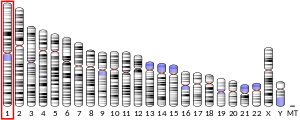






Peroxiredoxin-6 is a protein that in humans is encoded by the PRDX6 gene.[5][6] It is a member of the peroxiredoxin family of antioxidant enzymes.
Function[edit]
The protein encoded by this gene is a member of the thiol-specific antioxidant protein family. This protein is a bifunctional enzyme with two distinct active sites. It is involved in redox regulation of the cell; it can reduce H(2)O(2) and short chain organic, fatty acid, and phospholipid hydroperoxides. It may play a role in the regulation of phospholipid turnover as well as in protection against oxidative injury.[6]
= Model organisms[edit]
=
| Characteristic | Phenotype |
|---|---|
| Homozygote viability | Normal |
| Fertility | Normal |
| Body weight | Normal |
| Anxiety | Normal |
| Neurological assessment | Normal |
| Grip strength | Normal |
| Hot plate | Normal |
| Dysmorphology | Normal |
| Indirect calorimetry | Normal |
| Glucose tolerance test | Normal |
| Auditory brainstem response | Normal |
| DEXA | Normal |
| Radiography | Normal |
| Body temperature | Normal |
| Eye morphology | Normal |
| Clinical chemistry | Normal |
| Plasma immunoglobulins | Normal |
| Haematology | Normal |
| Micronucleus test | Normal |
| Heart weight | Normal |
| Tail epidermis wholemount | Normal |
| Skin Histopathology | Normal |
| Brain histopathology | Normal |
| Salmonella infection | Normal[7] |
| Citrobacter infection | Normal[8] |
| All tests and analysis from[9][10] |
Model organisms have been used in the study of PRDX6 function. A conditional knockout mouse line, called Prdx6tm1a(EUCOMM)Wtsi[11][12] was generated as part of the International Knockout Mouse Consortium program — a high-throughput mutagenesis project to generate and distribute animal models of disease to interested scientists — at the Wellcome Trust Sanger Institute.[13][14][15]
Male and female animals underwent a standardized phenotypic screen to determine the effects of deletion.[9][16] Twenty five tests were carried out on mutant mice but no significant abnormalities were observed.[9]
References[edit]
- ^ a b c GRCh38: Ensembl release 89: ENSG00000117592 - Ensembl, May 2017
- ^ a b c GRCm38: Ensembl release 89: ENSMUSG00000026701 - Ensembl, May 2017
- ^ "Human PubMed Reference:". National Center for Biotechnology Information, U.S. National Library of Medicine.
- ^ "Mouse PubMed Reference:". National Center for Biotechnology Information, U.S. National Library of Medicine.
- ^ Phelan SA (Mar 2001). "AOP2 (antioxidant protein 2): structure and function of a unique thiol-specific antioxidant". Antioxidants & Redox Signaling. 1 (4): 571–584. doi:10.1089/ars.1999.1.4-571. PMID 11233154.
- ^ a b "Entrez Gene: PRDX6 peroxiredoxin 6".
- ^ "Salmonella infection data for Prdx6". Wellcome Trust Sanger Institute.
- ^ "Citrobacter infection data for Prdx6". Wellcome Trust Sanger Institute.
- ^ a b c Gerdin AK (2010). "The Sanger Mouse Genetics Programme: High throughput characterisation of knockout mice". Acta Ophthalmologica. 88 (S248). doi:10.1111/j.1755-3768.2010.4142.x. S2CID 85911512.
- ^ Mouse Resources Portal, Wellcome Trust Sanger Institute.
- ^ "International Knockout Mouse Consortium".
- ^ "Mouse Genome Informatics".
- ^ Skarnes WC, Rosen B, West AP, Koutsourakis M, Bushell W, Iyer V, et al. (June 2011). "A conditional knockout resource for the genome-wide study of mouse gene function". Nature. 474 (7351): 337–342. doi:10.1038/nature10163. PMC 3572410. PMID 21677750.
- ^ Dolgin E (June 2011). "Mouse library set to be knockout". Nature. 474 (7351): 262–263. doi:10.1038/474262a. PMID 21677718.
- ^ Collins FS, Rossant J, Wurst W (January 2007). "A mouse for all reasons". Cell. 128 (1): 9–13. doi:10.1016/j.cell.2006.12.018. PMID 17218247. S2CID 18872015.
- ^ van der Weyden L, White JK, Adams DJ, Logan DW (June 2011). "The mouse genetics toolkit: revealing function and mechanism". Genome Biology. 12 (6): 224. doi:10.1186/gb-2011-12-6-224. PMC 3218837. PMID 21722353.
Further reading[edit]
- Manevich Y, Fisher AB (June 2005). "Peroxiredoxin 6, a 1-Cys peroxiredoxin, functions in antioxidant defense and lung phospholipid metabolism". Free Radical Biology & Medicine. 38 (11): 1422–1432. doi:10.1016/j.freeradbiomed.2005.02.011. PMID 15890616.
- Akesson B (May 1975). "Work in progress. Occurence [sic] of phospholipase A1 and A2 in human decidua". Prostaglandins. 9 (5): 667–673. doi:10.1016/0090-6980(75)90106-9. PMID 240188.
- Hochstrasser DF, Frutiger S, Paquet N, Bairoch A, Ravier F, Pasquali C, et al. (December 1992). "Human liver protein map: a reference database established by microsequencing and gel comparison". Electrophoresis. 13 (12): 992–1001. doi:10.1002/elps.11501301201. PMID 1286669. S2CID 23518983.
- Dawson SJ, White LA (May 1992). "Treatment of Haemophilus aphrophilus endocarditis with ciprofloxacin". The Journal of Infection. 24 (3): 317–320. doi:10.1016/S0163-4453(05)80037-4. PMID 1602151.
- Yeats DA, Bakhle YS (June 1989). "Phospholipases A2 and C of human lung; subcellular distribution and substrate selectivity". Biochimica et Biophysica Acta (BBA) - Lipids and Lipid Metabolism. 1003 (2): 189–195. doi:10.1016/0005-2760(89)90254-3. PMID 2730891.
- Nagase T, Miyajima N, Tanaka A, Sazuka T, Seki N, Sato S, et al. (1995). "Prediction of the coding sequences of unidentified human genes. III. The coding sequences of 40 new genes (KIAA0081-KIAA0120) deduced by analysis of cDNA clones from human cell line KG-1". DNA Research. 2 (1): 37–43. doi:10.1093/dnares/2.1.37. PMID 7788527.
- Golaz O, Hughes GJ, Frutiger S, Paquet N, Bairoch A, Pasquali C, et al. (November 1993). "Plasma and red blood cell protein maps: update 1993". Electrophoresis. 14 (11): 1223–1231. doi:10.1002/elps.11501401183. PMID 8313871. S2CID 21447827.
- Kim TS, Sundaresh CS, Feinstein SI, Dodia C, Skach WR, Jain MK, et al. (January 1997). "Identification of a human cDNA clone for lysosomal type Ca2+-independent phospholipase A2 and properties of the expressed protein". The Journal of Biological Chemistry. 272 (4): 2542–2550. doi:10.1074/jbc.272.4.2542. PMID 8999971.
- Frank S, Munz B, Werner S (February 1997). "The human homologue of a bovine non-selenium glutathione peroxidase is a novel keratinocyte growth factor-regulated gene". Oncogene. 14 (8): 915–921. doi:10.1038/sj.onc.1200905. PMID 9050990.
- Kang SW, Baines IC, Rhee SG (March 1998). "Characterization of a mammalian peroxiredoxin that contains one conserved cysteine". The Journal of Biological Chemistry. 273 (11): 6303–6311. doi:10.1074/jbc.273.11.6303. PMID 9497358.
- Choi HJ, Kang SW, Yang CH, Rhee SG, Ryu SE (May 1998). "Crystal structure of a novel human peroxidase enzyme at 2.0 A resolution". Nature Structural Biology. 5 (5): 400–406. doi:10.1038/nsb0598-400. PMID 9587003. S2CID 10737259.
- Chen JW, Dodia C, Feinstein SI, Jain MK, Fisher AB (September 2000). "1-Cys peroxiredoxin, a bifunctional enzyme with glutathione peroxidase and phospholipase A2 activities". The Journal of Biological Chemistry. 275 (37): 28421–28427. doi:10.1074/jbc.M005073200. PMID 10893423.
- Fatma N, Singh DP, Shinohara T, Chylack LT (December 2001). "Transcriptional regulation of the antioxidant protein 2 gene, a thiol-specific antioxidant, by lens epithelium-derived growth factor to protect cells from oxidative stress". The Journal of Biological Chemistry. 276 (52): 48899–48907. doi:10.1074/jbc.M100733200. PMID 11677226.
- Wagner E, Luche S, Penna L, Chevallet M, Van Dorsselaer A, Leize-Wagner E, Rabilloud T (September 2002). "A method for detection of overoxidation of cysteines: peroxiredoxins are oxidized in vivo at the active-site cysteine during oxidative stress". The Biochemical Journal. 366 (Pt 3): 777–785. doi:10.1042/BJ20020525. PMC 1222825. PMID 12059788.
- Leavey PJ, Gonzalez-Aller C, Thurman G, Kleinberg M, Rinckel L, Ambruso DW, et al. (November 2002). "A 29-kDa protein associated with p67phox expresses both peroxiredoxin and phospholipase A2 activity and enhances superoxide anion production by a cell-free system of NADPH oxidase activity". The Journal of Biological Chemistry. 277 (47): 45181–45187. doi:10.1074/jbc.M202869200. PMID 12121978.
- Manevich Y, Sweitzer T, Pak JH, Feinstein SI, Muzykantov V, Fisher AB (September 2002). "1-Cys peroxiredoxin overexpression protects cells against phospholipid peroxidation-mediated membrane damage". Proceedings of the National Academy of Sciences of the United States of America. 99 (18): 11599–11604. Bibcode:2002PNAS...9911599M. doi:10.1073/pnas.182384499. PMC 129315. PMID 12193653.
- Krapfenbauer K, Engidawork E, Cairns N, Fountoulakis M, Lubec G (March 2003). "Aberrant expression of peroxiredoxin subtypes in neurodegenerative disorders". Brain Research. 967 (1–2): 152–160. doi:10.1016/S0006-8993(02)04243-9. PMID 12650976. S2CID 854144.
- Kuda O, Brezinova M, Silhavy J, Landa V, Zidek V, Dodia C, et al. (June 2018). "Nrf2-Mediated Antioxidant Defense and Peroxiredoxin 6 Are Linked to Biosynthesis of Palmitic Acid Ester of 9-Hydroxystearic Acid". Diabetes. 67 (6): 1190–1199. doi:10.2337/db17-1087. PMC 6463562. PMID 29549163.
PDB gallery | |
|---|---|
|

 Biology
Original source: https://en.wikipedia.org/wiki/PRDX6
Status: article is cached
 EncycloReader
is supported by the
EncycloReader
is supported by the  KSF
KSF