Protease-activated receptor 2
 From Wikipedia - Reading time: 13 min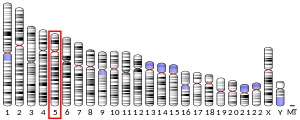






Protease activated receptor 2 (PAR2) also known as coagulation factor II (thrombin) receptor-like 1 (F2RL1) or G-protein coupled receptor 11 (GPR11) is a protein that in humans is encoded by the F2RL1 gene. PAR2 modulates inflammatory responses,[5] obesity,[6] metabolism,[7] cancers [8][9] and acts as a sensor for proteolytic enzymes generated during infection.[10] In humans, we can find PAR2 in the stratum granulosum layer of epidermal keratinocytes. Functional PAR2 is also expressed by several immune cells such as eosinophils, neutrophils, monocytes, macrophages, dendritic cells, mast cells and T cells.[11]
Gene[edit]
The F2RL1 gene contains two exons and is widely expressed in human tissues. The predicted protein sequence is 83% identical to the mouse receptor sequence.[12]
Mechanism of activation[edit]

PAR2 is a member of the large family of 7-transmembrane receptors that couple to guanosine-nucleotide-binding proteins. PAR2 is also a member of the protease-activated receptor family. PAR2 is activated by several different endogenous and exogenous proteases. It is activated by proteolytic cleavage of its extracellular amino terminus between arginine and serine.[13] The newly exposed N-terminus serves as tethered activation ligand, which binds a conserved region on extracellular loop 2 (ECL2) and activates the receptor.[5] These receptors can also be activated non-protealytically, by exogenous peptide sequences that mimic the final amino acids of the tethered ligand,[14] or by other proteases at cleavage sites that are not related to signaling and that can make them then irresponsive to further protease exposure.[5] Trypsin is the major PAR2 cleaving protease that initiates inflammatory signaling. It was found that even thrombin in high concentrations is able to cleave PAR2.[15] Another PAR2 cleaving protease is tryptase, the main protease of mast cells, which by PAR2 proteolytic cleavage induces calcium signaling and proliferation.[16] PARs have been identified as substrates of kallikreins, which have been related to various inflammatory and tumorigenic processes. In case of PAR2, particularly speaking about kallikrein-4, -5, -6 a -14.[17] PAR2 is known to transactivate TLR4[18] and epidermal growth factor receptor[19] in diseases.
Function[edit]
There are many studies dealing with elucidation of PAR2 function in different cells and tissues.[20] In case of human airway and lung parenchyma PAR2 is responsible for increased fibroblasts proliferation[21] and elevation of IL‐6, IL‐8, PGE2 and Ca2+ levels.[22] In mice it participates on vasodilatation.[23] Together with PAR1 its deregulation is also involved in processes of cancer cells migration and differentiation.[24]
Agonists and antagonists[edit]
Potent and selective small molecule agonists and antagonists for PAR2 have been discovered.[25][26][27]
Functional selectivity occurs with PAR2, several proteases cleave PAR2 at distinct sites leading to biased signalling.[28] Synthetic small ligands also modulate biased signalling leading to different functional responses.[29]
So far, PAR2 has been co-crystallized with two different antagonist ligands,[30] while an agonist-bound state model of PAR2 (with the endogenous ligand SLIGKV) has been determined through mutagenesis and structure-based drug design.[31]
See also[edit]
- Protease-activated receptor
- Protease-activated receptor 1
- Protease-activated receptor 3
References[edit]
- ^ a b c GRCh38: Ensembl release 89: ENSG00000164251 - Ensembl, May 2017
- ^ a b c GRCm38: Ensembl release 89: ENSMUSG00000021678 - Ensembl, May 2017
- ^ "Human PubMed Reference:". National Center for Biotechnology Information, U.S. National Library of Medicine.
- ^ "Mouse PubMed Reference:". National Center for Biotechnology Information, U.S. National Library of Medicine.
- ^ a b c Heuberger DM, Schuepbach RA (2019-03-29). "Protease-activated receptors (PARs): mechanisms of action and potential therapeutic modulators in PAR-driven inflammatory diseases". Thrombosis Journal. 17 (1): 4. doi:10.1186/s12959-019-0194-8. PMC 6440139. PMID 30976204.
 Text was copied from this source, which is available under a Creative Commons Attribution 4.0 International License.
- ^ Lim J, Iyer A, Liu L, Suen JY, Lohman RJ, Seow V, et al. (December 2013). "Diet-induced obesity, adipose inflammation, and metabolic dysfunction correlating with PAR2 expression are attenuated by PAR2 antagonism". FASEB Journal. 27 (12): 4757–67. doi:10.1096/fj.13-232702. PMID 23964081. S2CID 30116494.
- ^ Badeanlou L, Furlan-Freguia C, Yang G, Ruf W, Samad F (October 2011). "Tissue factor-protease-activated receptor 2 signaling promotes diet-induced obesity and adipose inflammation". Nature Medicine. 17 (11): 1490–7. doi:10.1038/nm.2461. PMC 3210891. PMID 22019885.
- ^ Sébert M, Sola-Tapias N, Mas E, Barreau F, Ferrand A (2019). "Protease-Activated Receptors in the Intestine: Focus on Inflammation and Cancer". Frontiers in Endocrinology. 10: 717. doi:10.3389/fendo.2019.00717. PMC 6821688. PMID 31708870.
- ^ Jiang Y, Lim J, Wu KC, Xu W, Suen JY, Fairlie DP (November 2020). "PAR2 induces ovarian cancer cell motility by merging three signalling pathways to transactivate EGFR". British Journal of Pharmacology. 178 (4): 913–932. doi:10.1111/bph.15332. PMID 33226635. S2CID 227135487.
- ^ Lee SE, Jeong SK, Lee SH (November 2010). "Protease and protease-activated receptor-2 signaling in the pathogenesis of atopic dermatitis". Yonsei Medical Journal. 51 (6): 808–22. doi:10.3349/ymj.2010.51.6.808. PMC 2995962. PMID 20879045.
- ^ Rattenholl A, Steinhoff M (September 2008). "Proteinase-activated receptor-2 in the skin: receptor expression, activation and function during health and disease". Drug News & Perspectives. 21 (7): 369–81. doi:10.1358/dnp.2008.21.7.1255294. PMID 19259550.
- ^ "Entrez Gene: F2RL1 coagulation factor II (thrombin) receptor-like 1".
- ^ Guenther F, Melzig MF (December 2015). "Protease-activated receptors and their biological role - focused on skin inflammation". The Journal of Pharmacy and Pharmacology. 67 (12): 1623–33. doi:10.1111/jphp.12447. PMID 26709036. S2CID 26064678.
- ^ Kawabata A, Kanke T, Yonezawa D, Ishiki T, Saka M, Kabeya M, et al. (June 2004). "Potent and metabolically stable agonists for protease-activated receptor-2: evaluation of activity in multiple assay systems in vitro and in vivo". The Journal of Pharmacology and Experimental Therapeutics. 309 (3): 1098–107. doi:10.1124/jpet.103.061010. PMID 14976227. S2CID 10806872.
- ^ Mihara K, Ramachandran R, Saifeddine M, Hansen KK, Renaux B, Polley D, et al. (May 2016). "Thrombin-Mediated Direct Activation of Proteinase-Activated Receptor-2: Another Target for Thrombin Signaling". Molecular Pharmacology. 89 (5): 606–14. doi:10.1124/mol.115.102723. PMID 26957205. S2CID 24834327.
- ^ Akers IA, Parsons M, Hill MR, Hollenberg MD, Sanjar S, Laurent GJ, McAnulty RJ (January 2000). "Mast cell tryptase stimulates human lung fibroblast proliferation via protease-activated receptor-2". American Journal of Physiology. Lung Cellular and Molecular Physiology. 278 (1): L193-201. doi:10.1152/ajplung.2000.278.1.l193. PMID 10645907. S2CID 31697946.
- ^ Caliendo G, Santagada V, Perissutti E, Severino B, Fiorino F, Frecentese F, Juliano L (August 2012). "Kallikrein protease activated receptor (PAR) axis: an attractive target for drug development". Journal of Medicinal Chemistry. 55 (15): 6669–86. doi:10.1021/jm300407t. PMID 22607152.
- ^ Rayees S, Rochford I, Joshi JC, Joshi B, Banerjee S, Mehta D (2020). "Macrophage TLR4 and PAR2 Signaling: Role in Regulating Vascular Inflammatory Injury and Repair". Frontiers in Immunology. 11: 2091. doi:10.3389/fimmu.2020.02091. PMC 7530636. PMID 33072072.
- ^ Jiang Y, Lim J, Wu KC, Xu W, Suen JY, Fairlie DP (November 2020). "PAR2 induces ovarian cancer cell motility by merging three signalling pathways to transactivate EGFR". British Journal of Pharmacology. 178 (4): 913–932. doi:10.1111/bph.15332. PMID 33226635. S2CID 227135487.
- ^ Guenther F, Melzig MF (December 2015). "Protease-activated receptors and their biological role - focused on skin inflammation". The Journal of Pharmacy and Pharmacology. 67 (12): 1623–33. doi:10.1111/jphp.12447. PMID 26709036. S2CID 26064678.
- ^ Akers IA, Parsons M, Hill MR, Hollenberg MD, Sanjar S, Laurent GJ, McAnulty RJ (January 2000). "Mast cell tryptase stimulates human lung fibroblast proliferation via protease-activated receptor-2". American Journal of Physiology. Lung Cellular and Molecular Physiology. 278 (1): L193-201. doi:10.1152/ajplung.2000.278.1.l193. PMID 10645907. S2CID 31697946.
- ^ Asokananthan N, Graham PT, Fink J, Knight DA, Bakker AJ, McWilliam AS, et al. (April 2002). "Activation of protease-activated receptor (PAR)-1, PAR-2, and PAR-4 stimulates IL-6, IL-8, and prostaglandin E2 release from human respiratory epithelial cells". Journal of Immunology. 168 (7): 3577–85. doi:10.4049/jimmunol.168.7.3577. PMID 11907122.
- ^ Hennessey JC, McGuire JJ (2013-02-07). "Attenuated vasodilator effectiveness of protease-activated receptor 2 agonist in heterozygous par2 knockout mice". PLOS ONE. 8 (2): e55965. Bibcode:2013PLoSO...855965H. doi:10.1371/journal.pone.0055965. PMC 3567012. PMID 23409098.
- ^ Bar-Shavit R, Maoz M, Kancharla A, Jaber M, Agranovich D, Grisaru-Granovsky S, Uziely B (2016). "Protease-activated receptors (PARs) in cancer". G Protein-Coupled Receptors - Signaling, Trafficking and Regulation. Methods in Cell Biology. Vol. 132. pp. 341–58. doi:10.1016/bs.mcb.2015.11.006. ISBN 9780128035955. PMID 26928551.
- ^ Gardell LR, Ma JN, Seitzberg JG, Knapp AE, Schiffer HH, Tabatabaei A, et al. (December 2008). "Identification and characterization of novel small-molecule protease-activated receptor 2 agonists". The Journal of Pharmacology and Experimental Therapeutics. 327 (3): 799–808. doi:10.1124/jpet.108.142570. PMID 18768780. S2CID 3246903.
- ^ Barry GD, Suen JY, Le GT, Cotterell A, Reid RC, Fairlie DP (October 2010). "Novel agonists and antagonists for human protease activated receptor 2". Journal of Medicinal Chemistry. 53 (20): 7428–40. doi:10.1021/jm100984y. PMID 20873792.
- ^ Yau MK, Liu L, Suen JY, Lim J, Lohman RJ, Jiang Y, et al. (December 2016). "PAR2 Modulators Derived from GB88". ACS Medicinal Chemistry Letters. 7 (12): 1179–1184. doi:10.1021/acsmedchemlett.6b00306. PMC 5150695. PMID 27994760.
- ^ Zhao P, Metcalf M, Bunnett NW (2014). "Biased signaling of protease-activated receptors". Frontiers in Endocrinology. 5: 67. doi:10.3389/fendo.2014.00067. PMC 4026716. PMID 24860547.
- ^ Jiang Y, Yau MK, Kok WM, Lim J, Wu KC, Liu L, et al. (May 2017). "Biased Signaling by Agonists of Protease Activated Receptor 2" (PDF). ACS Chemical Biology. 12 (5): 1217–1226. doi:10.1021/acschembio.6b01088. PMID 28169521.
- ^ Cheng RK, Fiez-Vandal C, Schlenker O, Edman K, Aggeler B, Brown DG, et al. (May 2017). "Structural insight into allosteric modulation of protease-activated receptor 2". Nature. 545 (7652): 112–115. Bibcode:2017Natur.545..112C. doi:10.1038/nature22309. PMID 28445455. S2CID 4461925.
- ^ Kennedy AJ, Ballante F, Johansson JR, Milligan G, Sundström L, Nordqvist A, Carlsson J (November 2018). "Structural Characterization of Agonist Binding to Protease-Activated Receptor 2 through Mutagenesis and Computational Modeling". ACS Pharmacology & Translational Science. 1 (2): 119–133. doi:10.1021/acsptsci.8b00019. PMC 7088944. PMID 32219208.
Further reading[edit]
- Kunzelmann K, Schreiber R, König J, Mall M (2003). "Ion transport induced by proteinase-activated receptors (PAR2) in colon and airways". Cell Biochemistry and Biophysics. 36 (2–3): 209–14. doi:10.1385/CBB:36:2-3:209. PMID 12139406. S2CID 5801308.
- Kawabata A (July 2002). "PAR-2: structure, function and relevance to human diseases of the gastric mucosa". Expert Reviews in Molecular Medicine. 4 (16): 1–17. doi:10.1017/S1462399402004799. PMID 14585156. S2CID 1485391.
- Bushell T (May 2007). "The emergence of proteinase-activated receptor-2 as a novel target for the treatment of inflammation-related CNS disorders". The Journal of Physiology. 581 (Pt 1): 7–16. doi:10.1113/jphysiol.2007.129577. PMC 2075212. PMID 17347265.
- Nystedt S, Emilsson K, Larsson AK, Strömbeck B, Sundelin J (August 1995). "Molecular cloning and functional expression of the gene encoding the human proteinase-activated receptor 2". European Journal of Biochemistry. 232 (1): 84–9. doi:10.1111/j.1432-1033.1995.tb20784.x. PMID 7556175.
- Santulli RJ, Derian CK, Darrow AL, Tomko KA, Eckardt AJ, Seiberg M, et al. (September 1995). "Evidence for the presence of a protease-activated receptor distinct from the thrombin receptor in human keratinocytes". Proceedings of the National Academy of Sciences of the United States of America. 92 (20): 9151–5. Bibcode:1995PNAS...92.9151S. doi:10.1073/pnas.92.20.9151. PMC 40942. PMID 7568091.
- Nystedt S, Emilsson K, Wahlestedt C, Sundelin J (September 1994). "Molecular cloning of a potential proteinase activated receptor". Proceedings of the National Academy of Sciences of the United States of America. 91 (20): 9208–12. Bibcode:1994PNAS...91.9208N. doi:10.1073/pnas.91.20.9208. PMC 44781. PMID 7937743.
- Mirza H, Yatsula V, Bahou WF (April 1996). "The proteinase activated receptor-2 (PAR-2) mediates mitogenic responses in human vascular endothelial cells". The Journal of Clinical Investigation. 97 (7): 1705–14. doi:10.1172/JCI118597. PMC 507235. PMID 8601636.
- Bohm SK, Kong W, Bromme D, Smeekens SP, Anderson DC, Connolly A, et al. (March 1996). "Molecular cloning, expression and potential functions of the human proteinase-activated receptor-2". The Biochemical Journal. 314 ( Pt 3) (3): 1009–16. doi:10.1042/bj3141009. PMC 1217107. PMID 8615752.
- Böhm SK, Khitin LM, Grady EF, Aponte G, Payan DG, Bunnett NW (September 1996). "Mechanisms of desensitization and resensitization of proteinase-activated receptor-2". The Journal of Biological Chemistry. 271 (36): 22003–16. doi:10.1074/jbc.271.36.22003. PMID 8703006.
- Kahn M, Ishii K, Kuo WL, Piper M, Connolly A, Shi YP, et al. (May 1996). "Conserved structure and adjacent location of the thrombin receptor and protease-activated receptor 2 genes define a protease-activated receptor gene cluster". Molecular Medicine. 2 (3): 349–57. doi:10.1007/BF03401632. PMC 2230143. PMID 8784787.
- Molino M, Barnathan ES, Numerof R, Clark J, Dreyer M, Cumashi A, et al. (February 1997). "Interactions of mast cell tryptase with thrombin receptors and PAR-2". The Journal of Biological Chemistry. 272 (7): 4043–9. doi:10.1074/jbc.272.7.4043. PMID 9020112.
- Howells GL, Macey MG, Chinni C, Hou L, Fox MT, Harriott P, Stone SR (April 1997). "Proteinase-activated receptor-2: expression by human neutrophils". Journal of Cell Science. 110 ( Pt 7) (7): 881–7. doi:10.1242/jcs.110.7.881. PMID 9133675.
- D'Andrea MR, Derian CK, Leturcq D, Baker SM, Brunmark A, Ling P, et al. (February 1998). "Characterization of protease-activated receptor-2 immunoreactivity in normal human tissues". The Journal of Histochemistry and Cytochemistry. 46 (2): 157–64. doi:10.1177/002215549804600204. PMID 9446822.
- Guyonnet Dupérat V, Jacquelin B, Boisseau P, Arveiler B, Nurden AT (July 1998). "Protease-activated receptor genes are clustered on 5q13". Blood. 92 (1): 25–31. doi:10.1182/blood.V92.1.25.413k41_25_31. PMID 9639495.
- Steinhoff M, Corvera CU, Thoma MS, Kong W, McAlpine BE, Caughey GH, et al. (August 1999). "Proteinase-activated receptor-2 in human skin: tissue distribution and activation of keratinocytes by mast cell tryptase". Experimental Dermatology. 8 (4): 282–94. doi:10.1111/j.1600-0625.1999.tb00383.x. PMID 10439226. S2CID 8071759.
- Takeuchi T, Harris JL, Huang W, Yan KW, Coughlin SR, Craik CS (August 2000). "Cellular localization of membrane-type serine protease 1 and identification of protease-activated receptor-2 and single-chain urokinase-type plasminogen activator as substrates". The Journal of Biological Chemistry. 275 (34): 26333–42. doi:10.1074/jbc.M002941200. PMID 10831593.
- Loew D, Perrault C, Morales M, Moog S, Ravanat C, Schuhler S, et al. (September 2000). "Proteolysis of the exodomain of recombinant protease-activated receptors: prediction of receptor activation or inactivation by MALDI mass spectrometry". Biochemistry. 39 (35): 10812–22. doi:10.1021/bi0003341. PMID 10978167.
- Knight DA, Lim S, Scaffidi AK, Roche N, Chung KF, Stewart GA, Thompson PJ (November 2001). "Protease-activated receptors in human airways: upregulation of PAR-2 in respiratory epithelium from patients with asthma". The Journal of Allergy and Clinical Immunology. 108 (5): 797–803. doi:10.1067/mai.2001.119025. PMID 11692107.
- Miike S, McWilliam AS, Kita H (December 2001). "Trypsin induces activation and inflammatory mediator release from human eosinophils through protease-activated receptor-2". Journal of Immunology. 167 (11): 6615–22. doi:10.4049/jimmunol.167.11.6615. PMID 11714832.
- Asokananthan N, Graham PT, Fink J, Knight DA, Bakker AJ, McWilliam AS, et al. (April 2002). "Activation of protease-activated receptor (PAR)-1, PAR-2, and PAR-4 stimulates IL-6, IL-8, and prostaglandin E2 release from human respiratory epithelial cells". Journal of Immunology. 168 (7): 3577–85. doi:10.4049/jimmunol.168.7.3577. PMID 11907122.
- Wong DM, Tam V, Lam R, Walsh KA, Tatarczuch L, Pagel CN, et al. (February 2010). "Protease-activated receptor 2 has pivotal roles in cellular mechanisms involved in experimental periodontitis". Infection and Immunity. 78 (2): 629–38. doi:10.1128/IAI.01019-09. PMC 2812191. PMID 19933835.
External links[edit]
- "Protease-Activated Receptors: PAR2". IUPHAR Database of Receptors and Ion Channels. International Union of Basic and Clinical Pharmacology. Archived from the original on 2016-03-03. Retrieved 2008-12-09.
This article incorporates text from the United States National Library of Medicine, which is in the public domain.
Original source: https://en.wikipedia.org/wiki/Protease-activated receptor 2
Status: article is cached
 EncycloReader
is supported by the
EncycloReader
is supported by the  KSF
KSF