Table of Contents Categories
Sorthat Formation
 From Wikipedia - Reading time: 49 min
| Sorthat Formation Stratigraphic range: Latest Pliensbachian to Latest Toarcian ~Possible Lower Aalenian layers | |
|---|---|
 Korsodde Section of the Sorthat Formation, where the local Toarcian Anoxic event stratum is located | |
| Type | Geological formation |
| Unit of | Bornholm Group |
| Sub-units | Sorthat & Levka Beds |
| Underlies | Bagå Formation |
| Overlies | Rønne & Hasle Formations |
| Thickness | 240 m (790 ft)[1] |
| Lithology | |
| Primary | Claystone, sandstone[1] |
| Location | |
| Coordinates | 55°05′N 14°25′E / 55.09°N 14.42°ECoordinates: 55°05′N 14°25′E / 55.09°N 14.42°E |
| Approximate paleocoordinates | Aprox. 35°N |
| Region |  Bornholm Bornholm |
| Country |
|
| Type section | |
| Named for | Sorthat-Muleby, Bornholm |
| Named by | Gry (as part of the Bagå Formation) [2] |
| Year defined | 1969 |
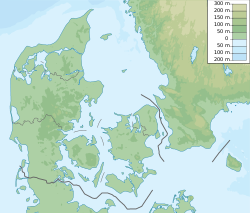  Sorthat Formation (Denmark) | |


The Sorthat Formation is a geologic formation on the island on Bornholm, Denmark. It is of latest Pliensbachian-Late Toarcian age. Plant fossils have been recovered from the formation, along with several traces of invertebrate animals. The Sorthat Formation is overlain by fluvial to lacustrine gravels, along with sands and clay along with parts covered by coal beds, that are part of the Aalenian-Bathonian Bagå Formation.[2] In fact the Sorthat Formation was included on most of 80s-90s studies as the lowermost part of the Bagå Formation, recovering the latest Pliensbachian to lower Aalenian boundary, that was dismissed after comparing the geology of the two.[3][4] The Sorthat strata recover a mostly marginal deltaic to marine unit, where large streams fluctuated to the east where a large river system was established at the start of the Toarcian.[2] At the northwest the local Vulcanism, that started on the lower Pliensbachian, extended along the North Sea and mostly from southern Sweden.[5] At this time, the Central Skåne Volcanic Province and the Egersund Basin expulsed most of their strata, with influences on the local tectonics.[5] The Egersund Basin has abundant fresh porphyritic Nephelinite lavas and dykes of lower Jurassic Age, with a composition nearly equal to those found on the clay pits. That reveals the translation of strata from the Continental margin by large fluvial channels, that ended on the sea deposits of the Ciechocinek Formation Green series.[5]
Stratigraphy[edit]
On Bornholm, the lower-middle Jurassic succession is composed of the Rønne (Hettangian-Sinemurian), Hasle (Lower-late Pliensbachian), Sorthat and Bagå Formations. The major Pliensbachian–Bathonian coal-bearing Clays and Sands that overlie the Lower Pliensbachian Hasle Formation are distributed between both the Sorthat Formation and the overlaying Bagå Formation.[1] The Sorthat Formation is the regional equivalent of the Ciechocinek Formation on Baltic Germany and Poland, the Fjerritslev Formation on the Danish Basin, the Rya Formation on Scania.[1] The Sorthat Formation beds were referred originally to the Levka Beds, Sorthat and Bagå beds.[2] The major section of the Formation is the Korsodde coastal section located on the south-west part of the Island.[2] A detailed stratigraphic interpretation of the beds has been difficult to achieve due to the complicated block faulting, but especially due to the absence of marine fossils and distinct marker beds.[2] Using the Megaspore contents, the rocks were dated originally as Middle Jurassic, with the Levka and Sorthat beds being roughly contemporaneous, and the Bagå beds being possibly slightly younger. Latter the Bagå Formation was limited, including the Coal Clays of the Levka Beds, along with the also Coal Dominant beds of the Korsodde and Onsbæk sections.[3] With more advanced Palynological studies recovered from locations such as the Levka-1 core-well and the Korsodde section Upper Pliensbachian stratum appeared.[6][7] As at the time several Megaspores collected were found to be common on both the Bagå Formation and Sorthat beds, implying at least the presence of Toarcian-Aalenian strata.[3] Although it was difficult to set a concrete age for the Megaspore-bearing strata.[8] With both, the palynological–sedimentological study of all available exposures and cores from the Lower–Middle Jurassic lead to the revelation that the Hasle Formation (Lower-Middle Pliensbachian) are covered by a succession referable to both the Levka and Sorthat Beds, that are composed mostly by bioturbated Sands, Heteroliths and Clays along with abundant Coal seams containing relatively diverse brackish-marine dinoflagellate assemblages that are indicative of the upper Pliensbachian, Toarcian and possibly lower Aalenian strata.[6] While the upper stratum is covered by the fluvial gravels and sands, along with lacustrine clays, carbonaceous clays and coals belonging to the Bagå Formation.[1]
Lithology[edit]

The Sorthat Formation has a highly variable lithology.[1] The main core studied from the rocks, the Levka-1 well reveal first a sharp-based, fining-upwards units, 3–14 m thick, consisting of coarse-grained, occasionally pebbly Sand, overlain by muddy, with Coal and Mica, fine- to medium-grained sand, that is laminated to homogeneous Clay and coal seams with roots.[1] On most of the strata there is a common Parallel Lamination with subordinate Cross-bedding, Cross-lamination and Flaser lamination.[1] There are abundant Large plant fragments and small Quartz. Related to this level, there is a clear absence of Marine palynomorphs are not found, as a main probe that this level was deposited on a coastal or Delta plain with fluvial channels, Lakes and Swamps.[6] This is also related to the most recent finds on the German realm of the Ciechocinek Formation, where a large Deltaic System ended. The large Toarcian–Bajocian deltaic systems locally where the shoreline influenced by the vicinity between brackish to freshwater and continental biofacies.[9][10] The North German Basin shows that on approximately 14.4 m.a, four third-order relative sea-level fluctuations led the subsequent formation of four individual delta generations in the Bifrons-Thouarsense (Toarcian), Murchisonae-Bradfordensis (Aalenian) and Humpresianum-Garatiana (Bajocian).[9] The Toarcian section was dominated by regressive elongated river-dominated deltas, were due to the fall of the sea level the south to southwest directed delta progradation between the Lower-Upper Toarcian, that was deposited as 40 m of deltaic successions, found on places like Prignitz (East) and Brandenburg (North).[9] Most of the Palynomorphs found on the Toarcian stratum are connected with the ones found on the Sorthat Formation.[9] With nearly 40 m thick, the upper section of the formation is composed mostly by a series of cross-bedded, cross-laminated, wave-rippled and bioturbated sand and heteroliths with sporadic Syneresis cracks, Pyrite nodules, the ichnofossils Planolites isp. and Teichichnus isp. and brackish-marine palynomorphs, mostly dinoflagellates.[1] This upper part has a stratum more common to be deposited on nearshore environments with abundant lagoons, coastal lakes and fluvial channels with the clean sand at the top probably representing a marine shoreface.[1] The Korsodde Section, with 93 m thick is composed mostly by coarse-grained sands with cross-bedding and parallel lamination, being mostly of Black due to an abundant organic debris.[1] This Section has been interpreted as part of the large local fluvial system, probably as a series of minor fluvial channels, that were connected with coastal lakes and lagoons, where riparian vegetation was relatively abundant, judging by the presence of megaflora remains and palynomorphs.[1] Small ichnofossil burrows and larger burrows, including Diplocraterion isp. are common, interpreting that there was at least one subunit that was the fill of an estuarine channel.[1] The uppermost part of the formation in the Korsodde section consists of fine-grained, sands with cross stratification and parallel-lamination, yellowish–brown color, along with Sandstones with thin bioturbated and wave-rippled heterolithic beds.[1]
Profile[edit]
At Korsodde, the Environment Includes:
| Unit | Lithology | Thickness (metres) | Type of Environment | Fossil Flora | Fossil Fauna |
|---|---|---|---|---|---|
|
Unit A |
Composed of yellow, weakly cemented Muscovite Quartz sandstone, medium/fine-grained in the lower part, fine-grained in the upper part. Ripple/herringbone lamination is present in most of the beds, along discontinuous mudstone drapes around (0.5 cm thick) and mudstone intraclasts. The mustones show often ferruginization. A single thin horizon which occurs at about 85 cm of the section and also a thin erosional surface with mudstones occurs at 1 m. There is a layer of heterolithic deposits, with fine grained ripple Mudstones and sandstones at 1.65–1.75 m. |
0.45–2.3 m |
Estuarine channel fill (upper or marginal, less energetic part) |
Non Recovered |
|
|
Unit B |
A layer made of intercalations of muscovite quartz sandstones and dark mudstone drapes, with abundant heteroliths. In the vertical section, the sandstone layers (3 cm thick) are lenticular, with some displaying ripple cross and herringbone lamination, and the mudstone drapes (0,5 cm thick) have wavy lamination. This last ones have a few laminae separated by thicker, coarser, mainly silty laminae, showing abundant ferruginous cementation. There is a layer over B considered transitional to C. |
2.3–3.41 m |
Upper tidal flat deposits surrounding an estuary |
Non Recovered |
|
|
Unit C |
It has Two Major layers: a series of 20 cm dark mudstone with horizontal lamination and silt intercalations and a series of dark heteroliths, with intercalated mudstones and ripple limestones. |
3.41–3.7 m |
Restricted bay passing into upper tidal flat deposits |
Non Recovered |
|
|
Unit D |
Yellow ripple cross sandstone with abundant muscovite, alternating with continuous and discontinuous dark mudstone with abundant organic material. There are Pyrite concretions in the lower part. |
3.7–4.7 m |
Lower tidal flat within an estuary |
Roots |
|
|
Unit E |
Composed mostly by fine grained sediments with abundant organic matter. Starts with 55 cm of muddy sandstone, dark at the beginning and light in the upper part. A bed of 5 cm of Mudstone overlays the sandstone, followed by various levels of fine-grained sandstones interbedded with dark siltstone-mudstone, pyrite concretions and sandy mudstone. Over this is developed a massive coal layer containing Neocalamites stems where pyrite become more common. It is overlaid by mudstone, fine sandstone that turn into a poorly sorted yellow ferruginous layer. The upper part, with 85 cm thick is composed by mudstone, with allochthonous Neocalamites stems and lignite clasts. |
4.7–6.9 m |
Lagoonal environment above a coal bed |
|
|
|
Unit F |
Mostly pale, fine-grained, ripple cross muddy sandstone and normal sandstone, separated by thin pale sandy mudstones or thin mudstone drapes. Pyrite concretions and lignite clasts occur in the sandstones. There are Synaeresis cracks, noted at 8.15-8.75 m. |
6.9–9.9 m |
Tidal flat deposits in an estuary. |
|
|
|
Unit G |
It starts with a prominent erosional surface, composed by yellow medium/fine-grained cross-laminated sandstones with moscovite. |
9.9–11.35 m |
Estuarine bar |
Non Reported |
Non Reported |
|
Unit H |
Pale fine-grained ripple and herringbone sandstones and mudstones, with intercalations of sandy mudstones and mudstone drapes with intense ferruginization, with some layers of mudstone-sandstone heteroliths |
11.35–14.2 m |
Marginal part of an estuary channel fill |
Non Reported |
|
|
Unit I-J |
Totally bioturbated muddy sandstone |
14.2–14.4 m |
Short-lived bay or lagoon |
|
|
Palynostratigraphy[edit]
One of the most complete floras found in Europe dating to the Pliensbachian-Toarcian boundary, and among all the Jurassic palynological deposits found worldwide.[4][7][8][12]
Environment[edit]

Due to a Late Pliensbachian marine regression, deposition of coal-bearing strata on the Sorthat Formation was resumed on Bornholm until an Early Toarcian transgression terminated peat formation.[13] The two main deposits of the formation, the Levka-1 Well and the lower part of the Korsodde Section were deposited on an environment influenced by the sea, being the Levka location populated by Lagoons, lakes, channels and low fluvial areas.[13] The Bifrons to Levesquei Zone in the coeval units at the east and west of Prignitz a sandy coastal-deltaic succession was replaced by laminated shales with pelagic marine fauna, reflected on the shoreline shifts on the Northeast, what contributed to retrogradational stratal pattern architectures.[14] On the Sorthat Formation is present a transition from upper to lower shoreface environments, indicating a deepening trend. In the Younger Levesquei subzone delta plain environments were replaced by shoreface setting with active bioturbation and hummocky cross-stratification.[14] The Rǿnne Graben shows seismic lines with onlapping patterns that have been correlated to this Lower Toarcian marine shoreface deposits with intense bioturbation.[15]
The depositional environments Include:
- The Levka beds start overlying the foreshore deposits of the Hasle Formation.[16] Its deposition is composed mostly by interbedded sand, clay and coal beds. The loose sand constitute the major parts of the unrecovered intervals.[17] This sand is fine/medium-grained, micaceous, very carbonaceous and muddy, showing mostly parallel lamination, with rare cross-bedding, cross-lamination and flaser lamination.[17] This first levels are interpreted as fluvial channel fills, reflecting active channel deposition followed by decreasing current strength and abandonment with a passive phase of clay deposition, final overgrowth and change into peat-forming swamps.[17] Between the channel fills are intervals with thinly interbedded sand and clay and very common occurrence of rootlets, coal seams and the rapid facies changes, interpreted as representing wet, vegetated, floodplain areas with shallow lakes, swamps and small crevasse deltas receiving overbank spills from nearby active channels.[17] The coal seams analisis revelated that the peatforming swamps were water-saturated, densely vegetated, anoxic and nutrient-rich.[17] It was followed by a coastal or lower delta plain environment, populated by abundant large fluvial channels or distributaries, and nearby floodplain areas where lacustrine-lagoonal mud, crevasse splays and peat accumulated.[17] Later a rise in the sea level is reported due to the increase of Acritarchs and Tasmanites, where a lagoon succession overlain by the fill of a coastal lake that developed into a paleosol.[17] Later, marine palynomorphs become absent and the location become again a crevasse delta and fill of an abandoned fluvial channel, intercalated with lake deposits.[16] After this, a lagoon succession is marked with the appearance of Planolites and Teichichnus burrows and dinoflagellate cysts Nannoceratopsis gracilis, N. senex and N. triceras, and common Botryococcus, indicating a major marine rise event.[16]
- Sorthat Beds where on all its deposition there was a series of intercalated minor or major extended lower delta plain environment deposits, with pyrite nodules and the trace fossil Arenicolites.[16]
- Baga Beds are filled by interbedded sand, clay, and coal beds with rootlets, along plant fragments including small logs, stems and leaves.[16] It represents gradual infill of lakes which were transformed into vegetated swamps where peat accumulated, with isolated sand beds that were deposited in shallow lakes.[17] The increase of roots, suggest he transition to crevasse deltas formed by the amalgamation of crevasse splay deposits and infill of crevasse channels.[16] Some sand beds originated probably on the granite horst located a few hundred meters east of the exposure.[2] There is also outwash material transported over short distances from nearby source areas and rapidly deposited in ponds or lakes.[17] Younger lacustrine clay suggest re-establishment of the lakes, with pyrite as evidence of increased marine influx.[17]
- Korsodde Section overlies the fine-grained sandstones of the Hasle Formation, deposited on a high energy shoreface environment.[17] This section of the formation started as a derived of sand units deposited in fluvial channels, with abundant carbonaceous matter was probably derived from extensive erosion of peat accumulations during changes in channel courses, as proven by the abundant presence of rootlet and coaly beds.[17] The intrusion of younger clay beds led to a gradual infilling of relatively small coastal lakes and enclosed lagoons which became vegetated and turned into peat-accumulating environments (isolated from active clastic sedimentation), eventually forming palaeosols. This units are filled with pyrite nodules and medium-large wood fragments, while the genera Botryococcus, Lecaniella and Mendicodinium reticulatum occur in varying amounts ranging from abundant to rare, and a few acritarchs are also present.[16] Is overlaid by the intercalation of crevasse delta deposits and lacustrine-brackish flooding surfaces with shifts between ordinate and subordinate tidal currents, with scattered small burrows (Diplocraterion) and mud drapes on foresets containing abundant Nannoceratopsis senex.[16] Mancodinium semitabulatum and Mendicodinium groenlandicum are also found in this sections, but subordinated to the inner fluvial dominated part of an estuarine channel, overlaid by a tidal dominated part.[16] Lagoons of various conditions on younger deposits suggest sea level rise, intercalated with riverine deposits, on a series of regression-transgression trends.[16]
Inertinite has been recovered from the Coal-Bearing levels of the formation, where the palynology shows that the mire vegetation may have been dominated by gymnospermous plants and a secondary proportion of ferns characterised by the genera Dicksonia or Coniopteris and the family Osmundaceae.[13] O several coal seams there were found several Biomolecules, where Euulminite and Attrinite were the most abundant huminite macerals recovered.[18] The Levka-1 well section represents fluvial channels, floodplain areas with shallow lakes and lagoons, and small crevasse deltas, with abundant coalified wood fragments and stems, being most of them found associated to sandy channel fills and on heavily rooted crevasse and lake deposits in shallow inter-fluvial areas.[13] On the Toarcian at Bornholm strata indicates a warm, humid climate suggested by the large number of plant species from interconnected Jameson Land, and thin cutinised leaves of Podozamites and Equisetales comparable in size to modern subtropical bamboos are thought to reflect favourable conditions for plant growth.[13] There is abundant Coal, which indicates that wildfires occurred in the bog.[13] Wood particles from this section, both charcoalified and unburned (coalified), with a rounded and worn nature on many particles, that implies the influence of greater transportation energies.[19]
Coal[edit]
On Korsodde, the Lower Toarcian section records higher temperatures and decreased rainfall/humidity, what led to an increase of the potential for local wildfires to ignite and spread, relfected on the increased abundance of Charcoal and burnt plants.[20]
Mostly of the coal seams recovered from the formation come from the Levka 1 and the Korsodde section, and are derived on most of the cases from a densely vegetated, anoxic swamp, which was probably rheotrophic and rich in nutrients.[21] The study of the peat accumulation indicates that peat accumulation occurred in rather short time intervals (around 2.300 years), and that was deposited on warm tempreate subtropical climate, as if far from proper tropical accumulations, such as the 1.8 mm/yr on the Batang Hari River in Sumatra.[21] Peat accumulation of 1 mm/yr is equal to modern Central Kalimantan coastal settings.[22] The deposits have a great amount of thin and clean coal seams, covered by lacustrine-lagoonal flooding peaks, indicating rapid changes on the environment that were controlled by fairly rapid subsidence of the Rönne Graben, that along the coeval eustatic rise in sea level, causing downs and rises in the base level on the coastal plain.[21] The majority of the samples were immature, low rank coals with generally very high content of humified organic matter, what indicates prevailing anoxic and fully saturated conditions during peat formation, with occasional inundations by freshwater which favoured humification of the plant tissues and also may have increased the gelification processes, raising the ph.[21] Hopanoids are abundant and an indicator of common bacterial activity.[21] The vegetation, both the nearby plants and the peat swamp plants were probably small in stature, and its diversity suggests a humid, warm-temperate to subtropical climate which favoured a prolific vegetation.[21]
- The Levka- 1 well has a core of approx. 150 m on the Sorthat Formation, covering the underlying marine strata of the Hasle Formation.[21] The lower part includes 112 m with the Coal along sand and clay. There if an abundant presence of large, coalified, wood fragments and stems.[21] The Coal bearing strata of the Levka-1 are interpreted as fluvial channel fills, with active channel deposition followed by abandonment and a passive phase of clay deposition, gradual overgrowth and change into a peat-forming environment.[21] Clay and coal seams present along this strata have abundant rootlets and a non-marine palynomorph assemblage dominated by spores and pollen, interpreted as representing flood plain areas with shallow Lakes, small crevasse Deltas and Swamps. Some sections have wave ripples, wavy and flaser bedding, bioturbation and transported Equisetites stems, that are interpreted as the sediment fill of a local lagoon, deposited on a transgressive shoreline with a series of lagoon successions.[21] Levka-1 coal contain hard, black coal and are very similar petrographically, with Huminite on the major part of the seams, with some seams having up to 90% of Huminite. There is a dominance of macerals from detrital organic matter (Humodetrinite) over macerals derived from more woody material (Humotelinite).[21] Gelinite appears as the most common component of the samples, followed by Huminite.[21]
- The Korsodde section is interpreted as representing a small coastal series of lakes and protected lagoons, where are recovered at least 6 coal seams occur. Represents a wet, anoxic, and probably rheotrophic, nutrient-rich peat-forming environment. Above the marine strata of the Toarcian Tranggression strata with abundant Clay fine-grained Sand, Silt, that contains transported, coalified pieces of wood, pyrite nodules, rootlets and a diverse microspore assemblage, where there is abundant the marine dinoflagellate Mendicodinium reticulatum.[21] On this coal Seams Huminite maceral group comprises the majority of the organic matter, where humotelinite dominates over humodetrinite maceral. Eu-ulminite and Densinite are the most prominent macerals.[21]
Fungi[edit]
Color key
|
Notes Uncertain or tentative taxa are in small text; |
| Genus | Species | Stratigraphic position | Material | Notes | Images |
|---|---|---|---|---|---|
|
|
|
Fungus Spores of Incertain Classification. The three uppermost samples of the Korssode Section are poor in diversity, with Fungal spores are common in at least one sample; these have not been recorded from the samples below. |
 Extant Geastrum campestre specimen, found linked with Plant Matter. Spores recovered on the Sorthat Formation can be derived from similar fungi |
Phytoplankton[edit]
On the Lower Jurassic of Bornholm there were several successions of nearshore Peat Formations with Dinoflajellates.[21] Coal-bearing strata were deposited in an overall coastal plain environment during the Hettangian-Sinemurian and then during the Early Pliensbachian was interrupted until the late Pliensbachian-Lowermost Toarcian due to a Sea regression.[21]
| Genus | Species | Stratigraphic position | Material | Notes | Images |
|---|---|---|---|---|---|
|
|
|
Type Genus of the Botryococcaceae inside Trebouxiales. A colonial green microalga related with freshwater and brackish ponds and lakes around the world, where it often can be found in large floating masses. Sorthat Formation Botryococcus lived on an environment interpreted as a coastal lake, permanently vegetated and shallow that was occasionally flooded by the sea. |
 Specimen | |
|
Tetraporina[16] |
|
|
|
Affinities with the family Zygnemataceae. |
|
|
|
|
Affinities with the family Zygnemataceae. A Genus derived from Freshwater filamentous or unicellular, uniseriate (unbranched) green algae. |
||
|
Ovoidites[16] |
|
|
|
Affinities with the family Zygnemataceae. A Genus derived from Freshwater filamentous or unicellular, uniseriate (unbranched) green algae. |
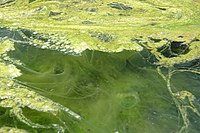 Extant Spirogyra, Ovoidites can be derived froma similar genus |
|
Crassosphaera[16] |
|
|
|
Affinities with the family Pycnococcaceae. |
|
|
Pterospermella[16] |
|
|
|
Affinities with the family Pterospermataceae. |
|
|
Leiosphaerida[16] |
|
|
|
Affinities with the family Prasinophyceae. |
|
|
Cymatiosphaera[16] |
|
|
|
Affinities with the family Pterospermopsidaceae. |
|
|
Tasmanites[16] |
|
|
|
Affinities with the family Pyramimonadaceae. Found on shoreface and shoreface-offshore transition zone deposits. |
|
|
Veryhachium[16] |
|
|
|
A Dinoflajellate, member of the Dinophyceae. |
|
|
Dissilodinium[16] |
|
|
|
A Dinoflajellate, member of the Gymnodiniales. |
|
|
Lithodinia[16] |
|
|
|
A Dinoflajellate, member of the Leptodinioideae. |
|
|
Luehndea[16] |
|
|
|
A Dinoflajellate, member of the Luehndeoideae. It stablishes the Luehndea spinosa Zone; the age of this zone is late Pliensbachian to early Toarcian. |
|
|
Korystocysta[16] |
|
|
|
A Dinoflajellate, member of the Cribroperidinioideae. |
|
|
|
|
A Dinoflajellate, type Genus of the Mancodinioideae. |
||
|
|
|
A Dinoflajellate, member of the family Gonyaulacales. |
||
|
|
|
A Dinoflajellate, member of the family Nannoceratopsiaceae. It is a genus related with Marine deposits. The presence of Nannoceratopsis gracilis, N. senex and N. triceras, and common Botryococcus is interpreted as a lagoon succession overlying a transgressive surface and indicates a rise in relative sea level. |
||
|
Micrhystridium[16] |
|
|
|
An Acritarch, familia incertae sedis |
|
|
Baltisphaeridium[16] |
|
|
|
An algae Acritarch, probably related with freshwater red algae, similar to extant Florideophyceae(for example, Hildenbrandia) or Batrachospermales (Batrachospermum) & Thoreales. |
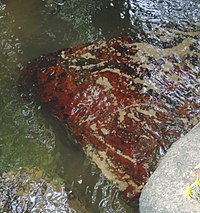 Extant Hildenbrandia, Baltisphaeridium can be derived froma similar genus |
|
Rotundus[16] |
|
|
|
An algae palynomorph, unique to the setting and probably related with freshwater red algae, similar to extant Batrachospermales |
 Extant Batrachospermum |
Terrestrial palynology[edit]
In Early Toarcian carbonates local bulk organic matter, and wood fragments have been related to carbon cycle perturbations, helping to know the reaction of the Continental Biota to the TAOE that happened along contemporaneous large scale volcanism.[24] There were several changes on the woody vegetation in the wood-derived carbon, with pollen assemblages are dominated by Cupressaceae pollen types such Cerebropollenites associated with Cycad pollen types (Chasmatosporites) and the Hirmerielliaceous Corollina.[24] The local palynology has allow to state terrestrial changes on the local flora, where before the Pliensbachian-Toarcian boundary the dominant palynofacies were the Cupressaceae such as Perinopollenites along with cycads such as Cycadopites, found related with middle latitude mediterranean climate.[25] Then, at the start of the event the local pollen assemblages suffer a shift to spore rich layers, showing an increase of ferns and lycophytes, indicator of more humid conditions during a long term.[25] Finally, after the Toarcian AOE event, the Sorthat Formation suffered the most abrupt rise of pollen of Hirmeriellaceae such as Corollina and specially Spheripollenites, both indicators of semidesertic to dry mediterranean climates, implying an abrupt warming event, coeval with the changes happening on the sea.[25]
Bryophyta[edit]
| Genus | Species | Stratigraphic position | Material | Notes | Images |
|---|---|---|---|---|---|
|
|
|
Incertade Sedis affinities with Bryophyta. This Spore is found on the Jurassic Sediments associated with the Polar Regions. The Sorthat Formation is among its southernmost locations. |
||
|
|
|
Incertade Sedis affinities with the Bryophyta. Uncertain affinity possible Moss Spores. This Genus can Also be derived from a Lycophyte. |
||
|
|
|
Incertade Sedis affinities with the Bryophyta. Uncertain affinity possible Moss Spores. Revorked from Devonian layers, evidence of freshwater erosion of the nearby paleozoic layers. |
||
|
|
|
Affinities with the family Notothyladaceae inside Anthocerotopsida. Hornwort spores. |
 Example of extant Notothylas specimens, Foraminisporis come probably from similar genera | |
|
|
| |||
|
|
| |||
|
|
| |||
|
|
|
Affinities with the family Sphagnaceae inside Sphagnopsida. "Peat moss" spores, relted to genera such as Sphagnum that can store water large amount of water. |
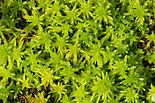 Example of extant Sphagnum specimens, Stereisporites, Sculptisporis and Rogalskaisporites come probably from similar genera | |
|
|
| |||
|
|
| |||
|
|
|
Affinities with the family Encalyptaceae inside Bryopsida. Branching Moss Spores, related with high water-depleting environments |
 Example of extant Encalypta specimens, Staplinisporites come probably from similar genera | |
|
|
|
Affinities with the Sphaerocarpales inside Marchantiopsida. Liverwort spores, related to high humid environments |
 Example of extant Sphaerocarpos specimens, Aequitriradites come probably from similar genera |
Lycophyta[edit]
| Genus | Species | Stratigraphic position | Material | Notes | Images |
|---|---|---|---|---|---|
|
|
|
Affinities with the family Lycopodiaceae inside Lycopodiopsida. Lycopod spores, related with herbaceous to arbustive flora common on humid environments |
 Extant Lycopodium specimens. Genera like Sestrosporites, Camarozonosporites, Retitriletes, Lycopodiumsporites and Semiretisporis probably come from a similar plant | |
|
|
| |||
|
|
| |||
|
|
| |||
|
|
|
Affinities with the families Sigillariaceae and Lepidodendraceae inside Lycopodiopsida. Revorked from Carboniferous layers |
||
|
|
| |||
|
|
|
Affinities with the Isoetales inside Lycophyta. Low floor spores, related with herbaceous to arbustive flora common on humid environments |
 Extant Isoetes specimens. Genera like Minerisporites, Echitriletes and Paxillitriletes probably come from a similar plant | |
|
|
| |||
|
|
| |||
|
|
|
Affinities with Pleuromeiales inside Lycophyta. The Plueromeiales were tall Lycophites (2 to 6 m) common on the Trassic. Probably come from a relict genus. |
 Reconstruction of the extinct genus Pleuromeia, typical example of Pleuromeiales. Nathorstisporites and Aratrisporites probably come from a similar or a related Plant | |
|
|
| |||
|
|
|
Affinities with the Selaginellaceae inside Lycopsida. Herbaceous Lycophyte flora, similar to Ferns, ralated with Humid Settings. This Family of Spores are also the most diverse on the Formation. |
 Extant Selaginella, typical example of Selaginellaceae. Genera like Anapiculatisporites, Limbosporites, Cabochonicus, Kraeuselisporites, Hughesisporites, Erlansonisporites,Apiculatisporis, Bacutriletes,Perotrilites,Horstisporites, Maexisporites, Aneuletes, Neoraistrickia, Trileites, Verrutriletes, Cadargasporites and Densoisporites probably come from a similar or a related Plant | |
|
|
| |||
|
|
| |||
|
|
| |||
|
|
| |||
|
|
| |||
|
|
| |||
|
|
| |||
|
|
| |||
|
|
| |||
|
|
| |||
|
|
| |||
|
|
| |||
|
|
| |||
|
|
| |||
|
|
| |||
|
|
| |||
|
|
|
Sphenophyllaceae[edit]
| Genus | Species | Stratigraphic position | Material | Notes | Images |
|---|---|---|---|---|---|
|
|
|
Affinities with the family Cheirostrobaceae inside Sphenophyllales. It was tougth to be related to the basal plants of the Devonian, such as the genus Rhynia. Later, representatives from the genus were recovered with the sporangiophores of the cone genus Cheirostrobus. Probably represent Miospores from a relict Genus. |
 Diagram of the Cone Cheirostrobus, found associated with Retusotriletes miospores |
Equisetales[edit]
| Genus | Species | Stratigraphic position | Material | Notes | Images |
|---|---|---|---|---|---|
|
|
|
Affinities with the Calamitaceae inside Equisetales. Horsetails, herbaceous flora related to high humid environments, flooding tolerant plants. On the sections of the Formation such as Korsodde this genus has small peaks in abundance at the layers where more Equisetites stems are found. |
 Recosntruction of the Genus Calamites, found associated with Calamospora |
Pteridophyta[edit]
| Genus | Species | Stratigraphic position | Material | Notes | Images |
|---|---|---|---|---|---|
|
|
|
Incertade Sedis affinities with the Pteridophyta. Uncertain Pteridophyte origin |
||
|
|
| |||
|
|
| |||
|
|
| |||
|
|
| |||
|
|
| |||
|
|
| |||
|
|
| |||
|
|
| |||
|
|
| |||
|
|
| |||
|
|
| |||
|
|
|
Affinities with the Callistophytaceae inside Callistophytales. Spores from large arboreal to arbustive ferns |
||
|
|
|
Affinities with the family Botryopteridaceae inside Polypodiopsida. It comprises the main megaspore zonation of the Toarcian of Denmark, being the most abundant spore found. |
||
|
|
|
Affinities with the Ophioglossaceae inside Filicales. Fern spores from lower herbaceous flora |
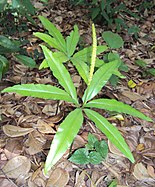 Example of extant Helminthostachys specimens, Lycopodiacidites come probably from similar genera or maybe a species from the genus | |
|
|
|
Affinities with the family Lygodiaceae inside Polypodiopsida. Climbing fern spores |
 Example of extant Lygodium, Lygodioisporites come probably from similar genera or maybe a species from the genus | |
|
|
| |||
|
|
|
Affinities with the family Dennstaedtiaceae inside Polypodiales. Forest Fern Spores |
 Example of extant Dennstaedtia specimens, Leptolepidites come probably from similar genera | |
|
|
|
Affinities with the family Osmundaceae inside Polypodiopsida. Near Fluvial currents ferns, reted to the modern Osmunda Regalis. |
 Example of extant Osmunda specimens, Baculatisporites and Todisporites come probably from similar genera or maybe a species from the genus | |
|
|
| |||
|
|
|
Affinities with the Pteridaceae inside Polypodiopsida. Forest Ferns from humid ground locations |
 Example of extant Pityrogramma specimens, Contignisporites and Manumia come probably from similar genera or maybe a species from the genus | |
|
|
| |||
|
|
|
Affinities with the genus Ceratopteris (Parkerioideae) inside Polypodiopsida. Spores from aquatic or subaquatic ferns of moderate size. Are abundant on the layers near fluvial deposition, probably associated to large underwater colonies of ferns on local freshwater deposits. |
 Example of extant Ceratopteris specimens, Striatriletes come probably from similar genera or maybe a species from the genus | |
|
|
|
Affinities with the Fern Genus Saccoloma, type representative of the family Saccolomataceae. This Fern Spore has resemblance only with the living genus Saccoloma, being probably from a Pantropical genus found in wet, shaded forest areas. |
 Example of extant Saccoloma specimens, Annulispora come probably from similar genera or maybe a species from the genus | |
|
|
|
Affinities with the family Cyatheaceae inside Cyatheales. Arboreal Fern Spores |
 Example of extant Cyathea, Zebrasporites and Cibotiumspora come probably from similar genera | |
|
|
| |||
|
|
| |||
|
|
|
Affinities with the genus Dicksoniaceae inside Polypodiopsida. Tree fern spores |
 Example of extant Lophosoria specimens, Tripartina and Undulatisporites come probably from similar genera | |
|
|
|
Affinities with the Gleicheniales inside Polypodiopsida. Fern spores from lower herbaceous flora |
 Example of extant Gleichenia specimens, Gleicheniidites and Iraqispora come probably from similar genera or maybe a species from the genus | |
|
|
| |||
|
|
|
Affinities with the Marattiaceae inside Polypodiopsida. Fern spores from lower herbaceous flora |
 Example of extant Marattia specimens, Marattisporites come probably from similar genera | |
|
|
|
Affinities with the Matoniaceae inside Polypodiopsida. Fern spores from lower herbaceous flora |
 Example of extant Matonia specimens, Matonisporites come probably from similar genera |
Peltaspermales[edit]
| Genus | Species | Stratigraphic position | Material | Notes | Images |
|---|---|---|---|---|---|
|
|
|
Affinities with the families Peltaspermaceae, Corystospermaceae or Umkomasiaceae inside Peltaspermales. Pollen of Uncertain provenance, that can be derived from any of the members of the Peltaspermales. The lack o distinctive characters and bad conservation are among the main factors to make this Palynological residues difficult to classify. Arboreal to arbustive seed ferns. |
||
|
|
| |||
|
|
| |||
|
|
|
Pollen from the Family Caytoniaceae inside Caytoniales. Caytoniaceae are a complex group of Mesozoic Fossil floras, that can be related to both Peltaspermales and Ginkgoaceae. |
||
|
|
|
Gnetales[edit]
| Genus | Species | Stratigraphic position | Material | Notes | Images |
|---|---|---|---|---|---|
|
|
|
Type Pollen of the Erdtmanithecales, that can be related with the Gnetales. Thick tectum, infratectum of small granules, indistinct or absent foot layer. Originally was thought to come from Angiosperms, latter reports suggest it come from arbustive Bennetites. It was recently found to come from Eucommiitheca, member of the enigmatic Erdtmanithecales, reinterpreted as an unusual gymnosperm grain with a single distal colpus flanked by two subsidiary lateral colps. Is very similar to the Pollen of the extant Ephedra and Welwitschia (mainly on the granular structure of the exine).[26] |
||
|
|
|
Affinities with Gnetopsida and probably Gnetophyta. Has Been considered Pollen of Chloranthaceae. However, it is to old for belonging to advanced Angiosperms. It probably comes from cones related to the Genera Piroconites kuesperti from the Lowermost Jurassic of Germany, resembling pollen of extant Ephedra and Welwitschia. |
 Closer Look of Ephedra cones, a common Gnetal. Monosulcites and Clavatipollenites maybe come from a related plant | |
|
|
|
Cycadophyta[edit]
| Genus | Species | Stratigraphic position | Material | Notes | Images |
|---|---|---|---|---|---|
|
|
|
Affinities with the family Cycadaceae inside Cycadales. Is among the most abundant flora recovered on the upper section of the coeval Rya Formation, and was found to be similar to the pollen of the extant Encephalartos laevifolius.[27] |
 Extant Encephalartos laevifolius. Chasmatosporites maybe come from a related plant |
Bennettitales[edit]
| Genus | Species | Stratigraphic position | Material | Notes | Images |
|---|---|---|---|---|---|
|
|
|
Affinities with the family Cycadeoidaceae inside Bennettitales. Coming From Low Arbustive Bennetites, similar to modern Cycas of the Genus Zamia. Revorked from Rhaetian layers, as result of an erosion of the underliying siliclastic sediments |
||
|
Cycadopites[25] |
|
|
|
Affinities with the family Cycadaceae and Bennettitaceae. It has been found associated with the Bennetite pollen cone Bennettistemon. It increases towards the Toarcian section. |
Ginkgoales[edit]
| Genus | Species | Stratigraphic position | Material | Notes | Images |
|---|---|---|---|---|---|
|
Ginkgocycadophytus[16] |
|
|
|
Affinities with the family Karkeniaceae and Ginkgoaceae in Ginkgoales. A rather rare genus, recovered from only one major location and only on the uppermost sections. |
 Extant Ginkgo, only surviving example of the Ginkgoaceae. Ginkgocycadophytus Pollen is pretty similar to the extant ones of this genus |
Coniferophyta[edit]
| Genus | Species | Stratigraphic position | Material | Notes | Images |
|---|---|---|---|---|---|
|
|
|
Affinities with the family Pinaceae inside Pinopsida. Conifer pollen from medium to large arboreal plants |
 Extant Picea. Paleopicea and Pinuspollenites maybe come from a related plant | |
|
|
| |||
|
|
| |||
|
|
| |||
|
|
|
Affinities with the cone genus Masculostrobus, a member of the Krassiloviaceae. This Genus has been found associated with Masculostrobus cones on the Middle Jurassic Strata of Purbeck, England. Represents Pollen from Dry Environment-Derived Arboreal-Arbustive Flora. |
||
|
|
|
Affinities with the Podocarpaceae inside Pinopsida. Conifer pollen from medium to large arboreal plants |
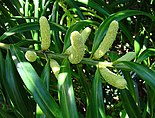 Extant Podocarpus. Podocarpidites and Parvisaccites maybe come from a related plant | |
|
|
| |||
|
|
|
Affinities with the family Cupressaceae inside Pinopsida. Pollen that resembles extant genera such as the Genus Actinostrobus and Austrocedrus, probably derived from Dry environments. |
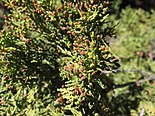 Extant Austrocedrus. Exesipollenites and Perinopollenites maybe come from a related plant | |
|
|
| |||
|
|
|
Affinities with the Hirmeriellaceae inside Pinopsida. Spheripollenites psilatus compose up to 95% of the Lower Toarcian section and is correlated with Toarcian carbon cycle anomalies including the oceanic anoxic event, suggesting dry climates.[28] Rhaetipollis is revorked from Triassic layers |
||
|
|
| |||
|
|
| |||
|
|
|
Affinities with the family Araucariaceae inside Pinales. Conifer Pollen from medium to large Arboreal Plants |
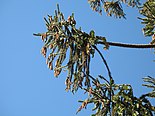 Extant Araucaria. Araucariacites and Callialasporites maybe come from a related plant | |
|
|
|
Fossil Wood[edit]
Is also common to found wood from the nearshore deposits of Korsodde, with two sets: macroscopic wood, recognizable to the naked eye, up to branch-sized; and microscopic wood (0.25 to 1 mm average dimension).[29] The woods hasn't been assigned to a concrete genus and include large coalified trunks, isolated coalified logs. This wood shows isotopic patterns similar to those found on the Late Palaeocene thermal maximum, and have allow to measure higher atmospheric CO2 concentrations on this interval.[29]
Amber[edit]
B. Eske Koch corroborated the presence of amber drops on layers of the Sorthat Formation.[30] This record represents one of the few from all the world from Jurassic layers.[30] This amber was quoted to be derived from Coniferales Indet.[30]
Plant macrofossils[edit]
The major deposits of macroflora are the Hasle Clay Pit and the Korsodde section. The flora is was originally stated as coeval with the Rhaetian-Hettangian floras of Sweden, but found latter to be Pliensbachian-Toarcian.[31] Möller did the two major studies on the local flora, with 68 species described, 50% of them ferns.[32][33] The Late Pliensbachian section is dominated by ferns, that suggest a warm and humid climate, what fits with the paleolatitude of Bornholm, firmly within the Jurassic warm temperature biome.[31] But the presence of Ginkoaleans and absence of large leafed Bennnettites suggest this warm climate was seasonal. Ferns and sphenophytes in the assemblage are interpreted to have occupied the lowermost stratum. Bennettites where mid-storey shrubs and Conifers, such as Pagiophyllum, together with ginkgoaleans, make the main arboral flora.[31] All the flora developed on a meandering river system with wellvegetated marshy flood plains.[31] The Toarcian section shows a radical change on the local flora, as Hirmeriellaceae Conifers take the role of dominant flora, being the 95% of the pollen recovered on the interval assigned to this family, along with a rise of Seed Ferns, Bennettites and Czekanowskiales.[34] The dominance of Pagiophyllum and its related pollen Corollina torosus indicate high temperature/aridity with seasonal wildfires (tough, some sections show low coal ratio, derived from slightly more humid environments), with rare occurrences of Brachyphyllum and one Cyparissidium.[34]
| Genus | Species | Stratigraphic position | Material | Notes | Images |
|---|---|---|---|---|---|
|
Equisetites[21] |
|
|
|
Affinities with Equisetaceae inside Equisetales. Equisetalean Stems, related that are also found on the Hettangian strata along Skane, Sweden. On the Lagoonar sections there is correlation between bioturbation and transported Equisetites stems.[25] Local Equisetales obtained a considerable size, comparable to modern subtropical bamboos, close to lakes and in the wettest environments.[21] |
 Example of Equisetites specimen |
|
|
|
Affinities with Calamitaceae inside Equisetales. Equisetalean Stems, related that are also found on same age strata along Skane, Sweden. Based on analogies with morphologically similar extant Equisetum species, it is interpreted to represent a plant of consistently moist habitats, such as marshes, lake margins or forest understorey, developed normally dense thickets. |
 Example of Neocalamites specimen | |
|
|
|
Affinities with Equisetidae inside Equisetales. |
||
|
|
|
Affinities with Selaginellaceae and Lycopodiidae inside Lycopodiales. It was originally identified as Lycopodites falcatus. The leaves of this species are more prominently anisophyllous than in the Raheto-Hettangian S. coburgensis from Franconia.[39] |
||
|
|
|
Incertae Ordinis inside Pteridophyta. Spiropteris is the name given to the fossil of a fern leaf before opening, when it is still coiled. |
||
|
|
|
Affinities with Osmundaceae inside Osmundales. Related with species commonly reported from the Triassic–Jurassic of southern Sweden. |
 Cladophlebis nebbensis specimen | |
|
|
|
Affinities with Osmundaceae inside Osmundales.Likely relict and very rare speciments, as the species dominance is limited to the Hettangian layers |
 Example of Acrostichites princeps specimen | |
|
|
|
Affinities with Aspleniaceae inside Blechnales. |
||
|
|
|
Affinities with Dicksoniaceae inside Cyatheales. The Lund-material is dominated by ferns belonging to the genus Eboracia (28 specimens of E. lobifolia and 14 of E. sp.). Eboracia sp. has considerably smaller pinnules than lobifolia. |
||
|
|
|
Affinities with Dicksoniaceae inside Cyatheales. Common cosmopolitan Mesozoic Tree fern genus. |
||
|
|
|
Affinities with Dicksoniaceae inside Cyatheales. It show similarities with Sphenopteris longipinnata on the morphological outline of the leaflets and the keels of the pinnate axis. |
 Example of extant Dicksonia specimen | |
|
|
|
Affinities with Dipteridaceae inside Polypodiales. Specimens from the same species have been found on the Hettangian Höör Sandstone at southern Sweden. |
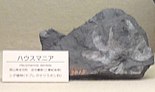 Example of Hausmannia specimen | |
|
|
|
Affinities with Dipteridaceae inside Polypodiales. |
 Example of Clathropteris meniscioides specimen | |
|
|
|
Affinities with Dipteridaceae inside Polypodiales. Dictyophyllum is a common Dipteridacean genus of the mid-Mesozoic |
 Dictyophyllum nilssonii specimen | |
|
|
|
Affinities with Dipteridaceae inside Polypodiales. |
||
|
|
|
Affinities with Matoniaceae inside Gleicheniales. |
 Example of Phlebopteris specimen | |
|
|
|
Affinities with Matoniaceae inside Gleicheniales. |
||
|
|
|
Affinities with Marattiaceae inside Marattiopsida. |
 Example of extant Marattia specimen | |
|
|
|
Affinities with Caytoniaceae inside Pteridospermatophyta. Related with the Seed Ferns present in the Rhaetic flora of Sweden. |
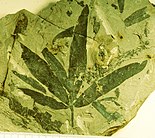 Sagenopteris specimen | |
|
|
|
Affinities with Umkomasiaceae inside Pteridospermatophyta. Less common that other Arboreal Plants |
||
|
Komlopteris[40] |
|
|
|
Affinities with Umkomasiaceae inside Pteridospermatophyta. |
|
|
|
|
Affinities with Umkomasiaceae inside Pteridospermatophyta. |
||
|
|
|
Affinities with Corystospermaceae inside Pteridospermatophyta. |
||
|
|
|
Affinities with Umaltolepidaceae inside Vladimariales. Belong to a group parallel to Gingkoaceans and derived probably from Umkomasiaceae |
||
|
|
|
Affinities with Williamsoniaceae inside Bennettitales. Insufficient and incomplete material prevents certain allocation to that species. |
 Otozamites specimen | |
|
|
|
Affinities with Williamsoniaceae inside Bennettitales. |
 Example of Pterophyllum specimen | |
|
|
|
Affinities with Williamsoniaceae inside Bennettitales. |
||
|
|
|
Affinities with Cycadeoidaceae inside Bennettitales. The Most common and abundant Bennetite on the formation. |
 Nilssonia specimen | |
|
Nilssoniopteris[42] |
|
|
|
Affinities with Cycadeoidaceae inside Bennettitales. |
|
|
|
|
Affinities with Cycadales inside Cycadopsida. |
||
|
|
|
Affinities with Ginkgoaceae inside Ginkgoales. Seven species assigned to either Ginkgo or Ginkgoites have been reported from the Latest Triassic to middle Jurassic strata of southern Sweden. |
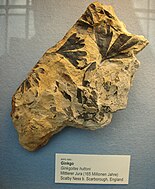 Ginkgoites specimen | |
|
|
|
Affinities with Karkeniaceae inside Ginkgoales. Unlike other Plants specimens from the location is linked more to Middle Jurassic Flora |
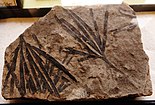 Example of Baiera specimen | |
|
|
|
Affinities with Czekanowskiales inside Ginkgoales. This Genus is related to flora from the Rhaetian-Hettangian boundary of Jameson Land, but also present on Romania. |
||
|
|
|
Affinities with Czekanowskiales inside Ginkgoales. |
||
|
Solenites[34] |
|
|
|
Affinities with Czekanowskiales inside Ginkgoales. This species was described on the basis of individuals collected in Greenland, from the Triassic-Jurassic boundary. |
|
|
|
|
Affinities with Czekanowskiales inside Ginkgoales. Linked to the Lower Liassic Flora from Greenland. |
||
|
|
|
Affinities with Araucariaceae or Hirmeriellaceae inside Pinales. P. kurrii (originally P. steenstrupi) is preferred as this species is characterised by relatively broad leaves inserted at high angles to the stem. P. peregrinum has been found on the Hettangian Ronne Formation associated with Hirmeriellidaceous wood, Brachyoxylon rotnaensis (Simplicioxylon). On the Toarcian levels, is the most common plant Cuticle recovered locally. |
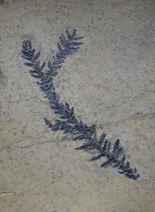 Example of Pagiophyllum specimen | |
|
|
|
Affinities with Araucariaceae or Hirmeriellaceae inside Pinales. Is related to Hettangian axis found on Scania, Sweden |
 Example of Brachyphyllum specimen | |
|
Dactyletrophyllum[28] |
|
|
|
Affinities with Hirmeriellaceae inside Pinales. Is related to other representatives of the genus of the Toarcian of Italy and Lower Jurassic of Israel. Spheripollenites co-occurs with cuticles of Dactyletrophyllum ramonensis, and after a test of relationships it was found a highly significant correlation that may suggest that the species S. psilatus was produced by the conifer genus Dactyletrophyllum.[28] |
|
|
|
|
Affinities with Hirmeriellaceae inside Pinales. The main genus of the Hirmeriellaceae, linked with dry environmets and probably Fire Tolerant |
 Example of Hirmeriella specimen | |
|
|
|
Affinities with Palissyaceae inside Palissyales. |
||
|
|
|
Affinities with Palissyaceae inside Palissyales. Descriptions of the Palissya come mostly from coeval deposits on the Northern Hemisphere, based on very few specimens from Sweden, Germany or America. |
||
|
|
|
Affinities with Schizolepisaceae inside Pinaceae. Associated with Pinaceae thanks to the presence of separated seen scales and bract scales. |
||
|
|
|
Affinities with Schizolepisaceae inside Pinaceae. This Genus is found associated with Schizolepis on many places, making diverse authors to put both on Pinaceae. |
||
|
|
|
Affinities with Krassiloviaceae inside Voltziales. The local Podozamites show a rather great range of Growth, reflecting Tropical to subtropical conditions. |
 Podozamites reconstruction | |
|
|
|
Affinities with Cunninghamioideae inside Cupressales. Cunninghamia-like conifers belonging to half-evergreen trees. |
||
|
|
|
Affinities with Sequoioideae inside Cupressales. It was originally described as Taxites? subzamioides, later fused with Elatocladus. |
||
|
|
|
Affinities with Cupressoideae inside Cupressales. It matches with the Middle Jurassic Cyparissidium blackii from Yorkshire, England. |
Fauna[edit]
Ichnofossils[edit]
| Genus | Species | Location | Material | Type | Notes | Images |
|---|---|---|---|---|---|---|
|
Arenicolites[16] |
|
|
Dwelling traces |
Domichnia |
Marine, Brackish or Freshwater Unbranched U-shaped burrows having a subvertical orientation, with or without lining and passive fill. Are common on modern coastal environments, done by deposit-feeding polychaetes of the families Spionida and Carpitellida, as well as by suspension-feeding Amphipodan crustaceans and deposit-feeding Sipuncula. On this section are recovered only on lower delta plain environment deposits. |
 |
|
Planolites[11] |
|
|
Cylindrical burrows |
Pascichnia |
Burrow-like ichnofossils. It is referred to vermiform deposit-feeders, mainly Polychaetes, producing active Fodinichnia. It is controversial, since is considered a strictly a junior synonym of Palaeophycus.[46] |
 Example of Planolites fossil |
|
Palaeophycus[11] |
|
|
Cylindrical, predominantly horizontal to inclined burrows |
Domichnia |
Burrow-like ichnofossils. They occur in different size classes, 3, 5 and 10 mm in diameter. Are mostly produced by predaceous Polychaeta in marine environments, but other makers may have been involved in continental settings, such as semiaquatic Insects (Orthoptera and Hemiptera) or semiaquatic and non-aquatic Beetles. |
 Example of Palaeophycus fossil |
|
Bornichnus[11] |
|
|
Tubular Traces |
Domichnia |
Burrow-like ichnofossils. Exclusive from the Formation, Bornichnus differs from Palaeophycus Hall in its tangled, contorted morphology and abundant branching. Small open burrows produced probably by farming worm-like animals (Probably Polychaeta). Similar complicated burrow systems are produced by the polychaete Capitomastus cf. aciculatus. |
|
|
Skolithos[11] |
|
|
Cylindrical to subcylindrical Burrows |
Domichnia |
Burrow-like ichnofossils. Ichnofossils done by organisms advancing along the bottom surface. Very narrow, vertical or subvertical, slightly winding unlined shafts filled with mud. Interpreted as dwelling structures of vermiform animals, more concretely the Domichnion of a suspension-feeding Worm or Phoronidan, with certain Skolithos representing entrance shafts to more complicated burrows. |
 Skolithos ichnofosil reconstruction, with possible fauna associated |
|
Cylindrichnus[11] |
|
|
Burrowing and track ichnofossils. |
Domichnia |
Burrow-like ichnofossils. Cylindrichnus isp. was found only in the uppermost part of the section, and probably represents Polychaeta Burrows. |
|
|
|
Dwelling traces |
Fodinichnia |
Burrow-like ichnofossils. The level where this ichnogenus is more abundant is also composed of abundant fragments of Spreite lamination, derived from the intersection with the Ichnofossil. They are believed to be Fodinichnia, with the organism adopting the habit of retracing the same route through varying heights of the sediment, which would allow it to avoid going over the same area. The assigned origin of this trace are Annelid worms. Aside from the classical interpretation of Polychaeta as producers, many features accord with an interpretation of dwelling Echiurans and Holothurians. |
 Example of Teichichnus fossil | |
|
Thalassinoides[11] |
|
|
Tubular Fodinichnia |
Fodinichnia |
Burrow-like ichnofossils. Large burrow-systems consisting of smooth-walled, essentially cylindrical components. They´re usually related with Thalassinidea, but can be from several Crustaceans (Anomura, Decapoda), Annelids (Polychaeta, Sipuncula) and Fishes (Dipnoi). Is found associated with Teichichnus. |
 Thalassinoides burrowing structures, with modern related fauna, showing the ecological convergence and the variety of animals that left this Ichnogenus. |
|
Chondrites[11] |
|
|
Tubular Fodinichnia |
Fodinichnia |
Burrow-like ichnofossils. Interpreted as the feeding burrow of a sediment-ingesting animal. A more recent study has found that Scoloplos armiger and Heteromastus filiformis, occurring in the German Wadden Sea in the lower parts of tidal flats, make burrows that are homonymous with numerous trace fossils of the ichnogenus.[48] |
 Illustration of Chondrites bollensis |
|
|
Trace Fossil |
Sequestrichnia |
Burrow-like ichnofossils. Vertical or oblique complex trace fossil composed of a bunch of spindle-shaped structures and associated tubes, typical of a restricted environment (?estuarine/lagoonal). The local Rosselia is similar to the Ichnogenus Parahentzschelinia surlyki from the lower Jurassic of Greenland, which can be a junior synonym. This trace fossil is interpreted as made by a small deposit-feeding animal, living in a tube communicated with the sea floor. These traces are linked with shrimps or other aquatic arthropods, since the tunnels possess scratch patterns. |
||
|
Diplocraterion[11] |
|
|
"U" Shaped Burrows |
Domichnia |
Burrow-like ichnofossils. Most Diplocraterion show only protrusive spreit, like the local ones, produced under predominantly erosive conditions where the organism was constantly burrowing deeper into the substrate as sediment was eroded from the top. Most Diplocraterion show only protrusive spreit, like the local ones, produced under predominantly erosive conditions where the organism was constantly burrowing deeper into the substrate as sediment was eroded from the top. "U"-shaped burrows, such as Diplocraterion, can be constructed by a wide variety of creatures: Polychaeta annelids (Axiothella, Abarenicola and Scolecolepis), Sipunculans (Sipunculus), Enteropneustans (Balanoglossus) and Echiurans (Urechis). |
 Diplocraterion parallelum diagram |
Annelida[edit]
| Genus | Species | Stratigraphic position | Material | Notes | Images |
|---|---|---|---|---|---|
|
"Cycadeospermum"[50] |
|
|
Cocoons |
Freshwater Clitellata Cocoons (Oligochaeta and Hirudinea), identified with palynological residues. Also called "red eggs" and present on the estuarine series of Yorkshire |
|
|
Dictyothylakos[50] |
|
|
Cocoons |
Freshwater Clitellata Cocoons (Oligochaeta and Hirudinea), identified with palynological residues, and through to be tridimensional nets of probable algal origin. Fragmentary mesh-like networks of happiness threads composed of homogenous translucent material. They show the outer wall (hapsine) construction specific to clitellate annelids and lack an alytine (inner) layer. A disorderly meshwork of the hapsine layer and hapsine fibers of unequal thickness, are diagnostic of the type species Dictyothylakos pesslerae. The cocoons Dictyothylakos pesslerae resemble specially those of modern Leechs, and are common on flooded basin sediments, which implies not only the presence of parasitic leeches, but also the presence of large hosts nearby, as has been confirmed on the case of the coeval Ciechocinek Formation, thanks to the presence of not only dinosaurs but also Dipnoi and other freshwater taxa. |
 Example of leech cocoon  Placobdella, example of leech |
Brachiopoda[edit]
| Genus | Species | Stratigraphic position | Ex Situ | Material | Notes | Images |
|---|---|---|---|---|---|---|
|
Homoeorhynchia[51] |
|
|
Moved from the Parallic deposits of the Sorthat Formation to the Komorowo Formation, evident due to massively erosion from post-mortem breakage in many cases. |
Numerous specimens |
A Brackish Brachiopodan, member of Rhynchonellidae inside Rhynchonellida. The only major Brachiopod described on the region |
Bivalvia[edit]
| Genus | Species | Stratigraphic position | Ex Situ | Material | Notes | Images |
|---|---|---|---|---|---|---|
|
Inoceramus[51] |
|
|
Moved from the Parallic deposits of the Sorthat Formation to the Komorowo Formation, evident due to massively erosion from post-mortem breakage in many cases. |
Cunchs |
A Brackish Clam, member of Inoceramidae inside Myalinida. Represented by rather fragmentary shells |
|
|
Isocyprina[51] |
|
Cunchs |
A Brackish Clam, member of Arcticidae inside Veneroidei. |
|||
|
Nicaniella[51] |
|
Cunchs |
A Brackish Clam, member of Astartidae inside Carditida. |
|||
|
Sowerbya[51] |
|
Cunchs |
A Brackish Nut Clam, member of Sowerbyidae inside Cardiida. |
|||
|
Tancredia[51] |
|
Cunchs |
A Brackish Nut Clam, member of Tancrediidae inside Cardiida. |
|||
|
Nucula[51] |
|
Cunchs |
A Brackish Nut Clam, member of Nuculidae inside Nuculida. |
|||
|
Leda[51] |
|
|
Both present ex situ and in situ |
Cunchs |
A Brackish Nut Clam, member of Nuculidae inside Nuculida. |
Scaphopoda[edit]
| Genus | Species | Stratigraphic position | Ex Situ | Material | Notes | Images |
|---|---|---|---|---|---|---|
|
Laevidentalium[51] |
|
|
Moved from the Parallic deposits of the Sorthat Formation to the Komorowo Formation, evident due to massively erosion from post-mortem breakage in many cases. |
Cunchs |
A saltwater tusk shell (Scaphopoda), member of the family Dentaliidae inside Dentaliida. |
|
|
Dentalium[51] |
|
Cunchs |
A saltwater tusk shell (Scaphopoda), member of the family Dentaliidae inside Dentaliida. |
|

Gastropoda[edit]
| Genus | Species | Stratigraphic position | Ex Situ | Material | Notes | Images |
|---|---|---|---|---|---|---|
|
Rhynchocerithium[52] |
|
|
Moved from the Parallic deposits of the Sorthat Formation to the Komorowo Formation, evident due to massively erosion from post-mortem breakage in many cases. |
Numerous specimens |
A Brackish Snail, member of Procerithiidae inside Caenogastropoda. The local assigned Francocerithium? sp and Francocerithium kochi from the older Pliensbachian stratum can be all Rhynchocerithium sp. |
|
|
Procerithiidae[52] |
|
Cunchs |
A Brackish Snail, member of Procerithiidae inside Caenogastropoda. |
|||
|
Ptychomphalus[52] |
|
Cunchs |
A Brackish Snail, member of Eotomariidae inside Pleurotomarioidea. The species may be identical to the questionable "Ptychomphalus" theodorii. |
|||
|
Neritopsidae[52] |
|
Cunchs |
A Brackish Snail, member of Neritopsidae inside Neritoina. |
|||
|
Katosira[52] |
|
Cunchs |
A Brackish Snail, member of Settsassiidae inside Hypsogastropoda. Turriculate, slender shells. |
|||
|
Maturifusus[52] |
|
Cunchs |
A Brackish Snail, type member of Maturifusidae inside Hypsogastropoda. Limited to the Grimmen Clay Pit |
|||
|
Cylindrobullina[52] |
|
Cunchs |
A Sea Snail, type member of Cylindrobullinidae inside Architectibranchia. |
|||
|
Sinuarbullina[52] |
|
Cunchs |
A Brackish Snail, member of Tubiferidae inside Heterostropha. |
|||
|
Tricarilda[52] |
|
Cunchs |
A Brackish Snail, member of Mathildidae inside Heterostropha. |
|||
|
Conusella[52] |
|
Cunchs |
A Brackish Snail, member of Tofanellidae inside Heterostropha. |
|||
|
Actaeonina[52] |
|
Cunchs |
A Brackish Snail, member of Acteoninidae inside Prosobranchia. |
|||
|
Caenogastropoda[52] |
|
Cunchs |
A Brackish Snail, member of Prosobranchia. |
|||
|
Ovactaeonina[52] |
|
Cunchs |
A Brackish Snail, member of Acteoninidae inside Prosobranchia. The most diverse |
|||
|
Colostracon[52] |
|
Cunchs |
A Brackish Snail, member of Acteoninidae inside Prosobranchia. |
|||
|
Bandellina[52] |
|
Cunchs |
A Brackish Snail, member of Cornirostridae inside Heterobranchia. |
|||
|
Levipleura[52] |
|
Several hundred Cunchs |
A Brackish Snail, member of Zygopleuridae inside Murchisoniina. The most abundant on the German Realm |
|||
|
Falsoebala[52] |
|
Cunchs |
An opisthobranch Brackish Snail, member of Murchisonellidae inside Pyramidelloidea. Trend to be limited to northern deposits |
|||
|
Tricarilda[52] |
|
Cunchs |
A minute sea Snail, member of Mathildidae inside Allogastropoda. The Tricarilda? sp. of Grimmen is maybe the same as the assigned specimens Tricarilda? sp. of Reinberg |
|||
|
Mistelgauia[52] |
|
Cunchs |
A Brackish Snail, member of Eucyclidae inside Seguenzioidea. |
|||
|
Eucyclus[52] |
|
Cunchs |
A Brackish Snail, member of Eucyclidae inside Seguenzioidea. |
|||
|
Calliotropis[52] |
|
Cunchs |
A Brackish Snail, member of Eucyclidae inside Seguenzioidea. |
|||
|
Trochoidea[52] |
|
Cunchs |
A Brackish false top Snail, member of Trochoidea. |
|||
|
Lewisiella[52] |
|
Cunchs |
A Brackish false top Snail, member of Ataphridae inside Trochoidea. Lewisiella nuda is also known from Franconia, with only 10 specimens from Grimmen. |
Crustacea[edit]
| Genus | Species | Stratigraphic position | Material | Notes | Images |
|---|---|---|---|---|---|
|
|
|
A controversial, possible marine/brackish/freshwater or even terrestrial Crab, whose classification is problematic, identified as Goniodromites liasicus, and suggested to be a member of the family Goniodromitidae, but recent studies suggest affinities with Eubrachyura. Is one of the oldest reported crabs know. Probably lived linked to the parallic deposits of the formation and probably one of the makers of the burrows recovered. It was suggested to come from younger deposits, but recent works confirm a Lower Toarcian Age.[54] Both specimens found have similar morphological traits with the unrelated extant members of the family Gecarcinidae, what has led to the suggestion that this is probably the oldest example of a semiterrestrial Brachyuran. The parallic environments of the Sorthat Formation probably allow to this concrete lifestyle, yet is all speculative.[54] |
 Morphological traits of Sorthatdromites are similar to those of the extant unrelated Gecarcoidea, what has led to suggest that the Parallic environment of the formation allow to an early terrestrialization of Eubrachyurans |
Chondrichthyes[edit]
| Genus | Species | Stratigraphic position | Ex Situ | Material | Notes | Images |
|---|---|---|---|---|---|---|
|
Hybodus[55] |
|
|
Moved from the Parallic deposits of the Sorthat Formation to the Komorowo Formation, evident due to massively erosion from post-mortem breakage in many cases. |
|
A marine/brackish/frashwater Shark, type member of the family Hybodontidae inside Hybodontiformes. Of this genus occurs mostly at Pigstraale, and is in the shape of the cross section is quite similar to Hybodus minor. In addition there is a large amount of teeth, most consistent with the depicted species. Other species occur; between the material were found Teeth that resemble the species Hybodus grossiconus and Hybodus cloacinus |
|
|
Lonchidiidae[55] |
|
|
A brackish/frashwater Shark, member of the family Lonchidiidae inside Hybodontiformes. Dental features resembling those of the lonchidiid Parvodus.[55] |
|||
|
Lissodus[55] |
|
|
A brackish/frashwater Shark, member of the family Lonchidiidae inside Hybodontiformes. Morphology and ornamentation pattern seen in these teeth warrants an inclusion in the genus Lissodus, concretely L. johnsonorum.[55] |
|||
|
Palidiplospinax[55] |
|
|
A marine/brackish/frashwater Shark, member of the family Palaeospinacidae inside Synechodontiformes. Fits well with dental characteristics described for lateral teeth of P. enniskilleni.[55] |
|||
|
Sphenodus[55] |
|
|
A marine/brackish/frashwater Shark, member of the family Orthacodontidae inside Synechodontiformes. Pretty similar to teeth described from the Rya Formation.[55] |
 | ||
|
Paraorthacodus[55] |
|
|
A marine/brackish/frashwater Shark, member of the family Paraorthacodontidae inside Synechodontiformes. The Grimmen teeth, especially the lateral ones, indicate close similarities to those of P. kruckowi.[55] |
|||
|
Orectolobiformes[55] |
|
|
A marine/brackish/frashwater Shark, member of the family Orectolobiformes inside Galeomorphii. Cannot be assigned to a croncrete genus due to its very generalized morphology, which otherwise displays close similarities to teeth of the extant genus Hemiscyllium.[55] |
|||
|
Agaleus[55] |
|
|
A marine shark, type member of the family Agaleidae inside Euselachii. |
|||
|
Notidanoides[55] |
|
|
A marine/brackish Shark, member of the family Crassodontidanidae inside Hexanchoidei. Resembles the genus on its egde serrations.[55] |
|||
|
Antiquaobatis[55] |
|
|
A brackish/freshwater Ray, Incertade sedis inside Rajiformes. Antiquaobatis grimmenensis appears to have used different, less specialized and probably more opportunistic feeding strategies, as suggested by the gracile and high tooth morphology.[55] |
|


Actinopteri[edit]
| Genus | Species | Stratigraphic position | Material | Notes | Images |
|---|---|---|---|---|---|
|
Pycnodontiformes[56] |
|
|
|
A brackish/frashwater Pycnodontiform, incertade sedis inside Pycnodontiformes. Moved from the Parallic deposits of the Sorthat Formation to the Komorowo Formation, evident due to massively post-mortem breakage in many cases. The washed nature is notably on this one, that is impossible to assign a concrete genus due to its abrasion.[56] |
See also[edit]
- List of fossiliferous stratigraphic units in Denmark
References[edit]
- ^ a b c d e f g h i j k l m n Michelsen, O.; Nielsen, L. H.; Johannessen, P. N.; Andsbjerg, J.; Surlyk, F. (2003). "Jurassic lithostratigraphy and stratigraphic development onshore and offshore Denmark" (PDF). Geological Survey of Denmark and Greenland (GEUS) Bulletin. 1 (1): 145–216. doi:10.34194/geusb.v1.4651. S2CID 126907584. Retrieved 8 September 2021.
- ^ a b c d e f g Gry, H.; Jørgart, T.; Poulsen, V. (1969). "Lithostratigraphy and sedimentary evolution of the Triassic, Jurassic and Lower Cretaceous of Bornholm, Denmark". Mineralogisk Mus. 6 (1).
- ^ a b c Gravesen, P. (1982). "Lithostratigraphy and sedimentary evolution of the Triassic, Jurassic and Lower Cretaceous of Bornholm, Denmark". Serie B / Danmarks geologiske undersøgelse. 1 (1).
- ^ a b c d e f g h i j k l m n o p q r s t u v w x y z aa ab ac ad ae af ag ah ai aj ak al am an ao ap aq ar as at au av aw ax ay az ba bb bc bd be bf bg bh bi bj bk bl bm bn bo bp bq br bs bt bu bv bw bx by bz ca cb cc cd ce cf cg ch ci cj ck cl cm cn co cp cq cr cs ct cu cv cw cx Gry, Helge (1969). "Megaspores from the Jurassic of the island of Bornholm, Denmark" (PDF). Meddelelser Fra Dansk Geologisk Forening. 19 (1): 69–89. Retrieved 8 September 2021.
- ^ a b c Bergelin, I.; Obst, K.; Söderlund, U.; Larsson, K.; Johansson, L. (2011). "Mesozoic rift magmatism in the North Sea region: 40 Ar/39 Ar geochronology of Scanian basalts and geochemical constraints". International Journal of Earth Sciences. 100 (4): 787–804. Bibcode:2011IJEaS.100..787B. doi:10.1007/s00531-010-0516-3. S2CID 128811834.
- ^ a b c Nielsen., L. H. (1987). "Progress report 1.1.1988. Biostratigraphy and organic geochemistry of the Mesozoic on Bornholm". DGU 215 Confidential Report. Geological Survey of Denmark. 31: 0–35.
- ^ a b c d e f g h i j k l m n o p q r s t u v w x y z aa ab ac ad ae af ag ah ai aj ak al am an ao ap aq ar as at au av aw ax ay az ba bb bc bd be bf bg bh bi bj bk bl bm bn bo bp bq br bs bt bu bv bw bx by bz ca cb cc cd ce cf cg ch ci cj ck cl cm cn co cp cq cr cs ct cu cv cw cx Koppelhus., E.B. (1988). "Catalogue of spores and pollen from the Lower–Middle Jurassic Bagå Formation on Bornholm, Denmark". DGU Confidential Report. Copenhagen: Geological 214 Survey of Denmark. 21: 42.
- ^ a b c d e f g h i j k l m n o p q r s t u v w x y z aa ab ac ad ae af ag ah ai aj ak al am an ao ap aq ar as at au av aw ax ay az ba bb bc bd be bf bg bh bi bj bk bl bm bn bo bp bq br bs bt bu bv bw bx by bz ca cb cc cd ce cf cg ch ci cj ck cl cm cn co cp cq cr cs ct cu cv cw cx Koppelhus, E.B.; Batten, D.J. (1992). "Megaspore assemblages from the Jurassic and lowermost Cretaceous of Bornholm, Denmark". Danmarks Geologiske Undersøgelse Serie A. 32: 81. doi:10.34194/seriea.v32.7052.
- ^ a b c d Zimmermann, J.; Franz, M.; Schaller, A.; Wolfgramm, M. (2017). "The Toarcian-Bajocian deltaic system in the North German Basin: Subsurface mapping of ancient deltas-morphology, evolution and controls". Sedimentology. 65 (3): 897–930. doi:10.1111/sed.12410. Retrieved 8 September 2021.
- ^ Barth, G.; Pieńkowski, G.; Zimmermann, J.; Franz, M.; Kuhlmann, G. (2018). "Palaeogeographical evolution of the Lower Jurassic: high-resolution biostratigraphy and sequence stratigraphy in the Central European Basin". Geological Society, London, Special Publications. 469 (1): 341–369. Bibcode:2018GSLSP.469..341B. doi:10.1144/SP469.8. S2CID 134043668. Retrieved 8 September 2021.
- ^ a b c d e f g h i j k Bromley, R. G.; Uchman, A. (2003). "Trace fossils from the Lower and Middle Jurassic marginal marine deposits of the Sorthat Formation, Bornholm, Denmark". Bulletin of the Geological Society of Denmark. 52 (1): 185–208. doi:10.37570/bgsd-2003-50-15. Retrieved 8 September 2021.
- ^ a b c d e f g h i j k l m n o p q r s t u v w x y z aa ab ac ad ae af ag ah ai aj ak al am an ao ap aq ar as at au av aw ax ay az ba bb bc bd be bf bg bh bi bj bk bl bm bn bo bp bq br bs bt bu bv bw bx by bz ca cb cc cd ce cf cg ch ci cj ck cl cm cn co cp cq cr cs ct cu cv cw Hoelstad, T. (1985). "Palynology of the Uppermost Lower to Middle Jurassic strata on Bornholm, Denmark" (PDF). Geological Society of Denmark, Bulletin (Meddelelser Fra Dansk Geologisk Forening). 30 (1): 34. Retrieved 8 September 2021.
- ^ a b c d e f g Petersen, H. I.; Nielsen, L. H.; Koppelhus, E. B.; Sørensen, H. S. (2003). "Early and Middle Jurassic mires of Bornholm and the Fennoscandian Border Zone: a comparison of depositional environments and vegetation". Geological Survey of Denmark and Greenland (GEUS) Bulletin. 1: 631–656. doi:10.34194/geusb.v1.4687. Retrieved 8 September 2021.
 This article incorporates text available under the CC BY 4.0 license.
- ^ a b Zimmermann, J.; Franz, M.; Heunisch, C.; Luppold, F.W.; Mönnig, E.; Wolfgramm, M. (2015). "Sequence stratigraphic framework of the Lower and Middle Jurassic in the North German Basin: epicontinental sequences controlled by Boreal cycles". Palaeogeography, Palaeoclimatology, Palaeoecology. 440 (1): 395–416. Bibcode:2015PPP...440..395Z. doi:10.1016/j.palaeo.2015.08.045. Retrieved 8 September 2021.
- ^ Graversen, O. (2004). "Upper Triassic–Lower Cretaceous seismic sequence stratigraphy and basin tectonics at Bornholm, Denmark, Tornquist Zone, NW Europe". Mar. Pet. Geol. 21 (1): 579–612. doi:10.1016/j.marpetgeo.2003.12.001.
- ^ a b c d e f g h i j k l m n o p q r s t u v w x y z aa ab ac ad ae af Koppelhus, E. B.; Nielsen, L. H. (1994). "Palynostratigraphy and palaeoenvironments of the lower to middle jurassic bagå formation of bornholm, Denmark". Palynology. 18 (1): 139–194. doi:10.1080/01916122.1994.9989443. Retrieved 8 September 2021.
- ^ a b c d e f g h i j k l Nielsen, L.H. (1988). "Lithostratigraphy and depositional environment of the Lower and Middle Jurassic sequence drilled in shallow wells". Geological Survey of Denmark, Report No. 68 (1): 24–48.>
- ^ Petersen, H. I. (1993). "Petrographic facies analysis of Lower and Middle Jurassic coal seams on the island of Bornholm, Denmark". International Journal of Coal Geology. 22 (3–4): 189–216. doi:10.1016/0166-5162(93)90026-7.
- ^ Crawford, A. J. (2015). "Understanding fire histories: the importance of charcoal morphology" (PDF). Thesis for: PHD Physical Geography.
- ^ Baker, S. J.; Hesselbo, S. P.; Lenton, T. M.; Duarte, L. V.; Belcher, C. M. (2017). "Charcoal evidence that rising atmospheric oxygen terminated Early Jurassic ocean anoxia". Nature Communications. 8, . (1): 15018. Bibcode:2017NatCo...815018B. doi:10.1038/ncomms15018. PMC 5437290. PMID 28497785.
- ^ a b c d e f g h i j k l m n o p q r s t u v w x Petersenn, H.I; Nielsen, L.H. (1995). "Controls on Peat accumulation and depositional environments of a Coal-bearing Coastal Plain succession of a Pull-Apart Basin; a petrographic, geochemical and sedimentological study, Lower Jurassic, Denmark". International Journal of Coal Geology. 27 (2–4): 99–129. doi:10.1016/0166-5162(94)00020-Z. Retrieved 8 September 2021.
- ^ Dommain, R.; Couwenberg, J.; Joosten, H. (2011). "Development and carbon sequestration of tropical peat domes in south-east Asia: links to post-glacial sea-level changes and Holocene climate variability". Quaternary Science Reviews. 30 (7–8): 999–1010. Retrieved 9 October 2021.
- ^ a b c Seidenkrantz, M.S (1993). "Biostratigraphy and palaeoenvironmental analysis of a Lower to Middle Jurassic succession on Anholt, Denmark". Journal of Micropalaeontology. 12 (2): 201–218. doi:10.1144/jm.12.2.201. S2CID 55909679.
- ^ a b Wade-Murphy, J.; Kuerschner, W. M.; Hesselbo, S. P. (2006). "Early Toarcian vegetation history from the Korsodde Section of Bornholm (Denmark) and its possible impact on terrestrial carbon isotope records". In 7th European Palaeobotany Palynology Conference: 153.
- ^ a b c d e f Wade-Murphy, J.; Kuerschner, W. M.; Hesselbo, S. P. (2006). "Abrupt and gradual vegetation changes associated with Toarcian global change inferred from high resolution palynological study of the Korsodde section on Bornholm (DK)". Geophysical Research Abstracts. 8: 357.
- ^ Rydin, C.; Pedersen, K. R.; Crane, P. R.; Friis, E. M. (2006). "Former diversity of Ephedra (Gnetales): evidence from early Cretaceous seeds from Portugal and North America". Annals of Botany. 98 (1): 123–140. doi:10.1093/aob/mcl078. PMC 2803531. PMID 16675607. Retrieved 8 September 2021.
- ^ . 1988. The use of dispersed palynomorphs referable to the form genus Chasmatosporites (Nilsson) Pocock and Jansonius, in Jurassic biostratigraphy. Congreso Argentino de Paleontologia y Bioestratigrafia 3. 5- 13.
- ^ a b c d Wade-Murphy, J.; Kuerschner, W. M (2006). "A new technique to infer the botanical affinity of palynomorphs, and its application on Spheripollenites psilatus from the Toarcian of Bornholm, Denmark". In 7 Th European Palaeobotany Palynology Conference: 153.
- ^ a b Hesselbo, S. P.; Gröcke, D. R.; Jenkyns, H. C.; Bjerrum, C. J.; Farrimond, P.; Bell, H. S. M.; Green, O. R. (2000). "Massive dissociation of gas hydrate during a Jurassic oceanic anoxic event". Nature. 406 (1): 392–395. Bibcode:2000Natur.406..392H. doi:10.1038/35019044. PMID 10935632. S2CID 4426788. Retrieved 8 September 2021.
- ^ a b c Langenheim, J. H. (1969). "A Botanical Inquiry: Amber provides an evolutionary framework for interdisciplinary studies of resin-secreting plants". Science. 163 (3872): 1157–1169. Retrieved 10 October 2021.
- ^ a b c d e f g h i j k l m n Mehlqvist, K.; Vajda, V.; Larsson, L. M. (2009). "A Jurassic (Pliensbachian) flora from Bornholm, Denmark–a study of a historic plant-fossil collection at Lund University, Sweden". GFF. 131 (1–2): 137–146. doi:10.1080/11035890902975275. S2CID 131021904. Retrieved 8 September 2021.
- ^ a b c d e f g h i j k l m n o p q r s t u Bartholin, C.T. (1892). "Nogle i den bornholmske Juraformation forekommende Planteforsteninger". Botanisk Tidsskrift. 18 (1): 12–28.
- ^ a b c d e f g h i j k l m n o p q r s t u v Bartholin, C.T. (1894). "Nogle i den bornholmske Juraformation forekommende Planteforsteninger". Botanisk Tidsskrift. 19: 87–115.
- ^ a b c d e f g h i j k McElwain, J. C.; Wade-Murphy, J.; Hesselbo, S. P. (2005). "Changes in carbon dioxide during an oceanic anoxic event linked to intrusion into Gondwana coals". Nature. 435 (7041): 479–482. Bibcode:2005Natur.435..479M. doi:10.1038/nature03618. PMID 15917805. S2CID 4339259. Retrieved 8 September 2021.
- ^ a b c d e f g h i j k l m n o p q r s t u v w x y z aa ab ac Hjort, A. (1899). "Om Vellengsbyleret og dets Flora". Danmarks Geologiske Undersøgelse. 10 (1): 61–86.
- ^ a b c d e f g h i j k l m n o p q r s t u v w x y z aa ab ac ad ae af Möller ., H. (1903). "Bidrag till Bornholms fossila flora (Rhät och Lias)-Gymnospermer". Kungliga Svenska Vetenskapsakademiens Handlingar. 36 (6): 3–48. Retrieved 8 September 2021.
- ^ a b c d e f g h i j k l m n o p q r s t u v w x y z aa Möller, H. (1902). "Bidrag till Bornholms fossila flora: Pteridofyter". Malmströms boktryckeri. 38 (5). Retrieved 8 September 2021.
- ^ Schweitzer, H.J.; Van Konijnenburg Cittert, J.H.A.; van der Burgh, J. (1997). "The Rhaeto-Jurassic flora of Iran and Afghanistan Part 10:10. Bryophyta, Lycophyta, Sphenophyta, Pterophyta – Eusporangiatae and Protoleptosporangiatae". Palaeontographica. 243 (1): 103–192.
- ^ Van Konijnenburg-van Cittert, J. H.; Kustatscher, E.; Bauer, K.; Pott, C.; Schmeißner, S.; Dütsch, G.; Krings, M. (2014). "A Selaginellites from the Rhaetian of Wüstenwelsberg (Upper Franconia, Germany)". Neues Jahrbuch für Geologie und Paläontologie, Abhandlungen. 272 (2): 115–127. Retrieved 12 November 2021.
- ^ Barbacka, M. (1994). "Komlopteris Barbacka, gen. nov., a segregate from Pachypteris Brongniart". Review of Palaeobotany and Palynology. 83 (4): 339–349. Retrieved 12 November 2021.
- ^ Seward, A. C. (1903). "On the occurrence of Dictyozamites in England, with remarks on European and eastern mesozoic floras" (PDF). Quarterly Journal of the Geological Society. 59 (1–4): 217–233. doi:10.1144/GSL.JGS.1903.059.01-04.20. S2CID 128424763.
- ^ Florin, R. (1933). "Über Nilssoniopteris glandulosa n. sp., eine Bennettitacee aus der Juraformation Bornholms". Arkiv för Botanik. 25 (20): 19.
- ^ a b c d e f g h i j Florin, R. (1958). "On Jurassic taxads and conifers from north-western Europe and eastern Greenlan". Acta Horti Bergiani. 17: 402.
- ^ Yao, X.; Zhou, Z.; Zhang, B. (1998). "Reconstruction of the Jurassic conifer Sewardiodendron laxum (Taxodiaceae)". American Journal of Botany. 85 (9): 1289–1300. doi:10.2307/2446639. JSTOR 2446639. PMID 21685015.
- ^ Doludenko, M.P. (1984). "Позднеюрские флоры Юго-Западной Евразии[Late Jurassic Floras of Southwestern Eurasia]" (PDF). Academy of Sciences o f the USSP. 390 (1): 3–112. Retrieved 8 October 2021.
- ^ Keighley, D. G.; Pickerill, R. K (1995). "The ichnotaxa Palaeophycus and Planolites_ historical perspectives and recommendations". An International Journal for Plant and Animal Traces. 3 (4). doi:10.1080/10420949509386400.
- ^ Knaust, D. (2018). "The ichnogenus Teichichnus Seilacher, 1955". Earth-Science Reviews. 177 (1): 386–403. Bibcode:2018ESRv..177..386K. doi:10.1016/j.earscirev.2017.11.023. Retrieved 8 September 2021.
- ^ Hertweck, G.; Wehrmann, A.; Liebezeit, G. (2007). "Bioturbation structures of polychaetes in modern shallow marine environments and their analogues to Chondrites group traces". Palaeogeography, Palaeoclimatology, Palaeoecology. 245 (3–4): 382–389. Bibcode:2007PPP...245..382H. doi:10.1016/j.palaeo.2006.09.001. Retrieved 8 September 2021.
- ^ Knaust, D. (2021). "Rosselichnidae ifam. nov.: burrows with concentric, spiral or eccentric lamination". Papers in Palaeontology: 1–29. doi:10.1002/spp2.1367. S2CID 236226280. Retrieved 8 September 2021.
- ^ a b Svein, B.; Mahendra, N. Bose; Roy, T. Sawyer (1991). "Clitellate cocoons in freshwater deposits since the Triassic" (PDF). Zoologica Scripta. 20 (4): 347–366. doi:10.1111/j.1463-6409.1991.tb00300.x. S2CID 83998036. Retrieved 8 September 2021.
- ^ a b c d e f g h i j Buchholz, A. (2012). "Das Domerium im Lias-Aufschluss des Tontagebaues von Klein Lehmhagen bei Grimmen/Vorpommern (Nordostdeutschland). Ein Überblick". Mitteilungen der Naturforschenden Gesellschaft Mecklenburg. 12 (1): 3–20. Retrieved 8 September 2021.
- ^ a b c d e f g h i j k l m n o p q r s t u v w Grundel, J. (1999). "Gastropoden aus dem höheren Lias von Grimmen, Vorpommern (Deutschland)". Archiv für Geschiebekunde. 2 (9): 629–672.
- ^ Beurlen, K. (1932). "Brachyurenreste aus dem Lias von Bornholm mit Beiträgen zur Phylogenie und Systematik der Brachyuren Decapoden". Paläontologische Zeitschrift. 14 (1–2): 52–66. doi:10.1007/bf03041617. S2CID 128752534.
- ^ a b c Schweigert, G. (2012). "Verschollene Lias-Krabben von Bornholm – ein Paläokrimi (noch) ohne Happyend". Fossilien 2012. 301–304.
- ^ a b c d e f g h i j k l m n o p q r Sebastian Stumpf; Jürgen Kriwet (2019). "A new Pliensbachian elasmobranch (Vertebrata, Chondrichthyes) assemblage from Europe, and its contribution to the understanding of late Early Jurassic elasmobranch diversity and distributional patterns". PalZ. 93 (4): 637–658. doi:10.1007/s12542-019-00451-4.
- ^ a b Stumpf, S.; Ansorge, J.; Pfaff, C; Kriwet, J. (2017). "Early Jurassic diversification of pycnodontiform fishes (Actinopterygii, Neopterygii) after the end-Triassic extinction event: evidence from a new genus and species, Grimmenodon aureum". Journal of Vertebrate Paleontology. 37 (4): e1344679. doi:10.1080/02724634.2017.1344679. PMC 5646184. PMID 29170576. Retrieved 8 September 2021.
Original source: https://en.wikipedia.org/wiki/Sorthat Formation
Status: article is cached
 EncycloReader
is supported by the
EncycloReader
is supported by the  KSF
KSF