Timeline of Madrid

From Wikipedia - Reading time: 18 min

The following is a timeline of the history of the city of Madrid, Spain.

Prior to 17th century

[edit]
  • Prehistory: Quaternary period or Lower Paleolithic – First archaeological signs of human occupation
  • Roman period: mansion or staging-post (Miacum) established
  • 5th century AD – archaeological remains reported in 2007 indicate Visigoth occupation
  • 9th century – Muhammad I of Córdoba ordered the construction of an Alcazar
  • 1085 – Alfonso VI of León and Castile takes the city in the Reconquista.[1]
  • 1339 – Treaty of Madrid secures collaboration between Aragon and Castile
  • 1499 –
    • Cardinal Cisneros founded the Complutense University.
    • Fernando de Rojas publishes La Celestina in Madrid
  • 1500 – Printing press in operation.[2]
  • 1505 – San Jerónimo el Real built.
  • 1526 – Treaty of Madrid signed.
  • 1537 – Casa de Cisneros built.
  • 1547 – Birth of Miguel de Cervantes, later a Spanish writer.[1]
  • 1559 – Convent of Las Descalzas Reales founded.
  • 1561
    • Court of Philip II moves from Toledo to Madrid.[3]
    • Population: 20,000.[citation needed]
  • 1562 – Anton van den Wyngaerde draws a Panorama of Madrid [es].
  • 1584 – Bridge of Segovia built.

17th century

[edit]
Small bridge in and view of the Paseo del Prado in mid-18th century by Italian painter Antonio Joli
  • 1601 – Court of Philip III moves from Madrid to Valladolid.
  • 1605 – Cervantes' novel Don Quixote published.
  • 1606 – Court of Philip III returns to Madrid.
  • 1613 – Palace of the Councils built.
  • 1616 – Real Monasterio de la Encarnación inaugurated.
  • 1619 – Plaza Mayor laid out; Casa de la Panadería built.
  • 1633 – Church of San Antonio de los Alemanes built.
  • 1636 – Royal Alcazar built.
  • 1637 – Buen Retiro Palace built.[1]
  • 1643 – Palacio de Santa Cruz built.[citation needed]
  • 1644 – Funeral of Isabel de Borbón.[4]
  • 1661 – Gazeta de Madrid begins publication.[5]
  • 1664 – San Isidro Church built.
  • 1672 – Premiere of Guevara–Hidalgo's zarzuela Celos Hacen Estrellas.[6]

18th century

[edit]
View of Calle de Alcalá in mid-18th century by Italian painter Antonio Joli
The San Francisco el Grande Basilica was finished in 1784
  • 1706 – City occupied by Portuguese.
  • 1713 – Royal Spanish Academy founded.[7][1]
  • 1714 – Real Biblioteca del Palacio formed.[7]
  • 1734 – Royal Alcazar burns down.
  • 1737 – Real Colegio de Profesores Boticarios established.
  • 1738 – Real Academia de la Historia founded.[7]
  • 1743 – Teatro de la Cruz renovated.
  • 1751 – Compañía Guipuzcoana de Caracas headquartered in Madrid.[8]
  • 1752 – Real Academia de Bellas Artes de San Fernando founded.[7][1]
  • 1755 – Real Jardín Botánico founded.[9]
  • 1756 – Puerta de Recoletos [es] built.
  • 1766 – Esquilache Riots.
  • 1767 – Buen Retiro Park opens.
  • 1774 – Casa de Fieras del Retiro [es] (zoo) opens.
  • 1778 – Puerta de Alcalá inaugurated.
  • 1782 – Cibeles Fountain [es] built on Plaza de Cibeles.
  • 1784 – San Francisco el Grande Basilica built.
  • 1790 – Plaza Mayor reconstructed.
  • 1798 – Royal Chapel of St. Anthony of La Florida built. Population: 170,000

19th century

[edit]
Map of Madrid, 1857
  • 1808 – Dos de Mayo Uprising.
  • 1812 – Wellington takes city from the French.
  • 1817 – Moncloa Porcelain Factory in operation.[10]
  • 1819 – Museo del Prado established.
  • 1830
    • Royal Conservatory of Music founded.
    • León Gil de Palacio [es] creates a scale model of the city.
  • 1831 – Bolsa de Madrid founded.[11]
  • 1832 – Lhardy patisserie in business.[12]
  • 1835 – Ateneo de Madrid founded.
  • 1836
    • Biblioteca Nacional established.[7]
    • Literary University relocates to Madrid.
  • 1840 – Monumento a los Caidos por España inaugurated.
  • 1843 – Museo Naval de Madrid inaugurated.[13]
  • 1850 – Teatro Real opera house opens.
  • 1851 – Estación de Mediodía inaugurated.
  • 1856
    • Teatro de la Zarzuela opens.
    • Escuela Superior de Diplomática [es] (school) founded.
  • 1864 – Hotel Paris opens.
  • 1866 – Sociedad de Conciertos de Madrid founded.
  • 1867 – National Archaeological Museum of Spain established.
  • 1868 – City walls dismantled.[14]
  • 1869 – Jardín Zoológico established.[15]
  • 1874 – Bull ring constructed on Plaza de Toros.[5]
  • 1875 – Museo Nacional de Antropología inaugurated.
  • 1877 – Population: 397,816.[1]
  • 1884 – Cementerio de la Almudena established.
  • 1885
    • Roman Catholic diocese of Madrid established.[16]
    • Theatre of María Guerrero built.
  • 1887
    • Café Comercial in business.
    • Palacio de Cristal built.
    • Population: 472,228.[1]
  • 1888 – Café Gijón opens.[12]
  • 1891 – Bank of Spain Building completed.[1]
  • 1892 – Historical American Exposition held.[17]
  • 1893 – Fábrica Nacional de Moneda y Timbre formed.
  • 1900 – Population: 539,835.[18]

20th century

[edit]
The Monument to Alfonso XII was finished in 1922
  • 1902 – Real Madrid C.F. (football club) founded.[19]
  • 1903 – Madrid Symphony Orchestra formed.
  • 1905 – Parque del Oeste inaugurated.
  • 1909 – Cibeles Palace built.
  • 1910
    • Museo Nacional de Ciencias Naturales established.
    • Residencia de Estudiantes founded.
  • 1911
    • Cuatro Vientos Airport opens.
    • Metropolis Building inaugurated.
  • 1912 – Hotel Palace opens.
  • 1916 – Market of San Miguel constructed.
  • 1919 – Metro begins operating.
  • 1920 – Population: 750,896.[20]
  • 1922 – Monument to Alfonso XII inaugurated.
  • 1923 – Teatro Monumental (theatre) built.
  • 1924
    • Line 2 (Madrid Metro) begins operating.
    • Hotel Florida opens.
    • National Museum of Romanticism inaugurated.
  • 1925 – Teatro Pavón (theatre) opens.
  • 1928 – Catholic Opus Dei founded.
  • 1929
    • Gran Vía constructed.
    • Cine Avenida [es] opens.[21]
  • 1930
    • Teatro Munoz Seca (theatre) opens.
    • Cine Barceló [es] built.[21]
  • 1931
    • City designated capital of Spanish Republic.
    • Madrid-Barajas Airport begins operating.[22]
    • Ministry of Foreign Affairs and Cooperation (Spain) headquartered in Madrid.[citation needed]
  • 1932 – Museo Sorolla and Cine Proyecciones (cinema)[21] inaugurated.
  • 1934 – Museum of the Spanish Village formed.
  • 1935 – House-Museum of Lope de Vega and Cine Madrid-Paris (cinema)[21] open.
  • 1936
    • November: Siege of Madrid begins.[23]
    • Line 3 (Madrid Metro) begins operating.
  • 1939
    • March: Siege of Madrid ends; Nationalists in power.[3]
    • Capital of Spanish State relocated to Madrid from Burgos.
  • 1940
    • Spanish National Orchestra founded.
    • Population: 1,088,647.[20]
  • 1941 – Museum of the Americas founded.
  • 1944
    • Carabanchel Prison built.
    • Museum Cerralbo opens.
    • Line 4 (Madrid Metro) begins operating.
  • 1946 – Estadio Santiago Bernabéu opens.
  • 1949 – Cine Pompeya (cinema) opens.[21]
  • 1950 – Lope de Vega Theater opens.
  • 1951 – Museum of Lázaro Galdiano opens.
  • 1954 – Cine Benlliure (cinema) opens.[21]
  • 1956 – Real Madrid wins first European Cup.[19]
  • 1960 – Population: 2,259,931.[20]
  • 1965 – RTVE Symphony Orchestra formed.
  • 1966 – Estadio Vicente Calderón opens.
  • 1967 – City flag design adopted.
  • 1968
    • Autonomous University of Madrid established.
    • Line 5 (Madrid Metro) begins operating.
  • 1969 – Comillas Pontifical University relocates to Madrid.
  • 1970 – Population: 3,146,071.[20]
  • 1971 – Technical University of Madrid formed.
  • 1972
    • Zoo Aquarium built.
    • Temple of Debod installed.
  • 1973 – Operación Ogro.
  • 1974 – Line 7 (Madrid Metro) begins operating.
  • 1975 – Dictator Francisco Franco dies in Madrid. Spanish transition to democracy begins.
  • 1976 – Torres de Colón built.
  • 1977 – Massacre of Atocha.
  • 1978
    • Sabatini Gardens open.
    • Centro Dramático Nacional created.
  • 1979
    • Enrique Tierno Galván becomes the first mayor of Madrid elected after the restoration of democracy in Spain.
    • Line 6 (Madrid Metro) begins operating.
    • Windsor Tower built.
  • 1980
    • La Movida Madrileña begins.[24]
    • Line 9 (Madrid Metro) begins operating.
  • 1981
    • An attempted coup d'état takes place in the Congress of Deputies on 23 February.
    • Museo de Aeronáutica y Astronáutica founded.
  • 1982 – City hosts part of the matches of the 1982 FIFA World Cup, including the final, won by Italy.[19]
  • 1983
    • November: Avianca Flight 011 accident.
    • December: Alcalá 20 nightclub fire.
  • 1984 – Queen Sofía Chamber Orchestra formed.
  • 1987 – Community of Madrid Orchestra founded.
  • 1988 – National Auditorium of Music inaugurated.
  • 1989 – El Mundo begins publication.
  • 1990 – Editorial Verbum [es] in business.
  • 1991
    • City hosts Israeli–Palestinian peace conference.
    • Population: 2,984,576.[20]
  • 1992
    • Madrid–Seville high-speed rail line and Thyssen-Bornemisza Museum open.
    • Museo Nacional Centro de Arte Reina Sofía and Juan Carlos I Park established.
  • 1993 – Almudena Cathedral consecrated.[25]
  • 1994 – Festimad music festival begins.
  • 1996 – Gate of Europe and Islamic Cultural Center of Madrid built.[26]
  • 1997 – Teatro Real reopens.
  • 1998 – Line 8 (Madrid Metro) and Line 11 (Madrid Metro) begin operating.


21st century

[edit]
Plaque in memory of the victims of the 2004 Madrid train bombings
  • 2001 – City named World Book Capital by UNESCO.
  • 2002 – Madrid Arena opens.
  • 2003
    • Alberto Ruiz-Gallardón becomes the new mayor, succeeding José María Álvarez del Manzano.
    • Manzanares Park inaugurated.
    • Line 12 (Madrid Metro) begins operating.
  • 2004
    • March: Train bombings.[27]
    • Museo del Traje established.[28]
  • 2005
    • Windsor Tower suffers a major fire and becomes demolished afterwards.
    • June: Demonstration against ETA.[29]
    • Madrid–Toledo high-speed rail line begins operating.
    • Forest of Remembrance dedicated.
    • Madrid Ballet established.
  • 2006
    • Art Madrid contemporary art fair begins.
    • Teatro Valle-Inclán opens.
    • December: Madrid-Barajas Airport bombing.[27]
  • 2007 – Metro Ligero begins operating.
  • 2008
    • Madrid–Barcelona high-speed rail line begins operating.
    • Spanair Flight 5022 crash.
    • Caixa Forum opens.
    • Torre PwC, Torre Caja Madrid, Torre de Cristal, and Torre Espacio built.
    • Saturday Night Fiber music festival held.
  • 2009 – Population: 3,264,497.[30]
  • 2011
    • 15-M Movement protests.
    • Parque Madrid Río [es] inaugurated.[31][32]
    • Ana Botella becomes the new City Mayor after Alberto Ruiz-Gallardón resigns.[33]
  • 2012
    • May: Economic protest.[34]
    • November: Anti-austerity protests.[35]
  • 2013 – September: 4th bid for the Summer Olympic Games fails.
  • 2014 – After the death of former prime minister Adolfo Suárez, Madrid–Barajas Airport is renamed to Adolfo Suárez Madrid–Barajas.[22]
  • 2015
    • March: Parque Felipe VI [es] inaugurated.[36]
    • May: City Council election held; Manuela Carmena elected mayor.
  • 2019
    • June: José Luis Martínez-Almeida elected mayor.[37]
  • 2021
    • January: Storm Filomena covers Madrid with snow, in a historic snowfall.
    • January: an explosion in a building kills 4 people and wounds 10 other.
  • 2024
    • November: Madrid hosts the Junior Eurovision Song Contest 2024, won by Andria Putkaradze from Georgia with the song To My Mom.

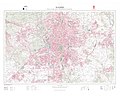
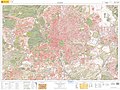
Evolution of the Madrid map

[edit]

17th century

[edit]

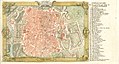
18th century

[edit]

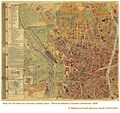
19th century

[edit]

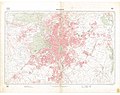
20th century

[edit]

21st century

[edit]

See also

[edit]
  • List of mayors of Madrid
  • History of Madrid
  • Madrid capital

References

[edit]
  1. ^ a b c d e f g h Britannica 1910.
  2. ^ Henri Bouchot (1890). "Topographical index of the principal towns where early printing presses were established". In H. Grevel (ed.). The book: its printers, illustrators, and binders, from Gutenberg to the present time. H. Grevel & Co.
  3. ^ a b Webster's Geographical Dictionary, USA: G. & C. Merriam Co., 1960, OL 5812502M
  4. ^ Exequies and Funeral of Isabel de Borbon, Queen of Spain, at the Real Convento de San Geronimo, Madrid. British Library. Retrieved 30 November 2014. {{cite book}}: |work= ignored (help)
  5. ^ a b Baedeker 1908.
  6. ^ Stephen Rose (2005). "Chronology". In Tim Carter and John Butt (ed.). Cambridge History of Seventeenth-Century Music. Cambridge University Press. ISBN 978-0-521-79273-8.
  7. ^ a b c d e David H. Stam, ed. (2001). International Dictionary of Library Histories. Chicago: Fitzroy Dearborn Publishers. ISBN 1579582443.
  8. ^ Mark Kurlansky (1999), The Basque History of the World, Walker & Company, ISBN 9780802713490
  9. ^ "Garden Search: Spain". London: Botanic Gardens Conservation International. Retrieved 30 June 2015.
  10. ^ Gordon Campbell, ed. (2006). Grove Encyclopedia of Decorative Arts. Oxford University Press. ISBN 978-0-19-518948-3.
  11. ^ "Kingdom of Spain". International Encyclopedia of the Stock Market. Fitzroy Dearborn. 1999. ISBN 978-1-884964-35-0.
  12. ^ a b James Trager (1995), The Food Chronology, New York: Henry Holt, OL 1275146M
  13. ^ "Naval Museum: Historia". Armada Española. Retrieved August 11, 2012.
  14. ^ Calvert 1909.
  15. ^ Vernon N. Kisling, ed. (2000). "Zoos and Aquariums of the World (chronological list)". Zoo and Aquarium History. USA: CRC Press. ISBN 978-1-4200-3924-5.
  16. ^ "Chronology of Catholic Dioceses: Spain". Norway: Oslo katolske bispedømme (Oslo Catholic Diocese). Retrieved 30 June 2015.
  17. ^ United States. Commission to the Madrid exposition, 1892 (1895), Report of the United States commission to the Columbian historical exposition at Madrid, 1892-93, Washington, D.C.: Govt. Print. Office, OL 23368503M{{citation}}: CS1 maint: numeric names: authors list (link)
  18. ^ "Spain". Statesman's Year-Book. London: Macmillan and Co. 1910. hdl:2027/njp.32101072368408.
  19. ^ a b c Tom Dunmore (2011). Historical Dictionary of Soccer. Scarecrow Press. ISBN 978-0-8108-7188-5.
  20. ^ a b c d e "Alterations to the municipalities in the Population Censuses since 1842: Madrid". Instituto Nacional de Estadística (Spain). Retrieved 30 November 2014.
  21. ^ a b c d e f "Movie Theaters in Madrid". CinemaTreasures.org. Los Angeles: Cinema Treasures LLC. Retrieved 30 June 2015.
  22. ^ a b "Historia | Aeropuerto Adolfo Suárez Madrid-Barajas | Aena". www.aena.es. Retrieved 2025-07-25.
  23. ^ Francisco J. Romero Salvadó (2013). "Chronology". Historical Dictionary of the Spanish Civil War. Scarecrow Press. ISBN 978-0-8108-5784-1.
  24. ^ Phelan, Stephen (2020-02-11). "'Bless the chaos': La Movida Madrileña, Spain's seedy, wild post-Franco underground". The Guardian. ISSN 0261-3077. Retrieved 2024-11-17.
  25. ^ The Deseret News. The Deseret News.
  26. ^ "Madrid". ArchNet. Archived from the original on 2007-12-24.
  27. ^ a b BBC News. "Timeline". Spain Profile. Retrieved July 27, 2013.
  28. ^ Museo del Traje. Centro de Investigación del Patrimonio Etnológico. "Historia" (in Spanish). Madrid: Ministerio de Educación, Cultura y Deporte. Retrieved August 11, 2012.
  29. ^ Angel Smith (2009). "Chronology". Historical Dictionary of Spain (2nd ed.). Scarecrow Press. ISBN 978-0-8108-6267-8.
  30. ^ "Population of Capital Cities and Cities of 100,000 or More Inhabitants". Demographic Yearbook 2011. United Nations Statistics Division. 2012.
  31. ^ M. Kimmelman (December 26, 2011). "In Madrid's Heart, Park Blooms Where a Freeway Once Blighted". New York Times. Retrieved August 11, 2012.
  32. ^ "Madrid Rio: Highway Tunnel Project". Walking Bostonian. 29 December 2011 – via Blogspot.
  33. ^ "Spanish mayors". City Mayors.com. London: City Mayors Foundation. Retrieved 29 April 2013.
  34. ^ Encyclopædia Britannica Book of the Year. Encyclopaedia Britannica. 2013. ISBN 978-1-62513-103-4.
  35. ^ "Anti-austerity strikes sweep southern Europe". Reuters. November 14, 2012. Retrieved November 14, 2012.
  36. ^ "Un parque con horario nórdico en Valdebebas", El Mundo (in Spanish), Madrid, 2015-03-27
  37. ^ Rodríguez-Pina, Gloria; Mateo, Juan José (2019-06-15). "El PP recupera Madrid y promete acabar con la herencia de Carmena". El País (in Spanish). ISSN 1134-6582. Retrieved 2023-03-14.

Bibliography

[edit]

in English

[edit]
Published in the 18th-19th century
  • Thomas Nugent (1749), "Madrid", The Grand Tour, vol. 4, London: S. Birt, hdl:2027/mdp.39015030762580
  • Jedidiah Morse; Richard C. Morse (1823), "Madrid", New Universal Gazetteer (4th ed.), New Haven, Connecticut: S. Converse
  • David Brewster, ed. (1830). "Madrid". Edinburgh Encyclopædia. Edinburgh: William Blackwood.
  • "Madrid", Cabinet Cyclopædia, vol. VII: Cities and Principal Towns of the World, London: Longman, Rees, Orme, Brown, & Green, 1830, OCLC 2665202
  • Arthur de Capell Brooke (1831), "Madrid", Sketches in Spain and Morocco, London: Henry Colburn and Richard Bentley, OCLC 13783280
  • Richard Ford (1855), "Madrid", A Handbook for Travellers in Spain (3rd ed.), London: John Murray, OCLC 2145740
  • Samuel Sullivan Cox (1870), "Madrid", Search for Winter Sunbeams in the Riviera, Corsica, Algiers and Spain, New York: D. Appleton & Company, OCLC 1022285
  • John Lomas, ed. (1889), "Madrid", O'Shea's Guide to Spain and Portugal (8th ed.), Edinburgh: Adam & Charles Black
Published in the 20th century
  • "Madrid", Spain and Portugal: Handbook for Travellers (3rd ed.), Leipsic: Karl Baedeker, 1908, OCLC 1581249
  • Albert Frederick Calvert (1909), Madrid, London: J. Lane, OCLC 1598573, OL 7014970M
  • Herbermann, Charles George (1910). "Madrid-Alcala". Catholic Encyclopedia. New York.{{cite book}}: CS1 maint: location missing publisher (link)
  • "Madrid (city)" . Encyclopædia Britannica. Vol. 17 (11th ed.). 1910. pp. 292–295.
  • Nathaniel Newnham Davis (1911), "Madrid", Gourmet's Guide to Europe (3rd ed.), London: Grant Richards
  • Francis Whiting Halsey, ed. (1914). "Madrid". Spain and Portugal. Seeing Europe with Famous Authors. Vol. 9. Funk & Wagnalls Company. hdl:2027/nyp.33433006214559 – via Hathi Trust.
  • Beatrice Erskine (1922), Madrid: Past and Present, London: John Lane, OL 7028442M
  • Trudy Ring, ed. (1996). "Madrid". Southern Europe. International Dictionary of Historic Places. Vol. 3. Fitzroy Dearborn. OCLC 31045650.
  • Michael Ugarte (1996), Madrid 1900, USA: Pennsylvania State University Press, ISBN 0271015594
Published in the 21st century
  • J. Maldonado (2005). "Madrid". In Anton Kreukels; et al. (eds.). Metropolitan Governance and Spatial Planning: Comparative Case Studies of European City-Regions. Routledge. ISBN 978-1-134-49606-8.
  • David Gilmour (2012). "Madrid". Cities of Spain. Random House. ISBN 978-1-4481-3833-3.

in other languages

[edit]
  • "Madrid". Castilla la Nueva. Recuerdos y bellezas de España [es] (in Spanish). Vol. 1. 1853. hdl:2027/ucm.5325879622.
  • Eusebio Blasco (1873), Madrid por dentro y por fuera: Guia de forasteros incautos [Madrid inside and out: stranger's guide] (in Spanish), Julian Peña, OCLC 34689580, OL 23446308M
  • Madame d'Aulnoy (1874), Mme B. Carey (ed.), La cour et la ville de Madrid vers la fin du XVIIe siècle [The court and the city of Madrid in the late seventeenth century] (in French), Paris: E. Plon et cie, OL 24403114M
  • Timoteo Domingo Palacio, ed. (1888), Documentos del Archivo General de la villa de Madrid [Documents from the Archives of the City of Madrid] (in Spanish), Madrid: Impr. y Lit. Municipal v.4
  • "Madrid". Brockhaus' Konversations-Lexikon (in German) (14th ed.). Leipzig: Brockhaus. 1908.
[edit]

40°24′N 3°41′W / 40.400°N 3.683°W / 40.400; -3.683

This article is licensed under CC BY-SA 3.0.
Original source: https://en.wikipedia.org/wiki/Timeline of Madrid
Status: article is cached
Encyclosphere.org EncycloReader is supported by the EncyclosphereKSF