Categories
Bowel obstruction (patient information)
 From Wikidoc - Reading time: 4 min
For the WikiDoc page for this topic, click here
|
Bowel obstruction |
|
Bowel obstruction On the Web |
|---|
Editor-In-Chief: C. Michael Gibson, M.S., M.D. [1]; Assistant Editor-in-Chief: Meagan E. Doherty
Overview
[edit | edit source]A bowel obstruction is a partial or complete blockage of the bowel that results in the failure of the intestinal contents to pass through.
What are the symptoms of Bowel obstruction?
[edit | edit source]The symptoms of a bowel obstruction include:
- Abdominal distention
- Abdominal fullness, gaseous
- Abdominal pain and cramping
- Breath odor
- Constipation
- Diarrhea
- Vomiting
-
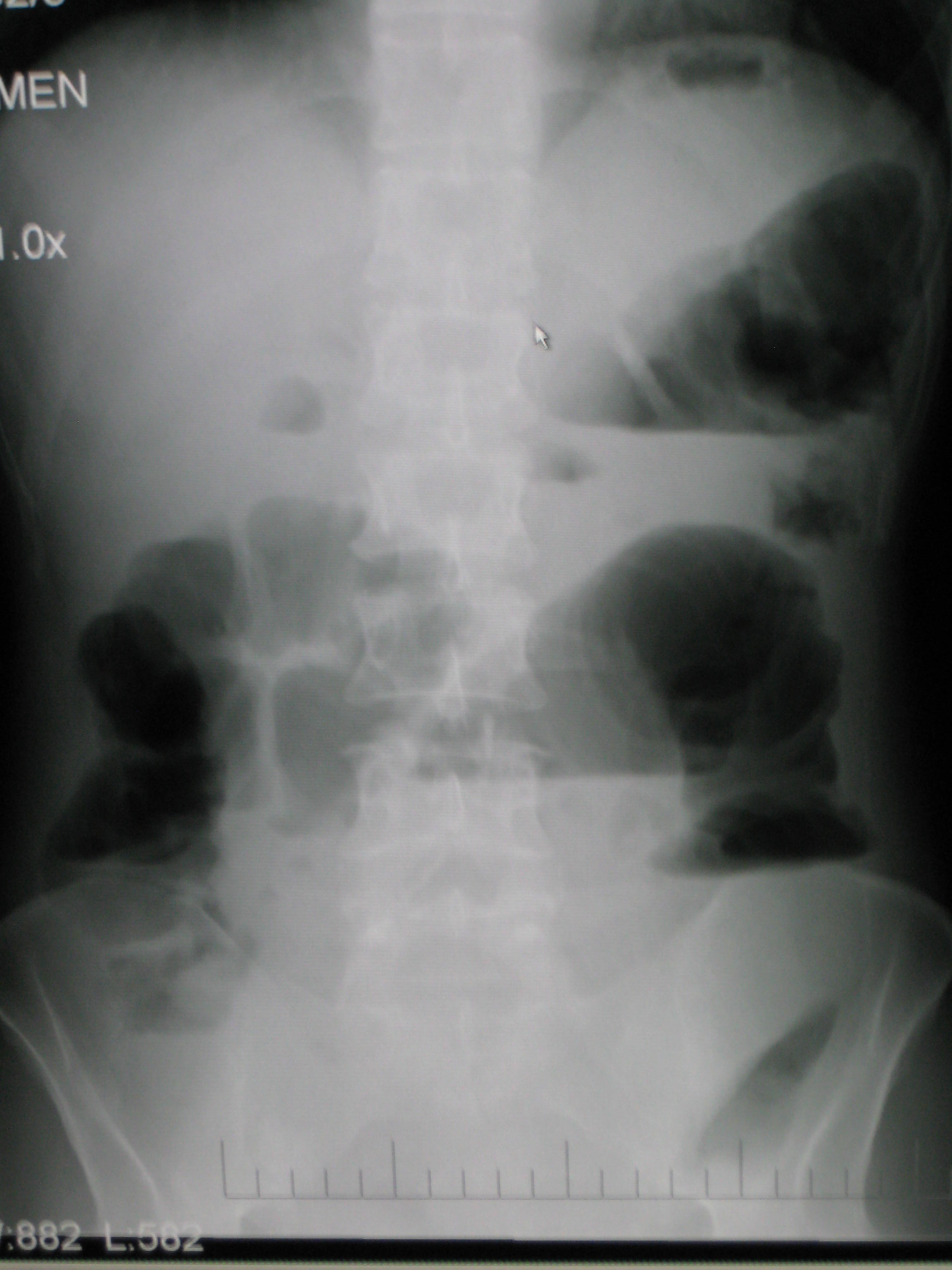 Upright abdominal X-ray demonstrating a small bowel obstruction. Note multiple air fluid levels.

What causes Bowel obstruction?
[edit | edit source]Obstruction of the bowel may due to:
- A mechanical cause, which simply means something is in the way
- Ileus, a condition in which the bowel doesn't work correctly but there is no structural problem
Paralytic ileus, also called pseudo-obstruction, is one of the major causes of bowel obstruction in infants and children. Causes of paralytic ileus may include:
- Chemical, electrolyte, or mineral disturbances (such as decreased potassium levels)
- Complications of intra-abdominal surgery
- Decreased blood supply to the abdominal area (mesenteric artery ischemia)
- Injury to the abdominal blood supply
- Intra-abdominal infection
- Kidney or lung disease
- Use of certain medications, especially narcotics
In older children, paralytic ileus may be due to bacterial, viral, or food poisoning (gastroenteritis), which is sometimes associated with secondary peritonitis and appendicitis.
Mechanical causes of a bowel obstruction may include:
- Abnormal tissue growth
- Adhesions or scar tissue that form after surgery
- Foreign bodies (ingested materials that obstruct the intestines)
- Gallstones
- Hernias
- Impacted feces
- Intussusception
- Tumors blocking the intestines
- Volvulus
Who is at highest risk?
[edit | edit source]Diagnosis
[edit | edit source]While listening to the abdomen with a stethoscope your health care provider may hear high-pitched bowel sounds at the onset of mechanical obstruction. If the obstruction has persisted for too long or the bowel has been significantly damaged, bowel sounds decrease, eventually becoming silent.
Early paralytic ileus is marked by decreased or absent bowel sound.
Tests that show obstruction include:
- Abdominal CT scan
- Abdominal x-ray
- Barium enema
- Upper GI and small bowel series
When to seek urgent medical care?
[edit | edit source]Call your health care provider if persistent abdominal distention develops and you are unable to pass stool or gas, or if other symptoms of bowel obstruction develop.
Treatment options
[edit | edit source]Treatment involves placing a tube through the nose into the stomach or intestine to help relieve abdominal distention and vomiting.
Surgery may be needed to relieve the obstruction if the tube does not relieve the symptoms, or if there are signs of tissue death.
Medications to avoid
[edit | edit source]Patients diagnosed with bowel obstruction should avoid using the following medications:
- Alosetron
- Colesevelam
- Sevelamer
If you have been diagnosed with bowel obstruction, consult your physician before starting or stopping any of these medications.
Diseases with similar symptoms
[edit | edit source]- Acute cholecystitis
- Appendicitis
- Fecal impaction
- Food poisoning
- Gastroenteritis
- Irritable bowel syndrome
- Pancreatitis
- Peptic ulcer[1]
Where to find medical care for Bowel obstruction?
[edit | edit source]Directions to Hospitals Treating a Bowel obstruction
Prevention
[edit | edit source]Prevention depends on the cause. Treatment of conditions (such as tumors and hernias) that are related to obstruction may reduce your risk.
Some causes of obstruction cannot be prevented.
What to expect (Outlook/Prognosis)
[edit | edit source]The outcome varies with the cause of the obstruction.
Possible complications
[edit | edit source]Complications may include or may lead to:
- Electrolyte imbalances
- Infection
- Jaundice
- Perforation (hole) in the intestine
If the obstruction blocks the blood supply to the intestine, the tissue may die, causing infection and gangrene. Risk factors for tissue death include intestinal cancer, Crohn's disease, hernia, and previous abdominal surgery.
In the newborn, paralytic ileus that is associated with destruction of the bowel wall (necrotizing enterocolitis) is life-threatening and may lead to blood and lung infections.
Sources
[edit | edit source]- ↑ "Nutrition | Yahoo! Health". Retrieved 2013-02-20.
 EncycloReader
is supported by the
EncycloReader
is supported by the  KSF
KSF