Morlaix
 From Wikipedia - Reading time: 15 min
Morlaix
Montroulez | |
|---|---|
Subprefecture and commune | |
 Morlaix with its viaduct in the background | |
.svg) Coat of arms | |
Location of Morlaix  | |
  Morlaix  Morlaix | |
| Coordinates: 48°34′42″N 3°49′36″W / 48.5783°N 3.8267°W | |
| Country | France |
| Region | Brittany |
| Department | Finistère |
| Arrondissement | Morlaix |
| Canton | Morlaix |
| Intercommunality | Morlaix Communauté |
| Government | |
| • Mayor (2020–2026) | Jean-Paul Vermot[1] |
| Area 1 | 24.82 km2 (9.58 sq mi) |
| Population (2021)[2] | 14,903 |
| • Density | 600/km2 (1,600/sq mi) |
| Time zone | UTC+01:00 (CET) |
| • Summer (DST) | UTC+02:00 (CEST) |
| INSEE/Postal code | 29151 /29600 |
| Elevation | 0–104 m (0–341 ft) |
| 1 French Land Register data, which excludes lakes, ponds, glaciers > 1 km2 (0.386 sq mi or 247 acres) and river estuaries. | |
Morlaix (French pronunciation: [mɔʁlɛ] ; Breton: Montroulez Breton pronunciation: [mɔ̃tˈʁuːles]) is a commune in the Finistère department of Brittany in northwestern France. It is a sub-prefecture of the department.
Leisure and tourism
[edit]The old quarter of the town has winding streets of cobbled stones and overhanging houses constructed of stone and timber. Many have religious and secular sculptures on their façades.
One of these houses is "la Maison dite de la duchesse Anne", or the "so-called Duchess Anne’s house", which is now a museum, open to the public. This house is said to be one of the oldest in the town. Local legend[3] has it that it derives its name from the fact that the Duchesse Anne of Brittany visited the house during her Tro Breizh pilgrimage. This seems unlikely, though, as construction on the house started in the 1520s[4] and Anne of Brittany died in 1514.
The Museum of the Jacobins in Morlaix, housed in a former convent, traces the history of Finistère.
Morlaix is a popular location for sea sports enthusiasts with a diverse array of activities on offer including surfing, sand buggying and kite flying. Visitors can also find beautiful coastal paths for walks. Inland activities include bowling, golf, horse-riding and many more. There are also a cinema and a swimming pool.[5]
Marina
[edit]A tidal river that almost completely dries out at low tide reaches the town of Morlaix where there is a lock into a marina.[6]
Transport
[edit]- Morlaix Railway Station is served by TGV on the Paris–Brest railway. Immediately adjacent to the station is the Viaduc de Morlaix, a feat of railway engineering built in 1861–1863,[7] and now national historic monument.
- Morlaix is served by the Morlaix Ploujean Airport.
Breton language
[edit]The municipality launched a linguistic plan concerning the Breton language through Ya d'ar brezhoneg on 27 June 2008.
In 2008, 6.45% of primary-school children attended bilingual schools.[8]
The Diwan school in Morlaix, founded around 1988, was originally located in very old apartments. In January 2008, the mayor offered the Diwan school a move to a more suitable location, an empty school. In June 2008, the new mayor decided that the Diwan school should move location once again. The town council wanted to use their building to open a new public school. However, the replacement building chosen for the Diwan school was in a very bad shape.[9]
Population
[edit]Inhabitants of Morlaix are called in French Morlaisiens.
|
| ||||||||||||||||||||||||||||||||||||||||||||||||||||||||||||||||||||||||||||||||||||||||||||||||||||||||||||||||||
| |||||||||||||||||||||||||||||||||||||||||||||||||||||||||||||||||||||||||||||||||||||||||||||||||||||||||||||||||||
| Source: EHESS[10] and INSEE (1968–2017)[11] | |||||||||||||||||||||||||||||||||||||||||||||||||||||||||||||||||||||||||||||||||||||||||||||||||||||||||||||||||||

Economy
[edit]Brit Air, a regional airline and Air France subsidiary, is at Morlaix Airport in Morlaix.[12] In 2013 the airline merged with HOP![13]
Education
[edit]Morlaix has six public primary schools, four private primary schools,[14] three public junior high schools, two public senior high schools/sixth-form colleges,[15] two private junior high schools, and one public senior high/sixth-form.[16]
Public schools:
- Preschools and elementary schools: Corentin-Caer, Emlie-Cloarec, Gambetta (separate preschool and elementary schools), Jean-Jaures (separate preschool and elementary schools), Jean-Piaget, and Poan Ben (separate preschool and elementary schools)[17]
- Junior high schools: Collège du Château, College Mendes-France, College Tanguy-Prient[15]
- Senior high schools: Lycée Agricole de Suscinio and Lycée Tristan-Corbière[15]
Private schools:
- Preschools and elementary schools: Diwan, Notre Dame de Loures, Notre Dame de Ploujean, and Saint-Joseph[17]
- Junior high schools: College Saint-Augustin, College Saint-Joseph[16]
- Senior high school: Ensemble Scolaire Le Porsmeur – Notre Dame du Mur[16]
Climate
[edit]Morlaix has an oceanic climate (Köppen climate classification Cfb). The average annual temperature in Morlaix is 11.4 °C (52.5 °F). The average annual rainfall is 976.3 mm (38.44 in) with December as the wettest month. The temperatures are highest on average in August, at around 17.0 °C (62.6 °F), and lowest in January, at around 6.7 °C (44.1 °F). The highest temperature ever recorded in Morlaix was 36.6 °C (97.9 °F) on 18 July 2006; the coldest temperature ever recorded was −9.5 °C (14.9 °F) on 19 February 1985.
| Climate data for Morlaix (1981–2010 averages, extremes 1977−2013) | |||||||||||||
|---|---|---|---|---|---|---|---|---|---|---|---|---|---|
| Month | Jan | Feb | Mar | Apr | May | Jun | Jul | Aug | Sep | Oct | Nov | Dec | Year |
| Record high °C (°F) | 16.5 (61.7) |
19.6 (67.3) |
25.0 (77.0) |
27.2 (81.0) |
29.5 (85.1) |
33.4 (92.1) |
36.6 (97.9) |
36.5 (97.7) |
31.2 (88.2) |
30.4 (86.7) |
21.4 (70.5) |
18.5 (65.3) |
36.6 (97.9) |
| Mean daily maximum °C (°F) | 9.6 (49.3) |
10.0 (50.0) |
12.2 (54.0) |
13.9 (57.0) |
17.1 (62.8) |
19.6 (67.3) |
21.5 (70.7) |
21.7 (71.1) |
19.9 (67.8) |
16.4 (61.5) |
12.6 (54.7) |
10.2 (50.4) |
15.4 (59.7) |
| Daily mean °C (°F) | 6.7 (44.1) |
6.7 (44.1) |
8.4 (47.1) |
9.5 (49.1) |
12.5 (54.5) |
15.0 (59.0) |
17.0 (62.6) |
17.0 (62.6) |
15.2 (59.4) |
12.6 (54.7) |
9.2 (48.6) |
7.1 (44.8) |
11.4 (52.5) |
| Mean daily minimum °C (°F) | 3.8 (38.8) |
3.4 (38.1) |
4.6 (40.3) |
5.1 (41.2) |
8.0 (46.4) |
10.5 (50.9) |
12.5 (54.5) |
12.4 (54.3) |
10.5 (50.9) |
8.7 (47.7) |
5.9 (42.6) |
4.0 (39.2) |
7.5 (45.5) |
| Record low °C (°F) | −9.2 (15.4) |
−9.5 (14.9) |
−5.3 (22.5) |
−3.8 (25.2) |
−1.3 (29.7) |
2.2 (36.0) |
4.5 (40.1) |
3.1 (37.6) |
0.2 (32.4) |
−4.6 (23.7) |
−6.0 (21.2) |
−7.6 (18.3) |
−9.5 (14.9) |
| Average precipitation mm (inches) | 112.2 (4.42) |
87.4 (3.44) |
77.6 (3.06) |
75.6 (2.98) |
69.7 (2.74) |
50.0 (1.97) |
52.0 (2.05) |
51.1 (2.01) |
66.5 (2.62) |
102.3 (4.03) |
108.3 (4.26) |
123.6 (4.87) |
976.3 (38.44) |
| Average precipitation days (≥ 1.0 mm) | 17.0 | 13.6 | 13.6 | 13.0 | 11.1 | 8.5 | 9.0 | 9.4 | 9.7 | 14.8 | 16.8 | 16.8 | 153.2 |
| Source: Meteociel[18] | |||||||||||||
Personalities
[edit]- born in the 15th century
- Jean Coatanlem (circa 1455–1492), corsair and admiral of Portugal.
- Nicolas Coetanlem (1460–1519), merchant and sailor, nephew of the former.
- born in the 16th century
- Albert Le Grand (1599-1641), hagiographer
- born in the 18th century
- Lannux de la Chaume family, merchants, shipowners, financiers, mayor of Morlaix, consulates of Spain in France before the Revolution.
- Nicolas Anthon (1714–v.1753), corsair of the port of Morlaix born in Roscoff, captain of the Comtesse de La Marck and the Comte de Saint Pern.
- Charles Cornic (1731–1809), corsair.
- Michel Behic (1736–1827), merchant, financier, revolutionary, mayor of Morlaix.
- Joseph Gueguen (1741–1825), domestic, secretary, interpreter, translator, merchant and justice, born in Morlaix, died in Cocagne (New-Brunswick).
- Armand Joseph Dubernad (1743–1799), merchant, financier, revolutionary.
- Louis-Alexandre Expilly de la Poipe (1743–1794), French first constitutional bishop, bishop of Cornwall, guillotined on 22 May 1794 in Brest with 26 administrators of Finistère.
- Jean Nicolas Anthon (1747–1790), privateer corsair, captain of the Count of Guichen (1781, shipowner Jean Diot), captured by the English, imprisoned in Falmouth, escaped, resumed activity as captain of the Éclipse based in Dunkirk and in the merchant navy.
- Jean Augustin Masson (1749–1808), general of the armies of the Republic and the Empire, who died in this city.
- Yves-Joseph Le Denmat de Kervern (1751–1794), a lawyer in the Parlement of Rennes, mayor of Morlaix in 1790, guillotined on 22 May 1794 in Brest with 26 directors of Finistère.
- Jean Victor Marie Moreau (1763–1813), born in Morlaix, General of the Revolution, winner of Hohenlinden, Field Marshal of Russia posthumously, marshall of France posthumously.
- Joseph Marie Moreau (1764–1849), born and died in Morlaix, brother of the general, lawyer, tribun, deputy head of the Post, député for Ille-et-Vilaine.
- Charles Yves César Cyr du Coëtlosquet (1783-1837), general of the armies of the Republic and the Empire.
- Luc Urbain de Bouëxic, comte de Guichen (1790), admiral.
- Édouard Corbière (1793–1875), sailor, writer, journalist and shipowner.
- Joseph Coat (1798–1858), born in Saint-Mathieu (Morlaix) and died in Morlaix; worker and author of a large amount of original Breton tragedies. Founded in Morlaix a troupe of folk theater, father of the poet-worker Vincent Coat (1845-1908), born in Morlaix.
- Auguste Barchou de Penhoën, (1799–1855), born in Morlaix, Staff Captain, man of letters, deputy of Finistère.
- Jean-Louis Le Loutre (1709-1772), Catholic priest and leader of Acadians during Father Le Loutre's War and the Acadian Exodus.
- born in the 19th century

- Émile Souvestre (1806–1854), writer born in Morlaix, Prix de l'Académie française in 1854.
- Arthur-Marie Le Hir (1811–1868), born in Morlaix, theologian and Hebraist, Ernest Renan's master.
- Marie Bracquemond, impressionist artist (1840–1916).
- Tristan Corbière (1845–1875), poet, Édouard Corbière's son. His bust, by Cyril de La Patellière is in the Bibliothèque des Amours Jaunes.
- Vincent Coat (1845–1908), born in Morlaix. Breton poet and worker at the Tobacco Factory, son of Joseph Coat (1798-1858), born and died in Morlaix, author of many tragedies and worker.
- Gabriel Pierné (1863–1937), composer and organ player.
- Paul Sérusier (1864–1927), post-impressionist painter and Nabi.
- Joseph Pleyber (1866-1947), architect.
- Maxime Weygand (1867–1965), general, had a manor in Morlaix and is buried at St. Charles Cemetery.
- Jules Boucherit (1877–1962), violinist, born in Morlaix, professor at the Paris Conservatory, named "Just" by the State of Israel for harboring his students between 1941 and 1944.
- Guillaume Seznec (1878–1954), lived in Morlaix, Lurs sawmill master.
- Magdeleine Boucherit Le Faure (1879–1960), his sister, pianist and composer.
- Louis Le Guennec (1878–1935), writer and artist.
- Nina Ricci (1882–1970), couturière from Italy
- Francis Gourvil (1889–1984), writer and resistant.
- Léon Le Janne, (1894–1976), MD, resistant ("Commandant Noël"), auxiliary doctor in the 2nd Colonial Infantry Regiment in 1914–1918, commander of the secret army Libé Nord Morlaix and its region during World War II.
- Jean Marie Colcanap (1896) Born in Morlaix. Officer French Colonial Army. Distinguished career in Madagascar. Amateur naturalist who made significant geological and paleontological discoveries. Source: Archives of Societe Historique de la Defense, Chateau Vincennes, Paris.
- born in the 20th century
- Jean Nicolas, (1901–1984), born in Morlaix, Catholic priest and missionary in the Soviet Union.
- Henri Rol-Tanguy (1908–2002), communist resistant, colonel commanding the FFI during the Liberation of Paris.
- Joseph Kerharo (1909–1986), pharmacologist and botanist, born in Morlaix.
- Michel Mohrt (1914–2011), writer, born in Morlaix, Grand prix du roman de l'Académie française in 1962 and member of the Académie française from 1985 to his death.
- Pierre Le Gourierec (1920–1942), born in Morlaix, KIA in Bir Hakeim, Compagnon de la Libération.
- Julien Guiomar (1928–2010), actor born in Morlaix, died in Monpazier (Dordogne).
- Jean Roudaut (1929–), writer born in Morlaix.
- Paco Rabanne (1934–), stylist, spent part of his childhood in Morlaix.
- Jean-Loup Chrétien (1938–), astronaut.
- Brigitte Fontaine (1939–) singer, author, writer, poet and actress.
- Dominique Lavanant (1944–), actress, born in Morlaix.
- Patrick Le Roux (1943–), historian
- Jean-Michel Caradec (1946–1981), singer-songwriter.
- Marylise Lebranchu (1947–) woman politician born in Loudéac (22), mayor of Morlaix (1995–1997), président of Morlaix Communauté (1995–2003), secrétaire d'État (1997–2000), Justice Ministry (2000–2002), vice-présidente de la région Bretagne (2004-2010), MP (1997-), ministre de la Réforme de l'État, de la Décentralisation et de la Fonction Publique (2012-).
- Gérard Delahaye (1948–), singer-songwriter and singer for children.
- Miou-Miou (1950–), actress, her grandparents lived in Plouénan.
- Erril Laugier (1952–2014), pastel impressionist painter, Maître-Pastelliste de France and Ambassadeur Canson, lived in Morlaix from 1978 to 1986, and died there 6 December 2014.
- Jean-Philippe Quignon (1961–2012), journalist at Télégramme local newspaper and vice president of the festival des Vieilles Charrues in Carhaix-Plouguer.
- Agnès Le Brun (1961–), woman politician mayor of Morlaix since 2008 and MEP since 2011.
- El Globos (1964–), French designer, creator of the brand À l'Aise Breizh.
- Françoise Jézéquel (1970–), football player
- Éric Digaire (1972–), musician, member of Matmatah.
- Clarisse Lavanant (1979–), singer-songwriter.
- Renan Luce (1980–), singer-songwriter, youth spent in Quelern, in Plourin-lès-Morlaix.
- Énora Malagré (1980–), TV and radio host.
- Tepr (1980–), author of electronic music.
Twin towns – sister cities
[edit]Morlaix is twinned with:[19]


In addition, Morlaix cooperates with Réo, Burkina Faso.[19]
Gallery
[edit]-
 Morlaix viaduct
 -
 House known as ‘Duchess Anne’s House’
 -
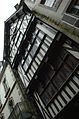 Pondalez house museum
 -
 Hillside view of the viaduct
 -
 Bay of Morlaix with the Château du Taureau


See also
[edit]- Communes of the Finistère department
- Yann Larhantec, Sculptor of Calvaries who lived in Morlaix
- List of the works of the Maître de Plougastel
References
[edit]- ^ "Répertoire national des élus: les maires". data.gouv.fr, Plateforme ouverte des données publiques françaises (in French). 9 August 2021.
- ^ "Populations légales 2021" (in French). The National Institute of Statistics and Economic Studies. 28 December 2023.
- ^ Davy-Osborne, Stephen (17 April 2019). "Great Destinations in France: A Guiding Light to Brittany". France Today.
- ^ "Maison dite de la Duchesse Anne – Official Site", Retrieved on 13 January 2020
- ^ Touristic information at Frenchproperty.com
- ^ "Introduction to the Port of Morlaix – Plaisance Baie de Morlaix", Retrieved on 20 May 2013.
- ^ [1] 12 – Article paru dans Morlaix Magazine de Mars 2007; Accessed 22 August 2013
- ^ (in French) Ofis ar Brezhoneg: Enseignement bilingue
- ^ 50 Breton schoolchildren call for support, Eurolang[permanent dead link]
- ^ Des villages de Cassini aux communes d'aujourd'hui: Commune data sheet Morlaix, EHESS (in French).
- ^ Population en historique depuis 1968, INSEE
- ^ "Présentation Archived 2009-04-08 at the Wayback Machine." Brit Air. Retrieved on 21 May 2009.
- ^ "Air France Launches New Low-Cost Airline 'Hop!' Archived 2013-06-16 at archive.today." Reuters. 26 March 2013. Retrieved on 26 April 2013.
- ^ "Education – Jeunesse." Morlaix. Retrieved on September 5, 2016.
- ^ a b c "Les collèges et lycées publics." Morlaix. Retrieved on September 5, 2016.
- ^ a b c "Les collèges et lycées privés." Morlaix. Retrieved on September 5, 2016.
- ^ a b "Les établissements scolaires morlaisiens." Morlaix. Retrieved on September 5, 2016.
- ^ "Normales et records pour Morlaix (29)". Meteociel. Retrieved 8 June 2022.
- ^ a b "La Ville et ses jumelages" (in French). Morlaix. Retrieved 19 January 2024.
External links
[edit]
- Official website (in French)
- Morlaix Museum website (in French)
- House known as ‘Duchess Anne’s House’ website (in French)
- Base Mérimée: Search for heritage in the commune, Ministère français de la Culture. (in French)
- Morlaix Cultural heritage (in French)
- Truro-Morlaix Twinning Association
- 360 degree photograph of Morlaix Port
- Mayors of Finistère Association (in French)

| International | |
|---|---|
| National | |
| Geographic | |
| Other | |

 EncycloReader
is supported by the
EncycloReader
is supported by the  KSF
KSF