Orders, decorations, and medals of the Philippines
 From Wikipedia - Reading time: 13 min
The orders, decorations, and medals conferred upon civilians and military personnel in the Republic of the Philippines are listed by orders of precedence. Philippine civilian orders and decorations are conferred by the President of the Philippines in his or her capacity as head of state. In certain instances, the conferment of certain orders and decorations requires the concurrence of the Congress of the Philippines, or of certain advisory bodies.
The Honors Code of the Philippines, established in 2003 through Executive Order No. 236, defines three awards of the highest prestige, collectively referred to as Honors:[1]
- Orders are awards that grant membership in an exclusive association of honored individuals, and which by tradition carry with them distinctive insignia to be worn by recipients;
- Decorations are wearable awards usually conferred for a specific act of meritorious service;
- Medals are wearable awards usually conferred to recognize service and/or achievement or to commemorate a significant event.

Order of Wear
[edit]Decorations are ranked by the Order of Wear in the Implementing Rules and Regulations of Executive Order No. 236 as follows:[2]
- Honors of the Philippines (Presidential Awards enumerated in E.O. No. 236)
- Other Presidential Awards (Presidential Awards not enumerated in E.O. No. 236)
- Service Awards of the Agencies of the National Government
- Decorations and Medals of the Uniformed Services (Philippine Coast Guard, Philippine National Police, Armed Forces of the Philippines)
- Commemorative Medals of the Philippines
- Commemorative Awards of the Agencies of the National Government
- Insignia of the Order of the Knights of Rizal
- Decorations of the Reserves and Auxiliaries of the Coast Guard, PNP, and the AFP
- Insignia of Other Philippine Chivalric Orders, Fraternal Societies, and Professional Associations
- Foreign Orders, Decorations and Medals
- Insignia of Foreign Chivalric Orders, Fraternal Societies, and Professional Associations
Civilian Decorations
[edit]The civilian order of precedence, established by the Honors Code of the Philippines, is as follows:[1]
| Complete name | Ranks (letters) | Ribbon | Established | Founder | Motto | Awarded to/for |
|---|---|---|---|---|---|---|
| First Class Rank | ||||||
| Quezon Service Cross Krus ng Serbisyo ni Quezon |
QSC | 
|
October 21, 1946 | Manuel Roxas | Sic floret respublica ('And thus, he distinguished the republic') |
Exemplary service to the nation in such a manner and such a degree as to add great prestige to the Republic of the Philippines, or as to contribute to the lasting benefit of its people |
| Second Class Rank (Senior Honors of the Republic) | ||||||
| Order of Lakandula Orden ni Lakandula |
Grand Collar (GCL) Grand Cross (GCrL) Grand Officer (GOL) Commander (CL) Officer (OL) Member (ML) |

|
September 19, 2003 | Gloria Macapagal Arroyo | Acts that have been traditionally recognized by the institution of presidential awards, including meritorious political and civic service | |
| Order of Sikatuna Orden ng Sikatuna |
Grand Collar (GCS) Grand Cross (GCrS) Grand Officer (GOS) Commander (CS) Officer (OS) Member (MS) |

|
February 27, 1953 | Elpidio Quirino | Rending exceptional and meritorious services to the Republic of the Philippines; to diplomats, officials and nationals of foreign states who have rendered conspicuous services in fostering, developing and strengthening relations between their country and the Philippines | |
| Philippine Legion of Honor Lehiyong Pandangal ng Pilipinas |
Chief Commander (CCLH) Grand Commander (GCLH) Grand Officer (GOLH) Commander (CLH) Officer (OLH) Legionnaire (LLH) |

|
July 3, 1947 | Manuel Roxas | Meritorious and valuable service | |
| Third Class Rank | ||||||
| Order of Gabriela Silang Orden ni Gabriela Silang |
GS | 
|
c. 1970s | Ferdinand Marcos | Spouses of heads of state and/or of government | |
| Fourth Class Rank | ||||||
| Order of National Artists Orden ng mga Pambansang Alagad ng Sining |
ONA | 
|
April 2, 1972 | Ferdinand Marcos | Having made significant contributions to the development of Philippine arts | |
| Order of National Scientists Orden ng mga Pambansang Alagad ng Agham |
ONS |
|
December 16, 1976 | Having made significant contributions to the development of Philippine sciences | ||
| Order of National Social Scientists Orden ng mga Pambansang Alagad ng Agham Panlipunan |
ONSS |
|
December 17, 1976 | Life achievement in the social sciences | ||
| National Living Treasures Award Gawad sa Manlilikha ng Bayan |
|
April 3, 1992 | Fidel V. Ramos | A Filipino citizen or group of Filipino citizens engaged in any traditional art uniquely Filipino, whose distinctive skills have reached such a high level of technical and artistic excellence and have been passed on to and widely practiced by the present generations in their community with the same degree of technical and artistic competence | ||
| Order of Lakandula (Special Class of Champion for Life) Orden ni Lakandula (Kampeon Habang Buhay) |
|
June 13, 2006 | Gloria Macapagal Arroyo | Outstanding achievement in international sports or beauty events and similar fields of competition and achievement | ||
| Fifth Class Rank | ||||||
| Mabini Award Gawad Mabini |
Grand Cross (GCrM) Commander (CM) Member (MM) |

|
June 24, 1974 | Ferdinand Marcos | Filipinos who have rendered distinguished service or promoted the interests of the Republic of the Philippines at home and abroad | |
| Sixth Class Rank | ||||||
| Order of the Golden Heart Orden ng Gintong Puso |
Grand Collar (GCGH) Grand Cross (GCrGH) Grand Officer (GOGH) Commander (CGH) Officer (OGH) Member (MGH) |

|
June 21, 1954 | Ramon Magsaysay | Manum tuam apervit inope ('She hath opened her heart to the needy') |
Distinguished services, moral aid, or volunteerism in the service of the Filipino masses |
| Seventh Class Rank | ||||||
| Presidential Medal of Merit Pampanguluhang Medalya ng Merito |
PMM | 
|
September 19, 2003 | Gloria Macapagal Arroyo | Outstanding service to the President or government; gaining prestige for the country in an international event; a retiring cultural worker or artist, after serving the government in an official or advisory capacity; a foreign artist who has promoted Philippine culture; or for acts of merit that enhance the prestige of the Republic of the Philippines | |
| Orders outside the official order of precedence (Eighth Class Rank) | ||||||
| Order of Lapu-Lapu Orden ni Lapu-Lapu |
|
April 7, 2017 | Rodrigo Duterte | Invaluable or extraordinary service in relation to a campaign or advocacy of the President | ||
Awards and Decorations of the Armed Forces of the Philippines
[edit]These are military decorations which recognize service and personal or unit accomplishments of members and units of the Armed Forces of the Philippines (Philippine Army, Philippine Air Force, Philippine Navy and Philippine Marine Corps).[3]
- Military Personnel Decorations
 Medal of Valor (Medalya ng Kagitingan)
 Philippine Legion of Honor (Lehiyong Pandangal ng Pilipinas}
 Chief Commander (CCLH) (Punong Komandante)
 Grand Commander (GCLH) (Marangal na Komandante)
 Grand Officer (GOLH) (Marangal na Pinuno)
 Commander (CLH) (Komandante)
 Officer (OLH) (Pinuno)
- Legionnaire (LLH) (Lehiyonaryo)
 Outstanding Achievement Medal
 Distinguished Conduct Star
 Distinguished Service Star
- Gawad Sa Kapayapaan (Peace Prize)
 Gold Cross (Medalyang Gintong Krus)
 Distinguished Aviation Cross (Krus sa Tanyag na Abyasyon)
- Distinguished Navy Cross
 Silver Cross (Medalyang Pilak na Krus)
- Meritorious Achievement Medal
- Distinguished Service Medal
- Chief of Staff of the AFP Commendation Medal
 Gawad sa Kaunlaran (Progress Award)
 Bronze Cross (Medalyang Tanso na Krus)
 Silver Wing Medal (Medalyang Pilak na Pakpak)
 Wounded Personnel Medal (Medalya ng mga Nasugatang Tauhan)
 Military Merit Medal (Medalya ng Kagalingang Militar)
- Combat – Spearhead
- Achievement/Service – Anahaw
 Sagisag ng Ulirang Kawal
 Military Civic Action Medal
 Parangal sa Kapanalig ng Sandatahang Lakas ng Pilipinas
 Military Commendation Medal
 Armed Forces Conduct Medal
- Command Reservist (Volunteer) Officer and (Volunteer) Enlisted Personnel of the Year Medal and Ribbon
- Annual Efficiency "E" Award for Naval Vessels


_Ribbon.png)


- Civilian Para-military Personnel Decorations
 Kagitingan Sa Barangay (Village Courage Medal)

- Category of Lakan
- Category of Datu
- Category of Maginoo
- Civilian Defense Personnel Decorations
- Civilian Employee's Honorary and Incentive Award
- Distinguished Honor Medal
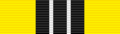 Superior Honor Medal
 Civilian Merit Medal


- Military Unit Decorations
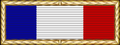 Philippine Republic Presidential Unit Citation Badge (PRPUCB)
 Martial Law Unit Citation
 People Power I Unit Citation
 People Power II Unit Citation


- Civilian Para-military Unit Decorations
 Barangay Presidential Unit Citation Badge (BPUCB)

- Military Service Medals and Ribbons
 Long Service Medal
 American Defense Medal & Ribbon
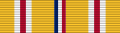 Asiatic-Pacific Campaign Medal & Ribbon
 World War II Victory Medal & Ribbon
 Philippine Defense Medal & Ribbon
 Philippine Liberation Medal & Ribbon
 Resistance Movement Medal
 Jolo Campaign Medal & Ribbon
 Philippine Independence Medal
 Anti-Dissidence Campaign Medal & Ribbon
 Luzon Anti-Dissidence Campaign Medal & Ribbon
 Visayan Anti-Dissidence Campaign Medal & Ribbon
 Mindanao Anti-Dissidence Campaign Medal & Ribbon
 Philippine Korean Campaign Medal
 United Nations Service Medal & Ribbon
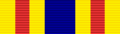 Vietnam Service Medal & Ribbon
 Disaster Relief & Rehabilitation Operation Ribbon


.png)

Awards and Decorations of the Philippine Coast Guard Auxiliary
[edit]To recognize Unit and Individual achievements made by its members; the Philippine Coast Guard Auxiliary, with the guidance of the Philippine Coast Guard, adopted a system of awards and decorations.
- Personal Decorations
- Coast Guard Auxiliary Outstanding Achievement Medal
- Coast Guard Auxiliary Distinguished Service Medal
- Coast Guard Auxiliary Merit Medal
- Coast Guard Auxiliary Search and Rescue Medal
- Coast Guard Auxiliary Commendation Medal
- Coast Guard Auxiliary Civic-Action Medal
- Coast Guard Auxiliary Red Cross Medal
- Coast Guard Auxiliary Good Conduct Medal
- Service Medals & Ribbons
- Coast Guard Auxiliary Long Service Medal
- Coast Guard Auxiliary Anti-Marine Pollution Campaign Medal
- Coast Guard Auxiliary Disaster Relief and Rehabilitation Operations Medal
- Coast Guard Auxiliary National Convention Medal
- Coast Guard Auxiliary International Convention Medal
- Coast Guard Auxiliary World Clean-up Day Campaign Medal
- Unit Decorations
 Philippine Republic Presidential Unit Citation Badge
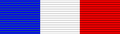 Philippine Coast Guard Commandant Unit Citation Ribbon
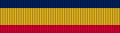 National Director PCGA Unit Citation Ribbon
.svg)


Awards and Decorations of the Philippine National Police
[edit]The Philippine National Police recognizes individual efficiency, gallantry in the face an enemy, and meritorious accomplishments of its personnel by awarding decorations and medals.
The awards and decorations of the PNP are patterned after the orders and medals of the Armed Forces of the Philippines with regard to its lineage from the Philippine Constabulary and the Integrated National Police which were fore-runners of this service branch and previously under the AFP.
Constabulary and INP awards and decorations are authorized for PNP Personnel had they been assigned with the Philippine Constabulary and the INP prior to the transition.
- Law Enforcement Personal Decorations
 Medalya ng Kagitingan (PNP Medal of Valor)
 Medalya ng Kabayanihan (PNP Distinguished Conduct Medal)
 Medalya ng Katapatan sa Paglilingkod (PNP Distinguished Service Medal)
 Medalya ng Katapangan (PNP Bravery Medal)
- Medalya ng Katangitanging Gawa (PNP Outstanding Achievement Medal)
 Medalya ng Pambihirang Paglilingkod (PNP Special Service Medal)
- Medalya ng Kadakilaan (PNP Heroism Medal)
- Medalya ng Katangitanging Asal (PNP Outstanding Conduct Medal)
 Medalya ng Kagalingan (PNP Medal of Merit)
 Medalya ng Kasanayan (PNP Efficiency Medal)
 Medalya ng Papuri (PNP Commendation Medal)
- Medalya ng Sugatang Magiting (PNP Wounded Personnel Medal)
- Medalya ng Ugnayang Pampulisya (PNP Police Relations Medal)
 Medalya ng Mabuting Asal (PNP Good Conduct Medal)
 Medalya ng Paglilingkod (PNP Service Medal)


- Law Enforcement Unit Decorations
- Philippine Republic Presidential Unit Citation Badge (PRPUCB)
 Martial Law Unit Citation
 People Power I Unit Citation
 People Power II Unit Citation


- Law Enforcement Service Medals and Ribbons
 Medalya ng Paglaban sa Manliligalig (PNP Anti-dissidence Campaign Medal)
 Medalya ng Pagtulong sa Nasalanta (PNP Disaster Relief and Rehabilitation Operations Campaign Medal)
 Medalya ng Paglilingkod sa Luzon (PNP Luzon Campaign Medal)
- Medalya ng Paglilingkod sa Visayas (PNP Vizayan Campaign Medal)
- Medalya ng Paglilingkod sa Mindanao (PNP Mindanao Campaign Medal)
- Medalya ng Paglilingkod sa Santo Papa (Pope Francis Service Medal)


- Constabulary Personnel Decorations
- Constabulary Medal of Valor
- Distinguished Conduct Star
- Distinguished Service Star
- Constabulary Service Medals and Ribbons
 Long Service Medal
- Luzon Campaign Medal
- Visayas Campaign Medal
- Mindanao and Sulu Campaign Medal
 Constabulary WWI Victory Medal
 National Guard WWI Victory Medal


Awards and Decorations of the Bureau of Jail Management and Penology
[edit]After the creation of the PNP Act of 1991 transferred control of the Philippine National Police, Bureau of Jail Management and Penology, and the Bureau of Fire Protection from the Armed Forces to the Department of the Interior and Local Government, the Bureau of Jail Management and Penology established its own system of awards and decorations modeled on the PNP.[4]
- Medalya ng Kagitingan
- Medalya ng Kabayanihan
- Medalya ng Kagalingan
- Medalya ng Natatanging Gawa
- Medalya ng Kadakilaan
- Medalya ng Sugatang Magiting
- Medalya ng Katapatan sa Paglilingkod
- Medalya ng Katapatan
- Medalya ng Kasanayan
- Medalya ng Papuri
- Medalya ng Paglilingkod
- Medalya ng Pambihirang Paglilingkod
- Medalya ng Katangi-tanging Asal
- Medalya ng Ugnayang Pangkumunidad
- Medalya ng Mabuting Asal
- Medalya ng Paglilingkod sa Luzon
- Medalya ng Paglilingkod sa Visayas
- Medalya ng Paglilingkod sa Mindanao
- Ribbon ng Natatanging Unit
- Ribbon ng Tagapagsanay
- Ribbon ng Pagtulong sa Nasalanta
Dormant orders and awards
[edit]The consolidation of the Philippine honors system in 2003 led to the government discontinuing of the awarding of many honors. These honors and awards shall remain extant during the lifetime of the last holder of the respective awards, and shall continue to enjoy the rights and privileges thereof. Upon the death of the last living recipient, the respective affected awards shall cease to exist and be discontinued.[1]
- Medal of Honor
- Rizal Collegiate Palms
- Mabini Teachers Medal
- Rizal Pro Patria Award
- Presidential Citation for Honesty and Integrity
- Order of the Grieving Heart
- Presidential Award in Education
- Order of Kalantiao
- Republic Cultural Heritage Award
- Presidential Citation for Outstanding Humanitarian Services
- International Artist
- Bayani ng Bagong Republika
- Presidential Citation for Outstanding Service to Philippine Democracy
- Presidential Award for Heroism in Times of Disaster
- Sajid Bulig Presidential Award for Heroism
- Presidential Mineral Industry Environment Award
See also
[edit]- Philippines campaign medals
- Awards and decorations of the Armed Forces of the Philippines
- Knights of Rizal
- Ramon Magsaysay Award
- Royal and Hashemite Order of the Pearl
References
[edit]- ^ a b c "Executive Order No. 236" (PDF). Government of the Philippines. Retrieved 22 October 2016.
- ^ "Implementing Rules and Regulations of Executive Order No. 236" (PDF). Official Gazette of the Republic of the Philippines.
- ^ AFP Awards and Decorations Manual (AFPR G 131-054). Armed Forces of the Philippines. 2014.
- ^ "BJMP Awards and Decorations" (PDF). Retrieved 22 October 2016.
External links
[edit]
- Amending the Honors Code to Clarify the Proclamation of National Artists
- Administrative Order No. 128, Approving Implementing Rules and Regulations
- Republic Act 646
- "Implementing Rules and Regulations Implementing Rules and Regulations of Executive Order 236" (PDF). Government of the Philippines. Retrieved 22 October 2016.
- "AFP Awards & Decorations" (PDF). Philippine Air Force. Retrieved 23 October 2016.
This article incorporates public domain text from the library of the Congress of the Philippines.
| Class I |  | |
|---|---|---|
| Class II | ||
| Class III | ||
| Class IV | ||
| Class V | ||
| Class VI | ||
| Class VII | ||
| Class VIII | ||

 EncycloReader
is supported by the
EncycloReader
is supported by the  KSF
KSF