Road signs in Denmark
 From Wikipedia - Reading time: 14 min
.jpg)
Road signs in Denmark are regulated by the Road Traffic Act (Danish: Færdselsloven).[1] The Danish Minister of Transport is responsible for the design and definitions of road signs, and issues executive orders on the subject.[1]: §95 ¶1 The latest executive orders were issued on April 13, 2023.[2][3]
Denmark signed the Vienna Convention on Road Signs and Signals on November 8, 1968 and ratified it on November 3, 1986.[4] Denmark has ratified the European Agreement supplementing the Convention on road traffic as well.[5]
Road signs are divided into two main categories, which are traffic signs and direction / tourist information signs.
Warning signs
[edit]Outside built-up areas,[fn 1] warning signs, except A18, A35, A74, A75 and A92,[fn 2] are usually placed from 150m to 250m before the danger. If the warning signs are placed beyond this distance, the distance is shown on a subpanel. Inside built-up areas, warning signs can be placed at a shorter distance from the danger, without the distance being shown on a subpanel.
-
 A11: Dangerous junction with a non-priority road (Variants:
 and
and  )
) -
 A16: Roundabout
 -
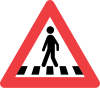 A17: Pedestrian crossing
 -
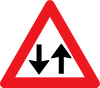 A18: Two-way traffic
 -
 A19: Traffic signals
 -
 A20: Traffic queue
 -
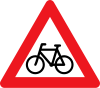 A21: Cyclists
 -
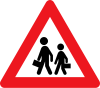 A22: Children
 -
 UA22: School
 -
 A23: Equestrians
 -
 A26: Wild animals crossing
 -
 A27: Cattle
 -
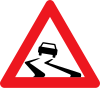 A31: Slippery road
 -
 UA31: Road can be icy
 -
 A33: Loose chippings
 -
 A34: Rockfall
 -
 A35: Dangerous shoulder
 -
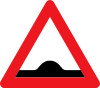 A36: Speed bump
 -
![A36.1: Actibump[fn 3]](https://upload.wikimedia.org/wikipedia/commons/thumb/0/05/A36._1_actibump.svg/71px-A36._1_actibump.svg.png)
-
 A37: Uneven road
 -
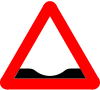 A38: Dip
 -
 A39: Roadworks
 -
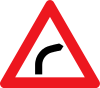 A41.1: Curve to the right
 -
 A41.2: Curve to the left
 -
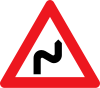 A42.1: Multiple curves, first to the right
 -
 A42.2: Multiple curves, first to the left
 -
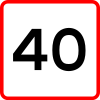 UA41: Recommended speed in curves
 -
 A43.1: Road narrows
 -
![UA43.1: Narrow road[fn 4]](https://upload.wikimedia.org/wikipedia/commons/thumb/3/3b/Denmark_road_sign_UA43_1.svg/100px-Denmark_road_sign_UA43_1.svg.png) UA43.1: Narrow road[fn 4]
UA43.1: Narrow road[fn 4] -
 A43.2: Road narrows to the left
 -
 A43.3: Road narrows to the right
 -
 UA43: Width limit
 -
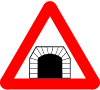 A44: Tunnel (formerly used
 )
) -
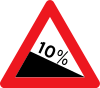 A46.1 Downward gradient
 -
 A46.2: Upward gradient
 -
 A72: Level crossing without gates
 -
 UA72: Watch out for trains
 -
 A73: Level crossing with gates
 -
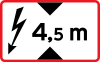 UA73: Overhead electricity lines at level crossing
 -
 A74.1: Single track level crossing
 -
 A74.2: Multi track level crossing
 -
 A75: Distance to level crossing
 -
 A91: Opening bridge
 -
 A92: Quayside
 -
 A95: Side winds
 -
 A96: Low airplanes
 -
 A97: Low helicopters
 -
 A99: Other danger
 -
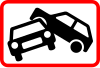 UA99: Accident-prone intersection


![A36.1: Actibump[fn 3]](https://en.wikipedia.org/wiki/File:A36._1_actibump.svg)


![UA43.1: Narrow road[fn 4]](https://en.wikipedia.org/wiki/File:Denmark_road_sign_UA43_1.svg)


Priority signs
[edit]-
 B11: Yield
 -
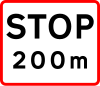 UB11.1: Stop ahead
 -
 UB11.2: Two-way cycle track or lane crossing
 -
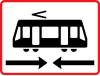 UB11.3: Light rail crossing
 -
 B13: Stop
 -
 B15: Lane merge
 -
 B16: Main road
 -
 B17: End of main road
 -
 B18: Priority for oncoming vehicles
 -
 B19: Priority over oncoming vehicles


Prohibitory signs
[edit]-
 C11.1: No right turn
 -
![C11.2: No left turn[fn 5]](https://upload.wikimedia.org/wikipedia/commons/thumb/1/12/Denmark_road_sign_C11.2.svg/100px-Denmark_road_sign_C11.2.svg.png) C11.2: No left turn[fn 5]
C11.2: No left turn[fn 5] -
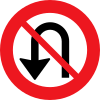 C12: No U-turns
 -
 C19: No entry
 -
 C21: Driving in both directions prohibited
 -
 C22.1: No motor vehicles
 -
 C22.2: No motorcycles or large mopeds
 -
 C23.1: No heavy goods vehicles
 -
 C23.2: No buses
 -
 C23.3: No vehicles carrying dangerous goods
 -
 C24.1: No tractors or motorized equipment
 -
 C24.2: No horse-drawn vehicles or similar
 -
![C25.1: No bicycles or small mopeds[fn 6]](https://upload.wikimedia.org/wikipedia/commons/thumb/0/09/Denmark_road_sign_C25.1.svg/100px-Denmark_road_sign_C25.1.svg.png) C25.1: No bicycles or small mopeds[fn 6]
C25.1: No bicycles or small mopeds[fn 6] -
 C25.2: No small mopeds
 -
 C26.1: No riding or leading a horse
 -
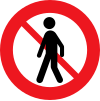 C26.2: No pedestrians
 -
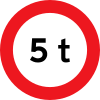 C31: Max weight
 -
 C32: Max weight of roadtrain
 -
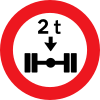 C35: Max axle load
 -
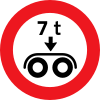 C36: Max bogie load
 -
 C41: Max width of vehicle with load
 -
 C42: Max height of vehicle with load
 -
 C43: Max length of vehicle
 -
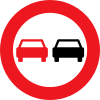 C51: No overtaking
 -
 C52: No overtaking by heavy goods vehicle
 -
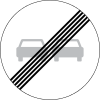 C53: End of no overtaking
 -
 C54: End of no overtaking by heavy goods vehicle
 -
![C55: Local speed limit [fn 7]](https://upload.wikimedia.org/wikipedia/commons/thumb/c/ce/Denmark_road_sign_C55.svg/100px-Denmark_road_sign_C55.svg.png) C55: Local speed limit [fn 7]
C55: Local speed limit [fn 7] -
 C56: End of local speed limit
 -
 UC56: Built up area subpanel
 -
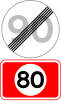 UC57: End of local speed limit subpanel
 -
 C59: End of prohibition
 -
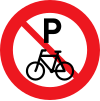 C63: No parking for bicycles
 -
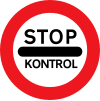 C92: Continuing without stop prohibited

![C11.2: No left turn[fn 5]](https://en.wikipedia.org/wiki/File:Denmark_road_sign_C11.2.svg)


![C25.1: No bicycles or small mopeds[fn 6]](https://en.wikipedia.org/wiki/File:Denmark_road_sign_C25.1.svg)


![C55: Local speed limit [fn 7]](https://en.wikipedia.org/wiki/File:Denmark_road_sign_C55.svg)


- Parking/stopping signs and subpanels
-
 C61: No stopping
 -
 C62: No parking
 -
 UC33: Limited parking
 -
 UC61: No stopping subpanel
 -
 UC62: No parking subpanel
 -
 UC60.1: Restriction applies before and after sign
 -
 UC60.2: Restriction begins at sign
 -
 UC60.3: Restriction ends at sign
 -
 UC60.5: No stopping on shoulder
 -
 UC60.6: No parking on shoulder
 -
 UC60.7: Parking on shoulder allowed
 -
 UC60.8: Parking partly on sidewalk allowed


Mandatory signs
[edit]-
 D11.1: Mandatory direction
 -
 D11.2: Mandatory direction
 -
 D11.3: Mandatory direction
 -
 D11.4: Mandatory direction
 -
 D11.5: Mandatory direction
 -
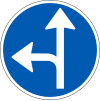 D11.6: Mandatory direction
 -
 D11.7: Mandatory direction
 -
 D11.8: Mandatory direction
 -
 D12: Mandatory direction in the roundabout
 -
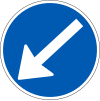 D15.2: Mandatory passage
 -
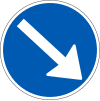 D15.3: Mandatory passage
 -
 D16: Passage
 -
 D21: Cycleway
 -
 UD1: Subpanel which points to lane or path
 -
 UD21.1: Two-way cycle traffic
 -
 UD21.2: End of Two-way cycle traffic
 -
 D22: Footway
 -
 D23: Bridleway
 -
 D26: Segregated path
 -
 D26.1: Segregated path
 -
 D26.2: Segregated path
 -
 D26.3: Segregated path
 -
 D26.4: Segregated path
 -
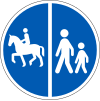 D26.5: Segregated path
 -
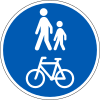 D27: Combined path
 -
 D27.1: Combined path
 -
 D55: Minimum speed
 -
 D56: End of minimum speed


Special regulation signs
[edit]
-
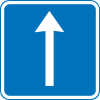 E11.1: Continue straight
 -
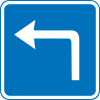 E11.4: Turn left
 -
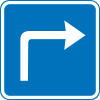 E11.5: Turn right
 -
 E11.6: Continue straight or turn left
 -
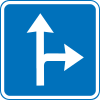 E11.7: Continue straight or turn right
 -
 E11.8: Turn left or right
 -
 E11.9: Continue straight, turn left or right


- Area signs
-
 E42: Motorway
 -
 E43: Expressway
 -
 E44: End of Motorway
 -
 E45: End of Expressway
 -
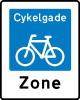 E47: Bicycle boulevard
 -
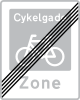 E48: End of Bicycle boulevard
 -
 E49: Pedestrian zone
 -
 E50: End of Pedestrian zone
 -
 E51: Living street
 -
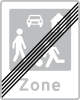 E52: End of living street
 -
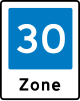 E53: Zone with traffic calming
 -
 E53: End of zone with traffic calming
 -
 E55: Urban area
 -
 E56: End of urban area
 -
 E68: Zone with no parking
 -
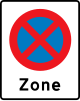 E68.2: Zone with no stopping
 -
 E68.3: Zone with parking
 -
 E68.4: Zone with local speed limit
 -
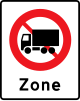 E68.5: No heavy goods vehicles permitted zone
 -
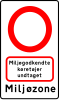 E68.9: Low-emission zone
 -
 E69: End of zone with no parking
 -
 E69.3: End of zone with parking
 -
 E69.4: End of zone with local speed limit
 -
 E69.5: End of zone with no heavy goods vehicles
 -
 E69.9: End of low-emission zone
 -
 E70: Parking zone information
 -
![E80+UE80: General speed limits[fn 8]](https://upload.wikimedia.org/wikipedia/commons/thumb/9/97/Denmark_road_sign_E80.svg/59px-Denmark_road_sign_E80.svg.png) E80+UE80: General speed limits[fn 8]
E80+UE80: General speed limits[fn 8]


![E80+UE80: General speed limits[fn 8]](https://en.wikipedia.org/wiki/File:Denmark_road_sign_E80.svg)

- Other special regulation signs
-
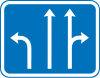 E15: Lanes at intersection
 -
 E16.1: Reduction of number of lanes with lane-merge
 -
 E16.2: Reduction of number of lanes with lane-change
 -
 E17: Pedestrian crossing. (Variant:
 )
) -
![E18: Dead end.[fn 9]](https://upload.wikimedia.org/wikipedia/commons/thumb/d/d6/Denmark_road_sign_E18.svg/100px-Denmark_road_sign_E18.svg.png) E18: Dead end.[fn 9]
E18: Dead end.[fn 9] -
 E19: One way
 -
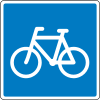 E21.1: Recommended route for cyclists
 -
 E21.2: Recommended route for pedestrians
 -
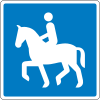 E21.3: Recommended route for equestrians
 -
 E21.4: Recommended route for mopeds
 -
 E22.1: Recommended route for heavy goods vehicles
 -
 E22.2: Recommended route for hazardous goods vehicles
 -
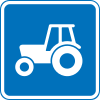 E22.3: Recommended route for tractors and motorized equipment
 -
 E22.4: Recommended route for busses
 -
 E23: Instructions for disabled
 -
 E24: Instructions for visually impaired
 -
 E26.1: Pedestrian overpass
 -
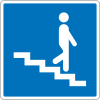 E26.2: Pedestrian underpass
 -
 E30: Light rail stop
 -
 E31: Bus stop
 -
 E31: Taxi stand
 -
 E33.1: Parking
 -
 E33.2: Indoor parking
 -
 UE33.1: Before and after sign
 -
 UE33.2: After sign
 -
 UE33.3: Before sign
 -
 UE33.4: Charging
 -
 E34: Breakdown bay (formerly used
 )
) -
 UE34: Fire extinguisher and emergency phone
 -
 E35: Tunnel
 -
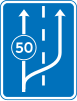 E37: Crawler lane begins
 -
 E39: Advisory maxspeed
 -
 E40: End of advisory maxspeed
 -
 E41: Recommended max speed on slip road
 -

-
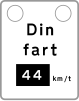 E91: Speed feedback sign
 -

-
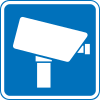 E93: Video surveillance


![E18: Dead end.[fn 9]](https://en.wikipedia.org/wiki/File:Denmark_road_sign_E18.svg)


Direction signs
[edit]- Direction signs used on roads
-
 F11: Flag-type direction sign
 -
 F11: Flag-type direction sign
 -
 F11: Flag-type direction sign
 -
 F11: Flag-type direction sign
 -
 F12: Flag-type direction sign
 -
 F12: Flag-type direction sign
 -
![F34.2: Flag-type traffic diversion sign[fn 10]](https://upload.wikimedia.org/wikipedia/commons/thumb/c/ce/Denmark_road_sign_F34_2.svg/100px-Denmark_road_sign_F34_2.svg.png) F34.2: Flag-type traffic diversion sign[fn 10]
F34.2: Flag-type traffic diversion sign[fn 10] -
 F13: Flag-type direction sign
 -
 F13: Flag-type direction sign
 -
 F13: Flag-type direction sign
 -
 F14: Temporary flag-type direction sign
 -
 F14: Temporary flag-type direction sign
 -
 F16: Exit sign
 -
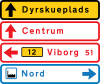 F18: Stack-type direction signs
 -
![F34.1: Traffic diversion route[fn 10]](https://upload.wikimedia.org/wikipedia/commons/thumb/b/ba/Denmark_road_sign_F34_1.svg/86px-Denmark_road_sign_F34_1.svg.png) F34.1: Traffic diversion route[fn 10]
F34.1: Traffic diversion route[fn 10]


![F34.2: Flag-type traffic diversion sign[fn 10]](https://en.wikipedia.org/wiki/File:Denmark_road_sign_F34_2.svg)


![F34.1: Traffic diversion route[fn 10]](https://en.wikipedia.org/wiki/File:Denmark_road_sign_F34_1.svg)
- Direction signs used on paths for pedestrians, cyclists and equestrians
-
 F21.1: Bicycle route
 -
 F21.2: Flag-type direction sign
 -
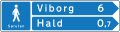 F21.2.2: Flag-type direction sign
 -
 F21.2.3: Flag-type direction sign
 -
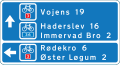 F21.3: Stack-type direction sign
 -
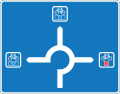 F21.4: Map-type advance direction sign


- Direction signs for parking
-
 F33.1: Flag-type direction sign
 -
 F33.2: Stack-type direction sign


- Advance direction signs on roads
-
 G11: Portal sign
 -
 G14: Map-type advance direction sign
 -
![F34.3: Map-type traffic diversion sign [fn 10]](https://upload.wikimedia.org/wikipedia/commons/thumb/3/35/Denmark_road_sign_F34_3.svg/86px-Denmark_road_sign_F34_3.svg.png) F34.3: Map-type traffic diversion sign [fn 10]
F34.3: Map-type traffic diversion sign [fn 10] -
 G15: Lane diagram sign
 -
 G18: Stack-type advance direction sign


![F34.3: Map-type traffic diversion sign [fn 10]](https://en.wikipedia.org/wiki/File:Denmark_road_sign_F34_3.svg)


Distance and locality signs
[edit]-
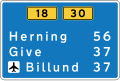 H41: Distance sign
 -
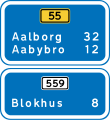 H42: Split distance sign
 -
 H45: Locality
 -
 H46: Regional border
 -
 H47: Municipal border
 -
 H49: National park
 -
 H49.1: Nature park
 -
 H50: Leaving national park
 -
 H50.1: Leaving nature park
 -
 H51: National Border


Signs used on motorways
[edit]On motorways, direction signs have blue background when they lead to the ordinary road network, via an exit from the motorway, Directions have green background when they lead to the destination via the motorway(s).
- Direction and locality signs on motorways
-
 I11: Exit from motorway
 -
 I12: Exit from motorway in 500 m
 -
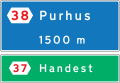 I13: Exit from motorway in 1500m ‒ the lower sign displays the following exit (with its number) and destination to be reached
 -
 I13: Exit from motorway in 1500m ‒ the lower sign displays the following named motorway junction
 -
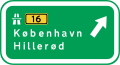 I16: Exit to another motorway
 -
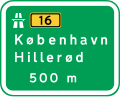 I17: Exit to another motorway in 500m
 -
 I18: Exit to another motorway in 1500m
 -
 I20: Motorway junction (system interchange)


- Lane and advance direction signs used on motorways
-
![J11: Assigned lane(s)[fn 11]](https://upload.wikimedia.org/wikipedia/commons/thumb/c/c4/Denmark_road_sign_J11_e_road.svg/120px-Denmark_road_sign_J11_e_road.svg.png) J11: Assigned lane(s)[fn 11]
J11: Assigned lane(s)[fn 11] -
![J11: Assigned lane(s)[fn 11]](https://upload.wikimedia.org/wikipedia/commons/thumb/7/70/Denmark_road_sign_J11_primary_route_and_exit_ahaed.svg/120px-Denmark_road_sign_J11_primary_route_and_exit_ahaed.svg.png) J11: Assigned lane(s)[fn 11]
J11: Assigned lane(s)[fn 11] -
![J11: Assigned lane(s)[fn 11]](https://upload.wikimedia.org/wikipedia/commons/thumb/2/20/Denmark_road_sign_J11_over_exit_lane.svg/120px-Denmark_road_sign_J11_over_exit_lane.svg.png) J11: Assigned lane(s)[fn 11]
J11: Assigned lane(s)[fn 11] -
 J12: Lane diagram
 -
 J13: Map-type advance direction sign
![J11: Assigned lane(s)[fn 11]](https://en.wikipedia.org/wiki/File:Denmark_road_sign_J11_e_road.svg)
![J11: Assigned lane(s)[fn 11]](https://en.wikipedia.org/wiki/File:Denmark_road_sign_J11_primary_route_and_exit_ahaed.svg)
![J11: Assigned lane(s)[fn 11]](https://en.wikipedia.org/wiki/File:Denmark_road_sign_J11_over_exit_lane.svg)


- Confirmatory-distance and tourist information signs used on motorways
-
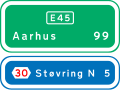 K11: Route confirmation
 -
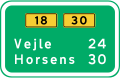 K12: Distance information
 -
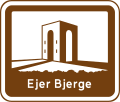 K30: Tourist information


Route designations
[edit]A box with a broken border line means the route is connecting to the route number in the box.
- Route designations
-
 L41: E-Road
 -
 L42: Primary route
 -
 L43: Secondary route
 -
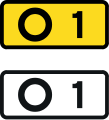 L44: Ring road
 -
 L45: National bicycle route
 -
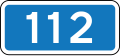 L45.2: Regional or local bicycle route
 -
 L46: Bicycle highway
 -
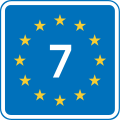 L47: EuroVelo
 -
 L50: Marguerite route (tourist route)


Service signs
[edit]New service signs are designed when they are required, for example by request from a business.[fn 12] Proposed additions include "electrician" and "real estate agent".[9]
-

-
 M10: Ferry for pedestrians and bicycles
 -
 M11: Car ferry
 -
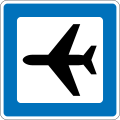 M12: Airport
 -
 M13: Train station
(formerly used )
) -
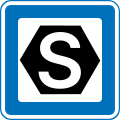 M13.1: S-train station
 -
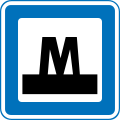 M13.2 Metro station
 -
 M13.3: Light rail station
 -
 M14: Bus station
 -
 M15: Freight terminal
 -
 M16: Park and ride
(formerly used )
) -
 M17: Post Office
 -
 M18: Hub (communal transport)
 -
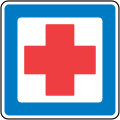 M21: Hospital emergency department, open 24 hours a day
 -
 M22: Telephone
 -
 M23: Breakdown service
 -
 M24: Filling station
 -
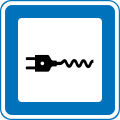 M24.1: Charging station for EV
 -
 M24.2: Charging and filling station
 -
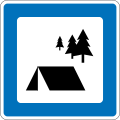 M30: Primitive camp site for hikers
 -
 M31: Camping and caravan site
 -
 M31.1: Site exclusivly for caravans
 -
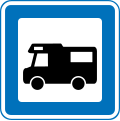 M32: Autocamper site
 -
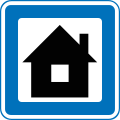 M33: Camping cabins
 -
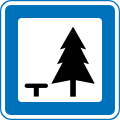 M34: Rest area
 -
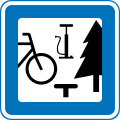 M34.1: Rest area for cyclists
 -
 M35: Beach or swimming pool
 -
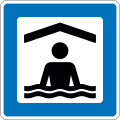 M35.1: Indoor swimming pool
 -
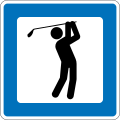 M36: Golf Course
 -
 M37: Put and take fishing
 -
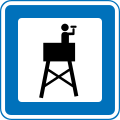 M38: Observation tower
 -
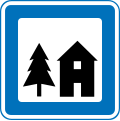 M41: Youth hostel
 -
 M42: Hotel
 -
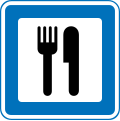 M43: Restaurant
 -
 M45: Cafeteria
 -
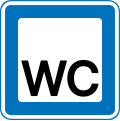 M46: Toilet
 -
 M46.1: Toilet (handicapped)
 -
 M47: Emptying chemical toilet
 -
 M47.1: Emptying chemical toilet
 -
 M51: Church
 -
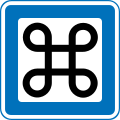 M52: Place of Interest
 -

-
 M54: National Park
 -
 M57: Industrial area
 -
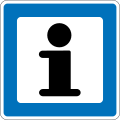 M61: Information point
 -
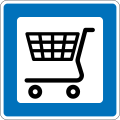 M101: Grocery store
 -
 M102: Room to let
 -
 M103: Baker
 -
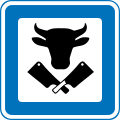 M104: Butcher
 -
 M105: Hairdresser
 -
 M107: Florist
 -
 M109: Bookshop
 -
 M111: Café
 -
 M112: Farm shop
 -
 M113: Antiques
 -
 M114: Garden centre, plant nursery etc.
 -
 M115: Marina
 -
 M116: Nature reserve
 -
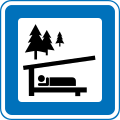 M117: Trail shelter
 -
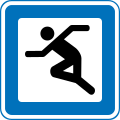 M118: Sports facility
 -
 M119: Car dealership, car rental
 -
 M120: Commercial district
 -
 M121: Shopping center, street, etc.
 -
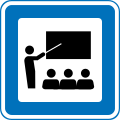 M123: Education
 -
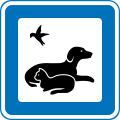 M124: Veterinary clinic or hospital
 -
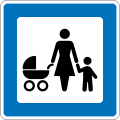 M125: Kindergarten etc.
 -
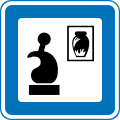 M126: Art, pottery, etc.
 -
 M127: Military
 -
 M128: Hospital
 -
 M129: Public offices
 -
 M130: Cultural center
 -
 M131: Recycling
 -
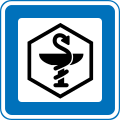 M132: Pharmacy
 -
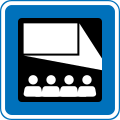 M133: Cinema
 -
 M134: Wellness, massage, beauty clinic, etc.
 -
 M138: Picnic area, indoor or outdoor
 -
 M140: Cohousing
 -
 M143: Stud farm
 -
 M144: Winery
 -
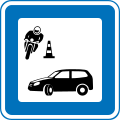 M145: Drivers education
 -
 M146: Forest burial ground (cremated remains)


Additional subpanels
[edit] | This section is missing information about definitions and meaning of the signs. (January 2025) |
These signs can be placed below traffic and direction signs. Subpanels with blue background are combined with signs that have blue background, and subpanels with white background with signs that have white background..
-
 U1.1:
U1.1: -
 U1.2:
U1.2: -
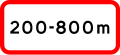 U2.1:
U2.1: -
 U2.2:
U2.2: -
 U3.1:
U3.1: -
 U3.2:
U3.2: -
 U3.3:
U3.3: -
 U3.4:
U3.4: -
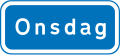 U3.5:
U3.5: -
 U3.6:
U3.6: -
 U4.1:
U4.1: -
 U4.2:
U4.2: -
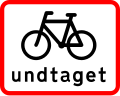 U5.1:
U5.1: -
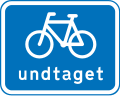 U5.2:
U5.2: -
 U6.3:
U6.3: -
 U6.4:
U6.4: -
 U7: Bicycles and small mopeds are exempt from prohibition of turning right.


Symbols
[edit]
-
 US1: Car (not above 3.5 ton registered weight)
 -
 US2: Heavy goods vehicle + any connected trailer
 -
 US3: Bus (above 3.5 ton registered weight, and more than 8 passenger seats)
 -
 US4: Heavy goods vehicle with trailer
 -
 US5: Trailer
 -
 US6: Caravan
 -
 US7: Motorhome
 -
 US8: Bicycle or small moped
 -
 US9:Small moped
 -
 US10: Motorcycle or large moped
 -
 US11: Tractor or motorized equipment
 -
 US12: Disabled
 -
 US13: Light rail


Historic signs
[edit]-
 A21: Cyclists
 -
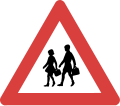 A22: Children
 -
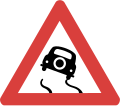 Slippery road
 -
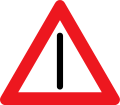 A99: Other danger
 -
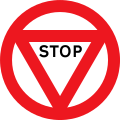 B13: Stop
 -
 C12: No U-turn
 -
 Goods vehicles prohibited
 -
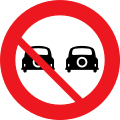 C51: No overtaking
 -
 D21: Cycleway
 -
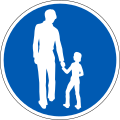 D22: Footway
 -
 D27: Combined path
 -
 E17: Pedestrian crossing
 -
 E33.1: Parking

_alternate_version.svg)

.svg)
.svg)
.svg)

.svg)
.svg)
.svg)
.svg)
.svg)
.svg)
Notes
[edit]- ^
Built-up areas (urban areas), are in this context areas within the signs for entering and leaving a built-up area.
 and
and 
- ^ These signs are placed at a different distance than the other warning signs:
A18: Two-way traffic
A35: Dangerous shoulder
A74: Level crossing
A75: Distance to level crossing
A92: Quayside
The distance at which these signs are placed, is found in the description of the signs in §12 of executive order 425 from 2023[2] - ^ Experimental sign. An actibump is a method of traffic calming. It is being tested in two places in Denmark.[6][7]
- ^ Used at the beginning of a 2-1 road in combination with A43.1

- ^ Performing a U-turn is also prohibited
- ^ The bicycle symbol also applies to a class of vehicles called small mopeds (50cc and restricted to max 30 km/h)
- ^ The speed limit is in force until it is it is lifted by the sign "C59 end of local speed limit", "C59 End of prohibition", another local speed limit sign or after a distance indicated on a subpanel. (The built up area sign is also a speed limit sign)
- ^ This diagram consists of two signs: the upper part indicates the speed limits, and the lower part indicates that it is mandatory to use seat belts and headlights.
- ^ Variants:


- ^ a b c Signs for permanent traffic diversion routes, when the motorway is closed.[8]
- ^ a b c The sign is placed above a lane before a split in the motorway, or before an exit. The signs can contain additional information as well as arrow(s) pointing down to the lane(s)
- ^ The permission to do this is found in §359 ¶2 in Executive Order 426 from 2023.[3]


References
[edit]- ^ a b Transportministeriet (2024-11-26), Bekendtgørelse af færdselsloven [Road Traffic Act]
- ^ a b Transportministeriet (2023-04-13), BEK nr 425 om vejafmærkning [Executive order 425 on Road Markings] (in Danish)
- ^ a b Transportministeriet (2023-04-13), BEK nr 426 om anvendelse af vejafmærkning [Executive order 426 on the Use of Road Markings] (in Danish)
- ^ "Convention on Road Signs and Signals - United Nations Treaty Collection". treaties.un.org. Retrieved 2023-12-07.
- ^ "European Agreement supplementing the Convention on road traffic - United Nations Treaty Collection". treaties.un.org. Retrieved 2024-05-07.
- ^ "Her testes nyt fartbump i Danmark - Vejdirektoratet kalder det "ubehageligt"". nyheder.tv2.dk (in Danish). TV 2. 2022-12-06. Retrieved 2024-04-21.
- ^ "Vejdirektoratet afprøver Actibump på to statsveje". vejdirektoratet.dk (in Danish). Vejdirektoratet. 2023-06-16. Retrieved 2024-04-21.
- ^ "Nye skilte på motorvejen - lær dem at kende og undgå kø". bt.dk (in Danish). BT. 2014-12-02. Retrieved 2024-04-21.
- ^ "Liste med samtlige godkendte servicetavler med symboler til kommerciel servicevejvisning". vejregler.dk (in Danish). Vejdirektoratet. 2023-08-13. Retrieved 2024-04-21.
External links
[edit]
 EncycloReader
is supported by the
EncycloReader
is supported by the  KSF
KSF