Wallace Hall
 From Ballotpedia
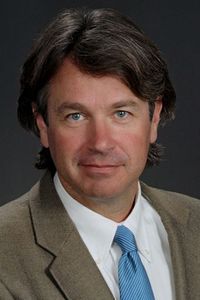
Wallace Hall is a former member of the University of Texas System Board of Regents. Hall was appointed to a six-year term in February 2011 by former Texas Governor Rick Perry (R). His term expired on February 1, 2017.[1]
Following his appointment as a regent in 2011, Hall began examining political favoritism and forgivable loans programs at the University of Texas. Following a large number of FOIA requests, filed by Hall in the course of his examination, which ultimately turned up several major findings concerning clout scandals, a Texas House committee initiated an investigation into possibly impeaching Hall.[2][3][4] The impeachment process has been criticized by, among others, Governor of Texas Rick Perry, with some calling the process an effort to criminalize policy differences.[5][6] The Wall Street Journal opined against Hall's impeachment in a May 11, 2014 op-ed.[7]
Committee members voted to pursue impeachment, but, on July 2, 2014, members delayed a meeting to consider formal articles of impeachment, citing as a reason the fact that too many committee members would not be in Austin.[8]
Meanwhile, University Chancellor Francisco Cigarroa asked University of Texas, Austin President Bill Powers to resign or face termination at the July 10 University of Texas Board of Regents meeting. Cigarroa attributed the request to a "breakdown of communication, collegiality, trust and a willingness to work together for the good of the university." Powers at first indicated he would not resign, saying it would "cast the university and our state in a highly unfavorable light."[9][10] However, on July 9, 2014, Cigarroa released a statement that Powers agreed to resign effective June 2015.[11] The Board meeting agenda indicated regents would discuss Powers in an executive session.[12][13] Some legislators on the transparency committee sent a letter requesting that the Board of Regents delay any personnel decisions regarding Powers or other witnesses from the impeachment hearings.[14] In a July 2014 op-ed, the Wall Street Journal commented that Powers' resignation would bring more attention and scrutiny to the political favoritism scandals at the University of Texas. The editorial board wrote: "The voters seem to understand, even if some legislators don't, that college admissions are supposed to be based on merit, not political connections."[15]
Although the committee left open the possibility of revisiting impeachment, an August 11, 2014 vote passed 6-1 simply to censure Hall instead, possibly bringing a close to the more than year-long process. Hall is the first regent to have been censured by a committee of the Texas State Legislature.[16] Referring to the fact that Hall hadn't properly been able to testify, the member casting the no vote noted that the committee had not heard all sides of the issue.[17][18] In response to the committee's vote, Governor of Texas Rick Perry issued a statement defending Hall's actions, saying the regent acted in the best interest of Texas "in the face of withering personal attacks."[19] According to the American-Statesman, others “have cautioned that the proceedings against Hall could have a chilling effect on future regents who may think twice before second-guessing the campus leadership.”[18]
In February 2015, an independent report by Kroll Associates, commissioned by the Regents Board, found a "pattern of special treatment for well-connected applicants to UT." While the report did not show evidence of any quid pro quo, it did find that "extra acceptances were extended every year to accommodate special cases." The Wall Street Journal opined that the report "should put an end" to the investigation against Hall.[20]
In March 2015, the Travis County Grand Jury concluded a six-month investigation into Hall, deciding not to pursue criminal charges against Hall but recommending that the state remove him from office. The jury issued a report saying that Hall's open records request deadlines were unreasonable and that he released confidential information to the attorney general's office and his lawyer.[21] The state did not remove Hall from office.
Biography[edit]
In 1980 Hall graduated from the St. Mark's School of Texas, a preparatory day school for boys in grades one through 12. He has served as President of the school's alumni association and currently serves on the school's board of trustees.[22][23] He earned a Bachelor's degree in Economics from the University of Texas at Austin in 1984.[22][1]
He is the founder and President of Wetland Partners, LP, which operates the Trinity River Mitigation Bank, a wetlands bank created to mitigate U.S. Army Corp of Engineers (USACE) approved environmental impacts to the aquatic system as per the Clean Water Act.[22][1] Other prior business endeavors include oil and gas investments and a 15-year career in the financial services industry, during which time he worked as a securities analyst, financial futures trader and as financial principal of a NASD broker dealer.[22]
In August 2009, Hall was appointed by Governor Perry to the Texas Higher Education Coordinating Board.[24]
Clout investigations[edit]
After he was appointed in 2011, Hall began looking into what he believed to be clout scandals within the University of Texas system. According to Hall, the investigations turned up three major findings.[25]
- Forgivable loans programs
- Improper methods of reporting donations
- Legislative influence over admissions processes
Hall investigated the university's forgivable-loans program, admissions policies and preferential treatment to politically-connected individuals.[26] Hall, as an individual citizen, filed FOIA requests with the University system after his inquiries via his role as a Regent were rebuffed.[27] Though opponents claimed that Hall filed requests of more than 800,000 pages, which some Texas administrators called an unnecessary burden,[28][29] a February 2014 letter from University chancellor Francisco Cigarroa said that Hall likely requested fewer than 100,000 pages.[30]
[31] Responding to concerns that the released pages might create privacy issues, Cigarroa also added that, "During testimony before the Select Committee, some early witnesses implied that the U.T. System has not protected the privacy rights of students, staff, and patients. This is simply not true."[32]
In March 2013, the Board of Regents voted to re-open the forgivable loans investigation. This action was approved by regents Hall, Brenda Pejovich, Paul Foster and Alex Cranberg. Judith Zaffirini (D), Trey Fischer (D) and Kevin Eltife (R) criticized the need for an investigation at this level, preferring the Attorney General respond to the need instead. In any event, the re-opened investigation led to the replacement of former law school dean Larry Sager. In one specific email exchange highlighted in the press among the FOIA'd documents, University of Texas Budget Director Mary Knight emailed President Powers in June 2009 about salaries of UT officials. The email specifically mentioned Larry Sager, with Knight writing: "note: Sager was included due to his $100K per year deferred compensation over 5 years." The email refers to the $500,000 forgivable loan that Sager received which eventually contributed to his forced resignation. While Powers maintained that he had been unaware of the loan until the official UT report was conducted, some regents believe that the email from Knight in 2009 proves otherwise.[33][34]
In August 2013, the University of Texas System Board of Regents approved two measures to reform problems that Hall had discovered as a result of his investigations. These measures included a new policy regarding the relationship between universities and foundations and an audit into how officials respond to public information requests.[35]
In October 2013, Texas lawmaker Jim Pitts, an opponent of Hall's investigation, acknowledged that he routinely writes letters to Bill Powers, President of the University of Texas, on behalf of select student applications, including a letter on behalf of his son after the University of Texas law school had initially rejected his admittance. "The letter I wrote for my son was pretty much a form letter," Pitts said in an October meeting of the Transparency in State Agency Operations Committee. These letters were sent to both the law school dean and the university president.[36][37][38]
In February 2015, an independent report by Kroll Associates, commissioned by the Regents Board, "confirmed a pattern of special treatment for well-connected applicants to UT." It showed that the "President’s Office ordered applicants admitted over the objection of the Admissions Office." It added that "efforts were made to minimize paper trails and written lists" during the process. The Wall Street Journal wrote that the "report should put an end" to the concerns over Hall's clout investigations.[20]
December 12 board meeting[edit]
A December 12, 2013 Regents Board meeting listed as an agenda item the "discussion and appropriate action related to recommendation by Executive Vice Chancellor for Academic Affairs and Chancellor concerning employment of Wililam C. Powers, Jr., as President of the University of Texas at Austin."[39] State legislators previously instructed the board not to make personnel decisions related to anyone currently involved in legislative investigations -- including Powers.[40] There was speculation that the future of Powers could impact whether Texas Longhorns football coach Mack Brown could be retained.[41] The Board met for four hours in an executive session closed-door meeting.[42] Because of the posting of the agenda, regents could have taken action following the closed-door session. "I do not know if there was a specific purpose in mind for the agenda item. I’m sure it was discussed between the chancellor and the chairman," said Regent Alex Cranberg. State Senator Judith Zaffirini said she hoped the board would vote in favor of keeping Powers as University President.[43]
At the meeting, the board did not take any action on Powers' employment. Chancellor Francisco Cigarroa told the Board, however, that Powers needs to improve trust, respect and communication in dealings with regents and system officials.[44][45] Cigarroa said that the relationship between himself and Powers had seen improvement.[46] Powers said: "There was a question about my employment, it got resolved positively. It is very positive to get this behind us and move forward in addressing these issues that face our campuses and face the system."[47]
Online records[edit]
In Texas, public records requests are detailed in an online database. Citizens can visit the site to see what types of requests have been made. However, once those requests are filled, the actual content of the requests are not made public. In January 2014, Ross Ramsey, co-founder of Texas Tribune, wrote that "The schools could avoid extra work while providing real transparency into the records that are supposed to be in public view anyhow." Judith Zaffirini, an opponent of the Hall-led clout investigations, requested documents pertaining to the same subjects of Hall’s inquiry, essentially duplicates of what Hall had previously requested. Ramsey lamented that everything both parties requested wasn’t simply available online after the first request, stating, however, that "Someday, it might all be online. For that, you can thank the regent who suggested it. His name is Wallace Hall."[48]
Francisco Cigarroa resignation[edit]
On February 10, 2014, Chancellor Francisco Cigarroa announced he would resign from his position as Chancellor. He said he felt he had accomplished the goals he set out to do five years earlier, and he was prepared to return to medical practice full-time. "Education saves lives on many levels and I thought I could bring value to the UT system with that perspective in mind. Now it’s time to return to saving one life at a time," he said.[49] Cigarroa said his resignation had nothing to do with the turmoil and investigations within the University of Texas system. Cigarroa will continue to serve as chancellor until a replacement is found.[50][51] Cigarroa's new position will be as head of pediatric surgery at the University of Texas Health Science Center in San Antonio.[52]
Relationship between Cigarroa and Powers[edit]
The Dallas Morning News obtained an email in March 2013 related to Cigarroa's resignation. According to the newspaper, Hall sent a number of emails to Cigarroa in the weeks before his resignation. The email the newspaper obtained via open records request was sent from Regent chair Paul Foster to Cigarroa. In the email, Foster defended Cigarroa for his work while also praising Hall for his "tenacity as a regent and recommendations to better the university." Foster, who “does not outline Hall’s specific criticism,” then implied that, in his view, Hall had pressured Cigarroa to act, which Foster said he did not agree with.[53] No one involved was able to be reached for comment. State representative Lyle Larson (R) renewed his call for Hall to resign and Trey Martinez Fischer (D) requested that the committee re-open investigations. Committee co-chair Dan Flynn (R) said “there were no current plans to hold any further hearings about University of Texas System Chancellor Francisco Cigarroa's impending departure.”[54]
An April 22, 2014 article in the Austin American-Statesman detailed an email exchange between Hall and Foster, in which Hall alleged that University of Texas President Bill Powers threatened Cigarroa prior to his resignation. The three-page email was written on March 19, 2014 as a response to the prior email that Foster sent.[55] In the email, Hall makes an array of accusations regarding the impeachment trial and events within the university system.[56]
- Cigarroa first expressed concern to the Board of Regents about an "inability to work with President Powers" in 2010, which was one year prior to Hall's appointment.
- According to Hall, Cigarroa asked President Powers to resign in Fall 2013. Powers then reportedly offered a range of requirements to retire, which Hall said were "understandably" refused by Chairman Foster.
- Hall alleged that Powers "leveled a threat against the Chancellor," which compromised his ability to work. This threat was reportedly made in front of Pedro Reyes, Executive Vice Chancellor for Academic Affairs at The University of Texas System.
- Regent Steven Hicks reportedly requested an "up or down vote" on Powers. Hall wrote that Foster has not allowed this vote to occur.
Empower Texans CEO Michael Quinn Sullivan pointed to the email as indication of a cover-up at the university, intended to deter an investigation into alleged clout scandals within the higher education system. Quinn Sullivan wrote:"it appears some legislators have been conspiring with UT Austin officials to get unqualified students admission to the state’s flagship university."[57] A spokesman for Powers did not comment on the email.
Impeachment proceedings[edit]
- See also: Wallace Hall impeachment trial
 |
| |
| |
| |
| |
In 2013, the Joint Committee on Oversight of Higher Ed Governance, Excellence & Transparency inquired into the possibility of an impeachment. No unelected official in Texas has ever been successfully impeached or removed from office.[58] Governor of Texas Rick Perry's spokesperson said the investigations send a "chilling message" to gubernatorial appointees.[59][60]
On June 24, 2013, State House representative Jim Pitts (R) filed a resolution to advance along impeachment proceedings of Hall by the select committee.[61] Joe Straus, House Speaker, issued a proclamation that expanded the committee's jurisdiction to allow it to propose articles of impeachment against executive appointees. The committee hired Rusty Hardin to serve as legal counsel for the committee.[62][63]
In July 2013, University of Texas Chancellor Francisco Cigarroa and Regent Eugene Powell responded to the ongoing investigation and negative remarks against Hall from some elected officials and University of Texas staff. Cigarroa said Hall was not allowed to access anything that was not reviewed by University lawyers to ensure they met federal privacy standards. In a July 15, 2013 letter to state representative Jim Pitts, Powell wrote: "Regent Hall's efforts extend to bringing the U.T. System into a competitive position nationally; especially related to offering blended and online learning opportunities to U.T. students. I would point out Regent Hall's excellent service to the Board in terms of time and energy. I appreciate his Board service and his dedication and hard work designed to fulfill his fiduciary obligations.[64][65]
In a letter dated August 15, 2013, Hall responded to the committee via his lawyer. The letter expanded upon the reasons for Hall's investigation.[66] According to the letter, Hall found that "allegations of political influence in the admissions process appear in some instances to be true."[67]
| “ | "Regent Hall found correspondence on behalf of a [state] Representative inquiring about the admission of the Member’s adult son or daughter to a UT Austin graduate school. Although the dean had previously stated the applicant did not meet the school’s standards and would need to either retake the graduate admission exam or attend another graduate school first, upon information and belief, the son or daughter was in fact admitted without retaking the test or attending another school. Regent Hall found other correspondence in which a [state] Senator sought special consideration for an applicant who had been rejected, but was strongly supported by another Senator. In the communication, the Senator seeking special treatment reminded the UT Austin official of recent legislative action taken to benefit The University. Upon information and belief, the rejected applicant was subsequently admitted to UT Austin."[67][68] | ” |
During a September 2013 panel conversation with state senator Kirk Watson, Hall defended his investigations and criticized the impeachment proceedings. "Impeachment is used to protect the public, not to punish an individual. Do you think I’m protecting the public, or do you think the politicians that are coming after me are protecting the public?"[69]
For Hall to be impeached, the State Legislature would have to be called into a special session because the legislature meets in the spring of odd-numbered years.
Richard Legon, president of the Association of Governing Boards of Universities and Colleges, criticized the impeachment process in a November interview with the Austin American Statesman. He called the impeachment process the "nuclear option" and said it could send a chilling signal to other members of higher education boards. Legon suggested that the board should have first been given the opportunity to address Hall's requests. "It’s fine for a board member to seek information through the appropriate path. The first layer of reining in an overly aggressive board member should be the board," he said.[70]
Subpoena[edit]
At a meeting on November 12, 2013, the committee issued subpoenas for Dan Sharphorn, University of Texas Vice Chancellor and General Counsel; Francie Frederick, General Counsel to the University of Texas System Board of Regents; Barbara Holthaus, System Senior Attorney; and Hall, who was expected to testify at the December 10, 2013 meeting.[71][72]
However, only minutes after initially filing the subpoena for Hall, committee members suddenly recalled it. Carol Alvarado claimed the members acted too quickly without checking their schedule. The subpoena was issued for December 10, but no meeting was scheduled until December 18.[73]
With University of Texas Chancellor Francisco Cigarroa and University of Texas, Austin President Bill Powers already subpoenaed to appear at the December 18-19 meetings, Hall's lawyer Allan Van Fleet requested that the committee respond regarding whether it would also subpoena Hall. He said that Hall's lawyers have told him not to appear before the committee without a subpoena. On December 5, 2013, Van Fleet sent a letter to the committee requesting that the co-chairs announce whether Hall would indeed be subpoenaed. Committee attorney Rusty Hardin said "We're not going to adhere to his deadline. He doesn't get to pick the time and place." Van Fleet pointed out that the letter has "caused confusion about the committee's intentions."[74]
Request to testify[edit]
On December 10, 2013, the committee sent a letter to Hall asking that he testify -- but they did not issue a subpoena. The committee sent a one-page, two-paragraph letter that invited Hall to testify and provide a list of witnesses.[75] On December 16, 2013, Hall's attorney Allan Van Fleet said Hall would not testify at the December 18 committee hearing, writing that "Regent Hall has volunteered a number of times in the past to share his views with legislative Committees about the challenges and opportunities faced by the UT System. Though these offers have never been accepted, he remains interested in sharing his views, in collaborating with all policy makers on initiatives that will benefit the UT System and in working with the committees to improve the transparency and accountability practices that should guide all UT System activities."[76][77][78][79]
Hall was invited to testify but was not given a subpoena, which is often perceived to provide some legal protection to the witness. Other individuals -- such as Chancellor Francisco Cigarroa and University of Texas Austin President Bill Powers -- have, for instance, been given formal subpoenas. In any event, some committee members criticized Hall for not agreeing to testify, despite knowing the differing set of circumstances given to Hall. "It’s very disappointing to me that he and his attorney do not understand or do not care to observes the rules and procedures of the Texas House of Representatives and have decided they are not going to appear to testify," said co-chair Dan Flynn.[80][81]
Hilder & Associates[edit]
The Board of Regents hired the firm Hilder & Associates to review whether Hall may have violated any federal privacy laws in his handling of student information. November 2013 testimony prompted committee-member Trey Fischer to request the inquiry. A January 2014 review by the firm concluded that there was "no credible evidence of a violation of [the state government code] that would warrant a referral for criminal prosecution." The report concluded that Hall had a legitimate reason for having the documents in question. "In light of the fundamental role attorneys play, it would lead to an absurd result were it criminal for an official to provide student records to his or her attorney in the face of litigation, or anticipated litigation, involving these records," Philip Hilder wrote in the report. Hilder submitted the report to the legislative committee. Committee member Dan Flynn said he was not surprised by the findings and was pleased the university counsel reached a conclusion.[82][83][84][85]
Favoritism and impeachment reports[edit]
A report commissioned by the University of Texas concerning allegations of admissions favoritism was expected to be released in early April 2014. According to Watchdog.org, the report will show that "applicants who had a lawmaker intervene on their behalf with top university officials were far more likely to gain admission than an applicant without those connections."[86] Watchdog.org also reported that the committee's leaders intend to use their report to counter the potential impact of the admissions favoritism report.[86]
Release of email documents[edit]
Over 2,000 pages of email documents were released by the University of Texas to news outlets in late March 2014. Some of these documents detailed inquiries by Wallace Hall into President Bill Powers' travel practices. Some of Powers' travels were paid for in part or in full by donors. In January 2014, Hall challenged the "institutional purpose" of some of these travels in a message to Vice Chancellor for Academic Affairs Pedro Reyes. A system spokesperson said that the travel in question had been reviewed and deemed appropriate.[87]
In addition, the released correspondence suggests dissatisfaction on the part of the Board of Regents with the administration's handling of the admissions favoritism investigation. Regents Hall and Gene Powell said they were skeptical that Powers would cooperate with the Board's inquiry into the matter. "I have no confidence that we will get full cooperation from Bill Powers now or in the future as his assurances are unsupported by the facts," Hall wrote in a message to Chancellor Francisco Cigarroa.[87]
Committee report[edit]
On April 7, 2014, the San Antonio Express-News and Houston Chronicle viewed an advance copy of Hardin's 176-page report. The newspapers reported that the document was previously made available to committee members on April 4, 2014. The report alleges that Hall broke state and federal law. As of April 8, 2014, the report was not yet made public. Hall's lawyers said he would not comment on the report until he had seen it. According to the newspaper summary, the report alleges that Hall attempted to coerce UT administrators prior to their testimony.[88][89] The report refers to Hall's "burdensome" requests for records as one of the critiques laid out against the regent.[90]
The Texas Tribune, which also received a copy of the report, wrote that "ironically a substantial number of the actions that the Hardin report highlights as potentially triggering impeachment occurred in part or entirely because of the committee’s investigation." The report listed four items as a sufficient basis for articles of impeachment. The report does not make any explicit recommendation to the committee.[91]
The draft report recommended to the committee that impeachment could be pursued for at least four bases.[92]
Post-report meetings[edit]
On April 24, 2014, the committee met privately for three hours discussing Hardin's report. Legislators would not disclose the conversations held behind closed doors.[93][94][95]
A committee hearing was held on May 12, 2014 where legislators voted 7-1 that there were grounds for impeachment.[96] Charles Perry (R) was the one member who voted against grounds for impeachment. In response to the vote, Hall released a statement, in which he defended his actions and accused the transparency committee of interfering with investigations of the University. "My efforts as a regent are to serve the interests of our great educational institutions, the students, faculty, and staff who make them great, and the taxpayers who fund them, not to appease a privileged class who abuse them," Hall said in the statement.[97][98]
Reaction[edit]
Anne Neal, president of the American Council of Trustees and Alumni (ACTA), "an independent, nonprofit organization committed to academic freedom, excellence, and accountability at America's colleges and universities,"[99] said the investigation of Hall was "simply off the rails." Throughout much of the investigation, opponents have maintained that Hall was on a "witch hunt" for President Bill Powers. Neal's statement took the opposite approach, accusing the legislature of engaging in "expensive witch hunts designed to discourage public servants from asking tough questions in pursuit of the public interest." The Texas Coalition for Higher Education Excellence supported the report's conclusions. Spokeswoman Jenifer Sarver called the findings, "deeply troubling."[100]
In light of the report, editors at the Houston Chronicle called for Governor Perry to ask Hall to resign, to save the state from a potential impeachment trial, which they said would be a “spectacle."[101] After the release of the report, Hall's lawyers sent a letter on April 8, 2014 to the committee on transparency. In the letter, Hall's lawyers requested that a copy of the report be sent to their offices, as they had not been delivered a version prior to the leak of the report to the media.[102]
Calls for resignation[edit]
At a May 15, 2014 Board of Regents meeting, Board Chair Paul Foster said he believed Hall should resign from his position as Regent.[103] Regents Alex Cranberg and Eugene Powell defended Hall's actions while Jeffery Hildebrand, Robert Stillwell and Steven Hicks supported Foster in his call for resignation. No formal vote on Hall was taken by the board.[104]
Foster implied that Hall's resignation would be the best course of action in order to end the distraction that was caused by any potential impeachment trial.[105] Hall was present at the meeting but did not comment to media.[106]
Hall's attorney Allan Van Fleet sent a letter to Foster indicating that Hall would not resign.[107][108]
Football coach controversy[edit]
The issue surrounding head football coach Mack Brown has divided members of the University of Texas, Austin community. In January 2013, Hall reportedly spoke with University of Alabama coach Nick Saban's agent about the possibility of his replacing Brown.[109] University President Bill Powers expressed support for Brown, who has been coach since 1998.[110] While Saban has maintained he had no interest in leaving Alabama, a November report cited Saban's agent hinting at the possibility that Saban would leave Alabama for Texas.[111]
On November 6, 2013, the Houston Chronicle reported that Hall had said the University of Texas would be "under new leadership" by the end of 2013, during a phone call with University of Alabama Head Football Coach Nick Saban's agent. The Texas Tribune acquired a memo that was sent from Tom Hicks to his brother, regent Steven Hicks, detailing the phone conversation between Hicks, Hall and Jimmy Sexton, Saban's agent. The phone call took place on January 5, 2013 according to the email. Hicks wrote: "Specifically, he made the statement the[sic] Bil Powers wouldn't be here at the end of the year."[112][113]
Regents committees[edit]
Hall serves on the following Board standing committees:[114]
- Audit, Compliance, and Management Review
- Finance and Planning
- Technology Transfer and Research
See also[edit]
- Wallace Hall impeachment trial
- Committee on Transparency in State Agency Operations (Select), Texas House of Representatives
Recent news[edit]
This section links to a Google news search for the term "Wallace + Hall + Texas"
Footnotes[edit]
- ↑ 1.0 1.1 1.2 Dallas Morning News, "Perry appoints new UT Regents," February 1, 2011
- ↑ Texas Public Radio, "UT Regent Wallace Hall Will Testify In Impeachment Hearing," November 13, 2013
- ↑ National Review, "Texas Legislature Should Stop Targeting Wallace Hall," November 12, 2013
- ↑ Dallas Morning News, "Texas House committee subpoenas UT System regent, then recalls it," November 12, 2013
- ↑ Daily Caller, "Texas tries to topple higher-ed transparency," November 21, 2013
- ↑ Fort Worth Star-Telegram, "Perry calls regent impeachment “political theater”," October 30, 2013
- ↑ Wall Street Journal, "Political Revenge in Texas," May 11, 2014
- ↑ Houston Chronicle, "Hearing on impeachment articles against UT regent delayed," July 2, 2014
- ↑ Wall Street Journal, " University of Texas Board Asks President to Resign," July 8, 2014
- ↑ Texas Tribune, "Cigarroa Tells Powers to Resign or Be Fired," July 4, 2014
- ↑ Watchdog, "UT President Bill Powers to resign -- in 2015," July 9, 2014
- ↑ University of Texas System, "Schedule of Events for Board of Regents' Meeting on July 10, 2014"
- ↑ Watchdog, "Board to decide UT president’s fate Thursday," July 7, 2014
- ↑ Texas Public Radio, "House Committee Wants UT Regents To Hold Off On Any Action Against Pres. Bill Powers," July 8, 2014
- ↑ Wall Street Journal, "Texas Admissions Brawl," July 9, 2014
- ↑ Austin Business Journal, "A first: UT regent censured," August 11, 2014
- ↑ Dallas Morning News, "Panel censures but doesn’t impeach UT Regent Wallace Hall," August 11, 2014
- ↑ 18.0 18.1 Austin American-Statesman, "Panel censures UT Regent Wallace L. Hall Jr.," August 11, 2014
- ↑ Your Houston News, "Statement by Gov. Perry on UT Regent Wallace Hall," August 11, 2014
- ↑ 20.0 20.1 Wall Street Journal, "Texas Admissions Rumble," February 12, 2015
- ↑ Statesman, "Grand jury won’t indict UT Regent Wallace Hall but condemns his actions," updated September 25, 2018
- ↑ 22.0 22.1 22.2 22.3 UT System, "Regent Wallace L. Hall, Jr.," accessed October 30, 2013
- ↑ St. Mark's School of Texas, "Governance," accessed December 11, 2013
- ↑ Governor of Texas, "Gov. Perry Appoints Three to Texas Higher Education Coordinating Board," August 20, 2009
- ↑ American Spectator, "Rogue Hall Monitors," November 11, 2013 (dead link)
- ↑ American Spectator, "Transparency for Thee," October 25, 2013
- ↑ Daily Texas Online, "Facing impeachment, Regent Wallace Hall defends actions in debate with Sen. Kirk Watson," September 28, 2013
- ↑ Daily Texas Online, "Former UT System vice chancellor alleges Regent Wallace Hall’s ‘clear intent to get rid of Bill Powers’," October 24, 2013
- ↑ Dallas Morning News, "UT regent sought 800,000 documents, official says in impeachment hearing," October 22, 2013
- ↑ Watchdog, "‘Witch hunt’ fallout: Speaker calls for narrower public records law," February 5, 2014
- ↑ Texas Tribune, "UT System Responds to Transparency Committee Directives," February 3, 2014
- ↑ Texas Tribune, "Cigarroa letter to the Committee on Transparency in State Agency Operations," February 1, 2014
- ↑ Houston Chronicle, "UT email exchange may provide key to controversy," March 24, 2013
- ↑ Houston Chronicle, "Perry-UT power struggle intensifies," March 25, 2013
- ↑ Watchdog.org, "University of Texas regents show support for Wallace Hall," August 22, 2013
- ↑ National Review, "The Ongoing Texas Travesty," October 23, 2013
- ↑ Watchdog, "Lawmaker admits pulling strings on UT admissions," October 23, 2013
- ↑ National Review, "The Curious and Curiouser Case of Wallace Hall," August 21, 2013
- ↑ University of Texas System Board of Regents, "December 12, 2013 Meeting Agenda (dead link)
- ↑ Texas Tribune, "UT Regents to Discuss Employment of Bill Powers," December 9, 2013
- ↑ ESPN "Mack Brown's future in limbo," December 10, 2013
- ↑ Dallas Morning News, "Could Mack Brown lose an ally? Texas' Bill Powers to be reviewed by regents," December 9, 2013
- ↑ Austin American Statesman, "University of Texas regents to discuss Powers’ job status," December 9, 2013
- ↑ Austin American Statesman, "UT’s Powers gets a lecture but keeps his job," December 12, 2013
- ↑ Houston Chronicle, "UT President Powers ready to get back to work," December 12, 2013
- ↑ Daily Texan, "While board takes no action on President Powers, Chancellor Cigarroa issues strong warning," December 12, 2013
- ↑ ESPN "Chancellor: Powers should keep job," December 12, 2013
- ↑ Texas Tribune, "Online Public Records, With a Hint of More to Come," January 17, 2014
- ↑ KXAN, "UT Chancellor Francisco Cigarroa resigning," February 10, 2014
- ↑ Texas Tribune, "Cigarroa: Political Upheaval Did Not Prompt Resignation," February 10, 2014
- ↑ Idaho Statesman, "UT chancellor Cigarroa says he'll resign" February 10, 2014
- ↑ Dallas Morning News, "UT chancellor Cigarroa to resign, return to medical practice," February 10, 2014
- ↑ Dallas Morning News, "UT regent’s email hints chancellor was under attack before resignation," March 13, 2014
- ↑ Texas Tribune, "Two Lawmakers Renew Calls for Action Against Hall," March 14, 2014
- ↑ Austin American-Statesman, "UT regent’s email points to deepening rancor on board," April 22, 2014
- ↑ Empower Texans, "Email from Wallace Hall to Paul Foster," March 19, 2014
- ↑ Empower Texans, "UT Cover-Up?" April 23, 2014
- ↑ News-Journal, "University of Texas regent not worried by impeachment inquiry," September 9, 2013
- ↑ Texas Tribune, "Transparency Committee to Mull Impeachment of UT Regent," June 25, 2013
- ↑ Texas Monthly, "The Wallace Hall Interview," April 15, 2013
- ↑ Alcalde, "Pitts Files Resolution to Impeach UT Regent Wallace Hall," June 24, 2013
- ↑ My San Antonio, "Pitts denounces UT regent’s document requests," October 22, 2013
- ↑ Houston Chronicle, "Impeachment committee hires Rusty Hardin," August 23, 2013
- ↑ Texas Tribune, "UT System Pushes Back Against Criticism of Regent Hall," July 16, 2013
- ↑ University of Texas System, "Letter from Eugene Powell to Jim Pitts," July 15, 2013
- ↑ Texas Tribune, "Wallace Hall's Lawyer: "Not a Basis for Impeachment,"" August 15, 2013
- ↑ 67.0 67.1 Texas Tribune, "Letter from Wallace Hall to Committee" August 15, 2013
- ↑ Note: This text is quoted verbatim from the original source. Any inconsistencies are attributable to the original source.
- ↑ Daily Texas Online, "Facing impeachment, Regent Wallace Hall defends actions in debate with Sen. Kirk Watson," September 28, 2013
- ↑ Austin American Statesman, "A UT regent impeachment could make other boards cautious, expert says," November 29, 2013
- ↑ Texas Tribune, "UT Regent Hall Subpoenaed to Testify Before Committee," November 12, 2013
- ↑ Albany Times Union, "Texas House committee subpoenas Hall for Dec. 10," November 12, 2013
- ↑ Texas Tribune, "Committee Recalls Subpoena for UT Regent Hall," November 12, 2013
- ↑ Texas Tribune, "Ahead of Hearings, UT Regent Hall Requests Subpoena," December 5, 2013
- ↑ Texas Tribune, "Committee Letter to Hall," December 10, 2013
- ↑ My San Antonio, "Letter to Committee," December 16, 2013
- ↑ The Republic, "Embattled UT Regent Wallace Hall won't testify to lawmakers considering possible impeachment," December 17, 2013
- ↑ Your Houston News, "UT regent facing possible ouster won’t testify," December 17, 2013
- ↑ Texas Tribune, "UT Regent Hall Declines Invitation to Testify," December 17, 2013
- ↑ Dallas Morning News, "UT regent Wallace Hall won’t attend impeachment investigation," December 17, 2013
- ↑ Texas Public Radio, "UT Regent Wallace Hall Declines to Speak with Lawmakers," December 16, 2013
- ↑ Dallas Morning News, "UT Regent Hall didn't commit crime, university attorney concludes,"January 16, 2014
- ↑ Watchdog, "UT Report: Charge against Hall is legally 'absurd'" January 14, 2014
- ↑ Texas Tribune, "Report: Regent Didn't Violate Student Privacy Laws," January 15, 2014
- ↑ Texas Tribune Uploads, "Hilder & Associates Report," January 13, 2014
- ↑ 86.0 86.1 Watchdog.org, "Reports on UT favoritism, impeachment expected soon," April 4, 2014
- ↑ 87.0 87.1 The Texas Tribune, "As UT Inquiries Mount, So Have Frustrations," March 26, 2014
- ↑ Houston Chronicle, "Report: UT regent abused office, may have violated law," April 7, 2014
- ↑ Dallas Morning News, "UT regent Wallace Hall possibly committed impeachable offenses, investigation report show," April 7, 2014
- ↑ Austin American Statesman, "Report for House panel finds grounds to impeach UT Regent Wallace L. Hall Jr.," April 7, 2014
- ↑ Texas Tribune, "Report Cites Possible Grounds for Hall's Impeachment," April 8, 2014
- ↑ Rusty Hardin & Associates, LLP, "Investigative Report to the House Select Committee on Transparency in State Agency Operations regarding Conduct by University of Texas Regent Wallace Hall and Impeachment Under the June 25, 2013 Proclamation," March 2014
- ↑ Cite error: Invalid
<ref>tag; no text was provided for refs namedapril_meeting - ↑ Texas Tribune, "Committee to Vote on Impeachment Recommendation in May," April 24, 2014
- ↑ Austin American Statesman, "Panel investigating UT Regent Wallace Hall sets May 12 vote for possible impeachment recommendation," April 24, 2014
- ↑ San Francisco Chronicle, "Texas House panel set to vote on Hall impeachment," May 11, 2014
- ↑ Texas Tribune, "Panel Votes That Grounds for Impeachment Exist for Hall," May 12, 2014
- ↑ Dallas Morning News, "Texas House panel finds grounds to impeach UT System regent Wallace Hall of Dallas," May 12, 2014
- ↑ American Council of Trustees and Alumni, "Statement from ACTA President Anne Neal on UT Trustee Wallace Hall," April 9, 2014
- ↑ Texas Tribune, "Higher Ed Group: Regent Investigation "Off the Rails"," April 9, 2014
- ↑ Houston Chronicle, "Step down, please," April 11, 2014
- ↑ Texas Tribune, "Letter from Stephen Ryan to Carol Alvarado and Dan Flynn," April 8, 2014
- ↑ Austin American-Statesman, "Chairman of UT board of regents calls for resignation of Wallace Hall," May 15, 2014
- ↑ Houston Chronicle, "Board chairman asks embattled UT regent to resign," May 15, 2014
- ↑ Texas Tribune, "UT Board Chairman Calls for Regent Hall to Resign," May 15, 2014
- ↑ The Alcalde, "Regents Chairman Calls on Wallace Hall to Resign," May 15, 2014
- ↑ KXAN, "Texas Regent Hall defies call for him to resign," May 19, 2014
- ↑ Houston Chronicle, "Wallace Hall to UT Chairman Foster: I won’t resign," May 19, 2014
- ↑ Sports Illustrated, "What happened to the once-dominant Texas athletic program?" October 8, 2013
- ↑ ESPN "Bill Powers: 'Mack has my support'" September 14, 2013
- ↑ Dallas Morning News, "Nick Saban's agent told UT officials in January that only Texas could lure coach from Alabama," November 5, 2013
- ↑ Houston Chronicle, "Regent told Saban’s agent UT-Austin prez would be gone by year’s end," November 6, 2013
- ↑ Texas Tribune, "Hall Said Powers Would Be Gone by Year's End," November 6, 2013
- ↑ University of Texas System, "Board Committees," accessed October 31, 2013
| |||||||||||||||||||

Categories: [University regents] [Wallace Hall impeachment trial] [Education policy influencers] [Texas influencers]
↧ Download as ZWI file | Last modified: 12/24/2021 03:03:22 | 1 views
☰ Source: https://ballotpedia.org/Wallace_Hall | License: CC BY-SA 3.0
 ZWI signed:
 KSF
KSF