Haoreima
 From Handwiki
 | Haoreima | |
|---|---|
Goddess of diseases, illnesses, souls and spirits[1] Goddess of tragic love and separation[2] | |
| Member of Lairembis (simple) | |
 A marble sculpture of Meitei goddess Haoreima in Tangkhul costumes, in a shrine in the Kakching Garden, Kakching district, Manipur | |
| Other names | Haoma Liklang Saphabi, Haorang Leisang Saphabi, Lara Lasangnu, Luirala, Haoleima, Haoleipi, Haoreibi, Haonupi, Haonubi, Hauleima, Haureima, Hauleipi, Haureibi, Haunupi, Haunubi[3] |
| Affiliation | Meitei mythology (Manipuri mythology) and Meitei religion (Sanamahism) |
| Major cult centre | Kakching |
| Abode | Kakching |
| Artifacts | Basket |
| Symbol | Basket |
| Gender | Female |
| Region | Ancient Kangleipak (Ancient Manipur) |
| Ethnic group | affiliated to Meitei ethnicity; originated from Tangkhul ethnicity[3][2] |
| Personal information | |
| Died | Kakching |
| Term | |
|---|---|
| English | Haoreima |
| Ancient Meitei | ꯍꯥꯎꯂꯩꯃ (hau-lei-ma) |
| Modern Meitei | ꯍꯥꯎꯔꯩꯃ (hau-rei-ma) |
| Assamese | হাওৰৈমা (hao-rei-ma) |
| Bengali | হাওরৈমা (hao-rei-ma) |
| Hindi | हाउरैमा (hau-rei-ma) |
| Sanamahism | |
Haoreima (Meitei: ꯍꯥꯎꯔꯩꯃ) or Haoleima (Old Manipuri: ꯍꯥꯎꯂꯩꯃ) (literally, "tribal lady"[4]) is a goddess of tragic love and separation in Meitei mythology and religion of Ancient Kangleipak (Ancient Manipur).[2][1][5] According to some legends, she was a woman from the hills, who was killed while arranging to meet her lover, and turned into a tortured spirit. She is regarded as an incarnation of Goddess Panthoibi.[6] She is also identified with goddess Nongthang Leima.[7]
She is also worshipped as goddess Ireima. She is one of the most revered Meitei goddesses, though she is of Tangkhul origin.[lower-alpha 1][2]
Etymology
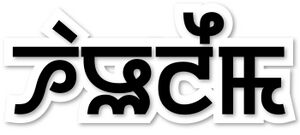
In Meitei language (Manipuri language), the name "Haoreima" is derived from "Haoleima". "Haoleima" is made up of two component words, "Hao" and "Leima".[4] In Meitei language (Manipuri language), "Hao" has multiple meanings. It may mean (1) yes (the response), (2) tasty, savoury or (3) tribe.[8] Here, "Hao" means a "tribe". In Meitei language (Manipuri language), "Leima" means a queen or a mistress or a lady.[9]
The name "Haoreima" usually refers to a tribal woman carrying a traditional elongated basket ("sam" or "sham").[4]
Legend of deification
According to a legend, she was the daughter of Khelemba, a Tangkhul chief of Chingdai village. She was already married to "Khamlangba",[lower-alpha 2] a Tangkhul chief of Chingshong village. However, despite marrying Khamlangba, she had a secret love affair with Meitei king Meidingu Tabungba, also known as Tabung Saphaba (1359-1394). Upon discovering the secret relationship, Khamlangba, getting angry, beheaded Tabung Saphaba.[3] Traumatized at the event, Haoreima took away the head of her lover to the Kanglei Pungmayol. Later, she also followed her lover's path and turned into Meitei goddess of tragic love and separation.
She is also identified as goddess Ireima, who's also an incarnation of goddess Panthoibi.[2]
Namesakes
There are many people with the name "Haoreima" in the history of Ancient Kangleipak (Ancient Manipur). Haoreima Tamheibee was the daughter of King Atom Nongyai Thingkol Hanba of the Khuman dynasty.[10][11] She was married to Meitei King Kainou Irengba (984 AD-1074 AD).[12][11] After the marriage, she came to be known as "Meitei Leima" (lit. Meitei Queen).[13][11]
See also
- Panthoibi
- Nongthang Leima
Notes
- ↑ In Tangkhul society, Haoreima isn't a goddess but just a historical figure, daughter of a tribal village chief.
- ↑ He is eponymous with Meitei God Khamlangba, because "Khamlangba" is a popular male given name in Kangleipak (Manipur).
References
- ↑ 1.0 1.1 Brahmacharimayum Kulachandra Sharma (in mni). চৈথারোল কুমপাপা. Bharat Ek Khoj, Internet Archive. Manipuri Sahitya Parishad, Assam. pp. 603. https://archive.org/details/dli.language.1340/page/n603/mode/2up?q=হাওরৈমা.
- ↑ 2.0 2.1 2.2 2.3 2.4 Hareshwar Goshwami (2004) (in en-GB). History of the People of Manipur (Revised ed.). London: Yaol Publishing. pp. 216–217. ISBN 978-1-9993057-0-3. https://archive.org/details/hareshwar-goshwami-history-of-the-people-of-manipur/page/216/mode/2up?q=Haoreima.
- ↑ 3.0 3.1 3.2 Hareshwar Goshwami (2004) (in en-GB). History of the People of Manipur (Revised ed.). London: Yaol Publishing. pp. 214–215. ISBN 978-1-9993057-0-3. https://archive.org/details/hareshwar-goshwami-history-of-the-people-of-manipur/page/214/mode/2up?q=Haoreima.
- ↑ 4.0 4.1 4.2 Moirangthem Kirti (1988). Religion and Culture of Manipur. Manas Publications. ISBN 978-81-7049-021-0.
- ↑ Memchoubi (1998) (in mni). Eigee Palem Nungshibee. Manipur University Library, Imphal, Internet Archive. Digital Library of India. pp. 17. https://archive.org/details/in.ernet.dli.2015.466803/page/n17/mode/2up.
- ↑ Shekhawat, Seema; Re, Emanuela C. Del (2017-12-18) (in en). Women and Borders: Refugees, Migrants and Communities. Bloomsbury Publishing. pp. 227. ISBN 978-1-83860-987-0. https://books.google.com/books?id=RBiWDwAAQBAJ&dq=Haoreibi+regarded+as+an+incarnation+of+Panthoibi,+the+goddess+of+death,+and+as+a+bringer+of+fertility&pg=PA227.
- ↑ Brahmacharimayum Kulachandra Sharma (in mni). চৈথারোল কুমপাপা. Bharat Ek Khoj, Internet Archive. Manipuri Sahitya Parishad, Assam. pp. 403. https://archive.org/details/dli.language.1340/page/n403/mode/2up?q=হাওরৈমা.
- ↑ "Learners' Manipuri-English dictionary (Meaning of "Hao")". University of Chicago. 2006. https://dsal.uchicago.edu/cgi-bin/app/sharma_query.py?qs=ꯍꯥꯑꯣ&searchhws=yes.
- ↑ "Learners' Manipuri-English dictionary (Meaning of "Leima")". University of Chicago. 2006. https://dsal.uchicago.edu/cgi-bin/app/sharma_query.py?qs=ꯂꯩꯃꯥ&searchhws=yes.
- ↑ Tensuba, Keerti Chand (1993) (in en). Genesis of Indian Tribes: An Approach to the History of Meiteis and Thais. Inter-India Publications. pp. 171. ISBN 978-81-210-0308-7. https://books.google.com/books?id=GmZuAAAAMAAJ&q=haoreima.
- ↑ 11.0 11.1 11.2 Brahmacharimayum Kulachandra Sharma (in mni). চৈথারোল কুমপাপা. Bharat Ek Khoj, Internet Archive. Manipuri Sahitya Parishad, Assam. pp. 597. https://archive.org/details/dli.language.1340/page/n597/mode/2up?q=হাওরৈমা.
- ↑ Ray, Asok Kumar; Chakraborty, Satyabrata (2008) (in en). Society, Politics, and Development in North East India: Essays in Memory of Dr. Basudeb Datta Ray. Concept Publishing Company. pp. 85. ISBN 978-81-8069-572-8. https://books.google.com/books?id=bjkBM3qyZ00C&dq=haoreima&pg=PA85.
- ↑ Devi, L. Kunjeswori (2003) (in en). Archaeology in Manipur. Rajesh Publications. pp. 145. ISBN 978-81-85891-18-7. https://books.google.com/books?id=aFluAAAAMAAJ&q=haoreima.
External links
 |
Wikimedia Commons has media related to Haoreima. |
- Ibemhal, Thounaojam Chanu (2000). Haoreima Shambubi. https://archive.org/details/in.ernet.dli.2015.467054.
 |  |
Categories: [Nature goddesses]
↧ Download as ZWI file | Last modified: 05/31/2025 14:06:45 | 11 views
☰ Source: https://handwiki.org/wiki/Religion:Haoreima | License: CC BY-SA 3.0
 KSF
KSF