 From Ballotpedia
 Election administration in Arizona
.png)
 |
Election administration encompasses a state's voting policies and methods of enforcing them. These include voter identification requirements, early and absentee voting provisions, voter list maintenance methods, and more. Each state's voting policies dictate who can vote and under what conditions.
Below, you will find details on the following election administration topics in Arizona:
Poll times
- See also: State poll opening and closing times
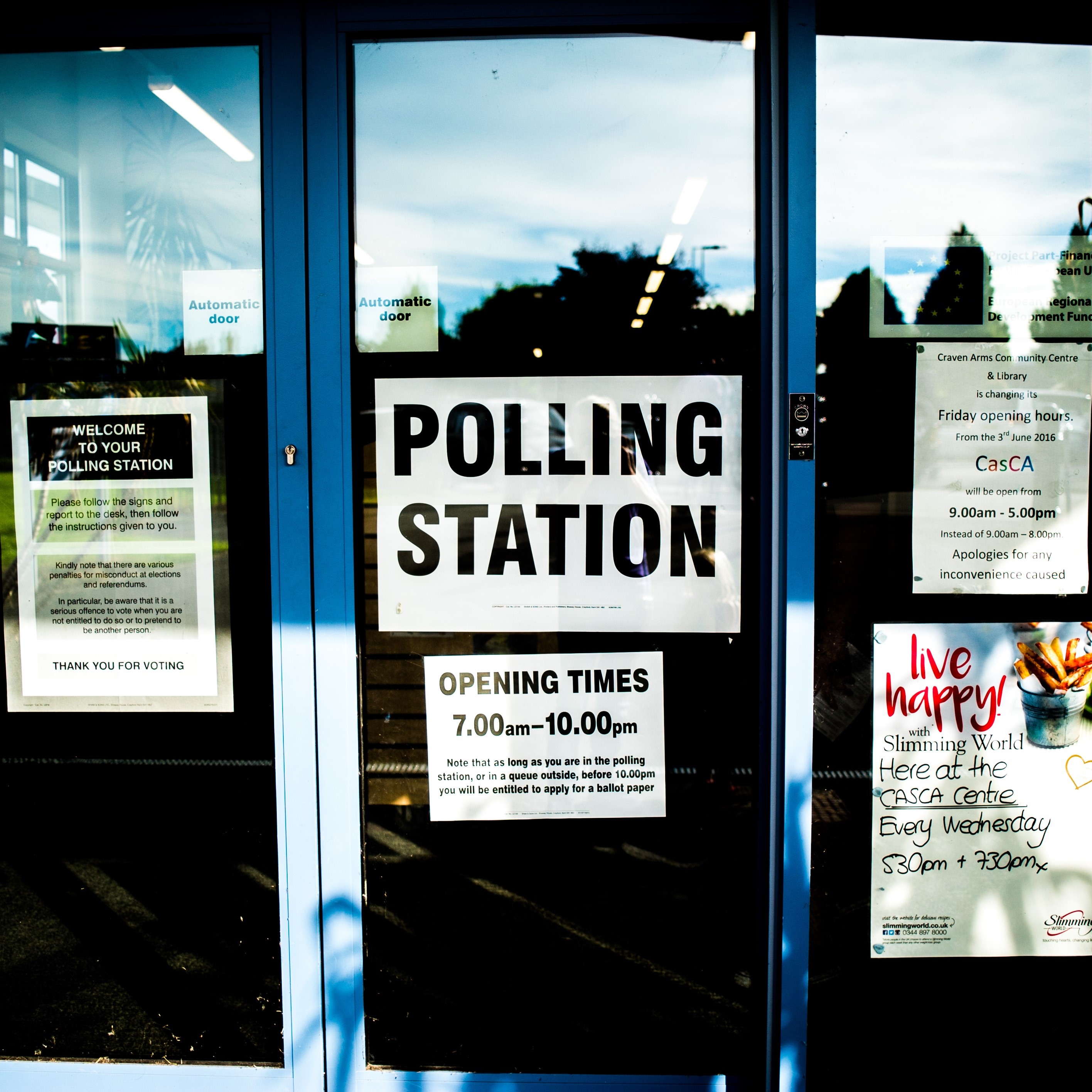
In Arizona, all polling places are open from 6:00 a.m. to 7:00 p.m. local time. An individual who is in line at the time polls close must be allowed to vote.[2][3]
Voter registration
To vote in Arizona, one must be a citizen of the United States and a resident of an Arizona county. A voter must be 18 years or older on or before Election Day.[4]
To be eligible to vote in an election one must register at least 29 days prior to the election. Individuals can register online, in person at the county recorder's office, or by mail.[4]
Automatic registration
Arizona does not practice automatic voter registration.
Online registration
- See also: Online voter registration
Arizona has implemented an online voter registration system. Residents can register to vote by visiting this website.
Same-day registration
Arizona does not allow same-day voter registration.
Residency requirements
Arizona law requires 29 days of residency in the state before a person may vote.
Verification of citizenship
On March 30, 2022, Governor Doug Ducey (R) signed HB2492 into law. HB2492 requires that voters submitting registration forms not produced by the U.S. Election Assistance Commission submit proof of citizenship along with their registration forms. In the case of registration forms produced by the U.S. Election Assistance Commission, HB2492 requires election officials to "use all available resources to verify the citizenship status" of applicants. Should officials be unable to verify a voter's citizenship status, that voter will be barred from voting in a presidential election or by mail in any election, pending submission of proof of citizenship. Should officials determine that a voter is not a citizen, officials will be required to forward the registration application to the county attorney and the attorney general for investigation. Officials who fail to comply with these requirements are guilty of a Class 6 felony.[5]
Verifying your registration
The site Voter View, run by the Arizona Secretary of State's office, allows residents to check their voter registration status online.
Early and absentee voting policy
Early voting
- See also: Early voting
Arizona permits early voting. Learn more by visiting this website.
Absentee voting
- See also: Absentee voting
All voters are eligible to vote absentee in Arizona. There are no special eligibility requirements for voting absentee.
To vote absentee, an absentee ballot application must be received by elections officials by 5:00 p.m. 11 days prior to the election. A returned absentee ballot must then be received by elections officials by 7:00 p.m. on Election Day.[6]
All voters in Arizona are eligible to have their name placed on the Active Early Voting List (AEVL). Voters on the AEVL will receive an early ballot by mail about 27 days before any election in which they are eligible to vote. Voters can add their name to the AEVL by completing a form and returning it to their county recorder.[7][8]
As of July 2019, 28 states and the District of Columbia allowed no-excuse absentee voting. In 19 states, a voter had to give a valid excuse in order to vote absentee. Commonly accepted excuses for casting an absentee ballot include sickness or physical disability, religious observance, and prolonged absence from the voter's home county. Click here to learn more.
Returning absentee ballots
Absentee ballots in Arizona must be returned by 7:00 p.m. on Election Day in order to be counted. Ballots can be returned by mail or delivered in person. SB1411, signed into law on July 6, 2022, mandated that, effective December 31, 2023, counties create online tracking systems indicating "whether the voter's early ballot has been received and whether the early ballot has been verified and sent to be tabulated or rejected."[9] Arizona law permits a "family member, household member or caregiver of the voter" to return the voter's absentee ballot.[10][11]
Signature requirements and cure provisions
Absentee ballots in Arizona include an affidavit that must be signed by the voter in order for their ballot to be counted. When an absentee ballot is returned, Arizona election officials check the signature on the affidavit against the signature on the voter’s registration form. If officials determine that the signature does not match, the ballot will not be counted.[12]
Arizona law contains a cure provision allowing voters to correct an issue with the signature on their ballot. In the case of a signature discrepancy on an absentee ballot, election officials are required to make reasonable efforts to contact the voter and provide them with an opportunity to correct the signature. According to Arizona law, "The county recorder or other officer in charge of elections shall allow signatures to be corrected not later than the fifth business day after a primary, general or special election that includes a federal office or the third business day after any other election."[12]
Was your absentee ballot counted?
Arizona voters who voted early or by absentee ballot can visit the Voter View website provided by the Arizona Secretary of State to check if and when their ballot was counted.
Voter identification requirements
- See also: Voter ID in Arizona
- See also: Voter identification laws by state
Arizona requires voters to present photo identification or two forms of non-photo identification while voting.[13][14]
The following were accepted forms of identification as of August 2022. Click here for the Arizona Citizens Clean Elections Commission's page on accepted ID to ensure you have the most current information.
Voters can present one of the following forms of ID that contain the voter’s photograph, name, and address:
- Driver’s license
- U.S. federal, state, or local government-issued ID, issued with printed name and address
- Arizona ID card
- Tribal enrollment card or other form of tribal ID
If a voter does not have one of the above forms of ID, the voter can present two of the following forms of ID that contain the voter’s name and address:
- Utility bill
- Bank or credit union statement that is dated within 90 days of the date of the election
- Valid Arizona vehicle registration
- Arizona vehicle insurance card
- Indian census card
- Tribal enrollment card or other form of tribal identification
- Property tax statement
- Recorder's certificate
- Voter registration card
- Valid United States federal, state, or local government-issued identification or any mailing that is labeled as "official election material"
Additionally, if a voter presents photo ID that does not list an address within the precinct in which he or she wants to cast a vote, that person may present the photo ID with one non-photo identification material from the second list above. The identification material should include the voter’s address.
Background
Proposition 200, approved by voters in 2004, required voters to present evidence of U.S. citizenship prior to voting. On June 17, 2013, the Supreme Court of the United States ruled that states cannot require proof of citizenship in cases of voter registration for federal elections unless the state receives federal or court approval to do so. The court ruled 7-2. Justices Samuel Alito and Clarence Thomas dissented.[15]
On March 22, 2019, Governor Doug Ducey (R) signed into law legislation requiring voters to present identification at the polls if voting in person at an early voting center.[16]
As of August 2022, 35 states enforced (or were scheduled to begin enforcing) voter identification requirements. A total of 21 states required voters to present photo identification at the polls; the remainder accepted other forms of identification. Valid forms of identification differ by state. Commonly accepted forms of ID include driver's licenses, state-issued identification cards, and military identification cards.[17][18]
Provisional balloting for voters without ID
Voters who do not have ID while voting may cast provisional ballots. See below for provisional ballot rules.
Provisional ballot rules
Voters in Arizona are given provisional ballots, or ballots requiring additional steps or information before they can be counted, under the following circumstances.[19]
(1) If the voter’s name is not on the precinct register and he or she "presents a certificate from the county recorder showing that the elector is entitled by law to vote in the precinct," the voter has the right to cast a provisional ballot.[19]
(2) "If a voter has moved to a new address within the county and has not notified the county recorder of the change of address before the date of an election, the voter shall be permitted to correct the voting records for purposes of voting in future elections at the appropriate polling place for the voter's new address. The voter shall be permitted to vote a provisional ballot."[19]
- The voter must present identification that states his or her full name and address.
- The address must be located in the precinct in which the voter is attempting to vote.
- "The voter shall affirm in writing that the voter is registered in that jurisdiction and is eligible to vote in that jurisdiction."[19]
(3) The voter does not provide requisite identification. The Arizona Secretary of State office's website says, "If you were unable to show valid identification at the polls on Election Day you would have been provided with a conditional provisional ballot. This ballot will be valid and counted as long you provide valid identification to your polling location before 7:00 pm on Election Day. Alternatively, you have up to five business days after a general election and three business days after any other election to provide your identification to your county elections office."[20]
A provisional ballot is rejected in the following circumstances:[21]
- The voter is not registered;
- The ballot is not included in an envelope;
- The voter registered after the 29-day cut-off;
- The ballot is not signed;
- There is insufficient or illegible information;
- The signature on the ballot does not match the voter’s signature;
- The ballot contains the wrong party;
- The ballot is from outside the jurisdiction;
- A voter challenge is upheld;
- The voter voted in the wrong precinct;
- The voter voted and returned an early ballot;
- The voter did not provide proper identification by the deadline of five business days after a general election or three business days after any other election;
- There is an administrative error; or
- The voter is not eligible.
Was your provisional ballot counted?
Visit the secretary of state's Provisional Ballot Search tool to check the status of your provisional ballot.
Primary election type
- See also: Primary elections in Arizona
A primary election is an election in which registered voters select a candidate that they believe should be a political party's candidate for elected office to run in the general election. They are also used to choose convention delegates and party leaders. Primaries are state-level and local-level elections that take place prior to a general election. Arizona utilizes a semi-closed primary system. Unaffiliated voters may choose which party's primary they will vote in, but voters registered with a party can only vote in that party's primary.[22][23][24]
For information about which offices are nominated via primary election, see this article.
Time off work for voting
In Arizona, employees may request up to three hours off work for voting, and the hours may be determined by the employer. Under state law, it is a misdemeanor for an employer not to accommodate this request. Arizona law says the following:
| “ |
A. A person entitled to vote at a primary or general election held within this state may, on the day of election, absent himself for the purpose of voting from the service or employment at which he is employed if there are less than three consecutive hours between the opening of the polls and the beginning of his regular workshift or between the end of his regular workshift and the closing of the polls. In such event, he may absent himself for such length of time at the beginning or end of his workshift that, when added to the time difference between workshift hours and opening or closing of the polls, will provide a total of three consecutive hours. He shall not, because of such absence, be liable for any penalty, nor shall any deduction be made therefor from his usual salary or wages. Application shall be made for such absence prior to the day of election, and the employer may specify the hours during which the employee may absent himself. B. A person who refuses an employee the right conferred by this section, or who subjects an employee to a penalty or reduction of wages therefor, or who directly or indirectly violates the provisions of this section, is guilty of a class 2 misdemeanor.[25][26] |
” |
As of 2020, 28 states had laws requiring employers to provide time off for voting under certain conditions.
Convicted felon voting rules
- See also: Voting rights for convicted felons
In Arizona, conviction of a felony suspends the person's right to vote until they have been restored to civil rights. While first time offenders are automatically restored to civil rights upon completion of their sentence, those with repeat felony offenses must appeal to the court or the judge who discharged them. Click here for the procedure regarding the restoration of voting rights for individuals with multiple felonies.
Voting rights for convicted felons vary from state to state. In the majority of states, convicted felons cannot vote while they are incarcerated but may regain the right to vote upon release from prison or at some point thereafter.[27] [28]
Voter list maintenance
All states have rules under which they maintain voter rolls—or, check and remove certain names from their lists of registered voters. Most states are subject to the parameters set by The National Voter Registration Act (NVRA).[29] The NVRA requires states to make efforts to remove deceased individuals and individuals who have become ineligible due to a change of address. It prohibits removing registrants from voter lists within 90 days of a federal election due to change of address unless a registrant has requested to be removed, or from removing people from voter lists solely because they have not voted. The NVRA says that states may remove names from their registration lists under certain other circumstances and that their methods for removing names must be uniform and nondiscriminatory.[30]
When names can be removed from the voter list
Arizona law requires county recorders to cancel a voter's registration under the following circumstances:[31][32]
- The county recorder "is informed and confirm that the person registered is dead."
- The registrant requests the cancellation.
- The registrant has been deemed an incapacitated person.
- The registrant has been convicted of a felony.
- The registrant "has been on the inactive voter list and has not voted during the time periods prescribed in section 16-166, subsection C."
- The county recorder receives information from the registrant confirming that the registrant is no longer a resident of the state.
- The county recorder receives a summary report from a jury commissioner or jury manager indicating that the registrant has stated that he or she is not a resident of the county.
- The county recorder receives information confirming that the registrant is not a U.S. citizen.
Inactive voter list rules
Arizona law states that "[e]xcept for the mailing of sample ballots, a county recorder who mails an item to any elector shall send the mailing by nonforwardable first class mail." If the mail is returned undelivered, then the recorder is to send notification and a registration form. If the voter does not respond or update their registration within 35 days, then the recorder is to place the voter on the inactive list. If the voter remains on the inactive voter list by not voting or updating their registration status through the next two general elections, their registration is to be canceled.[33]
The Electronic Registration Information Center (ERIC)
As of June 2019, Arizona was one of 28 states participating in the Electronic Registration Information Center (ERIC) program.
ERIC is "a non-profit corporation governed by a board of directors made up of member-states," according to its website. Member states submit voter registration and motor vehicle license information to ERIC. ERIC also uses information from the Social Security Death Master. Member states receive "reports that show voters who have moved within their state, voters who have moved out of state, voters who have died, duplicate registrations in the same state and individuals who are potentially eligible to vote but are not yet registered."
ERIC's website describes its funding as follows: "Each state pays annual dues, which are determined by a formula approved by the ERIC membership. The formula includes citizen voting age population as a factor."[34]
Post-election auditing
Arizona state law requires post-election audits. County election officials, party representatives appointed by the county party chairpersons, and the secretary of state conduct the audit by counting votes from 2% of the precincts in each county or two precincts, whichever is greater. For counties that use vote centers, 2% of vote centers or two vote centers, whichever is greater, are chosen for the audit. One percent or 5,000 early ballots in the county, whichever is less, is also included. Before the election, a committee "establishes margins for each contest to be used during the audit to determine when the audit should be expanded," according to the National Conference of State Legislatures. The audit begins within 24 hours after polls close, and it must be completed before results are certified.[35]
Post-election audits check that election results tallied by a state's voting system match results from paper records, such as paper ballots filled out by voters or paper records produced by electronic voting machines. As of August 2019, 37 states and D.C. required post-election audits. Typically, audits are done by recounting a portion of ballots, either electronically or by hand, and comparing the results to those produced by the state's voting system.[36]
Noteworthy events
2022
On March 30, 2022, Governor Doug Ducey (R) signed HB2492 into law. HB2492 requires that voters submitting registration forms not produced by the U.S. Election Assistance Commission submit proof of citizenship along with their registration forms. In the case of registration forms produced by the U.S. Election Assistance Commission, HB2492 requires election officials to "use all available resources to verify the citizenship status" of applicants. Should officials be unable to verify a voter's citizenship status, that voter will be barred from voting in a presidential election or by mail in any election, pending submission of proof of citizenship. Should officials determine that a voter is not a citizen, officials will be required to forward the registration application to the county attorney and the attorney general for investigation. Officials who fail to comply with these requirements are guilty of a Class 6 felony.[5]
Introduced on January 24, 2022, HB2492 cleared the Arizona House of Representatives by a vote of 31-25, with all Republicans voting in favor and all Democrats against. The Arizona State Senate approved the bill 16-12, also along party lines.[5]
2021
On May 11, 2021, Governor Doug Ducey (R) signed SB1485 into law, making the following modifications to the state's Permanent Early Voting List procedures:[8]
- Renamed the Permanent Early Voting List (PEVL) as the Active Early Voting List (AEVL).
- Provided for a voter's removal from the AEVL if he or she "fails to vote an early ballot in all elections for two consecutive election cycles" and fails to respond to written notice from the county recorder (the voter must "confirm in writing the voter's desire to remain on the active early voting list" and "return the completed notice to the county recorder or other office in charge of elections within ninety days after the notice is sent to the voter").
House Minority Leader Reginald Bolding (D) opposed the legislation: "The desperate desire of one party to game the system and hold onto power by erecting hurdles for voters of color and those with limited means overwhelmed any professed support for good public policy. Democrats, independents, seniors, Native Americans, African Americans, Latinos, women and young people — if you ever believed that your voice and your vote didn't matter, this bill is an absolute reminder that it does." Upon signing SB1485 into law, Ducey said, "Arizona is one of only five states with an early voting list, and this legislation mirrors the practice in California, which removes voters from the list if they do not actively vote. But unlike California, our law requires County Recorders to proactively reach out to voters, with ample notice, before they are removed. If this bill is as bad as some partisan activists have suggested – what does that say about their beloved California?"[37][38]
Election administration agencies
Election agencies

- See also: State election agencies
Individuals seeking additional information about voting provisions in Arizona can contact the following local, state, and federal agencies.
Arizona County Election Officials
Office of the Secretary of State:
- Capitol Executive Tower, 7th Floor
- 1700 W. Washington Street
- Phoenix, Arizona 85007-2808
- Telephone: 602-542-8683
- Fax: 602-542-1575
- http://www.azsos.gov/
U.S. Election Assistance Commission
- 1335 East West Highway, Suite 4300
- Silver Spring, Maryland 20910
- Telephone: 866-747-1471
Election costs: NCSL 2018 report
Arizona pays for statewide and presidential primary elections, according to a February 2018 report by the National Conference of State Legislatures (NCSL) titled, "The Price of Democracy: Splitting the Bill for Elections."[39]
The report's authors noted that "no one knows how much [states] spend on elections ... [because] good research on election costs is slim." Generally, local units of government (most often counties, but sometimes cities and towns) are primarily responsible for election administration costs, though states and the federal government may also contribute. The report identified the states listed in the table below as assuming financial responsibility for at least some aspects of election administration.[40]
To access the complete NCSL report, click here.
| Election administration costs assumed by state | |||
|---|---|---|---|
| State pays all expenses for federal or state elections | State bears a portion of election costs | State pays for statewide special elections or statewide elections that don’t coincide with regularly scheduled elections | State pays for primary elections (statewide, presidential, or both) |
| Alaska Delaware |
Alabama Colorado Hawaii Kentucky Louisiana Rhode Island |
Arkansas Florida Iowa Michigan Missouri New Jersey North Dakota Ohio Oregon Pennsylvania Tennessee Washington West Virginia |
Arizona Arkansas Idaho Kansas Michigan Minnesota Missouri South Carolina Tennessee Texas Virginia Washington |
| Note: If a state is not listed above, it was not included in the report. Source: National Conference of State Legislatures, "The Price of Democracy: Splitting the Bill for Elections," February 14, 2018 | |||
Election policy ballot measures
Ballotpedia has tracked the following ballot measures relating to election and campaign policy in Arizona.
- Arizona Initiative and Referendum, Proposition 104 (1998)
- Arizona Simple Majority in Primary Elections, Proposition 3 (1924)
- Arizona Legislature to Specify Effective Dates for Some Laws, Proposition 100 (1996)
- Arizona Majority Rules, Proposition 105 (2008)
- Arizona Proposition 100 (1974)
- Arizona Proposition 101 (1974)
- Arizona Top-Two Primary Initiative, Proposition 121 (2012)
- Arizona Change of County Seat Referendum, Questions 306 and 307 (1914)
- Arizona Runoff Elections Amendment, Proposition 100 (1992)
- Arizona Vote Requirements for Initiatives and Referendums, Questions 100 and 101 (1916)
- Arizona State Tax Commission, Proposition 2 (1920)
- Arizona Nomination of Candidates, Proposition 2 (September 1922)
- Arizona General Election Date, Proposition 3 (September 1922)
- Arizona Election of County Officers, Proposition 4 (September 1922)
- Arizona Elections for Mine Inspector, Proposition 4 (October 1933)
- Arizona Local Option for Alcohol, Proposition 8 (1950)
- Arizona Eligibility for State Office, Proposition 103 (1988)
- Arizona Election of State Executive Officers, Proposition 105 (1988)
- Arizona Limiting Campaign Contributions, Proposition 200 (1986)
- Arizona Initiative and Referendum Petition Filing Deadlines Amendment, Proposition 100 (1984)
- Arizona Nominations Amendment, Proposition 100 (1980)
- Arizona Corporate Commission Appointment Amendment, Proposition 105 (1968)
- Arizona Congressional Vacancy Elections Amendment, Proposition 101 (1962)
- Arizona Minimum Electors Amendment, Proposition 102 (1974)
- Arizona State Official Voter Requirements Amendment, Proposition 102 (1972)
- Arizona Citizens Clean Elections Act, Proposition 200 (1998)
- Arizona Proposition 306, Clean Election Account Uses and Commission Rulemaking Measure (2018)
- Arizona Proposition 211, Campaign Finance Sources Disclosure Initiative (2022)
- Arizona Proposition 131, Create Office of Lieutenant Governor Amendment (2022)
Election policy legislation
The following is a list of recent election bills that have been introduced in or passed by the Arizona State Legislature. To learn more about each of these bills, click the bill title. This information is provided by BillTrack50 and LegiScan.
Note: Due to the nature of the sorting process used to generate this list, some results may not be relevant to the topic. If no bills are displayed below, no legislation pertaining to this topic has been introduced in the legislature recently.
Recent news
The link below is to the most recent stories in a Google news search for the terms Arizona voting. These results are automatically generated from Google. Ballotpedia does not curate or endorse these articles.
Ballotpedia's election coverage





- United States Senate Democratic Party primaries, 2022
- United States House Democratic Party primaries, 2022
- Democratic Party gubernatorial primaries, 2022
- Democratic Party Secretary of State primaries, 2022
- Democratic Party Attorney General primaries, 2022
- State legislative Democratic primaries, 2022
- United States Senate Republican Party primaries, 2022
- United States House Republican Party primaries, 2022
- Republican Party gubernatorial primaries, 2022
- Republican Party Secretary of State primaries, 2022
- Republican Party Attorney General primaries, 2022
- State legislative Republican primaries, 2022
See also
Elections in Arizona
- Arizona elections, 2022
- Arizona elections, 2021
- Arizona elections, 2020
- Arizona elections, 2019
- Arizona elections, 2018
- Arizona elections, 2017
- Arizona elections, 2016
- Arizona elections, 2015
- Arizona elections, 2014
External links
Footnotes
- ↑ We use the term "absentee/mail-in voting" to describe systems in which requests or applications are required. We use the term "all-mail voting" to denote systems where the ballots themselves are sent automatically to all voters. We use the hyphenate term for absentee voting because some states use “mail voting” (or a similar alternative) to describe what has traditionally been called "absentee voting."
- ↑ Arizona Revised Statutes, "Title 16, Section 565," accessed October 17, 2019
- ↑ Arizona generally observes Mountain Standard Time; however, the Navajo Nation observes daylight saving time. Because of this, Mountain Daylight Time is sometimes observed in Arizona.
- ↑ 4.0 4.1 Arizona Secretary of State, "Register To Vote Or Update Your Current Voter Information," accessed October 5, 2019
- ↑ 5.0 5.1 5.2 Arizona Legislature, "HB2492," accessed April 6, 2022
- ↑ Arizona State Legislature, “Arizona Revised Statutes 16-541,” accessed September 25, 2019
- ↑ Maricopa County Recorder’s Office, "Permanent Early Voting List Information," accessed September 8, 2019
- ↑ 8.0 8.1 Arizona Legislature, "Bill History for SB1485," accessed May 25, 2021
- ↑ Arizona State Legislature, "Arizona Revised Statutes 16-548," accessed September 25, 2019
- ↑ Arizona State Legislature, "Arizona Revised Statutes 16-1005," accessed November 12, 2019
- ↑ BillTrack50, "AZ SB1411," accessed July 18, 2022
- ↑ 12.0 12.1 Arizona State Legislature, "Arizona Revised Statutes 16-550," accessed September 25, 2019
- ↑ ArizonaElections.gov, "What ID Do I Need to Vote Quiz," accessed September 27, 2019
- ↑ FindLaw.com, "Arizona Revised Statutes Title 16. Elections and Electors § 16-579. Procedure for obtaining ballot by elector," accessed September 27, 2019
- ↑ Supreme Court of the United States, "Arizona v. Inter Tribal Council of Arizona, Opinion," June 17, 2013
- ↑ ABC15.com, "Gov. Ducey signs bill requiring identification for early voting," March 22, 2019
- ↑ National Conference of State Legislatures, "Voter Identification Requirements|Voter ID Laws," June 5, 2017
- ↑ The Washington Post, "Do I need an ID to vote? A look at the laws in all 50 states," October 27, 2014
- ↑ 19.0 19.1 19.2 19.3 Arizona State Legislature, "Ariz. Rev. Stat. §16-584," accessed September 8, 2019
- ↑ Arizona Secretary of State, "Voting In This Election," accessed November 12, 2019
- ↑ National Conference of State Legislatures, "Provisional Ballots," accessed September 8, 2019
- ↑ NCSL, "State Primary Election Types," accessed October 25, 2019
- ↑ FairVote, "Primaries," accessed October 25, 2019
- ↑ Citizens Clean Elections Commission, "Primary Election," accessed October 25, 2019
- ↑ Arizona State Legislature -- Classic Site, "16-402. Absence from employment for purpose of voting; application therefor; violation; classification," accessed October 15, 2019
- ↑ Note: This text is quoted verbatim from the original source. Any inconsistencies are attributable to the original source.
- ↑ National Conference of State Legislatures, "Felon Voting Rights," accessed July 15, 2014
- ↑ American Civil Liberties Union, "State Criminal Re-enfranchisement Laws," accessed September 13, 2019
- ↑ The Justice Department notes, "Six States (Idaho, Minnesota, New Hampshire, North Dakota, Wisconsin, and Wyoming) are exempt from the NVRA because, on and after August 1, 1994, they either had no voter-registration requirements or had election-day voter registration at polling places with respect to elections for federal office."
- ↑ The United States Department of Justice, "The National Voter Registration Act of 1993," accessed August 20, 2019
- ↑ Arizona Revised Statutes, "Section 16-165," September 5, 2019
- ↑ BillTrack50, "AZ HB2243," accessed July 19, 2022
- ↑ Arizona Revised Statutes, "ARS 16-166," September 5, 2019
- ↑ ERIC, "Home," accessed August 20, 2019
- ↑ National Conference of State Legislatures, "Post-Election Audits," accessed October 15, 2019
- ↑ National Conference of State Legislatures, "Post-Election Audits," August 5, 2019
- ↑ Office of the Governor of Arizona, "Re: Senate Bill 1485 (early voting list; eligibility)," May 11, 2021
- ↑ NPR, "Arizona Republicans Enact Sweeping Changes To State's Early Voting List," May 11, 2021
- ↑ NCSL, "The Price of Democracy: Splitting the Bill for Elections," February 14, 2018
- ↑ National Conference of State Legislatures, "The Price of Democracy: Splitting the Bill for Elections," February 14, 2018

 |
State of Arizona Phoenix (capital) |
|---|---|
| Elections |
What's on my ballot? | Elections in 2022 | How to vote | How to run for office | Ballot measures |
| Government |
Who represents me? | U.S. President | U.S. Congress | Federal courts | State executives | State legislature | State and local courts | Counties | Cities | School districts | Public policy |
 ZWI signed:
 KSF
KSF