2016 Presidential Candidates On Crime And Justice
 From Ballotpedia
 Date: November 8, 2016 |
Winner: Donald Trump (R) Hillary Clinton (D) • Jill Stein (G) • Gary Johnson (L) • Vice presidential candidates |
Important dates • Nominating process • Ballotpedia's 2016 Battleground Poll • Polls • Debates • Presidential election by state • Ratings and scorecards |
2028 • 2024 • 2020 • 2016 Have you subscribed yet?
Join the hundreds of thousands of readers trusting Ballotpedia to keep them up to date with the latest political news. Sign up for the Daily Brew.
|
This page was current as of the 2016 election.
See below what the 2016 candidates and their respective party platforms said about crime and justice.
Interested in reading more about the 2016 candidates' stances on issues related to crime and justice? Ballotpedia also covered what the candidates said about civil liberties, gun control, and the Black Lives Matter movement.
Democratic ticket[edit]
 Hillary Clinton[edit]

- Speaking at a church in North Carolina on October 3, 2016, Hillary Clinton discussed gun violence and improving police-community relations. She said that police officers should receive training on implicit bias and called for the release of the Charlotte police shooting video of Keith Lamont Scott. "I’m a grandmother, and like every grandmother, I worry about the safety and security of my grandchildren, but my worries are not the same as black grandmothers, who have different and deeper fears about the world that their grandchildren face," she said.[1]
- During a rally in Orlando, Florida, on September 21, 2016, Clinton commented on the police shooting deaths of two black men, Terence Crutcher and Keith Lamont Scott. "There is still much we don’t know about what happened in both incidents. But we do know that we have two more names to add to a list of African Americans killed by police officers in these encounters. It’s unbearable. And it needs to become intolerable," she said.[2]
- Clinton spoke at the NAACP’s annual convention in Cincinnati on July 18, 2016, where, in response to the police shooting deaths of Alton Sterling and Philando Castile and the Dallas and Baton Rouge attacks on police officers, she said, “This madness has to stop.” Clinton said she would “bring the full weight of the law to bear in making sure those who kill police officers are brought to justice. There can be no justification, no looking the other way.” Clinton also noted the importance of improving the criminal justice system. “There is, as you know so well, another hard truth at the heart of this complex matter: Many African-Americans fear the police,” Clinton said.[3]
- Responding to the deadly shooting of police officers in Baton Rouge on July 17, 2016, Clinton said in a statement, “Today's devastating assault on police officers in Baton Rouge is an assault on all of us. There is no justification for violence, for hate, for attacks on men and women who put their lives on the line every day in service of our families and communities.”[4]
- Clinton discussed the sniper attack on Dallas law enforcement in an interview on July 8, 2016. “This is deeply troubling and it should worry every single American. You know, we have got to do much more to listen to one another, respect each other,” she said. In the wake of Dallas and the shooting deaths of two black Americans by police officers, Clinton added that the country must “support our police and support innocent Americans that have deadly encounters with police." She recommended stronger national guidelines for the use of deadly force by police.[5]
Black Lives Matter movement[edit]
- Leading Black Lives Matter activist DeRay McKesson endorsed Hillary Clinton in an editorial for The Washington Post on October 26, 2016. He wrote, "Clinton’s platform on racial justice is strong: It is informed by the policy failings of the past and is a vision for where we need to go. It acknowledges the need to establish new restrictions on police use of force and militarization, invest in treatment and rehabilitation as alternatives to police and prisons, and protect and expand the right to vote." In contrast, McKesson asserted, "Trump wants to take us back to a time when people like him could abuse others with little to no consequence, when people like him could exploit the labor of others to build vast amounts of wealth, when people like him could create public policy that specifically benefited them, while suppressing the rights and social mobility of others."[6]
- On September 21, 2016, Clinton campaign manager Robby Mook discussed Clinton's plan to implement a set of best practices to prevent police-involved shootings. According to Mook, her approach would be two-pronged. Mook told CNN's Alisyn Camerota, "The first is to have a set of national standards around how to manage the situations that doesn't exist right now and that could help through training to prevent situations like this." Mook continued, "The second piece is to restore bonds between communities and law enforcement, so investing in community policing and making sure that local police have the resources to build the resources in the community to prevent something like this from happening."[7]
- On September 20, 2016, Clinton said that there were "good, honorable, cool-headed police officers" working across the country but that "we can do better." She added, "We have got to tackle systemic racism." Discussing the police shooting death of Terence Crutcher in Tulsa, Oklahoma, she said, "This is just unbearable. And it needs to be intolerable."[7]
- In response to the police shooting death of Philando Castile, which was recorded and published in a Facebook Live video stream, Clinton tweeted on July 7, 2016, “America woke up to yet another tragedy of a life cut down too soon. Black Lives Matter.”[8]
- On October 30, 2015, Black Lives Matter protesters interrupted Hillary Clinton’s speech in Atlanta at a historically black college. After they were removed from the room, Clinton said, “I appreciate their passion, but I'm sorry they didn't listen because some of what they're demanding, I am offering."[9]
- Clinton met with Black Lives Matter activists on October 9, 2015, to discuss criminal justice reform and alternatives to law enforcement-centered policing of communities. An aide to Clinton said that she “reaffirmed her policy on private prisons and immigrant detention centers—she wants to end those.”[10]
- On August 11, 2015, Clinton met with representatives from the Black Lives Matter movement after she hosted and spoke at a forum on substance abuse in New Hampshire.[11] The activists, including Daunasia Yancey, the founder of Black Lives Matter's Boston chapter, were denied access to the event because the room was at capacity.[12][13] Clinton spoke with the activists for 15 minutes. Yancey said of the discussion, "I asked specifically about her and her family's involvement in the War on Drugs at home and abroad, and the implications that has had on communities of color and especially black people in terms of white supremacist violence. And I wanted to know how she felt about her involvement in those processes.”
- Although the Black Lives Matter members requested that the media not record the conversation, they filmed their own video of the exchange and released it on August 17, 2015.[14] Clinton expressed her disagreement with the movement's approach. "Look, I don't believe you change hearts. I believe you change laws, you change allocation of resources, you change the way systems operate. You're not going to change every heart. You're not. But at the end of the day, we could do a whole lot to change some hearts and change some systems and create more opportunities for people who deserve to have them, to live up to their own God-given potential," Clinton said.[13][12]
- Read more of Hillary Clinton's public statements on crime and justice and the Black Lives Matter movement.
| The 2016 Democratic Party Platform on crime and justice | |||
|---|---|---|---|
|
| The 2016 Democratic Party Platform on ending systemic racism | ||||||
|---|---|---|---|---|---|---|
| ||||||
Tim Kaine[edit]
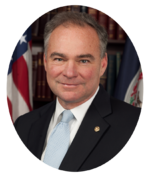
- A longtime supporter of criminal justice reform, Kaine co-sponsored the Sentencing Reform and Corrections Act of 2015. The bipartisan compromise bill aimed "to reduce over-criminalization and over-incarceration without compromising the safety of communities." It would reduce certain mandatory minimum sentences, expand recidivism reduction programs such as the prison work program, and allow judges more discretion in sentencing.[18]
- Following an October 15, 2015, roundtable discussion with ex-offenders about criminal justice reform and the challenges of re-entry, Kaine said, “My takeaways from today’s discussion were, first, we need to determine what educational programs can keep kids on the right track and off the wrong track. Second, we should provide more opportunities for those within the federal, state and local prison systems to learn and improve themselves. Third, let’s make sure that there is advice for people – including where to go for help and where to find helpful rehabilitation programs – right before they leave the prison system. Fourth, once people are out of prison, what can we do as a society to make it easier for them to vote or get a job? And lastly, let’s make sure we are supporting organizations that have proven programs that keep people from falling back onto the wrong path.”[18]
- Kaine is personally opposed to the death penalty, but he presided over 11 executions while governor of Virginia because he said he was sworn to uphold the law. He commuted one death sentence to life in prison after concluding that the inmate was "mentally unfit" for execution.
- As governor, Kaine blocked all legislative efforts to expand the death penalty in Virginia.[19]
Black Lives Matter movement[edit]
- Addressing a gathering of the National Urban League in Baltimore, Maryland, on August 4, 2016, Tim Kaine highlighted his work fighting "redlining," a practice used by banks to deny home loans to black mortgage applicants in some neighborhoods. Kaine also said, "If English lives in history matter, if Spanish lives in history matter, then African-American lives in history ought to matter to us too. African-American history matters because black lives matter."[20]
- In an interview following the National Urban League event, U.S. Rep. Elijah Cummings (D-Md.) said that Kaine "realizes the pain. He may not be able to fully feel the pain, but he realizes there’s pain. And I don’t know that Trump even realizes there’s pain with regard to the African-American community and what we’ve been through.”[20]
Republican ticket[edit]
 Donald Trump[edit]
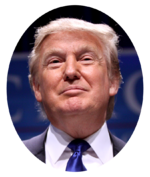
- At a campaign event in Colorado on September 22, 2016, Trump’s running mate, Mike Pence, discussed police shootings in Oklahoma and North Carolina. He said, “Donald Trump and I believe there's been far too much of this talk of institutional bias or racism within law enforcement. That police officers are human beings. In difficult and life threatening situations, mistakes are made and people have to be held to strict account. … we ought to set aside this talk about institutional racism and institutional bias.”[21]
- Donald Trump commented on the police shooting deaths of two black men, Terence Crutcher in Oklahoma and Keith Lamont Scott in North Carolina, in mid-September 2016.
- At a campaign event in Ohio on September 21, 2016, Trump commented on Crutcher’s death, saying, “I must tell you, I watched the shooting in particular in Tulsa and that man was hands up, that man went to the car -- hands up -- put his hand on the car. To me, it looked like he did everything you're supposed to do. And he looked like a really good man -- and maybe I'm a little clouded because I saw his family talking about him after the fact ... but he looked like somebody who was doing what they were asking him to do. This young officer, I don't know what she was thinking. I don't know what she was thinking, but I'm very, very troubled by that and we have to be very careful. Did she get scared? Was she choking? What happened? But people that choke, maybe they can't be doing what they're doing.”[22]
- Regarding rioting in the city of Charlotte that followed the death of Scott, Trump said in an interview on "Fox and Friends" on September 22, 2016, “There's a lack of spirit between the white and the black. It's a terrible thing that we're witnessing. There's a lack of something. Something is going on that's bad. What's going on between police and others is getting worse. You have to have law and order. At the same time, you have to have a level of spirit, a level of unity. There's no unity. You look at the level of hatred, the rocks being thrown.”[23] At a campaign event in Pennsylvania on September 22, Trump said, “If you're not aware, drugs are a very, very big factor in what you're watching on television at night. … There is no compassion in tolerating lawless conduct. Crime and violence is an attack on the poor and will never be accepted in a Trump administration. Never, ever.”[24]
- In a Fox News interview on September 21, 2016, Trump responded to a question about what he would do to cut down on inner-city crime by advocating the use of stop-and-frisk, a policing technique known for its use in New York City. He said, “I would do stop-and-frisk. I think you have to. We did it in New York, it worked incredibly well. And you have to be proactive and, you know, you really help people sort of change their mind automatically. You understand. You have to have – in my opinion, I see what’s going on here, I see what’s going on in Chicago, I think stop-and-frisk, in New York City, it was so incredible, the way it worked. Now, we had a very good mayor. But New York City was incredible the way that worked. So I think that would be one step you could do.” A federal judge ruled stop-and-frisk unconstitutional in 2013.[25] The next day, Trump clarified that he was talking specifically about the city of Chicago, telling Fox and Friends, “Chicago is out of control, and I was really referring to Chicago with stop-and-frisk. They asked me about Chicago, and I was talking about stop-and-frisk for Chicago.”[26]
- At a campaign event in North Carolina on September 20, 2016, Trump discussed African American communities and inner-city crime, saying, “African-American communities are absolutely in the worst shape they've ever been in before. Ever, ever, ever.” He added, “You take a look at the inner cities, you get no education, you get no jobs, you get shot walking down the street. They're worse, I mean honestly, places like Afghanistan are safer than some of our inner cities. And I say to the African-American communities, and I think it's resonating, because you see what's happening with my poll numbers with African Americans. They're going, like, high. With the inner cities I say to the African American people who have to suffer in these inner cities, I'm going to fix it, I'm going to fix it. We're going to fix it.”[27]
- At a campaign event in Iowa on August 27, 2016, Trump said, “I’ve spoken a lot in recent days about the deplorable conditions in many of our inner cities. As a father, as a builder, as an American, it offends my sense of right and wrong to see anyone living in such conditions. Almost 40 percent of African-American children are living in poverty – including 45 percent of children under the age of six. … Failed Democratic policies – the policies of Hillary Clinton – have created this high crime and crushing poverty. … I am running to offer a better future – to the citizens of Detroit, Baltimore, Chicago, and all across this great land.”[28]
Black Lives Matter movement[edit]
| The 2016 Republican Party Platform on crime and justice | ||||||
|---|---|---|---|---|---|---|
| ||||||
| The 2016 Republican Party Platform on Black Lives Matter |
|---|
| The 2016 Republican Party Platform does not mention the Black Lives Matter movement.[30] |
Mike Pence[edit]
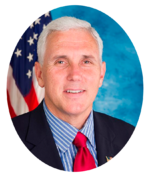
- On September 24, 2016, Pence addressed about 200 Christian coalition members of the House School Legal Defense Association in Black Mountain, North Carolina. He called for a full investigation of the shooting death of Keith Lamont Scott by a Charlotte police officer. He also encouraged the group to pray for Charlotte, Scott's family, and law enforcement. On the protests in Charlotte prompted by the shooting, Pence said, “no one has the right to engage in acts of violence against property of persons” in the U.S.[31]
- At a pastors' roundtable in Colorado Springs, Colorado, on September 22, 2016, Pence said there was too much discussion of "institutional racism and institutional bias" following the police shootings in Tulsa, Oklahoma, and Charlotte, North Carolina. "We ought to set aside this talk, this talk about institutional racism and institutional bias," he said, calling such terminology "rhetoric of division." When Bishop John Brannon, who is black, asked Pence what he would "personally do" to heal national divides, Pence said, "When there's any loss of life, we have to speak with compassion, we have to make it clear that there will be a thorough investigation and that justice will be served and that high standards will be upheld."[32]
- In an interview on September 20, 2016, MSNBC's Brian Williams asked Mike Pence for his reaction to the police shooting of Terence Crutcher in Tulsa, Oklahoma. Pence responded by commending the first responders to the New Jersey and New York bombings that took place the previous weekend. He continued, "I think the American people can be proud of our law enforcement community and their efforts in this regard. And obviously when an incident like this takes place, we fully support a thorough investigation of what took place. You know the fact of the matter is that police officers are human beings and they make mistakes. And when mistakes are made, they should be held to the strictest account. But what I find offensive is when Hillary Clinton and others refer to implicit bias or institutional bias within the ranks of our law enforcement community broadly. The men and women who serve in law enforcement in this country, Brian, whether they be white, or African American, or Latino, Hispanic, or Asian, these men and women are the best of us and they are dedicated to the safety and security of our families."[33]
- Read more of Mike Pence's public statements on 2016 campaign issues.
Green candidate[edit]
 Jill Stein[edit]
Black Lives Matter movement[edit]
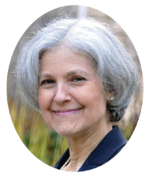
- On October 12, 2016, Stein tweeted, "Training police in the style of Israeli Defense Forces must end if we'd like to move away from occupation-style policing. #BlackLivesMatter."[34]
- Jill Stein took to Twitter to convey her thoughts on the police shooting death of Terence Crutcher.
- On September 19, 2016, Stein tweeted, "The baseless assumptions and callousness towards #TerenceCrutcher before he was shot dead are indicative of systematic bias that has to end." She also wrote, "We need an investigation into the killing of #TerenceCrutcher at the hands of police. #BlackLivesMatter."[35]
- On September 21, 2016, Stein tweeted, “When police officers are being actively investigated for a civilian death they should not be rewarded with paid leave or desk-duty.” She also wrote, “Police forces should always be deeply reviewing personnel records and screening excessive force complaints of transferring officers.”[36]
- "For #BlackLivesMatter and racial justice issues, our campaign has been on the front line working with these communities. I've just come from San Francisco where I canvassed with two members of the 'Frisco 5' who conducted a 17-day hunger strike that actually got rid of the police chief. We need to challenge power if we are to really to create change.”[37]
- Read more of Jill Stein's public statements on 2016 campaign issues.
| The 2016 Green Party Platform on racial discrimination | ||||||
|---|---|---|---|---|---|---|
| ||||||
Libertarian candidate[edit]
 Gary Johnson[edit]
-circle.png)
- While participating in Fusion’s Libertarian Presidential Forum on August 17, 2016, Gary Johnson expressed opposition to hate crime laws. He said, “Look, I am scared to death regarding hate crime legislation. You’re talking about me throwing a rock through someone’s window. I should be prosecuted on throwing the rock, not my thoughts that motivated me throwing the rock through that window.”[39]
- In an interview with Politico on July 8, 2016, Gary Johnson said “the root” of the violence in Dallas was “the war on drugs.” He continued, “If you are [black and] arrested in a drug-related crime, there is four times more likelihood of going to prison than if you are white. And shooting is part of the same phenomenon That’s the common thread. Shootings are occurring with black people, black people are dying. This is an escalation.”[40]
- In an interview with BuzzFeed on July 6, 2016, Johnson called the footage of the police shooting death of Alton Sterling “very disturbing.” He continued, “If there was no display of a gun, if he didn’t have it in his hand…if his hand wasn’t being suppressed, I don’t get it. I mean, that’s murder.” Johnson said police departments should model themselves after those in cities with the fewest number of shootings.[41]
- Johnson called the imposition of the death penalty "flawed public policy" in his 2012 book, Seven Principles of Good Government. He wrote, "When I was younger, I supported capital punishment. I changed my mind because I recognized that the risks and costs associated with the death penalty are too high. I understand the eye-for-an-eye, tooth-for-a-tooth mentality but, realistically public policy should have room for mistakes. Killing one innocent person who was wrongly accused is not worth executing 99 guilty people. DNA evidence and judicial appeals have shown many people are mistakenly convicted."[42]
- In September 1999, Johnson, an advocate of private prisons, opposed an independent review of private prison operations in New Mexico following several riots and fatalities at private facilities in the state. A spokeswoman from his office said he was "confident and satisfied" with an inquiry conducted by the Public Safety and Corrections Department.[43]
Black Lives Matter movement[edit]
- On August 23, 2016, Gary Johnson appeared on "The Five" on Fox News. Johnson repeated an earlier admission that until recently he'd had his "head in the sand" on the issue of institutionalized racism in the criminal justice system. "The Five" panelist Eric Bolling said he was shocked to hear that Johnson had publicly expressed support of the Black Lives Matter movement and disagreement with the phrase "all lives matter." Highlighting the racial disparity in shootings, Johnson responded, "All lives do matter, but when it comes to whites, guess what? We’re not being shot at the rate of six times blacks are being shot at."[44]
- During a CNN Libertarian Town Hall on August 3, 2016, Johnson was asked what he thought of the Black Lives Matter movement. "What it has done for me is that my head's been in the sand on this," Johnson replied. "I think we've all had our heads in the sand. And let's wake up. This discrimination does exist, it has existed, and for me, personally, slap, slap, wake up."[45]
- Read more of Gary Johnson's public statements on crime and justice.
| The 2016 Libertarian Party Platform on crime and justice | ||||||
|---|---|---|---|---|---|---|
| ||||||
| The 2016 Libertarian Party Platform on rights and discrimination | ||||||
|---|---|---|---|---|---|---|
| ||||||
Recent news[edit]
The link below is to the most recent stories in a Google news search for the terms 2016 presidential candidates on crime and justice. These results are automatically generated from Google. Ballotpedia does not curate or endorse these articles.
See also[edit]
External links[edit]
- ProCon.org's "Should the Death Penalty Be Allowed?"
- ProCon.org's "Should Law Enforcement Be Allowed to Use Racial Profiling?"
- ProCon.org's "Should the United States Continue the War on Drugs?"
- ProCon.org's "Is the Criminal Justice System Unfair to Black People?"
- ProCon.org's "Is the Black Lives Matter Movement Good for America?"
- ProCon.org's "Should Private Prisons Be Allowed in the United States?"
- ProCon.org's "Should the United States Continue the War on Drugs?"
Footnotes[edit]
- ↑ Reuters, "Clinton: My worries are not the same as black grandmothers,'" October 3, 2016
- ↑ Hillary Clinton for President, "In Orlando, Clinton Vows to Protect the Rights of People with Disabilities," September 21, 2016
- ↑ The New York Times, "'Madness Has to Stop,' Hillary Clinton Declares at NAACP Conference," July 18, 2016
- ↑ CNN, "Obama on Baton Rouge: We need to 'temper our words and open our hearts'," July 18, 2016
- ↑ The Hill, "Clinton: Dallas shootings 'deeply troubling'," July 8, 2016
- ↑ The Washington Post, "DeRay Mckesson: Why I’m voting for Hillary Clinton," October 26, 2016
- ↑ 7.0 7.1 CNN, "Clinton plans to develop national standards to manage police shootings," September 21, 2016
- ↑ The Los Angeles Times, "‘Something is profoundly wrong,’ Clinton says after high-profile killings of black men," July 7, 2016
- ↑ Politico, "Black Lives Matter protesters disrupt Clinton speech," October 30, 2015
- ↑ Politico, "Hillary Clinton has 'tough,' 'candid' meeting with Black Lives Matter activists," October 10, 2015
- ↑ New Hampshire Public Radio, "Clinton Holds Forum On Drug Abuse in Keene," August 11, 2015
- ↑ 12.0 12.1 New Republic, "Black Lives Matter Arrives on Hillary Clinton’s Doorstep," August 11, 2015
- ↑ 13.0 13.1 CNN, "Black Lives Matter videos, Clinton campaign reveal details of meeting," August 18, 2015
- ↑ Good, "Hillary Clinton to #BlackLivesMatter in Video, 'I Don’t Believe You Change Hearts...'," August 17, 2015
- ↑ Democratic Party, "The 2016 Democratic Party Platform," accessed August 25, 2016
- ↑ 16.0 16.1 16.2 16.3 16.4 16.5 Note: This text is quoted verbatim from the original source. Any inconsistencies are attributable to the original source.
- ↑ Democratic Party, "The 2016 Democratic Party Platform," accessed August 25, 2016
- ↑ 18.0 18.1 Tim Kaine United States Senator for Virginia, "Press Release: In Richmond, Kaine Joins Ex-Offenders for Roundtable Discussion on Criminal Justice Reform," October 15, 2015
- ↑ The New York Times, "On Death Penalty Cases, Tim Kaine Revealed Inner Conflict," July 23, 2016
- ↑ 20.0 20.1 Politico, "Kaine accuses Trump of history of racism," August 4, 2016
- ↑ CNN, "Pence: 'Too much talk' of institutional, racial bias in law enforcement," September 22, 2016
- ↑ CNN, "Trump 'very troubled' by Oklahoma fatal police shooting," September 21, 2016
- ↑ Business Insider, "Donald Trump on protests in Charlotte: 'There's a lack of spirit between the white and the black,'" September 22, 2016
- ↑ The Hill, "Trump: Drugs 'very big factor' in Charlotte unrest," September 22, 2016
- ↑ CBS News, "Trump gives tepid answer on birtherism; says he supports stop-and-frisk," September 22, 2016
- ↑ Chicago Tribune, "Trump urges stop-and-frisk for Chicago, a practice attacked as racial profiling," September 22, 2016
- ↑ The Washington Post, "African Americans are ‘in the worst shape they’ve ever been,’ Trump says in North Carolina," September 23, 2016
- ↑ Fox News, "In heartland Iowa, Trump vows to help farmers, urban minorities alike," August 27, 2016
- ↑ Republican Party, "The 2016 Republican Party Platform," accessed August 25, 2016
- ↑ Republican Party, "The 2016 Republican Party Platform," accessed August 23, 2016
- ↑ The Washington Post, "The Latest: Pence calls for Charlotte shooting investigation," September 25, 2016
- ↑ Politico, "Pence: There's too much talk of police department 'racism,'" September 22, 2016
- ↑ MSNBC, "Mike Pence reacts to Tulsa police shooting," September 20, 2016
- ↑ Twitter, "Jill Stein," October 12, 2016
- ↑ Twitter, "Jill Stein," September 19, 2016
- ↑ Twitter, "Jill Stein," September 21, 2016
- ↑ OC Weekly, "Green Party Presidential Hopeful Jill Stein Wants to Let OC Know She'll Keep the Revolution Going," June 6, 2016
- ↑ The Green Party of the United States, "Platform," August 6, 2016
- ↑ Fusion, "Gary Johnson defends his opposition to hate crime laws and support of private prisons," August 17, 2016
- ↑ Politico, "Libertarian Johnson: Drug war 'root cause' of police shootings," July 8, 2016
- ↑ BuzzFeed, "Libertarian Candidate Gary Johnson: Alton Sterling Shooting Appears To Be A Murder," July 6, 2016
- ↑ Johnson, Gary. (2012). Seven Principles of Good Government. Aberdeen: Silver Lake Publishing. (pages 70-71)
- ↑ Amarillo Globe-News, "Johnson opposes independent study of private prisons," September 3, 1999
- ↑ Bustle.com, "Gary Johnson Defended Black Lives Matter On Fox News With A Trove Of Statistics," August 24, 2016
- ↑ Politico, "Gary Johnson admits blind spot on racial discrimination," August 3, 2016
- ↑ Libertarian Party, "The 2016 Libertarian Party Platform," accessed August 24, 2016
- ↑ Libertarian Party, "Libertarian Party Platform," May 27, 2016

Categories: [2016 presidential election, Crime and justice] [2016 presidential election issues overviews]
↧ Download as ZWI file | Last modified: 03/06/2026 17:09:33 | 30 views
☰ Source: https://ballotpedia.org/2016_presidential_candidates_on_crime_and_justice | License: CC BY-SA 3.0
 KSF
KSF