Ufology
 From Handwiki
| Part of a series on the |
| Paranormal |
|---|
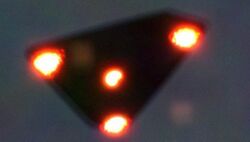
Ufology (/juːˈfɒlədʒi/ yoo-FOL-ə-jee) is the investigation of unidentified flying objects (UFOs) by people who believe that they may be of extraordinary origins (most frequently of extraterrestrial alien visitors).[3][4] While there are instances of government, private, and fringe science investigations of UFOs, ufology is generally regarded by skeptics and science educators as an example of pseudoscience.
Etymology
Ufology is a neologism derived from UFO (a term apparently coined by Edward J. Ruppelt),[5] and is derived from appending the acronym UFO with the suffix -logy (from the Ancient Greek -λογία (-logia)). Early uses of ufology include an article in Fantastic Universe (1957)[6] and a 1958 presentation for the UFO "research organization" The Planetary Center.[7]
Historical background
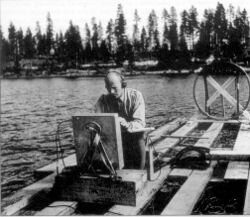
The roots of ufology include the "mystery airships" of the late 1890s, the "foo fighters" reported by Allied airmen during World War II, the "ghost fliers" of Europe and North America during the 1930s, the "ghost rockets" of Scandinavia (mostly Sweden) in 1946, and the Kenneth Arnold "flying saucer" sighting of 1947.[8][9] Media attention to the Arnold sighting helped publicize the concept of flying saucers.[10]
Publicity of UFOs increased after World War II, coinciding with the escalation of the Cold War and strategic concerns related to the development and detection (e.g., the Ground Observer Corps) of advanced Soviet aircraft.[8][11][12] Official, government-sponsored activities in the United States related to ufology ended in the late 1960s following the Condon Committee report and the termination of Project Blue Book.[13] Government-sponsored, UFO-related activities in other countries, including the United Kingdom ,[14][15] Canada,[16] Denmark,[17] Italy,[18] and Sweden[19] also ended. An exception to this trend is France, which maintains the GEIPAN[20] program, formerly known as GEPAN (1977–1988) and SEPRA (1988–2004), operated by the French Space Agency CNES.
On 14 September 2023, NASA reported the appointment, for the first time, of a Director of U.A.P. (known earlier as U.F.O.), identified as Mark McInerney, to scientifically, and transparently, study such occurrences.[21]
As a field
Status as a pseudoscience
Despite investigations sponsored by governments and private entities, ufology is not embraced by academia as a scientific field of study, and is instead generally considered a pseudoscience by skeptics and science educators,[22] being often included on lists of topics characterized as pseudoscience as either a partial[23] or total[24][25] pseudoscience.[26][27][28][29][30][31] Pseudoscience is a term that classifies arguments that are claimed to exemplify the methods and principles of science, but do not in fact adhere to an appropriate scientific method, lack supporting evidence, plausibility, falsifiability, or otherwise lack scientific status.[32]
Some writers have identified social factors that contribute to the status of ufology as a pseudoscience,[33][34][35] with one study suggesting that "any science doubt surrounding unidentified flying objects and aliens was not primarily due to the ignorance of ufologists about science, but rather a product of the respective research practices of and relations between ufology, the sciences, and government investigative bodies".[34] One study suggests that "the rudimentary standard of science communication attending to the extraterrestrial intelligence (ETI) hypothesis for UFOs inhibits public understanding of science, dissuades academic inquiry within the physical and social sciences, and undermines progressive space policy initiatives".[36]
Current interest
In 2021, astronomer Avi Loeb launched The Galileo Project[37] which intends to collect and report scientific evidence of extraterrestrials or extraterrestrial technology on or near Earth via telescopic observations.[38][39][40][41]
In Germany, the University of Würzburg is developing intelligent sensors that can help detect and analyze aerial objects in hopes of applying such technology to UAP.[42][43][44][45]
A 2021 Gallup poll found that belief among Americans in some UFOs being extraterrestrial spacecraft grew between 2019 and 2021 from 33% to 41%. Gallup cited increased coverage in mainstream news and scrutiny from government authorities as a factor in changing attitudes towards UFOs.[46]
In 2022, NASA announced a nine-month study starting in fall to help establish a road map for investigating UAP – or for reconnaissance of the publicly available data it might use for such research.[47][48][49]
In 2023, the RAND Corporation, published a study reviewing 101,151 public reports of UAP sightings in the United States from 1998 to 2022.[50] The models used to conduct the analysis showed that reports of UAP sightings were less likely within 30 km of weather stations, 60 km of civilian airports, and in more–densely populated areas, while rural areas tended to have a higher rate of UAP reports. The most consistent and statistically significant finding was that reports of UAP sightings were more likely to occur in areas within 30 km of military operations areas, where routine military training occurs.
Methodological issues
Although some ufologists (e.g., Peter A. Sturrock) have proposed explicit methodological activities for investigation of UFOs,[51] scientific UFO research is challenged by the facts that the phenomena are spatially and temporally unpredictable, are not reproducible, and lack tangible physicality.[52][53] That most UFO sightings have mundane explanations[54] limits interpretive power of "interesting," extraordinary UFO-related events, with the astronomer Carl Sagan writing: "The reliable cases are uninteresting and the interesting cases are unreliable. Unfortunately there are no cases that are both reliable and interesting."[55]
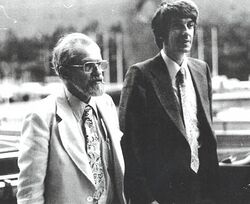
The ufologists J. Allen Hynek and Jacques Vallée have each developed descriptive systems for characterizing UFO sightings, and by extension for organizing ufology investigations.[56][57][58][unreliable source?]
Phenomena linked to ufology
In addition to UFO sightings, certain supposedly related phenomena are of interest to some ufologists, including crop circles,[59][60] cattle mutilations,[61] anomalous materials,[62][63] alien abductions and implants.[64][65][66][67]
Some ufologists have also promoted UFO conspiracy theories, including the Roswell Incident of 1947,[68][69][70] the Majestic 12 documents,[71] and UFO disclosure advocates.[72][73]
Skeptic Robert Sheaffer has accused ufology of having a "credulity explosion,"[74] writing that, "the kind of stories generating excitement and attention in any given year would have been rejected by mainstream ufologists a few years earlier for being too outlandish."[74] The physicist James E. McDonald also identified "cultism" and "extreme...subgroups" as negatively impacting ufology.[75]
In Posadism
During the Cold War, ufology was synthesized with the ideas of a Trotskyist movement in South America known as Posadism. Posadism's main theorist, Juan Posadas, believed the human race must "appeal to the beings on other planets...to intervene and collaborate with Earth's inhabitants in suppressing poverty;" i.e., Posadas wished to collaborate with extraterrestrials in order to create a socialist system on Earth.[76] The adoption of this belief among Posadists, who had previously been a significant political force in South America, has been noted as a contributing factor in their decline.[77]
Governmental and private ufology studies
Starting in the 1940s, investigations, studies, and conferences related to ufology were sponsored by governmental agencies and private groups. Typically motivated by visual UFO sightings, the goals of these studies included critical evaluation of the observational evidence, attempts to resolve and identify the observed events, and the development of policy recommendations. These studies include Project Sign, Project Magnet, Project Blue Book, the Robertson Panel, and the Condon Committee in the United States, the Flying Saucer Working Party and Project Condign in Britain, GEIPAN in France, and Project Hessdalen in Norway. Private studies of UFO phenomena include those produced by the RAND Corporation in 1968,[78] Harvey Rutledge of the University of Missouri from 1973 to 1980,[79][80] and the National Press Club's Disclosure Project in 2001.[81][82][83] Additionally, the United Nations from 1977 to 1979 sponsored meetings and hearings concerning UFO sightings.[84][85] In August 2020, the United States Department of Defense established the Unidentified Aerial Phenomena Task Force to detect, analyze and catalog unidentified aerial phenomena that could potentially pose a threat to U.S. national security.[86]
UFO organizations and events
A large number of private organizations dedicated to the study, discussion, and publicity of ufology and other UFO-related topics exist throughout the world, including the United States, the United Kingdom, Australia, and Switzerland. Along with such "pro-UFO" groups are skeptic organizations that emphasize the pseudoscientific nature of ufology.
During the annual World UFO Day (July 2), ufologists and associated organizations raise public awareness of ufology, in an effort to "tell the truth about earthly visits from outer space aliens."[87][88] The day's events include group gatherings to search for and observe UFOs.[89][90]
See also
- Identification studies of UFOs
- Extraterrestrial hypothesis
- Psychosocial hypothesis
- Interdimensional hypothesis
- Time-traveler hypothesis
- Cryptoterrestrial UFO hypothesis
- Fringe science
- List of topics characterized as pseudoscience
- List of reported UFO sightings
- List of Ufologists
- Close encounters
- The Phenomenon (2020 film)
- UFOs in fiction
References
- ↑ Vey, Tristan (28 July 2011). "La photo d'un ovni belge célèbre était un trucage". Le Figaro. https://www.lefigaro.fr/sciences/2011/07/28/01008-20110728ARTFIG00353-la-photo-d-un-ovni-belge-celebre-etait-un-trucage.php.
- ↑ "Photos d'ovnis: la plus célèbre était fausse". Science et Vie. 28 September 2011. https://www.science-et-vie.com/article-magazine/photos-dovnis-la-plus-celebre-etait-fausse.
- ↑ Blake, Joseph A. (2015-05-27). "Ufology: The Intellectual Development and Social Context of the Study of Unidentified Flying Objects" (in en). The Sociological Review 27: 315–337. doi:10.1111/j.1467-954x.1979.tb00067.x. ISSN 1467-954X.
- ↑ Restivo, Sal P. (2005). Science, technology, and society: an encyclopedia. Oxford University Press US. p. 176. ISBN 0-19-514193-8. https://archive.org/details/sciencetechnolog0000unse_m5y0/page/176.
- ↑ Ruppelt, Edward (2007). The Report On Unidentified Flying Objects. Charleston, South Carolina: BiblioBazaar. ISBN 978-1434609168.
- ↑ Sanderson, Ivan T. "An Introduction to Ufology." Fantastic Universe. Feb. 1957: 27–34. Print.
- ↑ Adam. "Challenge of UFOs – Part II Chapter VII". http://www.nicap.org/books/coufo/partII/chVII.htm.
- ↑ 8.0 8.1 Brake, Mark (June 2006). "On the plurality of inhabited worlds;a brief history of extraterrestrialism". International Journal of Astrobiology 5 (2): 104. doi:10.1017/S1473550406002989. Bibcode: 2006IJAsB...5...99B.
- ↑ Denzler, Brenda (2003). The lure of the edge: scientific passions, religious beliefs, and the pursuit of UFOs. University of California Press. pp. 6–7. ISBN 0-520-23905-9.
- ↑ Denzler (2003), p. 9
- ↑ Schulgen, George (October 28, 1947). "Schulgen Memo". http://www.roswellfiles.com/FOIA/Schulgen.htm.
- ↑ "The Air Force Intelligence Report". http://www.roswellfiles.com/FOIA/AFIntellRpt.htm.
- ↑ Haines, Gerald K. (April 14, 2007). "CIA's Role in the Study of UFOs, 1947–90". https://www.cia.gov/library/center-for-the-study-of-intelligence/csi-publications/csi-studies/studies/97unclass/ufo.html.
- ↑ "UFOs". nationalarchives.gov.uk. http://www.nationalarchives.gov.uk/ufos/.
- ↑ "UFO reports to be destroyed in future by MoD". Telegraph (London). February 28, 2010. https://www.telegraph.co.uk/news/newstopics/howaboutthat/ufo/7336622/UFO-reports-to-be-destroyed-in-future-by-MoD.html.
- ↑ "Archived – Canada's UFOs: The Search for the Unknown – Library and Archives Canada – Archive 蒃 – Le phénomène des ovnis au Canada – Bibliothèque et Archives Canada". collectionscanada.gc.ca. http://www.collectionscanada.gc.ca/databases/ufo/.
- ↑ "Secret UFO archives opened". The Copenhagen Post. January 29, 2009. http://jp.dk/uknews/article1586223.ece.
- ↑ Italian Air Force UFO site (in Italian)
- ↑ "För insyn: 18 000 svenska UFO-rapporter" (in sv). Expressen. May 6, 2009. http://www.expressen.se/Nyheter/1.1559618/for-insyn-18-000-svenska-ufo-rapporter.
- ↑ GEIPAN stands for Groupe d'Études et d'Informations sur les Phénomènes Aérospatiaux Non-identifiés ("unidentified aerospace phenomenon research and information group")
- ↑ Chang, Kenneth (14 September 2023). "NASA Introduces New U.F.O. Research Director – The role was created in response to the recommendations of a report that found the agency could do more to collect and interpret data on unidentified anomalous phenomena.". The New York Times. https://www.nytimes.com/2023/09/14/science/nasa-ufo-uap-report.html.
- ↑ Moldwin, Mark (November 2004). "Why SETI IS Science and UFOlogy Is Not: A Space Science Perspective on Boundaries". Skeptical Inquirer 28 (6): 40–42.
- ↑ Tuomela, Raimo (1985). Science, action, and reality. Springer. p. 234. ISBN 90-277-2098-3.
- ↑ Feist, Gregory J. (2006). The psychology of science and the origins of the scientific mind. Yale University Press. p. 219. ISBN 0-300-11074-X. https://archive.org/details/psychologyscienc00feis.
- ↑ Restivo, Sal P. (2005). Science, technology, and society: an encyclopedia. Oxford University Press US. p. 176. ISBN 0-19-514193-8. https://archive.org/details/sciencetechnolog0000unse_m5y0/page/176.
- ↑ Shermer, Michael, ed (2002). The Skeptic Encyclopedia of Pseudoscience. ABC–CLIO, Inc. ISBN 978-1-57607-653-8. http://www.antoniolombatti.it/SkepticEncyclopedia1.pdf. Retrieved 16 December 2013.
- ↑ ""Beyond Science", on season 8, episode 2". Scientific American Frontiers. Chedd-Angier Production Company. 1997–1998. PBS. Archived from the original on 2006.
- ↑ "Scientific American". http://eric.ed.gov/ERICWebPortal/Home.portal?_nfpb=true&_pageLabel=RecordDetails&ERICExtSearch_SearchValue_0=ED460829&ERICExtSearch_SearchType_0=eric_accno&objectId=0900000b8006f304.
- ↑ Fraknoi, Andrew (October 2009). "The 'Great Moon Hoax': Did Astronauts Land on the Moon?". Astronomical Pseudo-Science: A Skeptic's Resource List. Astronomical Society of the Pacific. http://www.astrosociety.org/edu/resources/pseudobib05.html#10.
- ↑ "Statement of the position of the Iowa Academy of Science on Pseudoscience". Iowa Academy of Science. July 1986. http://www.iacad.org/download/positionstatements/ias_statement_psudoscience.pdf.
- ↑ National Science Foundation (2002). "ch. 7". Science and Engineering Indicators. Arlington, VA: National Science Foundation. ISBN 978-0-7567-2369-9. https://www.nsf.gov/statistics/seind02/c7/c7s5.htm. Retrieved 6 April 2018. "Belief in pseudoscience is relatively widespread... A sizable minority of the public believes in UFOs and that aliens have landed on Earth."
- ↑ Hansson, Sven Ove (September 3, 2008). "Science and Pseudo-Science". http://plato.stanford.edu/entries/pseudo-science/.
- ↑ Feist (2006), pp. 219–20
- ↑ 34.0 34.1 Eghigian, Greg (2015-12-06). "Making UFOs make sense: Ufology, science, and the history of their mutual mistrust" (in en). Public Understanding of Science 26 (5): 612–626. doi:10.1177/0963662515617706. PMID 26644010.
- ↑ Cooper, Rachel (2009). "Chapter 1: Is psychiatric research scientific?". in Broome, Matthew; Bortolotti, Lisa. Psychiatry as Cognitive Neuroscience: Philosophical Perspectives. Oxford University Press. p. 19. ISBN 978-0-19-923803-3.
- ↑ Dodd, Adam (27 April 2018). "Strategic Ignorance and the Search for Extraterrestrial Intelligence: Critiquing the Discursive Segregation of UFOs from Scientific Inquiry". Astropolitics 16 (1): 75–95. doi:10.1080/14777622.2018.1433409. ISSN 1477-7622. Bibcode: 2018AstPo..16...75D.
- ↑ Loeb, Avi (19 September 2021). "Astronomers Should be Willing to Look Closer at Weird Objects in the Sky – The Galileo Project seeks to train telescopes on unidentified aerial phenomena". Scientific American. https://www.scientificamerican.com/article/astronomers-should-be-willing-to-look-closer-at-weird-objects-in-the-sky/.
- ↑ "Galileo Project: scientists to search for signs of extraterrestrial technology" (in en). The Guardian. 27 July 2021. https://www.theguardian.com/science/2021/jul/27/galileo-project-search-signs-extraterrestrial-technology.
- ↑ "Can we find UFOs from above?" (in en). The Hill. 24 January 2022. https://thehill.com/opinion/technology/591138-can-we-find-ufos-from-above.
- ↑ Mann, Adam. "Avi Loeb's Galileo Project Will Search for Evidence of Alien Visitation" (in en). Scientific American. https://www.scientificamerican.com/article/avi-loebs-galileo-project-will-search-for-evidence-of-alien-visitation/.
- ↑ "Public Announcement" (in en). https://projects.iq.harvard.edu/galileo/news-events.
- ↑ "Deutschlandweit einmalig – Ufo-Forschung an der Uni Würzburg" (in de). BR24. 3 September 2021. https://www.br.de/nachrichten/bayern/deutschlandweit-einmalig-ufo-forschung-an-der-uni-wuerzburg.
- ↑ "UAP & SETI – Chair of Computer Science VIII – Aerospace Information Technology". https://www.informatik.uni-wuerzburg.de/en/aerospaceinfo/staff/kayal/research-activities/uap-seti/.
- ↑ ""Where Science and UAP Meet"". https://s3.amazonaws.com/uploads.webconnex.com/43130/1652484118374-Presenter+Abstracts+2022+SCU+AAPC.pdf.
- ↑ Andresen, Jensine; Torres, Octavio A. Chon (9 March 2022) (in en). Extraterrestrial Intelligence: Academic and Societal Implications. Cambridge Scholars Publishing. ISBN 978-1-5275-7925-5. https://books.google.com/books?id=SXVjEAAAQBAJ&pg=PA99.
- ↑ "Larger Minority in U.S. Says Some UFOs Are Alien Spacecraft" (in en). 2021-08-20. https://news.gallup.com/poll/353420/larger-minority-says-ufos-alien-spacecraft.aspx.
- ↑ "Nasa UFO study to focus on gathering data, not making conclusions" (in en). The Independent. 10 June 2022. https://www.independent.co.uk/space/nasa-uap-study-data-b2097808.html.
- ↑ Hunt, Katie; Strickland, Ashley. "NASA is assembling a team to gather data on unidentifiable events in the sky". CNN. https://edition.cnn.com/2022/06/09/world/nasa-team-study-unidentified-aerial-phenomena-scn/index.html.
- ↑ Bock, Michael (9 June 2022). "NASA to Set Up Independent Study on Unidentified Aerial Phenomena". https://www.nasa.gov/feature/nasa-to-set-up-independent-study-on-unidentified-aerial-phenomena/.
- ↑ Posard, Marek N.; Gromis, Ashley; Lee, Mary (2023-07-25) (in en). Not the X-Files: Mapping Public Reports of Unidentified Aerial Phenomena Across America (Report). RAND Corporation. https://www.rand.org/pubs/research_reports/RRA2475-1.html.
- ↑ Sturrock (2000) p. 163
- ↑ Denzler (2003), p. 35
- ↑ Hoyt, Diana Palmer (2000-04-20). UFOCRITIQUE: UFO's, Social Intelligence and the Condon Committees (Thesis). Master's Thesis. Virginia Polytechnic Institute. p. 13. hdl:10919/32352. Archived (PDF) from the original on 2007-03-17. Retrieved 2020-09-26.
- ↑ Markovsky B., "UFOs", in The Skeptic's Encyclopedia of Pseudoscience, edited by Michael Shermer, 2002 Skeptics Society, p260
- ↑ Sagan, Carl (1975). Other Worlds. Bantam. p. 113. ISBN 0-552-66439-1. https://archive.org/details/otherworlds00saga/page/113.
- ↑ Hynek, J. Allen (1974). The UFO experience: a scientific enquiry. Corgi. ISBN 0-552-09430-7.
- ↑ Tumminia, Diana G. (2007). Alien worlds: social and religious dimensions of extraterrestrial contact. Syracuse University Press. ISBN 978-0-8156-0858-5. https://archive.org/details/alienworldssocia0000unse.
- ↑ Vallée, Jacques F. (1998). "Physical Analyses in Ten Cases of Unexplained Aerial Objects with Material Samples". Journal of Scientific Exploration 12 (3): 360–61.
- ↑ Andrews, Colin; Spignesi, Stephen J. (2003). Crop circles: signs of contact. Career Press. ISBN 1-56414-674-X. https://archive.org/details/cropcirclessigns00andr.
- ↑ "Coming soon to a field near you". Physics World. 4 August 2011. https://physicsworld.com/a/coming-soon-to-a-field-near-you/.
- ↑ Howe, Linda Moulton (1989). Alien Harvest: Further Evidence Linking Animal Mutilations and Human Abductions to Alien Life Forms. Linda Moulton Howe Productions. ISBN 0-9620570-1-0.
- ↑ "Stanford Professor Garry Nolan Is Analyzing Anomalous Materials From UFO Crashes" (in en). Vice. https://www.vice.com/en/article/n7nzkq/stanford-professor-garry-nolan-analyzing-anomalous-materials-from-ufo-crashes.
- ↑ Nolan, Garry P.; Vallee, Jacques F.; Jiang, Sizun; Lemke, Larry G. (1 January 2022). "Improved instrumental techniques, including isotopic analysis, applicable to the characterization of unusual materials with potential relevance to aerospace forensics" (in en). Progress in Aerospace Sciences 128: 100788. doi:10.1016/j.paerosci.2021.100788. ISSN 0376-0421. Bibcode: 2022PrAeS.12800788N.
- ↑ Denzler (2003), p. 239
- ↑ Leir, Roger K. (1998). "The aliens and the scalpel : scientific proof of extraterrestrial implants in humans". Columbus, NC : Granite Pub.. https://archive.org/details/aliensscalpelsci0000leir/page/n5/mode/2up.
- ↑ "Watch This Doc on Alien Gangsters and the 'Biggest Story Never Told'" (in en). www.vice.com. https://www.vice.com/en/article/43nzng/roger-leir-alien-implant-ufo-abduction.
- ↑ Leir, Roger. "The Smoking Gun". https://www.scribd.com/document/504074844/The-Smoking-Gun.
- ↑ Dunning, Brian. "Skeptoid #79: Aliens in Roswell". https://skeptoid.com/episodes/4079.
- ↑ Friedman, Stanton T.; Berliner, Don (1992). Crash at Corona: The U.S. Military Retrieval and Cover-up of a UFO. Paragon House. ISBN 1-55778-449-3.
- ↑ Randle, Kevin D.; Schmitt, Donald R. (1991). UFO Crash at Roswel. Avon Books. ISBN 0-380-76196-3. https://archive.org/details/ufocrashatroswel00rand.
- ↑ Friedman, Stanton T. (1997). TOP SECRET/MAJIC. Marlowe & Co.. ISBN 1-56924-741-2.
- ↑ Salla, Michael (2004). Exopolitics: Political Implications of Extraterrestrial Presence. Dandelion Books. ISBN 1-893302-56-3.
- ↑ Greer, Steven M. (2001). Disclosure : Military and Government Witnesses Reveal the Greatest Secrets in Modern History. Crossing Point. ISBN 0-9673238-1-9.
- ↑ 74.0 74.1 Sheaffer, Robert. "A Skeptical Perspective on UFO Abductions". In: Pritchard, Andrea & Pritchard, David E. & Mack, John E. & Kasey, Pam & Yapp, Claudia. Alien Discussions: Proceedings of the Abduction Study Conference. Cambridge: North Cambridge Press. pp. 382–88.
- ↑ McDonald (1968)
- ↑ "J. Posadas: Flying saucers ... and the socialist future of mankind (26 June 1968)". https://www.marxists.org/archive/posadas/1968/06/flyingsaucers.html.
- ↑ John Sandor Steven (2006). Permanent Revolution on the Altiplano: Bolivian Trotskyism. Ann Arbor, Michigan: ProQuest Information and Learning Company, p. 314.
- ↑ Kocher, George (November 1968). "UFOs: What to Do?". RAND Corporation. http://www.theblackvault.com/documents/ufoswhattodo.pdf.
- ↑ Rutledge, Harley D. (1981). Project Identification: the first scientific field study of UFO phenomena. Prentice-Hall. ISBN 0-13-730705-5.
- ↑ Dickinson, Alexander K. (February 1982). "Interesting, But UFO's Still Unidentified". The Physics Teacher 20 (2): 128–30. doi:10.1119/1.2340971. Bibcode: 1982PhTea..20..128D.
- ↑ Katelynn Raymer (May 10, 2001). "Group Calls for Disclosure of UFO Info". ABC News. https://abcnews.go.com/Technology/story?id=98572.
- ↑ Rob Watson (May 10, 2001). "UFO spotters slam 'US cover-up'". BBC News. http://news.bbc.co.uk/2/hi/americas/1322432.stm.
- ↑ Sharon Kehnemui (May 10, 2001). "Men in Suits See Aliens as Part of Solution, Not Problem". Fox News. http://www.foxnews.com/story/0,2933,24364,00.html.
- ↑ A/DEC/32/424 UNBISnet- United Nations Bibliographic Information System, Dag Hammarskjöld Library (Retrieved May 4, 2010)
- ↑ A/DEC/33/426 , UNBISnet (Retrieved May 4, 2010)
- ↑ "Establishment of Unidentified Aerial Phenomena Task Force". U.S. Dept. of Defense. August 14, 2001. https://www.defense.gov/Newsroom/Releases/Release/Article/2314065/establishment-of-unidentified-aerial-phenomena-task-force/.
- ↑ "July 2: World UFO Day, the Real U.S. Independence Day, I Forgot Day, Violin Lover's Day and Freedom from Fear of Public Speaking Day". Yahoo News. 26 June 2012. https://news.yahoo.com/july-2-world-ufo-day-real-u-independence-153200637.html.
- ↑ "Organisations & Groups supporting / celebrating World UFO day". World UFO Day Website. 10 October 2012. http://www.worldufoday.com.
- ↑ "Can you answer the UFO questions?". BBC News. 2 July 2003. http://news.bbc.co.uk/2/hi/uk_news/3036596.stm.
- ↑ "Out of This World, Out of Our Minds". The New York Times. 3 July 2010. https://www.nytimes.com/2010/07/04/weekinreview/04schwartz.html?_r=0.
Further reading
- Academic books about ufology as a sociological and historical phenomenon
- Denzler, Brenda (2003). The lure of the edge: scientific passions, religious beliefs, and the pursuit of UFOs. University of California Press. ISBN 0-520-23905-9.
- Ballester-Olmos, V.J.; Heiden, Richard W., eds (2023) (in en). The Reliability of UFO Witness Testimony. Turin, Italy: UPIAR. ISBN 9791281441002. https://www.academia.edu/101922617/The_Reliability_of_UFO_Witness_Testimony.
- Pro-ufology
- Hynek, J. Allen (1998). The UFO experience: a scientific inquiry. Da Capo Press. ISBN 1-56924-782-X.
- Vallée, Jacques F. (1991). Confrontations: A Scientist's Search for Alien Contact. Random House Value Publishing. ISBN 0-517-07204-1.
- Skeptical opinions
- Klass, Philip J. (1983). UFOs: The Public Deceived. Prometheus Books. ISBN 0-87975-322-6. https://skepticalinquirer.org/1984/01/ufos-the-public-deceived/.
- Sheaffer, Robert (1986). The UFO Verdict: Examining the Evidence. Prometheus Books. ISBN 0-87975-338-2.
- Graff, Garrett (2023). UFO: The Inside Story of the US Government's Search for Alien Life Here—and Out There. New York: Avid Reader Press. ISBN 9781982196776. OCLC 1407420009.
- Ufology studies
- Gillmor, Daniel S.; Condon, Edward U. (1970). Scientific Study of Unidentified Flying Objects. Vision. ISBN 0-85478-142-0.
- Rutledge, Harley D. (1981). Project Identification: The First Scientific Field Study of UFO Phenomena. Prentice-Hall. ISBN 0-13-730705-5.
External links
- Ufology News
- Center for UFO Studies
- Mutual UFO Network
- National UFO Reporting Center
- Groupe d'Études et d'Informations sur les Phénomènes Aérospatiaux Non-identifiés
- British UFO Research Association
- Committee for Skeptical Inquiry UFO resources
UFOs | |||||||||||
|---|---|---|---|---|---|---|---|---|---|---|---|
| |||||||||||
| Claimed sightings |
| ||||||||||
| Sightings by country |
| ||||||||||
| Types of UFOs |
| ||||||||||
| Types of alleged extraterrestrial beings |
| ||||||||||
| Studies |
| ||||||||||
| Hypotheses |
| ||||||||||
| Conspiracy theories |
| ||||||||||
| Involvement |
| ||||||||||
| Culture |
| ||||||||||
| Skepticism |
| ||||||||||
| |||||||||||
 Category
 |  |
Categories: [Ufology]
↧ Download as ZWI file | Last modified: 04/09/2024 04:54:44 | 13 views
☰ Source: https://handwiki.org/wiki/Unsolved:Ufology | License: CC BY-SA 3.0
 KSF
KSF