Alabama Attorney General Election, 2018 (July 17 Republican Primary Runoff)
 From Ballotpedia
 - General election: Nov. 6
- Voter registration deadline: Oct. 22
- Early voting: N/A
- Absentee voting deadline: Postmark Nov. 5
- Online registration: Yes
- Same-day registration: No
- Voter ID: Photo ID required
- Poll times: 7:00 a.m. to 7:00 p.m.
|
← 2014
|
| Alabama Attorney General |
|---|
 |
| Democratic primary Republican primary General election |
| Election details |
| Filing deadline: February 9, 2018 |
| Primary: June 5, 2018 Primary runoff: July 17, 2018 General: November 6, 2018 Pre-election incumbent(s): Steve Marshall (Republican) |
| How to vote |
| Poll times: 7 a.m. to 7 p.m. Voting in Alabama |
| Ballotpedia analysis |
| Federal and state primary competitiveness State executive elections in 2018 Impact of term limits in 2018 State government trifectas and triplexes Ballotpedia's Election Analysis Hub, 2018 |
| Alabama executive elections |
| Governor Lieutenant governor |
Incumbent Alabama Attorney General Steve Marshall (R) defeated challenger and former Attorney General Troy King (R) in the Republican primary runoff. Marshall received 62.1 percent of the vote to King's 38.0 percent.
The 2018 election was incumbent Marshall's (R) first run for the office after he was appointed to the position in February 2017 by then-Gov. Robert Bentley (R) following Luther Strange's (R) resignation to accept a seat in the U.S. Senate. He faced King, who held the office for seven years before Marshall's predecessor Luther Strange (R). The two advanced to a runoff after no candidate received a majority of votes in the June 5 primary. They were separated by 2,855 votes.
On the campaign trail, Marshall touted his office's policy initiatives on opioids and violent crime. His campaign website highlighted Marshall's participation in three lawsuits alongside other states' attorneys general defending President Trump's (R) ban on travel from certain countries, opposing sanctuary cities, and opposing the Deferred Action for Childhood Arrivals (DACA) program.[1]
King was state attorney general from 2004 until 2011. He lost to Luther Strange (R) in the 2010 Republican primary. King cast his run for office as a second chance, saying that "I know a lot more now than I did seven years ago."[2] King's campaign slogan Take Alabama Back highlighted his themes of challenging corruption, violent crime, and the political establishment.[3] His major endorsements included political consultant Roger Stone and former Alabama Supreme Court Chief Justice Roy Moore (R).[4]
Neither Alice Martin (R) nor Chess Bedsole (R), who were defeated in the June 5 primary, endorsed a candidate in the runoff.
| This page covers the July 17 runoff election. Click here for Ballotpedia's coverage of the June 5 primary election. |
|---|
Contents
- 1 Candidates and election results
- 2 Top candidates
- 3 Campaign finance
- 4 Endorsements
- 5 Campaign tactics and strategies
- 6 Campaign themes and policy stances
- 7 Election history
- 8 2014
- 9 2010
- 10 2006
- 11 2002
Candidates and election results[edit]
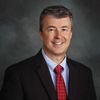
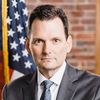
Incumbent Steve Marshall defeated Troy King in the Republican primary runoff for Attorney General of Alabama on July 17, 2018.
Republican primary runoff for Attorney General of Alabama
Candidate |
% |
Votes |
||
| ✔ |
|
Steve Marshall |
62.0
|
211,562 |
|
|
Troy King |
38.0
|
129,409 | |
|
Total votes: 340,971 | |||
Do you want a spreadsheet of this type of data? Contact our sales team. |
||||

Incumbent Steve Marshall and Troy King advanced to a runoff. They defeated Alice Martin and Chess Bedsole in the Republican primary for Attorney General of Alabama on June 5, 2018.
Republican primary for Attorney General of Alabama
Candidate |
% |
Votes |
||
| ✔ |
|
Steve Marshall |
28.3
|
154,500 |
| ✔ |
|
Troy King |
27.9
|
151,878 |
|
|
Alice Martin |
23.2
|
126,735 | |
|
|
Chess Bedsole |
20.6
|
112,062 | |

|
Total votes: 545,175 | |||
Do you want a spreadsheet of this type of data? Contact our sales team. |
||||
Top candidates[edit]
 Steve Marshall[edit]

Marshall was appointed as attorney general in February 2017 by then-Gov. Robert Bentley (R) following the resignation of Luther Strange (R) to fill the U.S. Senate seat previously occupied by Jeff Sessions (R). Prior to his appointment as state attorney general, Marshall had served as district attorney for the 27th Judicial Circuit since 2001. A licensed attorney, Marshall previously served as a prosecutor and legal analyst.
Upon taking office in February 2017, Marshall said that "a top priority will be to maintain an effective working relationship with our local law enforcement. Sheriffs, district attorneys, police, and investigators are the front lines of public safety and we will support them in every way possible."[5]
Marshall received endorsements from the National Rifle Association, the Republican Attorneys General Association and the Alabama Civil Justice Reform Committee.
Troy King[edit]

King served as Attorney General of Alabama from 2004 until 2011. He was appointed to the position in 2004 by then-Gov. Bob Riley (R) after William Pryor resigned in order to accept a federal judgeship. King was elected to a full term in 2006, but was defeated in the 2010 Republican primary election by attorney Luther Strange (R).
In his February 2018 campaign kickoff, King stated that he was running because "the last eight years have been filled with politicians putting their own interests ahead of ours...We watched as politicians passed a new ethics law which they thought nobody would notice when they turned around and broke it."[6] In posts on his campaign Facebook page, King has emphasized his positions on public safety, corruption, and immigration.
King received endorsements from political consultant Roger Stone and former Alabama Supreme Court Chief Justice Roy Moore (R).
Campaign finance[edit]
The following are campaign finance figures obtained from the Alabama Secretary of State's reporting system on July 12, 2018, which come from the campaigns' July 11 campaign finance reports.[7]
Endorsements[edit]
- Steve Marshall
- National Rifle Association[8]
- Alabama Citizens for Life[9]
- Shelby County Chiefs of Police Association[10]
- Home Builders Association of Alabama[11]
- Alabama Retail Association[12]
- ProgressPAC[13]
- Automobile Dealers of Alabama[14]
- Manufacture Alabama[15]
- Republican Attorneys General Association[16]
- Alabama Civil Justice Reform Committee[17]
- Cullman County District Attorney C. Wilson Blaylock[18]
- Troy King
- Political consultant Roger Stone[19]
- Former Alabama Trump Victory Chairman Perry Hooper, Jr.[19]
- Former Alabama Supreme Court Chief Justice Roy Moore (R)[20]
Campaign tactics and strategies[edit]
Campaign ads[edit]
Steve Marshall[edit]
Support[edit]
|
|
|
|
|
|
|
|
Noteworthy events[edit]
Ethics complaint regarding RAGA contributions[edit]
On July 9, 2018, Troy King (R) filed a complaint with the Alabama Ethics Commission against Steve Marshall (R). The complaint alleged that Marshall had received illegal campaign contributions from the Republican Attorneys General Association (RAGA) and called for criminal charges against leading members of the Marshall campaign and the national RAGA organization. The Marshall campaign had reported receiving nearly $400,000 in contributions from RAGA over the course of the campaign cycle. The ethics complaint alleged that these contributions were in violation of state law since RAGA's political action committee (PAC) had received contributions from other PACs before it contributed to the Marshall campaign. Contributions from PAC to PAC are illegal under state law.[21] In response to a June 2018 column published in AL.com, the Marshall campaign stated that the Alabama law prohibiting PAC-to-PAC transfers did not apply to federal PACs, citing documents published by the office of the Alabama Secretary of State. Alabama Ethics Commission Director Tom Albritton said in an interview that he had informed other campaigns that PAC-to-PAC transfers were not permitted under state law.[22]
Read the full text of King's complaint here.
On July 11, 2018, King filed a lawsuit in the Alabama 15th Judicial Circuit calling for a preliminary injunction on the Marshall campaign's expenditure of funds received from RAGA, asserting that the contributions were illegal and had ultimately originated with out-of-state PACs, including some affiliated with casinos. The filing stated that Marshall had received over $735,000 from RAGA, arguing that King's campaign had been disadvantaged by what it called the Marshall campaign's receipt of unlawful funds. In response to the filing, the Marshall campaign released a letter to King's legal counsel calling on him to withdraw the lawsuit and stating that "the claims asserted in the Complaint lack any substantive merit whatsoever."[23]
Read the full text of King's lawsuit here.
| Click [show] to read the full text of Marshall's attorney's letter to King's attorney | |||||||||
|---|---|---|---|---|---|---|---|---|---|
| |||||||||
On July 12, 2018, King's lawsuit against Marshall was dismissed.[25]
Death of Bridgette Marshall[edit]
On June 24, 2018, Steve Marshall's (R) wife Bridgette died.[26] In a June 29 press conference, Marshall disclosed that his wife had struggled with depression, anxiety, and chronic pain.[27] Both Marshall and King suspended their campaigns following her death. King resumed his campaign on June 30, while Marshall resumed his on July 5.[28][29]
Campaign themes and policy stances[edit]
Steve Marshall[edit]
| “ |
Opioid Crisis As the Council’s work highlights, a multi-faceted problem requires creative and diverse solutions. The partnership we have established between law enforcement, mental health, and public health is foundational, but this alliance must be expanded to include both the faith and education communities. Through my position as the Chief Law Enforcement Officer of this state, it is my unique responsibility to ensure we are effectively dealing with the trafficking of both pharmaceuticals and illegal drugs. We are ramping up our ability to combat this trafficking through increased coordination and data-sharing with federal partners and providing new resources to our local partners through our new cybercrime lab. Because much of the trafficking of the most dangerous opioids--fentanyl and Carfentanil--occur online, our new lab is a critical tool in this fight. Immigration In my first year in office, I have taken these steps to combat illegal immigration: Fought for President Trump’s travel ban designed to protect all Americans from the influx of immigrants from countries that pose a security risk to the U.S. Joined President Trump’s effort to put an end to sanctuary cities Demanded an end to Obama’s executive amnesty and insisted that the rule of law be upheld. Federal Overreach Alabama has been uniquely affected by federal overreach on issues affecting private property. I am currently leading a battle in the U.S. Supreme Court against a federal regulation that would give the government power to use any private land that the federal government deemed necessary to protect an endangered species. In the process of this lawsuit, we have also worked successfully with the Trump Administration to get these burdensome rules rolled back. I agree with the late Justice Scalia, “it won’t work if we don’t believe in federalism.” Violent Crime We are accomplishing these goals through targeting our worst-hit areas, establishing strategic partnerships with federal, state, and local law enforcement, renewing investments in crime-fighting resources and increasing training opportunities for those on the front lines. We are also listening to the needs of victims of violent crime. As a result, we advocated for and secured passage of the Fair Justice Act to ensure that capital murderers are limited in their ability to file endless frivolous appeals that cause families to relive their horror again and again, while losing faith in the justice system. We are having great success and are dedicated to winning this fight. With our friend and partner, Attorney General Jeff Sessions, at the helm of our federal crime-fighting agencies and a career prosecutor leading the Alabama Attorney General’s Office, criminals should be on notice. We will not tolerate this menace to our citizens. Human Trafficking 2nd Amendment Ethics Standing up for Life I have also fought for and won First Amendment protections for pro-life speech, defended Alabama’s law on parental consent for abortions, supported other states’ laws that would prohibit late-term and discriminatory abortions and battled the ACLU to ban the gruesome practice of dismemberment abortions. [24] |
” |
| —Steve Marshall for Attorney General[30] | ||
Troy King[edit]
| “ |
Taking Alabama Back from Crime Alabamians have every reason to expect that the Attorney General, the chief law enforcement officer in the state, will implement policies, propose new laws, and enforce the law in a way that sends a message to violent criminals that, if they threaten the peace in our state, they will face swift and sure consequences. Using experience & proven policies will not only allow Alabama to, once again, win the war against violent crimes to keep law abiding citizens safe, but it is also the most certain way to TAKE ALABAMA BACK from the violent criminals. Taking Alabama Back from Corruption Most notably, though, Alabama spent three years as the lead joke on the national news as Robert Bentley made a mockery of public service. At the height of the scandal, Governor Bentley faced impeachment proceedings, four felony referrals from the Alabama Ethics Commission, a criminal grand jury, and the prospect of multiple court cases – both civil and criminal. The kind of deals that were once confined to smoky back rooms are now cut in plain view as those investigating the activities of the Governor and in charge of his investigations asked for favors from the very target of those investigations, lied about their activities, and appear to have traded their appointments for a favorable plea deal that allowed Governor Bentley to escape the consequences of his actions. As a little boy, my dad would often point to the TV screen during news reports of the Governor and say, “Son, if you work hard, study hard, and apply yourself, you can grow up and be just like him”. I fear it has been far too long since any parent in their right mind in Alabama challenged their child to grow up and be like our Governor. That is unacceptable! We stand in danger of an entire generation of children growing up in an Alabama where the lessons our leaders have taught us are that public service is dishonorable and that all politicians are corrupt. We can and we must change that. To do so, we must have zero tolerance for corruption. We must remind those who hold public office that they serve a high calling and that, if they betray their oaths, the constitution, and those they are sworn to serve, we are prepared to use the law to the fullest extent to make examples of them and hold them accountable. At the same time, we must further tighten and strengthen our ethics laws to ensure that the penalties for public corruption are adequate to deter future corruption and to punish those who abuse the public trust. Only by doing so can we ever TAKE ALABAMA BACK from the corrupt. Taking Alabama Back from the Establishment Taking Alabama Back from Opioids Alabama families and communities are depending on their Attorney General stop the suffering, and they deserve a more effective response. The current approach has included studying the issue to conclude that more studying of the issue is necessary and to file a misguided lawsuit. Alabamians deserve a strong response from their Attorney General, because the Attorney General has the most direct ability to lead the charge against the opioid crisis in court. But, Alabama’s weak lawsuit fails to do so. It was brought against only one drug manufacturer, Purdue Pharmaceuticals. Yet Purdue is only responsible for two percent of the opioid prescriptions written in Alabama. Allowing those responsible for 98% of the problem to escape accountability for the harm they have inflicted, and to remain unbridled, sends the wrong message. The only effective response is to hold those responsible for creating this crisis accountable… not one of them, but all of them. Because the current approach means that those who are poisoning and addicting our children and families continue to get rich and face no accountability for their actions. Further, Alabama’s lawsuit was filed in federal court in Ohio. That should not have happened, Alabama’s case should be heard in an Alabama court by Alabama citizens who can apply Alabama law and render judgment and impose punishments commensurate with the harm done in Alabama. Solving the opioid problem in Alabama will not be simple, but neither was dealing with the methamphetamine crisis. The leadership I provided as Attorney General led to real common sense responses to the meth problem that led to a decline in meth production, addictions, and deaths in our state. We must be heartened as we wage this war, there are no problems in Alabama that cannot be solved, only problems that have not been solved yet. Implementing a real response to this clear and present danger is the only effective path to take Alabama back from the opioid epidemic that is now threatening our state and killing our children while destroying our communities. I am committed to using my experience earned waging war on methamphetamines to attack this current crisis. I look forward to responsibility of taking Alabama back from opioids. Taking Alabama Back from Sexual Predators It’s not just important that we have laws though. Maybe more important, is that we use the laws we have. For example, we had a child pornography law in Alabama that made it a crime to take a child’s innocence away with a camera, but having a law that says you should not do it does not stop anybody from doing anything. So we took the law and we used it. We indicted a man who had a computer set up next to his little girl’s bed where he was running a child pornography ring out of her bedroom. We convicted him and sentenced him to 115 life sentences plus 1960 years on top of that. Somebody stopped me after this made the news and asked me, “Wouldn’t you have made the point just as well with ten indictments?” The answer is: No! Every child in Alabama is precious. Every child has the right, if you steal their innocence with a camera, to have their day in court. So no, it was not enough to just indict five or ten as a sample. Because to do that would require us to say, “This child should have their day in court, but this other child should not because we are just making a point.” We were not making a point, my friends, we were making an example. So 115 life sentences and 1960 years later, sex offenders are on notice that Alabama is not the place to come and peddle their smut. This is not the place to come and hurt our children. Every child deserves their own day in court. So the message was important. The message was: “if you come to peddle smut in Alabama, we’ve got a severe sentence waiting for you. We’ve got a tough law and we are prepared to use it to protect the children of this state.” Only when we do that can we make clear to those who peddle smut— Not in our state. Not our children. Not now. Not ever. Then, and only then, can we take Alabama back from predators.[24] |
” |
| —Troy King for Attorney General[31] | ||
Election history[edit]
2014[edit]
- See also: Alabama attorney general election, 2014
| Attorney General of Alabama, 2014 | ||||
|---|---|---|---|---|
| Party | Candidate | Vote % | Votes | |
| Republican |  Luther Strange Incumbent Luther Strange Incumbent |
58.4% | 681,973 | |
| Democratic | Joseph Lister Hubbard | 41.4% | 483,771 | |
| Nonpartisan | Write-in votes | 0.2% | 2,157 | |
| Total Votes | 1,167,901 | |||
| Election results via Alabama Secretary of State | ||||
2010[edit]
- See also: Alabama Attorney General election, 2010
On November 2, 2010, Luther Strange (R) won election to the office of Attorney General of Alabama. He defeated James H. Anderson (D) in the general election.
| Attorney General of Alabama, 2010 | ||||
|---|---|---|---|---|
| Party | Candidate | Vote % | Votes | |
| Republican | Luther Strange (R) |
58.8% | 868,520 | |
| Democratic | James H. Anderson | 41.1% | 606,270 | |
| Write-in | N/A | 0.1% | 1,285 | |
| Total Votes | 1,476,075 | |||
| Election results via Alabama Secretary of State. | ||||
2006[edit]
On November 7, 2006, Troy King won election to the office of Attorney General of Alabama. He defeated John M. Tyson in the general election.
| Attorney General of Alabama, 2006 | ||||
|---|---|---|---|---|
| Party | Candidate | Vote % | Votes | |
| Republican | Troy King |
53% | 653,045 | |
| Democratic | John M. Tyson | 46.9% | 576,830 | |
| Write-in | N/A | 0.1% | 1,221 | |
| Total Votes | 1,231,096 | |||
| Election results via Alabama Secretary of State. | ||||
2002[edit]
On November 5, 2002, William H. Pryor Jr. won re-election to the office of Attorney General of Alabama. He defeated Boyd Whigham (D) and Wilson Myers (Lib) in the general election.
| Attorney General of Alabama, 2002 | ||||
|---|---|---|---|---|
| Party | Candidate | Vote % | Votes | |
| Republican | William H. Pryor Jr. Incumbent |
58.8% | 780,524 | |
| Democratic | Boyd Whigham | 38.8% | 515,123 | |
| Libertarian | Wilson Myers | 2.2% | 29,202 | |
| Write-in | N/A | 0.1% | 1,455 | |
| Total Votes | 1,326,304 | |||
| Election results via Alabama Secretary of State. | ||||
State overview[edit]
Partisan control[edit]
This section details the partisan control of federal and state positions in Alabama heading into the 2018 elections.
Congressional delegation[edit]
- Following the 2017 special election, one Republican and one Democrat each held a U.S. Senate seat in Alabama.
- Republicans held 6 of 7 U.S. House seats in Alabama.
State executives[edit]
- As of August 2018, Republicans held 9 state executive positions. The other four positions were nonpartisan.
- The governor of Alabama was Republican Kay Ivey. The state held elections for governor and lieutenant governor on November 6, 2018.
State legislature[edit]
- Republicans controlled both chambers of the Alabama State Legislature. They had a 72-32 majority in the state House and a 26-8 majority in the state Senate.
Trifecta status[edit]
- Alabama was a Republican state government trifecta, meaning Republicans held the governorship, a majority in the state senate, and a majority in the state house.
2018 elections[edit]
- See also: Alabama elections, 2018
Alabama held elections for the following positions in 2018:
- U.S. House
- Governor
- Other state executive
- State Senate
- State House
- Special state legislative
- State Supreme Court
- Intermediate appellate courts
- Local judges
- School boards
- Municipal government
Demographics[edit]
| Demographic data for Alabama | ||
|---|---|---|
| Alabama | U.S. | |
| Total population: | 4,853,875 | 316,515,021 |
| Land area (sq mi): | 50,645 | 3,531,905 |
| Race and ethnicity** | ||
| White: | 68.8% | 73.6% |
| Black/African American: | 26.4% | 12.6% |
| Asian: | 1.2% | 5.1% |
| Native American: | 0.5% | 0.8% |
| Pacific Islander: | 0.1% | 0.2% |
| Two or more: | 1.7% | 3% |
| Hispanic/Latino: | 4% | 17.1% |
| Education | ||
| High school graduation rate: | 84.3% | 86.7% |
| College graduation rate: | 23.5% | 29.8% |
| Income | ||
| Median household income: | $43,623 | $53,889 |
| Persons below poverty level: | 23.3% | 11.3% |
| Source: U.S. Census Bureau, "American Community Survey" (5-year estimates 2010-2015) Click here for more information on the 2020 census and here for more on its impact on the redistricting process in Alabama. **Note: Percentages for race and ethnicity may add up to more than 100 percent because respondents may report more than one race and the Hispanic/Latino ethnicity may be selected in conjunction with any race. Read more about race and ethnicity in the census here. | ||
As of July 2016, Alabama ' three largest cities were Birmingham (pop. est. 211,000), Montgomery (pop. est. 200,000), and Huntsville (pop. est. 195,000).[32]
State election history[edit]
This section provides an overview of federal and state elections in Alabama from 2000 to 2016. All data comes from the Alabama Secretary of States.
Historical elections[edit]
Presidential elections, 2000-2016[edit]
This chart shows the results of the presidential election in Alabama every year from 2000 to 2016.
| Election results (President of the United States), Alabama 2000-2016 | |||||
|---|---|---|---|---|---|
| Year | First-place candidate | First-place candidate votes (%) | Second-place candidate | Second-place candidate votes (%) | Margin of victory (%) |
| 2016 | Donald Trump |
62% |  Hillary Clinton Hillary Clinton |
34% | 28% |
| 2012 | Mitt Romney |
61% | Barack Obama |
38% | 23% |
| 2008 | John McCain |
60% | Barack Obama |
39% | 21% |
| 2004 | George W. Bush |
62% | John Kerry |
37% | 25% |
| 2000 | George W. Bush |
56% | Al Gore |
42% | 14% |
U.S. Senate elections, 2000-2016[edit]
This chart shows the results of U.S. Senate races in Alabama from 2000 to 2016. Every state has two Senate seats, and each seat goes up for election every six years. The terms of the seats are staggered so that roughly one-third of the seats are up every two years.
| Election results (U.S. Senator), Alabama 2000-2016 | |||||
|---|---|---|---|---|---|
| Year | First-place candidate | First-place candidate votes (%) | Second-place candidate | Second-place candidate votes (%) | Margin of victory (%) |
| 2016 | Richard Shelby |
64% | Ron Crumpton |
36% | 28% |
| 2014 | Jeff Sessions |
97% | No Democratic candidate | 0% | 97% |
| 2010 | Richard Shelby |
65% | William Barnes |
35% | 30% |
| 2008 | Jeff Sessions |
63% | Vivian Figures |
37% | 26% |
| 2004 | Richard Shelby |
68% | Wayne Sowell |
32.0% | 36% |
| 2002 | Jeff Sessions |
59% | Susan Parker |
40.0% | 19% |
Gubernatorial elections, 2000-2016[edit]
This chart shows the results of the four gubernatorial elections held between 2000 and 2016. Gubernatorial elections are held every four years in Alabama.
| Election results (Governor), Alabama 2000-2016 | |||||
|---|---|---|---|---|---|
| Year | First-place candidate | First-place candidate votes (%) | Second-place candidate | Second-place candidate votes (%) | Margin of victory (%) |
| 2014 | Robert Bentley |
64% | Parker Griffith |
36% | 28% |
| 2010 | Robert Bentley |
58% | Ron Sparks |
42% | 16 |
| 2006 | Bob Riley |
57% | Lucy Baxley |
42% | 15% |
| 2002 | Bob Riley |
49% | Don Siegelman |
49% | 0% |
Congressional delegation, 2000-2016[edit]
This chart shows the number of Democrats and Republicans who were elected to represent Alabama in the U.S. House from 2000 to 2016. Elections for U.S. House seats are held every two years.
| Congressional delegation, Alabama 2000-2016 | |||||
|---|---|---|---|---|---|
| Year | Republicans | Republicans (%) | Democrats | Democrats (%) | Balance of power |
| 2016 | 6 |
86% | 1 |
14% | R+5 |
| 2014 | 6 |
86% | 1 |
14% | R+5 |
| 2012 | 6 |
86% | 1 |
14% | R+5 |
| 2010 | 6 |
86% | 1 |
14% | R+5 |
| 2008 | 5 |
71% | 2 |
29% | R+3 |
| 2006 | 5 |
71% | 2 |
29% | R+3 |
| 2004 | 5 |
71% | 2 |
29% | R+3 |
| 2002 | 5 |
71% | 2 |
29% | R+3 |
| 2000 | 5 |
71% | 2 |
29% | R+3 |
Trifectas, 1992-2017[edit]
A state government trifecta occurs when one party controls both chambers of the state legislature and the governor's office.
Alabama Party Control: 1992-2021
Six years of Democratic trifectas • Eleven years of Republican trifectas
Scroll left and right on the table below to view more years.
Pivot Counties[edit]
- See also: Pivot Counties by state
Pivot Counties are counties that voted for Barack Obama (D) in 2008 and 2012 and for Donald Trump (R) in 2016. Altogether, the nation had 206 Pivot Counties, with most being concentrated in upper midwestern and northeastern states. No counties in Alabama are Pivot Counties.
In the 2016 presidential election, Donald Trump (R) won Alabama with 62.1 percent of the vote. Hillary Clinton (D) received 34.4 percent. In presidential elections between 1900 and 2016, Alabama voted Democratic 53.33 percent of the time and Republican 40 percent of the time. In the five presidential elections between 2000 and 2016, Alabama voted Republican all five times.
See also[edit]
|
Alabama government: |
Elections: |
Ballotpedia exclusives: |
External links[edit]

Footnotes[edit]
- ↑ Steve Marshall for Attorney General, "Issues," accessed May 14, 2018
- ↑ Alabama News Network, "Former Attorney General Troy King Running for Office Again," February 8, 2018
- ↑ Taking Alabama Back, "Home," accessed May 28, 2018
- ↑ Alabama Today, "Troy King touts ” Trump Team support” with last minute heavy hitter tour," July 16, 2018
- ↑ WTVY, "Newly appointed Attorney General Steve Marshall takes oath of office," February 13, 2017
- ↑ WALB, "Troy King signs papers to run for Attorney General," February 8, 2018
- ↑ Alabama Secretary of State, "Candidate Search," accessed July 12, 2018
- ↑ AL.com, "Gov. Kay Ivey, AG Steve Marshall get NRA endorsement," May 17, 2018
- ↑ Steve Marshall for Attorney General, "Alabama Citizens for Life Endorses Steve Marshall for AG," May 16, 2018
- ↑ Steve Marshall for Attorney General, "Shelby County Chiefs of Police Association Endorses Steve Marshall for AG," May 7, 2018
- ↑ Steve Marshall for Attorney General, "Home Builders Association of Alabama Endorses Steve Marshall for AG," April 23, 2018
- ↑ Steve Marshall for Attorney General, "Alabama Retail Association Endorses Steve Marshall for AG," April 17, 2018
- ↑ Alabama Today, "Business Council of Alabama endorses Steve Marshall for Attorney General," April 3, 2018
- ↑ Steve Marshall for Attorney General, "Automobile Dealers of Alabama Endorse Steve Marshall for AG," March 26, 2018
- ↑ Yellowhammer News, "Steve Marshall nabs manufacturing association’s endorsement in Alabama attorney general’s race," March 6, 2018
- ↑ Alabama Political Reporter, "Republican Attorneys General Association endorses Steve Marshall," February 28, 2018
- ↑ Yellowhammer News, "Steve Marshall, others, nab endorsements from the Alabama Civil Justice Reform Committee," February 27, 2018
- ↑ Cullman Today, "Cullman District Attorney C. Wilson Blaylock Endorses Steve Marshall," July 11, 2018
- ↑ 19.0 19.1 Alabama Today, "Troy King touts ” Trump Team support” with last minute heavy hitter tour," July 16, 2018
- ↑ AL.com, "Roy Moore sends out 50,000 fliers endorsing Troy King in Alabama Attorney General race," July 16, 2018
- ↑ AL.com, "Troy King files ethics complaint over AG Steve Marshall contributions," July 9, 2018
- ↑ AL.com, "AG Steve Marshall accepts PAC-to-PAC money despite state ban," June 23, 2018
- ↑ 23.0 23.1 CBS 42, "Troy King files lawsuit against AG Steve Marshall's campaign for accepting 'illegal contributions'," July 11, 2018
- ↑ 24.0 24.1 24.2 Note: This text is quoted verbatim from the original source. Any inconsistencies are attributable to the original source.
- ↑ Alabama Today, "Judge dismisses Troy King’s lawsuit against Steve Marshall," July 13, 2018
- ↑ Montgomery Adviser, "Bridgette Marshall, wife of Alabama Attorney General Steve Marshall, dies," June 24, 2018
- ↑ CBS News, "Alabama Attorney General Steve Marshall recalls final call with wife before her suicide," June 29, 2018
- ↑ Facebook, "Troy King for Attorney General," June 30, 2018
- ↑ AL.com, "Steve Marshall resumes AG campaign in wake of wife's death," July 5, 2018
- ↑ Steve Marshall for Attorney General, "Issues," accessed April 4, 2018
- ↑ Taking Alabama Back, "Taking Alabama Back," accessed May 28, 2018
- ↑ Alabama Demographics, "Alabama Cities by Population," accessed August 30, 2018
| ||||||||||||||||||||||


| ||||||||||||||||

| |||||||||||
Categories: [Alabama elections, 2018] [Alabama state executive official elections, 2018] [Republican primary elections, Attorney general, 2018] [July 17, 2018, elections] [Marquee, completed election, 2018]
↧ Download as ZWI file | Last modified: 12/24/2021 03:03:22 | 36 views
☰ Source: https://ballotpedia.org/Alabama_Attorney_General_election,_2018_(July_17_Republican_primary_runoff) | License: CC BY-SA 3.0
 ZWI signed:
 KSF
KSF