Hillary Clinton Presidential Campaign, 2016#Taxes
 From Ballotpedia
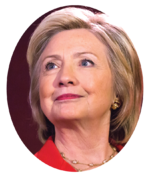 Democratic presidential nominee Running mate: Tim Kaine |
Democratic National Convention • Polls • Debates • Presidential election by state |
Domestic affairs • Economic affairs and government regulations • Foreign affairs and national security • Hillarycare • Tenure as U.S. senator • Tenure as secretary of state • Email investigation • Paid speeches • WikiLeaks • Media coverage of Clinton |
Donald Trump (R) • Jill Stein (G) • Gary Johnson (L) • Vice presidential candidates |
2024 • 2020 • 2016 |
This page was current as of the 2016 election.
The nation’s tax policy has been a divisive issue in recent elections and 2016 was no exception.
Much of 2016's tax policy was a carry-over from the early 2000s. George W. Bush's administration phased in temporary but significant income tax cuts and reduced taxes on investment income. Barack Obama's early attempts to end some of the Bush-era tax cuts in the late 2000s were met with strong resistance because of the economic downturn. As a result, in 2013, the Obama administration indefinitely extended nearly all of the Bush tax cuts that were set to expire. These permanent tax cuts limited Obama's tax code reform efforts; however, his administration did manage to raise taxes on the highest-earning households and enact temporary tax breaks for middle-income earners. These tax breaks were set to expire at the end of 2017, less than one year after the winner of the 2016 presidential election took office.[2][3]
See what Hillary Clinton and the 2016 Democratic Party Platform said about taxes below.
| CANDIDATE SUMMARY | |
 Clinton on taxes[edit]
- Hillary Clinton expanded her tax policy to create three new tax brackets for large estates: a 50 percent rate for estates valued above $10 million per person, a 55 percent rate for estates above $50 million per person, and a 65 percent rate for those with estates above $500 million per person. “In 2014, just 223 estates with a gross value exceeding $50 million filed taxable estate-tax returns, according to the Internal Revenue Service,” The Wall Street Journal reported.[4]
- Clinton proposed a tax plan for small businesses in a conference call with small business owners on August 22, 2016. She proposed a new standard tax deduction for small businesses and additional deductions for start-ups. “I believe when you succeed, families thrive and our nation prospers. But I also know that in lots of ways, the odds are stacked against too many of you too many times. It’s clear that big corporations get a lot of the breaks. It’s much harder for you to get a loan, to file taxes, to offer health care to your workers,” Clinton told listeners on the call.[5]
- Clinton talked tax policy at a rally in Cleveland on August 17, 2016, highlighting both her proposals and those of her opponent’s, Donald Trump. “We’re going to tax the wealthy who have made all of the income gains in the last 15 years. The superwealthy, corporations, Wall Street, they’re going to have to invest in education, in skills training, in infrastructure,” said Clinton. Commenting on Trump’s proposal to eliminate the estate tax, she said, “So if you believe that Donald Trump is as wealthy as he claims—we can’t say that for sure, but let’s assume it—he would, by eliminating the estate tax, save the Trump family $4 billion—and do absolutely nothing for 99.8% of all Americans.”[6][7]
- In an interview with Reuters on June 9, 2016, Clinton said that she planned to introduce her economic package, including Wall Street reform and tax reductions for the middle class, in her first 100 days in office.[8]
- According to a study conducted by the nonpartisan Tax Policy Center in 2016, “Clinton’s tax plan would raise taxes on the 1 percent by an average of $78,000 per person while keeping taxes for the rest of Americans largely the same.” In addition, her “plan would generate $1 trillion in additional revenue for the government over the first decade and an additional $2 trillion over the next 20 years. Yet three-quarters of those additional funds will come from the top 1 percent of earners. … The top 1 percent — those who earn more than $732,000 a year — would see their taxes increase by an average of $78,284 in 2017… The top 0.1 percent, or those with incomes of over $3.8 million, would see their taxes increase by an average of $519,741. The bottom 20 percent of earners, or those making $23,000 or less, would see their taxes go up by $4 a year in 2017. The middle quintile, or those making $80,000 to $142,000, would see their taxes go up by $44 a year. And the top 20 percent, who make $209,000 or more, would see an average tax hike of $4,527.”[9]
- On January 27, 2016, Hillary Clinton condemned the Johnson Controls-Tyco merger, a tax inversion where the company’s headquarters would be relocated to Ireland in an effort to lower the new firm's U.S. tax liability. She said, "I will do everything I can to prevent this from happening, because I don't want to see companies that thrive, use the tax code, the gimmicks, the shenanigans...to evade their responsibility to support our country."[10]
- On January 12, 2016, Clinton criticized Bernie Sanders for not revealing his fiscal plan or tax plan. She said, "Sen. Sanders has some very big ideas, but he hasn't yet told anybody how he would pay for them. … And he had promised that he would roll out his tax plans before the Iowa caucus on February 1. Well, if you wait too long, nobody will have a chance to see them or analyze them."[11]
- At a campaign event in Iowa on January 11, 2016, Clinton said she would push for a four percent “surcharge” on Americans making more than $5 million annually. “Right now we’re behind and we have to get the wealthy and the corporations to pay their fair share,” Clinton said. The proposal would raise $150 billion over a decade and would affect two out of every 10,000 taxpayers, according to a campaign official.[12]
- On December 16, 2015, Clinton said she wanted to “tax the wealthy at even higher rates than those proposed by the Obama administration,” according to The Washington Times. She backed expanding the so-called “Buffett rule"—named for investor and Clinton supporter Warren Buffett and an idea embraced by many Democrats—which would raise tax rates to 30 percent on all Americans making $1 million or more. At an event with Buffett, in his home town of Omaha, Nebraska, Clinton said, “I want to go even further, because Warren is 100 percent right, as usual. I want to be the president for the struggling, the striving and the successful.”[13][14]
- On December 9, 2015, Clinton released a plan to impose a corporate “exit tax” to penalize mergers between U.S. companies and foreign corporations designed to reduce their taxes. The plan came after New York-based drug company Pfizer announced a merger with Ireland-based Allergan in November which would enable Pfizer to reduce its tax rate from around 25 percent in 2015 to about 18 percent. Ireland's lower corporate tax rate would have saved Pfizer nearly $1 billion of the $3.1 billion in U.S. taxes it paid in 2014, according to the Associated Press. Clinton also said she would use the regulatory authority of the U.S. Department of the Treasury to curb the number of corporate inversions if Congress did not act.[15][16][17]
- Clinton discussed her plan to help the manufacturing industry on December 8, 2015. The plan included a “tax credit for areas that have lost manufacturing jobs, as well as expanding grants and access to capital for smaller manufacturers and startups.” The plan also included “‘Buy American’ regulations, which require domestic sourcing of construction and other materials,” according to TIME. Clinton said, “My plan will help spur reinvestment in communities that have lost jobs because of factory closures. By strengthening our manufacturing sector for the future, we can help create the next generation of good-paying jobs and put more people back to work across the country."[18]
- In a December 7, 2015, New York Times op-ed, Clinton unveiled a plan to regulate the financial services industry, which included a proposal to impose a tax on high-frequency trading. Clinton also reiterated her desire to get rid of the carried interest loophole, which allows some fund managers to be taxed at a lower rate than that on earned income. "They should be taxed like every other citizen," she said.[19]
- At her campaign event “Hard Hats for Hillary” in Boston on November 29, 2015, Clinton announced her plan to invest $275 billion in infrastructure development, which would be funded by closing corporate tax loopholes, including ending “preferences for companies that stash their profits in overseas banks to avoid U.S. taxes” and ending “a corporate tax loophole that allows large companies to avoid taxes by moving their headquarters overseas,” also known as "inversions," according to USA Today.[20] The proposal included $250 billion in direct investment by the federal government over the next five years. Another $25 billion would fund a national infrastructure bank, an idea which has struggled to gain traction in Congress. The bank would support $225 billion in loans intended to spur private investment, adding a total of $500 billion in new infrastructure funds into the economy, the Clinton campaign estimated. At the event, Clinton said, “Investing infrastructure makes our economy more productive and competitive. To build a strong economy for our future, we must start by building strong infrastructure today.”[21]
- At a campaign event in Iowa, on November 22, 2015, Clinton unveiled a new tax credit proposal that would allow people caring for aging parents and grandparents to offset up to $6,000 in out-of-pocket caregiving costs, for a savings of up to $1,200 off of their tax bill. She framed the plan as an extension of the Affordable Care Act, President Obama's signature healthcare law. According to the Clinton's proposal, caregiving encourages “seniors to remain in their own homes, maintain independence, save costs, and still obtain the support they need." She also proposed expanding Social Security benefits for caregivers to make up for the loss of benefits they face when they take time off of work to care for an elderly relative. Those benefits are calculated based on their top thirty-five years of earnings. Clinton also recommended expanding "respite care," which provides care when the caregiver needs a break from the responsibility. The entire plan is estimated to cost $10 billion over 10 years, according to Politico. [22] [23] [24]
- On November 20, 2015, at campaign stops in Tennessee, Clinton touted her plan to provide tax credit of up to $5,000 for families and $2,500 for individuals to help with healthcare costs. Those with out-of-pocket healthcare expenses exceeding 5 percent of their income would be eligible for the credit. The Clinton campaign said the subsidy would be funded through tax increases on wealthy families and by "demanding" rebates from drug manufactures, according to The Los Angeles Times. Clinton has also expressed support for permanently extending the American Opportunity Tax Credit, which provides up to $2,500 in tax relief for tuition and other expenses.[25] [26]
- On November 13, 2015, Clinton's campaign said she would not raise taxes on families making less than $250,000 a year. The Wall Street Journal said that the move was designed to differentiate her policies from those of Bernie Sanders, whose policies could need funding from a broader slice of the population. "Her chief rival, Sen. Bernie Sanders, a Vermont independent, is focused on increasing taxes on the wealthy. But at least one of his major proposals–a single-payer health care program–would almost certainly require a broad-based tax to fund it. The tradeoff would be that employers and employees would no longer have to pay for health care through the workplace anymore, and all Americans would be covered by insurance, a guarantee that the Affordable Care Act does not provide," the paper reported.[27]
- Clinton focused her economic policy on boosting incomes, which she argued have stagnated due to tax and spending policies championed and implemented by the GOP and George W. Bush. "I have an economic policy that is centered on raising incomes, because I think what we inherited from the Bush administration, what President Obama had to deal with, had the potential of becoming a 'Great Depression,' not just a 'Great Recession,'" Clinton said on Face The Nation on September 20, 2015. "We have now recovered 13 million jobs after losing 800,000 a month when he came into office. So why would we go back to the same policies? Call them insider, call them tilted toward the rich, call them giving corporations a free pass to do whatever they want. I'm against that, I've always been against that."[28] [29]
- During a speech in October 2014, Clinton discussed the medical device tax. She said, "On the tax itself, again, I think we have to look to see what are the pluses and minuses that are embodied in a decision about either to remove or alter or continue this particular piece of the Affordable Care Act."[30]
- In 2005, she voted for a bill to "repeal the tax subsidy for American businesses that relocate jobs and manufacturing operations overseas."[31]
- She voted for S 2020 - Tax Relief Act of 2005, which would have extended tax cuts and created "tax benefits for areas affected by Hurricanes Katrina, Rita, and Wilma."[32]
- In 2004, Clinton voted for S 150 - Internet Tax Nondiscrimination Act, which extended "the ban on State taxation of Internet access and on multiple or discriminatory taxes on electronic commerce until November 1, 2007." It became law on December 3, 2004.[33]
- Clinton voted for HR 1308 - Working Families Tax Relief Act of 2004. It became law on October 4, 2004.[34]
- Clinton voted against the Bush tax cuts: HR 2 - Jobs and Growth Tax Relief Reconciliation Act of 2003 and HR 1836 - Economic Growth and Tax Relief Reconciliation Act of 2001.[35][36]
- Clinton did not sign the Americans for Tax Reform Taxpayer Protection Pledge.[37]
- Read what other presidential candidates said about taxes.
| The 2016 Democratic Party Platform on taxes | ||||||
|---|---|---|---|---|---|---|
| ||||||
Recent news[edit]
This section links to a Google news search for the term Hillary + Clinton + Taxes
See also[edit]
Footnotes[edit]
- ↑ CNN, "Hillary Clinton launches second presidential bid," April 12, 2015
- ↑ The Bookings Institution, "Bush Administration Tax Policy: Introduction and Background," September 13, 2004
- ↑ Bloomberg.com, "Bush Tax Cuts Persist 14 Years Later, Bedeviling Obama’s Plans," January 28, 2015
- ↑ The Wall Street Journal, "Hillary Clinton Proposes 65% Top Rate for Estate Tax," September 22, 2016
- ↑ HillaryClinton.com, "In Small Business Tele-Town Hall, Hillary Clinton Contrasts Her Policy Agenda with Donald Trump’s Record of Putting Himself First, Leaving Small Businesses Hanging," accessed August 22, 2016
- ↑ The Wall Street Journal, "Hillary Clinton Takes Shot at Trump’s Plan to Repeal Estate Tax," August 17, 2016
- ↑ The New York Times, "Hillary Clinton Twists the Knife in Donald Trump’s Tax Proposals," August 17, 2016
- ↑ Reuters, "Obama is 'fired up' for Clinton as Democrats seek to unify party," June 9, 2016
- ↑ CNBC, "Top 1% would see $78,000 tax hike under Hillary," March 3, 2016
- ↑ Milwaukee Journal Sentinel, "Hillary Clinton slams Johnson Controls-Tyco deal," January 27, 2016
- ↑ CNN Politics, "Clinton slams Sanders, Trump," January 12, 2016
- ↑ Bloomberg, "Clinton Tax Plan Would Place 4% Surcharge on Incomes Over $5 Million," January 11, 2016
- ↑ The Washington Times, "Hillary Clinton, flanked by Warren Buffett, schemes new tax hike on wealthy," December 16, 2015
- ↑ Politico,"Clinton leans on billionaire Warren Buffett," December 16, 2015
- ↑ AP:The Big Story, "Clinton offers new 'exit tax' on US-foreign company mergers," December 7, 2015
- ↑ The Wall Street Journal, "Hillary Clinton Talks Tough on Executive Action," December 9, 2015
- ↑ The Hill, "Clinton floats executive action crackdown on corporations," December 9, 2015
- ↑ TIME, "Hillary Clinton Proposes Plan to Boost U.S. Manufacturing," December 8, 2015
- ↑ The New York Times, "Hillary Clinton: How I’d Rein In Wall Street," December 7, 2015
- ↑ USA Today, "Hillary Clinton infrastructure plan begins monthlong focus on jobs," November 29, 2015
- ↑ AP, "Clinton pledges hundreds of billions for infrastructure," November 30, 2015
- ↑ The Briefing, "Hillary Clinton’s Plan to Invest in the Caring Economy: Recognizing the Value of Family Caregivers and Home Care Workers," accessed November 23, 2015
- ↑ Politico, "Clinton proposes $6,000 tax credit for family caregivers," November 22, 2015
- ↑ The Washington Post, "Clinton backs tax credit to help those caring for elderly relatives," November 22, 2015
- ↑ CBS News, "Hillary Clinton highlights middle-class tax credit to meet health costs," November 20, 2015
- ↑ The Los Angeles Times, "Hillary Clinton proposes tax break for caregivers," November 22, 2015
- ↑ The Wall Street Journal, "Clinton Vows Not to Raise Taxes on Families Earning Less Than $250,000," November 13, 2015
- ↑ "CBS News", "Face the Nation," accessed Sept. 21, 2015
- ↑ "Hillary Clinton Campaign Website", "Issues," accessed Sept. 21, 2015
- ↑ The Hill, “Hillary Clinton declines to take stance on ObamaCare medical-device tax," October 8, 2014
- ↑ Vote Smart, “S Amdt 210 - Tax Subsidy for Domestic Companies Amendment - Key Vote," accessed December 17, 2014
- ↑ COngres.gov, "S.2020 - Tax Relief Act of 2005," accessed January 29, 2015
- ↑ Congress.gov, "S.150 - the Internet Tax Nondiscrimination Act," accessed January 29, 2015
- ↑ Congress.gov, "H.R.1308 - Working Families Tax Relief Act of 2004," accessed January 29, 2015
- ↑ Congress.gov, "H.R.2 - the Jobs and Growth Tax Relief Reconciliation Act of 2003," accessed January 29, 2015
- ↑ Congress.gov, "H.R.1836 - Economic Growth and Tax Relief Reconciliation Act of 2001," accessed January 29, 2015
- ↑ ATR.org, "Taxpayer Protection Pledge," accessed January 29, 2015
- ↑ Note: This text is quoted verbatim from the original source. Any inconsistencies are attributable to the original source.
- ↑ Democratic Party, "The 2016 Democratic Party Platform," accessed August 23, 2016


| |||||||||||
Categories: [Hillary Clinton] [2016 presidential election, Taxes]
↧ Download as ZWI file | Last modified: 09/03/2024 11:13:24 | 24 views
☰ Source: https://ballotpedia.org/Hillary_Clinton_presidential_campaign,_2016/Taxes | License: CC BY-SA 3.0
 KSF
KSF