Presidential Executive Order 12866 (Bill Clinton, 1993)
 From Ballotpedia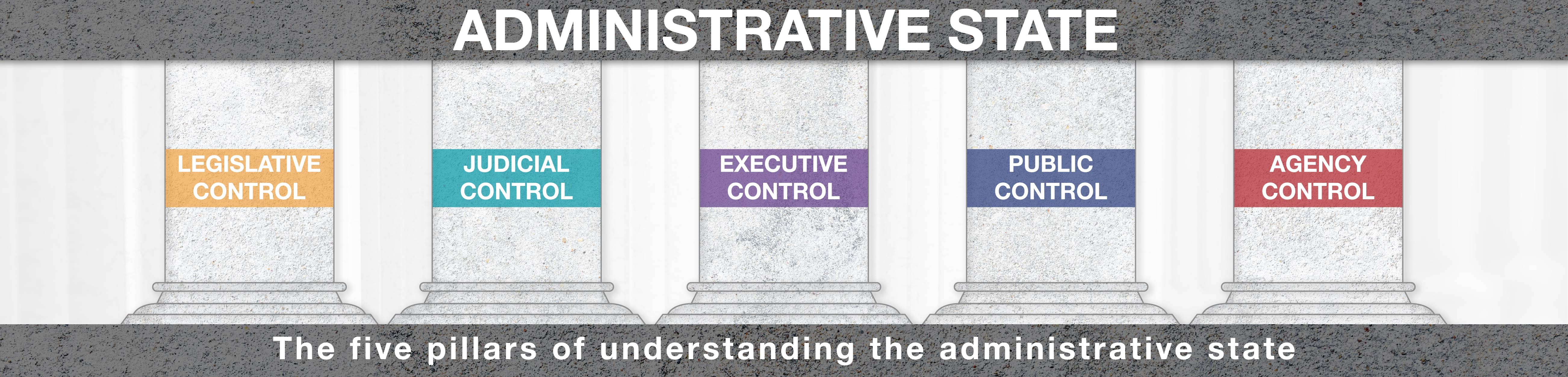
| Administrative State |
|---|

|
| Five Pillars of the Administrative State |
| •Agency control • Executive control • Judicial control •Legislative control • Public Control |
| Click here for more coverage of the administrative state on Ballotpedia.
|
| Click here to access Ballotpedia's administrative state legislation tracker. |
Executive Order 12866: Regulatory Planning and Review is a presidential executive order issued by President Bill Clinton in 1993 establishing principles and processes to govern federal agency rulemaking, regulatory planning, and regulatory review. It was designed to guide presidential oversight of regulatory and administrative policy. E.O. 12866 outlines a rulemaking philosophy for federal agencies, describes several processes for coordinating regulatory planning among agencies, and provides for the incorporation of public comments into the rulemaking process and the public release of documents related to the regulatory review process. The order also authorizes the Office of Information and Regulatory Affairs (OIRA) within the Office of Management and Budget (OMB) to review what it considers all new and preexisting significant regulatory actions.[1][2][3]
Background[edit]
Executive Order 12866, titled "Regulatory Planning and Review," was issued by President Bill Clinton on September 30, 1993. According to RegInfo.gov, a government website administered by the Office of Management and Budget and the General Services Administration, E.O. 12866 is based on the following priorities:[4]
| “ |
|
” |
E.O. 12866 revised and expanded administrative policies established by President Ronald Reagan in two previous executive orders. The first, Executive Order 12291, was issued in 1981 and required agencies to conduct a cost-benefit analysis of any major rule they wished to propose or finalize. The rule and accompanying analysis had to be submitted to the Office of Information and Regulatory Affairs (OIRA) for review and approval. In 1984, Executive Order 12498 provided for the creation of an annual Regulatory Plan, compiled by OIRA and detailing each agency's predicted regulatory actions for the coming year.[6]
Provisions[edit]
The provisions of E.O. 12866 address four areas of administrative policy. President Donald Trump's (R) February 18, 2025 Executive Order 14215 removed previous exceptions for most independent federal agencies.[7] Because of this, unless otherwise indicated, these provisions apply to all U.S. federal government agencies.
Regulatory philosophy and principles[edit]
Federal agencies are mandated or authorized by law to issue rules and regulations in a particular policy area, and this rulemaking is governed by processes established in the Administrative Procedure Act.[4] E.O. 12866 provides agencies with additional guidance by requiring that their rulemaking adhere to the following philosophy:
| “ | Federal agencies should promulgate only such regulations as are required by law, are necessary to interpret the law, or are made necessary by compelling public need, such as material failures of private markets to protect or improve the health and safety of the public, the environment, or the well-being of the American people. In deciding whether and how to regulate, agencies should assess all costs and benefits of available regulatory alternatives, including the alternative of not regulating.[1][5] | ” |
| —Executive Order 12866 | ||
Additionally, the order requires that agency rulemaking adhere to a set of twelve regulatory principles, including the assessment of alternatives to regulation, the use of the best available information from a variety of sources, and the avoidance of duplications and inconsistencies among agencies.[1][2]
Regulatory planning process[edit]
Several provisions of E.O. 12866 address the process by which agencies plan and coordinate their regulatory actions. According to the order, these provisions are also intended "to involve the public and its State, local, and tribal officials in regulatory planning, and to ensure that new or revised regulations promote the President’s priorities." E.O. 12866 provides for the following planning mechanisms:[1][2]
- Agencies' Policy Meeting
"Early in each year’s planning cycle, the Vice President shall convene a meeting of the Advisors and the heads of agencies to seek a common understanding of priorities and to coordinate regulatory efforts to be accomplished in the upcoming year."[1] - Unified Agenda of Federal Regulatory and Deregulatory Actions
"Each agency shall prepare an agenda of all regulations under development or review, at a time and in a manner specified by the Administrator of OIRA [currently, the agenda is compiled semi-anually]. The description of each regulatory action shall contain, at a minimum, a regulation identifier number, a brief summary of the action, the legal authority for the action, any legal deadline for the action, and the name and telephone number of a knowledgeable agency official." - The Regulatory Plan
"As part of the Unified Regulatory Agenda, beginning in 1994, each agency shall prepare a Regulatory Plan of the most important significant regulatory actions that the agency reasonably expects to issue in proposed or final form in that fiscal year or thereafter."
E.O. 12866 also established the position of regulatory policy officer (RPO), a role assigned by the head of a federal administrative agency to a member of that agency's staff, with the responsibility of overseeing the agency's rulemaking process and reporting to the agency head. The order directs RPOs to "foster the development of effective, innovative, and least burdensome regulations and to further the principles set forth in this Executive order."[1]
Regulatory review by OIRA[edit]
E.O. 12866 assigns the Office of Information and Regulatory Affairs (OIRA) the responsibility of ensuring "that regulations are consistent with applicable law, the President's priorities, and the principles set forth in this Executive order, and that decisions made by one agency do not conflict with the policies or actions taken or planned by another agency." The order also authorizes OIRA to review all new and preexisting significant regulatory actions. E.O. 12866 defines a significant regulatory action as "any regulatory action that is likely to result in a rule that may:"[1]
| “ | (1) Have an annual effect on the economy of $100 million or more or adversely affect in a material way the economy, a sector of the economy, productivity, competition, jobs, the environment, public health or safety, or State, local, or tribal governments or communities;
(2) Create a serious inconsistency or otherwise interfere with an action taken or planned by another agency; (3) Materially alter the budgetary impact of entitlements, grants, user fees, or loan programs or the rights and obligations of recipients thereof; or (4) Raise novel legal or policy issues arising out of legal mandates, the President’s priorities, or the principles set forth in this Executive order.[1][5] |
” |
| —Executive Order 12866 | ||
OIRA is responsible for determining which regulations fit this definition and thus require its review, while any agency attempting to issue a significant new regulation must submit the rule and an accompanying report to the office. OIRA has 90 days (with a possible 30 day extension) to complete its review of a significant regulatory action; the rule in question cannot be published in the Federal Register until the office completes its review without recommendations or the review period expires. Agencies must reconsider any rule returned with comments or changes following OIRA review.[1][2]
Public participation and transparency[edit]
Under E.O. 12866, agencies must incorporate comments from the public into the rulemaking process. Public comments on proposed rules can be submitted to agencies through the federal government docket website Regulations.gov. Furthermore, once a significant regulatory action passes OIRA review and is published in the Federal Register, E.O. 12866 requires the rulemaking agency and the OMB to publicly release documents exchanged during the review process. The agency must also identify differences between the original draft rule reviewed by OIRA and the final published version.[4][3][8]
Presidential administrations[edit]
E.O. 12866 was issued in 1993 by President Bill Clinton (D). Below is a list of updates and responses to this order made by subsequent presidential administrations:
George W. Bush[edit]
President George W. Bush (R) made two changes to E.O. 12866 during his presidency. In 2002 Bush issued Executive Order 13258, which made procedural changes to E.O. 12866, most notably removing the formal role of the vice president as the president's primary regulatory policy advisor.[9] In 2007, Bush's Executive Order 13422 granted regulatory policy officers within agencies the ability to unilaterally initiate regulatory activity and granted OIRA the ability to review and edit agency guidance documents. Both of these amending orders were reversed by President Bush's successor, Barack Obama.[10]
Barack Obama[edit]
On January 30, 2009, President Barack Obama (D) issued Executive Order 13497, which revoked both of President Bush's amendments to E.O. 12866.[10][11]
Obama made further changes to E.O. 12866 in 2011 when he issued Executive Order 13563, "Improving Regulation and Regulatory Review." According to a summary from the Environmental Protection Agency, the order "reaffirms and amplifies the principles embodied in E.O. 12866 by encouraging agencies to coordinate their regulatory activities, and to consider regulatory approaches that reduce the burden of regulation while maintaining flexibility and freedom of choice for the public." Under E.O. 13563, agencies are expected to seek input from those likely to be affected by their regulations before issuing a notice of proposed rulemaking and to accept public comments on proposed rules via the Internet. The order also directs agencies to estimate the costs and benefits of proposed rules, provide public access to rulemaking documents, and to periodically review their existing regulations.[3]
Donald Trump (First Administration)[edit]
On February 24, 2017, President Donald Trump (R) issued Executive Order 13777, "Enforcing the Regulatory Reform Agenda." The order declares that "It is the policy of the United States to alleviate unnecessary regulatory burdens placed on the American people," and lists E.O. 12866 as one of four major policies and initiatives guiding regulatory review and reform efforts by the executive branch.[12][13]
Joe Biden[edit]
On April 6, 2023, President Joe Biden (D) issued Executive Order 14094, titled "Modernizing Regulatory Review," which changed the definition of a significant regulatory action to include any action with an annual effect of $200 million or more, as opposed to $100 million or more. It also directed the OIRA administrator to review all other significant rules (those regarding novel policy issues) and sought to classify agency rules in an effort to limit the number of actions that require review by OIRA.[14][15]
Donald Trump (Second Administration)[edit]
On January 20, 2025, President Donald Trump (R) issued Executive Order 14148, revoking E.O. 14094.Cite error: Invalid <ref> tag; invalid names, e.g. too many
On February 18, 2025, Trump issued Executive Order 14215, titled "Ensuring Accountability for All Agencies," which modified Executive Order 12866 by removing exceptions for most independent federal agencies.[7]
See also[edit]
- Regulatory policy officer
- Regulatory review
- Retrospective regulatory review
- Significant regulatory action
- U.S. Office of Information and Regulatory Affairs
- U.S. Office of Management and Budget
External links[edit]
- Executive Order 12866, "Regulatory Planning and Review" (1993)
- RegInfo.gov
- Regulations.gov
- Definitions of agency and independent regulatory agency (44 U.S.C. 3502)
- Search Google News for this topic
Footnotes[edit]
- ↑ 1.0 1.1 1.2 1.3 1.4 1.5 1.6 1.7 1.8 Federal Register, "Executive Order 12866," October 4, 1993
- ↑ 2.0 2.1 2.2 2.3 Center for Effective Government, "Executive Order 12866," accessed July 20, 2017
- ↑ 3.0 3.1 3.2 Environmental Protection Agency, "Summary of Executive Order 12866 - Regulatory Planning and Review," accessed July 20, 2017
- ↑ 4.0 4.1 4.2 4.3 RegInfo.gov, "Frequently Asked Questions," accessed July 20, 2017
- ↑ 5.0 5.1 5.2 Note: This text is quoted verbatim from the original source. Any inconsistencies are attributable to the original source.
- ↑ Environmental Encyclopedia, "Regulatory Review," 2003
- ↑ 7.0 7.1 White House, "Ensuring Accountability for All Agencies," February 18, 2025
- ↑ U.S. Food & Drug Administration, "FDA Rules and Regulations," accessed July 25, 2017
- ↑ Federal Register, "Amending Executive Order 12866 on Regulatory Planning and Review," February 28, 2002
- ↑ 10.0 10.1 Benton Foundation, "Obama Revokes Bush Executive Orders Concerning Regulatory Planning And Review," February 17, 2009
- ↑ RegInfo.gov, "Executive Order 12866 Regulatory Planning and Review," accessed July 31, 2017
- ↑ White House Office of the Press Secretary, "Presidential Executive Order on Enforcing the Regulatory Reform Agenda," February 24, 2017
- ↑ Environmental Protection Agency, "Memorandum on Executive Order 13777: Enforcing the Regulatory Reform Agenda," March 24, 2017
- ↑ Federal Register, "Modernizing Regulatory Review," April 11, 2023
- ↑ The White House, "Strengthening Our Regulatory System for the 21st Century," April 6, 2023

Categories: [Executive orders related to the administrative state] [Executive orders related to the administrative state issued by President Bill Clinton]
↧ Download as ZWI file | Last modified: 12/27/2025 11:58:29 | 16 views
☰ Source: https://ballotpedia.org/Presidential_Executive_Order_12866_(Bill_Clinton,_1993) | License: CC BY-SA 3.0
 KSF
KSF