Heritage Structures In Hyderabad, India
 From Handwiki
 Heritage Conservation Committee under HUDA was formed by state government in 1981 to retain architectural, historical and social value of buildings.[1] Hyderabad Urban Development Authority has listed almost 160 buildings in Hyderabad in Telangana state as heritage structures. Almost 70% of heritage buildings are in private hands. Heritage structures include buildings, monuments, rock structures etc.[2]
By notifying such structures, Heritage Conservation Committee in collaboration with (INTACH) works to retain their architectural, historical and social importance and tries to convince the owners not to destroy the listed heritage structures lured by the commercial potential of their properties. The buildings are graded as Grade I, Grade II & Grade III.[3] However, experts feel due to lack of support from the state government it has become difficult to preserve the status of these buildings.[4] Various buildings such as Ravi Bar, Adil Alam Mansion, Central Building Division & Devdi Ranachand – Ahotichand have been demolished[5] but the names of these buildings are still being retained in the list.[6]
Heritage Awards Programme buildings recognized by INTACH, Hyderabad
During 1996 to 2005, the Hyderabad chapter of INTACH designated about six historic sites per year with its Heritage Awards Programme.
For at least some of the years, wwards were given on World Heritage Day.[7]
In 1996, these were:
- A.P. High Court, a Government Building[8]
- Mecca Masjid, an Institutional Building[8]
- Mir Alam Dam, an Ensemble of Rocks and Gardens[8]
- Mozzamjahi Market, an Ensemble of Buildings of Vernacular Style / Markets / Shops, built in 1935[8]
- Qutub Shahi Tombs, a Historical Structure, built in the 16th century, located close to the Golconda Fort[8]
- Nawab Nazir Nawaz Jung's Palace, a Private Building, built during 1982-94, Deccan architecture. Home of Nazir Nawaz Jung.[8]
In 1997, these were:
- Aziz Bagh[9]
- Bhagwandas Pavilion, a wooden two-story pavilion in the Bhagwandas Garden.[9]
- Gyan Bagh Palace, built in mid-1800s[9]
- Military Reformatory, Trimulgherry, in Trimulgherry, built in 1870s for the British Indian Army to serve as a jail, similar to the more famous Andaman Jail.[9]
- Trinity Church, Bolarum, a Victorian Gothic style church built in mid-1800s near Secunderabad.[9]
In 1998, these were:
- Durgham Lake, Jubilee Hills, a once-secret water reservoir serving Golconda Fort[10]
- Habshi Kaman (Abyssinian Guard Arches), in Golconda Fort area beside the main approach to the Bala Hissans or inner fort. From the early Qutub Shahi period (1518–1580).[10]
- Military Hospital, Trimulgherry, developed following the 1857 First Indian War of Independence[10]
- Paigah Tombs, dating from 1786 on. The group of buildings is "the jewel in Hyderabad’s crown, perhaps unparalleled in its beauty of craftsmanship and detailing."[10]
- Pitti Haveli, Begum Bazar. The Pitti Haveli in Begum Bazar (Begum Bazaar?) from late 1800s.[10]
- St. John's Church, Marredpalli, Secunderabad, built in 1818.[10]
- Sir Ronald Ross Building, Begumpet, now part of Osmania University. Where Sir Ronald Ross discovered transmission of malarial parasite, for which he won the Nobel Prize. Home of the Hyderabad chapter of INTACH.[10]
In 1999, these were:
- Viccaji Pestonji Fire Temple, built in 1847, located on the Mahatma Gandhi Road, Secunderabad. Built by/for Seth Viccaji and Seth Pestonji Meherji, bankers.[11]
- Laxman Bagh, an ensemble of buildings at Rai Durg on the Old Bombay Highway in Hyderabad. Includes a 250-year-old temple.[11]
- Banjara Darwaza, Golconda Fort Banjara Darwaza, one of Golconda Fort's main entrances, notable for its stone relief carvings.[11]
- Aza Khana-E-Zehra, at Darul Shifa in the old city of Hyderabad, built in 1930s by Nizam VII Mir Osman Ali Khan.[11]
- Secunderabad Club in the Picket area of Secunderabad, built in 1800s by Sir Salar Jung-I. Later served as a European Officer’s club.[11]
- Kasu Brahmananda Reddy National Park, in Jubilee Hills[11]
In 2000, these were:
- Bella Vista, built in 1934 as official residence of Azam Jah, crown prince of Hyderabad State. Later housed the Administrative Staff College of India.[12]
- Army Golf Course, of the Bolarum Cantonment, an 18 hole course laid out in 1888.[12]
- Hyderabad Public School, in Begumpet, originally known as Jagirdar's College, Osmanian style and "the most prestigious educational institution of the erstwhile Hyderabad State.[12]
- Badruka House, at Toli Chowki near Golconda Fort, a residence with colonial and Portuguese stylings.[12]
- Mahalaqa Chanda's Step Well, the garden of poetess Mahalaqa Bai Chanda[12]
- Sitaram Bagh, near Mangalhat, "a vast complex of temples, samadhis, residential quarters and open areas" and "a rare blending of the Moghul-Rajput styles with Qutub Shahi architecture."[12]
In 2001, these were:
- Bai Manechbai Nusserwanji Chenoy Fire Temple on Tilak Road, Hyderabad, built by the Chenoy family in 1904. Owned and maintained by a family trust.[13]
- Jubilee Halm in the Bagh-e-Aam (Public Gardens) on the Nampally Road, Hyderabad, built in 1935 for the Silver Jubilee of the Nizam VII, Mir Osman Ali Khan’s Coronation. An example of Qutub Shahi Revival architecture at its zenith, also known as Osmanian Style.[13]
- GVK House, Banjara Hills, Hyderabad. Built in 1938 by Sakina Begum Rahmatulla of the Bilgrami family, known as "Kohinoor". Demolished in 2003 by its owners to make way for cinema/shopping mall.[13]
- Chiran Fort Club on the Sardar Patel road at Begumpet. In the 1890s was a part of the palace of Paigah Nawab Iqbal ud Dowla, Viqar ul Umra in the 1890’s.[13]
- Flag Staff House, Bolarum, in the Bolarum Cantonment area, built in 1875 for British officers. Now residence of the Army Sub Area Commander.[13]
- Purani Haveli, Princess Esin Centre[13]
- Hakim's Tomb Complex, Jubilee Hills, Hyderabad. Located on outcrop overlooking Golconda Fort and tombs. A tomb, a small mosque, and a structure believed to have served as a Qanqah (hospice).[13]
In 2002, these were:
- Afzal Mahal of Chow Mohalla Complex Afzal Mahal of the Chow Mohalla complex. Achieved classical European style during the reign of Vth Nizam, Nawab Afzal ud Dowla (1857–69).[7]
- Musa Burj, Golconda Fort, located near the Makkai Darwaza of Golconda Fort. A three-story decagonal structure rising 60 feet (18 m), topped by cannons including the Azdhaka Paikar.[7]
- [7]
- [7]
- [7]
- [7]
In 2003, these were:
In 2004, these were:
In 2005, these were:
List of Heritage buildings as per HUDA
Following are the list of the heritage buildings in Hyderabad recognized by HUDA. This list is constantly upgraded by HUDA. The buildings proposed by HUDA are to be approved by the state government.([17])
- 1. Adil Alam Mansion, Nampally (Deleted from list[18])
- 2. Afzal Gunj Mosque
- 2. Air & Land Warfare Building, Secunderabad
- 3. Aiwan-e-Ali
- 4. Aliabad Sarai
- 5. Ali Manzil, Public Garden
- 6. Allahuddins Building, Begumpet
- 7. Amberpet Burj, Amberpet

- 8. Ameen Manzil, Saidabad
- 9. State Central Library, Afzal Gunj

- 10. Andhra Patrika Building, Basheerbagh

- 11. High Court of Judicature at Hyderabad (the A.P. High Court, recognized in 1996[19]
- 12. State Archaeological Museum
- 13. Asmangarh Palace
.jpg)
- 14. Asman Mahal, Lakdi-ka-pool
- 15. Azha Khana-e-Zehra
- 16. Bai Pirojbai Edulji Chenai Parsi Dharamshala
- 17. Baradari of Nawab Khursheed Jah Bahadur

- 18. Baitul Ashraf, near Niloufar Hospital
- 19. Baquer Bagh, Saidabad
- 20. Bella Vista (Administrative Staff College of India)
- 22. Bhagawandas Garden Pavilion, Karawan

- 23 a) Charkaman; b) Machlikaman c) Kalikaman d) Sher-e-Batil-Ki-Kaman
- 24. Chowmahalla Palace
- 25. City College
- 26. Secunderabad Clock Tower
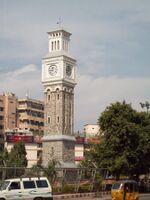
Clock Tower, Secunderabad - 27. Clock Tower, Sultan Bazar
- 28. Clock Tower & Ramgopalpet Police Station, James Street


- 29. Clock Tower – Fateh Maidan
- 30. Clock Tower – Mahboob Chowk
- 31. Dargah Hazrath Shajauddin
- 32. Dargah Nooruddin Shah Ancient Gateway, Kukatpally
- 33. Dargah Syed Shah Mir Mahmood Wali
- 34. Dargah Yousufain
- 35. Darush Shifa & Mosque
- 36. Devdi Akram Ali Khan, Gate Portion
- 37. Devdi Asman Jah
- 38. Devdi Bansilal, Begum Bazar
- 39. Devdi Iqbal-ud-Doula (Shah Gunj)
- 40. Devdi Imaad Jung Bahadur, Gunfoundry
- 41. Devdi Nazir Nawaz Jung (Chiran Fort)
- 42. Devdi Nawab Shamsheer Jung, Yakutpura
- 43. Devdi Maharaja Kishan Pershad Bahadur, Shalibanda Road
- 44. Dewan Devdi – Gate Portion
- 45 Dhanrajgirji Complex
- 46. Directorate of Industries, Chirag Ali Lane
- 47. Errum Manzil
- 48. Falaknuma Palace
- 49. Gandhi Medical College, Basheerbagh
- 50. Golden Threshold, Nampally Station Road
- 52. Hyderabad Public School

- 53. Jama Masjid, Charminar
- 54. Jawahar Bal Bhavan, Public Garden
- 55. Jhamsingh Temple – Gate Portion

- 56. Jubilee Hall
- 57. Kaman Chatta Bazar
- 58. King Koti Complex: a) Hospital (old) b) Usman Mansion c) Nazri Bagh
- 59. British Residency Complex (Women’s College, Koti)
- 60. Kishan Bagh Temple, Bahadurpura
- 61. Lakshmi Paper Mart’s Building, James Street
- 62. Nizamia Observatory, Panjagutta
- 63. Maharaja Chandulal Temple, Alwal
- 64. Mahboob Chowk Mosque
- 65. Mahboob Mansion, Malakpet
- 66. Malwala Palace – Main Courtyard, Secondary Courtyard & Residential quarters:Charminar
- 67. Manjhli Begum Ki Haveli, Shali Banda road
- 68. Mushk Mahal, Attapur
- 69. Moghulpura Tombs
- 70. Mohanlal Malani’s residence, James Street
- 71. Monty’s Hotel, Parklane, Secunderabad
- 72. Mosque – near Jhamsingh Temple
- 73. Moazzam Jahi Market
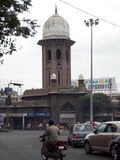
Moazzam Jahi Market - 74. Nanu Bhai G. Shah’s Building, Sultan Bazar
- 75. Nizam Club, Saifabad
- 76. Nizam College


- 77. Osmania Arts College

- 78. Osmania General Hospital
- 79. Lady Hydari Club, Basheerbagh
- 80. Paigah Palace (Vikhar-ul-Umra Palace)
- 81. Parsi Fire Temple, Secunderabad
- 82. Prakash Building, Shivajinagar
- 83. Princess Esin Women’s Educational Centre, Purani Haveli
- 84. Puranapul bridge
- 85. Purani Haveli Complex
- 86. Qila Kohna & Mosque, Saroornagar
- 87. Raja Bhagwandas Building, Sultan Bazar
- 88. Shahi Jilu Khana, Gate Portion
- 89. Shahi Khilwat Khana
- 90. Sitaram Bagh Temple
- 91. Spanish Mosque, Begumpet
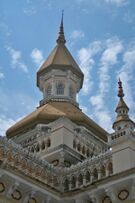
Spanish Mosque - 92. St. George's Church, Hyderabad


- 93. St. Mary's Church, Secunderabad
- 94. St. John's Church, Secunderabad (1998)
- 95. St Joseph's Cathedral, Hyderabad
- 96. Gate Portion – Shamraj Bahadur
- 97. Vikhar Manzil
- 98. Victoria Memorial Orphanage, Saroornagar
- 99. Victoria Maternity Hospital, Asaf Jahi Road
- 100. Government Unani Hospital, Charminar
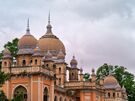
Government Unani Hospital - 101. Vilayath Manzil, Begumpet Railway Station
- 102. Homeopathic Hospital
- 103. Tomb Fakhr-ul-Mulk, Sanathnagar Road
- 104. Vijay Marie Church, AC Guards
- 105. Puranmal Samadhi
- 106. Ritz Hotel (Hill Fort Palace), Adarshnagar
- 107. D. Lakshmaiah’s residence, Monda Market
- 108. D. Pentaiah’s residence, Monda Market*
- 109. Sardar Mahal
- 110. Raza Ali Bunglow, Near Fever Hospital
- 111. Façade – Baitul Ghous, Moazzam Jahi Market
- 112. Façade – Hifazath Hussain
- 113. Goshamal Baradari
- 114. Prem Chand’s residence, Sardar Patel Road
- 115. Shyam Rao Chungi’s residence, Padmarao Nagar
- 116. Dilkusha Guest House, Raj Bhavan Road
- 117. College of Nursing, Raj Bhavan Road
- 118. Yousuf Tekri, Tolichowki
- 119. Khusro Manzil, A.C.Guards
- 120. Devdi Ranachand – Ahotichand, Mehdipatnam (Deleted)
- 121. Panj Mahalla, Lingampally
- 122. Parwarish Bagh, Lingampally
- 123. Central Bank Building, Koti
- 124. Mini Bal Bhavan, Public Garden
- 125. Taj Mahal hotel (Old Block), Abids


- 126. Ravi Bar, Troop Bazar (Deleted from list by Government([20])
- 127. Hyderabad Central Building Division’s office, Moazzam Jahi Market
- 128. Roshan Mahal
- 129. Central Co-operative Training College, Nizam College Road
- 130. Mahboobia Girls High School & Junior College Madraasa-E-Aliya, Gunfoundry
- 131. Reddy Hostel, Abids
- 132. Mahal Wanaparthi
- 133. A. Majeed Khan’s residence, Purani Haveli
- 134. Old M.C.H. Office, Darush Shifa
- 135. Greenlands Guest House, Begumpet
- 136. Raj Bhavan Old Building
- 137. St. George's Grammar School Complex, Abids
- 138. Old Jail Complex, Monda Market Road
- 139. Wesley Church, Secunderabad
- 140. Nampally Sarai, Tipu Khan Saraai Nampally
- 141. Bhoiguda Kaman, Mangalhaat
- 142. IAS Officers Association, Greenlands, Begumpet
- 143. St. Mary's Presbytery (St. Anns School), Secunderabad
- 144. Krishna Reddy's Building, Mehdipatnam
- 145. Heritage well, EFL University, [10], Hyderabad([21]) ([22])
- 146. Yakut Mahal
- 147. Mah Laqa Bai Tomb, Moula Ali
- 148. Aza Khana-e-Zehra
- 149. Banjara Darwaza, Golconda Fort
- 150. Kachiguda Railway Station
- 151. Trinity Church, Bolarum
- 152. Saviour Tree
- 153. Shoukat Mansion
Heritage rock formations in Hyderabad
In addition to various buildings, INTACH has classified various rock formation under heritage category.[23][24] These are


- 1. "Bear’s Nose" inside Shilparamam, Madhapur
- 2. "Cliff Rock", Jubilee Hills
- 3. Hillocks around Durgam Cheruvu Lake, Jubilee Hills
- 4. "Monster Rock" near Film Nagar, Jubilee Hills
- 5. "Obelisk", Jubilee Hills
- 6. "Mushroom Rock" inside the University of Hyderabad Campus
- 7. Rock Park, on Old Bombay Road near Dargah Hussain Shah Wali
- 8. Sentinel Rock, near Moula-Ali
- 9. Rocks at Maula Ali's Dargah, Moula-Ali
- 10. "Toadstool" next to Blue Cross, Jubilee Hills
See also
- Heritage conservation
- Architectural conservation
- Sustainable preservation
- World Heritage Site
References
- ↑ "‘Heritage Conservation Committee’". HMDA. Archived from the original on 30 May 2010. https://web.archive.org/web/20100530052457/http://www.hmda.gov.in/hcc1.html. Retrieved 2010-08-30.
- ↑ "‘Heritage Hyderabad City’". INTACH Hyderabad Chapter. Archived from the original on 21 July 2011. https://web.archive.org/web/20110721163432/http://intach.ap.nic.in/heritage.htm. Retrieved 2010-08-29.
- ↑ "‘Heritage status for 19 more buildings’". Chennai, India: The Hindu. 1 July 2005. http://www.hindu.com/2005/07/01/stories/2005070115100300.htm. Retrieved 2010-08-29.
- ↑ "‘Government indifferent to heritage structures’". Chennai, India: The Hindu. 2008-08-31. http://www.hindu.com/2008/07/31/stories/2008073159070200.htm. Retrieved 2010-08-29.
- ↑ "Monty’s in bag, heritage soldiers to keep fighting". Times of India. 20 June 2009. http://www.newindianexpress.com/cities/hyderabad/article109723.ece?service=print. Retrieved 2014-08-29.
- ↑ "Revised Development Plan (Master Plan) of erstwhile Municipal Corporation of Hyderabad Area (HMDA Core Area) – Approved". Municipal Administration & Urban Development Department - Hyderabad Metropolitan Development Authority.. 21 August 2010. http://220.227.252.236/RMP/pdf/Zoning Regulations and Master Plan GOs.pdf. Retrieved 2014-08-29.
- ↑ 7.0 7.1 7.2 7.3 7.4 7.5 7.6 [1]
- ↑ 8.0 8.1 8.2 8.3 8.4 8.5 [2]
- ↑ 9.0 9.1 9.2 9.3 9.4 [3]
- ↑ 10.0 10.1 10.2 10.3 10.4 10.5 10.6 [4]
- ↑ 11.0 11.1 11.2 11.3 11.4 11.5 [5]
- ↑ 12.0 12.1 12.2 12.3 12.4 12.5 [6]
- ↑ 13.0 13.1 13.2 13.3 13.4 13.5 13.6 [7]
- ↑ 14.0 14.1 14.2 14.3 14.4 14.5 14.6 []
- ↑ 15.0 15.1 15.2 15.3 15.4 15.5 15.6 15.7 []
- ↑ 16.0 16.1 16.2 16.3 16.4 16.5 16.6 16.7 []
- ↑ "‘63rd Meeting: Minutes’". Hyderabad Urban Development Authority. 2006-05-27. Archived from the original on 21 July 2011. https://web.archive.org/web/20110721160222/http://www.hmda.gov.in/hcc/hcc64.doc. Retrieved 2010-08-30.
- ↑ "‘GOM’". Principal Secretary to Government, State Government. 2004-02-17. http://www.aponline.gov.in/Quick Links/Departments/Municipal Administration and Urban Development/Govt-GOs-Acts/2004/GO.Ms.36.2004.html. Retrieved 2010-08-29.
- ↑ [8]
- ↑ "‘63rd Meeting: Minutes’". Hyderabad Urban Development Authority. 2006-04-20. Archived from the original on 21 July 2011. https://web.archive.org/web/20110721163432/http://intach.ap.nic.in/heritage.htm. Retrieved 2010-08-29.
- ↑ EFLU Hyderabad heritage well
- ↑ [9]
- ↑ "Archived copy". Archived from the original on 6 October 2011. https://web.archive.org/web/20111006021909/http://intach.ap.nic.in/heritagesites.htm. Retrieved 2011-09-05.
- ↑ "Rock of Ages". India Today. 2000-03-13. Archived from the original on 30 June 2009. https://web.archive.org/web/20090630030701/http://intach.ap.nic.in/heritage.htm. Retrieved 2010-08-29.
External links
- "A Guide to Architecture in Hyderabad, Deccan, India", by Omar Khalidi
- Heritage Capital Hyderabad
- Photo gallery of heritage buildings in Hyderabad
- 63rd Meeting Minutes
- Society to Save Rocks
- Heritage Conservation in Hyderabad
 |
↧ Download as ZWI file | Last modified: 05/09/2026 22:12:21 | 48 views
☰ Source: https://handwiki.org/wiki/Social:Heritage_structures_in_Hyderabad,_India | License: CC BY-SA 3.0
 KSF
KSF