Governor Of Florida
 From Ballotpedia
 | Florida Governor | |
 | |
| General information | |
| Office Type: | Partisan |
| Office website: | Official Link |
| Compensation: | $141,400 |
| 2025 FY Budget: | $1,417,367,261 |
| Term limits: | 2 consecutive terms |
| Structure | |
| Length of term: | 4 years |
| Authority: | Florida Constitution, Article IV, Section 1 |
| Selection Method: | Elected |
| Current Officeholder | |
Governor of Florida
Ron DeSantis | |
| Elections | |
| Next election: | November 3, 2026 |
| Last election: | November 8, 2022 |
| Other Florida Executive Offices | |
| Governor•Lieutenant Governor•Secretary of State•Attorney General•Chief Financial Officer•Commissioner of Education•Agriculture Commissioner•Insurance Commissioner•Environmental Protection Secretary•Economic Opportunity Secretary•Public Service Commission | |
The Governor of the State of Florida is an elected constitutional officer, the head of the executive branch, and the highest state office in Florida. The governor is elected by popular election every four years. There is no lifetime limit on the number of times he or she may be elected, but a governor who has been elected to two consecutive terms must be out of office for at least one election cycle before being eligible for re-election.[1]
Florida has a Republican trifecta. The Republican Party controls the office of governor and both chambers of the state legislature.
Florida has a Republican triplex. The Republican Party controls the offices of governor, secretary of state, and attorney general.
Current officeholder[edit]
The 46th and current governor of Florida is Ron DeSantis (R). He was first elected in 2018.
Before becoming governor, DeSantis was a Republican member of the U.S. House from the 6th Congressional District of Florida.[2]
Authority[edit]
The state constitution establishes the office of the governor in Article IV, the Executive Department.
Florida Constitution, Article IV, Section 1
|
The supreme executive power shall be vested in a governor.[1] |
Qualifications[edit]
| State Executives |
|---|
 |
| Current Governors |
| Gubernatorial Elections |
| 2025 • 2024 • 2023 • 2022 • 2021 • 2020 • 2019 • 2018 • 2017 • 2016 • 2015 • 2014 |
| Current Lt. Governors |
| Lt. Governor Elections |
| 2025 • 2024 • 2023 • 2022 • 2021 • 2020 • 2019 • 2018 • 2017 • 2016 • 2015 • 2014 |
Per Article IV, Section 5 of the state constitution, the governor must be at least 30 years old and have been a resident and registered voter of Florida for at least seven years.
Florida Constitution, Article IV, Section 5
|
(b) When elected, the governor, lieutenant governor and each cabinet member must be an elector not less than thirty years of age who has resided in the state for the preceding seven years. The attorney general must have been a member of the bar of Florida for the preceding five years. No person who has, or but for resignation would have, served as governor or acting governor for more than six years in two consecutive terms shall be elected governor for the succeeding term. [1] |
Elections[edit]

- See also: Gubernatorial election cycles by state
- See also: Election of governors
Florida elects governors in the midterm elections, that is, even years that are not presidential election years. For Florida, 2018, 2022, 2026, 2030, and 2034 are all gubernatorial election years. Legally, the gubernatorial inauguration is always set for the first Tuesday after the first Monday in the January following an election. The procedures for electing Florida's governor is laid out in Article IV, Section 5 of the Florida Constitution.[1]
2022[edit]
General election
General election for Governor of Florida
Incumbent Ron DeSantis defeated Charlie Crist, Carmen Gimenez, and Hector Roos in the general election for Governor of Florida on November 8, 2022.
Candidate | % | Votes | ||
| ✔ |  | Ron DeSantis (R) | 59.4 | 4,614,210 |
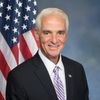 | Charlie Crist (D) | 40.0 | 3,106,313 | |
 | Carmen Gimenez (No Party Affiliation) | 0.4 | 31,577 | |
 | Hector Roos (L) | 0.2 | 19,299 | |
| Total votes: 7,771,399 | |||
 = candidate completed the Ballotpedia Candidate Connection survey. = candidate completed the Ballotpedia Candidate Connection survey. | ||||
| If you are a candidate and would like to tell readers and voters more about why they should vote for you, complete the Ballotpedia Candidate Connection Survey. | ||||
Do you want a spreadsheet of this type of data? Contact our sales team. | ||||

Withdrawn or disqualified candidates
- Kyle Gibson (No Party Affiliation)
- Frank Hughes Jr. (No Party Affiliation)
- Piotr Blass (No Party Affiliation)
- Jodi Jeloudov (No Party Affiliation)
- James Thompson (No Party Affiliation)
- Mark Graham (Unity Party)
Democratic primary election
Democratic primary for Governor of Florida
Charlie Crist defeated Nikki Fried, Cadance Daniel, and Robert Willis in the Democratic primary for Governor of Florida on August 23, 2022.
Candidate | % | Votes | ||
| ✔ | | Charlie Crist | 59.7 | 904,524 |
 | Nikki Fried | 35.3 | 535,480 | |
 | Cadance Daniel | 2.5 | 38,198 | |
 | Robert Willis | 2.4 | 36,786 | |
| Total votes: 1,514,988 | |||
| = candidate completed the Ballotpedia Candidate Connection survey. | ||||
| If you are a candidate and would like to tell readers and voters more about why they should vote for you, complete the Ballotpedia Candidate Connection Survey. | ||||
Do you want a spreadsheet of this type of data? Contact our sales team. | ||||
Withdrawn or disqualified candidates
- Richard Dembinsky (D)
- David Nelson Freeman (D)
- Njällssen Amaro Lionheart (D)
- Annette Taddeo (D)
- Alex Lundmark (D)
Republican primary election
The Republican primary election was canceled. Incumbent Ron DeSantis advanced from the Republican primary for Governor of Florida.
Withdrawn or disqualified candidates
Libertarian primary election
The Libertarian primary election was canceled. Hector Roos advanced from the Libertarian primary for Governor of Florida.
2018[edit]
General election
General election for Governor of Florida
The following candidates ran in the general election for Governor of Florida on November 6, 2018.
Candidate | % | Votes | ||
| ✔ | | Ron DeSantis (R) | 49.6 | 4,076,186 |
 | Andrew Gillum (D) | 49.2 | 4,043,723 | |
 | Darcy Richardson (Reform Party) | 0.6 | 47,140 | |
 | Kyle Gibson (No Party Affiliation) | 0.3 | 24,310 | |
| Ryan Foley (No Party Affiliation) | 0.2 | 14,630 | ||
 | Bruce Stanley (No Party Affiliation) | 0.2 | 14,505 | |
| Other/Write-in votes | 0.0 | 66 | ||

| Total votes: 8,220,560 (100.00% precincts reporting) | |||
| = candidate completed the Ballotpedia Candidate Connection survey. | ||||
| If you are a candidate and would like to tell readers and voters more about why they should vote for you, complete the Ballotpedia Candidate Connection Survey. | ||||
Do you want a spreadsheet of this type of data? Contact our sales team. | ||||
Withdrawn or disqualified candidates
- Raphael Herman (No Party Affiliation)
- Randy Wiseman (L)
Democratic primary election
Democratic primary for Governor of Florida
The following candidates ran in the Democratic primary for Governor of Florida on August 28, 2018.
Candidate | % | Votes | ||
| ✔ | | Andrew Gillum | 34.4 | 522,164 |
 | Gwen Graham | 31.3 | 474,875 | |
 | Philip Levine | 20.3 | 308,801 | |
 | Jeff Greene | 10.1 | 152,955 | |
 | Christopher King | 2.5 | 37,616 | |
| John Wetherbee | 0.9 | 14,426 | ||
 | Alex Lundmark | 0.6 | 8,655 | |
| Total votes: 1,519,492 | |||
| = candidate completed the Ballotpedia Candidate Connection survey. | ||||
| If you are a candidate and would like to tell readers and voters more about why they should vote for you, complete the Ballotpedia Candidate Connection Survey. | ||||
Do you want a spreadsheet of this type of data? Contact our sales team. | ||||
Withdrawn or disqualified candidates
Republican primary election
Republican primary for Governor of Florida
The following candidates ran in the Republican primary for Governor of Florida on August 28, 2018.
Candidate | % | Votes | ||
| ✔ | | Ron DeSantis | 56.5 | 916,298 |
 | Adam Putnam | 36.5 | 592,518 | |
 | Bob White | 2.0 | 32,710 | |
| Timothy Devine | 1.3 | 21,380 | ||
| Bob Langford | 1.2 | 19,842 | ||
 | Bruce Nathan | 0.9 | 14,556 | |
| Don Baldauf | 0.8 | 13,173 | ||
 | John Joseph Mercadante | 0.7 | 11,647 | |
| Total votes: 1,622,124 | |||
| = candidate completed the Ballotpedia Candidate Connection survey. | ||||
| If you are a candidate and would like to tell readers and voters more about why they should vote for you, complete the Ballotpedia Candidate Connection Survey. | ||||
Do you want a spreadsheet of this type of data? Contact our sales team. | ||||
Withdrawn or disqualified candidates
- Angel Rivera (R)
2014[edit]
| Governor and Lieutenant Governor of Florida, 2014 | ||||
|---|---|---|---|---|
| Party | Candidate | Vote % | Votes | |
| Republican |  Rick Scott/Carlos Lopez-Cantera Incumbent Rick Scott/Carlos Lopez-Cantera Incumbent |
48.1% | 2,865,343 | |
| Democratic | Charlie Crist/Annette Taddeo-Goldstein | 47.1% | 2,801,198 | |
| Libertarian | Adrian Wyllie/Greg Roe | 3.8% | 223,356 | |
| No Party Affiliation | Glenn Burkett/Jose Augusto Matos | 0.7% | 41,341 | |
| No Party Affiliation | Farid Khavari/Lateresa Jones | 0.3% | 20,186 | |
| Nonpartisan | Write-in votes | 0% | 137 | |
| Total Votes | 5,951,561 | |||
| Election results via Florida Division of Elections | ||||
Term limits[edit]
- See also: States with gubernatorial term limits
Florida governors are restricted to two consecutive terms in office, after which they must wait one term before being eligible to run again.
Florida Constitution, Article IV, Section 5
| No person who has, or but for resignation would have, served as governor or acting governor for more than six years in two consecutive terms shall be elected governor for the succeeding term.[1] |
Partisan composition[edit]
The chart below shows the partisan breakdown of Florida governors from 1992 to 2013.

Vacancies[edit]
- See also: How gubernatorial vacancies are filled
Details of vacancy appointments are addressed under Article IV, Section 3 of the Florida Constitution.
Whenever the governor is unable or unwilling to discharge the office, either temporarily or permanently, the lieutenant governor takes over all the duties of the governorship either until the governor is able to resume the office or until the next election.
At any time that the governor is on trial for impeachment, the lieutenant governor becomes the acting governor.
Additionally, at any time that three members of the cabinet and the Chief Justice of the Supreme Court agree on the governor's mental or physical unfitness for office, they may suspend and reinstate the governor, pursuant to § 3.
Duties[edit]
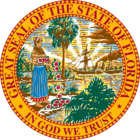
The Governor of Florida is the chief executive of Florida and serves as chairman of the Florida cabinet. The governor has the power to execute Florida's laws and to call out the state militia to preserve the public peace, being commander-in-chief of the state's military forces that are not in active service of the United States. At least once every legislative session, the governor is required to deliver an address to the Florida Legislature, referred to as the "State of the State Address," regarding the condition and operation of the state government and to suggest new legislation. These primary duties are laid out in § 1 (a).
Additionally, the governor may initiate judicial action against a state, county, or municipal officer to enforce compliance with law and the duties of the individual's office, may request opinions and interpretations of constitutional matters from the members of the Florida Supreme Court, and may fill all vacancies in elected and appointed office where the law does not otherwise prescribe the method.[1]
In March 2012, the Florida Legislature passed legislation that expanded the powers of the governor to include more oversight over agency rulemaking, members of local jobs agencies, and the distribution of money used to recruit new business to relocate to Florida.[3]
Other duties and privileges of the office include:
- assigning official duties to the lieutenant governor, in addition to those set forth by law (§ 2).
- casting a tie breaking vote when needed in cabinet matters
- under § 4 (e), sitting as chair of the Florida Board of Administration, pursuant to Article IX, Section 16 of the Constitution of 1885, and which shall continue as a body at least for the life of Article XII, Section 9(c).
- under § 4 (f), sitting as chair of the trustees of the internal improvement trust fund and the land acquisition trust fund
- under § 4 (g),sitting as agency chair of the state Department of Law Enforcement
- suspending and reinstating all officers, including militia officers, for any reason related to neglect, incompetence, or inability to fulfill duties; the exception applies in cases of impeachment (§ 7).
- excepting cases of treason and impeachment, suspend fines and grant reprieves, pardons, and clemency; by himself or herself, the governor may suspend a fine for up to 60 days. For more substantial matters, two cabinet matters must concur (§ 8).
- cooperating with the cabinet, making all necessary budget reductions in the event of a revenue shortfall (§ 13).
Divisions[edit]
- Updated January 14, 2021
- Administration Office
- Appointments Office
- Cabinet Affairs
- Chief Inspector General’s Office
- Citizen Services
- Commission on Jobs for Floridians with Disabilities
- Communications Office
- Executive Office
- External Affairs
- Office of General Counsel
- Information Systems
- Legislative Affairs
- Office of Adoption and Child Protection
- Office of Open Government
- Office of Policy and Budget
- Scheduling[4]
State budget[edit]
Role in state budget[edit]
- See also: Florida state budget and finances
The state operates on an annual budget cycle. The sequence of key events in the budget process is as follows:[5]
- In June or July, the governor sends budget instructions to state agencies.
- In September or October, agencies submit their budget requests to the governor.
- Budget hearings are held with the public from October through February.
- The governor submits his or her proposed budget to the state legislature 30 days before the legislature convenes.
- The legislature adopts a budget in March, April, or May, effective for the fiscal year beginning on July 1. A simple majority is required to pass a budget.
The governor is statutorily required to submit a balanced budget to the legislature. In turn, the legislature must pass a balanced budget, and any budget signed into law by the governor must be balanced.[5]
Florida is one of 44 states in which the governor has line item veto authority.[5][6]
Florida budgets three major funds: the General Fund, the Major Special Revenue Fund, and the Special Revenue Fund. Both the Major Special Revenue Fund and the Special Revenue Fund are composed of lesser funds. The Major Special Revenue Fund is composed of three lesser funds, and the Special Revenue Fund is composed of about 19 to 20 lesser funds.[7]
Governor's office budget[edit]
The budget for the Governor's Office in Fiscal Year 2025 was $1,417,367,261.[8]
Compensation[edit]
The salaries of elected executive officials in Florida are determined by state law as mandated in the Florida Constitution. Article II, Section 5 of the state constitution states that compensation of state officers is determined by the Florida State Legislature.[9]
| Text of Section 5:
Public Officers (a) No person holding any office of emolument under any foreign government, or civil office of emolument under the United States or any other state, shall hold any office of honor or of emolument under the government of this state. No person shall hold at the same time more than one office under the government of the state and the counties and municipalities therein, except that a notary public or military officer may hold another office, and any officer may be a member of a constitution revision commission, taxation and budget reform commission, constitutional convention, or statutory body having only advisory powers. (b) Each state and county officer, before entering upon the duties of the office, shall give bond as required by law, and shall swear or affirm: “I do solemnly swear (or affirm) that I will support, protect, and defend the Constitution and Government of the United States and of the State of Florida; that I am duly qualified to hold office under the Constitution of the state; and that I will well and faithfully perform the duties of (title of office) on which I am now about to enter. So help me God.”,and thereafter shall devote personal attention to the duties of the office, and continue in office until a successor qualifies. (c) The powers, duties, compensation and method of payment of state and county officers shall be fixed by law. |
2023[edit]
In 2023, the officer's salary was $141,400, according to the Council of State Governments.[10]
2022[edit]
In 2022, the officer's salary was $134,181, according to the Council of State Governments.[11]
2021[edit]
In 2021, the governor received a salary of $134,181, according to the Council of State Governments.[12]
2020[edit]
In 2020, the governor's salary was $130,273, according to the Council of State Governments.[13]
2019[edit]
In 2019, the governor's salary was $130,273, according to the Council of State Governments.[14]
2018[edit]
In 2018, the governor's salary was $130,273. Rick Scott (R) refused his salary according to the Council of State Governments.[15]
2017[edit]
In 2017, the governor received a salary of $130,273, according to the Council of State Governments.[16]
2016[edit]
In 2016, the governor received a salary of $130,273, according to the Council of State Governments.[17]
2015[edit]
In 2015, the governor received a salary of $130,273, according to the Council of State Governments.[18]
2014[edit]
In 2014, Gov. Rick Scott (R) did not collect his salary of $130,273, according to the Council of State Governments.[19]
2013[edit]
In 2013, the governor's salary was $130,273, but Gov. Rick Scott (R) refused to accept compensation.[20]
2010[edit]
In 2010, the governor was paid $130,273 a year, according to the Council of State Governments.[21]
History[edit]
Partisan balance 1992-2013[edit]

From 1992-2013, in Florida there were Democratic governors in office for 7 years while there were Republican governors in office for 14 years. Florida was under Republican trifectas for the last three years of the study period.
Across the country, there were 493 years of Democratic governors (44.82%) and 586 years of Republican governors (53.27%) from 1992 to 2013.
Over the course of the 22-year study, state governments became increasingly more partisan. At the outset of the study period (1992), 18 of the 49 states with partisan legislatures had single-party trifectas and 31 states had divided governments. In 2013, only 13 states had divided governments, while single-party trifectas held sway in 36 states, the most in the 22 years studied.
The chart below shows the partisan composition of the Office of the Governor of Florida, the Florida State Senate and the Florida House of Representatives from 1992 to 2013.
.PNG)
SQLI and partisanship[edit]
The chart below depicts the partisanship of the Florida state government and the state's SQLI ranking for the years studied. For the SQLI, the states were ranked from 1-50, with 1 being the best and 50 the worst. During the years studied, Florida achieved place in the top-10 in only one year (2007). The state had one Democratic trifecta in 1992, while it has had a Republican trifecta for a total of fourteen years. Florida’s most precipitous drop in the SQLI ranking occurred between 2007 and 2008, when the state dropped from 8th to 19th. Florida also experienced a significant drop in the ranking between 2009 and 2010.
- SQLI average with Democratic trifecta: 29.00
- SQLI average with Republican trifecta: 19.00
- SQLI average with divided government: 29.71

Historical officeholders[edit]
There have been 46 governors since 1845. Of the 46 officeholders, nine were Republican, 34 were Democrat, one was Whig, one was Democrat/Prohibition, and one was Provisional.[22]
| # | Name | Term | Party |
|---|---|---|---|
| 1 | William D. Moseley | 1845-1849 | Democratic |
| 2 | Thomas Brown | 1849-1853 | Whig |
| 3 | James E. Broome | 1853-1857 | Democratic |
| 4 | Madison S. Perry | 1857-1861 | Democratic |
| 5 | John Milton | 1861-1865 | Democratic |
| 6 | Abraham K. Allison | 1865 | Democratic |
| 7 | William Marvin | 1865 | Provisional |
| 8 | David S. Walker | 1865-1868 | Democratic |
| 9 | Harrison Reed | 1868-1873 | Republican |
| 10 | Ossian B. Hart | 1873-1874 | Republican |
| 11 | Marcellus L. Stearns | 1874-1877 | Republican |
| 12 | George F. Drew | 1877-1881 | Democratic |
| 13 | William D. Bloxham | 1881-1885 | Democratic |
| 14 | Edward A. Perry | 1885-1889 | Democratic |
| 15 | Francis P. Fleming | 1889-1893 | Democratic |
| 16 | Henry L. Mitchell | 1893-1897 | Democratic |
| 17 | William D. Bloxham | 1897-1901 | Democratic |
| 18 | William S. Jennings | 1901-1905 | Democratic |
| 19 | Napoleon B. Broward | 1905-1909 | Democratic |
| 20 | Albert W. Gilchrist | 1909-1913 | Democratic |
| 21 | Park Trammell | 1913-1917 | Democratic |
| 22 | Sidney J. Catts | 1917-1921 | Democrat, Prohibition |
| 23 | Cary A. Hardee | 1921-1925 | Democratic |
| 24 | John W. Martin | 1925-1929 | Democratic |
| 25 | Doyle E. Carlton | 1929-1933 | Democratic |
| 26 | David Sholtz | 1933-1937 | Democratic |
| 27 | Frederick P. Cone | 1937-1941 | Democratic |
| 28 | Spessard L. Holland | 1941-1945 | Democratic |
| 29 | Millard F. Caldwell | 1945-1949 | Democratic |
| 30 | Fuller Warren | 1949-1953 | Democratic |
| 31 | Daniel T. McCarty | 1953 | Democratic |
| 32 | Charley E. Johns | 1953-1955 | Democratic |
| 33 | Thomas L. Collins | 1955-1961 | Democratic |
| 34 | Cecil F. Bryant | 1961-1965 | Democratic |
| 35 | Haydon Burns | 1965-1967 | Democratic |
| 36 | Claude R. Kirk | 1967-1971 | Republican |
| 37 | Reubin O. Askew | 1971-1979 | Democratic |
| 38 | Bob Graham | 1979-1987 | Democratic |
| 39 | Wayne Mixson | 1987-1987 | Democratic |
| 40 | Robert Martinez | 1987-1991 | Republican |
| 41 | Lawton Chiles | 1991-1998 | Democratic |
| 42 | Kenneth H. Mackay | 1998-1999 | Democratic |
| 43 | Jeb Bush | 1999-2007 | Republican |
| 44 | Charlie Crist | 2007-2011 | Republican, Independent |
| 45 | Rick Scott | 2011-2019 | Republican |
| 46 | Ron DeSantis | 2019-present | Republican |
State profile[edit]
| Demographic data for Florida | ||
|---|---|---|
| Florida | U.S. | |
| Total population: | 20,244,914 | 316,515,021 |
| Land area (sq mi): | 53,625 | 3,531,905 |
| Race and ethnicity** | ||
| White: | 76% | 73.6% |
| Black/African American: | 16.1% | 12.6% |
| Asian: | 2.6% | 5.1% |
| Native American: | 0.3% | 0.8% |
| Pacific Islander: | 0.1% | 0.2% |
| Two or more: | 2.4% | 3% |
| Hispanic/Latino: | 23.7% | 17.1% |
| Education | ||
| High school graduation rate: | 86.9% | 86.7% |
| College graduation rate: | 27.3% | 29.8% |
| Income | ||
| Median household income: | $47,507 | $53,889 |
| Persons below poverty level: | 19.8% | 11.3% |
| Source: U.S. Census Bureau, "American Community Survey" (5-year estimates 2010-2015) Click here for more information on the 2020 census and here for more on its impact on the redistricting process in Florida. **Note: Percentages for race and ethnicity may add up to more than 100 percent because respondents may report more than one race and the Hispanic/Latino ethnicity may be selected in conjunction with any race. Read more about race and ethnicity in the census here. | ||
Presidential voting pattern[edit]
- See also: Presidential voting trends in Florida
Florida voted Republican in five out of the seven presidential elections between 2000 and 2024.
Pivot Counties (2016)
Ballotpedia identified 206 counties that voted for Donald Trump (R) in 2016 after voting for Barack Obama (D) in 2008 and 2012. Collectively, Trump won these Pivot Counties by more than 580,000 votes. Of these 206 counties, four are located in Florida, accounting for 1.94 percent of the total pivot counties.[23]
Pivot Counties (2020)
In 2020, Ballotpedia re-examined the 206 Pivot Counties to view their voting patterns following that year's presidential election. Ballotpedia defined those won by Trump won as Retained Pivot Counties and those won by Joe Biden (D) as Boomerang Pivot Counties. Nationwide, there were 181 Retained Pivot Counties and 25 Boomerang Pivot Counties. Florida had three Retained Pivot Counties and one Boomerang Pivot County, accounting for 1.66 and 4.00 percent of all Retained and Boomerang Pivot Counties, respsectively.
More Florida coverage on Ballotpedia
- Elections in Florida
- United States congressional delegations from Florida
- Public policy in Florida
- Endorsers in Florida
- Florida fact checks
- More...
Recent news[edit]
The link below is to the most recent stories in a Google news search for the terms Governor Florida. These results are automatically generated from Google. Ballotpedia does not curate or endorse these articles.
Contact information[edit]
Address:
Executive Office of Governor Ron DeSantis
400 S Monroe St.
Tallahassee, FL 32399
Phone: (850) 488-7146
E-mail: GovernorRon.Desantis@eog.myflorida.com
See also[edit]
| Florida | State Executive Elections | News and Analysis |
|---|---|---|
 |
 |
 |
|
|
|
|
External links[edit]
Footnotes[edit]
- ↑ 1.0 1.1 1.2 1.3 1.4 1.5 Justia, "Florida Constitution," accessed January 14, 2021
- ↑ Florida.gov, "Meet Governor DeSantis," accessed January 14, 2021
- ↑ Tampa Bay Times, "Florida Legislature shifts power to Gov. Rick Scott's office," March 16, 2012
- ↑ Office of the Governor of Florida, "Meet the Staff," accessed January 14, 2021
- ↑ 5.0 5.1 5.2 National Association of State Budget Officers, "Budget Processes in the States, Spring 2021," accessed January 24, 2023
- ↑ National Conference of State Legislatures, "Separation of Powers: Executive Veto Powers," accessed January 26, 2024
- ↑ State Budget Solutions, "Florida: Background," accessed January 14, 2021
- ↑ Florida Senate, "SB 5001: General Appropriations Act," accessed January 16, 2025
- ↑ Florida Office of Economic and Demographic Research, "Salaries of Elected County Constitutional Officers and School District Officials for Fiscal Year 2013-14," accessed January 14, 2021
- ↑ Council of State Governments, "Book of the States 2023 Table 4.11: Selected State Administrative Officials: Annual Salaries," accessed January 15, 2025
- ↑ Council of State Governments, "Book of the States 2022 Table 4.11: Selected State Administrative Officials: Annual Salaries," provided to Ballotpedia by CSG personnel
- ↑ Issuu, "The Book of the States 2021," accessed September 22, 2022
- ↑ Council of State Governments, "Selected State Administrative Officials: Annual Salaries, 2020," accessed January 14, 2021
- ↑ Council of State Governments, "Selected State Administrative Officials: Annual Salaries, 2019," accessed January 14, 2021
- ↑ Council of State Governments, "Selected State Administrative Officials: Annual Salaries, 2018," accessed January 14, 2021
- ↑ Council of State Governments, "Selected State Administrative Officials: Annual Salaries, 2017," accessed January 14, 2021
- ↑ Council of State Governments, "Selected State Administrative Officials: Annual Salaries, 2016," accessed January 14, 2021
- ↑ Council of State Governments, "Selected State Administrative Officials: Annual Salaries, 2015," accessed January 14, 2021
- ↑ Council of State Governments, "Selected State Administrative Officials: Annual Salaries," accessed January 14, 2021
- ↑ Council of State Governments, "CSG Releases 2013 Governor Salaries," January 14, 2021
- ↑ Council of State Governments, "Selected State Administrative Officials: Annual Salaries," accessed January 14, 2021
- ↑ National Association of Governors, "Former Florida Governors," accessed January 14, 2021
- ↑ The raw data for this study was provided by Dave Leip of Atlas of U.S. Presidential Elections.

| ||||||||||||||||

| |||||||||||
 |
State of Florida Tallahassee (capital) |
|---|---|
| Elections |
What's on my ballot? | Elections in 2025 | How to vote | How to run for office | Ballot measures |
| Government |
Who represents me? | U.S. President | U.S. Congress | Federal courts | State executives | State legislature | State and local courts | Counties | Cities | School districts | Public policy |
Categories: [Florida] [Offices of the American governors] [Florida state executive offices] [Offices_of_state_executive_officials_by_state]
↧ Download as ZWI file | Last modified: 04/27/2025 12:18:33 | 14 views
☰ Source: https://ballotpedia.org/Governor_of_Florida | License: CC BY-SA 3.0
 KSF
KSF