Oregon Public University Diversification Of Investments, Measure 95 (2016)
 From Ballotpedia
 | Oregon Measure 95 | |
|---|---|
 | |
| Election date November 8, 2016 | |
| Topic State and local government budgets, spending and finance | |
Status Approved Approved | |
| Type Constitutional amendment | Origin State legislature |
| 2016 measures |
|---|
 |
| November 8 |
Measure 94  |
| Measure 95 |
| Measure 96 |
| Measure 97 |
| Measure 98 |
| Measure 99 |
| Measure 100 |
| Polls |
| Voter guides |
| Campaign finance |
| Signature costs |
The Oregon Public University Diversification of Investments Amendment, also known as Measure 95, was on the November 8, 2016, ballot in Oregon as a legislatively referred constitutional amendment.[1] It was approved.
| A "yes" vote supported allowing public state universities to invest in equities. |
| A "no" vote opposed this amendment allowing public state universities to invest in equities, keeping the prohibition. |
Contents
Election results[edit]
| Measure 95 | ||||
|---|---|---|---|---|
| Result | Votes | Percentage | ||
| Yes | 1,301,183 | 70.41% | ||
| No | 546,919 | 29.59% | ||
- Election results from Oregon Secretary of State
Overview[edit]
Measure 95, a constitutional amendment, was placed on the ballot after 90.5 percent of, or 76 of 84, Oregon legislators approved House Joint Resolution 203. The amendment authorized public universities to invest in equities, such as stocks and shares. Section 6 of Article XI of the Oregon Constitution prohibited the state from owning financial stocks. Measure 95 made an exception in Section 6 of Article XI for public universities. The universities affected were Eastern Oregon University, Oregon Institute of Technology, Oregon State University, Portland State University, Southern Oregon University, University of Oregon, and Western Oregon University.[2]
Text of measure[edit]
Ballot title[edit]
The ballot title appeared as follows:[2]
| “ |
Amends Constitution: Allows investments in equities by public universities to reduce financial risk and increase investments to benefit students. Result of 'Yes' Vote: 'Yes' vote allows public universities to invest in equities to reduce financial risk and increase funds available to help students. Result of 'No' Vote: 'No' vote prevents public universities from investing in equities. Summary: This measure allows investments in equities by public universities to reduce financial risk and increase investments to benefit students. Additional investment income could benefit students by minimizing tuition increases and enhancing student programs.[3] |
” |
Ballot summary[edit]
The explanatory statement was as follows:[2]
| “ | In 2013, the Oregon Legislature passed Senate Bill 270, which granted public universities the authority to manage their finances, including the ability to invest in equities, an important financial and risk management tool. However, a provision in the Oregon Constitution may prevent universities from exercising the authority granted in Senate Bill 270. Ballot Measure 95 (House Joint Resolution 203) would ensure that public universities, as described in Senate Bill 270, could invest in equities. The public universities affected by this measure are Eastern Oregon University, Oregon Institute of Technology, Oregon State University, Portland State University, Southern Oregon University, University of Oregon and Western Oregon University.
(This impartial statement explaining the measure was provided by the Legislative Assembly of the 2016 Regular Session.)[3] |
” |
Constitutional changes[edit]
- See also: Article XI, Oregon Constitution
The measure amended Section 6 of Article XI of the Oregon Constitution. The following struck-through text was deleted and the underlined text was added:[1]
|
PARAGRAPH I. Section 6, Article XI of the Constitution of the State of Oregon, is amended to read: Sec. 6. (1) Except as provided in subsection (3) of this section, the state shall not subscribe to, or be interested in the stock of any company, association or corporation. However, as provided by law the state may hold and dispose of stock, including stock already received, that is donated or bequeathed; and may invest, in the stock of any company, association or corporation, any funds or moneys that: (a) Are donated or bequeathed for higher education purposes; (b) Are the proceeds from the disposition of stock that is donated or bequeathed for higher education purposes, including stock already received; or (c) Are dividends paid with respect to stock that is donated or bequeathed for higher education purposes, including stock already received. (2) Notwithstanding the limits contained in subsection (1) of this section, the state may hold and dispose of stock: (a) Received in exchange for technology created in whole or in part by a public institution of post-secondary education; or (b) Received prior to December 5, 2002, as a state asset invested in the creation or development of technology or resources within Oregon. (3) Subsections (1) and (2) of this section do not apply to public universities. PARAGRAPH 2. The amendment proposed by this resolution shall be submitted to the people for their approval or rejection at the next regular general election held throughout this state.[3] |
Fiscal impact statement[edit]
The fiscal impact statement was as follows:[2]
| “ | This measure amends Article XI, section 6 of the Oregon Constitution to exempt public universities from a constitutional prohibition on ownership by the State of stock of any company, association, or corporation.
There is no financial effect on either state or local government expenditures or revenues required by the measure. The revenue and expenditure impact on public universities is dependent upon decisions by each university on the type and amount of private equity in which they choose (or choose not) to invest, and on the return on these investments.[3] |
” |
Support[edit]
Supporters[edit]
- Sen. Mark Hass (D-14)[2]
- Rep. Mark Johnson (R-52)
- Former State Treasurer Randall Edwards (D)
Arguments[edit]
The Oregon Legislature provided the following arguments in favor of Measure 95:[2]
| “ | A 'YES' vote allows investments in equities by public universities to reduce financial risk and increase investments to benefit students.
In 2013, the Oregon Legislature passed Senate Bill 270, which granted public universities the authority to manage their finances, including the ability to invest in equities, an important financial and risk management tool. However, a provision in the Oregon Constitution may prevent public universities from exercising the authority granted in Senate Bill 270. A 'YES' vote would ensure that public universities could invest in equities, as intended in Senate Bill 270. A 'YES' vote allows public universities to invest in equities to reduce financial risk and increase funds available to help students. A 'YES' vote could benefit students by helping to minimize tuition increases and by funding programs important to students. A 'YES' vote would help protect university and state assets.[3] |
” |
Former State Treasurer Randall Edwards (D) filed the following argument in favor of Measure 95 with the Oregon Secretary of State:[2]
|
Michael Schill, Edward Ray, and Tom Insko, presidents of the University of Oregon, Oregon State University, and Eastern Oregon University, respectively, filed the following argument in favor of Measure 95 with the Oregon Secretary of State:[2]
|
Sen. Mark Hass (D-14) and Rep. Mark Johnson (R-52) filed the following argument in favor of Measure 95 with the Oregon Secretary of State:[2]
|
Opposition[edit]
Arguments[edit]
The League of Women Voters of Oregon summarized arguments in support of and opposition to Measure 95. The following was the group's summarization of arguments against:[4]
| “ |
|
” |
Diane Dietz, reporter for The Register-Guard, did not herself take a public position on Measure 95. She did highlight some concerns about how the measure relates to the University of Oregon, saying:[5]
| “ | If voters approve Measure 95 and the University of Oregon is allowed to invest in stocks, the public would not get to see exactly where the money goes.
Students, for example, couldn’t find out whether the UO was invested in oil or coal stocks or private prison companies. That’s because the UO plans to hire the University of Oregon Foundation to manage the investments, and the foundation is a private nonprofit organization that is loath to disclose specifics of its investments and is not subject to state or federal public records laws. The public wouldn’t be able to find out, for example, the names of the fund managers or fund management companies overseeing the stock purchases, how much money is put into hedge funds, private equities or derivatives, or how much each investment class gains or loses. ... Some potential investments the UO might buy into could add an extra layer of secrecy. Some hedge funds won’t even tell their investors the kind of leveraged transactions or buy outs or complex instruments the investors’ money is flowing into.[3] |
” |
Campaign finance[edit]
| Total campaign contributions: | |
| Support: | $1,921,113.12 |
| Opposition: | $0.00 |
One campaign committee registered in support of Measure 95 as of February 7, 2017. The contribution and expenditure totals below were current of February 7, 2017.[6]
Defend Oregon was registered in support of seven measures on the 2016 ballot. Due to how committees report funds, it was impossible to disaggregate the committee’s contributions and expenditures between the measures.
Support[edit]
Cash contributions[edit]
The following ballot question committees registered to support this measure as of February 7, 2017. The chart below shows cash donations and expenditures current as of February 7, 2017. For a summary of in-kind donations, click here.[6]
| PAC | Amount raised | Amount spent |
|---|---|---|
| Defend Oregon | $1,627,079.90 | $1,353,860.54 |
| Total | $1,627,079.90 | $1,353,860.54 |
In-kind services[edit]
As of February 7, 2017, the ballot question committees registered to support this measure received in-kind services in the amount of $294,033.22.[6]
Top donors[edit]
Donors contributed to Defend Oregon, and then the group distributed funds in support of all seven ballot measure campaigns in 2016. The following were the top five donors who contributed to the Defend Oregon committee as of February 7, 2017:[6]
| Donor | Amount |
|---|---|
| Citizen Action for Political Education | $706,750.00 |
| AFT - Oregon Issues PAC | $250,000.00 |
| National Education Association | $150,000.00 |
| Nurses United Political Action Committee | $100,000.00 |
| Oregon AFSCME Council 75 | $100,000.00 |
Methodology[edit]
To read Ballotpedia's methodology for covering ballot measure campaign finance information, click here.
Media editorials[edit]
Support[edit]
- Albany Democrat-Herald said: "Since one of the underlying ideas behind the bill was to give universities the opportunity to create another stream of revenue aside from tuition and state support, it makes sense to clarify that universities can make investments. We expect, of course, that universities will manage these investments prudently, but they need the leeway offered by Measure 95."[7]
- The Bend Bulletin said: "It deserves voter support. It’s important, say its supporters, because investing in the stock market is a critical tool for managing the universities’ finances. That could mean more funds available to limit tuition increases and support other university programs."[8]
- Corvallis Gazette-Times said: "Since one of the underlying ideas behind the bill was to give universities the opportunity to create another stream of revenue aside from tuition and state support, it makes sense to clarify that universities can make investments. We expect, of course, that universities will manage these investments prudently, but they need the leeway offered by Measure 95. We recommend a "yes" vote."[9]
- The Daily Astorian said: "Long term, larger returns for the universities could help keep tuition down and more affordable for students. Voters should give Measure 95 a resounding “Yes.”[10]
- The Dalles Chronicle said: "Measure 95 was endorsed by a 6-1 vote. ... The rationale behind our support was that public colleges were at a disadvantage with private institutions, which had more autonomy to fundraise. Passage of the measure would even the playing field by allowing public universities to invest in equities to reduce financial risk and increase funds available to help students."[11]
- East Oregonian endorsed a "Yes" vote.[12]
- Eugene Weekly said: "We asked a local investment adviser and a local economist we respect to give us their views on 95. Both said it is a conservative proposal, some risk involved, but they generally support it for the benefits it offers. It applies to all Oregon public state universities, not only the University of Oregon. We do wonder why this was referred to the voters who have so little understanding of the issues."[13]
- The Mail Tribune said: "But the state constitution has a clause that prohibits "the state" from owning stock. There are specific exceptions built in, and Measure 95 would add university funds to that list, clarifying what should have been clear all along. University investments must be secure, of course, and subject to public disclosure. But allowing investments has the potential to help hold down tuition rates."[14]
- The Oregonian said: "The rationale for the measure is simple: Oregon's universities need the headroom to responsibly and creatively manage their assets to generate maximum income to support programs and financial aid. Having suffered years of underfunding by the state, Oregon's universities should be free to take full ownership of their fortunes. That means investing wisely. Oregonians should vote yes on Measure 95."[15]
- Portland Tribune (Pamplin Media Group) said: "No one has stepped forward to oppose Measure 95 and we certainly see no reason to do so."[16]
- The Register-Guard said: "The need to vote on this may be confusing to people who know that universities, through their foundations, already have hundreds of millions of dollars invested in financial instruments of all kinds, including stocks. Measure 95 has nothing to do with assets controlled by university foundations. It has to do with the large sums of money that flow through university budgets when students pay their tuition or their bills for room and board, when the state appropriates funds for higher education, or when money comes in from other sources."[17]
- Willamette Week said: “Lawmakers wanted universities to be able to invest in the stock market. But it's unclear whether the Oregon Constitution prohibits that. This limited fix would end the confusion and allow universities to manage their finances responsibly.”[18]
Opposition[edit]
Ballotpedia has not yet found any editorial board endorsements in opposition to Measure 95. If you know of one, please email editor@ballotpedia.org.
Polls[edit]
- See also: 2016 ballot measure polls
- An icitizen poll conducted in early September 2016 found 47 percent of respondents undecided on Measure 95.[19]
| Oregon Public University Diversification of Investments, Measure 95 (2016) | |||||||||||||||||||
|---|---|---|---|---|---|---|---|---|---|---|---|---|---|---|---|---|---|---|---|
| Poll | Support | Oppose | Undecided | Margin of error | Sample size | ||||||||||||||
| icitizen 9/2/16 - 9/7/16 | 29.0% | 24.0% | 47.0% | +/-4.00 | 610 | ||||||||||||||
| Note: The polls above may not reflect all polls that have been conducted in this race. Those displayed are a random sampling chosen by Ballotpedia staff. If you would like to nominate another poll for inclusion in the table, send an email to editor@ballotpedia.org. | |||||||||||||||||||
Path to the ballot[edit]
- See also: Amending the Oregon Constitution
The legislative procedures for placing a constitutional amendment on the ballot are outlined in Section 1 of Article XVIII of the Oregon Constitution. In order to get an amendment placed on the ballot, the "majority of all the members elected to each of the two houses" of the legislature must vote in favor of the amendment.
The Oregon House of Representatives approved House Joint Resolution 203 on February 11, 2016, with 55 "yea" votes and 1 "nay" vote. The Oregon Senate approved the measure on February 29, 2016, with 21 "yea" votes and 7 "nay" votes.[20]
House vote[edit]
February 11, 2016
| Oregon HJR 203 House Vote | ||||
|---|---|---|---|---|
| Result | Votes | Percentage | ||
| Yes | 55 | 98.21% | ||
| No | 1 | 1.79% | ||
Senate vote[edit]
February 29, 2016
| Oregon HJR 203 Senate Vote | ||||
|---|---|---|---|---|
| Result | Votes | Percentage | ||
| Yes | 21 | 75.00% | ||
| No | 7 | 25.00% | ||
"No" votes[edit]
The following legislators voted against placing the amendment on the ballot:[20]
- Sen. Herman Baertschiger, Jr. (R-2)
- Sen. Fred Girod (R-9)
- Sen. Jeff Kruse (R-1)
- Sen. Alan Olsen (R-20)
- Sen. Kim Thatcher (R-13)
- Sen. Chuck Thomsen (R-26)
- Sen. Doug Whitsett (R-28)
- Rep. Kathleen Taylor (D-41)
State profile[edit]
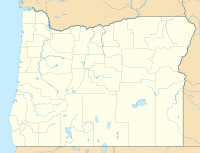
| Demographic data for Oregon | ||
|---|---|---|
| Oregon | U.S. | |
| Total population: | 4,024,634 | 316,515,021 |
| Land area (sq mi): | 95,988 | 3,531,905 |
| Race and ethnicity** | ||
| White: | 85.1% | 73.6% |
| Black/African American: | 1.8% | 12.6% |
| Asian: | 4% | 5.1% |
| Native American: | 1.2% | 0.8% |
| Pacific Islander: | 0.4% | 0.2% |
| Two or more: | 4.1% | 3% |
| Hispanic/Latino: | 12.3% | 17.1% |
| Education | ||
| High school graduation rate: | 89.8% | 86.7% |
| College graduation rate: | 30.8% | 29.8% |
| Income | ||
| Median household income: | $51,243 | $53,889 |
| Persons below poverty level: | 18.4% | 11.3% |
| Source: U.S. Census Bureau, "American Community Survey" (5-year estimates 2010-2015) Click here for more information on the 2020 census and here for more on its impact on the redistricting process in Oregon. **Note: Percentages for race and ethnicity may add up to more than 100 percent because respondents may report more than one race and the Hispanic/Latino ethnicity may be selected in conjunction with any race. Read more about race and ethnicity in the census here. | ||
Presidential voting pattern[edit]
- See also: Presidential voting trends in Oregon
Oregon voted for the Democratic candidate in all five presidential elections between 2000 and 2016.
Pivot Counties (2016)
Ballotpedia identified 206 counties that voted for Donald Trump (R) in 2016 after voting for Barack Obama (D) in 2008 and 2012. Collectively, Trump won these Pivot Counties by more than 580,000 votes. Of these 206 counties, two are located in Oregon, accounting for 0.97 percent of the total pivot counties.[21]
Pivot Counties (2020)
In 2020, Ballotpedia re-examined the 206 Pivot Counties to view their voting patterns following that year's presidential election. Ballotpedia defined those won by Trump won as Retained Pivot Counties and those won by Joe Biden (D) as Boomerang Pivot Counties. Nationwide, there were 181 Retained Pivot Counties and 25 Boomerang Pivot Counties. Oregon had two Retained Pivot Counties, 1.10 of all Retained Pivot Counties.
More Oregon coverage on Ballotpedia
- Elections in Oregon
- United States congressional delegations from Oregon
- Public policy in Oregon
- Influencers in Oregon
- Oregon fact checks
- More...
Related measures[edit]
A similar measure, Constitutional Amendment A, was on the ballot in Wyoming in 2016. Constitutional Amendment A was designed to allow the Wyoming Legislature to invest state funds, in addition to permanent state funds and public employee retirement systems, funds in equities.
Recent news[edit]
The link below is to the most recent stories in a Google news search for the terms Oregon 2016 University Investments Measure 95. These results are automatically generated from Google. Ballotpedia does not curate or endorse these articles.
See also[edit]


External links[edit]
- House Joint Resolution 203
- Oregon 2016 Voters' Pamphlet
- League of Women Voters of Oregon 2016 Ballot Measures Guide
Footnotes[edit]
- ↑ 1.0 1.1 Oregon Legislature, "House Joint Resolution 203," accessed August 8, 2016
- ↑ 2.0 2.1 2.2 2.3 2.4 2.5 2.6 2.7 2.8 Oregon Secretary of State, "Military/Overseas Voters' Guide," accessed September 15, 2016
- ↑ 3.0 3.1 3.2 3.3 3.4 3.5 3.6 3.7 3.8 3.9 Note: This text is quoted verbatim from the original source. Any inconsistencies are attributable to the original source. Cite error: Invalid
<ref>tag; name "quotedisclaimer" defined multiple times with different content Cite error: Invalid<ref>tag; name "quotedisclaimer" defined multiple times with different content Cite error: Invalid<ref>tag; name "quotedisclaimer" defined multiple times with different content Cite error: Invalid<ref>tag; name "quotedisclaimer" defined multiple times with different content Cite error: Invalid<ref>tag; name "quotedisclaimer" defined multiple times with different content Cite error: Invalid<ref>tag; name "quotedisclaimer" defined multiple times with different content Cite error: Invalid<ref>tag; name "quotedisclaimer" defined multiple times with different content Cite error: Invalid<ref>tag; name "quotedisclaimer" defined multiple times with different content - ↑ League of Women Voters of Oregon, "Oregon 2016 Ballot Measures," accessed October 12, 2016
- ↑ The Register-Guard, "If Measure 95 passes, details about UO investments would stay private," October 16, 2016
- ↑ 6.0 6.1 6.2 6.3 Oregon Secretary of State, "Defend Oregon," accessed February 7, 2017
- ↑ Albany Democrat-Herald, "Editorial: Vote 'yes' on state measures 94, 95," October 13, 2016
- ↑ The Bend Bulletin, "Editorial: Vote yes on Measure 95 to give universities better financial tools," September 20, 2016
- ↑ Corvallis Gazette-Times, "Editorial: Vote 'yes' on state measures 94, 95," October 17, 2016
- ↑ The Daily Astorian, "Endorsement: Universities need the investment options Measure 95 provides," October 14, 2016
- ↑ The Dalles Chronicle, "Editorial: Mixed vote on state measures," October 29, 2016
- ↑ East Oregonian, "Our view: Endorsement overview," November 4, 2016
- ↑ Eugene Weekly, "Eugene Weekly's Election Endorsements," October 20, 2016
- ↑ The Mail Tribune, "Our View: Yes on Measures 94, 95, 100," October 4, 2016
- ↑ The Oregonian, "Narrow measures, wide impacts: Editorial Endorsements 2016," September 28, 2016
- ↑ Portland Tribune, "Our Opinion: Judges, stocks, vets get thumbs-up," October 27, 2016
- ↑ The Register-Guard, "Let universities invest," September 27, 2016
- ↑ Willamette Week, "WW’s Fall 2016 Endorsements: State Measures," October 12, 2016
- ↑ Blue Mountain Eagle, "Poll: Support for Measure 97 erodes when voters hear pros/cons," September 12, 2016
- ↑ 20.0 20.1 Oregon State Legislature, "HJR 203," accessed October 12, 2016
- ↑ The raw data for this study was provided by Dave Leip of Atlas of U.S. Presidential Elections.
| |||||||||||
 |
State of Oregon Salem (capital) |
|---|---|
| Elections |
What's on my ballot? | Elections in 2021 | How to vote | How to run for office | Ballot measures |
| Government |
Who represents me? | U.S. President | U.S. Congress | Federal courts | State executives | State legislature | State and local courts | Counties | Cities | School districts | Public policy |
Categories: [Ballot measure article with polls]
↧ Download as ZWI file | Last modified: 12/24/2021 03:03:22 | 12 views
☰ Source: https://ballotpedia.org/Oregon_Public_University_Diversification_of_Investments,_Measure_95_(2016) | License: CC BY-SA 3.0
 ZWI signed:
 KSF
KSF