Venkatraman Ramakrishnan
 From Handwiki
Venkatraman Ramakrishnan | |
|---|---|
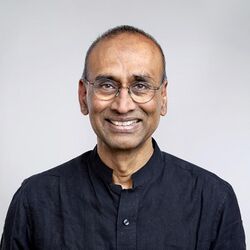 Ramakrishnan in 2015 | |
| 62nd President of the Royal Society | |
Incumbent | |
| Assumed office 2015 | |
| Preceded by | Paul Nurse |
| Personal details | |
| Born | Venkatraman Ramakrishnan 1952 (age 71–72)[1] Chidambaram, Tamilnadu, India |
| Citizenship |
|
| Spouse(s) | Vera Rosenberry (m. 1975) [1] |
| Children | 1 son, 1 stepdaughter[1] |
| Residence | United Kingdom |
| Website | www2 |
| Alma mater |
|
| Known for |
|
| Awards |
|
| Scientific career | |
| Fields |
|
| Institutions |
|
| Thesis | The Green Function Theory of the Ferroelectric Phase Transition in Potassium Dihydrogen-Phosphate (1976) |
| Doctoral advisor | Tomoyasu Tanaka[1][7] |
| Influences |
|
Venkatraman "Venki" Ramakrishnan (born 1952)[2] is an American and British structural biologist of Indian origin. He was elected President of the Royal Society in November 2015; Presidents serve for five years.[8] In 2009 he shared the Nobel Prize in Chemistry with Thomas A. Steitz and Ada Yonath, "for studies of the structure and function of the ribosome".[3][9][10][11][12]
Since 1999, he has worked as a group leader at the Medical Research Council (MRC) Laboratory of Molecular Biology (LMB) on the Cambridge Biomedical Campus, UK.[13][14]
Education and early life
Ramakrishnan was born in Chidambaram in Cuddalore district of Tamil Nadu, India[15] to C. V. Ramakrishnan and Rajalakshmi Ramakrishnan in a Tamil Iyer family. Both his parents were scientists, and his father was head of the Department of Biochemistry at the Maharaja Sayajirao University of Baroda.[1][16][17] At the time of his birth, Ramakrishnan's father was away from India doing postdoctoral research with David E. Green at the University of Wisconsin–Madison in the US.[1]
His mother obtained a PhD in Psychology from McGill University in 1959[18] which she completed in only 18 months, and was mentored by Donald O. Hebb.[1] Lalita Ramakrishnan, his younger sister, is professor of immunology and infectious diseases at the Department of Medicine, University of Cambridge,[19] and is a member of the National Academy of Sciences.[20]
Ramakrishnan moved to Vadodara (previously also known as Baroda) in Gujarat at the age of three, where he had his schooling at Convent of Jesus and Mary, except for spending 1960–61 in Adelaide, Australia. Following his pre-science at the Maharaja Sayajirao University of Baroda, he did his undergraduate studies in the same university on a National Science Talent Scholarship, graduating with a Bachelor of Science degree in Physics in 1971.[10] At the time, the physics course at Baroda was new, and based in part on The Berkeley Physics Course and The Feynman Lectures on Physics.[1]
Immediately after graduation he moved to the U.S., where he obtained his PhD degree in Physics from Ohio University in 1976 for research into the ferroelectric phase transition of potassium dihydrogen phosphate (KDP)[21] supervised by Tomoyasu Tanaka.[7][22][23] He then spent two years studying biology as a graduate student at the University of California, San Diego while making a transition from theoretical physics to biology.[24]
Career and research
Ramakrishnan began work on ribosomes as a postdoctoral fellow with Peter Moore at Yale University.[10] After his post-doctoral fellowship, he initially could not find a faculty position even though he had applied to about 50 universities in the U.S.[25]
He continued to work on ribosomes from 1983-95 as a staff scientist at Brookhaven National Laboratory.[6] In 1995 he moved to the University of Utah as a Professor of Biochemistry, and in 1999, he moved to his current position at the Medical Research Council Laboratory of Molecular Biology in Cambridge, England, where he had also been a sabbatical visitor during 1991-92.
In 1999, Ramakrishnan's laboratory published a 5.5 Angstrom resolution structure of the 30S subunit. The following year, his laboratory determined the complete molecular structure of the 30S subunit of the ribosome and its complexes with several antibiotics. This was followed by studies that provided structural insights into the mechanism that ensures the fidelity of protein biosynthesis. In 2007, his laboratory determined the atomic structure of the whole ribosome in complex with its tRNA and mRNA ligands. Since 2013, he has primarily used cryo-EM to determine new ribosome structures.[26][27] Ramakrishnan is also known for his past work on histone and chromatin structure.
(As of 2015) his most cited papers (according to Scopus[28]) have been published in Nature,[29][30][31] Science,[32][33] and Cell.[34][35][36]
In an interview in July 2018, he said that Britain's decision to leave the European Union (Brexit) was hurting Britain's reputation as a good place to work in science, commenting "It’s very hard for the science community to see any advantages in Brexit. They are pretty blunt about that." He saw advantages to both the UK and the EU for Britain to continue to be engaged in Galileo and Euratom, which, unlike the European Medicines Agency, are not EU agencies.[37]
Awards and honours
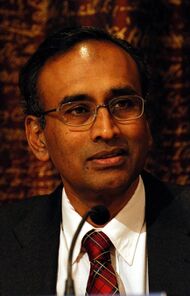
Ramakrishnan was elected a Member of the European Molecular Biology Organization (EMBO) in 2002,[38] a Fellow of the Royal Society (FRS) in 2003,[39] and a Member of the U.S. National Academy of Sciences in 2004. In 2007, Ramakrishnan was awarded the Louis-Jeantet Prize for Medicine and the Datta Lectureship and Medal of the Federation of European Biochemical Societies (FEBS). In 2008, he won the Heatley Medal of the British Biochemical Society. Since 2008, he is a Fellow of Trinity College, Cambridge and a foreign Fellow of the Indian National Science Academy. He was elected an Honorary Fellow of the Academy of Medical Sciences in 2010, and has received honorary degrees from the Maharaja Sayajirao University of Baroda, University of Utah and University of Cambridge. He is also an Honorary Fellow of Somerville College, Oxford.[40]
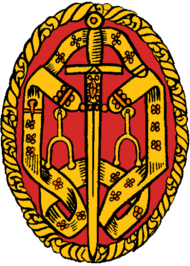
In 2009, Ramakrishnan was awarded the Nobel Prize in Chemistry along with Thomas A. Steitz and Ada Yonath.[41] He received India's second highest civilian honor, the Padma Vibhushan, in 2010.[42] Ramakrishnan was knighted in the 2012 New Year Honours for services to Molecular Biology,[5] but does not generally use the title 'Sir'.[43] In the same year, he was awarded the Sir Hans Krebs Medal by the FEBS. In 2014, he was awarded the XLVI Jiménez-Díaz Prize by the Fundación Conchita Rábago (Spain). Ramakrishnan was included as one of 25 Greatest Global Living Indians by NDTV Channel, India on 14 December 2013. His certificate of election to the Royal Society reads:
| “ | Ramakrishnan is internationally recognised for determination of the atomic structure of the 30S ribosomal subunit. Earlier he mapped the arrangement of proteins in the 30S subunit by neutron diffraction and solved X-ray structures of individual components and their RNA complexes. Fundamental insights came from his crystallographic studies of the complete 30S subunit. The atomic model included over 1500 bases of RNA and 20 associated proteins. The RNA interactions representing the P-site tRNA and the mRNA binding site were identified and the likely modes of action of many clinically important antibiotics determined. His most recent work goes to the heart of the decoding mechanism showing the 30S subunit complexed with poly-U mRNA and the stem-loop of the cognate phenylalanine tRNA. Anti-codon recognition leaves the "wobble" base free to accommodate certain non-Watson/Crick basepairs, thus providing an atomic description of both codon:anti-codon recognition and "wobble". He has also made substantial contributions to understanding how chromatin is organised, particularly the structure of linker histones and their role in higher order folding.[44] | ” |
Views
Ramakrishnan fears a no deal Brexit would harm science. Ramakrishnan wrote, "A deal on science is in the best interests of Europe as a whole and should not be sacrificed as collateral damage over disagreements on other issues. If we are going to successfully tackle global problems like climate change, human disease and food security, we can’t do so in isolation. There is no scenario where trashing our relationships with our closest scientific collaborators in the EU gets us closer to these goals."[45]
Personal life
Ramakrishnan married Vera Rosenberry, an author and illustrator of children's books, in 1975.[1] His stepdaughter Tanya Kapka is a doctor in Oregon, and his son Raman Ramakrishnan is a cellist based in New York.[46]
References
- ↑ 1.00 1.01 1.02 1.03 1.04 1.05 1.06 1.07 1.08 1.09 1.10 1.11 1.12 1.13 1.14 1.15 "Venkatraman Ramakrishnan - Biography: From Chidambaram to Cambridge: A Life in Science". Stockholm: nobelprize.org. Archived from the original on 2015-04-18. https://web.archive.org/web/20150418053610/http://www.nobelprize.org/nobel_prizes/chemistry/laureates/2009/ramakrishnan-bio.html.
- ↑ 2.0 2.1 "RAMAKRISHNAN, Sir Venkatraman". Who's Who. 2015 (online Oxford University Press ed.). A & C Black, an imprint of Bloomsbury Publishing plc. https://www.ukwhoswho.com/view/article/oupww/whoswho/U45543. (subscription or UK public library membership required) (Subscription content?)
- ↑ 3.0 3.1 "2009 Chemistry Nobel Laureates". Nobel Foundation. 2009. http://nobelprize.org/nobel_prizes/chemistry/laureates/2009/. Retrieved 2009-10-14.
- ↑ Louis-Jeantet Prize
- ↑ 5.0 5.1 No. 60009. 31 December 2011. p. 1. https://www.thegazette.co.uk/London/issue/60009/supplement/1
- ↑ 6.0 6.1 Cerf, Corinne; Lippens, Guy; Muyldermans, Serge; Segers, Alain; Ramakrishnan, V.; Wodak, Shoshana J.; Hallenga, Klaas; Wyns, Lode (1993). "Homo- and heteronuclear two-dimensional NMR". Biochemistry 32 (42): 11345–11351. doi:10.1021/bi00093a011.
- ↑ 7.0 7.1 Ramakrishnan, Venkatraman; Tanaka, Tomoyasu (1977). "Green's-function theory of the ferroelectric phase transition in potassium dihydrogen phosphate (KDP)". Physical Review B 16 (1): 422–426. doi:10.1103/physrevb.16.422.
- ↑ Peplow, M. (2015). "Structural biologist named president of UK Royal Society". Nature. doi:10.1038/nature.2015.17153.
- ↑ Rodnina, Marina V.; Wintermeyer, Wolfgang (2010). "The ribosome goes Nobel". Trends in Biochemical Sciences 35 (1): 1–5. doi:10.1016/j.tibs.2009.11.003. PMID 19962317.
- ↑ 10.0 10.1 10.2 "Venkatraman_Ramakrishnan". University of Cambridge. Archived from the original on 2015-04-19. https://web.archive.org/web/20150419055305/http://www.mrc-lmb.cam.ac.uk/ribo/homepage/ramak/.
- ↑ Venkatraman Ramakrishnan Audio Interview Official Nobel Foundation website telephone interview
- ↑ Venki Ramakrishnan No URL found. Please specify a URL here or add one to Wikidata.
- ↑ Nair, Prashant (2011). "Profile of Venkatraman Ramakrishnan". Proceedings of the National Academy of Sciences 108 (38): 15676–15678. doi:10.1073/pnas.1113044108. PMID 21914843.

- ↑ "Biologist Venki Ramakrishnan to lead Royal Society". London: BBC News. 2015-03-18. Archived from the original on 2015-10-10. https://web.archive.org/web/20151010063036/http://www.bbc.co.uk/news/science-environment-31869779.
- ↑ "Common root: Tamil Nadu gets its third laureate". TNN. Times of India. 8 October 2009. http://timesofindia.indiatimes.com/articleshow/msid-5099742,prtpage-1.cms.
- ↑ http://www.asianwindow.com/tag/venkatraman-venki-ramakrishnan/
- ↑ Ramakrishnan, C. V.; Banerjee, B. N. (1951). "Mould Lipase: Effect of Addition of Vitamins and Sterol to the Cake Medium on the Growth and the Activity of the Lipolytic Mould". Nature 168 (4282): 917–918. doi:10.1038/168917a0. PMID 14899529.
- ↑ Ramakrishnan, Rajalakshmi (1959). Comparative Effects of Successive and Simultaneous Presentation on Transfer in Verbal Learning (PhD thesis). McGill University.
- ↑ "Lalita Ramakrishnan Home page in Department of Medicine, University of Cambridge". http://www.med.cam.ac.uk/ramakrishnan/.
- ↑ "Lalita Ramakrishnan elected to the U.S. National Academy of Sciences". University of Cambridge. http://www.cam.ac.uk/for-staff/awards/lalita-ramakrishnan-elected-to-the-us-national-academy-of-sciences. Retrieved 30 January 2016.
- ↑ Ramakrishnan, Venkatraman (1976). The Green function theory of the ferroelectric phase transition in KDP (PhD thesis). Ohio University. OCLC 3079828.
- ↑ "Venkatraman Ramakrishnan: a profile". Times of India. 2009-10-07. http://timesofindia.indiatimes.com/articleshow/msid-5098151,prtpage-1.cms. Retrieved 2009-10-07.
- ↑ "FACTBOX: Nobel chemistry prize – Who are the winners?". Reuters. 2009-10-07. https://www.reuters.com/articlePrint?articleId=USTRE5962EE20091007. Retrieved 2009-10-07.
- ↑ "Profile: Dr Venkatraman Ramakrishnan". Indian Express. 7 October 2009. http://www.indianexpress.com/story-print/526251/. Retrieved 2009-10-07.
- ↑ "Nobel laureate Venkat Ramakrishnan failed IIT, medical entrance tests". The Times Of India. 2010-01-05. http://timesofindia.indiatimes.com/india/Nobel-laureate-Venkat-Ramakrishnan-failed-IIT-medical-entrance-tests/articleshow/5414148.cms.
- ↑ Fernández, Israel S.; Bai, Xiao-Chen; Hussain, Tanweer; Kelley, Ann C.; Lorsch, Jon R.; Ramakrishnan, V.; Scheres, Sjors H. W. (2013-11-15). "Molecular architecture of a eukaryotic translational initiation complex". Science 342 (6160): 1240585. doi:10.1126/science.1240585. ISSN 1095-9203. PMID 24200810.
- ↑ Amunts, Alexey; Brown, Alan; Bai, Xiao-Chen; Llácer, Jose L.; Hussain, Tanweer; Emsley, Paul; Long, Fei; Murshudov, Garib et al. (2014-03-28). "Structure of the yeast mitochondrial large ribosomal subunit". Science 343 (6178): 1485–1489. doi:10.1126/science.1249410. ISSN 1095-9203. PMID 24675956.
- ↑ Venkatraman Ramakrishnan's publications indexed by the Scopus bibliographic database. (Subscription content?)
- ↑ Ramakrishnan, V.; Wimberly, Brian T.; Brodersen, Ditlev E.; Clemons, William M.; Morgan-Warren, Robert J.; Carter, Andrew P.; Vonrhein, Clemens; Hartsch, Thomas (2000). "Structure of the 30S ribosomal subunit". Nature 407 (6802): 327–339. doi:10.1038/35030006. PMID 11014182.
- ↑ Ramakrishnan, V.; Carter, Andrew P.; Clemons, William M.; Brodersen, Ditlev E.; Morgan-Warren, Robert J.; Wimberly, Brian T. (2000). "Functional insights from the structure of the 30S ribosomal subunit and its interactions with antibiotics". Nature 407 (6802): 340–348. doi:10.1038/35030019. PMID 11014183.
- ↑ Ramakrishnan, V.; Finch, J. T.; Graziano, V.; Lee, P. L.; Sweet, R. M. (1993). "Crystal structure of globular domain of histone H5 and its implications for nucleosome binding". Nature 362 (6417): 219–223. doi:10.1038/362219a0. PMID 8384699.
- ↑ Ogle, J. M.; Brodersen, DE; Clemons, WM Jr; Tarry, MJ; Carter, AP; Ramakrishnan, V (2001). "Recognition of Cognate Transfer RNA by the 30S Ribosomal Subunit". Science 292 (5518): 897–902. doi:10.1126/science.1060612. PMID 11340196.
- ↑ Semenza, C; Butterworth, B; Panzeri, M; Ferreri, T (1990). "Word formation: New evidence from aphasia". Neuropsychologia 28 (5): 499–502. doi:10.1016/0028-3932(90)90075-y. PMID 1695997.
- ↑ Brodersen, Ditlev E.; Clemons, William M.; Carter, Andrew P.; Morgan-Warren, Robert J.; Wimberly, Brian T.; Ramakrishnan, V. (2000). "The Structural Basis for the Action of the Antibiotics Tetracycline, Pactamycin, and Hygromycin B on the 30S Ribosomal Subunit". Cell 103 (7): 1143–1154. doi:10.1016/s0092-8674(00)00216-6. PMID 11163189.
- ↑ Ramakrishnan, V. (2002). "Ribosome Structure and the Mechanism of Translation". Cell 108 (4): 557–572. doi:10.1016/s0092-8674(02)00619-0. PMID 11909526.
- ↑ Ogle, James M.; Murphy, Frank V.; Tarry, Michael J.; Ramakrishnan, V. (2002). "Selection of tRNA by the Ribosome Requires a Transition from an Open to a Closed Form". Cell 111 (5): 721–732. doi:10.1016/s0092-8674(02)01086-3. PMID 12464183.
- ↑ Ian Tucke (15 July 2018). "Venkatraman Ramakrishnan: 'Britain's reputation has been hurt'". https://www.theguardian.com/science/2018/jul/15/venkatraman-ramakrishnan-interview-brexit-science-funding-innovation-collaboration-royal-society.
- ↑ "The EMBO Pocket Directory". European Molecular Biology Organization. Archived from the original on 2015-03-16. https://web.archive.org/web/20150316002020/http://www.embo.org/documents/members/The_EMBO_Pocket_Directory.pdf.
- ↑ "Sir Venki Ramakrishnan FRS". London: Royal Society. Archived from the original on 2015-09-06. https://web.archive.org/web/20150906214606/https://royalsociety.org/people/venki-ramakrishnan-12139/.
- ↑ "Emeritus and Honorary Fellows". Somerville College, Oxford. https://www.some.ox.ac.uk/about-somerville/emeritus-and-honorary-fellows/.
- ↑ "All Nobel Laureates in Chemistry". Nobel Foundation. http://nobelprize.org/nobel_prizes/chemistry/laureates/index.html. Retrieved 2009-10-07.
- ↑ "This Year's Padma Awards announced" (Press release). Ministry of Home Affairs. 25 January 2010. Retrieved 25 January 2010.
- ↑ "Laureate - Venkatraman Ramakrishnan". Lindau Nobel Laureate Meetings. http://www.mediatheque.lindau-nobel.org/laureates/ramakrishnan. Retrieved 21 April 2016.
- ↑ "Venkatraman Ramakrishnan: Certificate of Election EC/2003/31". London: The Royal Society. 2003. Archived from the original on 18 June 2015. https://www.webcitation.org/6ZNwVKXUn?url=https://collections.royalsociety.org/DServe.exe?dsqIni=Dserve.ini&dsqApp=Archive&dsqCmd=Show.tcl&dsqDb=Catalog&dsqPos=1&dsqSearch=((text)='ramakrishnan').
- ↑ A no-deal Brexit would be a disaster for the UK science community The Independent
- ↑ Amit Roy (17 Oct 2009). "‘Venki’ makes light of India link – Winner says not to treat science like cricket; league of misses grows". The Telegraph (Kolkata). http://www.telegraphindia.com/1091017/jsp/frontpage/story_11626163.jsp. Retrieved 2009-10-17.
External links
Laureates of the Nobel Prize in Chemistry | ||
|---|---|---|
| 1901–1925 |
|  |
| 1926–1950 |
| |
| 1951–1975 |
| |
| 1976–2000 |
| |
| 2001–present |
| |
 |
Categories: [American Nobel laureates] [Nobel laureates in Chemistry]
↧ Download as ZWI file | Last modified: 07/25/2024 00:59:47 | 3 views
☰ Source: https://handwiki.org/wiki/Biography:Venkatraman_Ramakrishnan | License: CC BY-SA 3.0
 KSF
KSF