Maryland Administrative Procedure Act
 From Ballotpedia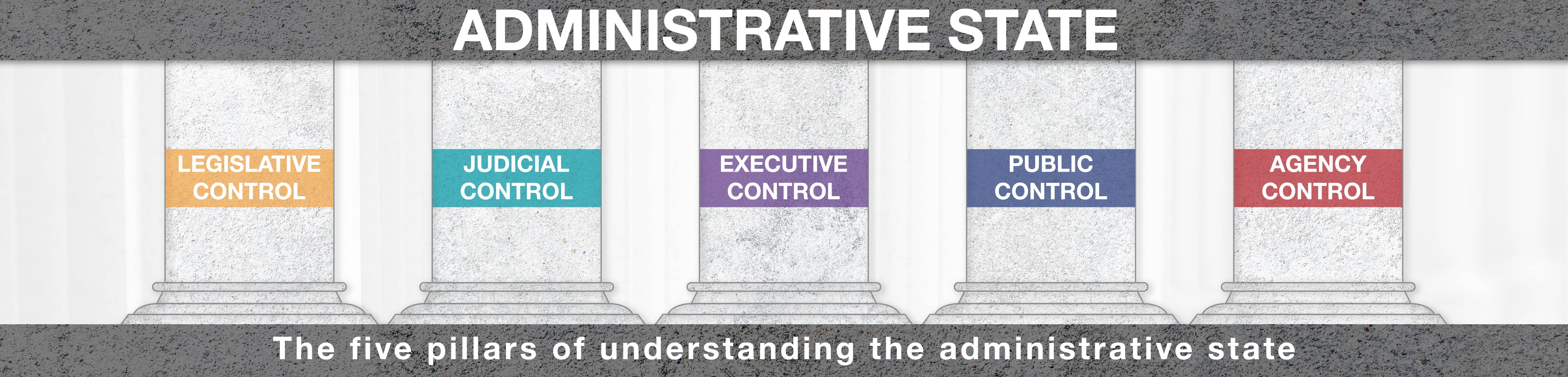
| Administrative State |
|---|

|
| Five Pillars of the Administrative State |
| •Agency control • Executive control • Judicial control •Legislative control • Public Control |
| Click here for more coverage of the administrative state on Ballotpedia.
|
| Click here to access Ballotpedia's administrative state legislation tracker. |
The Maryland Administrative Procedure Act is the law governing procedures for state administrative agencies to propose and issue regulations and provides for judicial review of agency adjudications and other final decisions in Maryland. It can be found in the State Government Article, Title 10, Subtitles 1, 2, and 3 of the Maryland Code.[1]
Subtitle 1: Administrative Procedure Act, regulations[edit]
Part I: Definitions, general provisions[edit]
§ 10-101: Definitions[edit]
Text of § 10-101:
| (a) In this subtitle the following words have the meanings indicated.
(b) “Administrator” means the Administrator of the Division of State Documents. (c) “Committee” means the Joint Committee on Administrative, Executive, and Legislative Review. (d) “Local government unit” means:
(e) “Mandate” means a directive in a regulation that requires a local government unit to perform a task or assume a responsibility that has a discernible fiscal impact on the local government unit. (f) “Register” means the Maryland Register. (g)
(h) “Small business” has the meaning stated in § 2–1505.2 of this article. (i) “Substantively” means in a manner substantially affecting the rights, duties, or obligations of:
|
§ 10-102: Scope of subtitle[edit]
Text of § 10-102
| (a) In general. -- Except as otherwise expressly provided by law, this subtitle applies to:
(b) Exclusions. -- This subtitle does not apply to:
|
Part II: Citation of statutory authority, submission to attorney general[edit]
§ 10-105: Scope of part[edit]
Text of § 10-105:
| This Part II of this subtitle does not apply to a regulation of a bicounty commission that county governing bodies appoint.[4] |
§ 10-106: Citation of statutory authority[edit]
Text of § 10-106:
| A regulation is not effective unless it contains a citation of the statutory authority for the regulation.[5] |
§ 10-107: Unit counsel defined, submission to Attorney General or unit counsel[edit]
Text of § 10-107:
| (a) "Unit counsel" defined. -- "Unit counsel" means the unit counsel for the Commission on Civil Rights, the Public Service Commission, and the State Ethics Commission.
|
§ 10-108: Use of "African American" preferred[edit]
Text of § 10-108:
| In the preparation of a regulation, a unit shall use the term "African American" instead of "Black", "Negro", "Afro-American", or similar terms.[7] |
Part III: Proposal and adoption[edit]
§ 10-109: Scope of part[edit]
Text of § 10-109:
| This Part III of this subtitle applies only to a unit in the Executive Branch of the State government.[8] |
§ 10-110: Preliminary review[edit]
Text of § 10-110:
| (a) Scope of section. -- Except for subsection (d) of this section, this section does not apply to a regulation adopted under § 10-111(b) of this subtitle.
(c)
(d)
|
§ 10-111: Time limitations, public hearings[edit]
Text of § 10-111:
(a)
(b)
(c)
|
§ 10-111.1: Opposition to adoption[edit]
Text of § 10-111.1:
(a)
(b) In its review of a proposed regulation pursuant to this section, the factors the Committee shall consider shall include whether the regulation:
(c)
|
§ 10-111.2: Proposed and emergency regulations, posting and notice[edit]
Text of § 10-111.2:
(a)
(b)
|
§ 10-112: Procedures for publication[edit]
Text of § 10-112:
(a)
(b) As soon as the Committee approves emergency adoption of a regulation, the Committee shall submit the regulation to the Administrator. (c) If a regulation under this section amends or repeals an adopted regulation, the text of the regulation under this section shall show the changes with the symbols that the Administrator requires.[13] |
§ 10-112.1: Publication time requirements for regulations[edit]
Text of § 10-112.1:
| (a) Whenever a unit publishes a proposed regulation in the Register in accordance with § 10-112 of this subtitle, the unit shall publish the text of the proposed regulation on the unit's Web site not later than 3 business days after the date that the proposed regulation is published in the Register.
(c) To comply with the publication requirement of this section, a unit shall:
|
§ 10-113: Changes in proposed regulations[edit]
Text of § 10-113:
| (a) In this section, "unit counsel" has the meaning stated in § 10-107 of this subtitle.
(c) If the regulation is proposed anew, the changes in the text shall be shown with the symbols that the Administrator requires. (d)
|
§ 10-114: Notice of adoption[edit]
Text of § 10-114:
| (a) After adopting a regulation, a unit shall submit to the Administrator a notice of adoption, for publication in the Register.
|
§ 10-115: Reprints[edit]
Text of § 10-115:
| (a) A unit may not reset or reprint a regulation in the Code of Maryland Regulations, the permanent supplements to the Code of Maryland Regulations, or the Register without the written permission of the Committee.
|
§ 10-116: Withdrawal of proposed regulation[edit]
Text of § 10-116:
| (a) A unit:
(b)
|
§ 10-117: Effective date of regulations[edit]
Text of § 10-117:
| (a)
|
§ 10-118: Committee powers over emergency or proposed regulations or portion thereof[edit]
Text of § 10-118:
| The Committee may exercise a power granted under this subtitle over an emergency or proposed regulation or a specific, distinct, and severable provision of an emergency or proposed regulation.[20] |
Part IV: Limited provisions[edit]
§ 10-120: Scope of part[edit]
Text of § 10-120:
| (a) This Part IV of this subtitle does not apply to:
(b) If the Insurance Commissioner states in writing that, as to a particular matter, the Maryland Automobile Insurance Fund need not comply with this Part IV of this subtitle, this Part IV does not apply to the Fund with respect to that matter. (c) This subtitle does apply to the property tax assessment appeals boards.[21] |
§ 10-121: Political subdivisions and instrumentalities[edit]
Text of § 10-121:
| A political subdivision of the State or an instrumentality of a political subdivision is entitled, to the same extent as other legal entities, to be an interested person, party, or petitioner in a matter under this subtitle, including an appeal.[22] |
§ 10-122: Procedural regulations[edit]
Text of § 10-122:
| (a) Each unit shall adopt regulations to govern procedures under this Part IV of this subtitle, including the related forms that the unit requires and the instructions for completing the forms.
|
§ 10-123: Petition for adoption of regulation[edit]
Text of § 10-123:
| (a) An interested person may submit to a unit a petition for the adoption of a regulation.
|
§ 10-124: Evaluation of impact[edit]
Text of § 10-124:
| (a) "Business" defined. -- In this section, "business" means a trade, professional activity, or other business that is conducted for profit.
|
§ 10-125: Declaratory judgment[edit]
Text of § 10-125:
(a)
(b) A court may determine the validity of any regulation if it appears to the court that the regulation or its threatened application interferes with or impairs or threatens to interfere with or impair a legal right or privilege of the petitioner. (c) The unit that adopted the regulation shall be made a party to the proceeding under this section. (d) Subject to § 10-128 of this subtitle, the court shall declare a provision of a regulation invalid if the court finds that:
|
Part V: Invalid provisions[edit]
§ 10-128: Severability[edit]
Text of § 10-128:
| (a) Unless a regulation expressly states otherwise, its provisions are severable.
|
§ 10-129: Publications of notices[edit]
Text of § 10-129:
| (a) This section applies only to a unit in the Executive Branch of the State government.
|
Part VI: Regulatory review and evaluation act[edit]
§ 10-130: Definitions[edit]
Text of § 10-130:
| (a) In this Part VI the following words have the meanings indicated.
(c) "Committee" means the Joint Committee on Administrative, Executive, and Legislative Review. (d) "Evaluation report" means the document prepared by a unit of State government in accordance with this part that results from the unit's review of its regulations. (e) "Regulation" has the meaning stated in § 10-101(h) of this subtitle and is limited to those regulations in effect at the time any action is required or taken under this part. (f) "Stakeholder" means a person that has an interest in or is impacted by an existing regulation. (g) "Unit" means each unit in the Executive Branch of State government that is authorized by law to adopt regulations. (h) "Work plan" means a unit's proposal for the evaluation of its regulations.[29] |
§ 10-131: Applicability of part[edit]
Text of § 10-131:
| This part does not apply to a regulation of a bi-county or multicounty commission or authority or to any other entity not a part of the Executive Branch of State government.[30] |
§ 10-132: Purposes of part[edit]
Text of § 10-132:
| The purposes of this part are to:
|
§ 10-132.1: Schedule of regulations to be reviewed[edit]
Text of § 10-132.1:
| (a)
(b)
|
§ 10-133: Executive order for review and evaluation of regulations[edit]
Text of § 10-133:
| (a) Based on the schedules submitted by the adopting authorities under § 10-132.1 of this subtitle, the Governor shall, by an executive order consistent with this part, provide for the review and evaluation of the regulations of each unit in accordance with this part.
(c) The executive order under subsection (b) of this section shall schedule the evaluations in such a manner that:
(d)
|
§ 10-134: Work plan[edit]
Text of § 10-134:
| (a) At least 1 year before the commencement of the review and evaluation of its regulations, each unit shall prepare a work plan and submit the work plan to the Governor and, subject to § 2-1246 of this article, the Committee.
(c)
|
§ 10-135: Evaluation report[edit]
Text of § 10-135:
| (a)
(b)
(c)
(d)
|
§ 10-136: Disagreement with recommendations; required action by Governor[edit]
Text of § 10-136:
| (a)
|
§ 10-137: Resolution of disagreement[edit]
Text of § 10-137:
| (a) This section applies to the Comptroller, the Treasurer, the Attorney General, and the Board of Public Works.
|
§ 10-138: Proposed amendments or repeal of regulations[edit]
Text of § 10-138:
| (a) Within 120 days after an evaluation report is approved pursuant to § 10-135(d)(3), § 10-136(a)(2)(i), or § 10-137 of this subtitle, the unit shall propose for adoption any amendments to or repeal of its regulations that were summarized in the unit's evaluation report as approved.
|
§ 10-139: Citation of part[edit]
Text of § 10-139:
| This Part VI of this subtitle may be cited as the "Regulatory Review and Evaluation Act".[39] |
Subtitle 2: Administrative Procedure Act, contested cases[edit]
§ 10-201: Declaration of policy[edit]
Text of § 10-201:
The purpose of this subtitle is to:
|
§ 10-202: Definitions[edit]
Text of § 10-202:
| (a) In this subtitle the following words have the meanings indicated.
(c) "Agency head" means:
(d)
(e) "License" means all or any part of permission that:
(f) "Office" means the Office of Administrative Hearings. (g) "Presiding officer" means the board, commission, agency head, administrative law judge, or other authorized person conducting an administrative proceeding under this subtitle.[41] |
§ 10-203: Scope of subtitle[edit]
Text of § 10-203:
| (a) This subtitle does not apply to:
(b) This subtitle does apply to:
(c) A public hearing required or provided for by statute or regulation before an agency takes a particular action is not an agency hearing under § 10-202(d) of this subtitle unless the statute or regulation:
(d)
|
§ 10-204: Political subdivisions and instrumentalities[edit]
Text of § 10-204:
| A political subdivision of the State or an instrumentality of a political subdivision is entitled, to the same extent as other legal entities, to be an interested person, party, or petitioner in a matter under this subtitle, including an appeal.[43] |
§ 10-205: Delegation of hearing authority[edit]
Text of § 10-205:
| (a)
(b) An agency may delegate to the Office the authority to issue:
(c) Promptly after receipt of a request for a contested case hearing, an agency shall:
(d)
(e)
|
§ 10-206: Procedural regulations[edit]
Text of § 10-206:
(a)
(b) Each agency may adopt regulations to govern procedures under this subtitle and practice before the agency in contested cases. (c) Regulations adopted under this section may include procedures and criteria for requesting and conducting expedited hearings. (d) Each agency and the Office may adopt regulations that:
|
§ 10-206.1: Legal practice[edit]
Text of § 10-206.1:
(a) An agency may not:
|
§ 10-207: Notice of agency action[edit]
Text of § 10-207:
| (a) An agency shall give reasonable notice of the agency's action.
(c) The notice of agency action under this section may be consolidated with the notice of hearing required under § 10-208 of this subtitle. (d) For purposes of this section, publication in the Maryland Register does not constitute reasonable notice to a party.[47] |
§ 10-208. Notice of hearing[edit]
Text of § 10-208:
| (a) An agency or the Office shall give all parties in a contested case reasonable written notice of the hearing.
(c) The notice of hearing may be consolidated with the notice of agency action required under § 10-207 of this subtitle. (d) For purposes of this subtitle, publication in the Maryland Register does not constitute reasonable notice to a party.[48] |
§ 10-209: Notice mailed to address of licensee[edit]
Text of § 10-209:
(a) Where a licensing statute provides for service other than by regular mail, notice under this subtitle may be sent by regular mail to the address of record of a person holding a license issued by the agency if:
(b) Upon a showing that the person neither knew nor had reasonable opportunity to know of the fact of service, a person served by regular mail under subsection (a) of this section shall be granted a hearing. (c) A person holding a license shall be deemed to have had a reasonable opportunity to know of the fact of service if:
|
§ 10-210: Dispositions[edit]
Text of § 10-210:
Unless otherwise precluded by law, an agency or the Office may dispose of a contested case by:
|
§ 10-211: Hearings conducted by electronic means[edit]
Text of § 10-211:
| (a) In accordance with subsection (b) of this section, a hearing may be conducted by telephone, video conferencing, or other electronic means.
|
§ 10-212: Open hearings[edit]
Text of § 10-212:
| (a) Except as otherwise provided by law, a contested case hearing conducted by the Office shall be open to the public.
|
§ 10-212.1: Interpreters[edit]
Text of § 10-212.1:
(a)
(b)
|
§ 10-213: Evidence[edit]
Text of § 10-213:
(a)
(b) The presiding officer may admit probative evidence that reasonable and prudent individuals commonly accept in the conduct of their affairs and give probative effect to that evidence. (c) Evidence may not be excluded solely on the basis that it is hearsay. (d) The presiding officer may exclude evidence that is:
(e) The presiding officer shall apply a privilege that law recognizes. (f) On a genuine issue in a contested case, each party is entitled to:
(g) The presiding officer may receive documentary evidence:
(h)
|
§ 10-214: Consideration of other evidence[edit]
Text of § 10-214:
| (a) Findings of fact must be based exclusively on the evidence of record in the contested case proceeding and on matters officially noticed in that proceeding.
|
§ 10-215: Transcription of proceedings; fees[edit]
Text of § 10-215:
(a) Except as provided in subsection (b) of this section, all or part of proceedings in a contested case shall be transcribed if any party:
(b) If a petition for judicial review is filed in circuit court by a Maryland Medical Assistance Program recipient, applicant, or authorized representative, the petitioner may not be charged a fee for the costs of:
|
§ 10-216: Exceptions[edit]
Text of § 10-216:
(a)
|
§ 10-217: Proof[edit]
Text of § 10-217:
| The standard of proof in a contested case shall be the preponderance of evidence unless the standard of clear and convincing evidence is imposed on the agency by regulation, statute, or constitution.[58] |
§ 10-218: Contents of record[edit]
Text of § 10-218:
The presiding officer hearing a contested case shall make a record that includes:
|
§ 10-219: Ex parte communications[edit]
Text of § 10-219:
(a)
(b) If, before hearing a contested case, a person receives an ex parte communication of a type that would violate subsection (a) of this section if received while conducting a hearing, the person, promptly after commencing the hearing, shall disclose the communication in the manner prescribed in subsection (c) of this section. (c) An individual who is involved in the decision making process and who is personally aware of an ex parte communication shall:
(d) A party may rebut an ex parte communication if the party requests the opportunity to rebut within 10 days after notice of the communication. (e)
|
§ 10-220: Proposed decisions and orders[edit]
Text of § 10-220:
| (a) If the Office conducts a hearing under this subtitle, the Office shall prepare proposed findings of fact, conclusions of law, or orders in accordance with the agency's delegation under § 10-205 of this subtitle.
(c)
(d) A proposed decision or order, including proposed decisions or orders issued for contested case hearings subject to this subtitle but not conducted by the Office, shall:
|
§ 10-221: Final decisions and orders[edit]
Text of § 10-221:
| (a) A final decision or order in a contested case that is adverse to a party shall be in writing or stated on the record.
(c) The final decision maker promptly shall deliver or mail a copy of the final decision or order to:
|
§ 10-222: Judicial review[edit]
Text of § 10-222:
(a)
(b) Where the presiding officer has final decision-making authority, a person in a contested case who is aggrieved by an interlocutory order is entitled to judicial review if:
(c) Unless otherwise required by statute, a petition for judicial review shall be filed with the circuit court for the county where any party resides or has a principal place of business. (d)
(e)
(f)
(g)
(h) In a proceeding under this section, the court may:
|
§ 10-222.1: Administrative orders[edit]
Text of § 10-222.1:
| (a) A party to a contested case may timely seek civil enforcement of an administrative order by filing a petition for civil enforcement in an appropriate circuit court.
(c) In an action seeking civil enforcement of an administrative order, a party shall name, as a defendant, each alleged violator against whom the party seeks to obtain civil enforcement. (d) A party may file an action for civil enforcement of an administrative order if another party is in violation of the administrative order. (e) A party in an action for civil enforcement of an administrative order may request, and a court may grant, one or more of the following forms of relief:
|
§ 10-223: Appeals to Court of Special Appeals[edit]
Text of § 10-223:
(a) This section does not apply to:
(b)
|
§ 10-224: Litigation expenses for small businesses and nonprofit organizations[edit]
Text of § 10-224:
(a)
(b) This section applies only to:
(c) Subject to the limitations in this section, an agency or court may award to a business or nonprofit organization reimbursement for expenses that the business or nonprofit organization reasonably incurs in connection with a contested case or civil action that:
(d)
(e)
(f) An award under this section shall be paid as provided in the State budget. (g)
|
§ 10-225: Suspension of provisions[edit]
Text of § 10-225:
| (a) Upon a finding by the Governor that there is an imminent threat within a time certain of a loss or denial of federal funds to the State because of the operation of any section of this subtitle or of Title 9, Subtitle 16 of this article, the Governor by executive order may suspend the applicability of part or all of this subtitle or of Title 9, Subtitle 16 of this article to a specific class of contested cases.
(c) The executive order shall explain the basis for the Governor's finding and state the period of time during which the suspension is to be effective. (d) The Governor shall declare the termination of a suspension when it is no longer necessary to prevent the loss or denial of federal funds. (e) An executive order issued under this section shall be:
|
§ 10-226. Licenses -- Special provisions[edit]
Text of § 10-226:
(a)
(b) If, at least 2 calendar weeks before a license expires, the licensee makes sufficient application for renewal of the license, the license does not expire until:
(c)
|
Subtitle 3: Administrative Procedure Act, declaratory rulings[edit]
§ 10-301: "Unit" defined[edit]
Text of § 10-301:
In this subtitle, "unit" means an officer or unit that is authorized by law to:
|
§ 10-302: Scope of subtitle[edit]
Text of § 10-302:
(a) General exclusions. -- This subtitle does not apply to:
|
§ 10-303: Political subdivisions and instrumentalities[edit]
Text of § 10-303:
| A political subdivision of the State or an instrumentality of a political subdivision is entitled, to the same extent as other legal entities, to be an interested person, party, or petitioner in a matter under this subtitle, including an appeal.[71] |
§ 10-304: Petition for ruling[edit]
Text of § 10-304:
| (a) Authorized. -- An interested person may submit to a unit a petition for a declaratory ruling with respect to the manner in which the unit would apply a regulation or order of the unit or a statute that the unit enforces to a person or property on the facts set forth in the petition.
|
§ 10-305: Ruling[edit]
Text of § 10-305:
| (a) Authorized. -- A unit may issue a declaratory ruling.
|
See also[edit]
External links[edit]
Footnotes[edit]
- ↑ JUSTIA , "2021 Maryland Code, State Government, Title 10 - Governmental Procedures," accessed May 22, 2023
- ↑ JUSTIA, "2021 Maryland Code, State Government, Title 10 - Governmental Procedures, Subtitle 1 - Administrative Procedure Act -- Regulations, Part I - Definitions; General Provisions § 10-101. Definitions," accessed May 22, 2023
- ↑ JUSTIA, "2021 Maryland Code, State Government, Title 10 - Governmental Procedures, Subtitle 1 - Administrative Procedure Act -- Regulations, Part I - Definitions; General Provisions § 10-102. Scope of subtitle," accessed May 22, 2023
- ↑ JUSTIA, "2017 Maryland Code, State Government, Title 10 - Governmental Procedures, Subtitle 1 - Administrative Procedure Act -- Regulations, Part II - Citation of Statutory Authority; Submission to Attorney General § 10-105. Scope of part," accessed November 20, 2018
- ↑ JUSTIA, "2017 Maryland Code, State Government, Title 10 - Governmental Procedures, Subtitle 1 - Administrative Procedure Act -- Regulations, Part II - Citation of Statutory Authority; Submission to Attorney General § 10-106. Citation of statutory authority," accessed November 20, 2018
- ↑ JUSTIA, "2017 Maryland Code, State Government, Title 10 - Governmental Procedures, Subtitle 1 - Administrative Procedure Act -- Regulations, Part II - Citation of Statutory Authority; Submission to Attorney General § 10-107. Unit counsel defined; submission to Attorney General or unit counsel.," accessed November 20, 2018
- ↑ JUSTIA, "2017 Maryland Code, State Government, Title 10 - Governmental Procedures, Subtitle 1 - Administrative Procedure Act -- Regulations, Part II - Citation of Statutory Authority; Submission to Attorney General § 10-108. Use of "African American" preferred," accessed November 20, 2018
- ↑ JUSTIA, "2017 Maryland Code, State Government, Title 10 - Governmental Procedures, Subtitle 1 - Administrative Procedure Act -- Regulations, Part III - Proposal and Adoption § 10-109. Scope of part," accessed November 20, 2018
- ↑ JUSTIA, "2021 Maryland Code, State Government, Title 10 - Governmental Procedures, Subtitle 1 - Administrative Procedure Act -- Regulations, Part III - Proposal and Adoption§ 10-110. Preliminary review," accessed May 22, 2023
- ↑ JUSTIA, "2021 Maryland Code, State Government, Title 10 - Governmental Procedures, Subtitle 1 - Administrative Procedure Act -- Regulations, Part III - Proposal and Adoption § 10-111. Time limitations; public hearings," accessed May 11, 2023
- ↑ JUSTIA, "2021 Maryland Code, State Government, Title 10 - Governmental Procedures, Subtitle 1 - Administrative Procedure Act -- Regulations, Part III - Proposal and Adoption § 10-111.1. Opposition to adoption," accessed May 11, 2023
- ↑ JUSTIA, "2021 Maryland Code, State Government, Title 10 - Governmental Procedures, Subtitle 1 - Administrative Procedure Act -- Regulations, Part III - Proposal and Adoption § 10-111.2. Proposed and emergency regulations -- Posting and notice.," accessed May 22, 2023
- ↑ JUSTIA, "2021 Maryland Code, State Government, Title 10 - Governmental Procedures, Subtitle 1 - Administrative Procedure Act -- Regulations, Part III - Proposal and Adoption § 10-112. Procedures for publication," accessed May 22, 2023
- ↑ JUSTIA, "2021 Maryland Code, State Government, Title 10 - Governmental Procedures, Subtitle 1 - Administrative Procedure Act -- Regulations, Part III - Proposal and Adoption § 10-112.1. Publication time requirements for regulations.," accessed May 22, 2023
- ↑ JUSTIA, "2021 Maryland Code, State Government, Title 10 - Governmental Procedures, Subtitle 1 - Administrative Procedure Act -- Regulations, Part III - Proposal and Adoption § 10-113. Changes in proposed regulations.," accessed May 22, 2023
- ↑ JUSTIA, "2021 Maryland Code, State Government, Title 10 - Governmental Procedures, Subtitle 1 - Administrative Procedure Act -- Regulations, Part III - Proposal and Adoption § 10-114. Notice of adoption," accessed May 22, 2023
- ↑ JUSTIA, "2021 Maryland Code, State Government, Title 10 - Governmental Procedures, Subtitle 1 - Administrative Procedure Act -- Regulations, Part III - Proposal and Adoption § 10-115. Reprints," accessed May 22, 2023
- ↑ JUSTIA, "2021 Maryland Code, State Government, Title 10 - Governmental Procedures, Subtitle 1 - Administrative Procedure Act -- Regulations, Part III - Proposal and Adoption § 10-116. Withdrawal of proposed regulation," accessed May 22, 2023
- ↑ JUSTIA, "2021 Maryland Code, State Government, Title 10 - Governmental Procedures, Subtitle 1 - Administrative Procedure Act -- Regulations, Part III - Proposal and Adoption § 10-117. Effective date of regulations," accessed May 22, 2023
- ↑ JUSTIA, "2017 Maryland Code, State Government, Title 10 - Governmental Procedures, Subtitle 1 - Administrative Procedure Act -- Regulations, Part III - Proposal and Adoption § 10-118. Committee powers over emergency or proposed regulations or portion thereof.," accessed November 20, 2018
- ↑ JUSTIA, "2021 Maryland Code, State Government, Title 10 - Governmental Procedures, Subtitle 1 - Administrative Procedure Act -- Regulations, Part IV - Limited Provisions § 10-120. Scope of part," accessed May 22, 2023
- ↑ JUSTIA, "2017 Maryland Code, State Government, Title 10 - Governmental Procedures, Subtitle 1 - Administrative Procedure Act -- Regulations, Part IV - Limited Provisions § 10-121. Political subdivisions and instrumentalities," accessed November 20, 2018
- ↑ JUSTIA, "2021 Maryland Code, State Government, Title 10 - Governmental Procedures, Subtitle 1 - Administrative Procedure Act -- Regulations, Part IV - Limited Provisions § 10-122. Procedural regulations," accessed May 22, 2023
- ↑ JUSTIA, "2021 Maryland Code, State Government, Title 10 - Governmental Procedures, Subtitle 1 - Administrative Procedure Act -- Regulations, Part IV - Limited Provisions § 10-123. Petition for adoption of regulation," accessed May 22, 2023
- ↑ JUSTIA, "2017 Maryland Code, State Government, Title 10 - Governmental Procedures, Subtitle 1 - Administrative Procedure Act -- Regulations, Part IV - Limited Provisions § 10-124. Evaluation of impact," accessed November 20, 2018
- ↑ JUSTIA, "2021 Maryland Code, State Government, Title 10 - Governmental Procedures, Subtitle 1 - Administrative Procedure Act -- Regulations, Part IV - Limited Provisions § 10-125. Declaratory judgment," accessed May 22, 2023
- ↑ JUSTIA, "2021 Maryland Code, State Government, Title 10 - Governmental Procedures, Subtitle 1 - Administrative Procedure Act -- Regulations, Part V - Invalid Provisions § 10-128. Severability," accessed May 22, 2023
- ↑ JUSTIA, "2021 Maryland Code, State Government, Title 10 - Governmental Procedures, Subtitle 1 - Administrative Procedure Act -- Regulations, Part V - Invalid Provisions § 10-129. Publications of notices," accessed May 22, 2023
- ↑ JUSTIA, "2021 Maryland Code, State Government, Title 10 - Governmental Procedures, Subtitle 1 - Administrative Procedure Act -- Regulations, Part VI - Regulatory Review and Evaluation Act § 10-130. Definitions," accessed May 22, 2023
- ↑ JUSTIA, "2017 Maryland Code, State Government, Title 10 - Governmental Procedures, Subtitle 1 - Administrative Procedure Act -- Regulations, Part VI - Regulatory Review and Evaluation Act § 10-131. Applicability of part," accessed November 20, 2018
- ↑ JUSTIA, "2017 Maryland Code, State Government, Title 10 - Governmental Procedures, Subtitle 1 - Administrative Procedure Act -- Regulations, Part VI - Regulatory Review and Evaluation Act § 10-132. Purposes of part," accessed November 20, 2018
- ↑ JUSTIA, "2021 Maryland Code, State Government, Title 10 - Governmental Procedures, Subtitle 1 - Administrative Procedure Act -- Regulations, Part VI - Regulatory Review and Evaluation Act § 10-132.1. Schedule of regulations to be reviewed," accessed May 22, 2023
- ↑ JUSTIA, "2021 Maryland Code, State Government, Title 10 - Governmental Procedures, Subtitle 1 - Administrative Procedure Act -- Regulations, Part VI - Regulatory Review and Evaluation Act § 10-133. Executive order for review and evaluation of regulations," accessed May 22, 2023
- ↑ JUSTIA, "2021 Maryland Code, State Government, Title 10 - Governmental Procedures, Subtitle 1 - Administrative Procedure Act -- Regulations, Part VI - Regulatory Review and Evaluation Act § 10-134. Work plan," accessed May 22, 2023
- ↑ JUSTIA, "2021 Maryland Code, State Government, Title 10 - Governmental Procedures, Subtitle 1 - Administrative Procedure Act -- Regulations, Part VI - Regulatory Review and Evaluation Act § 10-135. Evaluation report," accessed May 22, 2023
- ↑ JUSTIA, "2021 Maryland Code, State Government, Title 10 - Governmental Procedures, Subtitle 1 - Administrative Procedure Act -- Regulations, Part VI - Regulatory Review and Evaluation Act § 10-136. Disagreement with recommendations; required action by Governor," accessed May 22, 2023
- ↑ JUSTIA, "2021 Maryland Code, State Government, Title 10 - Governmental Procedures, Subtitle 1 - Administrative Procedure Act -- Regulations, Part VI - Regulatory Review and Evaluation Act § 10-137. Resolution of disagreement," accessed May 22, 2023
- ↑ JUSTIA, "2021 Maryland Code, State Government, Title 10 - Governmental Procedures, Subtitle 1 - Administrative Procedure Act -- Regulations, Part VI - Regulatory Review and Evaluation Act § 10-138. Proposed amendments or repeal of regulations," accessed May 22, 2023
- ↑ JUSTIA, "2017 Maryland Code, State Government, Title 10 - Governmental Procedures, Subtitle 1 - Administrative Procedure Act -- Regulations, Part VI - Regulatory Review and Evaluation Act § 10-139. Citation of part," accessed November 20, 2018
- ↑ JUSTIA, "2017 Maryland Code, State Government, Title 10 - Governmental Procedures, Subtitle 2 - Administrative Procedure Act -- Contested Cases § 10-201. Declaration of policy," accessed November 20, 2018
- ↑ JUSTIA, "2021 Maryland Code, State Government, Title 10 - Governmental Procedures, Subtitle 2 - Administrative Procedure Act -- Contested Cases § 10-202. Definitions," accessed May 22, 2023
- ↑ JUSTIA, "2021 Maryland Code, State Government, Title 10 - Governmental Procedures, Subtitle 2 - Administrative Procedure Act -- Contested Cases § 10-203. Scope of subtitle," accessed May 22, 2023
- ↑ JUSTIA, "2017 Maryland Code, State Government, Title 10 - Governmental Procedures, Subtitle 2 - Administrative Procedure Act -- Contested Cases § 10-204. Political subdivisions and instrumentalities," accessed November 20, 2018
- ↑ JUSTIA, "2021 Maryland Code, State Government, Title 10 - Governmental Procedures, Subtitle 2 - Administrative Procedure Act -- Contested Cases § 10-205. Delegation of hearing authority," accessed May 22, 2023
- ↑ JUSTIA, "2021 Maryland Code, State Government, Title 10 - Governmental Procedures, Subtitle 2 - Administrative Procedure Act -- Contested Cases § 10-206. Procedural regulations," accessed May 22, 2023
- ↑ JUSTIA, "2021 Maryland Code, State Government, Title 10 - Governmental Procedures, Subtitle 2 - Administrative Procedure Act -- Contested Cases § 10-206.1. Legal practice," accessed May 22, 2023
- ↑ JUSTIA, "2021 Maryland Code, State Government, Title 10 - Governmental Procedures, Subtitle 2 - Administrative Procedure Act -- Contested Cases § 10-207. Notice of agency action," accessed May 22, 2023
- ↑ JUSTIA, "2021 Maryland Code, State Government, Title 10 - Governmental Procedures, Subtitle 2 - Administrative Procedure Act -- Contested Cases § 10-208. Notice of hearing," accessed May 22, 2023
- ↑ JUSTIA, "2021 Maryland Code, State Government, Title 10 - Governmental Procedures, Subtitle 2 - Administrative Procedure Act -- Contested Cases § 10-209. Notice mailed to address of licensee," accessed May 22, 2023
- ↑ JUSTIA, "2017 Maryland Code, State Government, Title 10 - Governmental Procedures, Subtitle 2 - Administrative Procedure Act -- Contested Cases § 10-210. Dispositions," accessed November 20, 2018
- ↑ JUSTIA, "2021 Maryland Code, State Government, Title 10 - Governmental Procedures, Subtitle 2 - Administrative Procedure Act -- Contested Cases § 10-211. Hearings conducted by electronic means," accessed May 22, 2023
- ↑ JUSTIA, "2021 Maryland Code, State Government, Title 10 - Governmental Procedures, Subtitle 2 - Administrative Procedure Act -- Contested Cases § 10-212. Open hearings," accessed May 22, 2023
- ↑ JUSTIA, "2021 Maryland Code, State Government, Title 10 - Governmental Procedures, Subtitle 2 - Administrative Procedure Act -- Contested Cases § 10-212.1. Interpreters," accessed May 22, 2023
- ↑ JUSTIA, "2021 Maryland Code, State Government, Title 10 - Governmental Procedures, Subtitle 2 - Administrative Procedure Act -- Contested Cases § 10-213. Evidence," accessed May 22, 2023
- ↑ JUSTIA, "2021 Maryland Code, State Government, Title 10 - Governmental Procedures, Subtitle 2 - Administrative Procedure Act -- Contested Cases § 10-214. Consideration of other evidence," accessed May 22, 2023
- ↑ JUSTIA, "2021 Maryland Code, State Government, Title 10 - Governmental Procedures, Subtitle 2 - Administrative Procedure Act -- Contested Cases § 10-215. Transcription of proceedings; fees (Amendment effective January 1, 2018.)," accessed May 22, 2023
- ↑ JUSTIA, "2021 Maryland Code, State Government, Title 10 - Governmental Procedures, Subtitle 2 - Administrative Procedure Act -- Contested Cases § 10-216. Exceptions," accessed May 22, 2023
- ↑ JUSTIA, "2017 Maryland Code, State Government, Title 10 - Governmental Procedures, Subtitle 2 - Administrative Procedure Act -- Contested Cases § 10-217. Proof," accessed November 21, 2018
- ↑ JUSTIA, "2017 Maryland Code, State Government, Title 10 - Governmental Procedures, Subtitle 2 - Administrative Procedure Act -- Contested Cases § 10-218. Contents of record," accessed November 21, 2018
- ↑ JUSTIA, "2021 Maryland Code, State Government, Title 10 - Governmental Procedures, Subtitle 2 - Administrative Procedure Act -- Contested Cases § 10-219. Ex parte communications," accessed May 22, 2023
- ↑ JUSTIA, "2021 Maryland Code, State Government, Title 10 - Governmental Procedures, Subtitle 2 - Administrative Procedure Act -- Contested Cases § 10-220. Proposed decisions and orders," accessed May 22, 2023
- ↑ JUSTIA, "2021 Maryland Code, State Government, Title 10 - Governmental Procedures, Subtitle 2 - Administrative Procedure Act -- Contested Cases § 10-221. Final decisions and orders," accessed May 22, 2023
- ↑ JUSTIA, "2021 Maryland Code, State Government, Title 10 - Governmental Procedures, Subtitle 2 - Administrative Procedure Act -- Contested Cases § 10-222. Judicial review (Amendment effective January 1, 2018.)," accessed May 22, 2023
- ↑ JUSTIA, "2021 Maryland Code, State Government, Title 10 - Governmental Procedures, Subtitle 2 - Administrative Procedure Act -- Contested Cases § 10-222.1. Administrative orders," accessed May 22, 2023
- ↑ JUSTIA, "2021 Maryland Code, State Government, Title 10 - Governmental Procedures, Subtitle 2 - Administrative Procedure Act -- Contested Cases § 10-223. Appeals to Court of Special Appeals," accessed May 22, 2023
- ↑ JUSTIA, "2021 Maryland Code, State Government, Title 10 - Governmental Procedures, Subtitle 2 - Administrative Procedure Act -- Contested Cases § 10-224. Litigation expenses for small businesses and nonprofit organizations," accessed May 22, 2023
- ↑ JUSTIA, "2021 Maryland Code, State Government, Title 10 - Governmental Procedures, Subtitle 2 - Administrative Procedure Act -- Contested Cases § 10-225. Suspension of provisions," accessed May 22, 2023
- ↑ JUSTIA, "2021 Maryland Code, State Government, Title 10 - Governmental Procedures, Subtitle 2 - Administrative Procedure Act -- Contested Cases § 10-226. Licenses -- Special provisions," accessed May 22, 2023
- ↑ JUSTIA, "2017 Maryland Code, State Government, Title 10 - Governmental Procedures, Subtitle 3 - Administrative Procedure Act -- Declaratory Rulings § 10-301. "Unit" defined," accessed November 21, 2018
- ↑ JUSTIA, "2017 Maryland Code, State Government, Title 10 - Governmental Procedures, Subtitle 3 - Administrative Procedure Act -- Declaratory Rulings § 10-302. Scope of subtitle," accessed November 21, 2018
- ↑ JUSTIA, "2017 Maryland Code, State Government, Title 10 - Governmental Procedures, Subtitle 3 - Administrative Procedure Act -- Declaratory Rulings § 10-303. Political subdivisions and instrumentalities," accessed November 21, 2018
- ↑ JUSTIA, "2017 Maryland Code, State Government, Title 10 - Governmental Procedures, Subtitle 3 - Administrative Procedure Act -- Declaratory Rulings § 10-304. Petition for ruling," accessed November 21, 2018
- ↑ JUSTIA, "2017 Maryland Code, State Government, Title 10 - Governmental Procedures, Subtitle 3 - Administrative Procedure Act -- Declaratory Rulings § 10-305. Ruling," accessed November 21, 2018

Categories: [State administrative procedure act]
↧ Download as ZWI file | Last modified: 12/27/2025 12:52:04 | 9 views
☰ Source: https://ballotpedia.org/Maryland_Administrative_Procedure_Act | License: CC BY-SA 3.0
 KSF
KSF