Michigan State Senate District 7
 From Ballotpedia


| Census Topic | Value |
|---|---|
| Population | 283,766 |
| Gender |
48.9% Male 51.1% Female |
| Race |
74.7% White 7.4% Black 10.6% Asian 0.2% Native American 0% Pacific Islander |
| Ethnicity | 3.7% Hispanic |
| Median household income | $88,212 |
| High school graduation rate | 95.1% |
| College graduation rate | 47.2% |
Michigan State Senate District 7 is represented by Dayna Polehanki (D).
As of the 2020 Census, Michigan state senators represented an average of 265,192 residents. After the 2010 Census, each member represented 260,095 residents.
About the office[edit]
Members of the Michigan State Senate serve four-year terms with term limits.[1] Senators are elected at the same time as the governor and serve four-year terms concurrent with the governor's term of office. Senate elections are offset by two years from U.S. Presidential elections (e.g., Presidential elections were in 2000 and 2004, senate elections were in 2002 and 2006). Michigan legislators assume office at noon on the first day of January.
Qualifications[edit]
Section 7 of Article 4 of the Michigan Constitution states, "Each senator and representative must be a citizen of the United States, at least 21 years of age, and an elector of the district he represents. The removal of his domicile from the district shall be deemed a vacation of the office. No person who has been convicted of subversion or who has within the preceding 20 years been convicted of a felony involving a breach of public trust shall be eligible for either house of the legislature."[2]
Salaries[edit]
- See also: Comparison of state legislative salaries
| State legislators | |
|---|---|
| Salary | Per diem |
| $71,685/year | No per diem is paid. Legislators receive an expense allowance of $10,800/year for session and interim. Set by the compensation commission. Vouchered. |
Term limits[edit]
- See also: State legislatures with term limits
The Michigan legislature is one of 15 state legislatures with term limits. Voters enacted the Michigan Term Limits Act in 1992. That initiative said that Michigan senators are subject to term limits of no more than two four-year terms, or a total of eight years. Senators who have not served more than half of someone else's Senate term are eligible for two full terms (eight years). Michigan legislators assume office at noon on the first day of January.[1]
The first year that the term limits enacted in 1992 impacted the ability of incumbents to run for office was in 2002.
Vacancies[edit]
If there is a vacancy in the Michigan State Legislature, the governor must call for a special election to fill the vacancy.[3][4]
When conducting a special election, the election should be held whenever the next general election is scheduled. If the vacancy happens after the statewide primary election, the leaders of the respective party organizations in the district can submit a list of nominees to be voted on by party leadership. The nominee must be voted on no later than 21 days after the vacancy occurred.[5]
 See sources: Michigan Const. Art. 5, § 13
District map[edit]
The map below shows this district's current boundaries, not those enacted as part of the 2020 redistricting cycle.
Redistricting[edit]
2020-2022[edit]
The Michigan Independent Citizens Redistricting Commission (MICRC) approved new district boundaries for both the state Senate and state House of Representatives on December 28, 2021. The commission approved what was known as the "Linden" map for state Senate districts by a vote of 9-4 with two Democrats, two Republicans, and all five nonpartisan members supporting the proposal. The commission adopted what was known as the "Hickory" map for state House of Representatives districts by a vote of 11-2 with four Democrats, two Republicans, and all five nonpartisan members supporting it.[6][7] As required, the adopted map was approved by "at least two commissioners who affiliate with each major party, and at least two commissioners who do not affiliate with either major party."[8] The maps became law on March 26, 2022—60 days after the MICRC published a report on the redistricting plans with the secretary of state.[9]
According to The Detroit News, The Linden Senate map...is expected to create districts that could yield 20 Democratic seats and 18 Republican seats. Senate Republicans currently have a 22-16 majority."[6] Clara Hendrickson of the Detroit Free Press wrote that, "The map appears to create 19 solidly Democratic districts, 16 solidly Republican districts, one Republican-leaning district and two toss-up districts, according to election results from the past decade."[10]
Beth LeBlanc of The Detroit News wrote that, "The Hickory House map...is expected to create districts that could produce 57 Democratic seats and 53 Republican seats. After the 2020 election, Michigan House Republicans had a 58-52 majority in the House."[6] Hendrickson wrote that, "The new map appears to create 41 solidly Democratic districts, 46 solidly Republican districts, nine Democratic-leaning districts, two Republican-leaning districts and 12 toss-up districts."[10] She also wrote, "Unlike the current map, there is no majority-Black district in the state Senate map adopted by the commission, while the state House map reduces the number of majority-Black districts in place today. Current and former state lawmakers from Detroit and civil rights leaders are vehemently opposed to how the new district lines reduce the share of Black voters. They argue that the elimination of majority-Black districts disenfranchises Black voters."[10] These maps take effect for Michigan’s 2022 legislative elections.
How does redistricting in Michigan work? In Michigan, a non-politician commission is responsible for drawing both congressional and state legislative district plans. The commission comprises 13 members, including four Democrats, four Republicans, and five unaffiliated voters or members of minor parties. In order for a map to be enacted, at least seven members must vote for it, including at least two Democrats, two Republicans, and two members not affiliated with either major party.[11]
The Michigan Independent Citizens Redistricting Commission prepared this document specifically explaining the redistricting process after the 2020 census.
Michigan State Senate District 7
before 2020 redistricting cycle
Click a district to compare boundaries.
Michigan State Senate District 7
after 2020 redistricting cycle
Click a district to compare boundaries.
Elections[edit]
2022[edit]
- See also: Michigan State Senate elections, 2022
General election for Michigan State Senate District 7
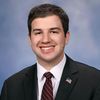
Incumbent Jeremy Moss and Corinne Khederian are running in the general election for Michigan State Senate District 7 on November 8, 2022.
Candidate |
||
|
|
Jeremy Moss (D) | |
|
|
Corinne Khederian (R) 
|
|

|
||||
| = candidate completed the Ballotpedia Candidate Connection survey. | ||||
Do you want a spreadsheet of this type of data? Contact our sales team. |
||||

Democratic primary for Michigan State Senate District 7
Incumbent Jeremy Moss defeated Ryan Foster in the Democratic primary for Michigan State Senate District 7 on August 2, 2022.
Candidate |
% |
Votes |
||
| ✔ |
|
Jeremy Moss |
82.9
|
32,006 |
|
|
Ryan Foster
|
17.1
|
6,582 | |

|
Total votes: 38,588 | |||
| = candidate completed the Ballotpedia Candidate Connection survey. | ||||
Do you want a spreadsheet of this type of data? Contact our sales team. |
||||
Withdrawn or disqualified candidates
- Vernon Molnar (D)
Republican primary for Michigan State Senate District 7
Corinne Khederian advanced from the Republican primary for Michigan State Senate District 7 on August 2, 2022.
Candidate |
% |
Votes |
||
| ✔ |
|
Corinne Khederian
|
100.0
|
10,264 |
|
Total votes: 10,264 | |||
| = candidate completed the Ballotpedia Candidate Connection survey. | ||||
Do you want a spreadsheet of this type of data? Contact our sales team. |
||||
2018[edit]
General election for Michigan State Senate District 7
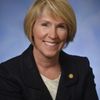
Dayna Polehanki defeated Laura Cox and Joseph LeBlanc in the general election for Michigan State Senate District 7 on November 6, 2018.
Candidate |
% |
Votes |
||
| ✔ |
|
Dayna Polehanki (D)
|
50.6
|
69,434 |
|
|
Laura Cox (R) |
47.3
|
65,001 | |
|
|
Joseph LeBlanc (L)
|
2.1
|
2,892 | |

|
Total votes: 137,327 | |||
| = candidate completed the Ballotpedia Candidate Connection survey. | ||||
Do you want a spreadsheet of this type of data? Contact our sales team. |
||||
Democratic primary for Michigan State Senate District 7
Dayna Polehanki defeated Ghulam Qadir in the Democratic primary for Michigan State Senate District 7 on August 7, 2018.
Candidate |
% |
Votes |
||
| ✔ |
|
Dayna Polehanki
|
73.5
|
27,826 |
|
|
Ghulam Qadir |
26.5
|
10,016 | |
|
Total votes: 37,842 | |||
| = candidate completed the Ballotpedia Candidate Connection survey. | ||||
Do you want a spreadsheet of this type of data? Contact our sales team. |
||||
Republican primary for Michigan State Senate District 7
Laura Cox advanced from the Republican primary for Michigan State Senate District 7 on August 7, 2018.
Candidate |
% |
Votes |
||
| ✔ |
|
Laura Cox |
100.0
|
29,094 |
|
Total votes: 29,094 | |||
| = candidate completed the Ballotpedia Candidate Connection survey. | ||||
Do you want a spreadsheet of this type of data? Contact our sales team. |
||||
Libertarian primary for Michigan State Senate District 7
Joseph LeBlanc advanced from the Libertarian primary for Michigan State Senate District 7 on August 7, 2018.
Candidate |
% |
Votes |
||
| ✔ |
|
Joseph LeBlanc
|
100.0
|
234 |
|
Total votes: 234 | |||
| = candidate completed the Ballotpedia Candidate Connection survey. | ||||
Do you want a spreadsheet of this type of data? Contact our sales team. |
||||
2014[edit]
- See also: Michigan State Senate elections, 2014
Elections for the Michigan State Senate took place in 2014. A primary election was held on August 5, 2014, and a general election took place on November 4, 2014. The signature filing deadline for candidates wishing to run in this election was April 22, 2014. Dian Slavens was unopposed in the Democratic primary. Incumbent Patrick Colbeck defeated Matthew Edwards in the Republican primary. Colbeck defeated Slavens in the general election.[12][13][14][15]
| Michigan State Senate, District 7 General Election, 2014 | ||||
|---|---|---|---|---|
| Party | Candidate | Vote % | Votes | |
| Republican |  Patrick Colbeck Incumbent Patrick Colbeck Incumbent |
52.7% | 52,567 | |
| Democratic | Dian Slavens | 47.3% | 47,110 | |
| Total Votes | 99,677 | |||
| Michigan State Senate, District 7 Republican Primary, 2014 | ||
|---|---|---|
| Candidate | Vote % | Votes |
|
Patrick Colbeck Incumbent |
75.1% | 14,494 |
| Matthew Edwards | 24.9% | 4,807 |
| Total Votes | 19,301 | |
2010[edit]
- See also: Michigan State Senate elections, 2010
Elections for the office of Michigan State Senate consisted of a primary election on August 3, 2010 and a general election on November 2, 2010. The signature filing deadline for major party candidates wishing to run in this election was May 11, 2010. The deadline for independent candidates was July 15, 2010.[16] Patrick Colbeck (R) defeated Kathleen Law (D), Marlin Brandys (L) and independents John Stewart and Michael Kheibari in the general election. The other party candidates were unopposed in the August 3 primary elections.[17][18]
| Michigan State Senate, District 7, General Election, 2010 | ||||
|---|---|---|---|---|
| Party | Candidate | Vote % | Votes | |
| Republican | Patrick Colbeck |
52.2% | 55,284 | |
| Democratic | Kathleen Law | 40.8% | 43,173 | |
| Independent | John Stewart | 5.2% | 5,508 | |
| Libertarian | Marlin Brandys | 1.1% | 1,134 | |
| Independent | Michael Kheibari | 0.7% | 734 | |
| Total Votes | 105,833 | |||
| Michigan State Senate, District 7 Republican Primary, 2010 | ||
|---|---|---|
| Candidate | Vote % | Votes |
| Patrick Colbeck |
31.4% | 9,293 |
| Deborah Whyman | 27.1% | 8,023 |
| Abe Munfakh | 22.9% | 6,793 |
| Dan Osterman | 18.6% | 5,513 |
| Total Votes | 29,622 | |
Campaign contributions[edit]
From 2002 to 2018, candidates for Michigan State Senate District 7 raised a total of $4,417,439. Candidates who raised money in contributions earned $245,413 on average. All figures come from Follow the Money
| Campaign contributions, Michigan State Senate District 7 | |||
|---|---|---|---|
| Year | Amount | Candidates | Average |
| 2018 | $1,781,645 | 4 | $445,411 |
| 2014 | $806,282 | 3 | $268,761 |
| 2010 | $850,924 | 7 | $121,561 |
| 2006 | $465,358 | 2 | $232,679 |
| 2002 | $513,230 | 2 | $256,615 |
| Total | $4,417,439 | 18 | $245,413 |
See also[edit]

External links[edit]
Footnotes[edit]
- ↑ 1.0 1.1 michiganinbrief.org, "Term limits," accessed December 17, 2013 Cite error: Invalid
<ref>tag; name "limits" defined multiple times with different content - ↑ Michigan Constitution, "Article IV, Section 7," accessed February 12, 2021
- ↑ Michigan Legislature, "Statute 168.178, Michigan Compiled Laws," accessed February 12, 2021
- ↑ Michigan Legislature, "Constitution of Michigan of 1963, Article 5, Statute 13," accessed February 12, 2021
- ↑ Michigan Legislature, "Statute 168.634 (1)-(2), Michigan Compiled Laws," accessed May 22, 2014
- ↑ 6.0 6.1 6.2 The Detroit News, "Michigan redistricting panel wraps adoption of state House, Senate, congressional maps" December 28, 2021
- ↑ Detroit Free Press, "Michigan redistricting commission adopts new state legislative maps," December 28, 2021
- ↑ Michigan Legislature, "Article IV § 6" - Independent citizens redistricting commission for state legislative and congressional districts," accessed January 3, 2022
- ↑ Cite error: Invalid
<ref>tag; no text was provided for refs namedMICRCemail - ↑ 10.0 10.1 10.2 Detroit Free Press, "Michigan redistricting commission adopts new state legislative maps," December 28, 2021
- ↑ Michigan Radio, "Redistricting proposal passes in Michigan," November 6, 2018
- ↑ Michigan Secretary of State, "State Senator," accessed August 6, 2014
- ↑ Michigan Secretary of State, "State Senator," accessed December 5, 2014
- ↑ Michigan Secretary of State, "2014 Official Michigan Primary Candidate Listing," accessed May 27, 2014
- ↑ Michigan Secretary of State, "2014 Official Michigan General Candidate Listing," accessed September 8, 2014
- ↑ Michigan Secretary of State, "Filing Requirements: Office of State Senator – 2010 Election Cycle." Retrieved October 26, 2013
- ↑ Michigan Secretary of State, 2010 primary election results. Retrieved October 26, 2013
- ↑ Michigan Secretary of State, 2010 general election results. Retrieved October 26, 2013

Categories: [State senate districts] [Michigan] [State_legislative_districts]
↧ Download as ZWI file | Last modified: 10/14/2022 17:07:20 | 7 views
☰ Source: https://ballotpedia.org/Michigan_State_Senate_District_7 | License: CC BY-SA 3.0
 ZWI signed:
 KSF
KSF