United States Senate Special Election In Georgia, 2020 (Loeffler Vs. Warnock Runoff)
 From Ballotpedia
- Runoff date: Jan. 5, 2021
- Registration deadline(s): Dec. 7
- Online registration: Yes
- Same-day registration: No
- Early voting starts: Dec. 14
- Absentee/mail voting deadline(s): Jan. 5 by close of polls (received)
- Voter ID: Photo ID
- Poll times: 7 a.m. to 7 p.m.
- Polling places: Click here
 |
 David Perdue David Perdue  Jon Ossoff Jon Ossoff |
| Kelly Loeffler Raphael Warnock |
Raphael Warnock (D) defeated incumbent Kelly Loeffler (R) in the special runoff election for U.S. Senate from Georgia on January 5, 2021.
This election was held to fill the remaining two years of the six-year term that Johnny Isakson (R) was elected to in 2016.[1] Isakson resigned at the end of 2019, citing his health.[2] Gov. Brian Kemp (R) appointed Loeffler to the seat, and she was sworn in on January 6, 2020.[3]
With Warnock's win in the special runoff election and Jon Ossoff's (D) win in the regular runoff election, Democrats won control of the U.S. Senate. Prior to the runoffs, Republicans had secured 50 seats and Democrats had secured 48 seats (including among them two seats held by independents who caucus with Democrats). As a result of the runoffs, Democrats and Republicans split the chamber 50-50, with the vice president (starting January 20, 2021, Democrat Kamala Harris) having the tie-breaking vote.
Warnock began serving as senior pastor of Ebenezer Baptist Church in 2005. He emphasized his background growing up with 11 siblings. Warnock said at the runoff debate, "I’ve been fighting for access to affordable healthcare, I’ve been fighting for voting rights, I’ve been fighting for essential workers, ordinary people, because I know what it’s like to be an ordinary person." Warnock said Loeffler downplayed the pandemic publicly while selling stocks following a COVID-19 briefing for senators and that she would not protect healthcare for people with pre-existing conditions.[4]
Loeffler became co-owner of the WNBA team Atlanta Dream in 2011. She said of Democrats and Warnock at a runoff debate, "Chuck Schumer said it best, 'Now we take Georgia, then we change America.' They would increase our taxes, open our borders, socialize our healthcare, and my opponent, radical liberal Raphael Warnock, is his agent of change." Loeffler said she lived the American dream, growing up on a farm, waitressing her way through college, and becoming a businesswoman. She said she created jobs in the state and was "the only candidate qualified to help rebuild our economy and get past this pandemic."[4]
Click here for more on candidates' key messages, backgrounds, and campaign themes.
In Georgia, a general election advances to a runoff between the two top finishers if no candidate receives more than 50% of the vote. Twenty candidates were on the special election ballot for U.S. Senate in Georgia on November 3, 2020. Eight Democrats, six Republicans, four independents, one Green Party candidate, and one Libertarian ran. Warnock received 33% of the vote to Loeffler's 26% in the November election.
Georgia's last Democratic senator, Zell Miller, left office in 2005. As of 2020, Republicans had a trifecta in the state—holding the governor's office and controlling both chambers of the state legislature—since 2005. And Republicans had a triplex—holding the offices of governor, attorney general, and secretary of state—since 2011.
Joe Biden won the presidential election in Georgia in 2020—the first Democratic presidential candidate to win the state since Bill Clinton in 1992. In 2018, Democrat Stacey Abrams lost the gubernatorial election to Brian Kemp (R) 48.8% to 50.2%.
Heading into the November 3, 2020, elections, Republicans held 53 seats in the U.S. Senate, with Democrats holding 45 and independents who caucus with Democrats holding the remaining two. Thirty-five of the 100 seats were up in 2020, including two special elections. Twenty-three of those seats were held by Republicans and 12 by Democrats, giving Republicans greater partisan risk in 2020.
Special election (Loeffler vs. Warnock) results[edit]
See also: United States Senate special election in Georgia, 2020 (Loeffler vs. Warnock runoff)
Special general runoff election for U.S. Senate Georgia
Raphael Warnock defeated incumbent Kelly Loeffler in the special general runoff election for U.S. Senate Georgia on January 5, 2021.
Candidate |
% |
Votes |
||
| ✔ |
|
Raphael Warnock (D) |
51.0
|
2,289,113 |
|
|
Kelly Loeffler (R) |
49.0
|
2,195,841 | |
|
Total votes: 4,484,954 | |||
 = candidate completed the Ballotpedia Candidate Connection survey. = candidate completed the Ballotpedia Candidate Connection survey. | ||||
Do you want a spreadsheet of this type of data? Contact our sales team. |
||||

Analysis[edit]
Around 4.5 million people voted in Georgia's runoffs, compared to 5 million during the November election.[5] That's a turnout decrease of 10%. Before 2021, Georgia had held two runoffs for U.S. Senate: one in 2008 and one in 1992. In 2008, turnout between the general and runoff elections decreased by 43%. In 1992, turnout decreased by 44%.
Several outlets released turnout analyses attempting to identify factors that led to the elections' results. We present a few examples below.
- The Washington Post's Bernard L. Fraga, Zachary Peskowitz, and James Szewczyk used race and ethnicity data from the Georgia Secretary of State office along with an analysis of November election results to gauge partisan leanings of those who did and did not vote in the runoff. They wrote that Black voter turnout decreased less between the two elections than white voter turnout and that turnout declined more in precincts that supported Trump by larger margins in November.[6]
| “ |
Record-breaking spending and grass-roots, Black-, Latino-, Native American- and Asian American-led efforts to mobilize voters meant that early voting alone exceeded total turnout for any previous runoff election. Runoff turnout was 89.6 percent of November’s showing, with over 4.4 million Georgians casting ballots. Black turnout was 91.8 percent of that in November; White turnout was lower, at 89.5 percent of the November total. The share of voters that were Black in the runoff thus increased to 30.7 percent. If Black voters had shown up in roughly the same proportions as they had in the 2018 runoffs, Ossoff’s 55,000 vote victory would have been a roughly 30,000 vote loss; the Warnock-Loeffler race would likely have been mired in a controversial recount; and Republicans would control the Senate. |
” |
- FiveThirtyEight's Nathaniel Rakich, Geoffrey Skelley, Laura Bronner, and Julia Wolfe wrote that, according to county-level data shortly after the runoff, Black voters made up a larger share of the runoff electorate than the general election electorate, and counties that showed more support for Trump tended to have greater decreases in turnout:[8]
| “ |
Looking at county-level results, we can see a couple of trends, the most important of which is that Warnock and Ossoff both tended to improve on Joe Biden’s margin in places with a large share of Black voters. ... This includes both suburban counties like Clayton, in the Atlanta metropolitan area, where Warnock did 6 percentage points better than Biden, as well as more rural counties like Randolph, in Georgia’s Black Belt. And turnout among Black voters seems to have been up, as well: According to the Fox News Voter Analysis, Black Americans made up 32 percent of the runoff electorate, up from 29 percent in November. This corresponds with trends at the county level, which also show higher turnout in counties where a larger share of the population is Black. At the same time, though, Warnock and Ossoff actually slightly underperformed Biden in counties with a particularly high share of college-educated voters, such as Forsyth, where 52 percent of the population has a college degree but only 3 percent is Black. It’s obviously hard to know whether these demographic relationships we see at the county level will hold among voters across the state — we won’t know that until we have more detailed voter data. But after suburbanites, especially white college-educated ones, were credited with swinging the state blue in the presidential election, these charts suggest that the Democratic senators-elect owe their wins to Black voters. It seems that split-ticket voters from the general election — who voted Biden for president but Republicans for the Senate, and who were largely concentrated in the wealthy Atlanta suburbs — were not key to the Democratic victory after all. The second trend we can spot at the county level is that GOP turnout seems to have been down. ... [T]he better Trump did in a county in November, the more its turnout tended to drop in the runoffs compared to the general election.[7] |
” |
- Fox News' Andrew Schwartz, Margaret Ann Campbell, Dana Blanton reported results from the the Fox News Voter Analysis, a survey of around 4,000 Georgians, shortly after the runoff. They wrote about demographic breakdowns and voter outreach efforts in the state.[9]
| “ |
The Democratic coalition centered on Black voters (Ossoff +88 points and Warnock +88 points), moderates (+34 in both races), those under age 45 (+16 / +18 points) and suburban voters (+4 / +6 points). Blacks made up 32 percent of the runoff electorate, up from 29 percent in November. There was a lot of talk about Stacey Abrams’ get-out-the-vote "machine" and her efforts showed. The FNVA survey finds more voters report being contacted on behalf of Democratic candidates than Republican. The goal of voter contact is an action by the voter. They might sign a pledge to vote, get help registering, or donate money. The Democrats got reactions from more voters than the Republicans did. Black voters were much more likely than White voters to take at least one action in response to a political contact, 53% vs. 33%.[7] |
” |
- Patrick Ruffini, Republican pollster and co-founder of the polling firm Echelon Insights, compared Georgia's November election turnout to Echelon's turnout projections. Echelon primarily based its turnout model on past voting behavior in recent elections. Overall turnout in Georgia's November election was 98% what they expected it would be. Ruffini wrote the following:[10]
Key turnout takeaways from Georgia in the November 2020 election:
✅ White suburban turnout surged way above expectations
✅ Black (and Hispanic) turnout was below expectations
✅ Trump’s white working class base turned out as expected, there was no “hidden Trump voter” in GA— Patrick Ruffini (@PatrickRuffini) February 9, 2021
Here’s how turnout broke down by race (& Georgia has good race data on the file)
White 99.4%
Black 95.0%
Hispanic 90.9%
Asian 107.8%
Others 99.4%
(It appears Black turnout recovered in the runoff, watch for a future thread on this.)— Patrick Ruffini (@PatrickRuffini) February 9, 2021
Among nonwhite groups, Democratic turnout was generally higher than that among the smaller number of Republicans. Black non-party turnout underperformed most. Again, precinct education is a *huge* driver of turnout performance. pic.twitter.com/qV3rLYyVUH
— Patrick Ruffini (@PatrickRuffini) February 9, 2021
Georgia runoff FAQs[edit]
Recount laws in Georgia[edit]
- See also: Recount laws in Georgia
The list below shows answers to common questions regarding recounts in Georgia.[11]
- Does state law require automatic recounts?
- No.
- When must an automatic recount be completed?
- There are no automatic recounts in this state.
- Can a recount be requested?
- Yes. Election officials, including the secretary of state, may request recounts under certain circumstances explained below. These recounts may be conducted before the certification of election results. A losing candidate may also request a recount if the margin is less than or equal to 0.5%. This threshold was set in 2019 following the passage of H.B. 319. There are no set deadlines for the completion of a candidate-requested recount.
- Who pays for a requested recount?
- State law does not specify who is responsible for costs associated with a requested recount but the secretary of state's office has indicated that the state covers all costs.[12]
- Is a refund available for requested recount costs?
- Not applicable. According to the Secretary of State, the state covers the cost of requested recounts.[13]
- Can a partial recount be requested?
- No.
More FAQs[edit]
Last updated January 5, 2021
Why is there a special election after the governor appointed someone?
Why did so many candidates run in the special election?
Why is Georgia holding runoffs for U.S. Senate?
Why do these races matter?
When is the last time Georgia held Senate runoffs?
Does any other state hold general election runoffs for Congress elections?
How long have Republicans held both of Georgia's U.S. Senate seats?
If I didn't vote in the general election, can I still vote in the runoff?
If I wasn't registered to vote before the November election, can I register for the runoff?
Can I vote early?
Can I vote by mail?
Can I vote in both races?
Do I have to vote in both races?
Do I have to vote for candidates from the same party in both races?
When will election winners be sworn in?
Why is there a special election after the governor appointed someone?[edit]
- Georgia law states that a special election will be held to fill a vacant U.S. Senate seat in conjunction with the next regularly scheduled statewide general election so long as the election takes place at least 40 days after the vacancy occurs. The law also states that the governor may appoint someone to temporarily fill the vacancy until the special election winner takes office.[14]
Why did so many candidates run in the special election?[edit]
- Candidates running in special elections for state and federal offices in Georgia do not run in partisan primaries as they do for regularly scheduled elections. Special election candidates of all affiliations appear on the same ballot.[15]
Why is Georgia holding runoffs for U.S. Senate?[edit]
- Georgia's legislature passed a law in the 1960s requiring runoffs for general elections in which no candidate receives a majority of the vote.[16] The top two finishers in the general election advance to the runoff. Runoff elections are required for all congressional, state executive, and state legislative elections in which a candidate does not receive a majority in the general election.[17]
Why do these races matter?[edit]
- Following the November 3, 2020, elections, Republicans had secured 50 seats in the Senate and Democrats, 48 (including independents who caucus with them). Democrats needed to win both seats to split control of the chamber 50-50. Since the vice president has the tie-breaking vote in the chamber, this would give Democrats an effective majority in 2021. Republicans needed to win one of the two seats to maintain their majority. They held 53 seats heading into the 2020 elections. Different perspectives on what control of the Senate would mean can be found here.
When is the last time Georgia held Senate runoffs?[edit]
- Two other Senate runoffs took place before these ones. In 2008, Saxby Chambliss (R) won re-election in a runoff. The first Senate runoff occurred in 1992. Incumbent Wyche Fowler (D) lost in the runoff.
Does any other state hold general election runoffs for Congress elections?[edit]
- The only state with anything similar is Louisiana. There, all candidates running for a local, state, or federal office appear on the same ballot in either October (in odd-numbered years) or November (in even-numbered years), regardless of their partisan affiliations. If a candidate wins a simple majority of all votes cast for the office, he or she wins the election outright. If no candidate meets that threshold, the top two finishers, regardless of their partisan affiliations, advance to a second election in December.
How long have Republicans held both of Georgia's U.S. Senate seats?[edit]
- Since 2005. In 2000, Zell Miller (D) won a special election to complete the term originally won by Paul Coverdell (R), who died in office. Prior to the special election, Gov. Roy Barnes (D) had appointed Miller to the seat.[18]
If I didn't vote in the general election, can I still vote in the runoff?[edit]
- Yes.[19]
If I wasn't registered to vote before the November election, can I register for the runoff?[edit]
- Yes, if you registered by the December 7, 2020, deadline. Find info on registering to vote and checking your registration status here.
Can I vote early?[edit]
- Yes. Early in-person voting began December 14, 2020. Find early voting locations here.
Can I vote by mail?[edit]
- Yes. Most Georgia voters who wanted to vote by mail needed to request an absentee ballot. Click here for information on submitting a request online, by mail, by fax, or in person. Voted absentee ballots needed to be received by 7 p.m. on January 5.
Can I vote in both races?[edit]
- Yes.
Do I have to vote in both races[edit]
- No. Voters have a right to undervote, or not cast a vote for an office on their ballot. Their votes for other offices are still counted.
Do I have to vote for candidates from the same party in both races?[edit]
- No. Voters could vote for any candidate in either Senate race, as well as the Public Service Commission District 4 runoff race, regardless of who they voted for in the other races.
When will election winners be sworn in?[edit]
- The winners will be sworn in once results are certified.[20] Secretary of State Brad Raffensperger (R) has until January 22, 2021, to certify results.[21] David Perdue's term ended at noon on January 3, 2021. The seat he held will be vacant until the regular runoff election results are certified. Sen. Kelly Loeffler was appointed to temporarily serve the term Johnny Isakson won, which ends January 2023. She will remain in office until the election is decided, and whoever wins the race will complete the term.[22]
Nov. 3 election results[edit]
Note: On October 1, 2020, A. Wayne Johnson announced that he was suspending his campaign for U.S. Senate. His name remained on the ballot.[23]
See also: United States Senate special election in Georgia, 2020 (Loeffler vs. Warnock runoff)
Special general election for U.S. Senate Georgia
The following candidates ran in the special general election for U.S. Senate Georgia on November 3, 2020.
Candidate |
% |
Votes |
||
| ✔ |
|
Raphael Warnock (D) |
32.9
|
1,617,035 |
| ✔ |
|
Kelly Loeffler (R) |
25.9
|
1,273,214 |
|
|
Doug Collins (R) |
20.0
|
980,454 | |
|
|
Deborah Jackson (D)
|
6.6
|
324,118 | |
|
|
Matt Lieberman (D)
|
2.8
|
136,021 | |
|
|
Tamara Johnson-Shealey (D) |
2.2
|
106,767 | |
|
|
Jamesia James (D) |
1.9
|
94,406 | |
|
|
Derrick Grayson (R) |
1.0
|
51,592 | |
|
|
Joy Felicia Slade (D) |
0.9
|
44,945 | |
|
|
Annette Davis Jackson (R) |
0.9
|
44,335 | |
|
|
Kandiss Taylor (R)
|
0.8
|
40,349 | |
|
|
A. Wayne Johnson (R)
|
0.7
|
36,176 | |
|
|
Brian Slowinski (L) |
0.7
|
35,431 | |
|
|
Richard Dien Winfield (D)
|
0.6
|
28,687 | |
|
|
Ed Tarver (D)
|
0.5
|
26,333 | |
|
|
Allen Buckley (Independent) |
0.4
|
17,954 | |
|
|
John Fortuin (G) |
0.3
|
15,293 | |
|
|
Elbert Bartell (Independent)
|
0.3
|
14,640 | |
|
|
Valencia Stovall (Independent)
|
0.3
|
13,318 | |
|
|
Michael Todd Greene (Independent)
|
0.3
|
13,293 | |
|
|
Rod Mack (Independent) (Write-in)
|
0.0
|
7 | |














|
Total votes: 4,914,368 | |||
| = candidate completed the Ballotpedia Candidate Connection survey. | ||||
Do you want a spreadsheet of this type of data? Contact our sales team. |
||||
Watch the Candidate Conversation for this race!
Withdrawn or disqualified candidates
Sample ballot[edit]
An image of Fulton County's sample runoff ballot is below.[24] Ballots may have looked slightly different in other counties.
Candidate comparison[edit]
Candidate profiles[edit]
This section includes candidate profiles created in one of two ways. Either the candidate completed Ballotpedia's Candidate Connection survey or Ballotpedia staff created a profile after identifying the candidate as noteworthy.[25] Ballotpedia staff compiled profiles based on campaign websites, advertisements, and public statements.





Party: Republican Party
Incumbent: Yes
Political Office:
U.S. Senate (Appointed, assumed office: 2020)
Biography: Loeffler received a bachelor's degree from the University of Illinois at Urbana-Champaign and an M.B.A. from DePaul University. She served as chief communications and marketing officer and as head of investor relations at Intercontinental Exchange. Loeffler became a co-owner of the Atlanta Dream WNBA team in 2011.
Show sources
Sources: Rev.com, "Georgia U.S. Senate runoff Kelly Loeffler and Raphael Warnock debate in Atlanta (LIVE) USA TODAY," December 6, 2020; Kelly Loeffler's 2020 campaign website, "Home," accessed September 8, 2020; YouTube, Kelly Loeffler, Videos, accessed November 12, 2020; LinkedIn, "Kelly Loeffler," accessed December 2, 2019
This information was current as of the candidate's run for U.S. Senate Georgia in 2020
Party: Democratic Party
Incumbent: No
Political Office: None
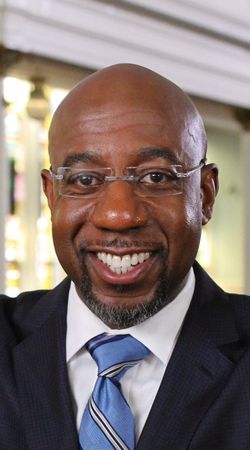
Biography: Warnock received a bachelor's degree from Morehouse College and an M.Div., M.Phil., and Ph.D. from Union Theological Seminary. He became pastor of Ebenezer Baptist Church in 2005. He served as chairman of the New Georgia Project from 2017 to 2020. Warnock graduated from the Leadership Program sponsored by the Greater Baltimore Committee, the Summer Leadership Institute of Harvard University, and Leadership Atlanta.
Show sources
Sources: Rev.com, "Georgia U.S. Senate runoff Kelly Loeffler and Raphael Warnock debate in Atlanta (LIVE) USA TODAY," December 6, 2020; Raphael Warnock's 2020 campaign website, "Home," accessed September 9, 2020; Raphael Warnock's 2020 campaign website, "About," accessed September 9, 2020; YouTube, "Reverend Raphael Warnock," accessed November 19, 2020; Twitter, "Raphael Warnock on November 5, 2020," accessed November 12, 2020; The New York Times, "Citing ‘Soul of Our Democracy,’ Pastor of Dr. King’s Church Enters Senate Race," updated February 25, 2020; Ebenezer Baptist Church, "Our Pastor," accessed September 9, 2020
This information was current as of the candidate's run for U.S. Senate Georgia in 2020
Campaign themes[edit]
- See also: Campaign themes
Kelly Loeffler[edit]
Loeffler's campaign website stated the following:
| “ |
Jobs and The Economy Thanks to bold conservative leadership on the state and federal level, our unemployment rate in Georgia - and throughout the country - is at historic lows. Our economy is growing and American families are finally seeing growth in their 401ks. As a businesswoman and political outsider, Kelly is working in Washington to advance pro-growth policies that keep our state and country moving in the right direction. She is proud to champion President Trump's economic agenda to Keep America Great! Fair Trade Kelly grew up on a family farm and experienced firsthand the impact of burdensome government regulations and ill-advised trade deals. In the U.S. Senate, she championed President Trump’s USMCA agreement, which will create jobs and economic opportunities in Georgia and throughout the nation. 2nd Amendment Growing up on a farm, Kelly learned how to shoot and hunt at a young age. She is a strong supporter of our 2nd Amendment Rights and firmly opposes every effort to undermine our Constitutional Rights. Life A devout Christian, Kelly Loeffler is unapologetically pro-life. During her short time in the U.S. Senate, she has co-sponsored four bills to protect the unborn. She is proud to be endorsed by Susan B Anthony List - a leading pro-life organization in America. Military and Veterans As the daughter and granddaughter of veterans, Kelly Loeffler knows that freedom isn't free and those who answered the call of duty must be honored not just with words - but by our actions. On the Veterans Affairs Committee, Kelly is working to ensure that our veterans receive the resources and care they deserve. From high-quality healthcare to job training and placement, we must fully support America's true heroes. Ag & Rural Georgia Growing up on a farm, Kelly knows firsthand the opportunities and challenges that exist in rural communities throughout our state and country. As a member of the Senate Agriculture Committee, she is working to advance policies that keep every part of our state - including Rural Georgia - growing. From High-Speed Internet Access to fair trade deals that keep family farms strong and prosperous, Kelly Loeffler is a champion for farmers, agri-business leaders, and rural families in the Peach State. Sex Trafficking Every day, hundreds of innocent children are bought and sold for sex in Georgia. Kelly is proud to support the efforts of First Lady Marty Kemp, Ivanka Trump, and others to completely eradicate human trafficking in our state and country. By raising awareness and advancing legislation, we can protect the innocent and help survivors recover and thrive. Opioid Epidemic Opioids are killing innocent Georgians - and Americans - at a record pace. We must continue to support policies on the state and federal level that provide resources and care to those who are struggling with this dangerous - and often deadly - addiction. Foreign Policy With decades of experience in international business, Kelly understands the importance of strong foreign policy that puts America first. She supports the President's decisions to kill Iran's terrorist leader and recently applauded efforts to broker a peace deal between Israel and the Palestinians. Kelly believes that America's military should be strong and our leadership bold. National Security and Illegal Immigration Thanks to career politicians in Washington, our borders are broken and public safety has been completely compromised. Kelly Loeffler is 100% committed to completing President Trump's border wall, deporting MS-13 gang members, and completely reforming America's legal immigration system. Healthcare Like you, Kelly Loeffler knows that we need accessible, affordable healthcare in Georgia. On the HELP Committee, Kelly will partner with the President to lower prescription drug prices, end surprise medical billing, and help put people ahead of the special interests. Just like Governor Kemp, Kelly wants to ensure a better, brighter, and healthier future for our state. Taxes and The Deficit For nearly three decades, Kelly Loeffler was in the private sector - growing jobs and economic opportunity in our state and beyond. She knows that low taxes empower innovators and business owners to grow, expand, and invest. Kelly supports policies that make our state and country the best place for business. In the Senate, Kelly supports efforts to reduce the Democrats' reckless spending agenda and reign in the national debt. Now, more than ever, we need to be good stewards of tax dollars and ensure that the American people are getting a good return on their investment.[7] |
” |
| —Kelly Loeffler's campaign website (2020)[26] | ||
Raphael Warnock[edit]
Warnock's campaign website stated the following:
| “ |
Agriculture: Protecting And Growing Georgia’s Farm Economy Our state’s economy relies on farmers and agriculture. As one of the nation’s leading producers in everything from chickens to peanuts to blueberries and our world famous peaches, we need leaders who understand the importance and difficulty of the work farmers do and will fight on their behalf in Washington. As Senator, Reverend Warnock will defend farmers and work to grow our state’s agriculture economy. He believes that we need consistent policies that accommodate the uncertainty our farmers have to deal with and the diversity of our state’s products. He also understands the importance of a coherent policy on trade and tariffs that will keep markets open to our farmers. Reverend Warnock is also a proponent of equity. As one of the most diverse states in the nation, Georgia is home to a significant number of African-American farmers, critical to the agricultural economy. He believes that we should level the playing field for Black and minority farmers by expanding access to capital for equipment and financial resources and ending discriminatory policies at the federal level that limit opportunities. Many Georgia farms are small businesses that benefit not only our state, but the entire country. Reverend Warnock appreciates the diversity and abundance that these farms provide, and will work to grow their role in our economy. In the Senate, Reverend Warnock will:
Climate: Stewardship Of Our Children’s Planet The flooding and extreme weather we have seen in coastal Georgia and across the South are sobering reminders of how devastating climate change can be in our daily lives, especially in underserved and rural communities. Rising sea-levels and more intense storms have done untold damage to the livelihoods of Georgians, like those in Reverend Warnock’s hometown of Savannah. Our state urgently needs leaders who will accept the science, invest in infrastructure, and combat the climate crisis that is already at our door. Reverend Warnock has focused on the work of environmental justice throughout his time at Ebenezer Baptist Church, helping organize and lead a public interfaith mass meeting on climate change with the Reverend William Barber II and Vice President Al Gore. He is proud to have the endorsement of the League of Conservation Voters and is committed to fighting climate change and environmental racism in the U.S. Senate. His emphasis on climate justice is guided by his faith and his understanding that “the Earth is the Lord’s.” He believes that we must be stewards of the earth our children will inherit, and that we all should have the right to clean air and water. He also understands that our harm to the planet often causes those who can least afford it to experience the most tragic consequences, often communities of color and lower income populations. Understanding the disproportionate impacts of climate change on marginalized communities, Reverend Warnock’s view of environmental justice doesn’t just focus on addressing long term challenges, but everyday problems. That means addressing the lack of access to clean water and air in many impoverished communities and the higher share of income many Black and brown households pay in energy bills, often as a result of limited cost saving tools like alternative energy sources. He also believes in working toward a clean economy that will create jobs, reduce pollution, and produce a world that our children can inherit. Clean energy has become one of the fastest growing sources of new jobs in America. As the global green energy economy develops, Reverend Warnock will work hard to ensure that no working Georgians are left behind in our transition to sustainable energy. And he will push to ensure that those that overwhelmingly bear the brunt of intensifying climate change are prioritized in access to training and education to partake in profits. Reverend Warnock believes that solutions to climate change are moral issues and that we can act on the consensus that already exists among Americans by ignoring Washington special interests and putting effective, common sense policies in place. Starting with rejoining the Paris Climate Accords and restoring America’s place as a leader in the fight for climate justice we can achieve this. As a Senator, he will advocate for the United States to:
Criminal Justice Reform: Ending Mass Incarceration And Giving Everyone A Fair Shot Reverend Warnock believes that in the Land of the Free, it is a scandal and a scar on the soul of America to imprison more people at a higher rate than any other country in the world. With our country containing only 5 percent of the world’s population while warehousing nearly 25 percent of the world’s prisoners, real and immediate change is needed. The prison population of America is fed by a system that criminalizes poverty, imperils the bodies of its most vulnerable citizens, and incarcerates people of color at disproportionate levels. Reverend Warnock sees this issue as a spiritual problem, with the soul of America itself endangered by mass incarceration. Only by living up to the twin American promises of liberty for all and equal protection under the law can our nation begin to heal. Reverend Warnock also believes that it is morally wrong and economically backward to close the doors of social re-entry on the formerly incarcerated. That’s why he has worked with Fulton County officials to expunge arrest records for those arrested but not convicted of a crime. He understands that arrests, even for minor infractions, can devastate generations of Georgians when parents and children are stripped of their potential for upward social mobility. Reverend Warnock believes that people who have paid their debt to society in prison can continue to make contributions to their communities after they have served their time. In his ministry, Reverend Warnock has spoken about the dangers of mandatory minimums, the lack of effective rehabilitative programs, and the thousands of Georgians who are in jail, not because they have been convicted of a crime or are a danger to society, but because they can’t afford bail. And as someone whose own family has faced the pain of seeing a loved one incarcerated, Reverend Warnock understands that behind each statistic is a family broken by a failed justice system. As a Senator, he will fight to move the nation toward justice and away from the harmful, ineffective, and costly policies that have devastated so many Georgia families. Reverend Warnock also believes we need to responsibly fund the police while reimagining the relationship between police departments and the communities that they serve. In order to ensure accountability and build trust, he understands that we need to invest resources into the training of police officers and into building genuine bonds of community rather than sowing the seeds of distrust. For this relationship, it’s equally critical for communities to trust that the justice system is designed to support them, which is why Reverend Warnock also supports appointing independent prosecutors to handle police-involved shootings. Through his work at Ebenezer Baptist Church, Reverend Warnock has advocated for criminal justice reform measures that make sense for Georgia. And in the wake of nation-wide protests in response to police brutality, Reverend Warnock has joined the chorus of leaders pushing for accountability and equal protection under the law. It was with that same spirit in 2019 that Reverend Warnock hosted a multifaith, multicultural initiative to end mass incarceration, galvanizing faith leaders on issues like bail reform and hosting a mass record expungement event. In the Senate, Warnock will work to:
Education: Rebuilding The Ladder Of Opportunity For All Our Kids Reverend Warnock believes that your access to a good K-12 education shouldn’t depend on your zip code and that the cost of higher education should never be an obstacle to opportunity. Reverend Warnock went to Morehouse College on what he calls a “full faith” scholarship – not knowing how he would pay for school, but believing that grit and determination could help him follow his dreams. With the help of a Pell Grant and low-interest student loans, he became the first person to graduate from college in his immediate family, and he knows from experience that education can be a ladder of upward mobility. But Reverend Warnock also understands that grit and determination alone aren’t enough, especially in the face of the hardship and debt that so many students face. And he knows that today, things are harder than ever for kids like him trying to climb upward. Reverend Warnock believes that we need to invest in every rung of the ladder. Reverend Warnock supports robust Pre-K programs that will ensure every child gets a fair start, to nutritional programs that nourish students to learn, and to ensure that our children are getting the best education, he believes we need to invest in teachers and schools so that they have the resources they need. He also supports reducing higher education costs and supporting student loan and forgiveness programs that will make four-year degrees a possibility for anyone who wants to attend college. But Reverend Warnock also understands that that college isn’t for everyone and that we should be providing more options for people to make a good living for themselves and their families that don’t require college degrees. That’s why he’s a strong believer in offering more opportunities like vocational training, trade schools, and apprenticeship programs that will get young people ready for a changing economy. By giving every child access to an affordable and quality education, we can rebuild the ladder of opportunity and make the American Dream a possibility for all. In the Senate, Reverend Warnock will work to:
Health Care: The Right To Access Affordable, Quality Care Reverend Warnock’s belief in affordable health care comes from his understanding of the dignity of human beings and his confidence that courageous, principled leaders can stand up to special interests and make our health care system work better for all. That’s why he’s rejecting corporate PAC money, because he knows that for too long the insurance and pharmaceutical companies have had their say in Washington. In fact, Reverend Warnock is such a fierce health care advocate, he’s proud of his legacy protesting in Governor Nathan Deal’s office for Medicaid expansion, and in the rotunda of the U.S. Capitol fighting back against an immoral budget that would have cut funding for children’s health care. Click here to learn more about Rev. Warnock’s fight for Medicaid Expansion and pushing back against proposed cuts to children’s health care programs. Even before the coronavirus, our state’s health care system was in a crisis compounded by the failure of Georgia’s leaders to expand Medicaid. Today, 518,000 Georgians would be eligible for health care if our leaders took action. But instead, Georgians continue to pay taxes to give people in other states access to health care while we go without and rural hospitals across the state continue to close due to lack of support. The pandemic has laid bare the glaring inequality of our health care system like never before. As coronavirus cases skyrocket, the inadequacy of our health care system has become painfully clear, while the gaps between rich and poor, black and white, rural and urban, grow wider every day. As a U.S. Senator, Rev. Warnock will continue to fight with that same conviction and courage to:
Right now, our state’s elected leaders are trying to overturn the Affordable Care Act and take away health care protections for millions of Georgians — while we’re in the middle of a pandemic. Reverend Warnock is committed to fighting back against efforts to dismantle the law’s protections for the more than 1.8 million Georgians with pre-existing conditions and provisions allowing anyone under the age of 26 to remain on their parent’s insurance. Reverend Warnock also understands that affordable health care is a moral imperative. As an advocate and pastor, Warnock has spent years fighting for the fundamental right to health care. That’s why Reverend Warnock is committed to expanding affordable access to health care in any way possible, including through a public option and early Medicare buy-in. But Reverend Warnock also understands how personal decisions of health care can be, which is why he will never support efforts that take private insurance from those that want to keep it. He has been a tireless advocate for Medicaid expansion, which is key to keeping rural hospitals open, making health care accessible and affordable to those who need it the most, and improving treatment for victims of addiction. With Georgians exposed to the skyrocketing costs of critical prescription drugs like insulin, Reverend Warnock believes solutions, like allowing the federal government to negotiate with pharmaceutical companies on the prices seniors are charged for life-saving medication, will ease this moral crisis. He understands that too often Georgians are forced to choose between paying for prescription drugs or putting food on the table, and he believes the system that makes such a choice necessary is unconscionable and immoral. Infrastructure: Building A Foundation For Prosperity And Investing In Workers Reverend Warnock believes it is time to reinvest in America’s workers. He sees our broken roads and bridges as symbols of the broken covenant in our union and representations of the lack of mobility that is stunting our potential for prosperity. Our fractured infrastructure has had real consequences for ordinary people who rely on roads to get to work, pipes for clean drinking water, and bridges to connect them to their neighbors. And in the wake of the Coronavirus pandemic, Reverend Warnock believes our public health crisis has been compounded by the ongoing disinvestment in Georgia’s hospitals and rural areas and highlights the real disparities in access to education as millions of rural and urban children without access to the internet fall behind in lessons as schools remain shuttered. By reinvesting in a clean economy based on green transportation and energy infrastructure, Reverend Warnock believes that we can create good, family-sustaining jobs that will prepare us for the 21st century. He understands that this need is especially urgent in both rural and urban communities, where we also need to invest in broadband that will connect people to the global economy and lay a foundation for the future. These investments will help businesses flourish in our state, help workers get to jobs, and help consumers get to services. In the Senate, Reverend Warnock will advocate for:
Jobs: Rebuilding An Economy That Works For Everyone Reverend Warnock knows the global pandemic has fundamentally impacted the daily lives and economic security of Georgians and that in many cases the pain is being felt most by families who were already struggling to get by. With tens of millions of Americans having lost work or totally unemployed, it’s clear our leaders have failed not only in their response to the health impacts of the virus, but also in answering its financial toll. In Georgia, we’ve experienced failed leadership from our state department of labor’s delayed payments to citizens for weeks, while nationally leaders have fallen down on the job getting support to small businesses, entrepreneurs, and keeping needed programs for everyday families in place. Reverend Warnock is committed to putting politics aside and listening to the experts making sure we’re containing the virus and standing up for struggling families that have been treated as political pawns throughout this crisis. While Reverend Warnock has felt Georgian’s pains from the pandemic, his perspective on economic fairness and the dignity of work is rooted in his upbringing. Growing up in Savannah’s Kayton Homes public housing, Reverend Warnock had eleven brothers and sisters and learned the value of hard work from his mother, who spent summers picking tobacco and cotton, and his father, who sold junk cars before standing up on Sunday mornings and preaching to poor, ordinary working-class people who themselves felt discarded. That upbringing shaped his understanding of work, the need for good paying jobs, and the importance of fair wages for all Americans. But Reverend Warnock recognizes that things have gotten harder for families like his, and for many in Georgia, historic unemployment and a global pandemic mean the American dream has never felt more out of reach. From Columbus to Cuthbert, Atlanta to Lavonia, workers are being laid off from jobs they’ve held for years and new employees are entering a workforce that no longer has a place for them. And even when the economy is expanding, its benefits are not being shared equally. For the employed, gender pay gaps and unfair labor practices show that our economy is designed for the wealthiest one percent, not the working class. And in rural communities, an exodus of jobs and employers has left our state vulnerable to economic shocks and exploitation. Reverend Warnock believes that we need to rebuild an economy that works for everyone. He understands that we need to protect the dignity of work and fight for fair wages and equitable employment practices in the workplace. He knows that instead of continuing to disinvest in public education and assistance, we need to focus on investing in our children’s education and offer multiple paths for folks to attain the American dream, including:
Fighting for workers also means he will oppose Washington tax breaks that benefit the richest of the rich while leaving behind the poor and working families that need help the most. LGBTQ+: Equality For LGBTQ+ Communities Reverend Warnock is a proud ally of the LGBTQ+ community. As a civil rights advocate, he firmly believes that there’s no such thing “as equal rights for some.” Reverend Warnock believes that our nation’s commitment to equality is sacred and inviolable. That belief has led him to routinely advocate from the pulpit on behalf of the LGBTQ+ community, to mourn in moments of tragedy, such as after the Pulse Nightclub shooting, and to celebrate in times of triumph, as after the Supreme Court’s recognition of marriage equality. As the Pastor of “America’s Freedom Church,” he also believes that the church should be the first institution to defend vulnerable communities. As a Senator, he will fight for and support the Equality Act to protect members of the LGBTQ+ community from housing, financial, and employment discrimination; advocate for gender inclusive policies and resources to help at-risk LGBTQ+ youth who face higher risks of homelessness and other challenges; and push to ban discriminatory federal practices that stop trans people from serving in our armed forces. Warnock would also fight to ensure that there is fairness and equality in health care, working to expand access to medications like PrEP and other life saving care for all communities. Choice: Women’s Health Care And Reproductive Justice Reverend Warnock has been an advocate for women’s health and reproductive justice his entire life and is proud to have been endorsed by NARAL and Planned Parenthood Action Fund. Since his time as a teen peer counselor in high school and his work with the Georgia Department of Health during college, Warnock has fought to increase safe and affordable access to contraceptives and achieve reproductive justice for women and families. While working with the State, he also helped author a statewide curriculum for uniform training for Georgia’s teen peer counselors. As Senior Pastor of Ebenezer Baptist Church, he has carried that work forward by centering choice and justice in his ministry. With Washington politicians still working to overturn Roe v. Wade and repeal the Affordable Care Act, which would allow insurance companies to treat pregnancy as a pre-existing condition, Reverend Warnock recognizes that women’s health care is under attack like never before. As a Senator, he will stand up for reproductive justice and a woman’s right to choose. Warnock believes in a woman’s right to choose and that it is a decision between her and her doctor – not the government. He knows the importance of family planning and contraceptive access to achieving fair and equal economic outcomes. That’s why in the U.S. Senate, he will
National Security & Defense As the son of a World War II Veteran, Reverend Warnock understands the importance for a strong national defense. In the Senate, he will work across the aisle to ensure that America’s military remains the strongest in the world and keeps our country and its people safe. Georgia is home to 13 military installations, including Fort Benning, home of the US Army’s Ranger School, that play a critical role in Georgia’s economy. Reverend Warnock is committed to protecting and preserving Georgia’s role in America’s national security strategy by strengthening our economy, workforce, competitiveness, innovation, and democracy. To stay strong at home, we must properly man, train, and equip the Armed Forces and Coast Guard. Reverend Warnock will advance America’s values around the world and commits to supporting the use of diplomacy as a first, best resort, and will speak out against tyrants and dictators. Reverend Warnock will ensure that the White House governs transparently and is guided by facts. Voting Rights: Ensuring Every Vote Is Counted After the 2018 Georgia gubernatorial election, our state became ground zero for voter suppression. With partisan gerrymandering, long lines in minority communities, polling place closures, and voter purges, the state of Georgia has followed every strategy in the voter suppression playbook. Whether through vote-by-mail or in-person voting, all Georgia voters must have the opportunity to use their voice at the ballot box. And with the United States Postal Service now under siege, the right to vote is at risk for millions of Georgians. But in the spirit of his mentor and parishioner, the late Congressman John Lewis, Reverend Warnock understands that our vote is our voice, and that the ability to use our voice is a matter of human dignity. He believes that the best way to honor John Lewis’ legacy is not to simply offer pious platitudes, but to get busy restoring the Voting Rights Act that was gutted by the Supreme Court. And in the middle of a global pandemic, it also means giving states the resources they need to protect access to the vote for all. Our elections must be fair, open, and safe for every eligible citizen, and Americans should never have to choose between their life and their vote. Voting rights have been central to Reverend Warnock’s advocacy work for decades. In the aftermath of 2005’s Hurricane Katrina and only six months into his role as Ebenezer Baptist Church’s Senior Pastor, Reverend Warnock helped organize Freedom Caravans that drove from Atlanta to New Orleans to help Louisiana voters access the polls and exercise their right to participate in municipal elections. In his ministry, Reverend Warnock and Ebenezer Baptist Church have participated for years in ‘Souls to the Polls’ to encourage voter mobilization in the Black community. And he has helped register hundreds of thousands of voters as the former Chair of the New Georgia Project. That’s why he is proud to have earned the endorsement of Fair Fight Action and the Voter Protection Project. In the Senate, Reverend Warnock pledges to fight to ensure that every eligible voter can participate in our democracy under the American promise of “one person, one vote”, by:
Veterans & Military Families Reverend Warnock is a native Georgian whose family has honorably served in the armed forces for generations. In fact, Reverend Warnock’s father was a distinguished US Army World War II Veteran. With Georgia being home to over 640,000 veterans and over 90,000 active-duty personnel, reservists, and national guardsmen, it is imperative that its elected leaders represent their needs and boldly advocate on their behalf. Reverend Warnock understands the sacred obligation to care for those who have made the ultimate sacrifice in battle, sent into harm’s way by our leaders and lawmakers. He is committed to improving the functionality and efficiency of the VA, especially those facilities here in Georgia. He understands the evolving health care needs of today’s veterans, such as behavioral health and issues arising from PTSD, MST, TBI. Reverend Warnock is committed to strengthening the use of telehealth, which is direly needed for Georgia’s veterans who live in rural communities where health care access has declined. Veterans and their families achieving the American Dream is important to Reverend Warnock. He will work to ensure that transitioning military service members and their spouses are prepared to enter the civilian world with optimal career and education opportunities. There are far too many homeless veterans in Georgia. Just as other states have done, Reverend Warnock will work with Georgia’s elected officials to end veteran systemic homelessness. Reverend Warnock will bring action to ensure that veterans and their families have a Georgia that they can call home – that welcomes them to a better life as gratitude for their service and sacrifice. Immigration The United States is and has always been a nation of immigrants. Unfortunately, our broken immigration system affects Georgians and their families adversely, placing the American dream out of reach for many seeking a better life in our country. We need comprehensive immigration reform that fixes our broken system, keeps our nation safe and provides a reasonable path to citizenship. In the Senate, Reverend Warnock will work to reform our immigration system by fighting to keep families together, end the use of privatized prisons and ensure due process under the law. He will keep our promise to DREAMers, and stand up for thoughtful management and oversight of ICE. He will work to pass hate crime legislation to combat discrimination against immigrant communities and support peaceful humanitarian policies toward refugees.[7] |
” |
| —Raphael Warnock's campaign website (2020)[27] | ||
Campaign ads[edit]
This section shows advertisements released in this race. Ads released by campaigns and, if applicable, satellite groups are embedded or linked below. If you are aware of advertisements that should be included, please email us.
Kelly Loeffler[edit]
Supporting Loeffler
|
|
|
|
|
|
|
|
|
|
|
|
|
|
|
|
|
|
|
|
|
|
|
|
|
|
|
|
|
|
|
|
|
|
|
|
|
New political ad for Sen. Kelly Loeffler says "we need someone who understands... how it feels like waiting on that paycheck." pic.twitter.com/XSyv9bkNru
— The Hill (@thehill) November 29, 2020
Opposing Warnock
|
|
|
|
|
|
|
|
- "Salvemos Al Senado" - National Republican Senatorial Committee/Loeffler campaign ad, released November 26, 2020
- "Dangerously Radical" - Loeffler campaign ad, released November 24, 2020
- "Stop Socialism" - Senate Georgia Battleground Fund/Loeffler/Perdue ad, released November 18, 2020
Raphael Warnock[edit]
|
|
|
|
|
|
|
|
|
|
|
|
|
|
|
|
|
|
|
|
|
|
|
|
|
|
- "Richest" - Warnock campaign ad, released December 12, 2020
- "We Have The Power" - Warnock campaign ad, released December 11, 2020
- "Love Your Neighbor" - Warnock campaign ad, released November 27, 2020
Opposing Loeffler
|
- "Richest Member Of Congress" - Warnock campaign ad, released December 14, 2020
- "She Made Me" - Warnock campaign ad, released December 5, 2020
- "Who She Is" - Warnock campaign ad, released November 24, 2020
Get ready Georgia. The negative ads against us are coming.
But that won’t stop us from fighting for a better future for Georgians and focusing on the issues that matter. pic.twitter.com/VN0YIA02MG— Reverend Raphael Warnock (@ReverendWarnock) November 5, 2020
Runoff campaign stops by political region[edit]
Where did candidates spend the most facetime?
The Washington Post delineated six political regions in Georgia: Atlanta, Atlanta Burbs, Black Belt, North Georgia, Piedmont, and South Georgia. David Weigel wrote:
| “ |
Atlanta and its suburbs are bluer than ever; the Black Belt is strongly Democratic, but with some Republican opportunities. North Georgia, South Georgia and the Piedmont region drive any Republican win, and the Senate races may come down to whether loyal conservative voters decide, amid all the noise, to hit the polls again.[7] |
” |
Click here to see a map of the regions and more information on each.
We emailed campaigns and used social media posts, events pages, and news articles to document campaign stops between the Nov. 3 election and the Jan. 5 runoff. The table below shows the number of individual days we found that a candidate held one or more in-person campaign events in a region. Most-visited regions for each candidate are highlighted in yellow.
Note: Warnock's campaign sent us a list of campaign stop locations that fell within each of the six political regions. We were unable to obtain dates for all those stops. Those for which we found dates are included below.
Race stats[edit]
Campaign finance[edit]
The chart below contains data from financial reports submitted to the Federal Election Commission.
| Name | Party | Receipts* | Disbursements** | Cash on hand | Date |
|---|---|---|---|---|---|
| Raphael Warnock | Democratic Party | $125,358,564 | $102,595,578 | $22,762,985 | As of December 16, 2020 |
| Kelly Loeffler | Republican Party | $92,213,281 | $70,957,316 | $21,255,965 | As of December 16, 2020 |
|
Source: Federal Elections Commission, "Campaign finance data," 2020.
* According to the FEC, "Receipts are anything of value (money, goods, services or property) received by a political committee." |
|||||
Self-funding[edit]
- Loeffler loaned her campaign $23 million between Dec. 27, 2019, and Oct. 13, 2020.[28]
Polls[edit]
- See also: Ballotpedia's approach to covering polls
The table below includes polls released in this race that meet Ballotpedia's criteria for inclusion in our coverage, including polls that disclose their methodology and the questions asked of respondents. Examples of polls we do not include are those that use interactive voice response (IVR) and online polls with unweighted results. See FiveThirtyEight for a more complete list of polls released in this race.
| U.S. Senate election in Georgia, 2020: Runoff election polls | |||||||||
|---|---|---|---|---|---|---|---|---|---|
| Poll | Date | Loeffler
|
Warnock
|
Undecided | Margin of error | Sample size | Sponsor | ||
| SurveyUSA | Dec. 16-20 | 45% | 52% | 3% | ± 5.1 (credibility interval) |
600 | WXIA-TV | ||
SurveyUSA broke down responses by various demographics, including the following:
- Democrats: 97% Warnock, 2% Loeffler
- Republicans: 92% Loeffler, 5% Warnock
- Independents: 54% Warnock, 36% Loeffler
- White: 66% Loeffler, 30% Warnock
- Black: 90% Warnock, 8% Loeffler
- Hispanic: 53% Warnock, 45% Loeffler
- Perdue runoff voters: 94% Loeffler, 4% Warnock
- Ossoff runoff voters: 96% Warnock, 3% Loeffler
| U.S. Senate special election in Georgia, 2020: Runoff election polls | |||||||||
|---|---|---|---|---|---|---|---|---|---|
| Poll | Date | Loeffler
|
Warnock
|
Undecided | Other | Margin of error | Sample size | Sponsor | |
| SurveyUSA | Nov. 27-30 | 45% | 52% | 3% | -- | ± 5.2 (credibility interval) |
583 | WXIA-TV | |
SurveyUSA broke down responses by various demographics, including the following:
- Democrats: 97% Warnock, 1% Loeffler
- Republicans: 92% Loeffler, 5% Warnock
- Independents: 47% Warnock, 44% Loeffler
- White: 67% Loeffler, 30% Warnock
- Black: 90% Warnock, 7% Loeffler
- Perdue runoff voters: 90% Loeffler, 7% Warnock
- Ossoff runoff voters: 97% Warnock, 2% Loeffler
| Click [show] to see poll results for the Nov. 3 election | ||||||||||||||
|---|---|---|---|---|---|---|---|---|---|---|---|---|---|---|
| Poll | Date | Loeffler
|
Lieberman
|
Tarver
|
Warnock
|
Collins
|
 Slowinski Slowinski
|
Other | Undecided | Margin of error | Sample size | Sponsor | ||
| Public Policy Polling | Oct. 27-28 | 27% | 2% | 0% | 46% | 19% | -- | 2% | 4% | ± 3.8 | 661 | -- | ||
| Monmouth | Oct. 23-27 | 21% | 4% | 3% | 41% | 18% | 2% | 4% | 6% | ± 4.4 | 504 | -- | ||
| Civiqs | Oct. 23-26 | 22% | 2% | 1% | 48% | 23% | -- | 2% | 2% | ± 3.3 | 1,041 | Daily Kos | ||
| University of Georgia | Oct. 14-23 | 20% | 4% | 1% | 34% | 21% | 3% | 2% | 14% | ± 4.0 | 1,145 | Atlanta Journal-Constitution | ||
| New York Times/Siena College | Oct. 13-19 | 23% | 7% | 2% | 32% | 17% | -- | -- | 18% | ± 4.1 | 759 | -- | ||
| Opinion Insight LLC | Oct. 12-15 | 19% | 3% | 1% | 31% | 18% | -- | 9% | 14% | ± 3.5 | 800 | American Action Forum | ||
| Quinnipiac | Oct. 8-12 | 20% | 5% | 2% | 41% | 22% | -- | -- | 9% | ± 3 | 1,040 | -- | ||
| Data for Progress | Oct. 8-11 | 22% | 10% | -- | 30% | 22% | -- | -- | 17% | ± 3.5 | 782 | Crooked Media/Indivisible | ||
| Public Policy Polling | Oct. 8-9 | 24% | 3% | 0% | 41% | 22% | -- | 2% | 8% | ± 4.3 | 528 | -- | ||
| Civiqs | Sept. 26-29 | 21% | 5% | 2% | 38% | 25% | -- | 1% | 7% | ± 3.5 | 969 | Daily Kos | ||
| Quinnipiac | Sept. 23-27 | 23% | 9% | 4% | 31% | 22% | -- | -- | 12% | ± 2.9 | 1,125 | -- | ||
| Redfield & Wilton Strategies | September 23-26, 2020 | 25% | 16% | -- | 26% | 16% | -- | 3%[29] | 14% | +/- 3.5 | 789 | -- | ||
| Monmouth | Sept. 17-21 | 23% | 11% | 4% | 21% | 22% | 3% | 3% | 13% | ± 4.9 | 402 | -- | ||
| New York Times/Siena College | Sept. 17-21 | 23% | 7% | 4% | 19% | 19% | -- | -- | 27% | ± 4.9 | 523 | -- | ||
| Data for Progress | Sept. 14-19 | 21% | 13% | -- | 25% | 21% | -- | -- | 20% | ± 3.5 | 800 | Crooked Media/Indivisible | ||
| Redfield & Wilton Strategies | Sept. 12-16 | 26% | 15% | -- | 21% | 19% | -- | 5%[30] | 15% | ± 3.5 | 800 | -- | ||
| SurveyUSA | Aug. 6-8 | 26% | 13% | 3% | 17% | 17% | -- | 2% | 21% | ± 5.3[31] | 623 | WXIA-TV | ||
| Monmouth | July 23-27 | 26% | 14% | 5% | 9% | 20% | 3% | 5% | 18% | ± 4.9 | 402 | -- | ||
Ballotpedia Power Index[edit]
- See also: The Ballotpedia Power Index
The Ballotpedia Power Index (BPI) is an election forecasting tool that factors in polling averages from RealClearPolitics and share prices on PredictIt to project the overall chances of each candidate winning election. We updated the chart weekly.
Race ratings[edit]
- See also: Race rating definitions and methods
Ballotpedia provides race ratings from three outlets: The Cook Political Report, Inside Elections, and Sabato's Crystal Ball. Each race rating indicates if one party is perceived to have an advantage in the race and, if so, the degree of advantage:
- Safe and Solid ratings indicate that one party has a clear edge and the race is not competitive.
- Likely ratings indicate that one party has a clear edge, but an upset is possible.
- Lean ratings indicate that one party has a small edge, but the race is competitive.[32]
- Toss-up ratings indicate that neither party has an advantage.
Race ratings are informed by a number of factors, including polling, candidate quality, and election result history in the race's district or state.[33][34][35]
Last updated: December 23, 2020
| Race ratings: Special Senate runoff election in Georgia | ||
|---|---|---|
| Race Tracker | Race rating | |
| The Cook Political Report | Toss-up | |
| Inside Elections with Nathan L. Gonzales | Toss-up | |
| Larry J. Sabato's Crystal Ball | Toss-up | |
Timeline[edit]
Joint campaign events[edit]
- Jan. 4, 2021:
- President-elect Joe Biden (D) held a rally with Warnock and Ossoff in Atlanta.[36] Biden said Ossoff and Warnock would help deliver $2,000 relief checks to most Americans. "If you’re like millions of Americans all across this country, you need the money. You need the help and you need it now. Now, look, Georgia, there’s no one in America with more power to make that happen than you. … The power is literally in your hands. By electing Jon and the reverend, you can break the gridlock that has gripped Washington." Biden also said, "It’s not hyperbole, you can change America." He said of the presidential election, "Your voices were heard. Your votes were counted. The will of the people prevailed."[37][38]
- Ossoff and Warnock campaigned together in Augusta, according to a Warnock campaign email.
- Jan. 3, 2021: Vice President-elect Kamala Harris (D) held a rally with Ossoff and Warnock in Savannah.[39]
- Dec. 28, 2020:
- Dec. 21, 2020:
- Vice President-elect Kamala Harris (D) headlined a rally in Columbus with Ossoff and Warnock.[42]
- Ivanka Trump attended an early vote event with Perdue and Loeffler in Fulton County.[43] Loeffler and Perdue also campaigned in Walton County.[44]
- Dec. 20, 2020: Loeffler and Perdue held a rally with Nikki Haley in Forsyth County.[45]
- Dec. 19, 2020: Ossoff and Warnock held a rally with rapper Common in Garden City.[46]
- Dec. 17, 2020: Vice President Mike Pence (R) headlined two "Defend the Majority" rallies in Columbus and Macon with Loeffler and Perdue.[47]
- Dec. 15, 2020: President-elect Joe Biden (D) held a drive-in rally in Atlanta. Ossoff, Warnock, Atlanta Mayor Keisha Lance Bottoms (D), and 2018 gubernatorial candidate Stacey Abrams (D) attended.[48]
- Dec. 14, 2020: Warnock and Ossoff held an early vote car rally in Atlanta.[49]
- Dec. 12, 2020: Loeffler and Perdue campaigned together in Savannah.[50]
- Dec. 8, 2020: Sen. Elizabeth Warren (D-Mass.) headlined a virtual fundraiser along with Ossoff and Warnock.[51]
- Dec. 5, 2020:
- President Donald Trump (R) headlined a rally with Perdue, Loeffler, and Public Service Commissioner Lauren "Bubba" McDonald (R) at the Valdosta Regional Airport. The Republican National Committee hosted the rally.[52]
- Ossoff and Warnock campaigned together in Lithonia.[53]
- Dec. 4, 2020:
- Vice President Mike Pence (R) headlined a "Defend the Majority" rally with Loeffler, Perdue, and Public Service Commissioner Lauren "Bubba" McDonald (R) in Savannah.[54]
- Former President Barack Obama (D) headlined a virtual get-out-the-vote rally with Ossoff and Warnock. U.S. Rep.-elect Nikema Williams (D) and 2018 Democratic gubernatorial candidate Stacey Abrams also attended.[55]
- Nov. 24, 2020: Loeffler, Perdue, and Sen. Joni Ernst (R-Iowa) campaigned in Thomasville.[56]
- Nov. 20, 2020: Vice President Mike Pence (R) headlined two rallies with Loeffler and Perdue.[57]
- Nov. 19, 2020: Loeffler and Perdue held a joint campaign event in Perry.[58]
- Nov. 18, 2020: Warnock and Ossoff campaigned together in Clayton County.[59]
- Nov. 15, 2020: Ossoff and Warnock held a joint campaign event in Cobb County.[60]
Debates and forums[edit]
- Dec. 6, 2020: The Atlanta Press Club hosted a debate at 7 p.m. between Loeffler and Warnock.[61]
Highlights from the event are below.
What's on the ballot (closing statements):
Loeffler: "There are two visions for our country: Mine, the American dream; my opponent, socialism. This is what’s on the ballot January 5th, the American Dream. … I have been blessed to live the American Dream. But Chuck Schumer said it best, 'Now we take Georgia, then we change America.' They would increase our taxes, open our borders, socialize our healthcare, and my opponent, radical liberal Raphael Warnock, is his agent of change."
Warnock: "I think about my dad in a moment like this, God bless his memory. He used to wake me up every morning at dawn and say, 'Get ready, get dressed, put your shoes on.' It was dawn, and so it was morning, but it was still dark. It's dark right now, but morning is on the way. It's our job, Georgia, to put our shoes on and get ready, because there are those who are engaged in the politics of division. ... Tell everybody you know to make a vote plan because healthcare is on the ballot, workers are on the ballot, voting rights is on the ballot, criminal justice reform is on the ballot."
Personal backgrounds:
Loeffler: "I was born and raised on a farm. I grew up working in the fields. I waitressed my way through school and I was the first in my family to graduate from college. I worked hard to live the American dream and became a job creator right here in Georgia."
Warnock: "I grew up in public housing, the first college graduate in my family of 12. I’m number 11. And if it were not for Pell Grants, low-interest student loans, I wouldn’t be here. I know the importance of good federal policy."
Records:
Loeffler: "I was pleased to support all the relief packages this spring when we were addressing this virus. Over $3 trillion of relief to Americans, $47 billion that I helped bring right here to Georgia, including $7 billion for hospitals, 174,000 small businesses that I brought $15 billion in PPP funds to, saved 1.5 million jobs. And in fact, I voted twice on the Senate floor in recent months to support a package that Democrats have blocked."
Warnock: "The thing about me running for the Senate is that this gives me an opportunity to work on the issues I’ve been working on for years. I’ve been fighting for access to affordable healthcare, I’ve been fighting for voting rights, I’ve been fighting for essential workers, ordinary people, because I know what it’s like to be an ordinary person."
Warnock asked Loeffler about stock trading and COVID relief:
Warnock said: "Senator Loeffler, when you received the private briefing regarding the coronavirus pandemic, you dumped millions of dollars of stock in order to protect your own investments. And then weeks later, when there came an opportunity to give ordinary Georgians an extra $600 of relief, you said you saw no need and called it counterproductive. Why do you think it's counterproductive to help ordinary Georgians in the middle of a pandemic?"
Loeffler: "Well, thank you for that question, because I've been completely exonerated. Those are lies perpetrated by the left wing media and Democrats to distract from their radical agenda. Since I got to the Senate, I've worked hard to deliver relief to Georgians during this pandemic, and I'm continuing to do that. But look what Democrats have done. They have stood for stonewalling relief that I voted for twice in the Senate to deliver relief to families, to farmers, to schools and hospitals. They're playing politics."
Loeffler asked Warnock about socialism:
Loeffler said, "Reverend Warnock, in your writings and your teachings you've repeatedly praised Marxism and the redistribution of income. Can you here and now for all Georgians renounce socialism and Marxism?"
Warnock: "I believe in our free enterprise system, and my dad was a small business owner. During the Great Recession, you know what I was doing? I was leading my church to build a community center, where among other things we had a financial literacy center that taught people how to repair their credit, create a 700 credit score community, how to create a business, how to buy a home, how to participate in our free enterprise system."
Loeffler on the presidential election:
Moderator Greg Bluestein asked Loeffler, "Do you stand by [Trump's] narrative that the election was rigged and do you support his demand that Governor Kemp to call a special session to seek to overturn those results?"
Loeffler: "[I]t's vitally important that Georgians trust our election process and the president has every right to every legal recourse and that's what's taking place. But I've called for investigations and now there's 250 investigations open here in Georgia. But the president was also clear that Georgians need to come out and vote for David Perdue and myself because of what's at stake in this election."
Warnock on the Supreme Court:
Bluestein asked Warnock, "Would you support adding more justices to the Supreme Court to offset President Trump's recent appointments, and do you think there needs to be term limits for justices on the bench?"
Warnock: "[A]s I move all across the state, Greg, people aren't asking me about the courts and whether we should expand the courts. I know that's an interesting question for people inside the beltway to discuss, but they're wondering when in the world are they going to get some COVID-19 relief?"
Other topics included Warnock's past statements on police and the military, Loeffler's healthcare plan, Black Lives Matter, and policing. Click here for a video of the event.
- Oct. 19, 2020: The Atlanta Press Club and Georgia Public Broadcasting co-hosted a debate. View a video here.
Timeline of other events[edit]
- Jan. 5, 2021: Warnock campaigned in Marietta and Atlanta, according to a campaign email.
- Jan. 4, 2020:
- President Donald Trump (R) held a rally in Dalton.[36] Trump said, "Everything that we achieved together is on the line tomorrow. ... Our fight to take back our country from the big donors, the big media and the horrendous big tech giants." Trump said Loeffler and Perdue would protect Social Security, Medicare, and patients with pre-existing conditions. He also discussed his claims about election fraud in the state's presidential election while urging Republican voters to vote in the runoff: "The only way to combat the Democratic fraud is to flood your polling places with a historic tidal wave of Republican voters tomorrow."[62]
- Warnock campaigned in Riverdale.
- Loeffler campaigned in Augusta, Columbus, Savannah, Albany, and Valdosta.[63][64] Loeffler also announced she would support the objection to the Electoral College certification process on Jan. 6, saying, "I will vote to give President Trump & the American people the fair hearing they deserve."[65]
- Warnock tweeted, "Unelected Senator @KLoeffler wants to undermine your vote and overturn Georgia's election. Let's show her that Georgia voters will not be silenced or ignored. Tomorrow, let's vote her out."[66]
- Jan. 3, 2020:
- Vice President-elect Kamala Harris (D) held a rally with Ossoff and Warnock in Savannah.[67]
- Former First Lady Michelle Obama's organization When We All Vote hosted a get-out-the-vote concert in Atlanta.[68]
- Former Trump counselor Kellyanne Conway and former Trump campaign manager Corey Lewandowski campaigned for Loeffler and Perdue in Sugar Hill.[69]
- Loeffler campaigned in Cherokee County. South Dakota Gov. Kristi Noem (R) joined her in McDonough.[70]
- Jan. 2, 2021:
- Loeffler campaigned in Fayette, Carroll, Gwinnett, Jefferson, and Forsyth counties. Sen. Ted Cruz (R-Texas) and Public Service Commissioner Bubba McDonald (R) joined Loeffler in Forsyth County.[71]
- Warnock campaigned in Valdosta, Albany, and Brunswick.[72]
- Jan. 1, 2021: Warnock held events in LaGrange, Columbus, Culloden, Macon, Dublin, and Upson.[73]
- Dec. 31, 2020:
- This was the last day of early in-person voting in most Georgia counties.[74]
- Loeffler campaigned in Norcross, Gwinnett County, and Marietta. Sen. Lindsey Graham (R-S.C.) appeared at an early vote concert Loeffler hosted in Gainesville.[75]
- Dec. 30, 2020:
- This was the last day of early in-person voting in Bibb, Butts, Camden, Fulton, Henry, Pickens, Taylor, and Upson counties. (Voting open at main election office only in Henry Dec. 31.)[74][76]
- The Warnock campaign released audio of a robocall Michelle Obama recorded supporting Warnock.[77]
- Loeffler campaigned in Augusta.[78]
- Dec. 29, 2020:
- Loeffler appeared on Fox & Friends and said regarding $2,000 relief checks, "I've stood by the president 100% of the time. I'm proud to do that, and I've said, absolutely, we need to get relief to Americans now, and I will support that. ... Democrats have blocked relief time and again. … We have to hold Democrats accountable on January 5th. Because that's what's on the ballot. Who's going to fight for the American people? That's what David Perdue and I have been doing since Day 1, and we're going to continue to do that."[79] Loeffler also campaigned in Cherokee, Paulding, and Coweta counties.[80]
- Warnock held a drive-in rally in Atlanta, according to a campaign email. He also said in a statement about Loeffler's support for $2,000 stimulus checks, "Kelly Loeffler made clear her priorities when she sold $3 million of her own stock while downplaying the pandemic, called unemployment relief 'counterproductive,' and then waited nearly nine months to take any action on additional relief while Georgians lost their jobs. Georgians learned long ago they can’t trust Kelly Loeffler to look out for anyone but herself."[81]
- Dec. 28, 2020:
- Warnock held a drive-in rally in Gwinnett County, according to a campaign email.
- Loeffler campaigned in Watkinsville.[82]
- Sen. Joni Ernst (R-Iowa) campaigned for Loeffler and Perdue in Savannah.[83]
- Dec. 27, 2020:
- Loeffler campaigned in Columbus and Albany.[84]
- Warnock held drive-in rallies in South Fulton and Dekalb County, according to a campaign email.
- Dec. 26, 2020: Loeffler campaigned in Milton, Homerville, and Bainbridge.[85]
- Dec. 24, 2020: Updated campaign finance reports showed the following fundraising totals for the candidates through Dec. 16. Overall election cycle totals are presented first, following by the most recent reporting period's totals in parentheses:[86]
- Loeffler: $92.2 million ($64 million Oct. 15-Dec. 16)
- Warnock: $125.4 million ($103 million Oct. 15-Dec. 16)
- Dec. 22, 2020: The day after Congress passed a $900 billion spending bill with COVID-19 relief provisions, which Loeffler and Perdue voted to pass, the candidates weighed in on the bill.
- Loeffler tweeted, "We just secured an additional $900 billion in targeted relief, more PPP funding, and extended unemployment benefits by 11 weeks. @ReverendWarnock has done NOTHING to help Georgians during this pandemic except peddle lies and play politics."[87]
- Warnock tweeted the following:[88][89][90]
- "Billionaire @KLoeffler thinks $600 will cover your rent, groceries, and hospital bills."
- "When we take back the Senate, @ossoff and I will pass $1200 stimulus checks."
- "If Democrats controlled the Senate, aid for essential workers in local governments — firefighters, law enforcement, teachers — would be in the COVID relief bill. Republicans refused to vote for a bill with that aid in it. It's time to fire @KLoeffler and @Perduesenate."
- Fox News aired police body camera footage showing Warnock's ex-wife making allegations about his behavior. In March, she claimed Warnock had run over her foot with a car. Warnock was not charged, and he has denied the allegation.[91]
- Loeffler's campaign said in a statement, "Raphael Warnock’s ex-wife Ouleye’s allegations are deeply troubling. Domestic abuse is a very serious issue, and this new body cam footage is certainly difficult to watch. Georgians deserve answers to these very serious allegations, and his ex-wife’s voice deserves to be heard."[92]
- Warnock's campaign said Loeffler "spent her entire campaign attacking Reverend Warnock and has now stooped to a new low of attacking his family. … While she continues to wage her pathetic and dishonest campaign, Reverend Warnock will keep fighting for the people of Georgia who Kelly Loeffler left behind."[93]
- Dec. 21, 2020: Loeffler campaigned in Walton County.[94]
- Dec. 20, 2020:
- Loeffler campaigned with Haley in Augusta, Demorest, and Evans.[45] Former Gov. Nathan Deal (R) appeared at the Demorest rally.[95]
- Warnock held a drive-in church service in Macon, according to a campaign email.
- Dec. 19, 2020: Loeffler made campaign stops in Kingsland, Brunswick, and Waycross.[96]
- Dec. 18, 2020: Loeffler held a rally with Sens. Ted Cruz (R-Texas) and Tim Scott (R-S.C.) and country music artist Travis Tritt in Smyrna.[97] Cruz and Scott also appeared at a Club for Growth Action-sponsored rally.[98]
- Dec. 17, 2020: Warnock made a campaign stop in Marietta, according to an email from his campaign. He also appeared on The View, where he said Loeffler profited off of stock trades during the pandemic’s early days.[99]
- Dec. 16, 2020:
- Warnock's schedule for the day included stopping at early voting places in Stockbridge and Jonesboro and holding a rally with volunteers in Clarkston, according to a campaign email.
- Loeffler campaigned in Bartow and Paulding counties.[100]
- Ossoff and Warnock held a livestream with Alyssa Milano, Leslie Jones, and Misha Collins.[101]
- Local news outlet News4Jax published comparisons of runoff candidates' backgrounds and statements about their positions on 18 issues: Loeffler/Warnock comparison
- Dec. 15, 2020:
| “ |
We are maintaining our temporary pause for ads about social issues, elections or politics in the US. However, in recent weeks we’ve heard feedback from experts and advertisers across the political spectrum about the importance of expressing voice and using our tools to reach voters ahead of Georgia’s runoff elections. We agree that our ad tools are an important way for people to get information about these elections. So we have developed a process to allow advertisers to run ads with the purpose of reaching voters in Georgia about Georgia’s runoff elections.[7] |
” |
- Dec. 14, 2020:
- This was the first day of early in-person voting in the runoff elections.
- Warnock cast his early vote with former Atlanta Mayor and former United Nations Ambassador Andrew Young.[104]
- Loeffler appeared on Fox & Friends, saying, "The president came here last week and urged voters to exercise their right, and it's vitally important that we do that, because Georgia is the firewall to socialism."[105] Loeffler also campaigned in Henry and Monroe counties with Rep. Jim Jordan (R-Ohio).[106][107]
- Loeffler and Perdue published an op-ed in The Washington Times. They wrote, in part:[108]
| “ |
Instead of shutting down the economy, we will continue to lower taxes and create jobs. Instead of taking away private health insurance, we will fight for more affordable health care that covers pre-existing conditions. And instead of eliminating individual choice in areas like education, we will work to ensure school choice for parents and students alike. Above all else, we will always fight back against those who wish to impose dangerous agendas and turn America into a socialist nation.[7] |
” |
- Dec. 11, 2020:
- Warnock launched a "Get Ready to Vote" tour encouraging in-person early voting. An email from the Warnock campaign said he would be holding rallies in Atlanta, Athens, and Augusta Dec. 11. Rallies were scheduled for Dec. 12 in Savannah, Waycross, and Albany. Warnock was set to hold a drive-up worship service in Columbus and a rally in Warner Robins Dec. 13.
- Loeffler kicked off her "Senate Firewall Tour." She campaigned in Commerce, Dawsonville, Milledgeville, Savannah, and Warner Robins Dec. 11-13.[109]
- Dec. 11, 2020: Club for Growth Action launched a Save America Tour across Georgia in support of Loeffler and Perdue, set to include Republican officeholders and candidates who recently won election and to continue until Dec. 21.[110]
- Dec. 10, 2020:
- President-elect Joe Biden announced the Flip Georgia Fund, where donations would be split evenly between the Ossoff campaign, the Warnock campaign, and the Democratic National Committee.[111]
- Perdue and Loeffler joined the Georgia Republican Party and the National Republican Senatorial Committee in a federal lawsuit requesting that the United States District Court for the Northern District of Georgia order increased signature verification standards for absentee ballots. [112]
- Loeffler shared statements from four leaders of groups opposing abortion, including National Right to Life and Susan B. Anthony List, criticizing Warnock and praising Loeffler. Loeffler's campaign press release read, "While Warnock has been endorsed and bankrolled by Planned Parenthood and NARAL – two extremist groups notorious for their support of unlimited abortion-on-demand – Senator Loeffler is 100% pro-life, and has the endorsement of every major pro-life group in the nation – including those listed above."[113]
- Dec. 9, 2020:
- Warnock thanked the Democratic Majority for Israel PAC for endorsing him: "I’m proud to receive your endorsement & I’m grateful for the work you do to support our party’s values. Echoing Dr. King, as senator I’ll stand for Israel’s security & will work to strengthen the alliance between our nations."[114]
- Loeffler and David Perdue issued a joint statement supporting Texas Attorney General Ken Paxton's (R) lawsuit against Georgia, Michigan, Pennsylvania, and Wisconsin. In the suit, Paxton alleges that the states made last-minute election changes that skewed results. Paxton filed the suit in the U.S. Supreme Court.
- Loeffler and Perdue's joint statement said the following:[115]
| “ |
We fully support President Trump’s legal recourses and Attorney General Paxton’s lawsuit. The President has every right to use every legal recourse available to guarantee these simple principles: every lawful vote cast should be counted, any illegal vote submitted cannot be counted, and there must be full transparency and uniformity in the counting process. This isn’t hard and it isn’t partisan. It’s American. No one should ever have to question the integrity of our elections system and the credibility of its outcomes.[7] |
” |
- Dec. 8, 2020: Loeffler participated in an interview with Fox News' Martha MacCallum. Loeffler discussed election security and said it's important for Republican voters to turn out for the runoffs. She also criticized Warnock's past comments about police and the military.[116]
- Dec. 7, 2020:
- House Speaker Nancy Pelosi (D) headlined a virtual fundraising event supporting Ossoff and Warnock.[117]
- Warnock and Ossoff released a joint statement about Cobb County's decrease in early voting locations from 11 before the Nov. 3 election to five before the Jan. 5 runoffs. Cobb Elections Director Janine Eveler said they could only staff five early voting locations ahead of the runoffs. Ossoff and Warnock wrote:[118][119]
| “ |
Georgia voters have shown all year that when the polls open, they will show up and break records. We expect the same for the runoffs, which is why election officials’ decision to cut the number of early vote locations in Cobb County in half is unacceptable. This plan will result in longer lines, longer wait times and more barriers to the basic right of casting a ballot. It’s especially disturbing that the voters who stand to be impacted the most are people of color. Cobb County must change course and restore the 11 early voting locations so that Georgians can participate in this critically important election.[7] |
” |
- Dec. 3, 2020:
- Loeffler announced her "Prosperity Plan," which she described as "a comprehensive package designed to serve economically distressed communities and promote success by spurring investment and revitalization in our country’s most underserved areas." It includes the Economic Empowerment for Underserved Communities Act, which she said "will expand access to the capital required to support minority-owned businesses, create jobs and promote economic revitalization."[120]
- The Asian American Advocacy Fund PAC hosted a text-banking event aimed at turning out Asian American and Pacific Islander voters for Ossoff and Warnock.[121]
- Dec. 2, 2020:
- The Georgia Working Families Party announced it would hold virtual phone-banking events in support of Warnock Mondays through Thursdays.[122]
- Georgia Republican Party spokesperson Abigail Sigler commented on billboards featuring the message, "Perdue/Loeffler Didn't Deliver For Trump, Don't Deliver For Them," that Really American PAC was crowdfunding for. Sigler said, "It's disappointing to see an extreme left-wing super PAC come into Georgia with the sole intention of deceiving voters, but no amount of billboards will divide Georgia Republicans who know that Kelly Loeffler and David Perdue continue to stand with President Donald Trump."
- The PAC said, "If David Perdue and Kelly Loeffler win the run-off election, Donald Trump will become the only Republican to lose Georgia in a generation. … In a rare twist of fate, Trump supporters and those who want to see Reverend Warnock and Jon Ossoff win have a shared interest in seeing the two Republicans who failed to deliver a victory for Trump (Loeffler & Perdue), lose."[123]
- Dec. 1, 2020:
- Warnock's campaign held a fundraiser hosted by 2020 Democratic presidential candidate Andrew Yang and Lisa Borders, former president of the WNBA and Atlanta City Council.[124]
- Gabriel Sterling, voting system implementation manager with the Georgia Secretary of State office, called on Trump, Perdue, and Loeffler to condemn threats of violence to election officials:[125]
| “ |
Mr. President, you have not condemned these actions or this language. Senators, you have not condemned this language or these actions. This has to stop. We need you to step up. If you’re going to take a position of leadership, show some. My boss, Secretary Raffensperger, his address is out there. They’ve had people doing caravans in front of their house. They’ve had people come onto their property. Tricia, his wife of 40 years, is getting sexualized threats through her cell phone. It has to stop. This is elections. This is the backbone of democracy. And all of you who have not said a damn word are complicit in this.[7] |
” |
- Stephen Lawson, Loeffler campaign spokesperson, said the following:
| “ |
Like many officials, as someone who has been the subject of threats, of course Senator Loeffler condemns violence of any kind. How ridiculous to even suggest otherwise. We also condemn inaction and lack of accountability in our election system process—and won’t apologize for calling it out. Senator Loeffler will continue fighting to ensure we have a fair, trusted, and accurate election because the future of our country is at stake.[7] |
” |
- Warnock said the following:
| “ |
There is absolutely no place for violence in our democracy, and it is beyond time for Kelly Loeffler to put an end to the dangerous attacks she and President Trump are making on our elections - including members of her own party. I again ask Senator Loeffler to join me in standing up for Georgia voters, our elections and to stop putting her own political interests ahead of Georgia.[7] |
” |
- Nov. 30, 2020: The Georgia Democratic Party, Democratic Senatorial Campaign Committee, and Ossoff and Warnock campaigns announced the leadership team for a coordinated runoff campaign, focused on voter outreach and targeting.[126]
- Nov. 28, 2020:
- Loeffler campaigned with U.S. Rep. Doug Collins (R) at a gun range in Jasper. Collins ran in the November 3 special election and came in third. He received 20% of the vote to Loeffler's 26%.[127]
- Warnock spoke at a community outreach event at Ebenezer Baptist Church.[128]
- Nov. 23, 2020: Loeffler's campaign announced that she received a second consecutive negative COVID test result.[129] An test on November 21 was inconclusive.[130] On November 20, Loeffler took two tests; the PCR test came back positive and the rapid test came back negative.[131]
- Nov. 19, 2020: The Senate Georgia Battleground Fund—a joint fundraising committee between Loeffler, Perdue, and the National Republican Senatorial Committee—released its leadership list, including Karl Rove as national finance chairman.[132] Rove was deputy chief of staff and senior advisor to President George W. Bush (R).
- Nov. 17, 2020:
- Senate Majority PAC launched two groups—Georgia Honor and The Georgia Way—to administer runoff ad spending. The groups released their first ads opposing Loeffler and Perdue.[133]
- American Crossroads released its first runoff ads, which opposed Warnock.
- Loeffler and Warnock agreed to participate in an Atlanta Press Club debate on December 6.[134]
- Nov. 16, 2020: President Donald Trump (R) endorsed Loeffler in a tweet. Trump did not endorse in the November 3 all-party special election.[135]
- Nov. 13, 2020:
- The Republican National Committee announced it planned to invest at least $20 million in the regular and special Senate runoff races.[136]
- The Democratic Party of Georgia released a memo outlining "the strategies and tactics used by Biden for President, Jon Ossoff for Senate, and Warnock for Georgia, in conjunction with the Democratic Party of Georgia, to turn the state of Georgia blue for the first time since 1992."[137] Of Warnock, the memo said in part, "Joe Biden’s general election victory in Georgia makes clear the path to 50+1 in Georgia runs through energetic turnout of the Abrams-established coalition in key counties and the bipartisan appetite for leaders who seek to unite Georgians, not divide them. ... In the next eight weeks, the Warnock campaign will work to coalesce support from Georgia Democrats and independent voters who selected another candidate in our race and expand on that 50+1 margin with new voters registered ahead of the December 7 deadline."
- Nov. 12, 2020:
- Loeffler released her first runoff ads. Her campaign also launched a website, RadicalRaphael.com, opposing Warnock.
- Sen. Bernie Sanders (I-Vt.) sent a fundraising email on behalf of Warnock. The email read, "These runoff elections will determine which party controls the Senate. And gaining a Democratic majority is essential if we are going to put forth a progressive agenda that includes health care as a right, a Green New Deal, a living wage of $15 an hour, criminal justice reform and so many other important issues. ... I am writing now to ask you to contribute to Rev. Raphael Warnock, a strong progressive, who has an excellent chance to win. ... He is running on a platform of universal health care, workers' rights and protecting our environment."[138]
- Nov. 9, 2020:
- Stacey Abrams announced that Fair Fight had raised $6 million in support of Warnock's and regular election candidate Jon Ossoff's (D) runoff bids.[139] Abrams founded the group, whose website said it "promote[s] fair elections in Georgia and around the country, encourage[s] voter participation in elections, and educate[s] voters about elections and their voting rights."[140]
- Loeffler and Sen. David Perdue (R-Ga.) released a joint statement calling for Georgia Secretary of State Brad Raffensperger (R) to step down. The statement read:[141]
| “ |
The management of Georgia elections has become an embarrassment for our state. Georgians are outraged, and rightly so. We have been clear from the beginning: every legal vote cast should be counted. Any illegal vote must not. And there must be transparency and uniformity in the counting process. This isn’t hard. This isn’t partisan. This is American. We believe when there are failures, they need to be called out — even when it’s in your own party. There have been too many failures in Georgia elections this year and the most recent election has shined a national light on the problems. While blame certainly lies elsewhere as well, the buck ultimately stops with the Secretary of State. The mismanagement and lack of transparency from the Secretary of State is unacceptable. Honest elections are paramount to the foundation of our democracy. The Secretary of State has failed to deliver honest and transparent elections. He has failed the people of Georgia, and he should step down immediately.[7] |
” |
- Raffensperger responded, in part, with the following. Read Raffensperger's full statement here.
| “ |
Let me start by saying that is not going to happen. The voters of Georgia hired me, and the voters will be the one to fire me. As Secretary of State, I’ll continue to fight every day to ensure fair elections in Georgia, that every legal vote counts, and that illegal votes don’t count. I know emotions are running high. Politics are involved in everything right now. If I was Senator Perdue, I’d be irritated I was in a runoff. And both Senators and I are all unhappy with the potential outcome for our President. But I am the duly elected Secretary of State. One of my duties involves helping to run elections for all Georgia voters. I have taken that oath, and I will execute that duty and follow Georgia law. The investigation of potential double voters was the first of its kind done in the history of the Secretary of State’s office, and we will investigate any of those instances from the general election as well. I care about counting each and every legal vote…and assuring that illegal votes aren’t counted. And as far as lack of transparency…we were literally putting releases of results up at a minimum hourly. I and my office have been holding daily or twice-daily briefings for the press to walk them through all the numbers. So that particular charge is laughable.[7] |
” |
- Nov. 5, 2020: Warnock released his first runoff ads.
- Nov. 3, 2020: General elections were held. The Associated Press called a runoff for the special election, while the regular election remained too close to call.
- Loeffler said, "In January, I have one of the most radical opponents on the Democratic ticket in the whole country: Raphael Warnock."[142]
- Warnock said that night, "Over the next two months, you’re going to see the petty and personal attacks that have become too much a part of the culture of Washington. ... They’re going to try to distract us and divide us by making us afraid of one another. And here’s why: People who lack vision traffic in division."[143]
Influencers[edit]
Satellite group ads[edit]
Opposing Loeffler[edit]
|
|
|
|
|
|
|
|
|
|
|
|
|
Opposing Warnock[edit]
|
|
|
|
|
|
|
|
|
|
|
Noteworthy supporters[edit]
The runoff elections drew active involvement from prominent political figures within the state and across the country, including President Trump, former President Barack Obama, U.S. senators and governors, and noteworthy candidates.
The table below lists political figures who were actively involved in both runoff elections. Involvement included fundraising for, donating to, and campaigning with candidates in both races.
| Noteworthy Democratic campaign supporters | ||
|---|---|---|
| Individual/Group | Activity | |
| 2018 gubernatorial candidate Stacey Abrams (D) |
• Fundraising in support of Warnock and Ossoff through her organization Fair Fight[144] • Was a special guest at a virtual fundraiser for the candidates on Nov. 17[145] • Began hosting weekly briefings with entertainment executives, managers, and agents on how they can boost the Democratic Senate campaigns on Nov. 27[146] • Appeared at a virtual fundraiser former President Obama headlined on Dec. 4[147] • Held a virtual fundraiser with 18 Star Trek cast members on Dec. 12[148] • Appeared at a drive-in rally President-elect Joe Biden headlined on Dec. 15[149] • Hosted a virtual fundraiser for Ossoff and Warnock featuring actor Julia Louis-Dreyfus on Dec. 29[150] | |
| President-elect Joe Biden (D) | • Headlined a drive-in rally in Atlanta with Ossoff, Warnock, Abrams, and Atlanta Mayor Keisha Lance Bottoms (D) on Dec. 15[151] • Headlined a drive-in rally in Atlanta with Ossoff and Warnock on Jan. 4[36] | |
| N.C. Gov. Roy Cooper (D) | • Was a special guest at a virtual fundraiser for Ossoff and Warnock on Dec. 2[152] | |
| 2020 presidential primary candidate/former HUD Secretary Julián Castro (D) |
• Campaigned with Ossoff and Warnock on Dec. 7[153] | |
| La. Gov. John Bel Edwards (D) |
• Was a special guest at a virtual fundraiser for Ossoff and Warnock on Dec. 2[152] | |
| Vice President-elect Kamala Harris (D) | • Headlined a rally in Columbus with Ossoff and Warnock on Dec. 21[154] • Headlined a rally in Savannah with Ossoff and Warnock on Jan. 3[155] | |
| 2020 Senate candidate Jaime Harrison (D-S.C.) |
• Launched Dirt Road PAC, which will support Ossoff and Warnock, on Nov. 24[156] | |
| Former President Barack Obama (D) | • Headlined a virtual get-out-the-vote rally with Ossoff and Warnock on Dec. 4[147] | |
| House Speaker Nancy Pelosi (D) | • Headlined a virtual fundraiser supporting Ossoff and Warnock on Dec. 7[157] | |
| Sen. Elizabeth Warren (D-Mass.) | • Headlined a virtual fundraiser along with Ossoff and Warnock.[158] | |
| 2020 presidential primary candidate Andrew Yang (D) |
• Temporarily moved to Georgia to participate in get-out-the-vote efforts for Ossoff and Warnock[159] • Campaigned for Warnock and Ossoff in Columbus on Dec. 6[160] | |
| Noteworthy Republican campaign supporters | |||
|---|---|---|---|
| Individual/Group | Activity | ||
| Former Trump counselor Kellyanne Conway | • Appeared at a Club for Growth Action-sponsored rally on Jan. 3[161] | ||
| Sen. Tom Cotton (R-Ark.) | • Campaigned with Loeffler and Perdue in Perry on Nov. 19[162] | ||
| Rep. Daniel Crenshaw (R-Texas) | • Appeared in a 3-minute-long satellite ad paid for by Spirit of 76' PAC.[163] | ||
| Sen. Ted Cruz (R-Texas) | • Appeared at a Club for Growth Action-sponsored rally on Dec. 18[97] • Appeared at a Club for Growth Action-sponsored rally on Jan. 3[161] | ||
| Sen. Joni Ernst (R-Iowa) | • Campaigned with Loeffler and Perdue in Thomasville on Nov. 24[164] • Campaigned for Loeffler and Perdue in Savannah on Dec. 28[165] | ||
| Former U.N. Ambassador Nikki Haley | • Held a rally with Loeffler and Perdue in Forsyth County on Dec. 20[45] | ||
| Maryland Gov. Larry Hogan (R) | • Published an op-ed in the Washington Examiner urging Georgia voters to support Perdue and Loeffler on Nov. 30[166] | ||
| Sen. Lindsey Graham (R-S.C.) | • Said he would donate $1 million to help Perdue and Loeffler in the runoff elections[167] | ||
| Sen. Mike Lee (R-Utah) | • Appeared at a Club for Growth Action-sponsored rally on Jan. 3[161] | ||
| Former Trump campaign manager Corey Lewandowski | • Appeared at a Club for Growth Action-sponsored rally on Jan. 3[161] | ||
| Vice President Mike Pence (R) | • Headlined two rallies with Loeffler and Perdue on Nov. 20[57] • Headlined a rally with Loeffler and Perdue on Dec. 4[168] • Held a rally supporting Loeffler and Perdue in Augusta on Dec. 10.[169] • Headlined two rallies with Loeffler and Perdue Dec. 17[170] • Held a "Faith Community Call To Action" event supporting Loeffler and Perdue in Milner[171] | ||
| Sen. Marco Rubio (R-Fla.) | • Campaigned for Loeffler and Perdue in Marietta on Nov. 11[172] | ||
| Sen. Rick Scott (R-Fla.) | • Campaigned with Loeffler and Perdue in Forsyth County on Nov. 13[173] | ||
| Sen. Tim Scott (R-S.C.) | • Appeared at a Club for Growth Action-sponsored rally on Dec. 18[97] • Appeared at a Club for Growth Action-sponsored rally on Jan. 3[161] | ||
| Sen. Daniel S. Sullivan (R-Alaska) | • Published an op-ed supporting Loeffler and Perdue in The Wall Street Journal on Dec. 7[174] | ||
| Sen. Thom Tillis (R-N.C.) | • Published an op-ed supporting Loeffler and Perdue on Fox News on Dec. 16[175] • Published an op-ed supporting Loeffler and Perdue on Fox News on Jan. 5[176] | ||
| President Donald Trump (R) | • Headlined a rally with Perdue and Loeffler at Valdosta Regional Airport on Dec. 5[177] • Headlined a rally supporting Perdue and Loeffler in Dalton on Jan. 4[36] |
||
Noteworthy endorsements[edit]
This section lists noteworthy endorsements issued in this election, including those made by high-profile individuals and organizations, cross-party endorsements, and endorsements made by newspaper editorial boards. It also includes a bulleted list of links to official lists of endorsements for any candidates who published that information on their campaign websites. Please note that this list is not exhaustive. If you are aware of endorsements that should be included, please email us.
Click the links below to see endorsement lists published on candidate campaign websites, if available.
| Noteworthy endorsements | ||||||
|---|---|---|---|---|---|---|
| Endorsement | Loeffler (R) | Warnock (D) | ||||
| Elected officials | ||||||
| President Donald Trump (R)[135] | ✔ | |||||
| President-elect Joe Biden (D)[178] | ✔ | |||||
| Vice President-elect Kamala Harris (D) | ✔ | |||||
| Georgia Gov. Brian Kemp (R) | ✔ | |||||
| Sen. Bernie Sanders (I-Vt.) | ✔ | |||||
| Individuals | ||||||
| Former President Barack Obama (D) | ✔ | |||||
Campaign organization[edit]
Current as of December 2020
Democratic and Republican candidates in the runoff races have joint fundraising committees. Democrats also have a coordinated voter outreach campaign.
Republican joint fundraising committee[edit]
Senate Georgia Battleground Fund is a joint fundraising committee between Loeffler, Perdue, and the National Republican Senatorial Committee (NRSC).[179]
Karl Rove, former deputy chief of staff and senior advisor to President George W. Bush, serves as the committee's national finance chairman. The NRSC said the "presidential level fundraising operation features a leadership team of state chairs from nearly all 50 states and a team of national and honorary co-chairs."
The committee filed a statement of organization with the Federal Election Commission on Jan. 30, 2020.[180] The NRSC announced the committee's leadership team on Nov. 19.[181]
Democratic joint committees/campaign[edit]
Fundraising[edit]
Ossoff and Warnock have two joint fundraising committees. The Ossoff-Warnock Victory Fund includes the Democratic Senatorial Campaign Committee (DSCC). The Georgia Senate Victory Fund includes the Georgia Federal Elections Committee.
The Ossoff-Warnock Victory Fund filed its statement of organization Oct. 14. Treasurer Laura Matthews is deputy national finance director at the DSCC.[182]
The Georgia Senate Victory Fund filed an initial statement of organization including the Ossoff and Warnock campaigns July 11.[183] It filed another statement of organization Nov. 5 adding the Georgia Federal Elections Committee.[184] Treasurer Judith Zamore was chief financial officer for Cory Booker's 2020 presidential campaign.
Voter outreach campaign[edit]
The Georgia Democratic Party, Democratic Senatorial Campaign Committee, and Ossoff and Warnock campaigns announced the coordinated runoff campaign's leadership team. The coordinated campaign is focusing on voter targeting and outreach. The leadership team includes director Jonae Wartel, who ran the early vote program for Stacey Abrams' 2018 gubernatorial bid and was chief program officer for an initiative training organizers for the 2020 presidential election in battleground states.[185]
The announcement says the coordinated campaign voter outreach and targeting program includes:
| “ |
|
” |
Daily newsletter: The Runoff Report[edit]
Below, find issues of our newsletter, The Runoff Report, for daily updates on the races and the fight for Senate control.
- The Runoff Report: January 6, 2021
- The Runoff Report: January 5, 2021
- The Runoff Report: January 4, 2021
- The Runoff Report: December 30, 2020
- The Runoff Report: December 29, 2020
- The Runoff Report: December 28, 2020
- The Runoff Report: December 23, 2020
- The Runoff Report: December 22, 2020
- The Runoff Report: December 21, 2020
- The Runoff Report: December 18, 2020
- The Runoff Report: December 17, 2020
- The Runoff Report: December 16, 2020
- The Runoff Report: December 15, 2020
- The Runoff Report: December 14, 2020
- The Runoff Report: December 11, 2020
- The Runoff Report: December 10, 2020
- The Runoff Report: December 9, 2020
- The Runoff Report: December 8, 2020
- The Runoff Report: December 7, 2020
- The Runoff Report: December 4, 2020
- The Runoff Report: December 3, 2020
- The Runoff Report: December 2, 2020
- The Runoff Report: December 1, 2020
- The Runoff Report: November 30, 2020
Georgia Pivot County analysis[edit]
Georgia has five Pivot Counties—those that voted for Barack Obama (D) in 2008 and 2012, then Donald Trump (R) in 2016: Baker, Dooly, Peach, Quitman, and Twiggs. Trump won all five again in 2020, making them Retained Pivot Counties.
Three Metro Atlanta counties—Cobb, Gwinnett, and Henry—voted for John McCain (R) in 2008 and Mitt Romney (R) in 2012 and then for Hillary Clinton (D) in 2016. We call such counties Reverse-Pivot Counties. These three counties in Georgia represent half of the six Reverse-Pivot Counties nationwide.
In Georgia's Senate runoffs, Republican candidates won all Retained Pivot Counties, and Democratic candidates won all Reverse-Pivot Counties. Below, we focus on differences in the number of votes between November and January in each county.
The middle two columns show vote totals from the runoff election. The differences between runoff votes and general election votes are in parentheses. For example, Ossoff received 630 votes in Baker County in the runoff. That was 18 fewer votes than he received in the county in November.
The column on the right shows the difference between votes lost per county. Colors show which party lost fewer votes. For example, in Baker County, Ossoff lost 46 fewer votes than Perdue.
General election analysis[edit]
Retained Pivot Counties[edit]
Obama's average margin of victory across Georgia's Retained Pivot Counties in 2008 was 5.3 percentage points. In 2020, Trump's average margin of victory was 8.7 points.
The five counties favored Republican Senate candidates in 2016 and 2020. Sen. Isakson's (R) average margin of victory in these counties in 2016 was 13.1 percentage points, higher than Trump's average margin of 5.2 percentage points that year. In 2020, the counties favored Perdue by an average margin of 9.7 percentage points. In the special election—which had 20 candidates, including six Republicans and eight Democrats—the counties favored Republicans by an average 8.8 percentage points.
Reverse-Pivot Counties[edit]
Since 2008, the presidential margins of victory in Georgia's three Reverse-Pivot Counties have swung 26.7 percentage points from Republicans to Democrats. In 2008, they voted for the Republican candidate, McCain, by an average margin of 9.0 percentage points. In 2020, they supported the Democratic candidate, Biden, by an average margin of 17.7 percentage points.
All three of Georgia's Reverse-Pivot Counties backed Sen. Isakson's (R) re-election bid in 2016 by an average margin of 5.6 percentage points while favoring Clinton (D) for president. The counties then backed Democrats in the Nov. 3, 2020, Senate elections—by an average margin of 15.5 percentage points in the regular election and 16.6 points in the special.
Pre-election analysis and commentary[edit]
Click the bars below to view analysis and commentary in each topic area.
Election and partisan history in Georgia[edit]
2020-2021 results by county[edit]
The maps below show vote shares by county for the November election and the January runoff election. The first map shows results for all Republican candidates combined and for all Democratic candidates combined in the Nov. 3 election. The second map shows results for Warnock and Loeffler in the runoff. Hover over the counties to see vote percentages for each party.
The map below shows which counties Loeffler, Doug Collins (R), and Warnock won in the Nov. 3 election. Blue shades represent counties where Warnock won a plurality. Red shades represent Loeffler's plurality counties. Collins' plurality counties are orange. Darker shades of each color represent a higher percentage of votes.
Hover over the counties to see vote percentages for each candidate.
Election history[edit]
2016[edit]
| U.S. Senate, Georgia General Election, 2016 | ||||
|---|---|---|---|---|
| Party | Candidate | Vote % | Votes | |
| Republican |  Johnny Isakson Incumbent Johnny Isakson Incumbent |
54.8% | 2,135,806 | |
| Democratic | Jim Barksdale | 41% | 1,599,726 | |
| Libertarian | Allen Buckley | 4.2% | 162,260 | |
| Total Votes | 3,897,792 | |||
| Source: Georgia Secretary of State | ||||
2014[edit]
| U.S. Senate, Georgia General Election, 2014 | ||||
|---|---|---|---|---|
| Party | Candidate | Vote % | Votes | |
| Republican | David Perdue |
52.89% | 1,358,088 | |
| Democratic | Michelle Nunn | 45.21% | 1,160,811 | |
| Libertarian | Amanda Swafford | 1.90% | 48,862 | |
| Total Votes | 2,567,761 | |||
| Source: Georgia Secretary of State | ||||
2010[edit]
On November 2, 2010, Johnny Isakson won re-election to the United States Senate. He defeated Michael "Mike" Thurmond (D), Chuck Donovan (L), Steve Davis (I), Raymond Beckworth (I) and Brian Russell Brown (I) in the general election.[206]
| U.S. Senate, Georgia General Election, 2010 | ||||
|---|---|---|---|---|
| Party | Candidate | Vote % | Votes | |
| Republican | Johnny Isakson Incumbent |
58.3% | 1,489,904 | |
| Democratic | Michael "Mike" Thurmond | 39% | 996,515 | |
| Libertarian | Chuck Donovan | 2.7% | 68,750 | |
| Independent | Steve Davis | 0% | 52 | |
| Independent | Raymond Beckworth | 0% | 24 | |
| Independent | Brian Russell Brown | 0% | 12 | |
| Total Votes | 2,555,257 | |||
Senate and presidential candidate performance, Nov. 3, 2020 election[edit]
The Cook Political Report compared Senate candidates' performance to presidential candidates' performance in the Nov. 3 election.
Cook's Jessica Taylor wrote the following:
| “ |
Perdue finished first over Democrat Jon Ossoff by about 2 points (88,098 votes), narrowly outpacing Trump by 780 votes, while Ossoff underperformed Biden by 99,988 votes. In the special election that had 20 candidates on one ballot, the comparisons are a bit harder to make. But if you add up all the Republican candidate votes versus all the Democratic candidate votes, all GOP totals narrowly edged out Democratic ones by about 1 point, or 47,808 votes.[7] |
” |
The analysis also offers a county-by-county breakdown of results for presidential and Senate candidates. Click here to read it.
Previous Senate runoffs[edit]
Georgia held runoff elections for U.S. Senate in 1992 and 2008—both presidential election years. Both years also had runoffs for the statewide office of Public Service Commissioner.
The table below shows vote margins in concurrent general elections and runoffs for the two offices, along with percentage changes in turnout and changes in vote margins between the two elections. Data for 1992 and 2008 elections come from FiveThirtyEight, and official results for 2020 and 2021 come from the Georgia Secretary of State office.[207][208]
Runoffs for public service commissioner that did not occur alongside a U.S. Senate runoff are not included.
Concurrent Senate election history[edit]
Current as of December 2020
Georgia was the only state with elections for both of its U.S. Senate seats in 2020. It was the 56th time a state held concurrent elections for its Senate seats since 1913, when the 17th Amendment established the popular election of U.S. senators.[209][210]
Some overall stats:
- Democrats won both seats 24 times
- Republicans won both seats 23 times
- A Democrat and Republican each won a seat 8 times (15%)
- Appointed incumbents lost the general election 5 times
- Elected incumbents lost the general election 7 times
- Seats changed party hands in 20 of the 110 elections (18%)—there were 14 Republican gains and 6 Democratic gains
The last time...
- The last time Georgia held concurrent Senate elections was 1932.
- The last time a Senate seat changed party hands in concurrent elections was 1994, when Republicans won both Democratic-held seats in Tennessee.
- That was also the last time an incumbent lost a general election during concurrent Senate elections. Bill Frist (R) defeated elected Sen. Jim Sasser (D-Tenn.) in the regular election for the Class I seat. Concurrent Senate elections took place 7 times between 1994 and 2018.
- The last time a Democrat and Republican each won a seat in concurrent Senate elections was 1966, when incumbent Strom Thurmond (R) and Ernest Hollings (D) won South Carolina's Senate races. Thurmond switched his affiliation from Democrat to Republican in 1964. Hollings defeated appointed incumbent Donald Russell in the Democratic primary. He then defeated Marshall Parker—who switched affiliation from Democrat to Republican in 1966—in the general. Concurrent Senate elections took place 11 times between 1966 and 2018.
Note: We didn't include Mississippi's 2018 Senate elections in the counts above, as the special election proceeded to a runoff and was not decided on the same day as the regular election. Republicans retained both seats in those elections.
See this article by Geoffrey Skelley at Sabato's Crystal Ball and this article by Dr. Eric Ostermeier for more information.
Georgia partisan history[edit]
Democrats won most state legislative elections and top statewide elections in Georgia throughout the 1900s:
- Democrats controlled both chambers of the state legislature from 1871 until 2003.[211]
- Between 1872 and 2003, all Georgia's governors were Democrats (including one Democrat-Whig).[212]
- Between 1855 and 2003, all but three of Georgia's U.S. senators were Democrats.
- Democratic presidential candidates won 19 of 26 presidential elections in Georgia from 1900 to 2000.
Republicans won most state legislative elections and top statewide elections in Georgia throughout the 2000s:
- Republicans have controlled the state Senate since 2003 and the state House since 2005.
- Georgia has elected Republican governors since 2004. Since Republicans have held both chambers of the legislature and the governorship, they have held trifecta status in the state since 2005.
- Republicans also have triplex status—controlling the offices of governor, attorney general, and secretary of state. Republicans have held this status since 2011.
- The state has had only Republican U.S. senators since 2005.
- Republicans won the five presidential elections between 2000 and 2016 in Georgia.
2018-2020:
The competitive Senate races of 2020 were two of a few examples demonstrating that, at least at the statewide level, Georgia elections had become competitive between the two parties.
- Joe Biden's win in 2020 marked the first time a Democratic presidential candidate won the state since 1992. He received 49.5% of the vote to Trump's 49.3%.
- In the 2018 gubernatorial election, Brian Kemp (R) defeated Stacey Abrams (D) 50.2% to 48.8%.
- In the 2018 secretary of state runoff election, Brad Raffensperger (R) defeated John Barrow (D) 52% to 48%.
- In the 2018 attorney general election, Chris Carr (R) defeated Charlie Bailey (D) 51% to 49%.
Ballot access requirements[edit]
The table below details filing requirements for U.S. Senate candidates in Georgia in the 2020 election cycle. For additional information on candidate ballot access requirements in Georgia, click here.
| Filing requirements for U.S. Senate candidates, 2020 | ||||||||
|---|---|---|---|---|---|---|---|---|
| State | Office | Party | Signatures required | Signature formula | Filing fee | Filing fee formula | Filing deadline | Source |
| Georgia | U.S. Senate | Qualified party | N/A | N/A | $5,220.00 | 3% of annual salary | 3/6/2020 | Source |
| Georgia | U.S. Senate | Unaffiliated | 36,180 | 1% of voters eligible to vote for the office in the last election (reduced to 70% of statutory requirement) | $5,220.00 | 3% of annual salary | 8/14/2020 | Source |
Special elections to the 116th Congress[edit]
Eight special elections for the U.S. House of Representatives occurred:
- California's 25th Congressional District
- Georgia's 5th Congressional District
- Maryland's 7th Congressional District
- New York's 27th Congressional District
- North Carolina's 3rd Congressional District
- North Carolina's 9th Congressional District
- Pennsylvania's 12th Congressional District
- Wisconsin's 7th Congressional District
Two special election for the U.S. Senate occurred:
Three of these races resulted in partisan flips. The special elections for U.S. Senate in Arizona and Georgia resulted in Democratic gains, and the special election for California's 25th Congressional District resulted in a Republican gain.
Special elections to Congress occur when a legislator resigns, dies, or is removed from office. Depending on the specific state laws governing vacancies, a state can either hold an election within the same calendar year or wait until the next regularly scheduled election.
Results[edit]
House[edit]
| Results of special elections to the 116th Congress (House) | ||||||
|---|---|---|---|---|---|---|
| Race | Election date | Incumbent | Winner | Election MOV | Previous election MOV | 2016 Presidential election MOV[213] |
| Pennsylvania's 12th Congressional District | May 21, 2019 | Tom Marino |
Fred Keller |
R+36 | R+32 | R+37 |
| North Carolina's 3rd Congressional District | September 10, 2019 | Walter Jones[214] |
Greg Murphy |
R+24 | R+100 | R+24 |
| North Carolina's 9th Congressional District[215] | September 10, 2019 | Robert Pittenger |
Dan Bishop |
R+2 | R+16 | R+11 |
| Maryland's 7th Congressional District | April 28, 2020 | Elijah Cummings |
Kweisi Mfume |
D+49 | D+55 | D+55 |
| California's 25th Congressional District | May 12, 2020 | Katie Hill |
Mike Garcia |
R+12 | D+9 | D+7 |
| Wisconsin's 7th Congressional District | May 12, 2020 | Sean Duffy |
Tom Tiffany |
R+14 | R+21 | R+20 |
| New York's 27th Congressional District | June 23, 2020 | Chris Collins |
Christopher Jacobs |
R+5 | R+0.3 | R+25 |
| Georgia's 5th Congressional District | December 1, 2020 | John Lewis |
Kwanza Hall |
D+8[216] | D+100 | D+73 |
Senate[edit]
| Results of special elections to the 116th Congress (Senate) | ||||||
|---|---|---|---|---|---|---|
| Race | Election date | Incumbent | Winner | Election MOV | Previous election MOV | 2016 Presidential election MOV |
| U.S. Senate in Arizona | November 3, 2020 | Martha McSally[217] |
Mark Kelly |
D+3 | D+2 | R+4 |
| U.S. Senate in Georgia | January 5, 2021 (runoff) | Kelly Loeffler[218] |
Raphael Warnock |
D+2.1 | R+14 | R+5 |
Historical data[edit]
Special elections, 2013-2020[edit]
Fifty special elections to the United States Congress were held during the 113th through 116th Congresses. During that time, special elections were called for 16 seats vacated by Democrats and 34 vacated by Republicans.
The table below details how many congressional seats changed parties as the result of a special election between 2013 and 2020. The numbers on the left side of the table reflect how many vacant seats were originally held by each party, while the numbers on the right side of the table show how many vacant seats each party won in special elections.
| Congressional special election vacancies and results, 113th Congress to 116th Congress | ||||||
|---|---|---|---|---|---|---|
| Congress | Total elections held | Vacancies before elections | Seats held after elections | Net change | ||
| Democrats
|
Republicans
|
Democrats
|
Republicans
| |||
| 116th Congress | 10 | 3 | 7 | 4 | 6 | +1D, -1R |
| 115th Congress | 17 | 4 | 13 | 8 | 9 | +4 D, -4 R |
| 114th Congress | 7 | 2 | 5 | 2 | 5 | No change |
| 113th Congress | 16 | 7 | 9 | 7 | 9 | No change |
| Averages | 13 | 4 | 7 | 5 | 7 | N/A |
| U.S. Senate special election partisan change from special elections, 113th Congress to 116th Congress | ||||||
|---|---|---|---|---|---|---|
| Party | As of special election | After special election | ||||
| Democrats |
4 | 7 | ||||
| Republicans |
6 | 3 | ||||
| Total | 10 | 10 | ||||
| U.S. House special election partisan change from special elections, 113th Congress to 116th Congress | ||||||
|---|---|---|---|---|---|---|
| Party | As of special election | After special election | ||||
| Democrats |
12 | 14 | ||||
| Republicans |
28 | 26 | ||||
| Total | 40 | 40 | ||||
Special elections, 1986-2012[edit]
The table below presents the results of special elections to Congress from 1986 to 2012. Contact Ballotpedia at editor@ballotpedia.org for access to earlier data.
| Results of special elections to Congress (1986-2012) | ||||||
|---|---|---|---|---|---|---|
| Election cycle | Total special elections | U.S. House elections | Seats changing partisan control | U.S. Senate elections | Seats changing partisan control | |
| 2011-2012 | 11 | 11 | None | None | None | |
| 2009-2010 | 15 | 10 | 3 (2 Democratic gains; 1 Republican gain) | 5 | 2 (all Republican gains) | |
| 2007-2008 | 14 | 12 | 3 (2 Republican gains; 1 Democratic gain) | 2 | None | |
| 2005-2006 | 12 | 12 | 3 (all Democratic gains) | None | None | |
| 2003-2004 | 6 | 6 | None | None | None | |
| 2001-2002 | 6 | 5 | 2 (all Democratic gains) | 1 | 1 (Republican gain) | |
| 1999-2000 | 9 | 8 | 1 (Republican gain) | 1 | 1 (Democratic gain) | |
| 1997-1998 | 3 | 3 | None | None | None | |
| 1995-1996 | 11 | 9 | 1 (Republican gain) | 2 | 1 (Democratic gain) | |
| 1993-1994 | 9 | 6 | 1 (Republican gain) | 3 | 3 (all Republican gains) | |
| 1991-1992 | 10 | 7 | 2 (all Republican gains) | 3 | 1 (Democratic gain) | |
| 1989-1990 | 10 | 8 | 1 (Democratic gain) | 2 | None | |
| 1987-1988 | 12 | 12 | 3 (2 Democratic gains; 1 Republican gain) | None | None | |
| 1985-1986 | 8 | 8 | 1 (Republican gain) | None | None | |
| Total | 136 | 117 | 21 (11 Democratic gains; 10 Republican gains) | 19 | 9 (6 Republican gains; 3 Democratic gains) | |
See also[edit]
- United States Senate runoff elections in Georgia (January 5, 2021)
- United States Senate election in Georgia, 2020 (Perdue vs. Ossoff runoff)
- Special elections to the 116th United States Congress (2019-2020)
- United States Senate elections, 2020
Footnotes[edit]
- ↑ FiveThirtyEight, "Georgia Will Now Have Two Senate Elections In 2020," August 29, 2019
- ↑ Roll Call, "Sen. Johnny Isakson to resign at the end of 2019," August 28, 2019
- ↑ The Washington Post, "Georgia Gov. Brian Kemp (R) names Kelly Loeffler to fill Senate seat in move that could set up clash with Trump," December 4, 2019
- ↑ 4.0 4.1 Rev.com, "Georgia U.S. Senate runoff Kelly Loeffler and Raphael Warnock debate in Atlanta (LIVE) USA TODAY," December 6, 2020
- ↑ The Washington Post, "Black voters powered Democrats to victory in the Georgia Senate runoff," January 6, 2021
- ↑ Washington Post, "New Georgia runoffs data finds that more Black voters than usual came out. Trump voters stayed home." January 29, 2021
- ↑ 7.00 7.01 7.02 7.03 7.04 7.05 7.06 7.07 7.08 7.09 7.10 7.11 7.12 7.13 7.14 7.15 7.16 7.17 7.18 7.19 7.20 7.21 7.22 7.23 7.24 7.25 7.26 7.27 7.28 7.29 7.30 7.31 7.32 7.33 7.34 7.35 7.36 Note: This text is quoted verbatim from the original source. Any inconsistencies are attributable to the original source.
- ↑ FiveThirtyEight, "How Democrats Won The Georgia Runoffs," January 7, 2021
- ↑ Fox News, "Fox News Voter Analysis: Warnock wins Georgia US Senate runoff," January 6, 2021
- ↑ Twitter, "Patrick Ruffini on February 9, 2021," accessed May 3, 2021
- ↑ Justia, "GA Code § 21-2-495 (2019)," accessed October 16, 2020
- ↑ Center for Election Integrity Minnesota, "Georgia Recount Laws," accessed Oct. 19, 2020
- ↑ Center for Election Integrity Minnesota, "Georgia," accessed Oct. 16, 2020
- ↑ Justia, "§ 21-2-542 - Special election for United States senator vacancy; temporary appointment by Governor," accessed November 30, 2020
- ↑ The Brunswick News, "Special election puts focus on so-called jungle primary," February 10, 2020
- ↑ The New York Times, "U.S. Files Suit Against Georgia, Charging Bias in Election Laws," August 10, 1990
- ↑ Georgia Code, "Section 21-2-501," accessed November 13, 2020
- ↑ Roll Call, "Zell Miller, Longtime Georgia Political Fixture and Senator, Dead at 86," March 23, 2018
- ↑ WTOC, "Asked and Answered: Voting in Georgia’s runoff election," November 12, 2020
- ↑ Associated Press, "Loeffler declines to rule out formal protest of Biden’s win," December 16, 2020
- ↑ Savannah Morning News, "Georgia runoff Senate races: When will we know the winners? Could there be a second runoff?" January 4, 2021
- ↑ Atlanta Journal-Constitution, "Runoffs to leave Georgia one man down in Senate," November 10, 2020
- ↑ Atlanta Journal-Constitution, "Republican abandons longshot challenge to Loeffler in Georgia," October 1, 2020
- ↑ Fulton County, Georgia, "Sample Ballots," accessed December 17, 2020
- ↑ Candidate Connection surveys completed before September 26, 2019, were not used to generate candidate profiles. In battleground primaries, Ballotpedia based its selection of noteworthy candidates on polling, fundraising, and noteworthy endorsements. In battleground general elections, all major party candidates and any other candidates with the potential to impact the outcome of the race were included.
- ↑ Kelly Loeffler's 2020 campaign website, "Issues," accessed November 19, 2020
- ↑ Raphael Warnock's 2020 campaign website, "Issues," accessed December 31, 2020
- ↑ Federal Election Commission, "Loeffler, Kelly," accessed December 28, 2020
- ↑ 2% said "Other Democratic candidate," and 1% said "Other (third-party or write-in)."
- ↑ 3% said "Other Democratic candidate," 1% said "Other Republican candidate," and 1% said "Other (third-party or write-in)."
- ↑ This poll has a credibility interval as opposed to a margin of error. Read more here.
- ↑ Inside Elections also uses Tilt ratings to indicate an even smaller advantage and greater competitiveness.
- ↑ Amee LaTour, "Email correspondence with Nathan Gonzalez," April 19, 2018
- ↑ Amee LaTour, "Email correspondence with Kyle Kondik," April 19, 2018
- ↑ Amee LaTour, "Email correspondence with Charlie Cook," April 22, 2018
- ↑ 36.0 36.1 36.2 36.3 11 Alive, "Joe Biden, Kamala Harris to visit Georgia ahead of Senate runoff Election Day," December 30, 2020
- ↑ Washington Post, "Biden tells Georgia voters they have the power to decide Senate control; Trump pressures Pence at evening rally," January 4, 2021
- ↑ New York Times, "Transition Highlights: Georgia Official Blasts Trump for Repeating Falsehoods on Eve of Two Critical Senate Runoffs," January 5, 2021
- ↑ WSAV, "Vice President-elect Kamala Harris to campaign for Warnock and Ossoff in Savannah," December 30, 2020
- ↑ 11Alive, "Georgia Senate campaign latest | Ossoff, Warnock hold rally in Lithonia, Perdue in Milledgeville," December 29, 2020
- ↑ Twitter, "Kelly Loeffler on December 28, 2020," accessed December 29, 2020
- ↑ C-Span, "Vice President-elect Harris Campaigns for U.S. Senate Candidates in Columbus, Georgia," December 21, 2020
- ↑ Twitter, "Ivanka Trump on December 21, 2020," accessed December 22, 2020
- ↑ Twitter, "Kelly Loeffler on December 21, 2020," accessed December 22, 2020
- ↑ 45.0 45.1 45.2 Kelly Loeffler's 2020 campaign website, "NIKKI HALEY TO JOIN KELLY LOEFFLER ON SENATE FIREWALL TOUR," December 16, 2020
- ↑ [https://www.wsav.com/news/your-local-election-hq/rapper-common-to-perform-at-local-rally-for-ossoff-warnock/ WSAV, "High-stakes Senate races bring rapper Common to Garden City," December 19, 2020]
- ↑ Fox News, "Pence in Georgia vows he and Trump will 'keep fighting," accessed December 17, 2020
- ↑ Atlanta Journal-Constitution, "Live Updates: Biden presses Democrats to ensure runoffs aren’t ‘even close,’" December 15, 2020
- ↑ Mobilize, "Early Vote Kick-off Car Rally & Concert with Jon Ossoff and Rev. Warnock in ATL," accessed December 14, 2020
- ↑ Twitter, "Kelly Loeffler on December 12, 2020," accessed December 14, 2020
- ↑ Twitter, "Raphael Warnock on December 7, 2020," accessed December 8, 2020
- ↑ DonaldJTrump.com, "The Republican National Committee hosts a Victory Rally featuring President Donald J. Trump, Senator David Perdue, Senator Kelly Loeffler, and other republicans in Valdosta, GA," accessed December 4, 2020
- ↑ decaturish.com, "(PHOTOS) Democratic U.S. Senate Ossoff and Warnock campaign in Lithonia," December 6, 2020
- ↑ EventBrite, "Defend The Majority Rally Featuring Vice President Mike Pence," accessed December 4, 2020
- ↑ Georgia Democrats, "TOMORROW: President Obama to Join Virtual GOTV Rally With Jon Ossoff, Reverend Raphael Warnock & Stacey Abrams To Mobilize For Georgia Runoffs," December 3, 2020
- ↑ YouTube, "WALB covers Senators David Perdue, Kelly Loeffler, and Joni Ernst Campaign Stop in Thomasville," November 25, 2020
- ↑ 57.0 57.1 NBC News, "Pence returns to the campaign trail, where he'll begin to chart his own political future," November 20, 2020
- ↑ 13 WMAZ, "Senators David Perdue, Kelly Loeffler campaign in Perry ahead of runoff," November 19, 2020
- ↑ Atlanta Journal-Constitution, "Warnock talks down 'Lock them up'; Ossoff hits Perdue stock reports," November 19, 2020
- ↑ '"Fox 5 Atlanta, "Ossoff, Warnock hold joint event in Cobb County," November 15, 2020
- ↑ Atlanta Press Club, "Atlanta Press Club Loudermilk Young Debate Series," accessed December 4, 2020
- ↑ Atlanta Journal-Constitution, "Trump campaigns for Loeffler and Perdue in high stakes election eve rally," January 4, 2021
- ↑ WFXG, "Sen. Loeffler makes a final campaign stop in Augusta," January 4, 2021
- ↑ Twitter, "Kelly Loeffler on January 4, 2021," accessed January 5, 2021
- ↑ Twitter, "Kelly Loeffler on January 4, 2021," accessed January 5, 2021
- ↑ Twitter, "Raphael Warnock on January 4, 2021," accessed January 5, 2021
- ↑ WSAV, "Vice President-elect Kamala Harris to campaign for Warnock and Ossoff in Savannah," December 30, 2020
- ↑ When We All Vote, "Michelle Obama’s When We All Vote Teams Up with New Georgia Project, Live Nation Urban and More to Host Drive-In GOTV Concert 'Celebrate Georgia!'" accessed December 31, 2020
- ↑ Gwinnett Daily Post, "Kellyanne Conway, Corey Lewandowski to campaign for Perdue, Loeffler in Sugar Hill on Sunday," December 31, 2020
- ↑ Twitter, "Kelly Loeffler on January 3, 2021," accessed January 4, 2021
- ↑ Twitter, "Kelly Loeffler on January 2, 2021," accessed January 4, 2021
- ↑ Twitter, "Raphael Warnock on January 2, 2021," accessed January 4, 2021
- ↑ Twitter, "Raphael Warnock on January 1, 2021," accessed January 4, 2021
- ↑ 74.0 74.1 WSBTV, "COUNTY-BY-COUNTY: Dates, times for final day of early voting in Senate runoff election," December 30, 2020
- ↑ Twitter, "Kelly Loeffler on December 31, 2020," accessed December 31, 2020
- ↑ Twitter, "Georgia Democrats on December 30, 2020," accessed December 31, 2020
- ↑ YouTube, "Michelle Obama Message to Georgia Voters," December 30, 2020
- ↑ Twitter, "Kelly Loeffler on December 30, 2020," accessed December 21, 2020
- ↑ Cite error: Invalid
<ref>tag; no text was provided for refs namedloefstim - ↑ Twitter, "Kelly Loeffler on December 29, 2020," accessed December 30, 2020
- ↑ Raphael Warnock's 2020 campaign website, "Reverend Warnock On Loeffler’s New Position On Stimulus Checks: Georgians Learned Long Ago She Can’t Be Trusted To Look Out For Anyone But Herself," December 29, 2020," accessed December 29, 2020
- ↑ Twitter, "Kelly Loeffler on December 28, 2020," accessed December 28, 2020
- ↑ YouTube, "Iowa Sen. Joni Ernst campaigns for Loeffler, Perdue in Savannah," December 28, 2020
- ↑ Twitter, "Kelly Loeffler on December 27, 2020," accessed December 28, 2020
- ↑ Twitter, "Kelly Loeffler on December 26, 2020," accessed December 28, 2020
- ↑ Federal Election Commission, "Georgia - Senate," accessed December 28, 2020
- ↑ Twitter, "Kelly Loeffler on December 22, 2020," accessed December 23, 2020
- ↑ Twitter, Raphael Warnock on December 22, 2020," accessed December 23, 2020
- ↑ Twitter, Raphael Warnock on December 22, 2020," accessed December 23, 2020
- ↑ Twitter, Raphael Warnock on December 22, 2020," accessed December 23, 2020
- ↑ YouTube, "Tucker Carlson Segment On Domestic Abuse Allegations Against Raphael Warnock," December 22, 2020
- ↑ Kelly Loeffler's 2020 campaign website, "STATEMENT FROM KELLY LOEFFLER ON DOMESTIC ABUSE ALLEGATIONS AGAINST RAPHAEL WARNOCK," December 22, 2020
- ↑ Atlanta Journal-Constitution, "Warnock’s ex-wife calls him ‘great actor’ in police footage of dispute’s aftermath," December 22, 2020
- ↑ Twitter, "Kelly Loeffler on December 21, 2020," accessed December 22, 2020
- ↑ Twitter, "Kelly Loeffler on December 20, 2020," accessed December 21, 2020
- ↑ News4Jax, "US Senate candidates spend Saturday wooing Southeast Georgia voters," December 19, 2020
- ↑ 97.0 97.1 97.2 Twitter, "Kelly Loeffler on December 15, 2020," accessed December 20, 2020 Cite error: Invalid
<ref>tag; name "cruzscott" defined multiple times with different content - ↑ Eventbrite, "Save America Tour - Smyrna, GA (Cobb County)," accessed December 20, 2020
- ↑ YouTube, "Rev. Raphael Warnock Says He 'Can't Be Distracted' By Kelly Loeffler's Remarks," December 17, 2020
- ↑ Twitter, "Kelly Loeffler on December 16, 2020," accessed December 17, 2020
- ↑ Twitter, "Jon Ossoff on December 16, 2020," accessed December 17, 2020
- ↑ Cite error: Invalid
<ref>tag; no text was provided for refs namedcatoos - ↑ Facebook, "An Update on the Georgia Runoff Elections," December 15, 2020
- ↑ YouTube, "Ambassador Andrew Young, Raphael Warnock vote on 1st day of Ga. early voting," December 14, 2020
- ↑ Facebook, "Kelly Loeffler on December 14, 2020," accessed December 14, 2020
- ↑ Twitter, "Kelly Loeffler on December 14, 2020," accessed December 15, 2020
- ↑ Twitter, "Kelly Loeffler on December 14, 2020," accessed December 15, 2020
- ↑ The Washington Times, "If Democrats win Georgia's two Senate seats, the American Dream could come to an abrupt end," December 14, 2020
- ↑ Twitter, "Kelly Loeffler on December 11," accessed December 14, 2020
- ↑ Club for Growth, "ICYMI: WSJ, FOX, NBC, CNN, BREITBART, OAN, & MORE ON CLUB FOR GROWTH ACTION & SAVE AMERICA BUS TOUR IN GEORGIA," December 14, 2020
- ↑ Twitter, "Joe Biden on December 10, 2020," accessed December 11, 2020
- ↑ Cite error: Invalid
<ref>tag; no text was provided for refs namedsig - ↑ Kelly Loeffler's 2020 campaign website, "Pro-Life Leaders Slam Raphael Warnock’s Support for Abortion-on-Demand," December 10, 2020
- ↑ Twitter, "Raphael Warnock on December 9, 2020
- ↑ Cite error: Invalid
<ref>tag; no text was provided for refs namedpaxton - ↑ YouTube, "Senator Kelly Loeffler Joins The Story With Martha MacCallum," December 8, 2020
- ↑ Baltimore Sun, "Pelosi to headline fundraiser for Georgia Senate runoff hosted by former Baltimore County Executive Venetoulis, others," December 7, 2020
- ↑ Atlanta Journal-Constitution, "Cobb: Fewer early voting sites than neighbors for Senate runoff," December 2, 2020
- ↑ Warnock's 2020 campaign website, "Reverend Warnock And Jon Ossoff Statement On Cobb County Early Vote Cuts," December 7, 2020
- ↑ Kelly Loeffler, U.S. Senator for Georgia, "Loeffler Releases Prosperity Plan to Empower Minority Communities," December 3, 2020
- ↑ EveryAction, "Do the Write Thing: Asians for Ossoff and Warnock," December 3, 2020
- ↑ Mobilize, "GA WFP Phone Bank: Rev Raphael Warnock," accessed December 4, 2020
- ↑ Fox News, "Georgia GOP rips Democractic PAC for posting billboards with 'intention of deceiving' Georgia voters," December 3, 2020
- ↑ ActBlue, "Athletes, Activists, & Allies," accessed December 3, 2020
- ↑ CBS 46, "Perdue, Loeffler respond to election official's slam on post-election rhetoric," December 1, 2020
- ↑ Georgia Democrats, "Democrats Announce Georgia Runoff Coordinated Campaign Leadership Team, Expand on Multimillion Dollar Voter Targeting & Outreach Program," November 30, 2020
- ↑ CBS 46, "Senate candidates campaigned Saturday as record number of voters request absentee ballots," updated November 29, 2020
- ↑ CBS 46, "Senate candidates campaigned Saturday as record number of voters request absentee ballots," November 29, 2020
- ↑ The Hill, "Loeffler to return to campaign trail following second negative COVID-19 test," November 23, 2020
- ↑ Politico, "Kelly Loeffler's latest coronavirus test comes back negative," November 22, 2020
- ↑ Politico, "Loeffler self-isolates after positive Covid test," November 21, 2020
- ↑ National Republican Senatorial Committee, "NRSC Announces Georgia Battleground Fund Leadership Team," November 19, 2020
- ↑ Atlanta Journal-Constitution, "Senate Democrats pump in $5M to boost Ossoff, Warnock in Georgia," November 17, 2020
- ↑ Georgia Public Broadcasting, "BATTLEGROUND BLOG: Raffensperger Launches Scorched-Earth Media Blitz Against Misinformation," November 17, 2020
- ↑ 135.0 135.1 11 Alive, "President Trump endorses Senators Perdue, Loeffler in Tweet," November 16, 2020
- ↑ Associated Press, "RNC to spend at least $20 million on Georgia's Senate races," November 13, 2020
- ↑ Democratic Party of Georgia, "Re: Path to Victory for Democrats in Georgia," November 13, 2020
- ↑ Fox News, "Bernie Sanders raising money for Raphael Warnock in Georgia Senate race," November 13, 2020
- ↑ Twitter, "Stacey Abrams on November 9, 2020," accessed November 10, 2020
- ↑ Fair Fight, "About Fair Fight," accessed November 10, 2020
- ↑ David Perdue, U.S. Senate, "Joint Statement From Senators David Perdue And Kelly Loeffler," November 9, 2020
- ↑ Politico, "Republican Loeffler, Democrat Warnock head to Georgia Senate runoff," November 4, 2020
- ↑ GBP, "GPB Election Blog: Loeffler, Warnock Head To Runoff," November 3, 2020
- ↑ The Hill, "Abrams raises $6M for Georgia Democrats in Senate runoffs," November 10, 2020
- ↑ 413 Staying Connected, "Georgia Senate Victory Fund Fundraiser for Raphael Warnock and Jon Ossoff, Special Guest Stacey Abrams," accessed December 2, 2020
- ↑ Fox News, "Abrams holding briefings for Hollywood crowd on how to help Democrats win Georgia Senate runoffs: Report," November 28, 2020
- ↑ 147.0 147.1 Georgia Democrats, "TOMORROW: President Obama to Join Virtual GOTV Rally With Jon Ossoff, Reverend Raphael Warnock & Stacey Abrams To Mobilize For Georgia Runoffs," December 3, 2020
- ↑ ActBlue, "Star Trek: The Next Election," accessed December 15, 2020
- ↑ Atlanta Journal-Constitution, "Live Updates: Biden presses Democrats to ensure runoffs aren’t ‘even close,’" December 15, 2020
- ↑ ActBlue, "Happening NOW! Join Stacey Abrams and Julia Louis-Dreyfus for the FINAL fundraiser to flip the Senate blue," accessed December 31, 2020
- ↑ Atlanta Journal-Constitution, "Live Updates: Biden presses Democrats to ensure runoffs aren’t ‘even close,’" December 15, 2020
- ↑ 152.0 152.1 ActBlue, "December 2nd: Lunch Event with Jon Ossoff and Rev. Raphael Warnock!" accessed December7, 2020
- ↑ Al Dia News, "Julián Castro joins Ossoff and Warnock to court Latinos and young voters in Georgia," December 9, 2020
- ↑ C-Span, "Vice President-elect Harris Campaigns for U.S. Senate Candidates in Columbus, Georgia," December 21, 2020
- ↑ WSAV, "Vice President-elect Kamala Harris to campaign for Warnock and Ossoff in Savannah," December 30, 2020
- ↑ Associated Press, "After senate run, Harrison launching PAC to boost Democrats," November 24, 2020
- ↑ Baltimore Sun, "Pelosi to headline fundraiser for Georgia Senate runoff hosted by former Baltimore County Executive Venetoulis, others," December 7, 2020
- ↑ Twitter, "Raphael Warnock on December 7, 2020," accessed December 8, 2020
- ↑ CBS 46, "Former presidential candidate Andrew Yang 'moves' to Georgia to get out the vote," December 1, 2020
- ↑ Ledger-Inquirer, "Yang campaigns in Columbus for Ossoff, Warnock," December 8, 2020
- ↑ 161.0 161.1 161.2 161.3 161.4 Eventbrite, "Save America Tour - Sugar Hill Rally," accessed January 4, 2021
- ↑ 13WMAZ, "Georgia Senators Kelly Loeffler, David Perdue hold rally in Perry, focus on keeping Senate Republican majority," November 20, 2020
- ↑ YouTube, "Georgia Reloaded," December 13, 2020
- ↑ YouTube, "WALB covers Senators David Perdue, Kelly Loeffler, and Joni Ernst Campaign Stop in Thomasville," November 25, 2020
- ↑ YouTube, "Iowa Sen. Joni Ernst campaigns for Loeffler, Perdue in Savannah," December 28, 2020
- ↑ Washington Examiner, "Gov. Larry Hogan: Vote Kelly Loeffler and David Perdue to uphold moderation and compromise in the US Senate," November 30, 2020
- ↑ WJCL, "Ahead of Georgia Senate runoffs, Lindsey Graham donates $1 million to Perdue, Loeffler campaigns," November 12, 2020
- ↑ EventBrite, "Defend The Majority Rally Featuring Vice President Mike Pence," accessed December 4, 2020
- ↑ The Augusta Chronicle, "Vice President Mike Pence pushes for Republican retention of senate at Augusta rally," December 10, 2020
- ↑ Fox News, Pence in Georgia vows he and Trump will 'keep fighting," accessed December 17, 2020
- ↑ Eventbrite, "Georgia Faith Community Call To Action With Vice President Mike Pence," January 4, 2021
- ↑ 11Alive, "Crowded, indoor, mask-optional event kicks off Senate runoff campaign for GOP," November 11, 2020
- ↑ Forsyth County News, "Rick Scott joins Loeffler, Perdue for campaign event," November 13, 2020
- ↑ The Wall Street Journal, "Defense Is on the Ballot in Georgia," December 7, 2020
- ↑ Fox News, "Sen. Thom Tillis: Georgia voters we need you to keep Perdue, Loeffler in Senate and save America," December 16, 2020
- ↑ Fox News, "Sen. Thom Tillis: Georgia Senate runoffs – Send Perdue, Loeffler back to DC, send Pelosi, Schumer a message," January 5, 2021
- ↑ DonaldJTrump.com, "The Republican National Committee hosts a Victory Rally featuring President Donald J. Trump, Senator David Perdue, Senator Kelly Loeffler, and other republicans in Valdosta, GA," accessed December 4, 2020
- ↑ Cherokee Tribune & Ledger News, "Biden gives endorsements in Georgia's U.S. Senate races," October 26, 2020
- ↑ Senate Georgia Battleground Fund, "Home," accessed December 4, 2020
- ↑ Federal Election Commission, "FILING FEC-1375564," January 30, 2020
- ↑ National Republican Senatorial Committee, "NRSC Announces Georgia Battleground Fund Leadership Team," November 19, 2020
- ↑ Federal Election Commission, "FILING FEC-1448069," October 14, 2020
- ↑ Federal Election Commission, "FILING FEC-1419037," July 11, 2020
- ↑ Federal Election Commission, "FILING FEC-1471593," November 5, 2020
- ↑ Georgia Democrats, "Democrats Announce Georgia Runoff Coordinated Campaign Leadership Team, Expand on Multimillion Dollar Voter Targeting & Outreach Program," November 30, 2020
- ↑ The Atlanta Journal-Constitution, "Battle for Senate majority keeps Georgia in spotlight," November 8, 2020
- ↑ Axios, "A 50-50 Senate: Democrats in power but not control," November 6, 2020
- ↑ Washington Post, "How Georgia could give moderates a huge amount of power," November 6, 2020
- ↑ The Wall Street Journal, "The Senate in the Balance," November 8, 2020
- ↑ The Washington Post, "Divided government is a path to disaster. Why won’t voters admit it?" November 25, 2020
- ↑ The New York Times, "What’s a Runoff, and Why Are There Two? Here’s Why Georgia Matters," November 7, 2020
- ↑ The Wall Street Journal, "Georgia’s Two Runoff Races Become Focus for Senate Control," November 8, 2020
- ↑ Washington Examiner, "Senate runoff combo soon to make Georgia center of the political universe," November 6, 2020
- ↑ Reuters, "Stacey Abrams says Democrats will pour resources into key Georgia Senate runoffs," November 8, 2020
- ↑ National Review, "Don’t Believe the Hype: GOP Favored in Georgia Runoffs," November 8, 2020
- ↑ The New York Times, "Democrats Work to Defy History in Georgia Runoffs That Have Favored G.O.P." November 15, 2020
- ↑ Fox News, "In Georgia Senate races, it's socialism versus health care and the coronavirus," November 16, 2020
- ↑ Raleigh News & Observer, "In Georgia and beyond, Democrats weigh keeping focus on Trump or shifting to McConnell," December 11, 2020
- ↑ NBC News, "'We are the firewall': Loeffler and Perdue form GOP unity ticket in Georgia Senate races," November 14, 2020
- ↑ FiveThirtyEight, "Where Are Georgia’s Senate Candidates Getting All That Cash From?" December 9, 2020
- ↑ Los Angeles Times, "Record cash pours into Georgia Senate races, with a large chunk from California," December 25, 2020
- ↑ ABC News, "At odds with fiscal conservatism, Georgia's GOP candidates support Trump's demand for $2,000 stimulus checks," December 29, 2020
- ↑ Atlanta Journal-Constitution, "Georgia Senate Republicans back $2,000 stimulus checks under pressure from Trump, Democrats," December 29, 2020
- ↑ New York Magazine, "The GOP Just Let Democrats Have Their Stimulus and Campaign On It Too," December 30, 2020
- ↑ Fox News, "Gingrich: I would 'beg' Mitch McConnell to hold a clean vote on $2000 stimulus checks," December 30, 2020
- ↑ U.S. Congress House Clerk, "Statistics of the Congressional Election of November 2, 2010," accessed March 28, 2013
- ↑ FiveThirtyEight, "Georgia’s Runoffs Will Determine Control Of The Senate. Here’s What We Know So Far," November 11, 2020
- ↑ Georgia Secretary of State, "Official Results," accessed November 24, 2020
- ↑ Sabato's Crystal Ball, "The Minnesota Twins: A Complete History of Double-Barrel Senate Elections," December 21, 2017
- ↑ Smart Politics, "Minnesota 2018: How Often Do States Host Elections for Both US Senate Seats?" December 7, 2017
- ↑ Georgia Encyclopedia, "Reconstruction in Georgia," September 29, 2020
- ↑ National Governors Association, "Former Georgia Governors," accessed December 9, 2020
- ↑ Daily Kos, "2008, 2012, & 2016 Presidential Election Results by District," accessed February 1, 2019
- ↑ Jones died on February 10, 2019.
- ↑ The 9th District was not filled in the 2018 elections due to allegations of electoral fraud. In February 2019, the North Carolina Board of Elections called for a new election to fill the vacant seat.
- ↑ This election was between two Democrats
- ↑ In December 2018, McSally was appointed to fill the Senate seat previously held by John McCain (R), who passed away in August 2018. Jon Kyl (R) was first appointed to the seat and held it from September 2018 to December 2018. The 2020 special election decided who would serve out the rest of the six-year term McCain was elected to in 2016.
- ↑ Isakson announced his resignation effective December 31, 2019. The 2020 special election decided who would serve out the rest of the six-year term Isakson was elected to in 2016.
- ↑ Both general election candidates were Republicans.
- ↑ This race was unopposed.
- ↑ 221.0 221.1 Both general election candidates were Democrats.
- ↑ Lamb won by a margin of 0.4 percentage points.
- ↑ Wild won by a margin of 0.2 percentage points.
- ↑ The state Board of Elections declined to certify the results of the 2018 election following allegations of absentee ballot fraud.
- ↑ Collins won by 0.3 percentage points.
Categories: [U.S. Senate special election in Georgia, 2020] [U.S. Senate special election in Georgia, 2021] [Marquee, completed election, 2020] [Marquee, completed election, 2021] [U.S. Senate elections, 2020] [U.S. Senate elections, 2021] [Georgia elections, 2020] [Georgia elections, 2021]
↧ Download as ZWI file | Last modified: 07/16/2022 06:55:43 | 10 views
☰ Source: https://ballotpedia.org/United_States_Senate_special_election_in_Georgia,_2020_(Loeffler_vs._Warnock_runoff) | License: CC BY-SA 3.0
 ZWI signed:
 KSF
KSF