Ohio House Of Representatives District 43
 From Ballotpedia

| Census Topic | Value |
|---|---|
| Population | 115,542 |
| Gender |
47.8% Male 52.2% Female |
| Race |
68.1% White 25.4% Black 0.6% Asian 0.2% Native American 0% Pacific Islander |
| Ethnicity | 1.7% Hispanic |
| Median household income | $49,192 |
| High school graduation rate | 89.5% |
| College graduation rate | 18.9% |
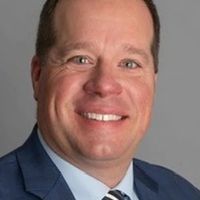
Ohio House of Representatives District 43 is represented by Rodney Creech (R).
As of the 2020 Census, Ohio state representatives represented an average of 119,186 residents. After the 2010 Census, each member represented 116,530 residents.
About the office[edit]
Members of the Ohio House of Representatives serve two-year terms with term limits.[1] Representatives may serve no more than four consecutive terms. Ohio legislators assume office the first day of January after a general election.[2][3]
Qualifications[edit]
Article 2, Section 3 of the Ohio Constitution states: "Senators and representatives shall have resided in their respective districts one year next preceding their election, unless they shall have been absent on the public business of the United States, or of this state."
Article 2, Section 5 of the Ohio Constitution states: "No person hereafter convicted of an embezzlement of the public funds, shall hold any office in this state; nor shall any person, holding public money for disbursement, or otherwise, have a seat in the General Assembly, until he shall have accounted for, and paid such money into the treasury."
Salaries[edit]
- See also: Comparison of state legislative salaries
| State legislators | |
|---|---|
| Salary | Per diem |
| $67,492/year | No per diem is paid. |
Term limits[edit]
- See also: State legislatures with term limits
The Ohio legislature is one of 15 state legislatures with term limits. Voters enacted the Ohio Term Limits Act in 1992. That initiative limited Ohio representatives to no more than four two-year terms, or a total of eight years.[4]
The first year that term limits were enacted was in 1992, and the first year that term limits impacted the ability of incumbents to run for office was in 2000.
Vacancies[edit]
If there is a vacancy in the Ohio General Assembly, the vacancy must be filled by an election conducted by the members of the legislative house where the vacancy happened who are members of the party that last held the seat. A simple majority vote is needed in order to approve a replacement.[5]
 See sources: Ohio Const. Art. 2, Sec. 11
2016 pivot county[edit]

This district is one of 710 state legislative districts that intersects with one or more Pivot Counties. These 206 Pivot Counties voted for Donald Trump (R) in 2016 after voting for Barack Obama (D) in 2008 and 2012.
The 206 Pivot Counties are located in 34 states. Iowa, with 31, had the most such counties. The partisan makeup of state legislative districts intersecting with Pivot Counties is slightly more Republican than the overall partisan makeup of state legislatures throughout the country.[6]
District map[edit]
The map below shows this district's current boundaries, not those enacted as part of the 2020 redistricting cycle.
Redistricting[edit]
2020-2021[edit]
The Ohio Redistricting Commission approved new state legislative district maps by a 5-2 vote on September 16, 2021. The two Democratic members of the commission, state Rep. Emilia Sykes (D) and state Sen. Vernon Sykes (D), dissented.[7] Senate President Matt Huffman (R), a member of the commission, estimated that the new maps would create 62 Republican seats and 37 Democratic seats in the House, and 23 Republican seats and 10 Democratic seats in the Senate. Cleveland.com reported that Democrats on the commission agreed with Huffman's Senate estimates, but said the new House map would create 65 Republican seats and 34 Democratic seats.[7]
On January 12, 2022, the Ohio Supreme Court ruled against the state's enacted legislative maps, ordering the Ohio Redistricting Commission to redraw them within 10 days.[8] The commission voted to approve a new set of maps in a 5-2 vote on January 22. Click here to view the House map, and click here to view the Senate map.
On February 7, 2022, the Ohio Supreme Court rejected the state's redrawn legislative maps and ordered the Ohio Redistricting Commission to submit new maps.[9][10] The commission did not meet the February 17 deadline.[11] On February 24, the Ohio Redistricting Commission voted 4-3 to approve new legislative maps. The maps can be viewed here. State Auditor Keith Faber (R) joined the two Democratic members of the commission in voting against the maps.[12]
On March 7, the Ohio Supreme Court rejected redrawn legislative maps and ordered the Ohio Redistricting Commission to draw new maps by March 28.[13] On March 22, the commission agreed to appoint two independent consultants to assist in the map-making process.[14] State Sen. Vernon Sykes (D) nominated University of Florida political science professor Michael McDonald and state Rep. Bob Cupp (R) nominated National Demographics Corporation president Douglas Johnson.[15] On March 28, the Ohio Redistricting Commission approved new state legislative district boundaries in a 4-3 vote. DeWine, La Rose, Huffman, and Cupp voted to approve the new boundaries, and Russo, Sykes, and Faber voted against.[16] If approved by the Ohio Supreme Court, these maps will take effect for Ohio's 2022 elections. The commission approved maps it had drawn after voting to bypass maps drawn by the independent consultants.[17] Click here to view the maps.
Click here to read more about the court challenges to Ohio's congressional and legislative maps after the 2020 census.
How does redistricting in Ohio work?
Congressional redistricting procedures in Ohio[edit]
On May 8, 2018, voters in Ohio approved a constitutional amendment establishing new procedures for congressional redistricting. Beginning with the 2020 redistricting cycle, the following provisions were set to take effect:[18][19]
- Following completion of the United States Census, state legislators can adopt a new congressional district map if three-fifths of the legislature's total membership vote to approve, including one-half of the minority party members. This map would apply for 10 years.
- If the legislature proves unable to adopt a new map, a commission will be formed to adopt a map. That commission will include the governor, state auditor, secretary of state, and four legislators, two of whom must come from the legislature's minority party. A majority of the commission's members, including two members belonging to the minority party, must agree on a map. The map would apply for 10 years.
- If the commission proves unable to adopt a map, state legislators will be given a second chance to adopt a map. The map would have to be approved by three-fifths of the legislature's total membership, including one-third of the minority party's members. The map would apply for 10 years.
- If the legislature fails a second time, the majority party of the legislature, without support from the minority party, can adopt a map that would apply for four years.
Maps drawn by the legislature can be vetoed by the governor or a veto referendum campaign. The amendment stipulates that 65 of Ohio's counties cannot be split during redistricting (18 can be split once, and the state's five most populous counties can be split twice).[18][19]
State legislative redistricting procedures in Ohio[edit]
On November 3, 2015, voters in Ohio approved a constitutional amendment to create a bipartisan state legislative redistricting commission. The commission comprises seven members: the governor, state auditor, secretary of state, one person appointed by the speaker of the Ohio House of Representatives, one person appointed by the House leader of the largest political party of which the speaker is not a member, one person appointed by the President of the Ohio State Senate, and one person appointed by the Senate leader of the largest political party of which the president is not a member.[20][21]
Maps drawn by the commission are valid for 10 years if at least two commissioners from each major political party vote for them. Should the maps be passed along strictly partisan lines, the maps are valid for four years.[20][21]
A six-member advisory commission is also involved in the congressional and state legislative redistricting processes. The majority leaders of the Ohio House of Representatives and the Ohio State Senate each appoint three members, "at least one of whom must be from a different party, and at least one of whom must not be a legislator."[22]
All legislative districts are required to be compact and made of "contiguous territory." Also, the "boundary of each district [must] be a single nonintersecting continuous line." The amendment forbids district plans from favoring or disfavoring either political party.[20][21]
Elections[edit]
2022[edit]
The primary will occur on May 3, 2022. The general election will occur on November 8, 2022. General election candidates will be added here following the primary.
Democratic primary for Ohio House of Representatives District 43
Michele Grim and Daniel Ortiz are running in the Democratic primary for Ohio House of Representatives District 43 on May 3, 2022.
Candidate |
||
|
|
Michele Grim | |
|
|
Daniel Ortiz | |


|
||||
 = candidate completed the Ballotpedia Candidate Connection survey. = candidate completed the Ballotpedia Candidate Connection survey. | ||||
Do you want a spreadsheet of this type of data? Contact our sales team. |
||||

Republican primary for Ohio House of Representatives District 43
Wendi Hendricks and Kristi Kille are running in the Republican primary for Ohio House of Representatives District 43 on May 3, 2022.
Candidate |
||
|
|
Wendi Hendricks | |
|
|
Kristi Kille | |
|
||||
| = candidate completed the Ballotpedia Candidate Connection survey. | ||||
Do you want a spreadsheet of this type of data? Contact our sales team. |
||||
2020[edit]
General election for Ohio House of Representatives District 43
Rodney Creech defeated Amy Cox in the general election for Ohio House of Representatives District 43 on November 3, 2020.
Candidate |
% |
Votes |
||
| ✔ |
|
Rodney Creech (R) |
54.2
|
31,463 |
|
|
Amy Cox (D)
|
45.8
|
26,552 | |

|
Total votes: 58,015 | |||
| = candidate completed the Ballotpedia Candidate Connection survey. | ||||
Do you want a spreadsheet of this type of data? Contact our sales team. |
||||
Democratic primary for Ohio House of Representatives District 43
Amy Cox advanced from the Democratic primary for Ohio House of Representatives District 43 on April 28, 2020.
Candidate |
% |
Votes |
||
| ✔ |
|
Amy Cox
|
100.0
|
6,664 |
|
Total votes: 6,664 | |||
| = candidate completed the Ballotpedia Candidate Connection survey. | ||||
Do you want a spreadsheet of this type of data? Contact our sales team. |
||||
Republican primary for Ohio House of Representatives District 43
Rodney Creech defeated incumbent Jeffrey Todd Smith (Unofficially withdrew) in the Republican primary for Ohio House of Representatives District 43 on April 28, 2020.
Candidate |
% |
Votes |
||
| ✔ |
|
Rodney Creech |
65.5
|
5,359 |
|
|
Jeffrey Todd Smith (Unofficially withdrew) |
34.5
|
2,817 | |

|
Total votes: 8,176 | |||
| = candidate completed the Ballotpedia Candidate Connection survey. | ||||
Do you want a spreadsheet of this type of data? Contact our sales team. |
||||
2018[edit]
General election for Ohio House of Representatives District 43
Incumbent Jeffrey Todd Smith defeated Dan Foley in the general election for Ohio House of Representatives District 43 on November 6, 2018.
Candidate |
% |
Votes |
||
| ✔ |
|
Jeffrey Todd Smith (R) |
50.2
|
22,388 |
|
|
Dan Foley (D) |
49.8
|
22,251 | |

|
Total votes: 44,639 | |||
| = candidate completed the Ballotpedia Candidate Connection survey. | ||||
Do you want a spreadsheet of this type of data? Contact our sales team. |
||||
Democratic primary for Ohio House of Representatives District 43
Dan Foley advanced from the Democratic primary for Ohio House of Representatives District 43 on May 8, 2018.
Candidate |
% |
Votes |
||
| ✔ |
|
Dan Foley |
100.0
|
5,009 |
|
Total votes: 5,009 | |||
| = candidate completed the Ballotpedia Candidate Connection survey. | ||||
Do you want a spreadsheet of this type of data? Contact our sales team. |
||||
Republican primary for Ohio House of Representatives District 43
Incumbent Jeffrey Todd Smith defeated Kenneth Henning in the Republican primary for Ohio House of Representatives District 43 on May 8, 2018.
Candidate |
% |
Votes |
||
| ✔ |
|
Jeffrey Todd Smith |
52.8
|
4,065 |
|
|
Kenneth Henning |
47.2
|
3,636 | |
|
Total votes: 7,701 | |||
| = candidate completed the Ballotpedia Candidate Connection survey. | ||||
Do you want a spreadsheet of this type of data? Contact our sales team. |
||||
2016[edit]
Elections for the Ohio House of Representatives took place in 2016. The primary election was held on March 15, 2016, and the general election was held on November 8, 2016. The candidate filing deadline was December 16, 2015.
Incumbent Jeff Rezabek defeated David Sparks in the Ohio House of Representatives District 43 general election.[23]
| Ohio House of Representatives, District 43 General Election, 2016 | ||||
|---|---|---|---|---|
| Party | Candidate | Vote % | Votes | |
| Republican |  Jeff Rezabek Incumbent Jeff Rezabek Incumbent |
59.87% | 32,614 | |
| Democratic | David Sparks | 40.13% | 21,860 | |
| Total Votes | 54,474 | |||
| Source: Ohio Secretary of State | ||||
David Sparks ran unopposed in the Ohio House of Representatives District 43 Democratic primary.[24][25]
| Ohio House of Representatives District 43, Democratic Primary, 2016 | ||||
|---|---|---|---|---|
| Party | Candidate | Vote % | Votes | |
| Democratic | David Sparks (unopposed) |
100.00% | 7,778 | |
| Total Votes | 7,778 | |||
Incumbent Jeff Rezabek ran unopposed in the Ohio House of Representatives District 43 Republican primary.[24][25]
| Ohio House of Representatives District 43, Republican Primary, 2016 | ||||
|---|---|---|---|---|
| Party | Candidate | Vote % | Votes | |
| Republican | Jeff Rezabek Incumbent (unopposed) |
100.00% | 12,668 | |
| Total Votes | 12,668 | |||
2014[edit]
Elections for the Ohio House of Representatives took place in 2014. A primary election took place on May 6, 2014. The general election was held on November 4, 2014. The signature filing deadline for candidates wishing to run in this election was February 5, 2014. Incumbent Roland Winburn was unopposed in the Democratic primary, while Jeff Rezabek was unopposed in the Republican primary. Winburn was defeated by Rezabek in the general election.[26]
| Ohio House of Representatives, District 43 General Election, 2014 | ||||
|---|---|---|---|---|
| Party | Candidate | Vote % | Votes | |
| Republican | Jeff Rezabek |
57.6% | 18,707 | |
| Democratic | Roland Winburn Incumbent | 42.4% | 13,793 | |
| Total Votes | 32,500 | |||
2012[edit]
Elections for the office of Ohio House of Representatives consisted of a primary election on March 6, 2012, and a general election on November 6, 2012. The signature filing deadline for candidates wishing to run in this election was December 7, 2011. Incumbent Roland Winburn (D) defeated Joyce Marie Deitering (R) in the general election. Both candidates were unopposed in the March 6 primary elections.[27][28]
| Ohio House of Representatives, District 43, General Election, 2012 | ||||
|---|---|---|---|---|
| Party | Candidate | Vote % | Votes | |
| Democratic | Roland Winburn Incumbent |
54.1% | 30,020 | |
| Republican | Joyce Marie Deitering | 45.9% | 25,511 | |
| Total Votes | 55,531 | |||
Campaign contributions[edit]
From 2000 to 2018, candidates for Ohio House of Representatives District 43 raised a total of $4,468,379. Candidates who raised money in contributions earned $178,735 on average. All figures come from Follow the Money
| Campaign contributions, Ohio House of Representatives District 43 | |||
|---|---|---|---|
| Year | Amount | Candidates | Average |
| 2018 | $384,819 | 2 | $192,410 |
| 2016 | $423,239 | 2 | $211,620 |
| 2014 | $812,215 | 2 | $406,108 |
| 2012 | $658,743 | 2 | $329,372 |
| 2010 | $837,515 | 3 | $279,172 |
| 2008 | $107,409 | 2 | $53,705 |
| 2006 | $217,067 | 3 | $72,356 |
| 2004 | $203,262 | 2 | $101,631 |
| 2002 | $592,105 | 2 | $296,053 |
| 2000 | $232,005 | 5 | $46,401 |
| Total | $4,468,379 | 25 | $178,735 |
See also[edit]

- Ohio General Assembly
- Ohio State Senate
- Ohio House of Representatives
- Ohio state legislative districts
External links[edit]
Footnotes[edit]
- ↑ termlimits.org, "List of state legislative term limits," accessed December 18, 2013
- ↑ Ohio Constitution, "Article 2, Section 02," accessed November 1, 2021
- ↑ [https://www.lsc.ohio.gov/documents/reference/current/guidebook/17/Guidebook.pdf Ohio.gov, "A Guidebook for Ohio Legislators," accessed November 1, 2021]
- ↑ National Conference of State Legislatures, "Chart of states with term limits," accessed February 16, 2021
- ↑ Ohio Legislature, "Ohio Constitution," accessed February 15, 2021 (Article II, Section 11)
- ↑ The raw data for this study was provided by Dave Leip of Atlas of U.S. Presidential Elections.
- ↑ 7.0 7.1 Cleveland.com, "Ohio Redistricting Commission approves new state legislative maps that maintain Republican supermajority despite anti-gerrymandering reforms," September 16, 2021
- ↑ Court News Ohio, "New Ohio Legislative District Maps Unconstitutional," January 12, 2022
- ↑ Court News Ohio, "Revised Ohio House and Senate Maps Still Unconstitutional and Must Be Re-Drawn," February 7, 2022
- ↑ Ohio Supreme Court, "League of Women Voters of Ohio v. Ohio Redistricting Comm.", February 7, 2022
- ↑ Cite error: Invalid
<ref>tag; no text was provided for refs namedcap217 - ↑ Cleveland.com, "Ohio Redistricting Commission approves state legislative map plan, again," February 25, 2022
- ↑ Cite error: Invalid
<ref>tag; no text was provided for refs namedcno3 - ↑ Tribune Chronicle, "Tue. 11:38 a.m.: Ohio mapmakers to meet on 4th set of statehouse districts," March 22, 2022
- ↑ WOSU, "Ohio Redistricting Commission will bring in two consultants to develop new Statehouse maps," March 22, 2022
- ↑ Cleveland.com, "Republicans on Ohio Redistricting Commission approve slightly revised version of rejected map, abandon bipartisan plan," March 28, 2022
- ↑ Cleveland.com, "Ohio Supreme Court again orders redistricting commission members to explain why they shouldn’t be held in contempt," March 30, 2022
- ↑ 18.0 18.1 Cincinnati.com, "Everyone complains about congressional gerrymandering. Ohio just did something about it." February 6, 2018
- ↑ 19.0 19.1 The Ohio Legislature, "Senate Joint Resolution 5," accessed February 6, 2018
- ↑ 20.0 20.1 20.2 Ohio Secretary of State, "House Joint Resolution Number 12," accessed April 21, 2015
- ↑ 21.0 21.1 21.2 Ohio Legislative Service Commission, "HJR 12 Final Analysis ," accessed April 21, 2015
- ↑ All About Redistricting, "Ohio," accessed May 8, 2015
- ↑ Ohio Secretary of State, "Official election results," accessed December 21, 2016
- ↑ 24.0 24.1 Ohio Secretary of State, "Candidate Listing By Office," accessed February 8, 2016
- ↑ 25.0 25.1 Ohio Secretary of State, "2016 Official Elections Results," accessed August 29, 2016
- ↑ Ohio Secretary of State, "Official primary election results for May 6, 2014," accessed July 3, 2014
- ↑ Ohio Secretary of State, "Official 2012 General Election Results,” accessed October 25, 2013
- ↑ Ohio Chamber of Commerce, "2012 General Assembly Primary Candidates," January 17, 2012

Categories: [State house districts] [Ohio] [State_legislative_districts]
↧ Download as ZWI file | Last modified: 04/02/2022 07:55:24 | 7 views
☰ Source: https://ballotpedia.org/Ohio_House_of_Representatives_District_43 | License: CC BY-SA 3.0
 ZWI signed:
 KSF
KSF