Massachusetts Authorization Of Additional Charter Schools And Charter School Expansion, Question 2 (2016)
 From Ballotpedia
 | Massachusetts Question 2 | |
|---|---|
 | |
| Election date November 8, 2016 | |
| Topic Charter schools and vouchers | |
Status Defeated Defeated | |
| Type State statute | Origin Citizens |
| 2016 measures |
|---|
 |
| November 8 |
| Question 1 |
| Question 2 |
Question 3  |
| Question 4 |
| Polls |
| Voter guides |
| Campaign finance |
| Signature costs |
The Massachusetts Authorization of Additional Charter Schools and Charter School Expansion Initiative, also known as Question 2, was on the November 8, 2016, ballot in Massachusetts as an indirect initiated state statute. It was defeated.
| A "yes" vote supported this proposal to authorize up to 12 new charter schools or enrollment expansions in existing charter schools by the state Board of Elementary and Secondary Education per year. |
| A "no" vote opposed this proposal to authorize up to 12 new charter schools or enrollment expansions in existing charter schools, thereby maintaining the current charter school cap.[1] |
Contents
Election results[edit]
| Question 2 | ||||
|---|---|---|---|---|
| Result | Votes | Percentage | ||
| No | 2,025,840 | 61.96% | ||
| Yes | 1,243,665 | 38.04% | ||
- Election results from Massachusetts Secretary of the Commonwealth
Aftermath[edit]
A lawsuit was filed in Suffolk Superior Court in September 2015 by lawyers representing five Boston students who wanted to raise the state's cap on public charter schools. The students argued that the state's limits on charter schools violated the Massachusetts Constitution and impeded their ability to seek a quality education. On April 24, 2018, the Massachusetts Supreme Judicial Court upheld the Suffolk Superior Court ruling to dismiss the lawsuit. Tim Nicolette, executive director of the Massachusetts Charter School Association, said, "There's no doubt that in the past year and a half the charter school movement has lost ground politically. We need to rebuild." Barbara Madeloni, president of the Massachusetts Teachers Association said, "They filed charter expansion bills, which have been rejected by the Legislature. They spent tens of millions of dollars backing Question 2, which was soundly rejected by the voters. And they filed this lawsuit, which has such weak claims that the SJC won’t even allow it to go to trial."[2][3]
Overview[edit]
Although legislation had been introduced or passed by the Massachusetts State Legislature, Question 2 was the first measure relating to school choice in Massachusetts ballot measure history.
Question 2 would have given the state Board of Elementary and Secondary Education the authority to approve 12 new charter schools or to expand existing charter schools as a result of increased enrollment each year beginning on January 1, 2017. Priority would have been given to those charter school applicants who sought to open a charter school in public school districts that were in the bottom 25 percent in the two years before application. Further, the board would have established standards by which annual performance reviews would have been judged.
Text of measure[edit]
Ballot question[edit]
The question was on the ballot as follows:[4]
| “ | Question 2. Law proposed by initiative petition. Do you approve of a law summarized below, on which no vote was taken by the Senate or House of Representatives on or before May 3, 2016?[5] | ” |
Petition name[edit]
The petition name was as follows:[1]
| “ | An Act to Allow Fair Access to Public Charter Schools[5] | ” |
Ballot summary[edit]
The summary was as follows:[6]
| “ | This proposed law would allow the state Board of Elementary and Secondary Education to approve up to 12 new charter schools or enrollment expansions in existing charter schools each year.
Approvals under this law could expand statewide charter school enrollment by up to 1% of the total statewide public school enrollment each year. New charters and enrollment expansions approved under this law would be exempt from existing limits on the number of charter schools, the number of students enrolled in them, and the amount of local school districts’ spending allocated to them. If the Board received more than 12 applications in a single year from qualified applicants, then the proposed law would require it to give priority to proposed charter schools or enrollment expansions in districts where student performance on statewide assessments is in the bottom 25% of all districts in the previous two years and where demonstrated parent demand for additional public school options is greatest. New charter schools and enrollment expansions approved under this proposed law would be subject to the same approval standards as other charter schools, and to recruitment, retention, and multilingual outreach requirements that currently apply to some charter schools. Schools authorized under this law would be subject to annual performance reviews according to standards established by the Board. The proposed law would take effect on January 1, 2017. A Yes Vote would allow for up to 12 approvals each year of either new charter schools or expanded enrollments in existing charter schools, but not to extend 1% of the statewide public school enrollment. A No Vote would make no changes in current laws relative to charter schools.[5] |
” |
Full text[edit]
The full text of the measure was as follows:[1]
| “ | SECTION 1. Subsection (i) of section 89 of chapter 71 of the General Laws, as appearing in the 2014 Official Edition, is hereby amended by inserting after paragraph (4) the following new paragraph:—
(5) Notwithstanding the provisions of this subsection (i) relative to the number of charter schools allowed to operate in the commonwealth or in any district, the board may approve up to 12 additional commonwealth charters, commonwealth charter amendments to increase authorized enrollment, or a combination thereof per year; provided that the total enrollment authorized by all such approvals in a single fiscal year shall not exceed 1% of the total statewide public school enrollment for such year as determined by the board; provided further, that in the event that the number of qualified applicants in any year exceeds 12, the board shall give priority among such qualified applicants to those seeking to establish or expand enrollment in commonwealth charter schools in districts where overall student performance on the statewide assessment system approved by the board is in the bottom 25% of all districts in the two years preceding the charter application and where the demonstrated parent demand for additional public school options is greatest; provided further that the board shall apply to all such applicants review and approval standards as rigorous as those applied to all other commonwealth charter applicants; provided further that the recruitment and retention and multilingual outreach provisions of paragraph (3) shall apply to any commonwealth charter school authorized under this paragraph; and provided further that any new commonwealth charter schools authorized by this paragraph shall be subject to annual performance reviews according to standards established by the board. Nothing in this paragraph shall affect the issuance of commonwealth charters under paragraph (3). The percentages of net school spending set forth in paragraphs (2) and (3) shall not apply to or otherwise operate to limit the board’s authority to approve commonwealth charters or commonwealth charter amendments under this paragraph; provided, however, that such percentages shall continue to apply to commonwealth charters issued otherwise than under this paragraph. Except as provided in this paragraph, all otherwise applicable provisions of this section shall apply to commonwealth charters or amendments approved under this paragraph.[5] |
” |
Support[edit]

Great Schools Massachusetts: Yes on 2, a coalition of educators and community leaders, led the support for Question 2.[7][8]
Supporters[edit]

Coalition[edit]
The Yes on 2 website listed the following coalition members:[9]
|
Individuals[edit]
- Gov. Charlie Baker (R)[10]
- Sen. Michael Rodrigues (D-Plymouth)[10]
- Rep. Stephen Lynch (D)[11]
- Marc Kenen, executive director of the Massachusetts Charter School Association[12]
- Julia Mejia, an expert panel speaker at the Integrative Learning Center forum and a parent of students attending Brooke Charter Schools Boston[12]
- Marty Walz, former state representative[13]
Organizations[edit]
- Massachusetts Taxpayers Foundation[10]
- Democrats for Education Reform[10]
- Massachusetts Fiscal Alliance[10]
- Alliance for Business Leadership[14]
Arguments in favor[edit]
Eileen O’Connor, a spokesperson for Great Schools Massachusetts, said,[7]
| “ | Massachusetts voters are sending a clear message: every child deserves the same opportunity to attend a great public charter school in their community. If the legislature doesn’t take meaningful action by the end of session, we’re confident that the voters will take a stand for the 37,000 families that are stuck on public charter school waiting lists.[5] | ” |
Jeff Bussgang, chairman of the Alliance for Business Leadership, said,[14]
| “ | Lifting the cap on public charters is a social justice issue. ... Massachusetts may have one of the best public school systems in the nation, but for too long the achievement gap has prevented our kids from reaching their true potential.[5] | ” |
William Kenen, executive director of the Massachusetts Charter School Association, said the following during a forum on Question 2 at the Integrative Learning Center:[12]
| “ |
This referendum question is focused entirely on our urban communities. This is not about suburbs, this is not about rural Western Mass. This is about cities in Massachusetts where children and families are struggling to get basic educational needs met.[5] |
” |
| Great Schools Massachusetts advertisement entitled "Governor Charlie Baker - YES on 2 HD" |
Julia Mejia, a parent of students at Brooke Charter Schools Boston, said the following during a forum on Question 2 at the Integrative Learning Center:[12]
| “ |
If the cap doesn’t get lifted that’s going to be less opportunities and resources for families to get out. It would be a devastating blow for those seeking opportunity.[5] |
” |
Sephira Shuttlesworth, regional support director for SABIS Educational Systems, wrote the following:[15]
| “ |
But a November ballot initiative to allow more charter public schools to open or expand would go a long way toward providing those families with the educational opportunity they both desire and deserve. [...] A torrent of gold-standard, independent research has found that Massachusetts charter schools are closing the achievement gap between poor and minority kids and their wealthier peers. [...] If Massachusetts voters approve more charter schools this November, it will bring Fred Shuttlesworth's words to life and prove that the desire for equal educational opportunity is indeed a fire you can't put out.[5] |
” |
Marcus Winters, a Boston University School of Education associate professor of curriculum and teaching, wrote the following in BU Today:[16]
| “ |
Among the important decisions facing Massachusetts voters at the ballot box in November is whether to allow expansion of charter schools in low-performing (primarily urban) districts that are at or nearing the state’s enrollment cap. The evidence suggests strongly that the state’s students will benefit were voters to pass the referendum.[5] |
” |
Campaign videos[edit]
The Great Schools Massachusetts campaign released the following videos:
| A video featured by Great Schools Massachusetts called "Best in the Country" | The group launched its campaign in front of the State House in Boston. | A Great Schools Massachusetts advertisement called "Absurd" |
Opposition[edit]


Save Our Public Schools led the opposition campaign for Question 2.[10][17]
Opponents[edit]
The Save our Public Schools campaign website listed opponents for Question 2. The full list can be found here.[18]
Organizations
School committees
Town and City Councils, Boards of Selectmen and Aldermen
Democratic committees
|
Other opponents[edit]
- Former Democratic presidential candidate and U.S. Sen. Bernie Sanders[19][20]
- U.S. Sen. Elizabeth Warren (D)[21]
- Former governor Michael Dukakis (D)[22]
- Burlington Educators' Association[23]
- Building and Construction Trades Council of the Metropolitan District[11]
- Greenfield Town Council appointments and ordinances subcommittee[24]
- William Diehl, executive director of Collaborative for Educational Services[12]
- Barbara Madeloni, President of the Massachusetts Teachers Association[12]
- Paul Schlichtman, Massachusetts Association of School Committees member[13]
Arguments against[edit]
Marty Walsh, mayor of Boston, said the following at a public hearing hosted by the Joint Committee on Education:[25]
| “ | To put it simply, this proposal does not provide for the substantial charter school growth that the proponents seeks. ... It would instead wreak havoc on our municipal finances.[5] | ” |
Save Our Public Schools released a statement that said,[10]
| “ | Every time a new charter school opens or expands, it takes funding away from the public schools in that area. Under this proposal, the number of charter schools in Massachusetts would nearly triple in just 10 years, costing local public school districts more than $1 billion every single year.[5] | ” |
Diana Marcus, president of the Burlington Educators' Association, said,[23]
| “ | Allowing 12 additional charter schools per year and allowing the number of Massachusetts charter schools to double in six years, will remove the requirement that charter schools locate in our lowest performing districts, opening up towns like Burlington for lucrative sources of income. Imagine the impacts of loss in funding to our district’s student programs.[5] | ” |
Elizabeth Warren, a U.S. Democratic senator, said the following:[21]
| “ |
I will be voting no on Question 2. Many charter schools in Massachusetts are producing extraordinary results for our students, and we should celebrate the hard work of those teachers and spread what's working to other schools, [...] But after hearing more from both sides, I am very concerned about what this specific proposal means for hundreds of thousands of children across our Commonwealth, especially those living in districts with tight budgets where every dime matters. Education is about creating opportunity for all our children, not about leaving many behind.[5] |
” |
Tito Jackson, education committee chairman for the Boston City Council, noted that the amendment might have an impact on funding for existing schools during a panel discussion, saying the following:[26]
| “ |
We are talking about taking funding away from existing schools and moving funding to schools that don’t even exist yet [...] It is 12 new commonwealth charter schools each year, every year, anywhere, forever.[5] |
” |
Barbara Madeloni, president of the Massachusetts Teachers Association, said the following during a forum on Question 2 at the Integrative Learning Center:[12]
| “ |
I think a ‘yes’ vote really puts us in the position to profoundly undermine public education…If we were to pass this we would be losing 100 million more each year in perpetuity. That would eventually destabilize public schools. Districts are going to have to start making cuts. Those cuts are real whether it’s art, librarian, music, [or] language programs.[5] |
” |
Alexandra Griffin, a contributing writer for The Williams Record, wrote the following:[27]
| “ |
Education in Massachusetts should be a public good, guaranteed to all, guided by public values and accountable to local communities. Lifting the cap on charter schools in Massachusetts opens the door to increased privatization, creating educational institutions governed by the rules of the market, with little obligation to respond to the values or needs of the communities they are in. Stand with the students, teachers, staff, unions and other public school stakeholders and vote no on this ballot initiative. It is a critical move to protect and strengthen Massachusetts public schools.[5] |
” |
Adam Cordio, president of the Fitchburg Education Association, wrote the following:[28]
| “ |
I am urging you to vote 'no' on Question 2 because it is bad policy for public education. Charter schools are privately operated and publicly funded. Here in Fitchburg, we send more than $2 million from our school budget to charter schools. None of our locally elected leaders, including the School Committee, has any authority over the operation of the charter schools financed by our tax dollars.[5] |
” |
Campaign videos[edit]
The Save Our Public Schools campaign released the following videos:
| A video featured by Save Our Public Schools called "$400 Million" | A video discussing public school and charter school funding | A video created by Save Our Public Schools called "Not Public Schools" |
Media editorials[edit]
Support[edit]
- The Boston Globe editorial board endorsed a "yes" vote on Question 2:[29]
| “ |
Voters have the chance to continue a successful strategy in public education by approving Question 2, which would allow the state to continue expanding public charter schools in the communities that need them most, including Boston. [...] Massachusetts has been a leader in public education for centuries; the commitment to cherish education is even written into the state constitution. In that spirit, the Globe endorses 'yes' on Question 2, in the hope that it will write the next chapter in one of the Commonwealth’s great success stories.[5] |
” |
- The Metrowest Daily News editorial board endorsed a "yes" vote on Question 2:[30]
| “ |
Instead, the debate over Question 2, which would allow the expansion of charter schools in low-performing districts where they are capped by state law, has been all about money. What’s best for children has been all but ignored. [...] We support more funding for education, distributed according to a more equitable formula. But we must not sacrifice the state’s neediest children on the altar of district school budgets. We urge a YES vote on Question 2.[5] |
” |
- The Harvard Crimson editorial board wrote the following:[31]
| “ |
Our support for Question 2 is grounded in the belief that the 32,000 students on charters waitlists should not have to wait to access great schools with proven records. But a system that leaves this many students wanting better options is a system that needs more wholesale reform. We urge Massachusetts voters to approve Question 2, and then to keep the pressure on lawmakers for faster action to improve all of Massachusetts’ public schools.[5] |
” |
Opposition[edit]
Ballotpedia has not yet found any editorial board endorsements in opposition to Question 2. If you know of one, please email editor@ballotpedia.org.
Neutral[edit]
- The Daily Free Press wrote the following:[32]
| “ |
Education is an inherently complex and polarizing issue. After all, the intelligence and well-being of the next generation is being argued, if education is examined at its core. It is for this reason that The Daily Free Press’s editorial board did not come to a consensus on the best possible vote for Question 2 of the Massachusetts ballot questions.[5] |
” |
Background[edit]
- See also: Charter schools in Massachusetts
Charter schools in Massachusetts are public schools operated independently of public school systems, either by nonprofit or for-profit organizations. Although they are largely publicly funded, charter schools are exempt from many of the requirements imposed by state and local boards of education regarding hiring and curriculum. As public schools, charter schools cannot charge tuition or impose special entrance requirements; students are usually admitted through a lottery process if demand exceeds the number of spaces available in a school. Charter schools generally receive a percentage of the per-pupil funds from the state and local school districts for operational costs based on enrollment. In most states, charter schools do not receive funds for facilities or start-up costs; therefore, they must rely to some extent on private donations. The federal government also provides revenues through special grants.
According to the National Alliance for Public Charter Schools, a charter school advocacy group, there were an estimated 81 total charter schools in Massachusetts in the 2015-2016 school year. These schools enrolled approximately 40,300 students. Overall, charter school students accounted for 4.28 percent of total public school enrollment in Massachusetts in 2015. The Massachusetts State Legislature approved the state's charter school law in 1993.
Polls[edit]
| Massachusetts Charter School Expansion | |||||||||||||||||||
|---|---|---|---|---|---|---|---|---|---|---|---|---|---|---|---|---|---|---|---|
| Poll | Support | Oppose | Undecided | Margin of error | Sample size | ||||||||||||||
| Western New England University 10/23/2016-11/2/2016 | 40% | 49% | 10% | +/-4.5 | 470 | ||||||||||||||
| Suffolk University/Boston Globe 10/24/2016-10/26/2016 | 45.4% | 45.4% | 8.6% | +/-4.4 | 500 | ||||||||||||||
| WBUR/MassInc 9/7/2016 - 9/10/2016 | 41% | 48% | 11% | +/-4.4 | 506 | ||||||||||||||
| WBZ/UMass Amherst 9/15/2016 - 9/20/2016 | 49% | 39% | 12% | +/-4.3 | 700 | ||||||||||||||
| Suffolk University/Boston Globe 5/2/2016 - 5/5/2016 | 50.0% | 33.0% | 16.0% | +/-4.4 | 500 | ||||||||||||||
| Western New England University 4/1/2016 - 4/10/2016 | 51.0% | 26.0% | 23.0% | +/-4.0 | 497 | ||||||||||||||
| Mass Inc Polling Group 3/12/2016 - 3/17/2016 | 73.0% | 21.0% | 6.0% | +/-4.9 | 403 | ||||||||||||||
| UMass Amherst 2/19/2016 - 2/25/2016 | 51.0% | 23.0% | 26.0% | +/-4.1 | 891 | ||||||||||||||
| AVERAGES | 50.05% | 35.55% | 14.08% | +/-4.38 | 558.38 | ||||||||||||||
| Note: The polls above may not reflect all polls that have been conducted in this race. Those displayed are a random sampling chosen by Ballotpedia staff. If you would like to nominate another poll for inclusion in the table, send an email to editor@ballotpedia.org. | |||||||||||||||||||
Note: The margin of error for the WBZ/UMass Amherst poll was found in a separate CBS article.[33]
Note: The margin of error for the Suffolk University/Boston Globe poll was found in a separate article.[34]
Campaign finance[edit]
| Total campaign contributions: | |
| Support: | $25,087,540.06 |
| Opposition: | $17,228,189.61 |
As of January 23, 2017, the support campaign for Question 2 featured five ballot question committees, that raised a total of $25,087,540.06 in contributions, $24,171,439.28 in cash donations and $916,100.78 in in-kind services. The support campaign spent $24,958,712.42.[35]
As of January 23, 2017, the opposition campaign for Question 2 featured one ballot question committee, Save Our Public Schools, which raised $17,228,189.61 in contributions, $15,407,239.54 in cash donations and $1,820,950.07 in in-kind donations. The opposition campaign spent $17,009,617.12.
As of January 23, 2017, the top donor in support of the initiative, Families For Excellent Schools Advocacy, Inc., provided $17,379,189.74 of the campaign's total contributions. The top donor in opposition, the Massachusetts Teachers Association, provided $8,447,302.00 of the campaign's total contributions.[35]
Support[edit]
Cash donations[edit]
The following ballot question committees registered to support Question 2 as of January 23, 2017. The chart below shows cash donations and expenditures current as of January 23, 2017.[35]
- Note: Some of the committees contributed to other committees supporting the measure. These amounts were subtracted in the total below as to not count funds twice.
Strong Economy for Growth:
Strong Economy for Growth was registered as a non-profit—which do not have to disclose their donors—but the Massachusetts Office of Campaign and Political Finance (OCPF) determined that the group was actually operating as a ballot question committee and that it should have been filing reports required of ballot questions committees and disclosing donors. Strong Economy for Growth provided $990,000 to the campaign in support of Question 2—the charter school initiative—and $178,000 to the campaign in opposition to Question 4—the marijuana legalization initiative. In this article, since all of the group's ballot measure-related expenditures were in the form of contributions to other ballot question committees, it is listed as a donor rather than a committee. The OCPF fined the group $31,000 (all of its remaining funds), and required that the group agree to not campaign within the state in 2018. The top donors to the Strong Economy for Growth can be expanded below:[36]
| Top donors to Strong Economy for Growth | |
|---|---|
| Donor | Amount |
| QXZ, INC (Jeffrey Yass) | $600,000.00 |
| Andrew Balson | $200,000.00 |
| Julie Schauer | $200,000.00 |
| Subaru of New England | $50,000.00 |
| Gilbert Winn | $50,000.00 |
| EMC Corp | $25,000.00 |
| Lawrence Curtis | $25,000.00 |
| David Croll | $25,000.00 |
| Anthony DiNovi | $20,000.00 |
| Romney For President, Inc. | $20,000.00 |
| Committee | Amount raised[37] | Amount spent |
|---|---|---|
| Yes on Two | $710,100.00 | $710,100.00 |
| Campaign for Fair Access to Quality Public Schools | $2,418,576.82 | $2,394,667.08 |
| Great Schools Massachusetts | $21,691,325.75 | $21,586,407.85 |
| Expanding Educational Opportunities | $575,002.00 | $575,002.00 |
| Advancing Obama's Legacy on Charter Schools Ballot Committee | $722,040.00 | $722,040.00 |
| Total | $24,171,439.28 | $24,042,611.64 |
In-kind services[edit]
As of January 23, 2017, the ballot question committees registered to support this initiative received $916,100.78 in in-kind services. Families For Excellent Schools Advocacy, Inc. provided $849,689.74 of the in-kind services.[35]
Top donors[edit]
As of January 23, 2017, the following were the top donors in support of the initiative:[35]
| Donor | Amount |
|---|---|
| Families For Excellent Schools Advocacy, Inc. | $17,379,189.74 |
| Jim Walton | $1,125,000.00 |
| Strong Economy For Growth | $990,000.00 |
| Alice Walton | $750,000.00 |
| Michael Bloomberg | $490,000 |
Opposition[edit]
Cash donations[edit]
The following ballot question committee was registered to oppose Question 2 as of January 23, 2017. The chart below shows cash donations and expenditures current as of January 23, 2017.[35]
| Committee | Amount raised | Amount spent |
|---|---|---|
| Save Our Public Schools | $15,407,239.54 | $15,188,667.05 |
| Total | $15,407,239.54 | $15,188,667.05 |
In-kind services[edit]
As of January 23, 2017, Save Our Public Schools received $1,820,950.07 in in-kind services. The Massachusetts Teachers Association provided $1,689,203.00 in in-kind services.[35]
Top donors[edit]
As of January 23, 2017, the following were the top five donors in opposition to this initiative:[35]
| Donor | Amount |
|---|---|
| Massachusetts Teachers Association | $8,447,302.00 |
| National Education Association Ballot Measure/Legislative Crisis Fund | $3,000,000.00 |
| National Education Association | $2,400,000.00 |
| American Federation of Teachers | $2,124,848.00 |
| AFT Massachusetts, AFL-CIO | $617,949.69 |
Methodology[edit]
To read Ballotpedia's methodology for covering ballot measure campaign finance information, click here.
Path to the ballot[edit]
Since Massachusetts employs an indirect initiative process, the state's general court has an opportunity to adopt proposed laws before they move to a popular vote. However, unlike other states, Massachusetts requires additional signatures following legislative inaction on state statutes. Initiative amendments must be approved by a quarter of the legislature to reach the ballot.
For an amendment or statute, submitted signatures must equal 3 percent of votes cast for governor in the most recent gubernatorial election, excluding blanks. If the legislature declines to act on a proposed statute, supporters are required to collect a second round of signatures totaling 0.5 percent of the votes last cast for governor, excluding blanks. For proposed amendments, one-quarter of the legislature must approve the petition in a joint session—a second round of signatures is not required and does not overrule rejection by more than three-quarters of the legislature.
Supporters had until December 2, 2015, to submit at least 64,750 valid signatures. A total of 70,716 signatures were submitted to the secretary of state's office and were certified mid-December 2015. Next, the proposal was put before the Legislature. May 3, 2016, was the deadline for the legislature to take action on the initiative.[38][39]
The legislature did not enact this initiative. To qualify it for the November 2016 election ballot, petitioners needed to collect another 10,792 signatures and submit them to local clerks by about June 22, 2016, so that the petitions could be submitted to the state by a legal deadline on July 6, 2016.[40]
Supporters submitted 30,200 signatures to local clerks on June 22, 2016.[41] William Galvin, secretary of the commonwealth, approved the signatures on July 6, 2016, certifying Question 2 for the November 8, 2016, ballot.[42]
Cost of signature collection:
Sponsors of the measure hired J.E.F. Associates to collect signatures for the petition to qualify this measure for the ballot. A total of $414,000 was spent to collect the 64,750 valid signatures required to put this measure before voters, resulting in a total cost per required signature (CPRS) of $6.39.[43]
State profile[edit]
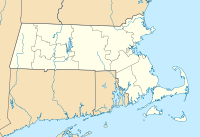
| Demographic data for Massachusetts | ||
|---|---|---|
| Massachusetts | U.S. | |
| Total population: | 6,784,240 | 316,515,021 |
| Land area (sq mi): | 7,800 | 3,531,905 |
| Race and ethnicity** | ||
| White: | 79.6% | 73.6% |
| Black/African American: | 7.1% | 12.6% |
| Asian: | 6% | 5.1% |
| Native American: | 0.2% | 0.8% |
| Pacific Islander: | 0% | 0.2% |
| Two or more: | 2.9% | 3% |
| Hispanic/Latino: | 10.6% | 17.1% |
| Education | ||
| High school graduation rate: | 89.8% | 86.7% |
| College graduation rate: | 40.5% | 29.8% |
| Income | ||
| Median household income: | $68,563 | $53,889 |
| Persons below poverty level: | 13.1% | 11.3% |
| Source: U.S. Census Bureau, "American Community Survey" (5-year estimates 2010-2015) Click here for more information on the 2020 census and here for more on its impact on the redistricting process in Massachusetts. **Note: Percentages for race and ethnicity may add up to more than 100 percent because respondents may report more than one race and the Hispanic/Latino ethnicity may be selected in conjunction with any race. Read more about race and ethnicity in the census here. | ||
Presidential voting pattern[edit]
Massachusetts voted for the Democratic candidate in all five presidential elections between 2000 and 2016.
More Massachusetts coverage on Ballotpedia
- Elections in Massachusetts
- United States congressional delegations from Massachusetts
- Public policy in Massachusetts
- Influencers in Massachusetts
- Massachusetts fact checks
- More...
See also[edit]


- Massachusetts 2016 ballot measures
- 2016 ballot measures
- Massachusetts Legislature
- List of Massachusetts ballot measures
- Charter schools in Massachusetts
- Fact check/Do Massachusetts charter schools "drain" funding from traditional public schools?
External links[edit]
Support[edit]
- Yes on 2 website
- Great Schools Massachusetts on Facebook
- Great Schools Massachusetts on Twitter
- Great Schools Massachusetts on Instagram
- Great Schools Massachusetts on YouTube
Opposition[edit]
- Save Our Public Schools website
- Save Our Public Schools on Facebook
- Save Our Public Schools on Twitter
- Save Our Public Schools on Instagram
- Save Our Public Schools on YouTube
Recent news[edit]
The link below is to the most recent stories in a Google news search for the terms Massachusetts Charter Schools Question 2. These results are automatically generated from Google. Ballotpedia does not curate or endorse these articles.
External links[edit]
Support[edit]
- Great Schools Massachusetts website
- Great Schools Massachusetts on Facebook
- Great Schools Massachusetts on Twitter
Opposition[edit]
Footnotes[edit]
- ↑ 1.0 1.1 1.2 Mass.gov, "15-31," accessed December 4, 2015
- ↑ Eagle Tribune, "Charter school supporters regrouping after series of legal, ballot box defeats," accessed May 7, 2018
- ↑ CBS Boston, "Lawsuit Seeks To Lift Cap On Massachusetts Charter Schools," accessed May 7, 2018
- ↑ MassLive.com, "Here are your Mass. ballot questions for Nov. 2016: Charter schools, marijuana, farm animal cruelty, and 2nd slot parlor," July 11, 2016
- ↑ 5.00 5.01 5.02 5.03 5.04 5.05 5.06 5.07 5.08 5.09 5.10 5.11 5.12 5.13 5.14 5.15 5.16 5.17 5.18 5.19 5.20 5.21 Note: This text is quoted verbatim from the original source. Any inconsistencies are attributable to the original source.
- ↑ Mass.gov, "15-31 summary," accessed December 4, 2015
- ↑ 7.0 7.1 The Bay State Banner, "Great Schools Massachusetts collects 100k signatures in support of ballot question to lift the cap on public charter schools," October 28, 2015
- ↑ Yes on 2, "Home," accessed November 7, 2016
- ↑ Yes on 2, "Coalition," accessed November 7, 2016
- ↑ 10.0 10.1 10.2 10.3 10.4 10.5 10.6 Herald News, "Sen. Rodrigues backs ballot question adding more charter schools to state," July 17, 2016
- ↑ 11.0 11.1 Telegram.com, "Across Massachusetts, sides dig in for charter school battle," September 27, 2016
- ↑ 12.0 12.1 12.2 12.3 12.4 12.5 12.6 Massachusetts Daily Collegian, "Community forum debates Question 2," October 19, 2016
- ↑ 13.0 13.1 Enterprise News, "Charter school cap debated in Weston forum," October 26, 2016
- ↑ 14.0 14.1 MassLive.com, "Progressive business group backs charter school expansion," July 21, 2016
- ↑ Lowell Sun, "Question 2: Educational civil rights for poor, minorities," October 18, 2016
- ↑ BU Today, "POV: Massachusetts Voters Should Vote Yes on Question 2," October 26, 2016
- ↑ Save Our Public Schools, "Home," accessed October 19, 2016
- ↑ Save Our Public Schools, "Save Our Public Schools Endorsements as of October 27, 2016," October 27, 2016
- ↑ CBS Local, "Bernie Sanders Weighs In On Mass. Charter School Ballot Question," November 2, 2016
- ↑ Boston.com, "Bernie Sanders jumps into Massachusetts’s charter school fight, opposes Question 2," November 2, 2016
- ↑ 21.0 21.1 MassLive, "Sen. Elizabeth Warren opposing Question 2 on charter schools," September 27, 2016
- ↑ Boston Blobe, "Both sides make final push on Question 2," November 5, 2016
- ↑ 23.0 23.1 Daily Times Chronicle, "BEA opposes charter school ballot question," August 15, 2016
- ↑ The Recorder, "Ordinance subcommittee backs anti-charter school resolution," October 10, 2016
- ↑ New Boston Post, "Charter cap, Common Core weighed by lawmakers," March 7, 2016
- ↑ The Harvard Crimson, "Panelists Spar Over Mass. Charter School Ballot Measure," September 28, 2016
- ↑ The Williams Record, "Voting ‘No’ on Question 2: Keeping the cap on charter schools in Massachusetts," October 19, 2016
- ↑ Sentinel & Enterprise, "FEA president urges 'no' vote on Question 2," November 3, 2016
- ↑ The Boston Globe, "Vote ‘yes’ on Question 2," October 30, 2016
- ↑ The Metrowest Daily News, "Editorial: Raise the cap on charter schools," October 15, 2016
- ↑ Harvard Crimson, "Vote Yes on Question 2," November 2, 2016
- ↑ The Daily Free Press, "Question 2 ENDORSEMENT: Charter schools are detrimental to public school systems, but can provide hope," October 26, 2016
- ↑ CBS Boston, "WBZ-UMass Poll: Voters Favor Legal Recreational Marijuana, But Have Reservations," September 28, 2016
- ↑ Boston Globe, "Voters split on charter schools, favor legal pot," October 27, 2016
- ↑ 35.0 35.1 35.2 35.3 35.4 35.5 35.6 35.7 Massachusetts Office of Campaign & Political Finance, "Ballot Question Reports," accessed November 29, 2016
- ↑ Mass Live, "Pro-charter school Massachusetts group fined for hiding 2016 campaign donors including Mitt Romney's campaign," January 2, 2018
- ↑ Note: The totals listed below do not include in-kind donations, which are detailed in a separate section below.
- ↑ The Millbury Sutton Chronicle, "Major signature hurdle cleared by seven ballot question campaigns," accessed December 23, 2015
- ↑ The Boston Herald, "Ballot initiative supporters face key deadline," November 29, 2015
- ↑ Sentinel & Enterprise, "New signature deadline in Mass. for ballot question backers," May 4, 2016
- ↑ MassLive.com, "Questions on marijuana, education, farm animals likely to make November ballot," June 22, 2016
- ↑ Masslive.com, "4 statewide questions make 2016 Massachusetts ballot," July 6, 2016
- ↑ Massachusetts Office of Campaign and Political Finance, "95424 Great Schools Massachusetts," accessed September 26, 2016
| |||||||||||
 |
State of Massachusetts Boston (capital) |
|---|---|
| Elections |
What's on my ballot? | Elections in 2021 | How to vote | How to run for office | Ballot measures |
| Government |
Who represents me? | U.S. President | U.S. Congress | Federal courts | State executives | State legislature | State and local courts | Counties | Cities | School districts | Public policy |
Categories: [Ballot measure article with polls]
↧ Download as ZWI file | Last modified: 12/24/2021 03:03:22 | 19 views
☰ Source: https://ballotpedia.org/Massachusetts_Authorization_of_Additional_Charter_Schools_and_Charter_School_Expansion,_Question_2_(2016) | License: CC BY-SA 3.0
 ZWI signed:
 KSF
KSF