Michigan Sales Tax Increase For Transportation Amendment, Proposal 1 (May 2015)
 From Ballotpedia
 | Proposal 1 | |
|---|---|
 | |
| Type | Amendment |
| Origin | Michigan Legislature |
| Topic | Taxes |
| Status | Defeated  |
The Michigan Sales Tax Increase for Transportation Amendment, Proposal 1 was on the May 5, 2015 ballot in Michigan as a legislatively referred constitutional amendment, where it was defeated. The measure's approval would have caused one constitutional amendment and 10 statutes to go into effect.[1]
A breakdown of each bill is provided lower on this page. The following points briefly outline what the total bills would have done together:[1]
First, Proposal 1 would have increased revenue for transportation funding by increasing the fuel tax to 41.7 cents or 14.9 percent of a gallon of fuel's base value, whichever is greater. It would have also required revenue from the fuel tax to be allocated to the transportation fund, eliminated registration fee discounts, increased heavy commercial vehicle registration fees and created an electric vehicle surcharge.
Second, Proposal 1 would have eliminated the sales and use tax on fuel for vehicles altogether. This would have offset some of the increases in fuel prices caused by a higher fuel tax.
Third, Proposal 1 would have increased the sales and use tax on non-fuel items from 6 percent to 7 percent. Since the sales tax on fuel provides a significant portion of sales tax revenue, this increase was designed to offset revenue losses to schools and municipalities, which depend on sales and use tax revenue.
Fourth, Proposal 1 would have allowed municipalities to finance road projects through competitive bidding, required performance-based evaluations for state projects, and required warranties for road construction projects costing more than $1 million.
Fifth, Proposal 1 would have increased the state's Earned Income Tax Credit from 6 percent to 20 percent.
The House Fiscal Agency estimated that the sales tax increase would have generated more than $1.6 billion per year, with $1.2 billion going towards roads, $130 million to mass transit, $300 million to the school aid fund and $95 million to local governments.[2]Contents
Proposal 1 was estimated to cost households, on average, between $477 and $545 in additional taxes per year. Households eligible for the Earned Income Tax Credit would have saved between $24 and $69 in taxes per year. The costs to households would have been contingent upon household incomes, future fuel prices and consumer choices, with those driving more or owning more cars paying more. The condition of Michigan’s transportation infrastructure costs motorists, on average, $539 to $686 per year and, according to TRIP, upwards of $1,600 in metro areas.[3]
The proposed amendment was introduced into the Michigan Legislature by Rep. Joe Haveman (R-90) as House Joint Resolution UU.[4]
Aftermath[edit]
Proposal 1's defeat was the worst defeat for a Michigan ballot measure since the current constitution was adopted in 1963. The previous record holder was Proposal 1, a 1980 constitutional amendment that 78.8 percent of voters voted against.[5]
Alternatives[edit]
While Proposal 1 was overwhelmingly defeated by voters, there is general consensus amongst elected officials that something must be done to increase transportation infrastructure spending in Michigan. Gov. Snyder (R), who campaigned in support of the proposal, commented:
| “ | While voters didn’t support this particular proposal, we know they want action taken to maintain and improve our roads and bridges. The ‘relentless’ part of relentless positive action means that we start anew to find a comprehensive, long-term solution to this problem. Doing nothing isn’t an option as the costs are too great.[6] | ” |
| —Gov. Rick Snyder[7] | ||
Republican responses
A Republican-supported plan that was debated in the Michigan House of Representatives would eliminate the Michigan Earned Income Tax Credit (EITC). About 780,500 taxpayers qualified for the EITC in 2013. Kyle DuBuc of the United Way for Southeastern Michigan criticized the proposal, saying, "If we're looking at paying for the roads by eliminating what is demonstrated to be one of the best pro-work and anti-poverty programs ever implemented by this or any other government, I think we're looking in the wrong place."[8] This plan would also see $729 million diverted from the general fund to transportation spending and $134 million from the Michigan Economic Development Corporation. House Speaker Kevin Cotter's (R-99) response to critics was "This is an exercise in needs and wants."[9]
The Michigan House approved the plan on June 10, 2015.[9]
Democratic responses
Democratic leaders in the legislature said they want a new proposal that would increase road funding, while not increasing the tax burden of middle-class households, through increasing the share of transportation revenue coming from wealthy households and businesses.[7] One way to do this, according to Rep. Jim Townsend (D-26), is to replace Michigan's flat income tax with a graduated tax.[10] Some Democrats have also suggested halving the state's limit on truck weights, which are the highest in the nation.[11]
Other responses
Organizations, newspapers and individuals outside government have made their own recommendations on how to increase transportation spending. The Michigan Association of Counties, after conducting polling, touted a 1 percent sales tax increase. Revenue from the extra 1 percent would be dedicated solely to transportation. However, this plan would require another ballot measure due to a change in the sales tax, which is something legislators are looking to avoid.[11] The Detroit Free Press editorial board argued that the fuel tax should be increased, specially along the lines of an earlier legislative proposal, without all the other parts Proposal 1 had.[12]
Election results[edit]
| Michigan Proposal 1 | ||||
|---|---|---|---|---|
| Result | Votes | Percentage | ||
| No | 1,406,019 | 80.07% | ||
| Yes | 349,862 | 19.93% | ||
Election results via: Michigan Secretary of State
Text of measure[edit]
Ballot title[edit]
The official ballot text was as follows:[13]
| “ | A proposal to amend the State Constitution to increase the sales/use tax from 6% to 7% to replace and supplement reduced revenue to the School Aid Fund and local units of government caused by the elimination of the sales/use tax on gasoline and diesel fuel for vehicles operating on public roads, and to give effect to laws that provide additional money for roads and other transportation purposes by increasing the gas tax and vehicle registration fees.
The proposed constitutional amendment would:
Should this proposal be adopted? |
” |
Constitutional changes[edit]
- See also: Article IX, Michigan Constitution
The measure would have amended Sections 8, 10 and 11 of Article IX of the Michigan Constitution.[14]
The amendment’s full text can be read here.
Background[edit]
- See also: Tax policy in Michigan
History of sales and use tax[edit]
Michigan's sales tax was enacted through Public Act 167 of 1933. The act provided for a 3 percent sales tax. In 1960, voters approved an amendment increasing the sales tax to 4 percent. In 1994, voters again agreed to increase the sales tax via Proposal A; this time to 6 percent. Michigan does not allow local sales taxes.[15]
The use tax was implemented in 1937. The use tax applies to "items that are rented, leased, or purchased from outside Michigan for use in Michigan." The use tax has always been the same rate as the sales tax.
State sales taxes[edit]
The constitutional amendment would have increased Michigan's sales tax rate to 7 percent. At 7 percent, Michigan's sales tax would have been the second highest in the United States, although tied with five other states. The average state sales tax was approximately 5.04 percent, and the median state sales tax was about 5.75 percent. As of January 1, 2015, California has the highest sales tax in the nation, at 7.50 percent, while five states have no sales tax.
The following sales tax rates are accurate as of January 1, 2015, according to the Sales Tax Institute.[16]
| State | 2015 sales tax | State | 2015 sales tax |
|---|---|---|---|
| Alabama | 4.00% | Nebraska | 5.50% |
| Alaska | 0.00% | Nevada | 6.85% |
| Arizona | 5.60% | New Hampshire | 0.00% |
| Arkansas | 6.50% | New Jersey | 7.00% |
| California | 7.50% | New Mexico | 5.125% |
| Colorado | 2.90% | New York | 4.00% |
| Connecticut | 6.35% | North Carolina | 4.75% |
| Delaware | 0.00% | North Dakota | 5.00% |
| Florida | 6.00% | Ohio | 5.75% |
| Georgia | 4.00% | Oklahoma | 4.50% |
| Hawaii | 4.00% | Oregon | 0.00% |
| Idaho | 6.00% | Pennsylvania | 6.00% |
| Illinois | 6.25% | Rhode Island | 7.00% |
| Indiana | 7.00% | South Carolina | 6.00% |
| Iowa | 6.00% | South Dakota | 4.00% |
| Kansas | 6.15% | Tennessee | 7.00% |
| Kentucky | 6.00% | Texas | 6.25% |
| Louisiana | 4.00% | Utah | 4.70% |
| Maine | 5.50% | Vermont | 6.00% |
| Maryland | 6.00% | Virginia | 4.30% |
| Massachusetts | 6.25% | Washington | 6.50% |
| Michigan | 6.00% | West Virginia | 6.00% |
| Minnesota | 6.875% | Wisconsin | 5.00% |
| Mississippi | 7.00% | Wyoming | 4.00% |
| Missouri | 4.225% | Washington, D.C. | 5.75% |
| Montana | 0.00% |
Price of gasoline[edit]

Under Michigan's current system of calculating gasoline per gallon prices, an 18.4 cent federal fuel tax is attached to a base price. A base price is what the gas distributor pays for the gas. A 6 percent sales tax is then added onto a value equivalent to the base price plus federal tax. Lastly, a 19 cent state fuel tax is added. For example, a gallon of gasoline with a base price of $1.00 would be $1.184 with the federal tax, $1.255 with the sales tax added in, and $1.445 with the state fuel tax. At this base price, the price a consumer would pay at the pump is $1.445.
The gasoline base price around April 1, 2015, was $2.799.[17]
The following table details gas per gallon prices under the current system:
| Base Value | $2.00 | $2.50 | $3.00 | $3.50 | $4.00 |
|---|---|---|---|---|---|
| Add federal fuel tax | $2.184 | $2.684 | $3.184 | $3.684 | $4.184 |
| Add state sales tax | $2.315 | $2.845 | $3.405 | $3.905 | $4.435 |
| Add state fuel tax | $2.505 | $3.035 | $3.595 | $4.095 | $4.625 |
| Price per gallon | $2.505 | $3.035 | $3.595 | $4.095 | $4.625 |
Under Proposal 1, an 18.4 cent federal fuel tax would have been attached to a base price. No sales tax would have been added. A fuel tax would have then been attached to the base price, not the base price plus the federal tax as in the current system, which would have been either a minimum 41.7 cents or 14.9 percent of the base price. The gasoline base price would have needed to be over $2.80 for the state fuel tax to be derived from the 14.9 percent formula, rather than the minimum 41.7 cents. For example, a gallon of gasoline with a base price of $1.00 would have been $1.184 with the federal tax and $1.601 with the state fuel tax added in. The price a consumer would have paid at the pump would have been $1.601.
The following table details gas per gallon prices under the Proposal 1 system:
| Base Value | $2.00 | $2.50 | $3.00 | $3.50 | $4.00 |
|---|---|---|---|---|---|
| Add federal fuel tax | $2.184 | $2.684 | $3.184 | $3.684 | $4.184 |
| Add state sales tax | - | - | - | - | - |
| Add state fuel tax | $2.601 | $3.101 | $3.631 | $4.206 | $4.780 |
| Price per gallon | $2.601 | $3.101 | $3.631 | $4.206 | $4.780 |
Cost to households[edit]
The Associated Press estimated that Proposal 1 would have cost households an average of $545 additional dollars in 2016. In 2017, that number would have fell to $474 when the Earned Income Tax Credit increased.[3]
The Institute on Taxation and Economic Policy estimated that households making between $40,000 to $64,000 a year would have spent an additional $267 per year. Those earning $20,000 or less would have had a net annual savings of $24. Households with incomes between $100,000 to $431,000 would have paid, on average, $497 to $697 more per year.
The Mackinac Center for Public Policy estimated that Proposal 1 would have cost households between $477 to $525 extra in taxes per year. Those receiving the Earned Income Tax Credit, however, would have saved $69.
The Anderson Economic Group proposed a couple scenarios to demonstrate how much Proposal 1 would have cost households. The following points are summaries produced by The Detroit News:
| “ |
|
” |
| —The Detroit News[3] | ||
The actual number of additional dollars spent by households under Proposal 1 would have been contingent upon household incomes, future fuel prices and consumer choices, such as what to purchase and how much of it. Patrick Anderson, CEO of Anderson Economic Group, explained, "It varies as much by behavior as by income. If you have multiple cars in your family and drive a lot and have a boat, you're getting hammered. If you don't drive a lot, have one car, don't have a boat, it doesn't affect you nearly as much."
Dave Waymire, a spokesperson for Safe Roads Yes!, argued that Proposal 1 would have saved most families money because Michigan roads cost drivers an average of $539 per year in damage repairs cost.[3] The American Society of Civil Engineers also found road conditions to cost Michigan drivers around $539 per year.[18] TRIP estimated that roads cost motorists $686 per year and between $1,032 and $1,600 per year in the state's major cities.[19][20]
Support[edit]

The campaign in support of the amendment was led by Safe Roads Yes![21]
Supporters[edit]
Officials[edit]
The following government officials voiced their support for the amendment:
- Gov. Rick Snyder (R)[22]
- Senate Majority Leader Randy Richardville (R-17)
- Senate Minority Leader Gretchen Whitmer (D-23)
- House Speaker Jase Bolger (R-63)
- Superintendent of Public Instruction Mike Flanagan[23]
- Sen. Jim Ananich (D-27)[24]
- Sen. Goeff Hansen (R-34)
- Sen. Curtis Hertel (D-23)
- Sen. Arlan Meekhof (R-30)
- Sen. Mike Shirkey (R-16)
- Sen. Rebekah Warren (D-18)
- Rep. Winnie Brinks (D-76)
- Rep. Kevin Cotter (R-99)
- Rep. George Darany (D-15)
- Rep. Brandon Dillon (D-75)
- Rep. Pam Faris (D-48)
- Rep. Christine Greig (D-37)
- Rep. Vanessa Guerra (D-95)
- Rep. Jon Hoadley (D-60)
- Rep. Marcia Hovey-Wright (D-92)
- Rep. Jeff Irwin (D-53)
- Rep. Robert Kosowski (D-16)
- Rep. Bill LaVoy (D-17)
- Rep. Leslie Love (D-10)
- Rep. Jeremy Moss (D-35)
- Rep. Kristy Pagan (D-21)
- Rep. Julie Plawecki (D-11)
- Rep. Al Pscholka (R-79)
- Rep. David Rutledge (D-54)
- Rep. Andy Schor (D-68)
- Rep. Sam Singh (D-69)
- Rep. Robert Wittenberg (D-27)
- Rep. Adam Zemke (D-55)
- Sault Ste. Marie City Commission[25]
Additionally, 94 representatives and 26 senators voted to place the measure on the ballot. A full list of legislators by how they voted on the amendment can be found here.
Former officials[edit]
Organizations[edit]
- Michigan Infrastructure and Transportation Association[27]
- Business Leaders for Michigan
- Michigan Municipal League
- Michigan Education Association
- Michigan Environmental Council
- Michigan Farm Bureau
- Michigan Townships Association
- Michigan Association of School Administrators[28]
- Michigan Association of School Boards
- Michigan Association of Intermediate School Administrators
- The Small Business Association of Michigan[29]
- AFL-CIO[26]
- Michigan Sierra Club
- Saginaw County Chamber of Commerce[30]
- Marquette County Road Commission[31]
- Utica Community Schools Board of Education[32]
Individuals[edit]
- Charles Ballard, Michigan State University economist[26]
Arguments[edit]
A Safe Roads Yes! advertisement, titled "Does," promoting Proposal 1. |
Safe Roads Yes!, the coalition that led the campaign in support of Proposal 1, explained why the proposal was needed on the group's website:
| “ | Michigan’s roads, bridges and highways were once the envy of the nation. The state that put the world on wheels built the country’s first concrete road over a century ago. Today, Michigan’s roads and bridges are dangerous. You see and feel their teeth-jarring, crumbling condition every time you drive. Our kids are on Michigan’s roads and bridges — riding in our family vehicles and in school buses. Parents have to constantly worry if their children are safe, and if the deteriorating roads are going to cause their teenage drivers to have accidents. As young drivers, they now learn how to safely avoid Michigan deer and Michigan potholes. Our public safety officers and firefighters are on the front lines of protecting our families and our property. Every day, they must respond to emergency calls by driving over crumbling, pot-holed roads and bridges that are a danger to motorists, and to those officers. Our farmers must travel miles out of their way to tend their crops because so many structurally unsafe rural bridges have been closed. Tourists drive a major part of Michigan’s economy. Today we welcome them with pothole-gutted roads and highways. Michigan can – and we must – do better. We’ve swerved to avoid a deep pothole. Most of the time nothing happens. But sometimes we end up in the ditch, or hitting another car. Someday someone will swerve and hit a school bus, or an ambulance. Or a pothole will send a driver careening into oncoming traffic – or a tree. The plywood fastened underneath overpasses to keep chunks of concrete from falling on our heads. Someday a chunk will fall off a bridge without plywood, or whole portions of a bridge will collapse Want to see how bad Michigan’s roads are? Just take a drive – and you’ll see! The roads aren’t just “bad.” They were bad 10 years ago. Now the condition of many of our roads and bridges is simply dangerous.[6] |
” |
| —Safe Roads Yes![33] | ||
A Safe Roads Yes! advertisement overviewing and promoting Proposal 1. |
Dick Bolen, President of the Michigan Municipal League Board of Trustees and mayor pro tem of the Wakefield City Council in Gogebic County, said the proposal was not perfect, but noted, "Nobody ever gets everything they want. But we take the best solution, implement it, and move forward." He argued passing Proposal 1 was important because:
| “ | Our roads are like the front lawn of our homes, sending a signal to businesses and residents about our community and state. A state that won't keep up its roads is not likely to keep up the rest of its infrastructure. Families and businesses looking for a new location want good basic public services-starting with roads.[6] | ” |
| —Dick Bolen[34] | ||
Gov. Rick Snyder (R) was interviewed by NPR's Robert Siegel about his support for Proposal 1. The following are two questions and answers from the interview:[35]
| “ | Siegel: You know, in Washington a tax increase is regarded by a lot of Republicans as a form of human rights abuse. What's different in Lansing?
Snyder: Well, we start with common sense. This shouldn't be about partisan politics, this is about what's doing best for the citizens. And in Michigan in particular, we had been under-investing for a number of years to the point where literally you mention the word crumbling infrastructure - we have cases where, for our bridges we're putting plywood up underneath a number of bridges to keep crumbling concrete from falling on vehicles. We have major potholes in the springtime in particular that create, you know, hazardous driving conditions for people. So this is an important investment that needs to be made and should've been made some time ago.[6] |
” |
| “ | Siegel: Sales and gas taxes are notoriously regressive taxes. That is, rich and poor people drive and they also buy necessities. Why not ask people with higher incomes and more property to pitch in more and pay more?
Snyder: We actually exclude a number of items from our retail sales tax. Food, for example, is a major exclusion, which helps address that. But also part of this package is we're bringing tax relief onto lower and middle-income people. For example, we're looking to raise approximately $1.2 billion or more for our roads. We're talking $200 million of tax relief to specifically address the question you talked about. And you mentioned other taxes, for example, the income tax in Michigan by constitution is proportional. So it can't be a graduated system.[6] |
” |
A Safe Roads Yes! advertisement. |
Chris Kolb, President of the Michigan Environmental Council, called for increased transportation spending to create a "successful future that will benefit us all." He elaborated:
| “ | Michigan’s economic future demands a whole, integrated transportation network, not a piecemeal approach. Transit is an essential piece of Michigan’s transportation system—one that provided 97 million trips in 2012—and is long overdue for new support. It hasn’t received a substantive funding increase since 1987. ...
People in places with good transit support it because they see how their investment builds economic strength and a desirable quality of life for everyone, not just transit riders. Every dollar invested in public transportation generates $4 in economic returns, according to the American Public Transportation Association. Michigan’s return on investment will only increase as the quality and convenience of our transit options expands. Transit helps ensure that everyone can share in and contribute to that economic success because it provides access to educational, employment and cultural opportunity[6] |
” |
| —Chris Kolb[36] | ||
Other arguments in support of the amendment included:
- Lt. Gov. Brian Calley (R) said, "This is a permanent, ongoing solution to something others have tried and failed to fix in the past. This is our shot. This is an opportunity to put this problem behind us."[37]
Campaign contributions[edit]
Total campaign cash  as of May 1, 2015 | |
 Support: Support:
|
$9,049,010 |
 Opposition: Opposition:
|
$519,138 |
The Safe Roads Yes! ballot measure committee raised a total of $9,049,010, as of May 1, 2015.[38]
The supporting campaign received roughly 18 times more in contributions than all the opposing campaign groups together.
PAC info:
| PAC | Amount raised | Amount spent |
|---|---|---|
| Safe Roads Yes! | $9,049,010 | $7,212,438 |
| Total | $9,049,010 | $7,212,438 |
The following is a list of those who contributed $50,000 or more to the campaign supporting Proposal 1:[38]
Top contributors:
| Donor | Amount |
|---|---|
| Michigan Infrastructure & Transportation Association | $5,468,240 |
| Powering the Economy | $325,000 |
| ITC Holdings Corp. | $250,000 |
| Michigan Energy First | $250,000 |
| Consumers Energy | $225,000 |
| Asphalt Pavement Association of Michigan | $200,000 |
| Michigan Laborers-Employers Cooperation & Education Trust Fund | $200,000 |
| Michigan Concrete Association | $148,000 |
| International Union of Operating Engineers, Local 324 | $135,000 |
| Angelo Iafrate Construction Co. | $100,000 |
| Blue Cross Blue Shield | $100,000 |
| Hoffman Bros Inc. | $100,000 |
| Kojaian Management Corporation | $100,000 |
| Michigan Health & Hospital Association | $100,000 |
| Michigan Manufacturers Association | $100,000 |
| Michigan Township Association | $100,000 |
| PVS Chemicals | $75,000 |
| 42 North Partners | $50,000 |
| Alticor | $50,000 |
| American Council of Engineering Companies | $50,000 |
| Belfore USA Group Inc. | $50,000 |
| Laborers' Local 1191 Cooperation & Education Trust Fund | $50,000 |
| Kenwal Steel Corp. | $50,000 |
| MGM Grand Detroit | $50,000 |
| National Education Association | $50,000 |
| Quicken Loans | $50,000 |
| Suburban Automative Consultant | $50,000 |
Campaign advertisements[edit]
|
|
|
Fact check[edit]
The Center for Michigan evaluated the Safe Roads Yes! video, "Does," which can be viewed at the top of the supporting arguments section. The center interrogated the following statements from the advertisement video:[39]
- 1. "(Proposal 1) fixes Michigan's more than 1,000 dangerous bridges and repairs our roads, because a third of the fatal or serious accidents are due to poor roads."
- The Center for Michigan noted the number of dangerous bridges and fatal or serious accidents cited in the video is not entirely true. Around 1,295 bridges are "structurally deficient," but this is not synonymous for dangerous. The center also noted that one-third of roads are in poor condition, but that, according to the State Police, no data exists connecting that number to fatal or serious accidents.
- 2. "It guarantees that every dime of state tax you pay at the pump goes to transportation."
- The Center for Michigan deemed this statement to be true.
- 3. "It requires road builders to warranty their work; if they don't build it right, they pay, not us."
- The Center for Michigan deemed this statement true when road projects cost more $1 million or more, which the vast majority of projects do.
- 4. "Fact: We spend less per person on roads than any other state."
- The Center for Michigan concluded, "True. Our road spending per capita is lowest in the country, at $154, according to 2010 census data."
Opposition[edit]
A total of four campaign committees formed to oppose the measure, including:[40][41]
- Protect MI Taxpayers, which was led by Keith Allard (R), chair of the Grand Rapids Taxpayers Association, former candidate for the state House and businessman from Grand Rapids.[42]
- Concerned Taxpayers of Michigan, which was headed by former Rep. Tom McMillin (R-45).[43]
- Coalition Against Higher Taxes and Special Interest Deals, which was chaired by Paul Mitchell (R), a Saginaw businessman and former candidate for the U.S. House.[44]
- Citizens Against Middle Class Tax Increases, which was led by Republican political consultant John Yob.[45]
Opponents[edit]
Officials[edit]
- Attorney General Bill Schuette (R)[46]
- Rep. Joe Graves (R-51)[47]
- Rep. Gary Glenn (R-98)[24]
- Rep. Peter Lucido (R-36)
- Rep. Jim Runestad (R-44)
- Sen. Jack Brandenburg (R-8)
A number of legislators voted against placing the amendment on the ballot, including 16 representatives and 12 senators. A full list of legislators by how they voted on the amendment can be found here.
Organizations[edit]
- Americans for Prosperity[27]
- Michigan Libertarian Party[48]
- Michigan Green Party[49]
- National Federation of Independent Business of Michigan[30]
- Michigan Taxpayers Alliance[50]
- Wayne County Taxpayers Association [51]
- Our American Initiative[52]
- Livingston County Republican Party[53]
- Blue Water Tea Party[54]
Individuals[edit]
- Paul Mitchell (R), former candidate for Michigan's 4th Congressional District[55]
Arguments[edit]
Attorney General Bill Schuette (R), the state's top-ranking executive official who came out against Proposal 1, summed up his opposition, saying:
| “ | From a policy perspective, this proposal has a lot of potholes and pitfalls. It's a massive $1.9 billion sales tax increase that goes well beyond road funding. There's just too much under the tree.[6] | ” |
| —Attorney General Bill Schuette[46] | ||
A Coalition Against Higher Taxes and Special Interest Deals advertisement. |
Concerned Taxpayers of Michigan issued a one-page flyer detailing seven reasons to vote against Proposal 1:
| “ | 1. We can't afford it. Michigan residents already pay among the highest gas taxes in the country, pay a state income tax that some states don't have, and if the sales tax goes up to 7%, we will pay the 2nd highest sales tax in the nation.
2. It doesn't solve the budget problem. Lawmakers increased Michigan's state budget by $4.7 billion in just the last four years. The sales tax hike is only projected to take in $1.9 billion. Raising the sales tax only pays for part of the growth of government! The problem is too much new spending, not too low taxes. 3. Lawmakers continue to blow our tax dollars on corporate welfare handouts. Corporate welfare programs like the Michigan Economic Development Corporation (including the cronyist “21st Cetury Jobs Fund“), Hollywood movie subsidies, and tourism handouts are renewed year after year. If Michigan has a budget problem, corporate welfare handouts should be the first to go. 4. We can fix our roads and fund our schools without raising taxes. The state House passed a plan last December that would have increased public school funding $2.5 billion over the next eight years and added about $1 billion in road funding each year – with no net tax increase – but it was rejected by an obstinate governor and Senate who demanded more spending. 5. Raising prices hurts us all. Raising the sales tax effectively makes all goods more expensive: we all inevitably have less money to spend and save. Essentially, it increases the cost of living in Michigan – people need to earn more to live here – and this affects costs at all stages of production, distribution, sales, and service. 6. The ballot language is dishonest, and gas taxes would be raised, too. A plain reading of the ballot proposal misleads voters to falsely believe that the gas tax is being cut, when in fact the gas sales tax is replaced with a higher wholesale tax that will raise the cost of gas about 7 cents per gallon. The ballot language makes no mention of this tax increase and describes the sales tax hike as being merely "allowed" when it would be a certainty if adopted.With this ballot proposal, the state legislature has perpetrated a fraud. 7. It's our money. Taxes are the legalized confiscation of money from the citizens who earned it, given to the politicians and their hangers-on. Taking more of our own money – from everyone, including people on the margins who need every dollar they earn – is just plain wrong. Voting to raise taxes is voting to take from the people and give to the government. Too many politicians view taxpaying citizens as cash machines to withdraw from whenever they need more money. Enough is enough. (quote) |
” |
| —Concerned Taxpayers of Michigan[56] | ||
A Coalition Against Higher Taxes and Special Interest Deals advertisement. |
The Coalition Against Higher Taxes and Special Interest Deals listed three points in opposition to Proposal 1:
| “ | Michigan Roads are a long neglected problem but the ballot proposal is an incredibly poor response.
If approved by voters, it will cost Michigan taxpayers over $2 billion dollars – EVERY SINGLE YEAR…FOREVER! The ballot proposal is a 17% increase in the state sales tax giving Michigan the 2nd highest state income tax in the country. This makes it more expensive to live, buy goods, and run or create a business in Michigan. The road package transformed into a Christmas tree for special interests on December 19th. Special interest lobbyists held our roads hostage until they collected their “tolls” – over $700m dollars per year. A total of 10 bills and a Joint Resolution was required to satisfy all the additional spending IN ADDITION to addressing the roads. We shouldn’t be forced to increase the cost to fix our roads by $700 m dollars in order to fix them. We can do better. The House version was “revenue neutral” – no tax increases. The Senate version was effectively a $1.2b tax increase. The “compromise” we got was a $2 billion dollar grab bag at the taxpayer expense. How does a “compromise” come out 58% higher than the highest proposal? This is what happens when legislators have 7 hours to review a bill. Patrick Anderson already has uncovered $102 million in tax increases that were derived by poor wording in the ballot language. How many other unintended consequences will come up from passing this poorly worded initiative?[6] |
” |
| —Coalition Against Higher Taxes and Special Interest Deals[57] | ||
Dennis Lennox, columnist for The Morning Sun, acknowledged, "Michigan’s infrastructure is bad," but contended, "Proposal 1 isn’t even about better infrastructure." He argued:
| “ | Make no mistake. Michigan’s infrastructure is bad...
Restructuring the state’s complicated system of sales and gasoline taxes to ensure increased revenue for the construction and ongoing maintenance of infrastructure could be justified under the right circumstance. However, this isn’t the right circumstance. In fact, everything about Proposal 1 stinks. For starters, the referendum should have never appeared on the ballot in the first place. Even if the unholy alliance of groups spanning the entire spectrum of special interests behind the ‘yes’ campaign somehow manages to pull off an upset, it will be too late to make any difference this year... To make things worse, much of Proposal 1 isn’t even about better infrastructure. For proof, just look at the 10 new bills that take effect if ‘yes’ prevails. Most reward the special interests for turning out votes in support of Proposal 1. ‘No’ on Proposal 1 is the only answer until those in the halls of state government get serious about fundamentally reforming all things infrastructure by taking up toll roads, highway rest area privatization, local revenue options and eliminating the archaic structure of governing infrastructure that only wastes taxpayer money.[6] |
” |
| —Dennis Lennox[58] | ||
Campaign contributions[edit]
The four opposing ballot measure committees raised a combined total of $519,138, as of May 1, 2015.[38]
All of the opposing campaign groups together received contributions amounting to about 6 percent of the supporting campaign's.
PAC info:
| PAC | Amount raised | Amount spent |
|---|---|---|
| Protect MI Taxpayers | $0 | $0 |
| Concerned Taxpayers of Michigan | $12,092 | $6,795 |
| Coalition Against Higher Taxes and Special Interest Deals | $496,166 | $159,946 |
| Citizens Against Middle Class Tax Increases | $10,880 | $1,714 |
| Total | $519,138 | $168,455 |
The following is a list of those who contributed $1,000 or more to committees opposing Proposal 1:[38]
Top contributors:
| Donor | Amount |
|---|---|
| Paul Mitchell III | $486,221 |
| John Yob | $10,000 |
| Todd Wenzel | $2,500 |
| Woodward & Maple | $2,000 |
| Jerome Kohel | $1,000 |
| Frank Schwarz III | $1,000 |
Campaign advertisements[edit]
Fact check[edit]
The Center for Michigan evaluated the Coalition Against Higher Taxes and Special Interest Deals video, "Special Interest Deals - CHECKOUT," which can be viewed at the top of the opposing arguments section. The center interrogated the following statement from the advertisement video:[59]
- 1. "(Proposal 1) gives Michigan one of the highest sales taxes in the nation."
- The Center for Michigan deemed this statement "true but misleading." Michigan would have join five other states with a 7 percent sales tax, the second highest in the nation. However, Michigan is one of 14 states with no local sales taxes. Therefore, Michigan would be clustered around the 20th highest sales tax in the nation.
- 2. "Lansing politicians say the tax is for roads... but nearly 40 percent goes to special interests."
- The Center for Michigan contended this depends on how one defines "special interests." The center noted, "Are education and local governments special interests? The term generally refers to groups that try to influence government on behalf of industries, businesses or causes... Most folks, whatever their politics, would probably agree that public education goes to the very core of what we expect from government, and local revenue sharing, besides supporting police, fire and other functions, isn't just a Christmas gift for municipalities, it's what's due them from sales tax collections and is enshrined in the state constitution."
Media editorial positions[edit]
Support[edit]
- Crain's Detroit Business said, "Perfect, it ain't. But perfect can be the enemy of "pretty good." An anti-tax fever in the state Legislature prevails, so thinking a "no" vote will somehow force lawmakers to come up with a better plan is not realistic. It's simply difficult to find $1 billion or more a year in the current general fund budget; the bulk of state spending is in earmarked programs that don't allow dollars to transfer to other uses, such as road fixes."[60]
- Detroit Free Press said, "Aggregated in a single ballot question, Proposal 1's many moving parts seem overwhelming. But on closer examination, each appears to be the product of reasonable bipartisan compromise. And all of the components of the package are in line with the spending priorities (infrastructure, education and the reliable provision of basic municipal services) that Michigan taxpayers have consistently embraced."[61]
- Lansing State Journal said, "Voters also have known for years that more taxes are needed. As stated here in 2006: “If Michigan really hopes to have better roads and bridges, Michigan motorists will have to pay for them with higher gas taxes.” It’s still true. Let’s get on with it."[62]
- MLive said, "Proposal 1 is a cleaner way to fund road improvements. It ensures all taxes paid on gas and diesel actually go to road repairs, instead of diverting some of that money to fund schools and cities."[63]
- The Detroit News said, "The News is historically skeptical of tax increases, believing the first choice should always be to prioritize spending and wring more efficiency from existing revenue. But we have also never shied away from supporting tax hikes aimed at meeting the state's responsibility to keep citizens safe and secure. The neglect of the infrastructure is now a safety issue that must be confronted immediately."[64]
- The Michigan Daily said, "Proposal 1 is the only plan in place to effectively fund and fix Michigan’s roads. Although it might initially be perceived as unfairly affecting those with lower incomes, it accounts for this issue through its funding for EITC. The necessity of road repairs ultimately outweighs the proposal’s issues. Vote Yes on Proposal 1."[65]
Neutral[edit]
- Battle Creek Enquirer said, "It amounts to extortion, and as much as we support new taxes to maintain — or, more accurately, rebuild — our state's infrastructure, we won't be endorsing Proposal 1 on the May 5 ballot... If you're among those inclined to vote yes, take heart. You remain in good company... And if that chunk of concrete does crash through somebody's windshield, we won't be blaming the people who voted against Proposal 1."[66]
Opposition[edit]
- Livingston Daily said, "Approving Proposal 1 would actually be enabling lawmakers’ poor decision-making choices. Like dealing with an alcoholic, if voters take this decision off their hands, it will only encourage the Legislature to continue its defective style of leadership in the future."[67]
- Petoskey News‑Review said, "We agree with Proposal 1 opponents who question why we’re voting on a more than $2 billion tax increase when only $1.3 billion is going to roads. Legislators have told us this is necessary in order to replace funding for education and local governments that will be lost when gasoline purchases are exempt from the sales tax. We’re concerned, though, about how these new revenues will be spent. No specific plans have been offered. Lawmakers roughly estimate the distributions will amount to nearly $200 per student in school districts throughout the state, but we see no formal plan that convinces us the state will be good stewards of these dollars."[68]
Polls[edit]
- See also: Polls, 2015 ballot measures
| Michigan Proposal 1 (May 2015) | |||||||||||||||||||
|---|---|---|---|---|---|---|---|---|---|---|---|---|---|---|---|---|---|---|---|
| Poll | Support | Oppose | Undecided | Margin of error | Sample size | ||||||||||||||
| EPIC-MRA 4/25/2015 - 4/28/2015 | 29.0% | 61.0% | 10.0% | +/-4.0 | 600 | ||||||||||||||
| EPIC-MRA 3/28/2015 - 3/30/2015 | 21.0% | 69.0% | 10.0% | +/-4.0 | 600 | ||||||||||||||
| Target-Insyght 2/24/2015 - 2/25/2015 | 36.0% | 55.0% | 9.0% | +/-3.64 | 700 | ||||||||||||||
| Strategic National Consulting 2/23/2015 - 2/24/2015 | 28.0% | 61.0% | 11.0% | +/-5.0 | 382 | ||||||||||||||
| Denno Research 2/02/2015 - 2/05/2015 | 37.0% | 37.0% | 26.0% | +/-4.0 | 600 | ||||||||||||||
| EPIC-MRA 1/24/2015 - 1/27/2015 | 46.0% | 41.0% | 13.0% | +/-4.0 | 600 | ||||||||||||||
| AVERAGES | 32.83% | 54% | 13.17% | +/-4.11 | 580.33 | ||||||||||||||
| Note: The polls above may not reflect all polls that have been conducted in this race. Those displayed are a random sampling chosen by Ballotpedia staff. If you would like to nominate another poll for inclusion in the table, send an email to editor@ballotpedia.org. | |||||||||||||||||||
Noteworthy events[edit]
State of the State Address[edit]
Starting at 19 minutes, Governor Snyder (R) in his 2015 State of the State Address talks about Proposal 1 and calls on voters to support it. |
Gov. Rick Snyder (R) was accused by Jason Gillman, a tea party activist and former Grand Traverse County commissioner, of violating campaign finance laws during his State of the State Address.[69] During his speech, Gov. Snyder called on voters to support Proposal 1, saying "vote yes" six times.[70] Gillman said, in a written complaint, that state campaign finance laws forbade the use of public resources to support or oppose a ballot measure. He elaborated, saying Snyder "did not simply attempt to talk about the benefits, or educate, but expressly asked for a yes vote. ... [T]his was in a publicly paid for and controlled forum."[71]
A spokesperson for the Secretary of State, Fred Woodhams, contended that Snyder had not broken any campaign finance laws. He said, "Consistent with the First Amendment, the law makes an exemption for elected officials offering their opinion, including about how to vote on ballot questions."
Greg McNeilly, a Republican political strategist, said that Snyder's call for voters to support Proposal 1 during his speech was "inappropriate," and he concluded that "using government resources to advocate on what is a political issue should be regulated by the Michigan Campaign Finance Act."
Bob LaBrant, an expert on campaign finance law and senior counsel at the Sterling Corp., noted that the governor has the right to advocate a position on the measure when making public statements. The governor could not, however, use public resources to advocate via a news release.[71]
Breakdown[edit]
Michigan Bureau of Elections Director Chris Thomas described the ballot measure as "a very complex proposal that is based on an interplay between proposals to change the constitution and the laws of Michigan."[72]
The following bills were tie-barred to Proposal 1, meaning they did not take effect because voters rejected Proposal 1. All of the proposal's constitutional changes were packaged in House Joint Resolution UU, while the other 10 bills were designed to change statutes.[1]
The bills are listed in an order that increases comprehension. The order does not reflect the order in which they were passed or any kind of causal sequence.
House Bill 5477[edit]
All revenue from the fuel tax would have been allocated to transportation funding under HB 5477. About 89 percent would have been spent on roads and bridges, 9 percent on mass transit and rail and 2 percent on infrastructure for watercraft, snowmobiles and off-road vehicles.[73]
As of May 2015, the fuel tax was 19 cents per gallon of gasoline and 15 cents per gallon of diesel. HB 5477 would have replaced these charges with a single formula for both gasoline and diesel that would not have allowed the fuel tax to drop below 41.7 cents per gallon.[1] The minimum tax of 41.7 cents would not have been exceeded unless gas prices toped $2.80 per gallon. Then, the fuel tax would have been calculated by multiplying the 12-month rolling average wholesale price of gasoline or diesel by 14.9 percent.[73]
The fuel tax would also have been increased 5 percent each year or adjusted for inflation, whichever was less.[1]
The House Fiscal Agency estimated the new fuel tax would have generated $1.6 billion for transportation infrastructure in fiscal year 2018 and every year after.[73]
House Bill 5493[edit]
HB 5493 would have made changes to the Motor Fuel Carrier Tax Act. This would have made the act consistent with HB 5477.[1]
House Bill 4630[edit]
The bill would have eliminated the registration fee discount for new car buyers.[1] Also, the registration fee for heavy commercial vehicles would have increased 34 percent over three years. A new $75 to $100 fee would be have been placed on electric vehicles.[73]
The elimination of registration fee discounts would have provided the state with an additional $62.2 million. The increased fee for heavy commercial vehicles would have produced $39.8 million in revenue. The electric vehicle fee would have added $636,900 in revenue.
House Bill 5460[edit]
HB 5460 would have made a number of changes.
First, the bill would have exempted revenue from the fuel tax from going to the Michigan Transportation Fund for two years. Approximately $865 million in 2016 and $468 million in 2017 would have been used to pay debt from earlier transportation projects and bonds.
Second, HB 5460 would have allowed cities whose public transit systems carry more than 10 million passengers per year spend 20 percent of their shared transportation revenue on public transit.
Third, up to $3 million would have been earmarked to repair areas where roads cross railroad lines.
Fourth, the transportation department would have provided technical assistance to small businesses and disadvantaged businesses to compete for projects.
Fifth, the bill would have established a State Trunkline Fund.
Lastly, HB 5460 would have added road construction project warranties to projects costing more than $1 million.
House Joint Resolution UU[edit]

HJR UU would have made the bulk of the changes to the state's sales and use tax revenue distribution. The amendment would have also exempted "gasoline and diesel fuel used to operate motor vehicles" from the sales tax altogether.[1]
The exemption of fuel from the sales tax would have meant a loss of sales tax revenue (see Figure 1). The House Fiscal Agency estimated a $653.6 million loss in revenue in the 2016 fiscal year. For the 2013-2014 budget, a little under 75 percent of sales tax revenue went to the School Aid Fund. Municipalities received about 10 percent of the state's sales tax revenue. About 1 percent was dedicated to transportation and less than 1 percent to healthcare. The remaining revenue went into the General Fund.[74]
HJR UU would have dedicated 60 percent of the first 5 percent of the sales tax and an amount equal to 12.3 percent of the first 5 percent of the use tax to the School Aid Fund. As of May 2015, 60 percent of the first 4 percent of the sales tax is earmarked for the fund. The amendment would have mandated the School Aid Fund to be used exclusively for aid to "public community colleges, public career and technical education programs, scholarships for students attending either public community colleges or public career and technical education programs." This would have removed aid to public institutions of higher education as an allowable use for the fund.
Lastly, the bill would have dedicated 15 percent of the first 5 percent of the sales tax to be used for revenue sharing with townships, cities and villages. As of May 2015, 15 percent of the first 4 percent is earmarked for revenue sharing with local governments.

House Bill 5492[edit]
HB 5492 would have exempted gasoline and diesel fuel from the use tax. The bill would also have altered how use tax revenue is distributed. Under Proposal 1, the 62.64 percent of the tax would have been allocated to the General Fund, 37.36 percent to the School Aid Fund. As of May 2015, 66.66 percent goes to the General Fund and 33.33 percent to the School Aid Fund.[1]
House Bill 4539[edit]
HB 4539 would have increased the state's sales and use tax from 6 percent to 7 percent.[1] The purpose of this increase was to cover budget shortfalls caused by HJR UU exempting fuel from the sales tax altogether (see Figure 2).[75]
House Bill 4251[edit]
HB 4251 would have allowed municipalities to finance road projects through competitive bidding.[1]
House Bill 5167[edit]
HB 5167 would have established requirements for performance-based systems for state construction projects.[1] The goal of this, according to Gov. Snyder, was to put more emphasis on preventative maintenance.[73]
Senate Bill 80[edit]
SB 80 would have required school districts to post information on their expense reimbursement policies. It would have also appropriated an additional $40 million to the At-Risk Program in the fiscal year 2014-15 School Aid Budget.[1]
Senate Bill 847[edit]
SB 847 would have increased the Earned Income Tax Credit (EITC) from 6 percent to 20 percent.[1] For example, a couple with three children and an income of $45,000 would have seen their EITC increase from $94 to $312.[73]
The bill would have also provided larger homestead credits for seniors and people with disabilities. Under Proposal 1, seniors and people with disabilities with less than $6,000 in household resources would have paid zero property taxes.[1]
Path to the ballot[edit]
- See also: Amending the Michigan Constitution
The Michigan Legislature needed to approve House Joint Resolution UU (HJR UU) by a two-thirds vote in order to place the measure on the May 5, 2015 ballot. Both the Michigan House of Representatives and Michigan Senate approved HJR UU on December 19, 2014. The house voted 94 in favor and 16 against, while the senate voted 26 in favor and 12 against.[4]
HJR UU was ultimately a compromise between Gov. Snyder, legislative Republicans and legislative Democrats. Republicans agreed to support the amendment if it exempted motor fuel from all sales and use taxes. Democrats agreed to support the measure if the legislature agreed to approve tax relief for low-income earners.[76]
House vote[edit]
December 19, 2014, House vote
| Michigan HJR UU House Vote | ||||
|---|---|---|---|---|
| Result | Votes | Percentage | ||
 Yes Yes | 94 | 85.45% | ||
| No | 16 | 14.55% | ||
| Partisan breakdown of House votes | ||||
|---|---|---|---|---|
| Party Affiliation | Yes | No | Excused/Absent | Total |
| Democrat | 48 | 2 | 0 | 50 |
| Republican | 45 | 14 | 1 | 59 |
| Independent | 1 | 0 | 0 | 1 |
| Total | 94 | 16 | 1 | 110 |
Senate vote[edit]
December 19, 2014, Senate vote
| Michigan HJR UU Senate Vote | ||||
|---|---|---|---|---|
| Result | Votes | Percentage | ||
| Yes | 26 | 68.42% | ||
| No | 12 | 31.58% | ||
| Partisan breakdown of Senate votes | ||||
|---|---|---|---|---|
| Party Affiliation | Yes | No | Excused/Absent | Total |
| Democrat | 11 | 1 | 0 | 12 |
| Republican | 15 | 11 | 0 | 26 |
| Total | 26 | 12 | 0 | 38 |
State profile[edit]
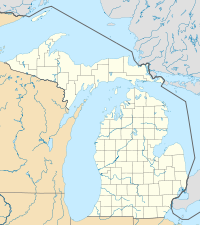
| Demographic data for Michigan | ||
|---|---|---|
| Michigan | U.S. | |
| Total population: | 9,917,715 | 316,515,021 |
| Land area (sq mi): | 56,539 | 3,531,905 |
| Race and ethnicity** | ||
| White: | 79% | 73.6% |
| Black/African American: | 14% | 12.6% |
| Asian: | 2.7% | 5.1% |
| Native American: | 0.5% | 0.8% |
| Pacific Islander: | 0% | 0.2% |
| Two or more: | 2.6% | 3% |
| Hispanic/Latino: | 4.7% | 17.1% |
| Education | ||
| High school graduation rate: | 89.6% | 86.7% |
| College graduation rate: | 26.9% | 29.8% |
| Income | ||
| Median household income: | $49,576 | $53,889 |
| Persons below poverty level: | 20% | 11.3% |
| Source: U.S. Census Bureau, "American Community Survey" (5-year estimates 2010-2015) Click here for more information on the 2020 census and here for more on its impact on the redistricting process in Michigan. **Note: Percentages for race and ethnicity may add up to more than 100 percent because respondents may report more than one race and the Hispanic/Latino ethnicity may be selected in conjunction with any race. Read more about race and ethnicity in the census here. | ||
Presidential voting pattern[edit]
- See also: Presidential voting trends in Michigan
Michigan voted for the Democratic candidate in four out of the five presidential elections between 2000 and 2016.
Pivot Counties (2016)
Ballotpedia identified 206 counties that voted for Donald Trump (R) in 2016 after voting for Barack Obama (D) in 2008 and 2012. Collectively, Trump won these Pivot Counties by more than 580,000 votes. Of these 206 counties, 12 are located in Michigan, accounting for 5.83 percent of the total pivot counties.[77]
Pivot Counties (2020)
In 2020, Ballotpedia re-examined the 206 Pivot Counties to view their voting patterns following that year's presidential election. Ballotpedia defined those won by Trump won as Retained Pivot Counties and those won by Joe Biden (D) as Boomerang Pivot Counties. Nationwide, there were 181 Retained Pivot Counties and 25 Boomerang Pivot Counties. Michigan had 11 Retained Pivot Counties and one Boomerang Pivot County, accounting for 6.08 and 4.00 of all Retained and Boomerang Pivot Counties, respectively.
More Michigan coverage on Ballotpedia
- Elections in Michigan
- United States congressional delegations from Michigan
- Public policy in Michigan
- Influencers in Michigan
- Michigan fact checks
- More...
Related measures[edit]
The following ballot measures were proposals to increase state sales taxes for transportation projects:
- Missouri Temporary Sales and Use Tax Increase for Transportation, Amendment 7 (August 2014)
- Georgia Sales Tax Increase to Fund Transportation Projects, Referendum 1 (July 2012)
- Arkansas Sales Tax Increase Amendment, Issue 1 (2012)
- Ohio Issue 2, Sales Tax Increase to Fund High-Speed Rail (1982)
Recent news[edit]
The link below is to the most recent stories in a Google news search for the terms Michigan Sales Tax Amendment. These results are automatically generated from Google. Ballotpedia does not curate or endorse these articles.
See also[edit]

External links[edit]
Basic information[edit]
Support[edit]
Opposition[edit]
- Protect MI Taxpayers
- Protect MI Taxpayers Facebook
- Concerned Taxpayers of Michigan
- Concerned Taxpayers of Michigan Facebook
- Coalition Against Higher Taxes and Special Interest Deals
- Coalition Against Higher Taxes and Special Interest Deals Facebook
- Citizens Against Middle Class Tax Increases
- Citizens Against Middle Class Tax Increases Facebook
Additional reading[edit]
- WXYZ, "Prop flop? Startling results among Michigan lawmakers after survey on Proposal 1," April 27, 2015
- MLive, "Does Michigan roads Proposal 1 have a prayer? Campaigns say turnout key in unique election," April 21, 2015
- Governing, "Michigan Sends Road Funding Proposal to Voters," January 28, 2015
- Detroit Free Press, "Snyder signs road bills tied to May vote," January 12, 2015
- MLive, "Michigan lawmakers approve road funding deal, send tax proposal to statewide ballot," December 19, 2014
Footnotes[edit]
- ↑ 1.00 1.01 1.02 1.03 1.04 1.05 1.06 1.07 1.08 1.09 1.10 1.11 1.12 1.13 1.14 Michigan Legislature, "Legislative Analysis for HJR UU," accessed February 1, 2015
- ↑ MLive, "Michigan lawmakers approve road funding deal, send tax proposal to statewide ballot," December 19, 2014
- ↑ 3.0 3.1 3.2 3.3 The Detroit News, "Prop 1 would cost households hundreds more in taxes," April 11, 2015
- ↑ 4.0 4.1 Michigan Legislature, "HJR UU History," accessed December 22, 2014
- ↑ The Detroit News, "Prop 1 suffers worst ballot smackdown in decades," May 7, 2015
- ↑ 6.00 6.01 6.02 6.03 6.04 6.05 6.06 6.07 6.08 6.09 6.10 Note: This text is quoted verbatim from the original source. Any inconsistencies are attributable to the original source.
- ↑ 7.0 7.1 Crain's Detroit Business, "Michigan voters reject Proposal 1 as Snyder concedes defeat, vows to 'start anew'," May 5, 2015
- ↑ MLive, "EITC elimination plan slammed as Michigan House panel nears vote on road funding package," June 3, 2015
- ↑ 9.0 9.1 MLive, "Michigan House approves $1.1B roads plan, votes to eliminate Earned Income Tax Credit," June 10, 2015
- ↑ MLive, "In wake of Prop 1 fail, Michigan lawmaker renews call for graduated income tax," May 11, 2015
- ↑ 11.0 11.1 Cite error: Invalid
<ref>tag; no text was provided for refs namedaftermathtwo - ↑ Detroit Free Press, "Prop 1 is dead, so now what? You keep trying," May 5, 2015
- ↑ Michigan Secretary of State, "Proposal 15-1," accessed March 17, 2015
- ↑ Michigan Legislature, "HJR UU," accessed December 22, 2014
- ↑ Michigan Tax Analysis Division, "Michigan's Sales and Use Taxes 2006," July 2007
- ↑ Sales Tax Institute, "State Sales Tax Rates," accessed January 19, 2015
- ↑ MLive, "Calculate how gas prices would change under Prop 1," April 7, 2015
- ↑ American Society of Civil Engineers, "2009 Report Card for Michigan’s Infrastructure," accessed April 14, 2015
- ↑ TRIP, "Michigan Transportation by the Numbers: Meeting the State’s Need for Safe and Efficient Mobility," January 2014
- ↑ MLive, "Report: Bad roads cost Michigan motorists hundreds in extra vehicle maintenance," April 20, 2015
- ↑ Safe Roads Yes!, "Homepage," accessed February 18, 2015
- ↑ MLive, "Snyder, leaders tout Michigan road funding deal to raise sales tax with voter approval," December 18, 2014
- ↑ Detroit Free Press, "State superintendent endorses roads proposal," January 23, 2015
- ↑ 24.0 24.1 Grand Haven Tribune, "How lawmakers replied (or not ) to survey on Proposal 1," April 26, 2015
- ↑ Sault Ste. Marie Evening News, "City backs Proposal 1," April 16, 2015
- ↑ 26.0 26.1 26.2 Michigan Radio, "Here's the bottom line on May 5 road funding ballot proposal," April 2, 2015
- ↑ 27.0 27.1 Detroit Free Press, "Groups taking sides in sales tax campaign to fund roads," December 21, 2014
- ↑ Michigan School Business Officials, "MSBO Joins the Safe Roads Yes! Coalition," accessed April 27, 2015
- ↑ Detroit Free Press, "Small business group urges yes vote on sales tax hike," February 5, 2015
- ↑ 30.0 30.1 MLive, "Saginaw County Chamber of Commerce endorses Proposal 1," March 30
- ↑ UPMatters, "Supporting Proposal 1," April 20, 2015
- ↑ Macomb Daily, "UCS Board of Education officially supports Proposal 1," April 28, 2015
- ↑ Safe Roads Yes!, "The Problem," accessed April 10, 2015
- ↑ MLive, "Pro vs. Con on Proposal 1: Is it the best option or a political money grab?" March 31, 2015
- ↑ WMRA, "Republican Gov. Rick Snyder Turns To Voters To Approve Tax Increase," January 30, 2015
- ↑ MLive, "Guest column: Michigan is overdue for a complete transportation system," January 24, 2015
- ↑ MLive, "Calley makes case for road funding, but ballot proposal money not in budget proposal," February 12, 2015
- ↑ 38.0 38.1 38.2 38.3 Michigan Secretary of State, "Results of Campaign Finance Committee Search," accessed February 19, 2015
- ↑ MLive, "Truth squad: Pro-Proposal 1 ad's claims go beyond facts, drawing a foul," April 30, 2015
- ↑ MLive, "Second group forms to oppose Michigan's May 5 ballot proposal on road funding," February 2, 2015
- ↑ Crain's Detroit Business, "4th group forms to oppose Michigan sales tax increase for roads," February 5, 2015
- ↑ Protect MI Taxpayers, "Homepage," accessed February 18, 2015
- ↑ Concerned Taxpayers of Michigan, "Homepage," accessed February 18, 2015
- ↑ Coalition Against Higher Taxes and Special Interest Deals, "Homepage," accessed February 18, 2015
- ↑ Citizens Against Middle Class Tax Increases, "Homepage," accessed February 18, 2015
- ↑ 46.0 46.1 MLive, "Roads proposal 'has a lot of potholes,' says Michigan Attorney General Bill Schuette," March 4, 2015
- ↑ Tri-County Times, "State Rep. Joe Graves: ‘I will be voting ‘no," April 24, 2015
- ↑ Michigan Libertarian Party, "Libertarians Issue Statement In Opposition To Proposal 1," April 22, 2015
- ↑ Green Party of the United States, "Michigan Greens Urge "NO" Vote May 5 on Sales-Tax Hike, Transportation-Funding Shift," February 2, 2015
- ↑ Michigan Taxpayers Alliance, "Homepage," accessed April 27, 2015
- ↑ Wayne County Taxpayers Association, "NO! NO! NO! to the Sales Tax Increase," March 29, 2015
- ↑ Our American Initiative, "Michigan Projects," accessed April 27, 2015
- ↑ Livingston Daily, "County GOP: No on Proposal 1," April 16, 2015
- ↑ Blue Water Tea Party, "Michigan Proposal 1 Tax Increase to be Voted on May 5, 2015 by Michigan Voters," accessed April 27, 2015
- ↑ The Detroit News, "New campaign launched to oppose sales tax initiative," February 2, 2015
- ↑ Concerned Taxpayers of Michigan, "Seven Reasons to Vote “No” on Raising the Sales Tax to 7%," accessed February 19, 2015
- ↑ Coalition Against Higher Taxes and Special Interest Deals, "About," accessed April 10, 2015
- ↑ The Morning Sun, "Lennox: Proposal 1 worse than bad roads," April 27, 2015
- ↑ MLive, "Truth Squad: Foul for misleading ads attacking Proposal 1," April 30, 2015
- ↑ Crain's Detroit Business, "It sure isn't pretty, but Proposal 1 could work," April 26, 2015
- ↑ Detroit Free Press, "For safety's sake, vote Yes on Proposal 1," March 15, 2015
- ↑ Lansing State Journal, "Editorial: Passing Proposal 1 is best for Michigan," March 28, 2015
- ↑ MLive, "Vote yes on Proposal 1 for better Michigan roads, schools and cities," April 2, 2015
- ↑ The Detroit News, "Editorial: Vote Yes on Prop 1," April 1, 2015
- ↑ The Michigan Daily, "From the Daily: Vote yes on Proposal 1," April 19, 2015
- ↑ Battle Creek Enquirer, "Editorial: Prop 1 a referendum on trust, not our roads," April 4, 2015
- ↑ Livingston Daily, "Just say no to Proposal 1," April 18, 2015
- ↑ Petoskey News‑Review, "Our View - Roads need the work, but Proposal 1 isn't the solution," April 24, 2015
- ↑ Livingston Daily, "Still months away, sales tax issue stirring action," February 5, 2015
- ↑ Michigan.gov, "2015 Michigan State of the State Transcript," January 20, 2015
- ↑ 71.0 71.1 Detroit Free Press, "How far can Snyder go in pushing 'Yes' vote on roads?" January 31, 2015
- ↑ MLive, "Michigan roads Proposal 1: Here's the exact question wording you'll see on May 5 ballot," February 26, 2015
- ↑ 73.0 73.1 73.2 73.3 73.4 73.5 Detroit Free Press, “Proposal 1's passage would trigger these 10 laws,” March 28, 2015
- ↑ MLive, "Michigan sales tax: Where does the revenue go? And what could an increase mean for road funding?" February 18, 2013
- ↑ Michigan Radio, “You'll see 7 bullet points on the May 5th road funding ballot question. We explain them here,” March 12, 2015
- ↑ WZZM 13, "Lawmakers put road fix measure on May ballot," December 19, 2014
- ↑ The raw data for this study was provided by Dave Leip of Atlas of U.S. Presidential Elections.


 |
State of Michigan Lansing (capital) |
|---|---|
| Elections |
What's on my ballot? | Elections in 2021 | How to vote | How to run for office | Ballot measures |
| Government |
Who represents me? | U.S. President | U.S. Congress | Federal courts | State executives | State legislature | State and local courts | Counties | Cities | School districts | Public policy |
Categories: [Defeated, general, 2015] [Michigan 2015 ballot measures, certified] [Michigan 2015 ballot measures] [Taxes, Michigan] [Certified, taxes, 2015] [Transportation, Michigan] [Certified, transportation, 2015] [State ballots, 2015]
↧ Download as ZWI file | Last modified: 12/24/2021 03:03:22 | 13 views
☰ Source: https://ballotpedia.org/Michigan_Sales_Tax_Increase_for_Transportation_Amendment,_Proposal_1_(May_2015) | License: CC BY-SA 3.0
 ZWI signed:
 KSF
KSF