Florida House Of Representatives District 30
 From Ballotpedia

| Census Topic | Value |
|---|---|
| Population | 172,802 |
| Gender |
48.4% Male 51.6% Female |
| Race |
57.7% White 14.3% Black 4.1% Asian 0.4% Native American 0.1% Pacific Islander |
| Ethnicity | 25.3% Hispanic |
| Median household income | $58,802 |
| High school graduation rate | 93.4% |
| College graduation rate | 39.9% |
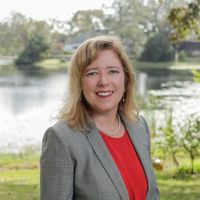
Florida House of Representatives District 30 is represented by Joy Goff-Marcil (D).
As of the 2020 Census, Florida state representatives represented an average of 179,484 residents. After the 2010 Census, each member represented 156,677 residents.
About the office[edit]
Members of the Florida House of Representatives serve two-year terms with term limits.[1] Members of the House may serve no more than four consecutive terms. Florida legislators assume office on the day they are elected in the general election.
Qualifications[edit]
To run for the Florida House of Representatives, candidates must be 21 years old, have lived in Florida for two years and live in the district they intend to serve.[2]
Salaries[edit]
- See also: Comparison of state legislative salaries
| State legislators | |
|---|---|
| Salary | Per diem |
| $29,697/year | $152/day for up to 50 days for senators and up to 60 days for representatives. Vouchered. |
Term limits[edit]
- See also: State legislatures with term limits
The Florida legislature is one of 15 state legislatures with term limits. Voters enacted the Florida Term Limits Act in 1992. That initiative said that Florida representatives are subject to term limits of no more than four two-year terms.
The first year that the term limits enacted in 1992 impacted the ability of incumbents to run for office was in 2000.[3]
Vacancies[edit]
If there is a vacancy in the Florida State Legislature, a special election must be called to fill the vacant seat.[4] The governor is responsible for calling the election and must consult with the secretary of state to set the election dates and nominating deadlines.[5] The person elected to fill the seat serves for the remainder of the unexpired term.[6]
 See sources: Florida Stat. § 100.101
District map[edit]
The map below shows this district's current boundaries, not those enacted as part of the 2020 redistricting cycle.
Redistricting[edit]
2020-2021[edit]
On March 3, 2022, the Florida Supreme Court approved new legislative maps drawn by the Florida State Legislature. These maps take effect for Florida's 2022 legislative elections.
The maps were passed by the legislature as a joint resolution. The Florida State Senate voted 34-3 to approve the bill on January 20, and the Florida House of Representatives voted 77-39 to approve the bill on February 2.[7] Since the maps were passed as a joint resolution, they did not require the signature of Gov. Ron DeSantis (R) to become law. After the legislature approved the maps, they submitted them to Attorney General Ashley B. Moody (R), who then petitioned the Florida Supreme Court to review the maps on February 9.[8][9]
State Senate map[edit]
Below is the state Senate map in effect before and after the 2020 redistricting cycle.
Florida State Senate Districts
until November 7, 2022
Click a district to compare boundaries.
Florida State Senate Districts
starting November 8, 2022
Click a district to compare boundaries.
State House map[edit]
Below is the state House map in effect before and after the 2020 redistricting cycle.
Florida State House Districts
until November 7, 2022
Click a district to compare boundaries.
Florida State House Districts
starting November 8, 2022
Click a district to compare boundaries.
Reactions[edit]
Following the legislative approval of the maps, Senate President Wilton Simpson (R) said, "Thank you to this body for the professionalism we brought to the process this year with redistricting. We can and should be very proud of the work we’ve done here today and we’ll see if the courts are equally as proud." State Rep. Geraldine Thompson (D) criticized the House map, saying "While we won’t show retrogression in terms of fewer minority seats, at the same time, unfortunately we won’t show progression — progress in terms of the participation of minority populations in this chamber."[10]
How does redistricting in Florida work? In Florida, both congressional and state legislative district lines are drawn by the state legislature. Congressional lines are adopted as regular legislation and are subject to gubernatorial veto. State legislative lines are passed via joint resolution and are not subject to gubernatorial veto. State legislative district maps are automatically submitted to the Florida Supreme Court for approval. In the event that the court rejects the lines, the legislature is given a second chance to draft a plan. If the legislature cannot approve a state legislative redistricting plan, the state attorney general must ask the state supreme court to draft a plan. There are no similar procedures in place for congressional districts.[11]
The Florida Constitution requires that all districts, whether congressional or state legislative, be contiguous. Also, "where doing so does not conflict with minority rights, [districts] must be compact and utilize existing political and geographical boundaries where feasible." Districts cannot be drawn in such a way as to "favor or disfavor a political party or incumbent."[11][12]
Elections[edit]
2022[edit]
There are no official candidates yet for this election.
The general election will occur on November 8, 2022.
2020[edit]
General election for Florida House of Representatives District 30
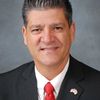
Incumbent Joy Goff-Marcil defeated Bob Cortes in the general election for Florida House of Representatives District 30 on November 3, 2020.
Candidate |
% |
Votes |
||
| ✔ |
|
Joy Goff-Marcil (D) |
53.0
|
46,713 |
|
|
Bob Cortes (R) |
47.0
|
41,452 | |
|
Total votes: 88,165 | |||
 = candidate completed the Ballotpedia Candidate Connection survey. = candidate completed the Ballotpedia Candidate Connection survey. | ||||
Do you want a spreadsheet of this type of data? Contact our sales team. |
||||

The Democratic primary election was canceled. Incumbent Joy Goff-Marcil advanced from the Democratic primary for Florida House of Representatives District 30.
The Republican primary election was canceled. Bob Cortes advanced from the Republican primary for Florida House of Representatives District 30.
2018[edit]
General election for Florida House of Representatives District 30
Joy Goff-Marcil defeated incumbent Bob Cortes in the general election for Florida House of Representatives District 30 on November 6, 2018.
Candidate |
% |
Votes |
||
| ✔ |
|
Joy Goff-Marcil (D) |
52.9
|
35,655 |
|
|
Bob Cortes (R) |
47.1
|
31,704 | |
|
Total votes: 67,359 | |||
| = candidate completed the Ballotpedia Candidate Connection survey. | ||||
Do you want a spreadsheet of this type of data? Contact our sales team. |
||||
Democratic primary for Florida House of Representatives District 30
Joy Goff-Marcil defeated Brendan Ramirez and Clark Anderson in the Democratic primary for Florida House of Representatives District 30 on August 28, 2018.
Candidate |
% |
Votes |
||
| ✔ |
|
Joy Goff-Marcil |
48.0
|
5,619 |
|
|
Brendan Ramirez |
28.6
|
3,351 | |
|
|
Clark Anderson |
23.4
|
2,741 | |


|
Total votes: 11,711 | |||
| = candidate completed the Ballotpedia Candidate Connection survey. | ||||
Do you want a spreadsheet of this type of data? Contact our sales team. |
||||
Republican primary for Florida House of Representatives District 30
Incumbent Bob Cortes advanced from the Republican primary for Florida House of Representatives District 30 on August 28, 2018.
Candidate |
||
| ✔ |
|
Bob Cortes |
|
||||
| = candidate completed the Ballotpedia Candidate Connection survey. | ||||
Do you want a spreadsheet of this type of data? Contact our sales team. |
||||
2016[edit]
Elections for the Florida House of Representatives took place in 2016. The primary election took place on August 30, 2016, and the general election was held on November 8, 2016. The candidate filing deadline was June 24, 2016.
Incumbent Bob Cortes defeated Ryan Yadav in the Florida House of Representatives District 30 general election.[13][14]
| Florida House of Representatives, District 30 General Election, 2016 | ||||
|---|---|---|---|---|
| Party | Candidate | Vote % | Votes | |
| Republican |  Bob Cortes Incumbent Bob Cortes Incumbent |
53.38% | 39,448 | |
| Democratic | Ryan Yadav | 46.62% | 34,457 | |
| Total Votes | 73,905 | |||
| Source: Florida Division of Elections | ||||
Ryan Yadav ran unopposed in the Florida House of Representatives District 30 Democratic primary.[15][16]
| Florida House of Representatives, District 30 Democratic Primary, 2016 | ||
|---|---|---|
| Party | Candidate | |
| Democratic | Ryan Yadav (unopposed) | |
Incumbent Bob Cortes ran unopposed in the Florida House of Representatives District 30 Republican primary.[15][16]
| Florida House of Representatives, District 30 Republican Primary, 2016 | ||
|---|---|---|
| Party | Candidate | |
| Republican | Bob Cortes Incumbent (unopposed) | |
2014[edit]
Elections for the Florida House of Representatives took place in 2014. A primary election took place on August 26, 2014. The general election was held on November 4, 2014. The signature filing deadline for candidates wishing to run in this election was June 20, 2014. Incumbent Karen Castor Dentel was unopposed in the Democratic primary, while Bob Cortes defeated Scott Sturgill in the Republican primary. Cortes defeated Dentel in the general election.[17][18]
| Florida House of Representatives, District 30 Republican Primary, 2014 | ||
|---|---|---|
| Candidate | Vote % | Votes |
|
Bob Cortes |
56.8% | 5,123 |
| Scott Sturgill | 43.2% | 3,902 |
| Total Votes | 9,025 | |
2012[edit]
Elections for the Florida House of Representatives consisted of a primary election on August 14, 2012, and a general election on November 6, 2012. The signature filing deadline for candidates wishing to run in this election was June 8, 2012. Karen Castor Dentel (D) defeated incumbent Scott Plakon (R) in the general election. Both candidates were unopposed in the August 14 primary elections.[19][20]
| Florida House of Representatives, District 30, General Election, 2012 | ||||
|---|---|---|---|---|
| Party | Candidate | Vote % | Votes | |
| Democratic | Karen Castor Dentel |
53.1% | 36,475 | |
| Republican | Scott Plakon Incumbent | 46.9% | 32,232 | |
| Total Votes | 68,707 | |||
Campaign contributions[edit]
From 2012 to 2018, candidates for Florida House of Representatives District 30 raised a total of $2,395,564. Candidates who raised money in contributions earned $217,779 on average. All figures come from Follow the Money
| Campaign contributions, Florida House of Representatives District 30 | |||
|---|---|---|---|
| Year | Amount | Candidates | Average |
| 2018 | $466,684 | 4 | $116,671 |
| 2016 | $486,246 | 2 | $243,123 |
| 2014 | $678,038 | 3 | $226,013 |
| 2012 | $764,596 | 2 | $382,298 |
| Total | $2,395,564 | 11 | $217,779 |
See also[edit]

External links[edit]
Footnotes[edit]
- ↑ Florida Senate Website Archive, "Florida Constitution," accessed December 16, 2013(referenced Article III, Section 15a)
- ↑ Florida Division of Elections, "Candidate Qualifying Information," accessed February 11, 2021
- ↑ Florida State Legisature, "Florida Constitution," accessed February 11. 2021
- ↑ Florida Legislature, "2013 Florida Statutes," accessed May 22, 2014 (Statute 100.101(2), Florida Election Code)
- ↑ Florida Legislature, "2013 Florida Statutes," accessed May 22, 2014 (Statute 100.141 (1) (2), Florida Election Code)
- ↑ Florida Legislature, "2013 Florida Statutes," accessed May 22, 2014 (Statute 100.111 (1) (a-c), Florida Election Code)
- ↑ Florida State Senate, "CS/SJR 100: Joint Resolution of Apportionment," accessed March 3, 2022
- ↑ Florida Politics, "Florida Legislature approves redistricting maps for Senate and House," February 3, 2022
- ↑ Florida Politics, "Ashley Moody petitions court on legislative maps as congressional redistricting continues to pitter," February 9, 2022
- ↑ The Derrick, "Florida Legislature approves its own redistricting maps as DeSantis seeks court ruling," February 3, 2022
- ↑ 11.0 11.1 All About Redistricting, "Florida," accessed April 22, 2015
- ↑ Florida Constitution, "Article III, Sections 20-21," accessed April 22, 2015
- ↑ Florida Department of State, "Candidate listing for 2016 general election," accessed September 12, 2016
- ↑ Florida Division of Elections, "November 8, 2016 Official Election Results," accessed November 23, 2016
- ↑ 15.0 15.1 Florida Department of State, "Candidates and Races," accessed July 1, 2016
- ↑ 16.0 16.1 Florida Division of Elections, "August 30, 2016 Official Election Results," accessed September 22, 2016
- ↑ Florida Division of Elections, "2014 Florida Election Watch - Multi-County or District Offices," accessed September 3, 2014
- ↑ Florida Division of Elections, "Candidate Listing for 2014 General Election," accessed June 23, 2014
- ↑ Florida Division of Elections, "Official 2012 General Election Results," accessed December 6, 2013
- ↑ Florida Secretary of State Elections Division, "Candidate List," accessed June 14, 2012

Categories: [State house districts] [Florida] [State_legislative_districts]
↧ Download as ZWI file | Last modified: 04/14/2022 22:36:20 | 14 views
☰ Source: https://ballotpedia.org/Florida_House_of_Representatives_District_30 | License: CC BY-SA 3.0
 ZWI signed:
 KSF
KSF