Nevada Supreme Court
 From Ballotpedia
 | Nevada Supreme Court |
|---|
|
| Court Information |
| Justices: 7 |
| Founded: 1864 |
| Location: Carson City and Las Vegas |
| Salary |
| Associates: $170,000[1] |
| Judicial Selection |
| Method: Nonpartisan election |
| Term: 6 years |
| Active justices |
| Linda M. Bell, Elissa Cadish, Douglas Herndon, Patricia Lee, Ron Parraguirre, Kris Pickering, Lidia Stiglich |
Founded in 1864, the Nevada Supreme Court is the state's court of last resort and has seven judgeships. The current chief of the court is Douglas Herndon.
As of January 2023, five judges on the court were elected in nonpartisan elections, one judge was appointed by a Republican governor, and another judge was appointed by a Democratic governor.
The Nevada Supreme Court has locations in Carson City, Nevada, and Las Vegas, Nevada.[2]
In Nevada, state supreme court justices are elected in nonpartisan elections. There are 13 states that use this selection method. To read more about the nonpartisan election of judges, click here.
Jurisdiction[edit]
All appeals are filed with the Nevada Supreme Court, which determines which cases should be assigned to the Nevada Court of Appeals and which cases should be retained for supreme court review.[3] The Nevada Court of Appeals was created by a legislatively referred constitutional amendment in 2014.
The supreme court is the court of last resort. It mainly reviews appeals from district courts, and it must consider appeals filed by trial courts. It also considers certiorari from the court of appeals.[4]
The supreme court oversees Nevada's legal system and creates procedures and practices for all the courts. The court supervises the ethical and professional conduct of judges. The court has authority to oversee admissions into the state bar and to approve conduct and discipline rules for attorneys. The justices serve, along with the governor and the attorney general, as commissioners on the board of pardons.[5]
The following text from Article 6, Section 4 of the Nevada Constitution covers the jurisdiction of the court:
| “ | Jurisdiction of Supreme Court and court of appeals; appointment of judge to sit for disabled or disqualified justice or judge
1. The Supreme Court and the court of appeals have appellate jurisdiction in all civil cases arising in district courts, and also on questions of law alone in all criminal cases in which the offense charged is within the original jurisdiction of the district courts. The Supreme Court shall fix by rule the jurisdiction of the court of appeals and shall provide for the review, where appropriate, of appeals decided by the court of appeals. The Supreme Court and the court of appeals have power to issue writs of mandamus, certiorari, prohibition, quo warranto and habeas corpus and also all writs necessary or proper to the complete exercise of their jurisdiction. Each justice of the Supreme Court and judge of the court of appeals may issue writs of habeas corpus to any part of the State, upon petition by, or on behalf of, any person held in actual custody in this State and may make such writs returnable before the issuing justice or judge or the court of which the justice or judge is a member, or before any district court in the State or any judge of a district court. 2. In case of the disability or disqualification, for any cause, of a justice of the Supreme Court, the Governor may designate a judge of the court of appeals or a district judge to sit in the place of the disqualified or disabled justice. The judge designated by the Governor is entitled to receive his actual expense of travel and otherwise while sitting in the Supreme Court. 3. In the case of the disability or disqualification, for any cause, of a judge of the court of appeals, the Governor may designate a district judge to sit in the place of the disabled or disqualified judge. The judge whom the Governor designates is entitled to receive his actual expense of travel and otherwise while sitting in the court of appeals.[6] |
” |
| —Nevada Constitution, Article 6, Section 4 | ||
Justices[edit]
The table below lists the current justices of the Nevada Supreme Court, their political party, and when they assumed office.
| Office | Name | Party | Date assumed office |
|---|---|---|---|
| Nevada Supreme Court Seat A | Linda M. Bell | Nonpartisan | January 2, 2023 |
| Nevada Supreme Court Seat B | Kris Pickering | Nonpartisan | 2009 |
| Nevada Supreme Court Seat C | Elissa Cadish | Nonpartisan | January 7, 2019 |
| Nevada Supreme Court Seat D | Douglas Herndon | Nonpartisan | January 4, 2021 |
| Nevada Supreme Court Seat E | Ron Parraguirre | Nonpartisan | January 3, 2005 |
| Nevada Supreme Court Seat F | Patricia Lee | Nonpartisan | November 21, 2022 |
| Nevada Supreme Court Seat G | Lidia Stiglich | Nonpartisan | December 5, 2016 |
Judicial selection[edit]
- See also: Judicial selection in Nevada
The seven justices of the Nevada Supreme Court are elected to six-year terms in nonpartisan elections. When their terms expire, justices must run for re-election if they wish to remain on the court.[7]
Qualifications[edit]
To serve on the Nevada Supreme Court, a person must:
- be at least 25 years old;
- be licensed and admitted to practice law in Nevada, and have been licensed and admitted to practice law in the United States for at least 15 years, including at least two years in Nevada;
- be a qualified elector; and
- have been a state resident for at least two years preceding the election[8]
Chief justice[edit]
The chief justice of the supreme court is chosen according to seniority. According to state law, if there are two or more eligible justices, the chief justice is determined by lot.[9] Alternatively, the internal operating procedures of the supreme court allow the possibility of an agreement between eligible justices.[10] According to the Administrative Office of the Courts in Nevada, often the eligible members of the court will agree to a lesser term as chief justice if there are multiple eligible justices in the last two years of their terms who want to serve in that capacity. Such agreements have been memorialized by a court order or other official document filed with the clerk.[11]
Vacancies[edit]
In the event of a midterm vacancy, the Nevada Commission on Judicial Selection solicits and screens applicants. The commission presents a list of three nominees to the governor, who appoints one to fill the vacancy until the next general election. If the predecessor's term is not expiring that election cycle, the appointed justice must win the election to the court to serve the remainder of the unexpired term.[12]
The map below highlights how vacancies are filled in state supreme courts across the country.
Elections[edit]
- See also: Nevada Supreme Court elections
2024[edit]
- See also: Nevada Supreme Court elections, 2024
The terms of three Nevada Supreme Court justices expired on January 6, 2025. The three seats were up for nonpartisan election on November 5, 2024. The primary election scheduled for June 11, 2024, was not needed after only one candidate filed for each seat on the ballot. The filing deadline was January 12, 2024.
Candidates and results[edit]
Seat C[edit]
General election
General election for Nevada Supreme Court Seat C
Incumbent Elissa Cadish won election in the general election for Nevada Supreme Court Seat C on November 5, 2024.
Candidate | % | Votes | ||
| ✔ | 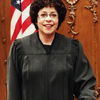 | Elissa Cadish (Nonpartisan) | 69.7 | 868,459 |
| Other/Write-in votes | 30.3 | 377,231 | ||
| Total votes: 1,245,690 | |||
 = candidate completed the Ballotpedia Candidate Connection survey. = candidate completed the Ballotpedia Candidate Connection survey. | ||||
| If you are a candidate and would like to tell readers and voters more about why they should vote for you, complete the Ballotpedia Candidate Connection Survey. | ||||
Do you want a spreadsheet of this type of data? Contact our sales team. | ||||

Nonpartisan primary election
The primary election was canceled. Incumbent Elissa Cadish advanced from the primary for Nevada Supreme Court Seat C.
Seat F[edit]
General election
General election for Nevada Supreme Court Seat F
Incumbent Patricia Lee won election in the general election for Nevada Supreme Court Seat F on November 5, 2024.
Candidate | % | Votes | ||
| ✔ |  | Patricia Lee (Nonpartisan) | 70.4 | 876,180 |
| Other/Write-in votes | 29.6 | 368,473 | ||
| Total votes: 1,244,653 | |||
| = candidate completed the Ballotpedia Candidate Connection survey. | ||||
| If you are a candidate and would like to tell readers and voters more about why they should vote for you, complete the Ballotpedia Candidate Connection Survey. | ||||
Do you want a spreadsheet of this type of data? Contact our sales team. | ||||
Nonpartisan primary election
The primary election was canceled. Incumbent Patricia Lee advanced from the primary for Nevada Supreme Court Seat F.
Seat G[edit]
General election
General election for Nevada Supreme Court Seat G
Incumbent Lidia Stiglich won election in the general election for Nevada Supreme Court Seat G on November 5, 2024.
Candidate | % | Votes | ||
| ✔ | 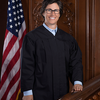 | Lidia Stiglich (Nonpartisan) | 70.7 | 874,639 |
| Other/Write-in votes | 29.3 | 361,896 | ||
| Total votes: 1,236,535 | |||
| = candidate completed the Ballotpedia Candidate Connection survey. | ||||
| If you are a candidate and would like to tell readers and voters more about why they should vote for you, complete the Ballotpedia Candidate Connection Survey. | ||||
Do you want a spreadsheet of this type of data? Contact our sales team. | ||||
Nonpartisan primary election
The primary election was canceled. Incumbent Lidia Stiglich advanced from the primary for Nevada Supreme Court Seat G.
2022[edit]
- See also: Nevada Supreme Court elections, 2022
Candidates and election results[edit]
Seat A: Hardesty vacancy[edit]
General election
General election for Nevada Supreme Court Seat A
Linda M. Bell won election in the general election for Nevada Supreme Court Seat A on November 8, 2022.
Candidate | % | Votes | ||
| ✔ |  | Linda M. Bell (Nonpartisan) | 75.9 | 666,535 |
| Other/Write-in votes | 24.1 | 211,792 | ||
| Total votes: 878,327 | |||
| = candidate completed the Ballotpedia Candidate Connection survey. | ||||
| If you are a candidate and would like to tell readers and voters more about why they should vote for you, complete the Ballotpedia Candidate Connection Survey. | ||||
Do you want a spreadsheet of this type of data? Contact our sales team. | ||||
Nonpartisan primary election
The primary election was canceled. Linda M. Bell advanced from the primary for Nevada Supreme Court Seat A.
Seat E: Parraguirre's seat[edit]
General election
General election for Nevada Supreme Court Seat E
Incumbent Ron Parraguirre won election in the general election for Nevada Supreme Court Seat E on November 8, 2022.
Candidate | % | Votes | ||
| ✔ | 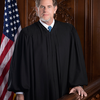 | Ron Parraguirre (Nonpartisan) | 74.5 | 651,496 |
| Other/Write-in votes | 25.5 | 222,899 | ||
| Total votes: 874,395 | |||
| = candidate completed the Ballotpedia Candidate Connection survey. | ||||
| If you are a candidate and would like to tell readers and voters more about why they should vote for you, complete the Ballotpedia Candidate Connection Survey. | ||||
Do you want a spreadsheet of this type of data? Contact our sales team. | ||||
Nonpartisan primary election
The primary election was canceled. Incumbent Ron Parraguirre advanced from the primary for Nevada Supreme Court Seat E.
Justices not on the ballot[edit]
2020[edit]
- See also: Nevada Supreme Court elections, 2020
Candidates and results[edit]
Seat B: Pickering's seat[edit]
General election
General election for Nevada Supreme Court Seat B
Incumbent Kris Pickering won election in the general election for Nevada Supreme Court Seat B on November 3, 2020.
Candidate | % | Votes | ||
| ✔ | 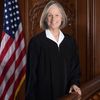 | Kris Pickering (Nonpartisan) | 77.4 | 905,541 |
| Other/Write-in votes | 22.6 | 263,976 | ||
| Total votes: 1,169,517 | |||
| = candidate completed the Ballotpedia Candidate Connection survey. | ||||
| If you are a candidate and would like to tell readers and voters more about why they should vote for you, complete the Ballotpedia Candidate Connection Survey. | ||||
Do you want a spreadsheet of this type of data? Contact our sales team. | ||||
Nonpartisan primary election
Nonpartisan primary for Nevada Supreme Court Seat B
Incumbent Kris Pickering defeated Esther Rodriguez and Thomas Christensen in the primary for Nevada Supreme Court Seat B on June 9, 2020.
Candidate | % | Votes | ||
| ✔ | | Kris Pickering (Nonpartisan) | 57.4 | 262,119 |
 | Esther Rodriguez (Nonpartisan) | 22.3 | 101,913 | |
 | Thomas Christensen (Nonpartisan) | 12.8 | 58,421 | |
| Other/Write-in votes | 7.5 | 34,279 | ||
| Total votes: 456,732 | |||
| = candidate completed the Ballotpedia Candidate Connection survey. | ||||
| If you are a candidate and would like to tell readers and voters more about why they should vote for you, complete the Ballotpedia Candidate Connection Survey. | ||||
Do you want a spreadsheet of this type of data? Contact our sales team. | ||||
Seat D: Gibbon's vacancy[edit]
General election
General election for Nevada Supreme Court Seat D
Douglas Herndon defeated Ozzie Fumo in the general election for Nevada Supreme Court Seat D on November 3, 2020.
Candidate | % | Votes | ||
| ✔ | 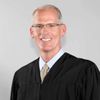 | Douglas Herndon (Nonpartisan) | 45.4 | 557,584 |
 | Ozzie Fumo (Nonpartisan) | 36.3 | 445,871 | |
| Other/Write-in votes | 18.4 | 225,623 | ||
| Total votes: 1,229,078 | |||
| = candidate completed the Ballotpedia Candidate Connection survey. | ||||
| If you are a candidate and would like to tell readers and voters more about why they should vote for you, complete the Ballotpedia Candidate Connection Survey. | ||||
Do you want a spreadsheet of this type of data? Contact our sales team. | ||||
Nonpartisan primary election
Nonpartisan primary for Nevada Supreme Court Seat D
Douglas Herndon and Ozzie Fumo defeated Erv Nelson in the primary for Nevada Supreme Court Seat D on June 9, 2020.
Candidate | % | Votes | ||
| ✔ | | Douglas Herndon (Nonpartisan) | 45.0 | 205,151 |
| ✔ | | Ozzie Fumo (Nonpartisan) | 35.6 | 162,364 |
 | Erv Nelson (Nonpartisan) | 10.3 | 47,076 | |
| Other/Write-in votes | 9.0 | 41,095 | ||
| Total votes: 455,686 | |||
| = candidate completed the Ballotpedia Candidate Connection survey. | ||||
| If you are a candidate and would like to tell readers and voters more about why they should vote for you, complete the Ballotpedia Candidate Connection Survey. | ||||
Do you want a spreadsheet of this type of data? Contact our sales team. | ||||
Justices not on the ballot[edit]
2018[edit]
- See also: Nevada Supreme Court elections, 2018
Candidates and results[edit]
Seat C: Cherry vacancy[edit]
General election
General election
General election for Nevada Supreme Court Seat C
Candidate | % | Votes | ||
| ✔ | | Elissa Cadish (Nonpartisan) | 45.3 | 404,206 |
 | Jerome Tao (Nonpartisan) | 32.4 | 289,309 | |
| Other/Write-in votes | 22.3 | 198,730 | ||
| Total votes: 892,245 | |||
| = candidate completed the Ballotpedia Candidate Connection survey. | ||||
| If you are a candidate and would like to tell readers and voters more about why they should vote for you, complete the Ballotpedia Candidate Connection Survey. | ||||
Do you want a spreadsheet of this type of data? Contact our sales team. | ||||
Primary election
■ Leon Aberasturi
■ Elissa Cadish 
■ Alan Lefebvre
■ John Rutledge
■ Jerry Tao
Seat F: Douglas vacancy[edit]
General election
General election for Nevada Supreme Court Seat F
Candidate | % | Votes | ||
| ✔ |  | Abbi Silver (Nonpartisan) | 71.5 | 614,353 |
| Other/Write-in votes | 28.5 | 245,226 | ||
| Total votes: 859,579 | |||
| = candidate completed the Ballotpedia Candidate Connection survey. | ||||
| If you are a candidate and would like to tell readers and voters more about why they should vote for you, complete the Ballotpedia Candidate Connection Survey. | ||||
Do you want a spreadsheet of this type of data? Contact our sales team. | ||||
Seat G: Stiglich's seat[edit]
General election
General election for Nevada Supreme Court Seat G
Candidate | % | Votes | ||
| ✔ | | Lidia Stiglich (Nonpartisan) | 46.6 | 413,471 |
 | Mathew Harter (Nonpartisan) | 30.7 | 272,652 | |
| Other/Write-in votes | 22.7 | 201,148 | ||
| Total votes: 887,271 | |||
| = candidate completed the Ballotpedia Candidate Connection survey. | ||||
| If you are a candidate and would like to tell readers and voters more about why they should vote for you, complete the Ballotpedia Candidate Connection Survey. | ||||
Do you want a spreadsheet of this type of data? Contact our sales team. | ||||
Justices not on the ballot[edit]
- Election history, 2008-2016 (click to expand)
2016[edit]
- See also: Nevada Supreme Court elections, 2016
Two seats on the Nevada Supreme Court were on the general election ballot on November 8, 2016. These seats were held by Justice Ron Parraguirre and Justice James Hardesty heading into the election. Each justice elected to the court serves a six-year term.
Both judges were unopposed in the 2016 elections.[14]
Candidates[edit]
Seat A[edit]
■ James Hardesty
(Incumbent/Unopposed)
Seat E[edit]
■ Ron Parraguirre
(Incumbent/Unopposed)
Election results[edit]
November 8 general election[edit]
Incumbent James Hardesty ran unopposed in the Nevada Supreme Court, Seat A election.Nevada Supreme Court, Seat A, 2016 Candidate Vote % Votes James Hardesty Incumbent (unopposed)71.55% 692,769 Write-in votes 28.45% 275,491 Total Votes (100% reporting) 968,260 Source: Nevada Secretary of State Official Results Incumbent Ron Parraguirre ran unopposed in the Nevada Supreme Court, Seat E election.Nevada Supreme Court, Seat E, 2016 Candidate Vote % Votes Ron Parraguirre Incumbent (unopposed)70.66% 681,391 Write-in votes 29.34% 282,870 Total Votes (100% reporting) 964,261 Source: Nevada Secretary of State Official Results Results[edit]
Incumbent James Hardesty ran unopposed in the Nevada Supreme Court, Seat A election.Nevada Supreme Court, Seat A, 2016 Candidate Vote % Votes James Hardesty Incumbent (unopposed)71.55% 692,769 Write-in votes 28.45% 275,491 Total Votes (100% reporting) 968,260 Source: Nevada Secretary of State Official Results
Incumbent Ron Parraguirre ran unopposed in the Nevada Supreme Court, Seat E election.Nevada Supreme Court, Seat E, 2016 Candidate Vote % Votes Ron Parraguirre Incumbent (unopposed)70.66% 681,391 Write-in votes 29.34% 282,870 Total Votes (100% reporting) 964,261 Source: Nevada Secretary of State Official Results 2014[edit]
- See also: Nevada judicial elections, 2014
Kristina Pickering was uncontested in her bid for re-election.[15]
Nevada Supreme Court
2014 general election resultsCandidates Votes Percent Kristina Pickering
360,951 77.45% Mark Gibbons was uncontested in his bid for re-election.[15]
Nevada Supreme Court
2014 general election resultsCandidates Votes Percent Mark Gibbons
374,631 80.18% 2012[edit]
- See also: Nevada judicial elections, 2012
Michael Cherry was uncontested in his bid for re-election.[16]
Nevada Supreme Court
2012 general election resultsCandidates Votes Percent Michael Cherry
631,850 73.25% Michael Douglas was uncontested in his bid for re-election.[16]
Nevada Supreme Court
2012 general election resultsCandidates Votes Percent Michael Douglas
641,516 74.26% Nancy Saitta was uncontested in her bid for re-election.[16]
Nevada Supreme Court
2012 general election resultsCandidates Votes Percent Nancy Saitta
632,324 73.32% 2010[edit]
- See also: Nevada judicial elections, 2010
James Hardesty was uncontested in his bid for re-election.[17]
Nevada Supreme Court
2010 general election resultsCandidates Votes Percent James Hardesty
467,120 76.13% Ron Parraguirre was uncontested in his bid for re-election.[17]
Nevada Supreme Court
2010 general election resultsCandidates Votes Percent Ron Parraguirre
467,021 76.52% 2008[edit]
- See also: State supreme court elections, 2008
Incumbent Mark Gibbons defeated challenger Thomas Christensen.[18]
Nevada Supreme Court
2008 general election resultsCandidates Votes Percent Mark Gibbons
456,467 54.81% Thomas Christensen 210,092 25.23% Deborah Schumacher and Kris Pickering ran for election to fill the vacancy left by retiring judge A. William Maupin. Pickering won with 42% of the vote.
Nevada Supreme Court
2008 general election resultsCandidates Votes Percent Kris Pickering
353,873 42.00% Deborah Schumacher 329,058 39.05%
Caseloads[edit]
The table below details the number of cases filed with the court and the number of dispositions (decisions) the court reached in each year.[19][20][21]
| Nevada Supreme Court caseload data | ||
|---|---|---|
| Year | Filings | Dispositions |
| 2023 | 2,007 | 1,209 |
| 2022 | 1,921 | 1,316 |
| 2021 | 1,860 | 1,451 |
| 2020 | 2,474 | 1,740 |
| 2019 | 2,982 | 1,852 |
| 2018 | 1,613 | 1,591 |
| 2017 | 1,814 | 1,578 |
| 2016 | 1,810 | 1,838 |
| 2015 | 1,903 | 1,840 |
| 2014 | 2,481 | 2,375 |
| 2013 | 2,333 | 2,374 |
| 2012 | 2,500 | 2,270 |
| 2011 | 2,395 | 2,220 |
| 2010 | 2,266 | 2,419 |
| 2009 | 2,152 | 2,167 |
| 2008 | 2,238 | 1,959 |
Analysis[edit]
Ballotpedia Courts: Determiners and Dissenters (2021)[edit]
 In 2020, Ballotpedia published Ballotpedia Courts: Determiners and Dissenters, a study on how state supreme court justices decided the cases that came before them. Our goal was to determine which justices ruled together most often, which frequently dissented, and which courts featured the most unanimous or contentious decisions.
The study tracked the position taken by each state supreme court justice in every case they decided in 2020, then tallied the number of times the justices on the court ruled together. We identified the following types of justices:
- We considered two justices opinion partners if they frequently concurred or dissented together throughout the year.
- We considered justices a dissenting minority if they frequently opposed decisions together as a -1 minority.
- We considered a group of justices a determining majority if they frequently determined cases by a +1 majority throughout the year.
- We considered a justice a lone dissenter if he or she frequently dissented alone in cases throughout the year.
Summary of cases decided in 2020[edit]
- Number of justices: 7
- Number of cases: 91
- Percentage of cases with a unanimous ruling: 87.9% (80)
- Justice most often writing the majority opinion: Justice Lidia Stiglich (23)
- Per curiam decisions: 2
- Concurring opinions: 0
- Dissenting opinions: 11
- Justice with most dissenting opinions: Justices Elissa Cadish and Lidia Stiglich (3 and 3)
For the study's full set of findings in Nevada, click here.
Ballotpedia Courts: State Partisanship (2020)[edit]
- See also: Ballotpedia Courts: State Partisanship
 Last updated: June 15, 2020
In 2020, Ballotpedia published Ballotpedia Courts: State Partisanship, a study examining the partisan affiliation of all state supreme court justices in the country as of June 15, 2020.
The study presented Confidence Scores that represented our confidence in each justice's degree of partisan affiliation, based on a variety of factors. This was not a measure of where a justice fell on the political or ideological spectrum, but rather a measure of how much confidence we had that a justice was or had been affiliated with a political party. To arrive at confidence scores we analyzed each justice's past partisan activity by collecting data on campaign finance, past political positions, party registration history, as well as other factors. The five categories of Confidence Scores were:
- Strong Democrat
- Mild Democrat
- Indeterminate[22]
- Mild Republican
- Strong Republican
We used the Confidence Scores of each justice to develop a Court Balance Score, which attempted to show the balance among justices with Democratic, Republican, and Indeterminate Confidence Scores on a court. Courts with higher positive Court Balance Scores included justices with higher Republican Confidence Scores, while courts with lower negative Court Balance Scores included justices with higher Democratic Confidence Scores. Courts closest to zero either had justices with conflicting partisanship or justices with Indeterminate Confidence Scores.[23]
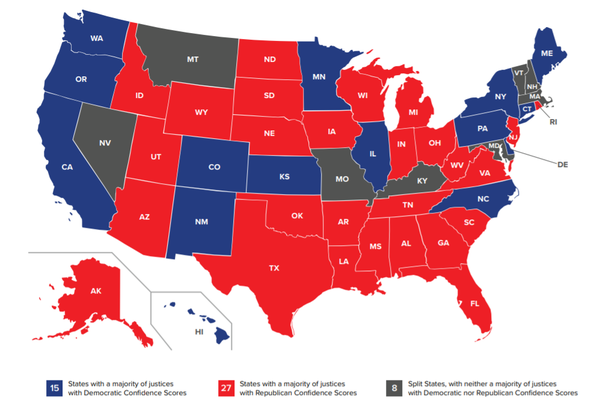
Nevada had a Court Balance Score of 0, indicating Split control of the court. In total, the study found that there were 15 states with Democrat-controlled courts, 27 states with Republican-controlled courts, and eight states with Split courts. The map below shows the court balance score of each state.
Bonica and Woodruff campaign finance scores (2012)[edit]
In October 2012, political science professors Adam Bonica and Michael Woodruff of Stanford University attempted to determine the partisan outlook of state supreme court justices in their paper, "State Supreme Court Ideology and 'New Style' Judicial Campaigns." A score above 0 indicated a more conservative-leaning ideology while scores below 0 were more liberal. The state Supreme Court of Nevada was given a campaign finance score (CFscore), which was calculated for judges in October 2012. At that time, Nevada received a score of -0.22. Based on the justices selected, Nevada was the 19th most liberal court. The study was based on data from campaign contributions by judges themselves, the partisan leaning of contributors to the judges, or—in the absence of elections—the ideology of the appointing body (governor or legislature). This study was not a definitive label of a justice but rather an academic gauge of various factors.[24]
Noteworthy cases[edit]
For a list of opinions published by the court, click here. Know of a case we should cover here? Let us know by emailing us.
Ethics[edit]
The Nevada Code of Judicial Conduct sets forth ethical guidelines and principles for the conduct of judges and judicial candidates in Nevada. It is composed of four canons:
- Canon 1: "A judge shall uphold and promote the independence, integrity, and impartiality of the judiciary and shall avoid impropriety and the appearance of impropriety."
- Canon 2: "A judge shall perform the duties of judicial office impartially, competently, and diligently."
- Canon 3: "A judge shall conduct the judge’s personal and extrajudicial activities to minimize the risk of conflict with the obligations of judicial office."
- Canon 4: "A judge or candidate for judicial office shall not engage in political or campaign activity that is inconsistent with the independence, integrity, or impartiality of the judiciary."[25]
The full text of the Nevada Code of Judicial Conduct can be found here.
Removal of judges[edit]
There are four ways to remove judges in Nevada:
- The commission on judicial discipline may retire or remove them; those actions are subject to appeal to the supreme court
- If the majority of the assembly votes to impeach a judge, the senate may remove the judge upon a two-thirds vote to convict
- Two-thirds of the members of both houses of the legislature may pass a resolution to remove a judge
- Voters may recall a judge[26]
History of the court[edit]
The first justices of the Nevada Supreme Court were appointed by President Abraham Lincoln to the Territorial Supreme Court in 1861. The justices also served as trial judges, riding circuit in the territory. All three judges resigned in August of 1864 (just before statehood), "beleaguered by politics and volatile mining disputes." The justices of the territorial supreme court rendered 88 decisions in all. They were not recorded and are considered lost.[27][28]
Nevada achieved statehood on October 31, 1864. The Nevada Constitution (the state's current constitution) called for three justices to be elected for six-year terms, providing that the legislature may increase the number of justices to five. Justices were elected by partisan elections from 1864-1915. Justices campaigned either as Democrats, Republicans, Silver, or Silver-Democratic candidates. Today, elections are nonpartisan.[29][30]
The legislature increased the number of justices to five in 1967. In 1999, the number of justices was increased to seven, based on a constitutional amendment passed by voters. This was in part to deal with a large backlog. The size of the court was slated to shrink from seven justices to five in 2019 because of a provision in the 1997 judicial reorganization law. The law said the Nevada Supreme Court must decrease membership from seven to five once an amendment authorizing an intermediate court was approved. Voters approved a ballot measure in November 2014 authorizing the creation of an intermediate appellate court.[31][32] In 2015, the Nevada State Legislature repealed the 1997 law, maintaining a seven-member court.[33]
The 1999 constitutional amendment also allowed justices to sit on three-person panels to hear most appeals cases, though all justices sit to hear the most important cases. Justices are not subject to term limits, which were rejected by voters in 1996.[34]
Noteworthy firsts[edit]
- In 2019, there were more women than men serving on the state supreme court for the first time in the state's history.[35]
Courts in Nevada[edit]
- See also: Courts in Nevada
In Nevada, there is one federal district court, a state supreme court, a state court of appeals, and trial courts with both general and limited jurisdiction.
Click a link for information about that court type.
The image below depicts the flow of cases through Nevada's state court system. Cases typically originate in the trial courts and can be appealed to courts higher up in the system.

Party control of Nevada state government[edit]
A state government trifecta is a term that describes single-party government, when one political party holds the governor's office and has majorities in both chambers of the legislature in a state government. A state supreme court plays a role in the checks and balances system of a state government.
Nevada has a divided government where neither party holds a trifecta. The Republican Party controls the office of governor, while the Democratic Party controls both chambers of the state legislature.
Nevada Party Control: 1992-2025
Five years of Democratic trifectas • Two years of Republican trifectas
Scroll left and right on the table below to view more years.
| Year | 92 | 93 | 94 | 95 | 96 | 97 | 98 | 99 | 00 | 01 | 02 | 03 | 04 | 05 | 06 | 07 | 08 | 09 | 10 | 11 | 12 | 13 | 14 | 15 | 16 | 17 | 18 | 19 | 20 | 21 | 22 | 23 | 24 | 25 |
|---|---|---|---|---|---|---|---|---|---|---|---|---|---|---|---|---|---|---|---|---|---|---|---|---|---|---|---|---|---|---|---|---|---|---|
| Governor | D | D | D | D | D | D | D | R | R | R | R | R | R | R | R | R | R | R | R | R | R | R | R | R | R | R | R | D | D | D | D | R | R | R |
| Senate | D | R | R | R | R | R | R | R | R | R | R | R | R | R | R | R | R | D | D | D | D | D | D | R | R | D | D | D | D | D | D | D | D | D |
| House | D | D | D | S | S | D | D | D | D | D | D | D | D | D | D | D | D | D | D | D | D | D | D | R | R | D | D | D | D | D | D | D | D | D |
See also[edit]

External links[edit]
Footnotes[edit]
- ↑ The salary of the chief justice may be higher than an associate justice.
- ↑ Administrative Office of the Court, "Frequently Asked Questions," accessed August 20, 2021
- ↑ Supreme Court of Nevada, "Overview of the appellate courts," accessed October 27, 2015
- ↑ Nevada Legislature Research Division,"Political History of Nevada," accessed June 21, 2024
- ↑ Nevada Legislature Research Division,"Political History of Nevada," accessed June 21, 2024
- ↑ Note: This text is quoted verbatim from the original source. Any inconsistencies are attributable to the original source.
- ↑ National Center for State Courts, "Methods of Judicial Selection: Nevada | Selection of Judges," accessed August 20, 2021
- ↑ Nevada Legislature, " NRS 2.020 Qualifications," accessed August 20, 2021
- ↑ Nevada Legislature, "NRS 2.030 Election; Chief Justice," accessed August 20, 2021
- ↑ Nevada Judiciary, "Nevada Supreme Court: Internal Operating Procedures," May 20, 2021
- ↑ This information was provided to Ballotpedia in an email from the Administrative Office of the Courts in Nevada.
- ↑ Administrative Office of the Courts, "FACTS and FAQs," accessed August 20, 2021
- ↑ 13.0 13.1 News 4, "Nevada Supreme Court justices Douglas, Cherry to retire," accessed December 8, 2017
- ↑ Nevada Secretary of State, "2016 filed judicial candidates," accessed January 16, 2016
- ↑ 15.0 15.1 Nevada Secretary of State Ross Miller, "Silver State Election Night Results 2014," December 15, 2014
- ↑ 16.0 16.1 16.2 Nevada Secretary of State Ross Miller, "Official Results as Canvassed by the Nevada Supreme Court on November 27, 2012," November 27, 2012
- ↑ 17.0 17.1 Nevada Secretary of State Ross Miller, "Official Results as Canvassed by the Nevada Supreme Court on November 23, 2010," November 23, 2010
- ↑ Nevada Secretary of State Ross Miller, "Official Results of the 2008 General Election," archived May 25, 2012
- ↑ Totals do not include cases that were filed with the supreme court and assigned to the court of appeals.
- ↑ Administrative Office of the Courts, "Annual Reports," accessed August 20, 2021
- ↑ The Nevada Judiciary, "2023 Annual Report," accessed September 25, 2024
- ↑ An Indeterminate score indicates that there is either not enough information about the justice’s partisan affiliations or that our research found conflicting partisan affiliations.
- ↑ The Court Balance Score is calculated by finding the average partisan Confidence Score of all justices on a state supreme court. For example, if a state has justices on the state supreme court with Confidence Scores of 4, -2, 2, 14, -2, 3, and 4, the Court Balance is the average of those scores: 3.3. Therefore, the Confidence Score on the court is Mild Republican. The use of positive and negative numbers in presenting both Confidence Scores and Court Balance Scores should not be understood to that either a Republican or Democratic score is positive or negative. The numerical values represent their distance from zero, not whether one score is better or worse than another.
- ↑ Stanford University, "State Supreme Court Ideology and 'New Style' Judicial Campaigns," October 31, 2012
- ↑ State of Nevada Commission on Judicial Discipline, "Nevada Code of Judicial Conduct," effective January 19, 2010, accessed July 10, 2015
- ↑ National Center for State Courts, "Methods of Judicial Selection: Nevada, Removal of Judges," accessed July 10, 2015
- ↑ Supreme Court of Nevada,"History of the Supreme Court of Nevada," accessed June 21, 2024
- ↑ Nevada Legislature,"Political History of Nevada," accessed July 8, 2024
- ↑ Nevada Legislature Research Division,"Political History of Nevada," accessed June 21, 2024
- ↑ Nevada Bar,"Early Years of the Nevada Supreme Court: 1864-1916," accessed June 21, 2024
- ↑ Las Vegas Review-Journal, "Nevada appeals court creation forces cut in number of Supreme Court justices," archived August 12, 2015
- ↑ Ballot Access News, "Little-Noticed 18-Year-Old Law Will Force Nevada to Shrink its State Supreme Court from Seven to Five Members by 2019," April 19, 2015
- ↑ The Nevada Independent, "Indy Explains: How a little-noticed tweak means Nevada Supreme Court won't reduce number of justices," January 23, 2018
- ↑ Nevada Legislature Research Division,"Political History of Nevada," accessed June 21, 2024
- ↑ Las Vegas Review-Journal, "Women reign supreme," January 11, 2019
Federal courts:
Ninth Circuit Court of Appeals • U.S. District Court: District of Nevada • U.S. Bankruptcy Court: District of Nevada
State courts:
Nevada Supreme Court • Nevada Court of Appeals • Nevada District Courts • Nevada Justice Courts • Nevada Municipal Courts • Clark County Family Court, Nevada
State resources:
Courts in Nevada • Nevada judicial elections • Judicial selection in Nevada

| ||||||||
Categories: [State supreme courts]
↧ Download as ZWI file | Last modified: 07/09/2025 01:24:50 | 22 views
☰ Source: https://ballotpedia.org/Nevada_Supreme_Court | License: CC BY-SA 3.0
 KSF
KSF