| Bureau of Alcohol, Tobacco, Firearms and Explosives |
Do you have a photo that could go here? Click here to submit it for this profile!
|
| Annual budget: | $1.5 billion (2022) |
| Total employed: | 5,099 (2022) |
| Year created: | 1972 |
| Official website: | Office website |

The Bureau of Alcohol, Tobacco, Firearms and Explosives (ATF) is a United States agency formed in 1972 in the U.S. Department of Justice that "protects our communities from violent criminals, criminal organizations, the illegal use and trafficking of firearms, the illegal use and storage of explosives, acts of arson and bombings, acts of terrorism, and the illegal diversion of alcohol and tobacco products."[1]
History[edit]
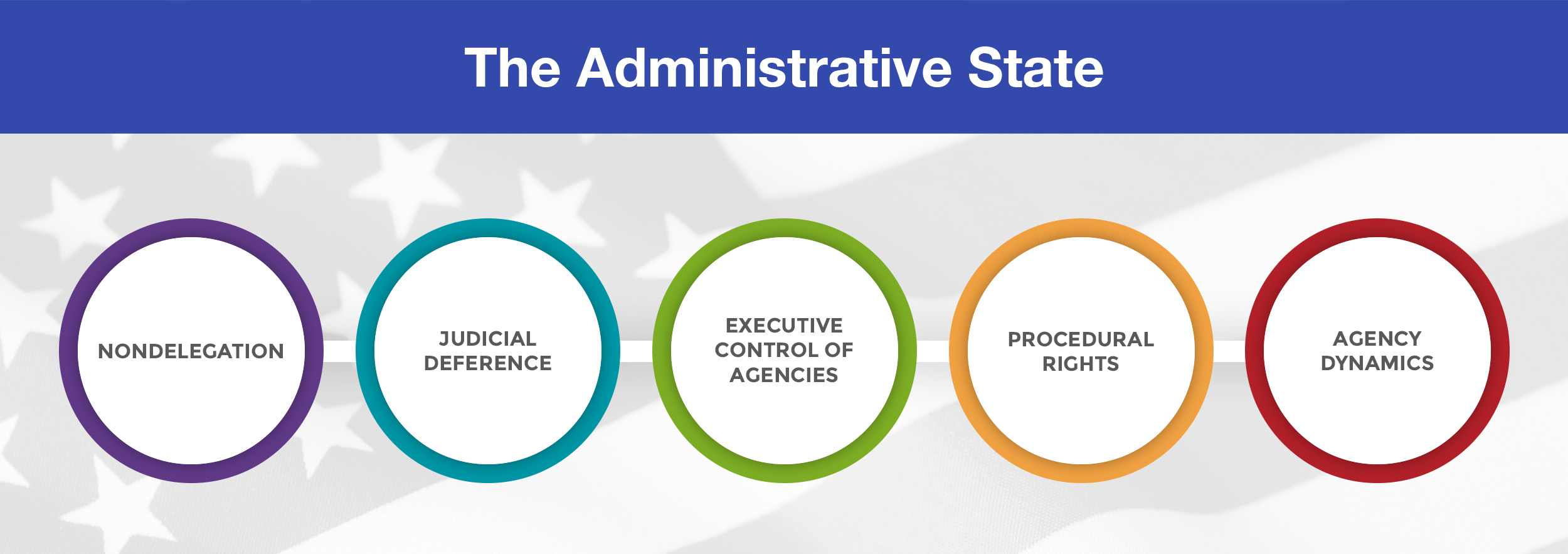
| Administrative State
|
|
| Read more about the administrative state on Ballotpedia.
|
The passage of the 21st Amendment created the need to ensure taxes were collected on illegal stores of alcohol made during Prohibition. The agency charged with fighting organized crime during Prohibition, the Bureau of Prohibition, was transformed into the Alcohol Tax Unit (ATU) to be a part of the U.S. Department of the Treasury, in order to break up illegal distilleries and organized liquor rackets. In 1941, the ATU was charged with enforcing the National Firearms Act and the Federal Firearms Act, which regulated firearms, placed regulations on firearm markets and sellers, required licensing for merchants and producers and created records of firearms.[2]
The Gun Control Act of 1968 created stronger regulations on firearms in the wake of the assassinations of President John F. Kennedy, Robert F. Kennedy and Martin Luther King, Jr. The ATU was reorganized into the Alcohol Tobacco Tax Division (ATTD) and charged with enforcing the Gun Control Act, which banned felons from owning firearms as well as providing the first federal regulations over "destructive devices," such as bombs and explosives. The ATF became an independent agency in 1972 under Treasury Department Order 221. The ATF and Federal Bureau of Investigation were given joint responsibility to enforce the Brady Handgun Violence Prevention Act, which required criminal background checks prior to receiving a firearm license in 1993. The Homeland Security Act of 2002, which formed the U.S. Department of Homeland Security, reorganized the ATF under the U.S. Department of Justice in 2003.[2]
Investigations[edit]
- The ATF investigated the World Trade Center bombing in 1993 and arrested five people behind the bombing that left six dead and more than one thousand injured.[2]
- In 1993, the ATF issued warrants on firearms believed to be at a religious compound in Waco, Texas. On February 28, the ATF raided the compound inhabited by the Branch Davidians, which resulted in the deaths of five Davidians and four ATF agents before the FBI took over for a 51 day standoff. On April 19, after tear gas was shot into the building, the compound burned down with the Branch Davidians inside. It was unclear whether the Davidians started the fire or if it resulted from the tear gas.[3]
- ATF agents were present in the Alfred P. Murrah Federal Building that was bombed on April 19, 1995. The ATF assisted in the investigation of the bombing.[2]
- ATF agents contributed to investigations in Shanksville, Pennsylvania, Washington, D.C. and New York City after the terrorist attacks on September 11, 2001.[2]
Structure[edit]
Mission[edit]
The official ATF mission statement is as follows:
| “
|
To conduct investigations utilizing our unique expertise, partnerships, and intelligence to enhance public safety by enforcing the laws and regulations and uphold the Constitution of the United States of America.[4]
|
”
|
| —ATF.gov[1]
|
Analysis[edit]
Budget[edit]
Biden administration[edit]
| Bureau of Alcohol, Tobacco, Firearms and Explosives[5] Annual Budget |
|---|
| Year | Budget (in billions) | % Difference from previous year |
|---|
| 2023 | $1.73 | 15.33% |
| 2022 | $1.5 | −9.64% |
| 2021 | $1.66 | N/A |
Trump administration[edit]
| Bureau of Alcohol, Tobacco, Firearms and Explosives[6] Annual Budget |
|---|
| Year | Budget (in billions) | % Difference from previous year |
|---|
| 2020 | $1.36 | 3.82% |
| 2019 | $1.31 | 3.15% |
| 2018 | $1.27 | −2.31% |
| 2017 | $1.30 | N/A |
Obama administration[edit]
| Bureau of Alcohol, Tobacco, Firearms and Explosives[7] Annual Budget |
|---|
| Year | Budget (in billions) | % Difference from previous year |
|---|
| 2016 | $1.24 | 3.33% |
| 2015 | $1.20 | −1.64% |
| 2014 | $1.22 | 6.09% |
| 2013 | $1.15 | 0% |
| 2012 | $1.15 | 3.6% |
| 2011 | $1.11 | −0.89% |
| 2010 | $1.12 | 6.67% |
| 2009 | $1.05 | N/A |
Recent news[edit]
This section links to a Google news search for the term Bureau + Alcohol + Tobacco + Firearms + Explosives
See also[edit]
- U.S. Department of Justice
- Steven Dettelbach
- Thomas Brandon
- B. Todd Jones
External links[edit]
- Official ATF website
- ATF Twitter feed
- ATF Youtube channel
[edit]
- ↑ 1.0 1.1 ATF, "About ATF," accessed February 26, 2024
- ↑ 2.0 2.1 2.2 2.3 2.4 ATF, "Timeline," accessed March 24, 2014
- ↑ NPR, "Two Decades Later, Some Branch Davidians Still Believe," April 20, 2013
- ↑ Note: This text is quoted verbatim from the original source. Any inconsistencies are attributable to the original source.
- ↑ ATF, "Budget and Performance 2023," accessed March 2, 2023
- ↑ ATF, "Budget and Performance 2020," accessed March 2, 2023
- ↑ ATF, "Budget and Performance," accessed March 24, 2014
| U.S. Executive Branch |
|---|
| | Elected offices | President Joe Biden • Vice President Kamala Harris
|  | | | Executive departments | Department of Defense • Department of State • Department of Homeland Security • Department of Justice • Department of Commerce • Department of Education • Department of the Treasury • Department of Agriculture • Department of Energy • Department of Labor • Department of Transportation • Department of the Interior • Department of Health and Human Services • Department of Veterans Affairs • Department of Housing and Urban Development
| | | Cabinet-level offices | Environmental Protection Agency • Office of Management and Budget • U.S. Mission to the United Nations • Council of Economic Advisors • Small Business Administration • White House Chief of Staff
| | | Federally appointed offices | Federal Reserve System • National Security Advisor • White House Press Secretary • U.S. Postmaster General • Central Intelligence Agency • Federal Bureau of Investigation • Internal Revenue Service • Bureau of Alcohol, Tobacco, Firearms and Explosives • National Security Agency • Congressional Budget Office • Federal Election Commission • Transportation Security Administration • Drug Enforcement Administration • Federal Communications Commission
| | | Glossary | Appointment confirmation process • United States Constitution • Electoral College • Deferred action • Deferred Action for Childhood Arrivals (DACA) • Deferred Action for Parents of U.S. Citizens and Lawful Permanent Residents (DAPA) • Impeachment of federal officials • Investor-State Dispute Settlement (ISDS) • North American Free Trade Agreement (NAFTA) • P5+1 and E3+3 • Trade adjustment assistance (TAA) • Trade promotion authority (TPA)
|
|
| The Administrative State |
|---|
| | Main | The Administrative State Project main page • Administrative State Project Index • Glossary of administrative state terms • Quotes about the administrative state • Administrative state • Rulemaking • Deference • Adjudication • Nondelegation doctrine • Ballotpedia's administrative state legislation tracker |  | | | Reporting | Changes to the Federal Register • Completed OIRA review of federal administrative agency rules • Federal agency rules repealed under the Congressional Review Act • Historical additions to the Federal Register, 1936-2016 • Pages added monthly to the Federal Register, 1995-2017 | | | Laws | Administrative Procedure Act • Antiquities Act • Civil Service Reform Act • Clayton Antitrust Act • Communications Act of 1934 • Congressional Review Act • Electronic Freedom of Information Act • Federal Food, Drug, and Cosmetic Act of 1938 • Federal Housekeeping Statute • Federal Reserve Act • Federal Trade Commission Act of 1914 • Freedom of Information Act • Government in the Sunshine Act • Independent Offices Appropriations Act of 1952 • Information Quality Act • Interstate Commerce Act • National Labor Relations Act • Paperwork Reduction Act • Pendleton Act • Privacy Act of 1974 • Regulatory Flexibility Act • REINS Act • REINS Act (Wisconsin) • Securities Act of 1933 • Securities Exchange Act of 1934 • Sherman Antitrust Act • Small Business Regulatory Enforcement Fairness Act • Truth in Regulating Act • Unfunded Mandates Reform Act | | | Cases | Abbott Laboratories v. Gardner • A.L.A. Schechter Poultry Corp. v. United States • Association of Data Processing Service Organizations v. Camp • Auer v. Robbins • Chevron v. Natural Resources Defense Council • Citizens to Preserve Overton Park v. Volpe • Federal Trade Commission (FTC) v. Standard Oil Company of California • Field v. Clark • Food and Drug Administration v. Brown and Williamson Tobacco Corporation • Humphrey's Executor v. United States • Immigration and Naturalization Service (INS) v. Chadha • J.W. Hampton Jr. & Company v. United States • Lucia v. SEC • Marshall v. Barlow's • Massachusetts v. Environmental Protection Agency • Mistretta v. United States • National Federation of Independent Business (NFIB) v. Sebelius • National Labor Relations Board v. Noel Canning Company • National Labor Relations Board v. Sears, Roebuck & Co. • Panama Refining Co. v. Ryan • Securities and Exchange Commission v. Chenery Corporation • Skidmore v. Swift & Co. • United States v. Lopez • United States v. Western Pacific Railroad Co. • Universal Camera Corporation v. National Labor Relations Board • Vermont Yankee Nuclear Power Corp. v. Natural Resources Defense Council • Wayman v. Southard • Weyerhaeuser Company v. United States Fish and Wildlife Service • Whitman v. American Trucking Associations • Wickard v. Filburn • Wiener v. United States | | | Terms | Adjudication (administrative state) • Administrative judge • Administrative law • Administrative law judge • Administrative state • Arbitrary-or-capricious test • Auer deference • Barrier to entry • Bootleggers and Baptists • Chevron deference (doctrine) • Civil servant • Civil service • Code of Federal Regulations • Codify (administrative state) • Comment period • Compliance costs • Congressional Record • Coordination (administrative state) • Deference (administrative state) • Direct and indirect costs (administrative state) • Enabling statute • Ex parte communication (administrative state) • Executive agency • Federal law • Federal Register • Federalism • Final rule • Formal rulemaking • Formalism (law) • Functionalism (law) • Guidance (administrative state) • Hybrid rulemaking • Incorporation by reference • Independent federal agency • Informal rulemaking • Joint resolution of disapproval (administrative state) • Major rule • Negotiated rulemaking • Nondelegation doctrine • OIRA prompt letter • Organic statute • Pragmatism (law) • Precautionary principle • Promulgate • Proposed rule • Publication rulemaking • Regulatory budget • Regulatory capture • Regulatory dark matter • Regulatory impact analysis • Regulatory policy officer • Regulatory reform officer • Regulatory review • Rent seeking • Retrospective regulatory review • Risk assessment (administrative state) • Rulemaking • Separation of powers • Significant regulatory action • Skidmore deference • Statutory authority • Substantive law and procedural law • Sue and settle • Sunset provision • Unified Agenda of Federal Regulatory and Deregulatory Actions • United States Code • United States Statutes at Large | | | Bibliography |
- "Administrative Law - The 20th Century Bequeaths an 'Illegitimate Exotic' in Full and Terrifying Flower" by Stephen P. Dresch (2000)
- "Confronting the Administrative Threat" by Philip Hamburger and Tony Mills (2017)
- "Constitutionalism after the New Deal" by Cass R. Sunstein (1987)
- Federalist No. 23 by Alexander Hamilton (1787)
- "From Administrative State to Constitutional Government" by Joseph Postell (2012)
- "Interring the Nondelegation Doctrine" by Eric A. Posner and Adrian Vermeule (2002)
- "Rulemaking as Legislating" by Kathryn Watts (2015)
- "The Checks & Balances of the Regulatory State" by Paul R. Verkuil (2016)
- "The Myth of the Nondelegation Doctrine" by Keith E. Whittington and Jason Iuliano (2017)
- "The Progressive Origins of the Administrative State: Wilson, Goodnow, and Landis" by Ronald J. Pestritto (2007)
- "The Rise and Rise of the Administrative State" by Gary Lawson (1994)
- "The Study of Administration" by Woodrow Wilson (1887)
- "The Threat to Liberty" by Steven F. Hayward (2017)
- "Why the Modern Administrative State Is Inconsistent with the Rule of Law" by Richard A. Epstein (2008)
| | | Agencies | Administrative Conference of the United States • United States Civil Service Commission • U.S. Government Accountability Office • U.S. Office of Information and Regulatory Affairs • U.S. Office of Management and Budget |
|
| Ballotpedia |
|---|
| | About | Overview • What people are saying • Support Ballotpedia • Contact • Contribute • Job opportunities
| | | Executive: Leslie Graves, President • Gwen Beattie, Chief Operating Officer
Communications: Alison Graves • Carley Allensworth • Abigail Campbell • Sarah Groat • Nathaniel Harwood • Dillon Redmond • Erica Shumaker
External Relations: Andrew Heath • Hannah Nelson
Operations: Meghann Olshefski • Amanda Herbert • Mandy Morris • Caroline Presnell • Kelly Rindfleisch
Policy: Jimmy McAllister • Molly Byrne • Jon Dunn • Annelise Reinwald • Emma Soukup
Content Strategy: Josh Altic
Tech: Matt Latourelle • Ryan Burch • Kirsten Corrao • Beth Dellea • Travis Eden • Tate Kamish • Margaret Kearney • Eric Lotto • Joseph Sanchez • Mary Susmitha
Contributors: Scott Rasmussen
| | | Editorial Content | Geoff Pallay, Director of Editorial Content and Editor-in-Chief • Ken Carbullido, Vice President of Election Product and Technology Strategy • Norm Leahy, Senior Editor • Daniel Anderson, Managing Editor • Ryan Byrne, Managing Editor • Cory Eucalitto, Managing Editor • Mandy Gillip, Managing Editor • Doug Kronaizl, Local Elections Project Manager • Jaclyn Beran • Marielle Bricker • Joseph Brusgard • Emma Burlingame • Kelly Coyle • Thomas Ellis • Frank Festa • Nicole Fisher • Brianna Hosea • Joseph Greaney • Thomas Grobben • Jaime Healy-Plotkin • Tyler King • Glorie Martinez • Nathan Maxwell • Ellie Mikus • Jackie Mitchell • Ellen Morrissey • Mackenzie Murphy • Kaley Platek • Samantha Post • Adam Powell • Ethan Rice • Spencer Richardson • Victoria Rose • Briana Ryan • Myj Saintyl • Maddy Salucka • Maddie Sinclair Johnson • Abbey Smith • Janie Valentine • Joel Williams • Samuel Wonacott • Trenton Woodcox • Mercedes Yanora |
|